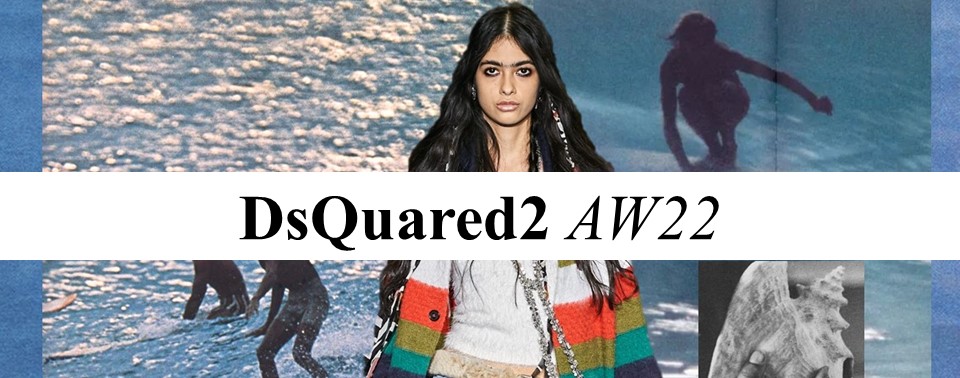
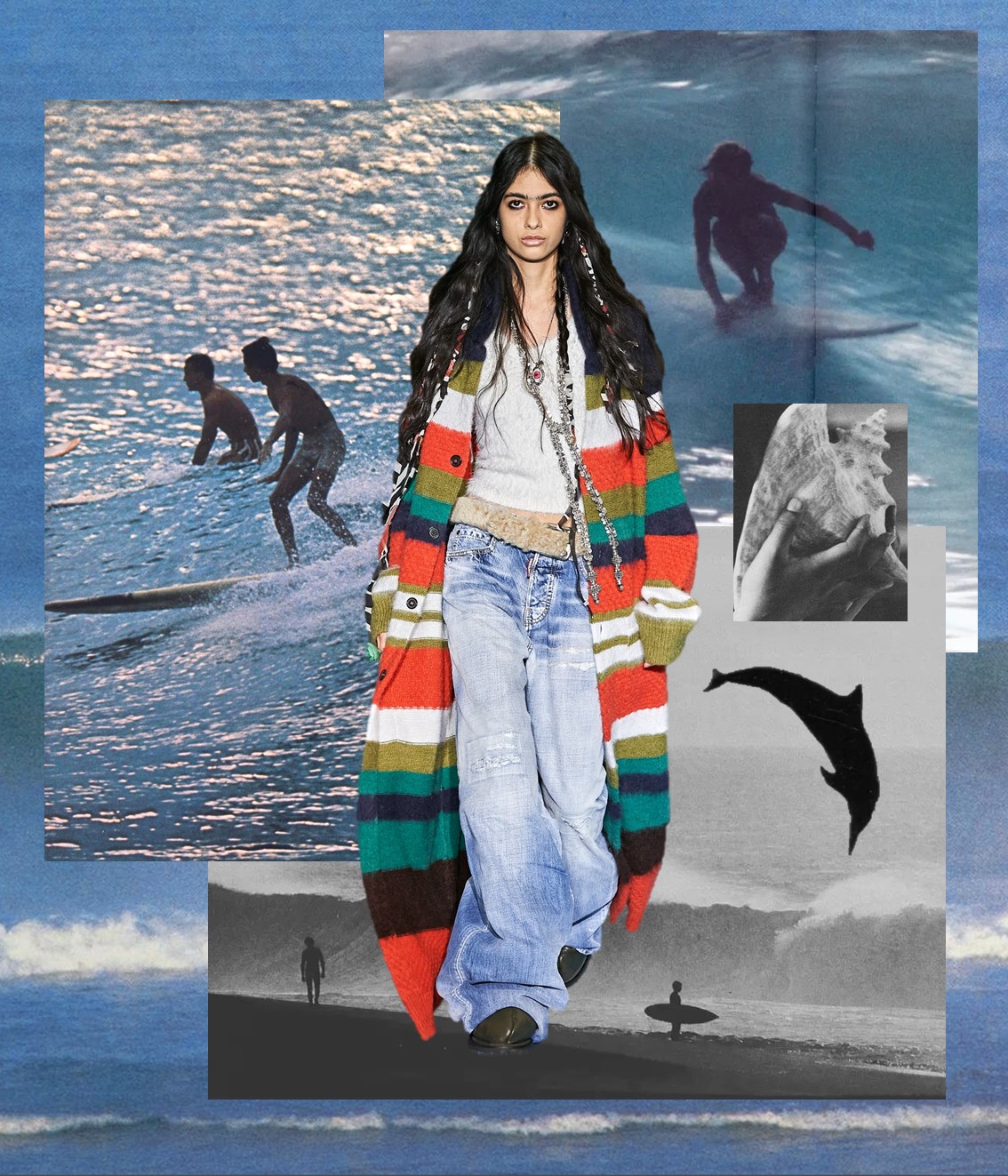
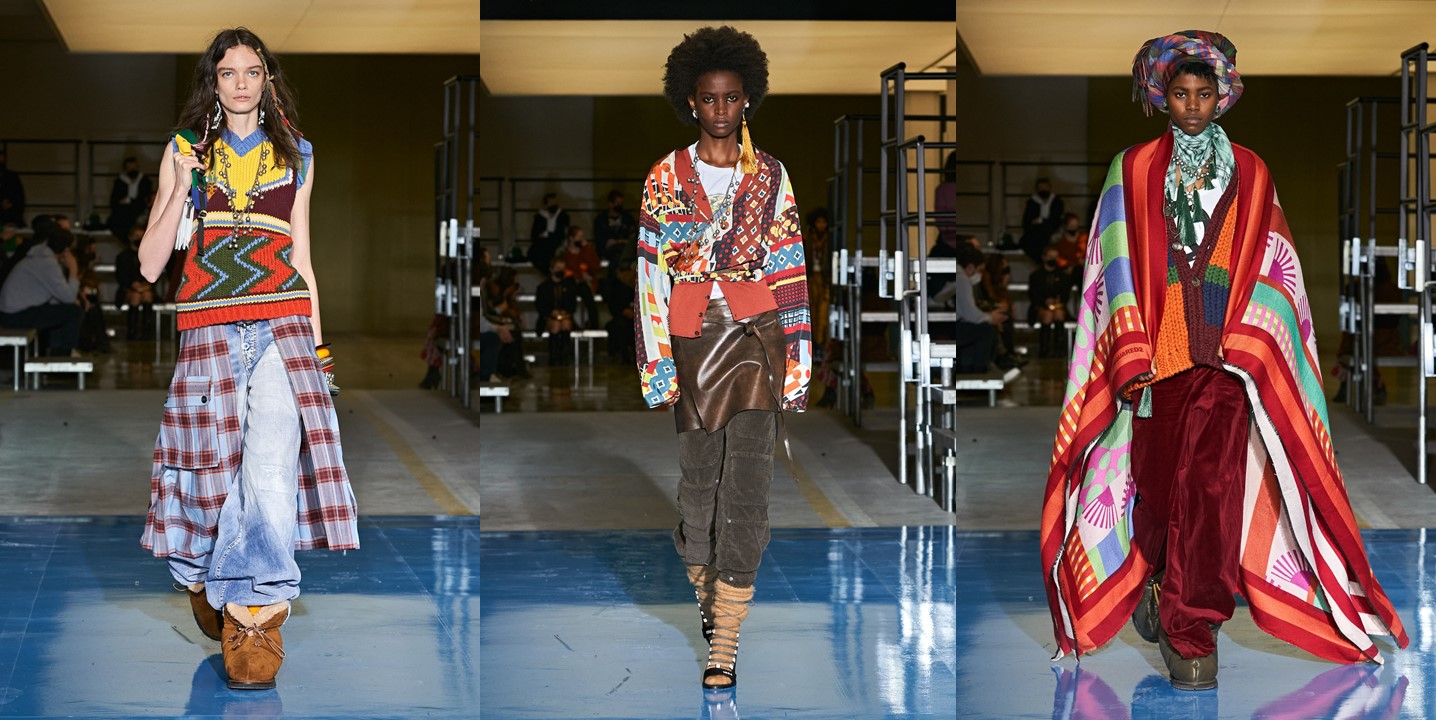
The Dsquared2 spiritual wanderer is a peace and love messenger. “Times are calling for something coming from the heart,” Dean and Dan Caten said. “Let’s come together in harmony and unity, protecting freedom. Peace, love and freedom, that’s the only message.” The Catens have perfected the maximalist mashup, with layering elevated to an art form. Describing every look of the autumn-winter 2022 collection would take ages, as their mastery of fashion combination is not only inventive but meticulous. “Every outfit hides a memory, a talisman, an amulet found during a journey,” they said. Charms, dangling bell chains chiming at every step, and healing crystal necklaces were part of a hippy wanderlust wardrobe grounded in great oversized outerwear, puffy, outdoorsy, inventively engineered and hybridized. There’s lots of method in the Catens’ apparent madness. Knitwear was one of the collection’s standouts, chunky, enveloping, mostly proposed in striped folksy patterns. It was worn over flowy short apron dresses layered over tartan kilts or cargo pants, or over ultra-washed, extra-fluid denim pants. Blanket coats and ponchos, fake fur coats, and an array of tops, printed dresses of various lengths and unspecified layering pieces were mixed together with creative abandon. It made for a fun, lively outing, a welcome jolt of energy and optimism.
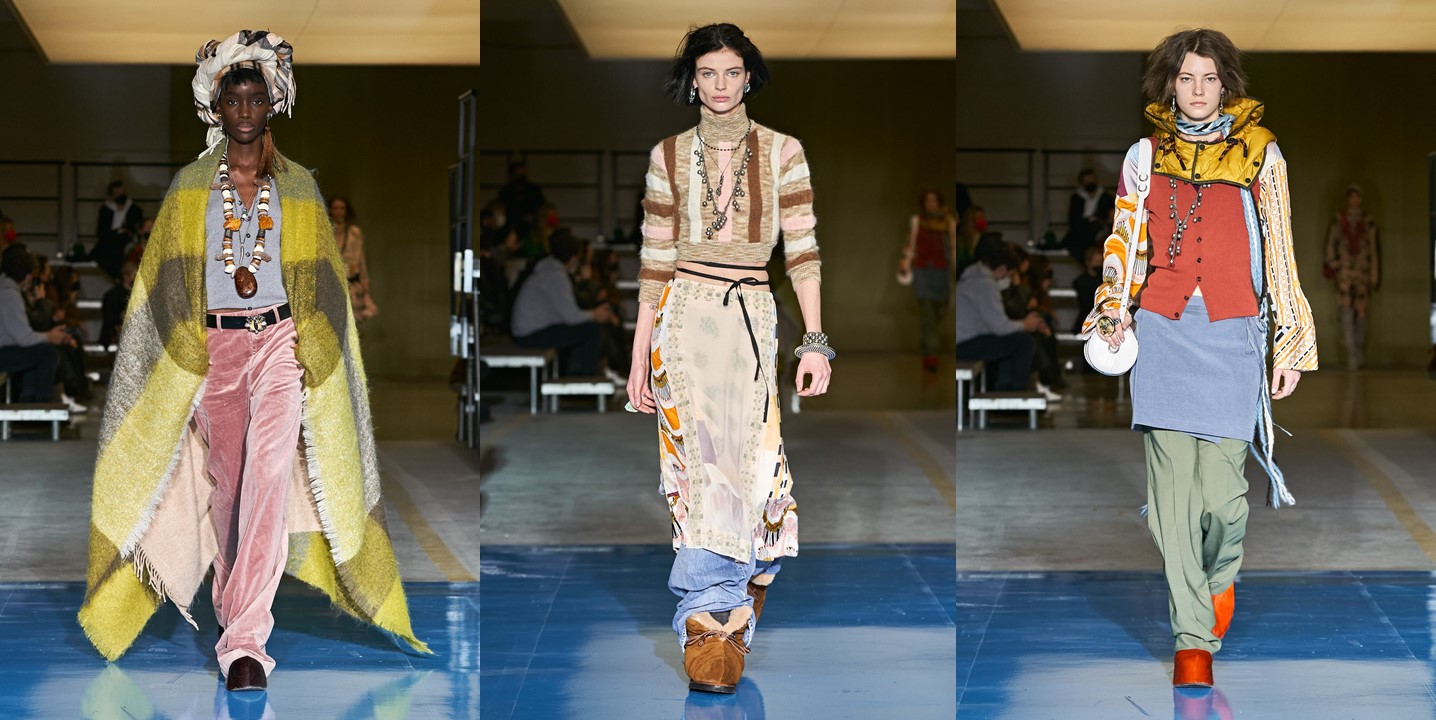
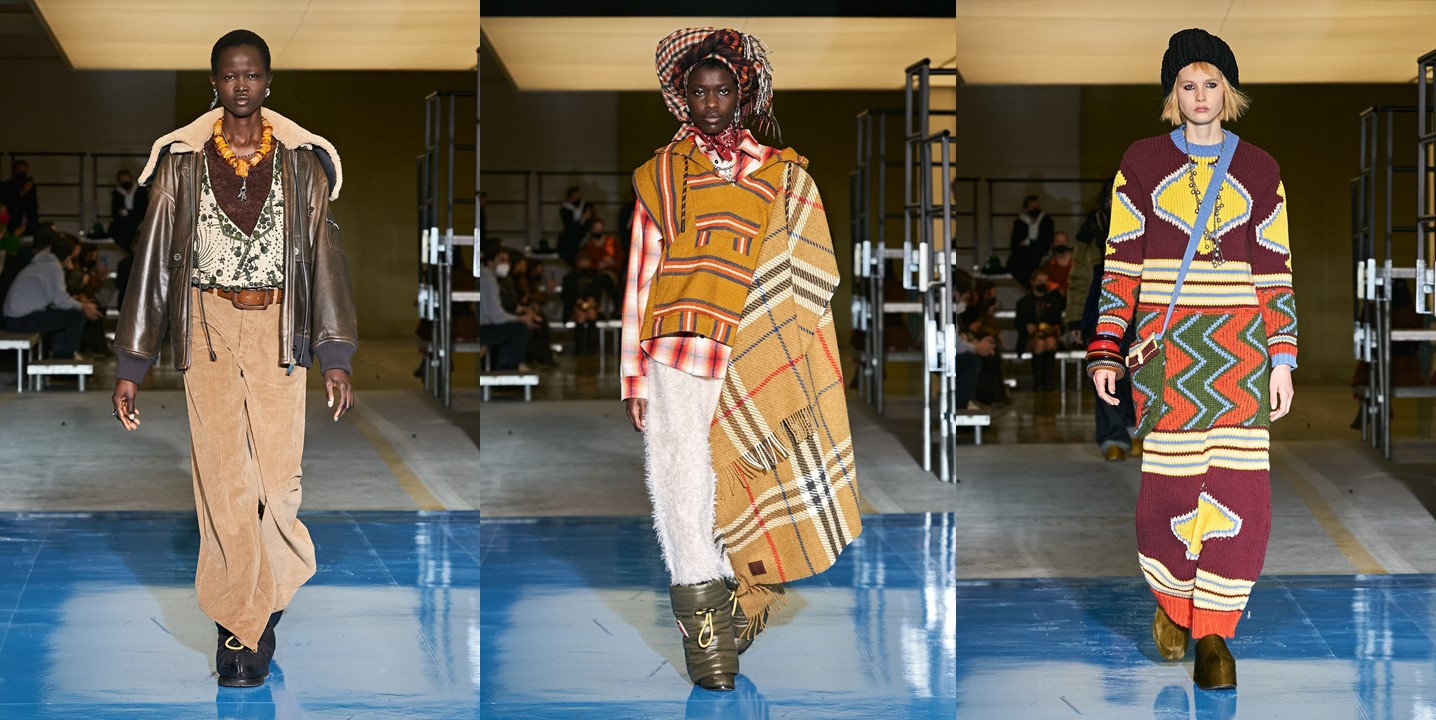
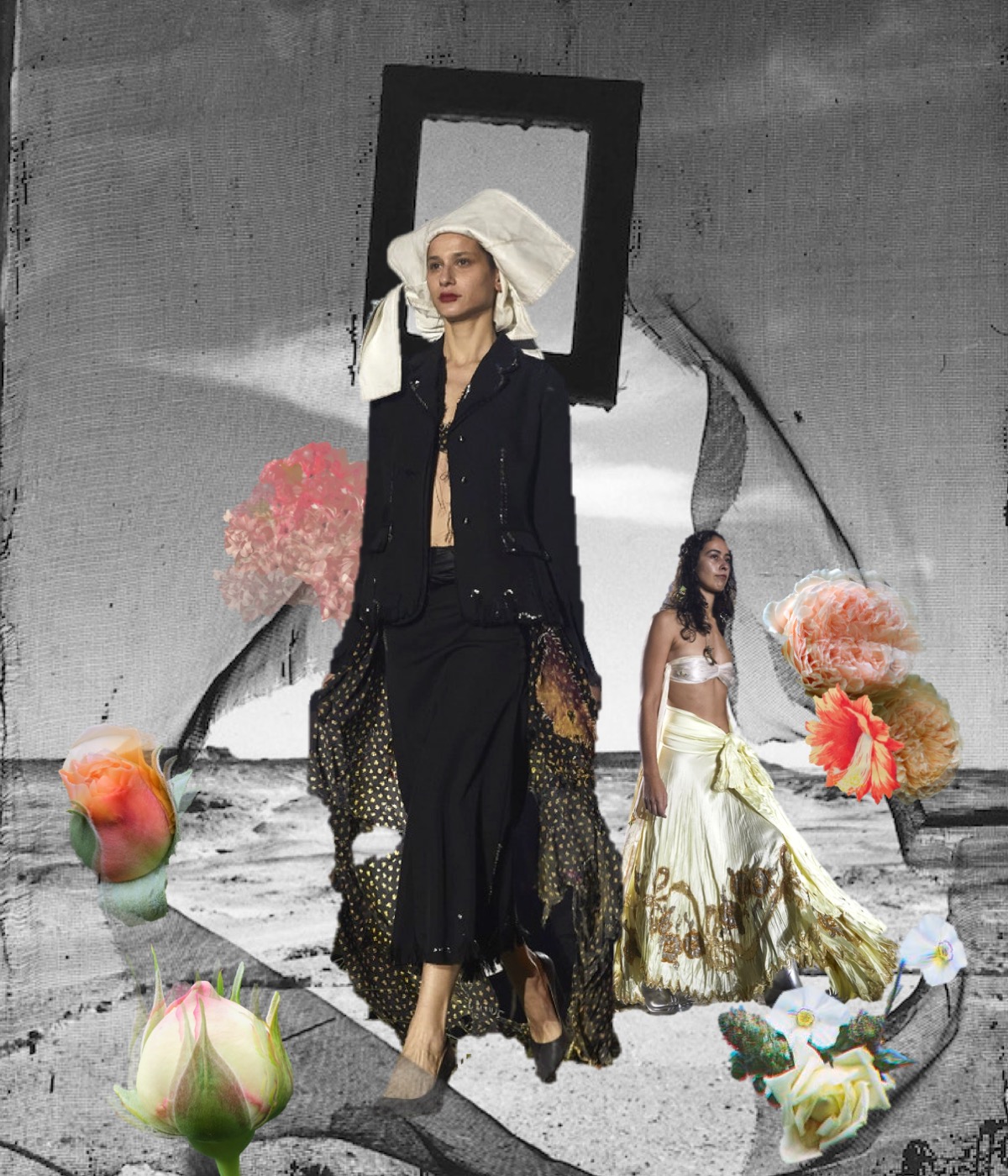
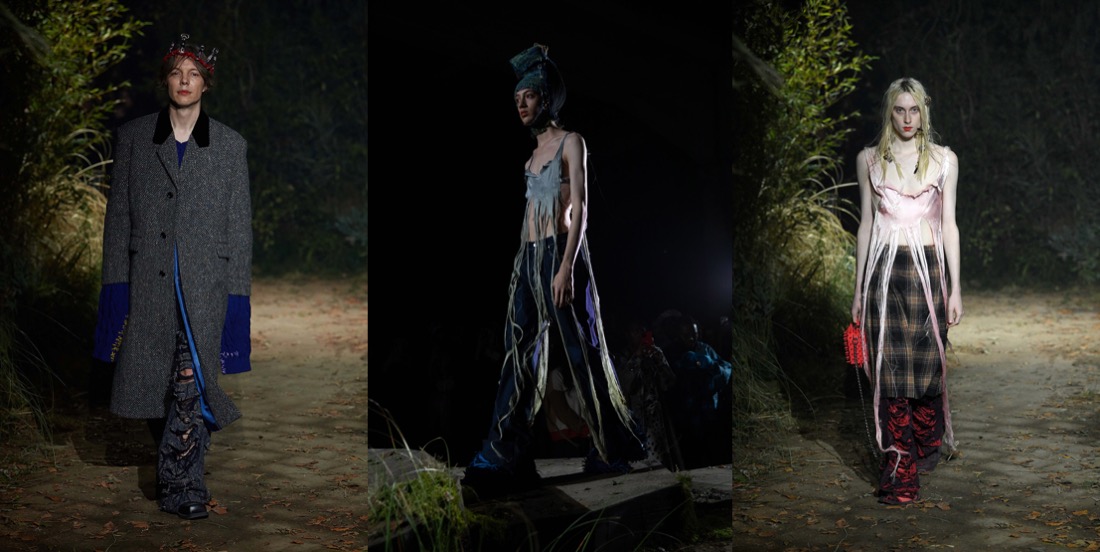
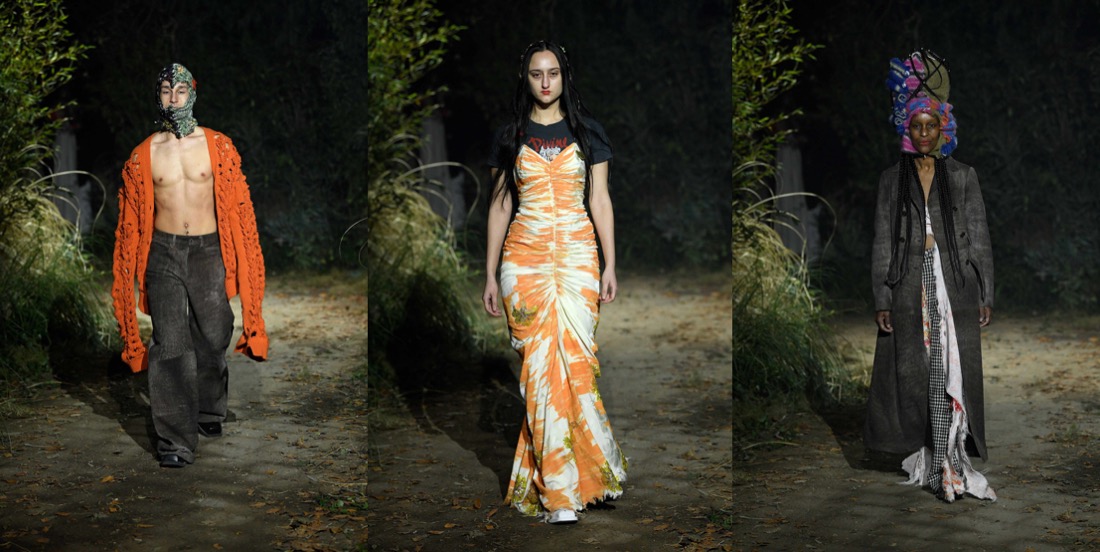
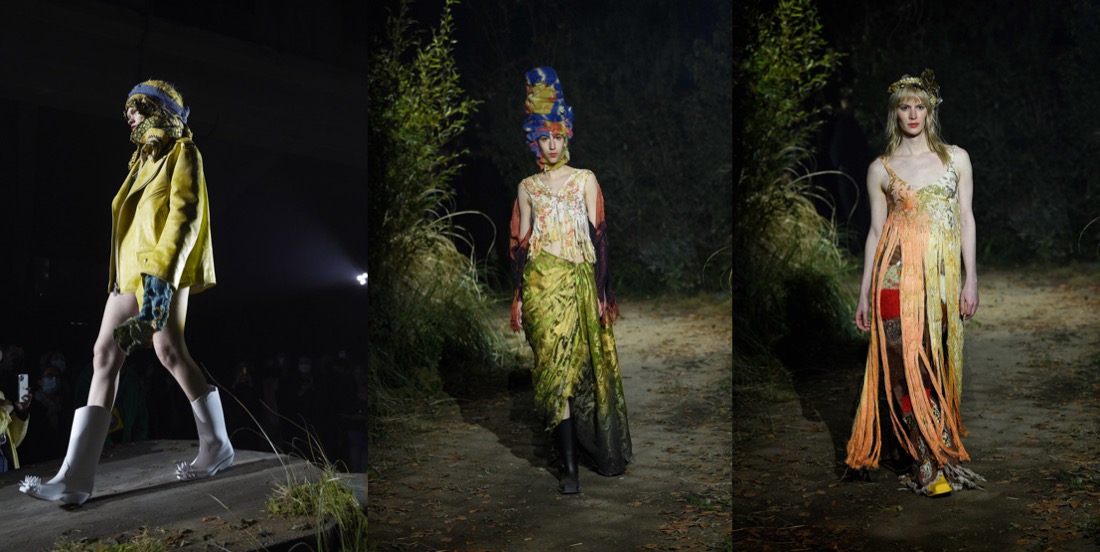
Francesco Risso’s Marni show for his autumn-winter 2022 collection, an ode to the handmade, the mended, the crafted and the tailored, was somehow fitting in the current, violent circumstances. The show’s guests definitely felt a feeling of anxiety once they saw the venue: barely lit cavernous space, fit for a rave, the entrance shrouded in foliage, enormous concrete breeze blocks where a runway would usually be, and yet more foliage framing this picture of dystopian revelry. Last season’s show, set to a soundtrack by the genius Dev Hynes and art directed by the equally genius Babak Radboy (both Dev and Babak were involved in this season’s proceedings too) was a joyful, cathartic gathering, bringing people together as physical shows returned. Then Risso offered a moving and sincere treatise on events in the fashion world an captured the moment beautifully. This time round, Risso was questioning what’s next, according to the emailed show notes. “The future came and went, leaving us alone, but together in the dark, but lighter than before,” Risso wrote. “Where do we go after? Where are we bound, beyond what binds us to each other?”
It’s become a thing for fashion to speak of community, but with Risso’s casting, it was a disparate and unconnected band of individuals who made their way via flashlight around the venue; nothing slickly and self-consciously unified about this group, wearing looks from autumn 2022 that suggested communality: anyone could be wearing anything – and who cares? They might be in dresses in washed mottled pastels which had then been patched or cut into strands or glistened with beads; long shearling coats wrapped on the bias across the body, as much naive gesture as practical fastening; irregularly checked (and snappily cut) pantsuits; full skirted deb dresses, overdyed, as if tried at home and then gone a bit wrong, but in a good way; and raggedy sweater sleeves trailing to the floor from under the cuffs of trad Crombie coats. Almost everyone was bearing some kind of crown of twine and twigs, or elaborate head wraps, which were actually jackets folded and twisted, as if in preparation for some magical, arcane ceremony (you can always on Julien d’Ys to deliver amazing headwear). Risso himself appeared in the show, his now dirty platinum hair surmounted by a fine pair of tiny horns. That he walked speaks volumes; a denial of the idea that designers have some divinely ordained remove from the same shit and the same joy that the rest of us are going through. His Marni has increasingly shifted – and now, with this show and the last, decisively so – into a world less of fanciful fashion remove, but instead reflective of all the ecstasy and confusion and disillusionment and love and kinship that we can all recognize and empathize with. It’s a pretty brave step, to not want to just keep offering up a familiar and reassuring idea of what a high-end brand can do, retreading the same ground, especially at a time when the fashion industry, despite proclaiming the need for change, has snapped back to business as usual pretty darn quick. In the end of the show, those wandering around in the dark eventually found the light. They came out blinking into the bright and glorious Milanese sunlight to an Alice in Wonderland Mad Hatter’s tea party, long tables set up in the rough hewn industrial courtyard, their tops groaning with fruit tarts and elaborate cakes and jello in hallucinogenic shades. Risso’s cast milled around, ate, laughed, chatted and hung out. Hopefully, our future will look as carefree as this moment.
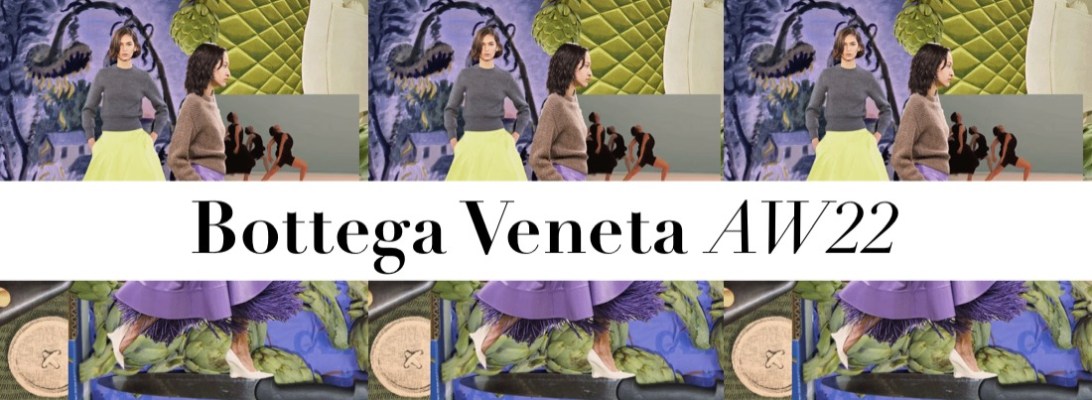
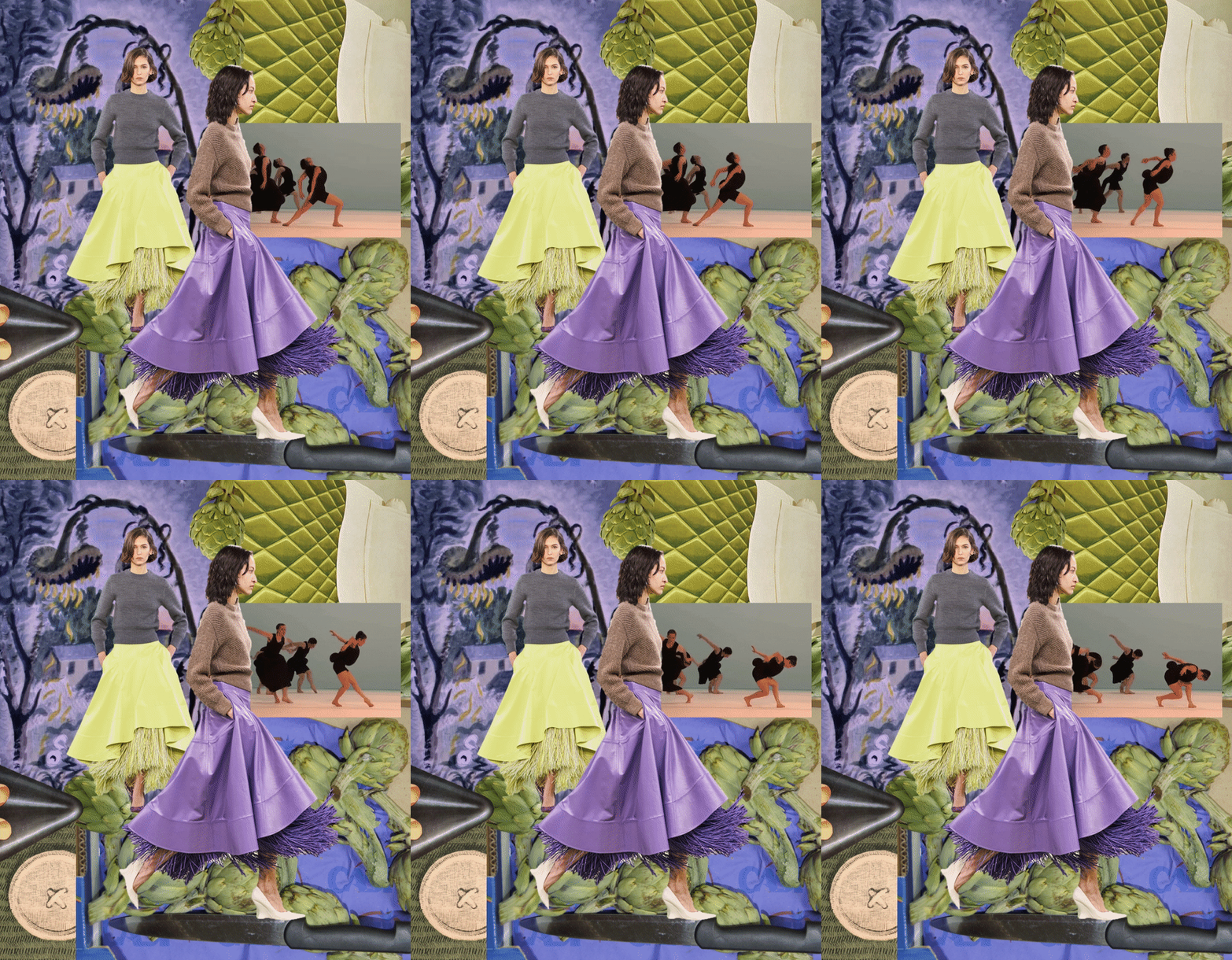
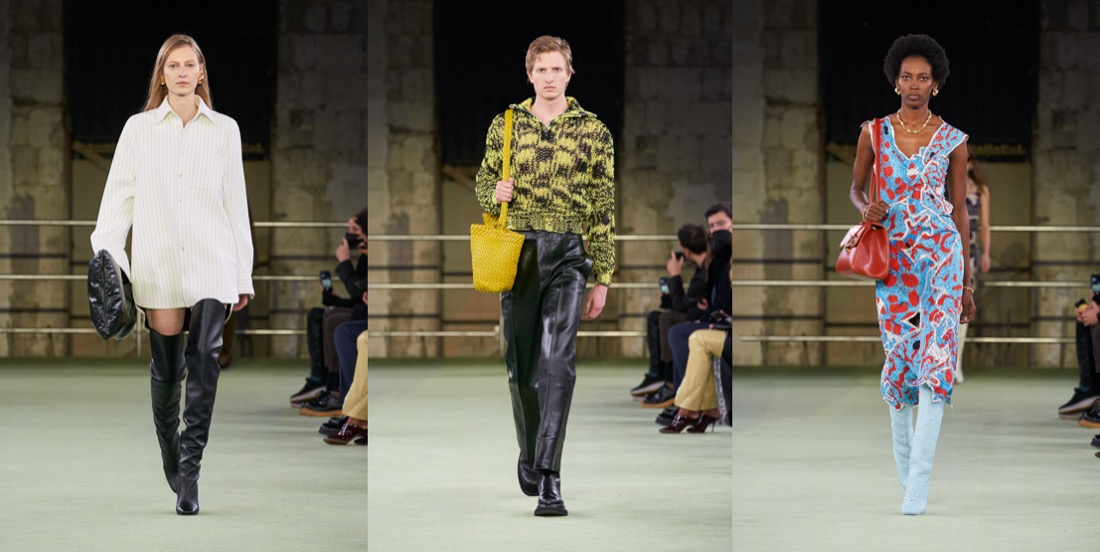
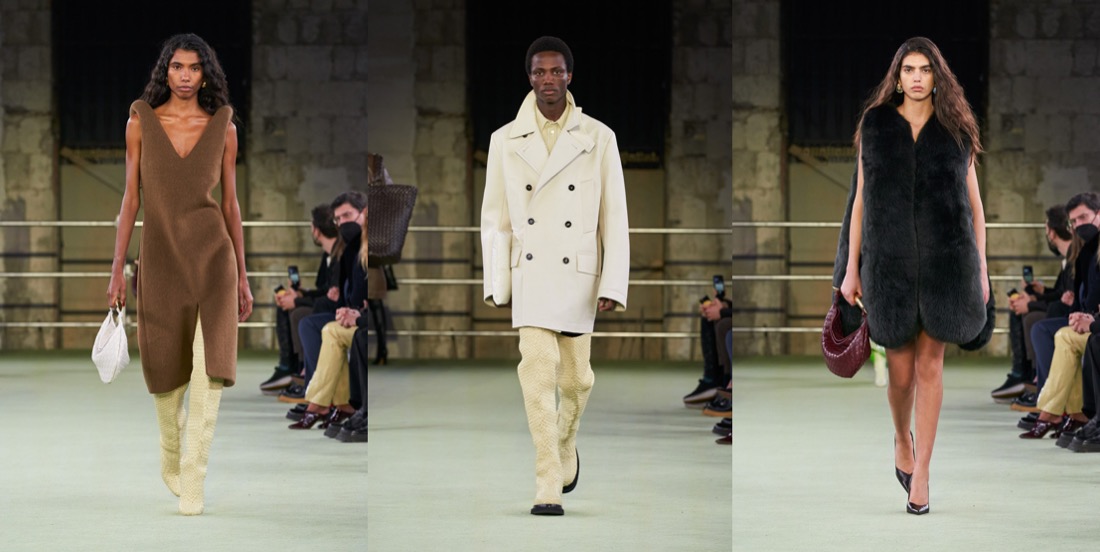
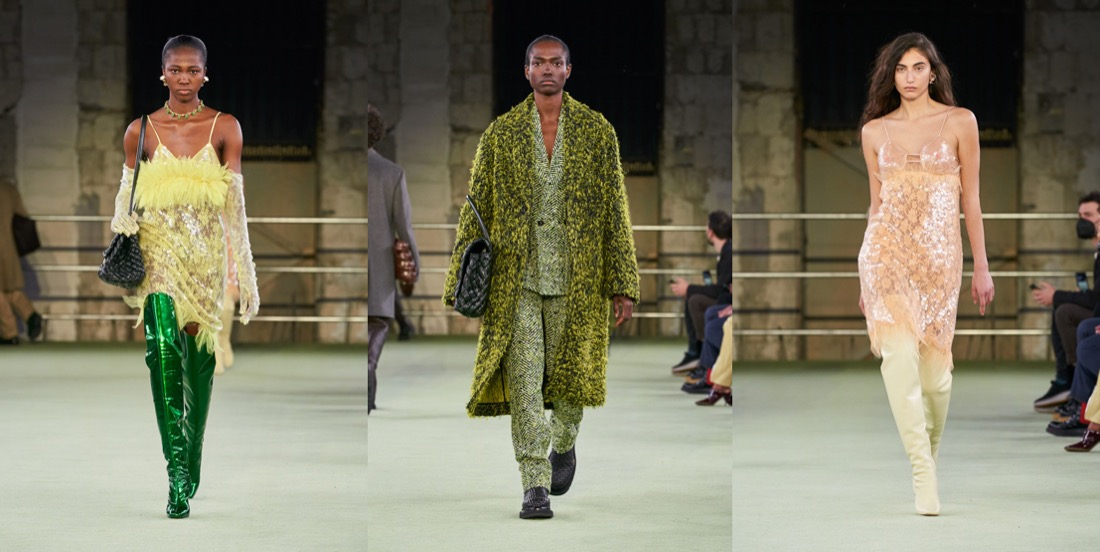
The new new Bottega Veneta, under Matthieu Blazy‘s creative direction, isn’t an abrupt aesthetical leap from Daniel Lee’s days, but definitely feels much sleeker, decluttered and sharper edit-wise. A smooth transition from Lee, who re-invented the Italian brand, to Blazy, who is one of industry’s unsung design heroes (and creatives who worked with the former behind Bottega), resulted in a debut filled with studied, somewhat subversive propositions that are more composed and toned-down than before. Blazy has the kind of track record that makes fashion people stand up straight: he interned at Balenciaga; worked for Raf Simons; what was then called Maison Martin Margiela; Céline under Phoebe Philo; Calvin Klein under Raf Simons. Fashion geeks would have delighted in recognising symbols and techniques tied to his time at those brands, which re-appeared in this collection, especially from Calvin Klein and Bottega Veneta. As a designer whose name hasn’t been formally credited until now, it was as if he was claiming his inventions.
The show opened with a white tank top and blue denim trouser entirely created in leather (!), the latter printed as an optical illusion. The ordinary-to-extraordinary idea of Blazy’s opening look fuelled a collection founded in the weird-ification and glam-ification of classics, from workwear and formal suits to cocktail and even ballroom dress codes. In the tradition of Lee, Blazy continued Bottega Veneta’s focus on the kind of fashion the industry recognises as cool: artsy in form language, intellectually informed, and with the “off” cutting and detailing that make the wrong feel right. On his runway, it had an added chilliness to it, which perhaps heightened the objective. Cases in point were enigmatic details like leather pom poms on cocktail dresses, the square leather closures on a blazer, the leather frill crinoline of a dance skirt, and those abstract crochet dresses. More pragmatic wardrobe proposals included peacoat suits and the men’s knitwear and leather. I wonder what direction will Blazy’s vision go in the next seasons.
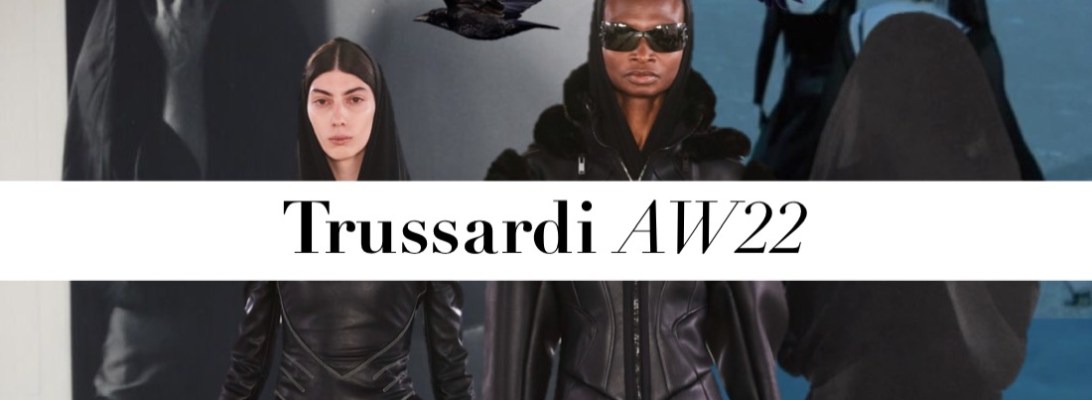
This Milan Fashion Week, it’s renaissance time for a number of Italian brands that in recent years fell into oblivion. First was Diesel, where Glenn Martens has his triumphant runway debut. Then, all eyes were on Trussardi – a brand that until Serhat Isik and Benjamin Huseby‘s take-over had pretty much no identity. Isik and Huseby have made their own Berlin-based brand GmbH a platform for commenting on the moral, philosophical, and ethical quandaries of our era, from race to religion, through fashion. Of course, the designers tried to bring some of that to the sleepy Italian label. The designers began by taking Trussardi’s signatures and making them their own. Rugged, embroidered piumino jackets opened the show, a nod to the anonymous but ubiquitous outerwear of European city life. Then the pair cast their eyes back further, to the complexities of Medieval and Renaissance dress, building armor-like shearlings and stuffing bustles under foxy black minidresses. Each garment in their 40-look lineup had either a curiously compelling texture – especially the holey knits that appeared mid-show – or a grand-scale elegance, like the coat-gown hybrids for models of all genders. The emphasis on a mostly black palette, Isik said post-show, was to reinforce the strength of their silhouettes. The sober ambience of the show (co-incidentally) felt humble and respectful towards the protests in support of Ukraine in the piazza just outside. Models did walk outside the show space within a barricade to give the crowd a glimpse of what was happening within fashion’s elite walls. It was the only direct clash of fashion and reality; the only acknowledgement of what is happening in Eastern Europe officially on the Milan calendar, along with Giorgio Armani’s silent show and social media posts published by an outrageously small number of Italian designers.
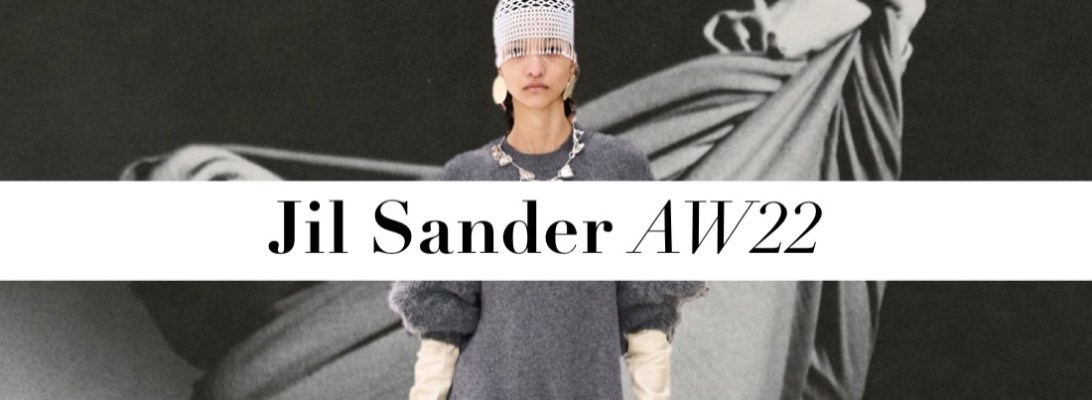
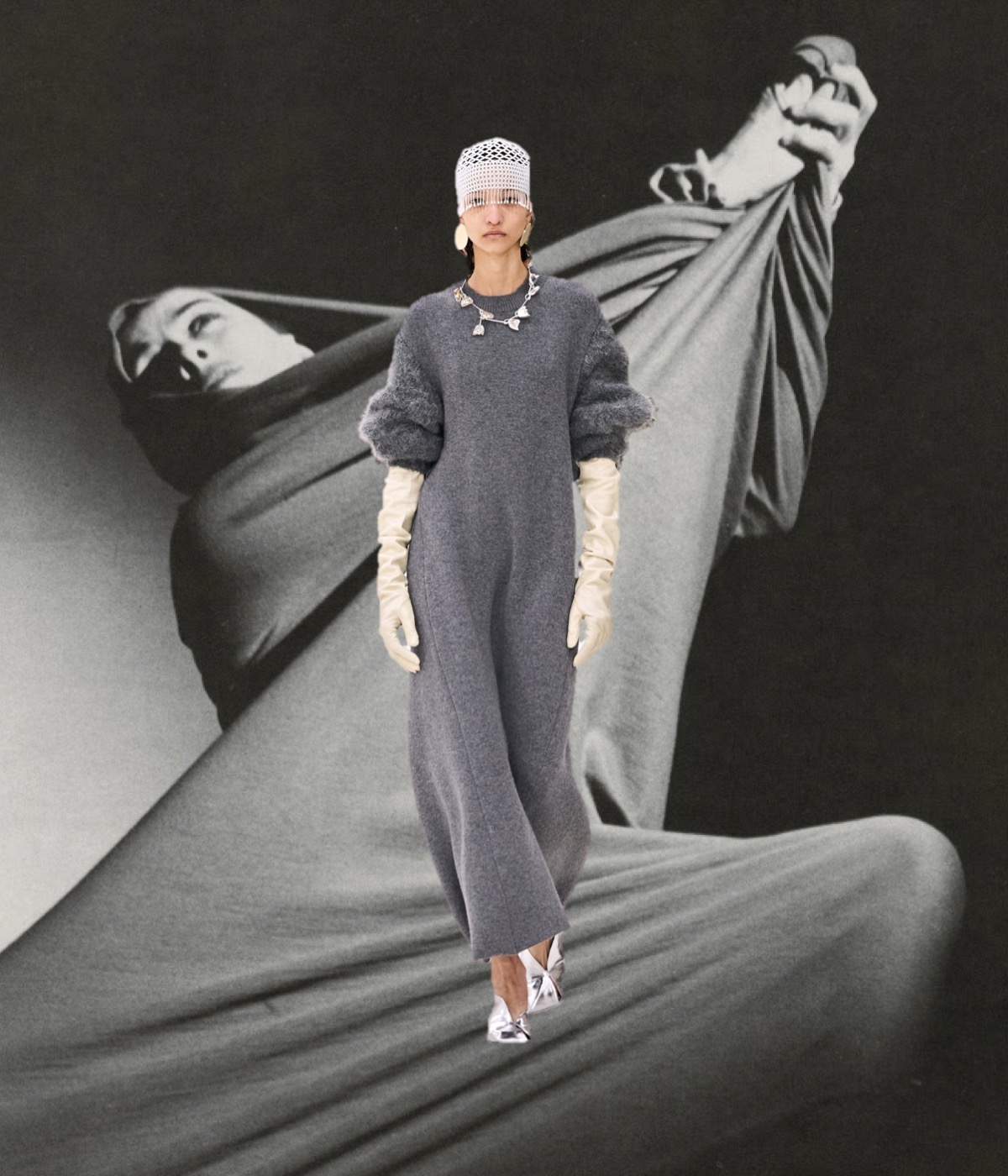
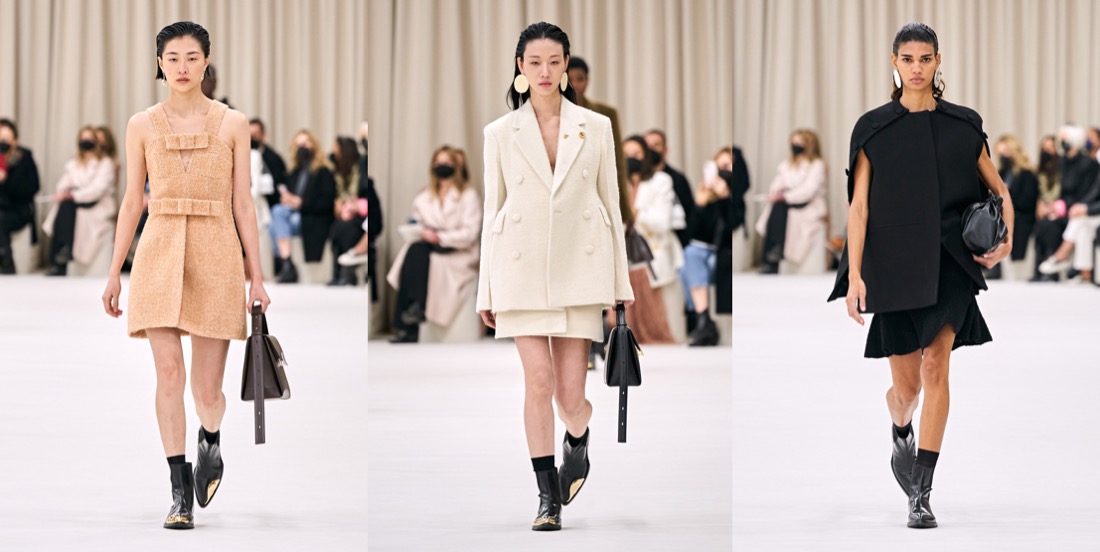
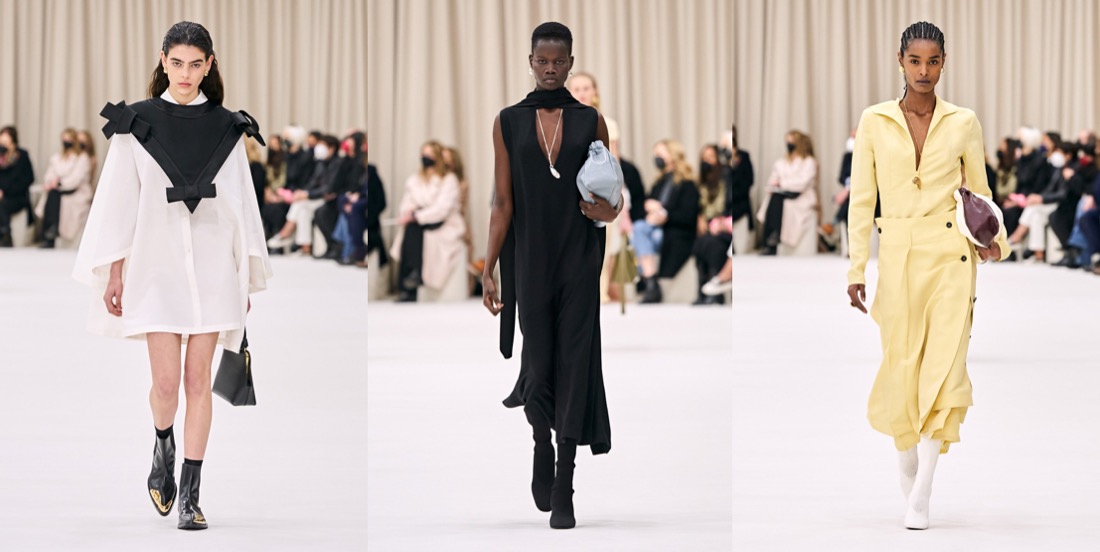
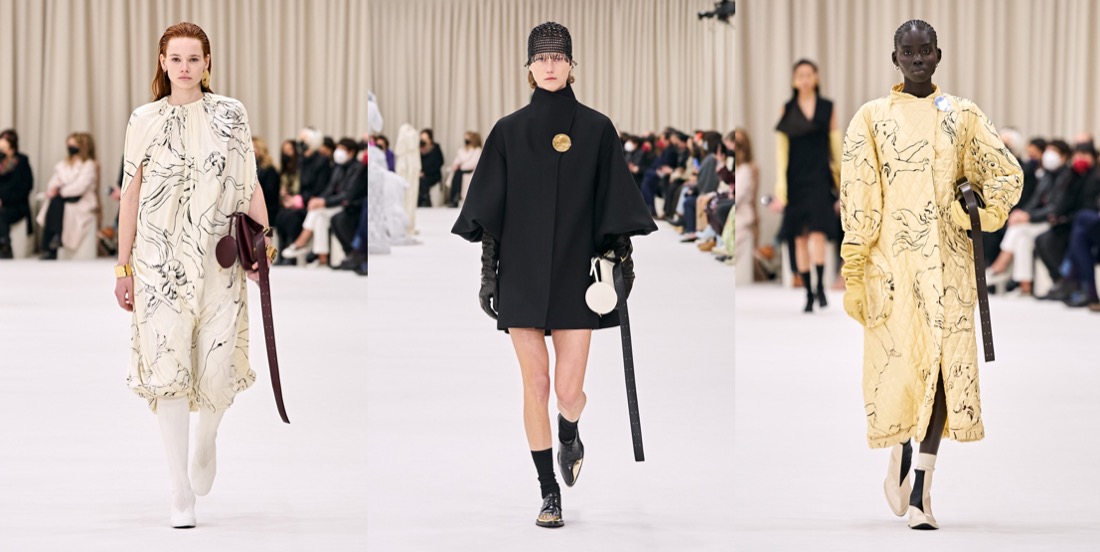
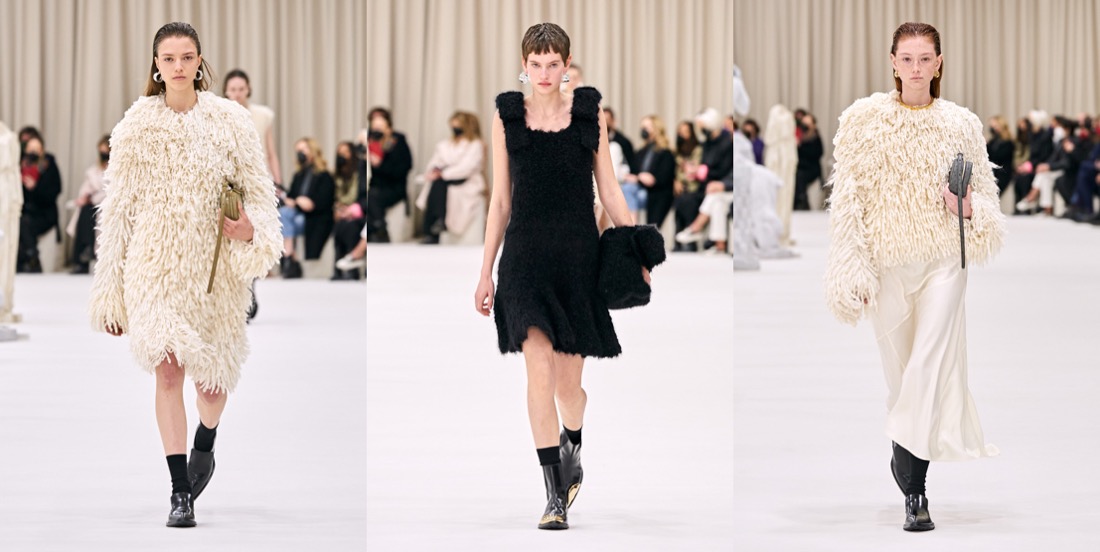
In a season when designers are desperately targeting Gen-Z, Jil Sander’s Lucie and Luke Meier made clothes for grown-ups. That kind of commitment breeds loyalty in women of a certain demographic and income bracket who feel left out of the fashion conversation (and still love Old Céline). “We were thinking about elegance,” Lucie said backstage. “We really wanted to focus on sculptural tailoring, almost couture-like, but we like this new energy, a very cropped silhouette.” The Jil Sander woman is wearing a wool skirt suit, its jacket sculpted with an hourglass volume and the skirt just peeking out from beneath its hem, or a slightly longer, flippier skirt with a cape-like jacket. Completing the silhouette are Chelsea boots with gold hardware, flat and sturdy. Dresses with the same above-the-knee proportion and flat bows at the shoulders and waist called to mind Pierre Cardin, whose death in late 2020 has precipitated new interest in his brand of 1960s minimalism. There were longer, softer lengths as well, including on a group of black dresses whose special details – a deep-v neckline, say, or voluminous bell sleeves – gave them a lot of cost-per-wear value. The Meiers have made handcrafts (like macramé and crochet) an essential part of their Jil Sander aesthetic. This season they pared that back, featuring only one print of astrological signs on drapey stretch jersey or quilted satin, choosing three-dimensional fabrics with surface appeal, like the bouclé on a pair of short dresses and the finer gauge knit of a long dress with fuzzy mohair sleeves. The exception was the guipure lace they used for a trio of long dresses, including one in a sensational shade of marigold. The white and black versions were shown with tailored single-breasted jackets, which is indeed a very elegant, very grown-up way to approach black-tie.













 Design & Culture by Ed