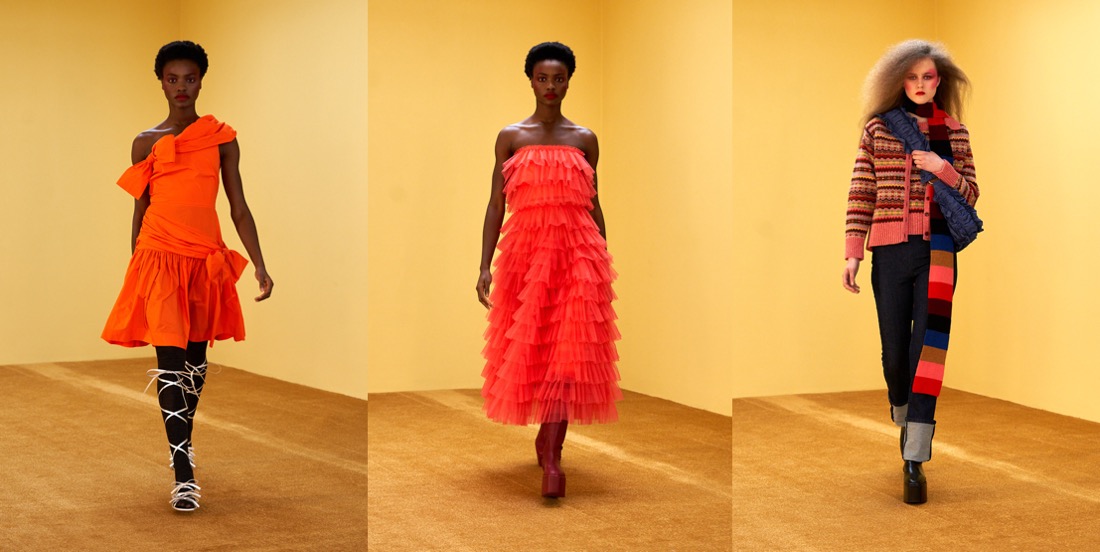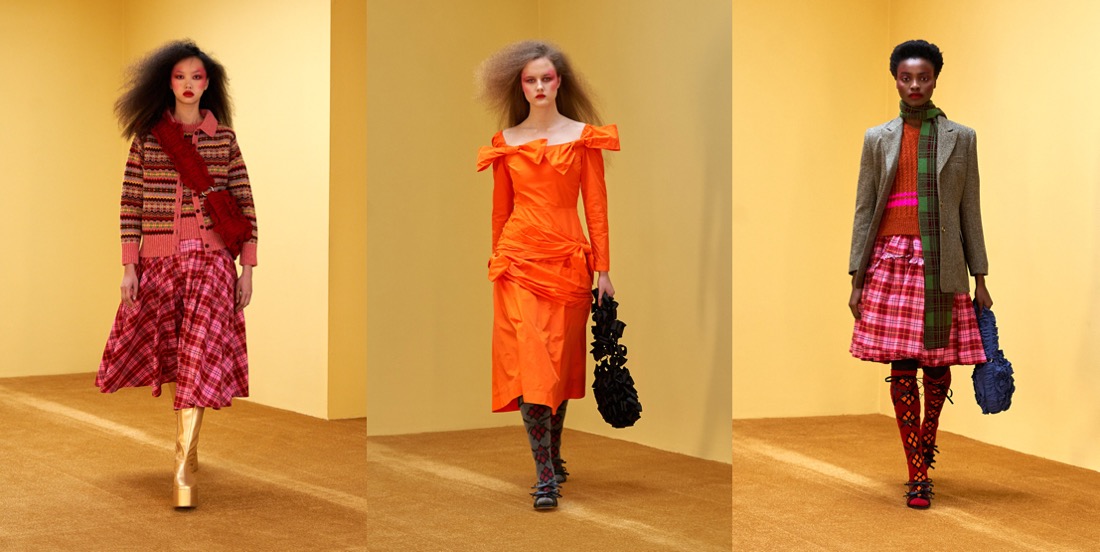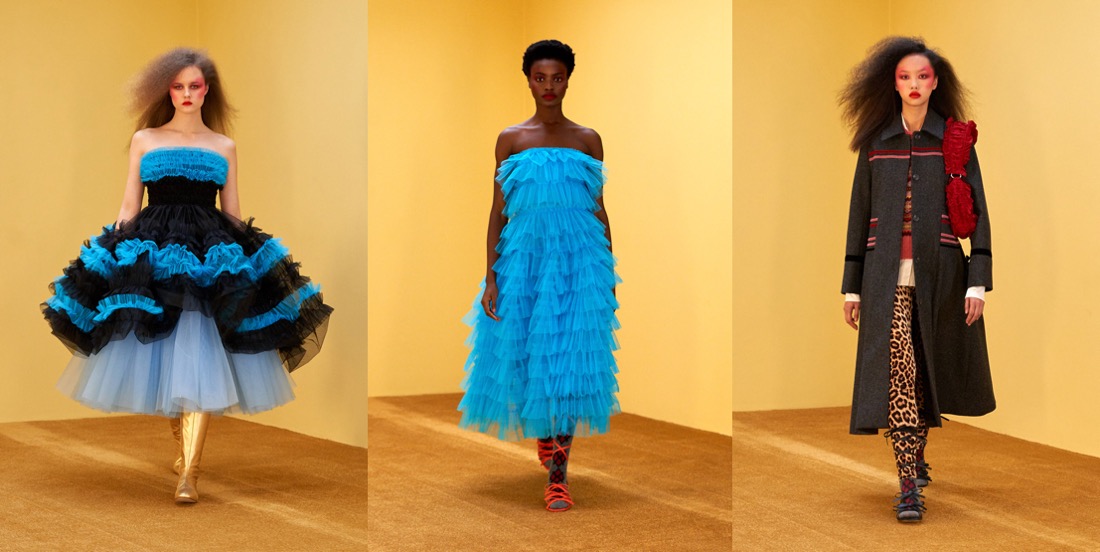
The Joy Of Dressing Up. Molly Goddard AW21

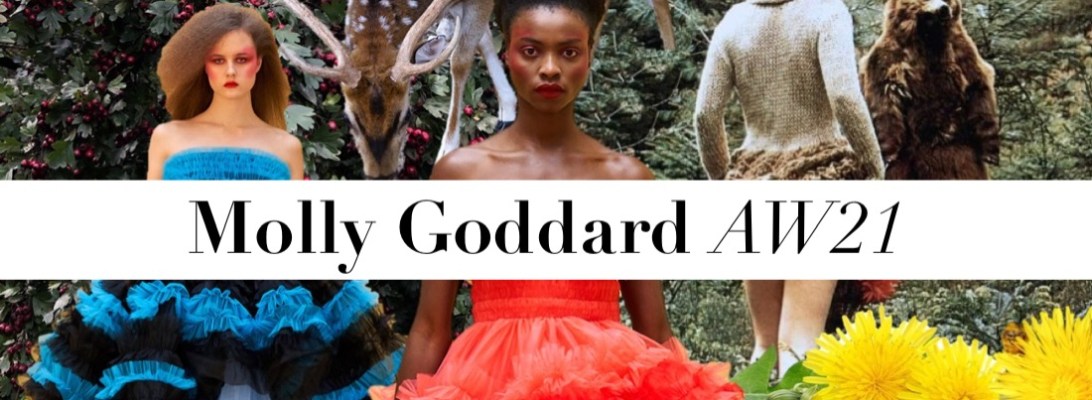
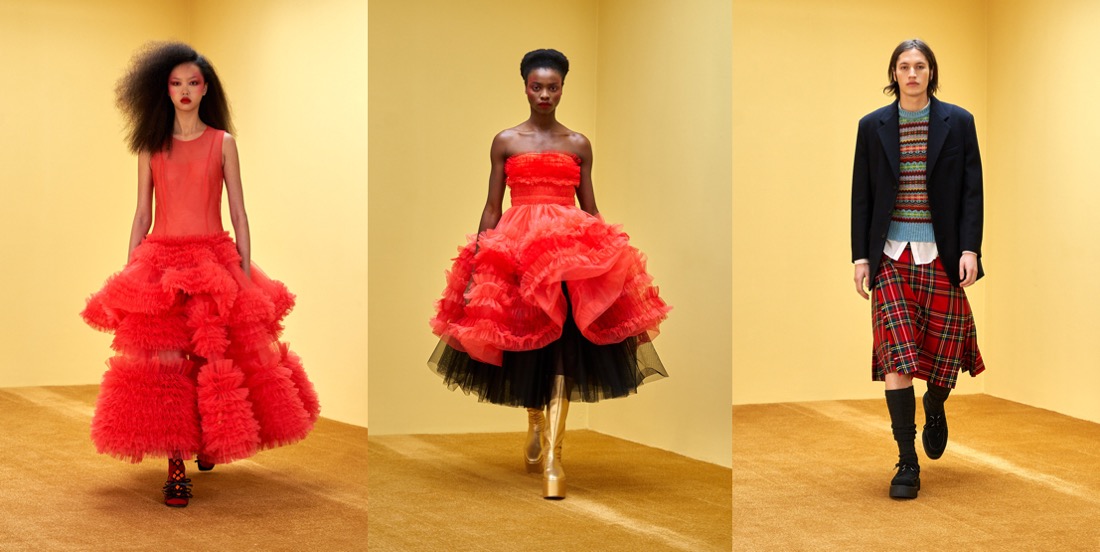
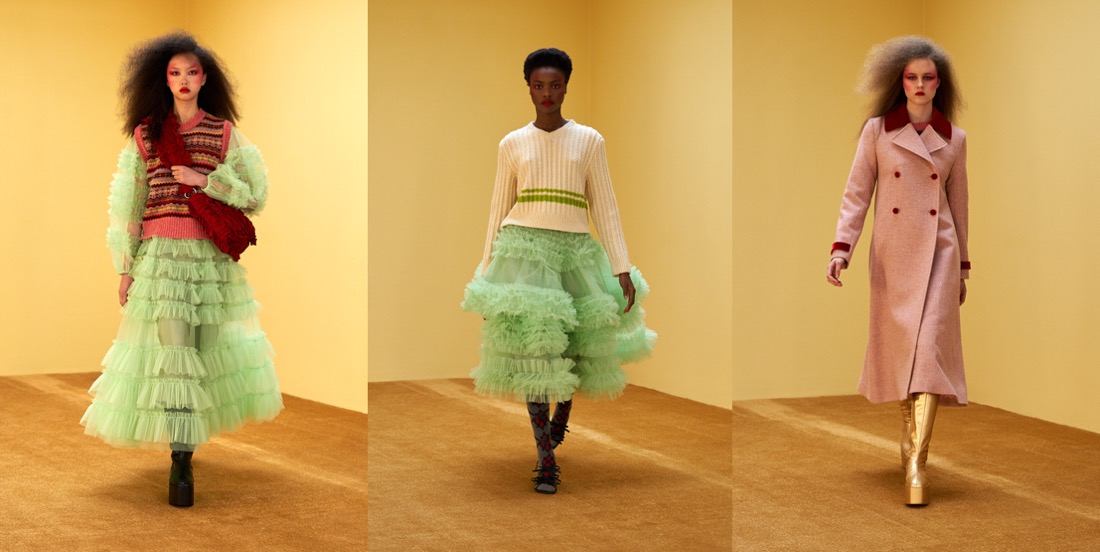
Finally – a collection I genuinely loved this season! Despite the obvious limitations of the moment, Molly Goddard delivered a phenomenal collection. Since the UK went into lockdown for the second time this winter, the designer has been forging ahead with her eponymous label, recently dropping a capsule of exquisite bridal dresses that’s primed for the current boom in micro weddings. And all that at eight-and-half months pregnant (congratulations!). “This collection was maybe the toughest to put together because of all the restrictions,” said Goddard, speaking via Zoom with Vogue from her home in West London. “There was so much uncertainty even in the logistics, but that didn’t stop us from taking risks. In a way, I think we really went for it.” Goddard is well known for her daring otherworldly confections, though this season she took to honing the down-to-earth signatures in her repertoire. She leaned into the quirky Britishisms that make her work sing, starting with an extended offering of her adorable Fair Isle sweaters for both men and women. Goddard takes pride in the fact that much of the collection is manufactured in the UK, and for autumn-winter 2021 she worked with a Scottish factory to produce traditional tartan kilts that looked especially good on the male model in her virtual fashion show, paired with colorful knits. Though it was hard to ignore the joyful exuberance of the tulle evening dresses in her lineup – she opened and closed the show with two especially flirty strapless numbers – the dry, taffeta frocks with angular bows were just as attention-grabbing layered over raw denim pants for day or with knee-high metallic boots for party time.
Collage by Edward Kanarecki.
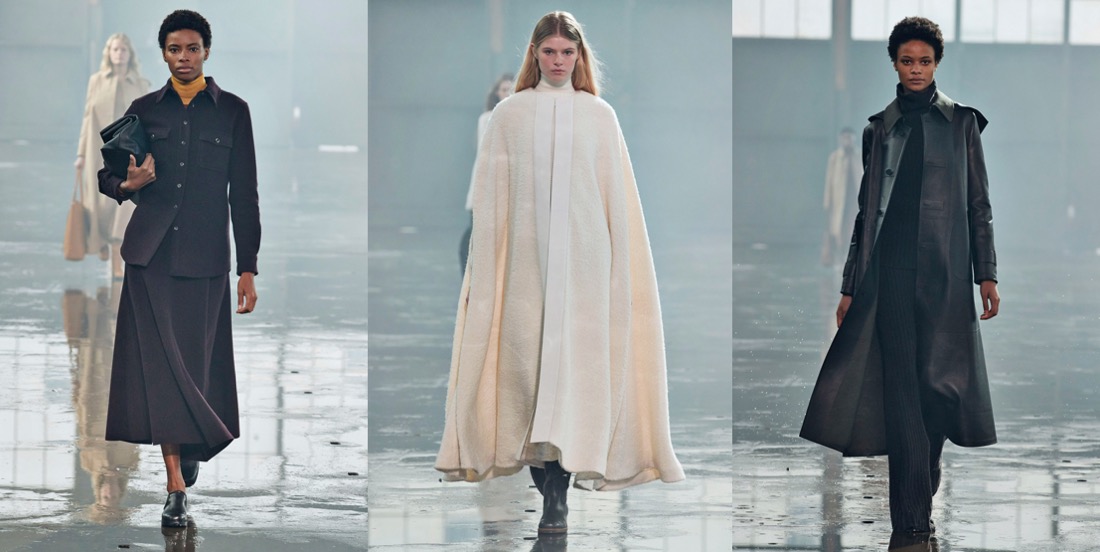
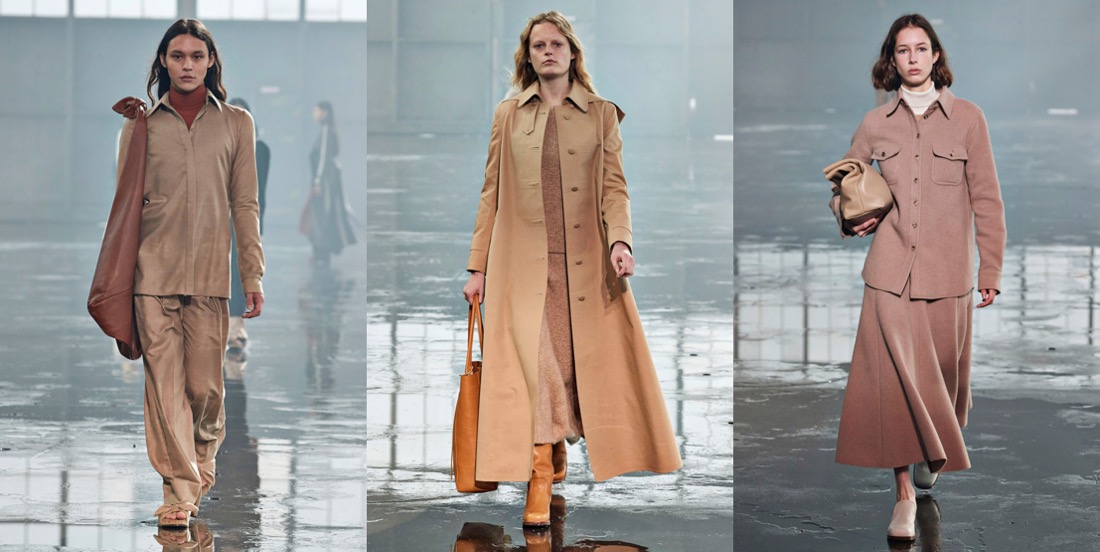
Green Power. Gabriela Hearst AW21

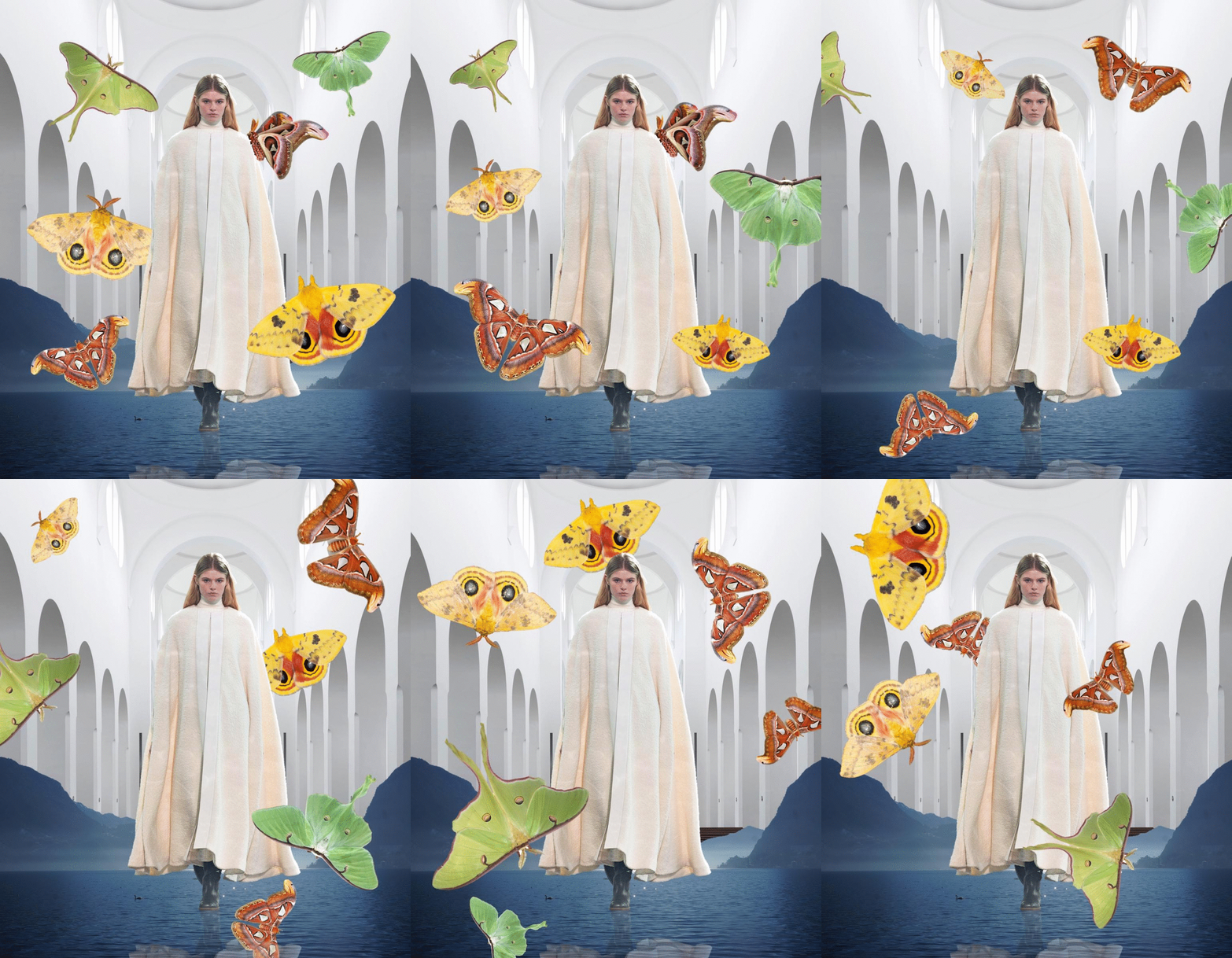
There’s an unofficial trend circulating this season: finding inspiration in powerful women from the past, often with a religiously-charged background. First, Bevza‘s designer mentioned Olga of Kiev as a reference for her knitted hoods and elongated silhouettes; yesterday, Gabriela Hearst talked about Hildegard of Bingen. A writer, composer, philosopher, mystic, and Benedictine abbess, Hildegard was a regular Renaissance woman, except that she predated the Renaissance by about two centuries. “I’m convinced,” Hearst said, “that if she had been a man we’d know her name like we do Leonardo da Vinci’s.” In fact, Hildegard sketched a Universal Man, not unlike Da Vinci’s Vitruvian Man, only hers was completed 300 years earlier. Hildegard resonates with Hearst because among her other polymath pursuits, she was an herbalist, a woman really at one with nature. “She believed in ‘green power,’” said the designer. The environment is a passion of Hearst’s too. Fashion isn’t the greenest of industries, but her company is making strides. She reported that last year 40% of the materials used in the production of her collections were repurposed and deadstock. Her 2021 goal is 50%. Hearst’s efforts around responsible design are at least partly why she was hired as Chloé’s new creative director in December (looking forward to her debut this Paris Fashion Week!). Hearst’s autumn-winter 2021 line-up is all about timeless, beautifully-crafted design that actually needs no further explanantions or mood-boards behind. Still, those behind-the-scenes details are intriguing. Hearst’s 12-year-old daughter Mia’s interpretations of Hildegard’s painted flowers appear as a print on a silk shirtdress and as crocheted appliqués on knit sweater and skirt sets. They also inspired a pair of extraordinary ruanas, hand-knit by the Manos del Uruguay women’s collective in Hearst’s native country. Hearst’s own renditions of Hildegard’s flowers were transformed into hand-painted belt buckles at the center of which she placed mano figas, talismans signifying fertility and, by extension, female power. As usual, the designer offers a well-edited wardrobe of soft, yet empowering tailoring, gorgeous dresses that can be both for the day and night and remarkable outerwear (knotting details at the shoulders softened the lines of a trench and the hem of another coat was finished with a deep band of macramé lace).

“Live” collage by Edward Kanarecki.

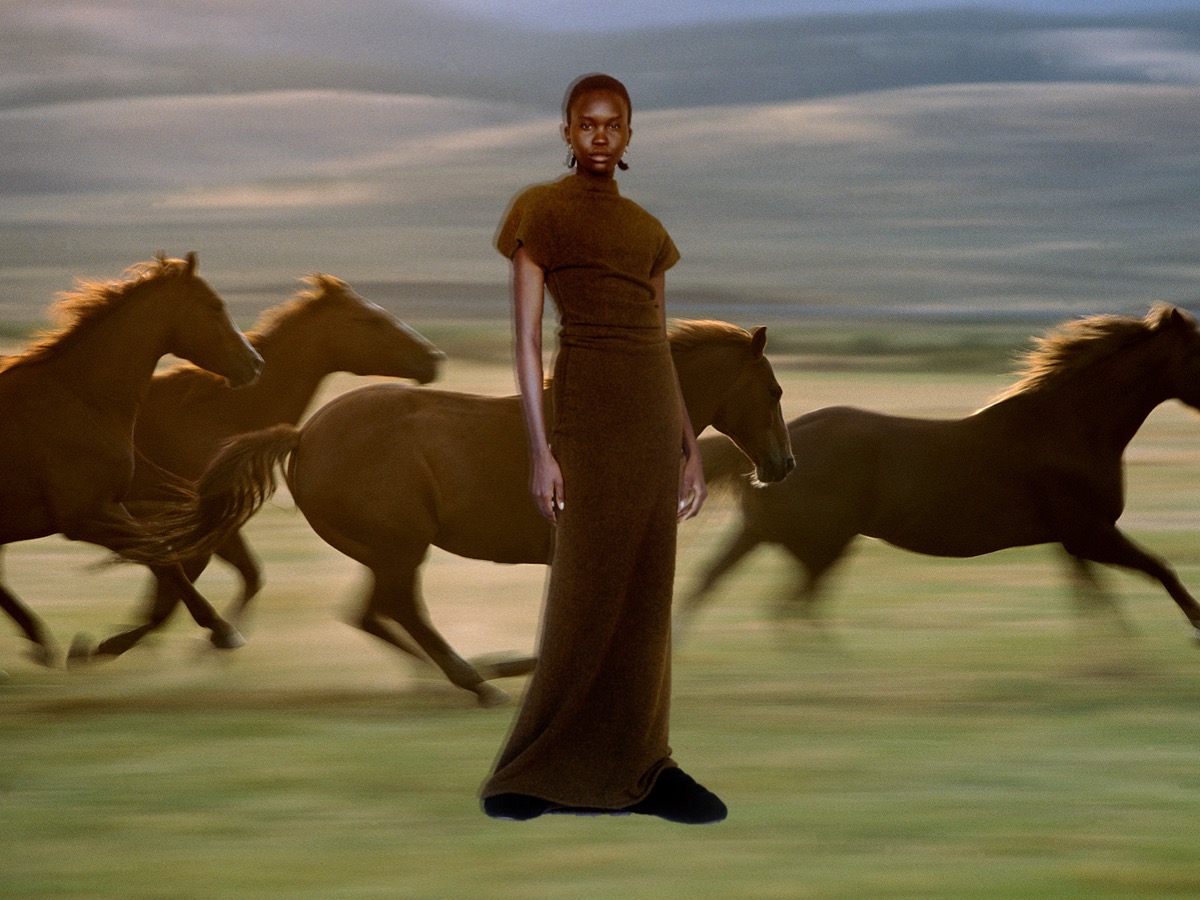
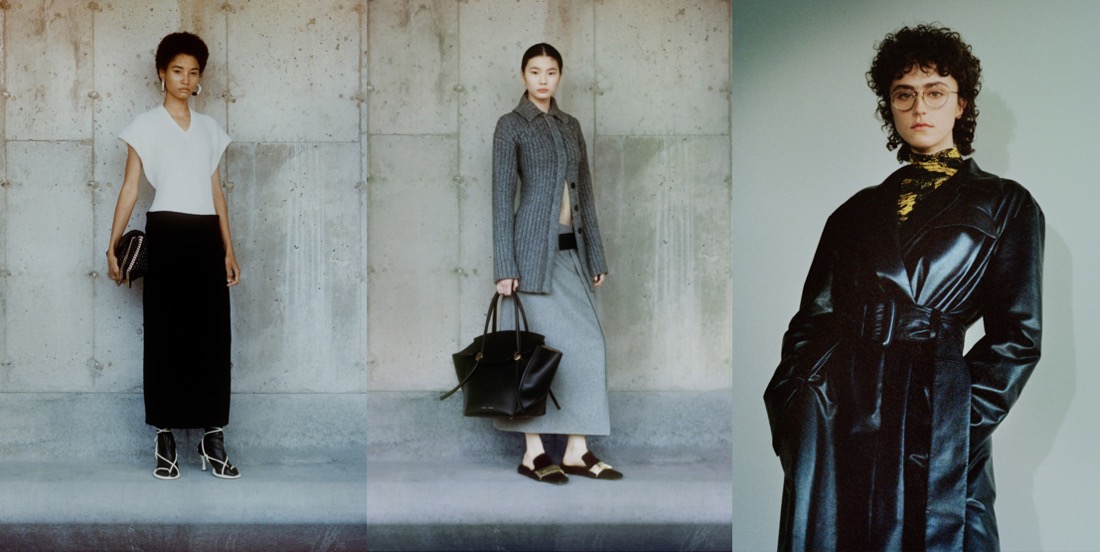
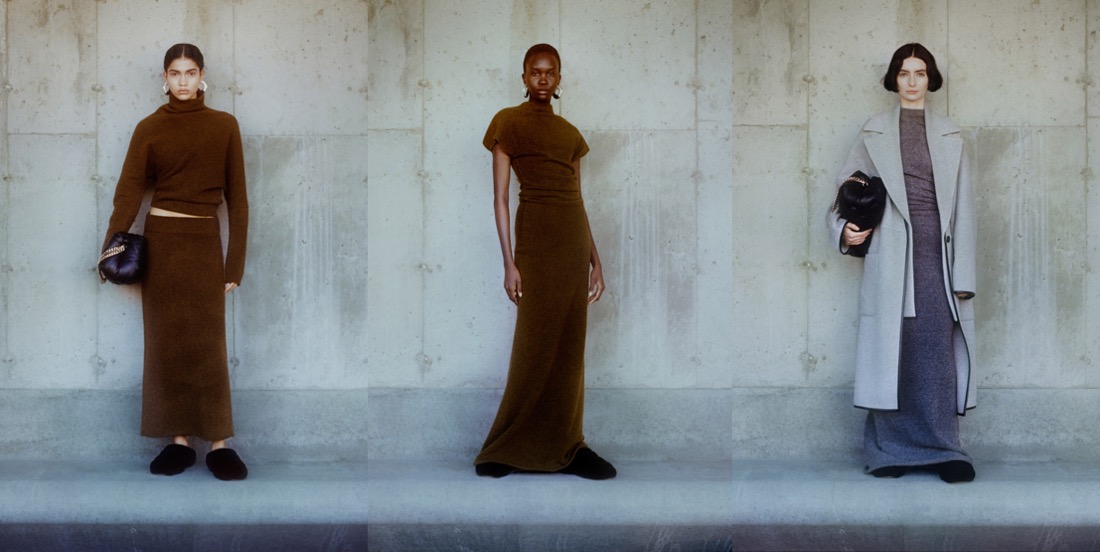
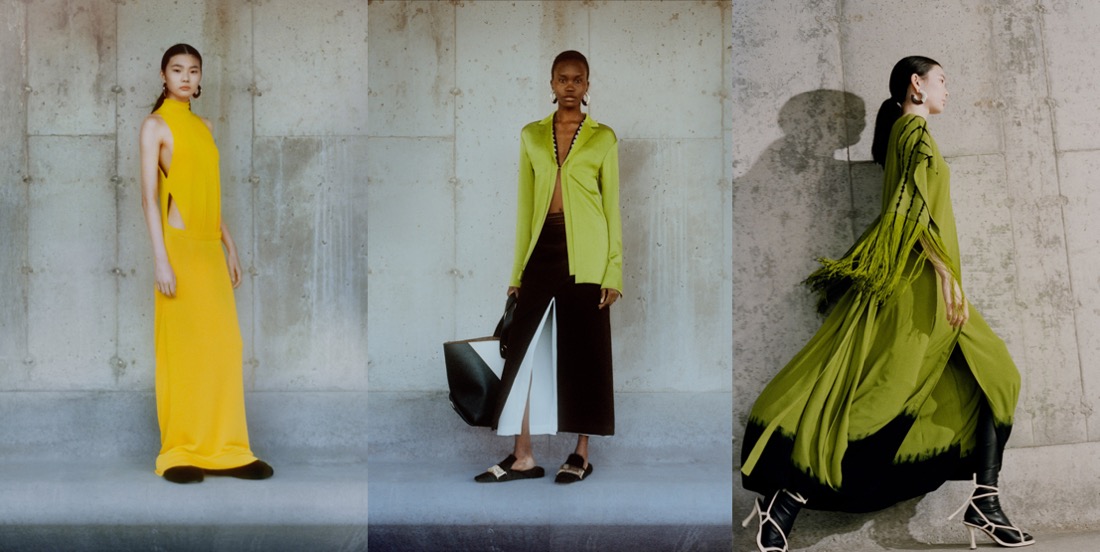
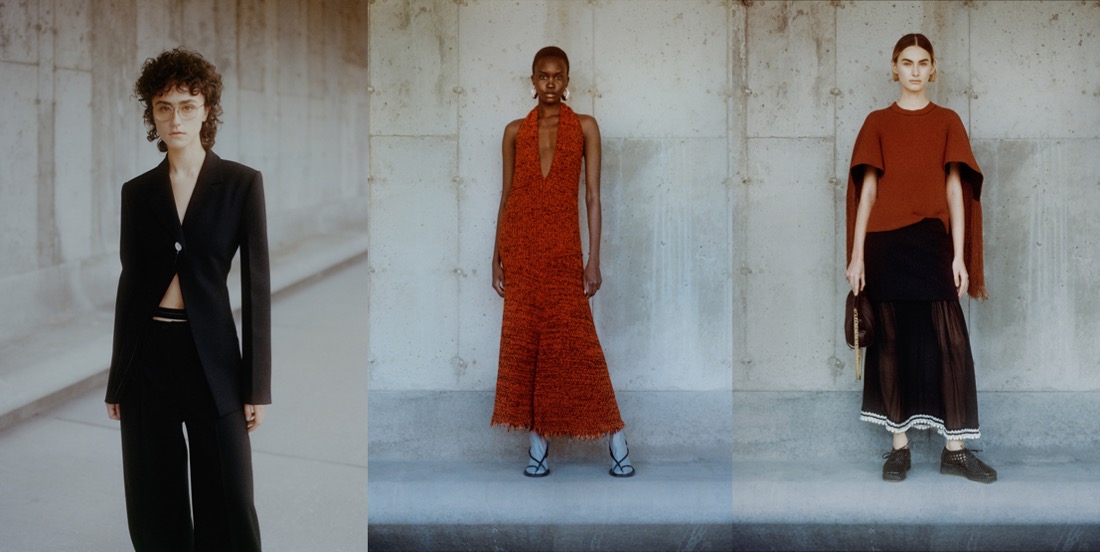
The Balance. Proenza Schouler AW21

Ella Emhoff’s (Vice President Kamala Harris’s step daughter) modelling debut (she was signed by IMG Models not long after her stylish presence at the Inauguration) was probably the biggest, clickbait moment of this very plain New York Fashion Week. She had her cameo appearance in Proenza Schoulder‘s autumn-winter 2021 look-book and video, and definitely delivered some spotlight to those level-headed, a bit monotonous garments. Lazaro Hernandez and Jack McCollough are the old hands (the brand is celebrating its 20th anniversary… yes, time flies!) on the local fashion week calendar, with many establishment brands showing later (or not all) this season. Maybe not coincidentally, they mentioned the word “balance” to Vogue: balancing the work-from-home moment we’re currently in with the optimism they feel sure is coming; balancing softness with structure, and minimalism with a more crafted aesthetic. The result is a collection that feels of a piece with their recent, consistenly minimalist work. They still favor an earthy palette and they continue to work their repertoire of lean, confident pant suits and fluid midi-dresses, a particularly striking one in chartreuse and brown tie-dye. But where a year ago, jackets and dresses were tugged off shoulders, this season that “attitude,” as they called it, was built into their patterns, be it a spongy knit dress with an askew head hole or a top with a swooping asymmetrical hem. The former snaked around the body, while the latter had a buoyant sculptural volume. Clothes that work harder while also being easier to wear – the new investment pieces, which make sense in COVID times.

Collage by Edward Kanarecki.

The Power of Heritage. Bevza AW21

The clash of 90s minimalism with her Ukrainian heritage is Svitlana Bevza‘s signature style at her New York-based brand. “Due to the separation of the pandemic, it’s important for us to show something very Ukranian historically,” the designer told Vogue. Her main inspiration was Olga of Kyiv, who ruled in the 10th century and is known for her revenge on the people who killed her husband. The knit balaclavas, one of which opened the show, were inspired by Olga’s iconography, but for the 21st century they were paired with matching blazers and knee-high leather boots. Bevza also incorporated the image of the spikelet, a symbol of good harvest and an optimistic year. Last season the label introduced spikelet earrings; this time, subtle, grain-like shapes appeared in the boots, caped dresses, denim skirts, and in the chunky fringe adorning some of the knits. With mustard and slate blue livening up the typical Bevza color palette, the sophisticated and soft silhouettes spoke to life at home. As Bevza said, “It will last for a while that people are at home with no parties, but we have to feel and see ourselves beautiful in the mirror.” That’s the smart take-away coming from most designers we’ve seen so far this season.

Collage by Edward Kanarecki.
At Home. Batsheva AW21

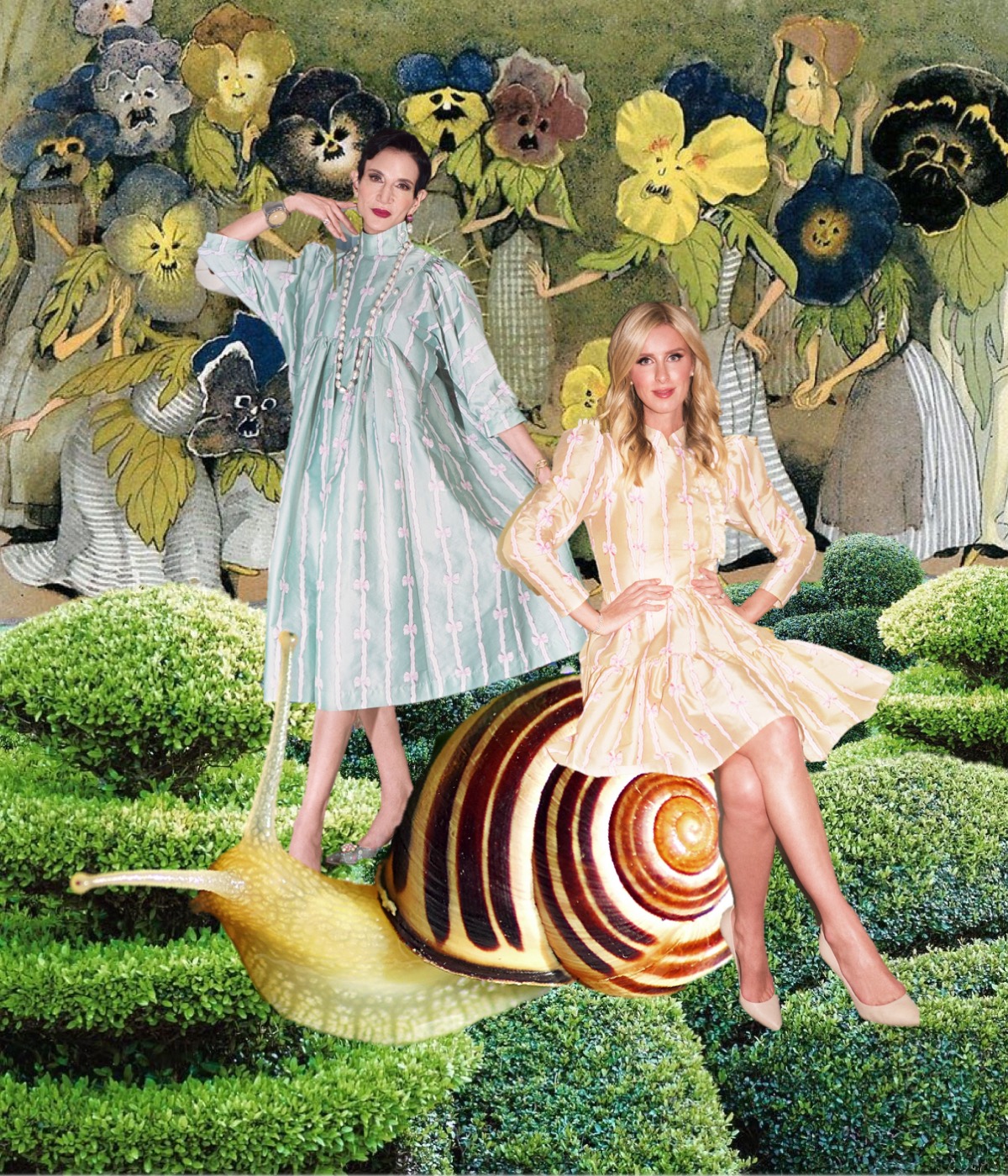
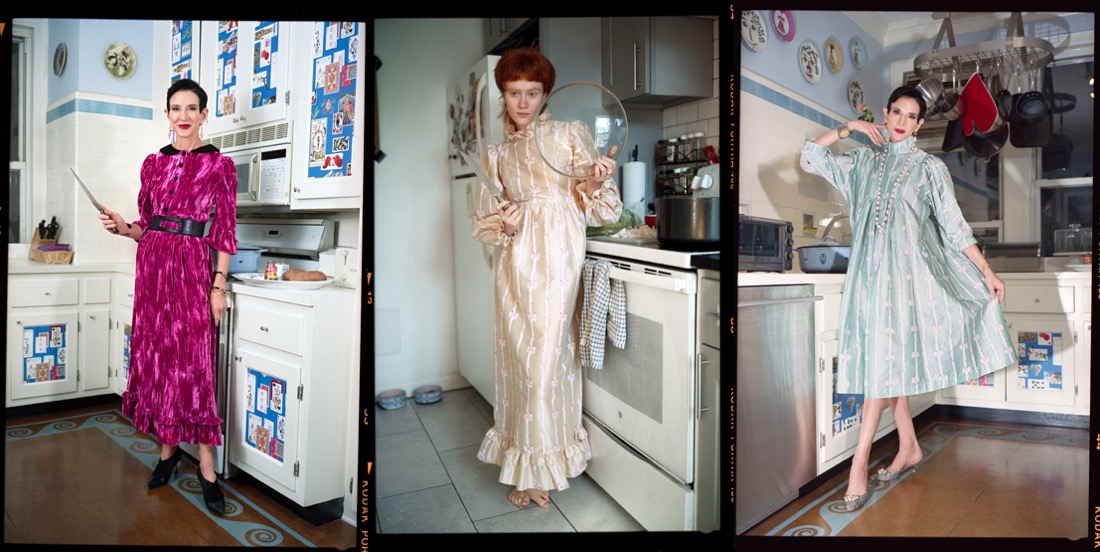
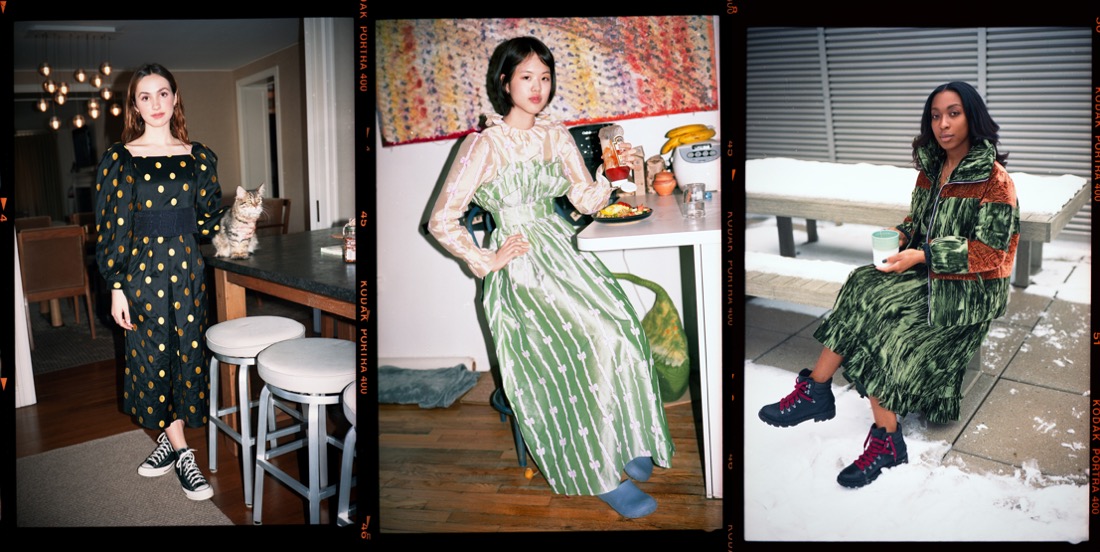
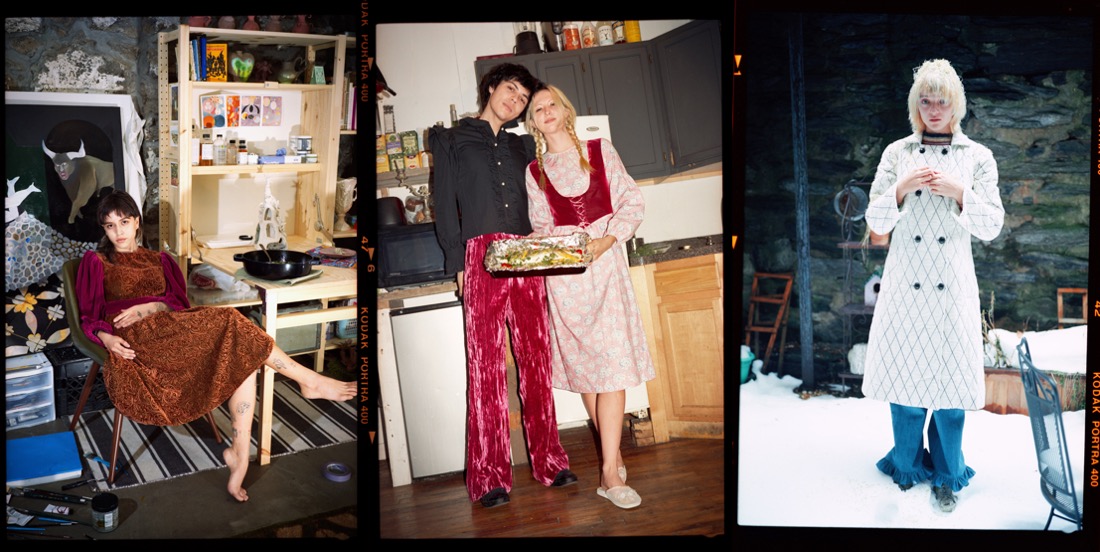
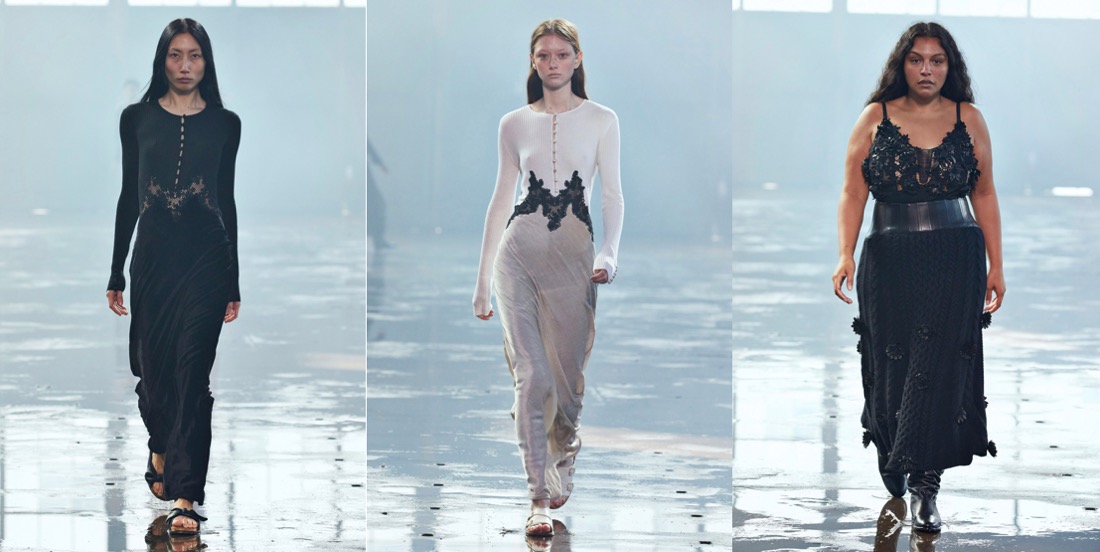
Batsheva Hay‘s brand is a great example of New York-based label that’s both small and big. The production isn’t huge, sustainable way of doing things is at heart, and there are no fancy runway events taking place each season. But the influence of a Batsheva dress is seismic, both in women’s everyday wardrobes and red carpet events, and the cult following of clients, who are looking forward to small drops of prairie gowns in one-of-a-kind vintage textiles or cute crotchet knitwear, would make a number of “big” brands quite jealous. This time, the designer is continuing the cookbook look book recipe she started for pre-fall 2021. The task of photographing people cooking in their own kitchens has taken her and her husband, the photographer Alexei Hay, into homes of various Batsheva wearers. Once they arrive, the goal is simple: photograph each person wearing Batsheva, cooking their favorite meal. This season the cast of model muses includes such individuals as Ego Nwodim, Nicky Hilton, Amy Fine Collins, and Maude Apatow, each offering a different take on clothing and cooking. As Hay recounts over Zoom to Vogue, some take hours to get ready – the designer-photographer duo don’t bring hair or makeup – others require their own accessories, and some have such specific recipes they take a whole day to produce. At the core, Hay offers clothing for women to live their lives in. It’s hard to predict what tomorrow might bring, especially now, but wouldn’t it be nice to have a garment that did it all: looked pretty on Zoom, was comfortable to wear, and could be dressed up enough to simply feel good? Hay’s roomy dresses offer that option, with sweet ruffles, crushed velvet, and bow ties to make the proposition all the sweeter. But for those without a sweet tooth, Hay is also expanding her traditional ready-to-wear. She has made jeans for the first time, two pairs with ruffle trim and elastic waists, and continues to expand her knitwear offering. Corsets and cummerbund details are built into her dresses, offering a smart styling solution.

Collage by Edward Kanarecki.