Can’t Go Wrong With Classic. The Row SS21

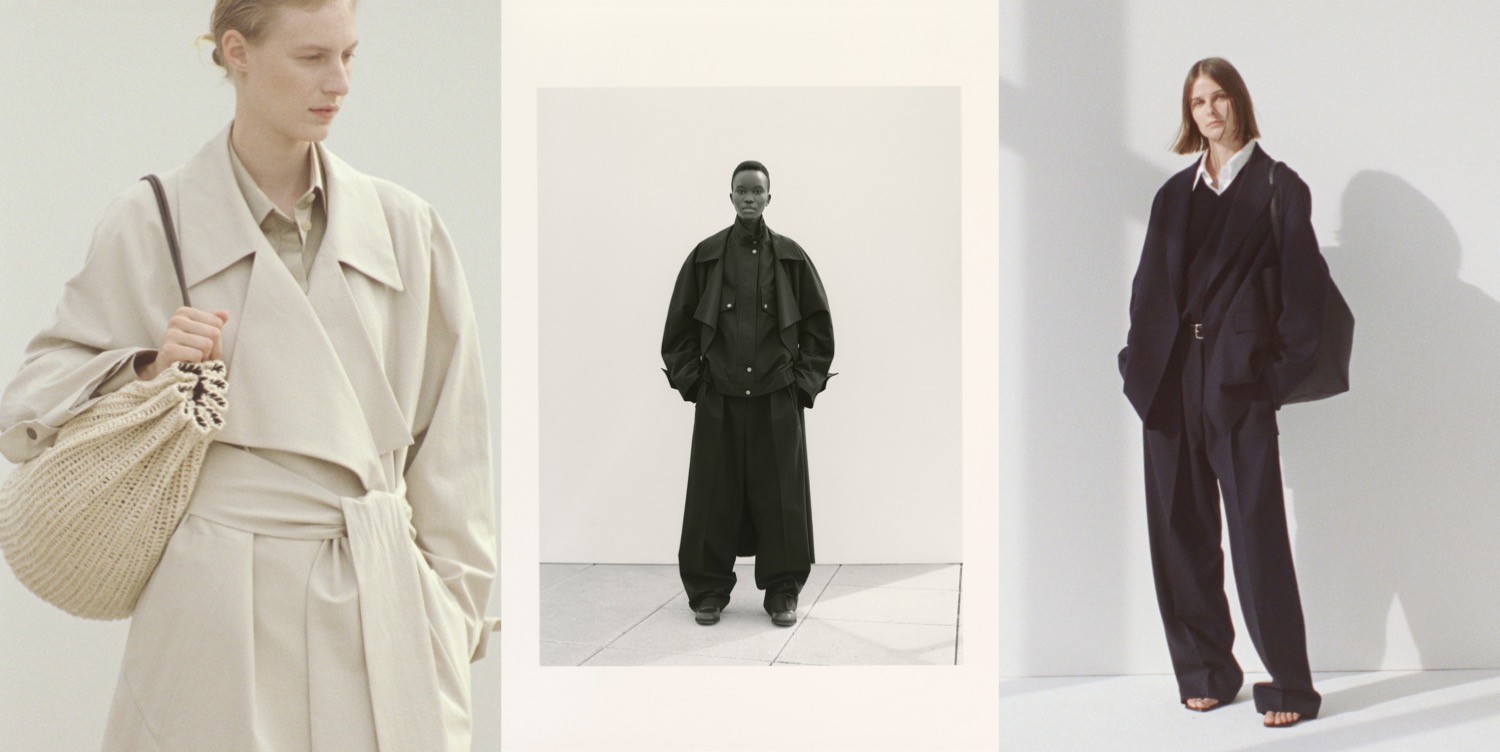
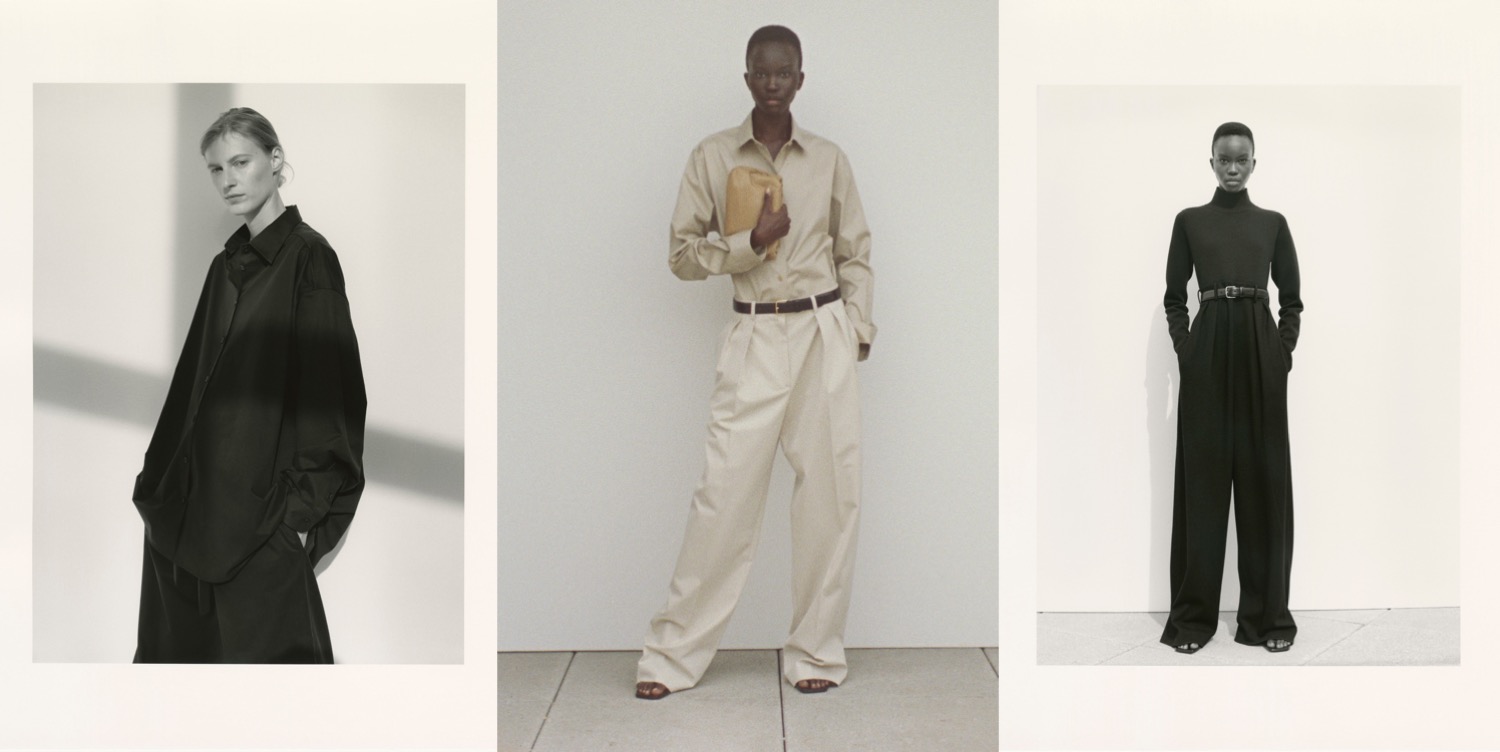
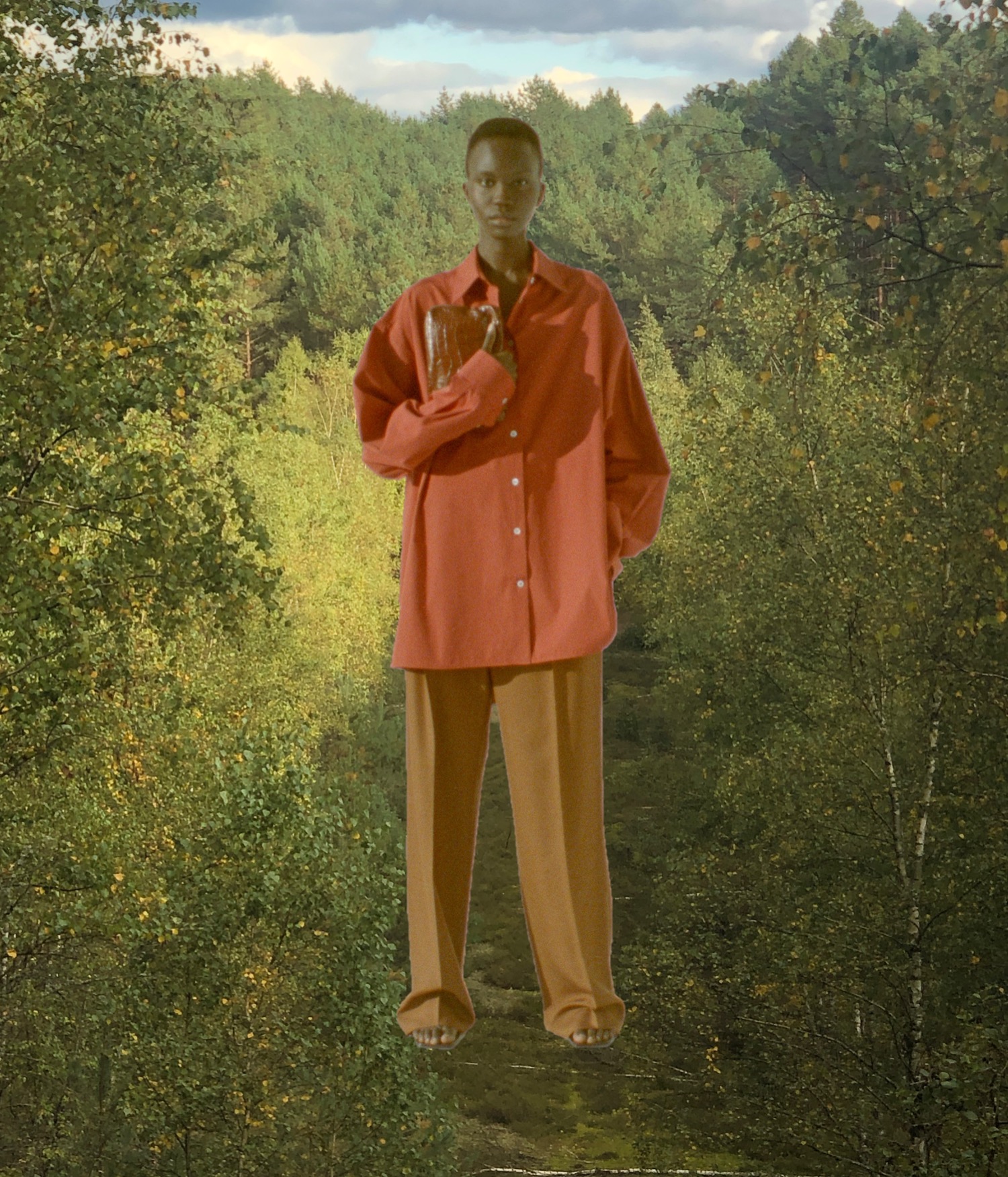
In tough times, you can’t go wrong with picking the most classic of the classics. The Row is an example:  Ashley and Mary-Kate Olsen‘s spring-summer 2021 line-up is all about their brand’s ultimate core, which is comfort, quality and understated luxury. The Row has always been a go-to label for women who favor discretion over bold display. This season finds the designers working especially within their minimalist framework, pushing new cuts and trying out unique materials. The suit of the season is oversized and mannish, with a double-breasted jacket worn over full pleated pants. Emphasizing ease and wearabiluty, they did a similar silhouette in knit. A V-neck vest makes multiple appearances in the look book, worn solo with a midi-skirt or teamed with a crisp white shirt and trousers. The palette is mostly monochrome neutrals, though there were two flashes of color in the form of button-downs in teal and rust. How about handspun organic silk made in single batches in Japan, which is exclusive to The Row this year? The white and black knit dresses they made with that silk are a sexy, body-limning counterpoint to the relaxed shapes of much of the rest of the collection. There is news in accessories. A 105 mm French heel pump counts as The Row’s highest ever, and a new Massimo drawstring backpack comes in that raw silk, as well as leather and suede. Naturally, there’s no logo-ing or hardware in sight. Timeless, investment pieces that will serve and please for years to come.
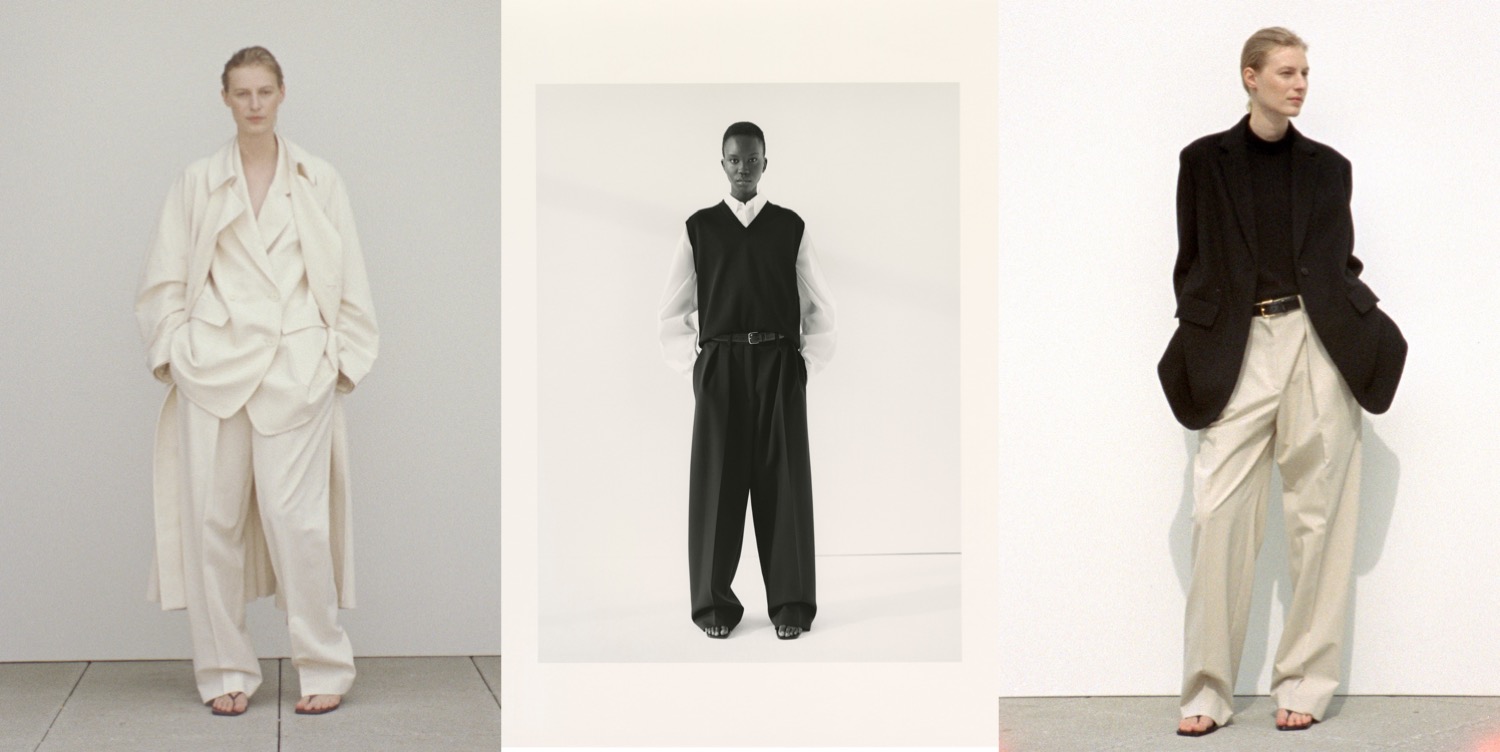
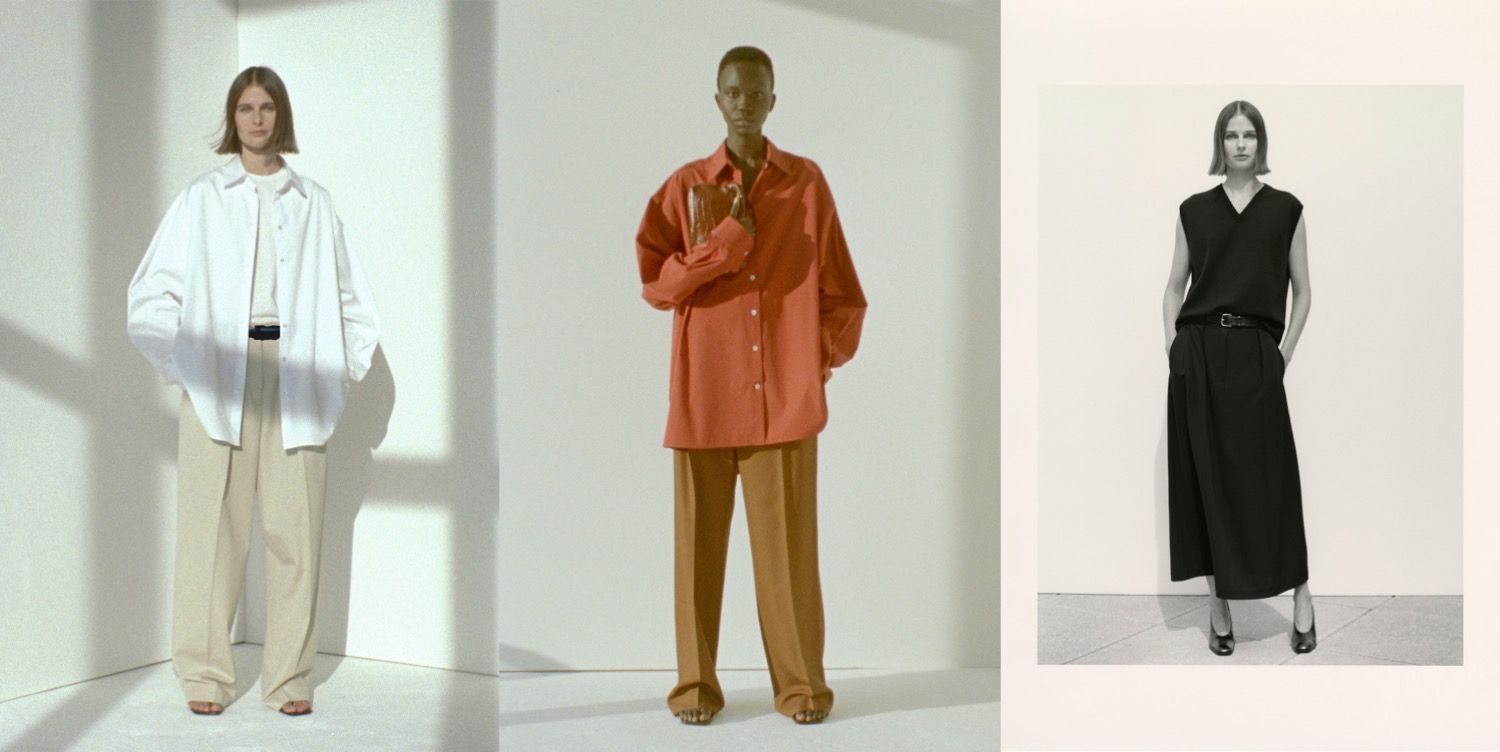
Collage by Edward Kanarecki.
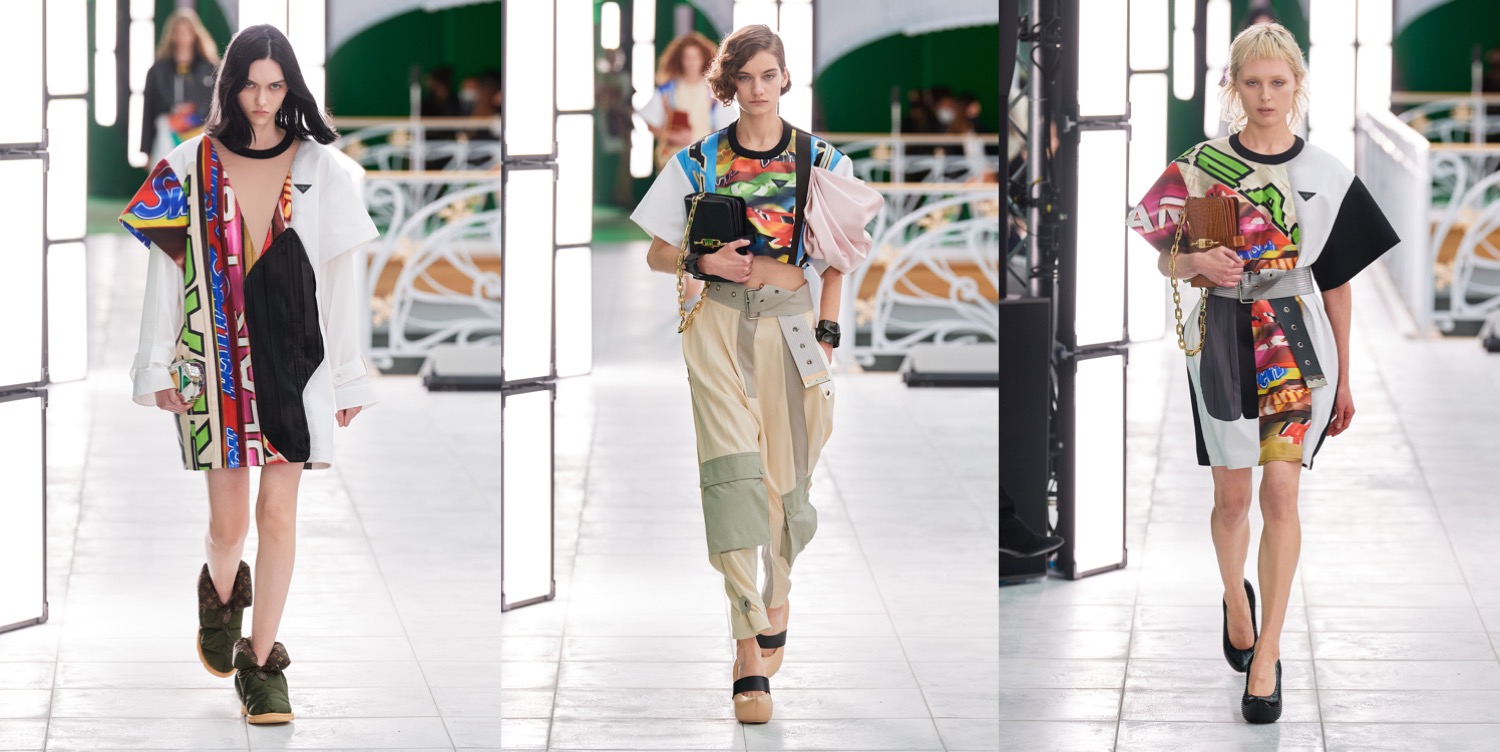
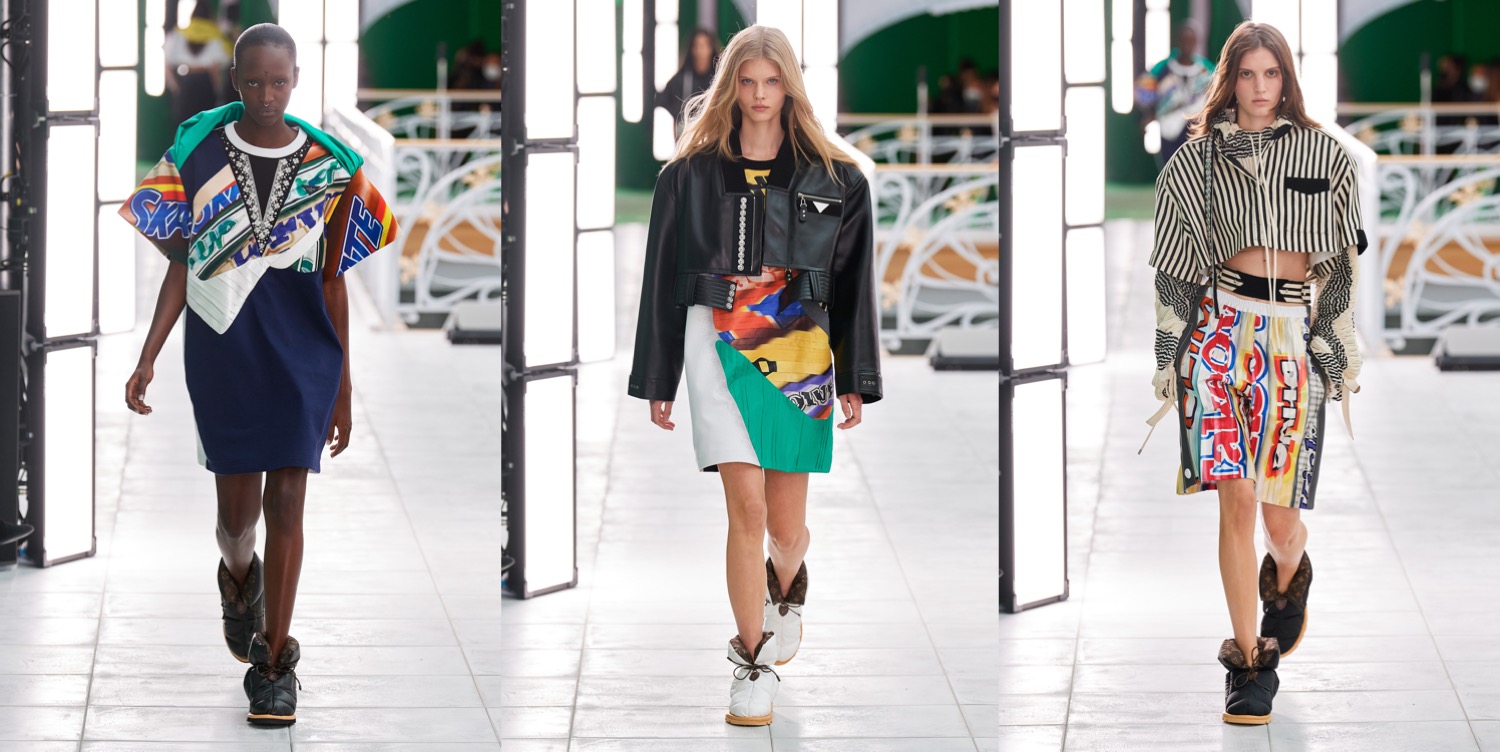
In Between. Louis Vuitton SS21

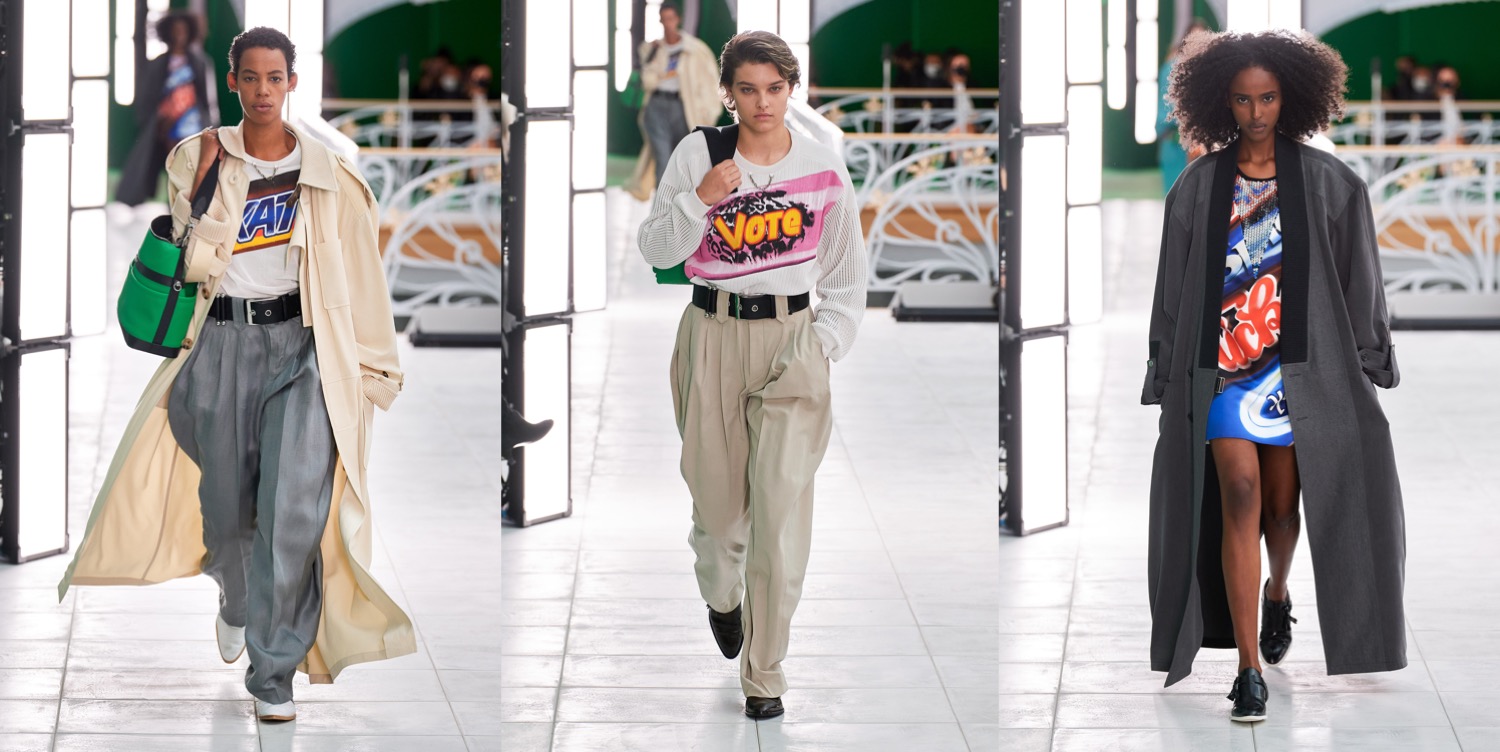
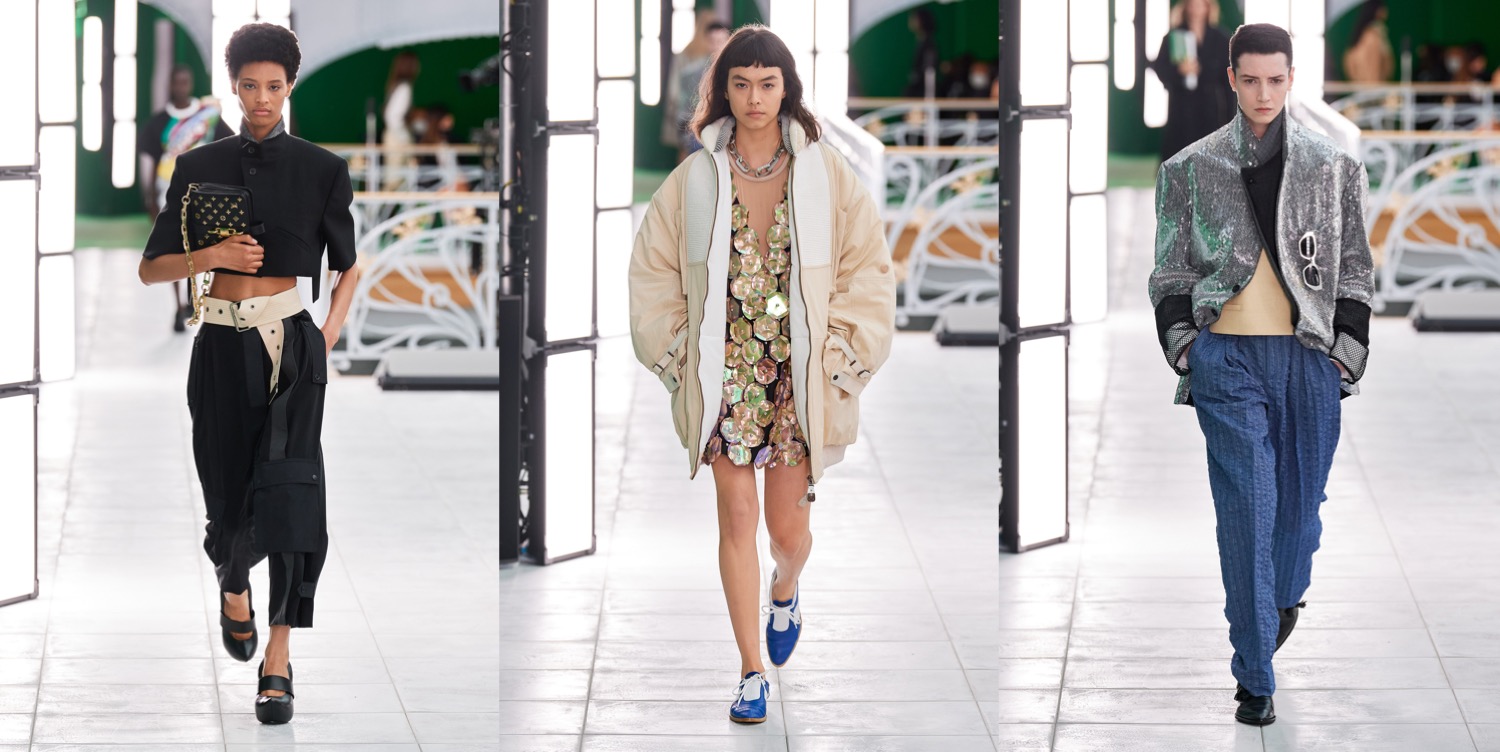
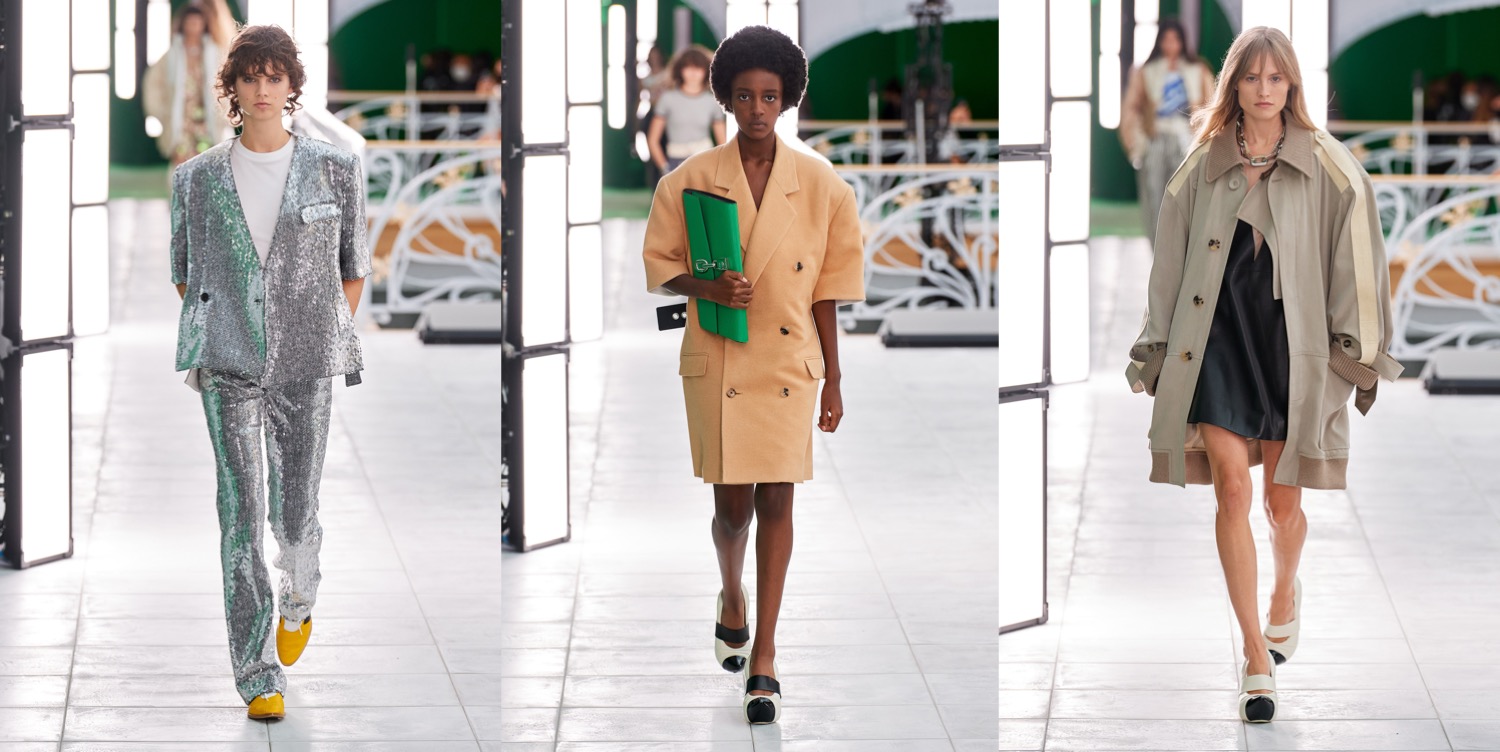
I’m really unconvinced by this Louis Vuitton collection delivered by Nicolas Ghesquière. It just felt so clumsy and messy. Which can’t be said of the show’s venue, which nearly each season looks better than the actual clothes on Vuitton’s runway (sorry…). Interspersed among the live audience in the freshly remodeled-by-LVMH La Samaritaine department store were 360-degree cameras that allowed viewers at home to swivel in their chairs, watch models coming and going, and see who did and didn’t score a better seat. It was almost like being there. “This season is very new in every way. The conditions that we’re facing are making us think differently. We came up with the idea of different degrees of presence.” In addition to the 360-degree cameras, green screens lined the walls and, in some places, the floors of La Samaritaine. Viewers of the livestream – the third way to watch and hear the show (there were live mics) – saw footage from Wim Wenders’s film Wings of Desire. Beyond the ’80s-ish silhouettes that have long been a touchpoint for the designer (and I think that’s the problem!), the connection between the Wenders movie and Ghesquière’s collection, was angels, which have two wings, but no gender. “My question this season was less about one theme; it was about this zone between femininity and masculinity,” he explained. “This zone is highlighted by nonbinary people, people that are taking a lot of freedom dressing themselves as they want, and, in turn, giving a lot of freedom to all of us. I found it inspiring to explore what the items are that represent this wardrobe that is not feminine, not masculine. I wanted to zoom in on that section in between.” The show began with a look that combined a timely Vote t-shirt (his absent American friends appreciated that) and baggy pleated chino pants cinched with a thick belt. It was emblematic of a collection that felt more spontaneous and street-ready than some of Ghesquière’s more glamorous outings. Basically, the entire line-up was kept in this sporty style. I’m intrigued by Nicolas’ take on the genderless fashion hitting such bourgeois brand as Louis Vuitton, but the clothes just don’t express that to me.

Collage by Edward Kanarecki.
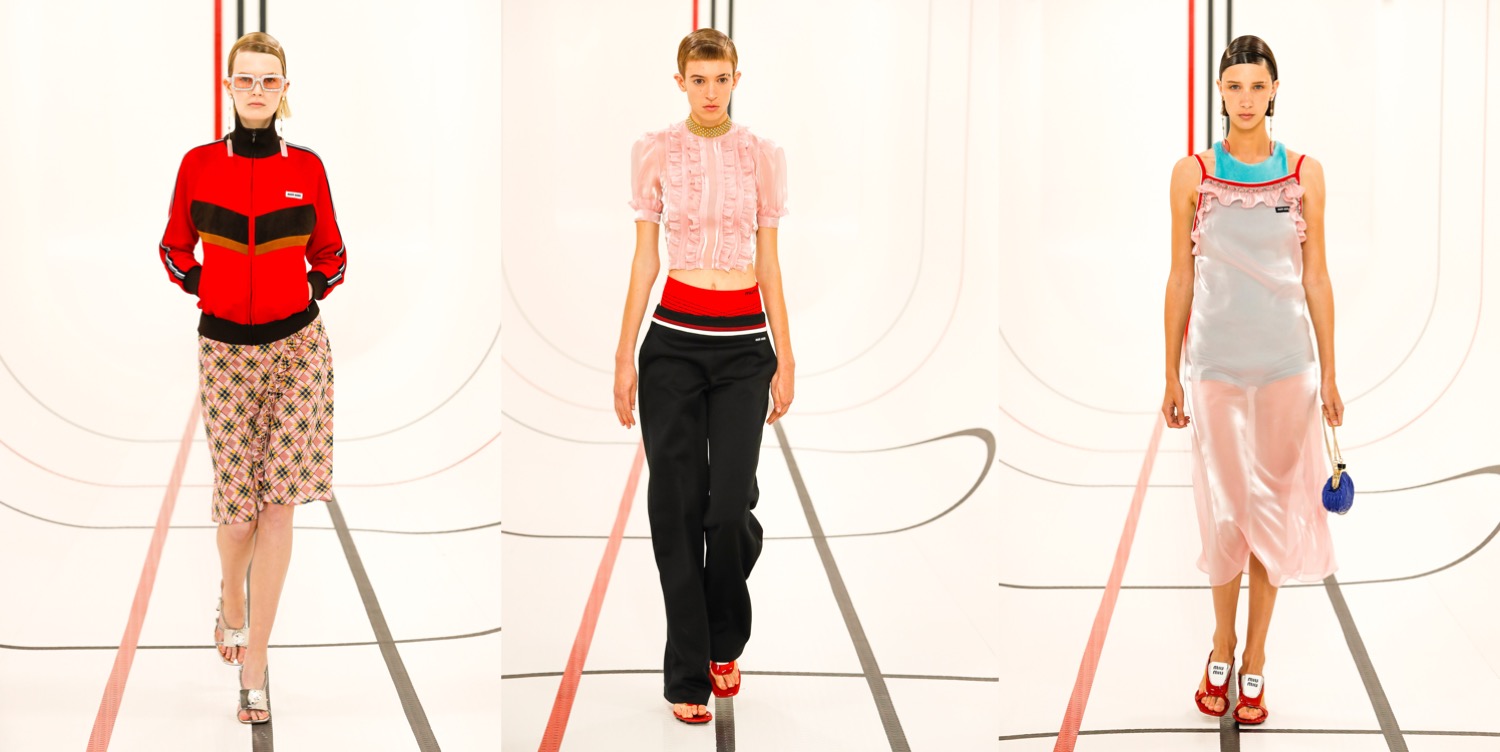
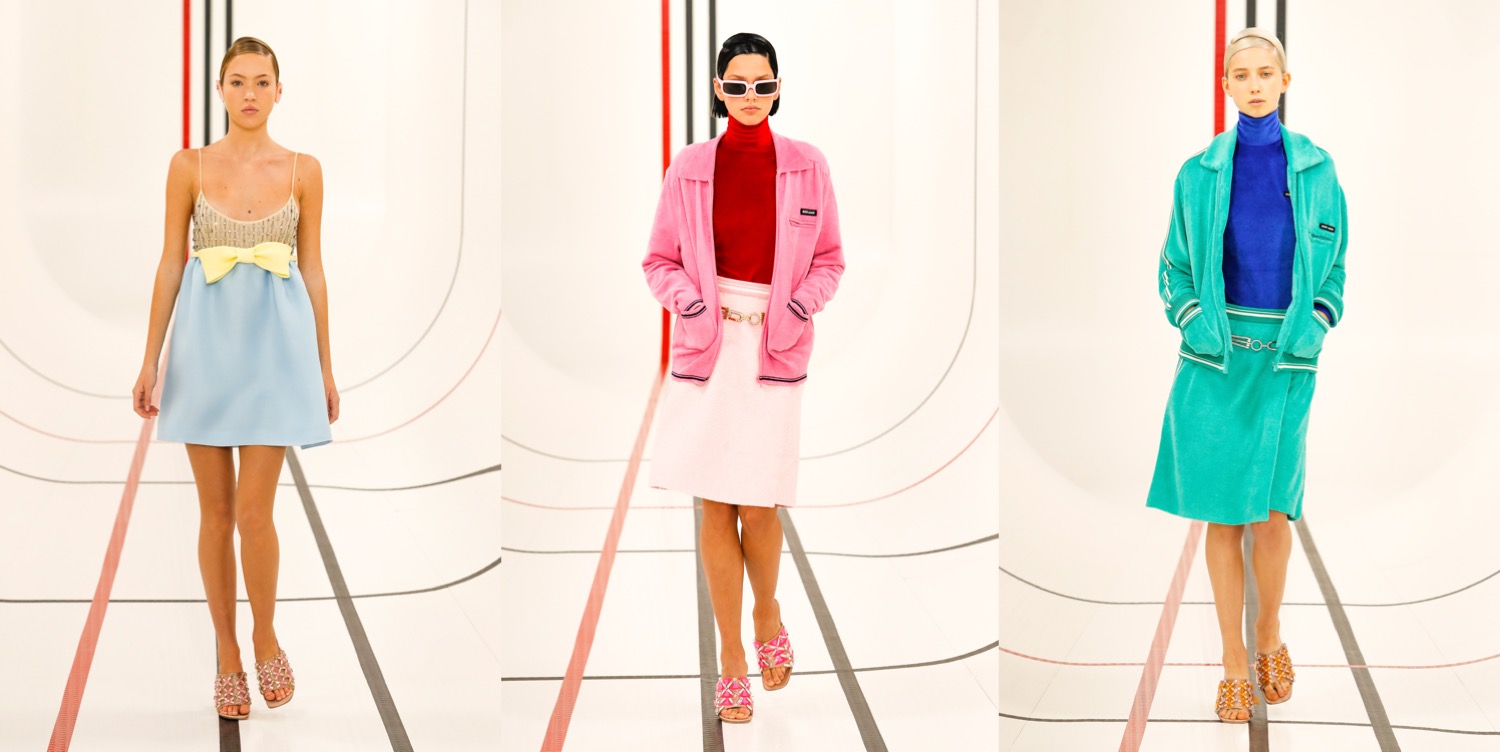
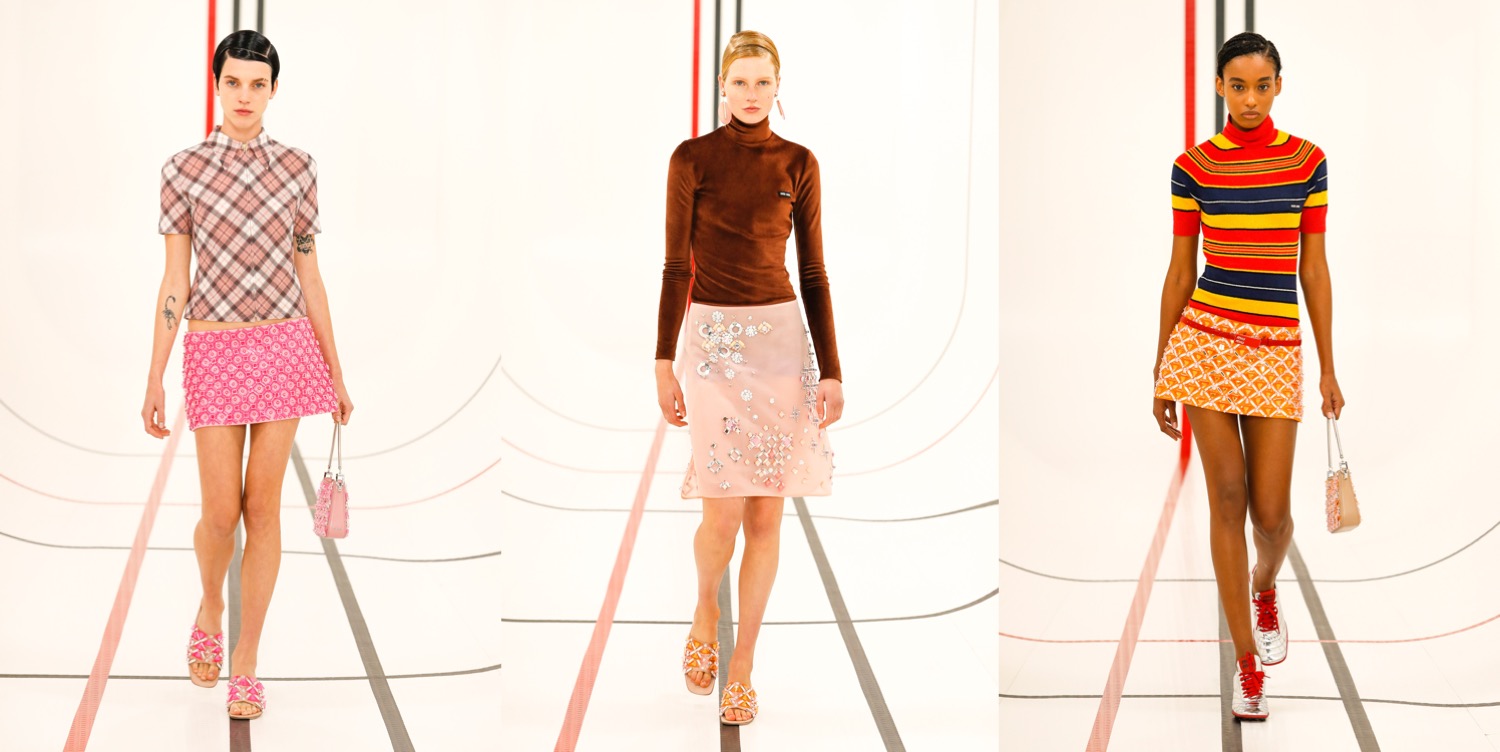
Girl. Miu Miu SS21

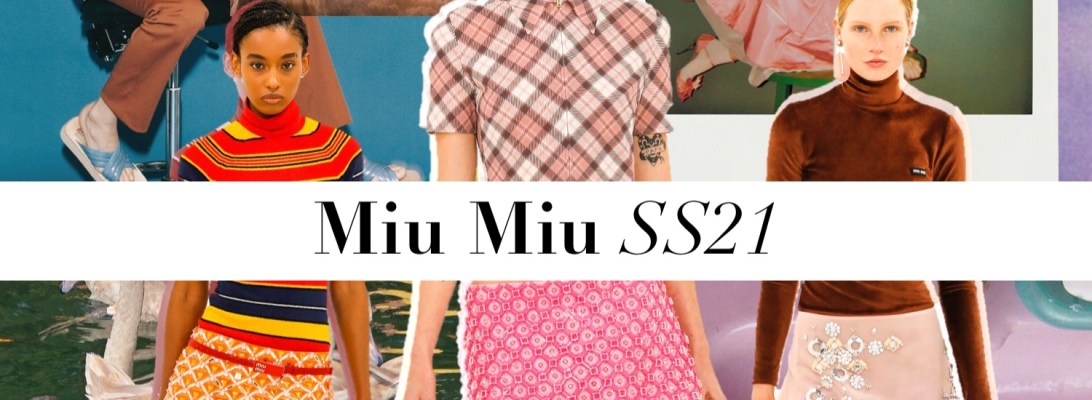
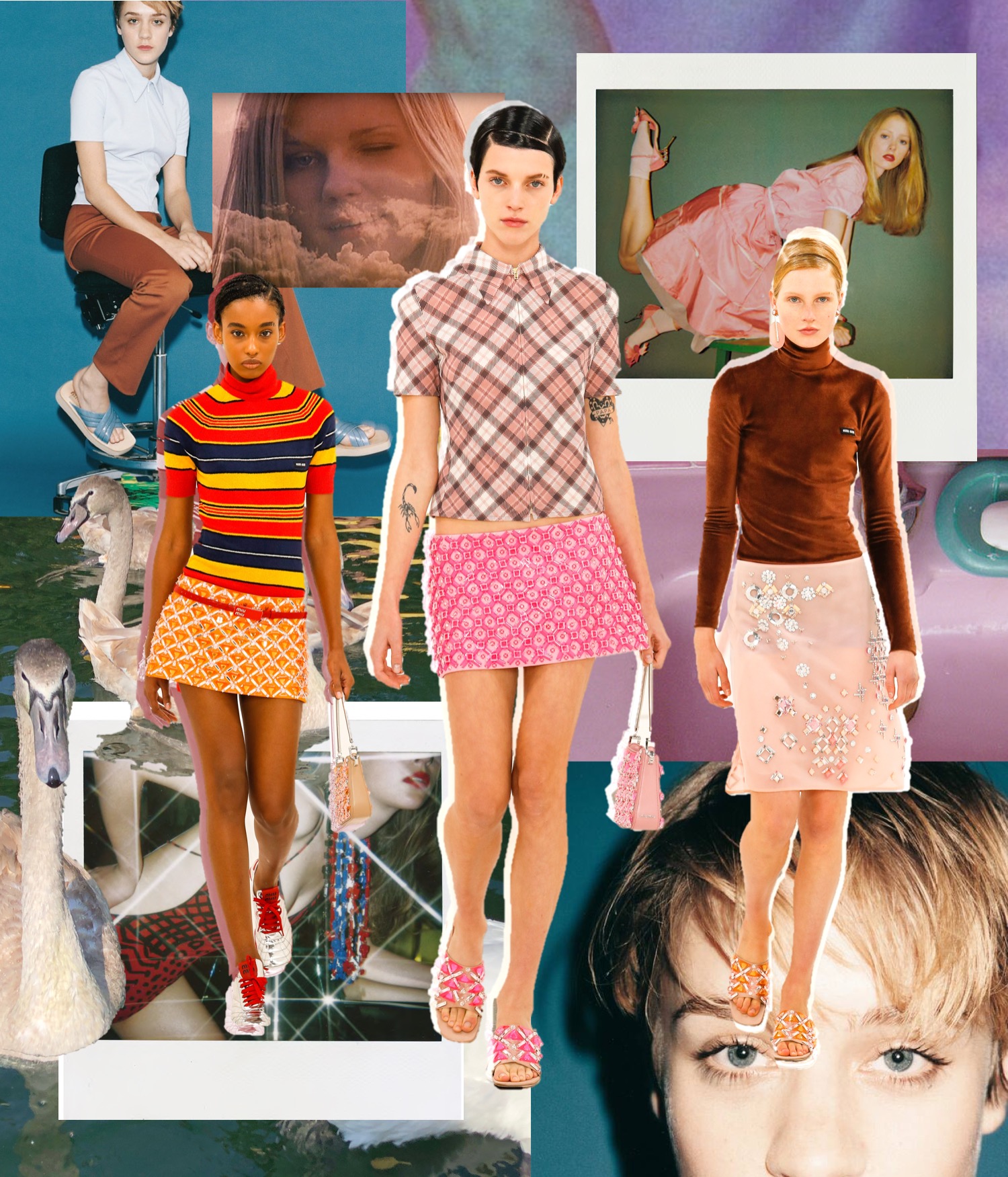
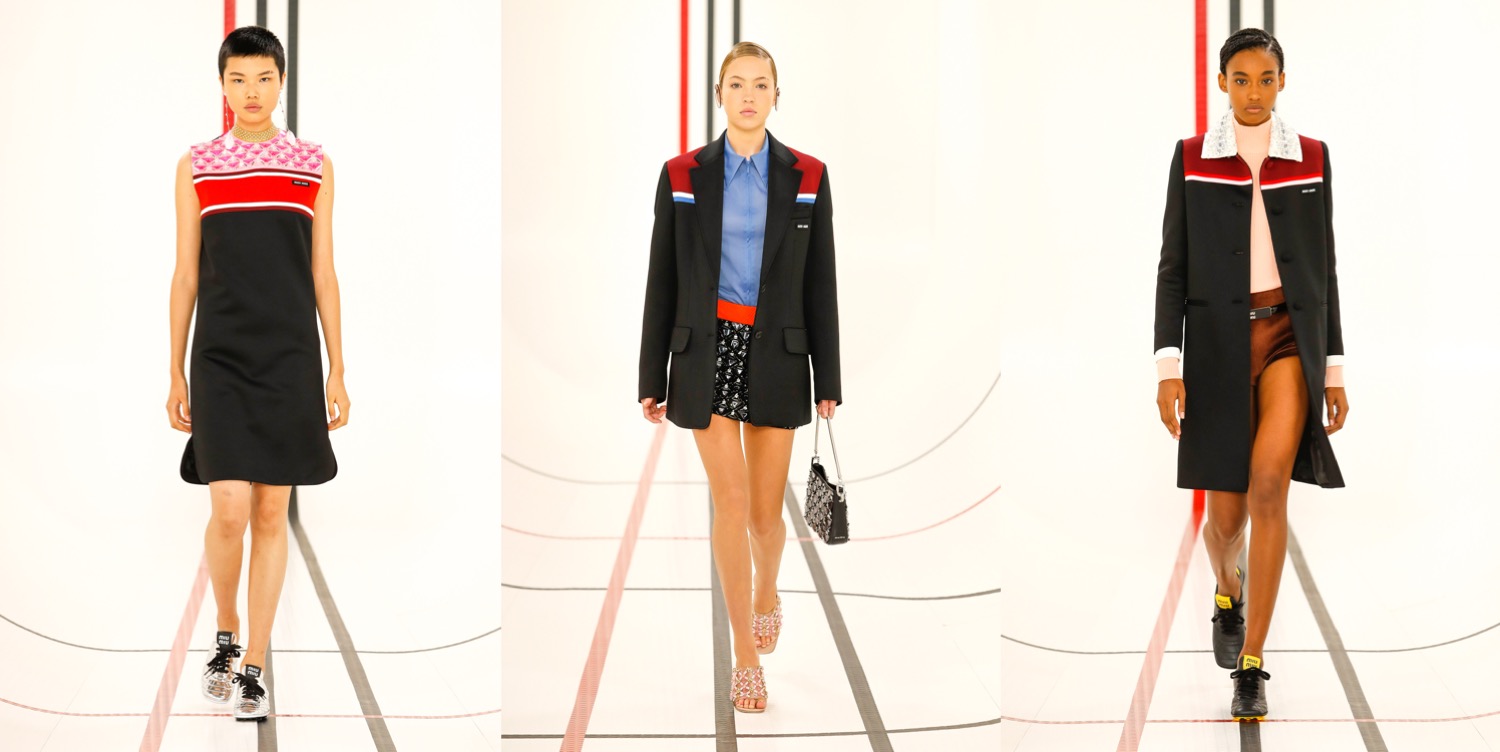
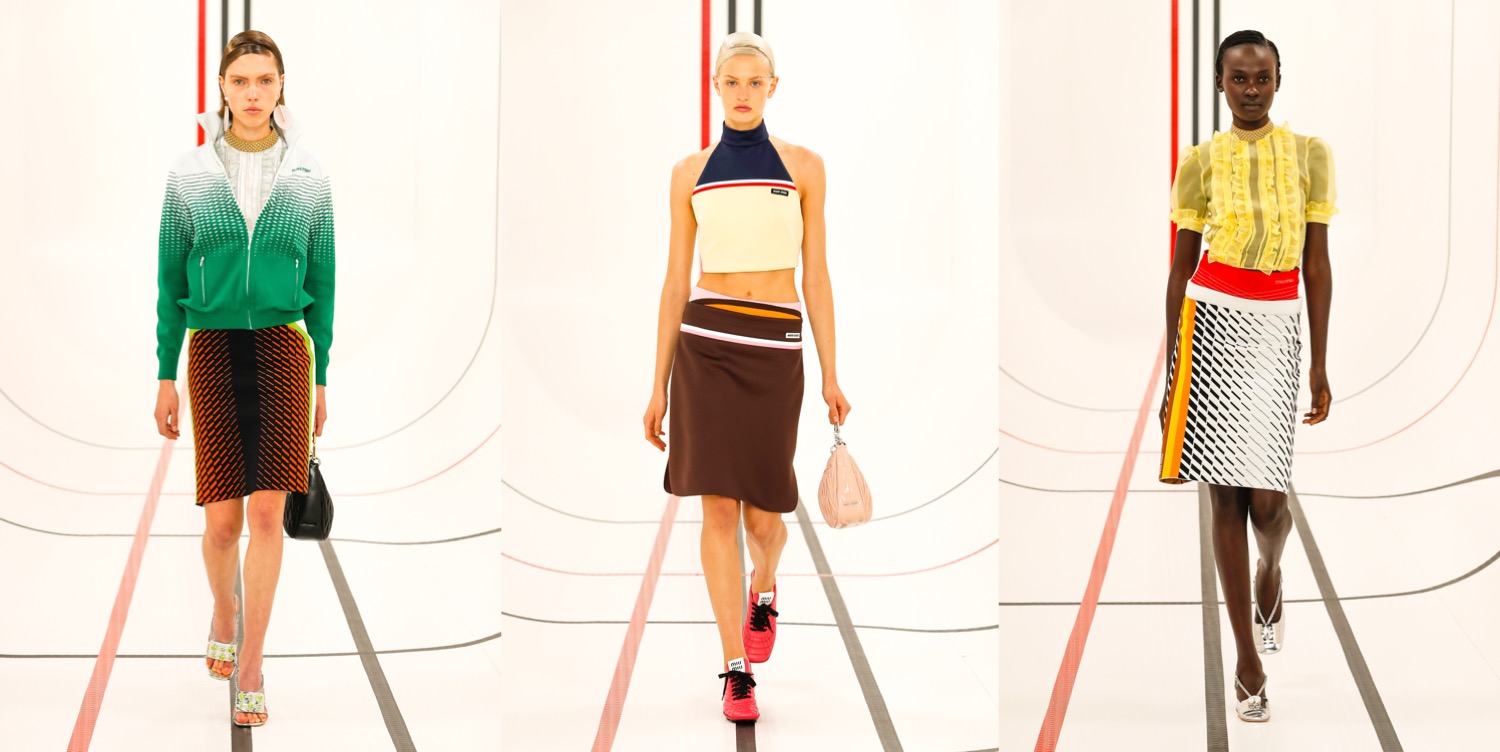
Is Miu Miu the “old Prada” now? After Miuccia Prada‘s first Prada collection with Raf Simons, which left the audience polarised, this seems to be a good idea for Miu Miu. But them, this was a quintessentially Miu Miu outing – really, the spring-summer 2021 collection is one of the best in a while coming from the brand. Livestreamed from Milan during the last day of Paris Fashion Week, the show set imagined a cyber-spacious sports arena covered in screens with the – also livestreamed – faces of Miu Miu poster girls watching the show, including Elle Fanning, Chloé Sevigny (one of the checked tops was the original piece she wore in the brand’s ad campaign shot by Juergen Teller!), Małgorzata Szumowska, Susie Lau and other Miu faces. Opened by Lila Moss, the collection captured the accidental uniforms of young people. It’s a wardrobe suspended between the extremes of the hyper-casual and that stilted sense of formality you get from a prom photo. “Polarity. These are polar times,” as Prada said in a statement after the show. “The reason why people dress is sometimes to please, sometimes to be sexy, sometimes to be socially relevant, sometimes for a job. The way you present yourself – the clothes are important because they define you in a second. Clothes are a tool for that message,” she continued. “The first spectator of yourself is you.” The Miu Miu show read like the Euphoria generation’s guide to effortless dressing: the things you wear through the process of learning the messages Prada wanted to convey about the role of clothes in life. Prim and pristine low-riding track pants, sharp track jackets, micro skirts, and kitten-heeled tennis shoes embodied the dress codes of sports activities. Sporty blazers, little bowling jackets, neat shirts, and plaid skirts evoked school uniforms. Conceived in the teenage dreams of perfect party outfits, there were techno-fied halter-neck shell tops and oscillating techy dresses. Then, some dream prom scenarios as well, like a white dress with a draped bow on the back that curtained dramatically to the side to reveal its pink lining. Prada’s show notes talked about the institution of the fashion show as a unifying event – something she wanted to convey through her livestreamed experience. Carried by the young women on her runway, that sentiment reminded some of us of the time we fell in love with fashion shows in the first place; in our teenage bedroom, chunky laptop at hand, waiting for the first runway pictures from our favorite shows to come in.

Collage by Edward Kanarecki.
Lights, Camera, Action. Chanel SS21

I really start to appreciate Virginie Viard‘s vision for Chanel. The spring-summer 2021 Chanel show set, in Paris’s Grand Palais, spelled the brand’s name in giant letters, evoking the iconic Hollywood sign. Did this suggest that creative director Viard was thinking of the movies? “Less movies than actresses,” Viard explained, and particularly the modern life of actresses, from the high production values of the red carpet, to a staged off-duty look whilst getting a Starbucks in the certain knowledge that a paparazzo might be lurking in the parking lot, “the whole process!” Meanwhile, the accompanying movie teasers, produced by Inez and Vinoodh, literally brought Paris to Tinseltown, with the Sacre Coeur nestled proudly in those Hollywood Hills – symbolic of Viard’s marriage of Parisian cool with laid-back Los Angeles style. And of course, Coco Chanel’s love affair with film industry played its crucial role. Coco, who began her career as a performer singing saucy music hall songs, later made over a handful of actresses in her own image, just as she did with such beloved models in her in-house cabine as Marie-Hélène Arnaud and Jackie Rogers. The designer, for instance, transformed Romy Schneider into a baby-faced version of herself, and Luchino Visconti immortalized Schneider’s new look in his 1962 short movie Boccaccio 70. Chanel herself is even said to have found the new stage name for the Nouvelle Vague actress Anna Karina. Viard, who has all these references at her fingertips, is also drawn to femme fatale Jeanne Moreau in Louis Malle’s 1958 Elevator to the Gallows, and she looked to some on-screen Chanel moments in her collection. The show itself felt like a cinematic experience, and the clothes matched that elegant, yet unpretentious ambience. Viard had jumpsuits, flowing gowns and eternal tweeds as she was evoking the real life wardrobes of contemporary actresses using her own cabine of models, including many new French faces and the sophisticated Louise de Chevigny. All of them were encouraged to do their actressy best on the runway. The collection is quintessentially Chanel, nothing overly innovative – but absolutely consistent and reassuring with all its Chanel-isms. Maybe a bit less logos next time? That understated, relaxed, yet chic style Viard does so well, without all the forced decorations, clearly speaks for itself.

Collage by Edward Kanarecki.
Bold Elegance. Givenchy SS21

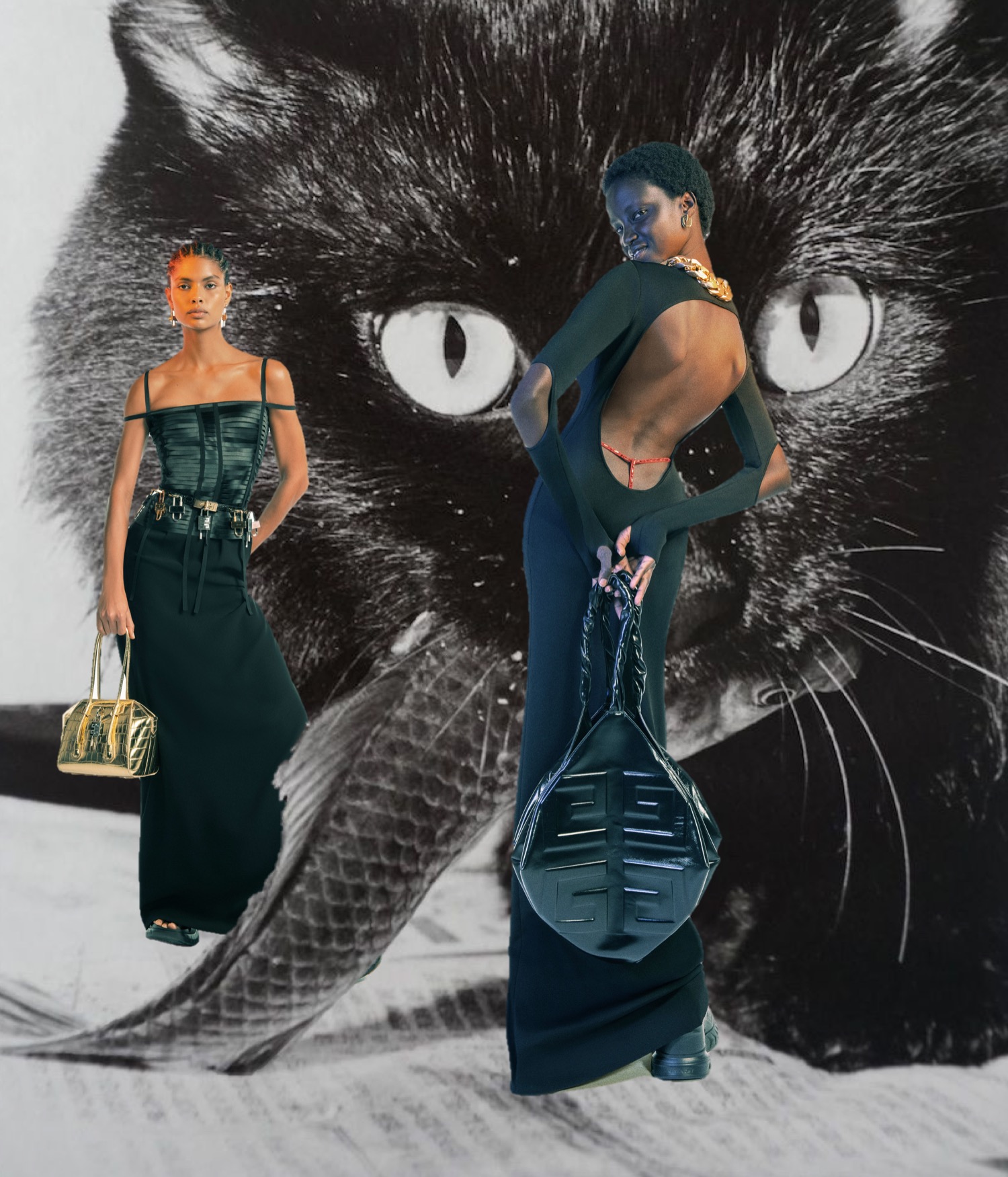
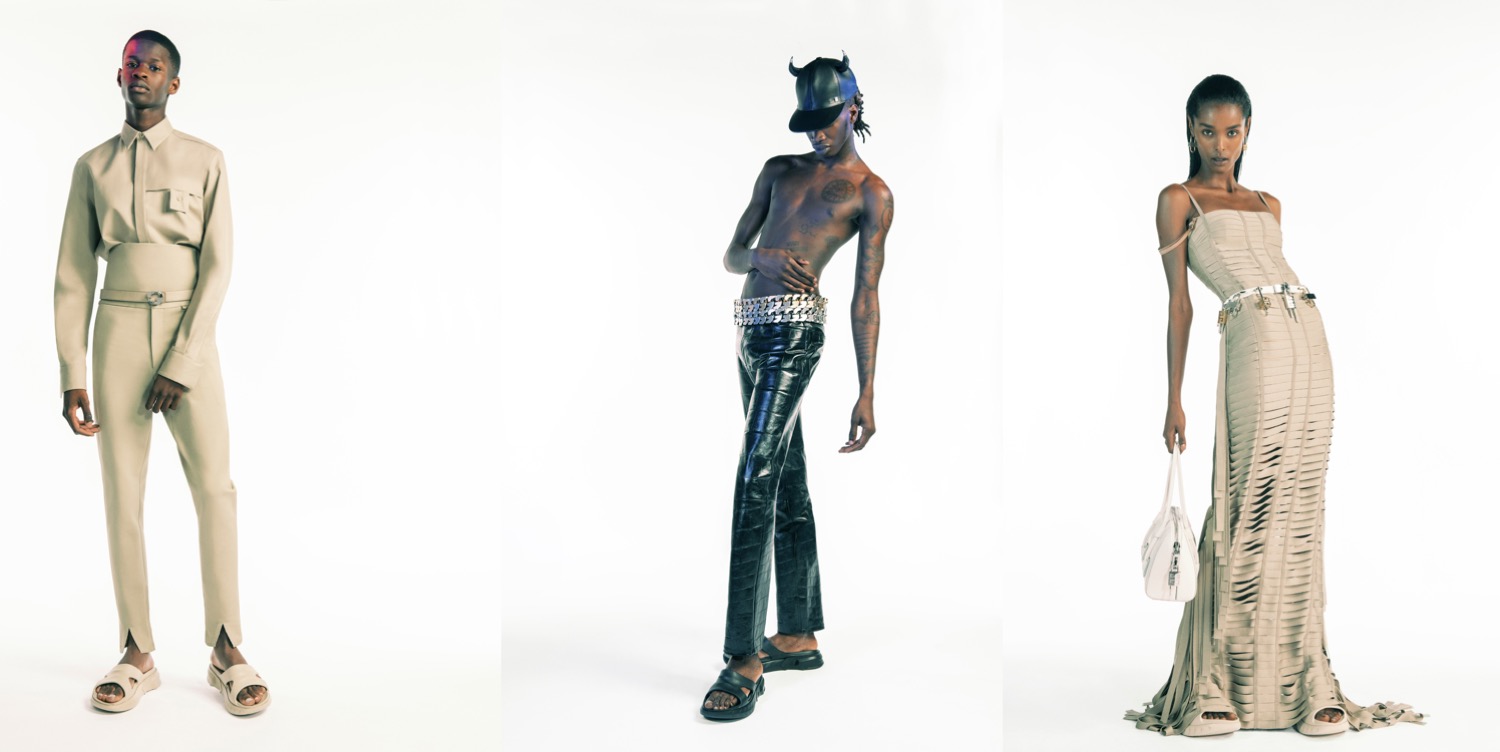
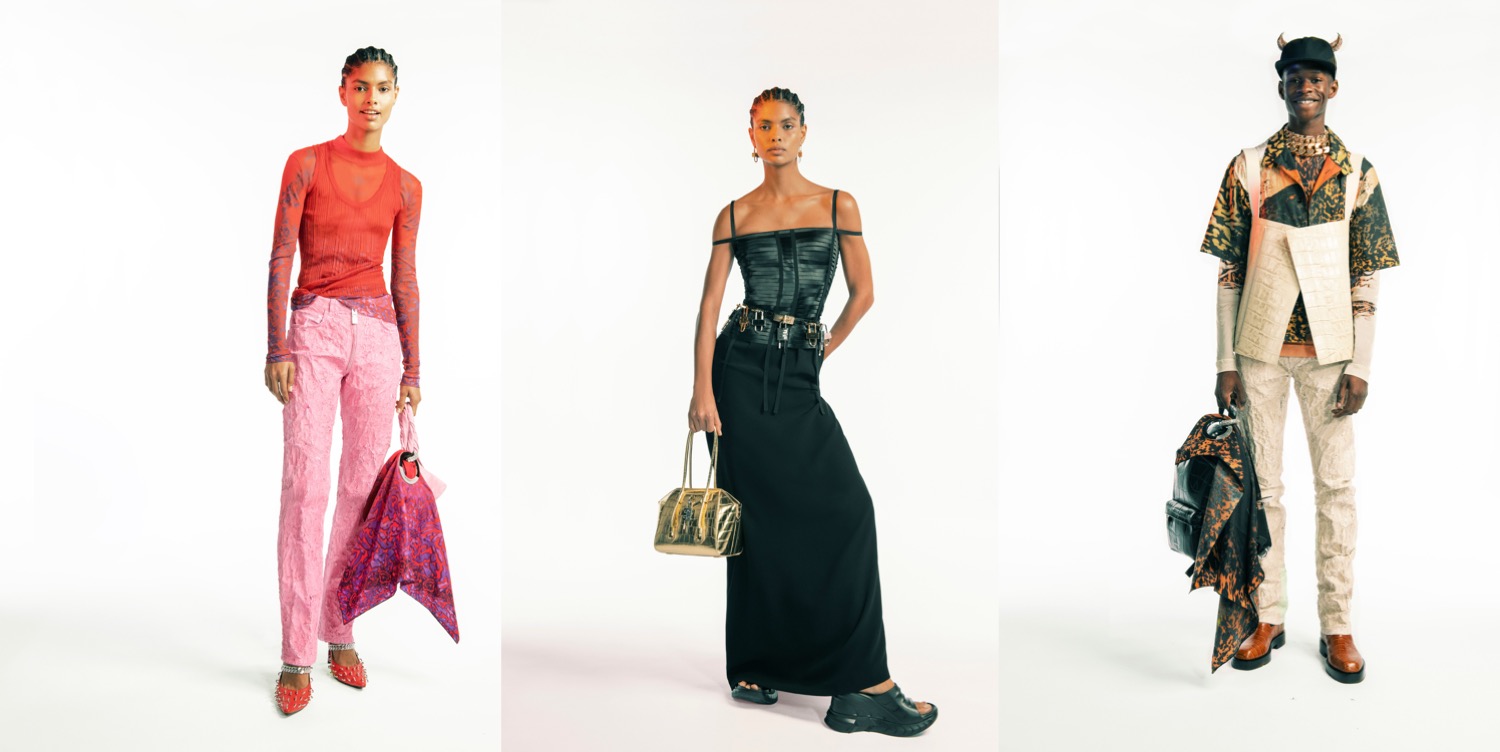
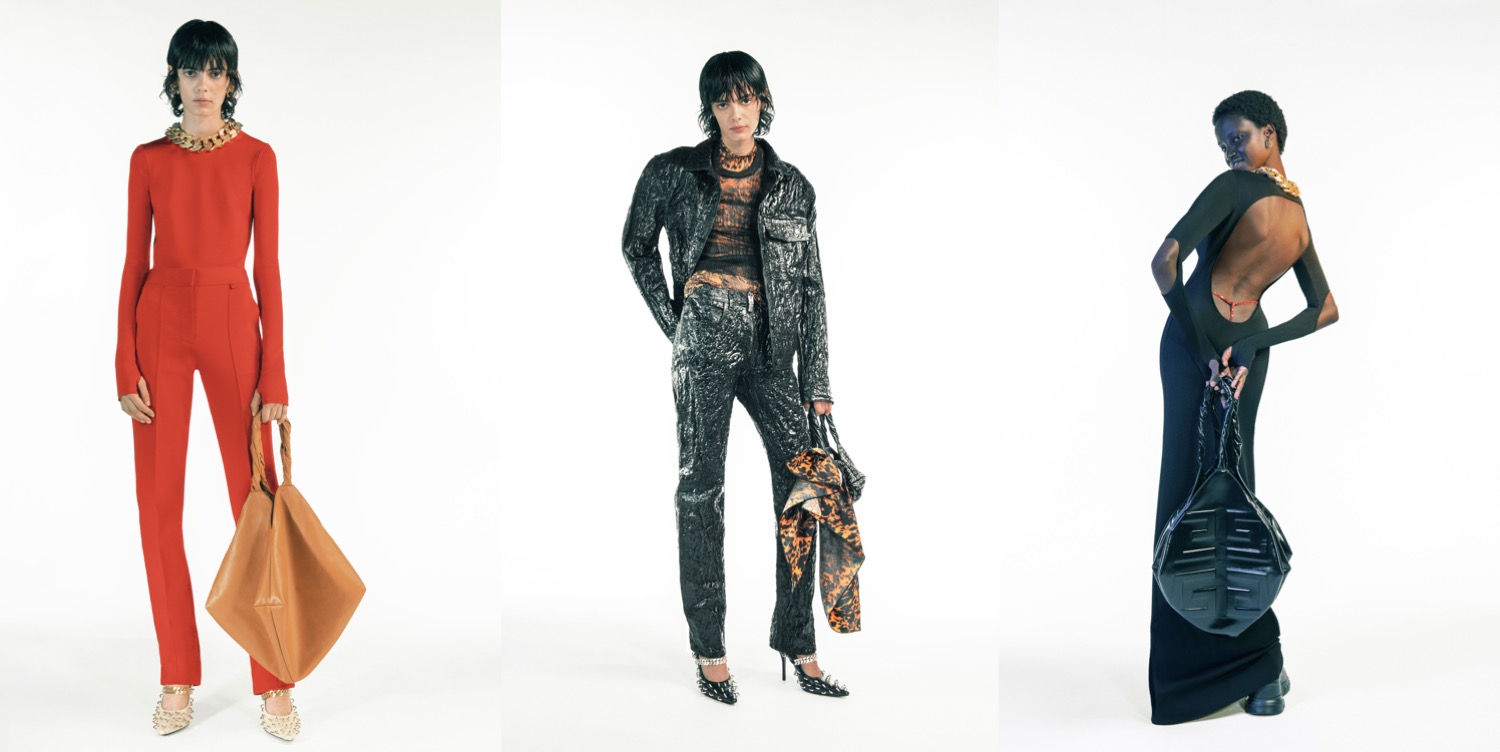
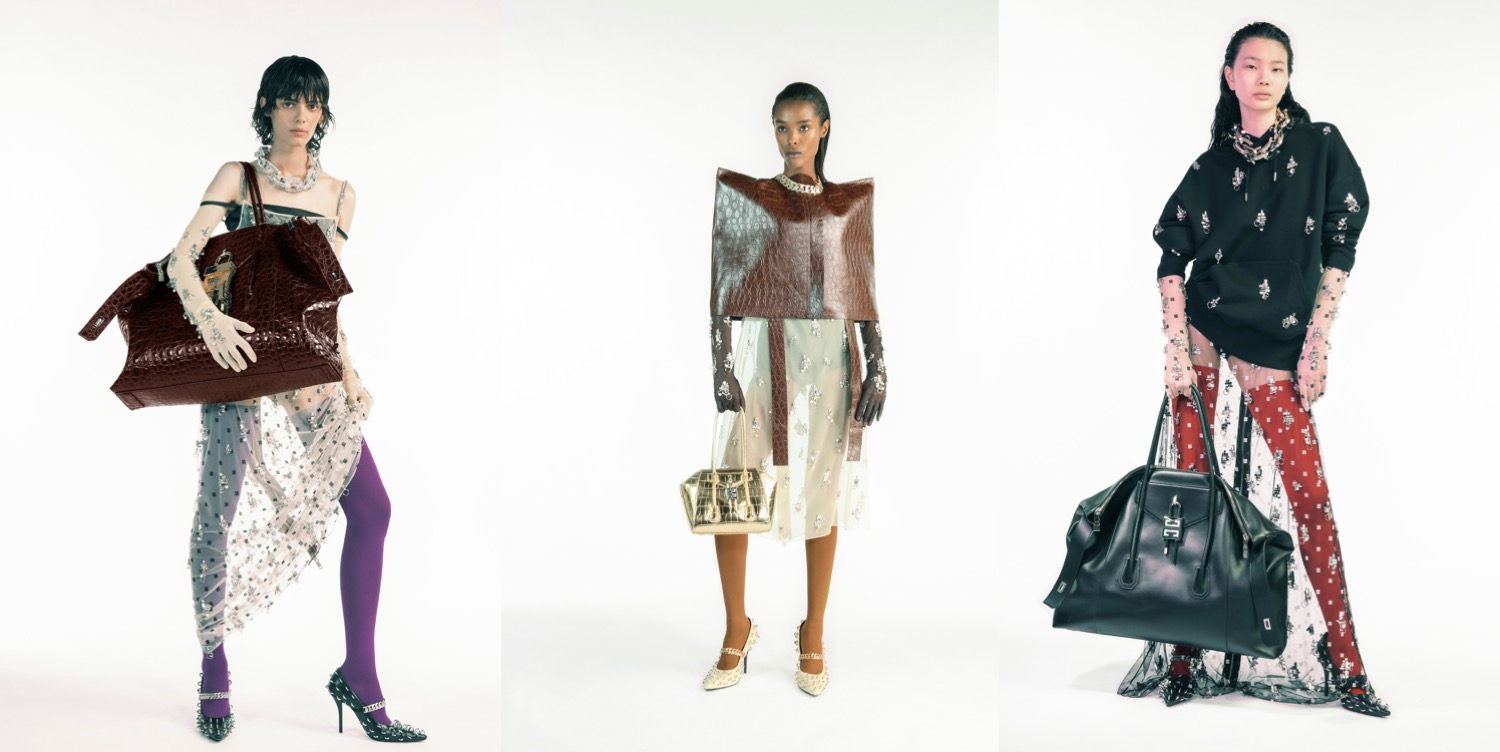
To be honest, except for beautiful couture moments, Clare Waight Keller’s Givenchy was a yawn. But when I heard that Matthew M. Williams is the new creative director, I was skeptical – I never understood what’s his Alyx is all about. To my surprise, his debut collection for the French maison was pretty good, closer to Riccardo Tisci’s years when the brand was a fusion of dark elegance and a fresh look at “street-wear” (I dread this word, because it got completely distorted throughout the years). During the Paris presentation (no fashion show, but a look-book), placed front and center was his new lock jewelry inspired by those hung on the bridges of Paris by tourist lovebirds, who throw the key in the Seine. “It’s no secret that I’m really into hardware, and that’s what I lay the foundation with when I start a new project. It comes into shoes, bags, clothing,” he said. Williams is also obsessed with texture – from the reptilian to the volcanic and the densely embellished – as fervently illustrated at his own label. His Givenchy debut read entirely like a morph between those codes and the black-clad elegance of the house he now inhabits. Suspended between the formal and the super casual, the devil was in the fabric treatments. There’s a twisted expensiveness about Williams’s clothes that feels good and dirty all at once. What’s interesting, Williams hadn’t worked with a particular inspiration. “I’m not a person who designs in themes. It’s very much product-focused. A lot of it is what I would wear personally,” he explained, adding he did take a trip to the archives that birthed some horn heels informed by Alexander McQueen’s era, and nods to Hubert de Givenchy evident in some rigorous tailoring. The focus on product was seemingly an unemotional process that paid off in the precision of design clearly made to be instantly coveted: mushroomed slides, politely stompy black leather boots, magnified takes on existing bags. There weren’t many logos around – which I appreciate a lot. Williams isn’t mad about them. “It’s funny that I get lumped into people expecting that I do that, which I don’t really understand because at Alyx we don’t do that either,” he noted. Instead, he wants his hardware to replace the role of logos. In fact, Williams’s vision for the Givenchy woman – “very elegant and powerful and chic” – was remarkably graphic and decorative. A transparent white coat covered in fuzzy tinsel, worn over a white laser-cut top that looked like a bustier made from ribbon, with cream trousers, was simply gagging for a scene in an early 2000s music video. This will sell well, I guess.

Collage by Edward Kanarecki.