Gucci Team. Gucci Resort 2021

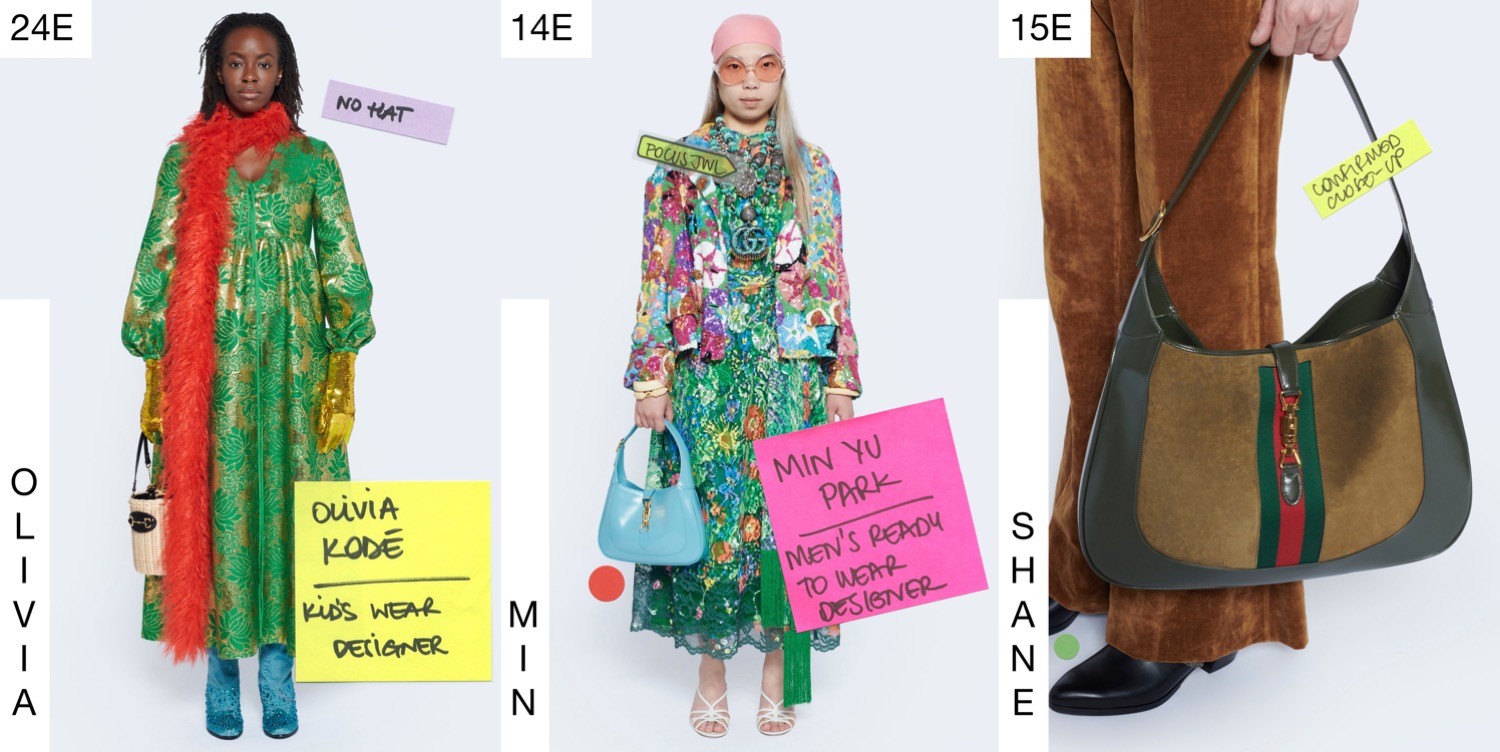
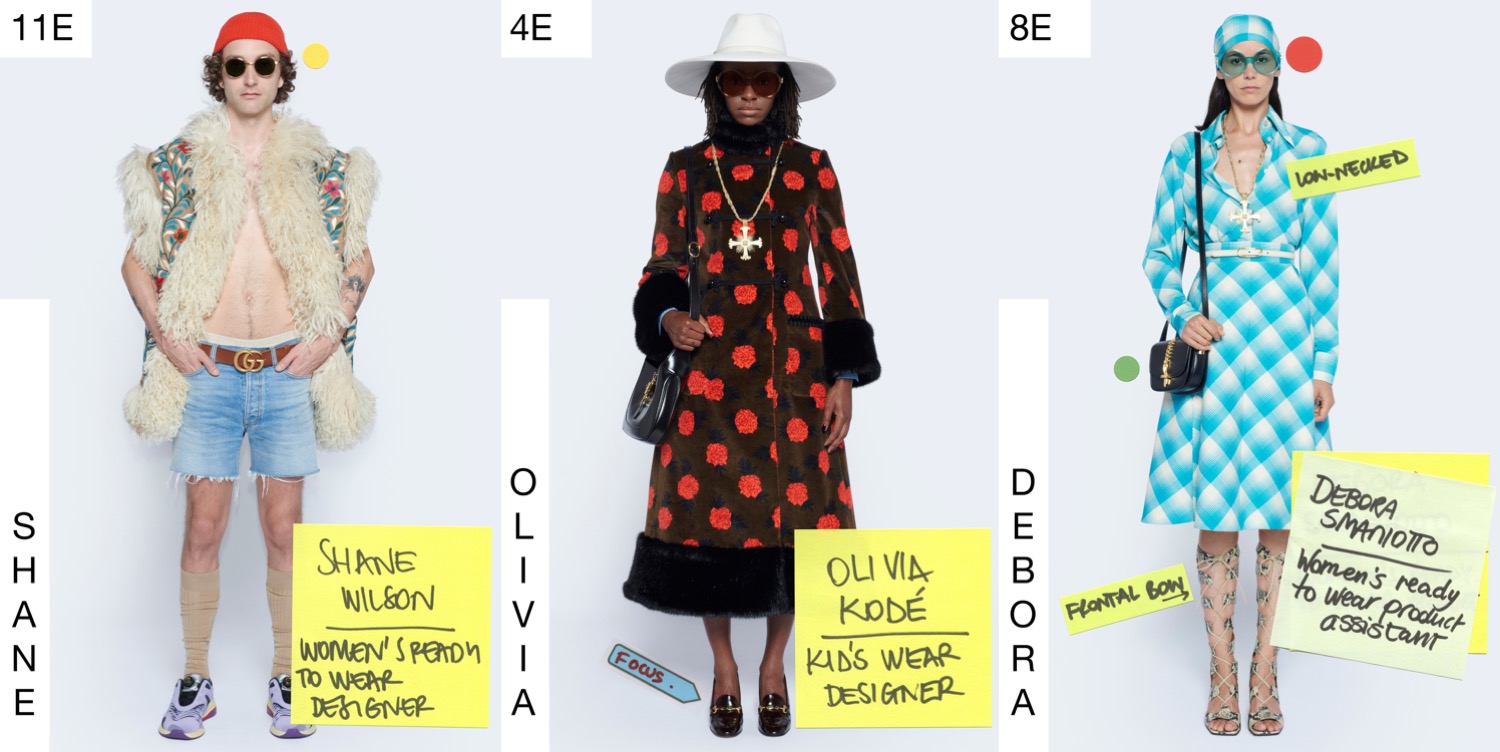
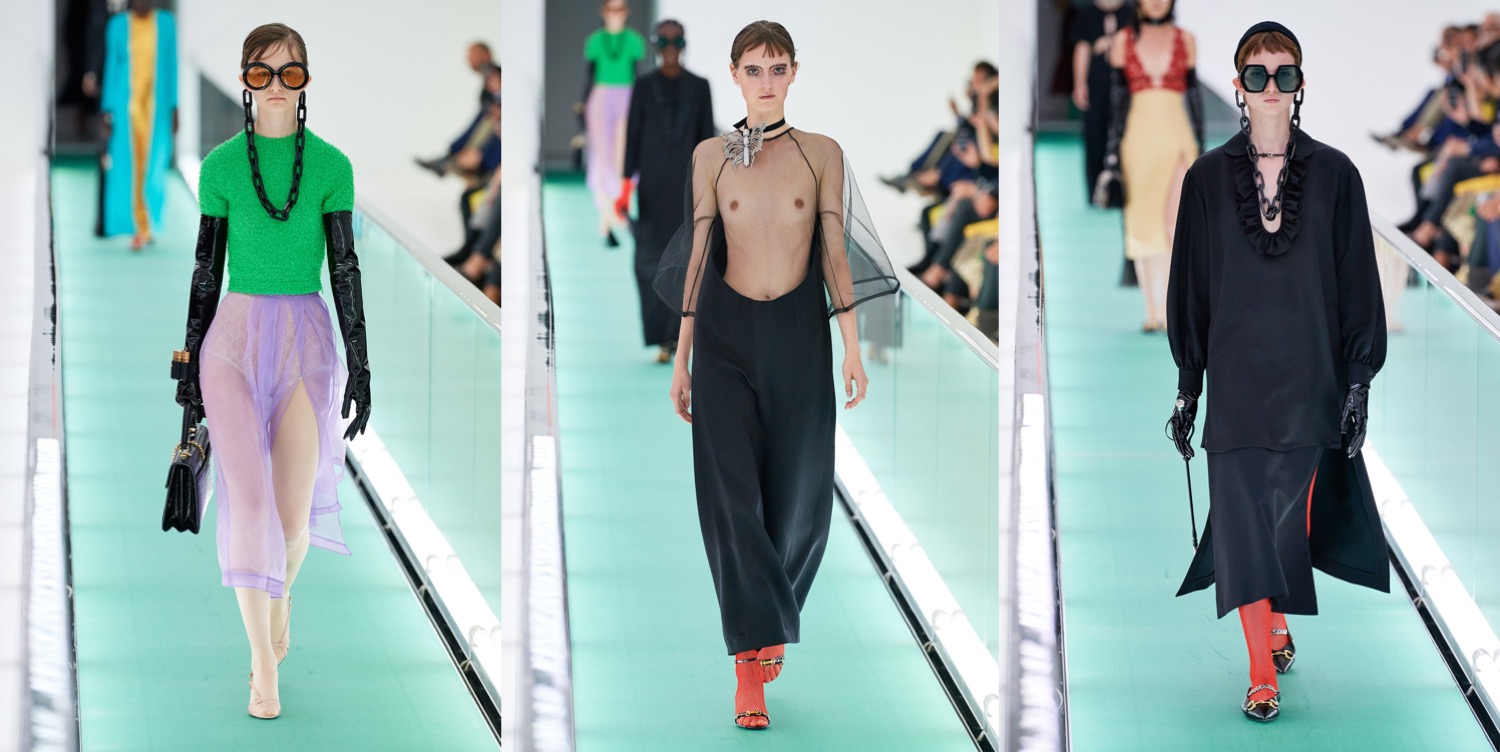
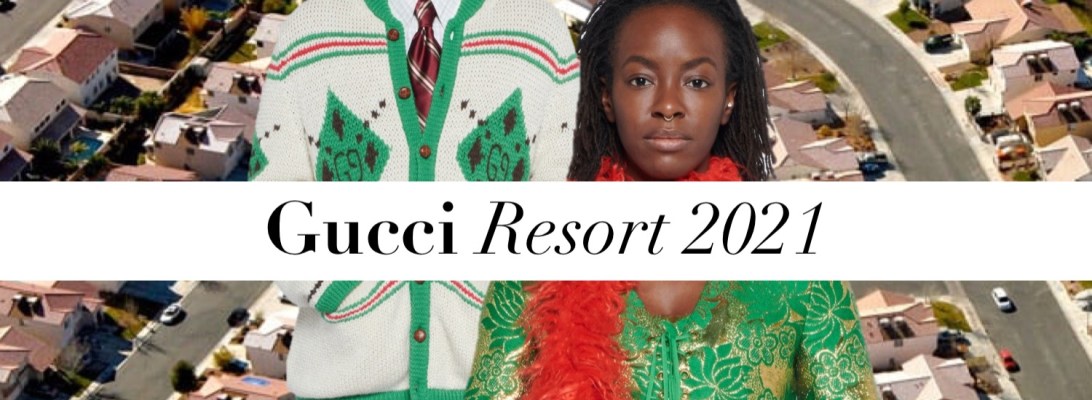
Last February, days before the coronavirus crisis broke out near Milan, Alessandro Michele staged a Gucci show in the round that was spectacular and intimate at once. In retrospect, it looks rather prescient: in inviting the audience behind the scenes and exposing the backstage goings-on of the hair and makeup crews and model dressers Michele was celebrating the very things that we’re all missing so badly in COVID-19-time: human interaction, collaboration, being part of a receptive audience. “Fashion is not just what we decide to show,” Michele said on a WhatsApp video call earlier this week. “The idea that a campaign is just a piece of paper? No, there is another show in the show.” The concept for the 12-hour livestream the brand produced for resort 2021, which the designer named “Epilogue,” and staged at the glorious Renaissance-era Palazzo Sacchetti in Rome with a natural soundtrack of cicadas, is to document the advertising campaign, to capture that “show within the show.” Only this time, Michele explained, “it’s less theater. This one will be more dirty. It’s a few cameras in a very Andy Warhol way, maybe they’re looking at nothing interesting. The experiment doesn’t work if I plan too much.” The Gucci designers working in his studio modelled the resort looks they worked on. On the WhatsApp call, he remembered a time as a young designer when a piece he was making was pulled for a show or a shoot and he didn’t see it again. “It was like someone tried to take from you your son.” Spotlighting his colleagues was “something beautiful,” he said, “they were so happy.” As for the clothes themselves, Michele called them “a celebration of my point of view, things that I did in the past, pieces that belong to my aesthetic.” That aesthetic is as singular and idiosyncratic as ever. Min Yu Park, a men’s ready-to-wear designer wears a beaded floral jacket, a floral lace dress, and a turquoise necklace that matches her Jackie bag. Alexandra Muller, an embroidery designer, models a long filmy floral-print ruffled dress with clear sequins that pick up the light. David Ring, a celebrities designer, sports an embroidered velvet blazer, a striped tee, logo flares, and sneakers. Just taking a glace at the clothes tells you right away: Gucci. Back in May Michele announced Gucci’s reduced show schedule. This may be the brand’s last resort collection, but the name “Epilogue” might be a misnomer. The learnings of lockdown – the importance of his team, the value of feeling – will stick with him, he thinks. “It’s not just a way to close, but to say what we’ve done and put seeds of what will be in the next chapter. Yes, it could also be a beginning.

Collage by Edward Kanarecki.
The Ritual. Gucci AW20

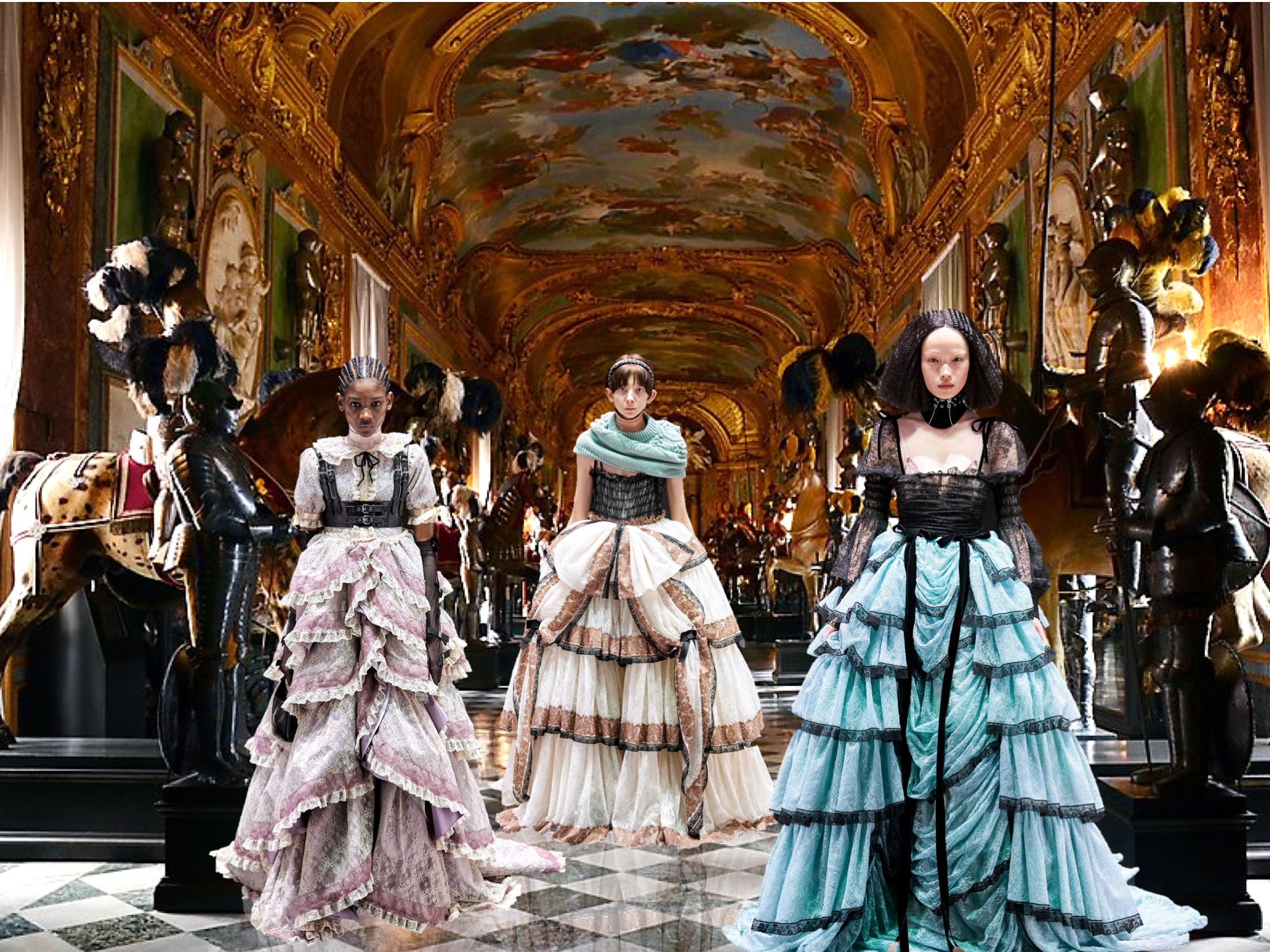
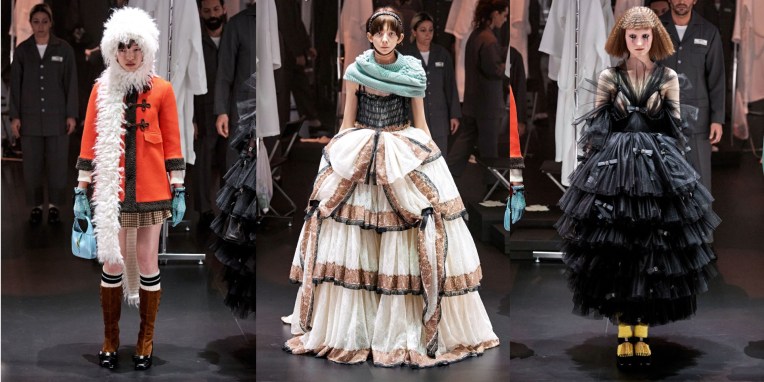
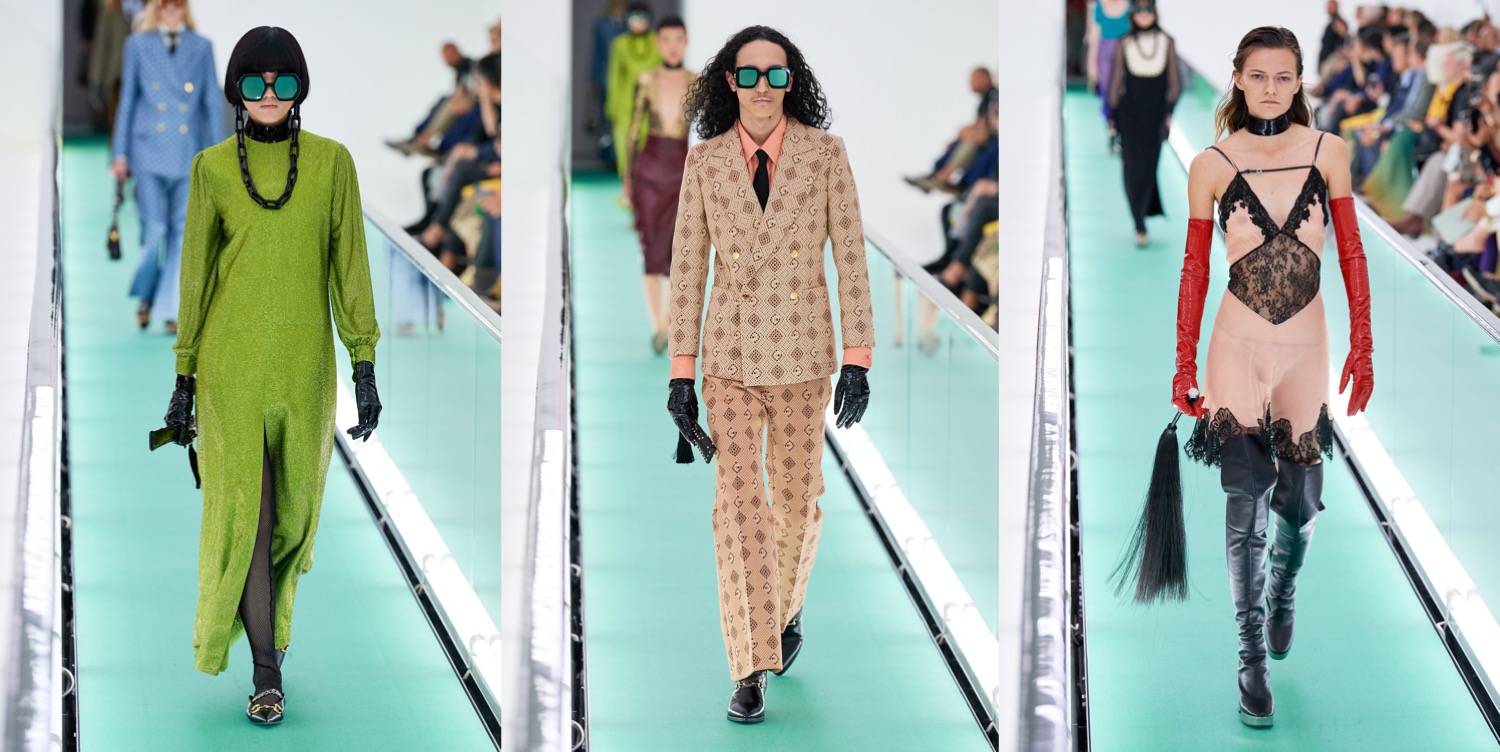
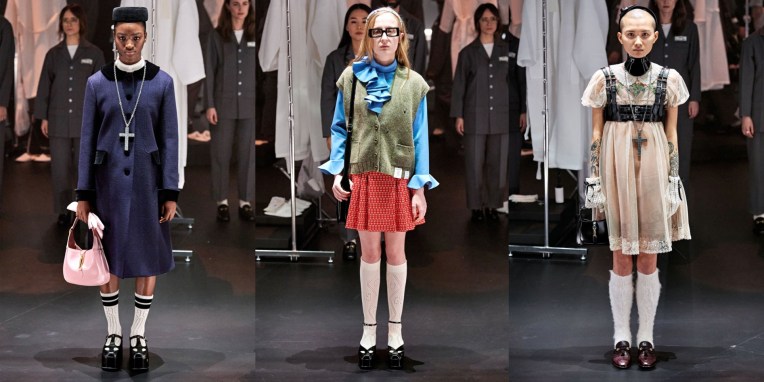
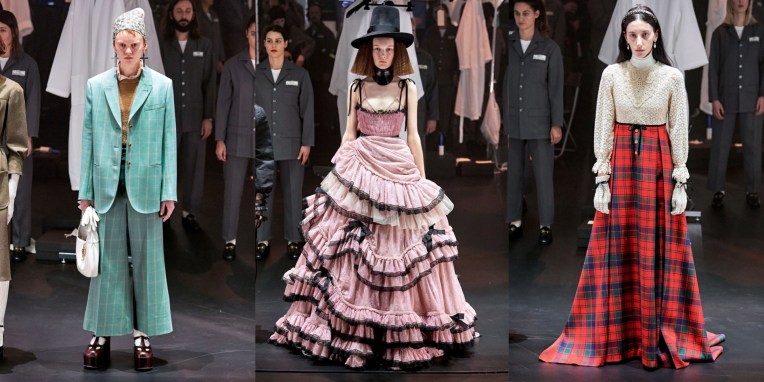
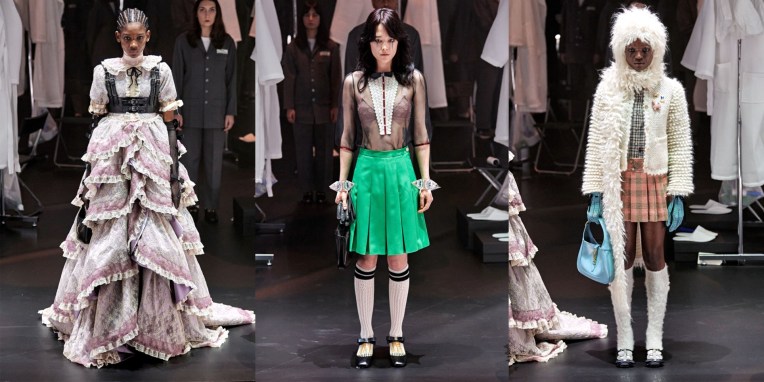
For a good start of Milan fashion week, at the very beginning of the Gucci show, the curtain was pulled back on the frenzied sort of preparations that typically happen backstage of any runway presentation. On a rotating carousel, bathrobe-clad models were quickly trussed and styled by fleets of dressers in gray Gucci smocks before taking their place along the stage’s edge. The vintage-feeling clothes, which included big hats and opera gloves, were no less theatrical – there were frilly baby-doll dresses, bell-bottom suits in pastels and baroquely ruffled ball gowns, inspired, said Gucci’s Alessandro Michele, by the idea of a mother dressing her child for a special occasion. What truly appealed to me in this show is Michele’s embrace of the dress-up ritual. It can be spontaneous, planned, conscious or unconscious, one day you can look like Janis Joplin, another be a goth lolita, and then on Friday be the S&M-version of Marie Antoinette. The opening look perfecly showed the theme of the collection: a confused-looking model in one of those gowns, with a chunky knitted sweater over her head.

Slajd1-kopia 5Slajd2-kopia 8Slajd3-kopiaSlajd4Slajd5Slajd6-kopia

Collage by Edward Kanarecki.
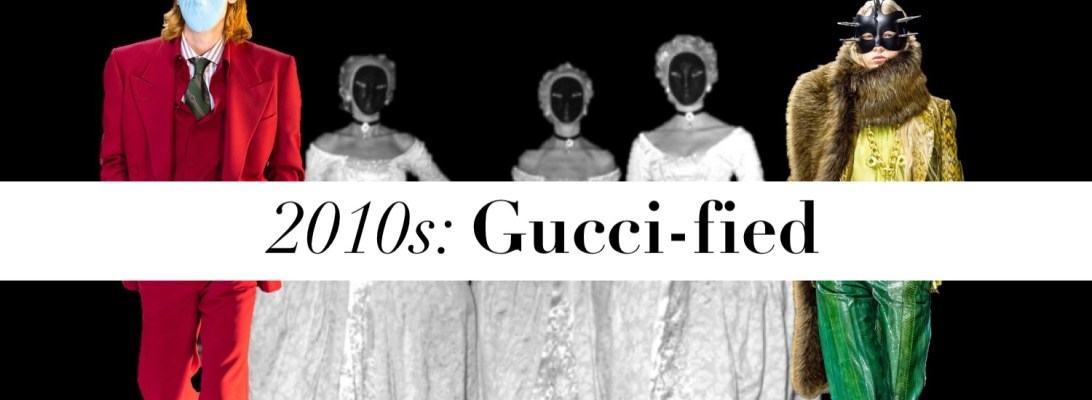
The 2010s: Gucci-fied World

Slajd1-kopia 8

Believe it or not – I can’t! – but we’re heading towards a new millenium. So, how do you choose the most important collections, designers and labels of the decade? The ones that made an actual impact in the 2010s? Well, it’s not an easy task. It all began in September 2009 with New York’s spring-summer 2010 shows and ended when the autumn-winter 2019 haute couture shows wrapped in Paris. Few thousands of shows, by the way. There will be 19 posts (that’s really the only possible minimum!) reminding about the best – and if not the best, then strongly influencing – moments in fashion.

Alessandro Michele‘s Gucci-fication.

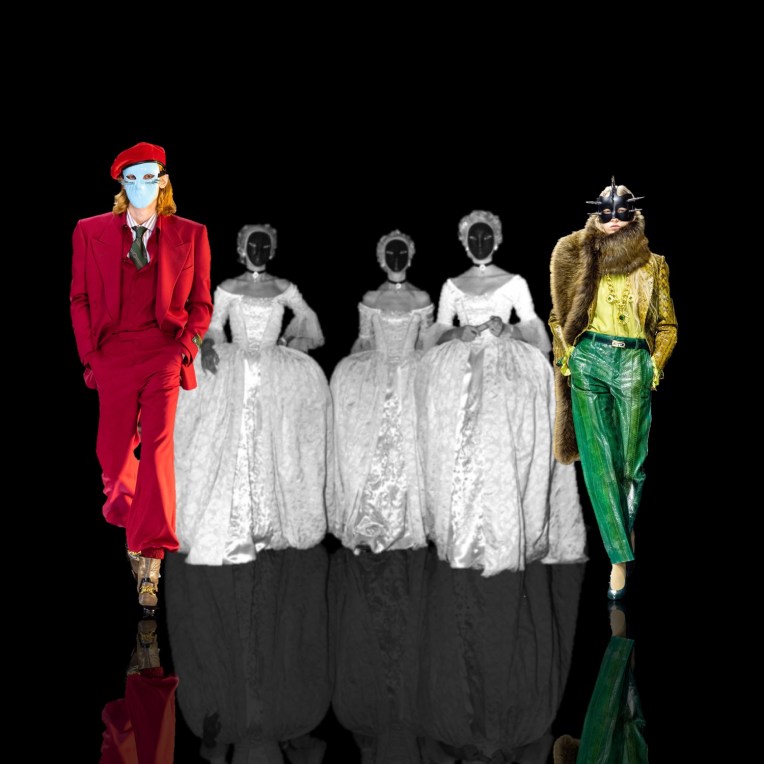
The day when Alessandro Michele was appointed the creative director of Gucci, nobody had a clue what awaits the brand. Not only the unprecedented commercial success was a surprise, but also the completely new and idiosyncratic way for a big fashion brand to communicate globally with its audience. Today, you can’t imagine the fashion world without Michele’s vision of Gucci: opulent, rich, gender-blurring and absolutely Italian. His womenswear surprises with splendor and grandeur: it’s romantic, over-the-top and finds inspiration in the least predictable places (like bootcamp Gucci or Dario Argento’s horrors). Michele’s version of masculinity has become fashion’s predominant one: an idea not just for men in skirts but of men embracing loveliness, textural richness and glamour – things that not a while ago were reserved largely for women. Alessandro does things in his signature, retro-infused aesthetic with consistency – whether we’re speaking of the advertising campaigns (they are always out-of-this-world and jaw-dropping) or collections that can always be mixed together, creating a Gucci look.

Collage by Edward Kanarecki.

Clothed Bodies. Gucci Pre-Fall 2020

GUCCI

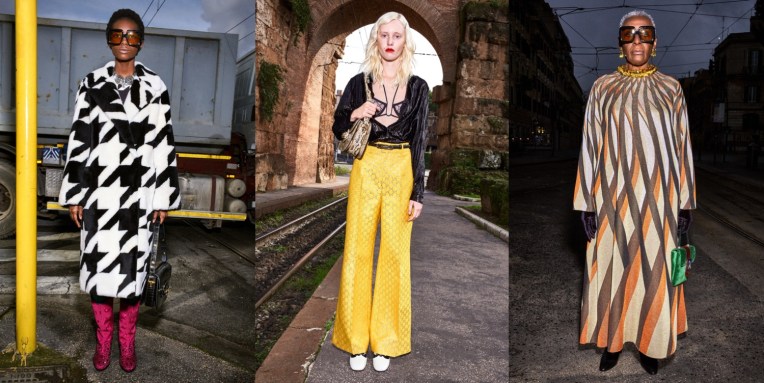
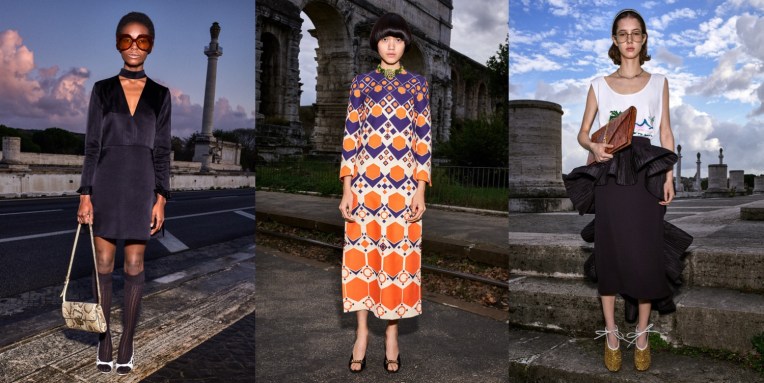
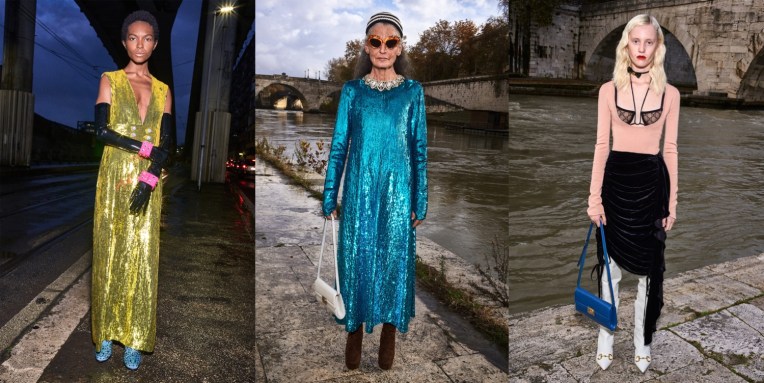
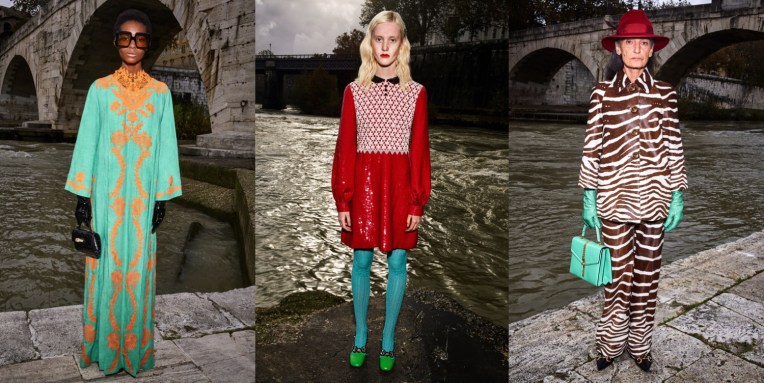
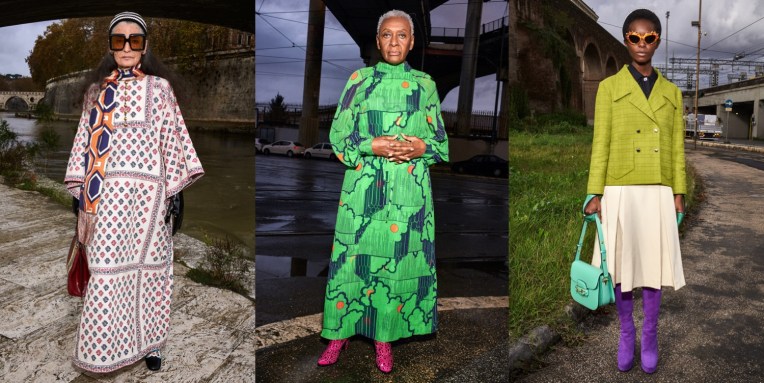
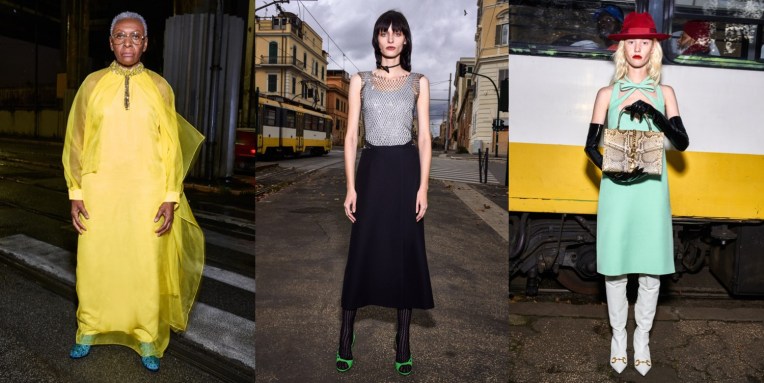
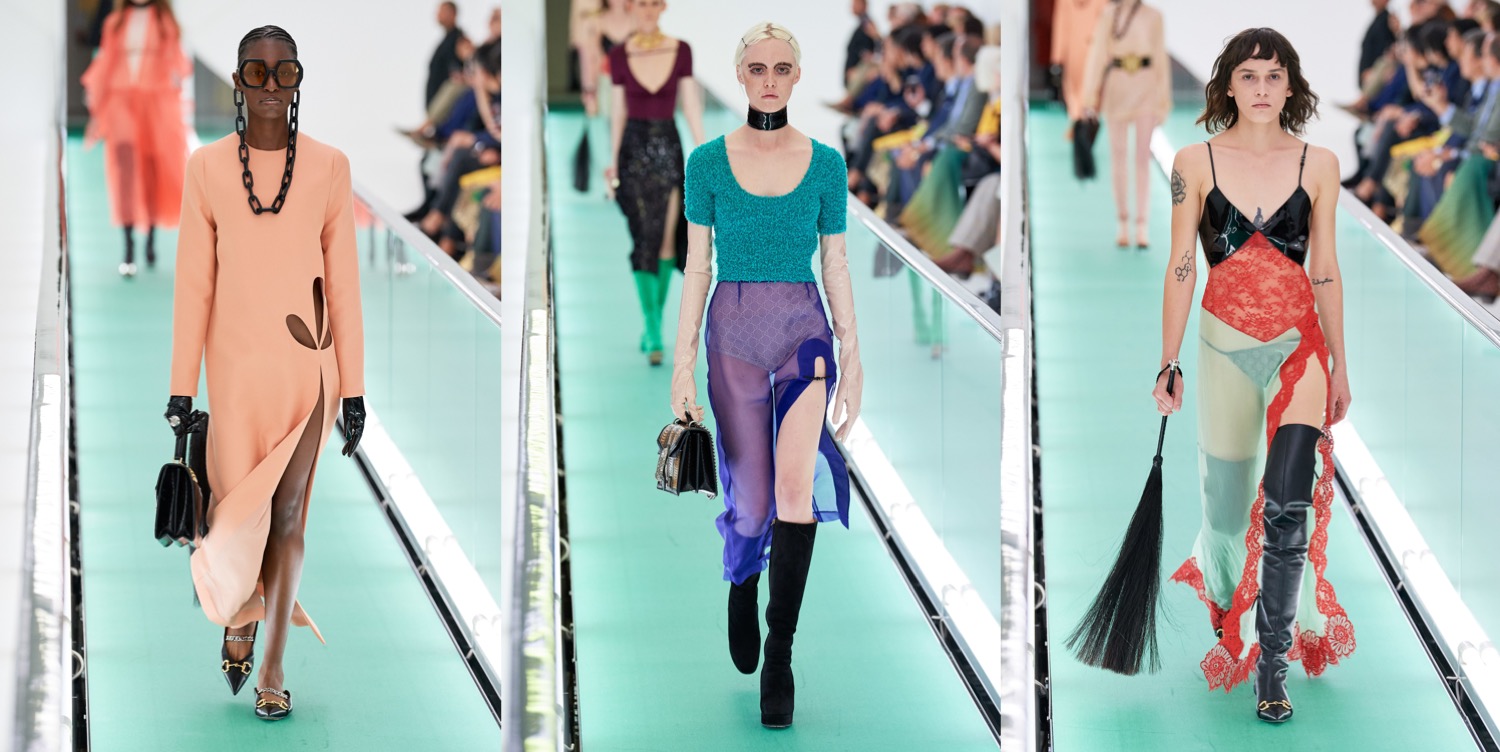
Alessandro Michele‘s pre-fall 2020 collection for Gucci is the post scriptum of his vision he staged back in September. “It tells the same story about proportion, silhouette, and, above all, the balance between shape and color,” he summed up. Balancing contrasting bearers of meaning in the same outfit has always been a Michele’s skill. He simplified his looks – cleaning it up (aesthetically) definitely works for Alessandro lately. Shapes had clarity, with hints to the elegance of the 1960s (trapeze dresses in solid colors or in black with cutout décolletage; short capes calling to mind Pierre Cardin’s futuristism; bold floral ensembles with boxy-cut little jackets) and to the free-spirited bohemia of the 1970s (gorgeous kaftans in every possible length; flowing feminine chemisier dresses; floor-grazing linen tunics with contrasting macramé appliqués or geometric motifs). Decoration and embellishments, although reduced, were still idiosyncratic and full of appeal. Michele’s knack for cultivated quirk crept up also in his punctuation of lingerie as a subtly sexual message – a theme he introduced in the September show. Logoed brassieres and underwire bras peeked from underneath blouses or crisscrossed open tops, worn under leather blazers.

The lookbook was shot in Rome through the lens of  Bruce Gilden. The cast of characters was as diverse as can be, including model and advocate Bethann Hardison and fashion legend Benedetta Barzini, both fabulous in their age-defying charisma and presence. “At the core [of the collection] remains the relationship between clothing and its wearer, and everything that revolves around these ‘clothed bodies,’” explained Michele. “The set and the photography not only emphasize the look but also the characters, providing a viewpoint to delve into the relationship between empty and full spaces, between clothed bodies and the space around them—and therefore between where we are and what is happening.

Slajd1-kopia 8Slajd2-kopia 8Slajd3Slajd4Slajd5Slajd6

Collage by Edward Kanarecki.
Controversy and Sex, Still Possible in 2019. Gucci SS20

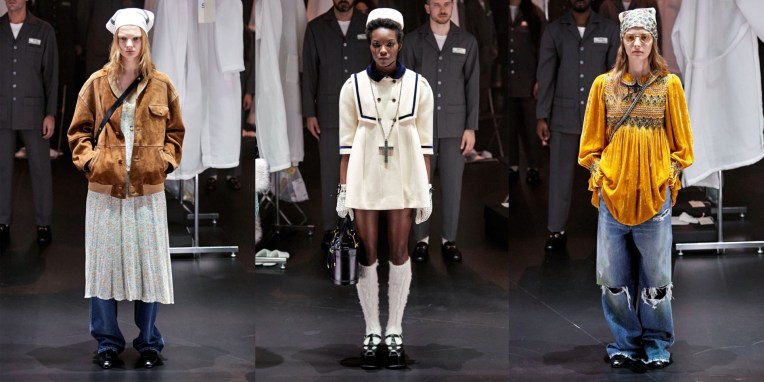
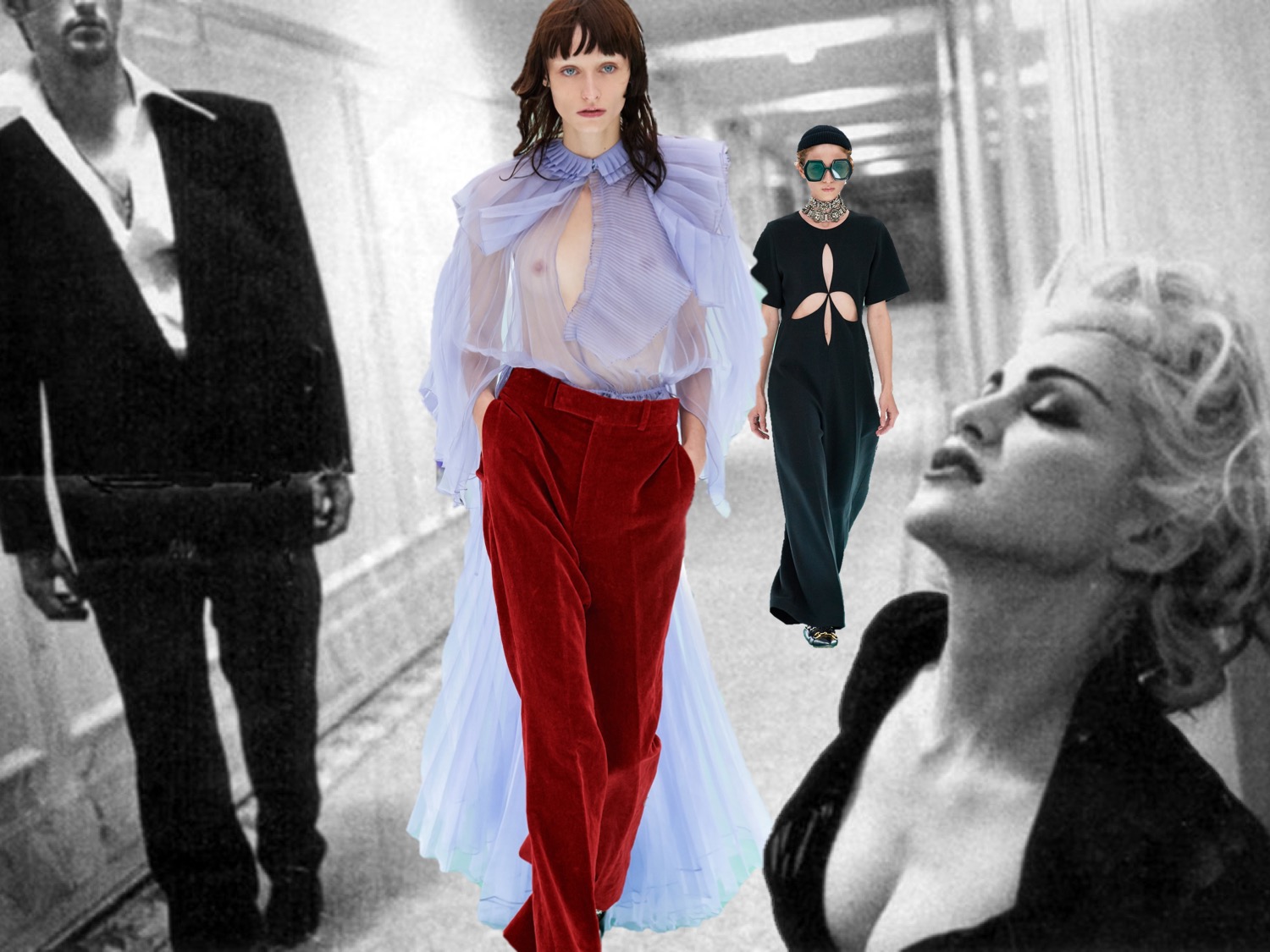
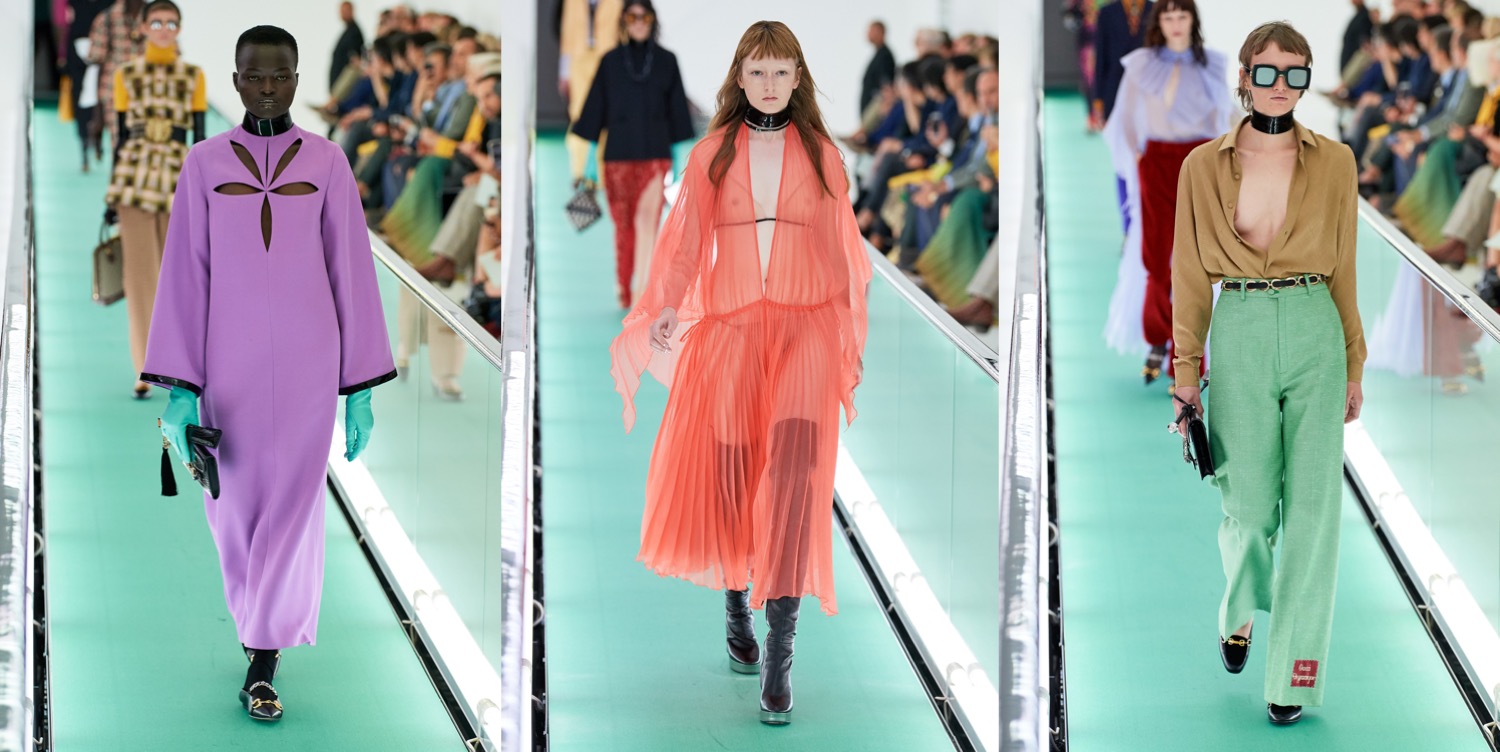
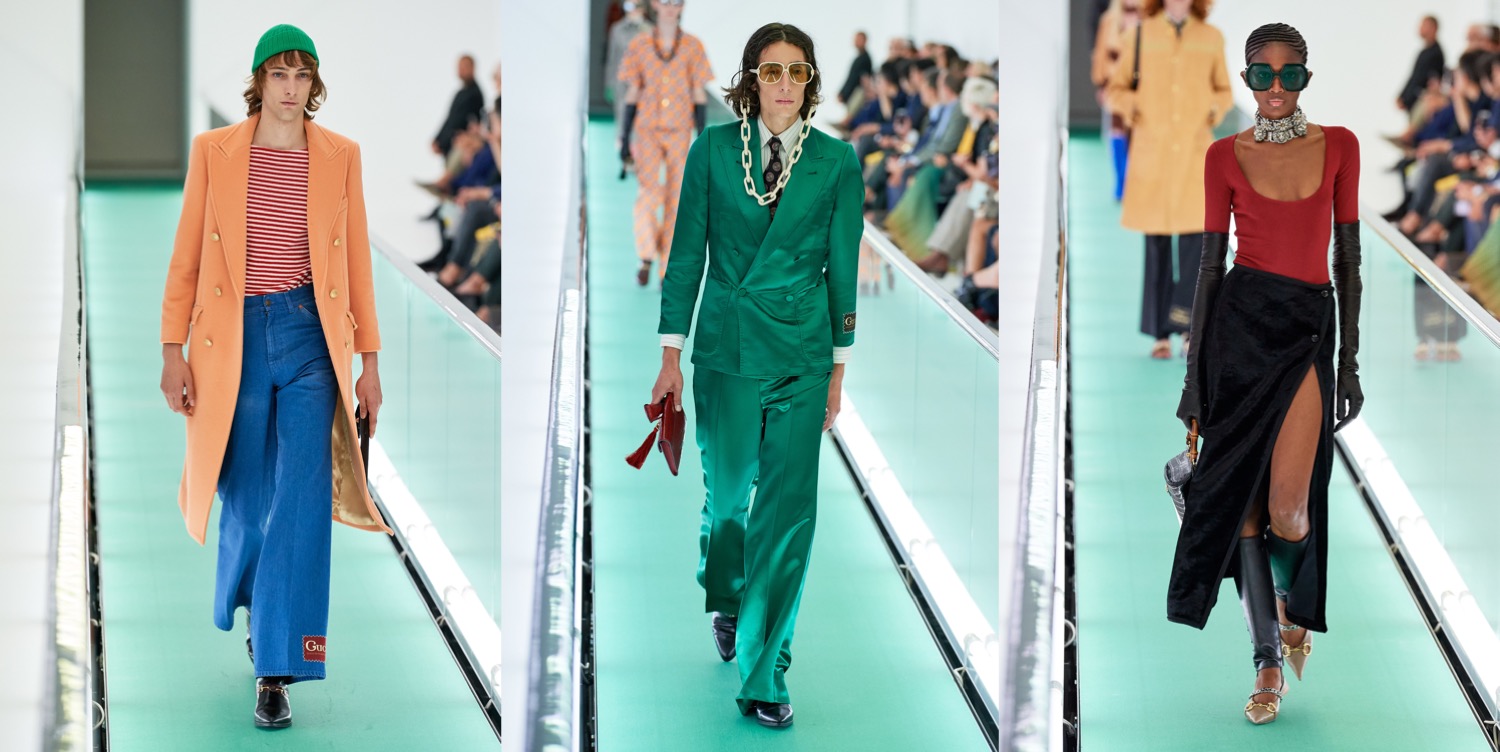
Alessandro Michele‘s spring-summer 2020 collection for Gucci had to provoke one’s mind, but in the result it was confusing and sparked an unintended controversy. The first dozen of looks was the exact opposite of today’s Gucci: all-white, unadorned baggy clothes, and some of them were straightjackets that don’t affiliate with anything but psychiatric hospitals from the past. Pale, solemn models moved down the tape in these garments, and one of them – Ayesha Tan Jones – put her palms up so that the world could see: mental health is not fashion. Which I think was a brave thing to do, even after Michele and Gucci instantly published a statement explaining their action: uniforms, utilitarian clothes, normative dress, including straightjackets, were included in the show as the most extreme version of uniform dictated by society and those who control it. It’s hard to tell who’s right now, but in the end, the brand could exclude some of those looks from the entire collection, being aware of how it may be perceived (the statement also mentioned, that the brand won’t be sellingt these garments). The rest of the collection was surprisingly much less Gucci-fied than usual, which I liked. While in the five years of his tenure, Michele’s splendour-bordering-with-kitsch aesthetic seemed to win everything in the universe, the spring-summer line-up was cleaner, even minimal. It kind of felt like a nod to Tom Ford’s sex era at Gucci, but much more exaggerated. To the tune of Madonna’s super sensual Justify My Love, some of the models carried Gucci whips, some wore latex gloves and and sheer nightgowns, there were skirts with skin-revealing slits and dresses that had black and red lace inserts. Part of the collection was heavily inspired by 1970s – big flares, big glasses, satin suits – and it felt the least interesting. Still haven’t made up my mind about the line-up, but there’s one thing I wish to see Michele expand in his fashion: experiment with his personal opposites, style-wise.

Collage by Edward Kanarecki.