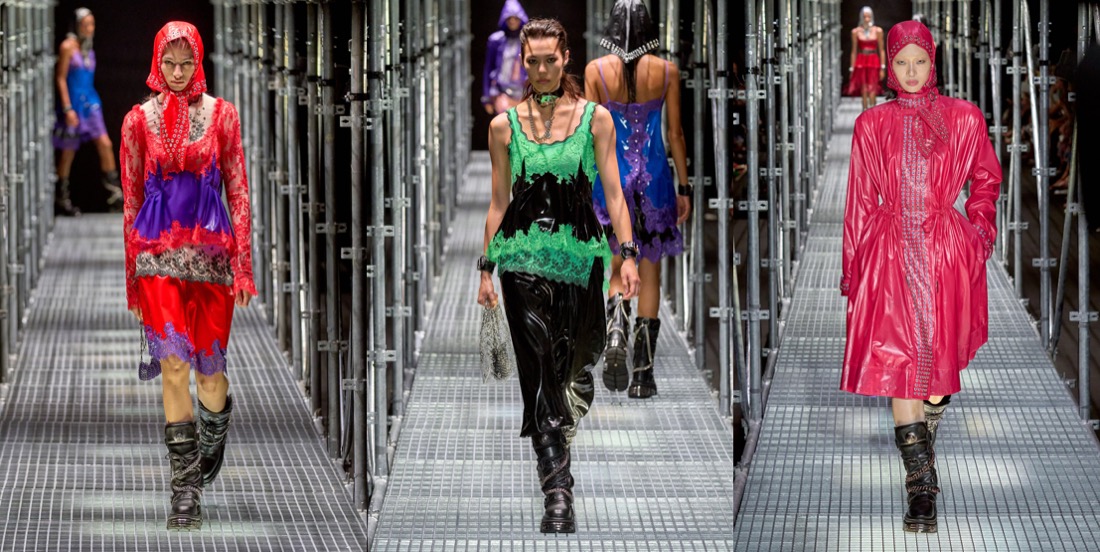
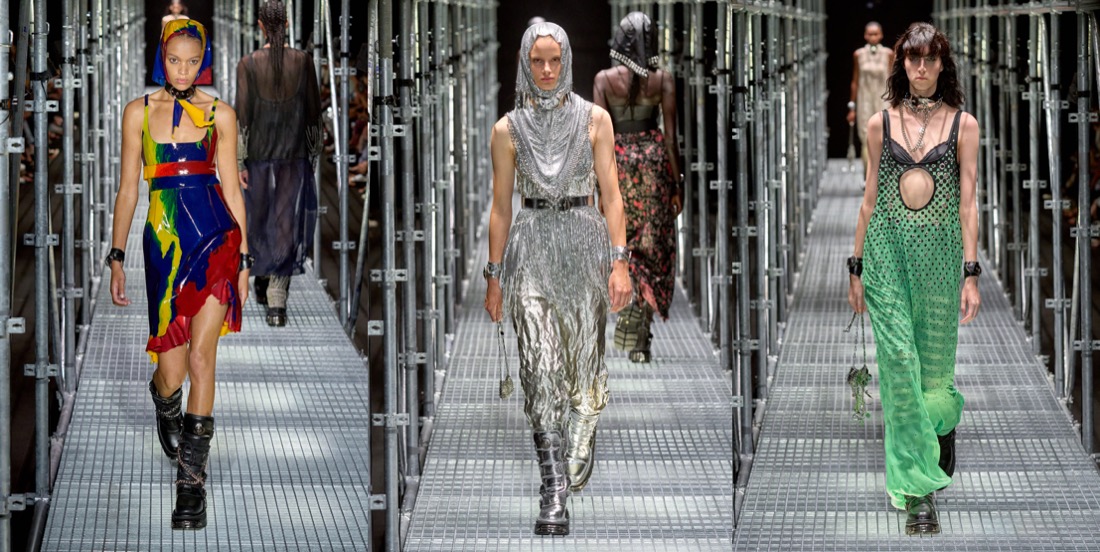
A catwalk built of scaffolding, fenced with metal bars, plenty of grunge notions and kinky latex. Paco Rabanne‘s spring-summer 2023 collection had a surprising twist, as Julien Dossena, the brand’s creative director, departed from his signature romantic-slash-futurist aesthetic. This season, Dossena does not intend to pretend that fashion is detached from what is happening in the world. That’s also why he called this collection “On a Mission.” Latex and PVC, topped with leather straps and chains, looked spicy and highly fetishistic. All the skills of the house went into fabricating a collection which called on the traditional playbook of subversion: grunge slips, punk kilts, fetish rubber, and wipe-clean raincoats, intersected with the house signature silver chain mail. There were also lace, shiny metallic fabrics, experiments with texture and see-through materials that emphasized the power of femininity. The whole “angry Paco” look was crowned with badass, massive combat boots, which were the perfect additions to the tulle ball skirts (very Olivia Rodrigo). Dossena makes no secret of the fact that what’s happening in the world is having a huge impact on him and his work – the war in Ukraine, as well as the U.S. Supreme Court’s decision overturning Roe v. Wade. “It’s about this feeling that there’s going to be a fight, and it’s going to be a long one. So, it’s about expressing that passion and giving clothes for the moment to prepare to fight, because that’s what it’s about: no apologies.”
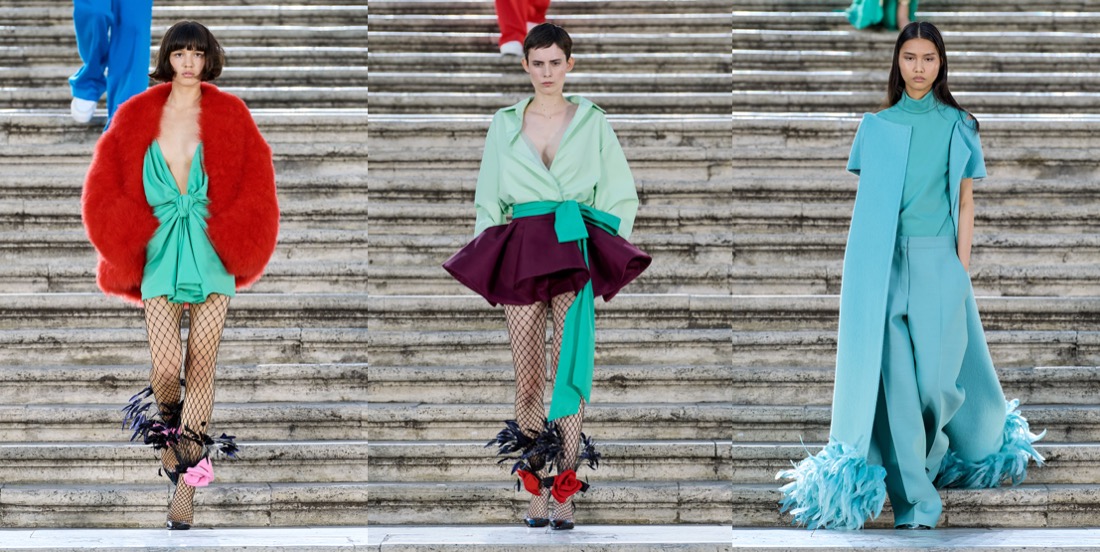
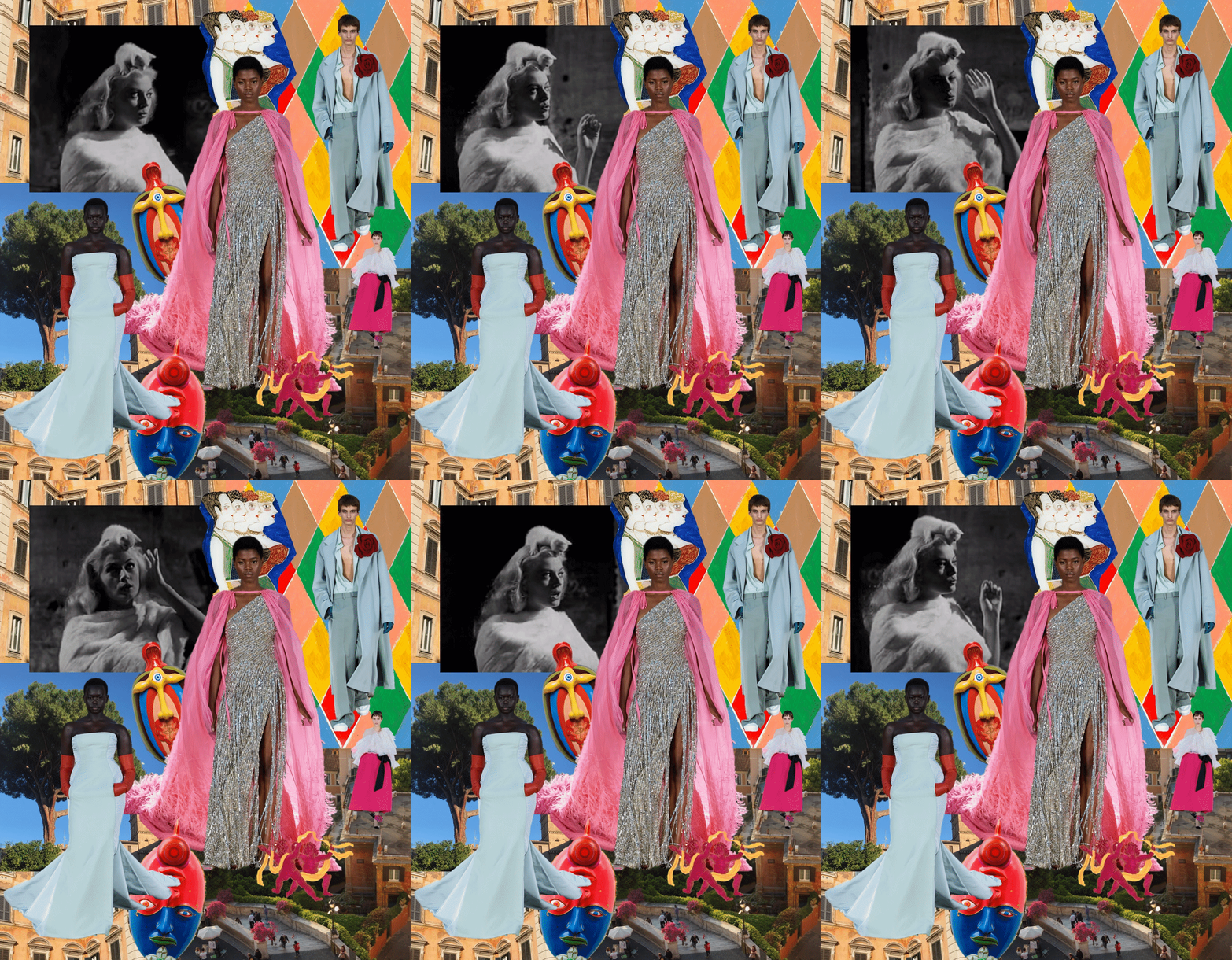
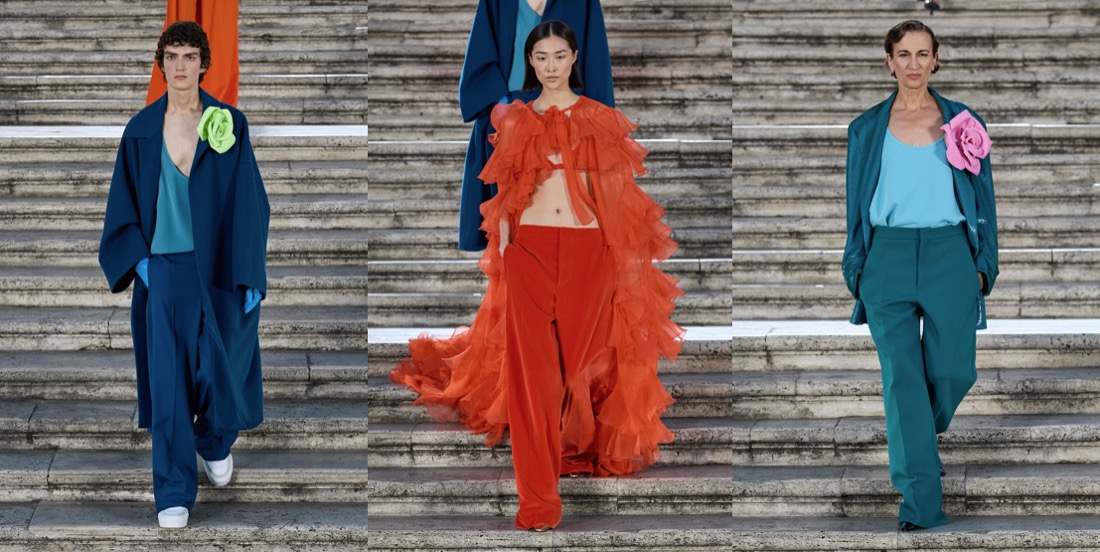
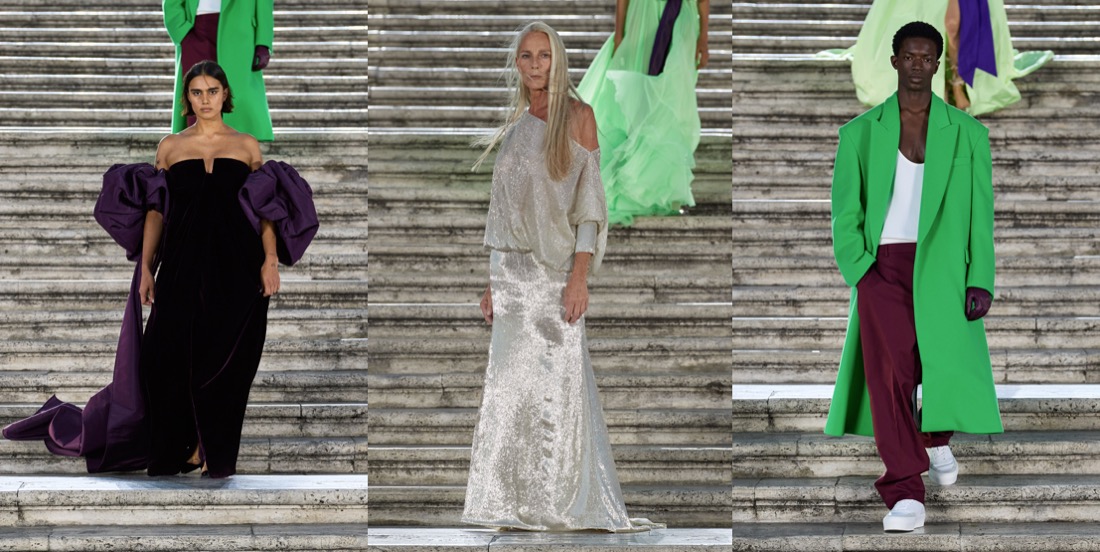
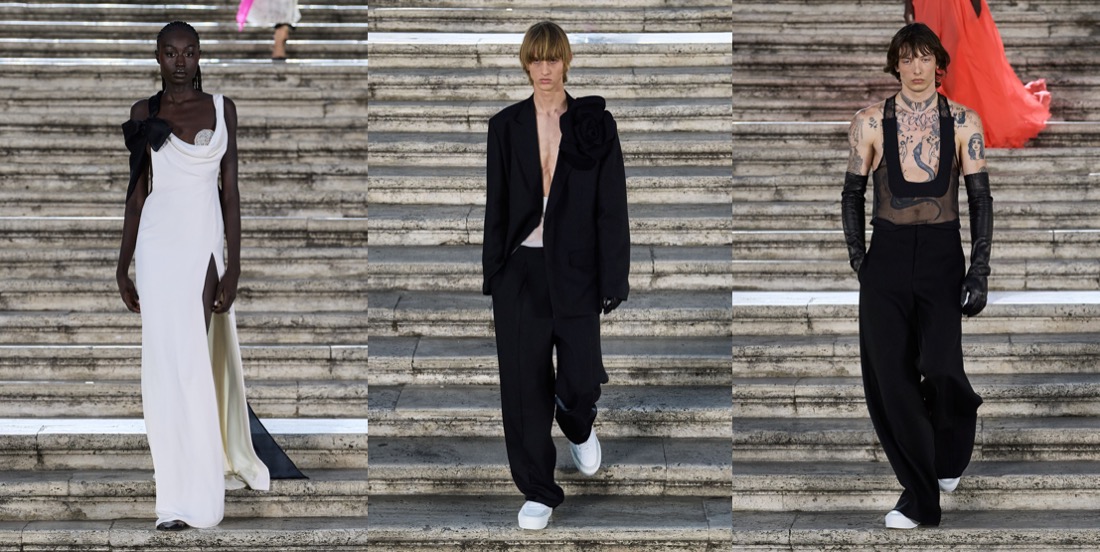
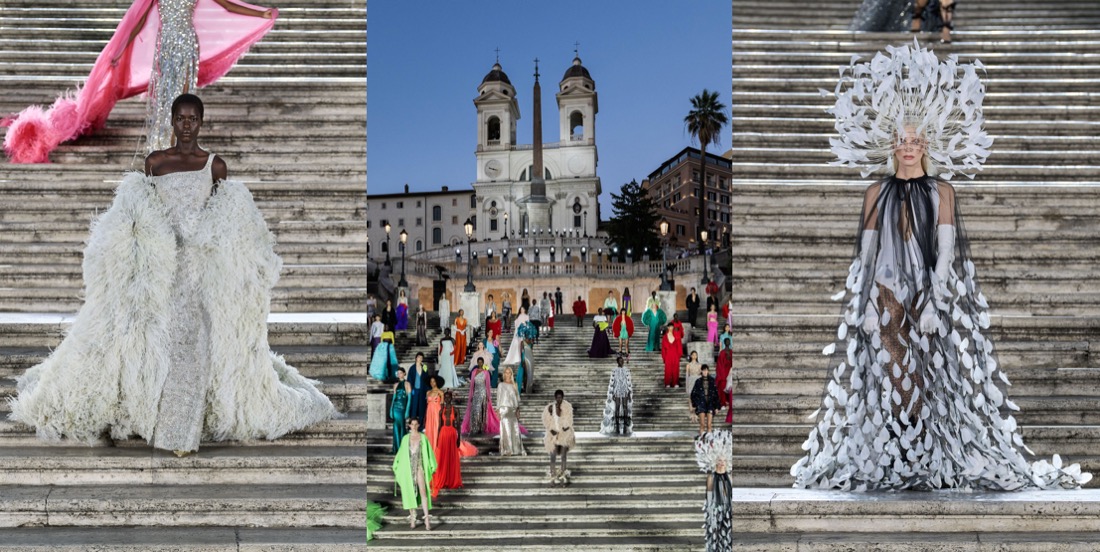
For Valentino’s spectacular autumn/winter 2022 haute couture show, creative director Pierpaolo Piccioli returned to Rome, where Valentino Garavani founded the storied maison back in 1959. Otherworldly bodies descending from the Spanish Steps in the golden evening sun, the romantic voice of Labrinth echoing from beneath the Trinità dei Monti… well, that was a scene. “I start from the finale, always,” Pierpaolo Piccioli said during a preview in Paris days before the show. “What I have in mind is these liquid, colourful drops coming down from the Steps, the volumes light and in movement.” He titled his show The Beginning: a return to the city where Valentino Garavani founded his maison, a place that has moved with the winds of change since the dawn of time. Like Piccioli’s Valentino, Rome’s codes may remain the same but its values are in eternal evolution. That was the sentiment behind a show he envisioned as “a conversation with Valentino” across the past, the present and the future. Piccioli had been dreaming of doing a show on the 18th-century steps. “It’s very personal. The last time Valentino did a show on the Spanish Steps was in the 1990s. It was a different moment in fashion. It was about lifestyle and the perfection of beauty, the glamour, the supermodels,” he reflected. “I wanted to get the spirit of Valentino – the joie de vivre – because I think it’s the only way of making beauty resilient to the time. On the other hand, there’s a picture I want to deliver, which is different from what it was 45 years ago. It’s the picture of what we live in. The Spanish Steps are the same, the atelier is the same, and in the end, clothes are clothes. I like to keep the rituals of haute couture. But the real difference is in the casting – in the humans – that can tell stories and witness a different moment in this world. I want to empower them and give them a voice and the opportunity to tell their own stories.”
Piccioli’s approach to the show manifested in a collection that didn’t just poeticise the decades-long legacy of Valentino Garavani, but his own contributions to the house. Rather than pursuing newness, he reflected on what Valentino stands for after 14 years under his own artistic directorship (and 23 years as an employee). Unless you’d spent those years under a rock, you’d immediately recognise the resplendent volumes of his dresses, suits and coats, the hypnotising hues of his gem colours, and the drama of his plumed headpieces bouncing like jellyfish in the stream of the Roman evening breeze. “I wanted to do a reflection about how much of myself is in Valentino, and how much of Valentino is in my identity,” he said. “It’s everything I’ve already done but in a different place.” Piccioli’s era at Valentino has followed a time of political divide when the progressive values he fights for – the diversity, inclusivity and self-expression represented in his casting – are contrasted by a rise of reactionary ideas that has only become terrifyingly evident with recent American Supreme Court rulings. In that sense, moments like the Spanish Steps show – these grand gestures of beauty – are a kind of activism on his part. It may be wrapped in majestically coloured taffeta, three-dimensional geometric plumage painstakingly made to evoke Roman mosaics, or voluminous hand-sequined suits, but at the core of Piccioli’s haute couture is a dream that cuts deeper than mind-blowing craftsmanship. “I believe that it’s my responsibility as a fashion designer to bear witness to the times we’re living in,” he said. “I think that beauty has the power to break through, touch people and their conscience. Taking a radical posture through a strong narration and through images of a world that’s changing has an impact, and gives visibility to values that have to be protected. I believe fashion can be political.” With the likes of Naomi Campbell and Anne Hathaway on the front row the show was testament to the global impact of the new age of haute couture that Piccioli has spearheaded in recent years. But as illustrated by the people who joined them – Valentino’s co-founder Giancarlo Giammetti, Piccioli’s family, and their dog Miranda – it’s a success achieved through a grounded approach to the industry, to the mainstream fame he has gained, and everything that comes with it. At the heart of Piccioli’s progression-driven age of Valentino are a realness, friendliness and ease that remain his greatest assets.
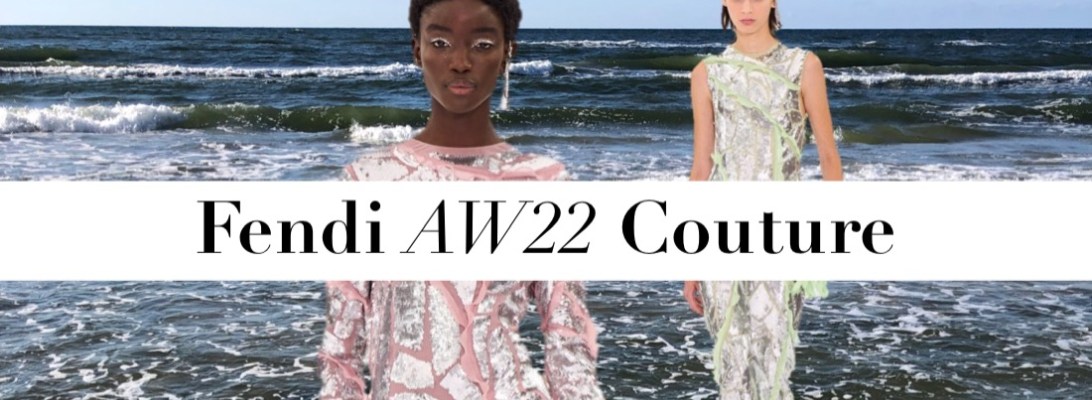
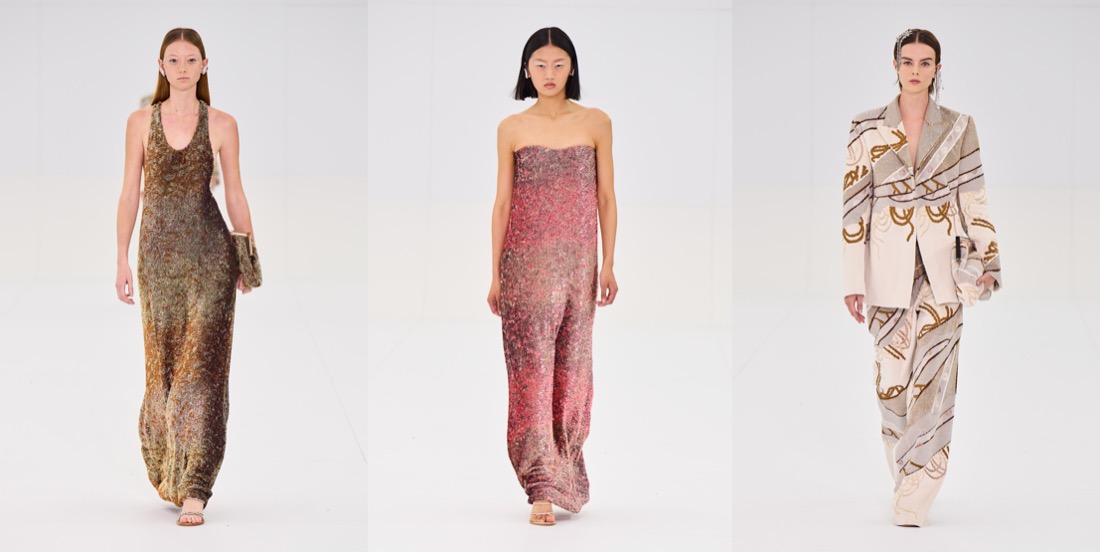
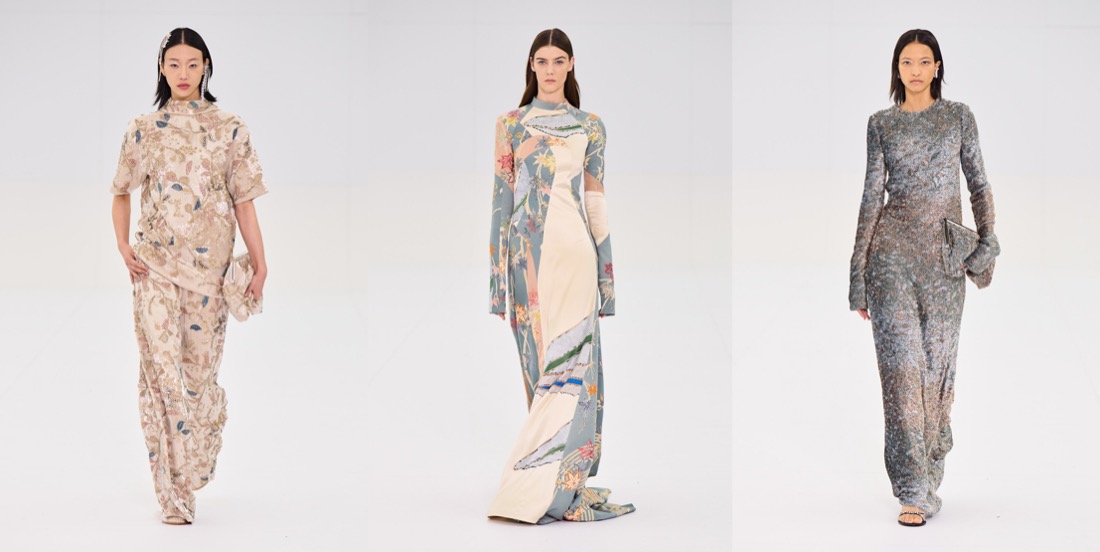
This haute couture season, it seemed that the collections’ backdrops were as important as the clothes. Immense theatralization of the fashion show was a recurring theme, from Schiaparelli to Margiela. So it was quite refreshing to see the total white-cube space as Fendi’s venue. But did Kim Jones‘ couture line-up stand up for itself? “Luxury is the ease of a t-shirt in a very expensive dress.” Karl Lagerfeld coined this permanently true aphorism – one of the sparkling fashion quotes he dashed off in a zillion interviews. Kim Jones didn’t drop it into backstage conversation about his Fendi haute couture collection, but he might’ve, since essentially what he sent out met the Lagerfeldian standard of t-shirt-y elegance; a show of uncomplicated, minimal dressing realized in the most expensive of materials. For starter, a trio of Max-Mara-like looks, two tailored trouser suits and a long turtleneck sweater dress with a slashed skirt and sash in a Vicuna brown. Then came tailoring, and a molded bustier in paler shades of slightly pink-tinged beige: Fendi’s specialty calf leather. And then, calmly on with the abbreviated lines of the t-shirt dressing. There were slim tank dresses, made of rolled metallic bugle-beads, asymmetrical long-sleeved patchworks of Japanese silk kimono fabric commissioned by Jones from traditional makers in Kyoto, and beaded deco-style pajamas. Jones explained in a preview that the pair of outstandingly lovely shimmery silver sequinned bias cut slip dresses had been made from swatches Karl Lagerfeld had commissioned which had been archived and never used. For the finale there were a few spicier, sheer “nude” dresses. In overall, it all looked like a proper couture collection. Not sure it felt like a Fendi one, though, even with all the subtle Lagerfeld references.
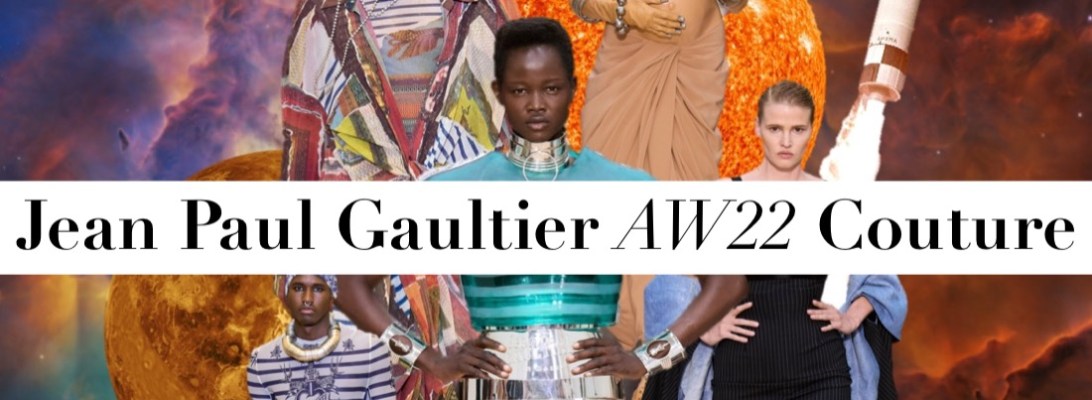
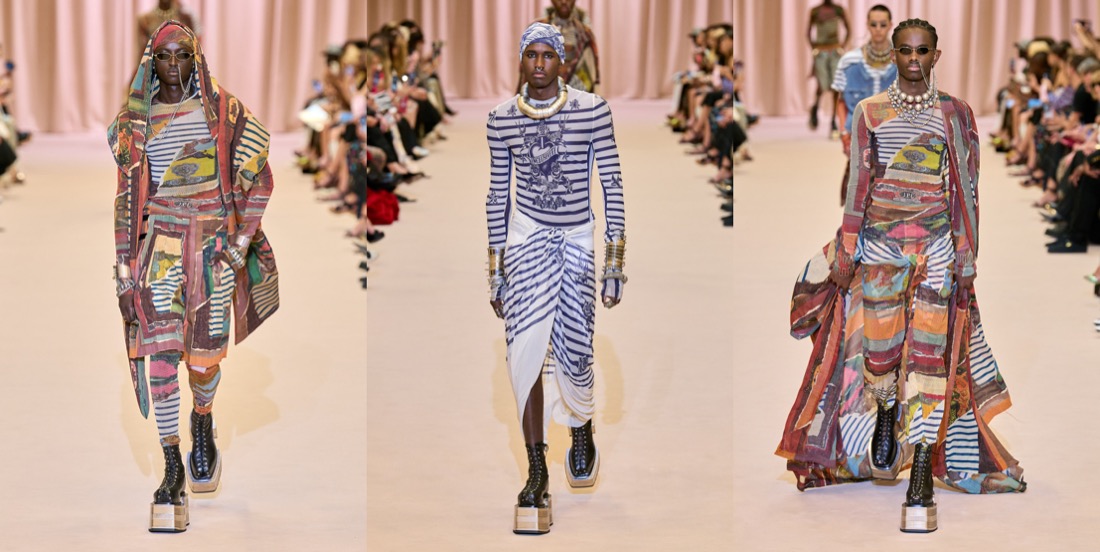
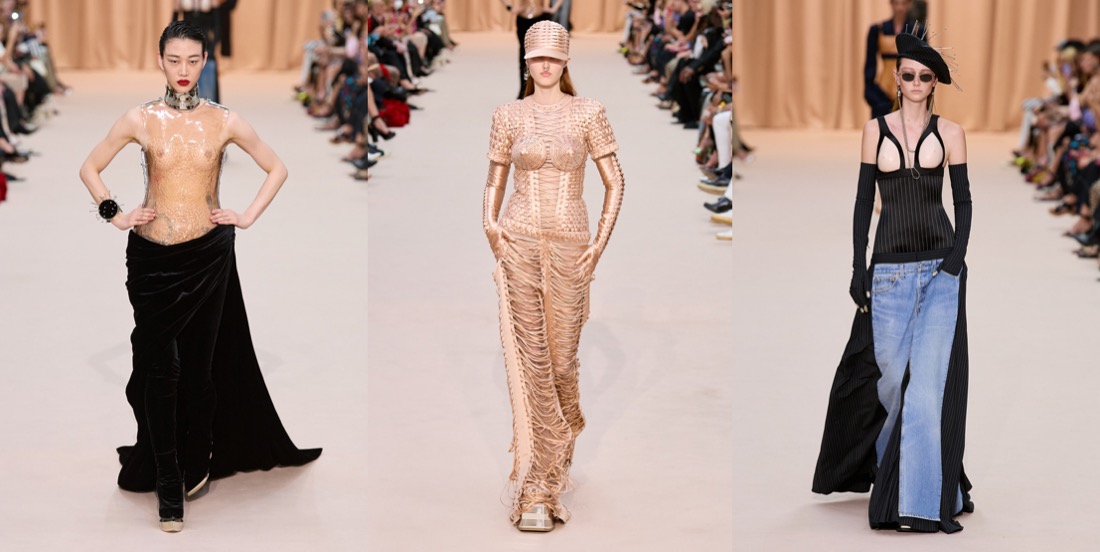
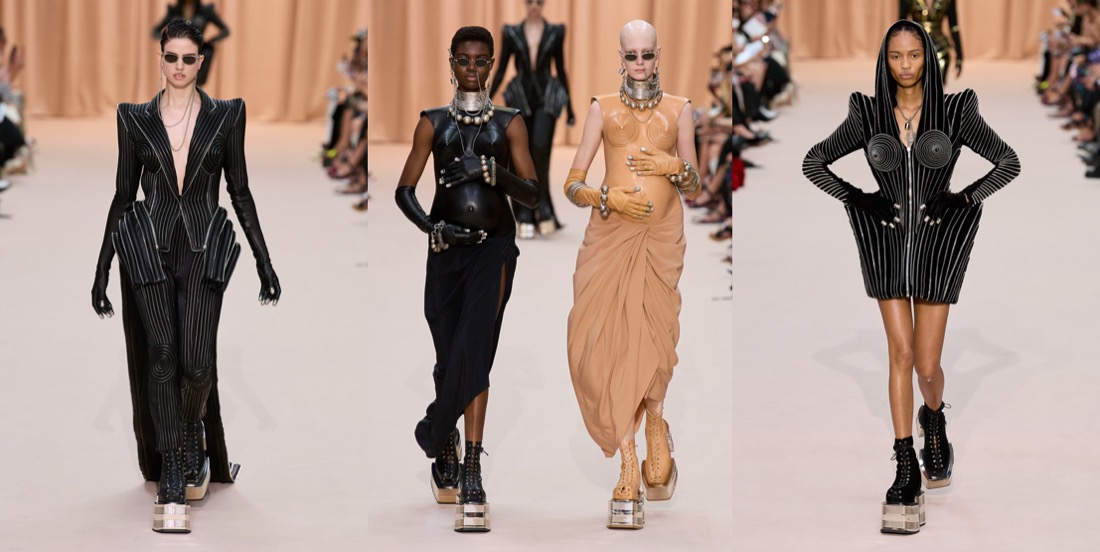
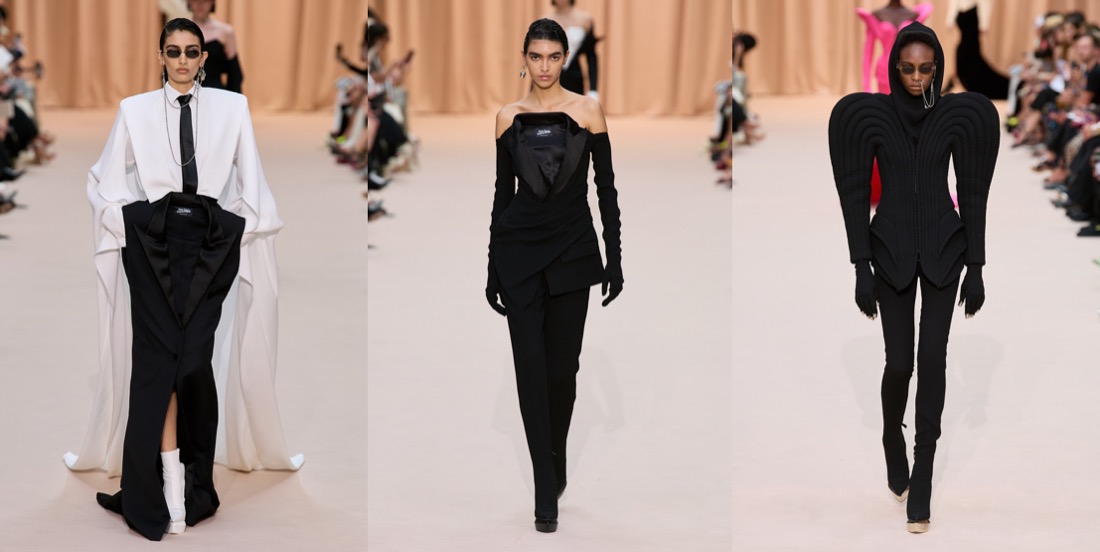
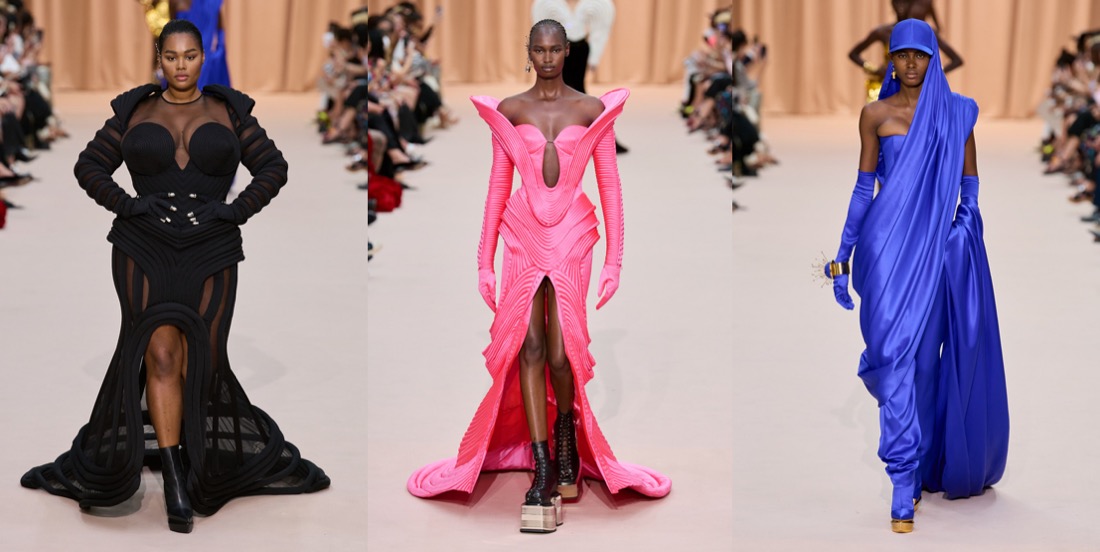
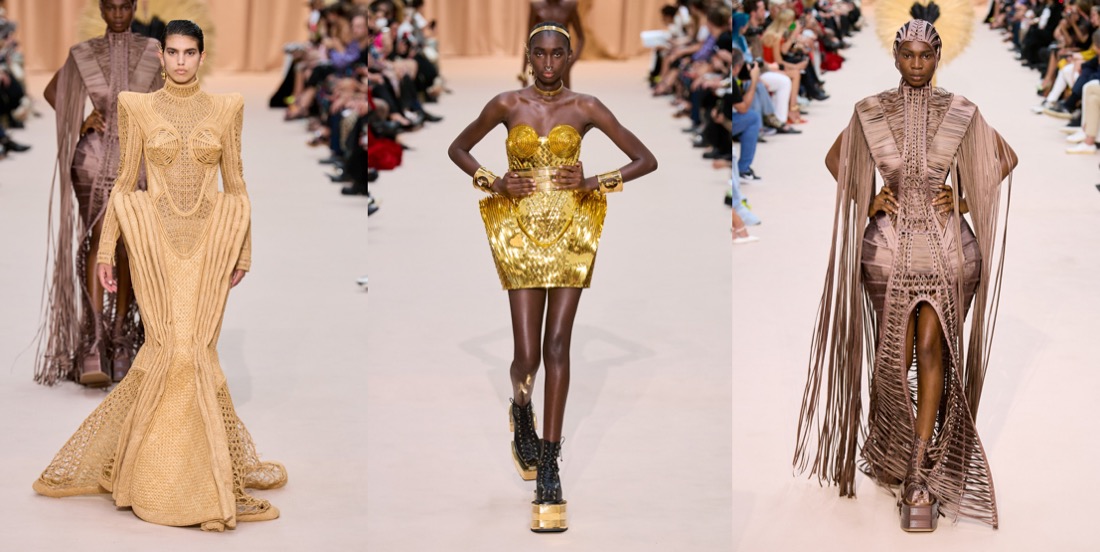
“This show is an open letter to Jean Paul, an open letter of love,” Olivier Rousteing announced in the Gaultier studio before the unveiling of the antic collection that Gaultier had invited him to design as the third iteration of the project that hands the reins of his couture house to a different designer each season. When the two designers first met to discuss the project four months ago, and right after Rousteing had presented his autumn-winter Balmain collection, he confided to Jean Paul Gaultier: “You’re my inspiration. And you broke so many boundaries for me as a kid.” Dressed backstage in a matelot striped top and an asymmetric kilt, Rousteing had clearly taken the brief very seriously. “Jean Paul wrote a fashion book with many chapters,” Rousteing explained. “And the reality is that you need to understand what chapter from Jean Paul is closer to you and the emotions that you obviously are more into.” For Rousteing, this meant a series of very personal snapshots. A memory of his father with Gaultier’s iconic Le Male fragrance in its tin can casing, for instance, or Madonna dressed by Gaultier in a nipple-freeing ensemble for a 1992 amfAR gala. “If you think about that today, we cannot [go there],” Rousteing noted, and in fact his iteration featured trompe l’oeil exposed breasts. “So he was ahead of his time about freedom of expression. Today, we talk about inclusivity, we talk about diversity, we talk about breaking boundaries, we talk about no binaries, no gender. Obviously, Jean Paul was the first one to do it.” Rousteing opened his show with menswear, inspired by the tattoo collection of 1994 that he considers a celebration of diversity, and then broke into one statement womenswear piece after another, playing on the Gaultier themes of corsetry, repurposed denim, and Breton fishermen’s sweaters, among others, many of the looks teetering on platform heels inspired by those tin cans.
And Rousteing reveled in the craftsmanship of Gaultier’s ateliers. In homage, there were garments fashioned from a dressmaker’s tape measures, a heart-shaped pin cushion bodice, and gloves with thimbles for finger tips. And noting the designer’s passion for the liquid draperies of Madame Grès (and the dressmaking genius who worked for her and now for Gaultier), Rousteing worked her iconic techniques into some looks that included a sweeping corseted pink sweatshirt that ballooned into an opera coat in back and draped into a siren skirt in front. Meanwhile, what appeared to be a woven menswear pinstripe was actually an illusion created with insertions of white crepe – a process that took 600 hours. Rousteing revisited Gaultier’s feathery interpretation of matelot stripes, another iteration of the Breton sweater that morphed into a Watteau train in back. In a further celebration of the craftsmanship of the house, the running order of the show listed each premiere main and modeliste responsible for the various elements of each look next to its description. Rousteing stepped out of the studios, however, to create a brace of molded glass bodices made by the expert responsible for the stained glass windows of Notre Dame, no less. Gaultier himself had wanted the collection to be a complete surprise. When the show opened with a soundtrack mashup of Gaultier himself expressing his design ideas to various media outlets through the years, he blushed bright pink. By the end of the show he was beaming. “Zat was fantastic!” he declared, “He took my things and then did it his way – and the technique – fab, fab, fab!”
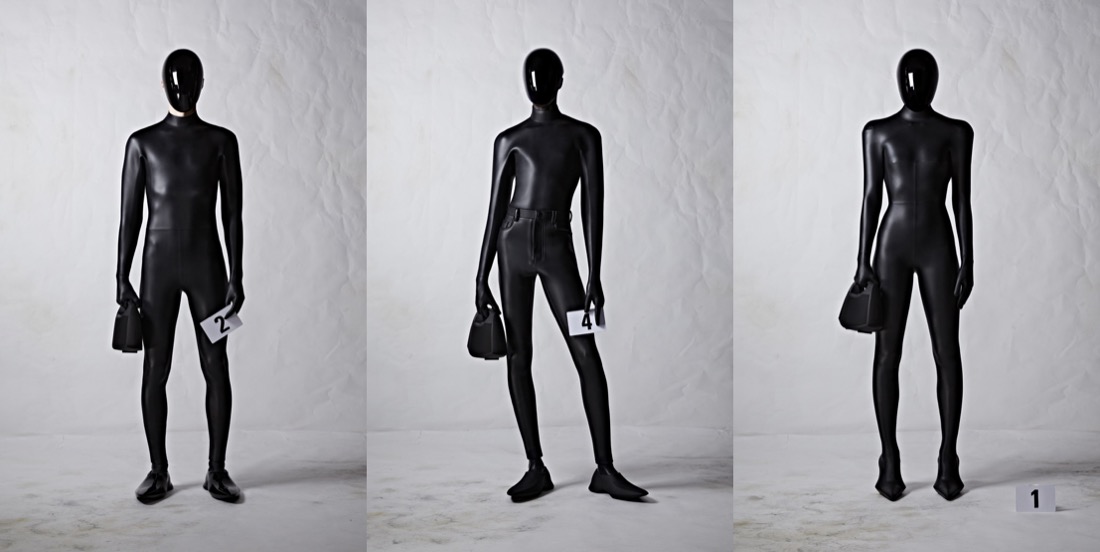
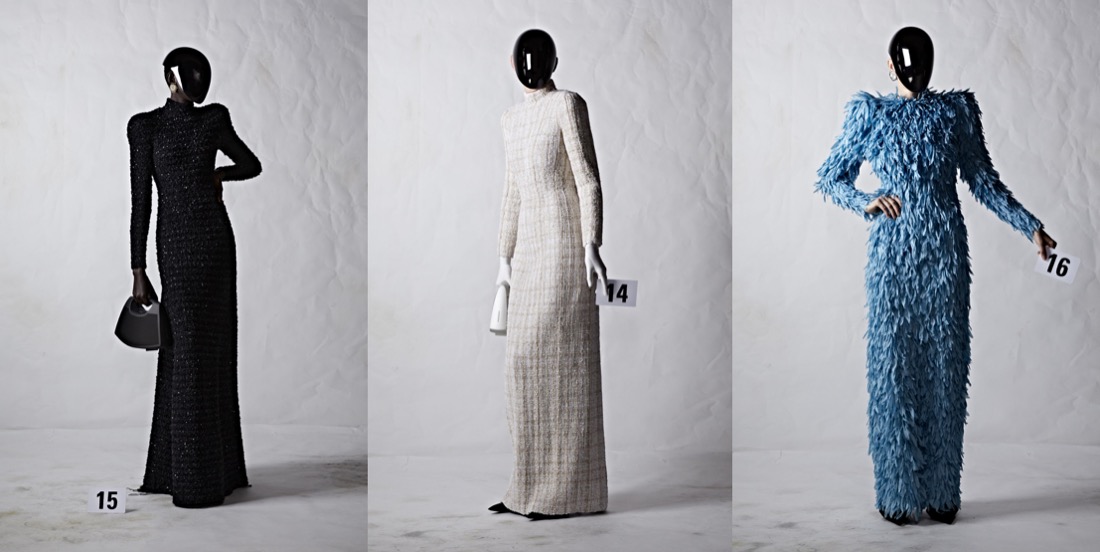
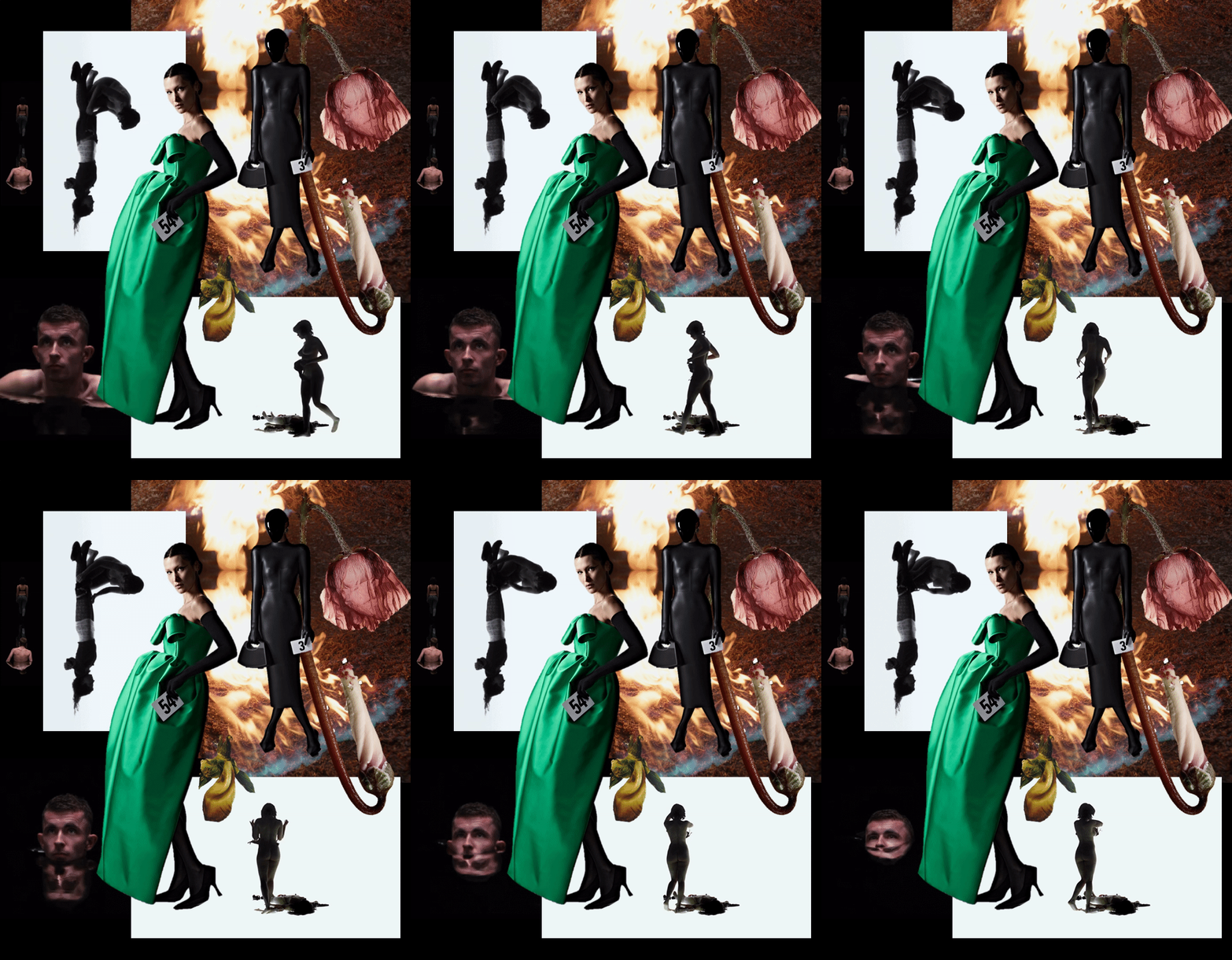
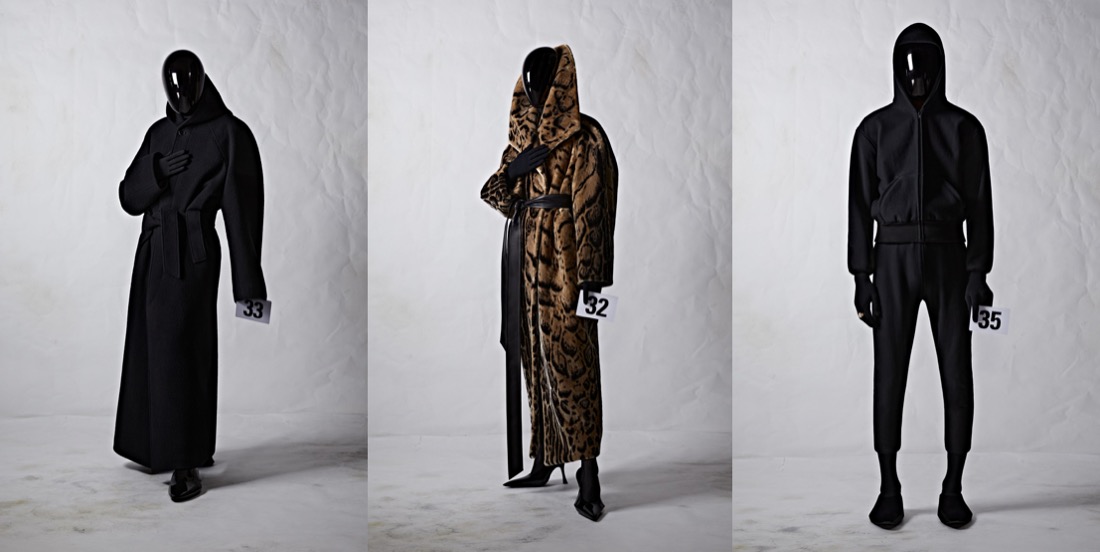
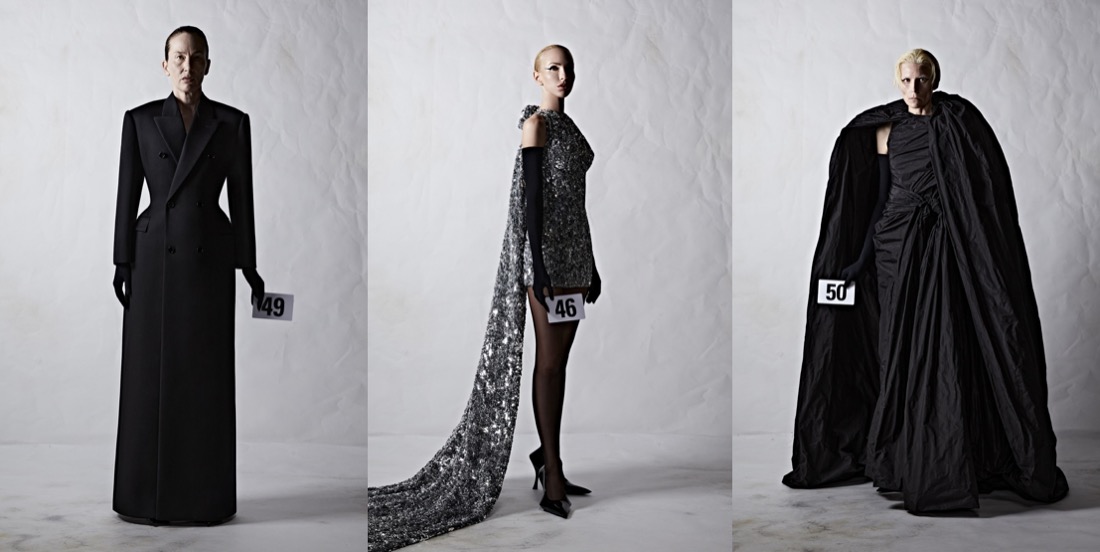
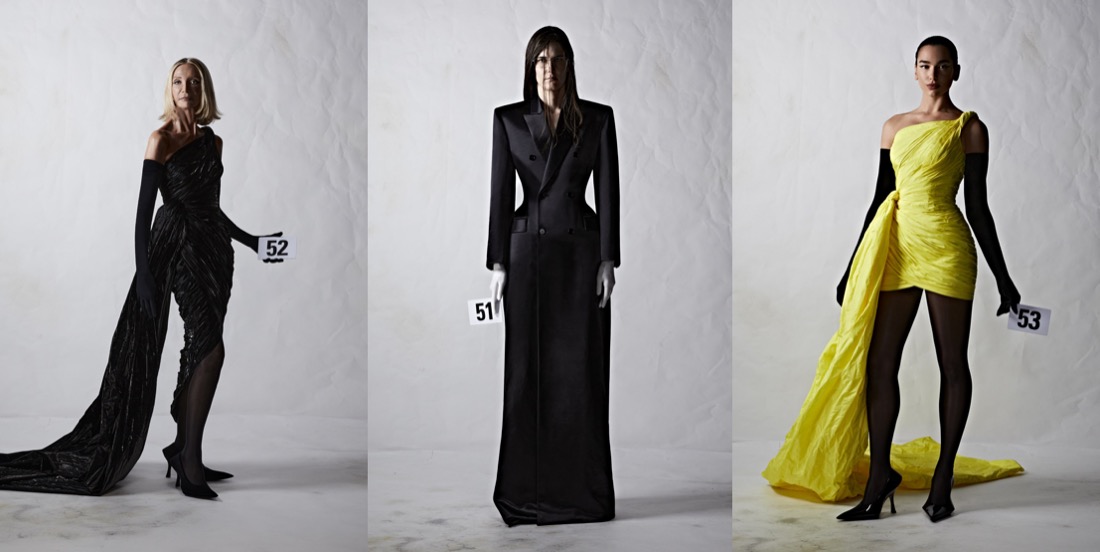
To be honest with you, this haute couture season didn’t really start for me until Balenciaga happened. The 51st Balenciaga haute couture collection. And the second coming from Demna. Nobody knew what to expect, the anticipation had the fashion insiders on an ecstatic high on a mid-week morning, and in the end, he didn’t dissapoint. To the sound of a love poem voiced by AI, a breed of haute couture humanoids encased in black neoprene, their faces uniformly erased in high-tech reflective face shields, stalked the Balenciaga haute couture salon. It looked like an invasion by a sinister breed marching on their spiked, chiseled space boots, ready to take over the earth once humanity has wiped itself out. This was Demna’s dystopian introduction to his latest couture collection for the house, which he shows annually. “This year I decided that I needed to put more of myself into it, and kind of find a new future, you know?” he said afterwards. “This is why the lineup started with very otherworldly, almost futuristic neoprene looks, which was my idea of interpreting gazar in 2022.” Invention, and taking time over it, is central to moving the art of couture forward. Famously, gazar was the sculptural silk which Cristobal Balenciaga invented with the fabric manufacturer Abrahams in 1958, in order to create the magnificently voluminous gowns he became known for. Demna’s equivalent – shaped into these wickedly kinky hyper-molded second-skin scuba dresses and tailored jackets – was engineered with a new kind of neoprene, made in collaboration with a sustainably-oriented Japanese manufacturer.
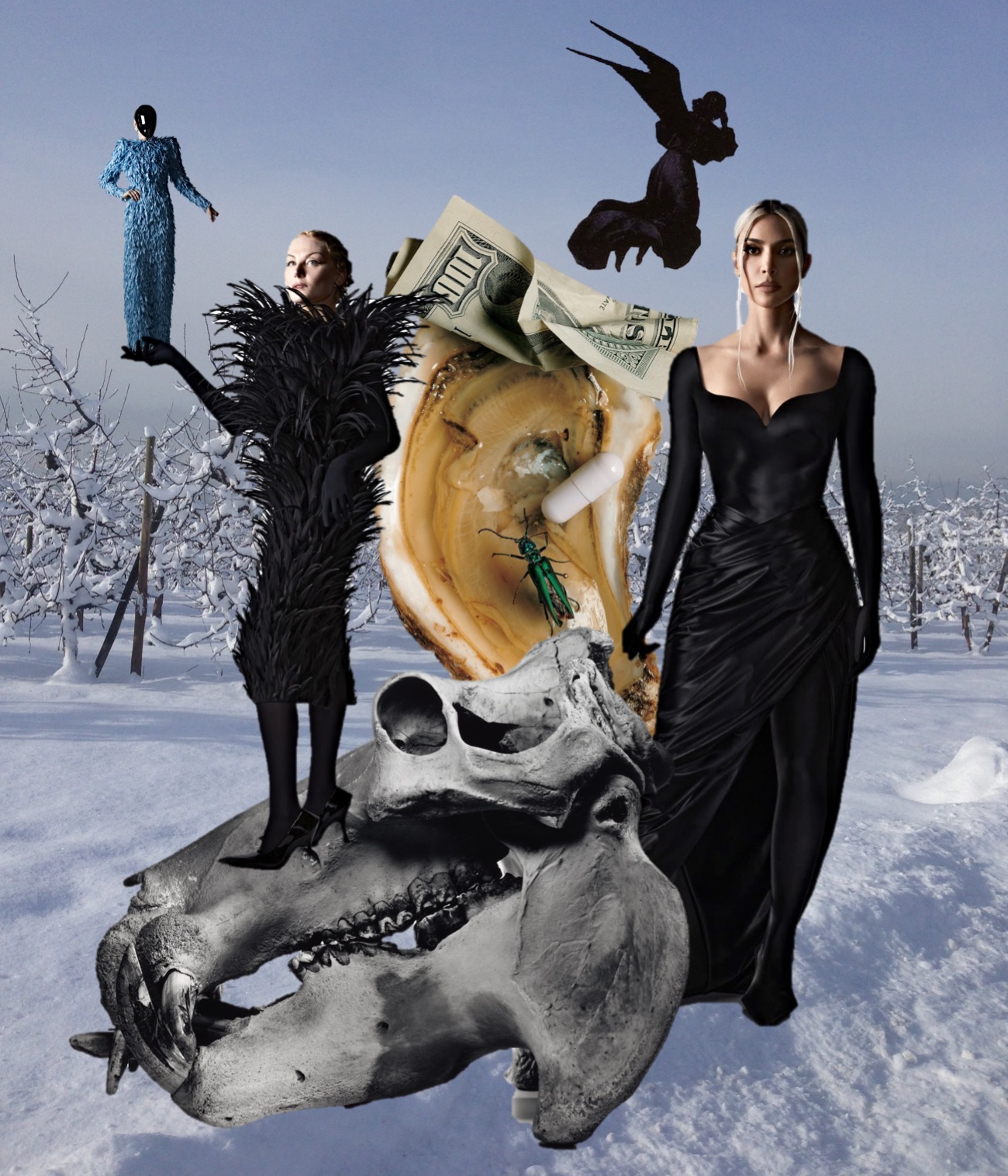
In the second half of the show, where faces were revealed, Demna’s friends, muses, and brand ambassadors walked. Kim Kardashian in a deep-plunge corset and draped skirt. Demna’s musician husband BFRND in opera gloves and a couture tank-top. Nicole Kidman in a silver gown. Dua Lipa and Bella Hadid in draped pops of colour. Eliza Douglas in the most perfect hourglass coat. Renata Litvinova in an all-black feather-mad cocktail dress. Naomi Campbell was the ultimate Balenciaga Maleficent. But back to his motivation for a minute. Last season, Demna caused a sensation by dealing with the stark, tailored elegance of the Balenciaga couture aesthetic. Now, he was putting himself first – owning an haute couture version of the streetwear that he has been responsible for elevating to designer fashion status. Hoodies, sweatshirts, worn-out denim, and parkas – some made of upcycled originals, others shot with aluminium to create crinkled couture-like volumes – followed the dystopian Balenciaga neoprene tribe. The commercial conundrum he faces is finding a way to connect couture with the following that is his main, democratically-based youth constituency – represented by all the outside spectators whose cheers poured in through the salon windows as the sidewalk turned into a celebrity-spotting event.
To square that circle, a new Balenciaga couture shop had opened on the Avenue Georges V, where certain limited edition items, like the upcycled pieces, Balenciaga souvenir porcelain figurines, and the ‘Speaker’ bag toted in the show can be bought. “There are items that will be ready to buy already. After the last show, people started to ask me, ‘how do we buy it?’ People, especially from the younger generation of maybe up-and-coming couture customers, don’t know, and we want to establish the dialogue. Create some kind of an entry to the salon.” But in a sense, Demna was also meeting Cristobal coming back. The arc of the show, he said, “was going from future into the past.” Thus the hyper-extravagance and drama of the vast crinolines and slinky, draped, train-trailing of his celebrity-walked finale. It’s still a debate whether the bride who couldn’t walk through the doors and struggled a lot to move in her heavily embellished dress was an art performance or an actual runway casualty. I’m fine with both versions of the story.
If it was more personal this season, there was a touching reason behind it. Explaining the AI-voiced poem at the opening of the show, Demna said they were the words of a love poem he’d written to his husband. “Because je t’aime is the most beautiful word in the language to me. I realized that couture, what I do, is the only thing I love doing and I want to be doing. And somehow this was a love letter to the person I love most in my life, and to the work, the art that I do. Both.”

























 Design & Culture by Ed