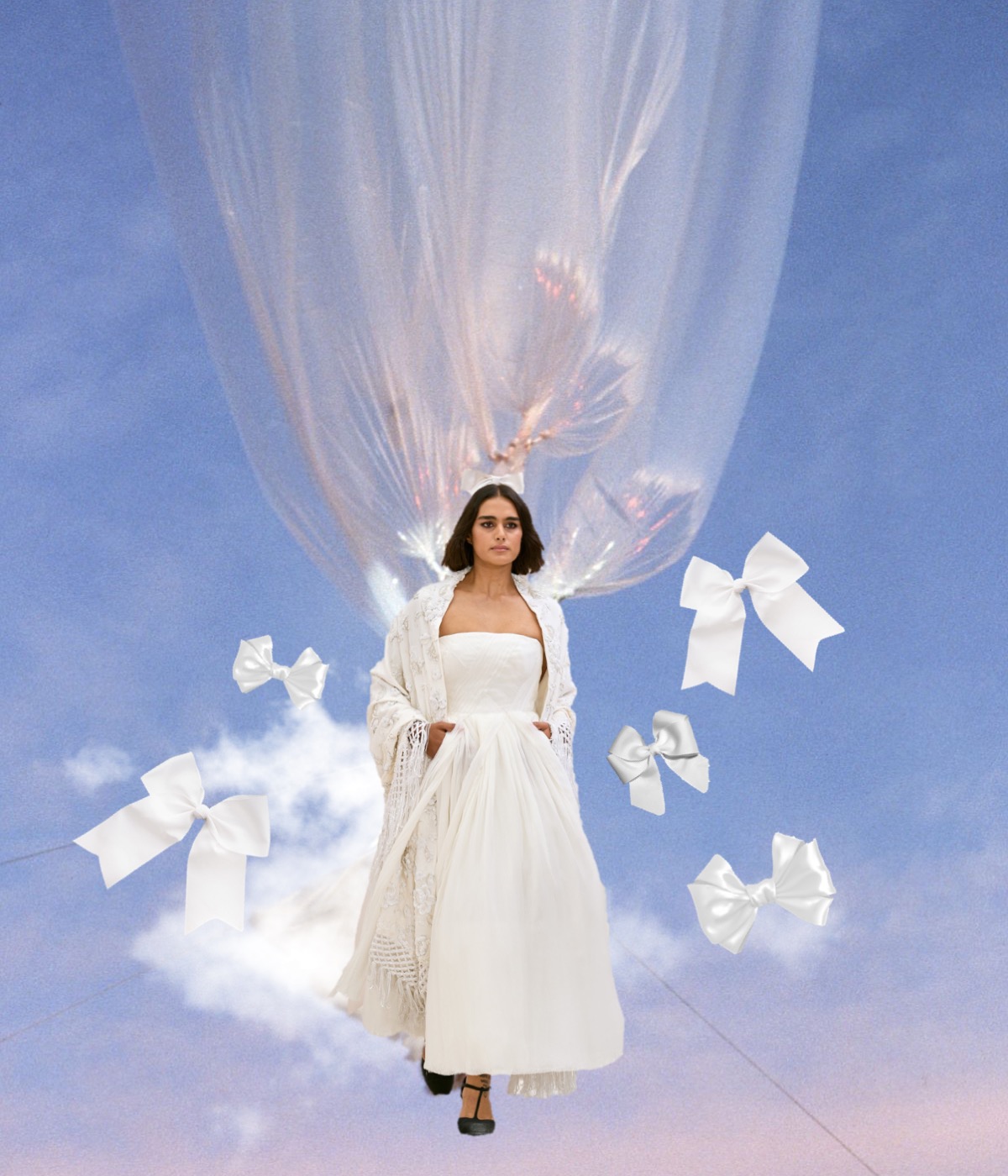
Move Beautifully. Chanel AW22 Couture

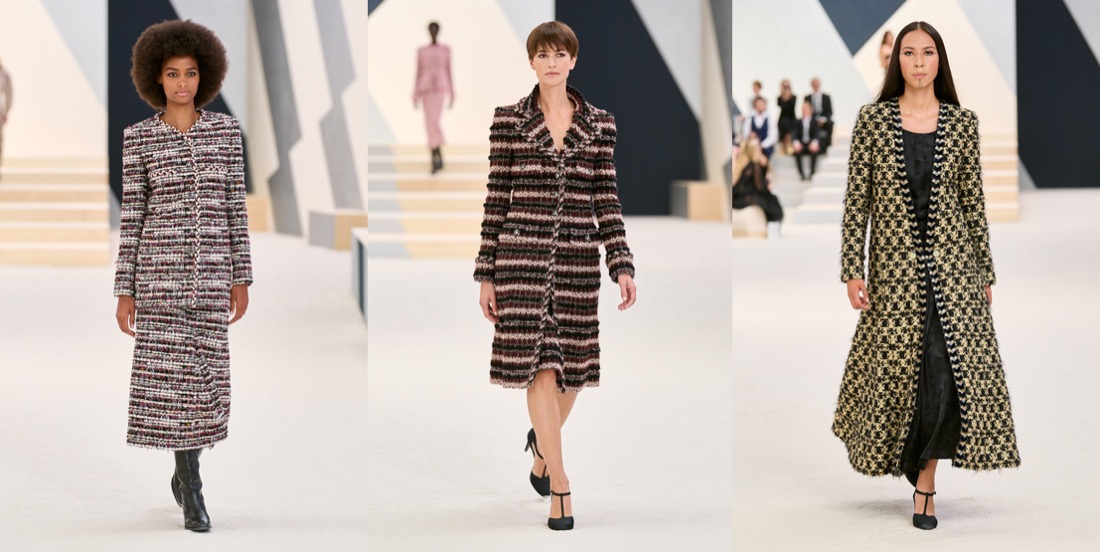
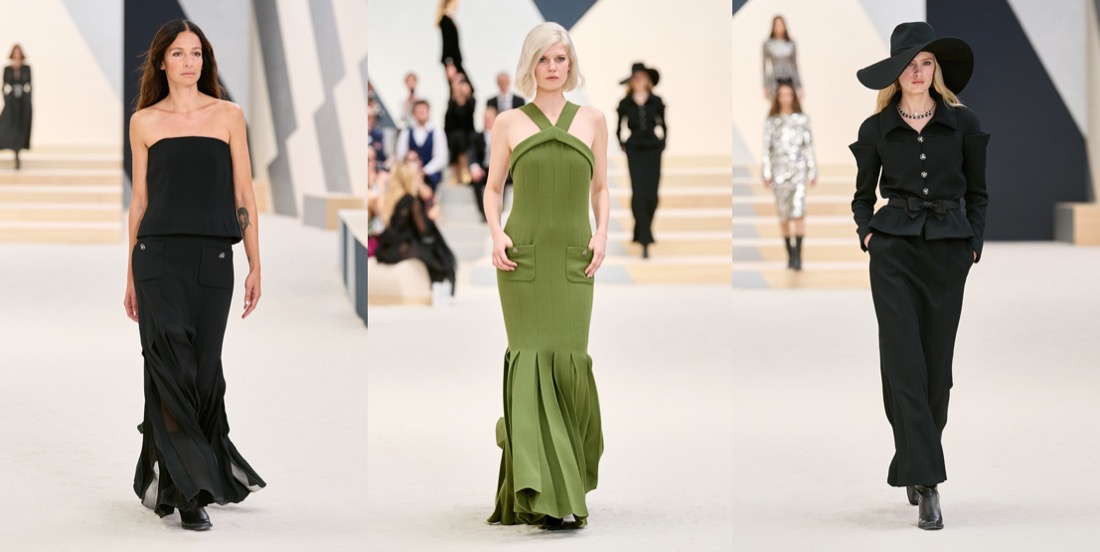
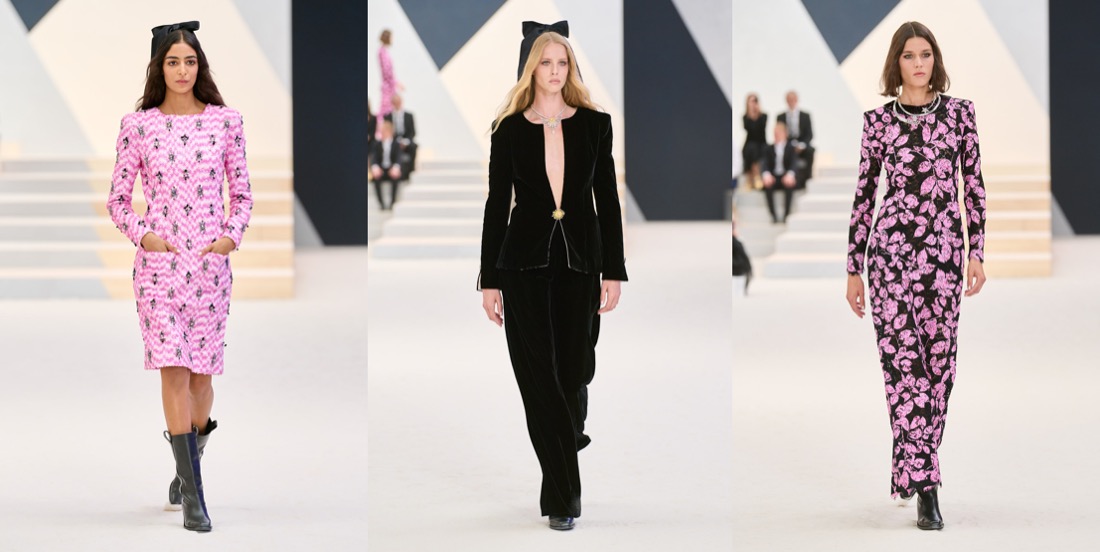
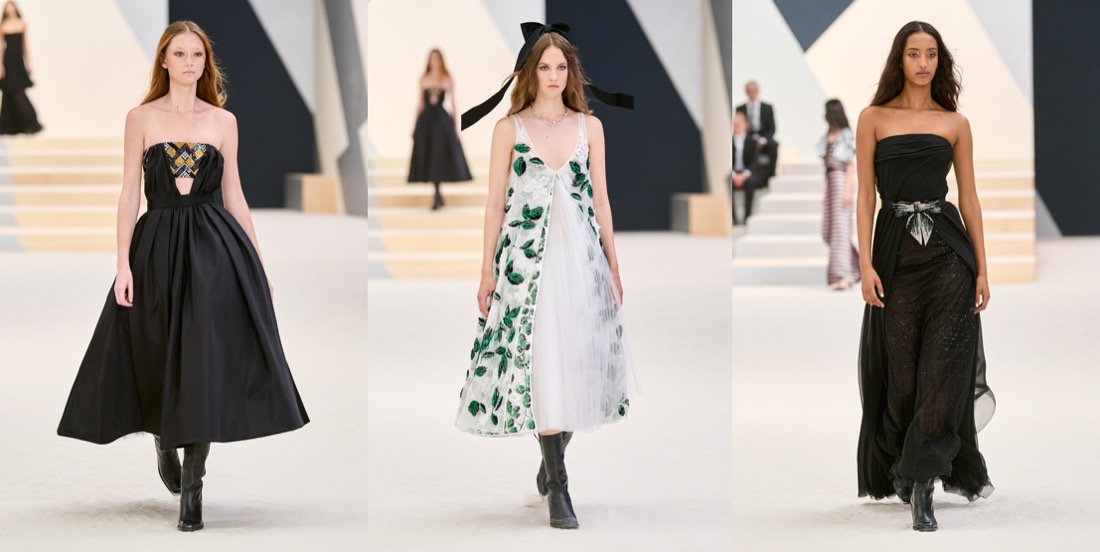
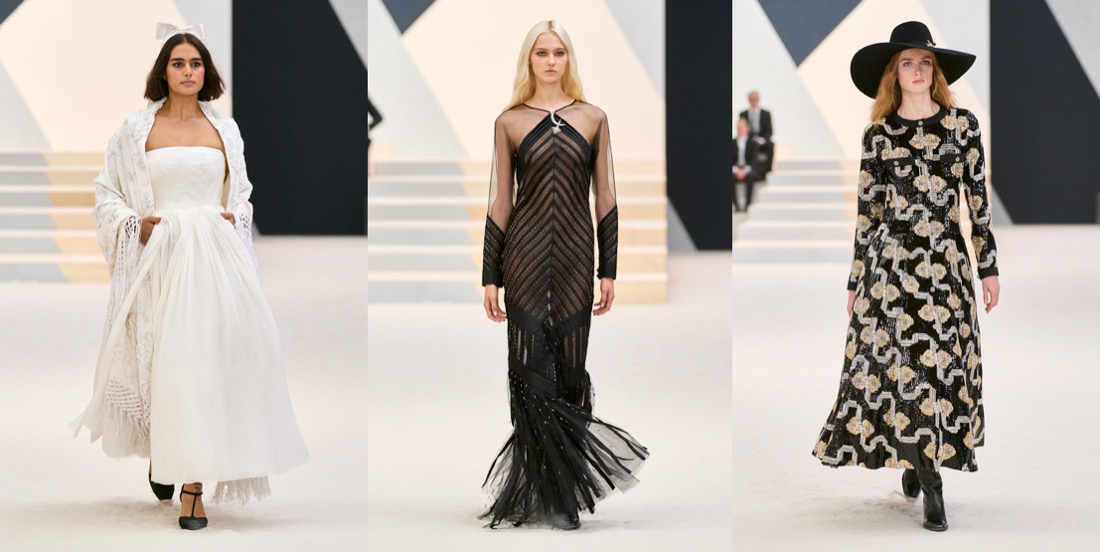
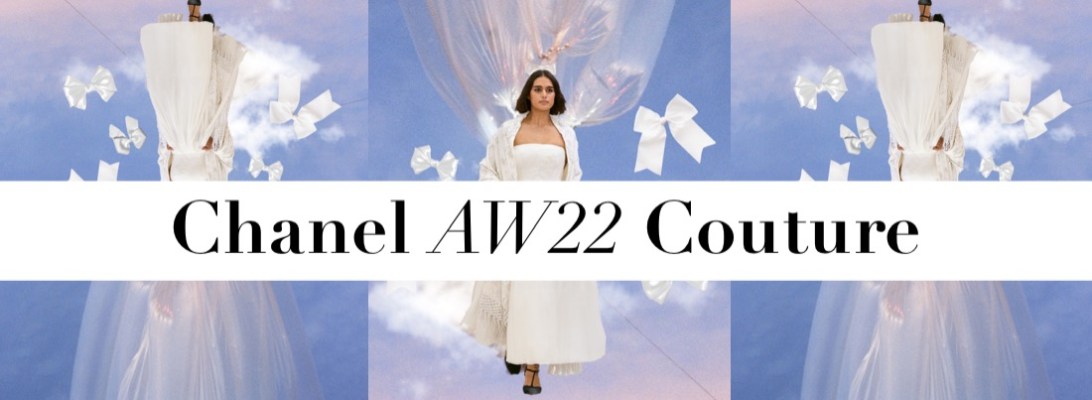
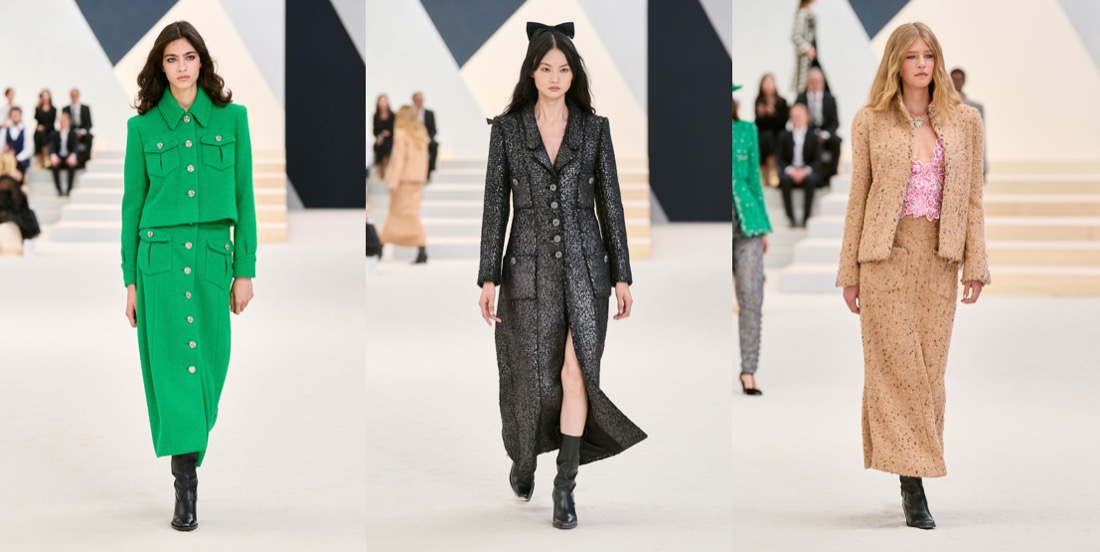
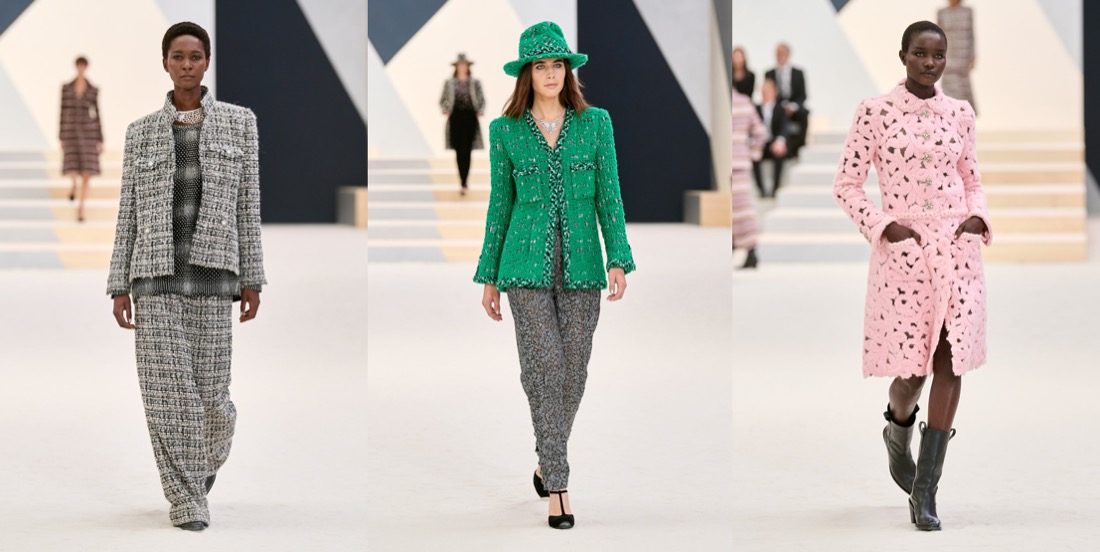
This Chanel haute couture certainly won’t appear in fashion history books, but it did please the eye. For Virginie Viard, her collections reflect the pragmatic needs and desires of the house’s clients and her own eclectic but never fantastical sources of inspiration. Not for Viard the sweeping statements of her mentor Karl Lagerfeld, who might impose a powerful new silhouette on practically every look in a collection, but instead a sense of gentle evolution and a myriad of references and inspiration sparks that might range (as in this collection) from a blinding memory of Inès de Fressange dressed by Lagerfeld in a jacket of bright grass green and shocking pink (for a 1988 Chanel couture show, when Viard first joined the house), to a shot of Fred Astaire in cinematic action, the tails of his white tie evening coat caught flaring out in mid-dance move, to a 19th century shot of a real-life Annie Oakley, to archive Chanel references from slouchy 1920s day suits to slithery 1930s gowns to prim 1960s tailoring, to Lagerfeld’s vividly impressionistic sketches from the 2000s. None of these references, however, are used by Viard literally, but instead serve as starting points for outfits that evolve with the input of the textile designers and makers who weave those extraordinary painterly tweeds, and the dressmakers who understand how to make perfect pleats that “move beautifully,” as guest Sigourney Weaver enthused, “and are just so elegant.” That Astaire flare, for instance, might translate into the kick at the hem of a calf length skirt, the Oakley image into a dirndl skirt with practical pockets that encourage a certain assertive body language, the ’30s house archive references into slinky evening dresses deftly cut to fall straight to the floor when standing still, but that break into swirling movement below the knee when the wearer walks. To set the scene, Viard reached out again to the artist Xavier Veilhan who created a Constructivist set for the spring couture collection. This time, Veilhan built a series of structures that formed a symbolic landscape (arches, bullseye targets, mobiles, cubes of bubblegum pink recycled plastics) in the sandy outdoor stadium of the equestrian L’Étrier de Paris center in the Bois de Boulogne. Guests walked through or around these structures before moving indoors to more sand and a set of kinetic color blocks in black, white, sand yellow, and gray. This gently suggested something of the art deco flavor to the drop-waisted dresses and linear shapes that appeared in some looks in the collection. The symphonic soundtrack, created by Viard’s friend Sébastien Tellier, was set to a video projected on a giant screen as a backdrop to the parade of girls, an impressionistic clip that featured an varied cast including Charlotte Casiraghi and Pharrell Williams. That eclecticism continued with the clothes, showcasing amazing textiles – lace painted in resin; a shower of embroidered leaves on a white tulle trapeze dress, shadowing a print of the same motif underneath; an all-over deco print on a bell-skirted coat dress that on closer inspection turned out have been entirely beaded in sequins by Lesage; or tufts of ostrich plumes painstakingly applied to black chiffon and glimpsed through the openings in a streamlined trench coat of textured black tweed.
Collage by Edward Kanarecki.
NET-A-PORTER Limited

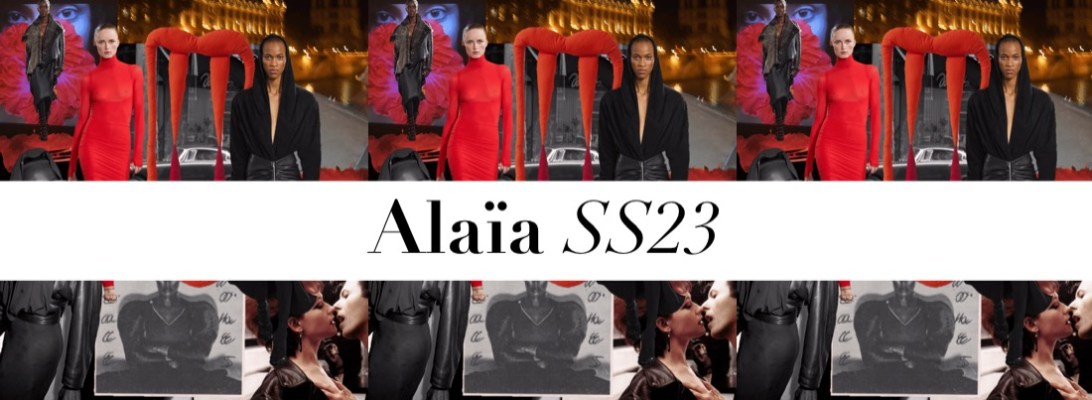
Rough And Elegant. Alaïa SS23

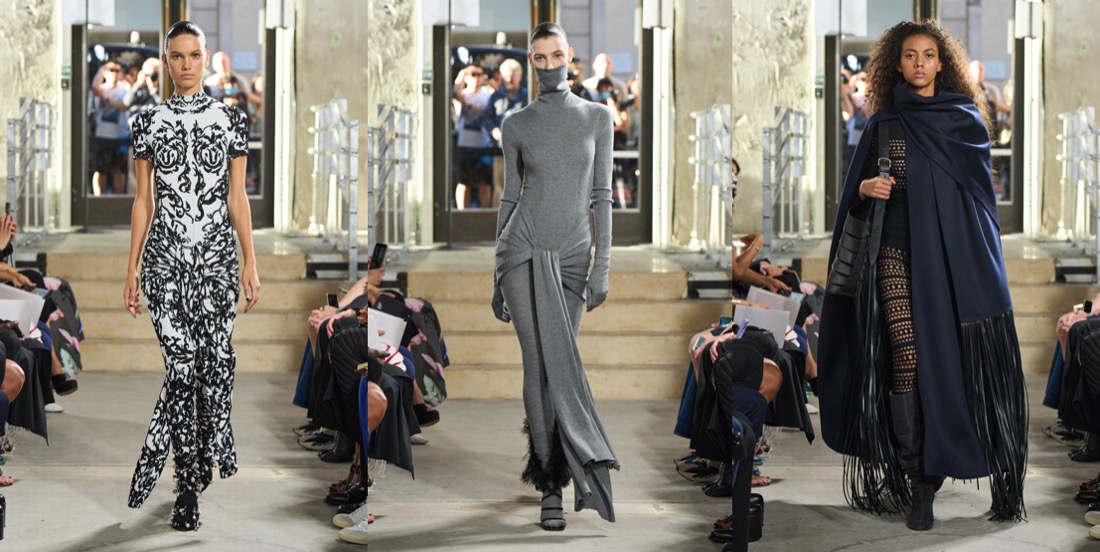
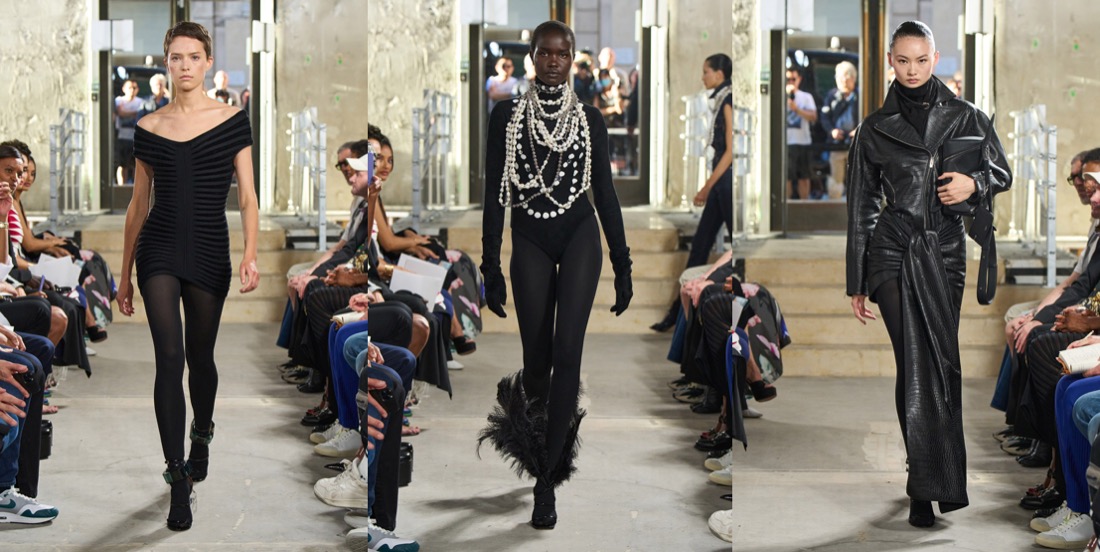
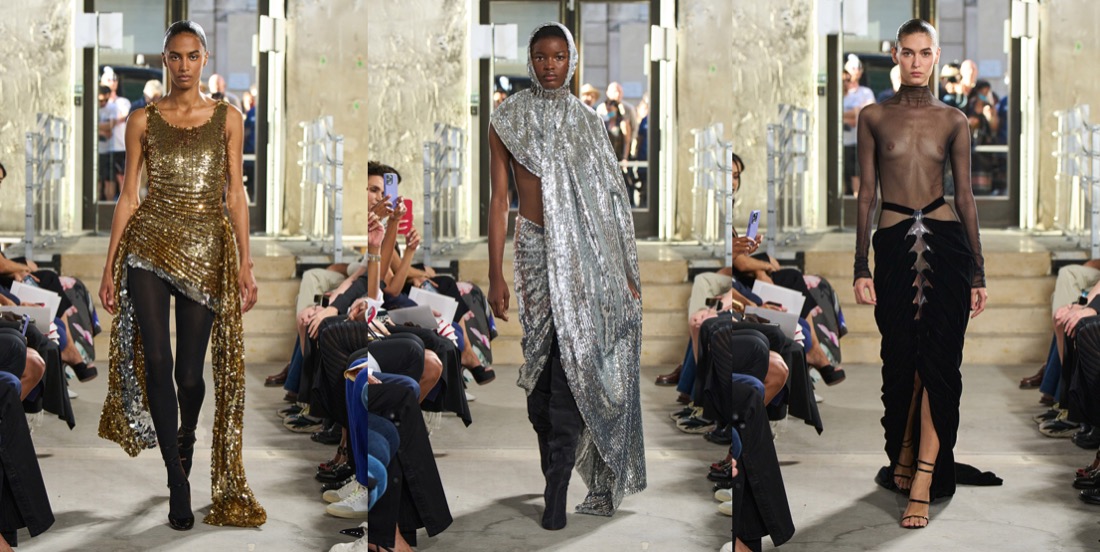
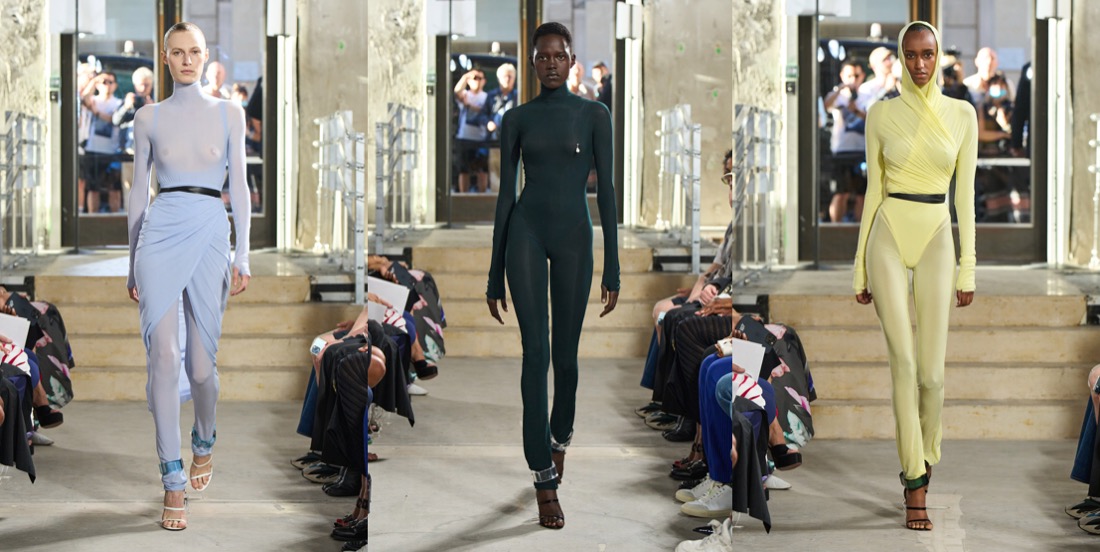
This is Pieter Mulier‘s third season for Alaïa. The Belgian designer has already proved that he understands the codes of Azzedine Alaïa, and is capable to convey them to a contemporary audience with grace, sophistication and refinement. The spring-summer 2023 fashion show, which opened the haute couture week in Paris, was, however, the designer’s most turbulent line-up. It seems that Mulier wanted to tackle far too many Alaïa themes and in the end, the collection read as overcharged and, well, messy. Of course, each garment put separate is a masterful work of artistry and tailoring – we are speaking of Monsieur Alaïa’s studio know-how – but the overall of the collection needed an edit. But let’s start from the beginning.

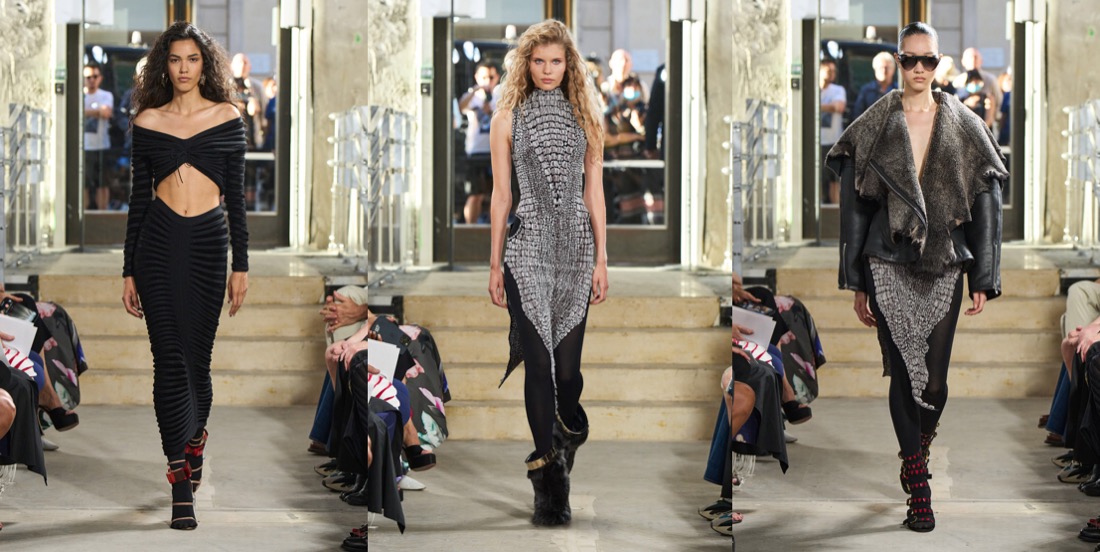
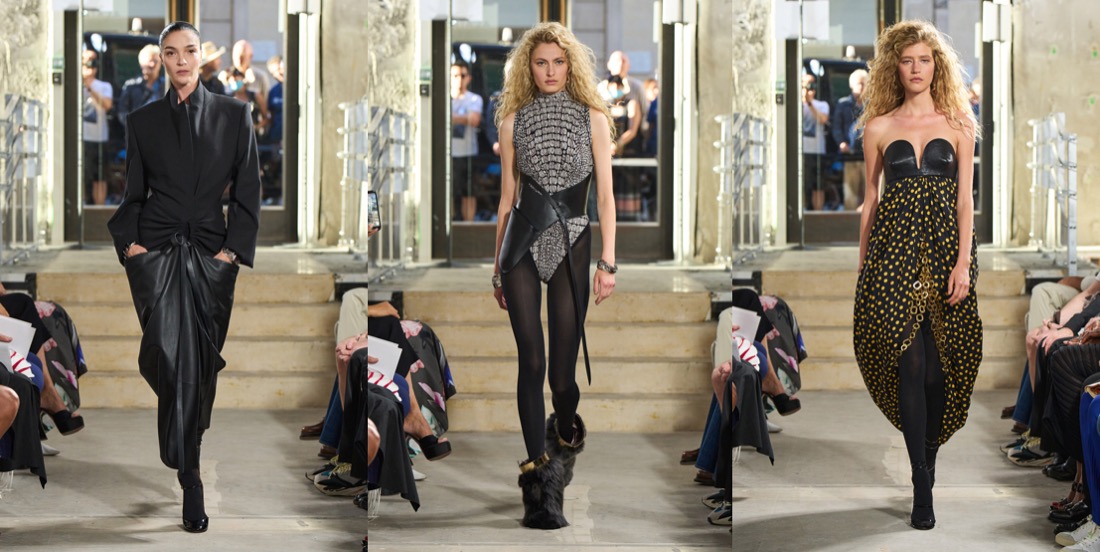
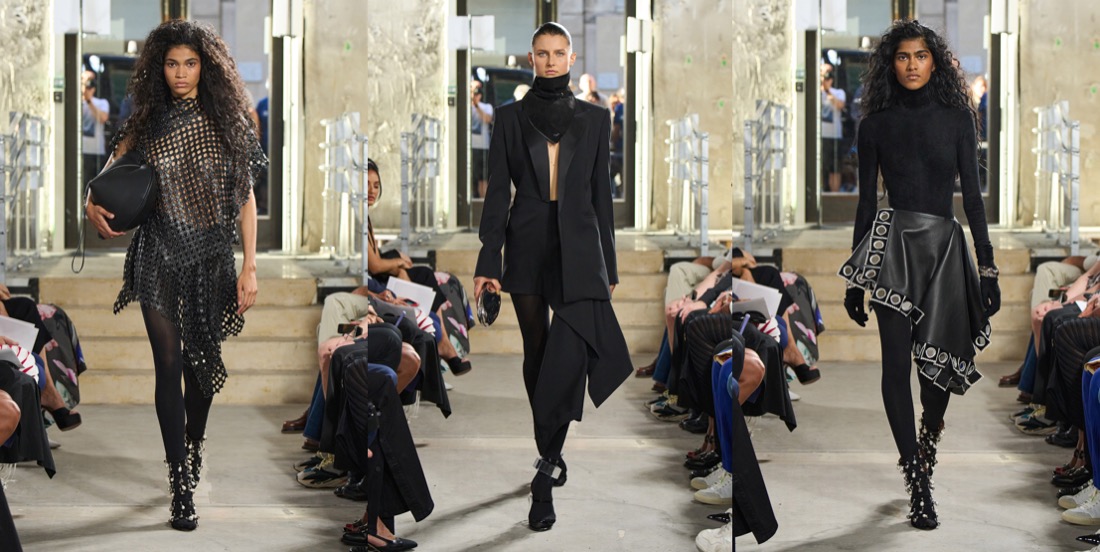
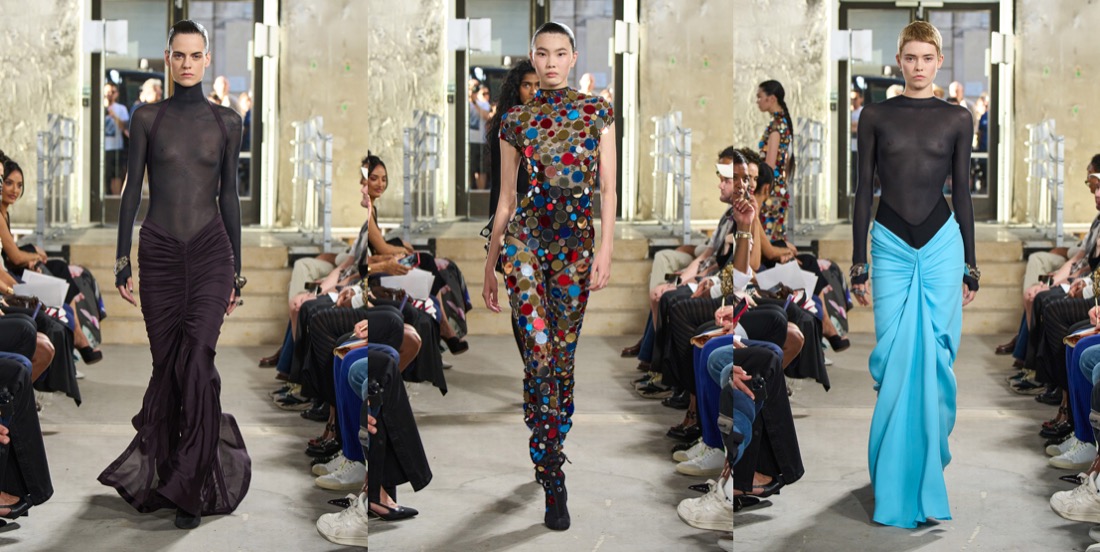
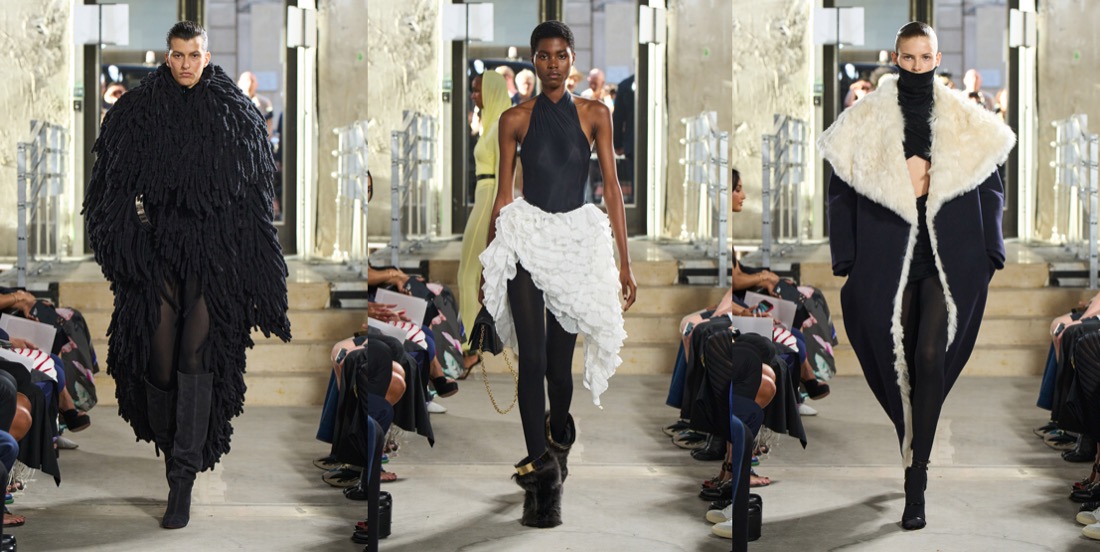
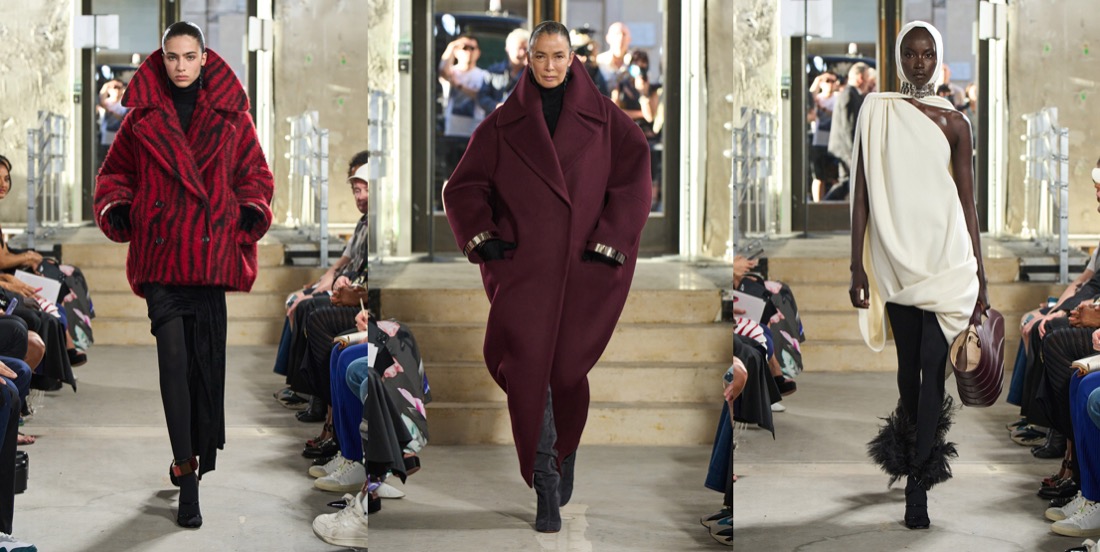
Mulier invited people to the unfinished space that will be the new Alaia store on the Faubourg St. Honoré – an architectural work-in-progress that he saw as the perfect foil for the feeling of his third collection: “something rough and something elegant at the same time.” It crackled with energy; the models collectively channeling a modern vision of the glamazonian power of female physicality that was born in this house in the ’80s. As if to emphasize that it’s dressing the body he’s talking about, Mulier opened with second-skin almost-sheer stretch silk layered bodysuits, the first with a single trompe l’oeil pearl-drop nipple “piercing.” What followed flowed into all kinds of sophisticated twists and turns of draping, wrapping, ruching, and knotting, interspersed with the kind of anatomical knitted body-dresses that are an Alaia wonder. Eyes fell to the footwear: long-haired boots cuffed with huge metallic bangles on cubic lucite heels; black lacquer stiletto heels in the shape of a naked woman’s legs. Mulier has an instinct for the extreme accessory which chimes with today’s hunger for the surreal. The chunky bangles, his own invention, are bound to trigger bounty-hunters, but the suggestive stilettos were reissued Azzedine originals from 1992. Mulier said he’d never had the chance to explore drape in his former jobs (at Christian Dior and Calvin Klein), but if that was ever an ambition, he’s come to the right place. Alaia is staffed with people who have a spectacular and nuanced repertoire of technical skills which enable Mulier to model ideas in 3-D; to make dresses that rely on asymmetry, hip-ruching, suspension, and the North African influences which Alaia used as a source of innovation.

Mulier said he’d been “obsessed with a 1984 show, which not many people know, because Azzedine was basically draping with viscose, and also draping with leather.” In emulating the latter – the leather and shearling – he left edges raw and invented a version of perforated black leather – almost like paillettes – to make a rough-edged t-shirt and tiny skirt that Tina Turner would have worked to the max. The knack of it was to make the complex look almost spontaneous. Again, the craftsmanship amazed, yet the the final result unfortunately felt heavy. There’s a sense that Mulier is learning on the job all the time, and finding the creative balance between respecting the brand’s codes and his own vision of contemporary relevance. It takes time for people to get to know and understand each other in any house where there’s an atelier. The spectacularly erotic finale dress – this one would make Azzedine proud. Somehow, it consisted of a black velvet skirt, suspended from a ribbon-belt, the central drape radiating, by some magic, from a line of vertical geometric transparent paillettes. And on the top, a sheer black long sleeve bodysuit. It looked astonishing enough, walking sinuously towards you, but the real impact of this genius construct was in the back. The draped swoop of the skirt dipped down just a fraction below the line of the bodysuit. Above it was the belt, tied nonchalantly in a bow. As I’ve mentioned earlier: the new Alaïa keeps the extremely high standards of garment-construction. I just wish Mulier would introduce some much-needed lightness to his work, so that these exquisite looks could truly speak, and not fight for space. That’s one of Monsieur Azzedine’s main ethoses: find the right balance.

Collage by Edward Kanarecki.
NET-A-PORTER Limited

And The Living’s Easy. Rosie Assoulin Resort 2023

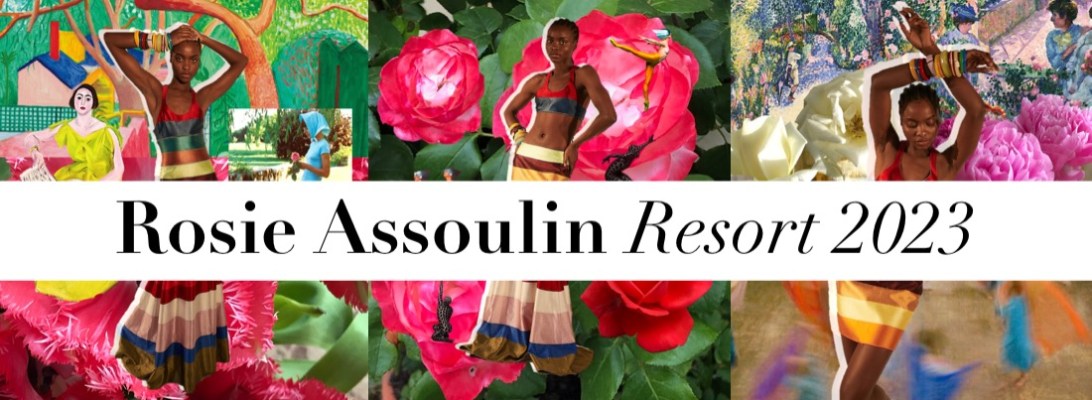
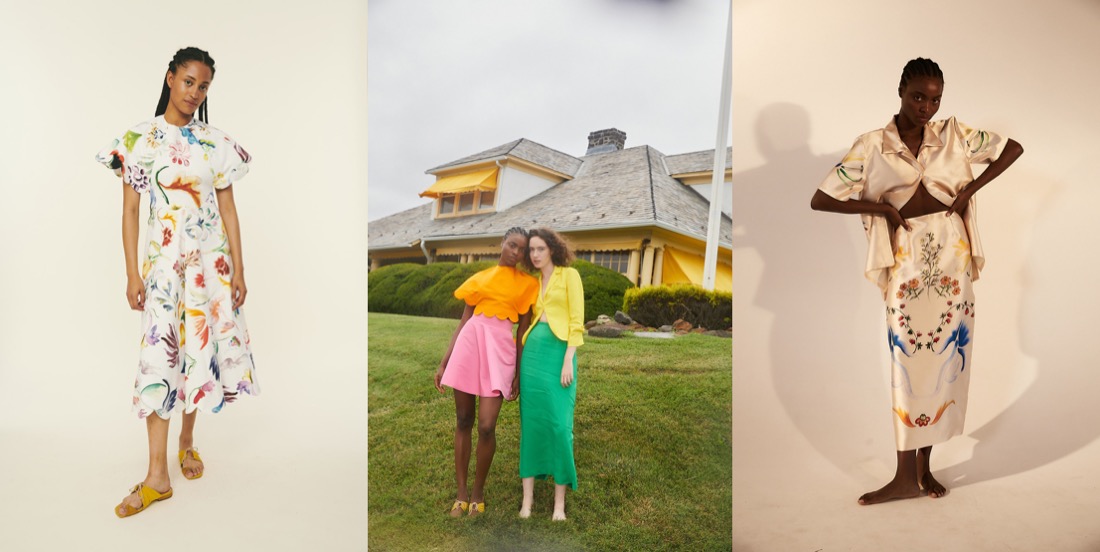
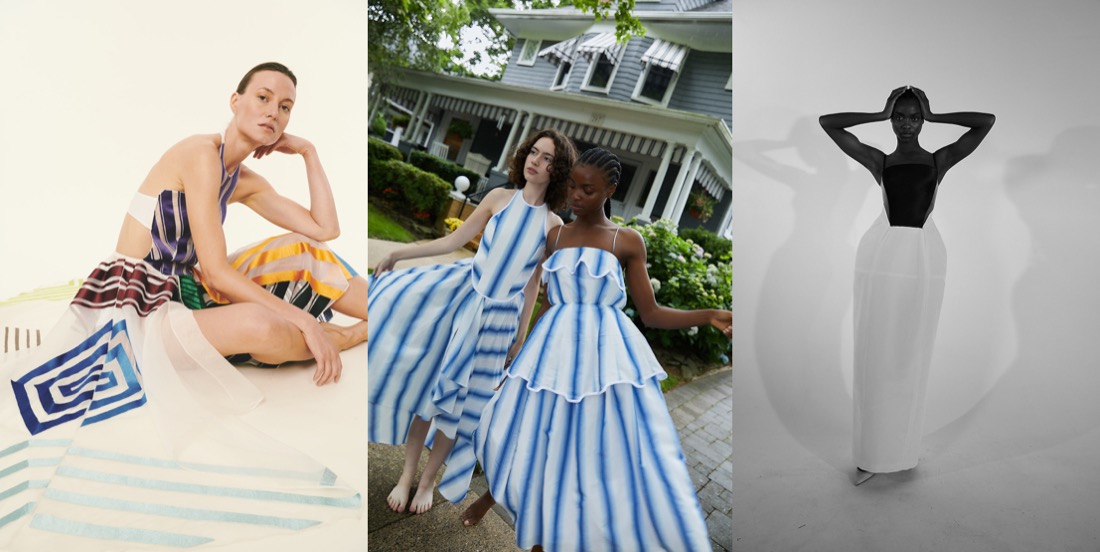
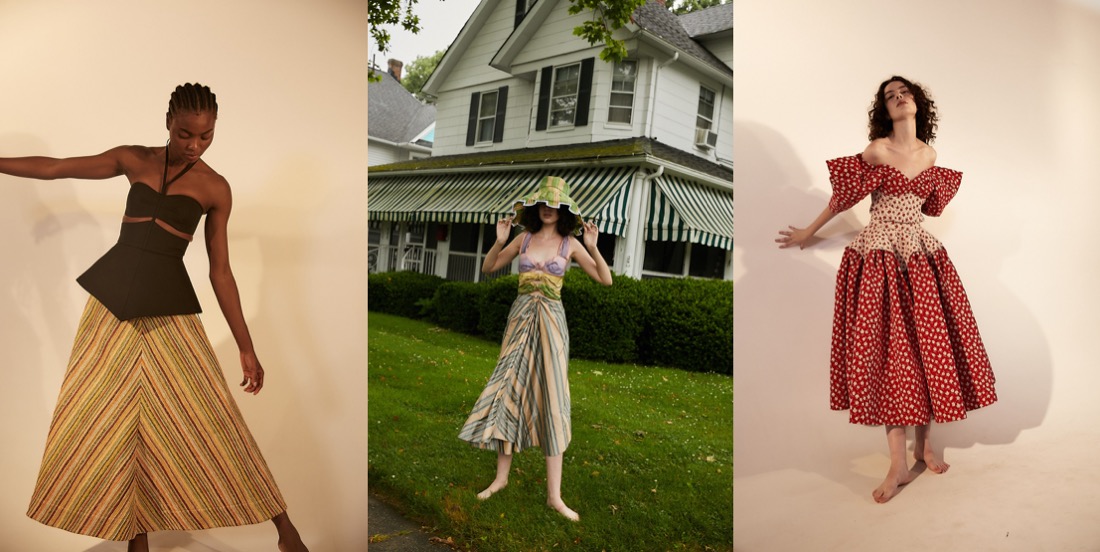
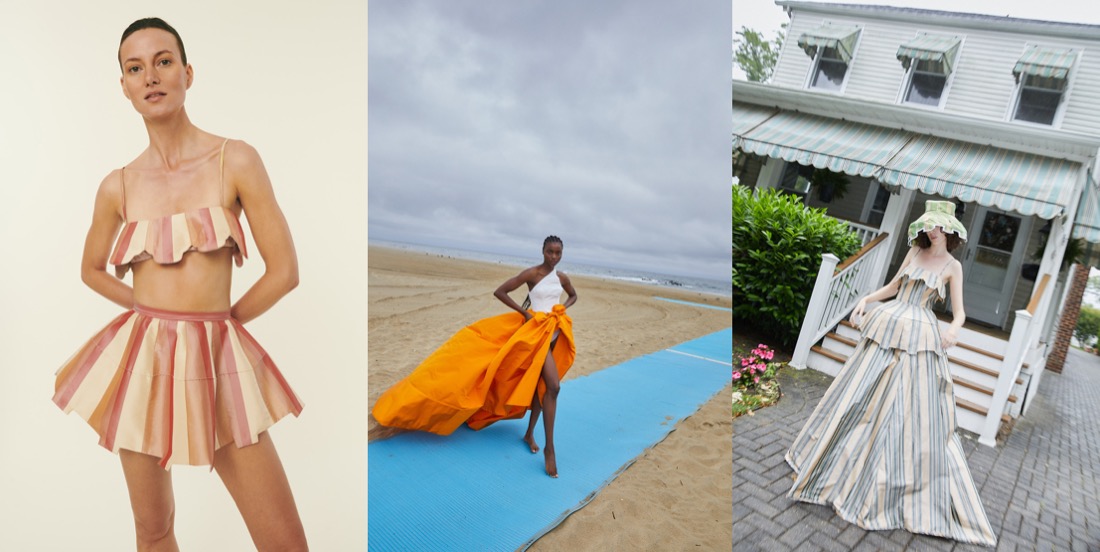
Rosie Assoulin has you packed for the resort season. What’s in the luggage? The whimsical blue striped taffeta gown with awning-details will do the work in Hamptons. The collection’s hero piece, the transformable rainbow silk gown, is ready for a trip to sun-drenched Capri. Separated into four components, it is, in its full form, a racerback striped dress with a mermaid skirt, but it can also be worn as a bra top and mini skirt, a mini dress, and a bra top and maxi skirt. Assoulin loves convertibility, and says that you can go to a party dressed in the full look and slowly change outfits throughout the evening. The resort 2023 collection was presented just a couple of days ago in Paris – in a flower shop, where else! Watercolour blooms appeared on Rosie’s incredible silk kaftan dress, a lovely pyjama shirt and an unfussy day-dress. Sweet polka-dots covered the red dress with a bustier bodice – this one can be easily pictured worn around Sevilla. Assoulin doesn’t do themes, she rather focuses on instincts and what feels right at the moment. In a troublesome world, a care-free wardrobe of summer-perfect clothes sparks joy.

Collage by Edward Kanarecki.
NET-A-PORTER Limited

Essentialism. The Row SS23

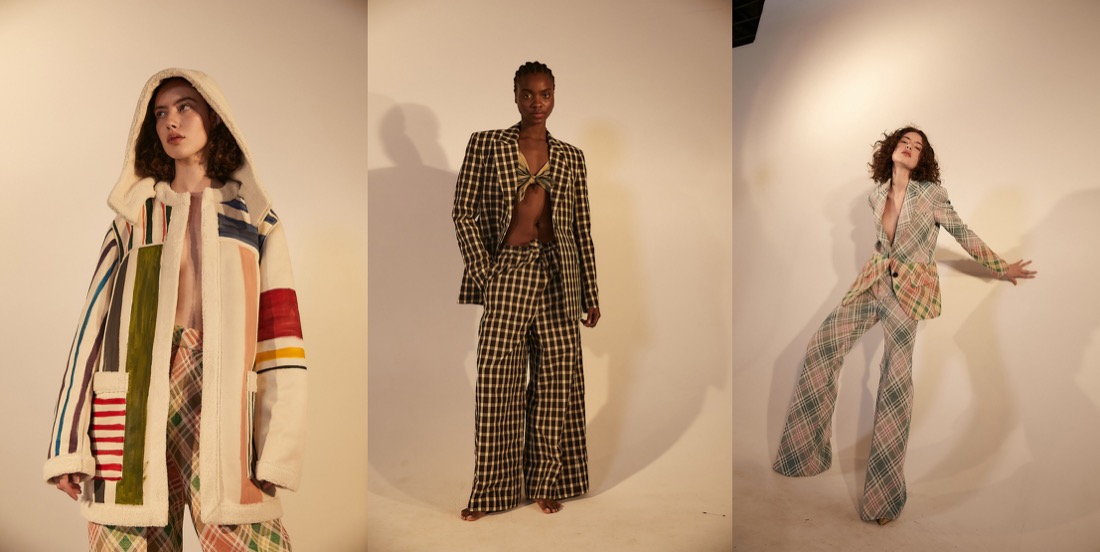
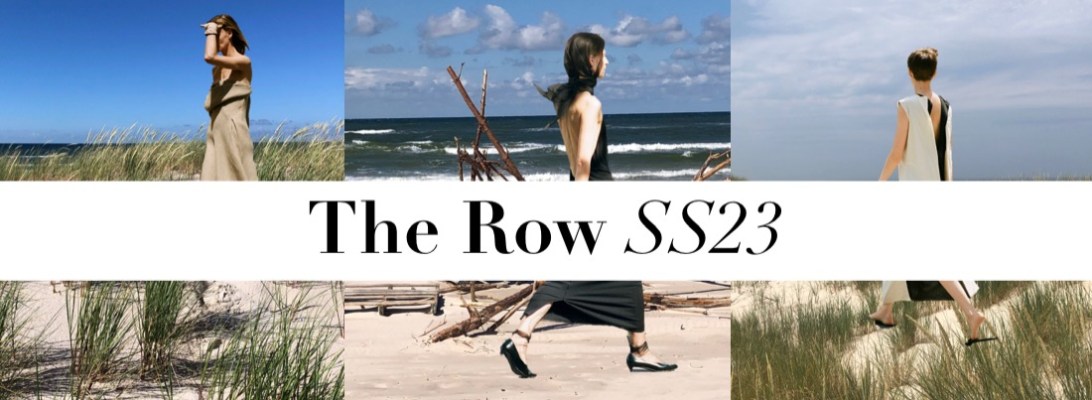
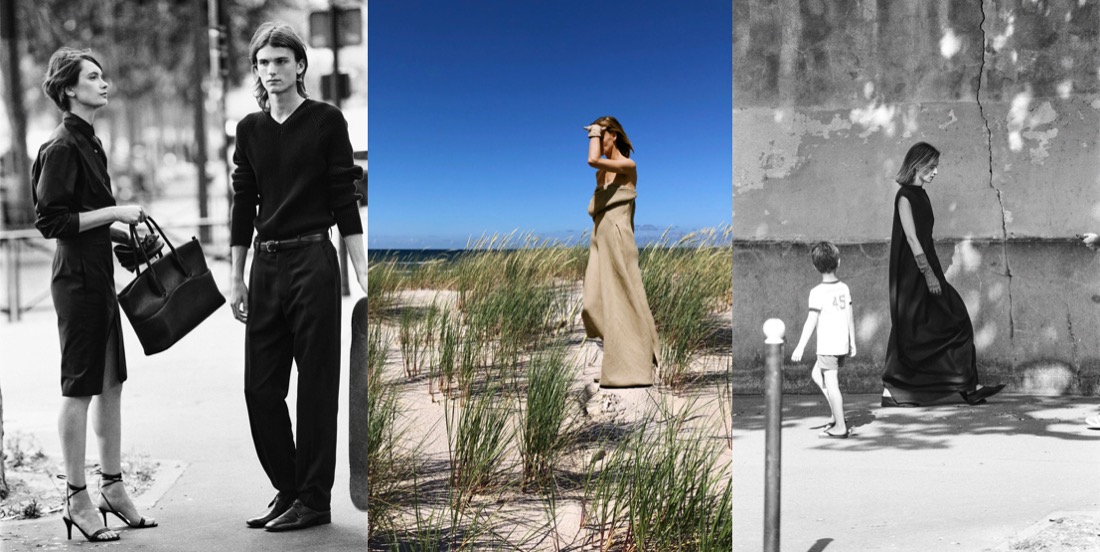
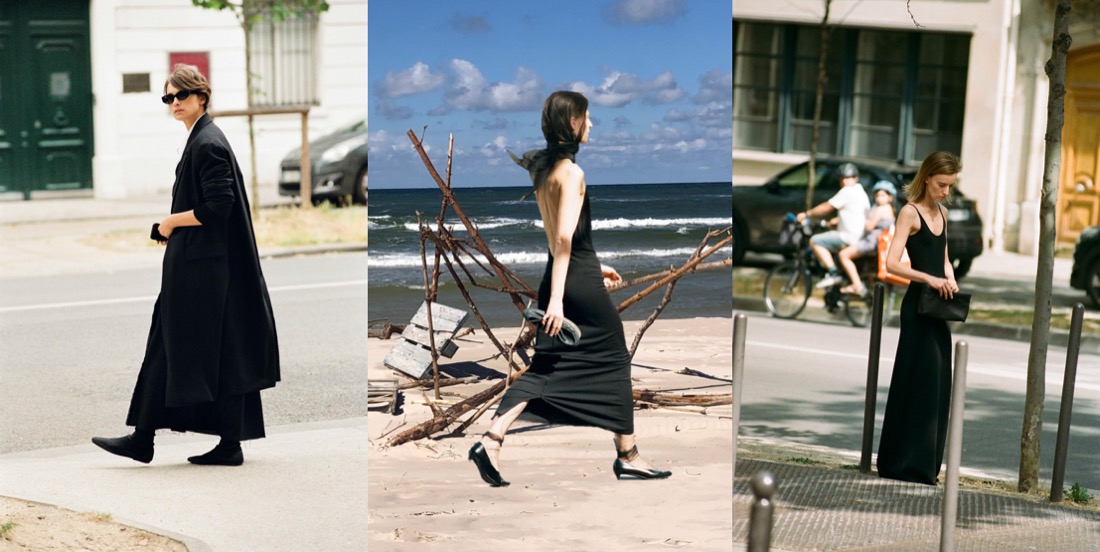
While we quickly forgot most of the valuable lessons we told ourselves the pandemic had taught us, it does seem to have affected one aspect of our lives: our approach to clothes shopping. Somehow our choices now feel less fussy, less complicated, more essential. Granted, essentialism has always coursed through the veins of The Row. This season, Ashley and Mary-Kate Olsen took it to sublime heights. Shot in the streets of Paris and presented in the Galerie Seguin, their spring-summer 2023 collection portrayed the daily lives of their customers and the way we adapt to changing scenarios throughout the day. Whether it’s different levels of formality – office hours, lunch dates, evening events – or the inside-vs.-outside temperature differences we all increasingly have to deal with in a climate change reality, the clothes we actually wear now have to imbued with certain functions and assets to actually work in our everyday lives. That fact informed a collection of more-than-meets-the-eye garments founded in considered fabric choices and functional design. Putting lightness at the forefront, the Olsens structured suits and dresses in luxurious, breathable linens, while linen trench coats came with fabric coatings that made them feel outerwear-y without defeating the purpose. A number of pieces were instilled with day-to-night folding techniques, allowing the wearer to transform their level of formality. The train of a jute dress, for instance, could be folded into the dress itself and buttoned or let out for the full dramatic effect, the hoods of coats were detachable, and the sleeves of a black dress could be unhooked by way of tiny closures. As an ironic nod to the wardrobe issues we all deal with in the heat, a leather skirt was adorned with creases as a form of texture.

The idea of essentialism also informed the Olsens’ level of details and decoration, or rather lack thereof. Everything was made as minimal as possible but without compromising the sense of drama that made this collection a fashion proposition. They cut away necklines to create plunge shapes, disguised hems and pockets, and removed zips and buttons. In menswear, they gave super-light unlined suiting the structure you usually only get from lining through the kind of fabrication that makes The Row worth its price tag, and proposed the kind of luxe oversized shirts and loose-fitting knits that made you want to invest in a new wardrobe for a changed climate. Heavenly…

Collage by Edward Kanarecki.
NET-A-PORTER Limited

We Have Art Not To Die Of The Truth. Marc Jacobs AW22

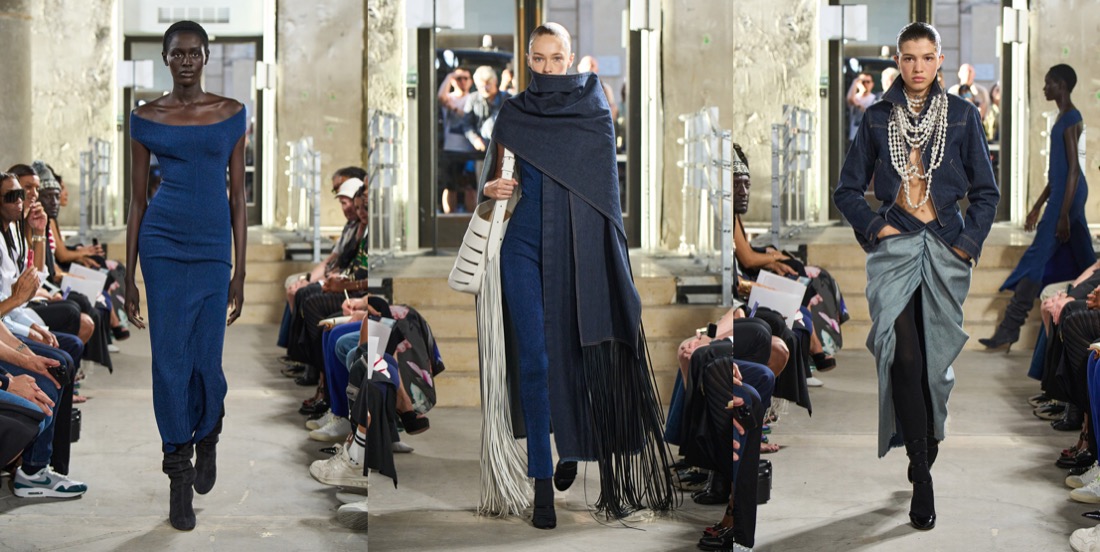
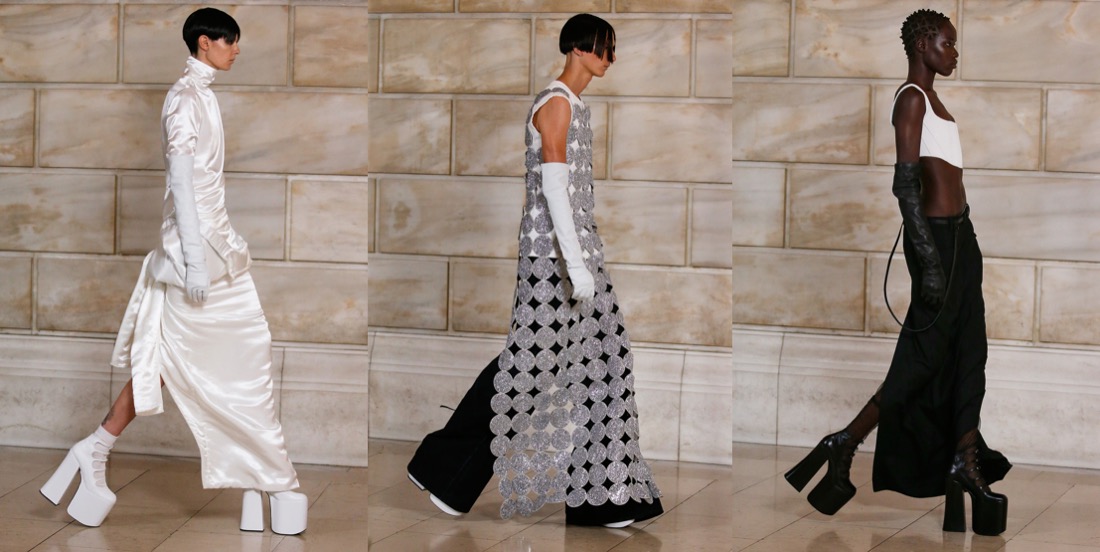
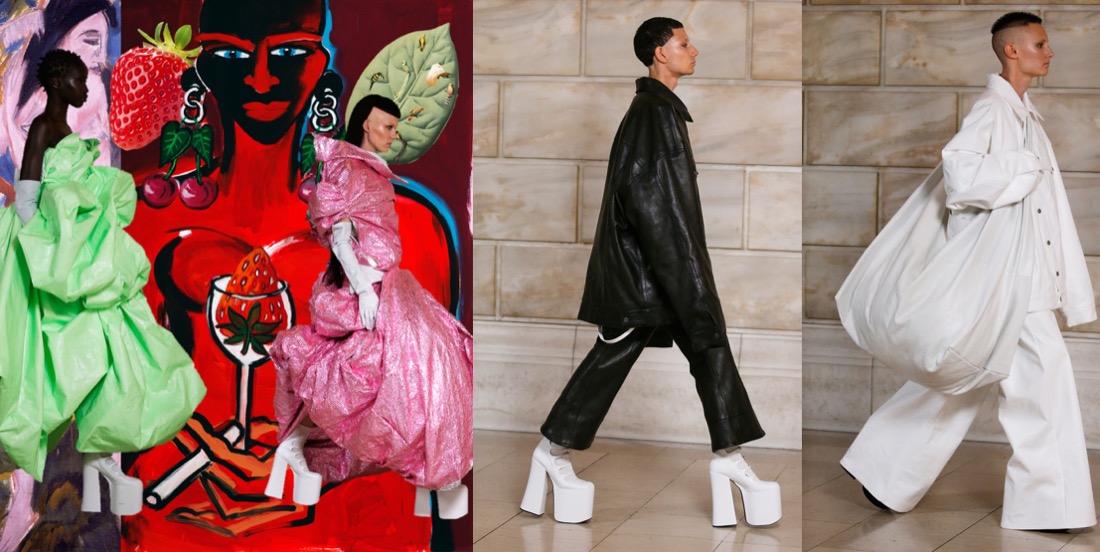
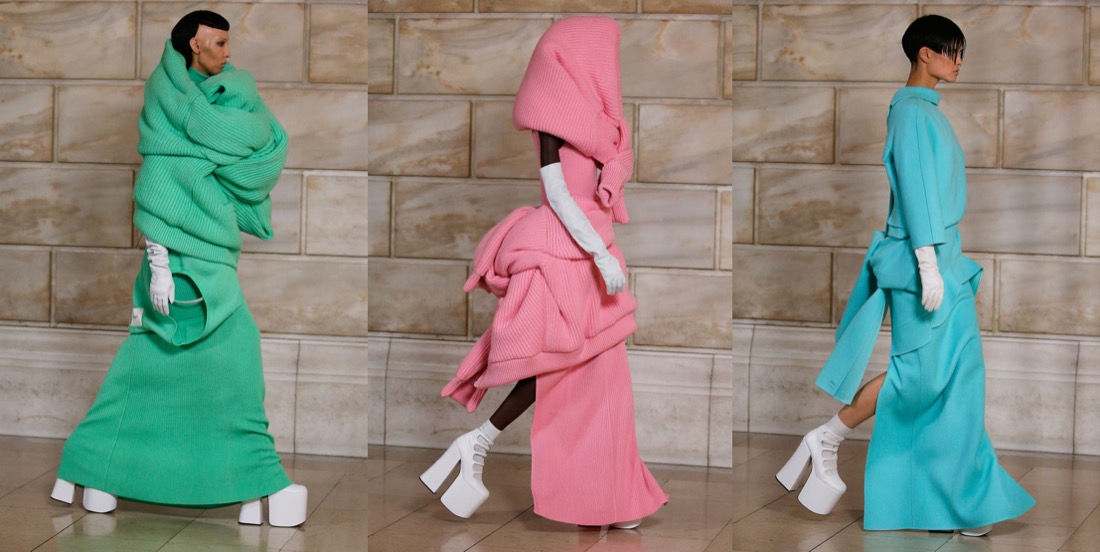
We have art not to die of the truth.Marc Jacobs quoted Friedrich Nietzsche in his show notes. Confronted with a rogue Supreme Court determined to strip women of their reproductive rights, with Clarence Thomas threatening to attack gay marriage next and even to make contraception illegal, fury may give way to despair. But that’s not where Jacobs is at. “Creativity is essential to living,” his statement read. A year ago, most of us were looking ahead to a brighter 2022. Last June, Jacobs channeled that energy into a dynamic collection. That brighter future hasn’t really materialized, as we’re all too aware. Covid keeps coming back in successive waves, Russia continues its atrocious invasion in Ukraine, and in America the will of the majority has been hijacked by the minority. Nevertheless, Jacobs persists. Supersizing jeans and jean jackets, or treating denim to surface treatments that made the all-American classic look more like French couture. Adding so much stuffing to ribbed knit sweaters they could double as pillows. Toying with Gilded Age bustles – evoking them by wrapping jackets around the waist. And cutting ball gowns of exuberant volume in unexpected, even strange fabrics. His materials list included, but wasn’t limited to, foil, glass, paper, plaster, plastic, rubber, and vinyl. Interspersed with that excess, however, there was spareness. Jacobs lowered the waistlines of column skirts and cropped flares to bumster levels and accessorized them with barely-there bejeweled bikinis or the sparest of bustier tops. A pair of suited looks in black weren’t quite minimal, but they came close, a reminder of his talents as a tailor. As for the three matching looks at the beginning of the show in gray, hospital green, and lavender – were they Jacobs’s version of scrubs? Given the recent moves by the Supreme Court, it was hard to think otherwise. Adding to the dystopian vibe: the models’ hairdos, which were “shaved” on the sides with bumper bangs in a style that called to mind Sean Young’s Blade Runner replicant. And yet. All this was paraded out in the Public Library with opera gloves and sky-high white or black mary jane platforms. Dressed up in spite of the circumstances. Or maybe because of them? Definitely because of them. Marc Jacobs is a fighter, whose medium happens to be fashion. Knock-out F-A-S-H-I-O-N.

NET-A-PORTER Limited