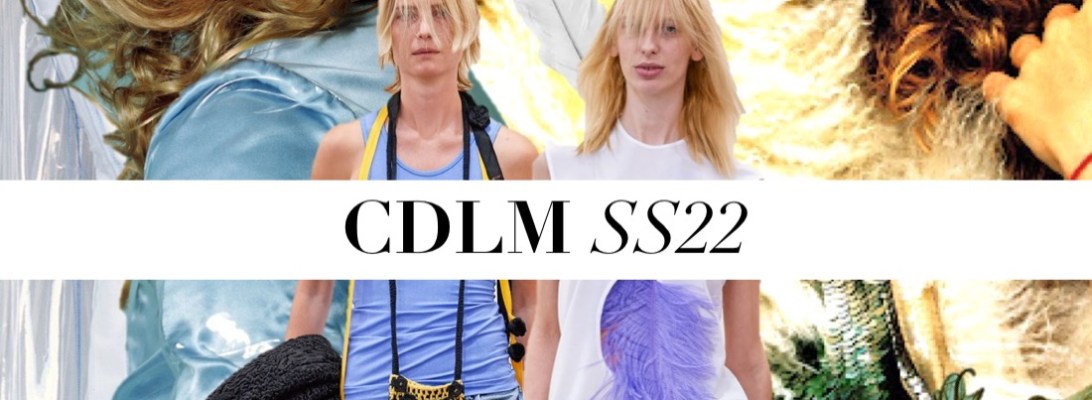
Into The Groove. CDLM SS22

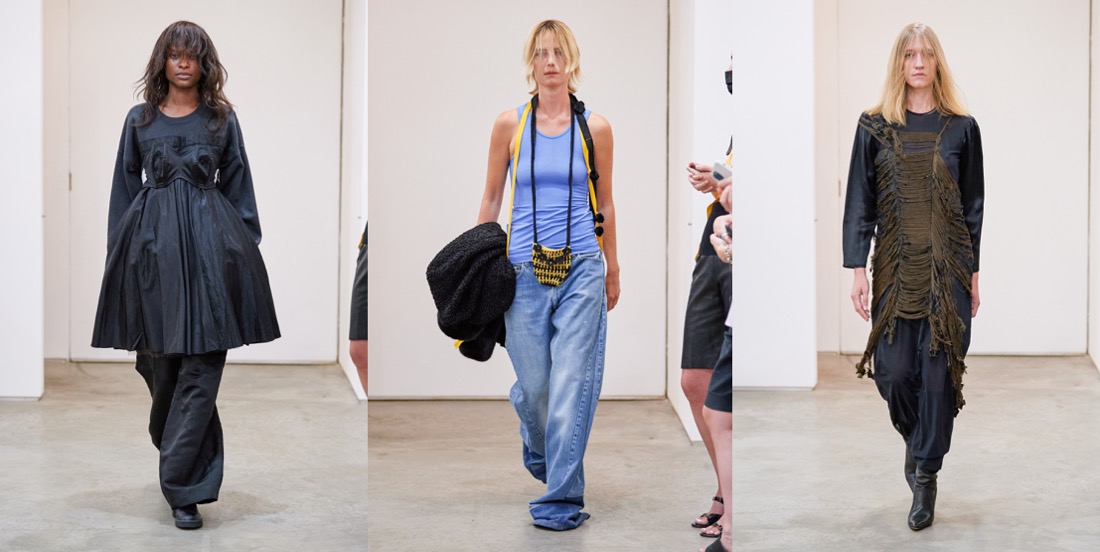
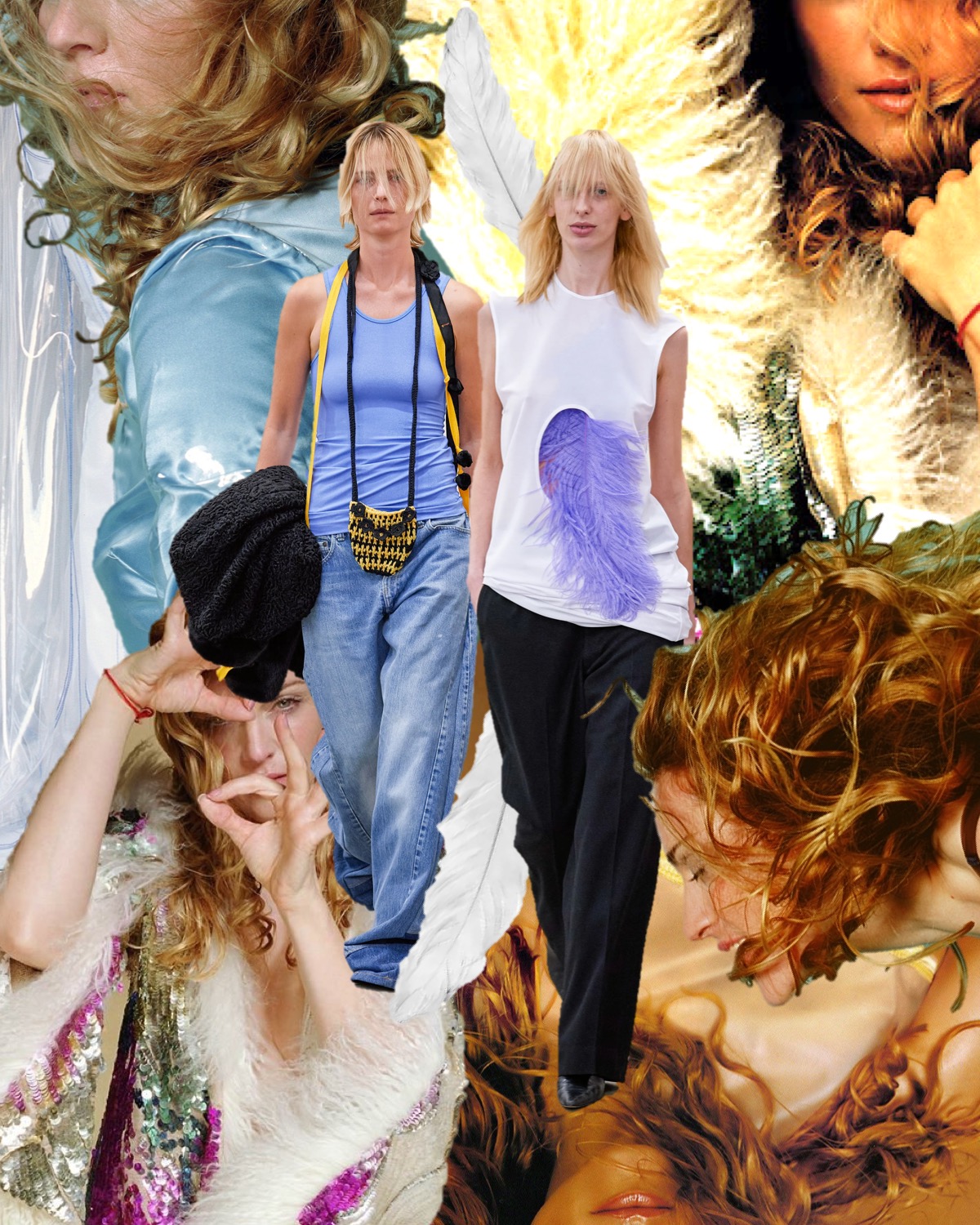
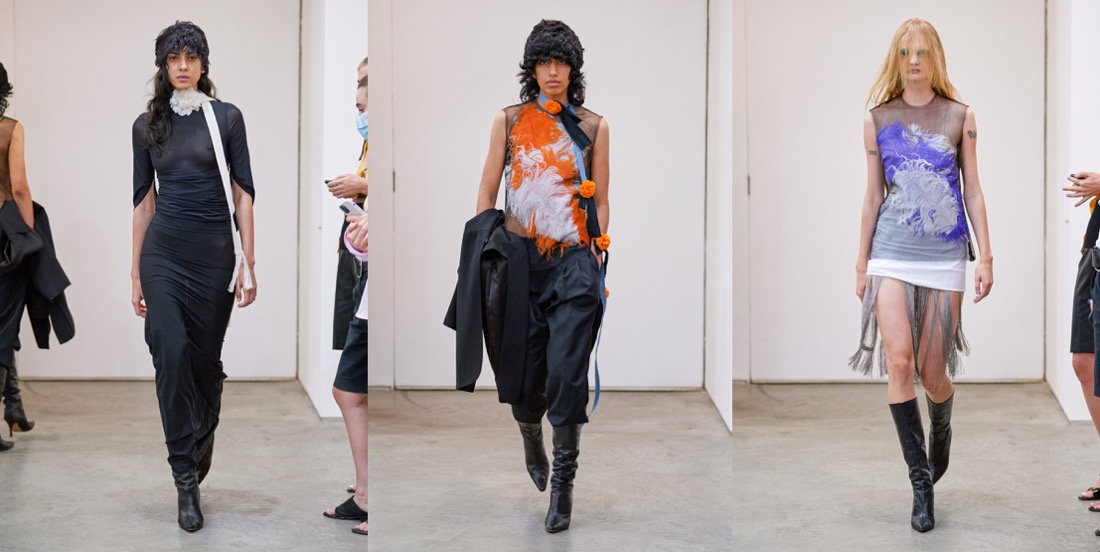
New York Fashion Week is on! And it’s real. What a joy to see the young designers back on the runway. CDLM‘s spring-summer 2022 line-up is a good start. Held at the James Fuentes Gallery on the Lower East Side, the label’s designer, Chris Peters, delivered a post-lockdown vision of a night-out wardrobe. Romantic, frayed, messy, and intoxicating vision of what can go right and, what the hell, what sometimes goes a bit wrong, but in the end, what makes something a beautiful reminder of all the possibilities of life between dusk and dawn. And the emphasis here is on hands: Peters made most of these clothes himself, using whatever was around, or out of pieces of things he has lovingly collected, then given a second life. Take, for instance, the poetically dulled gleam from a top made up of patching together pieces of a 19th century Indian tapestry, worn with black satin evening trousers whose perfection of cut pursued an idea of anti-fit; a little off, a lot cool. “A trouser which feels quite sexy, which has attitude,” is how he put it. Another case in point: The deadstock floral fabric radically transformed when used for a pair of low slung jeans. Elsewhere, that adorned top and minimal-glam trouser combo came in the form of a draped tank made from unused tulle from the ’50s, its athletic shape blown apart by the swoosh of an ostrich feather, a recurring motif, partnered with straight-cut anyone-can-wear-’em pants. Other times, the shirt was the focus: a white cotton tux version over a second-skin tubular dress, or a deconstructed style in a washed, faded black, wrapped and draped and twisted around the body. But sometimes the eye would be wrested away from the clothes, and look at the adornments: the crochet garland scarfs, or the entanglement of delicate chain necklaces. For Peters, the question, he said, was where does the clothing stop and the ornamentation start? As he remarked, “You can wear one of the garlands with your t-shirt. That’s your gown.” What he is doing is opening up the conversation to create things that don’t just exist in a vacuum, but can be in conversation with what you already own, and wear, and love to death. Pieces which can, in other words, do the thing we’re learning to do again: socialize.
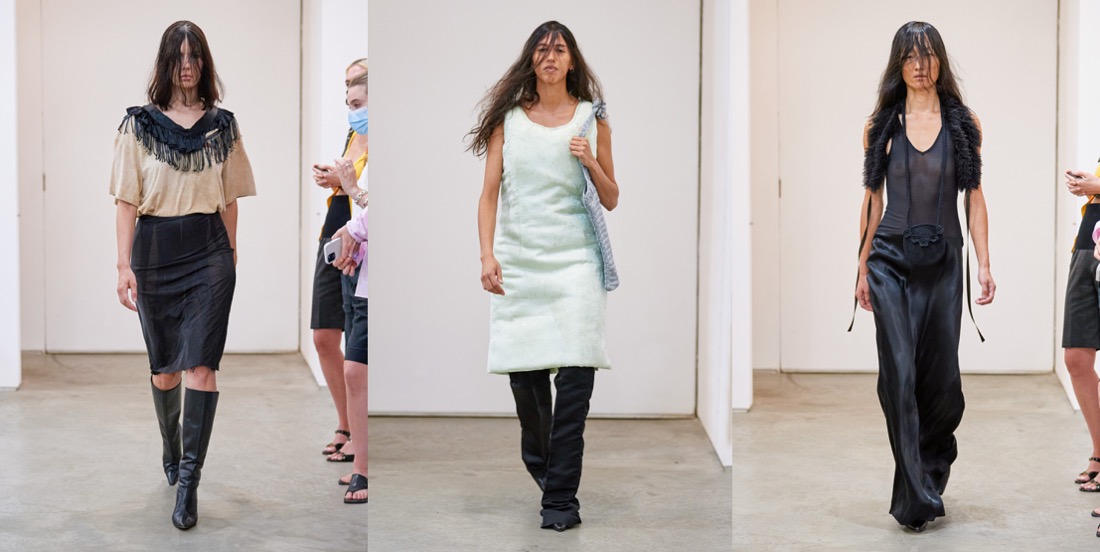
Collage by Edward Kanarecki.

Widly Odd. Bottega Veneta AW21

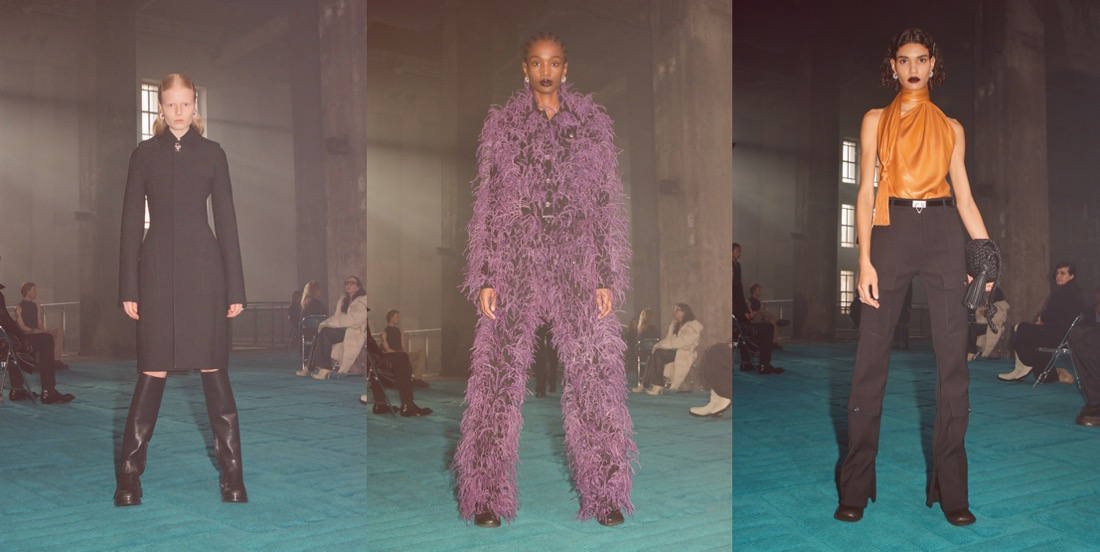
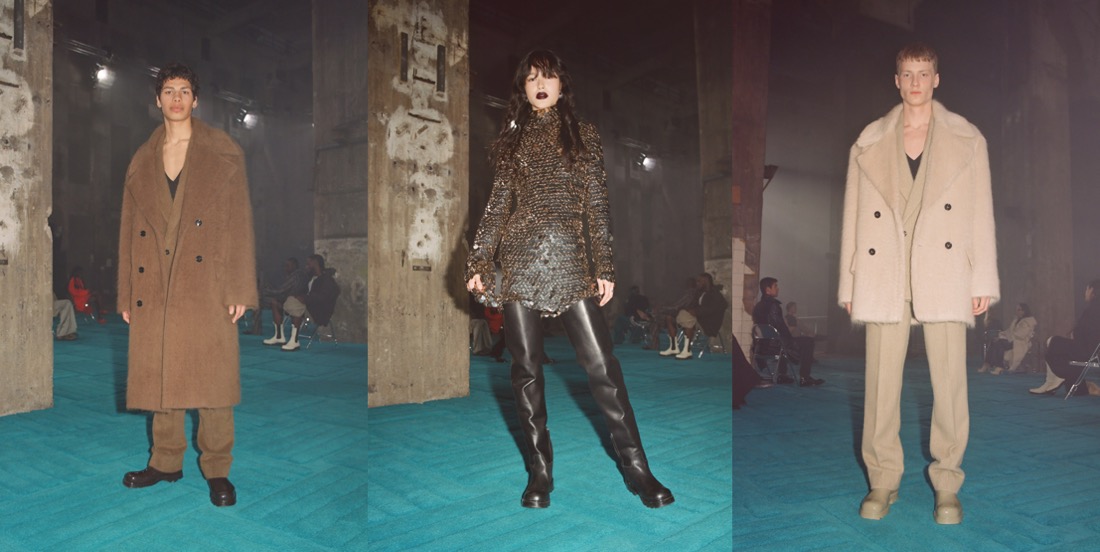
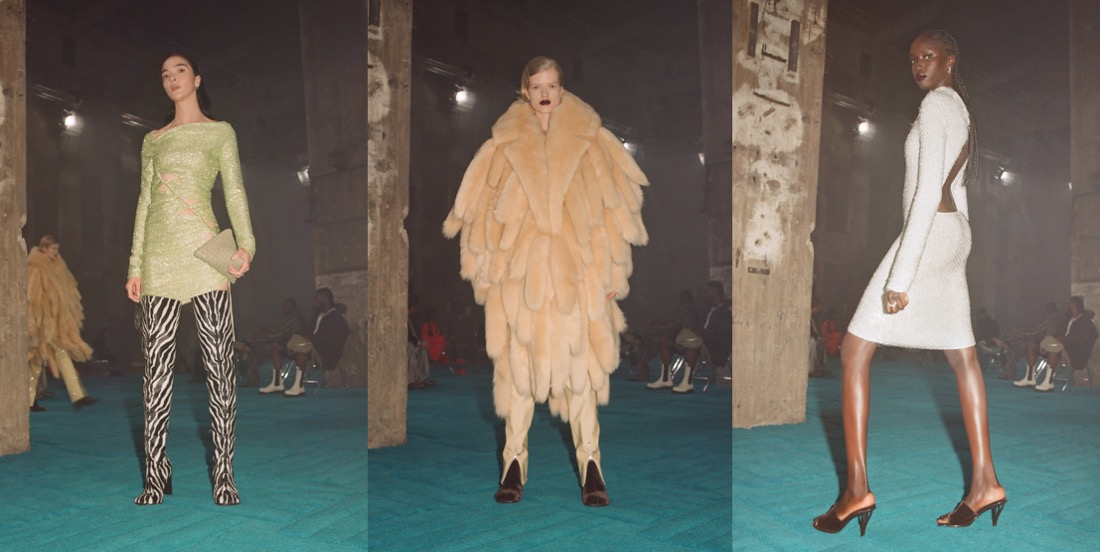
Daniel Lee‘s autumn-winter 2021 collection for Bottega Veneta, which went public just yesterday, makes me wonder if the designer’s vision for the brand starts to get over-worked and somehow distorted. The collection was presented months ago at Berlin’s Berghain to a handful of house-friends, and as the label ambitiously went Instagram-less, the mist of mystery should have done its magic. But nothing works here, and I feel like nobody paid attention to yesterday’s release. Is the flop-era of “new Bottega” on the horizon? Looking at the hectic garments, Daniel Lee’s latest line-up is ripe with diversions which rather create a sense of inconsistency. The fringed shearling coats that are this collection’s showpieces look odd, but not good-odd, rather cumbersome-odd. Reportedly, the line-up emphasizes couture-level craftsmanship. The brand’s press notes revealed that the glass dresses here take between 135 and 250 hours to complete; a black and white zebra stripe coat, meanwhile, features 4.3 million stitches on an embroidery machine; and each of these colourful outfits have over 4,000 feathers, all hand-embroidered. It sounds spectacular, but in reality it just gets lost in all the noise (or maybe the foggy look-book shots are unfortunate…). The merging of the “fabulous” and the “functional” might be one of the smartest and most satisfying pandemic after-effects on fashion, but this season Lee gets it wrong.

Collage by Edward Kanarecki.
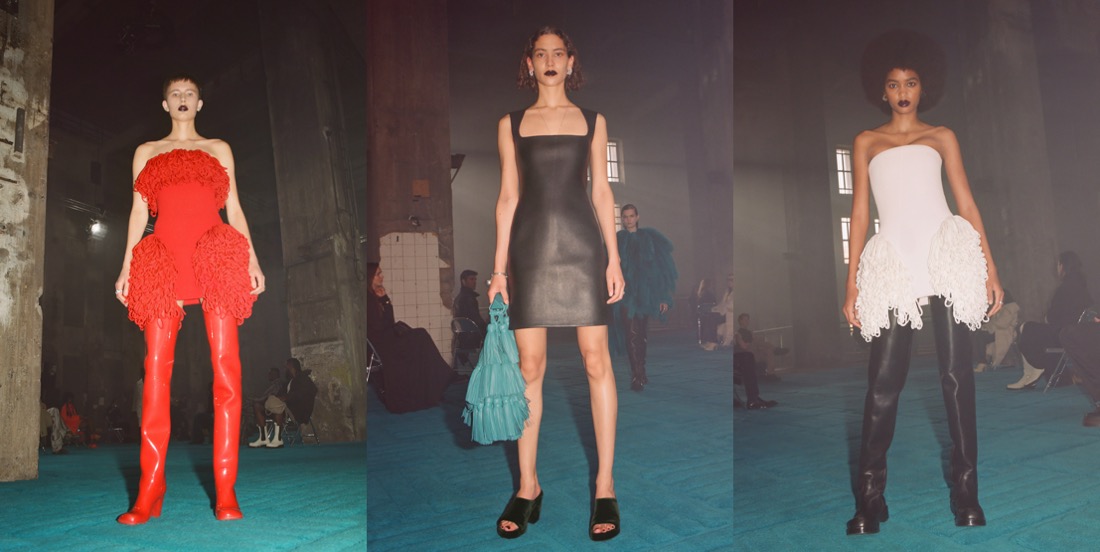
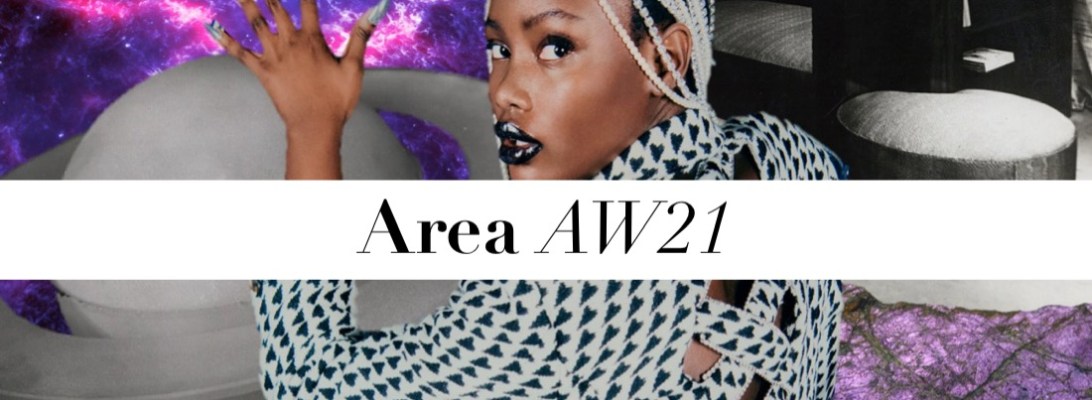
Glamour-To-Wear. Area AW21

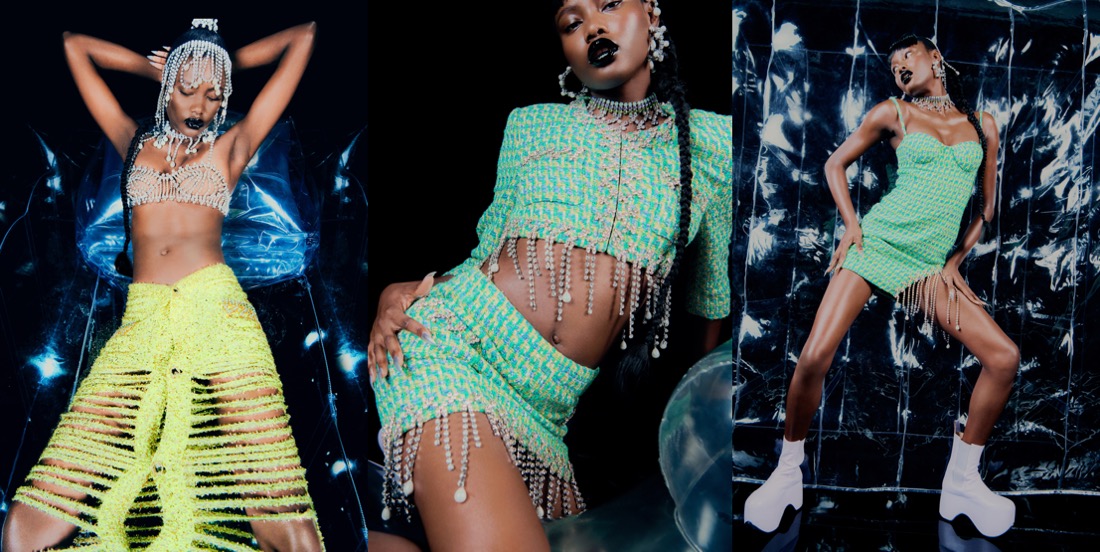
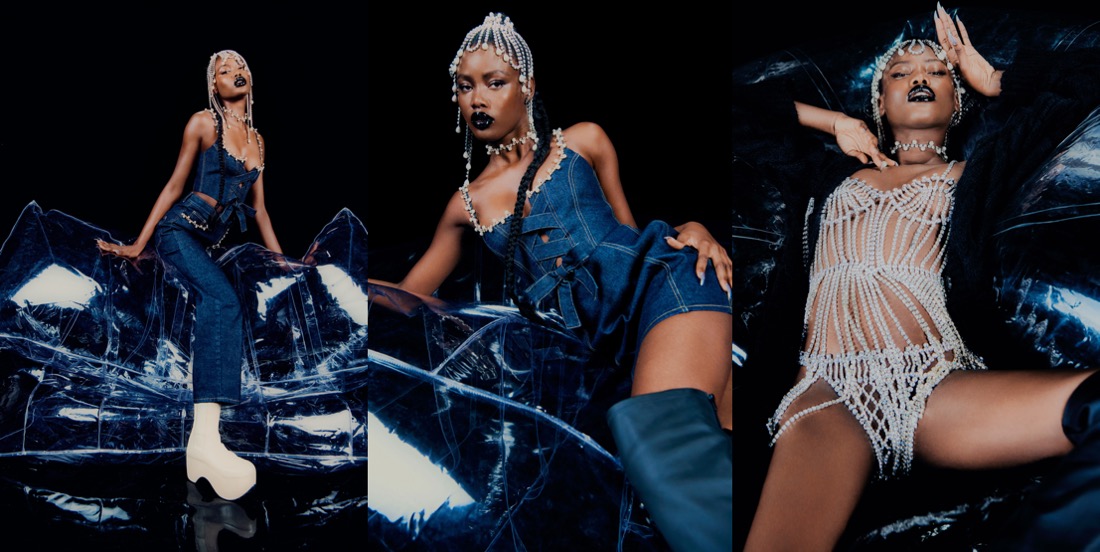
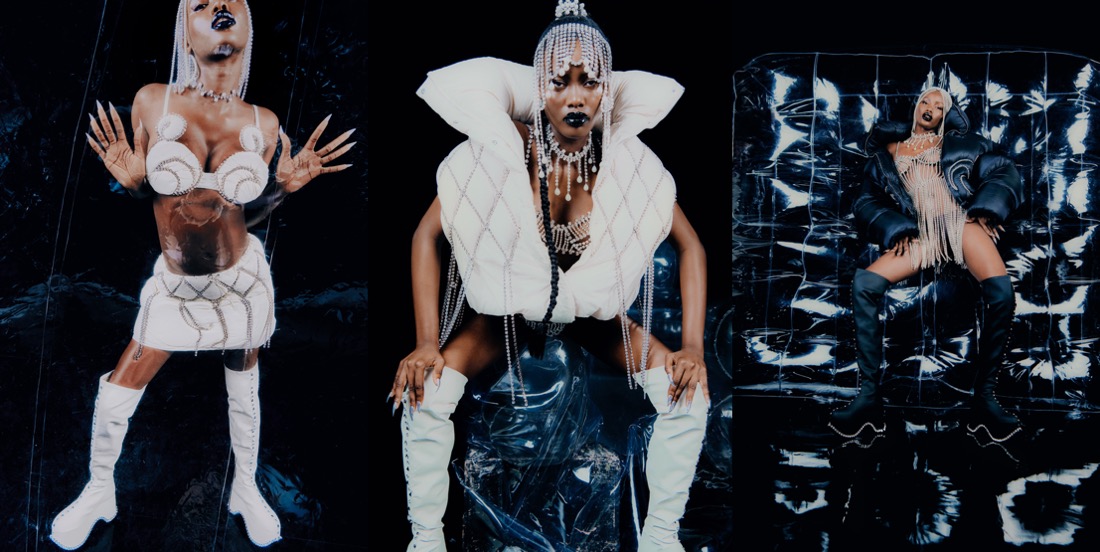
Area’s Piotrek Panszczyk and Beckett Fogg continue to push the envelope with their made-to-wear glamour. Since launching the brand in 2013, the designers have done so much introspection and recalibration that it’s hard to know if it’s the go-to brand for haute space bitches, haunting Dadaist ghouls, pop star glamazons, or former first ladies. Ask Panszczyk and he’ll answer that the label has always been for everyone but the clothes didn’t always show it, seasonally skewing in favor of one audience while cutting out the rest. Panszczyk and Fogg took 2020 to recenter themselves and their brand, choosing to show in season and to make salability and creativity equal parts of their process. Not either/or but both. As Panszczyk explained over a Zoom call, their shoppers have just as much desire for a couture-grade crystal pantie as they do a pair of crystal-studded jeans. To meet their needs, Area presented its own kind of solution dressing this season, injecting glamour into normcore and normalcy into high-gloss glamorama. Jeans enter the picture in a medium-wash straight-leg style adorned with crystals and paired with a bitchy little bustier. Tweed suiting is cropped and shrunken, with rhinestone fringe falling from hems. A classic LBD comes in vinyl, and the brand’s famous pale pink lamé returns in the form of iridescent minidresses, corsets, and skirts. Knitwear is growing too, with pink and lime pieces dotted with tiny crystal bows. This new Area wardrobe captures the vixenish nature of the label without compromising on wearability; exactly the branding exercise a company needs to push it from emerging to established. But Panszczyk and Fogg are smart to not let their good business sense totally overshadow the weirdness that makes Area special. During the pandemic they connected with Chinese designer Dingyun Zhang, whose enormous puffer jackets have also caught the eye of Kanye West and his Yeezy team. After a couple DMs, the trio decided to collaborate, cropping Zhang’s puffers into cloudlike vests, bralettes, and skirts, and then tamping them down with Area’s crystal harnesses. The results are delightfully kooky, heavenly, and sensual all at once. Area’s year of questioning has yielded some good answers.

Collage by Edward Kanarecki.

Warsaw: Anna Bilińska’s Retrospective


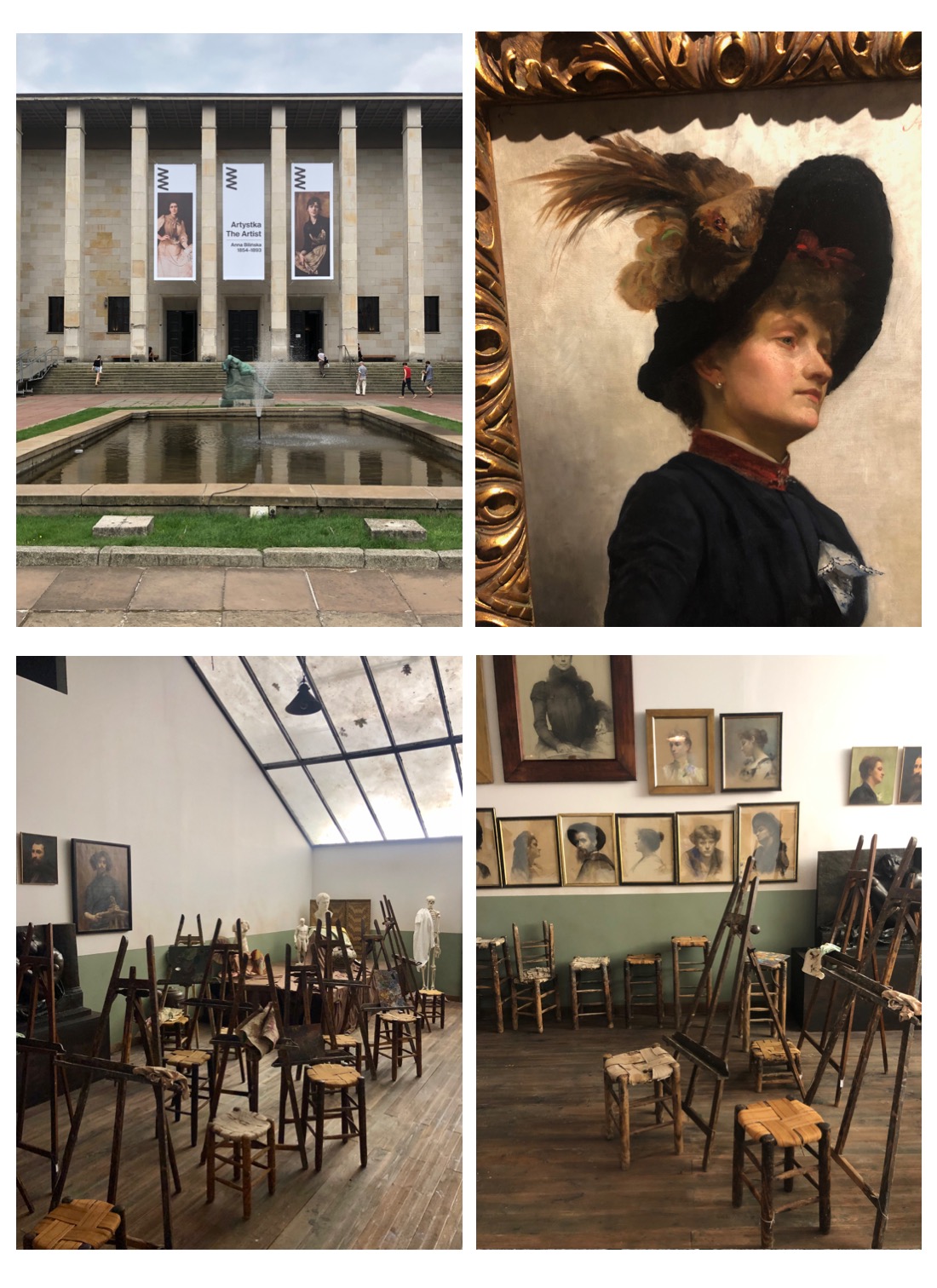
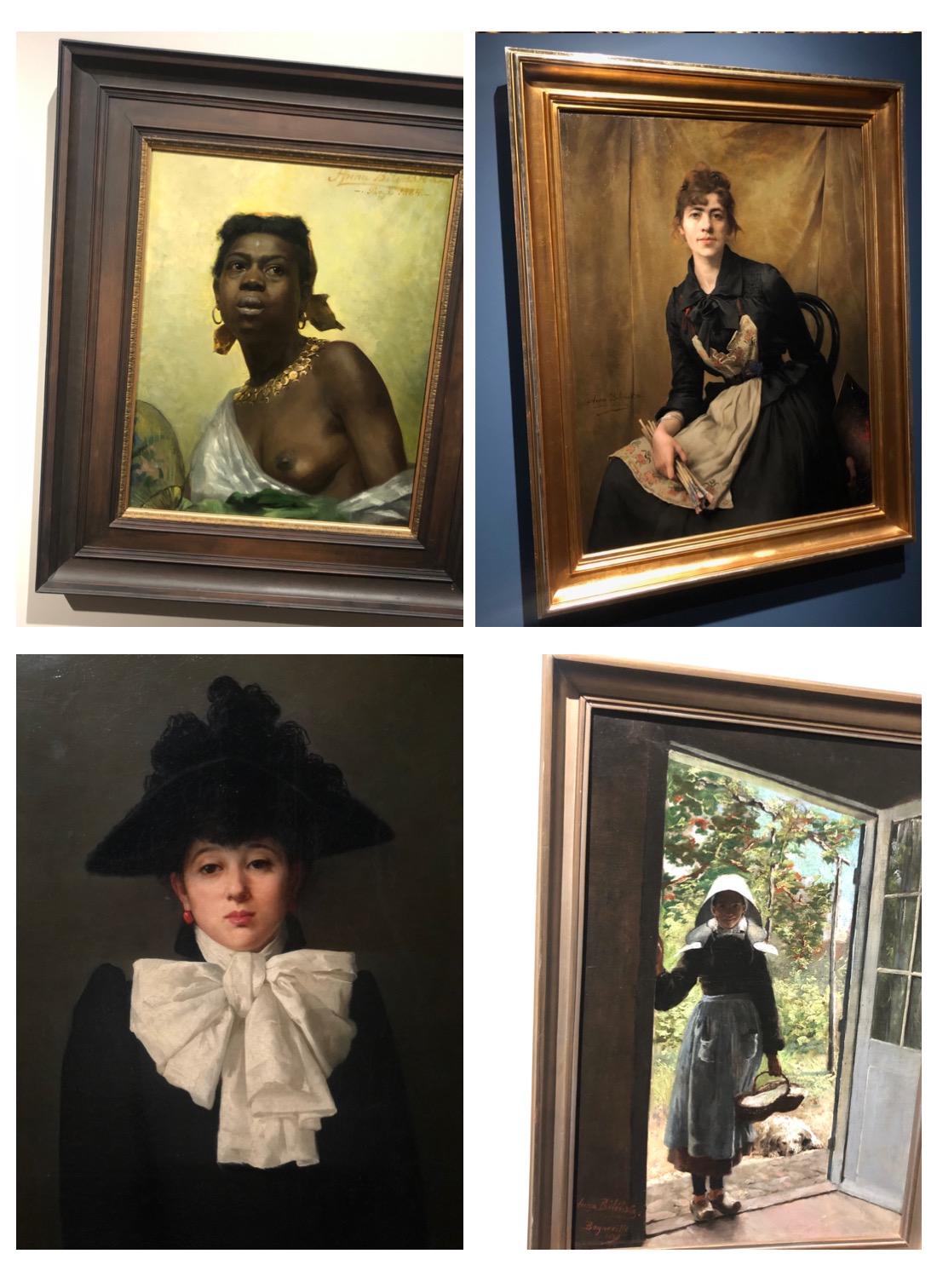
Anna Bilińska was the first Polish female artist to gain international recognition. Her first solo retrospective at the National Museum in Warsaw takes place just now, in 2021, but it’s better late than never. Bilińska used oil paints, pastels and watercolours to create portraits, still lifes, genre scenes and landscapes in the style of European realism. The artist brilliantly mastered the basics of the painting technique, evidenced by her academic studies of models, which strike the viewer with their synthetic approach to the form and with their casual technique of painting. Of course, the artist also simultaneously continued the clear contour style, exemplified by her Male Nude Study (1885), Study for a Male Nude (ca. 1884-85) and Boy Nude (ca. 1884-85). Sketches for the historical and biblical compositions which Bilińska created in her youth have similar qualities but also display a bold expression of colour juxtaposition, as exemplified by Joseph Interprets Dreams (1883) and Inquisition (1884). Bilińska’s mature works consist predominantly of portraits and portrait studies of various ethnic types which were fashionable at that time. These pieces merge the refined simplicity of realism with an academic discipline of the painting technique, such as Head of a Serb (ca. 1884) or Old Man with a Book (ca. 1890s).Bilińska’s self-awareness and thoughts on the artist’s position in the world, which manifested itself in, among others, the representation of her own image in self-portraits, make her works so powerful. And still, the artist’s entire oeuvre and life story have yet to be thoroughly analysed and rediscovered…

The exhibition is on view until 10th of October 2021.

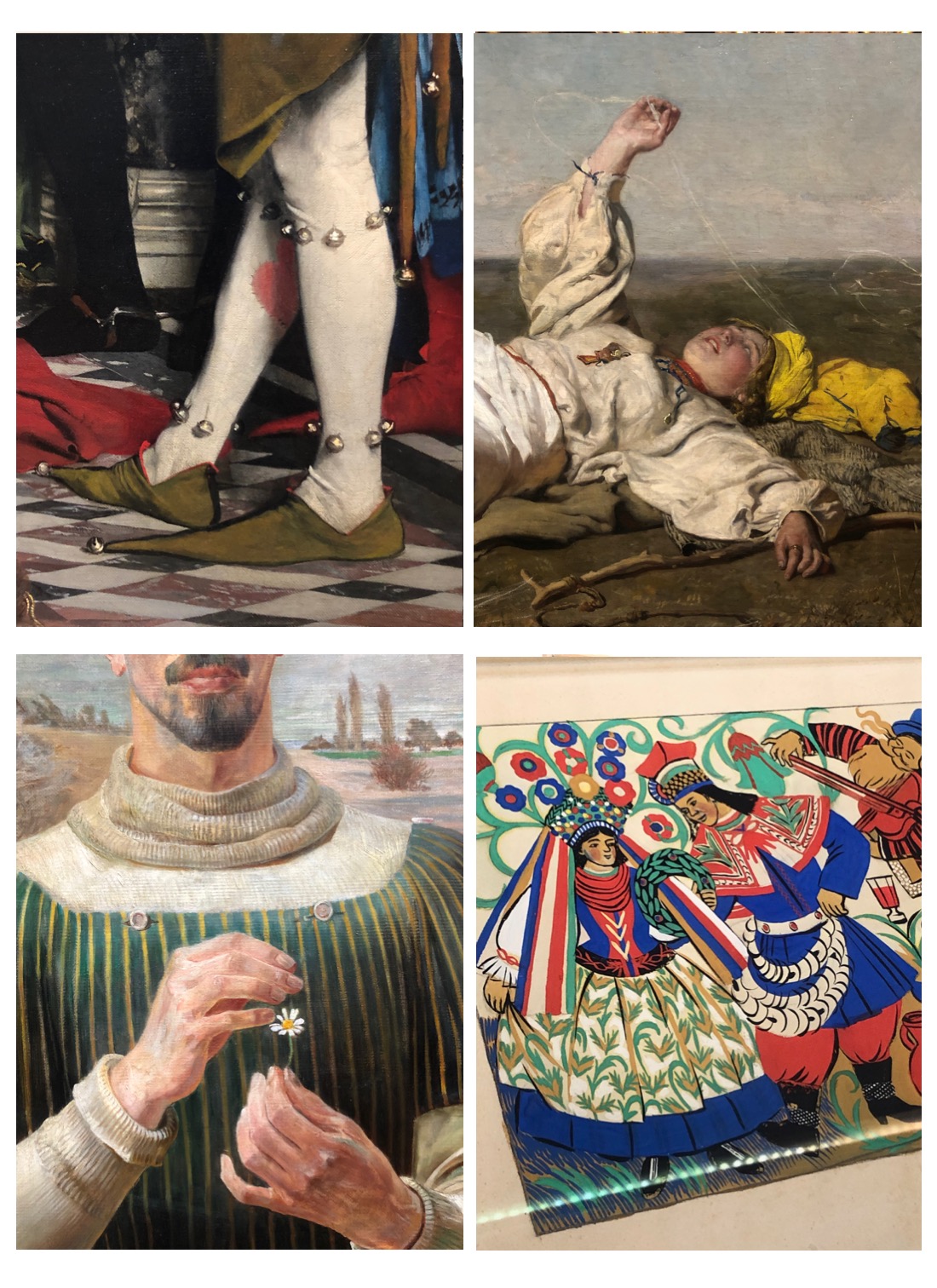
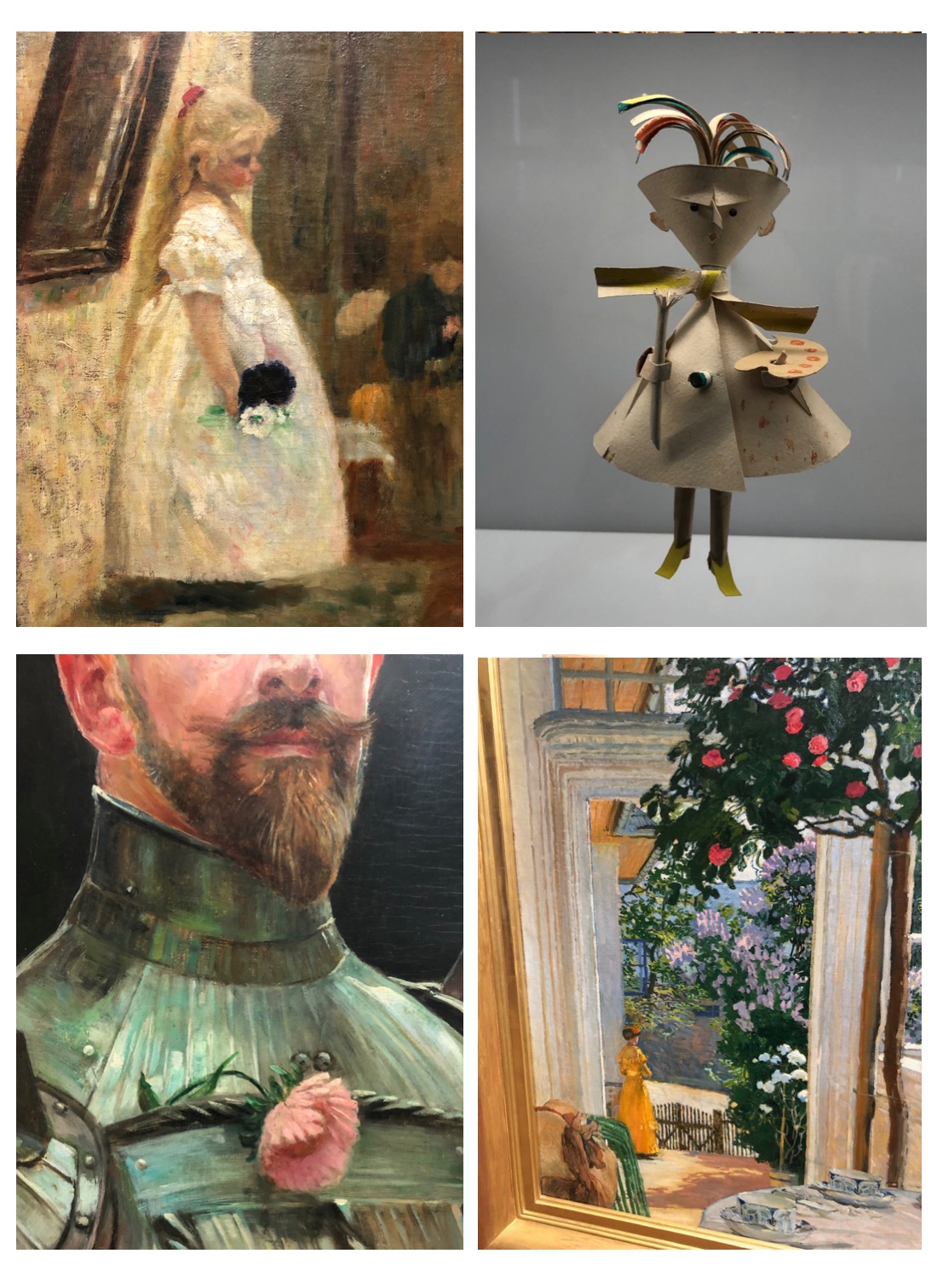
The National Museum in Warsaw is worth a visit in general! Here are some of my favourite artworks, especially from the 19th and 20th century galleries, from Józef Mehoffer’s enchanting Stange Garden to Jacek Malczewski’s prophetic visions.

Photos by Edward Kanarecki.