Elevating Silhouettes. Rick Owens AW20

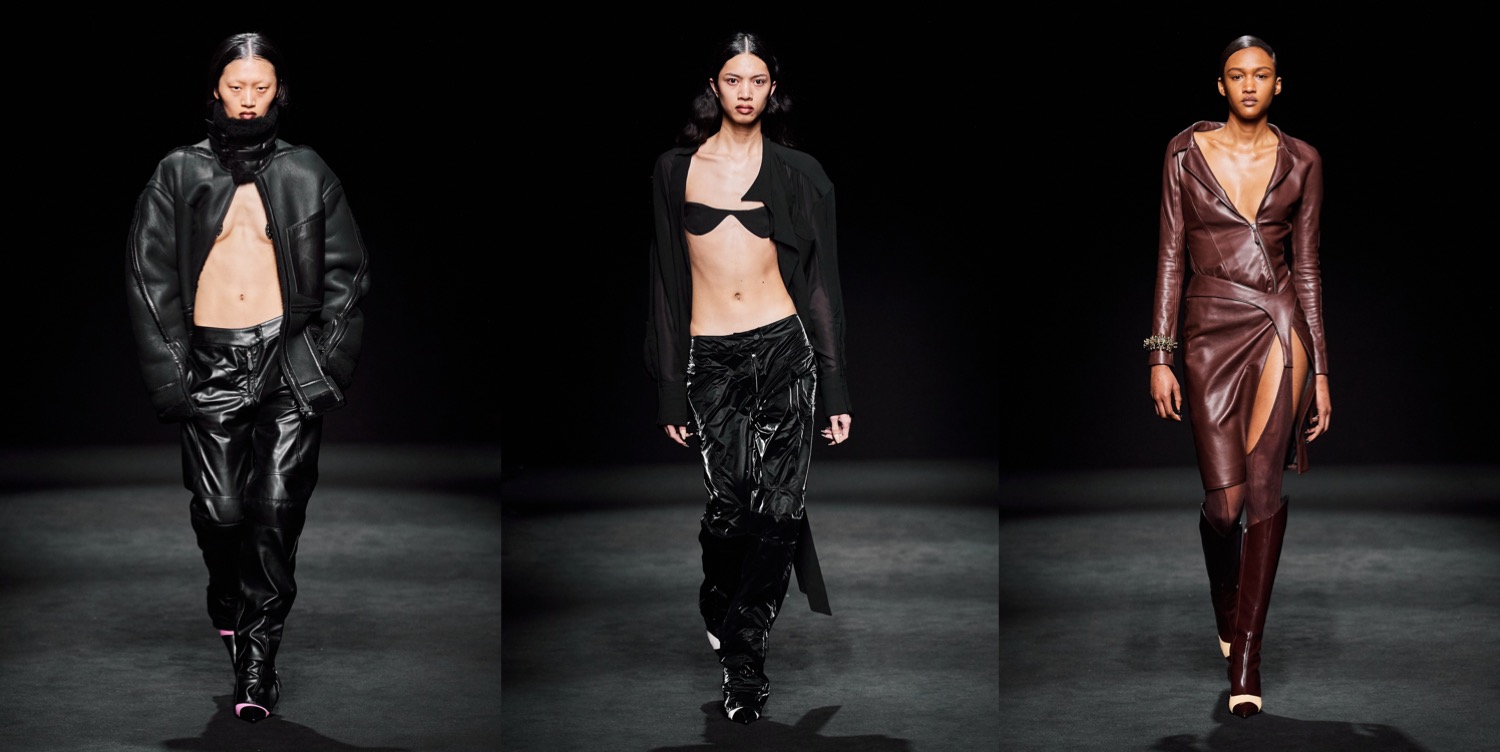
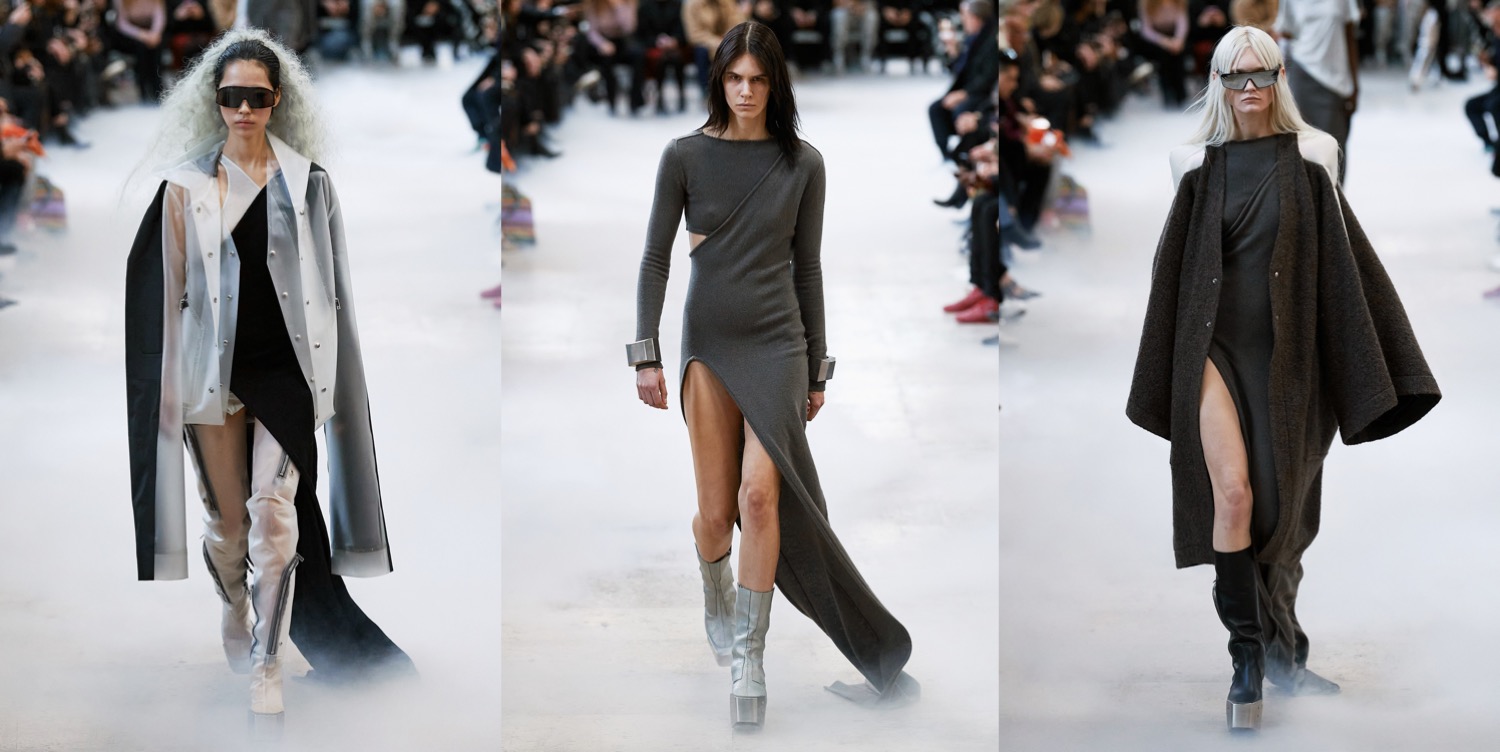
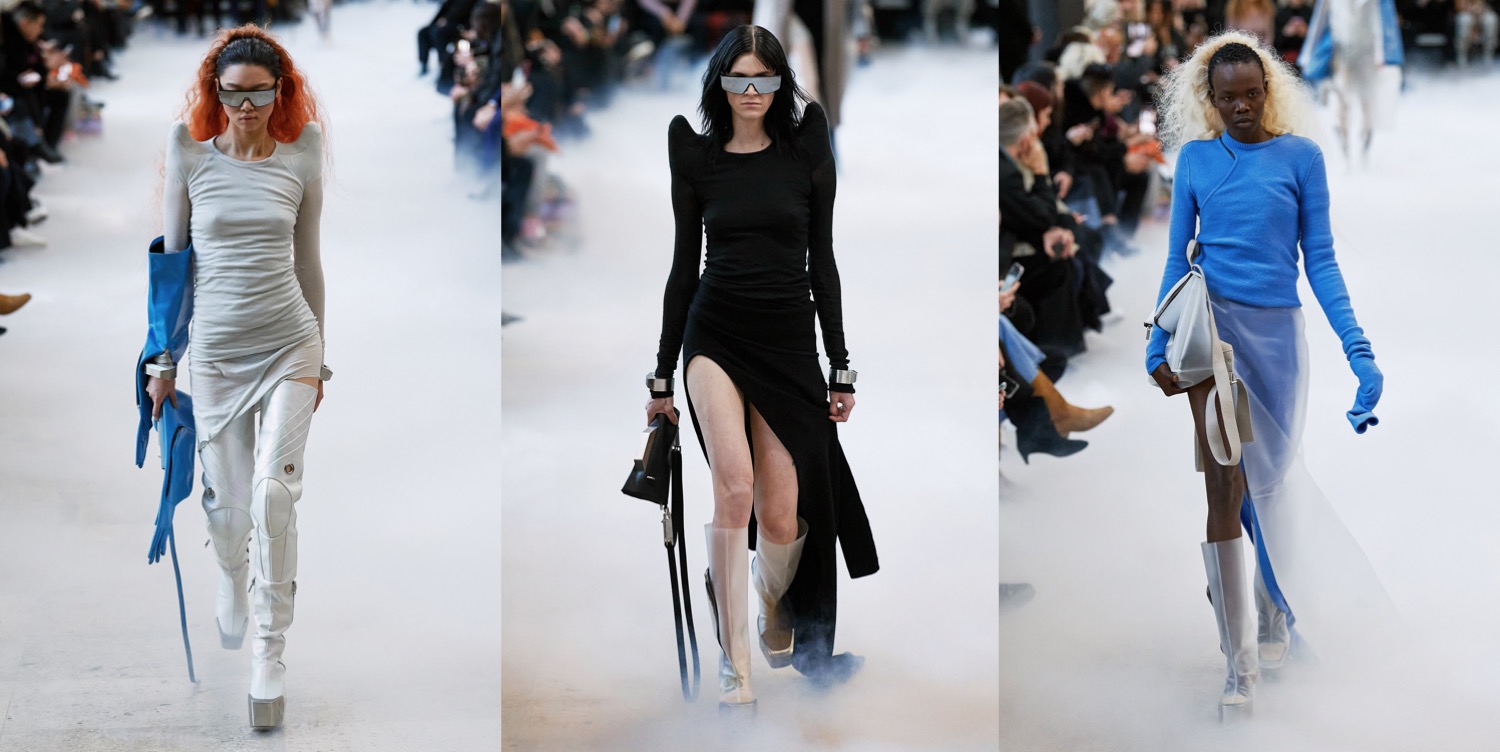
Nobody does a big shoulder like Rick Owens. Not speaking of silhouettes that completely elevate the wearer, making them look like goddesses and gods. In a season in which fashion has often come up short against growing coronavirus anxiety, Owens made it look easy. “It’s a collection about play,” he said backstage. “I see myself balancing out a world that can be kind of very strict in its aesthetics. There have to be people like me that have other suggestions.”Among those he had for autumn-winter 2020 were the above mentioned shoulders so peaked on a leather moto jacket, and so “monstrous” on puffer coats and pilled knits, that they grazed the earlobes, and recycled plastic platform boots that inched up near the hips. The one-leg Kansai Yamamoto by way of David Bowie jumpsuits that made such a major impact at Owens’s men’s show a month ago were transformed here into clingy dresses whose asymmetrical hems curved around the models’ legs as they slinked. Owens also has floor-sweeping sleeping bag capes in black, sky blue and silver for all the cosmic empresses out there. Out of this world!
Collage by Edward Kanarecki.
Women. Chloé AW20

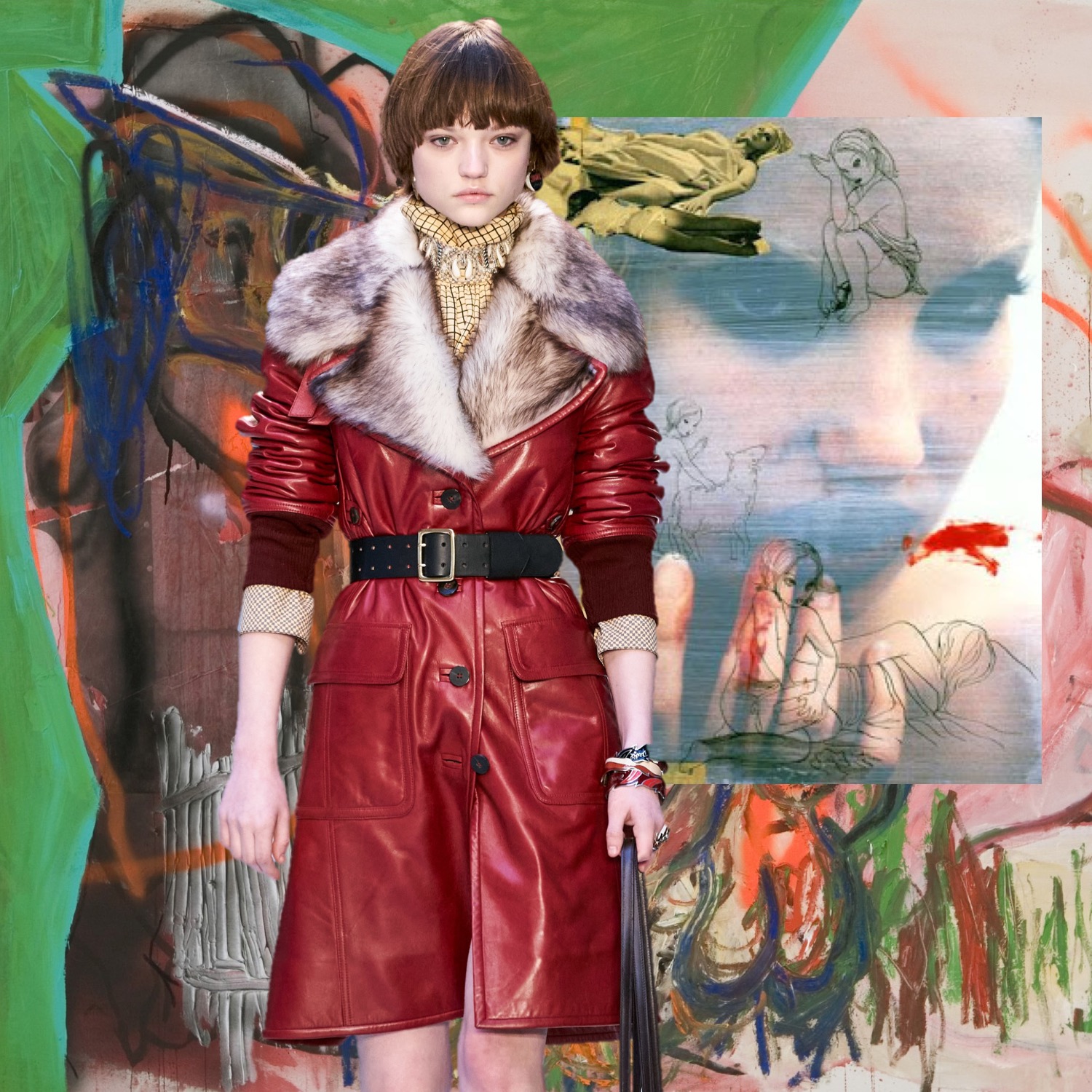
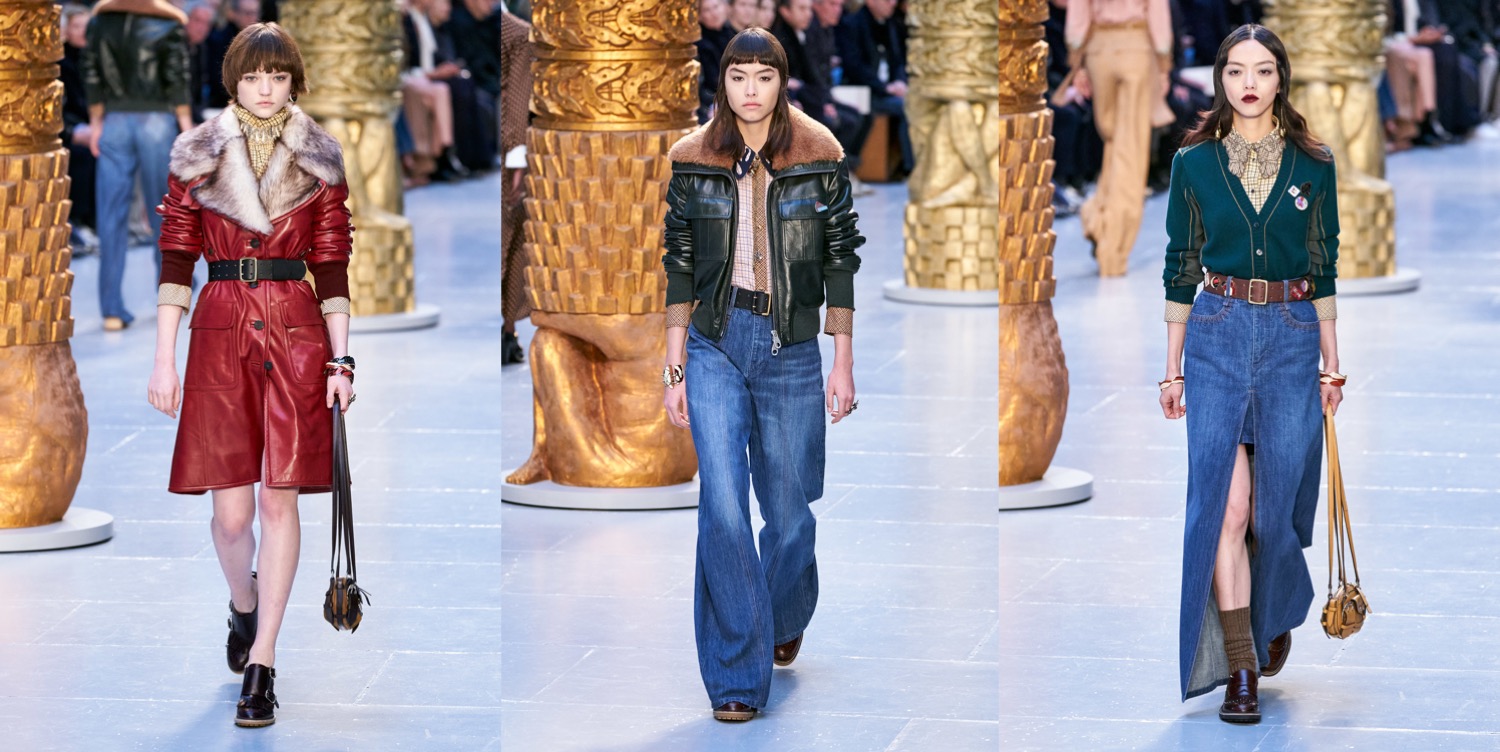
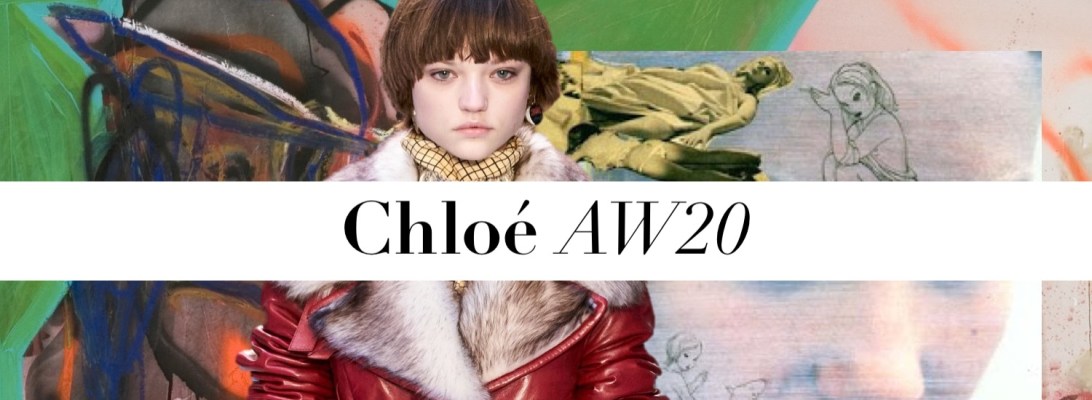
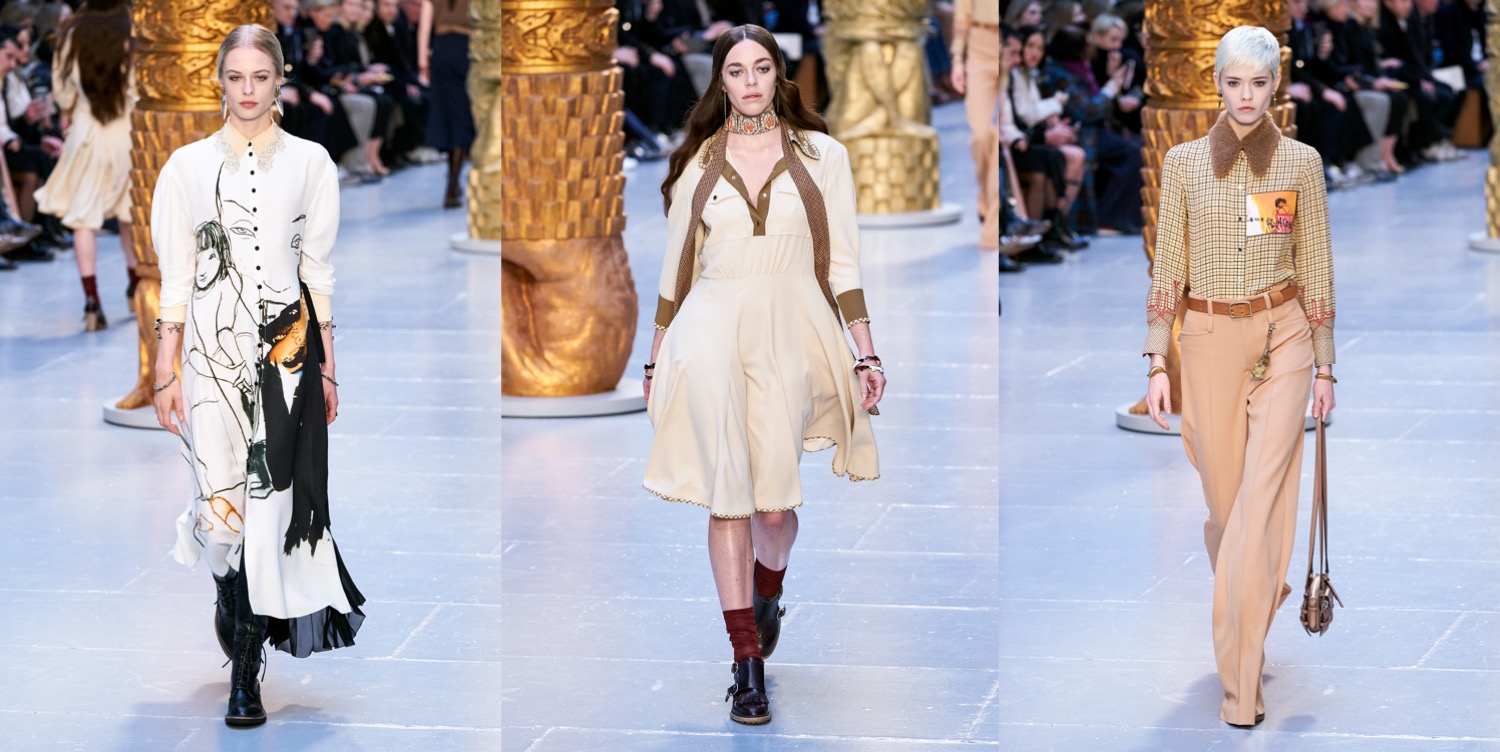
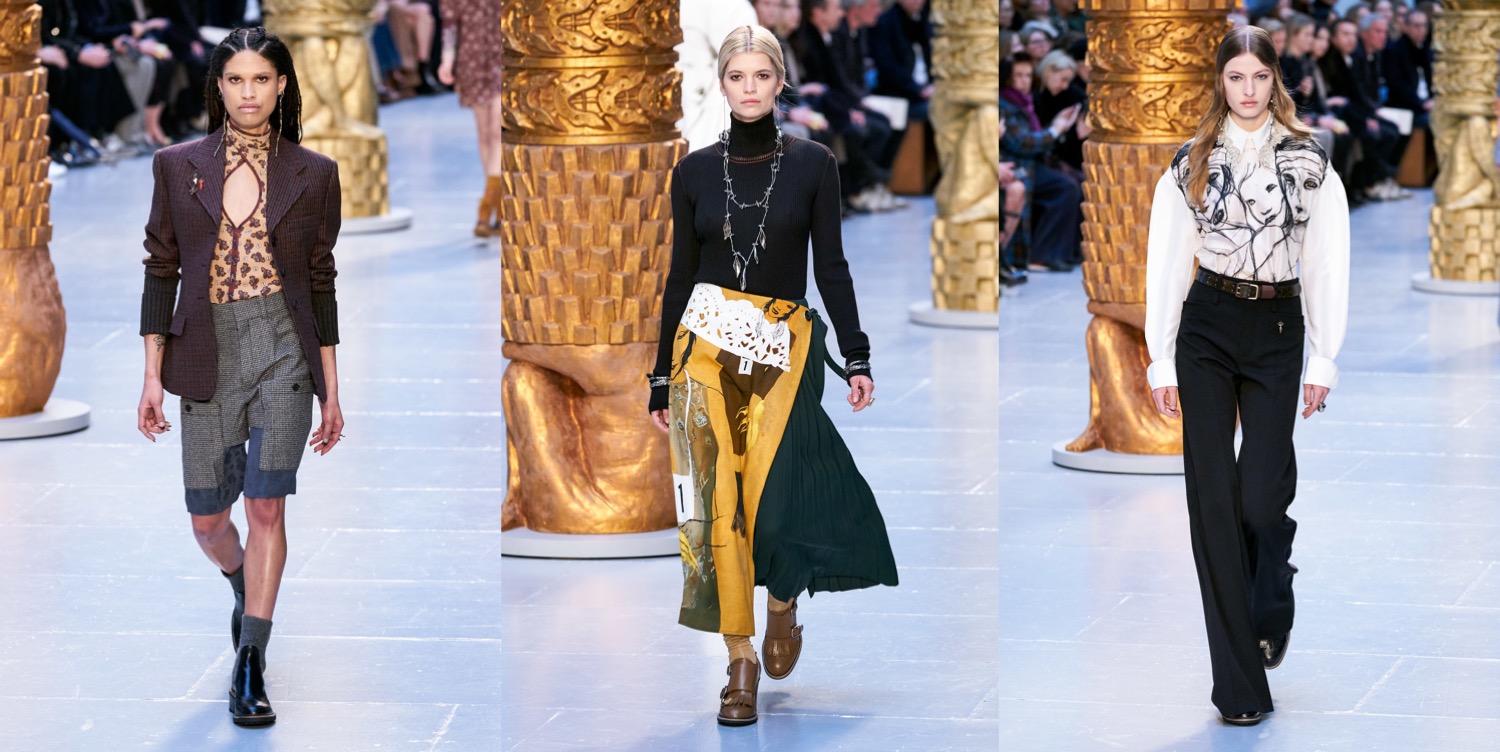
The Chloé invitation came with a mini poster of a Rita Ackermann painting. The artist provided access to five additional pieces from the ’90s and ’00s at Natacha Ramsay-Levi’s request, and the designer used them as patches on the front and back of a button-down shirt, as a design on a blanket shawl (Leave Me Alone, 1995), and as an actual-size print for a flowing shirtdress. Golden totem sculptures by Marion Verboom decorated the runway, and Marianne Faithfull smokily read Byron’s “She Walks in Beauty” and other poems on the soundtrack. Still more women creatives joined the models on the catwalk. “It’s about a community of creative spirits,” Ramsay-Levi stated. “Yes, clothes are great, but I love creative women.” After three years at the helm of the brand, Natacha accumulated her biggest Chloé signatures for autumn-winter 2020: the tailoring, the soft blouses, the romantic dresses. She infused them with personal touches that made them even more special. Suits leaned ’70s, with easy flaring pants and rolled-sleeve jackets. Her blouses had delicately jeweled buttons and cuff links, and her romantic dresses were alternately inset with bands of crochet at the hem or decorated with enamel embroidery at their peekaboo necklines. The Rita Ackermann prints worked their charm too. Natacha Ramsay-Levi is one of those “woman for women” designers, and since Phoebe Philo still hasn’t come back yet, she leads the pack.

Collage by Edward Kanarecki.
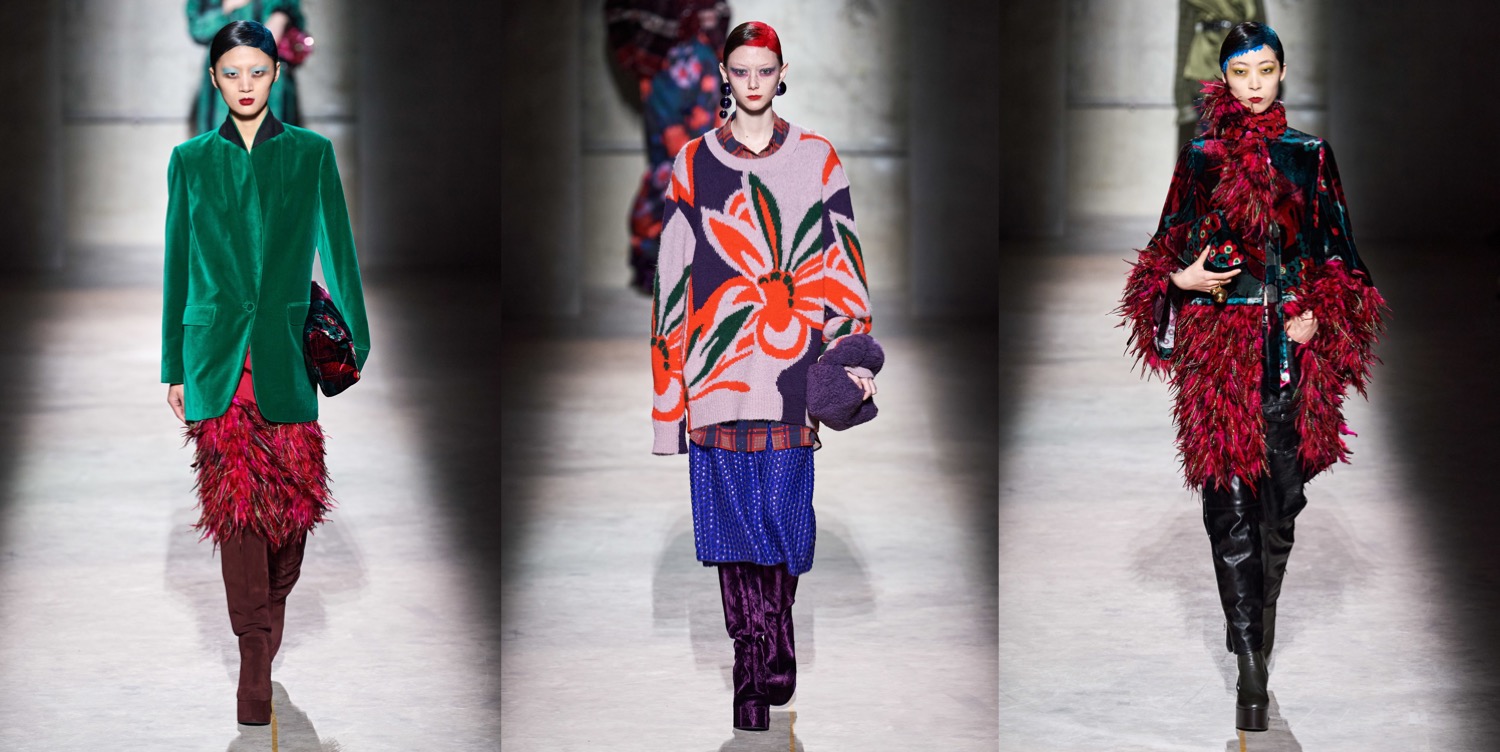
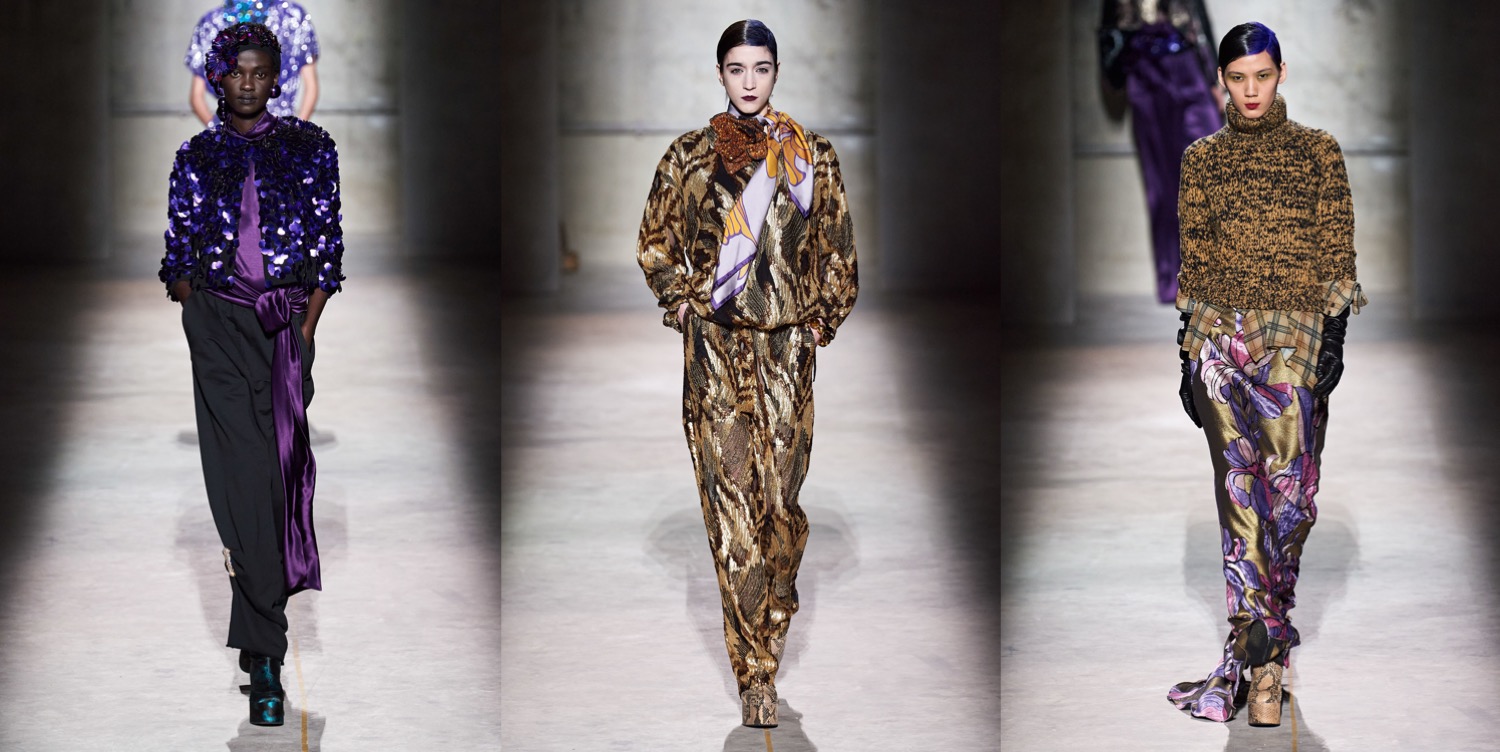
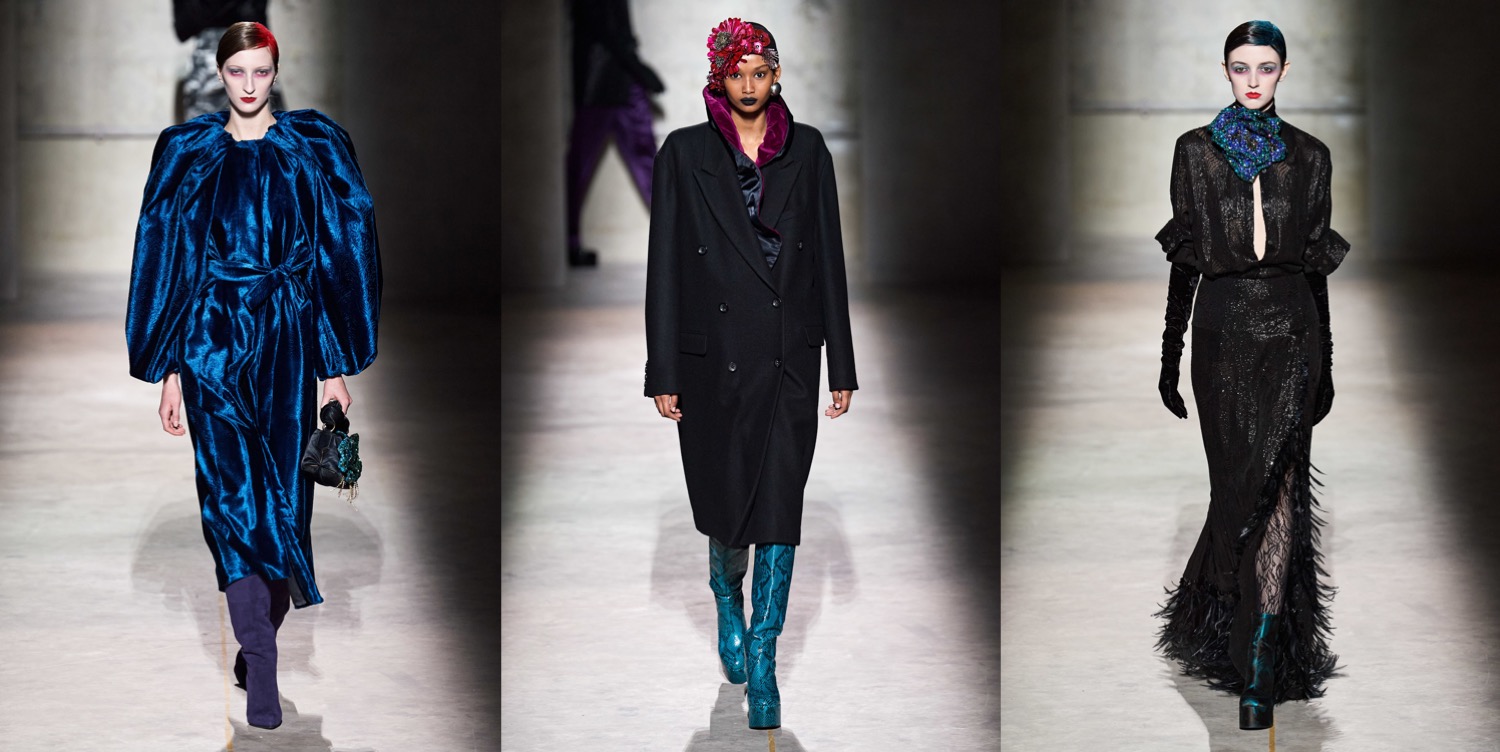
Nocturnal Glamour. Dries Van Noten AW20

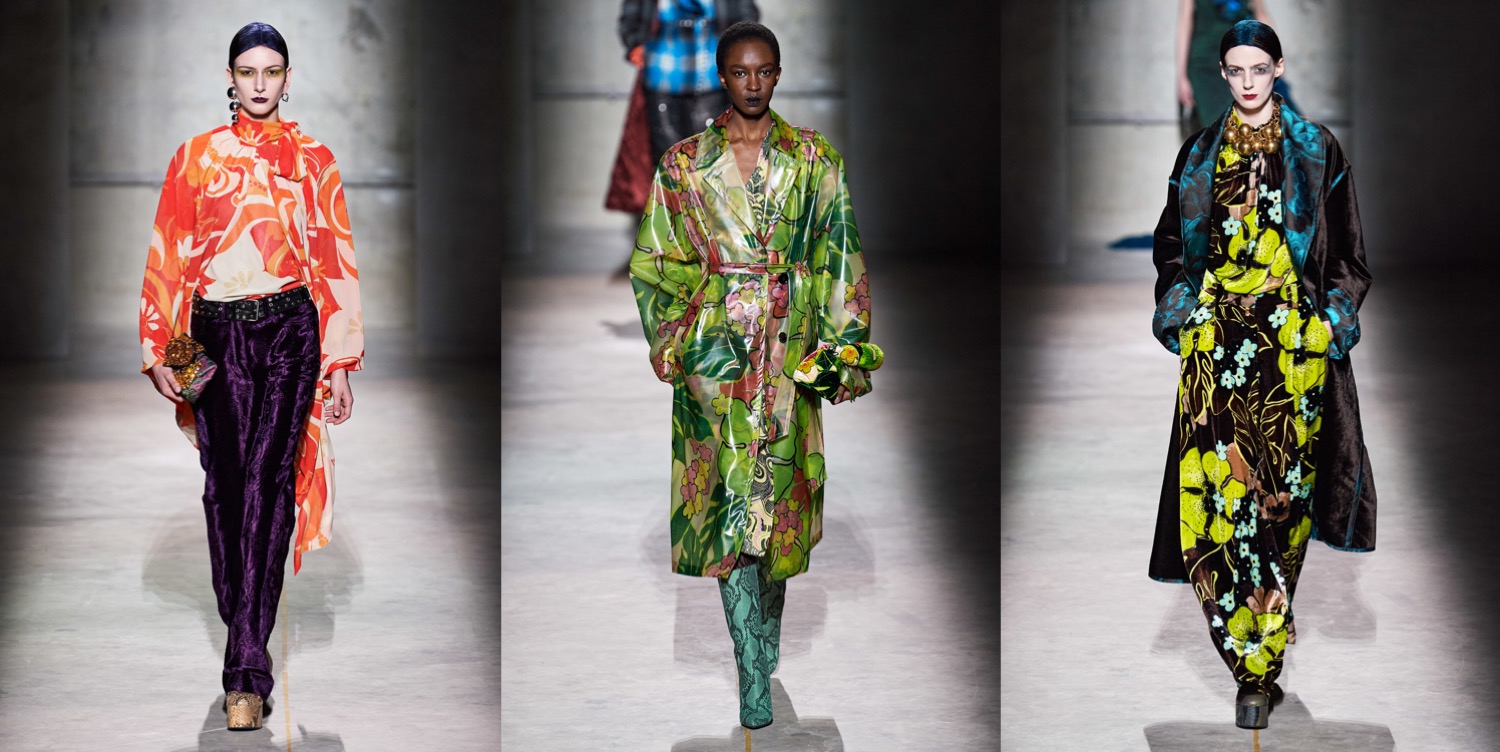
After last season‘s collaboration with Christian Lacroix, it was clear that for autumn-winter 2020, Dries Van Noten would somehow continue with this energy. That psychological afterglow is with Van Noten, as he cheerfully admitted backstage of his show: “With Christian it was so liberating to enjoy, to play, to not think too far ahead about product.” He laughed, summing up what he learned from his friend, the French couturier. “If you think you have a lot of fabric and embroidery, then do some more! Just go for it!” Van Noten was thinking about “nocturnal glamour” and particularly the dressed-to-kill creatures of the glam 1970s and high 1980s, whom he glimpsed from afar as a young man in Antwerp, in the form of the high-gloss photography of the makeup artist Serge Lutens. Maybe she was heading for a night at the most trendy club in Paris. Or maybe that was her, wending her way home in daylight, with a plaid coat shrugged over her glitter. “It’s about going out, enjoying life – having fun, that’s very important!” he remarked. “I thought of this party girl. Something mysterious. Something dark. But I questioned how far it could go, while staying contemporary.” His solution was to partially casualize the glamour by applying his melee of acid green and fuchsia jungle prints to fluid pajama shapes, and adding ’90s grunge–influenced plaids and hip-tied shirts to the mix. Equally head-turning: a dress in a violent purple, streaked with silver embroidery. Billie Eilish’ slime-green hair is a sort of 2020 party-look must-have which Dries picked up as well.

Collage by Edward Kanarecki.
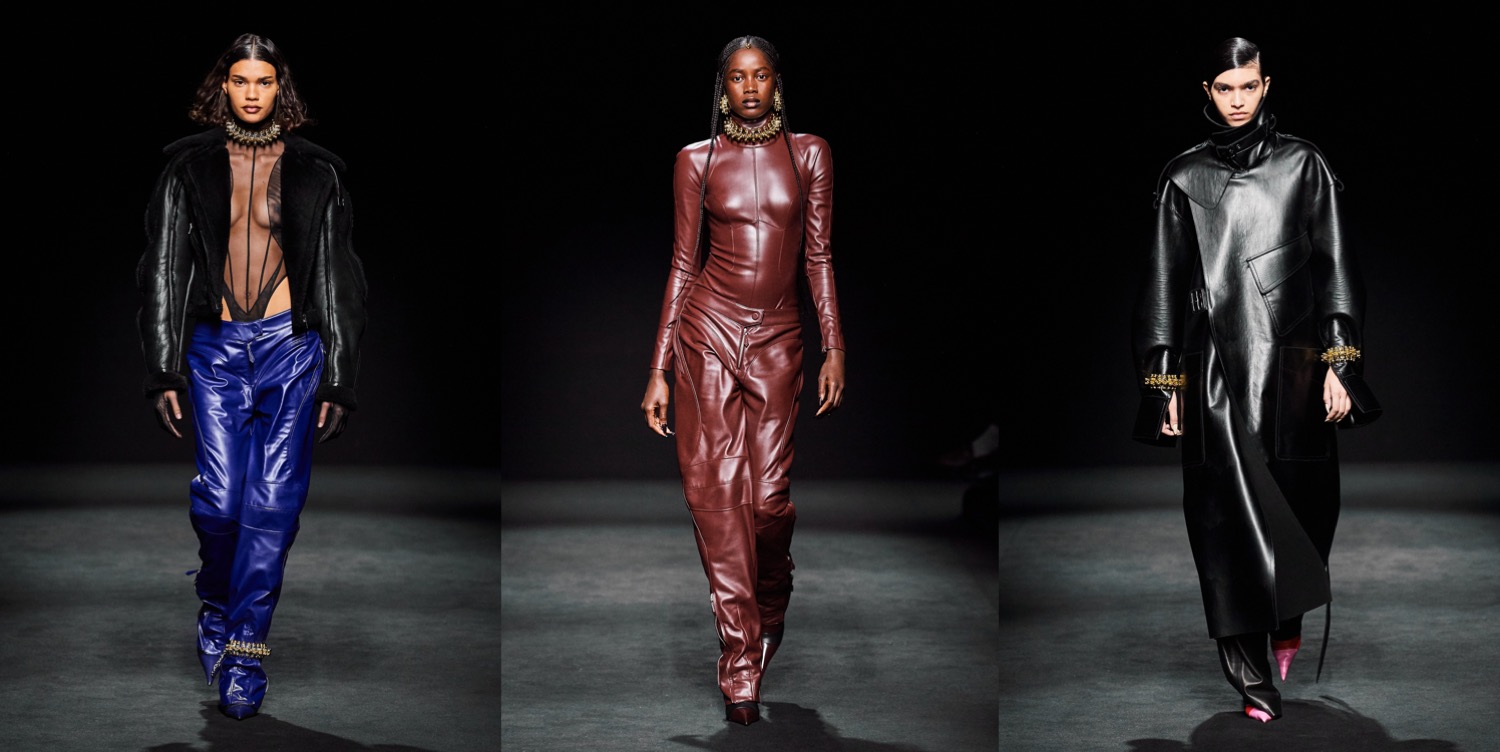
Sensational. Mugler AW20

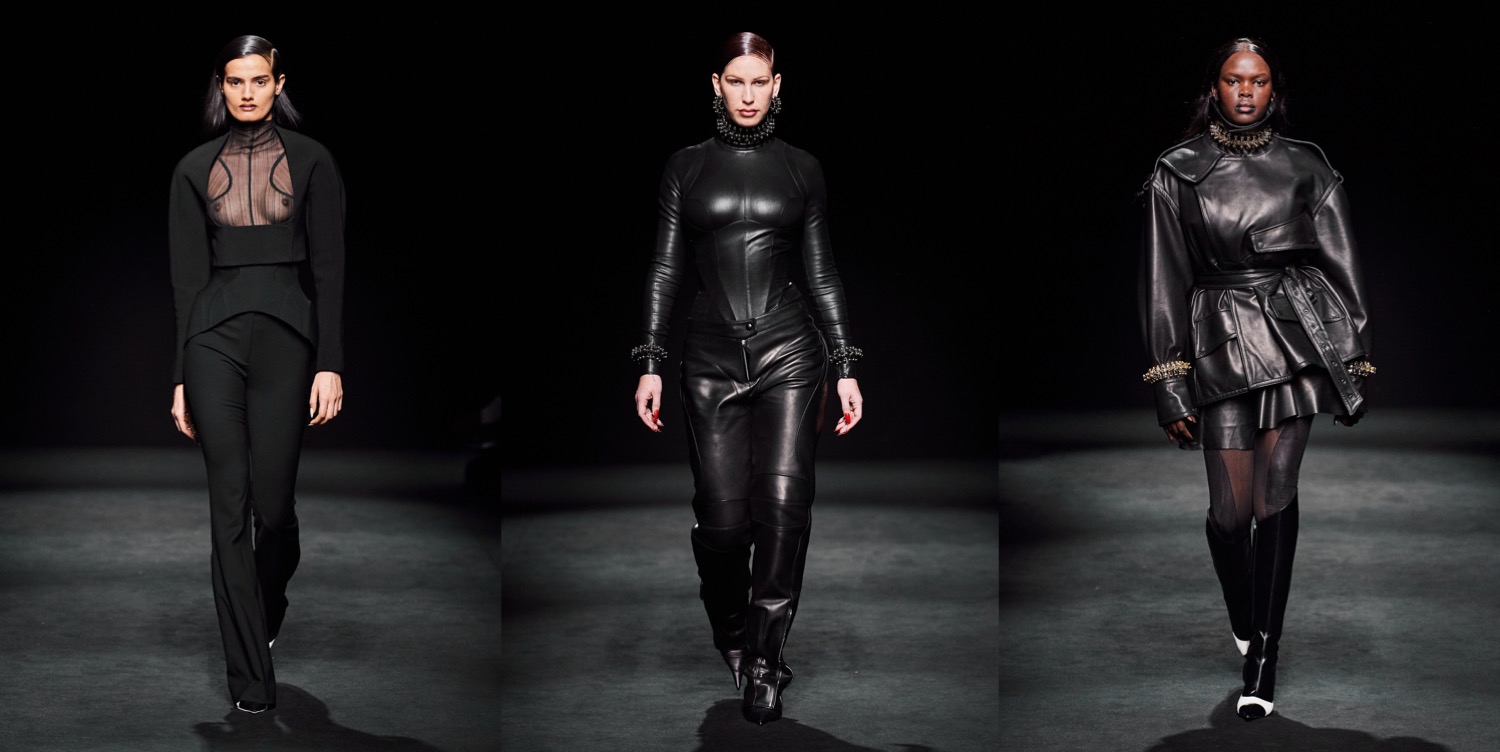
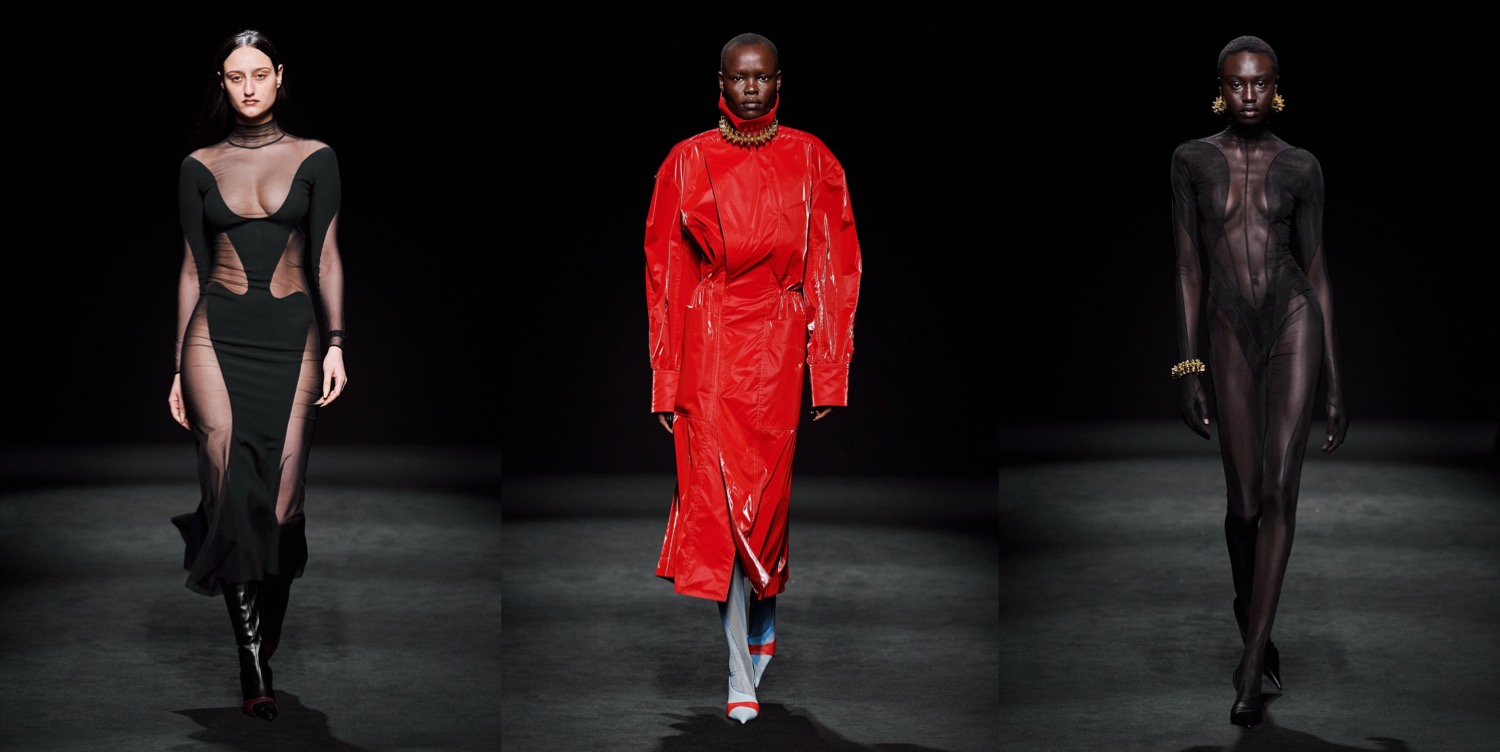
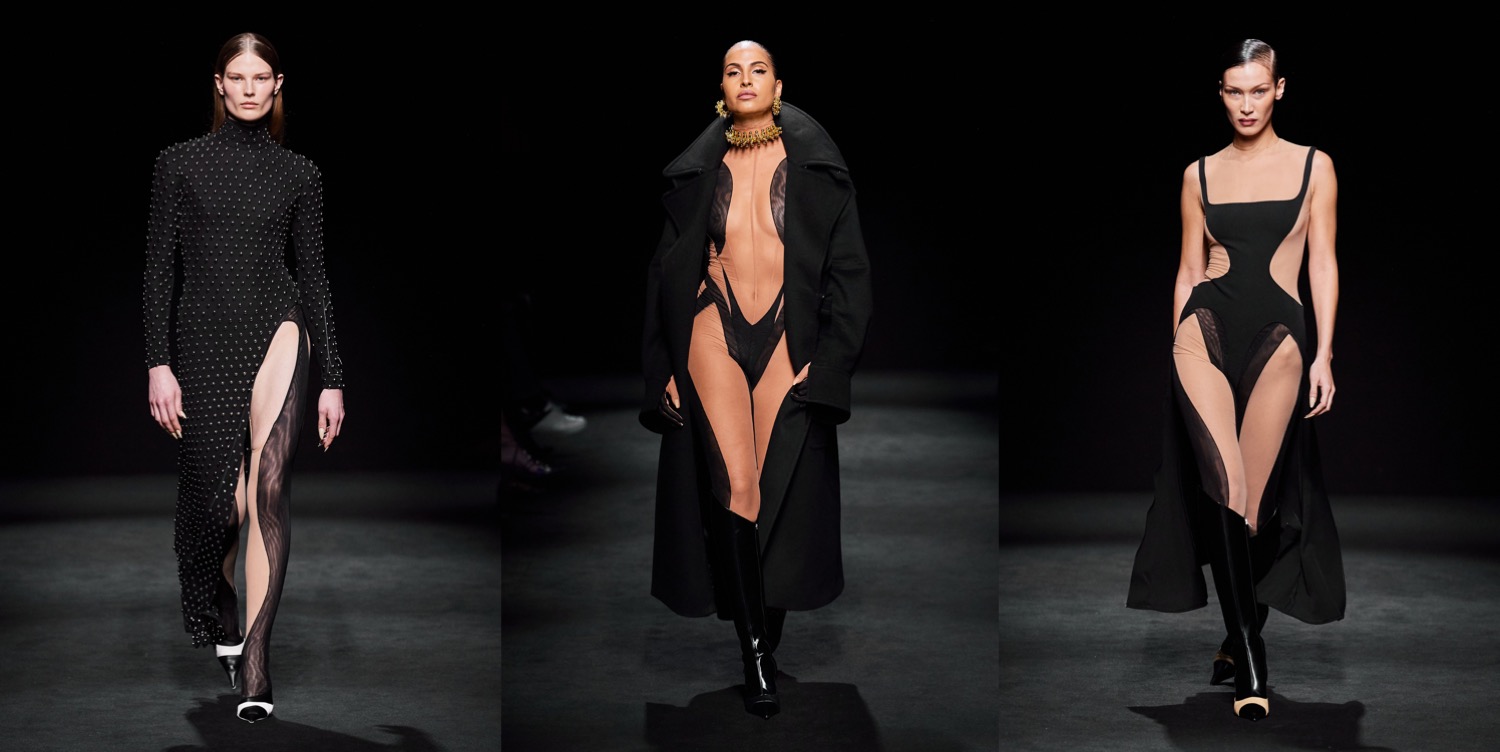
Casey Cadwallader‘s Mugler is sensational. His vision of the brand is compatible with Thierry Mugler’s dramatic, super sexual vision of the brand, but makes it look contemporary and fit for women of all sizes and generations. A good many of the looks on his fall runway weren’t even street legal. Wearing the body stockings – sheer save for black insets echoing Mugler’s famously dangerous curves – would require a bodyguard. Mesh dresses studded with a grid-like precision were somewhat more discreet and a shade more democratic for that reason. Cadwallader adopted a similarly fierce attitude for his tailoring. Much of it was cut from leather. He also continues in mastering his stretch pieces. Jackets were shaped by integral corsets, or else they came with portrait necklines that framed the bust. He even went so far as to build garter belts into the waistbands of a couple of leather skirts. Cadwallader is one of the few designers that sees sexy in all sizes. There “are 2s, 4s, 6s, 8s, 10s,” he said of his lineup. “You feel them turning on when they put on these clothes.” Big yes.

Collage by Edward Kanarecki.

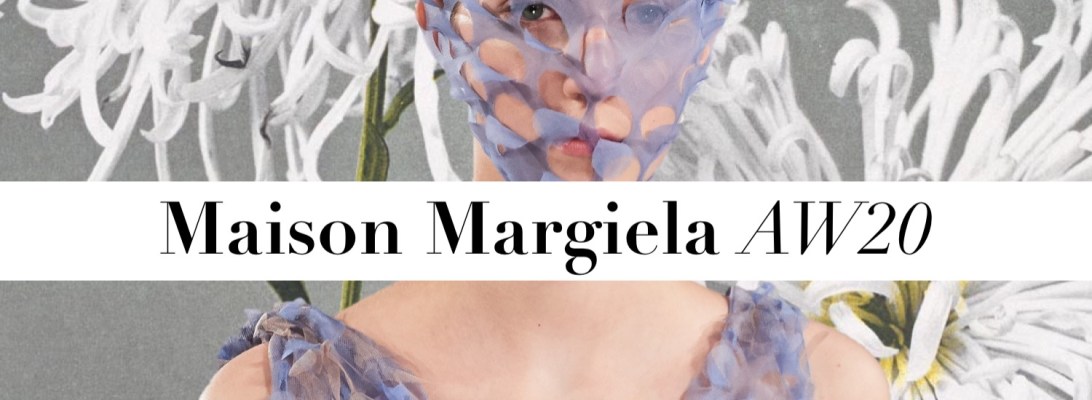
Restorative. Maison Margiela AW20

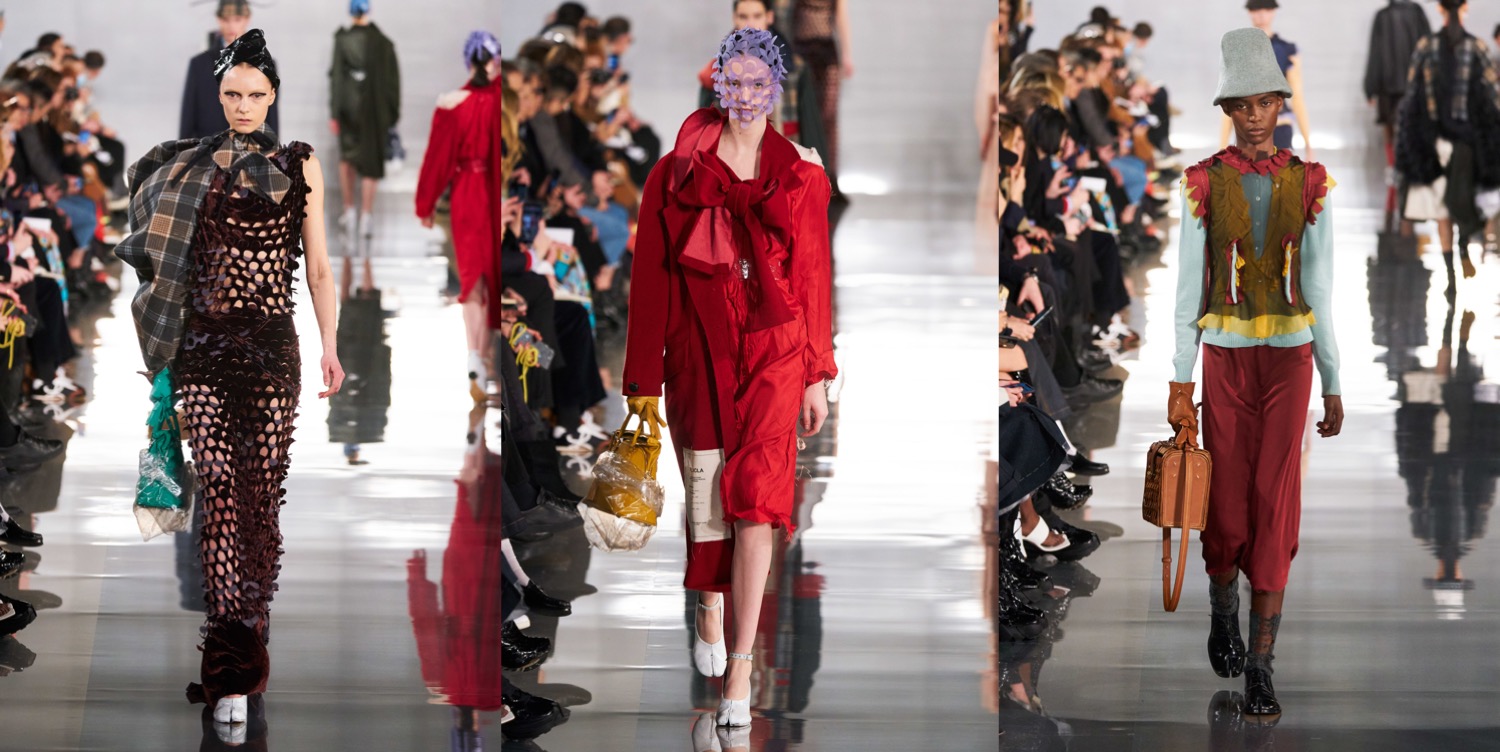
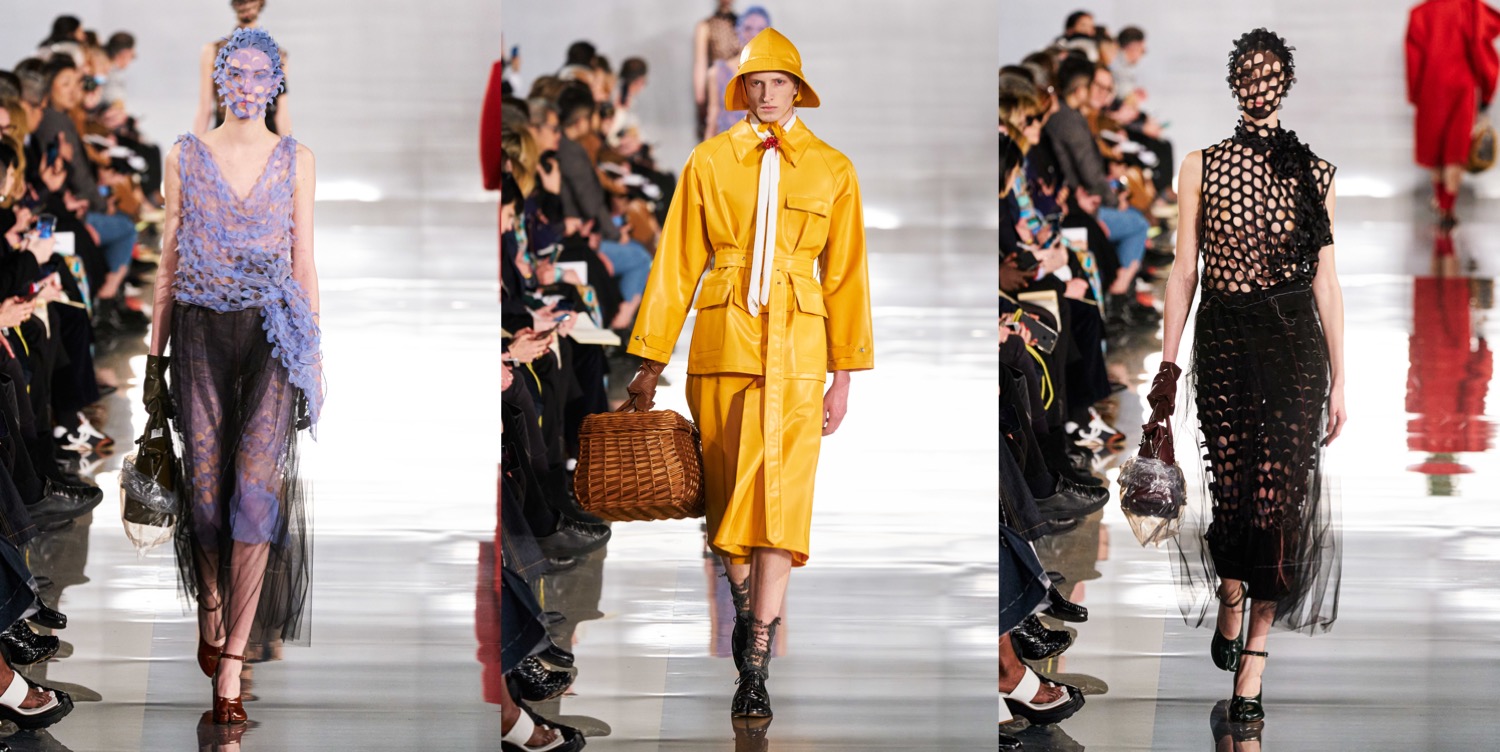
Rember John Galliano‘s recent Maison Margiela couture collection? It was all about creating beauty out of upcycling. For autumn-winter 2020, the designer continued that concept, with joyful effects. “Restorative!” Galliano declaimed. “The idea of giving something a new life… kick-starting a new consciousness.” These were some of the resoundingly enthusiastic phrases Galliano poured into ears via the post-show podcast he’s started to release in lieu of backstage interviews. “Recicla! Retch-ee-cla!” he cried. “The joy, the joy that we will be able to sell these pieces among the rest of the collection just thrills me.” The collection was beautiful to look at: his mastership in cutting up and re-sectioning of “bourgeois” classics is just insanely good. Galliano has talked of wanting to retrieve and hold onto the fragments of meaning that remain in the fading memories of the 20th-century wardrobe. The finale dress, a delicate thing made from laser-stamped lavender chiffon, was the “ghost” of a 1920s flapper dress floating back from a century ago. This season, Galliano also reopens “Replica” reeditions of vintage clothing that Martin Margiela originated at the house, making sure to print the date of provenance on the label. Galliano’s purpose in studying vintage pieces is different, though: he lops and excavates structures to discover new forms, often “freeze-framing” work in progress. And so, with this collection, “instead of slavishly copying” he decided that studio-reworked charity shop finds deserve to be sold as they are. “Now I’m feeling a little braver,” he said. “The idea is that this voyage of discovery supports this feeling of being inventive with a conscience.

Collage by Edward Kanarecki.