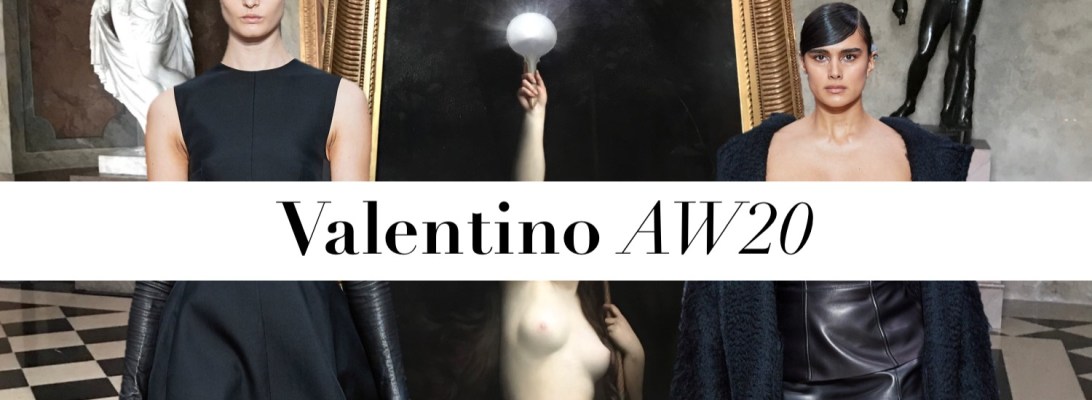
Dark Elegance. Valentino AW20

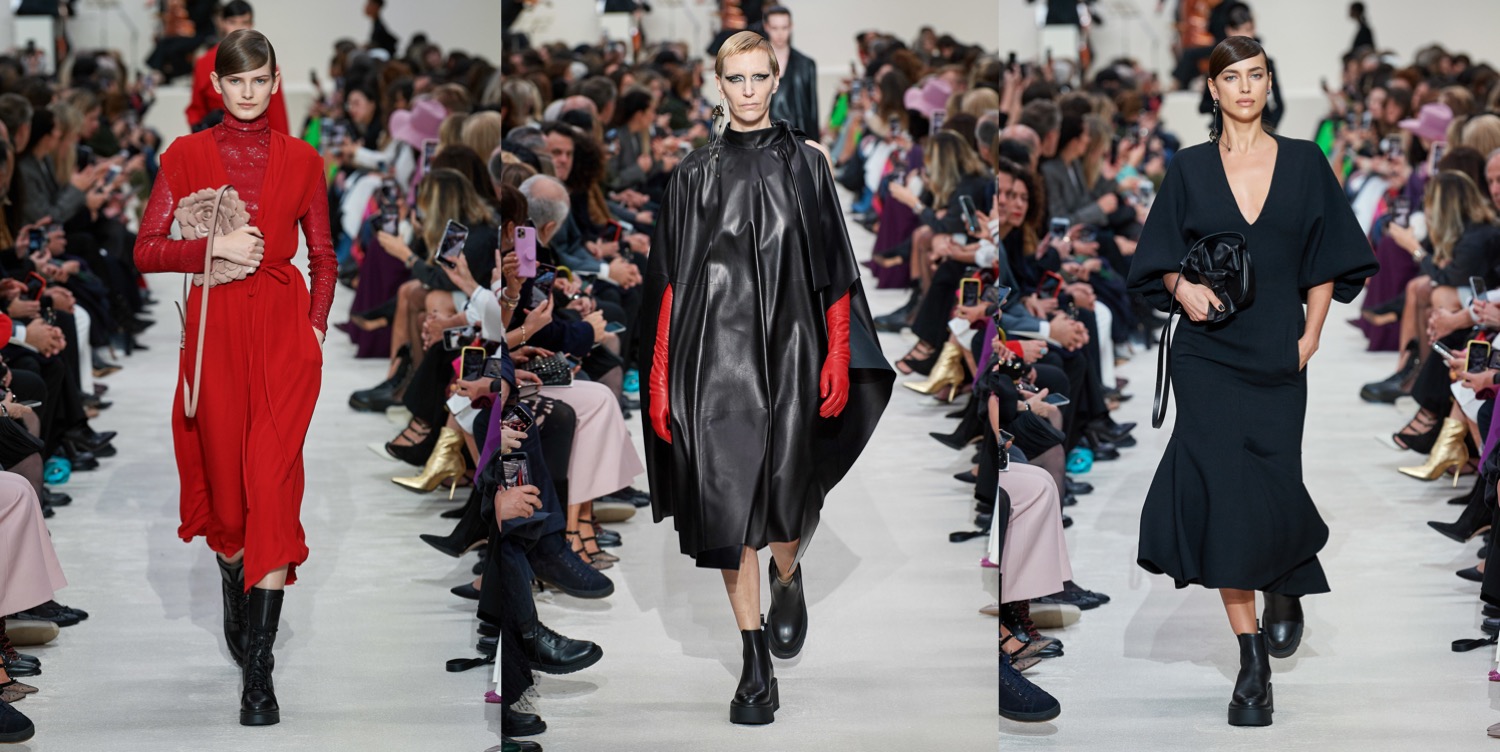
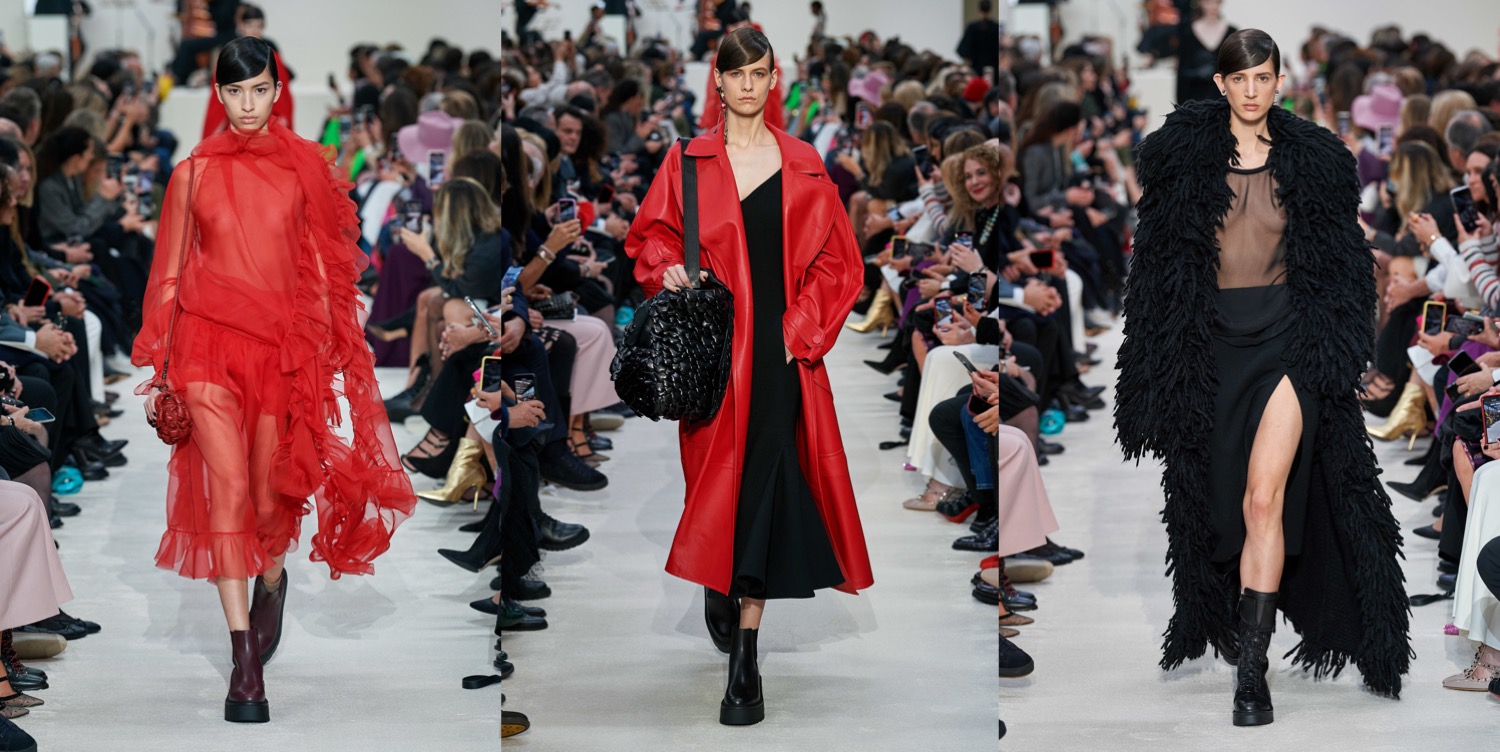
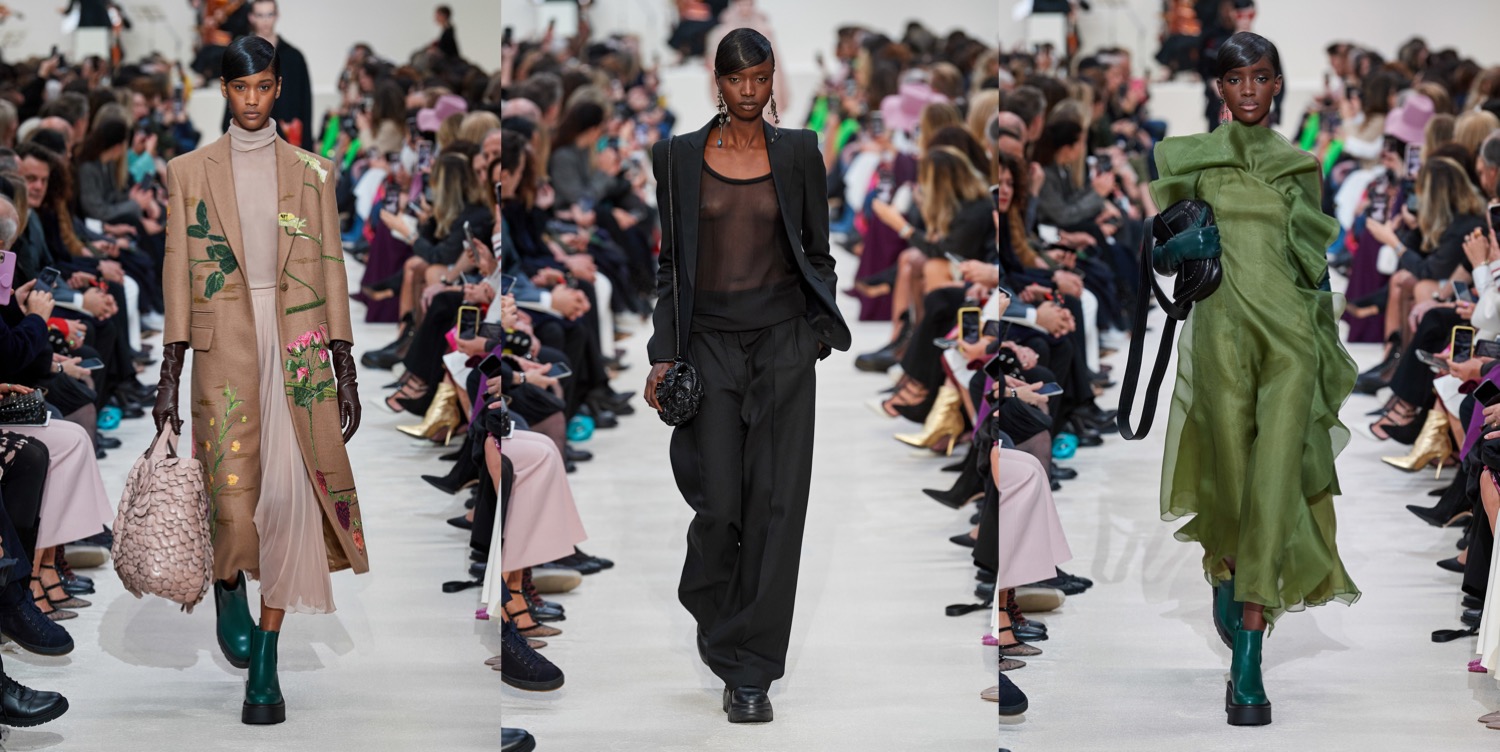
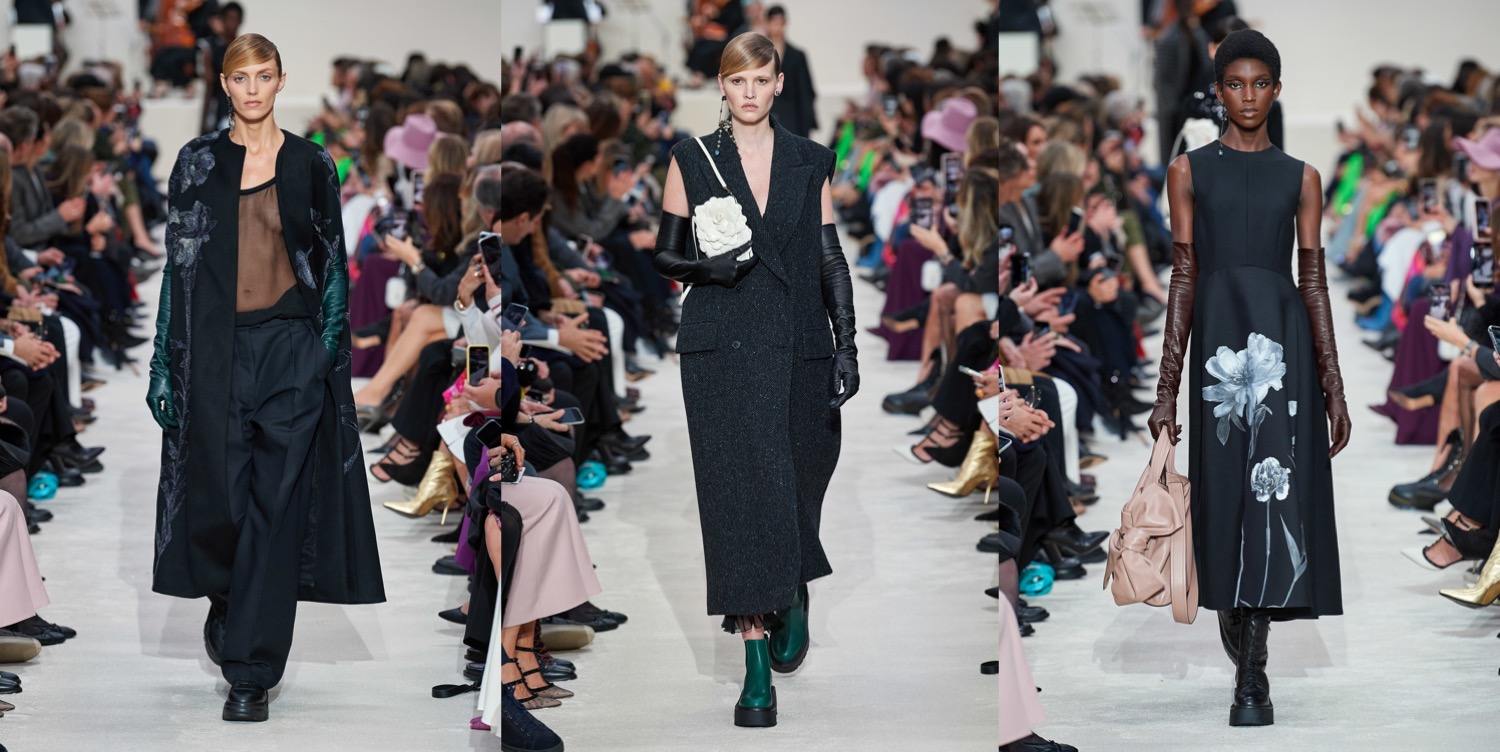
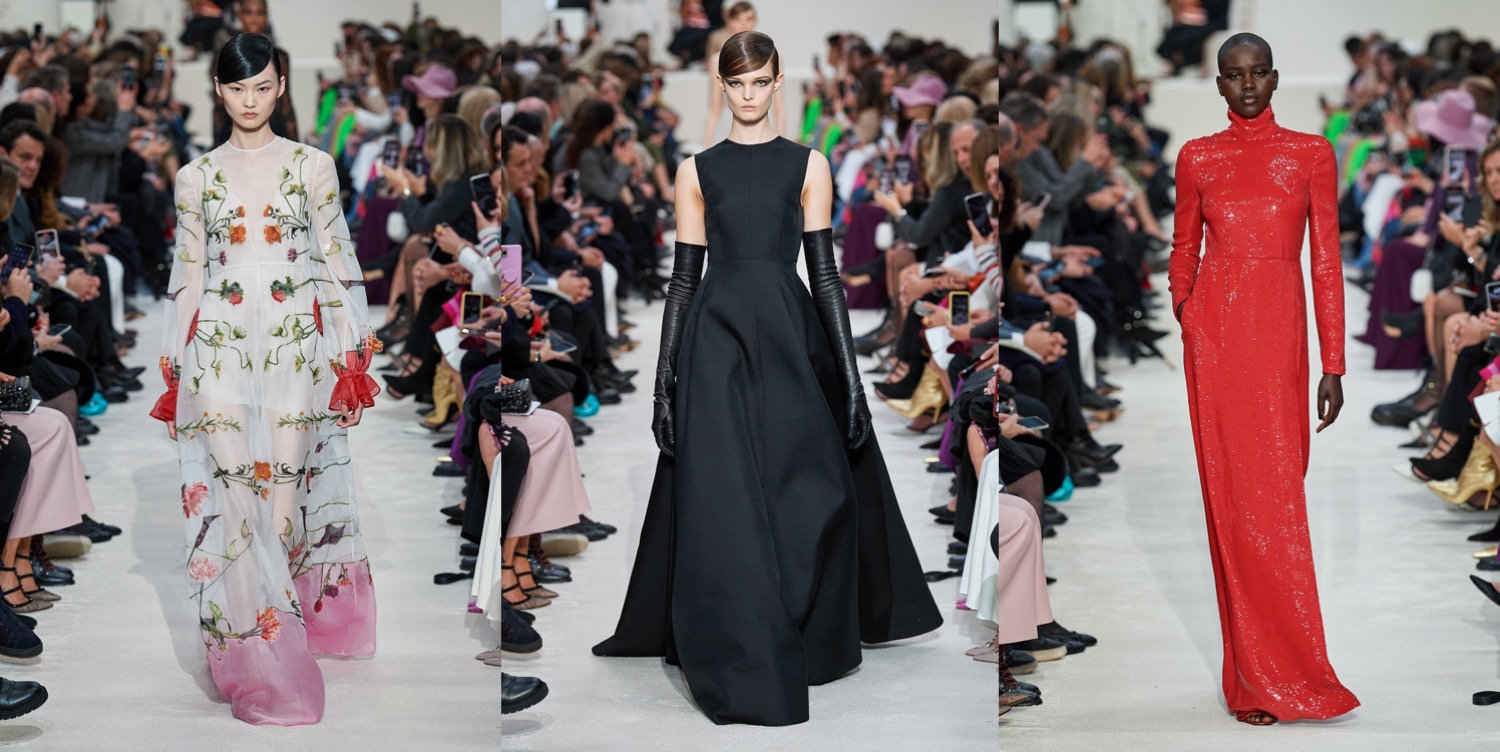
Pierpaolo Piccioli makes impressive couture for Valentino, that’s a fact. But ready-to-wear? I wasn’t sure about that until his autumn-winter 2020 collection, which is so, so sublime. And, surprisingly, dark. Well, there’s no wonder why. The future feels even more unknown and uncertain with coronavirus spreading in entire Europe (reality check: my university got closed down till the end of March for safety reasons…). Designers in Paris seem to state: black is the new black (just look at the apocalyptic Balenciaga). Asked afterward if he was feeling newly serious, Pierpaolo Piccioli said, “No, but fashion must be relevant.” As it turned out, Piccioli had a different kind of relevance on his mind, though. Over the last several seasons, he’s worked harder than most at bringing a new sense of inclusivity to his shows. In his new collection, he pushed his project further along. There were trans models in his cast and curvier-than-usual types too (a revolution is finally coming). He also had male models in the lineup. Backstage Piccioli said, “what I wanted to do was a portrait of a moment with no categories. Fashion has to record and embrace big changes in the world. We have to encourage tolerance and equality.” One way he went about illustrating his message was to strip away the color and quite a bit of the embellishment that we’ve become accustomed to at his Valentino. The show opened with a black mid-length belted cashmere coat and sturdy flatform boots. It wasn’t until look 26 that we saw a dress in full color, though eventually Piccioli did work his way around to many pieces in Valentino’s house red, as well as herringbones, leopard spots, and evening sequins for both women and men. And of course Adut Akech’s closing, sequinned gown. He said that the other way he tried to get his point across about a world without boxes was by putting guys in girls’ clothes and vice versa. The coat that opened his men’s show last month was worn by a female model here. Pierpaolo’s vision of inclusivity came dressed in sober, yet refined elegance. Simply speaking: it’s beautiful.
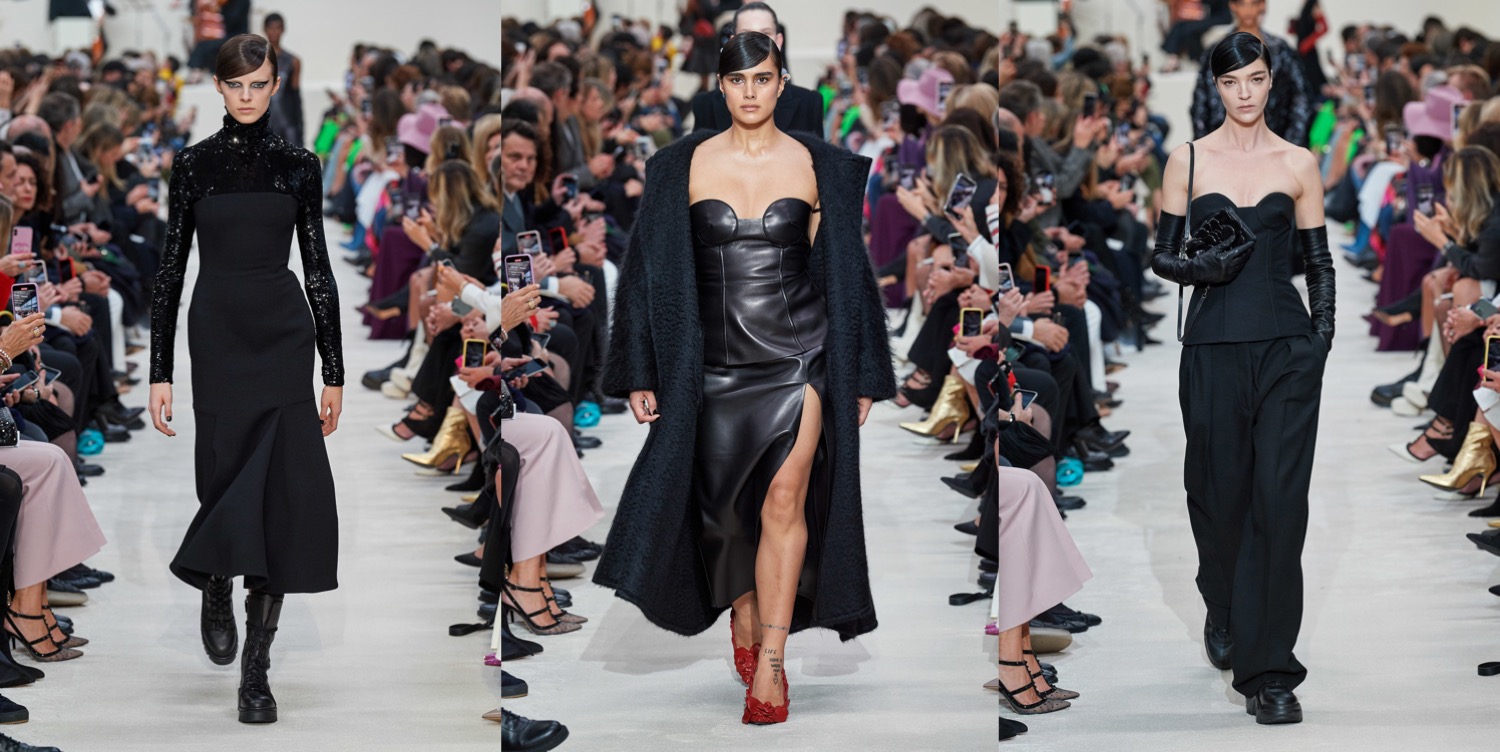
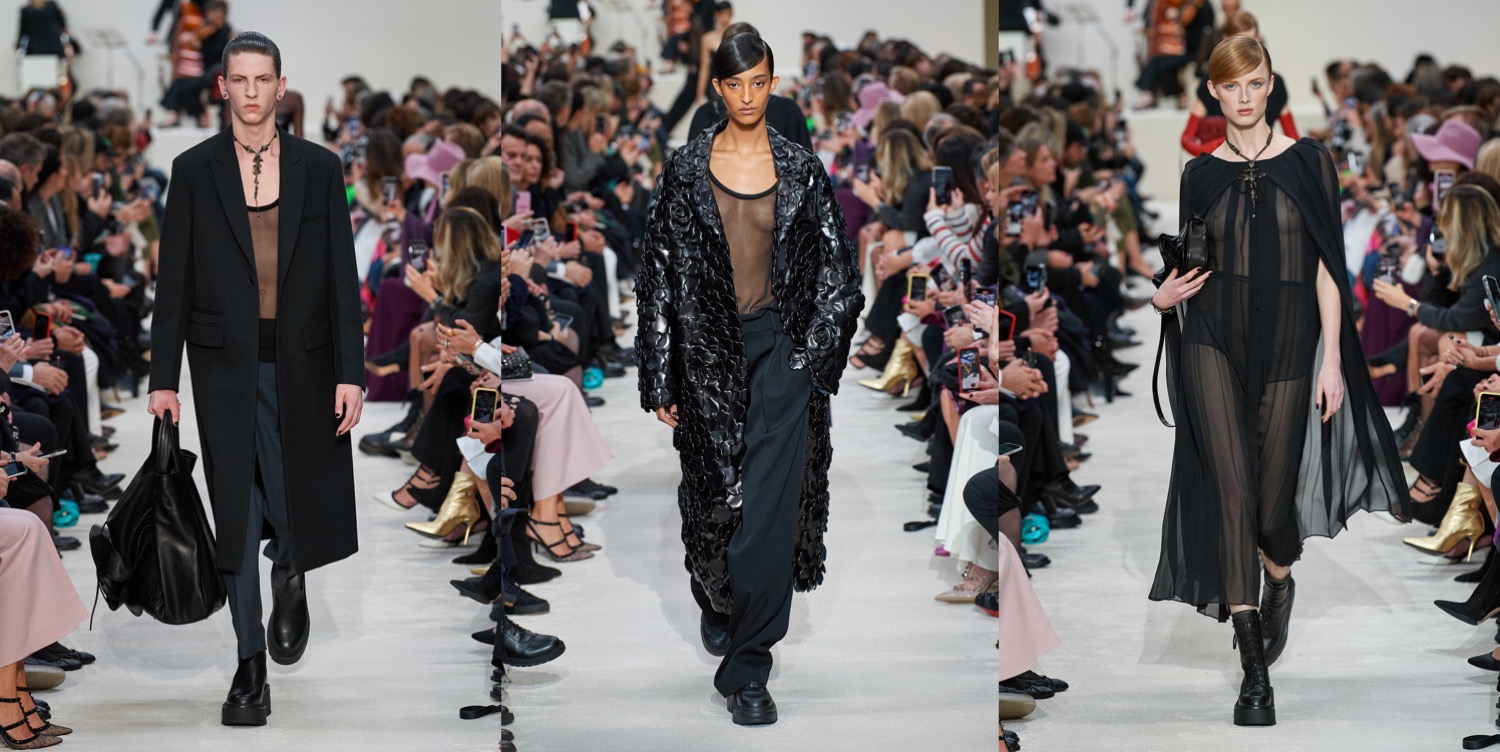
Collage by Edward Kanarecki.
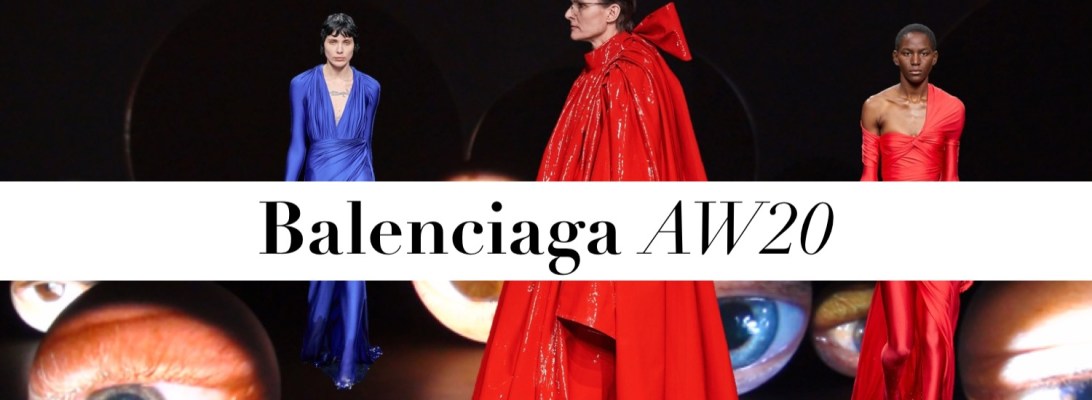
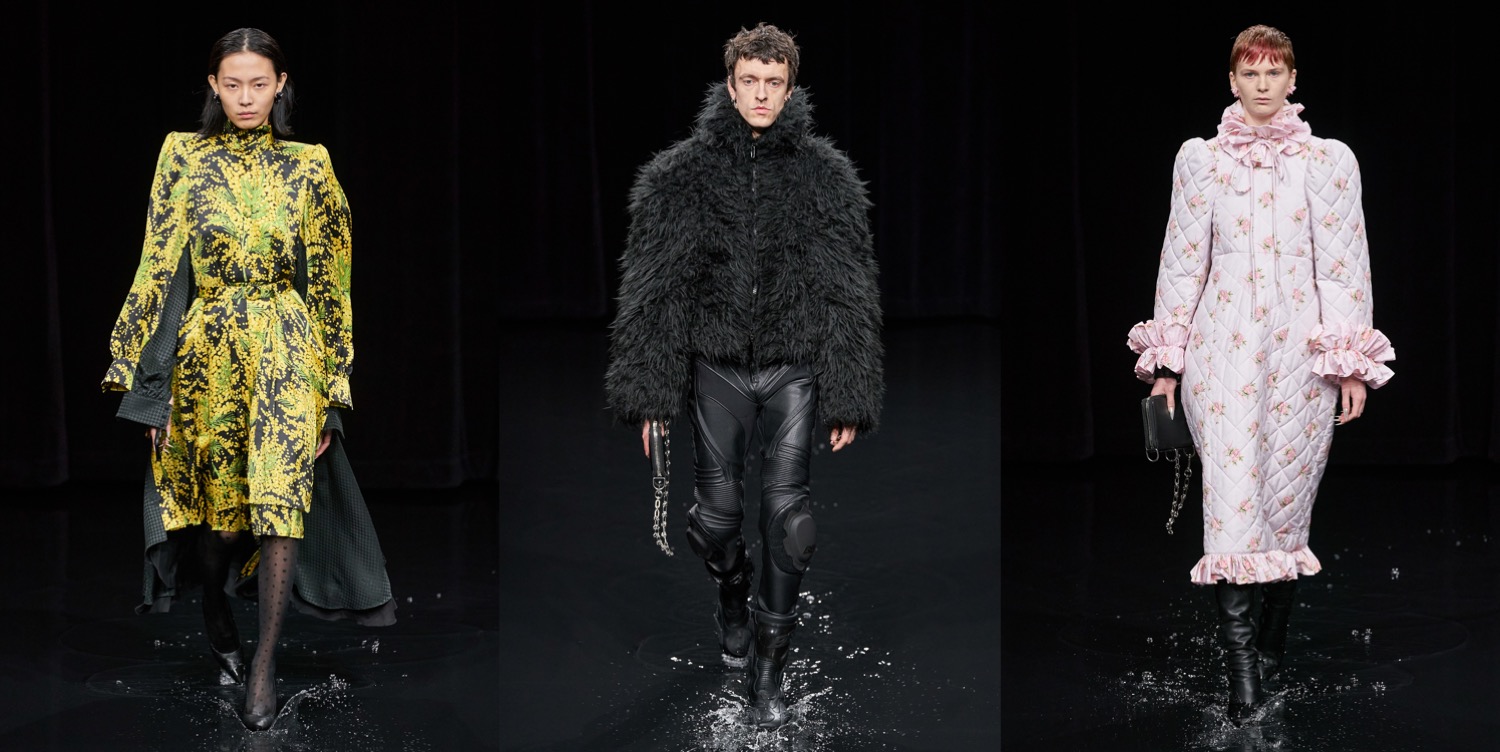
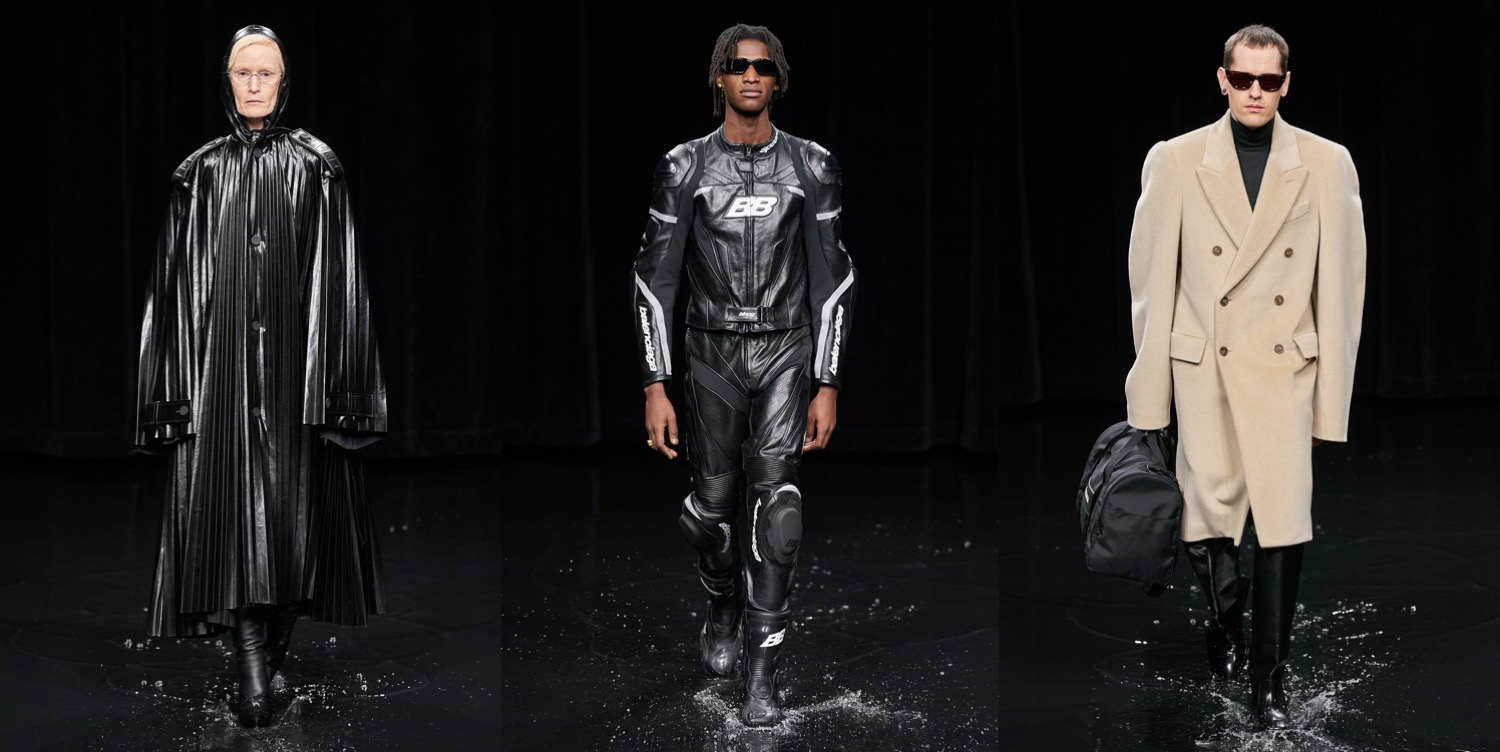
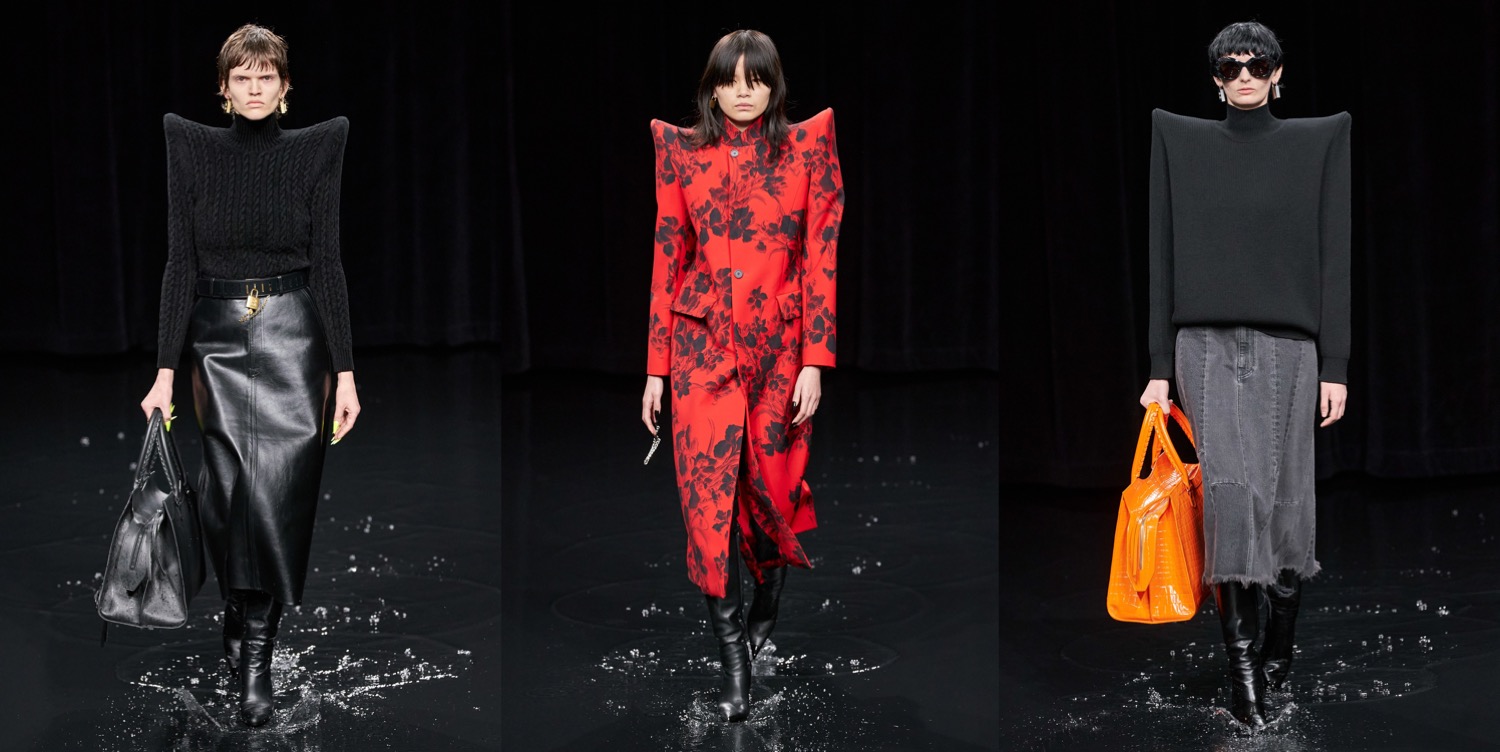
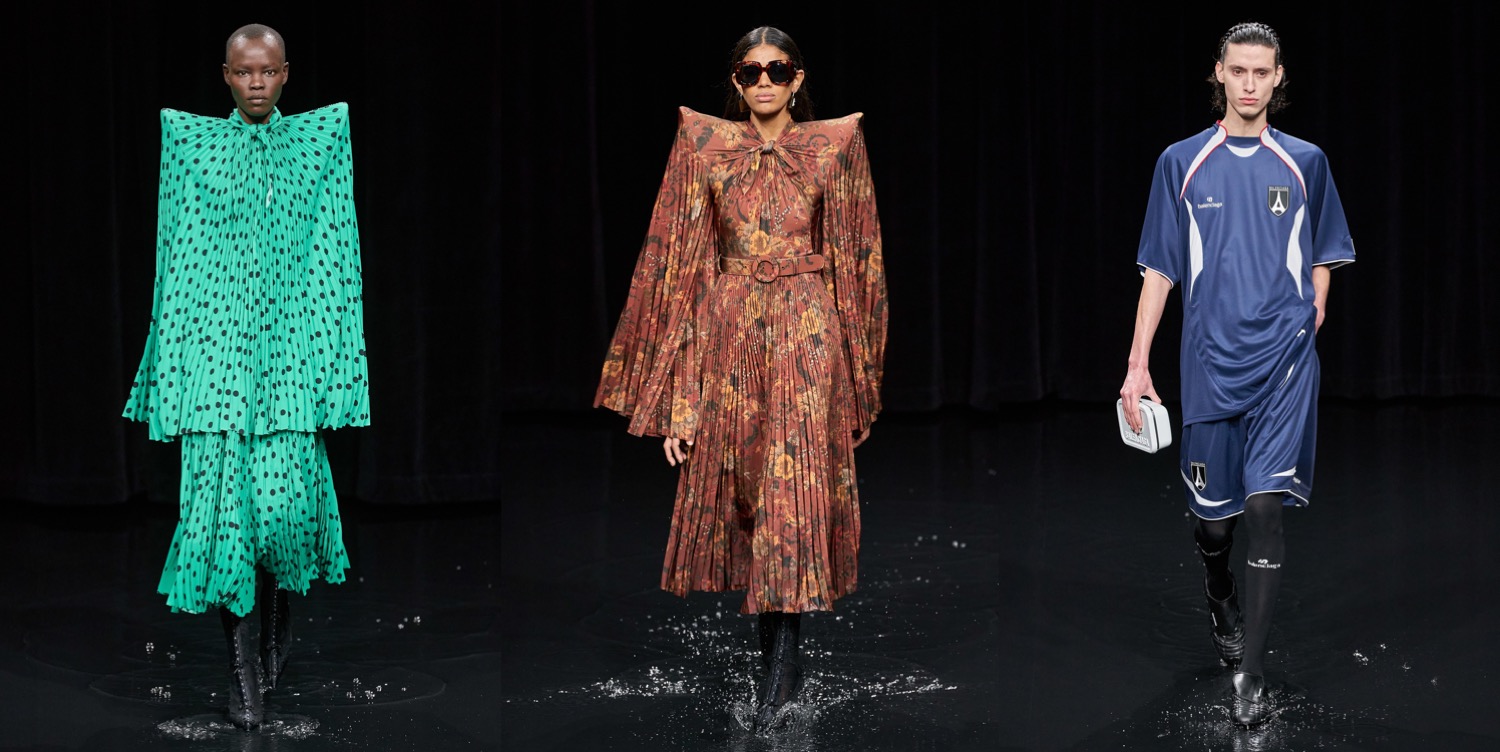
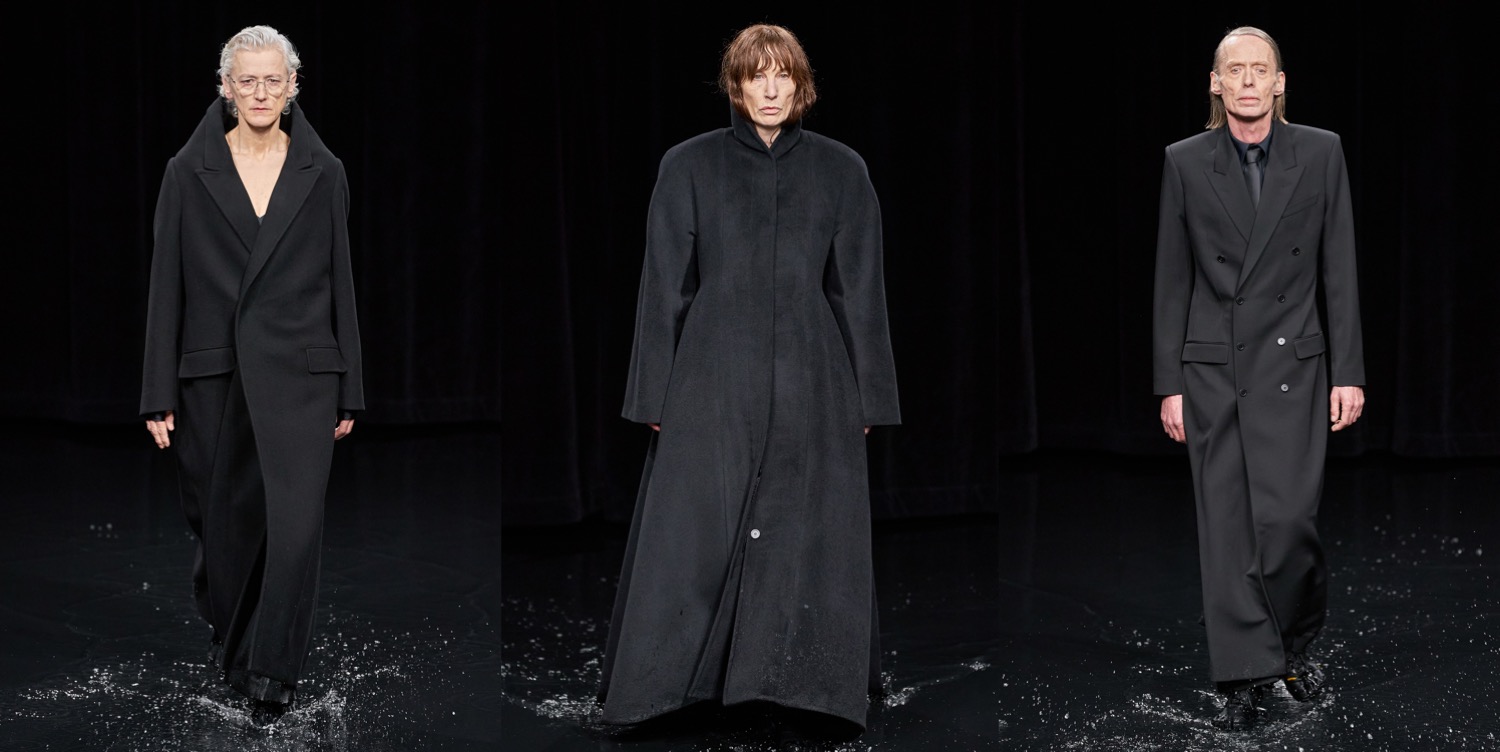
Apocalyptic. Balenciaga AW20

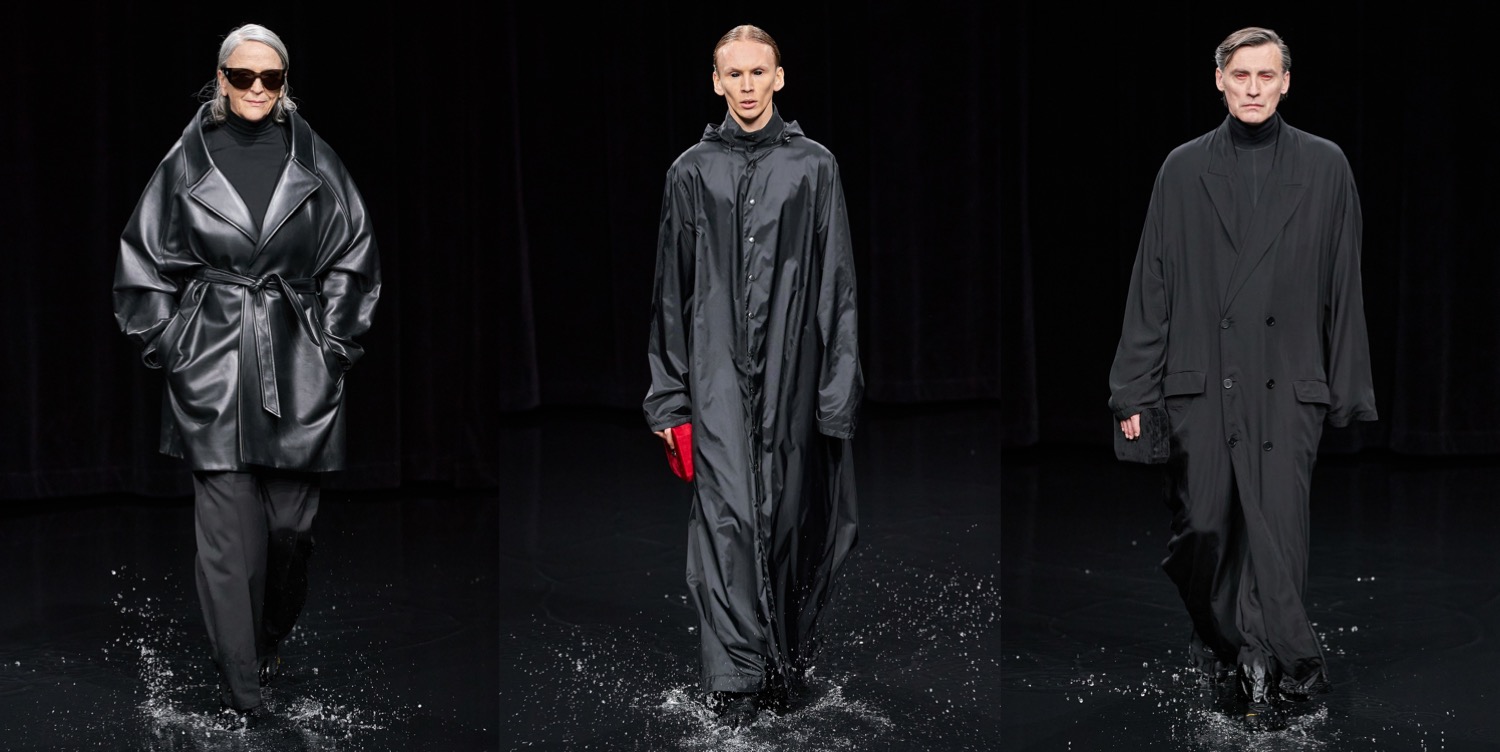
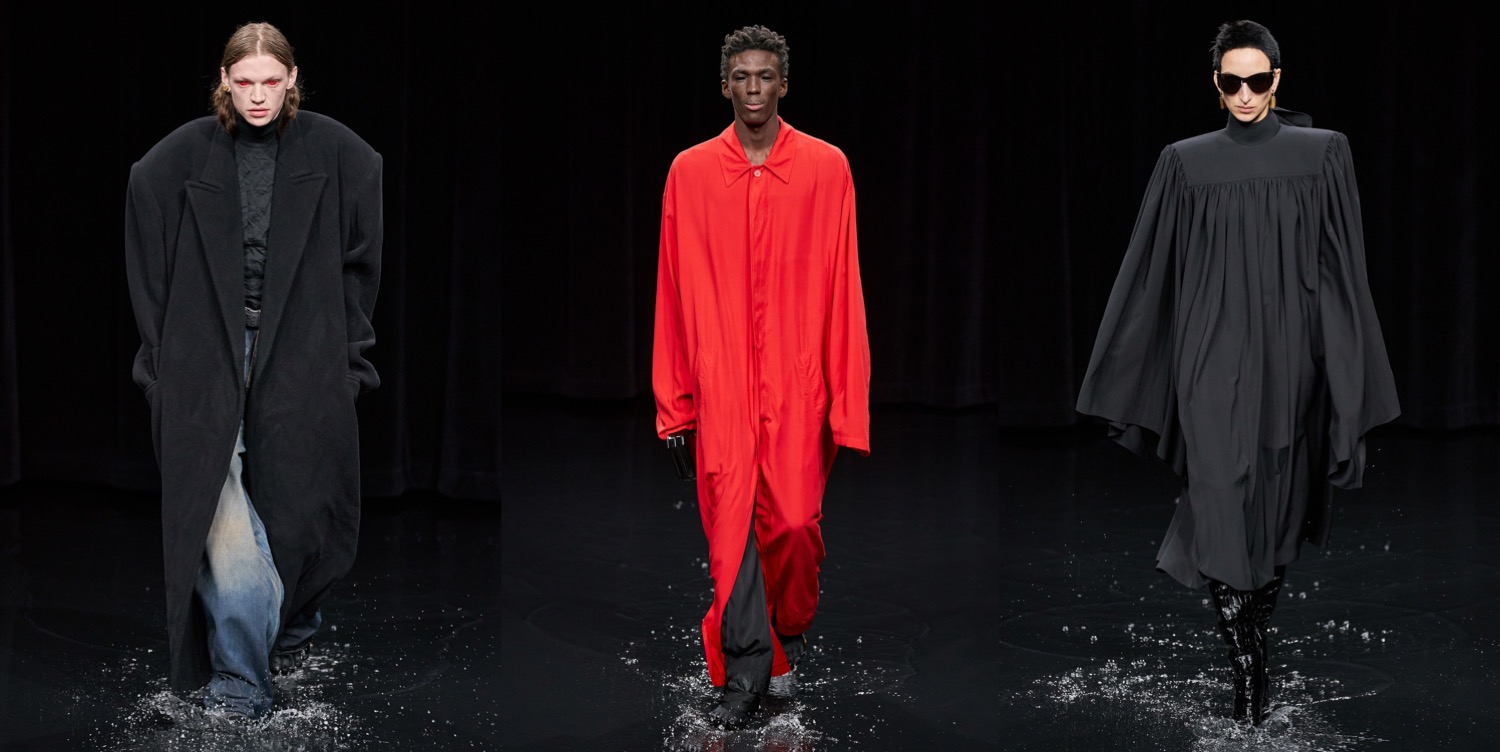
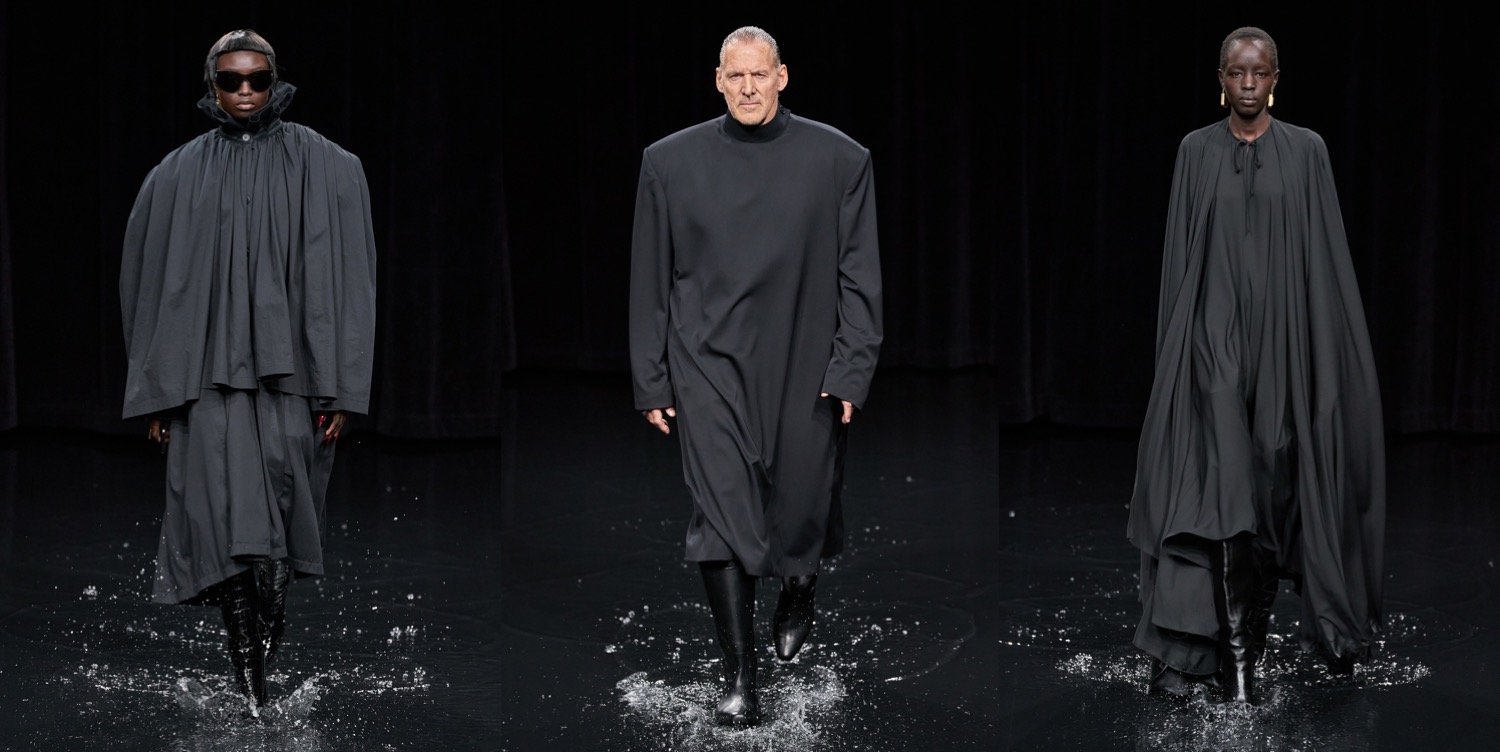
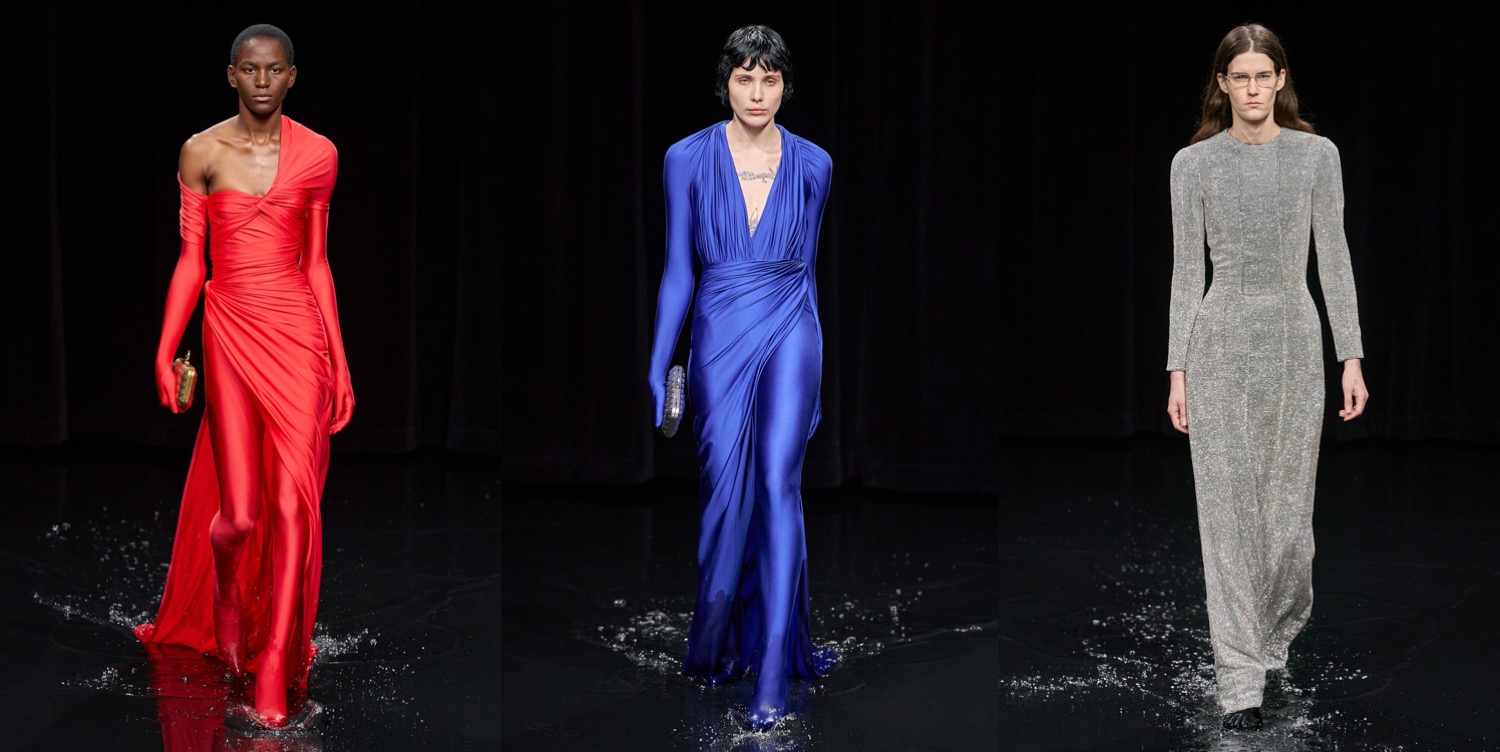
No other show in Paris left such a vivid expression as Balenciaga. You still keep on thinking about this collection (which already means something…). The audience entered the darkened Balenciaga venue and suddenly realized that the first two rows were inundated with water. It was a chilly setting for Demna Gvasalia‘s procession of sinister characters, walking on a vast stretch of water beneath an apocalyptic, digital sky filled with fire, lightning and Hitchcockian birds. “It’s the blackest show I ever did,” the designer said. Gvasalia’s route is always freighted with social observation on the state of the world, power politics, dress codes, fetishism. His intense parade of priests and priestesses in long black robes, with their “religious purity, minimalism, austerity” arose from memories of the Orthodox church in Georgia, and looking at the Spanish Catholic origins of Cristóbal Balenciaga. “He made his first dresses from black velvet, for a Marquesa to wear to church,” Gvasalia concluded. “I had a lot of clerical wear in my research. I come from a country where the Orthodox religion has been so predominant,” he said. “I went to church to confess every Saturday. Back then, I remember looking at all these young priests and monks, wearing these long robes and thinking, ‘How beautiful.’ You see them around Europe with their beards, hair knotted back and backpacks. I don’t know, I find it quite hot – but that’s my fetish.” On closer inspection, they were wearing demonic red or black contact lenses; their faces brutally augmented with protheses. “Religious dress codes are all about hiding the body, about being ashamed – body and sex is the taboo. Whereas when you look into it, some of these people are the nastiest perverts”. Holding that thought – about constraint, rules and belonging to sects – set him off, designing neoprene suits with tiny compressed waists for women and black leather “Pantaboots” with padlocked “chastity belts” and a whole series of leather biker suits. This collection is in a way painful to look at, but that is its real power. On the other note, I think Demna is the only person in fashion who really pushes the topic of silhouette and form, creating some of the most transformative garments. I can’t wait for his debut haute couture show coming this July.

Collage by Edward Kanarecki.

Neo Future. Comme Des Garçons AW20

Slajd1

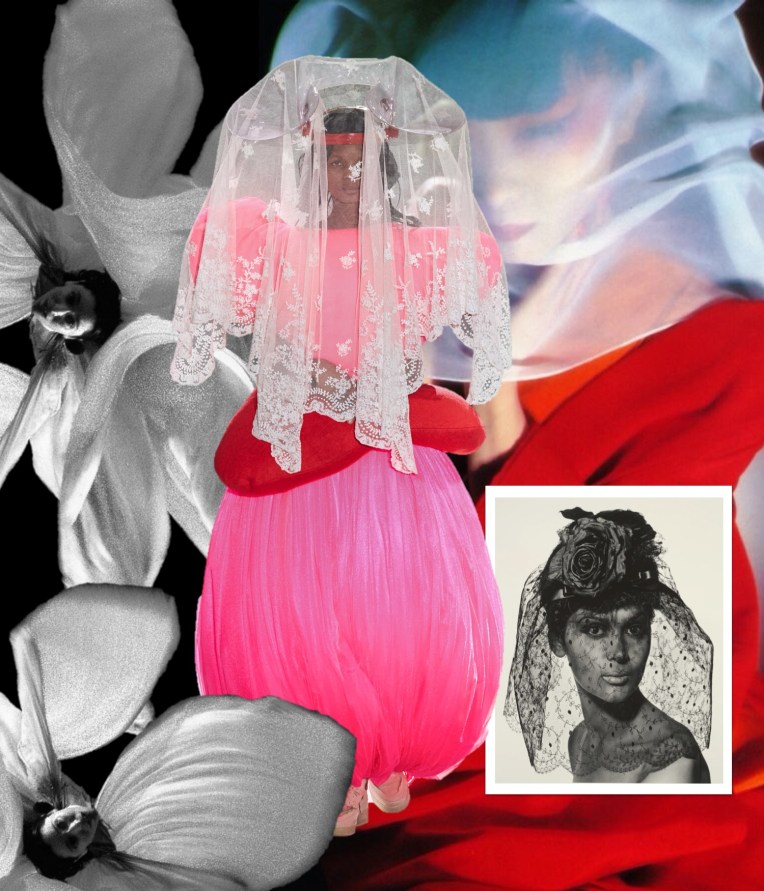
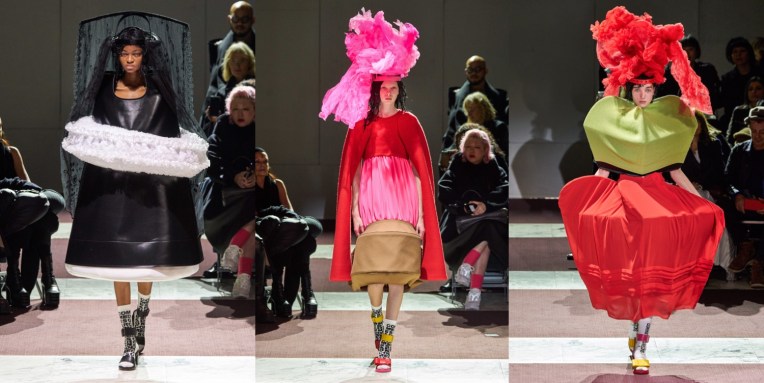
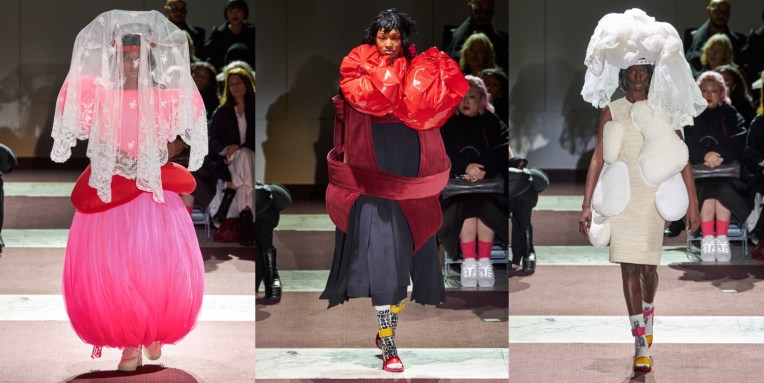
Is it impossible to make something completely and utterly new, since we are all living in this world?”, Rei Kawakubo asked rhetorically in the press notes of her autumn-winter 2020 Comme Des Garçons collection. Looking at some “big” designers for a couple of seasons, this question is an actual punch with a fist. At this stage in her legendary career, what’s still driving Kawakubo is the tantalizing goal of being able to make work that relates to nothing else; that triggers no associations; is devoid of storytelling and free of history, politics, or satire; and is incapable of being interpreted as belonging to any culture or subconscious brew of any of the above. Among the 20 looks she sent out –  bubbles, ledged pieces apparently made for furniture, towering headpieces – it felt like she was aiming to design for some post-world state. There appeared to be echoes of Comme Des Garçons collections from the past – the Flat collection; the ones rotated around the idea of weddings and funerals; fragmented reminders of the Lumps and Bumps presentation. Kawakubo admitted it was true – she really let herself remix some of her past works. “Continuing my work as a perpetual futurist, I worked from within the CDG world.” But when you’re having such a well-formed, complex and distinct vocabulary – Miuccia Prada as well comes up to my mind as one of those designers – then there’s no wonder you want to recycle some of those concepts from time to time.

Slajd1-kopia 5Slajd2Slajd3-kopiaSlajd4Slajd5

Collage by Edward Kanarecki.

Dress To Impress. Loewe AW20

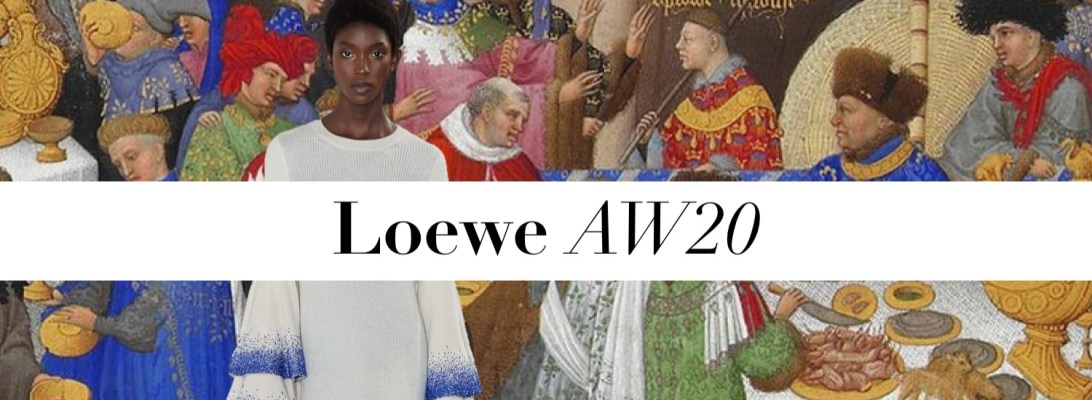
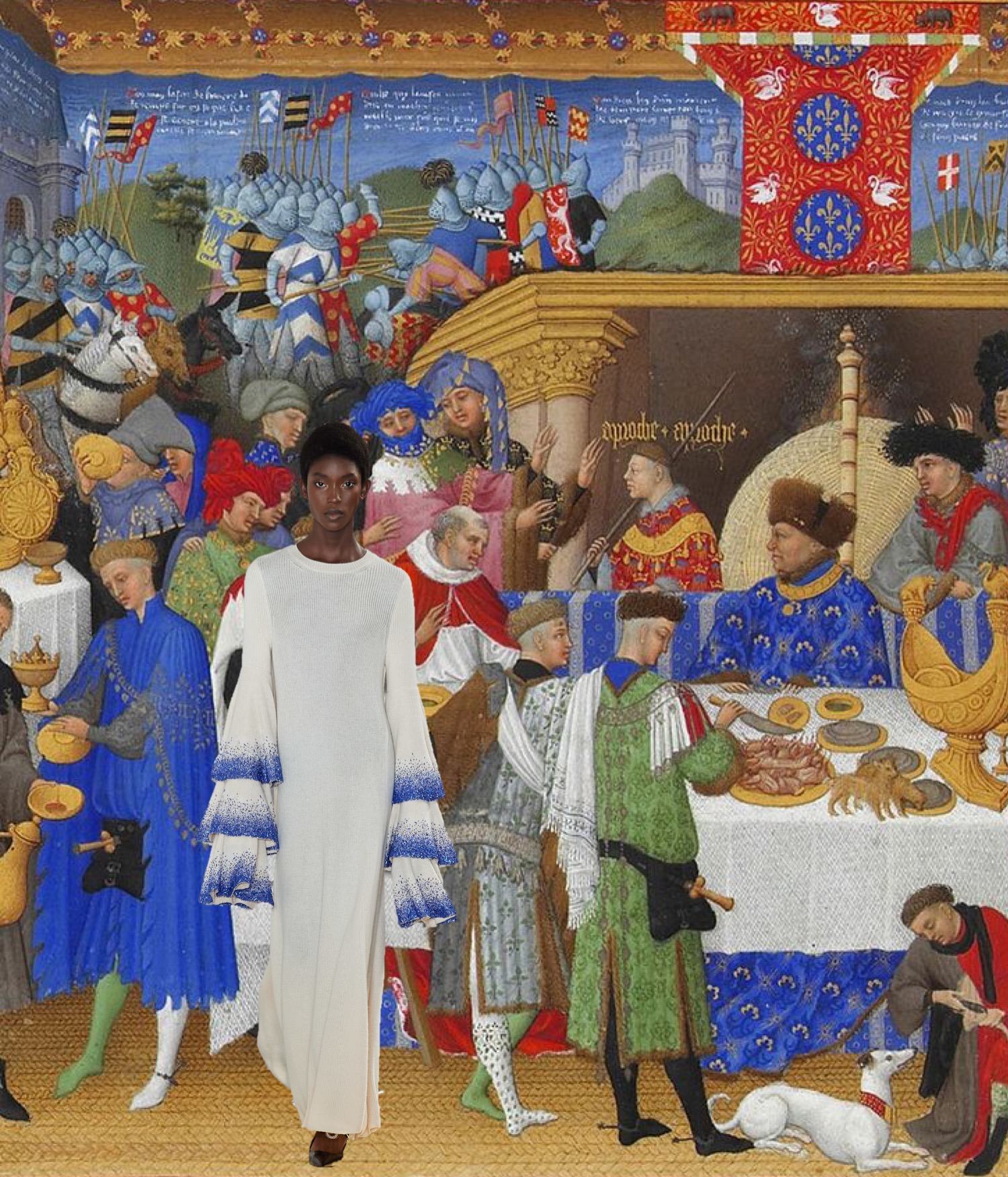
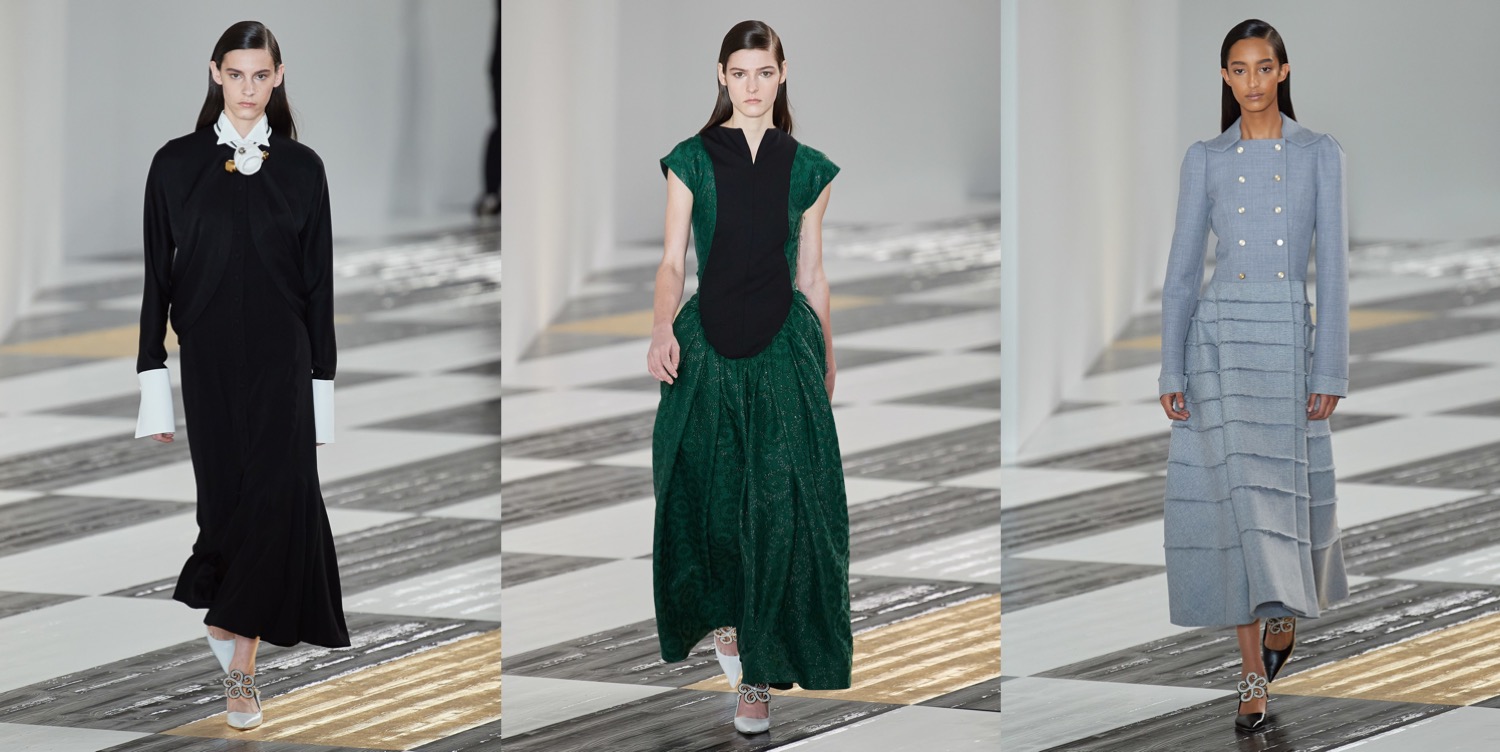
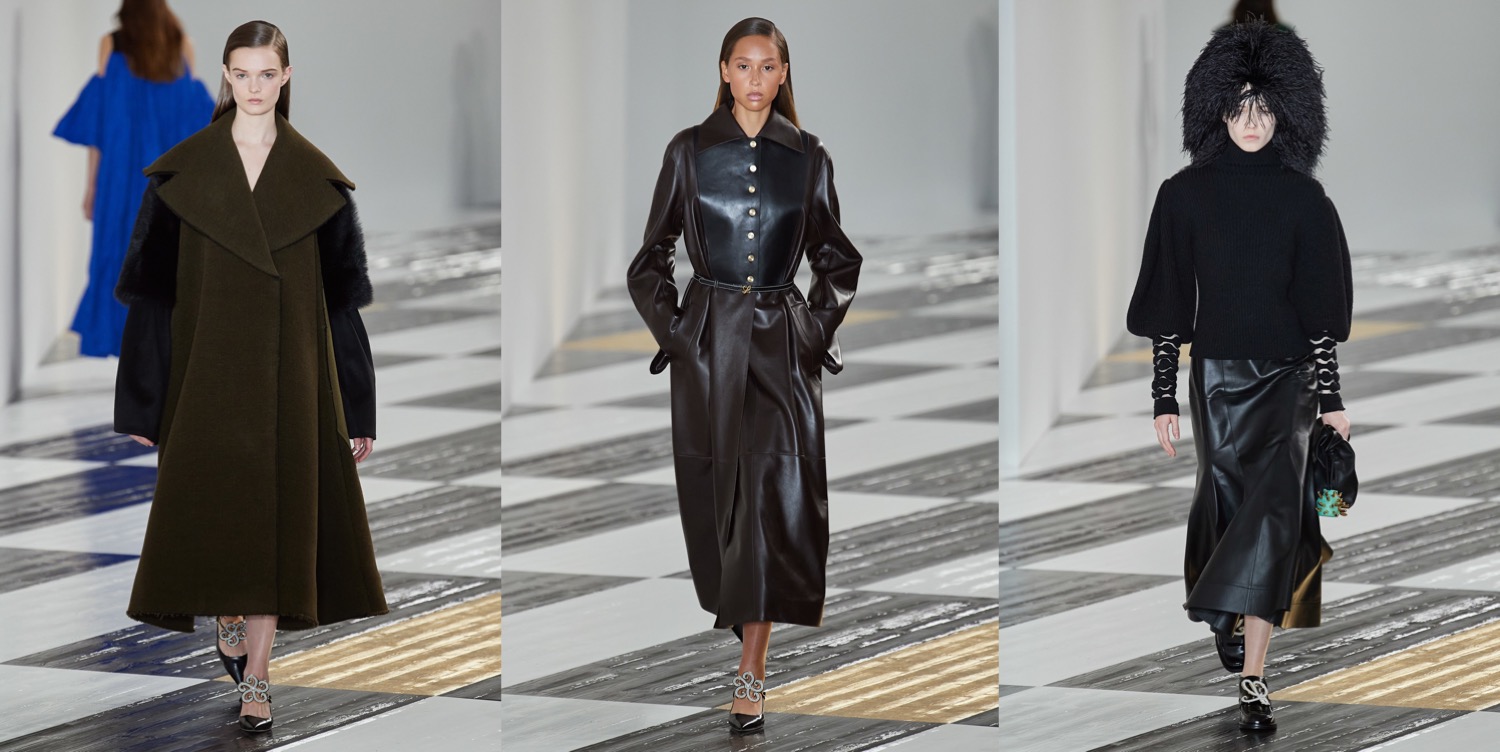
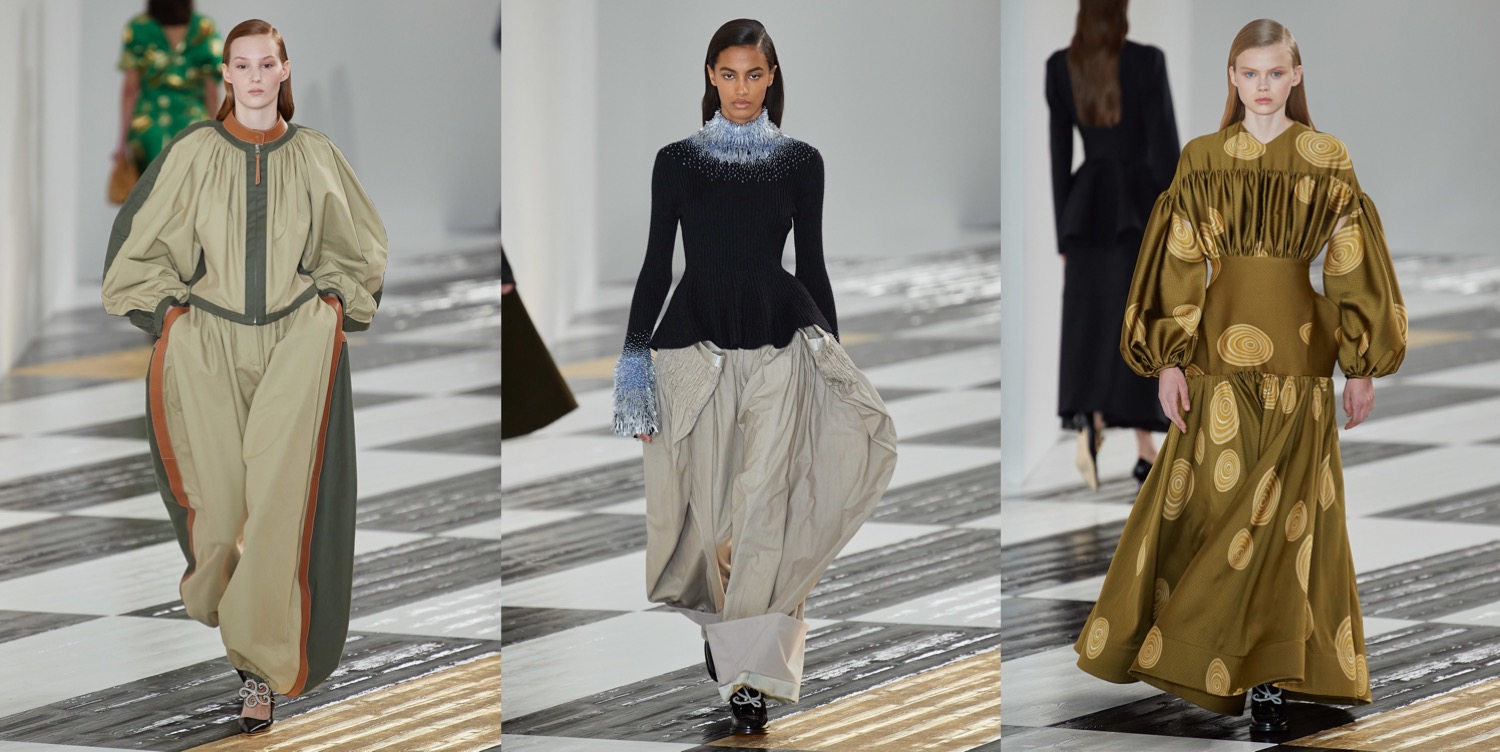
Dressing to impress—I think that’s an exciting thing,Jonathan Anderson declared backstage of his latest Loewe show. “Looking at building new types of silhouettes that can work in an abstract way. Trying to take a risk, maybe in my own self.” Taking risks is a trouble for many designers in Paris, so it’s great to see at least someone addressing that. What he began with – the volumized “entrance-making” shapes he showed in his JW Anderson collection in London – was followed through with inspirational conviction at Loewe. The collection at some points looked odd, but in a good, refreshing way. This line-up wasn’t obvious. What were these brocade dresses, gathered by Takuro Kuwata’s ceramic works? How to capture the shoulder-extending device from which caped-back sleeves were suspended? Anderson said he didn’t quite know exactly how he’d arrived at those ideas. “But sometimes it’s nice to feel vulnerable when you’re doing a collection – that you don’t know what the outcome is going to be before you start.” In pushing across the frontiers of the norm, Anderson relies partly on spontaneous curation. “Exaggerating by illusion” is one way he described the process. Yet the thing about Anderson is that his creative push is also part of his incredibly prescient long-term strategy to turn Loewe into what he’s called “a cultural brand” (he’s reconstructed it into a fashion home for the art-owning and gallery-going international clientele). This as well gets reflected in Jonathan’s fashion. Echoes of 17th century Spanish art – especially Zurburan and Velasquez – come in the subtle Spanish semiotics Anderson embeded in the collection. Maybe there was a hint of flamenco in the raw-edge tiers in a gray flannel coat and the triple-fluted sparkle-dusted sleeves of a ribbed-knit dress. But then, some of the dresses had volumes that made you think of medieval-wear we know from miniature illustrations.

Collage by Edward Kanarecki.
Rework The Past. Paco Rabanne AW20

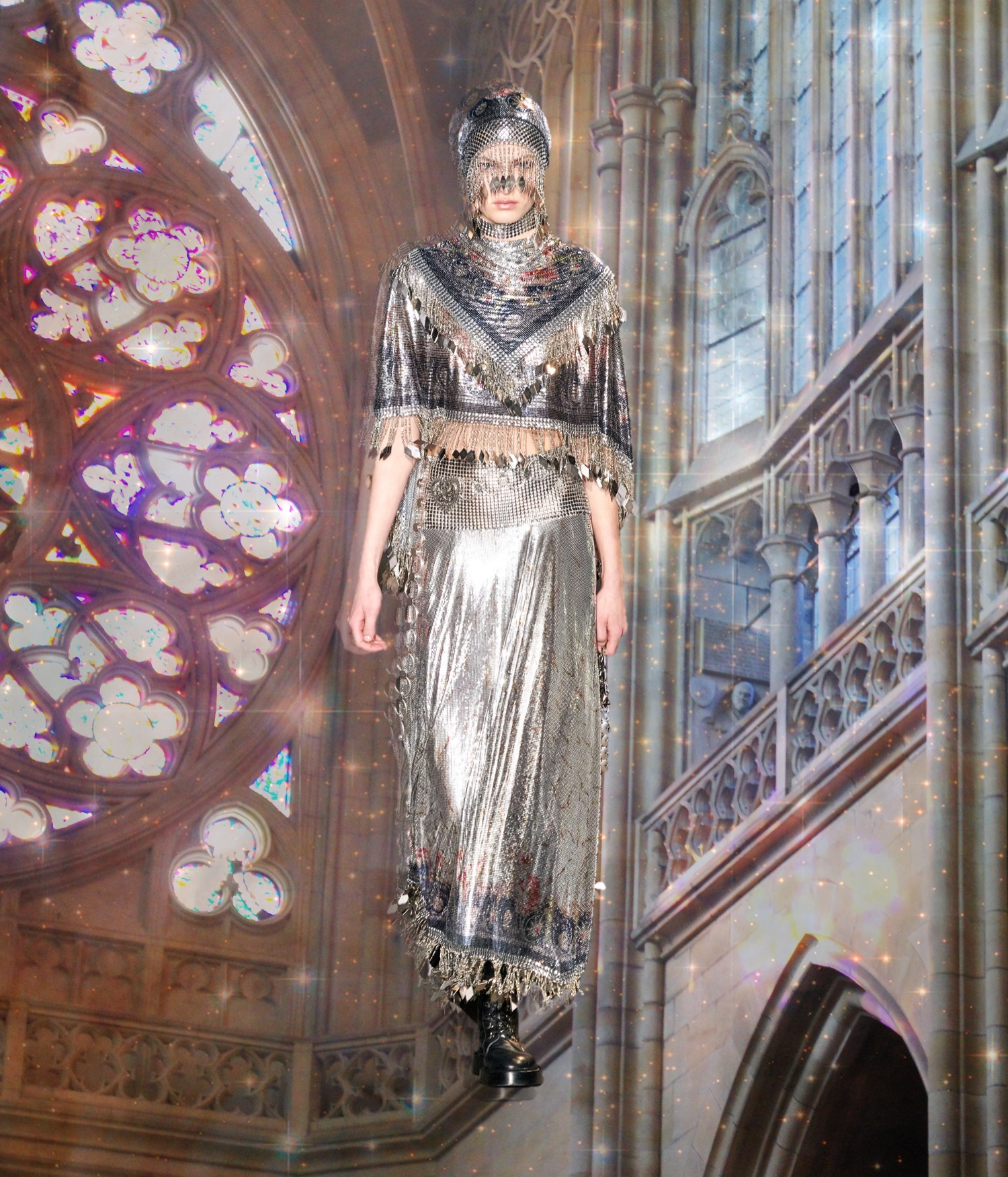
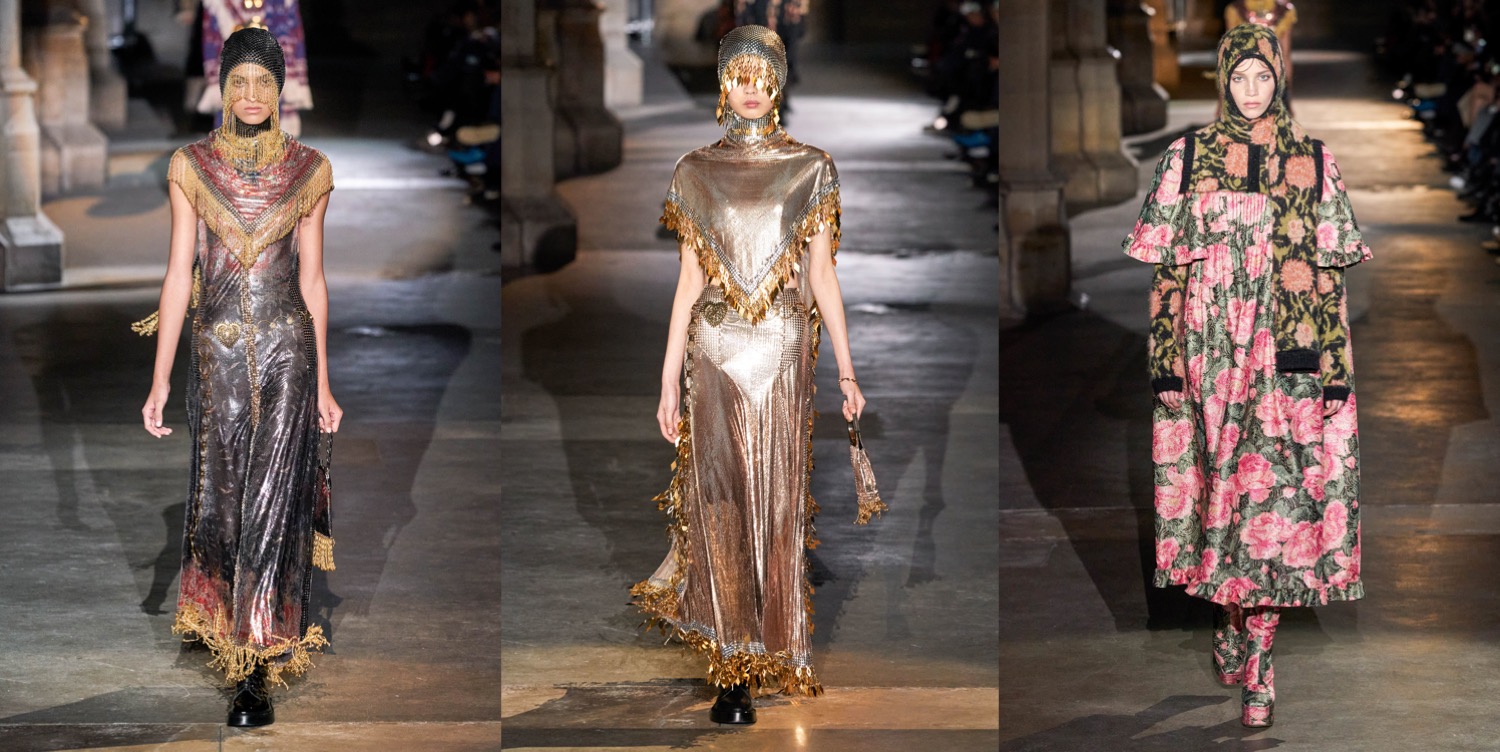
Paco Rabanne is the industry’s – and specifically, the buyers’ – current obsession in Paris. And one thing is for sure: Julien Dossena‘s collections aren’t intentionally commercial. But somehow, his ultra-light chain-mail dresses and accessories sell like hot buns. For some time now, Dossena has been exploring ways to extend the 1960s space-age limits that the house of Paco Rabanne is associated with. His own tastes have traveled, to much critical acclaim, toward a look that modernizes a glamour appropriated from the 1970s. But for autumn-winter 2020, there was something deeper and more subversive going on: a placing of the symbolism of spiritual-religious garb – allusions to clerical robes, monklike habits, and Joan of Arc armor – firmly within the female domain. “I don’t want to say that they’re a cult, exactly,” he said. “I’m not a believer at all, but I’m interested in how thinking about something that’s beyond still drives everyone, even in the age of technology.” The show was presented in an underground chamber of the Conciergerie (the place where Marie Antoinette once languished as a prisoner of the French Revolution, before she was hauled off to be guillotined), a perfect location for the mystical, magical procession of mysterious female priests. Hoods and ruffs, capes and slender maxi-coats, voluminous brocade dresses and fragile lace and flower embroideries – it all made so much sense. Dossena has the rare talent of reworking the symbolism and craft of the past in order to take them into the future.

Collage by Edward Kanarecki.