All About Love. Vaquera AW22

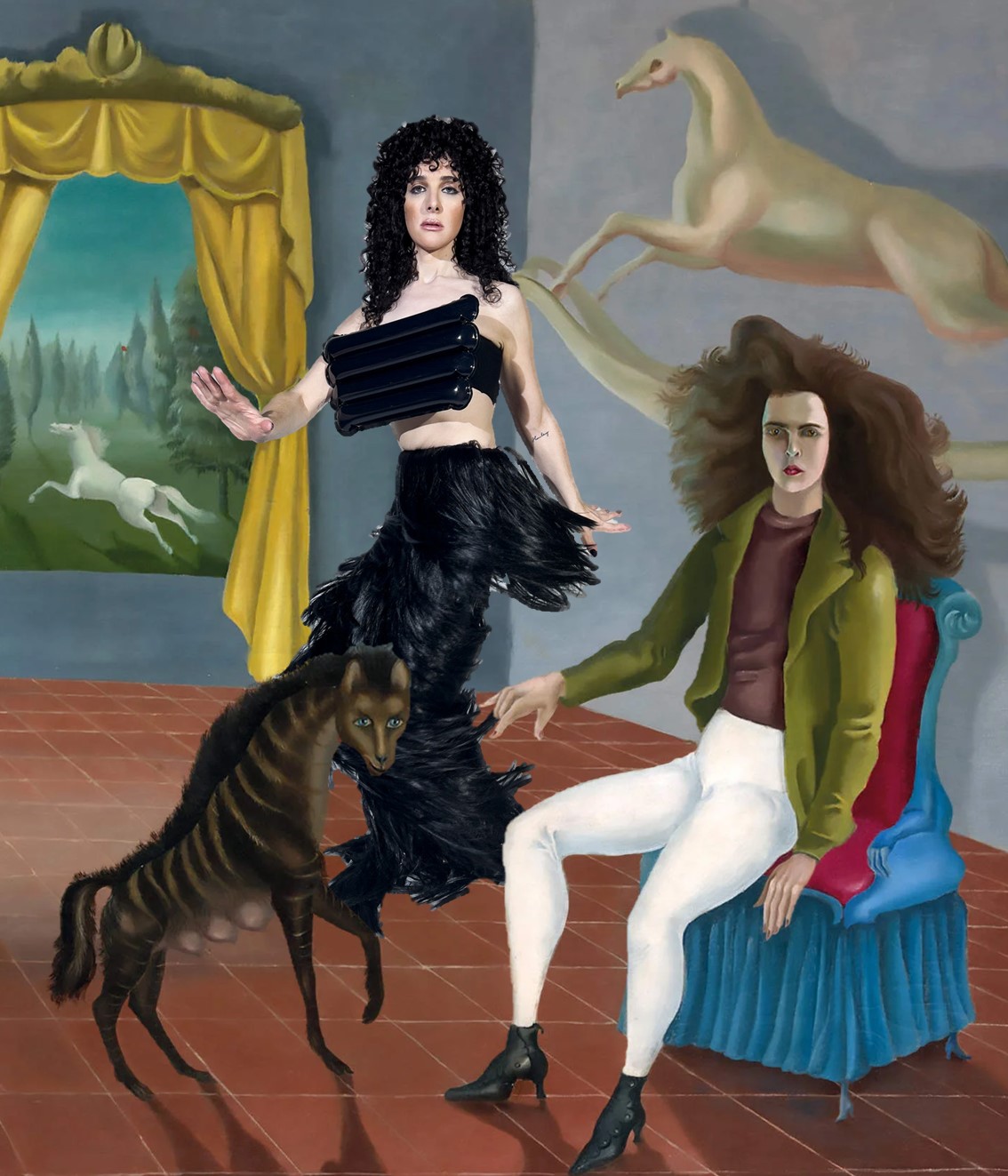
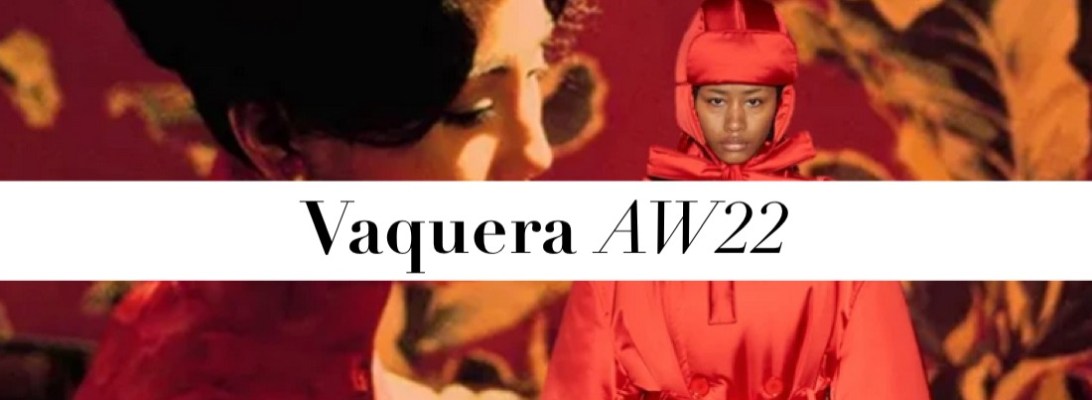
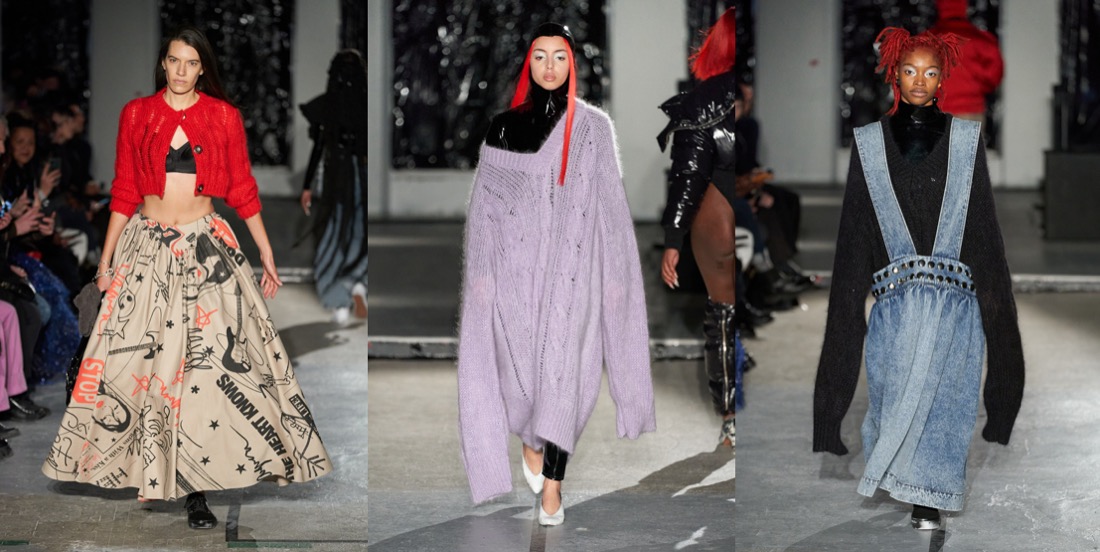
Fashion fan fiction” is how Patric DiCaprio and Bryn Taubensee used to describe Vaquera: tribute clothes for a world obsessed with referential dress. Bringing their runway show to Paris and showing at Dover Street Market’s 35-37 space for autumn-winter 2022 is the ultimate fashion fan fiction come true. Now instead of idolizing runway legends from afar, these American designers have “started becoming the people who we idolized,” said Taubensee. Their craftsmanship has been on a steady uptick since linking with Dover Street Market Paris in early 2020, and this season they’ve made padded moto jacket puffers, tinsel-like sequin dresses, and airy angora knits that feel as high quality as they look. Bags have been developed for the second season and footwear is a collaboration with Vans alongside the same vintage shoes the brand has used for six years, repainted each season to coordinate with the collection. Love, in fact, was the driver for the Vaquera this season. Romance was never really a feeling one got at their all-bass, hurried catwalks back in New York, but a transatlantic journey, coupled with ideas of Maggie Cheung’s sensual performance in 1996’s Irma Vep, has made the Vaquera tone gentler. Now their big ruffles seem less campy, more tender. Their plaid skirts and schoolgirl jumpers feel like the clothes of teenage crushes, and their suiting is covered in professions of love. Even a hair clip reads YOU inside a jet black heart. The brand’s signature teddy, elongated into a dress, is now translucent and trimmed in white lace, an invitation to come closer, to see, and to be seen.

Collage by Edward Kanarecki.

Characters. JW Anderson AW22

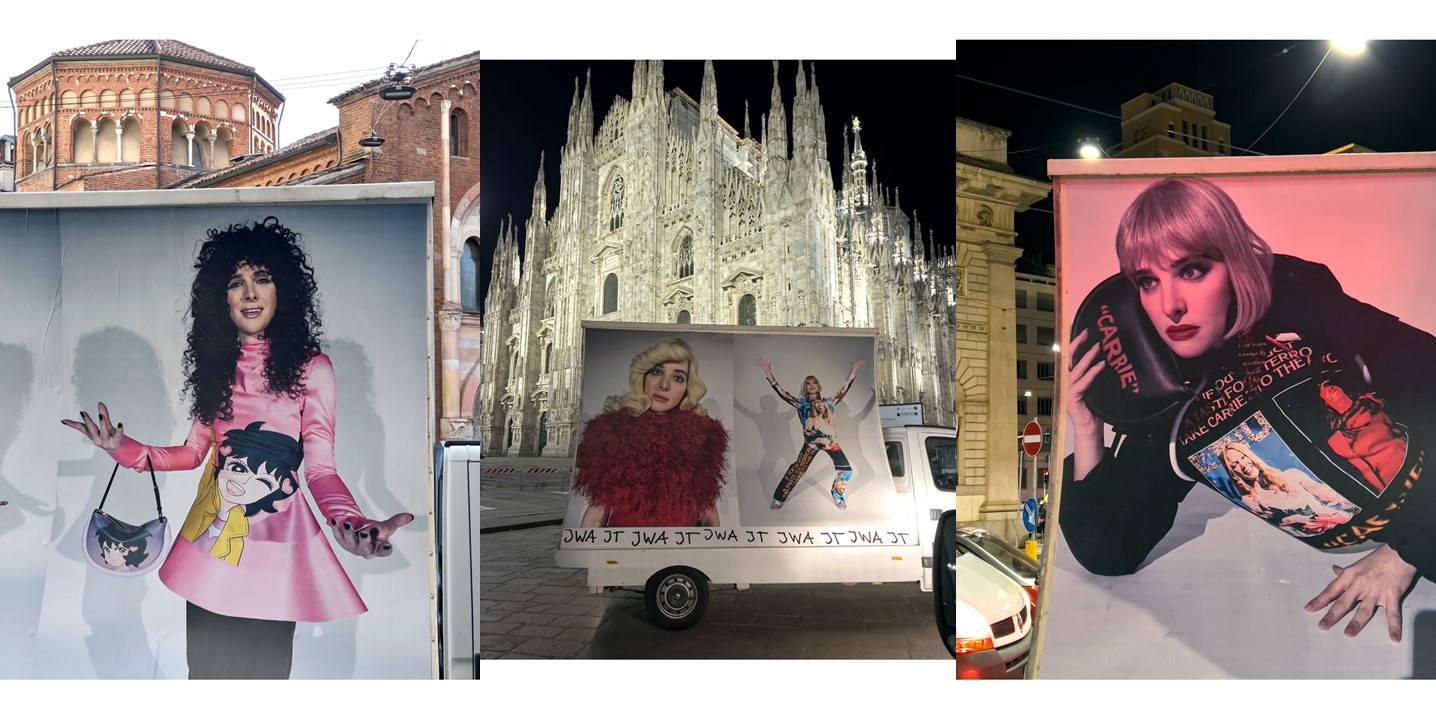
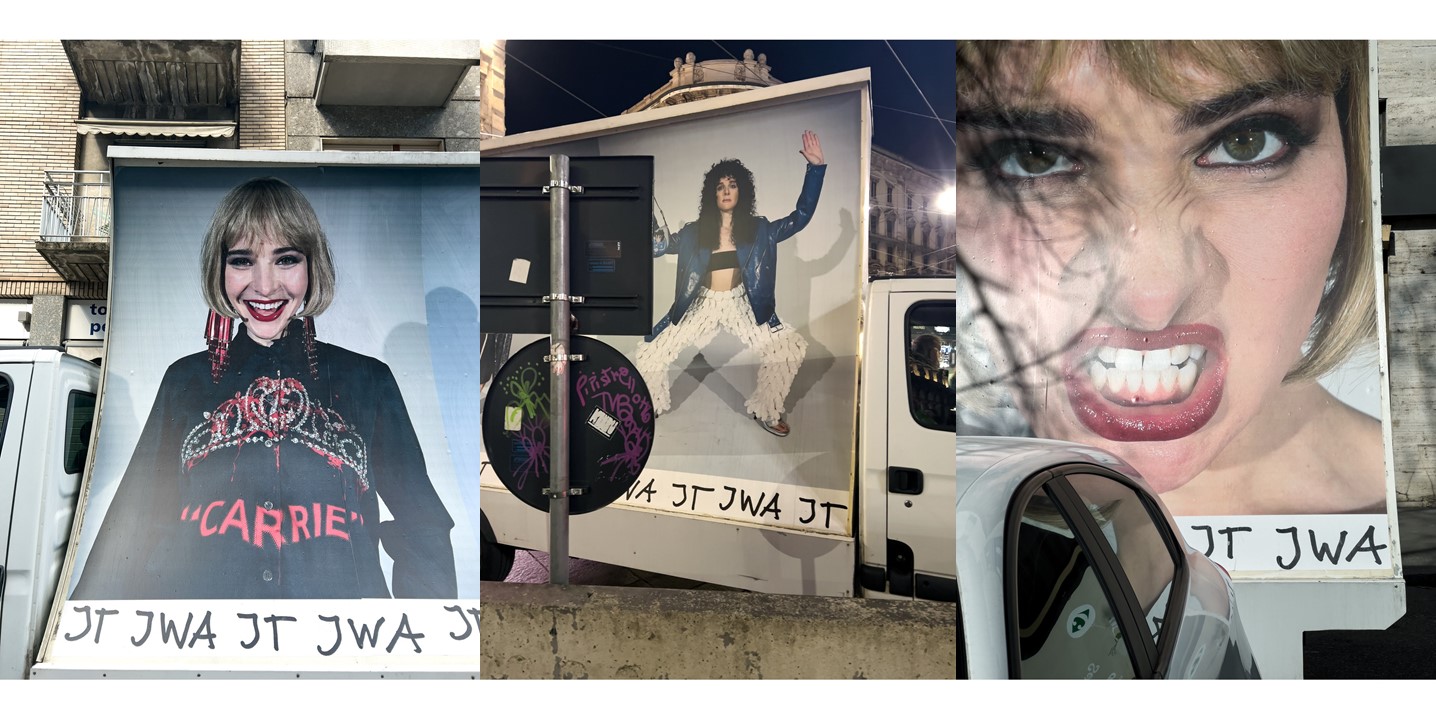
Jonathan Anderson left London and showed in Milan this season… to some extent. In the latest in his series of ingenious pandemic alternatives to putting models on a runway, he made a surprise intervention in public. “We have dozens of trucks with billboards of the collection images circulating Milan all day. Juergen Teller is out photographing them with people at gas stations and other stops. Content becomes content. Image becomes pictures of pictures. Fashion becomes part of the landscape”, the designer explained. As a device for creating a widely seen, soon to be endlessly Instagram-replicated public spectacle, it’s just the latest of JW Anderson’s super-smart manipulations of media – right in the middle of the Italian city where the institution of the fashion billboard has been part of the competitive pride of fashion week for years. And this, simply with one photographer and one model, his friend Hari Nef impersonating four pop-cultural ‘characters’ in a Cindy Sherman-esque, and a fleet of truckers. “We don’t have thematics any more. We’re doing bite-sized, light-hearted things like this,” Anderson said. “We have a young demographic, and we’re a small contemporary brand. With all the multiple issues we’re facing – going from one crisis to another crisis – there has to be learning from that. New types and ways of doing things.” Since the pandemic hit Anderson has been acing communication by playing with printed matter in delightful ways. He’s also re-focused his own-brand strategy on “two main seasons, and two experimental ones. So this is one of those experiments.”

Rolled out (literally) around Milan were pictures designed simultaneously to provoke lots of fun and push Gen-Z memory-buttons. “We’re playing with this media paradox in pop culture where there’s this constant going to the past, and bringing it forward. So things are just as valid as they were, but in a different context.” One set is around the movie posters for Carrie – original graphics from Sissy Spacek’s classic 1976 horror role as the awkward teenager who turns out to have gory telekinetic powers of revenge at the school prom. No random choice, that: “I feel like that movie is such an influence on teen TV series being made now,” Anderson acutely observed. Apart from the obvious T-shirt, sweatpant, and pajama-set graphics, there’s a one-shouldered silver silk satin prom dress. Quite ingeniously, it’s photo-printed all around the hem with “hyper realistic” balloons from Carrie’s own prom.

Collage by Edward Kanarecki.
Spiritual Wanderer. DsQuared2 AW22

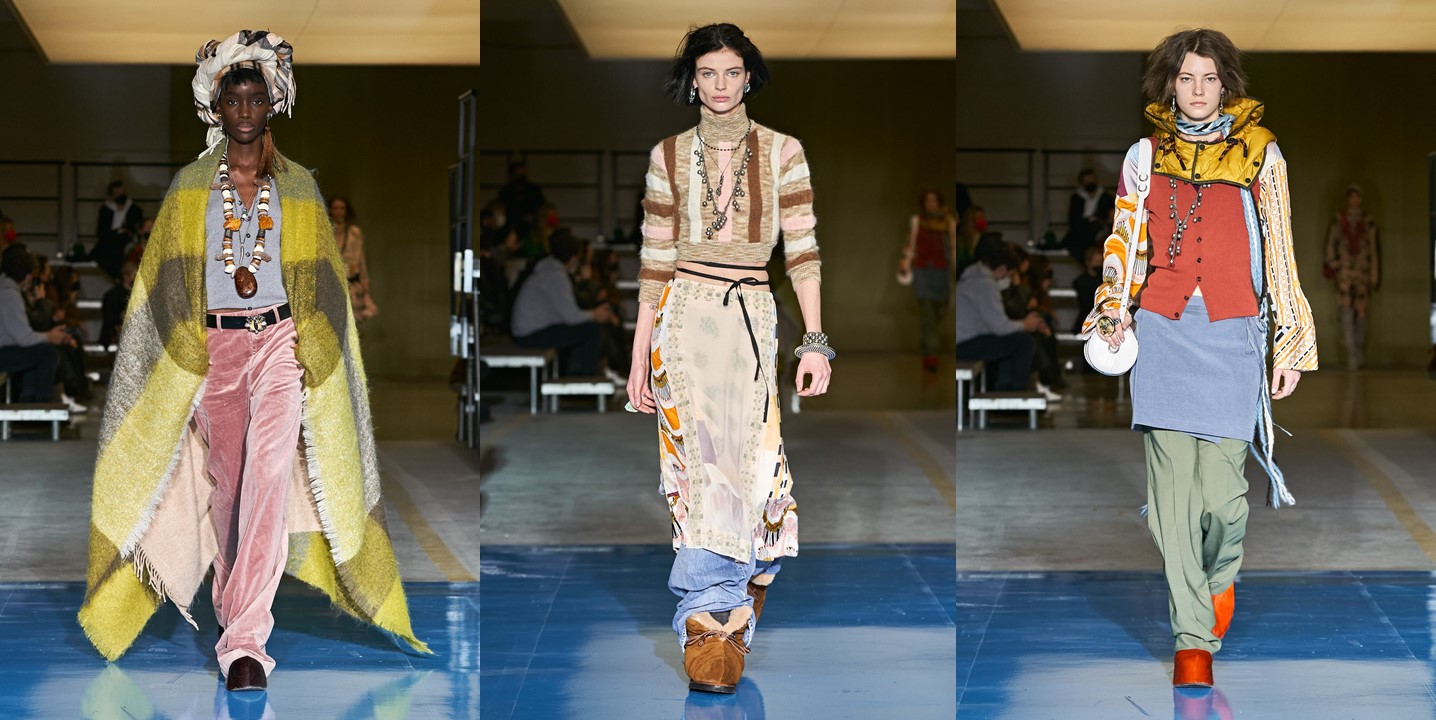
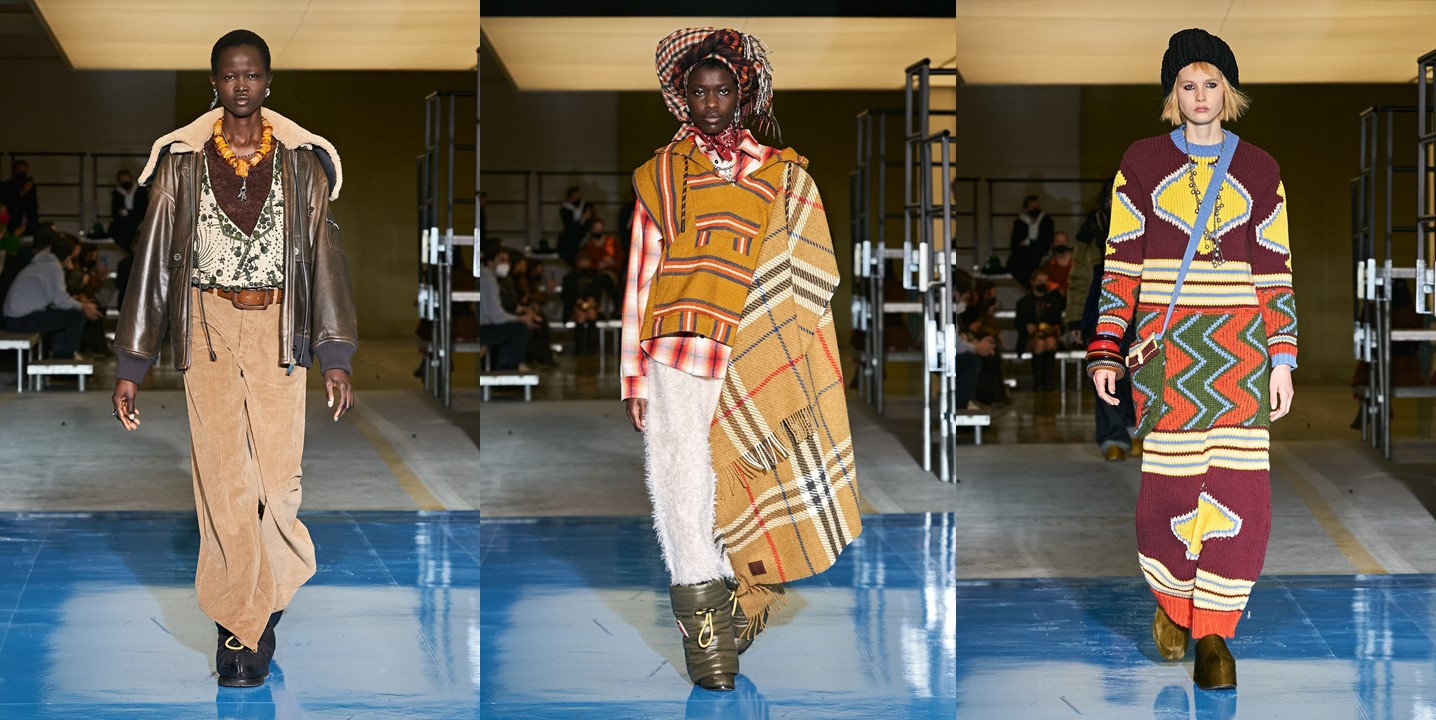
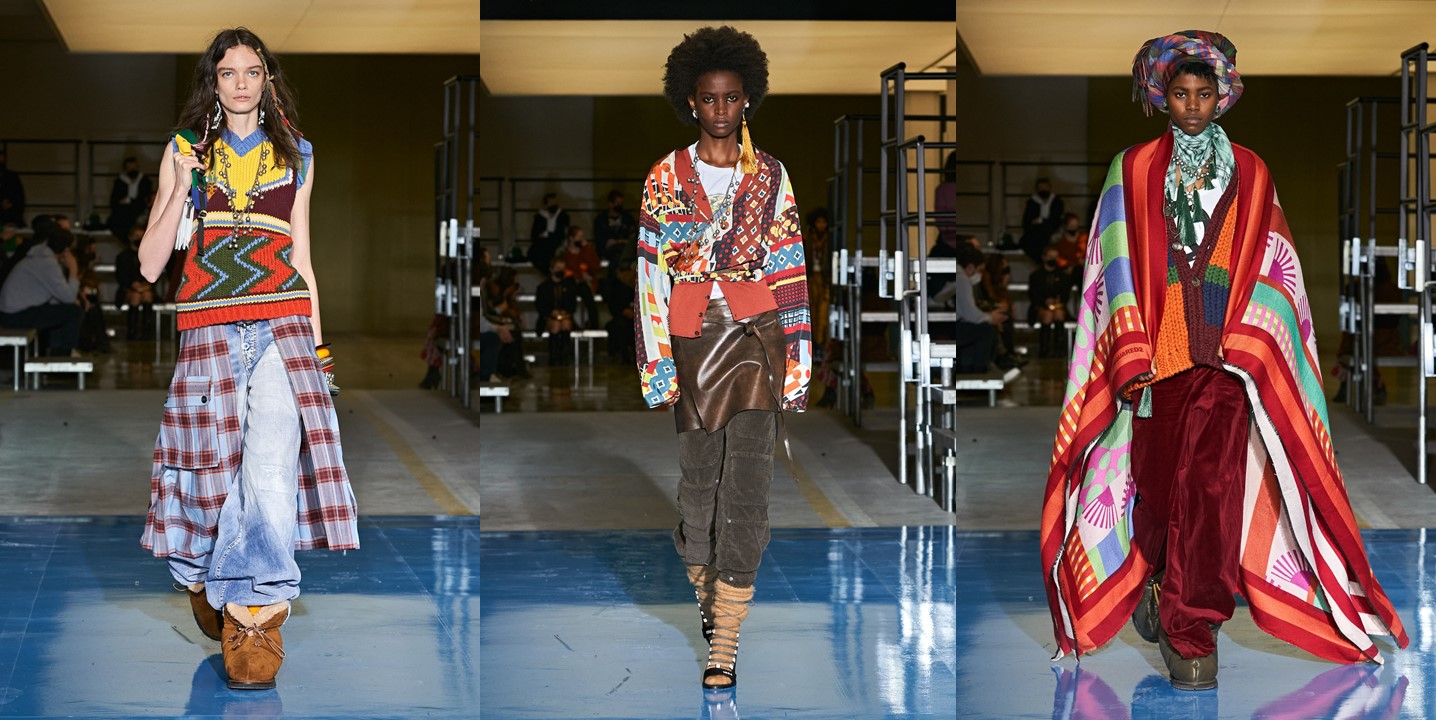
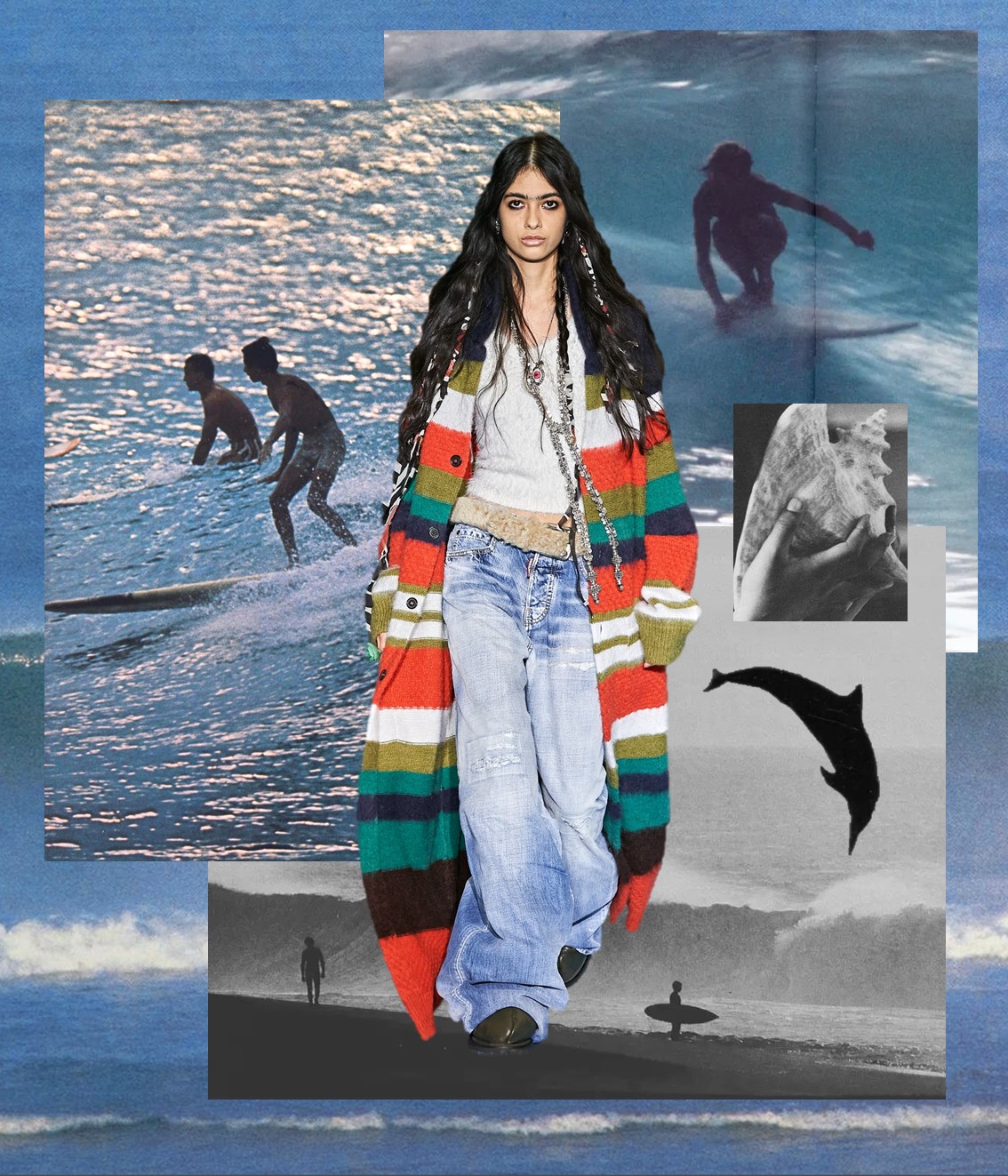
The Dsquared2 spiritual wanderer is a peace and love messenger. “Times are calling for something coming from the heart,Dean and Dan Caten said. “Let’s come together in harmony and unity, protecting freedom. Peace, love and freedom, that’s the only message.” The Catens have perfected the maximalist mashup, with layering elevated to an art form. Describing every look of the autumn-winter 2022 collection would take ages, as their mastery of fashion combination is not only inventive but meticulous. “Every outfit hides a memory, a talisman, an amulet found during a journey,” they said. Charms, dangling bell chains chiming at every step, and healing crystal necklaces were part of a hippy wanderlust wardrobe grounded in great oversized outerwear, puffy, outdoorsy, inventively engineered and hybridized. There’s lots of method in the Catens’ apparent madness. Knitwear was one of the collection’s standouts, chunky, enveloping, mostly proposed in striped folksy patterns. It was worn over flowy short apron dresses layered over tartan kilts or cargo pants, or over ultra-washed, extra-fluid denim pants. Blanket coats and ponchos, fake fur coats, and an array of tops, printed dresses of various lengths and unspecified layering pieces were mixed together with creative abandon. It made for a fun, lively outing, a welcome jolt of energy and optimism.

Collage by Edward Kanarecki.
(New) New Bottega. Bottega Veneta AW22

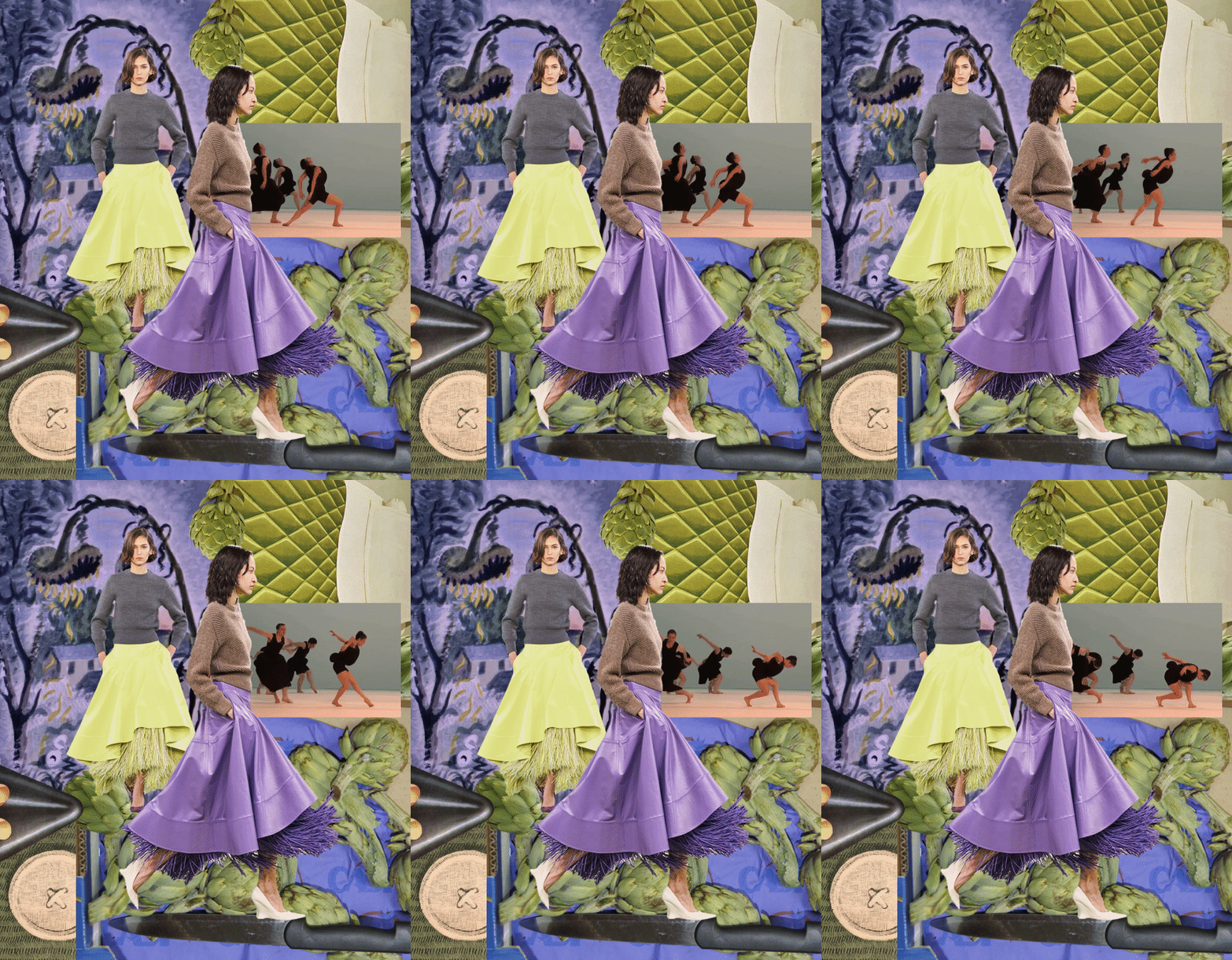
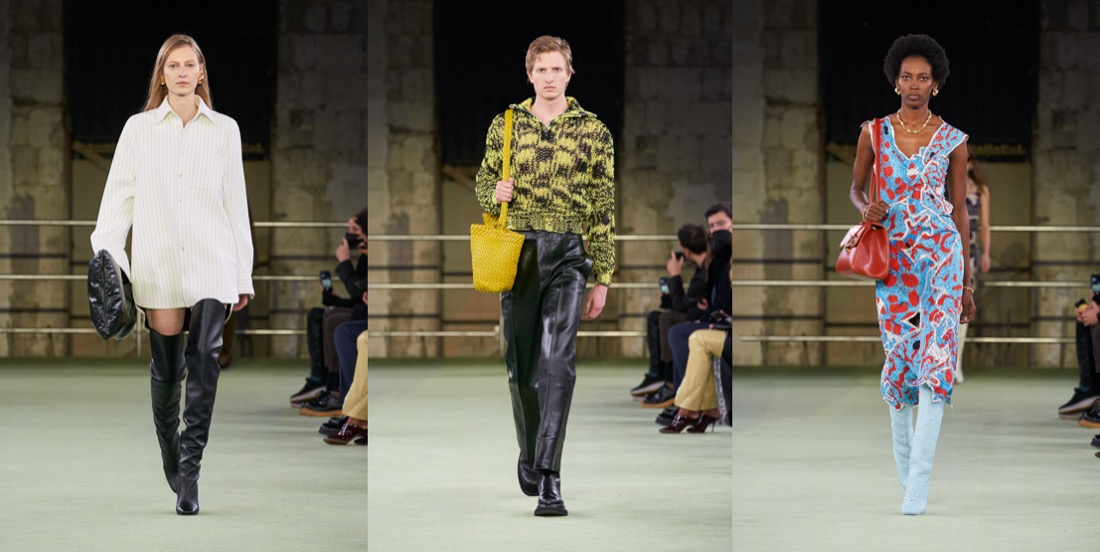
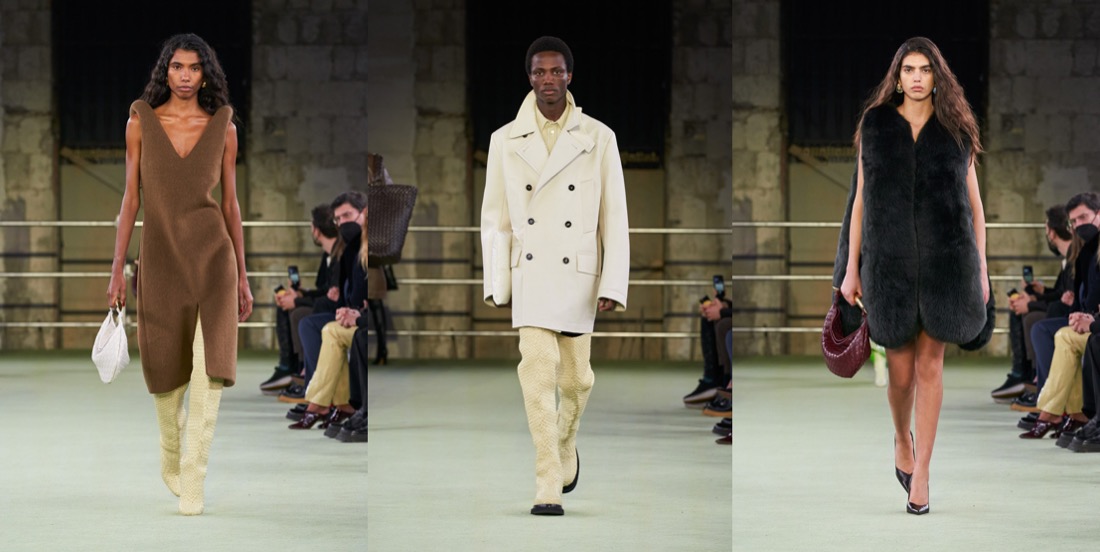
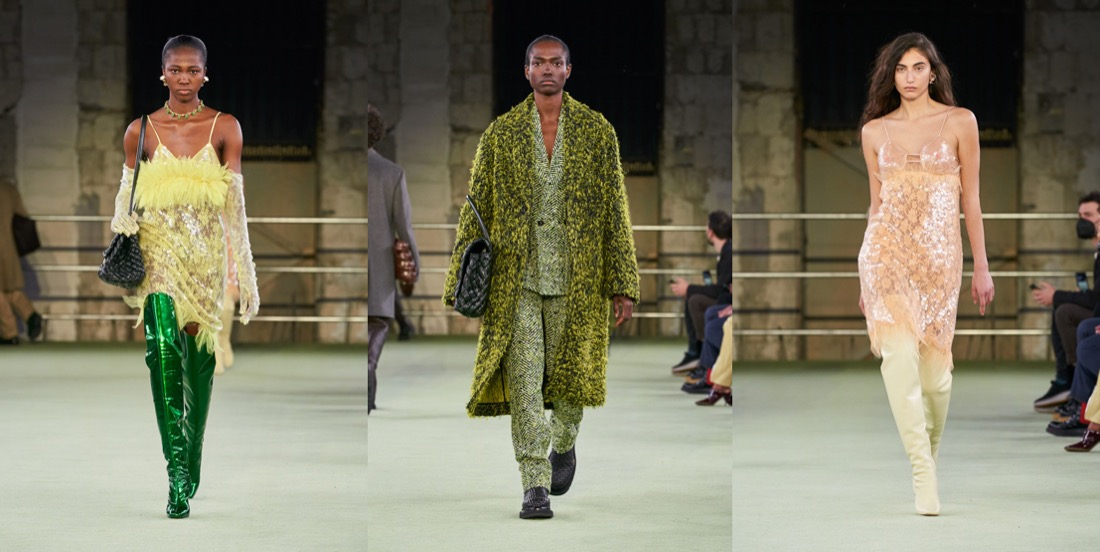
The new new Bottega Veneta, under Matthieu Blazy‘s creative direction, isn’t an abrupt aesthetical leap from Daniel Lee’s days, but definitely feels much sleeker, decluttered and sharper edit-wise. A smooth transition from Lee, who re-invented the Italian brand, to Blazy, who is one of industry’s unsung design heroes (and creatives who worked with the former behind Bottega), resulted in a debut filled with studied, somewhat subversive propositions that are more composed and toned-down than before. Blazy has the kind of track record that makes fashion people stand up straight: he interned at Balenciaga; worked for Raf Simons; what was then called Maison Martin Margiela; Céline under Phoebe Philo; Calvin Klein under Raf Simons. Fashion geeks would have delighted in recognising symbols and techniques tied to his time at those brands, which re-appeared in this collection, especially from Calvin Klein and Bottega Veneta. As a designer whose name hasn’t been formally credited until now, it was as if he was claiming his inventions.

The show opened with a white tank top and blue denim trouser entirely created in leather (!), the latter printed as an optical illusion. The ordinary-to-extraordinary idea of Blazy’s opening look fuelled a collection founded in the weird-ification and glam-ification of classics, from workwear and formal suits to cocktail and even ballroom dress codes. In the tradition of Lee, Blazy continued Bottega Veneta’s focus on the kind of fashion the industry recognises as cool: artsy in form language, intellectually informed, and with the “off” cutting and detailing that make the wrong feel right. On his runway, it had an added chilliness to it, which perhaps heightened the objective. Cases in point were enigmatic details like leather pom poms on cocktail dresses, the square leather closures on a blazer, the leather frill crinoline of a dance skirt, and those abstract crochet dresses. More pragmatic wardrobe proposals included peacoat suits and the men’s knitwear and leather. I wonder what direction will Blazy’s vision go in the next seasons.

Collage by Edward Kanarecki.
Back To Black. Trussardi AW22

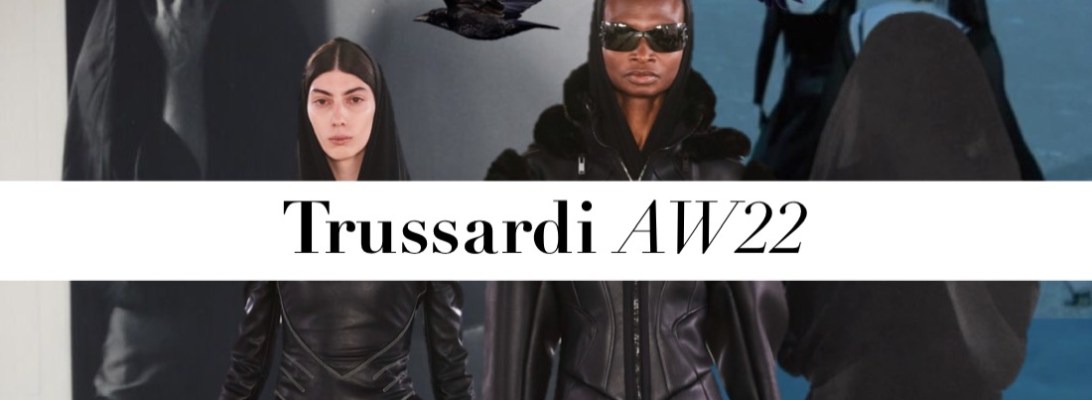
This Milan Fashion Week, it’s renaissance time for a number of Italian brands that in recent years fell into oblivion. First was Diesel, where Glenn Martens has his triumphant runway debut. Then, all eyes were on Trussardi – a brand that until Serhat Isik and Benjamin Huseby‘s take-over had pretty much no identity. Isik and Huseby have made their own Berlin-based brand GmbH a platform for commenting on the moral, philosophical, and ethical quandaries of our era, from race to religion, through fashion. Of course, the designers tried to bring some of that to the sleepy Italian label. The designers began by taking Trussardi’s signatures and making them their own. Rugged, embroidered piumino jackets opened the show, a nod to the anonymous but ubiquitous outerwear of European city life. Then the pair cast their eyes back further, to the complexities of Medieval and Renaissance dress, building armor-like shearlings and stuffing bustles under foxy black minidresses. Each garment in their 40-look lineup had either a curiously compelling texture – especially the holey knits that appeared mid-show – or a grand-scale elegance, like the coat-gown hybrids for models of all genders. The emphasis on a mostly black palette, Isik said post-show, was to reinforce the strength of their silhouettes. The sober ambience of the show (co-incidentally) felt humble and respectful towards the protests in support of Ukraine in the piazza just outside. Models did walk outside the show space within a barricade to give the crowd a glimpse of what was happening within fashion’s elite walls. It was the only direct clash of fashion and reality; the only acknowledgement of what is happening in Eastern Europe officially on the Milan calendar, along with Giorgio Armani’s silent show and social media posts published by an outrageously small number of Italian designers.

Collage by Edward Kanarecki.