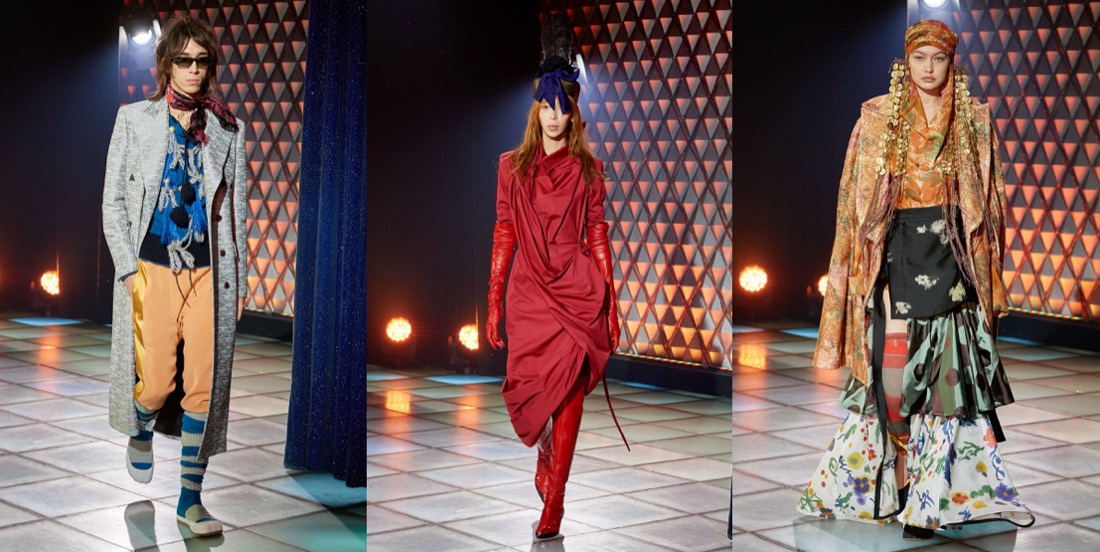
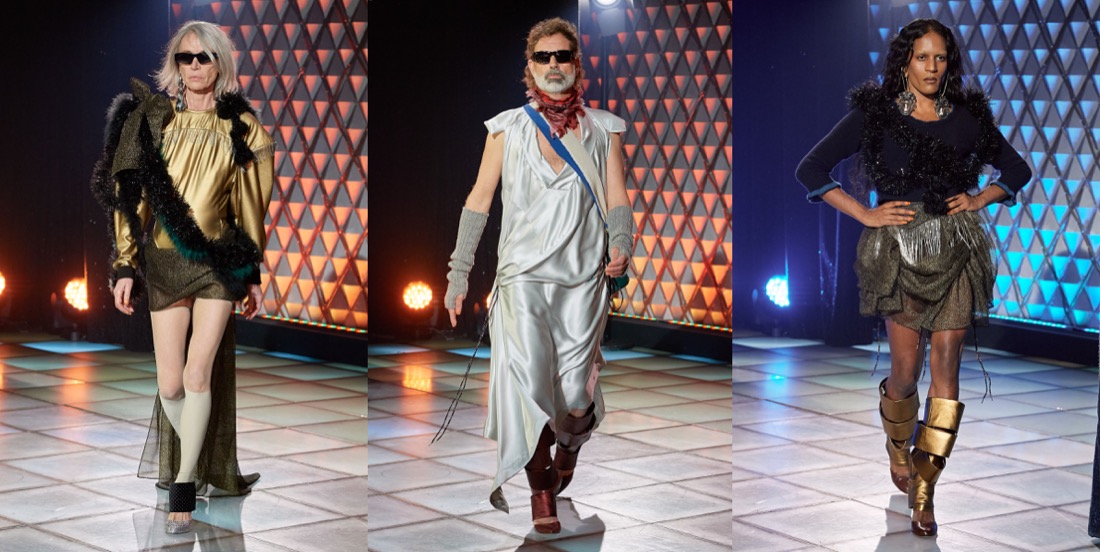
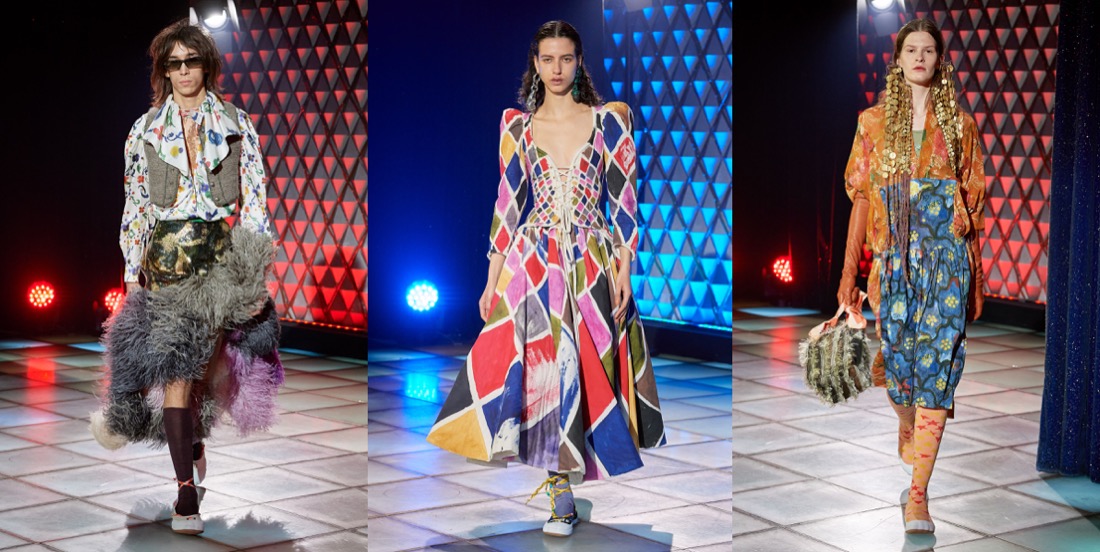
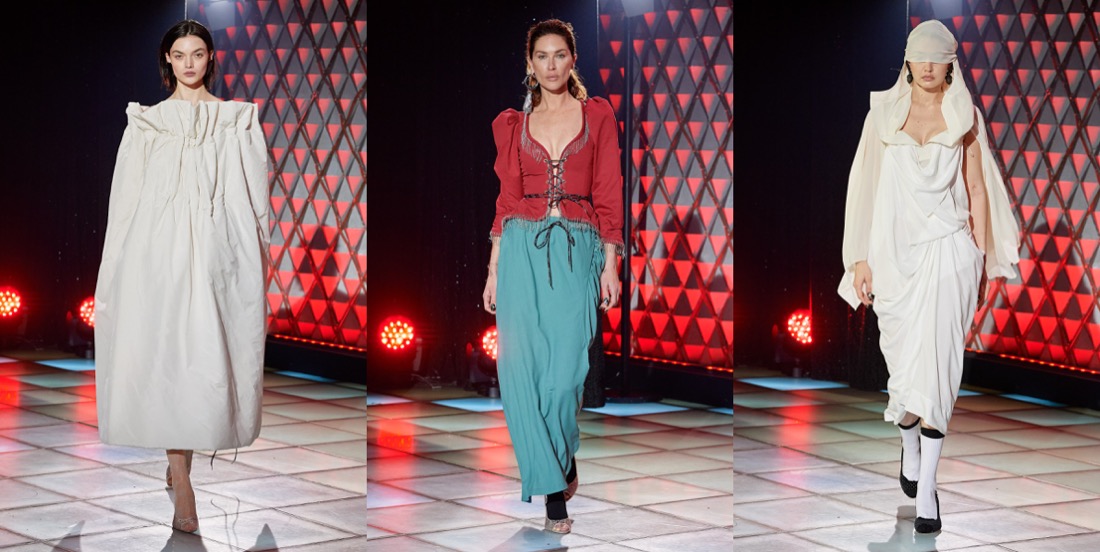
There are a lot of dramatic moments this Paris Fashion Week. Some directly refer to the atrocities going on in our world (Balenciaga), some deliver Old Hollywood glamour through an alien lens (Rick Owens). Andreas Kronthaler isn’t keeping it quiet either. Vivienne Westwood’s life partner and creative right hand delivered a bracingly engaging collection that was loaded with bold character. For this entertaining line-up, the designer said in his show notes that he’d wanted to pay tribute to the world of theater, plus express lightness. He also had worked “to find the muse in me.” One distinctly Andreas touch was the dandy-ish gentleman in the severe checked loden-cut coat – so too were the handsome boys in silky ruched dresses. Caped hoodies and ruche-backed tracksuits provoked the jotting “medieval athleisure” (the clothes alluded to various historical periods, creating a sort of anachronic, wearable puzzle). Crystal-fringed, 1970s-style silver sports shorts, corseted strumpet dress and track pants decorated in a rough-edged harlequin diamond pattern looked cool right away. Usually, Kronthaler’s collections feel as if somebody visited the attic, opened a dusty chest standing there, and played dress-up with all the treasures that were inside. This season it’s no different, but the amusing theatre theme makes it feel less haphazard and more convincing – especially the vintage-y vibe factor of these runway „costumes”. Westwood herself was hauled onstage as the curtain drew back and Kronthaler’s cast took in the lengthy applause. Flowers were thrown and bouquets exchanged. Then, Westwood did some hauling of her own, pulling granddaughter Cora Corré out of the crowd. A lovely family moment.
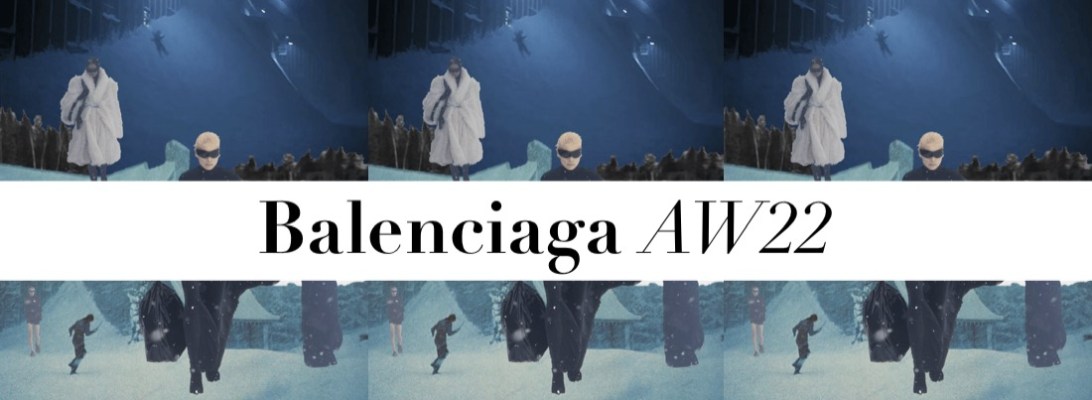
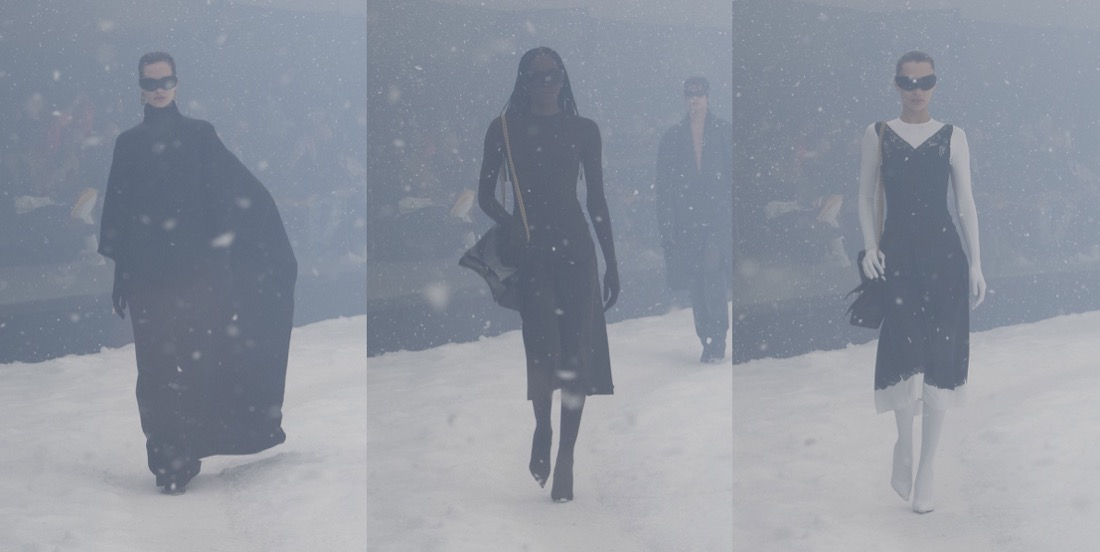
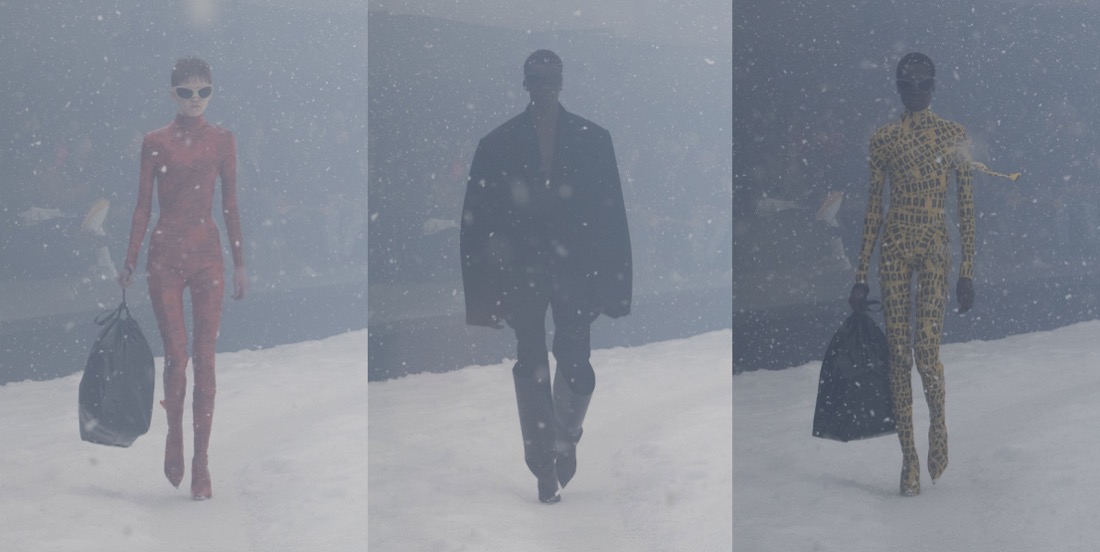
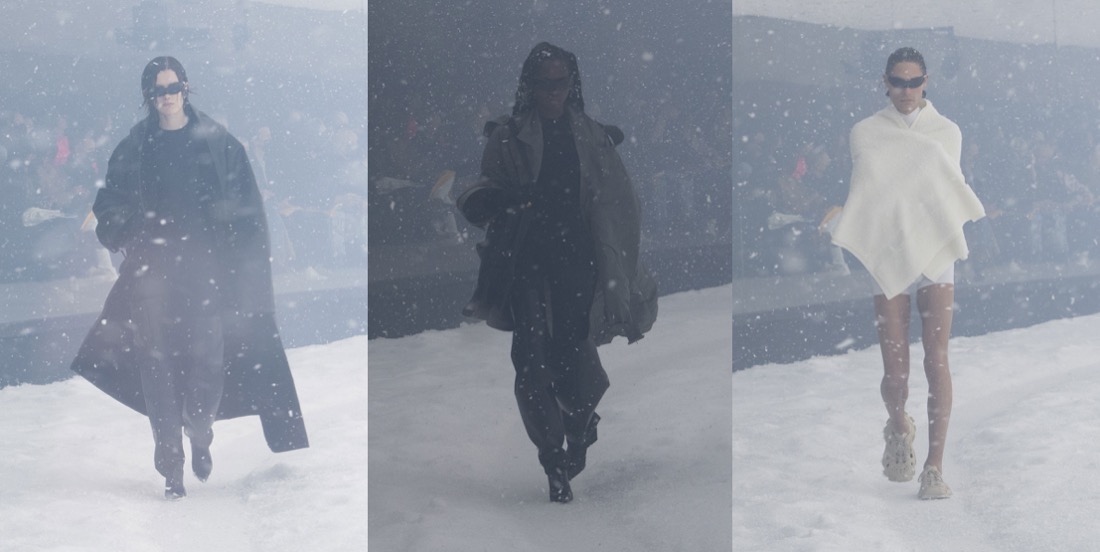
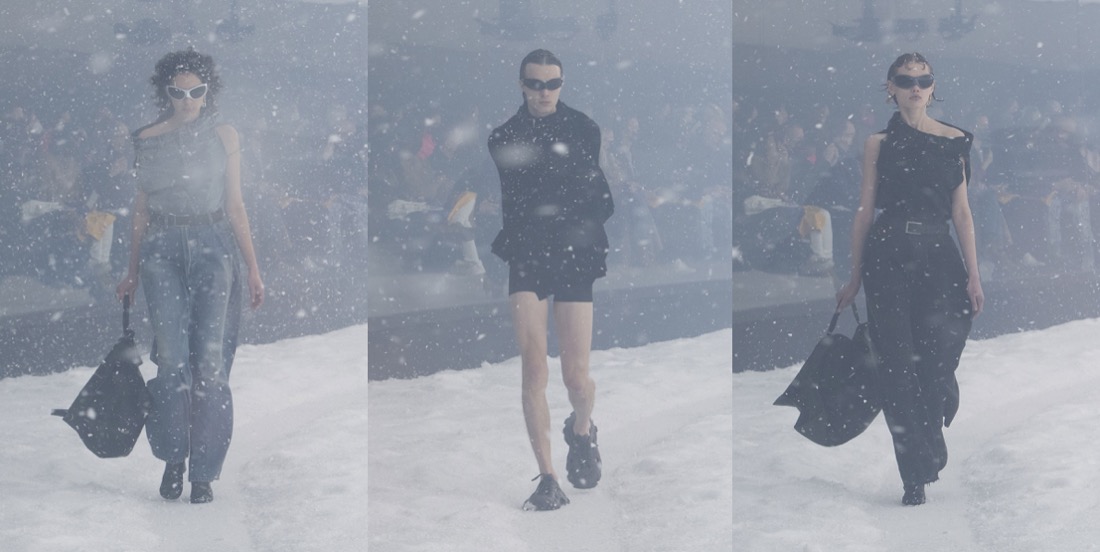
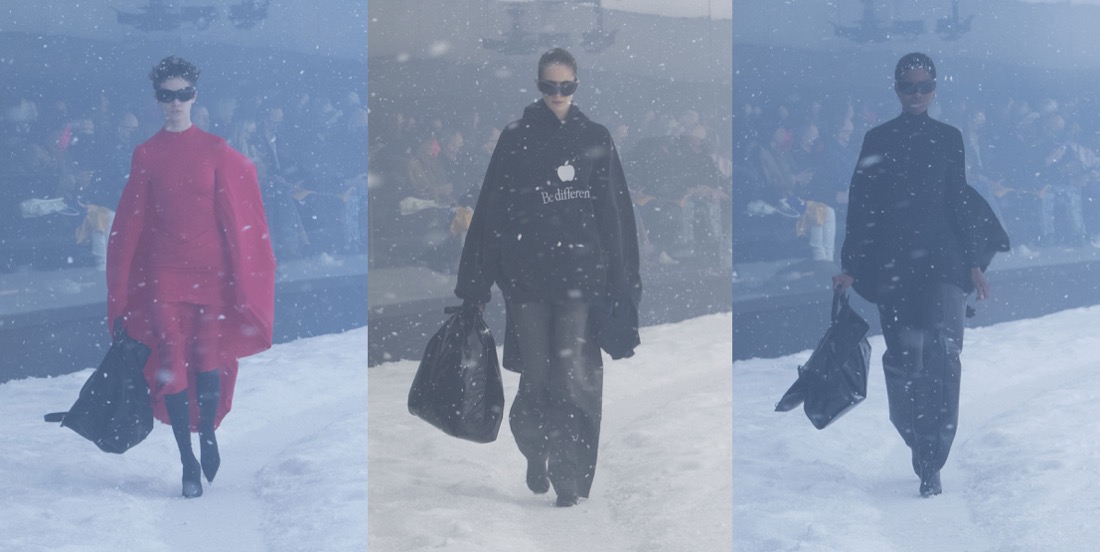
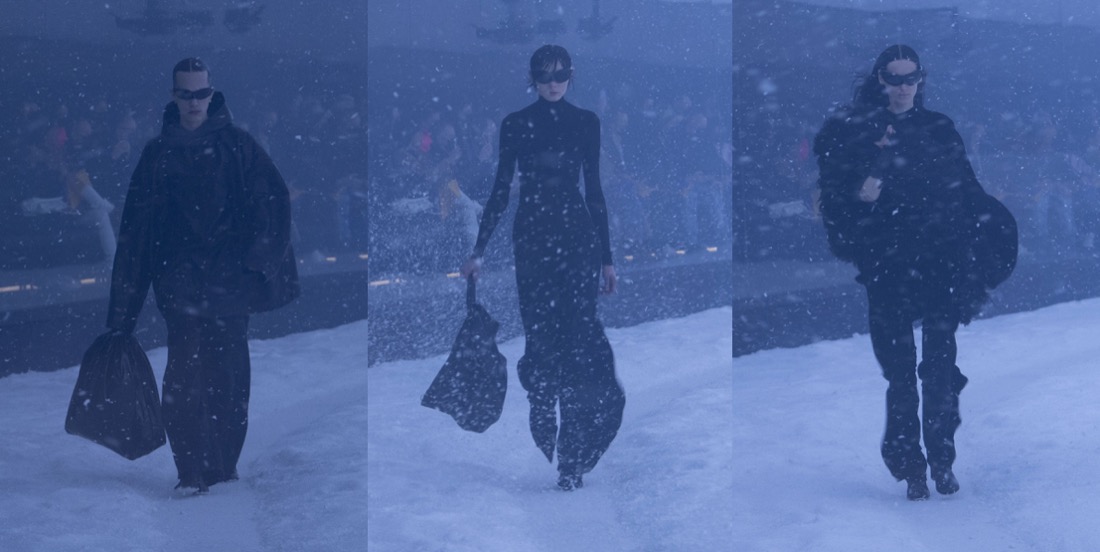
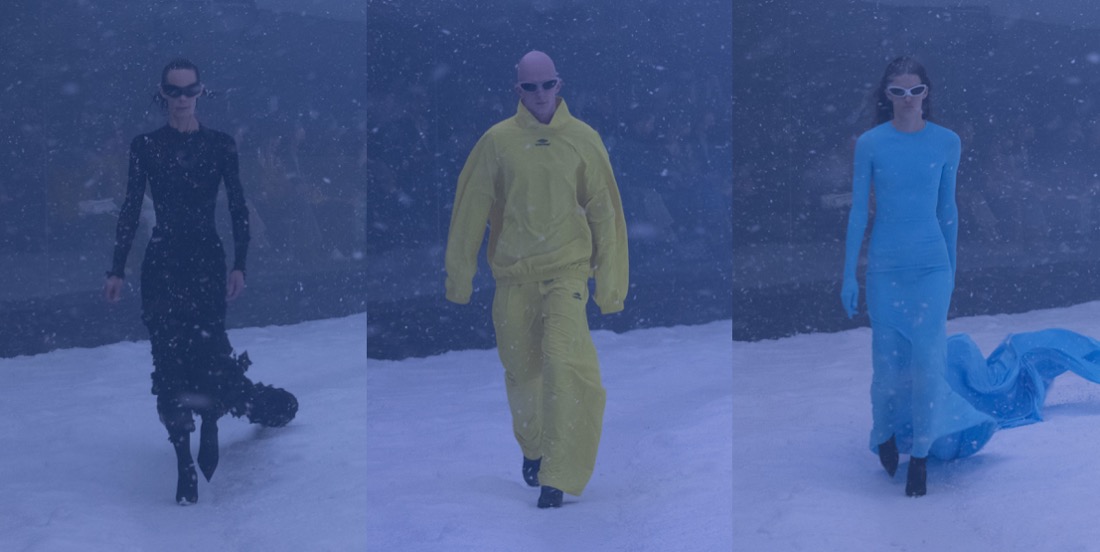
In 2022, Demna is the one and only designer who is able to connect and interwine design with the tough reality, creating fashion that is meaningful, emotional and truly, truly capturing the zeitgeist. Before sharp lights illuminated the giant snow-filled arena erected within Le Bourget where Balenciaga’s most epic and emotional show ever played out, Demna (who no longer uses his surname in a professional capacity) recited a poem in Ukrainian over the speakers. “It’s a poem to Ukraine about being strong, about focusing on love, and that its sons will protect it. That’s not a good translation, but the people I wanted to send this message to will understand it,” he said backstage after the show. On every seat, he had placed a T-shirt dyed in the blue and yellow colours of the Ukrainian flag, and a written statement explaining how he had decided to go on with the show because he didn’t want to give in “to the evil that has already hurt me so much”. Thirty years ago, when he was just 10 years old, Demna and his family fled their native Abkhazia in Georgia, after local separatists with ties to Russia claimed the land and killed more than 5,000 ethnic Georgians. Originally, Demna meant for his giant, manmade arctic set to reflect the ecological decline we’re experiencing in a time of climate change. “It was a comment on what’s going on in the world. Maybe in 50 years, people will have to go to these places to have an artificial experience of a certain weather condition that we take for granted,” he said. “But it turned into something else, which often happens with my shows, somehow.” Watching his largely black-clad cast fight their way through a snowstorm in the mountain-like territory he had built was terrifyingly apropos and – with the addition of a traditional Slavonic piano soundtrack – completely heart-wrenching. Some were dressed in their finest eveningwear, others in towels, some carrying their shoes on their backs. There’s a very blurry line between fetishizing a humanitarian tragedy and sending out a heart-felt message. While other designers would not be able to tackle that topic, in case of Demna, everything felt utterly right at this turbulent moment in contemporary history.
Next to the more haunting imagery that unfolded on his runway – those half-naked people fighting their way through the snow – garments had an air of disposability about them, the kind of make-do and mend we associate with times of turbulence. They were rooted in his own memories: handbags looked like fabric sacks tied together with drawstrings. Floral dresses evoked the repurposing of old upholstery. As they wafted in the harsh wind, the trains of evening gowns appeared shredded as if they had been beaten by the weather. Super light trench coats were constructed so they could be compressed into their own pockets. A bodysuit was created entirely from yellow tape wrapped around the body (in the audience, Kim Kardashian wore an identical piece she said had taken 30 minutes to tape up in the morning). “I used to do that as a little Georgian boy playing with curtains and tape, and being punished for it,” Demna smiled. “It’s a revenge for that; a payback moment. But it also made everything less madame, less bourgeois, less upper-class,” he said, referring to a fur coat in trompe l’oeil embroidery wrapped in tape. “It’s no longer the image of a rich lady walking in an expensive area. It breaks that. I like that an element like that can break a silhouette and re-contextualise it.”
“It’s only innocent people who die in war. I’ve experienced that and actually blocked it out for 30 years, until I started reading the news last week. It brought all this pain back, like anyone who has gone through that,” Demna declared in the show’s press release. “The message is love, always. And fashion has to assume that, at least in terms of taking a position on it.” The show was an example of how important context is to a staging like this in the age of social media; how important it was to know Demna’s own story to grasp the authenticity behind the imagery he presented. It was an epic, terrifying, beautiful, and heartbreaking experience in a season when the contrasts between fashion and its surrounding worlds couldn’t have been greater. As Demna said, “To me, fashion somehow doesn’t matter right now.”
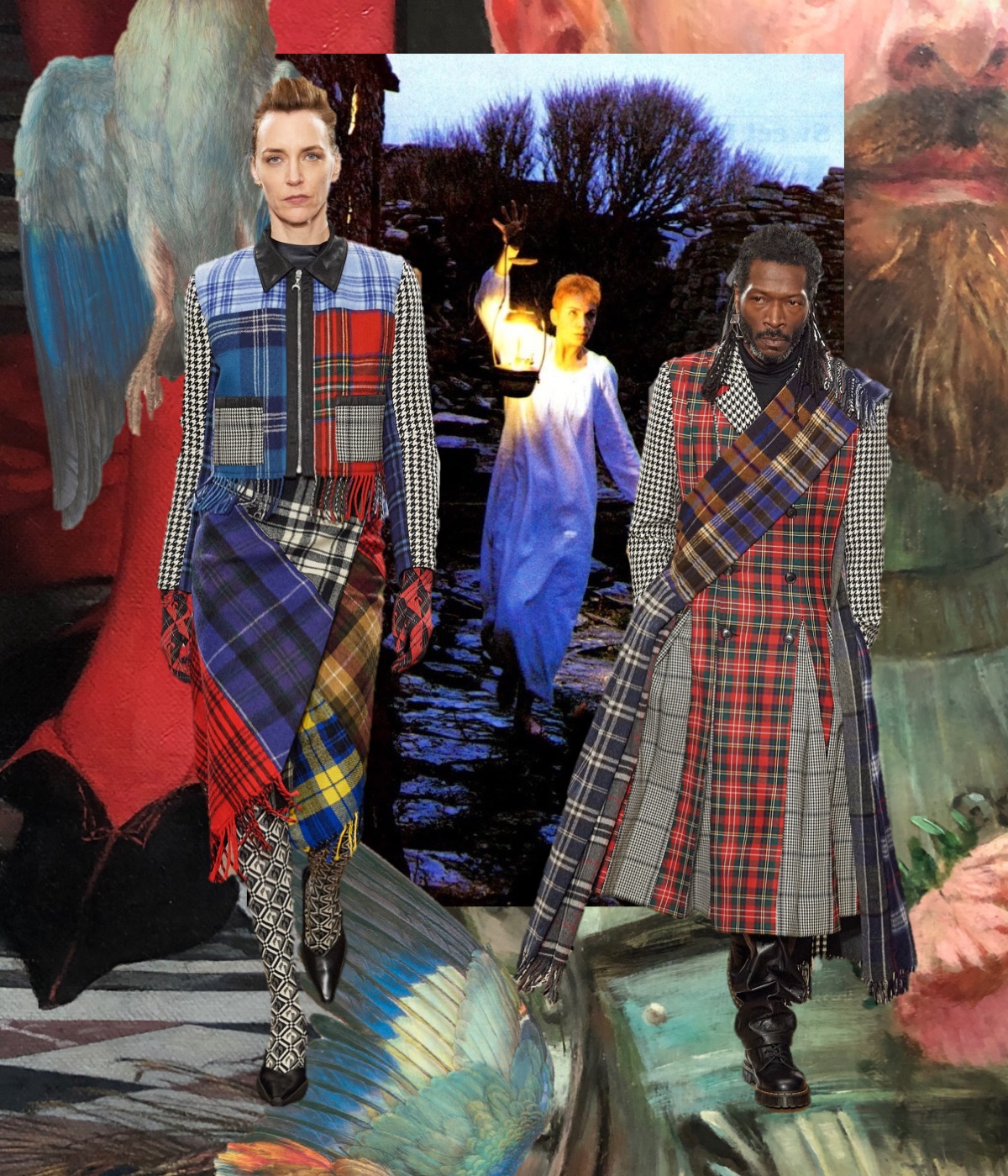
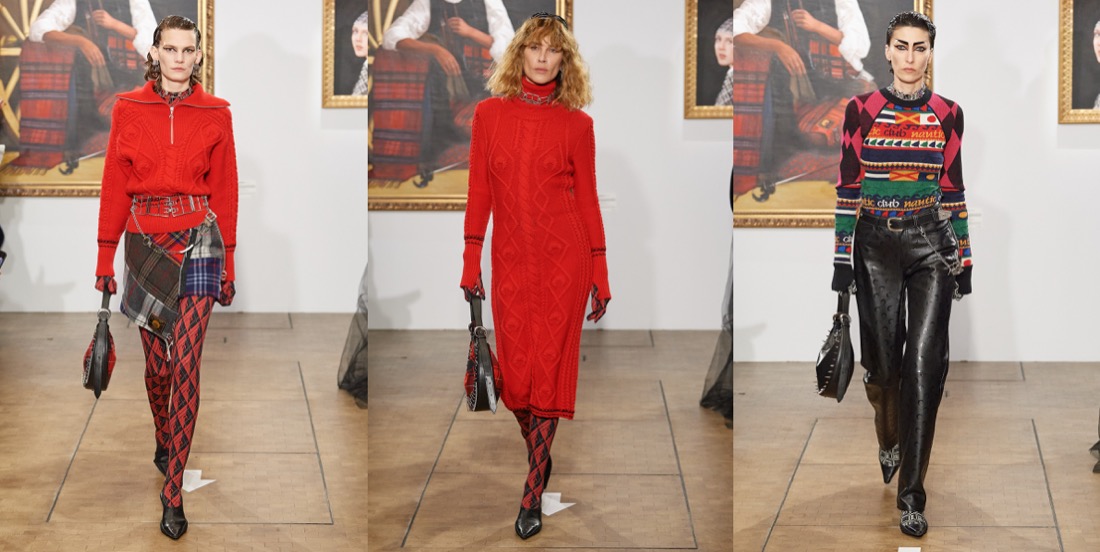
Marine Serre‘s dynamic autumn-winter 2022 collection made me realise she would do great at rejuvenating the Vivienne Westwood brand. Why? First, her devotion to upcycling, which has inspired the entire industry, goes in line with Westwood’s sustainability ethos. Second, the Parisian designer has that rough, defiant style that is real and keeps evolving with every season. And third: the way Serre used tartan checks (all from upcycled scarves and deadstock materials!) this season makes me think of some of the greatest 1990s collections coming from Vivienne.
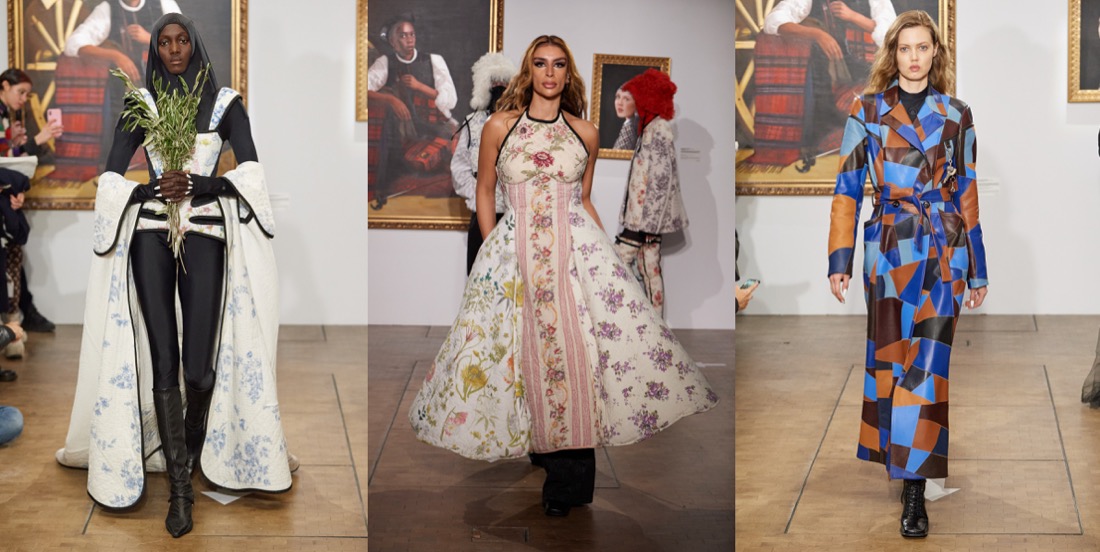
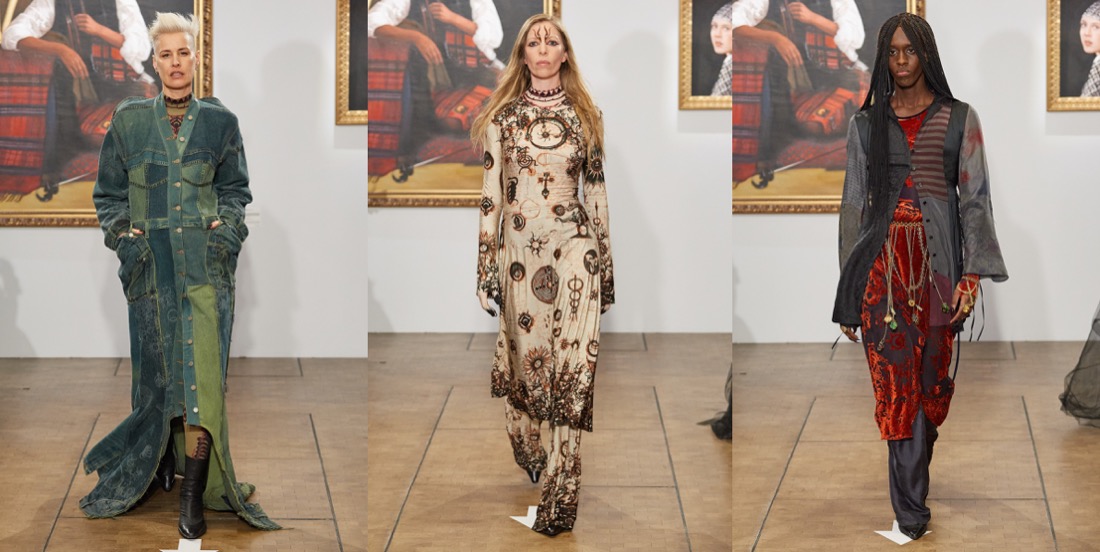
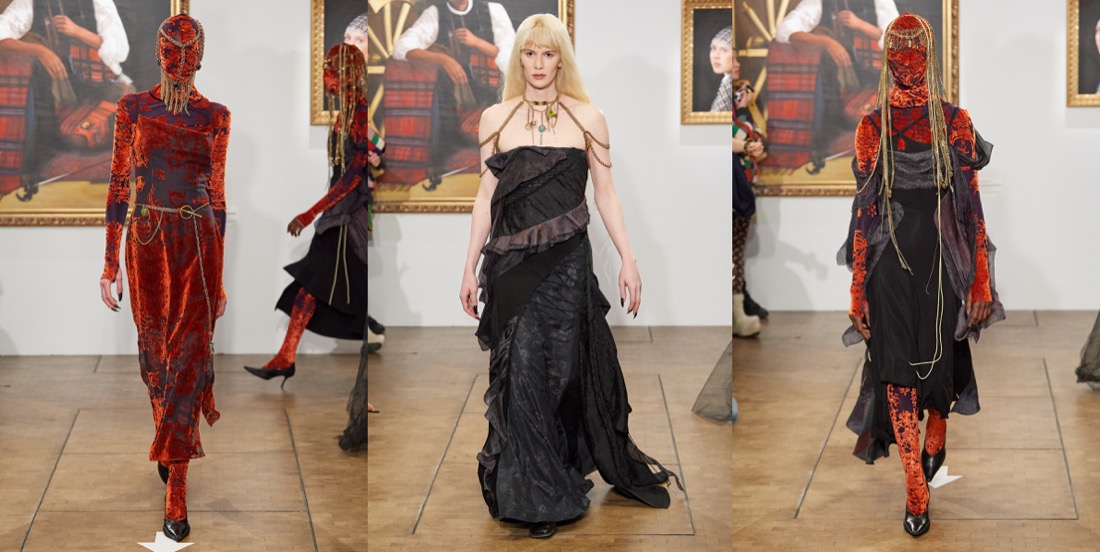
Now back to Marine’s latest line-up. The serenity of the Marine Serre show photographs completely belie the mayhem of what was happening two floors below. Suffice it to say that young people in Paris will scramble and wait, packed uncomfortably together, to witness whatever Serre will do. It felt almost like a throwback to the hysteria of the underground French fashion scene that swirled around the likes of Jean-Paul Gaultier, Martin Margiela and Xuly.Bët two decades ago. If Serre is a female inheritor of what male designers did to deconstruct and democratize Paris fashion once upon a time, the big difference is how she delves far deeper into cultural and environmental ethics. Challenging the form of the fashion show is part of that. “What was important was to open the boundaries,” she said. “To show a different way to do a show. It was important to me that it was in a museum, to have something that shows the collective imagination. And to have something where people weren’t sure if there were going to be people walking, or where to sit or look.” The “museum” was a gallery of re-mastered old masters on the top floor. Each of them variously redirected, decolonized and replaced the original iconography to link up with Serre’s work. The first looks of the show were series of black and white lozenge and crescent-moon patterned recycled wool jacquard tailoring – they looked chic and polished. More themes came through: the above mentioned tartan scarves patchworked into tweed coats, collaged upcycled knits. Toile de Jouy quilted bed clothes and camouflage prints were turned into neatly-finished, attractive clothing. Serre is clearly focused on proving there’s nothing rough-and-ready about the second life she’s giving to pieces of defunct garments or deadstock. She’s intent on sharing how she does this. The need for transparency and education are other parts of her impressive worldview and drive to accelerate change in her generation. On the first floor of the building she had installed an atelier with members of her teams of sorters, cutters and sewers at work, demonstrating how her pieces are made. “I feel I have a responsibility to give access to this savoir faire,” she said, preternaturally calm in the eye of the swirling storm of guests. All weekend, she was planning to open the doors of the installations and exhibition to the public. “For free, you know?”
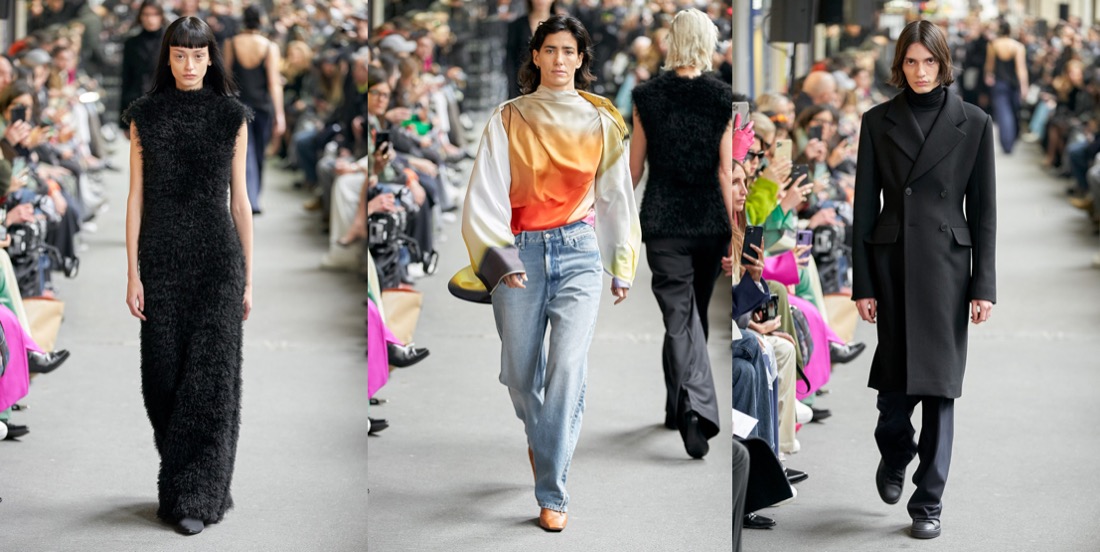
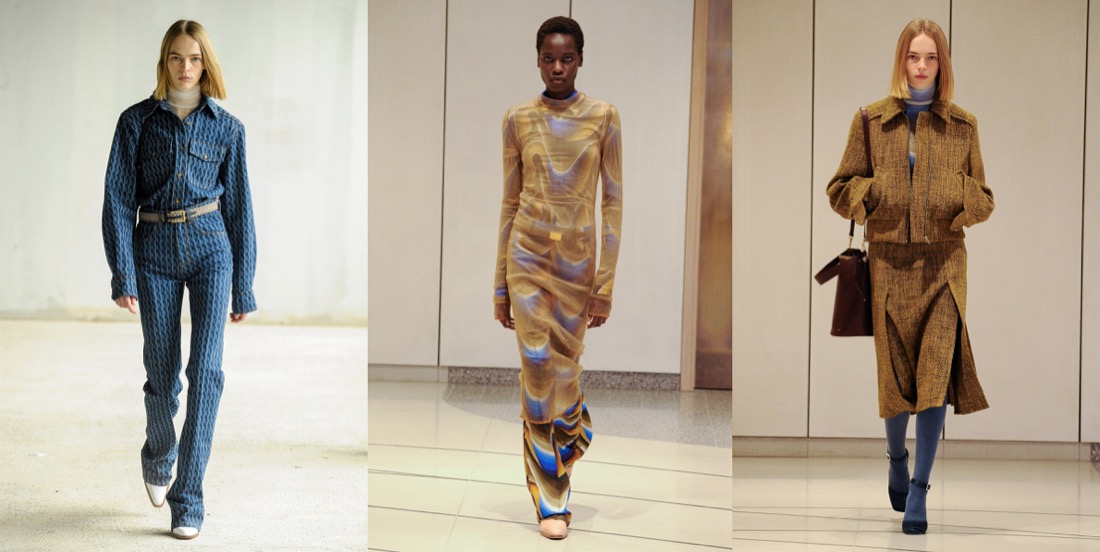
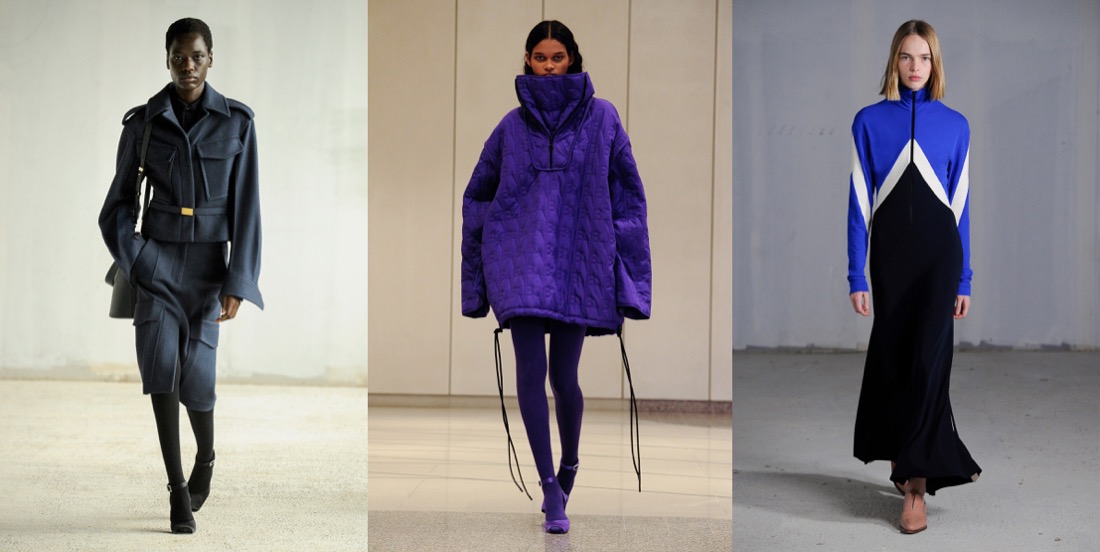
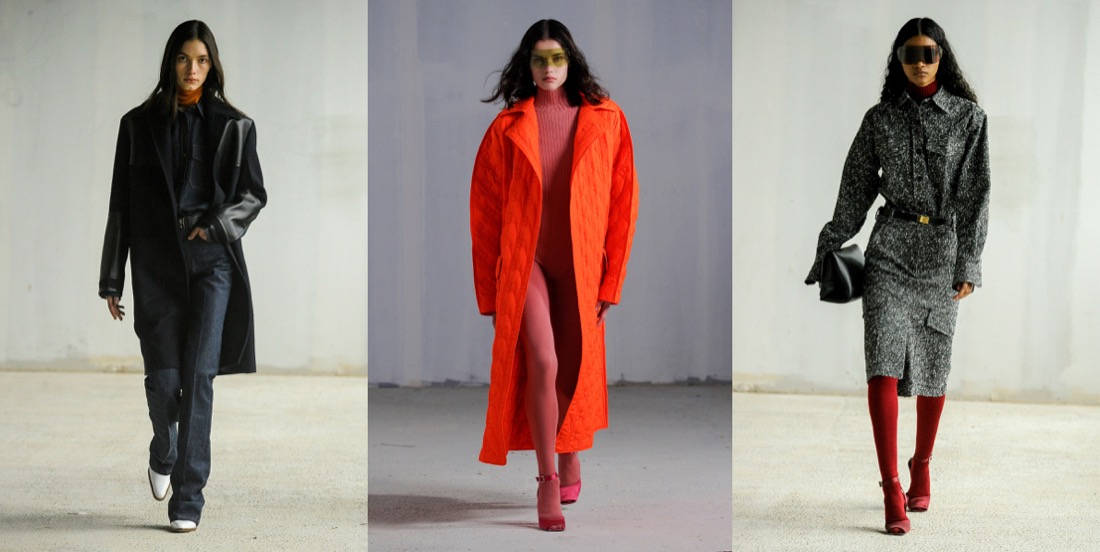
If you’re looking for brilliant, youthful tailoring with a raw twist in Paris, Gauchere is the brand you need. In less than 10 years, Marie-Christine Statz has developed a loyal following for her chic, minimalist aesthetic. Building on that, for autumn-winter 2022 the designer stuck to a restrained, mostly monochrome palette of black, deep blue, burgundy, anthracite and taupe to further explore what the brand stands for: sharp silhouettes and materials, plus a savvy dose of texture that’s clean, unfussy and interesting. Her opening look, for example, was a halter top that can be worn hooked over a shoulder or left long, an idea that returned on a faux minimalist, layered dress. Oversized suiting with slightly sloped shoulders nodded to budding interest in the brand among men, and was shown paired with bandeaux and fluid, high-waisted trousers. Three-dimensional fabrics brought the texture, for example fuzzy tech yarns. Patent leather gave a jean-style jacket gloss. Denim was chosen for its new-gen, water-wise washes. Sculptural evening dresses – like a trio of black gowns or fully sequined minidress in black or white – made the case for less is more, today and many moons from now. But her own account, Statz “doesn’t do crazy.” In times like these, that’s a considerable advantage, and one that her growing base is grateful to count on.
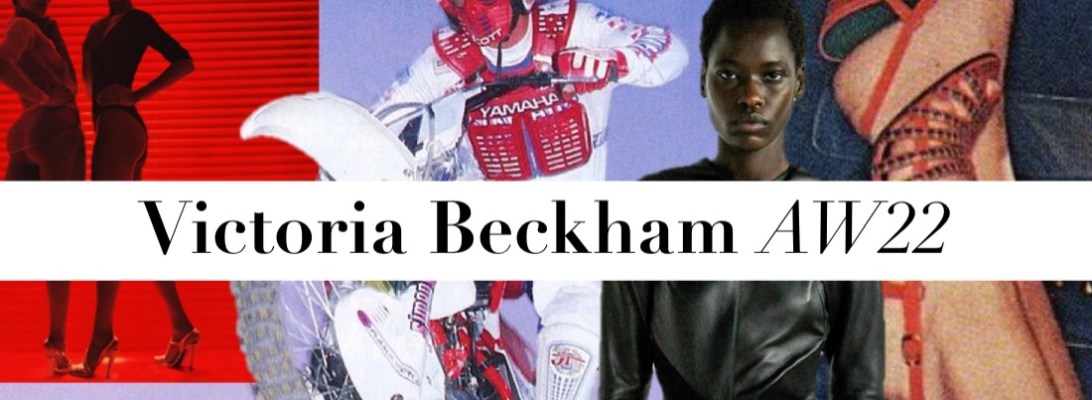
As a designer-and-style-icon package solution, Victoria Beckham and her brand embody a decidedly contemporary aspect of consumer fashion: styling. Her design propositions don’t simply make their case on a runway, but when she is actually photographed by the paparazzi wearing them herself, showcasing how she would personally style her collection. It’s a way of proposing product entirely in tune with a social media age focused on the dress sense of the individual. To Beckham, playing with the functions of clothes is second nature, and she can’t resist getting in there, wrapping and tying and layering whatever look is standing in front of her. She demonstrated that on house models in her Paris showroom (a rather strange decision – Beckham’s brand feels 100% London, while in Paris it gets lost in the crowd) for her new collection, which exemplified the idea of clothes made to be styled. While it had all the beautifully cut coats and blouses, the collection’s cleverness was to be found in garments purpose-made for layering or wrapping. In the case of a finely knitted onesie, for instance, Beckham said she would never wear it on its own. “I would wear it with a dress over the top. I would wear it with a skirt over the top,” she explained. “We’ve been doing polo-neck bodies for a while, and they’re great layering pieces. They really can finish off an outfit and make it very considered. With this knitted one, you’d absolutely put a dress over the top.” Body-conscious and sensual, it created a silhouette at once sexy and fully covered from head to toe, an idea reflected in sequined dresses layered with skin-tight transparent organza dresses on top for a filtrage effect that also helped to define the shape Beckham wanted to achieve. “I always love sequins, but it’s about finding a new, fresh way of doing them by either putting the organza or knitwear over the top. It’s a refined superhero sequin,” she said. The season’s biggest addition is a new bag line. “We had bags before, but that came from working on the catwalk collection and wanting to finish off a silhouette. This time we’re much more strategic about it, making sure that everything is functional and every detail is taken care of,” the designer summed up. Her proposal ranged from bucket bags to disc-shaped pouches and more classic handbags, some emblazoned with the VB monogram she launched as part of her last pre-collection. A clutch bag was adorned with the golden chain of a men’s wristwatch as a nod to a personal memory. “When I got my OBE, my husband bought me a watch, and I love masculine watches, and I loved the bracelet detail,” she said, echoing the idea of injecting a product’s design with the styling properties of accessories.

















 Design & Culture by Ed