We Have Art Not To Die Of The Truth. Marc Jacobs AW22

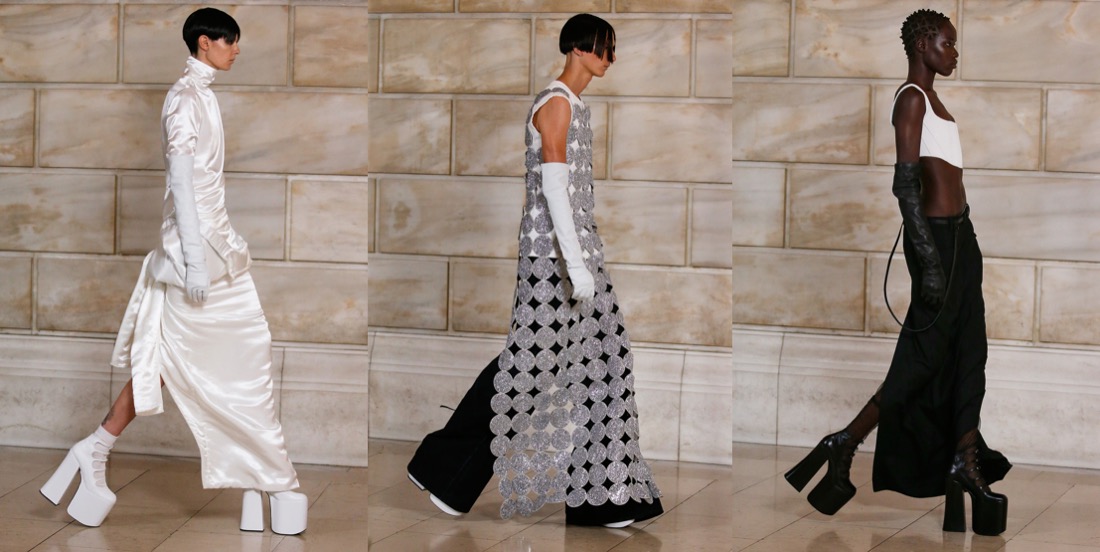
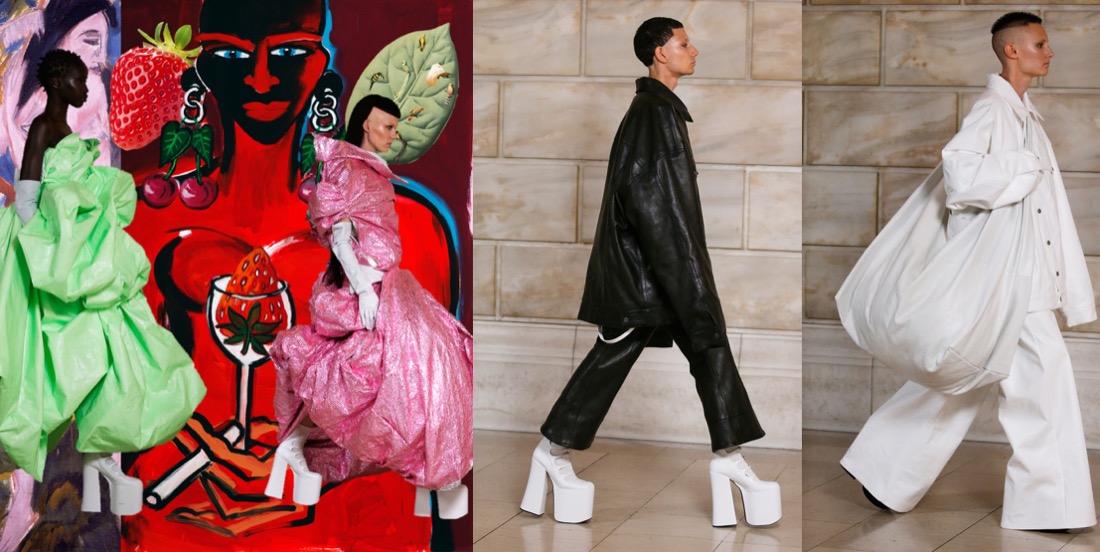
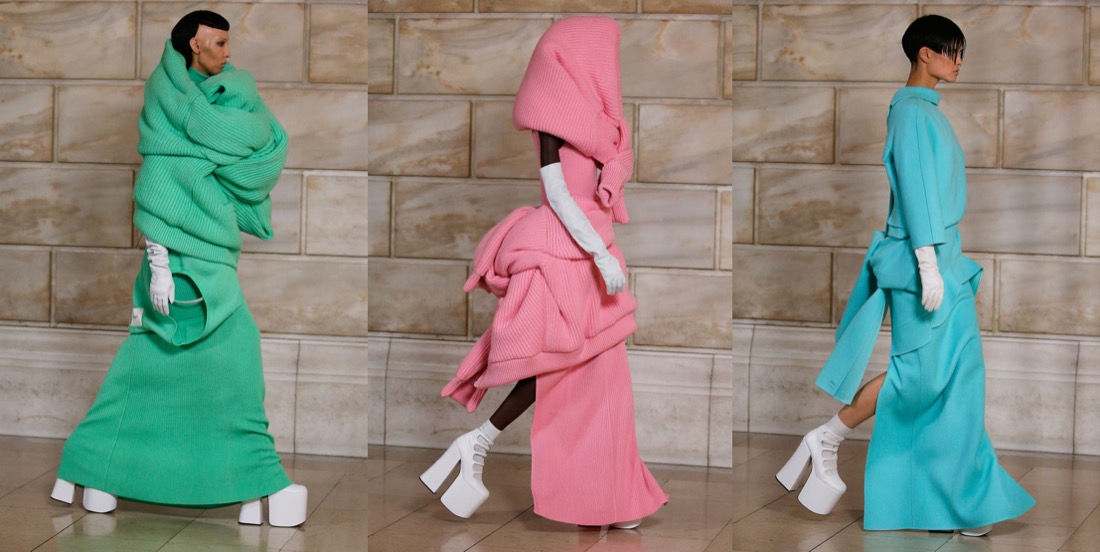
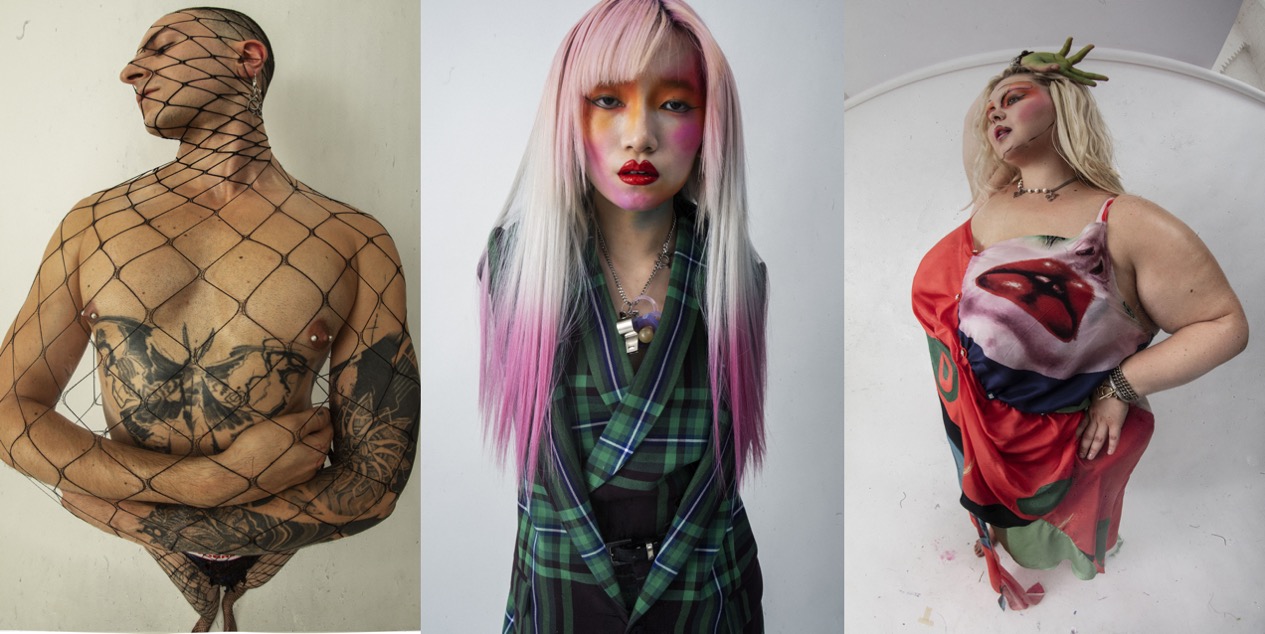
We have art not to die of the truth.Marc Jacobs quoted Friedrich Nietzsche in his show notes. Confronted with a rogue Supreme Court determined to strip women of their reproductive rights, with Clarence Thomas threatening to attack gay marriage next and even to make contraception illegal, fury may give way to despair. But that’s not where Jacobs is at. “Creativity is essential to living,” his statement read. A year ago, most of us were looking ahead to a brighter 2022. Last June, Jacobs channeled that energy into a dynamic collection. That brighter future hasn’t really materialized, as we’re all too aware. Covid keeps coming back in successive waves, Russia continues its atrocious invasion in Ukraine, and in America the will of the majority has been hijacked by the minority. Nevertheless, Jacobs persists. Supersizing jeans and jean jackets, or treating denim to surface treatments that made the all-American classic look more like French couture. Adding so much stuffing to ribbed knit sweaters they could double as pillows. Toying with Gilded Age bustles – evoking them by wrapping jackets around the waist. And cutting ball gowns of exuberant volume in unexpected, even strange fabrics. His materials list included, but wasn’t limited to, foil, glass, paper, plaster, plastic, rubber, and vinyl. Interspersed with that excess, however, there was spareness. Jacobs lowered the waistlines of column skirts and cropped flares to bumster levels and accessorized them with barely-there bejeweled bikinis or the sparest of bustier tops. A pair of suited looks in black weren’t quite minimal, but they came close, a reminder of his talents as a tailor. As for the three matching looks at the beginning of the show in gray, hospital green, and lavender – were they Jacobs’s version of scrubs? Given the recent moves by the Supreme Court, it was hard to think otherwise. Adding to the dystopian vibe: the models’ hairdos, which were “shaved” on the sides with bumper bangs in a style that called to mind Sean Young’s Blade Runner replicant. And yet. All this was paraded out in the Public Library with opera gloves and sky-high white or black mary jane platforms. Dressed up in spite of the circumstances. Or maybe because of them? Definitely because of them. Marc Jacobs is a fighter, whose medium happens to be fashion. Knock-out F-A-S-H-I-O-N.

NET-A-PORTER Limited

Healing. Charles Jeffrey Loverboy SS21

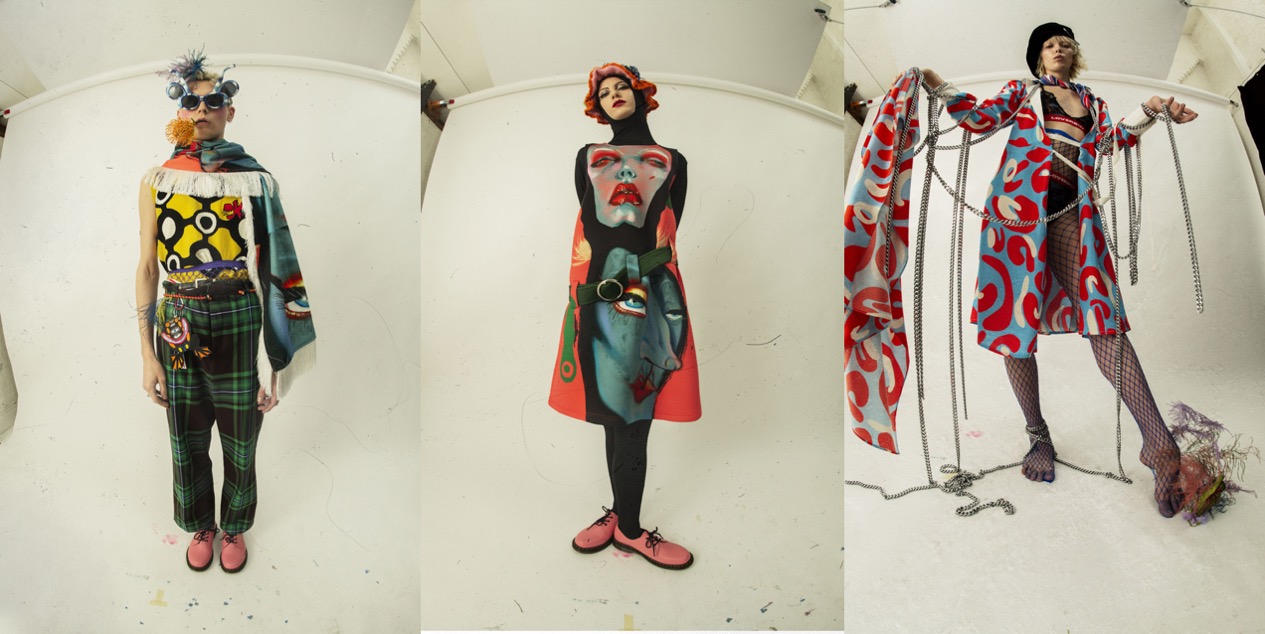
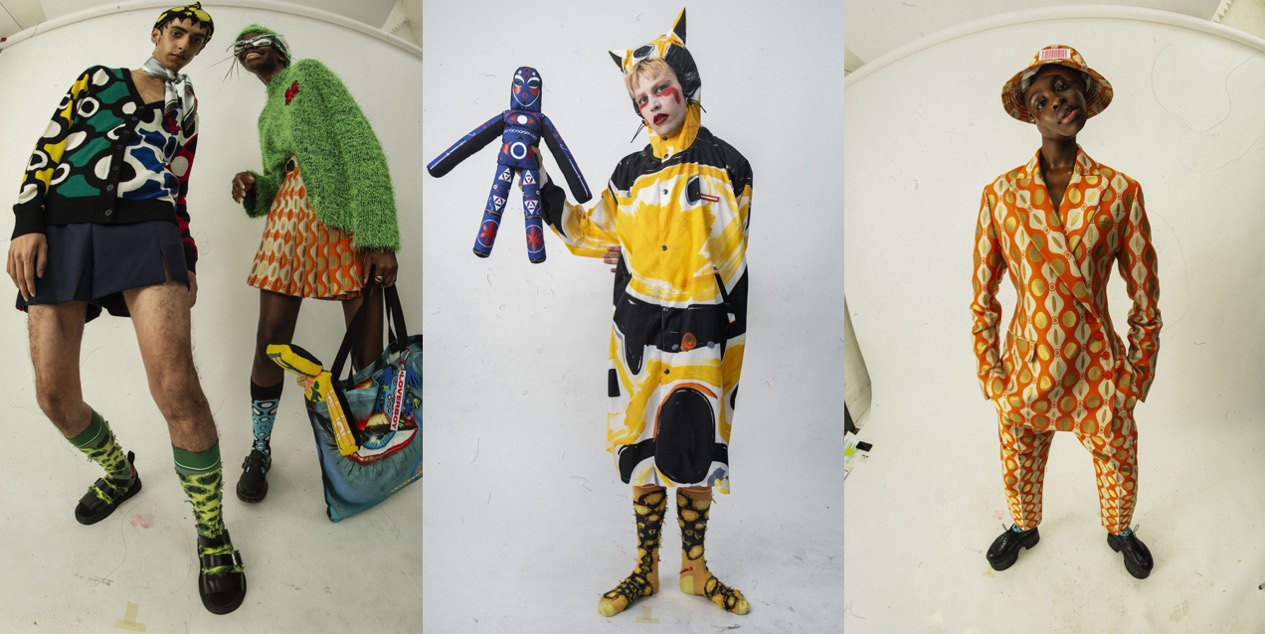
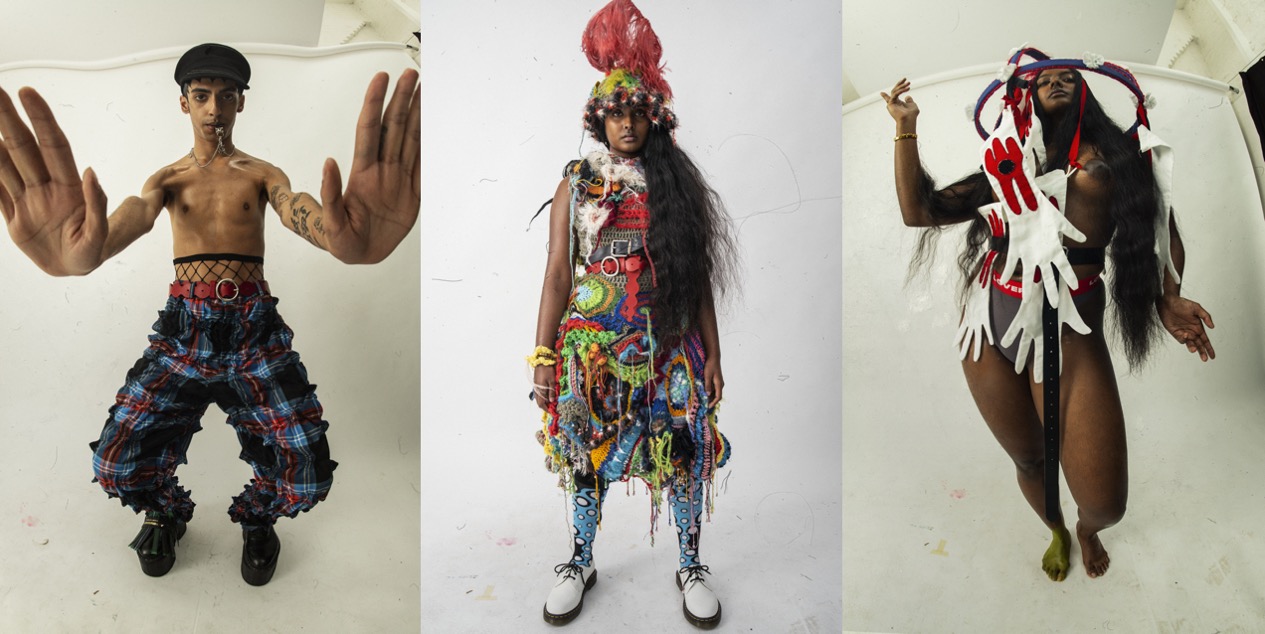
Sometimes all we really want is fantasy, care-free-ness and uplifting escapism. Charles Jeffrey Loverboy‘s spring-summer 2021 collection ticks all of the boxes, plus one more: it’s wearable. Charles Jeffrey’s line-up is a kind of frieze of young fashion’s crazy-joyful fight against fear. Here they are, the expansive Loverboy family, captured in 64 pictures by Tim Walker, a work that’s also printed in a 16-foot long concertina souvenir of the times. “I wanted it to be a physical representation of a stream of consciousness,” says Jeffrey. “It kind of represents my brain as I was thinking on long walks to the studio during lockdown. Taking up space, that’s what we do in a Loverboy show. But now that has gone, stopped. I was thinking: What does it look like when we’re all keeping away from each other?” It ended up as the Healing, a wild celebration of sexiness, inclusion, and craft-y life-forces, with Jeffrey acting as an invoker-provoker of good against evil. “Loverboy was always a community that came together in a club, but also a digital community of friends who’ve gravitated towards us. There are a lot of really amazing people in here,” he says, describing them in his press communiqué as “our queer family captured in defiant joy.” “It was originally nicknamed the Emergency Collection in the studio,” he remembers. “Then, everyone had to go home, except me. There was this panic.” On his solitary  daily walks, the Scottish folk tradition enacted by the Burryman (“costumes that ward off evil”) suddenly popped into Jeffrey’s head. That got his creative synapses jumping. “Our interns, god bless them, had started with us bright-eyed, bushy-tailed, and excited about working on the collection. I didn’t want to take that experience away from them, so we set a craft project they could work on remotely.” Community, Health, and Hope are the emblems in the Loverboy panels of protective armor, embroidered by interns in isolation. The contradictions between enforced separation and the need to feel united simultaneously sent Jeffrey down a rabbit-warren of research into “warning signs in nature.” Out of the search engine popped the vivid clashing colors and patterns in the collection, inspired by poison dart frogs, blue-ringed octopi, puss moth caterpillars, hickory tussock moths, and marbled cone snails. “Well, poisonous markings in nature are also very bright and attractive. That weird interplay felt really instinctive to me as a person who works with color. How it can ward people off, but also brings them together.” The pathway from there to healing went via chromotherapy – but practically, it’s just there quite obviously and visually in all the eye-dancing Loverboy energy radiating from multicolored knits, tartans, and psychedelic prints. There may be no physical spaces for the rituals of clubbing or fashion performances right now, but never mind. Despite the troubled times, there still exist the territorial rights to identity and psychic freedom that the Loverboy generation has mapped out – the progress, as Jeffrey puts it, “from emergency, terror, and jittering-anguish to elation, sex, communion.

Collage by Edward Kanarecki.

Quinten Mestdagh

9

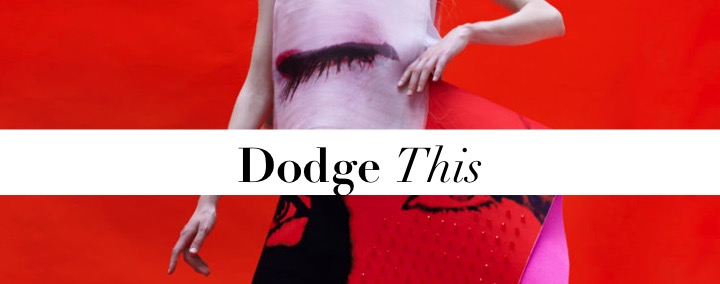
I know I wrote that before, but Instagram really is a treasure chest of creatives who deserve the spotlight. A casual morning scroll-down-of-my-feed later and here I’m with Quinten Mestdagh‘s powerful collection, which has been presented during the last fashion show of the Royal Academy of Fine Arts in Antwerp. The designer is a third-year graduate of the school, which breeded the famous Antwerp Six, and already makes a unique mark on the Belgian fashion scene. Quinten’s voluminous garments electrify the viewer with their texture, colour and imagery. Speaking of the last, its the designer’s  visible strenght in ‘Dodge This’ collection. “I have always been attracted by highly stylized images in fashion magazines and advertisements. Last summer, I started collecting pictures in the archive of the MoMu library in Antwerp. With those images, I made collages and paper 3D experiments to create tension and roughness, contrasting with the beauty found in fashion photography. I then approached the garments as abstract panels for the images,” Quinten told ASVOF. With faces of fashion models and icons like Nico, Karen Elson or Princess Elizabeth of Toro as prints, the designer emphasizes and embraces extreme femininity in form of modern-day ball gowns and statuesque skirts. Just wow.

Photos via Quinten’s Instagram / by Michaël Smits.

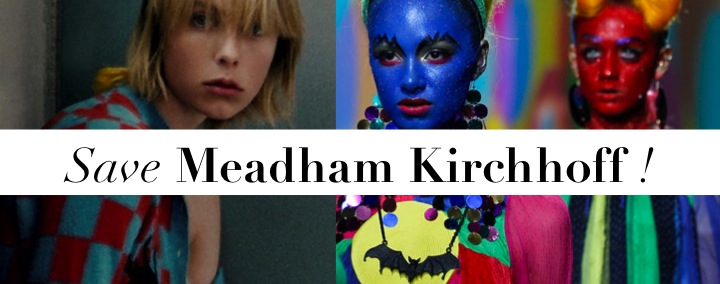
Save Meadham Kirchhoff!

1146090

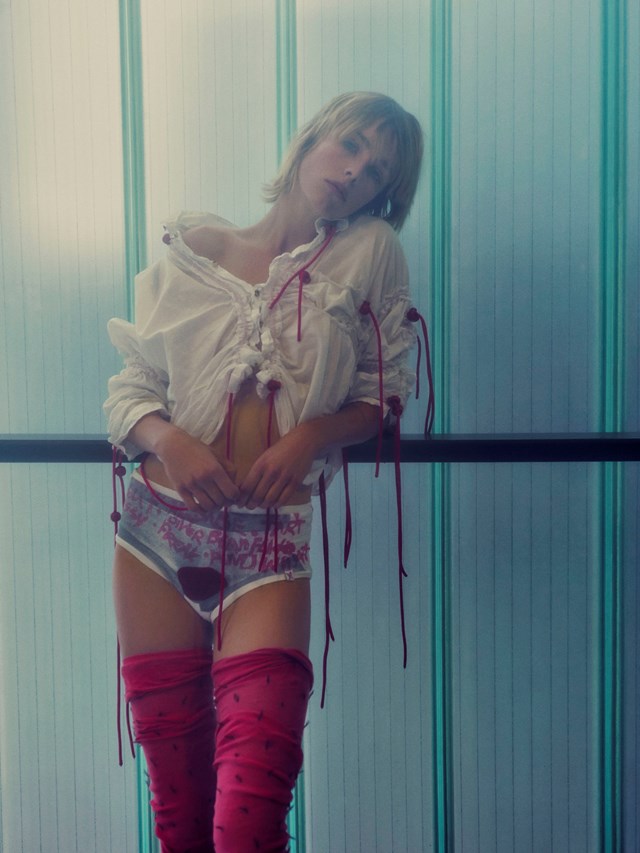
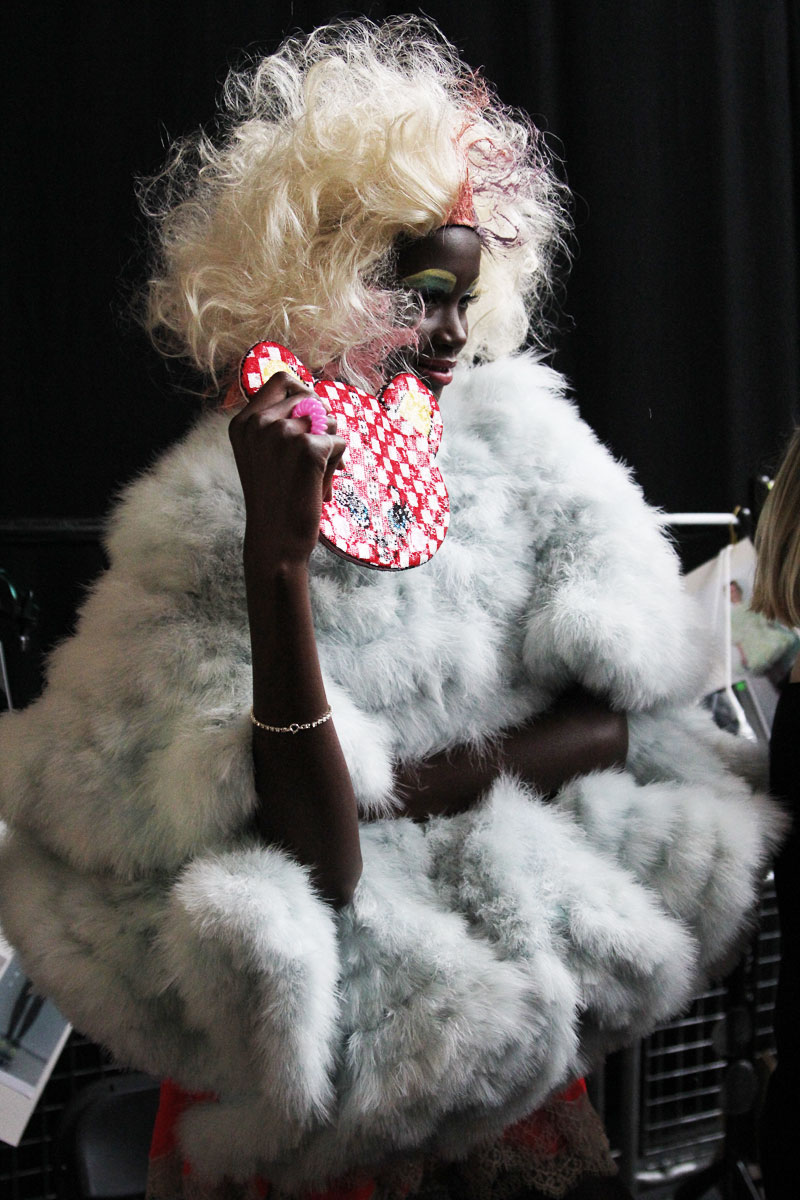
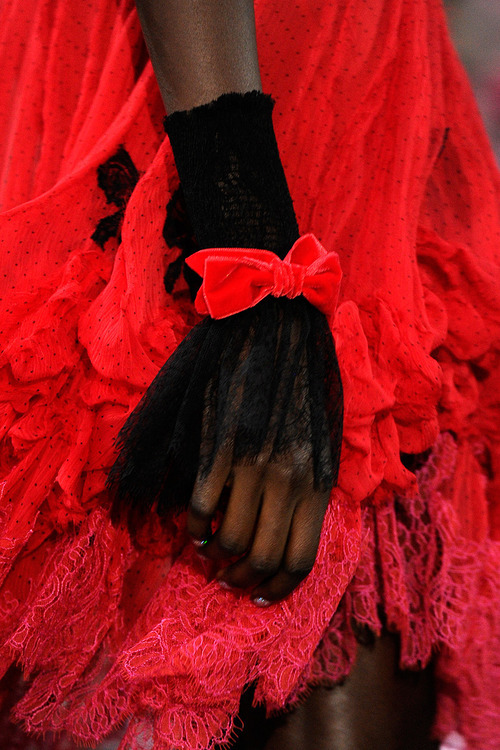
When Meadham Kirchhoff stopped doing street-casted shows and closed their brand, it was a very, very bad omen for the fashion industry, which, first things first, should be fuelled by creativity. Benjamin Kirchhoff and Edward Meadham were creating the boldest, the happiest and the heartiest label in London, or even in the entire world – but then, “debts have caught up” and this relatively small, studio-based label couldn’t survive the pressure of this sadly, too corporate world.

If that wasn’t bad enough – it appeared that the designers were forced out of their studio, and Meadham Kirchhoff’s archive was confiscated by the succeeding occupier. Remember the glamorous pieces from their gothic past, all those vinyl coats and naughty, glittered bodysuits? They aren’t owned by the designers since that moment. But, heads up – there’s a chance for Meadham Kirchhoff archive to be retrieved and be admired in its full grace. Curator Shonagh Marshall has worked with Edward and Benjamin, and selected around 50 pieces that will be donated to museums. As one of the designers said “we had an impact on culture and on British and international fashion, and we want these clothes to live beyond the context of a personal wardrobe; we always wanted Meadham Kirchhoff clothes to be seen, not something to just have and never wear.” The selection, was priced at £15,000 – this is a sum that can buy back 12 years of the duo’s work. If you mind / care / want to help – I strongly advise you to donate a pound or a hundred here. Let’s support British fashion history and Meadham Kirchhoff creative legacy, which indeed changed a lot!

meadham-kirchhoff-victoria-and-albert-03_154816894840

1090744

6a00e5508e95a988330168e5f96e3a970c-800wi

Meadham-Kirchhoff-AW13

1048855

1146088

tumblr_n2qfzuvp9c1t6ndpso1_500

1146087

6a00e5508e95a988330168e5f972d9970c-800wi

1146083

Some of the photographs are by Drew Jarrett, shot for 1 Granary.

Elevated Poetry. Jacquemus AW16

KIM_0353

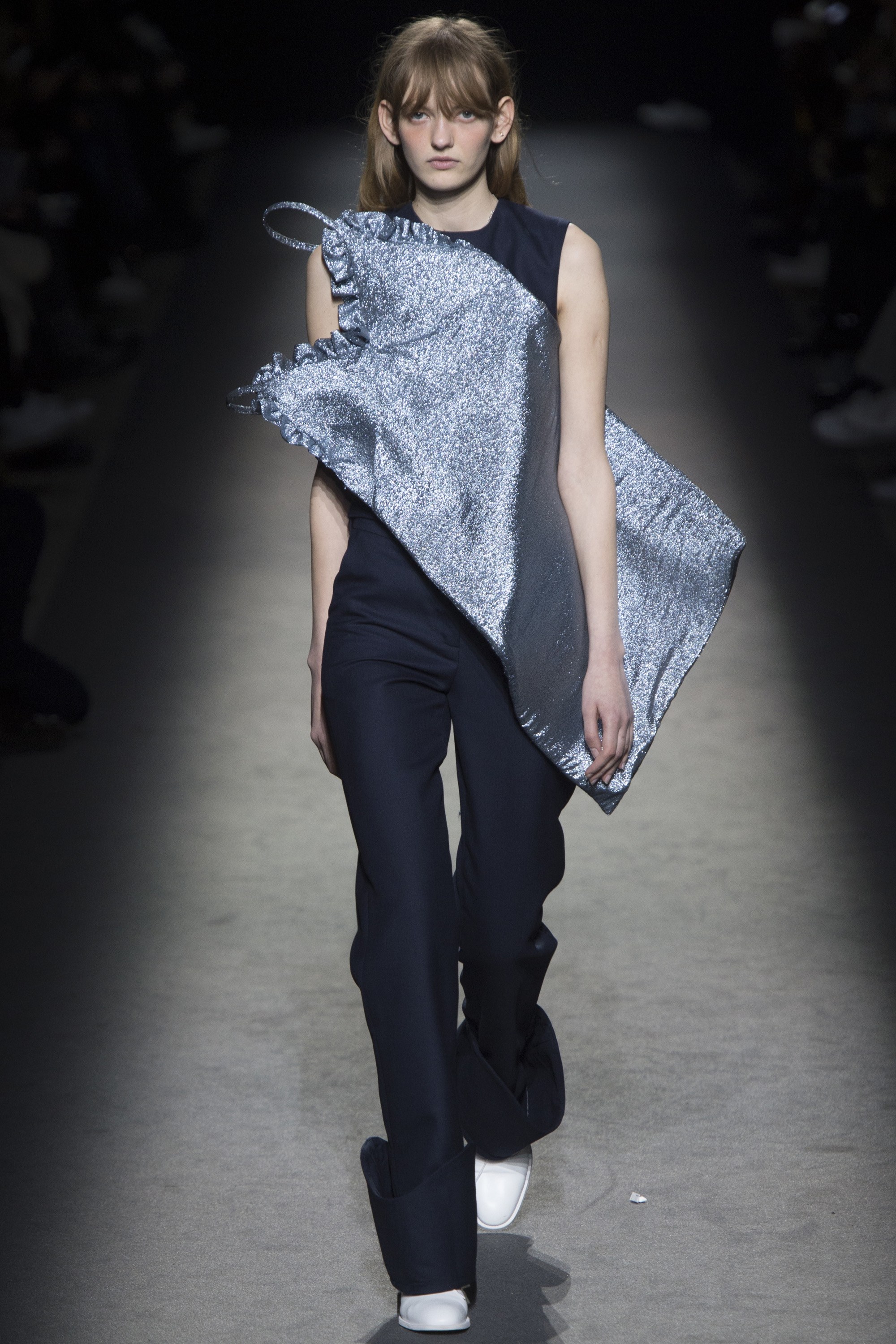
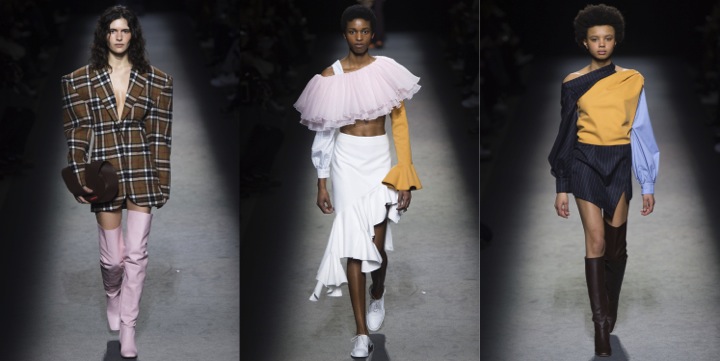
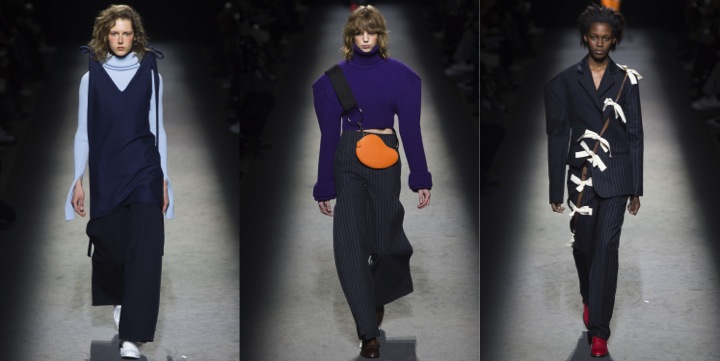
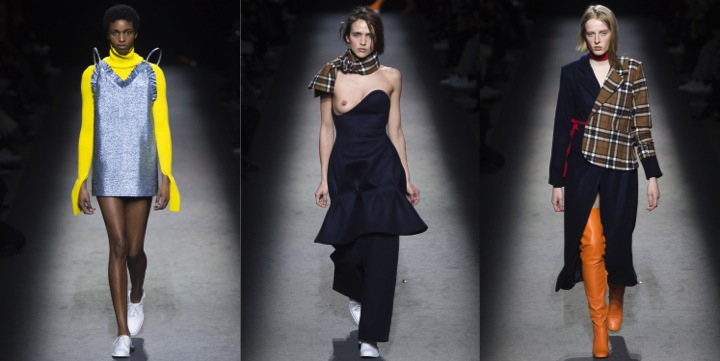
It’s Paris, and it feels like a breath of fresh air coming along Jacquemus‘ autumn-winter 2016. The city of French fashion is undergoing a wave of youthful talent – and Simon Porte Jacquemus represents that perfectly with his extraordinary, yet wearable garments. “I would like there to be less industry and more poetry” is what he declared backstage, minutes before the show. It was all about a surrealist illusion this season – the dresses floated in the air and spaghetti straps were magically elevated above the shoulders. The exaggerated shoulders, although distinctly reminded the old, good Martin Margiela, introduced us to other arty shapes and geometric cuts – sometimes, they looked even too grotesque, as in case of the “mini-skirt” worn with a pastel-blue turtleneck. But what was the most genuine from the entire collection was the expanded accessory line – block-heeled “rond carré” shoes, asymmetrical gloves in tangerine orange and cute, kidney-shaped bags are the highlights, which will sell well.

A very, very experimental, yet down-to-earth start of Paris Fashion Week!

Slide1-kopia 4

Slide3

Slide4

Slide2-kopia

Slide1-kopia 3

Slide5