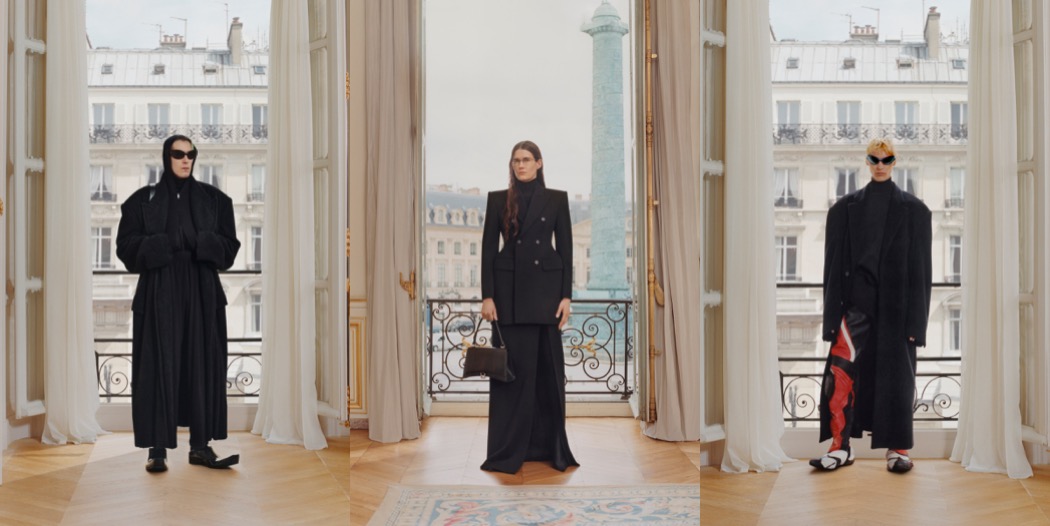
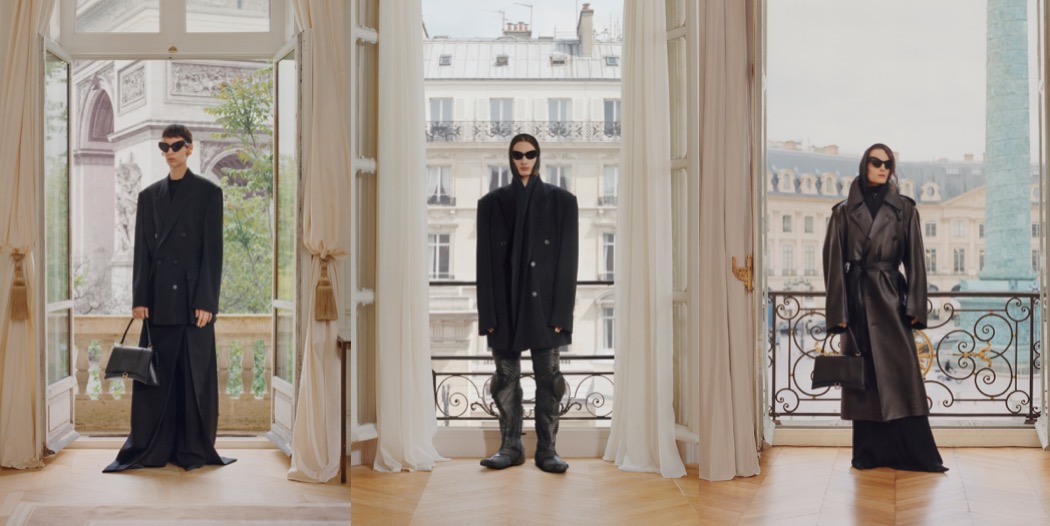
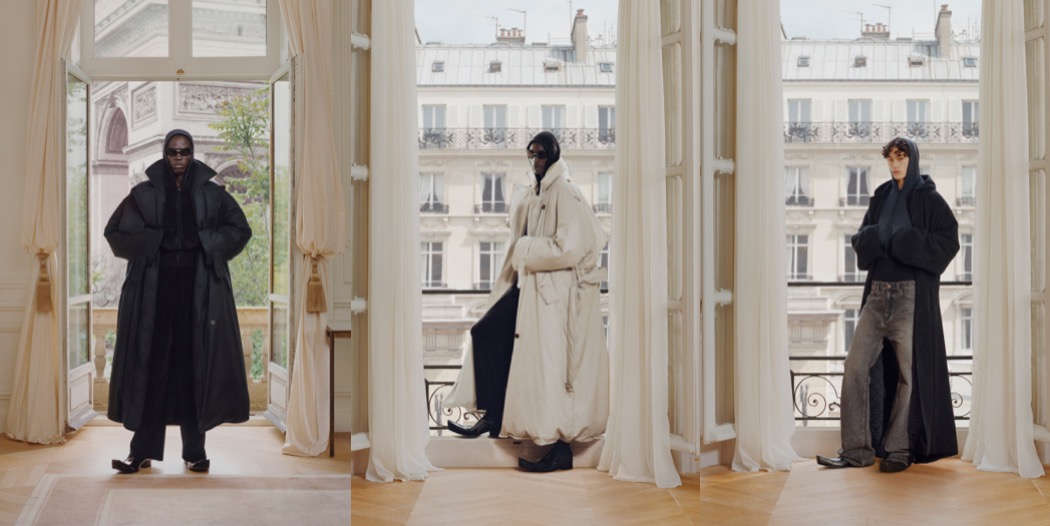
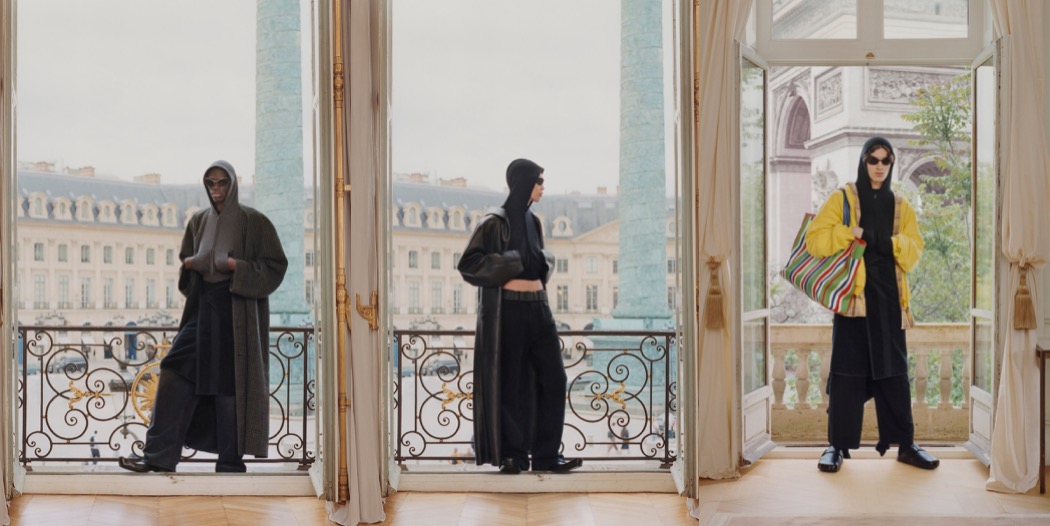
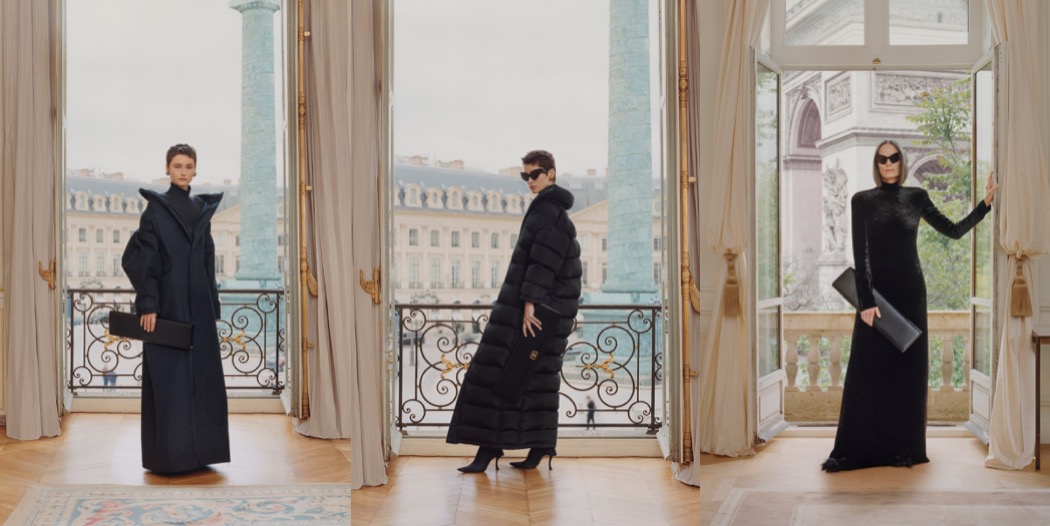
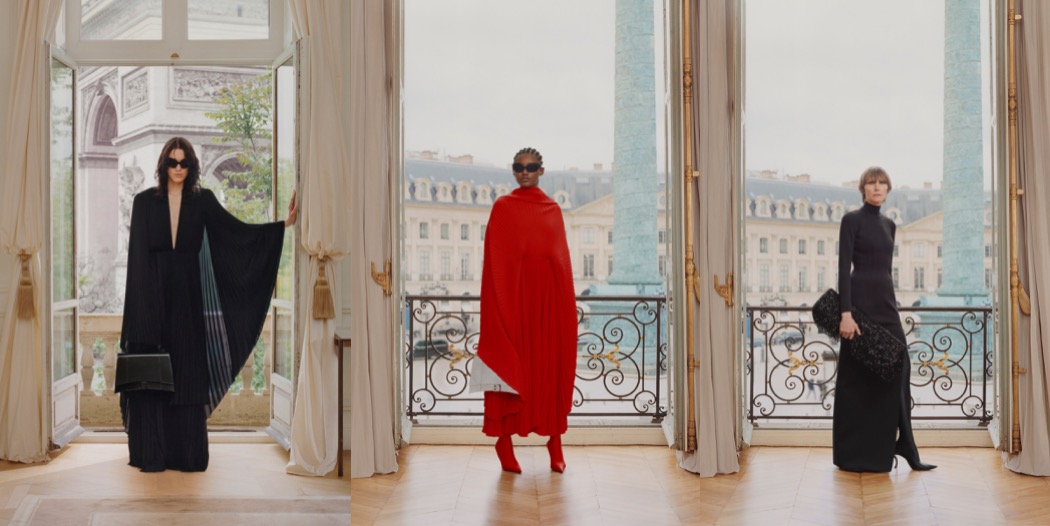
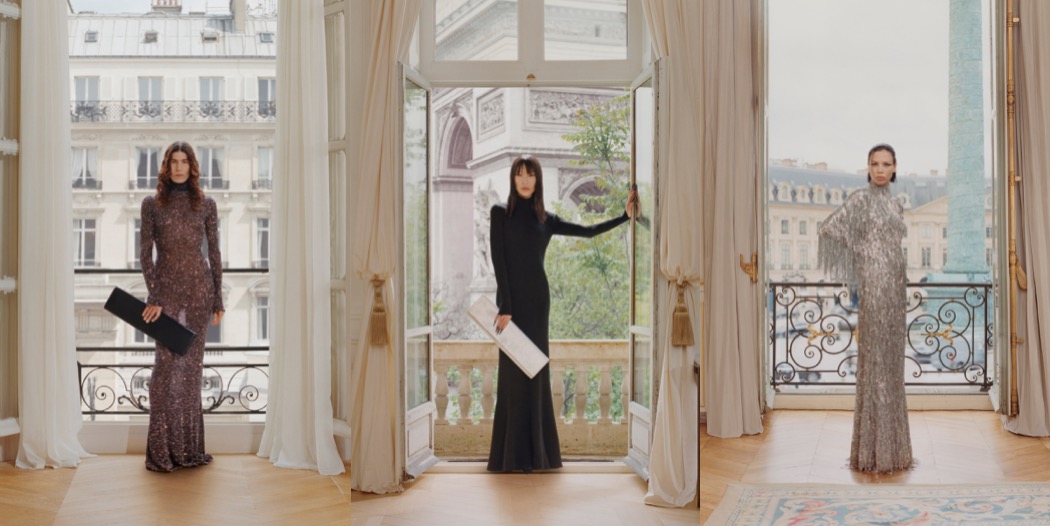
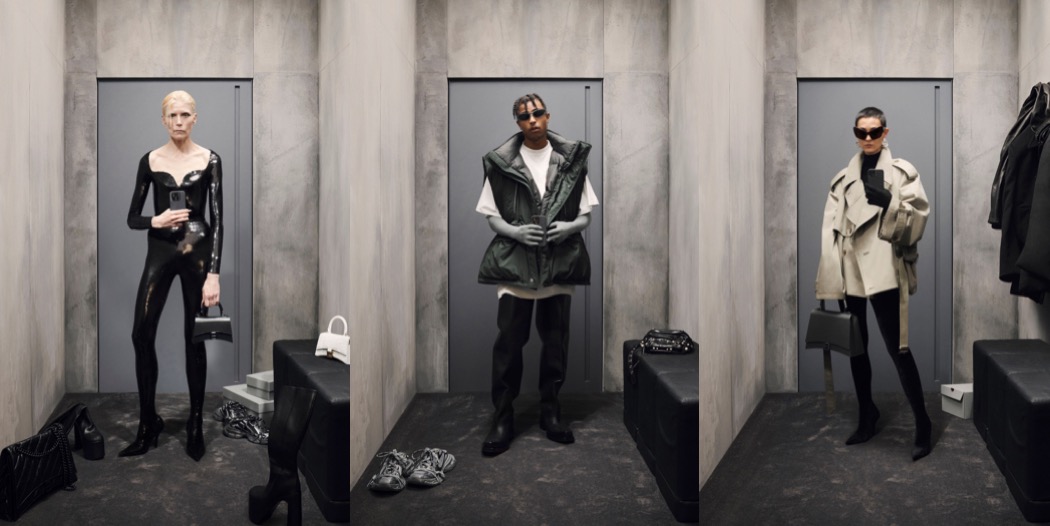
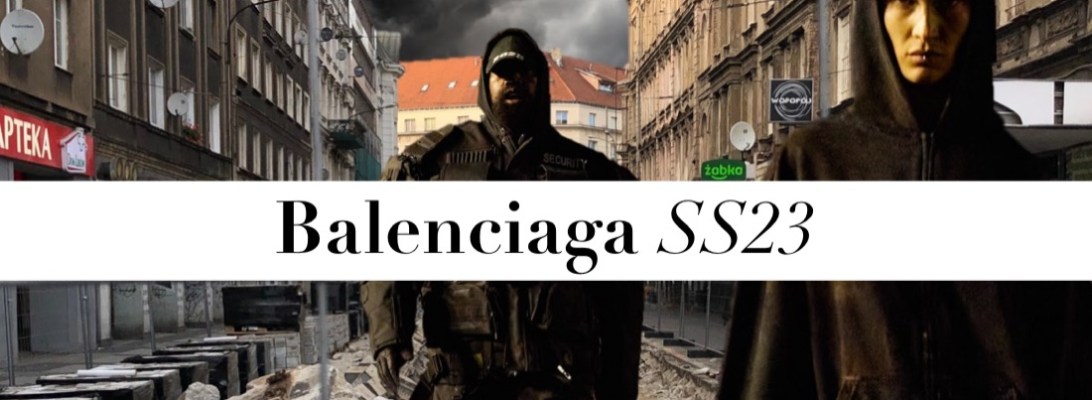
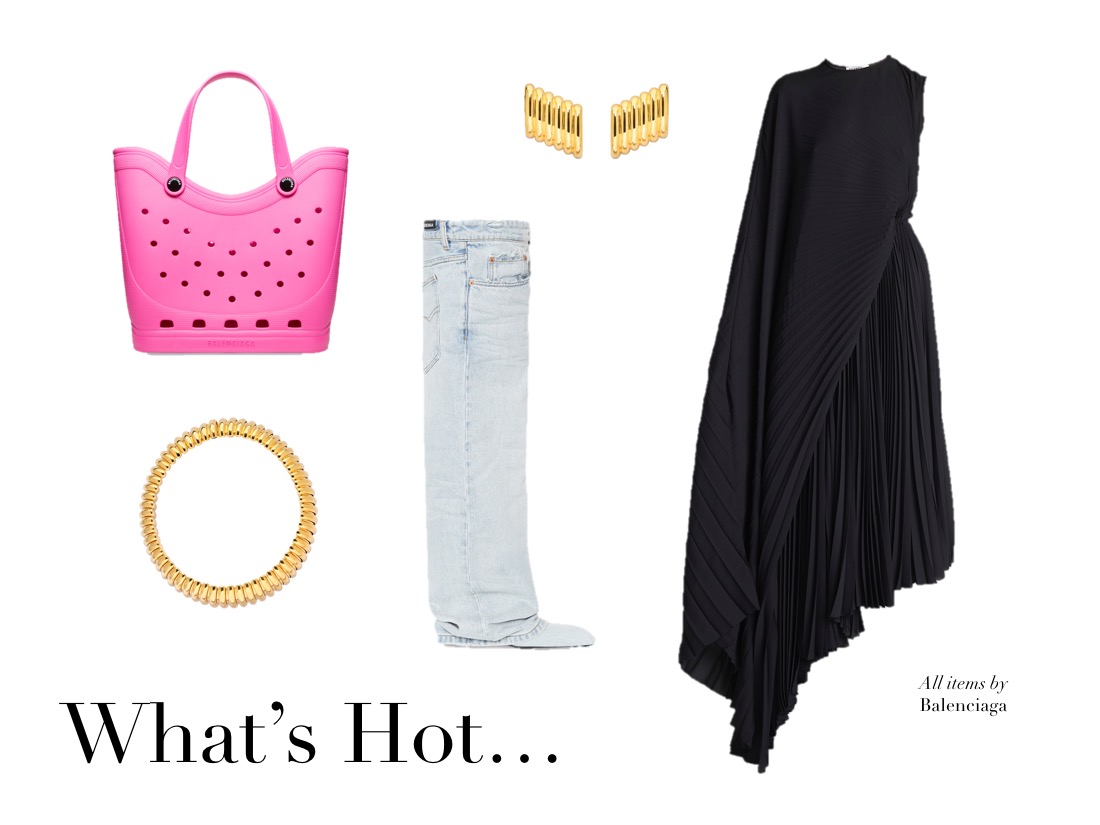
Ever since Demna‘s beginnings in fashion, honest and straightforward observation of how people dress on the street and for various occupations has always been a dynamic behind his design. The scenario playing out in his new Balenciaga resort 2024 video is very much that way, except that this time the street is the Avenue Georges V. The time-lapse slice-of-life captures people busily going in and out of the Balenciaga maison at number 10, or passing by. Whether they’re denim-clad teens, a motorcycle delivery person, a bourgeois dog walker, a skateboarder, or the retinues of black-clad hoodie-up fashion people going about their business – this is how the whole world would look if everyone dressed in Balenciaga. Underlining the fact that Demna is steering the brand narrative back to Paris, and to the house, he punningly named the collection Capital B. His second take on the collection is by way of a lookbook, apparently shot in grand rooms that variously overlook the Place Vendome and the Arc de Triomphe. Here, his perma-silhouettes are clearly in view: the oversized suiting, enveloping trapezoid coats and puffed-up trenches, the hoodies, and the bug-eyed shades with almost everything. As a pre-collection it encompasses every Balenciaga category, womenswear and menswear, formal black tailoring to denim, motorcycle leathers and sweatpants. Interspersed are also pieces from the high-luxe “Garde-Robe” collection, which are an annual release, such as the silver-fringed embroidered dress at the end. And of course the Cristobal Balenciaga-inspired ecclesiastical gowns and chasuble coats: the ultimate highlights of this very well-executed collection, which is about good dose of drama (in the clothes, not in anything around it!).
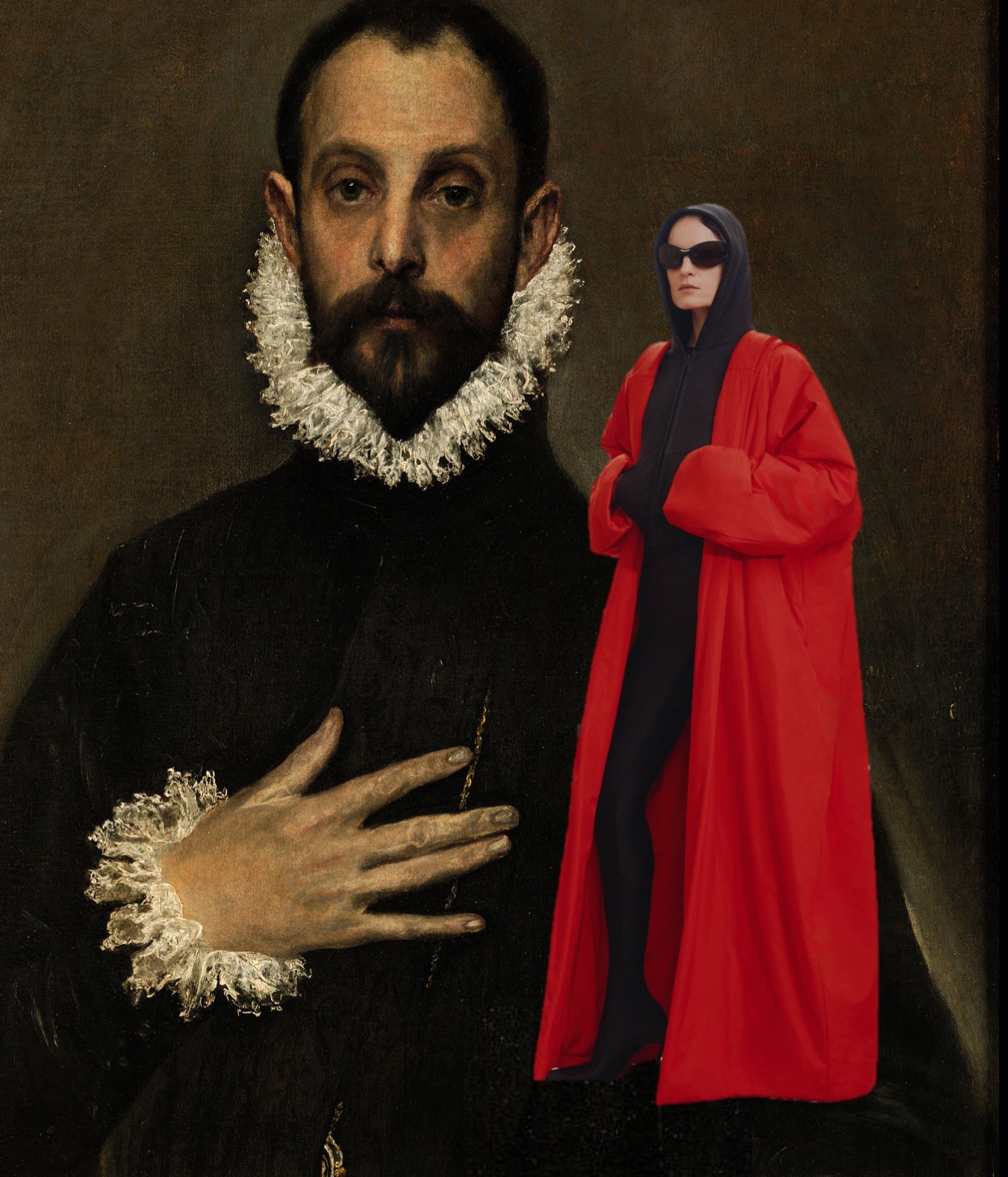
Collage by Edward Kanarecki. Don’t forget to follow Design & Culture by Ed on Instagram! By the way, did you know that I’ve started a newsletter called Ed’s Dispatch? Click here to subscribe!
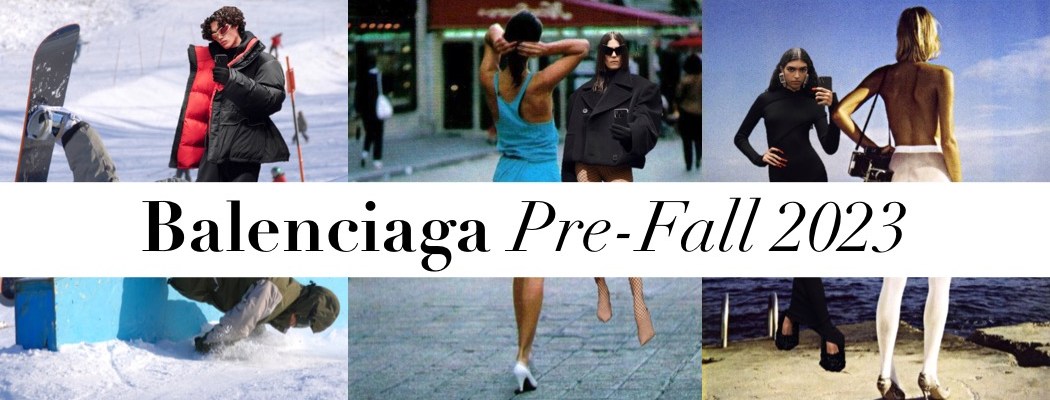
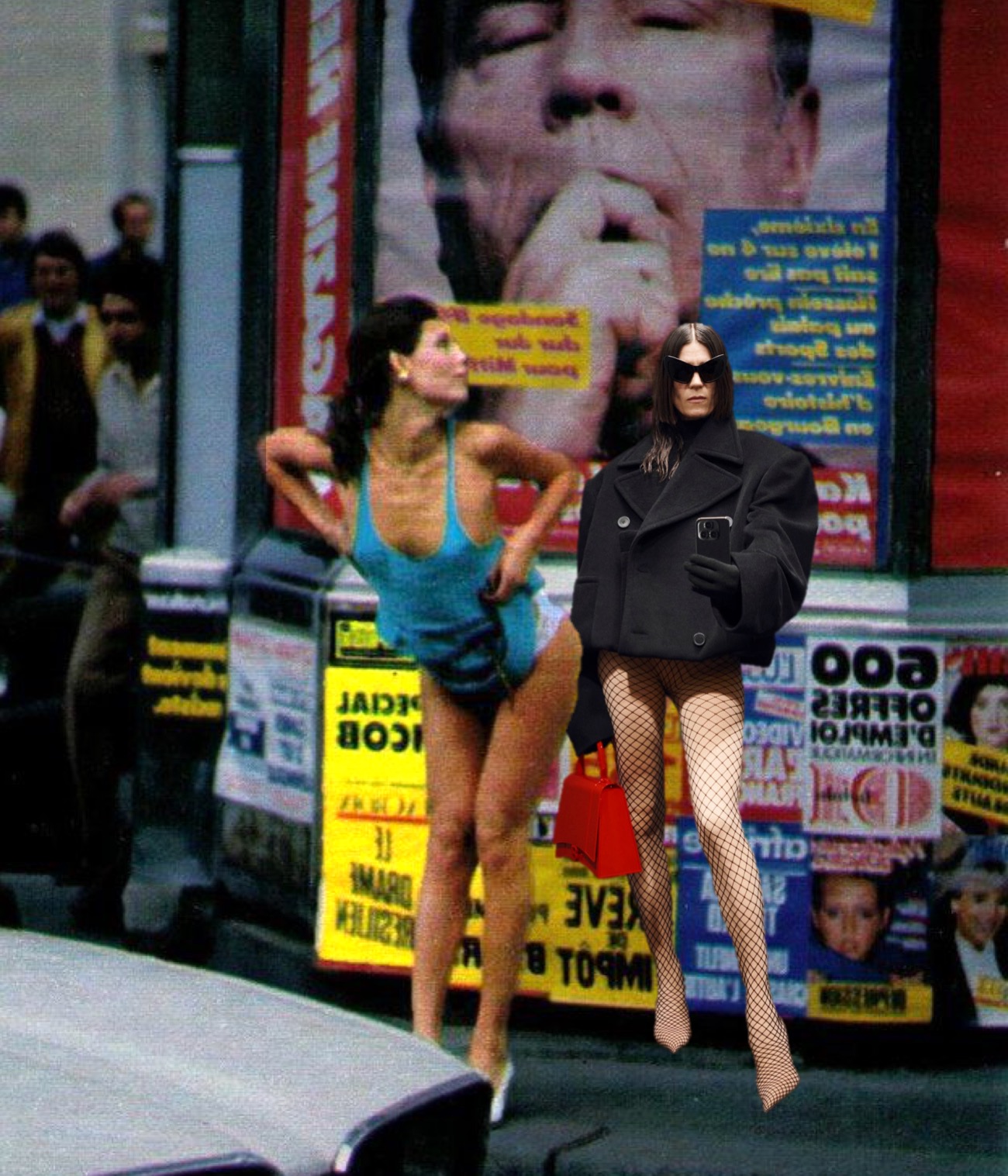
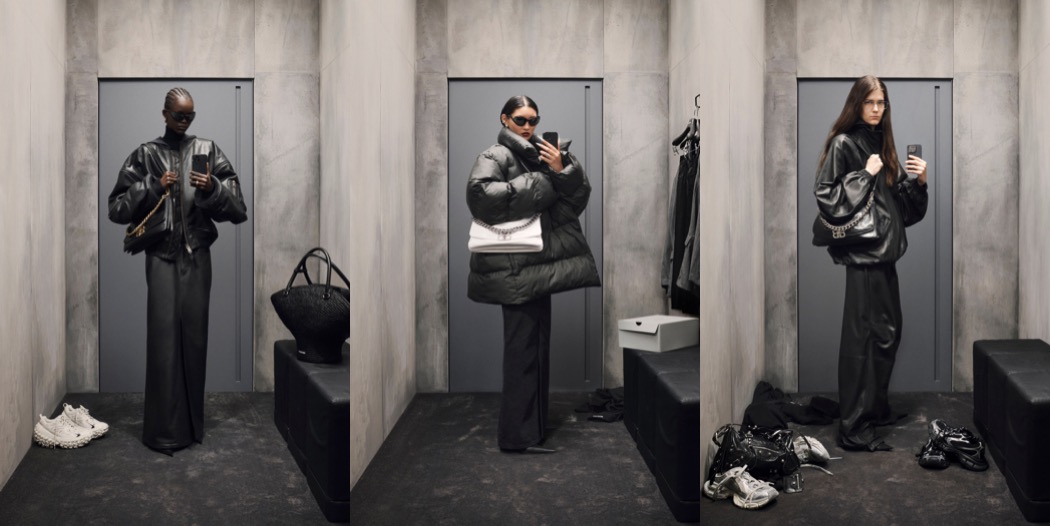
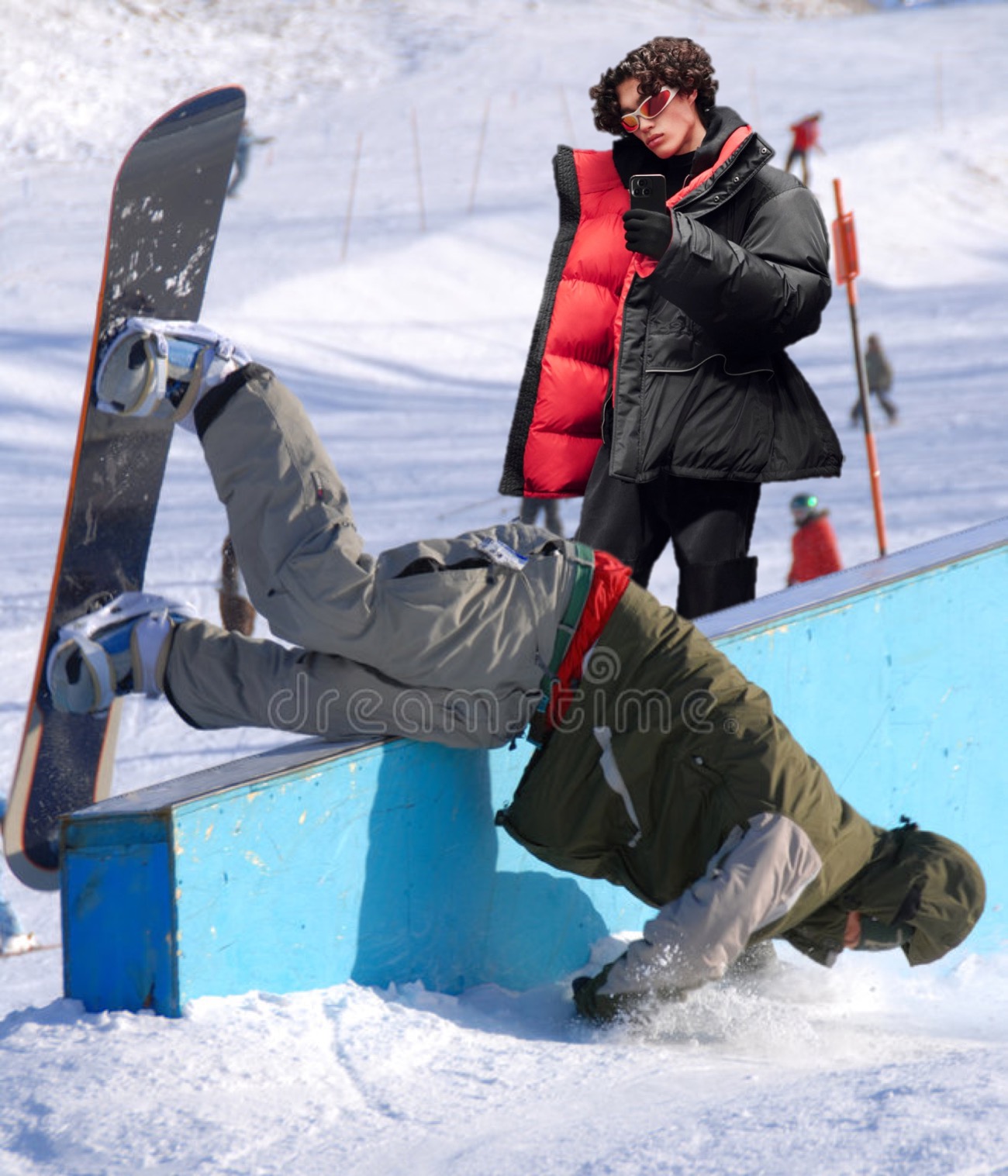
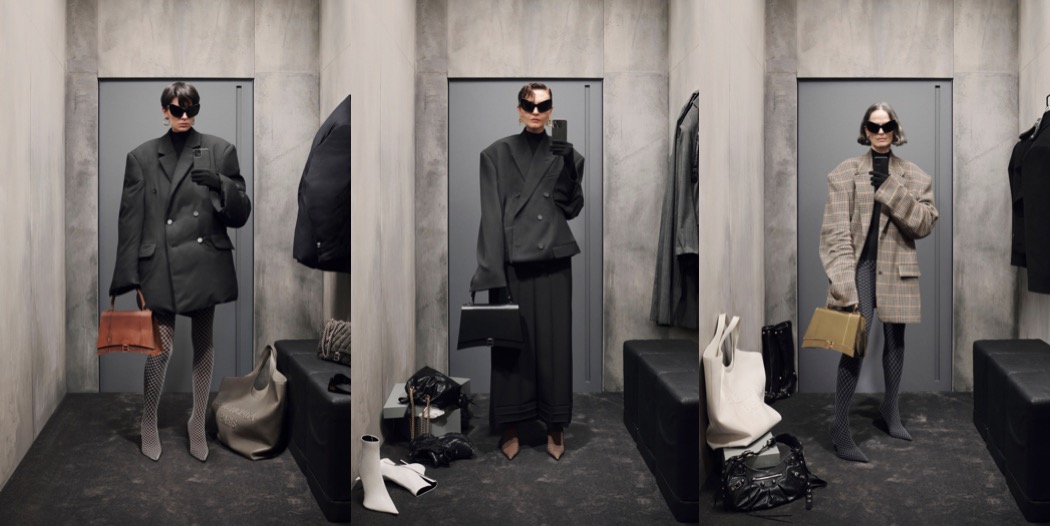
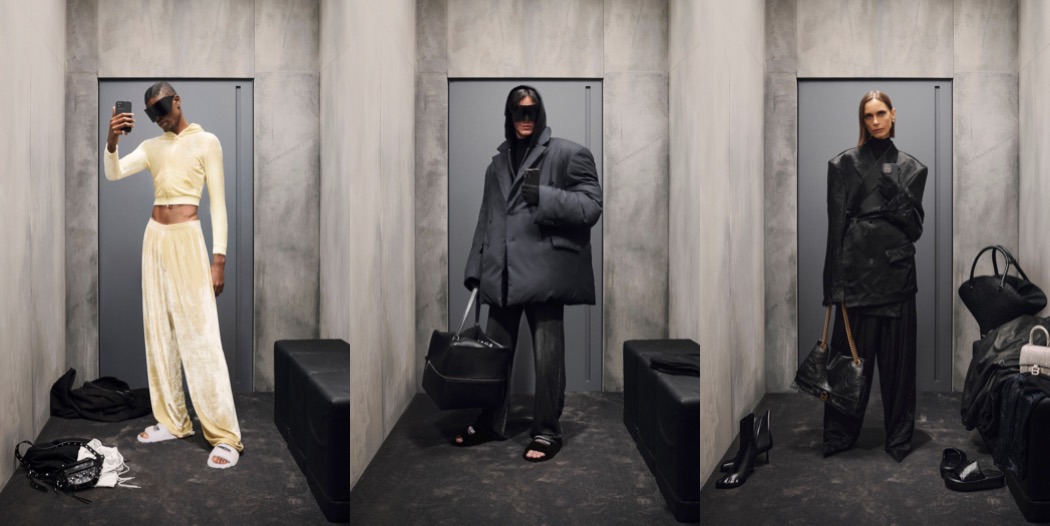
Balenciaga‘s pre-fall 2023 look-book – made up of dressing room selfies – is a cleverly staged invitation for the customers to come back to the brand’s shops. And a reminder, much like Demna’s winter runway show in Paris, that the Balenciaga creative director remains one of the key architects of the look of contemporary fashion. The emphasis on exaggerated suiting, the embrace of couture-ish shapes, and the return of rave jeans – all of that is covered, just in time as the new season clothes start hitting the shops. Double-breasted black blazers were alternately puffed up with a layer of padding, or cropped at the hips, with the hems tucked under in almost makeshift fashion. A third was worn like a wrap, its buttons askew. Demna cut similar styles in glen plaids and checks. More so than the runways, Balenciaga’s pre-season collections are devoted to daily wear. And so there were oversize parkas, peacoats and trenches with more of those folded under hems, fluid velvet sweatsuit separates in surprising pastels, and denim in both raver proportions and a newer skinny cut lopped off at the knees. Standing in for the dramatic evening dresses in the March show were a couple of full-length looks in a quotidian key, one dress in a body-conscious knit and a shrunken logo hoodie and matching ankle-length skirt in what looked like stretch velvet. The accessories game is strong too: Le Cagole comes in sportier shapes, and Pantashoes are revisited in Margiela-esque fishnet overlays.
Collage by Edward Kanarecki. Don’t forget to follow Design & Culture by Ed on Instagram! By the way, did you know that I’ve started a newsletter called Ed’s Dispatch? Click here to subscribe!
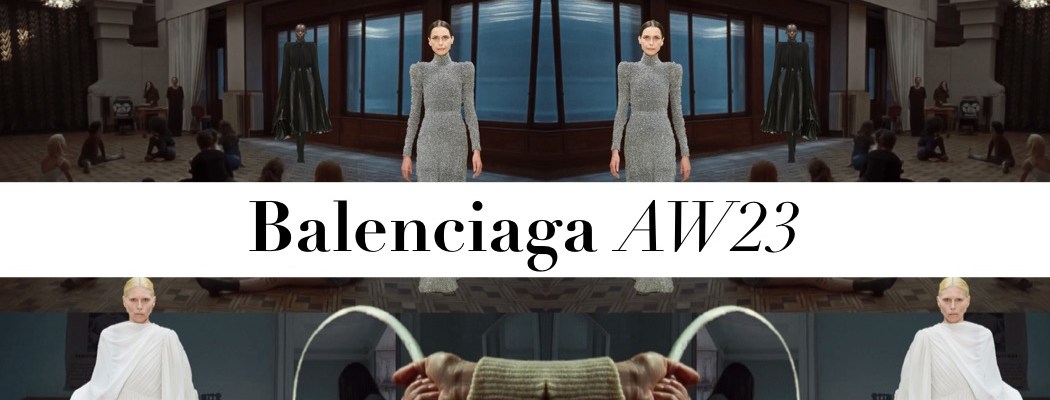
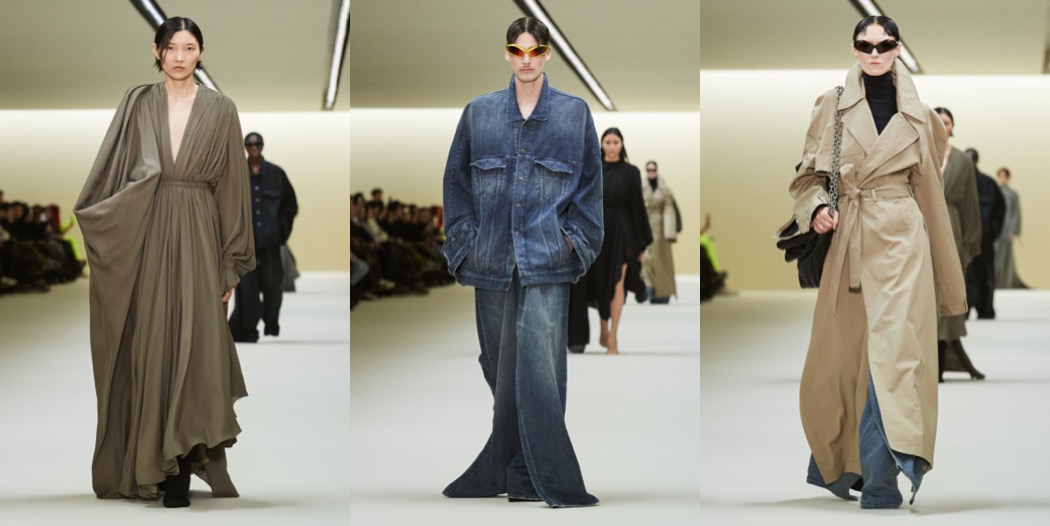
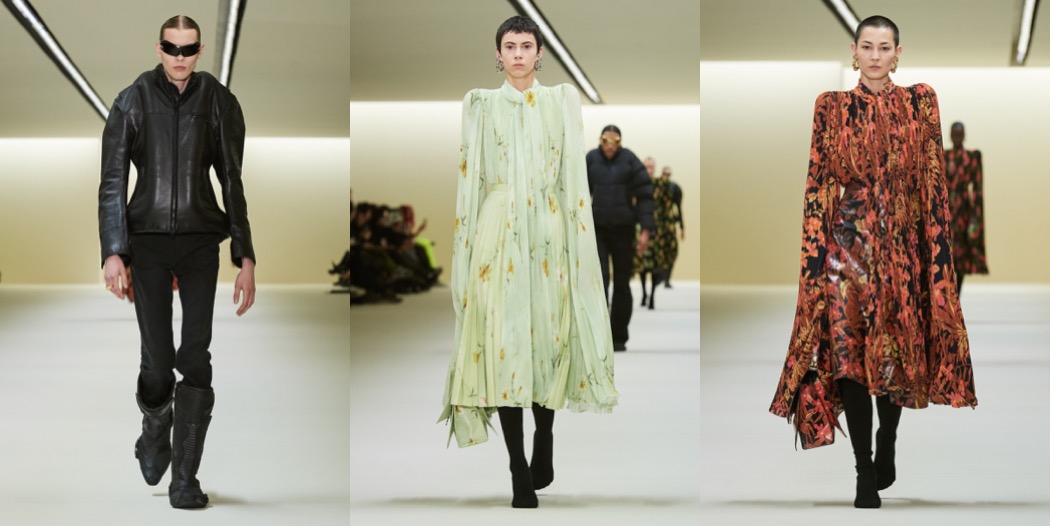
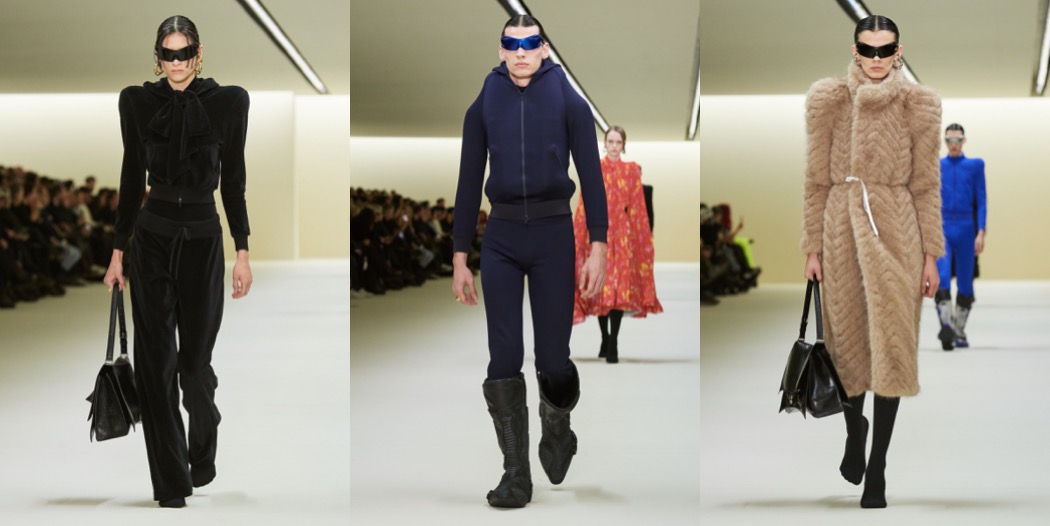
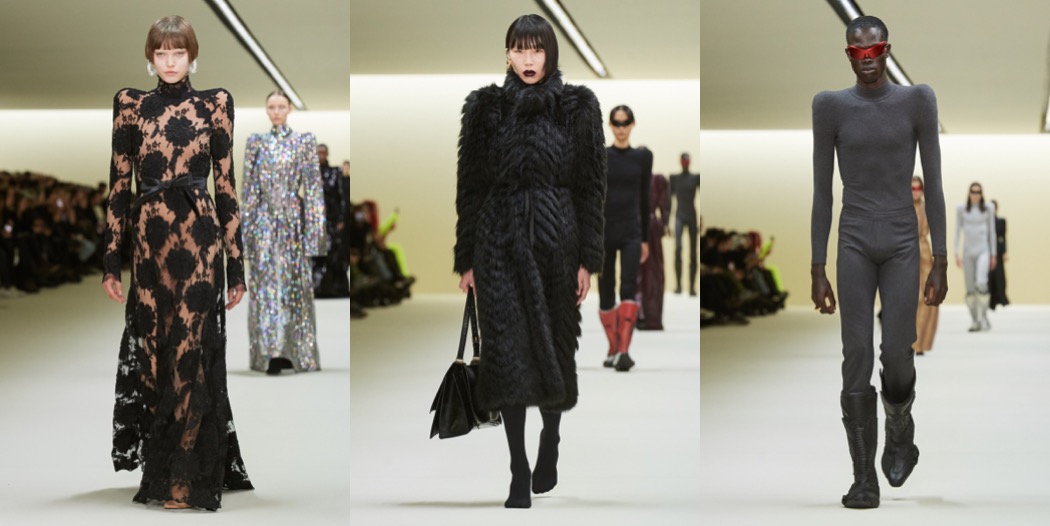
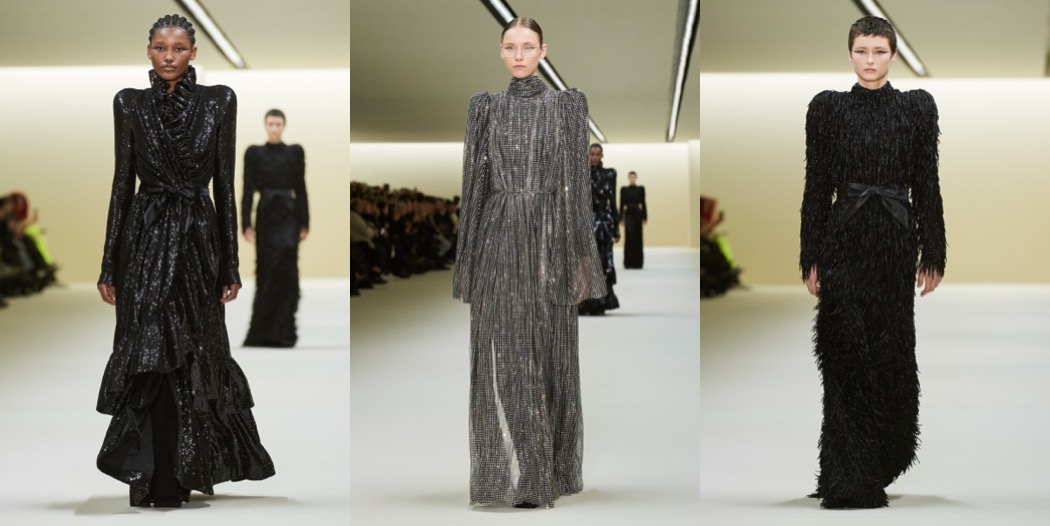
After THE controversy – which became an unprecedented case study that polarized the fashion industry – that escalated in the second half of December and continued to be dynamically scrutinized in the beginning of 2023, Balenciaga and Demna are back. Cautiously. The autumn-winter 2023 fashion show was provocation-free: just a white-cube venue and models in clothes, with no sociopolitical context playing in the background or a performative, highly-viral shock value. Stripping back to the fundamentals of design has been a thrust of this latest round of shows, but nowhere was the extreme tension between those two poles felt more sharply than at this show. Demna’s explanation and apology, with information about the brand’s plans for internal reform and its offer of reparation through a three-year partnership with the National Children’s Alliance was published by Vogue in early February. “I needed to have a show because I need to move on. I need to liberate myself – through my work, and what I do, and put it out there,” he’d said in a one-on-one conversation held at Balenciaga headquarters in the days before the show. “Because it has been a hell three months, and I really don’t know how I had the strength in me, mentally, to go through it.”
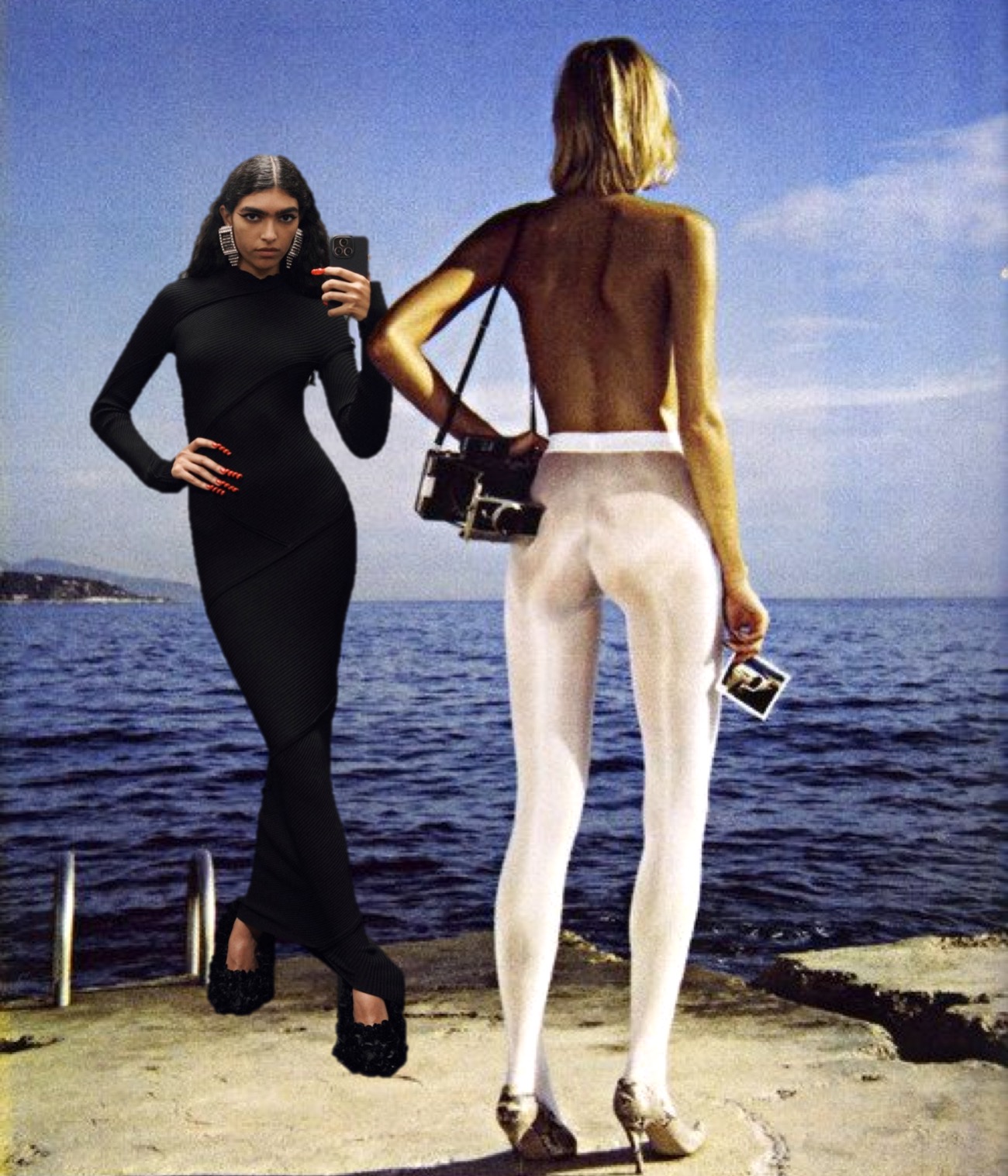
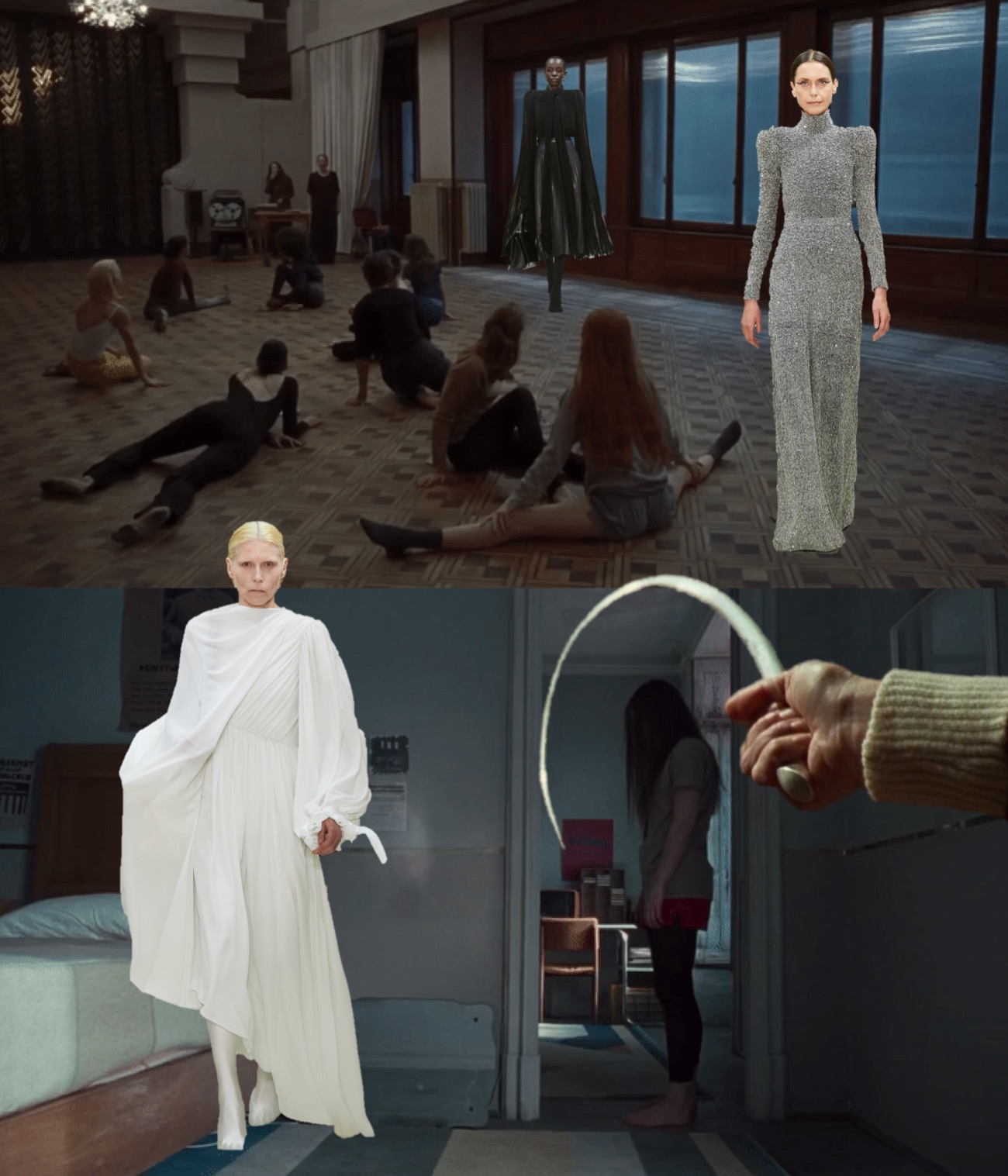
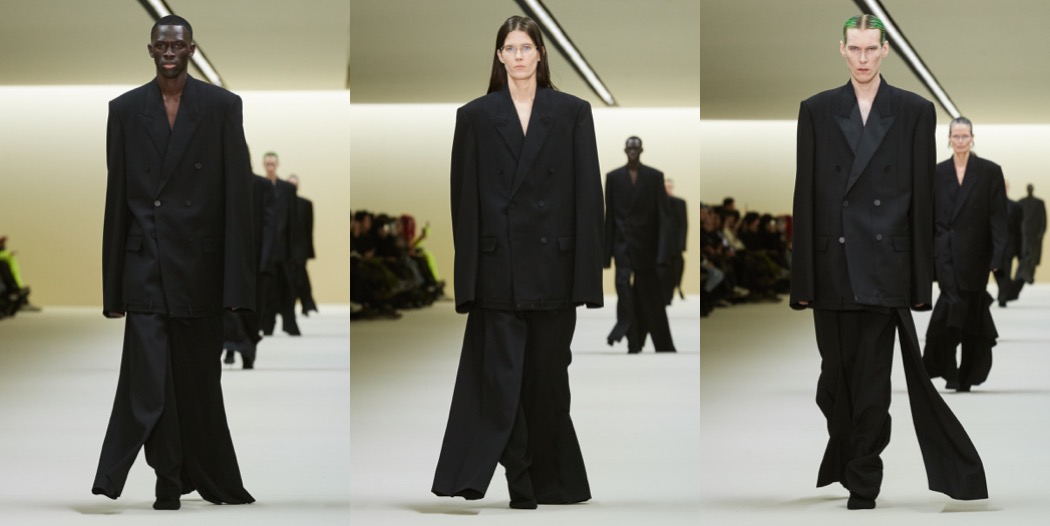
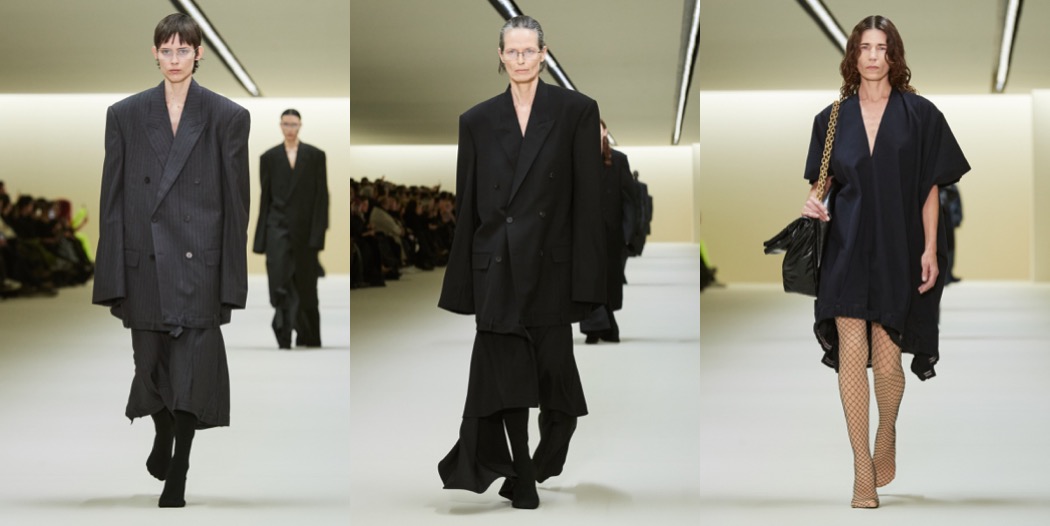
The choice he made was to ditch his mega-set methodology and showcase his personal bid for reputational integrity as a designer. “It had overshadowed the collections – most people didn’t see the clothes even when it was packed with great clothes. You know, I just felt almost like [I was] betraying that by doing those kinds of set designs, because the most important thing for me in my work was being overshadowed by 15 minutes of buzzy concept. I was like, I was like, ‘Okay, I need to change that anyway,’” he said. “And this whole situation really just confirmed to me that it cannot be about that anymore. I love doing that. But I don’t love doing that more than making clothes and I felt like I needed to put this in focus. It came together with something that truly represents me as a designer. I feel like this is the message I want to give: This is who I am.” Who he is, and where he is now: it was hard not to read the imagery of a world turned upside down in the makings of the long, somber sequence of 17 black oversized tailoring looks that opened the show. Black is a Balenciaga core non-shade; it syncs with the mood of fashion at large, and it was a reminder that Demna was, after all, the progenitor of the super-sizing that’s swept fashion in the last decade. Nothing new there. What was different: all these pieces were constructed from reverse-tailored trousers. There were coats and jackets with pant-loops and pockets in the hems. And below them hung doubled pairs of trousers, giving, from the side, the surreal illusion that the people were walking on four legs. In the next part of the collection, Demna refocused on Cristóbal Balenciaga’s legacy. “Evolving it is the number one reason why I am here,” as he’d commented to Vogue earlier. Shorn of distractions, critically, the collection could be seen as a hybrid of Demna-isms – cyber-avatar menswear, his familiar flower-printed knife-pleated dresses – segueing into more of a distinct homage to the founder’s archival evening gowns. These were long, slim, covered-up dresses, minutely embellished, and with a new signature rounded-bump of a shoulderline. Aside from the styling, there is one far more radical change on the way for Balenciaga. It was heralded only by its absence – the fact that the clothes and accessories were wiped clean of logos. The attraction of highly visible branding has been part and parcel of the cult of Balenciaga that Demna has brought to popular street culture everywhere. “It’s a big thing,” he admitted. “But I think we’re going to enter the stage in my work where it doesn’t need to be justified by the brand on it. To be honest, it’s necessary, and I use this opportunity now to convince that this is the right thing to do. And of course, you know, doing that means not doing it only once. You have to persist to be able to change.”
Collage by Edward Kanarecki. Don’t forget to follow Design & Culture by Ed on Instagram!
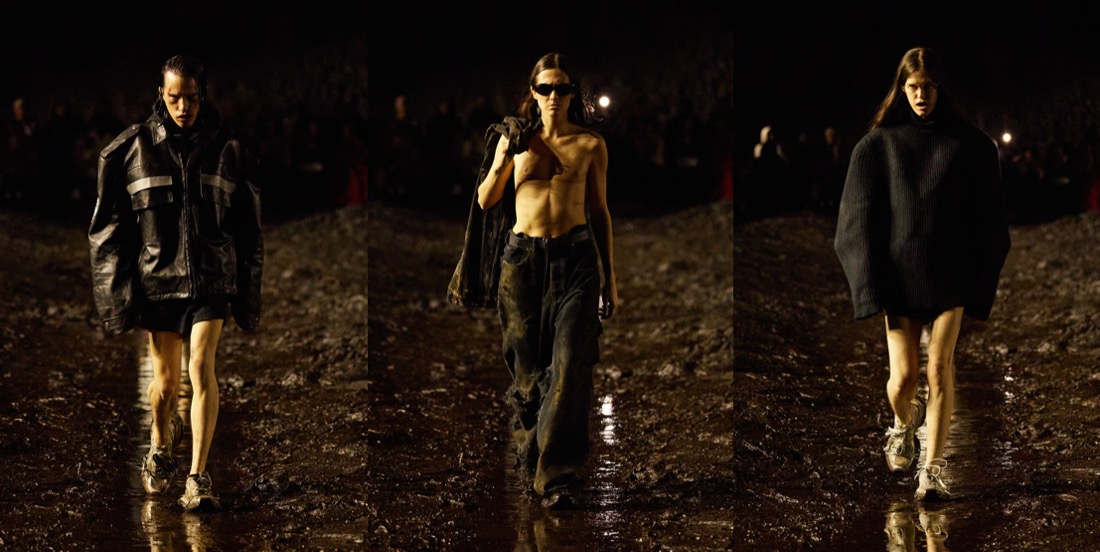
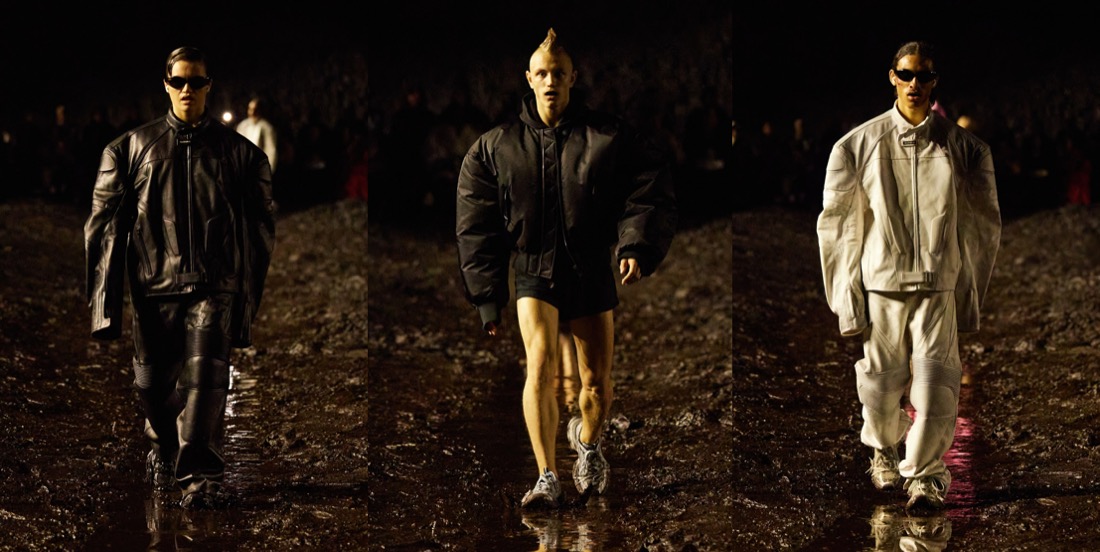
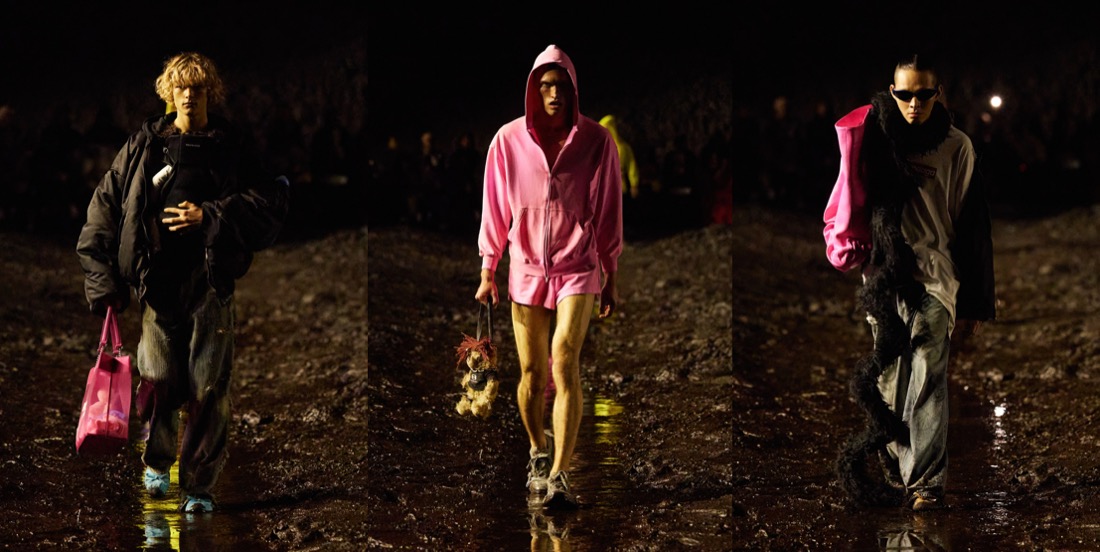
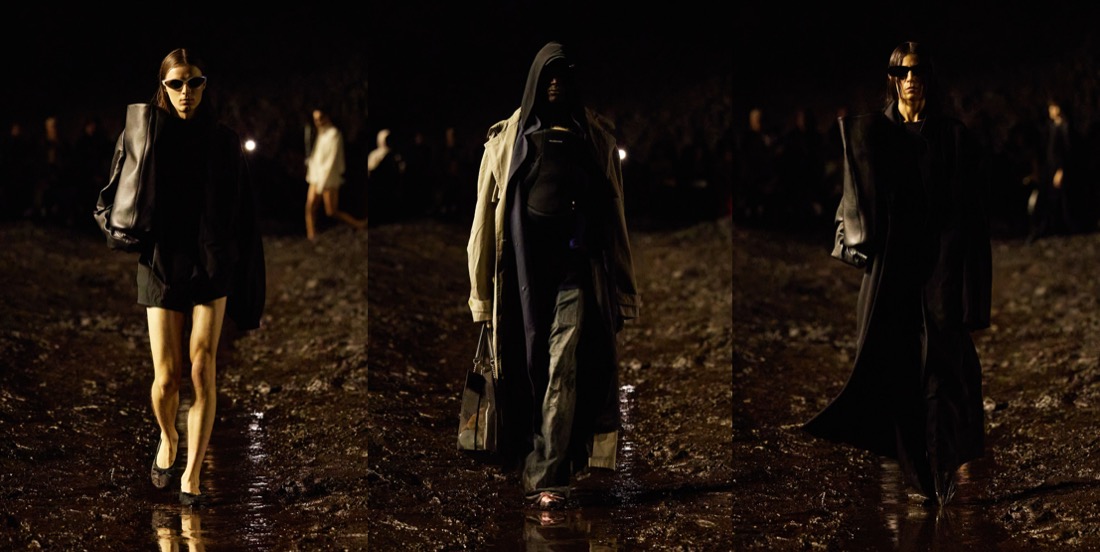
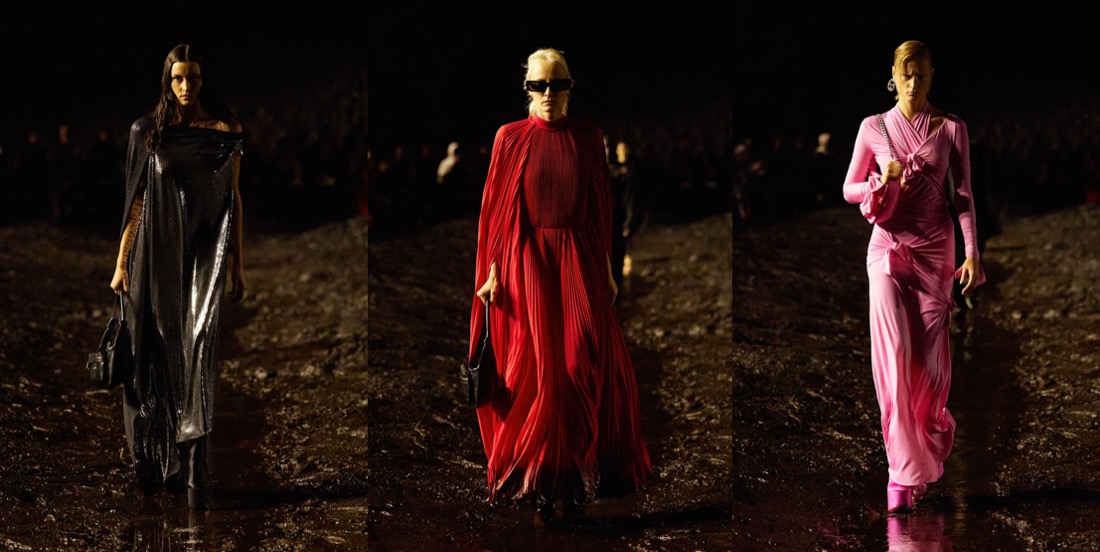
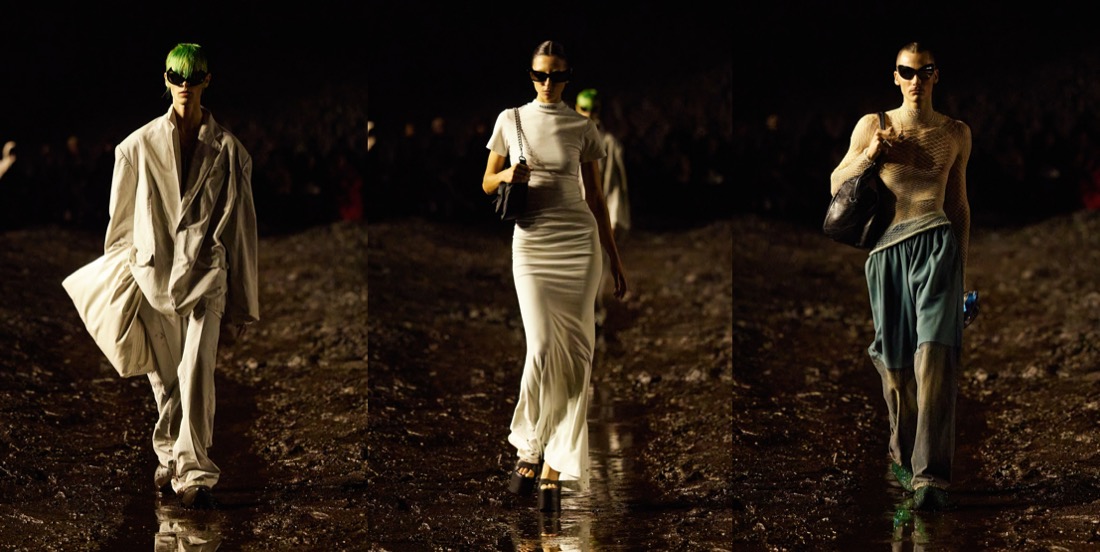
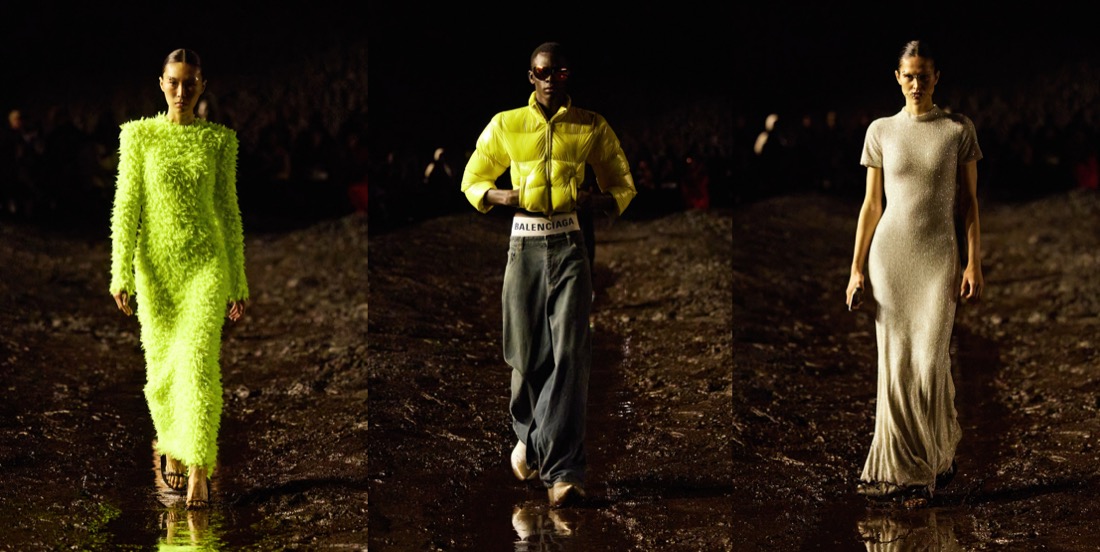
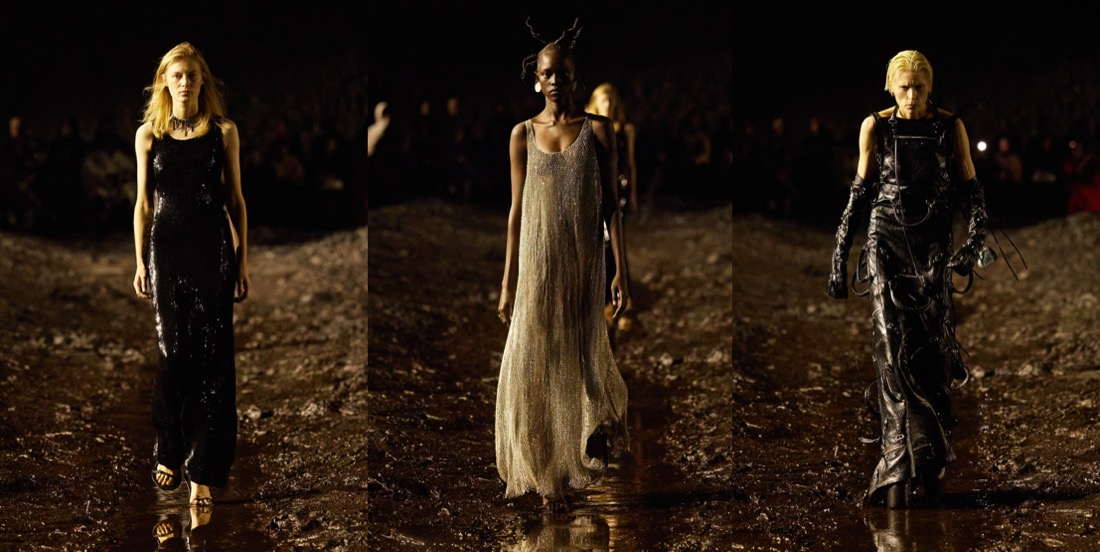
When Balenciaga invited its guests to a “mud show“, they meant it literally. There were tons of mud on the spring-summer 2023 runway, piled up at the sides of the stadium space, and dug out like bomb craters in the center, staged by the Spanish artist Santiago Sierra. The raw odeur of decomposition, a custom-made scent by Sissel Tolaas, blasted in the face. Demna did it yet again: he shook up the fashion industry like no one else, reminding about rising inequality, the return of fascism, wars happening all over the globe, and the very real threat of nuclear war. Kanye West opened the show in a tactical jacket and leather pants with reinforced knees, military garb topped off with a baseball cap and a logo mouthguard. The ragtag band that followed was rough around the edges to say the least, their faces beat-up and their clothes treated to look old and beat-up too (requiring a “couple of days” more than making pristine luxury, Demna said). Some carried bags made from stuffed animals that looked like they’d been through a war. When the 75 models made their circuit on the wet track, dirt splashed their bare ankles and soaked their hems, the 3-D printed Dutch clogs being no match for the mud. Demna has had his own experience of war – he fled Georgia with his family when he was a young boy of 10. Being gay compounded his struggles. “I’ve felt like I’ve been punched in my face for being who I am,” he said, but “you have to stand up and continue walking, kind of like this crusade of discovering who you are and defending that.” He called this a “very me show.” It was heavy on grafitti’d hoodies and ravaged jeans, but there was also evening wear, in clingy T-shirt jersey or glamorous pleats. These were survivors against the odds, a point Demna made by sending out men clutching baby carriers propped with eerily lifelike dolls. “Naturally I’m an optimist, but I cannot be very optimistic right now,” he said. “I think this show actually expresses that very much – the music, the set, it spoke about the moment in which we live.” To finish, Demna sent out a dress made from cut-up parts of black Balenciaga Lariat bags, a make-do-and-mend masterpiece that also pointed up our nasty overconsumption habits. Remember, he sent every last piece through the mud, a “sacrilege” by luxury standards. Using fashion to comment on the crises that plague us is a tricky business. Of course Demna wants us to shop, and of course his bosses do, too. But when it comes time to spend, my money’s on the guy who looks around and is terrified, not the sleepwalkers.
Collage by Edward Kanarecki. Don’t forget to follow Design & Culture by Ed on Instagram!






 Design & Culture by Ed