Dress Code. Eckhaus Latta SS24

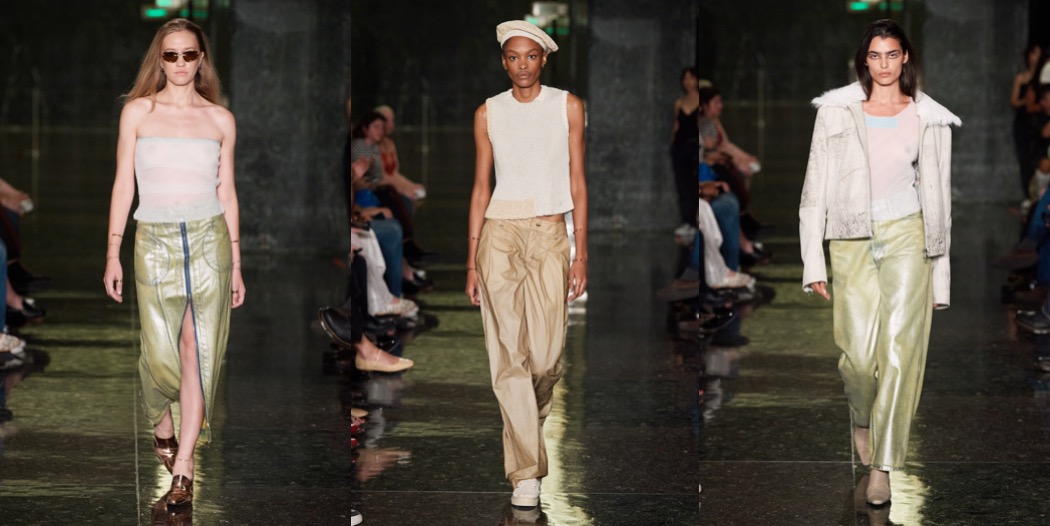
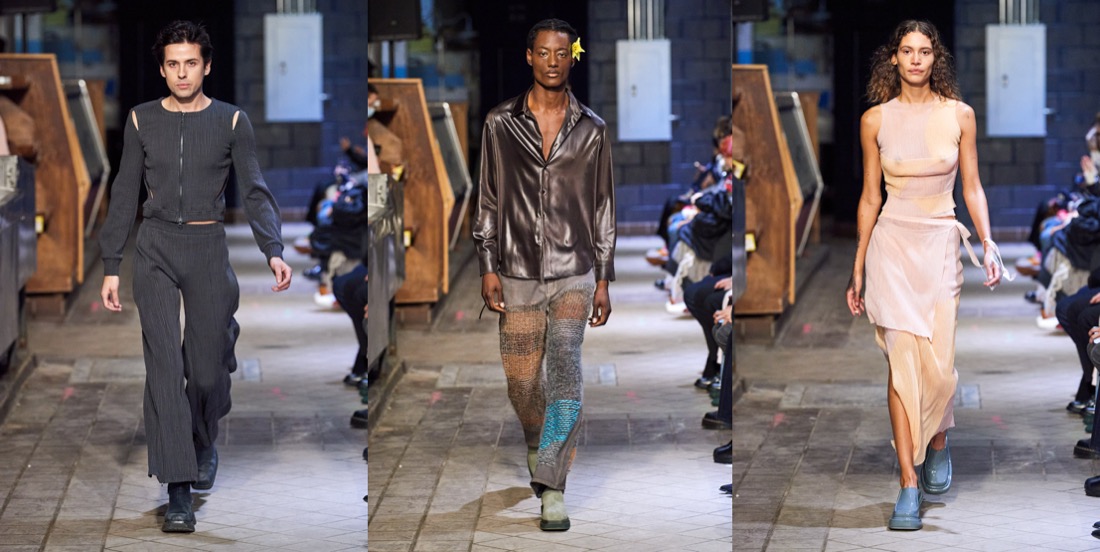
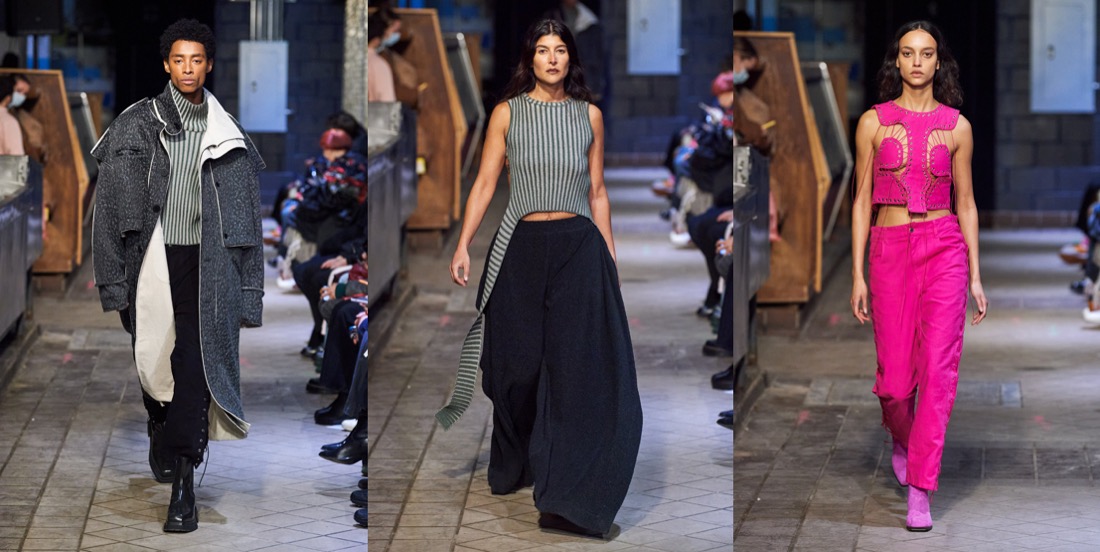
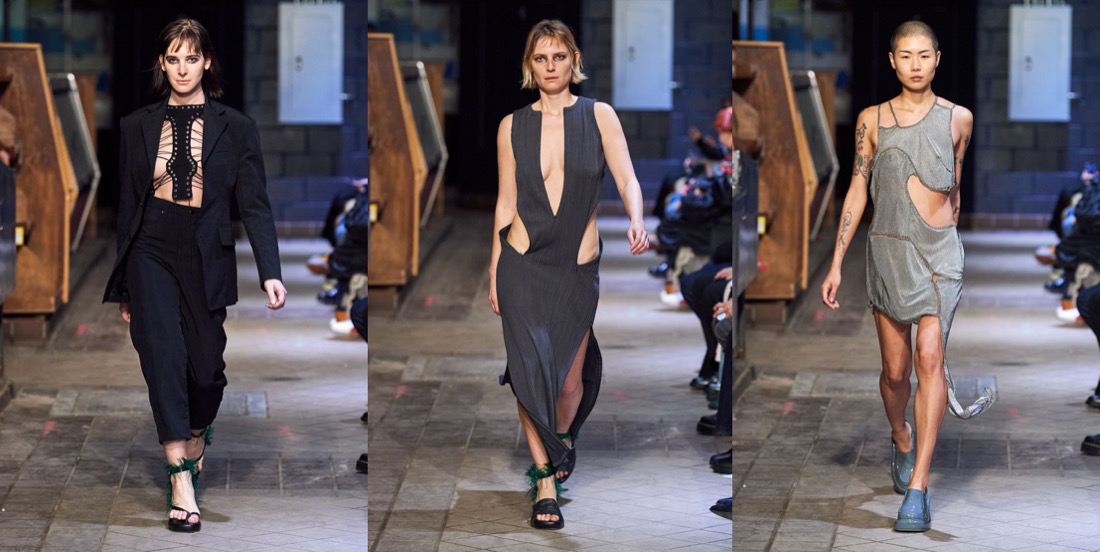
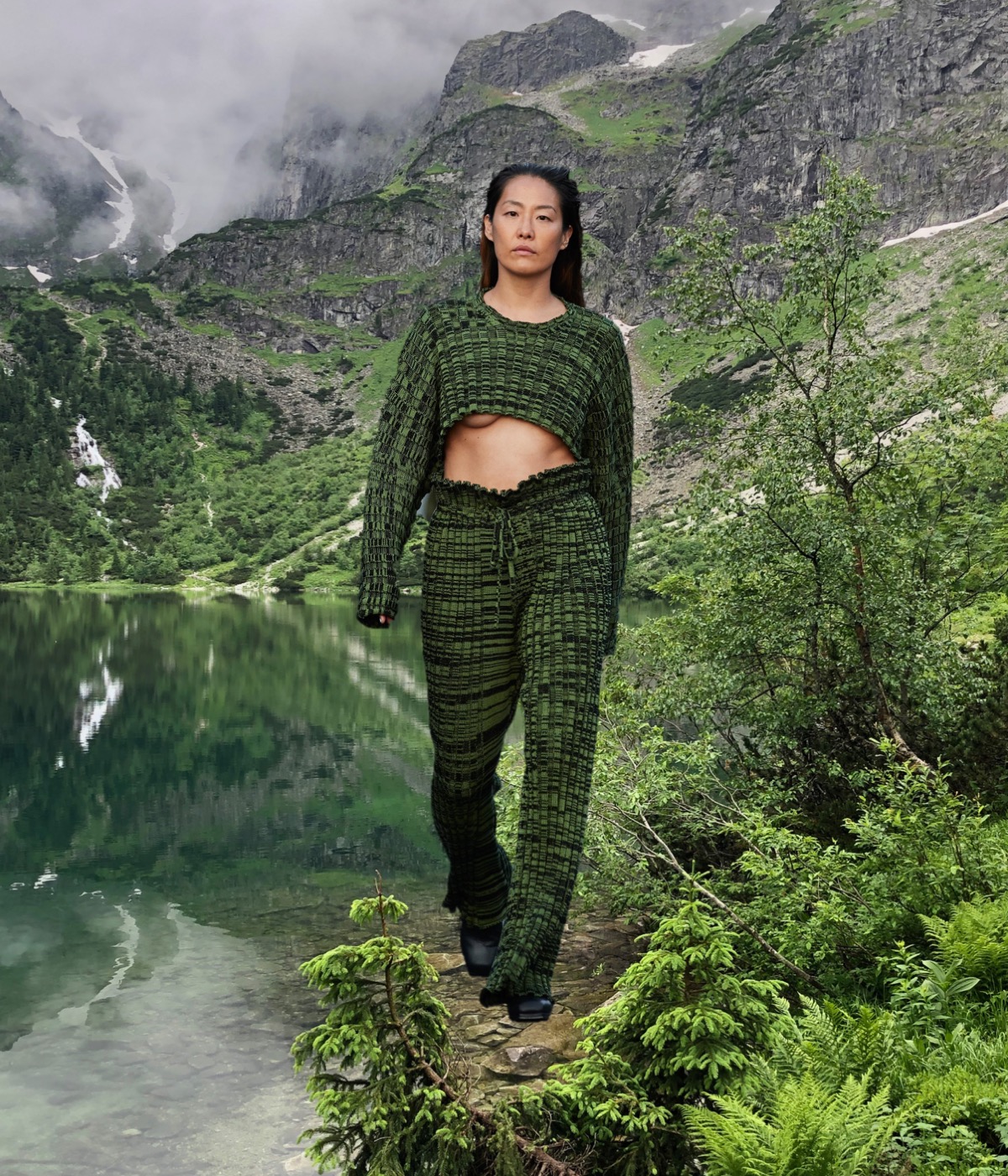
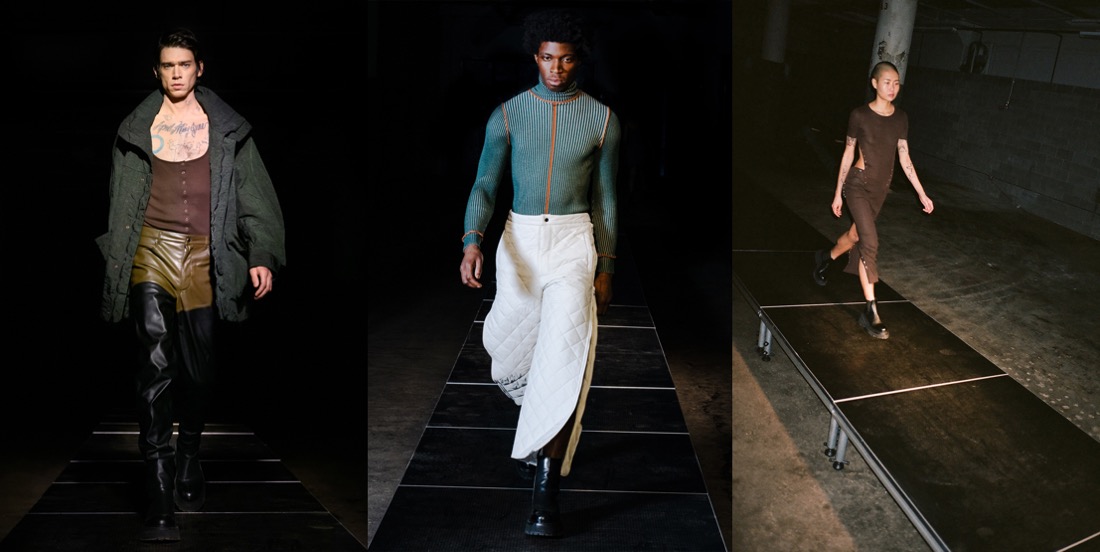
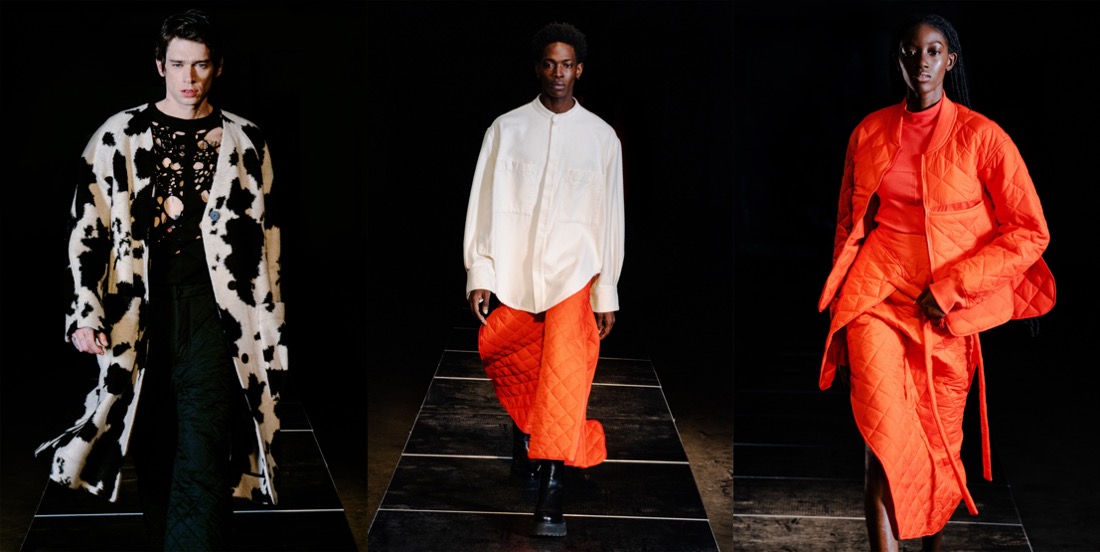
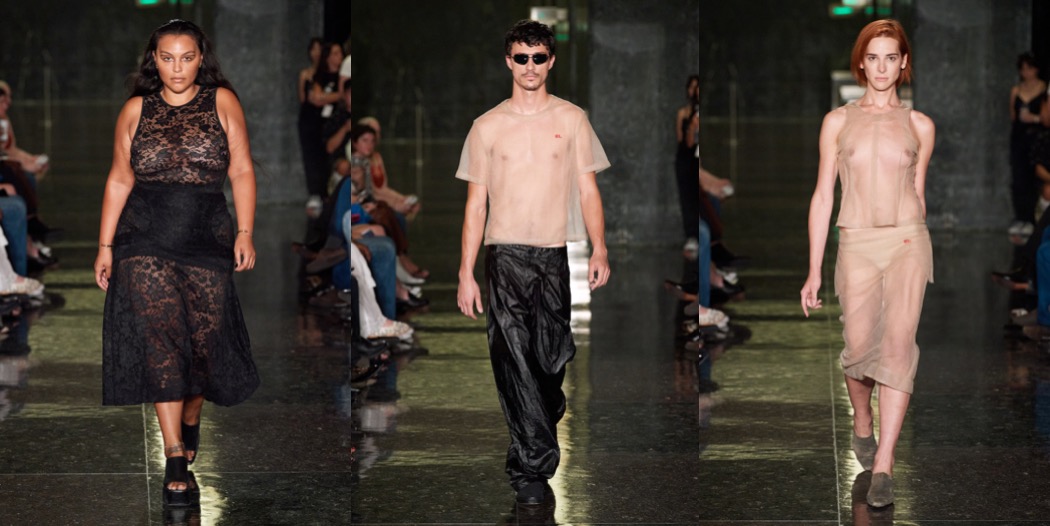
There was an intriguing shift going on at Eckhaus Latta‘s spring-summer 2024 fashion show. Their venue this season was the International Building in Rockefeller Center, which harks back to the great business centers of yesteryear, with dramatic escalators and a 45-foot statue of Atlas. The clothes reflected that corporate feel, messing around with the “formal” dress-code. Zoe Latta and Mike Echkaus introduced new materials to their brand, like lace and leather, and in general the offering felt very mature, solid – of course with a distinct, gritty twist. Could this be Eckhaus Latta’s answer to the prevailing “power dressing” trend? Through an ironic lens. “There’s something deeply sad about working all day and night on a garment that’s going to be seen for four minutes max, and then maybe get pulled [for a photo shoot], and then lost by a stylist. Or FedEx,” Latta said. “So we want to figure out where our language exists in an exciting way, but also in a way that is reproducible and wearable. Finding the things that can be a more ‘luxury’ offering and the ones where we can have more accessible price points that are still cool and exciting.” On the luxury end, they worked with leather for the first time – all deadstock, from Portugal – to make fantastic jackets, slim dresses, and baggy jeans that will be produced in limited runs. As always, the excitement came from the materials. The designers worked with Unspun to develop custom fabrics for denim. “It was so much fun to work with a new technology and develop fabrics,” Latta said. A pair of extra-wide, coarse-woven jeans was made out of twine they sourced at a hardware store. They curved elegantly around the legs like a small ball skirt, but also gave the impression of a cowboy in chaps (there were hints of the American West throughout). A group of knitted separates made from a soft yet sturdy Italian fabric in sheer beige were all “discreetly” embroidered with the EL logo in contrasting red thread. “We’re doing a monogram for the first time, but kind of ironically putting it on these ‘naked clothes,’ so it’s almost like a tattoo,” Latta explained. Hari Nef wore a tank and matching pencil skirt, very ladylike in its silhouette, with pointy-toe mules. “We always have these kind of sheer, kinky pieces – but they’re not kinky in the sense that when people wear them they feel objectified; we just want them to feel more sexual in themselves,” Latta added. The captivating thing about Eckhaus Latta is the way the designers play with contrasting desires. There’s an undeniable sex appeal and sensuality to what they do—because their clothes beg to be touched, while at the same time they’re thinking about the Patagonia brand and using tech fabrics and materials. Latta calls it “the tension between what’s really durable and hard and wearable and what’s delicate and fragile.”
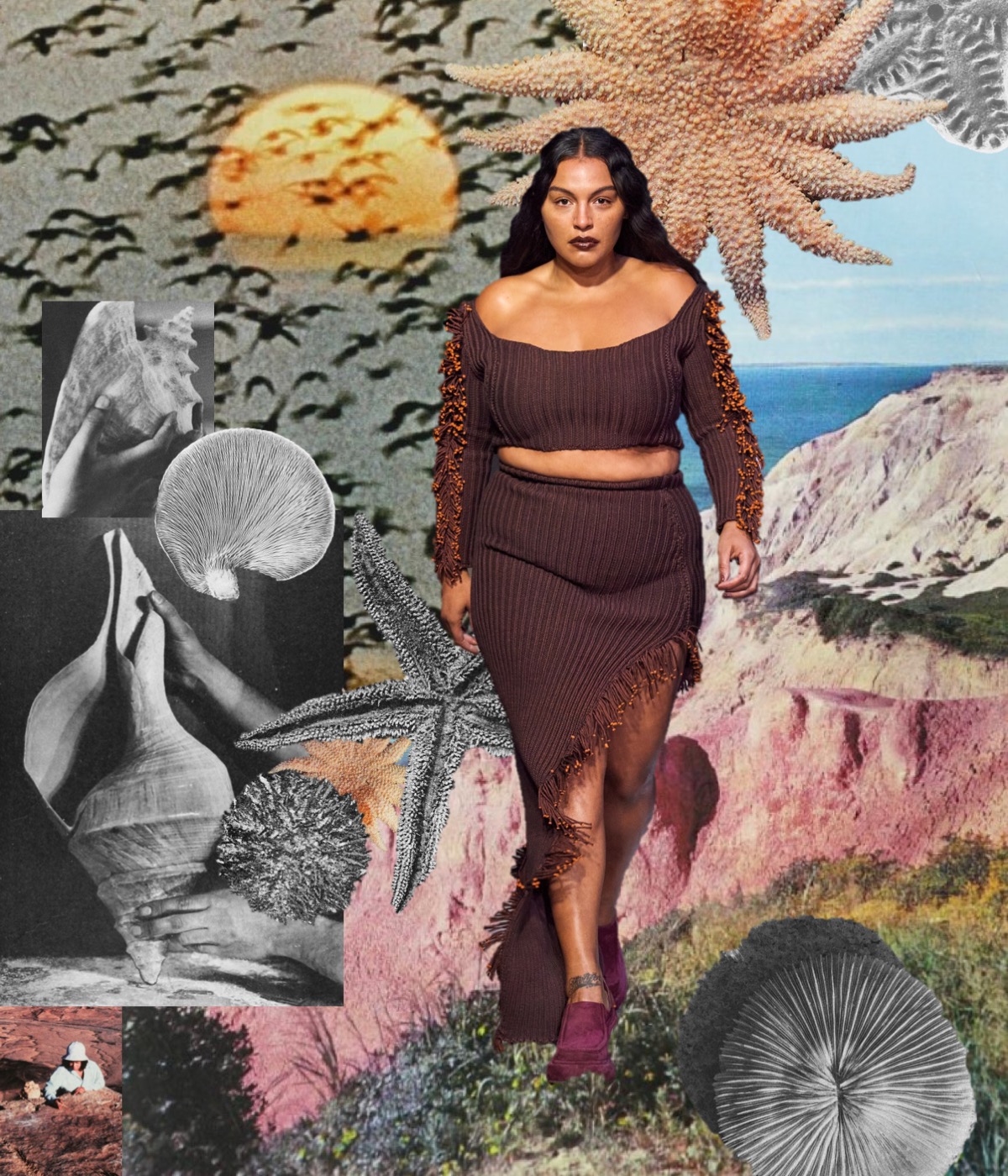
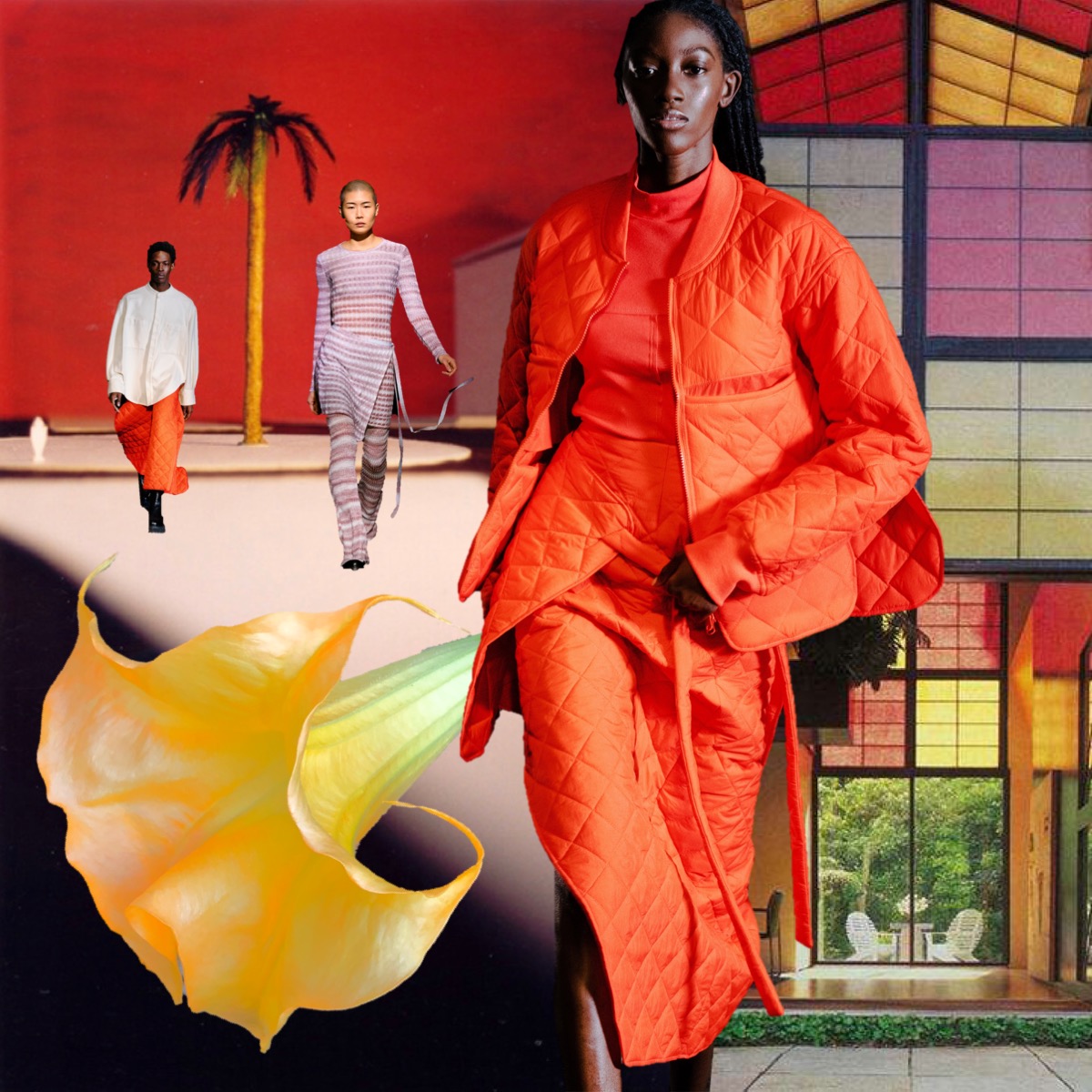
Collage by Edward Kanarecki.
Don’t forget to follow Design & Culture by Ed on Instagram! By the way, did you know that I’ve started a newsletter called Ed’s Dispatch? Click here to subscribe!
NET-A-PORTER Limited

Tactility. Eckhaus Latta SS23

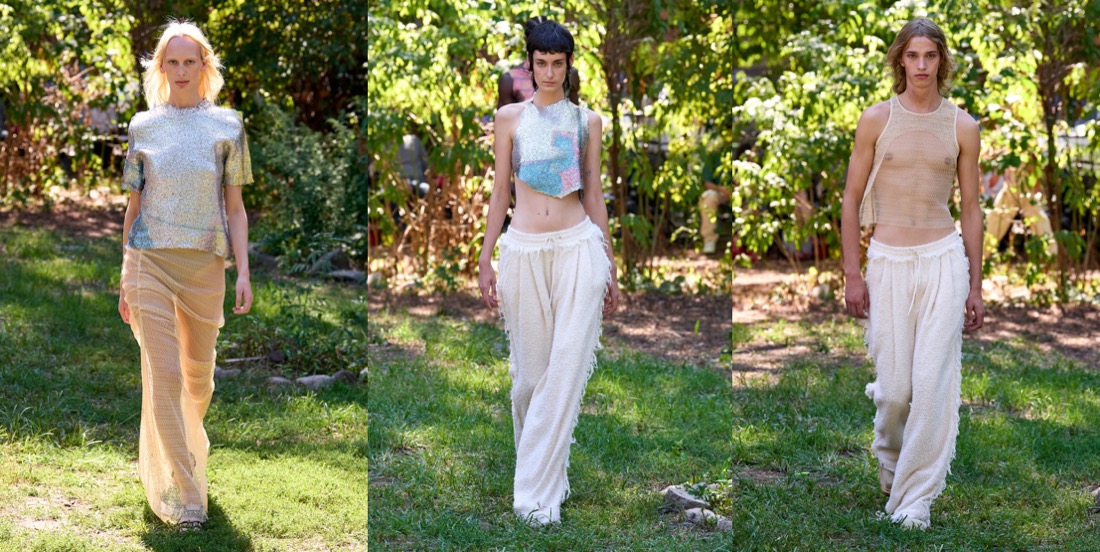
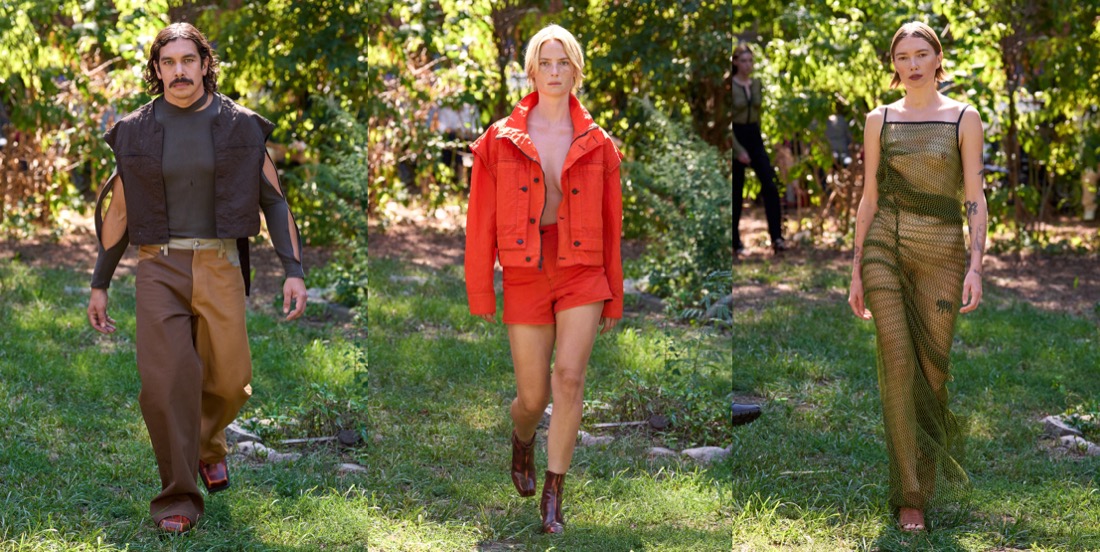
The vibrant Eckhaus Latta spring-summer 2023 show took place in one of those lush and beautiful gardens that you can’t believe actually exist in the middle of the city. As models walked out in geometric metallic knit tops that glistened in the sun like tinsel, their faces shiny like doughnuts (turns out it was a peel-off face mask), it was clear the buoyant mood felt before the presentation wasn’t just on account of people running into each other after not seeing them for a while, but it was what Mike Eckhaus and Zoe Latta actually wanted everyone to feel. “I think this season we felt rather optimistic and wanted that to be expressed within the clothing,” Eckhaus said backstage after the show. “I feel like there’s been this general sense of apathy that we, our community, or just our friends have been feeling,” Latta added, picking up the beat immediately. “This is kind of an attempt to be like, ‘It is still chaos. The world still feels a little fucked, but let’s have fun.’” There was joy in Hari Nef’s cream slip dress, adorned with embroidered threads covered in beads that click-clacked this way and that as she walked through the grass. Musician Ethel Cain, wearing a proper ecru cropped bouclé jacket (and matching wrap-around skort) with a “Fear no plague” tattoo right in the middle of her sternum, was cheeky. No, wait, actually cheeky was Jacob Bixenman’s burgundy bubble polo shirt, worn with what looked to be a one-leg pant that exposed exactly half of the model’s buttocks. Silhouettes were slightly oversized and gave the illusion of being askew; attention was paid to the back of the garments as much as the front with image placement, interesting pockets, and other details. “It’s a sense of wanting that fullness,” Eckhaus said. “I feel like we’re so accustomed to images now – the front image – but clothing is 360, and we wanted to have that juxtaposition of what you’re experiencing on the front of the body versus the back, having it feel more rounded or having different types of energy that move back and forth.” Every look appealed to the senses, with textures that were begging to be touched and played with, like cool netting turned into a long dress with a straight neck and ruched detail on the front, or floral-embroidered trousers with what looked to be a built-in skirt on top and tassels running down the sides. “We wanted a lot of tactility in the collection with the textiles that we’re using across the board,” Eckhaus said. “Whether it was how images were placed on clothing, how materials transformed, like in the knotted pieces and the bubble fabrics, but not getting too – as we always joke – ‘project-y,’” he said, laughing, before adding, “But then I feel like, if it does get project-y, whatever. We’ve been doing this for a while, and we feel really confident in the times when we do have those gestures.”

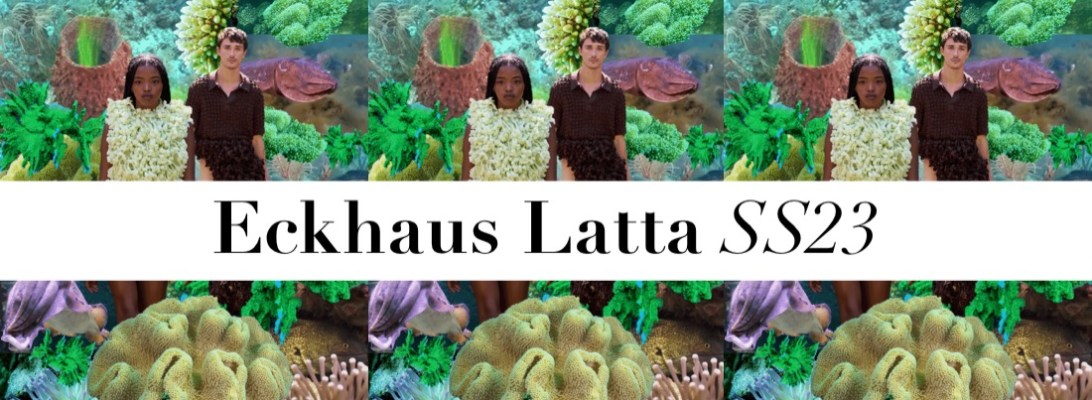
Collage by Edward Kanarecki.
Don’t forget to follow Design & Culture by Ed on Instagram!

NET-A-PORTER Limited

Independence. Eckhaus Latta AW22

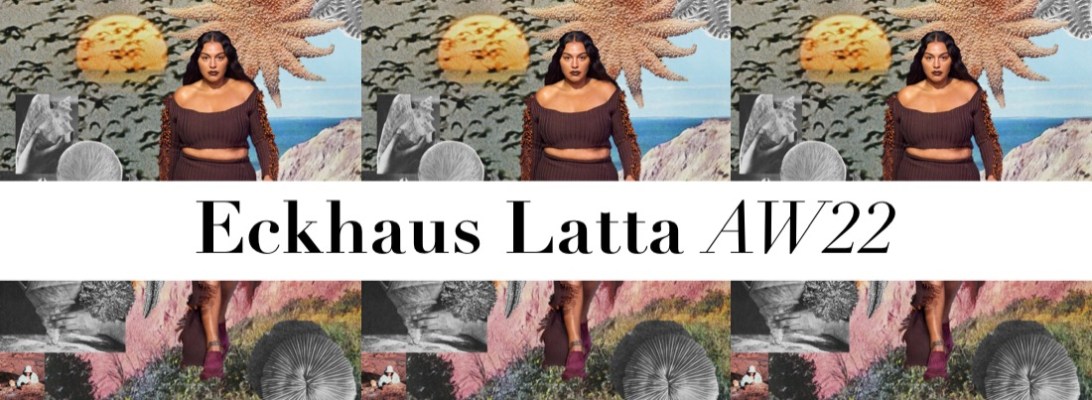
It’s another anniversary this New York Fashion Week: Eckhaus Latta celebrates its first 10 years. It’s not that easy to define this brand in one word – it’s raw and elusive, sexy and gender-fluid, over-sized, and then all of the sudden super clingy and sensual, spontaneous, kind of minimal, but not really noting all the arty handwork the brand loves to add to their collections. When Mike Eckhaus and Zoe Latta arrived in New York in 2012, their label was immediately deemed “crafty” and “indie”. After a decade in business (the irony: many people still consider the brand as “emerging”), Eckhaus Latta is one of New York’s strongest standing independent labels, with two brick-and-mortar stores, an e-commerce business, and admirers from all over the world. Its anniversary show at the former Essex Market affirmed that after a decade of independence, Mike Eckhaus and Zoe Latta are still charting their own course in fashion. The autumn-winter 2022 show was filled with Eckhaus Latta signatures. Sheer, glittery knits were slashed open at the back; minidresses were cut on a square edge; and tailoring was slit to reveal a spine, a thigh, or a breast. Worn by the brand’s friends and collaborators, including David Moses, Hari Nef, Maryam Nassir Zadeh, Thistle Brown, and Paloma Elsesser, the collection was a summation of everything Eckhaus Latta has built. It was cool, unfussy ready-to-wear with undertones of kink, craft, and community. It still is all these things, without ever labeling itself. “We didn’t want to be nostalgic or retrospective,” said Eckhaus postshow. “But we did want to bring back the things that we loved from our early collections, the handwork especially,” added Latta. The chain-mail pieces that closed the show, graphically sliced up to be equal parts erotic and acerbic, were handmade in the brand’s atelier. It was well balanced with the label’s more affordable garments. May Eckhaus Latta’s next 10 years be about furthering the bond between its tender handwork and commercial hits.

Collage by Edward Kanarecki.

Feel Free. Eckhaus Latta SS22

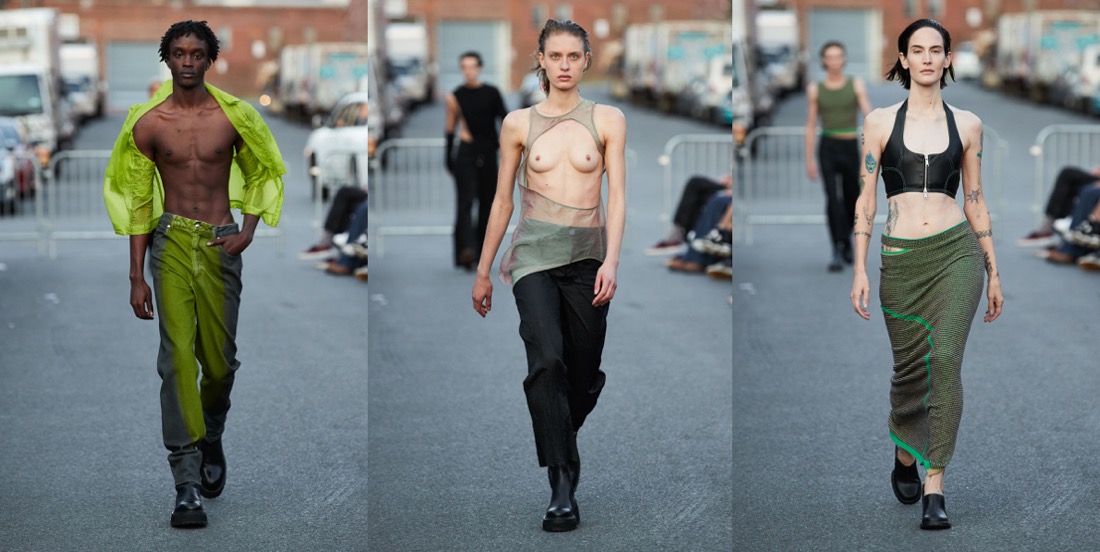
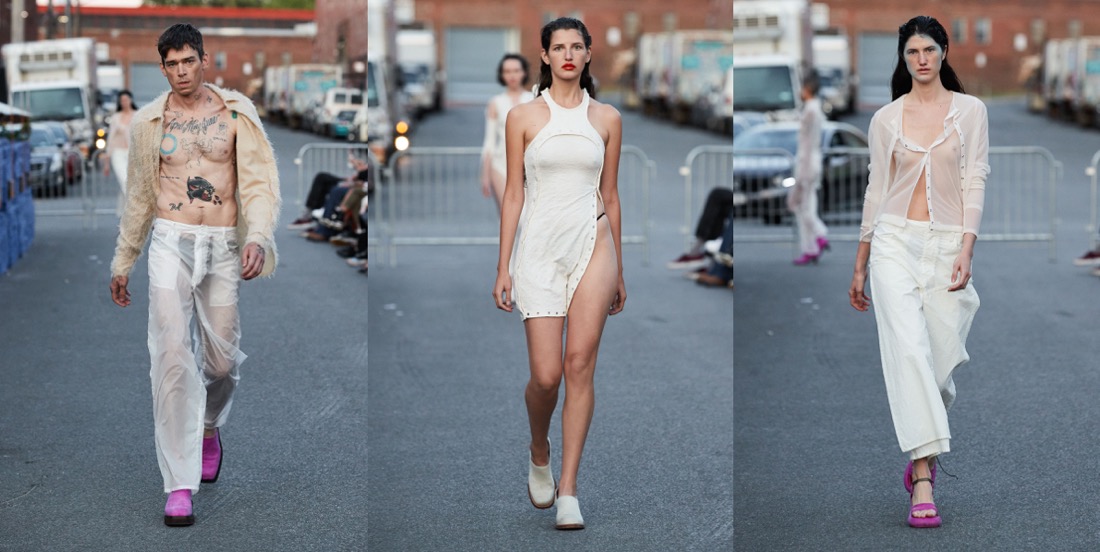
What Eckhaus Latta sent out this season was one of their most concise and quintessential collections ever. “It’s about feeling more free,” said Mike Eckhaus and Zoe Latta. “Really feeling yourself, coming out of the past year-and-a-half and wanting to feel sexy and confident and free.” Garments were filmy, thin dust-colored layers of nylon layered together, ivory cotton dresses and bodysuits with oval cutouts and hundreds of snaps, and airy shirts in lime and faux leather jackets in cinnamon left open. Pieces were named after transient, erotic words: vapor turtleneck, undone jumpsuit, wisp dress. The torsos were out, the nipples were out, and in a statement of intent: models wore black thongs instead of the industry-standard beige. This collection felt like a Helmut Lang tribute, even if this wasn’t the intention. Back to the designers – both Latta and Eckhaus had a reckoning with their own bodies this past year; she became a first-time mother, he had a breakup and then the requisite hot boy summer. “We’re going through different things, but we both have a desire to just be fucking real,” said Latta.

Collage by Edward Kanarecki.

Grounded Approach. Eckhaus Latta AW21

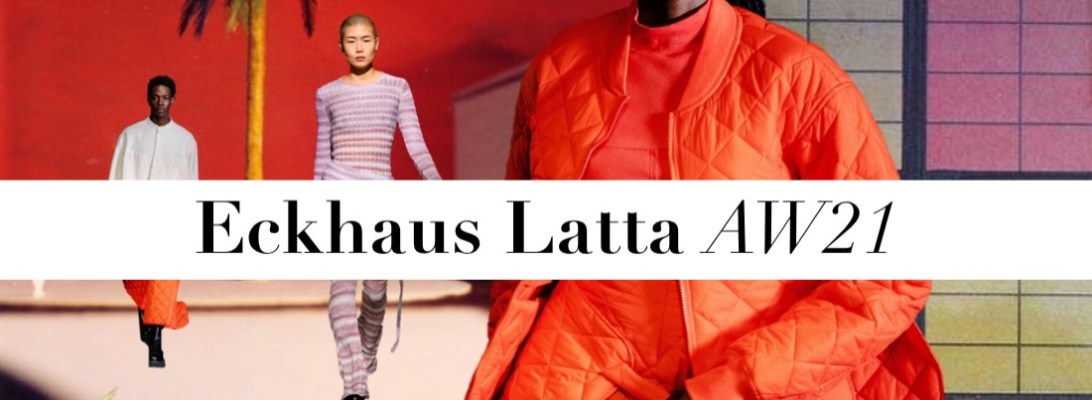
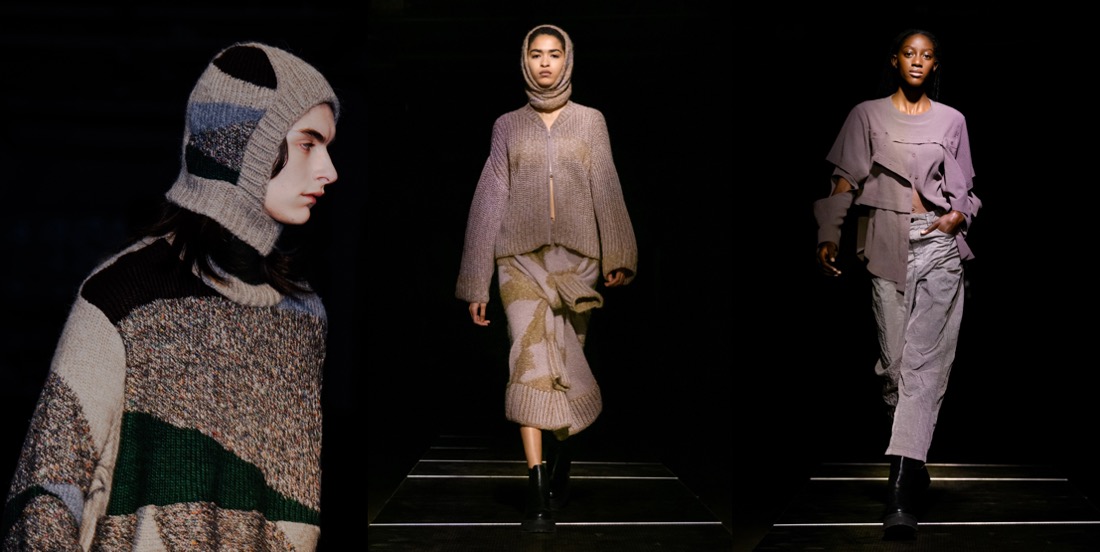
Like many people during this period, Zoe Latta and Mike Eckhaus had a mood rollercoaster. As the duo explained on a Zoom call with Vogue that bummed-out vibe provided a creative spark, suggesting that their focus ought to be on comforting shapes and textures and a somber palette. The Eckhaus Latta duo went on to report that, thankfully, they are feeling more optimistic now – and that they are eager to get back to fashion business as usual, with live events and people around, but in the meantime, like the rest of us, they’re making do. Perhaps accidentally, it’s that sentiment that served as the red thread through their autumn-winter 2021 outing. The most arresting idea the designers explored this time out was the deconstruction of familiar silhouettes in ways that created artful voids in the clothes or that made them adaptable into different forms. It was a poetic expression of our current state, a year into the pandemic. Eckhaus and Latta also played with optical patterns, like trippy rib knits and a black-and-white jacquard, and with ways of giving a sense of hand to synthetic fabrics. The collection was small, but thorough; every look was wholly considered, from form to detail. Perhaps the collection’s most admirable quality, though, was its grit – though we often look to fashion for fantasies of the future, that kind of grounded approach is necessary. This Eckhaus Latta line-up not only captured the general mood, but somehow it made it look… cool.

Collage by Edward Kanarecki.