Hermès in Warsaw

Just a step from the entrance to one of Warsaw’s most refined and elegant hotels, Hotel Europejski, which is located in the historic Old Town district of the city (known as Krakowskie Przemieście), a very special opening took place a couple of days ago. It’s the first ever Hermès store in Poland. The light-filled, dripped in tones of honey, burgundy and beige interior was designed by the Paris-based RDAI interior design studio and is furnished in a signature, equestrian style, which is distinct to Hermès house codes. The marble floor is a black & white checkerboard, the furniture is all about French design classics, while the metallic screen displays silk and cashmere carré scarves and shawls (the bold Animapolis edition by Jan Bajtlik is its star!). Behind, you will see the iconic bags, and one of them will strike you the most: the Birkin designed especially for the Warsaw store, with a trompe l’oeil store façade intarsia. Take a few steps back, and to the right you will find a selection of Nadège Vanhee-Cybulski’s chic and terrifically luxurious womenswear and menswear; to the left, the store is supplied with homeware (think porcelain and blankets), fine jewellery and perfumes which are sold exclusively in Hermès flagship boutiques. In the past, I would never believe a brand like Hermès will open its doors (here, I emphasize a separate store, not just a ‘box’ in some department store…) in Poland. So believe me, visiting the brick-and-mortar space for the first time was an experience filled with excitement and… a kind of pride.

Krakowskie Przedmieście 13 / Warsaw

Photos by Edward Kanarecki.

TBT: Margiela’s Hermès Years

Slide1-kopia 5

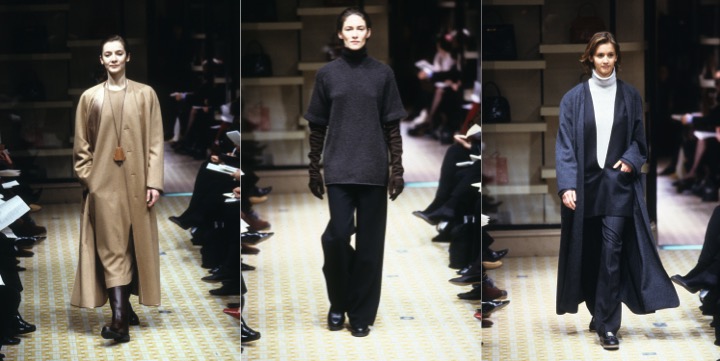
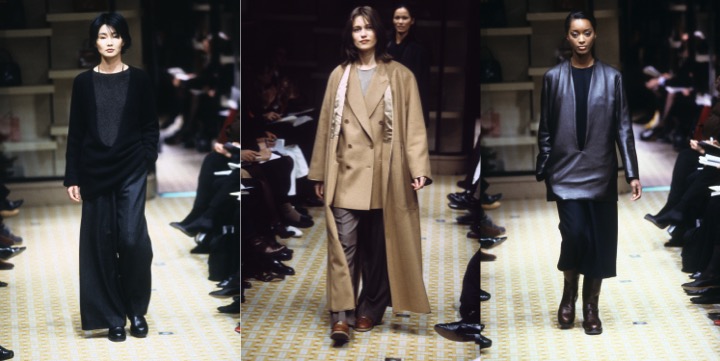
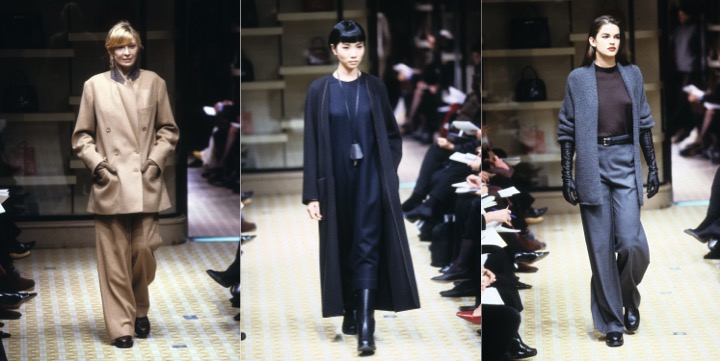
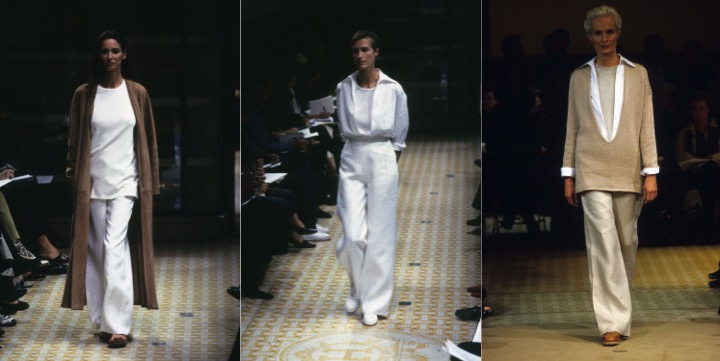
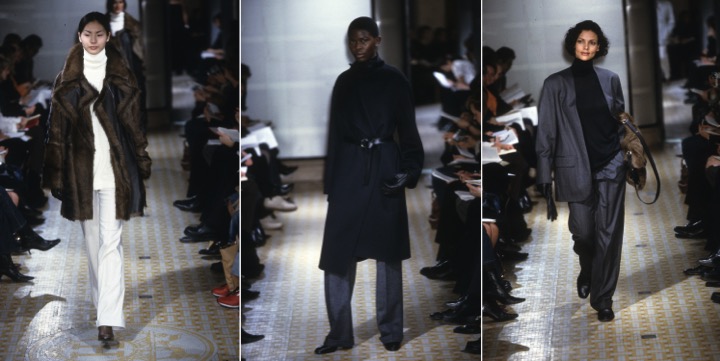
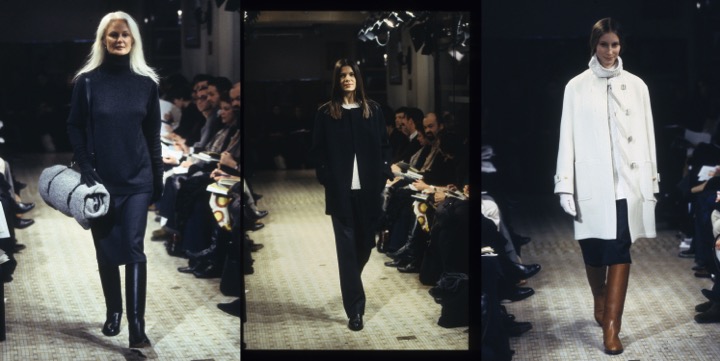
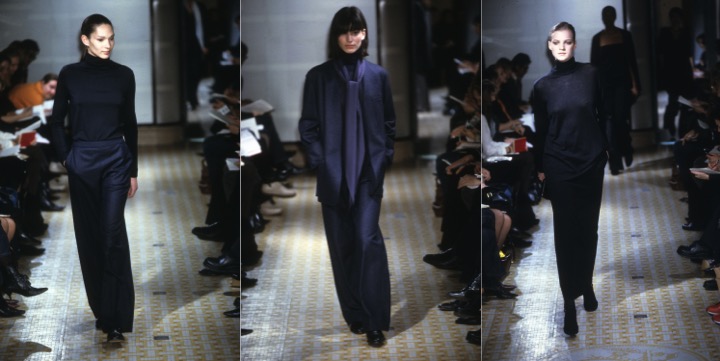
It’s funny that Martin Margiela‘s tenure at Hermès suddenly appeared on everybody’s lips after this year’s exhibition at Antwerp’s MoMu It took nearly two decades for the fashion industry to wholeheartedly appreciate the Belgian visionary’s contribution at the maison, that’s probably most associated with very-rich-women kind of ‘luxury’. At his eponymous label, Maison Martin Margiela, the famously anonymous designer used to redefine such terms as ‘avant-garde’ and ‘minimalist’ in one single garment – meanwhile at Hermès, it was a different philosophy. Tranquil, understated and low-key – that’s how the guests of his shows at Rue Saint-Honoré flagship store (12 in overall, between 1998 and 2002) described the atmosphere. So were the clothes, kept mostly in black, beige or navy. Fashion tends to forget its references, and as you can clearly see in images below, it wasn’t Phoebe Philo at Céline, Christophe Lemaire (he designed for Hermès before the current creative director, Nadège Vanhée-Cybulski) or The Row who were first to decide on making a perfectly tailored camel coat the focus of their collections.

For Margiela, ready-to-wear with a Hermès tag had to be of the best quality materials, made with the biggest attention to details (no flashy embroideries meant here) and with the aim to be worn for the next 20 years. This is what actual ‘luxury’ in fashion meant to Martin, even though he would never use that stabby and deprived of its meaning word. For a brief moment, Hermès was more than fancy foulards and bags (note: for spring-summer 2000, Margiela casted Jane Birkin as the show’s model, making a nod to, guess what, the Birkin bag). It was about the clothes, too, and very well constructed clothes: warm cashmere sweaters, crisp white shirts, masculine blazers, eternally chic black gowns. And sneakers – remember, we’re speaking of 90s / beginning of 00s, when only stilettos mattered on Parisian catwalks. There’s no surprise his shows weren’t received that well. Many thought that Hermès was just ‘boring’ with Martin’s conservative approach: those were the 90s, after all, and fashion loved FASHION. The time has shown, however, that those who bought Margiela’s Hèrmes were the smart ones. Finding pieces from that era is quite a struggle, and when you find anything, the prices are killer. Martin Margiela is an acclaimed designer for more than one reason, but his underrated creative direction and aesthetic at Hermès is… timeless.

Slide01Slide02Slide03Slide04Slide05Slide06Slide07Slide08Slide09Slide10

Collage by Edward Kanarecki.

Who’s Cybulski? Hermes AW15

01-hermes

That was a big moment for Hermes – the former designer assistant of The Row, Nadege Vanhee-Cybulski, showed her debutant collection for this historical French house. Strict suede silhouettes and sexy pencil skirts are out-standing while the way Nadege transformed silk scarves into leather bandanas is a highlight. Red and mustard were the key colours of this minimal and classical presentation – although the collection lacks the romanticism which was brought by Christophe Lemaire, the clean and sharp lines match the house codes too. It’s already a wonder what Cynulski’s going to do in the future for Hermes!

02-hermes

08-hermes

13-hermes

22-hermes

33-hermes

40-hermes

Understated Luxury. Hermes SS15

1094060

That was the last season of Christophe Lemaire at Hermes- and surely, it really was worth an applause. The understated luxury, traveler chic and the elegant style is everything that Lemaire achieved at Hermes and continues in his own, name-sake, brand. Cream and white layers in alligator printed suede, oversized Hermès prints blown up on belted in scarf dresses and loose silken separates in dusky pink and golden yellow all summed up the sense of freeing ease that Lemaire imbued on the house. These clothes don’t need bells and whistles and neither does the house when you have an arsenal of fine fabrications. But who is next at Hermes? It’s Nadege Vanhee-Cybulski, which comes to the house with experience from The Row and Celine. In other words, it’s surely going to be a match in heaven. However I will still miss Christophe Lemaire at this French, super strong house.

By the way… it’s the last “reviewed” collection from SS15 by me. This season was beautiful. Can’t wait what the designers will show in the next half of the year!

1094062

Slide3

1094072

1094066

1094080

Slide2

1094065

1094061

1094064

Tribute to Lemaire at Hermes

FW11

After the disappointing years of Jean Paul Gaultier at the french luxury house, Hermes, Christophe Lemaire, the calm and silent Frenchie made it again on top. The succesful collections which were very into famous Hermes silk printed scarves and leather work, made Lemaire a person-to-know in Paris. He also worked for names like Maison Martin Margiela, which tells us why his clothes usually blend between femininity and androginity! After few years of working in the industry, Christophe opened his eponymous label called with his name, which is ultra-alluring and full of elegant seduction. As his brand grows (and gets famous in Europe), there is no wonder why the designer left Hermes, as announced yesterday. Who will take his place? Nobody knows. But let’s preview again all of Lemaire’s collection for Hermes since the year of his start, 2011.

zdjęcie 2-kopia 3

zdjęcie 1-kopia 3

FW11

First collection. Full of furs, beautiful prints made on silk… The designer’s access to the Hermès ateliers gave his work here a sophisticated polish that was overwhelming in its creamy, styled-to-the-ultra-max-ness. Maybe that’s why the sporting activities that were referenced were falconry and archery, rather more elite and arcane than the equestrian pursuits that are more fundamental to the history of Hermès.

SS12

SS12

Minimalim strikes Paris in 2012! If the luxury globe-trotter doesn’t fancy being weighed down with stuff, then Lemaire is her minimalist of choice. The designer’s own less-is-more orientalist aesthetic has found a home at Hermès, where even the least is more lush than the most of almost anyone else. In that, Lemaire’s work harks back more to the tenure of Martin Margiela than that of his immediate predecessor, Jean Paul Gaultier.

AW12

zdjęcie 5-kopia 2

AW12

Androgynous elegance for a luxurious nomad. Travel is movement. With his show today, Christophe Lemaire adopted the stance that no movement is more modern than the nomad’s. He opened with the gaucho—knit serape, baggy leather pants tucked into boots—and closed with pieces that were printed with folkloric patterns from the Russian steppes.

SS13

SS13

The fluid scarves were used as trousers, dresses, tops. The designer’s love of the East was expressed in mosaic prints created by Hermès’ unparalleled artisans in silk; Lemaire turned their tropical scarf prints into T-shirts and fluid shorts. But the most spectacular souvenirs that he passed on to his woman on the move were shorts in crocodile chiffre, shaded jade or cobalt.

AW13

zdjęcie 4-kopia 2

AW13

Hitchcockian seduction which is sexy, Parisienne and very elegant. One of the strongest collections that made Lemaire in the spotlight! “At last, pure French chic,” enthused French Vanity Fair’s Virginie Mouzat as she exited the Hermès show tonight. It was easy to see why a purely chic Frenchwoman such as she would feel that way after a week in which the waters of Parisian fashion had been thoroughly muddied by ugh! foreigners. Cue huge sigh of relief: The house of Hermès, paragon of all French things bright and beautiful in the eyes of the world, remains in the hands of a countryman, the subtle, earnest Christophe Lemaire.

SS14

SS14

Perfect outfits for a island / beach escape. Lemaire’s big influence was Henri Rousseau, the Frenchman who painted jungles without ever having seen them. The pendulous flora of Rousseau’s work were duplicated in the print that opened the show, with boots to match. The artist’s dark jungle green colored tops, shifts, crocodile culottes, and a wrapped leather coat. It was, in fact, color that marched this collection on: mulberry, teal, sky blue, sunset orange—intense shades that were new to Lemaire’s formerly neutral world. He applied them to long fluid shapes, ideal for a woman who values anonymity above all else. The mulberry jumpsuit paired with flip-flops? No chance anyone on the run will attract attention in that.

AW14

AW14

Lemaire said he’d been musing on all the characters a woman could be. But it wasn’t really those ethnic personae who carried the show. His notions of a strong, graceful, urban style were more persuasive. He tipped his cap to trends—lush knitwear, oversize coats—but the slightly exaggerated proportions of his jackets and pants once again seemed more of a reference to Martin Margiela’s tenure at Hermès, and were just as elegantly slouchy, especially in an ivory tux with an extravagant shawl collar, or a coat-dress, also in ivory, that was closed with a single button.