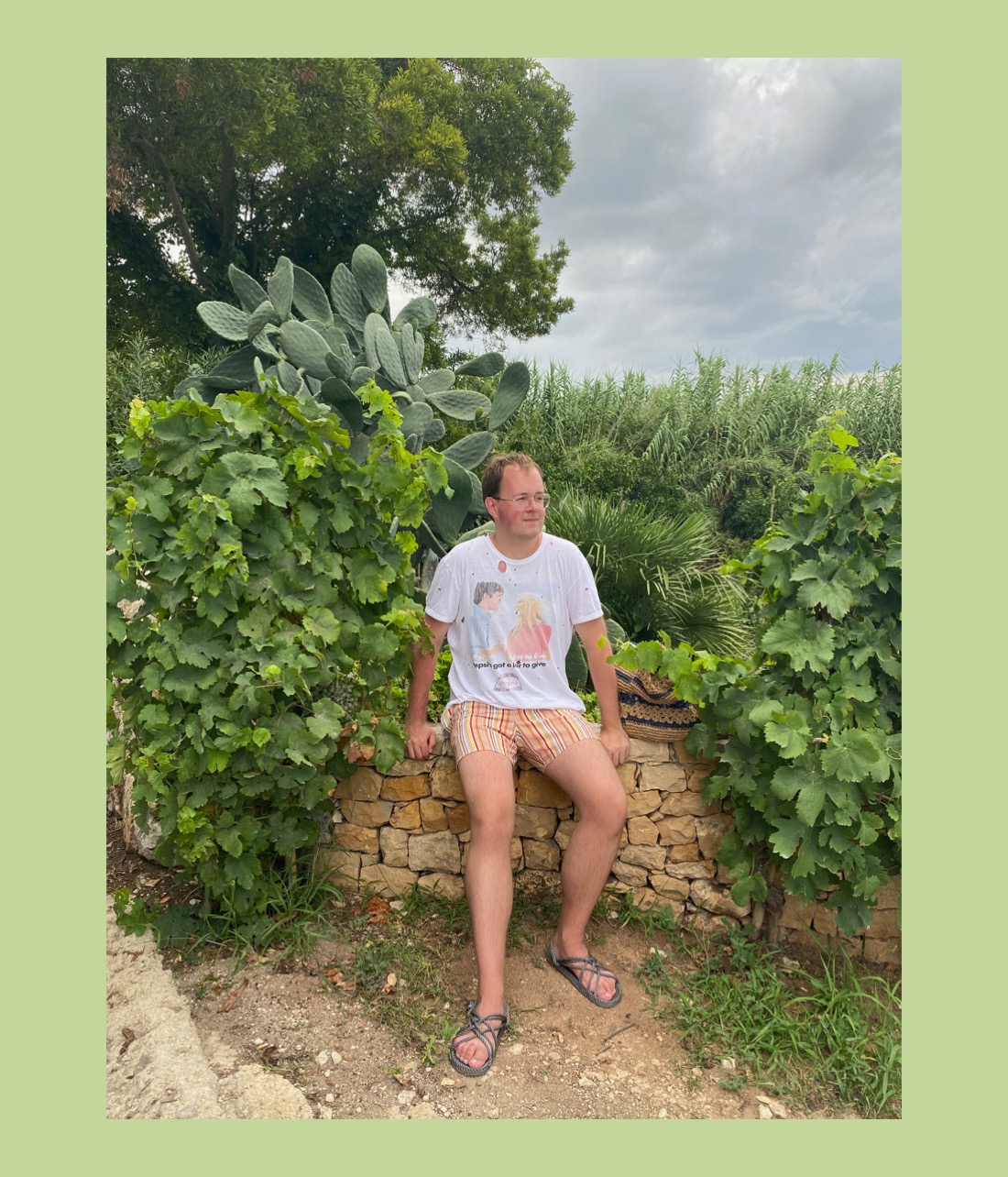
Whether you come here to walk, bird-watch or swim, the 8km long Vendicari Nature Reserve is one of Sicily’s most spectacular nature spots and a firm favourite with anyone who enjoys the charm of wild beaches. Situated in the south east corner of the island, it is made up of a mixture of lagoons, sandy beaches and rocky coastlines. Most importantly, it is visited each year by thousands of migrating birds, including flamingos, herons and terns, en route to or from Africa. Plant life too is significant, the high salt levels providing an ideal habitat for sweetly-scented herbs, dwarf palms and juniper bushes. On the way to the beach, there’s a lovely caffè serving the most delicious granita from local lemons and avocado.
Photosby Edward Kanarecki. Don’t forget to follow Design & Culture by Ed on Instagram!
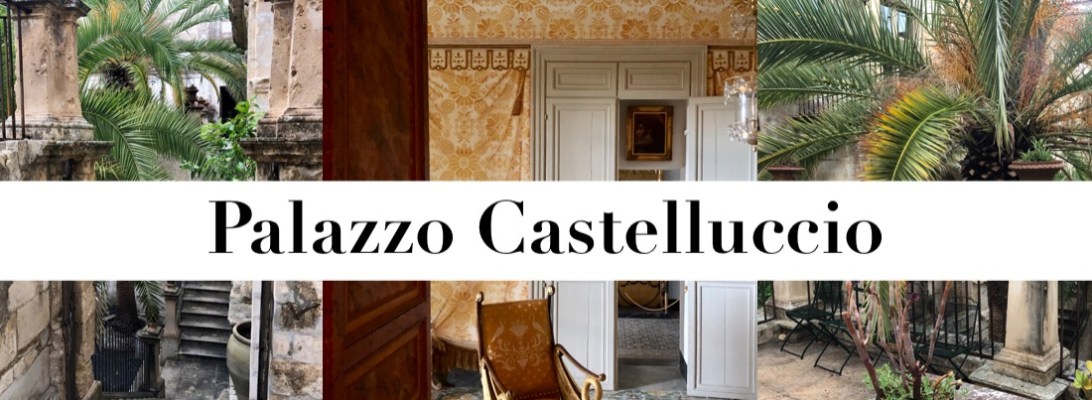
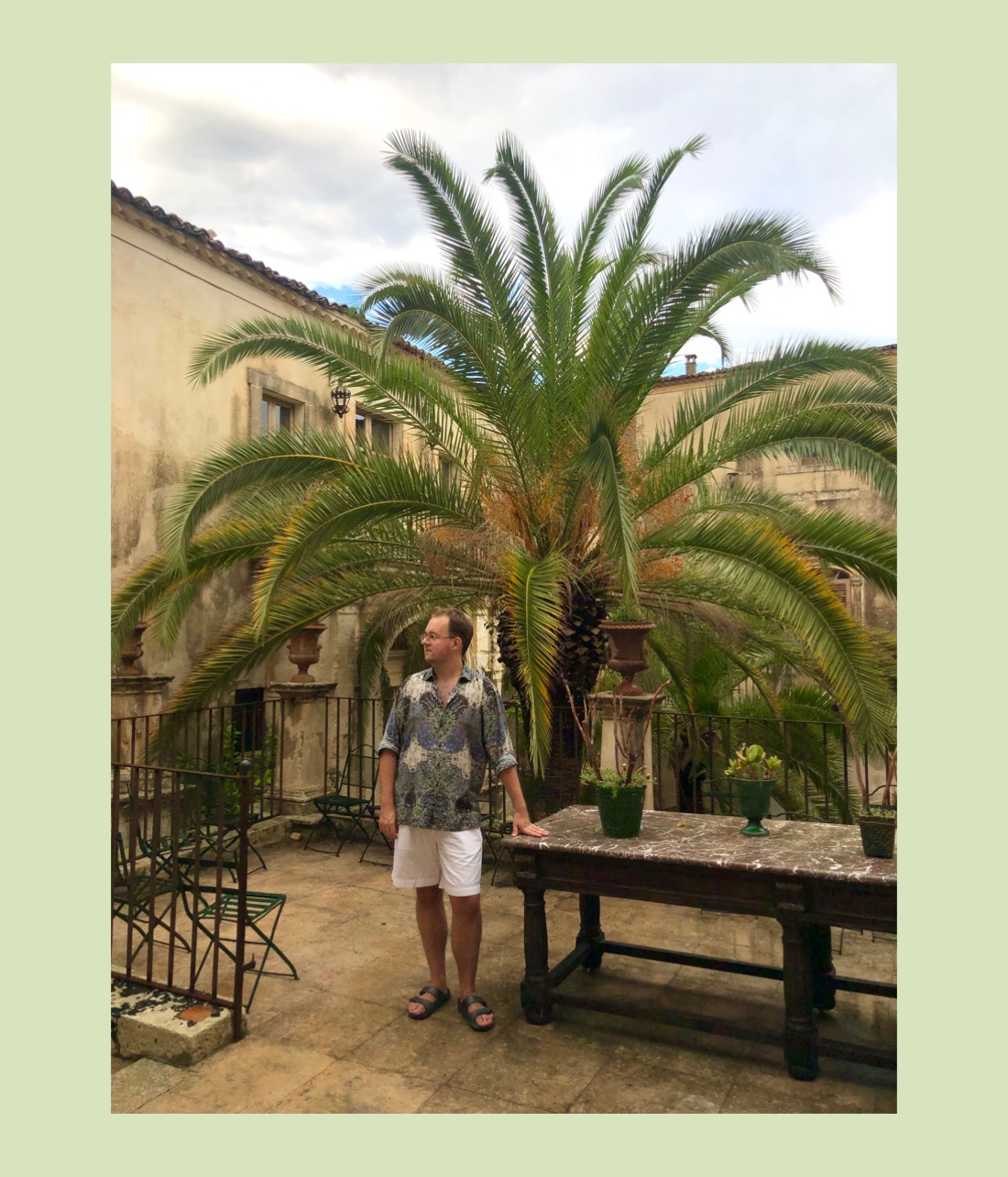
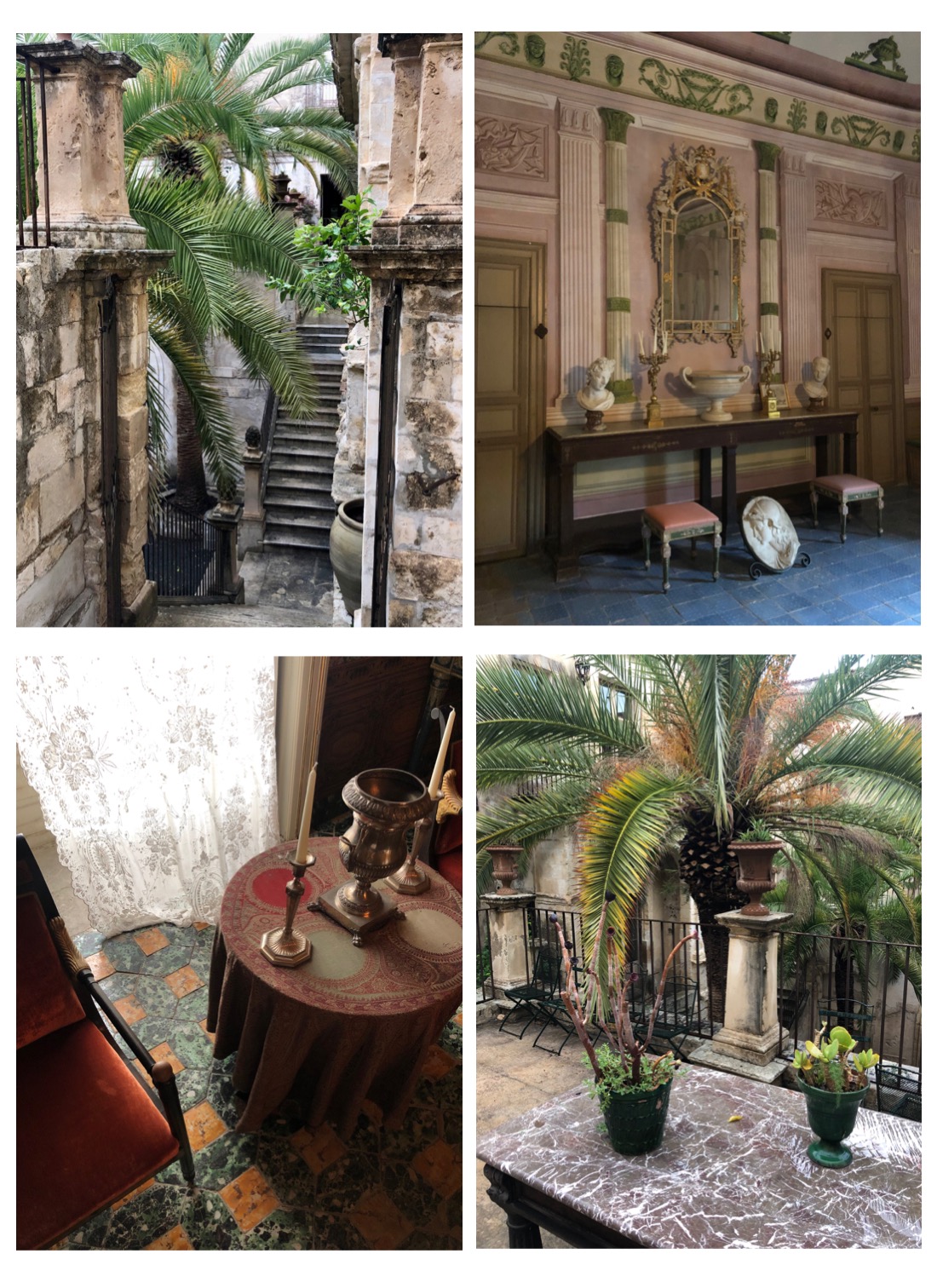
If you lose yourself to the streets of Noto, you will find incredible places to visit and fall in love with immediately. The Palazzo Castelluccio, belonging to one of the oldest families in Noto, was built in 1782 by the Marquis di Lorenzo del Castelluccio after the earthquake of 1693 which partly destroyed the region. The façade of the Palace, on Via Cavour, does not have the same baroque style used for the reconstruction of the main buildings of the city, but instead reflects the neo-classical taste popular in the late 18th century, which can be found in the well-preserved frescoes on the ceilings and walls of the main first floor. Four years of work were needed to revive the Palace, respecting its fine finishing and its history. The frescoes were cleaned and restored, the fabrics replaced and the silver wallpaper remade identically. A collection of Italian and Sicilian furniture and paintings restored the atmosphere of an inhabited palace. The music room, chapel and ballroom are testimony the power and good taste of a large aristocratic Sicilian family. After the death of the last Marquis of Castelluccio, the Order of Malta inherited the Palace and kept it for some years. When the current owner took possession in 2011, the Palace had been uninhabited for decades. The main first floor was in a terrible condition, and the doors, windows, paintings and electrical installations all had to be removed and replaced. Today, the colours have been restored to the grand staircase and its vases and extend a magnificent welcome to visitors…
Via Cavour 10
Photos by Edward Kanarecki. Don’t forget to follow Design & Culture by Ed on Instagram!
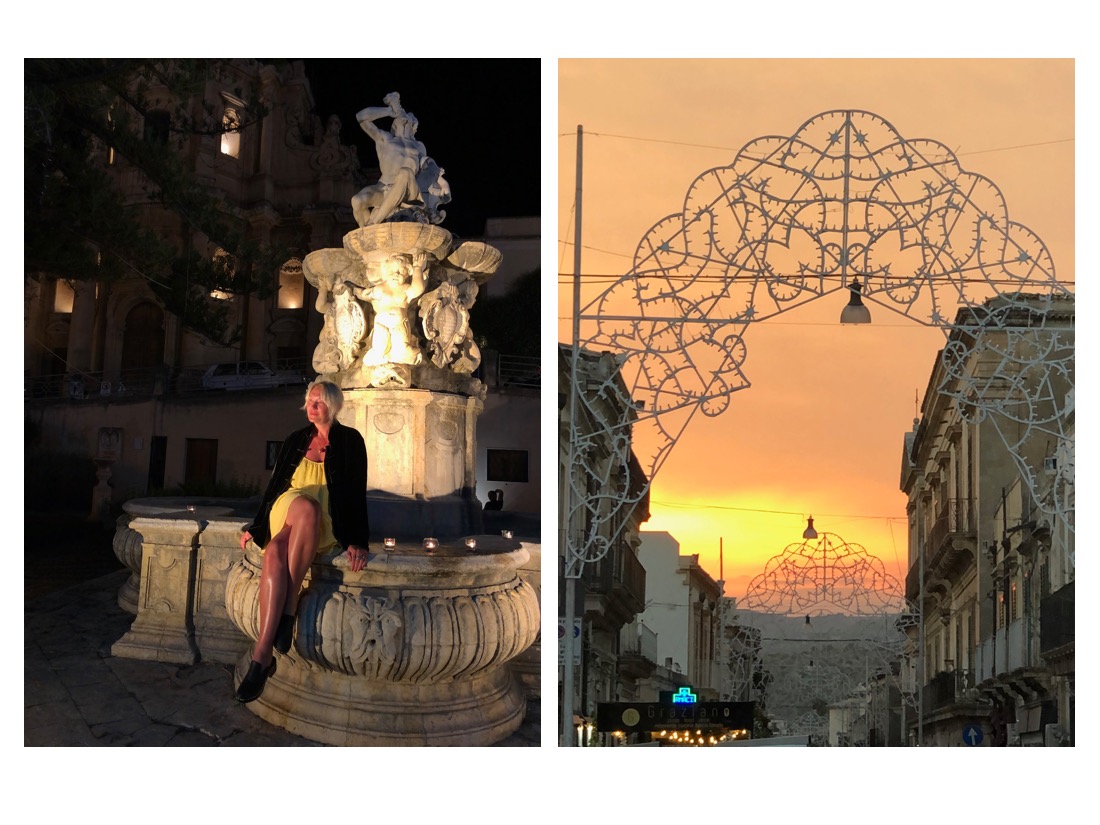
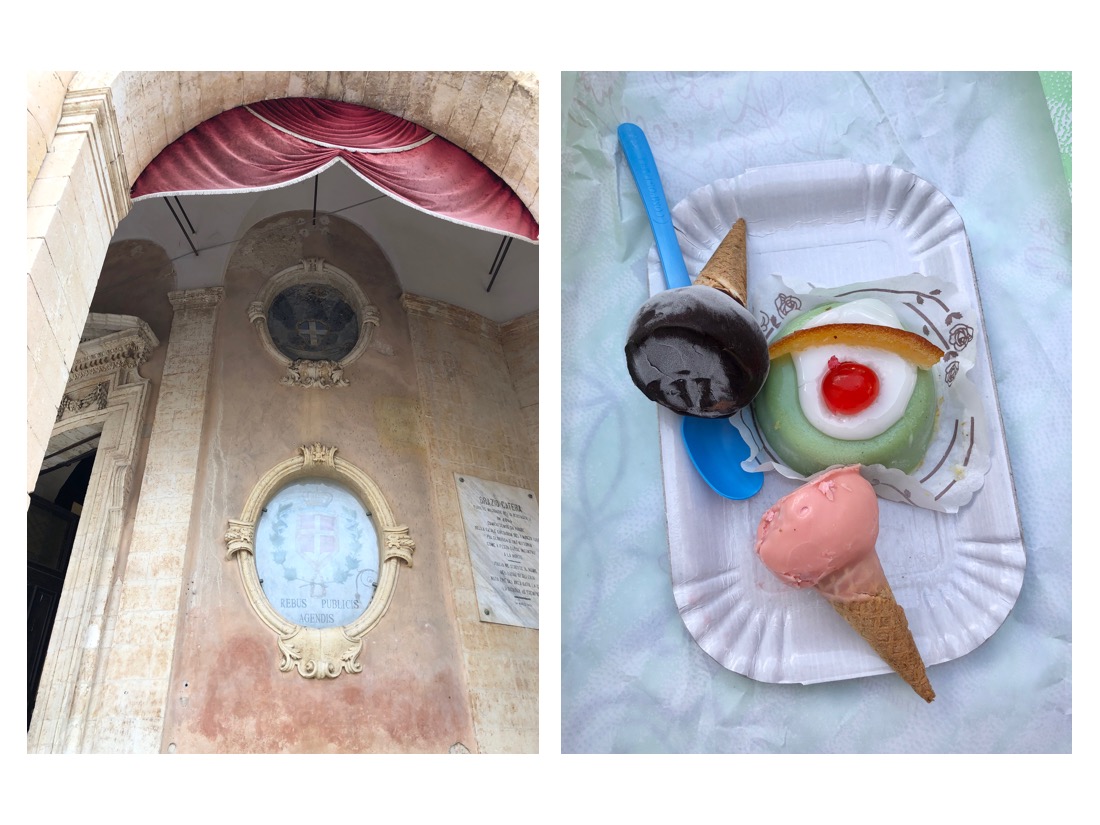
These past two weeks, I had the most amazing time discovering Sicily – so expect some sun-drenched content coming this week! During our first days on the island, we stayed in one of the most charming towns I’ve ever been to – Noto. In contrast to big European cities, Southern region of Sicily has all the history of Rome along with the small-town breezy seaside charm of the Cinque Terre. Until you are in Noto, though, it’s hard to imagine just how close neighboring historic towns like Modica and Ragusa – and any number of Ancient Greek ruins and unspoiled beaches – are to the town center and to each other. Noto and its neighbors make sightseeing feel serendipitous, but it’s worth staying his for a couple of days to truly absorb the aura of this UNESCO-protected, eighteenth-century Baroque masterpiece of town. It’s easy to cover the town on foot in a single afternoon along its two main arteries, the Corso Vittorio Emanuele and the Via Cavour, which run east to west. Or if you use Noto as your base for exploring the region, as we did, you can walk the streets at a languorous gelato-eating pace at the end of each day, as if you lived there. My Noto guide is coming shortly – for now here are some captured moments (and plenty of cassatina!) of this Sicilian slice of heaven.
Photos by Edward Kanarecki. Don’t forget to follow Design & Culture by Ed on Instagram!
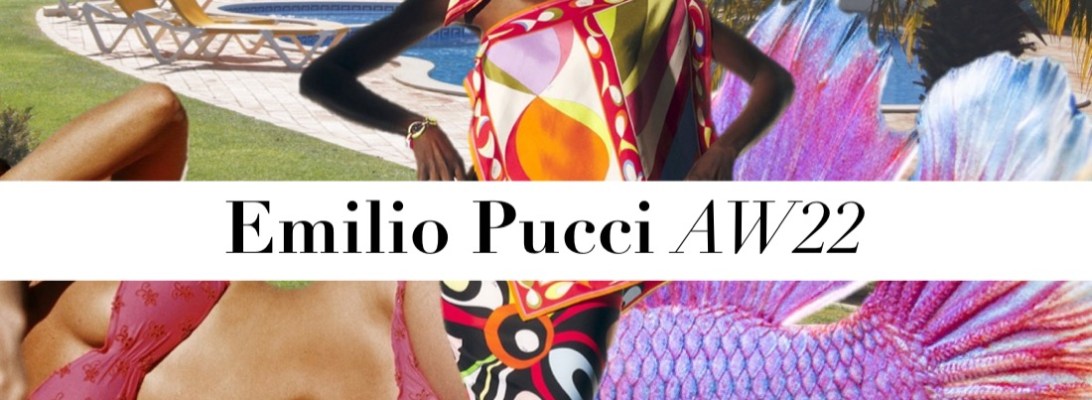
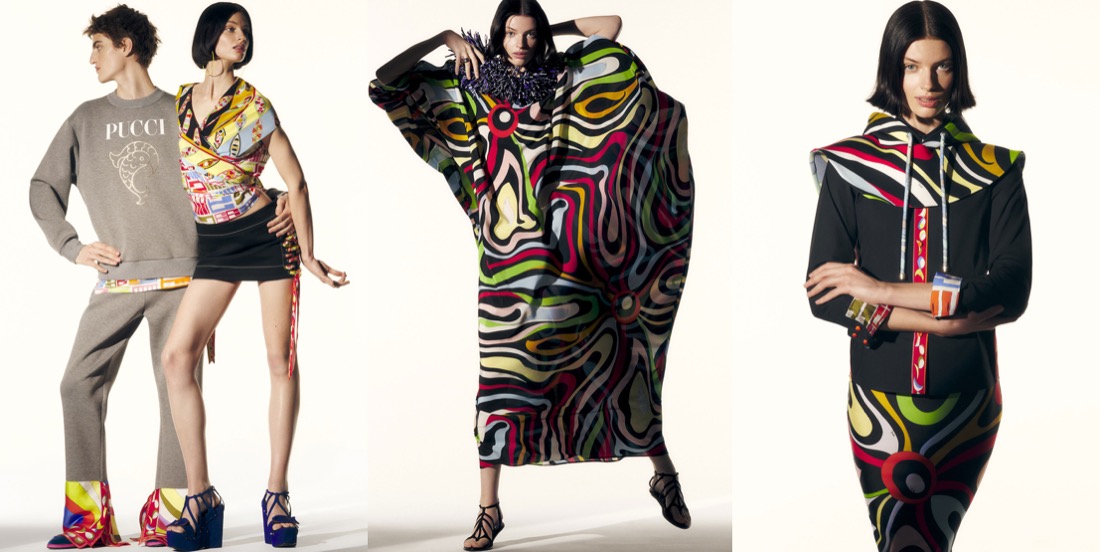
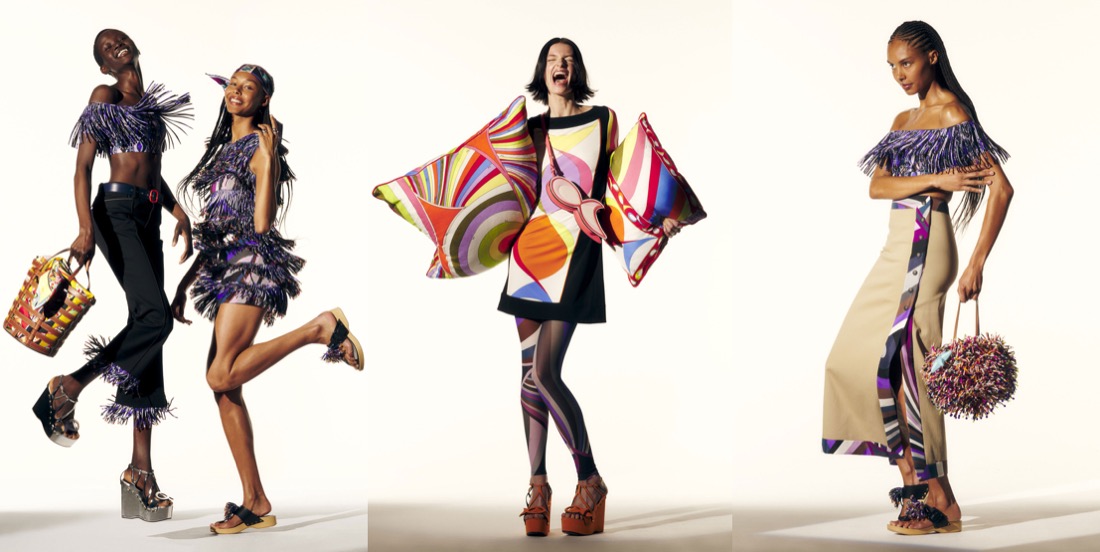
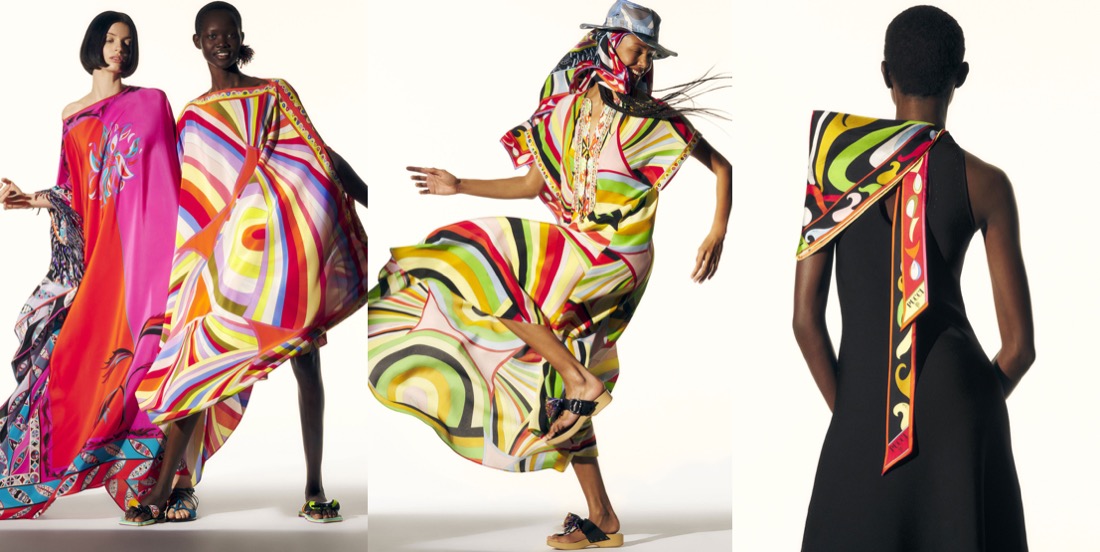
Emilio Pucci is one of these Italian luxury brands that have a rich, idiosyncratic legacy and a full package of well-known style codes, but somehow a number of contemporary designers that took it under their wings in the last couple of years never could put their finger on it. Maybe expect for Peter Dundas, whose ultra-sexy, jet-set nomad vision put Pucci on a very specific shelf of glossy Real-Housewives-kind-of clients. And then, suddenly, Camille Miceli arrived to this kaleidoscope-printed world in 2021. Her debut collection, entitled La Grotta Azzurra, is an optimistic start of the new Pucci chapter.
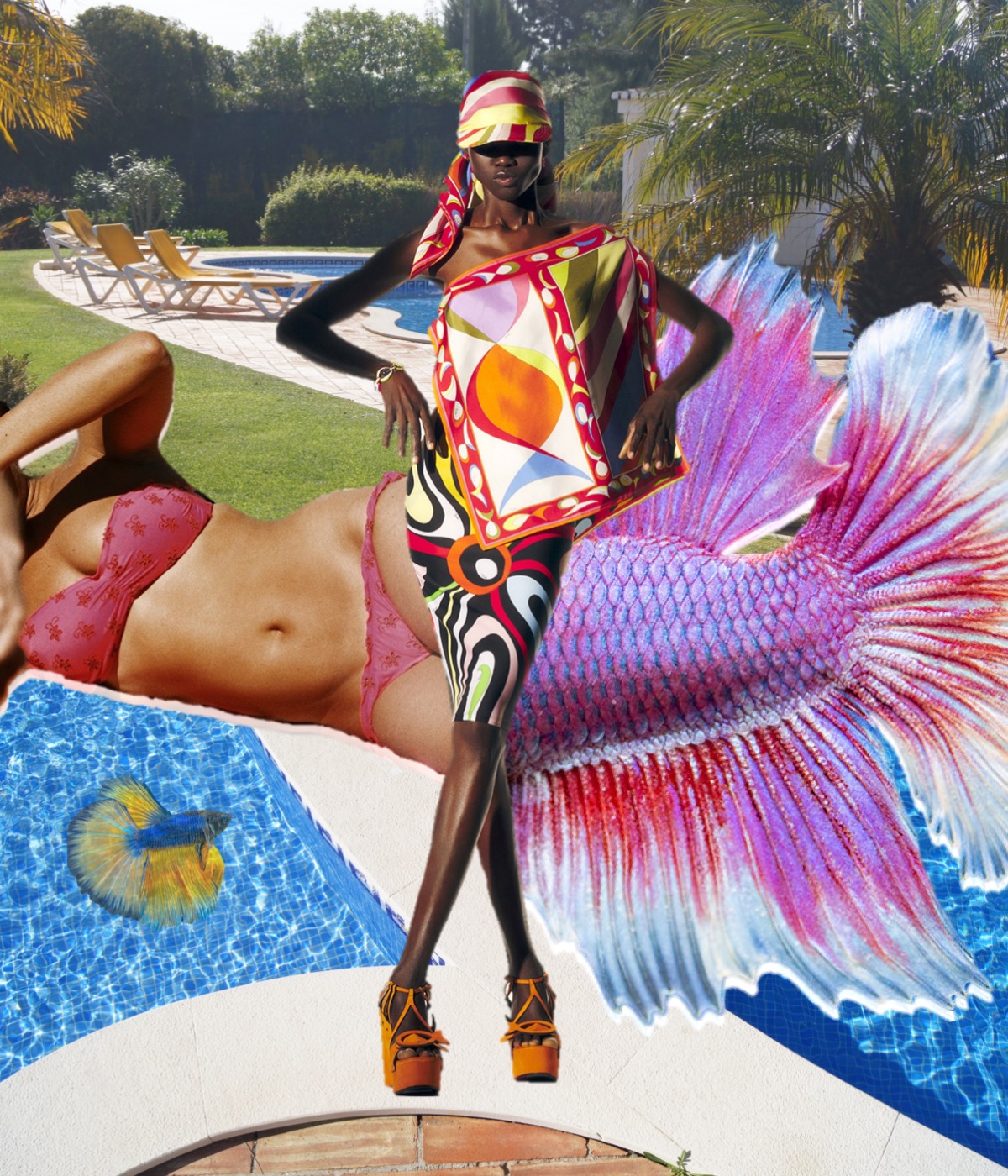
The designer touched down in Capri – Marchese Emilio Pucci’s beloved holiday destination – this week with her launch collection, making a splash in the late-April waters with an intense “experience” enjoyed by 160 guests flown in from Paris, Milan, and London. The US contingent was represented by the rapper Gunna, whose performance capped off three Pucci-fied days of activations and dolce vita – decadent dinners and hours-long lunches at Bagni di Tiberio; morning yoga classes for stylish Pucci yoginis; and “how-to-style-a-scarf” lessons in the label’s store on Via Camerelle. The see-now, buy-now collection was presented live in various tableaux vivants throughout the island, with Pucci-clad models looking very Slim Aarons in the surroundings. “Pucci isn’t a conceptual brand, it’s a lifestyle brand, so its message has to be direct,” she said. For Miceli it means energizing it further, amping up the joie de vivre factor already embedded in its codes. Energy is an attractive trans-generational attitude, and permeating the label with a positive, slightly trippy vibe will help engage for a wider, younger audience. Miceli also highlighted what she called Pucci’s “humanity and peculiar sensibility,” which she enhanced, for example, by creating hand-drawn iterations of the famous prints. “I think that digitized patterns strip Pucci’s motifs of the imperfections that are part of their unique charm,” she explained. In the new collection, which is full of simple (and at points simply plain, like all the active-wear), casual separates, the patterns’ pyrotechnics are offset by the use of few solid colors. Being a skilled accessories designer, Miceli has cleverly expanded the offer, working around the shape of two interlocked little fishes, playfully replicating the P in Pucci. The designer had it tranlated into enameled bracelets and metallic necklaces; into the outlined rubber soles of funny flip flops; into buckles decorating wooden clogs and high-shine platforms; and into a cute bag shaped like a fish. The Pucci reboot will proceed along a non-seasonal cadence. “The idea of season is démodée,” Miceli said, so jumping on the fashion show merry-go-round isn’t on the agenda yet. “It’s easy to have models walking a catwalk, but this see-now, buy-now formula with monthly new drops keeps you on your toes, creatively speaking, as you have to constantly find new ideas to engage the customers.” Rarely this strategy worked for other brands, but for Pucci – which largely is a “resort” label – that might the right path.
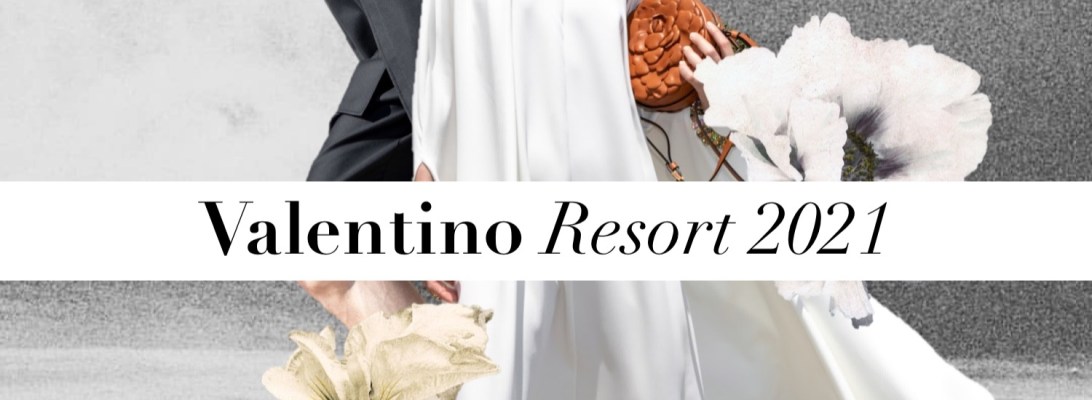
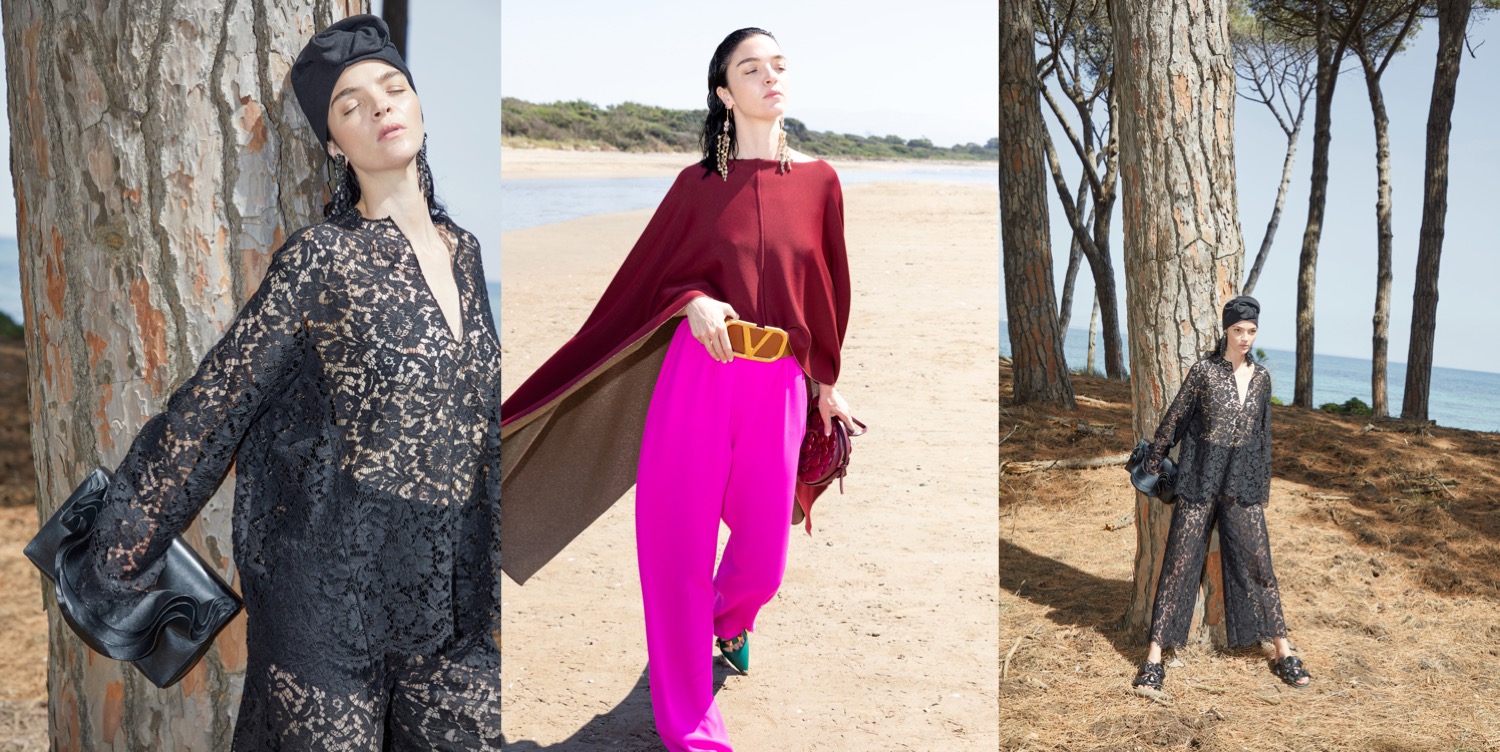
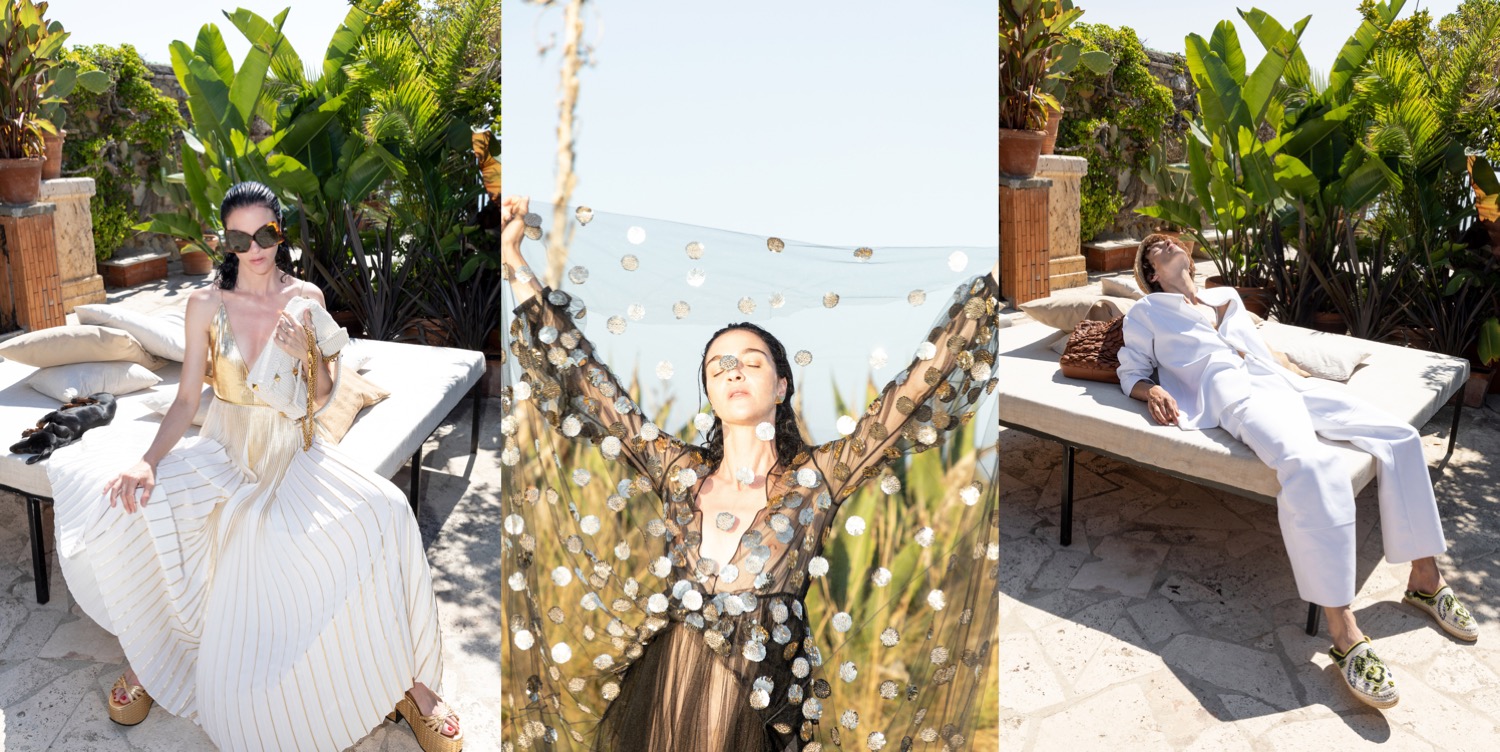
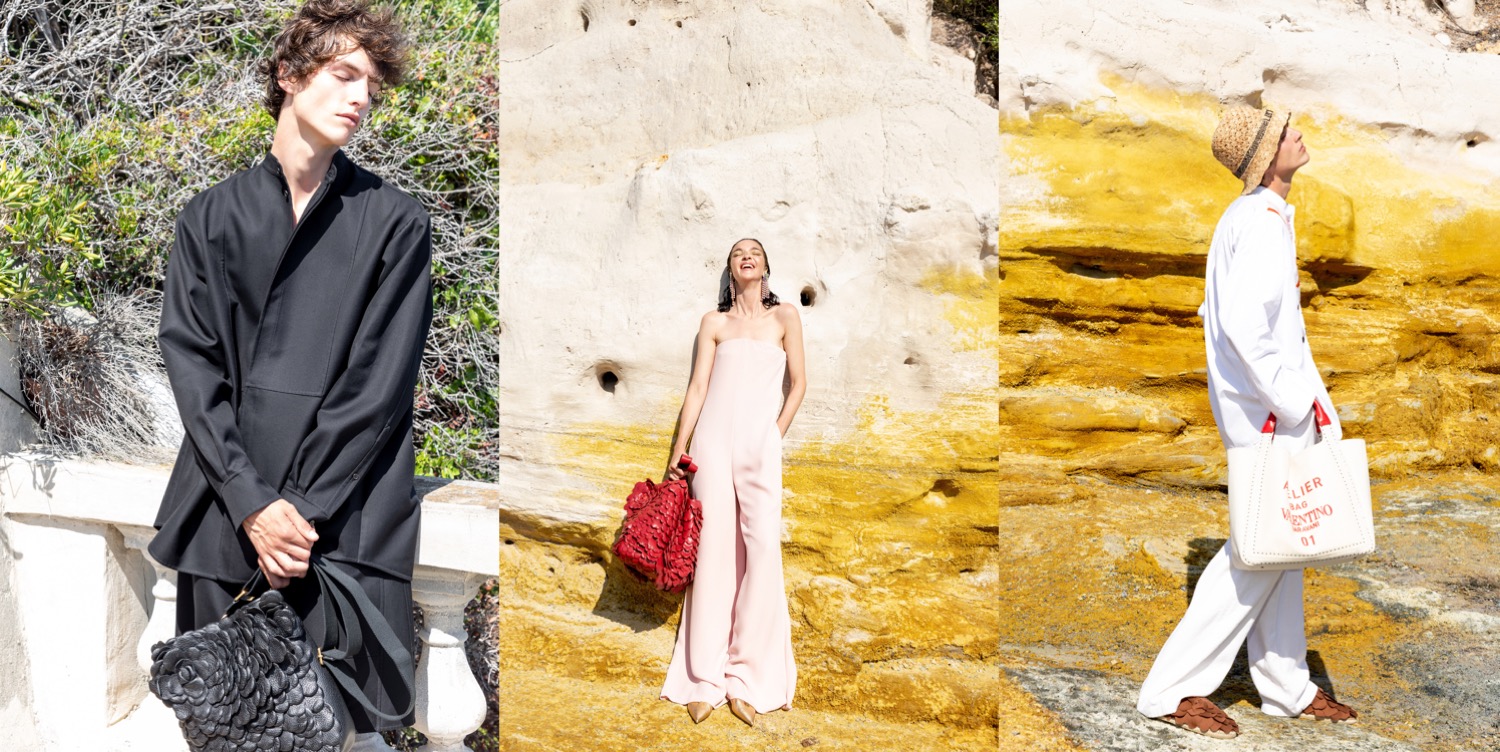
This is the ideal summer state of mind: Mariacarla Boscono dancing, laughing and sun-bathing at the Italian sea-side, wearing Valentino and being photographed by her friend – and the brand’s creative director – Pierpaolo Piccioli. Italy was the European country that was first tragically hit by COVID-19, and to many it seemed that good days aren’t coming back anytime soon. Now the country seems to gradually revive and the dream Italian summer is back on track. Optymism is winning. “I never stopped working,” Piccioli told Vogue during a Zoom call. “I profoundly love what I do; this is my passion, something fundamental for me – it isn’t just work.” The resort 2021 collection is the byproduct of the time spent alone drawing and painting, while remaining connected with his team. “I wanted to convey spontaneity and truth, even imperfection—but it’s the feel of human imperfection you long for right now,” he explained. “The collection was born out of flat drawings – paper and pencil, no styling, no mood board, just researching on paper shapes that linger in your head. A pure fashion process, as it should be done.” The human quality of creativity is paramount to Piccioli’s practice. He has imbued the rarefied world of couture with emotional values – exposing and revealing its craft and handmade processes, and shining a light on his team of seamstresses and artisans as essential players behind his fabulous creations. This center still firmly holds. “I wanted [to communicate] something even more personal, very close to myself. Conveying a sense of intimacy, a sentiment of individual connection, of emotion. I decided to photograph the collection myself because it seemed more coherent in this moment to send out a message with no filters, no manipulation, no other interpretation or mediation. I didn’t want the usual glamour of a fashion shoot,” he continued. “What I was interested in focusing on was what I’ve missed most in this confinement – the simple feeling of human connection, of shared love and friendship. This is what I wanted to bring about in my images.” Not surprisingly, simplicity is the collection’s key word. “It’s a radical simplicity though,” reflected Piccioli. “I wanted to be even more radical, in that the simplicity I’ve tried to achieve in shapes, volumes, and construction comes at the end of a process of resolved complexities. It’s a study and a project on cut, proportions, balance. Reducing and subtracting to reach the core, something essential and pure – but not more banal. Simple, not simplified.” There’s an ease and a fluidity of movement, a feel for freedom and effortlessness exuding from the lean silhouettes of caftans, elongated shift dresses, capes, and separates. Defined by strong, solid colors inspired by Mark Rothko’s chromatically powerful palette, pure shapes were infused with a vibrant, joyful flair. A few prints inspired by 18th-century tapestries were rendered as inconspicuous abstract strokes of color, as if they were just traces of memories, or shadows of the decorative motifs’ former selves. And what’s more special than a dear friend you’ve known and loved for years? “Mariacarla and I, we go back a long way,” he said. A spontaneous energy radiates from the images, shot by Piccioli in the natural surroundings of his home: a lake where he goes swimming; a sulfur mine where Pier Paolo Pasolini shot some scenes from his 1964 movie Il Vangelo Secondo Matteo. There’s a palpable sense of intimacy and of a familiar bond between photographer and model. Again, individuality and humanity are the pivots around which the collection, which was designed to appeal to both genders, came alive.

















 Design & Culture by Ed