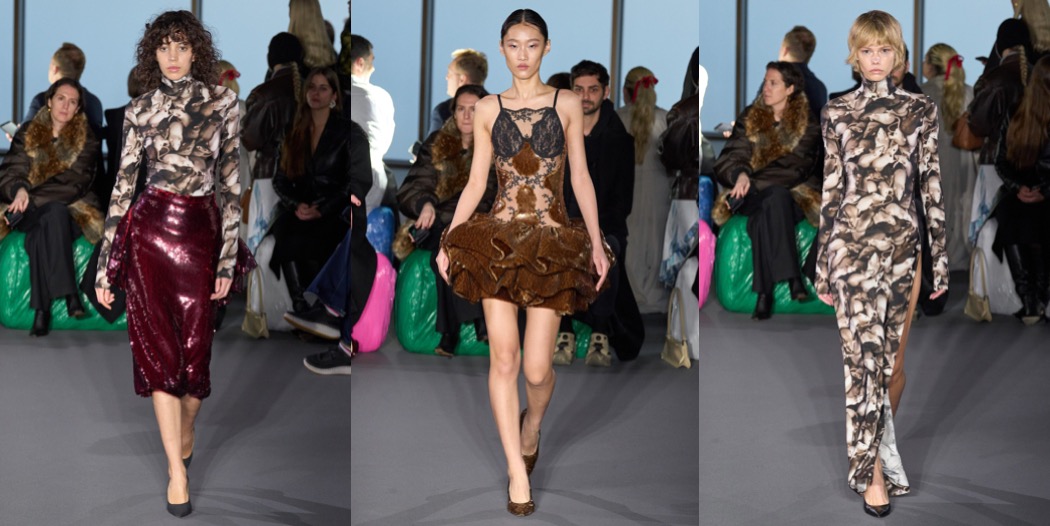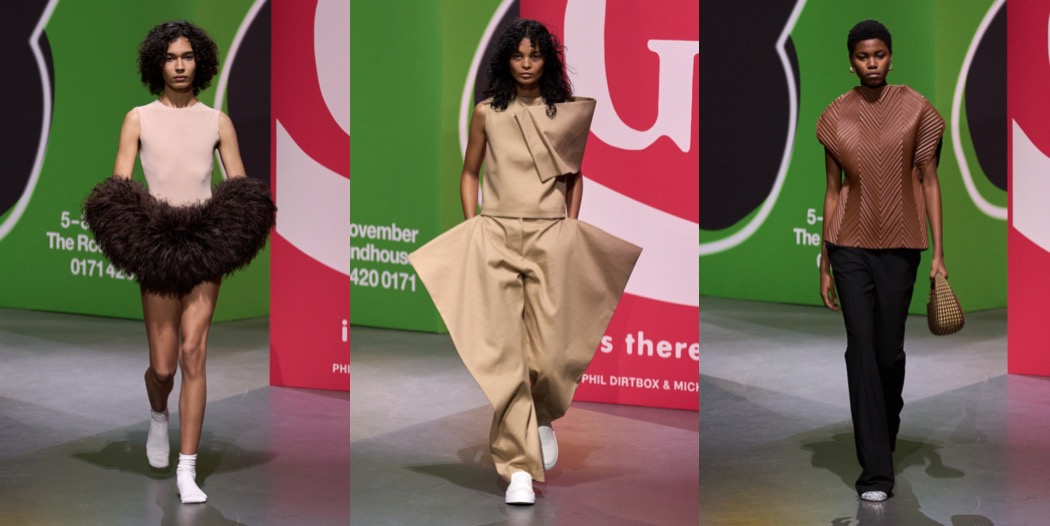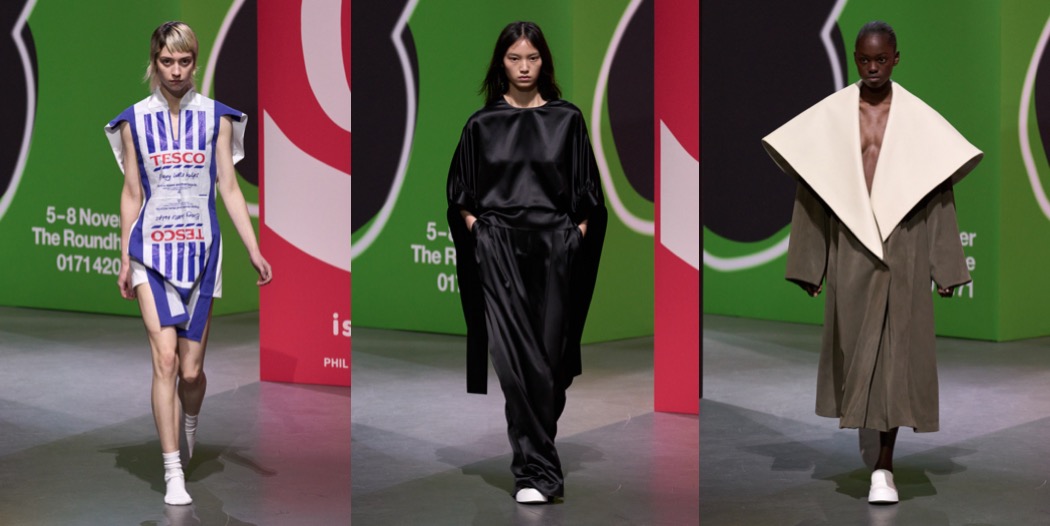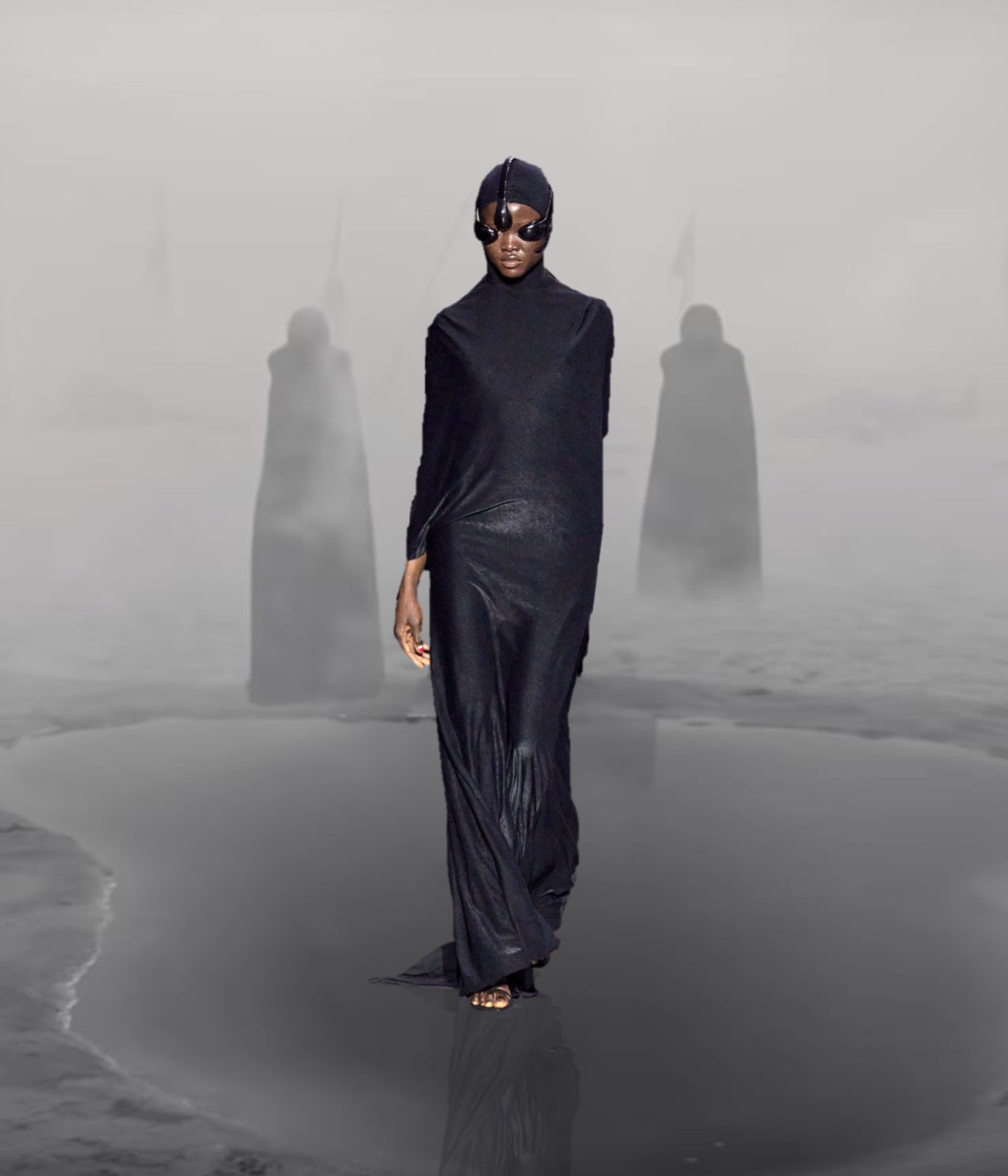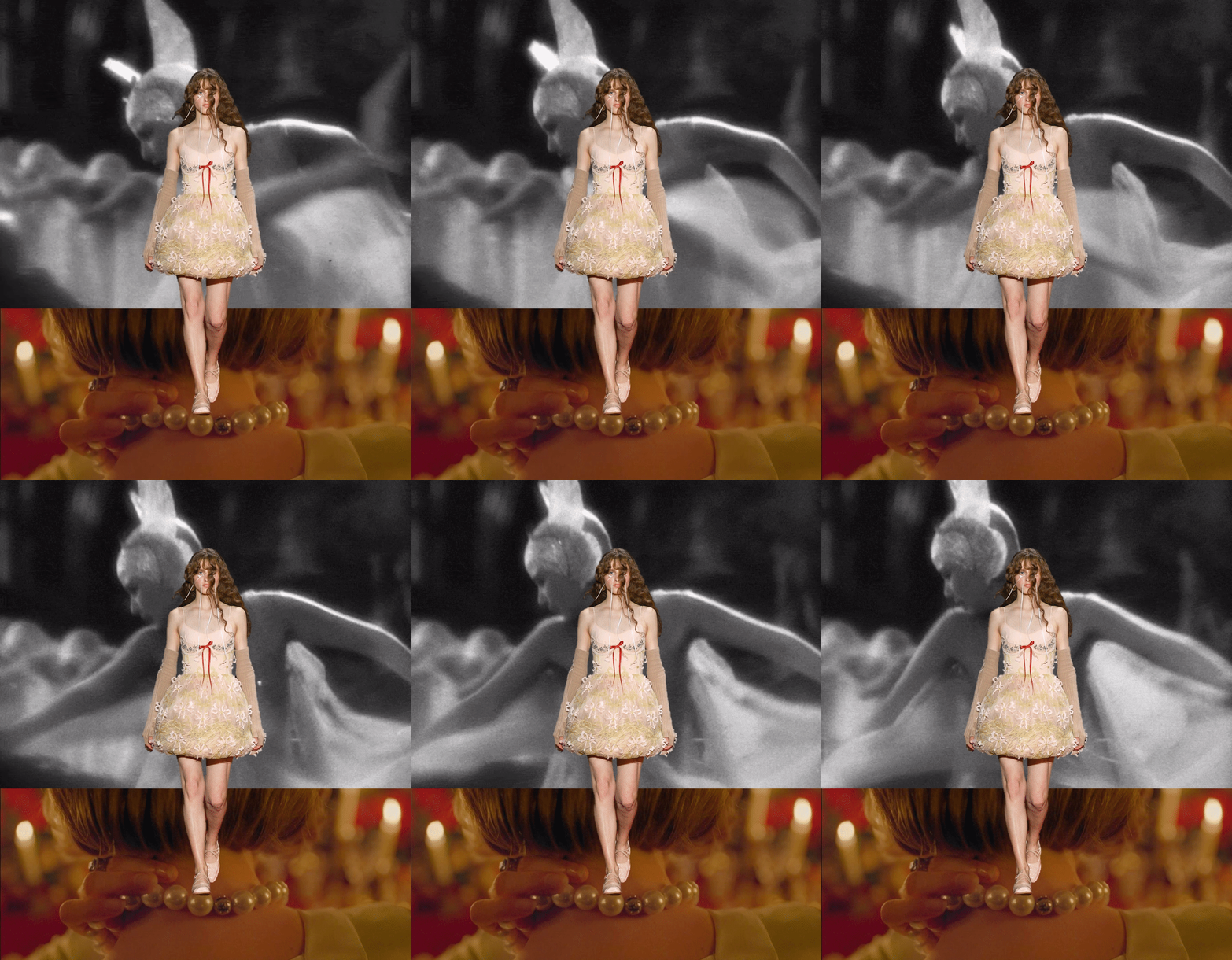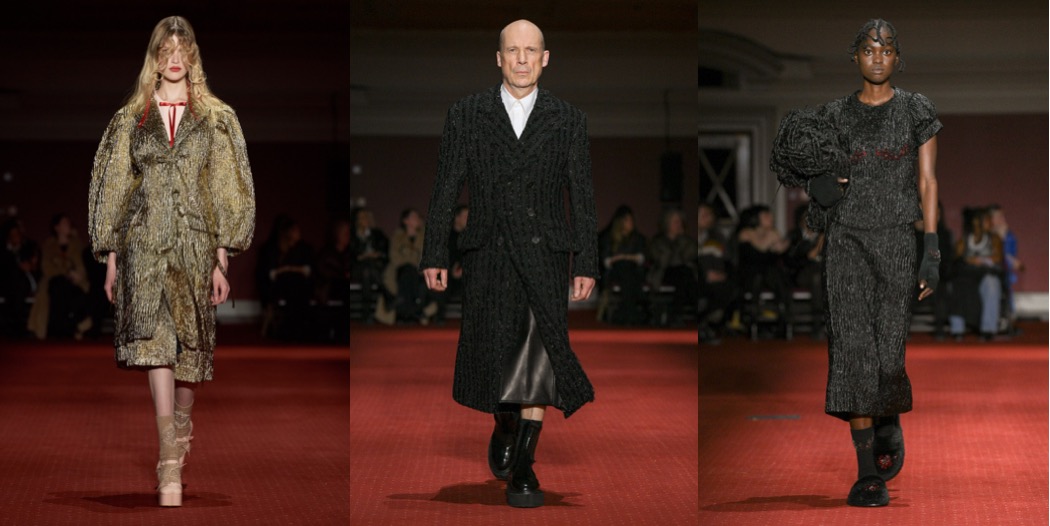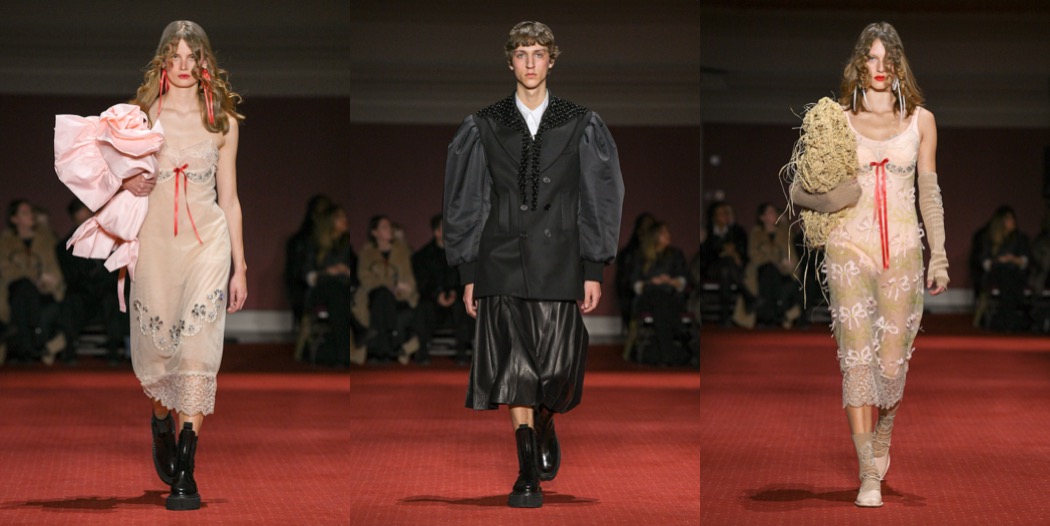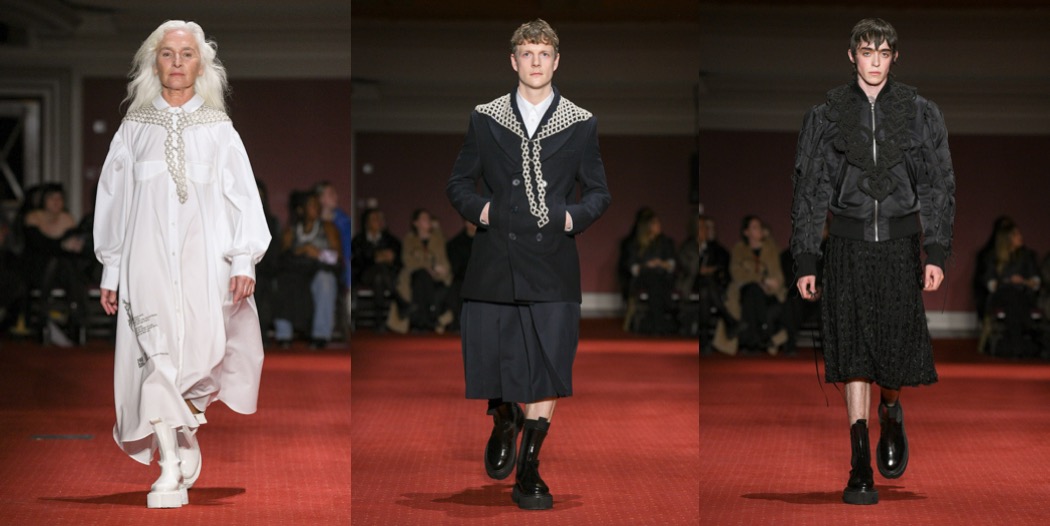
Preppy. Molly Goddard AW23

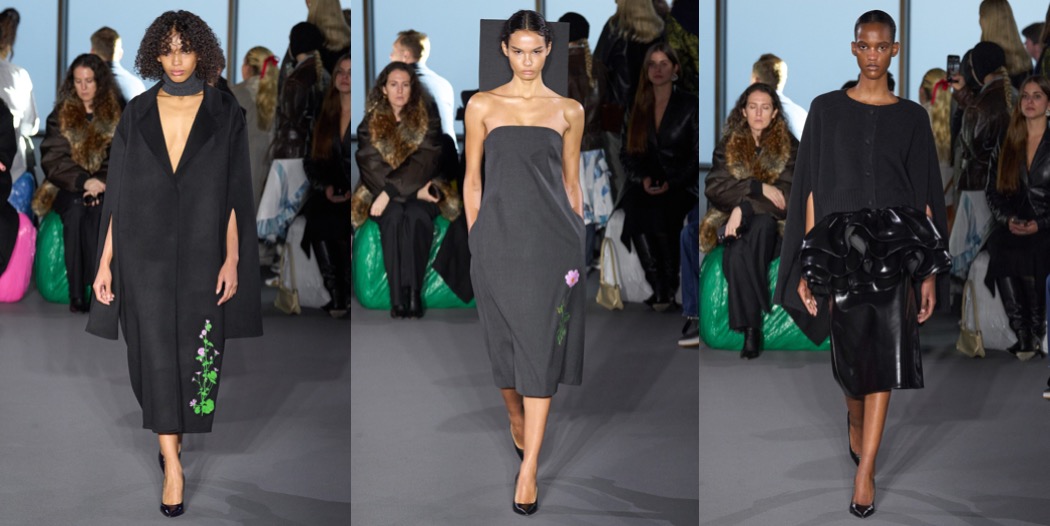
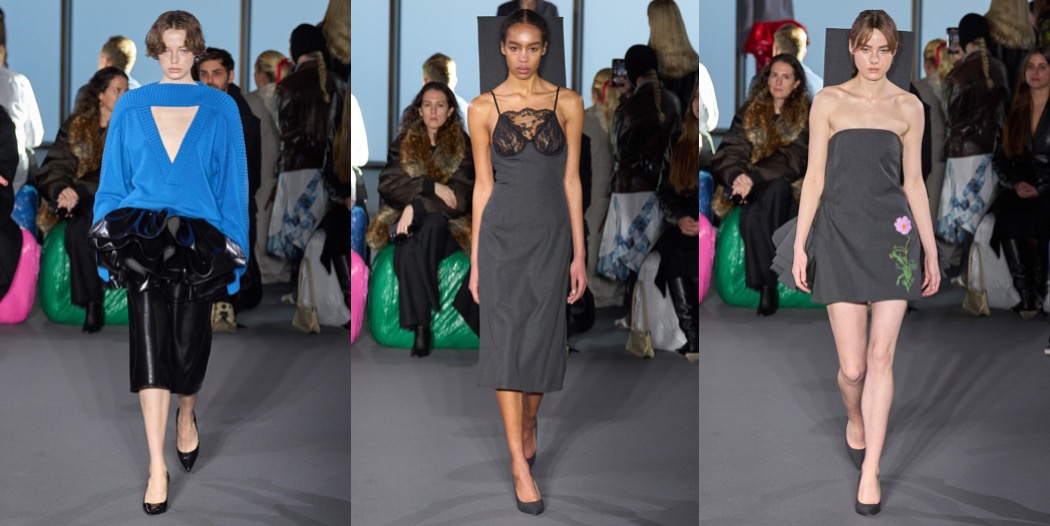
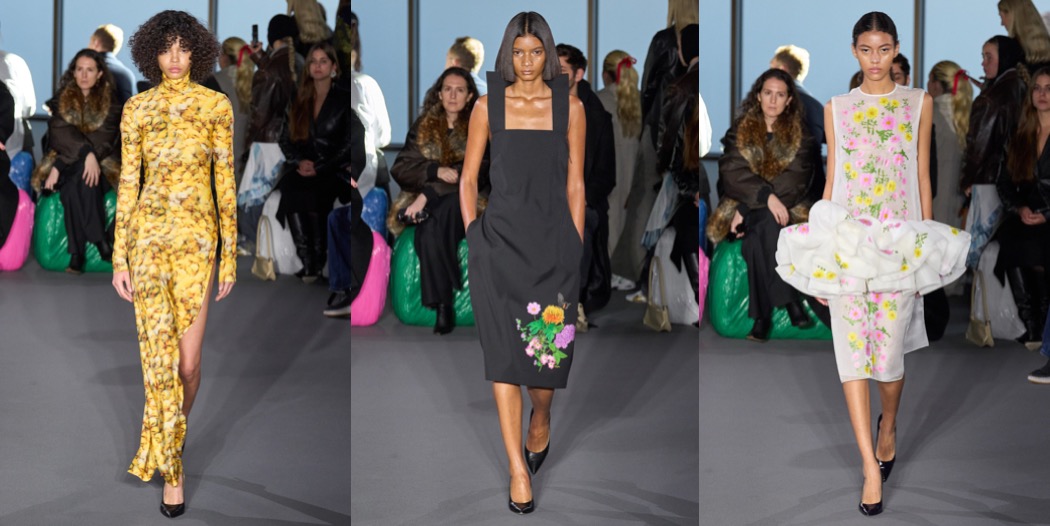
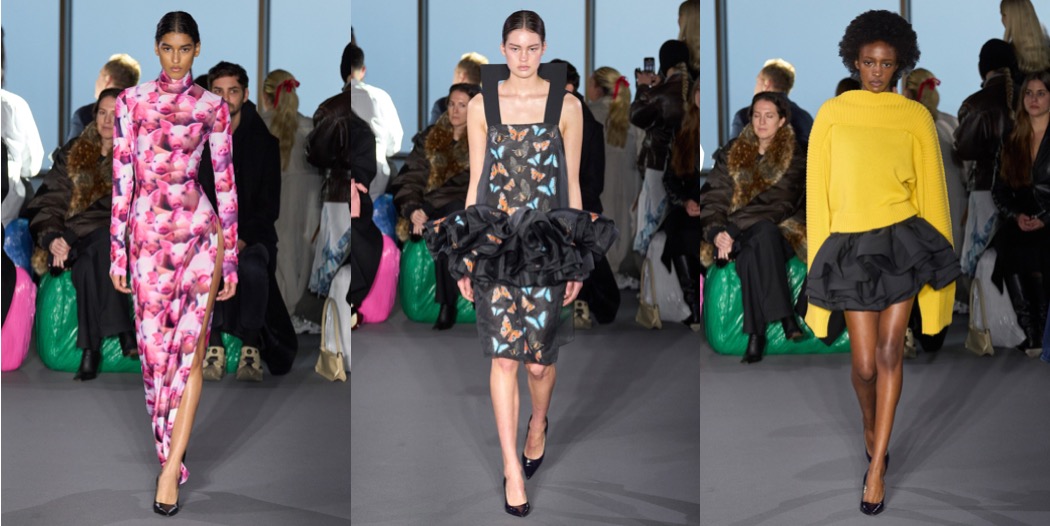
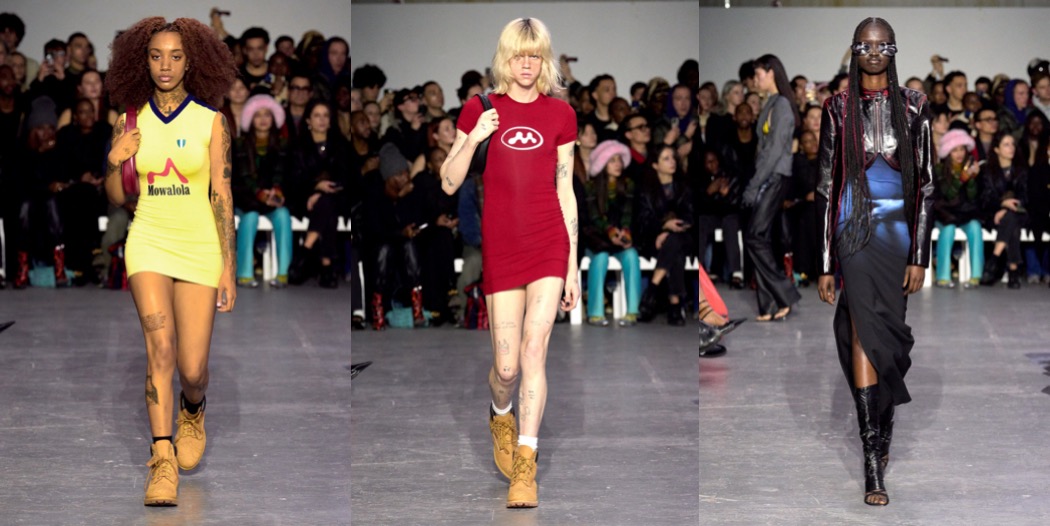
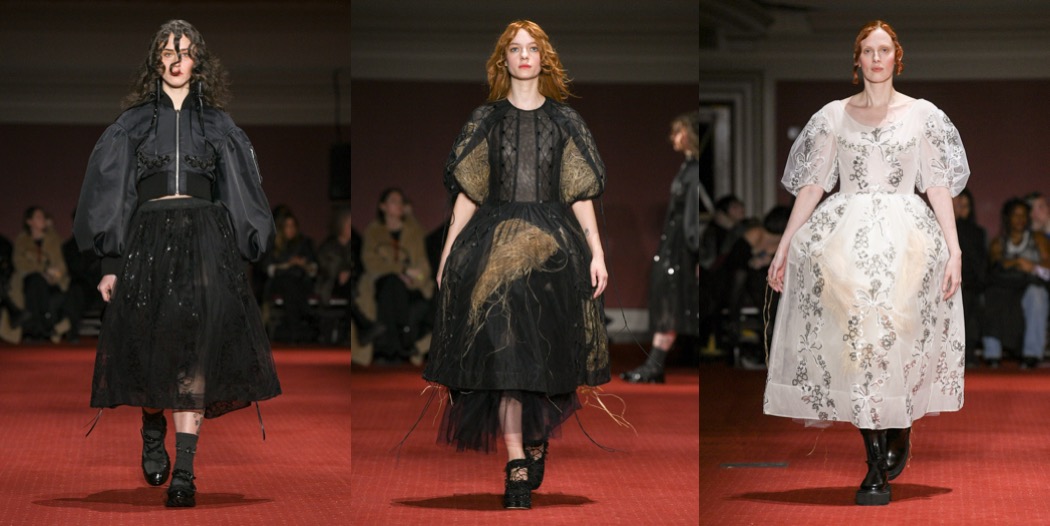
I wanted to go back to a place of it feeling very simple. Like it was in the beginning. Just a little bit more honest. Fundamental, kind of, saying, ‘this is our reality’… basically, I’m feeling very stubborn.” To achieve that, Molly Goddard invited her fashion show guests into her Bethnal Green studio, her work home of five years. “What I found the biggest challenge of the season was not doing the thing that actually comes to me easiest, which is like a big, bright, colorful, enormous showstopper,” said the designer. This season, she used her signature material – tulle – in much more versatile and casually applicable forms. Additionally she deployed her knitwear mindset to create texture by manipulating the warp and weft of silhouette and fabrication. Grosgrain ribbon was horizontally integrated into handsome topcoats and blazers in blue and gray that resembled cleverly rethought prep school blazers (it kind of felt very Miu Miu). Later, when she succumbed to tulle, more ribbons acted to shape the silhouette and create pattern. There was tulle too in a couple of narrow-skirted leopard-print pieces including a pink-tinted skirt, which worn beneath a blue blazer and a crewneck scarlet knit set with a design inspired by a vintage flyer from Kensington Market had a cutely skewed preppiness to it. When the voluminous showstopper came at the last, it was cut in a pale gray fabric and cut on the bias – a pointedly uncolorful showstopper. “I think I’ve just felt a little bit freaked out by the fashion world recently. It’s easy to get so pushed along, and strung along, with the whole show of it.” By pushing back – and pulling the guests all out east London – Goddard claimed her agency and delivered a collection worked on her own terms.

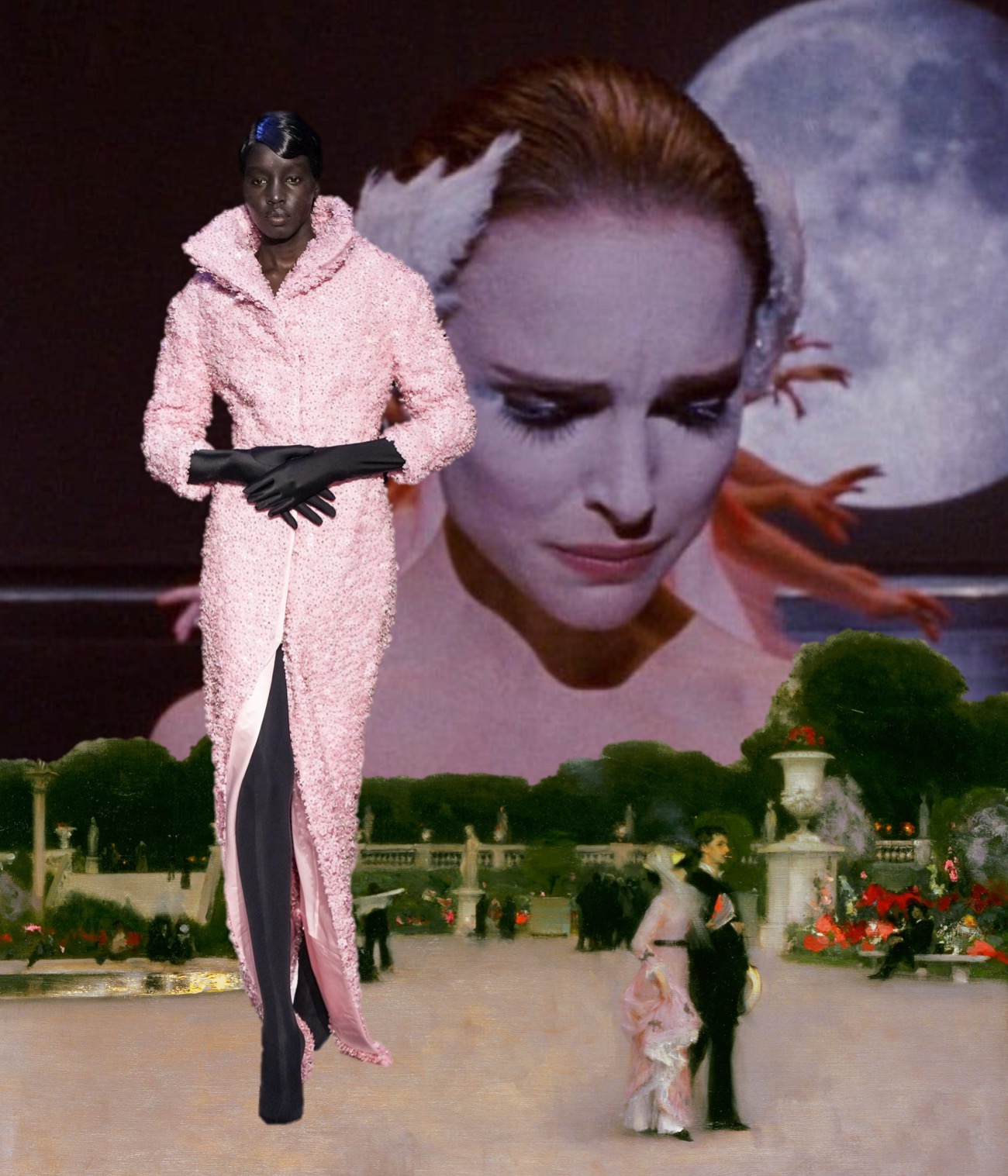
Collage by Edward Kanarecki.
Don’t forget to follow Design & Culture by Ed on Instagram!

NET-A-PORTER Limited

Magnolia. Conner Ives AW23

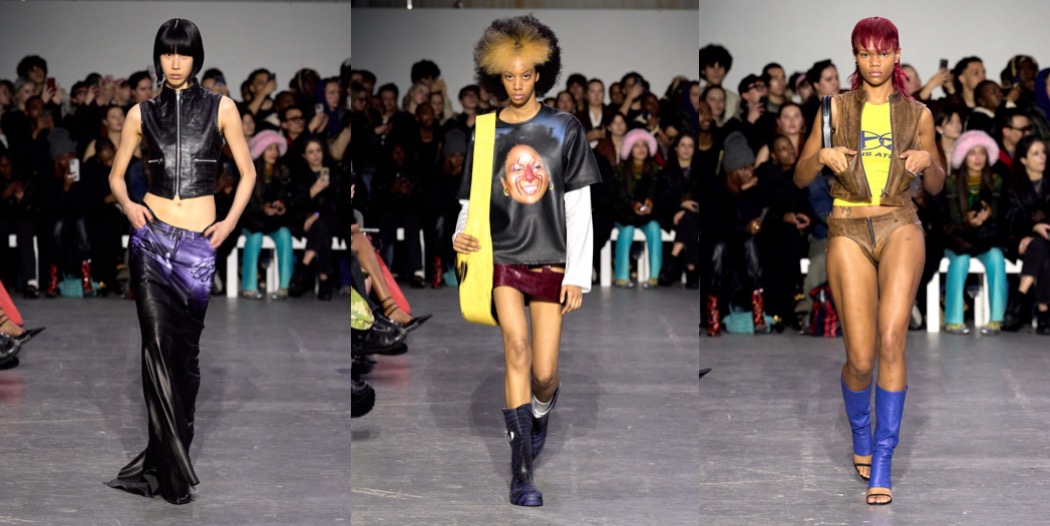
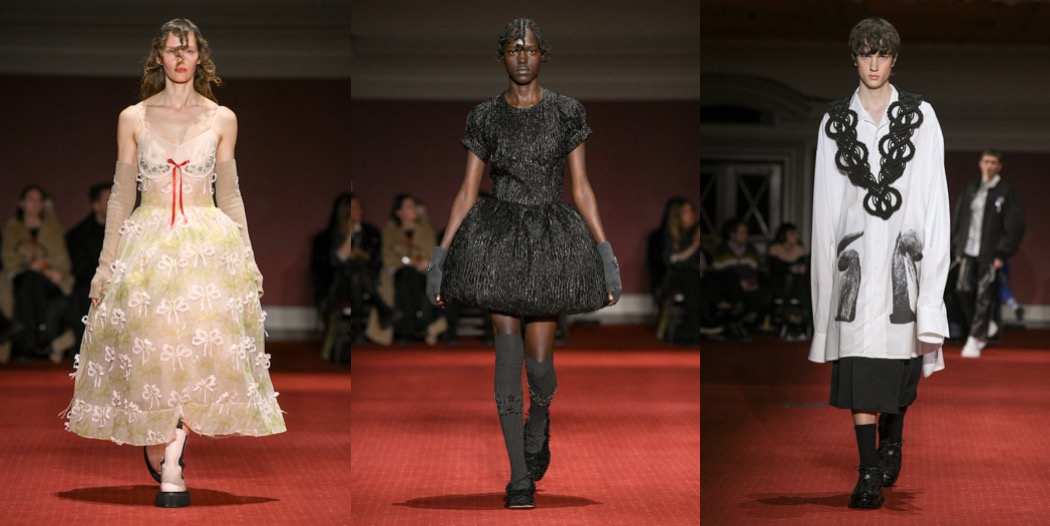
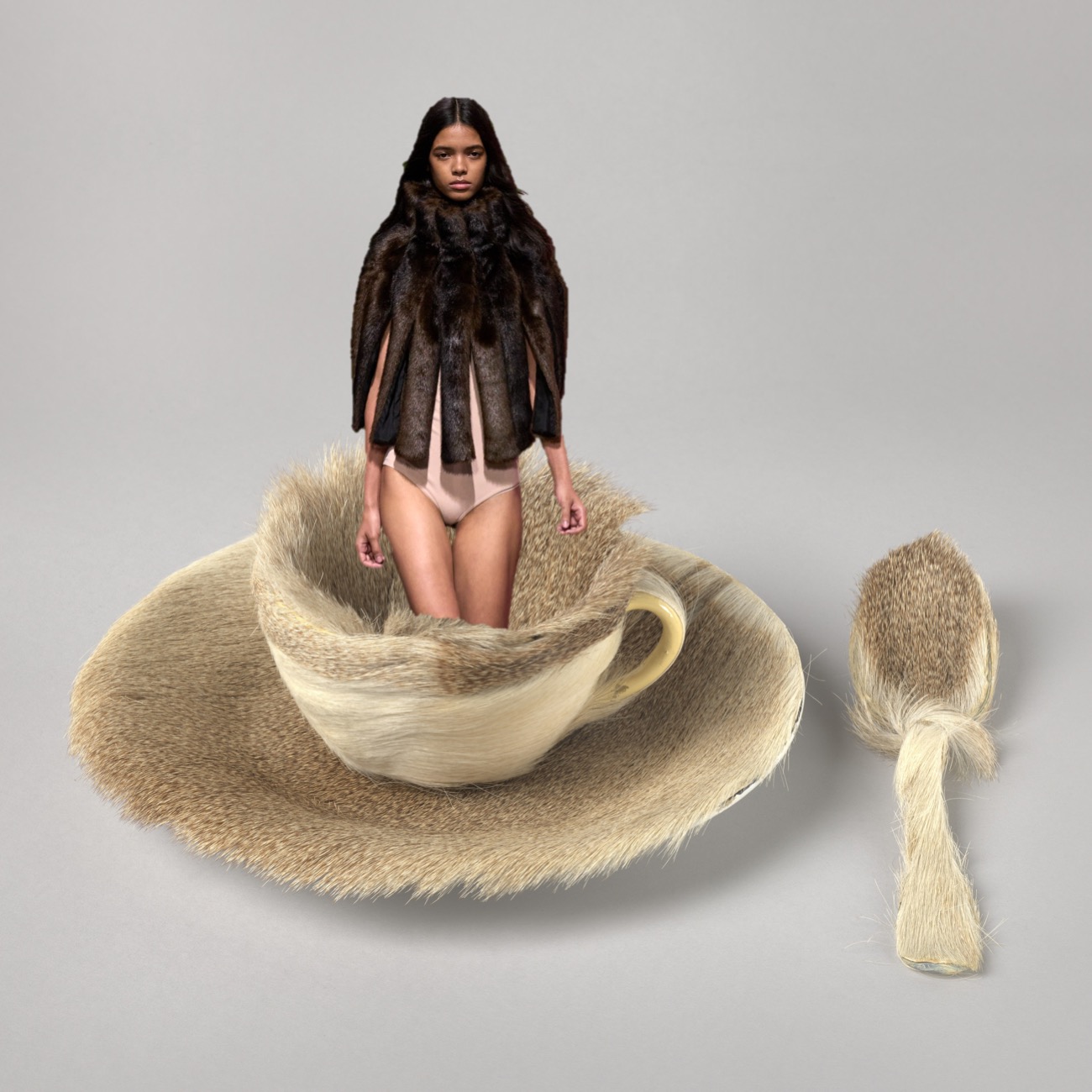
Remember the 1995 documentary Catwalk, which followed Christy Turlington, Naomi Campbell and Kate Moss through the fashion month? That film captured not only the quintessence of 1990s cool, but also an image of model-hood filled with friendship, fun and mutual support. Somehow, Conner Ives managed to convey that fleating feeling in his London Fashion Week collection – and it didn’t feel forced, which is the most amazing thing. While last season’s eclectic extravaganza proved Ives can do more than just the spliced T-shirt dresses that earned him a following while still a student at Central Saint Martins, the 26-year-old designer explained that he wanted to mature things with this collection. Titled Magnolia after Paul Thomas Anderson’s sprawling 1999 film charting the lives and loves of a disparate group of Angelenos, it contained all of the greatest hits of Ives’s collections thus far: slinky fringed skirts made from upcycled piano scarves; diaphanous Lilith Fair slip dresses with sheer ruffles; and yes, those vintage T-shirts, here transformed into a bias-cut camisole dress trimmed with black lace. To Ives’s point, there were a few more grown-up tricks in the mix too, including a handful of retro silk button-downs and tailored trousers, along with Ally McBeal-core minimalist tailoring in muted shades of green and gray. There was also fun to be had: not least in the dizzying soundtrack, which cycled relentlessly through everything from Lil Mama’s Lip Gloss to the opening theme of Psycho. And as with last season’s smorgasbord of winking references to everything from reality TV to film history, part of the thrill was engaging with Ives’s Guess Who?game of pop culture icons from across the decades. The second look was a Kate Moss-inspired “Glasto girl” trudging through the mud in a fur gilet and Hunter wellies, while other looks paid homage to the “shiny set” of New York society women who would descend on the Paris couture shows each season, such as C.Z. Guest and Nan Kempner. Most bonkers of all was the bridal look at the end: a tongue-in-cheek nod to a wedding dress from the Lindsay Lohan remake of The Parent Trap (as well as the highly questionable top hat-veil hybrid that remains seared onto the retinas of all who have seen it). “That was really something where I was like: This is so fucking ridiculous,” Ives added, with a grin. Ives may have a winning sense of humor, but between all those granola girls and Coyote Ugly bartenders and new-age mystics with agate pendants swinging over their jeans, there was a method in the madness. Notably, a series of looks that was plumbed from the depths of Ives’s encyclopedic knowledge of ’90s and ’00s fashion: the bulbous trapeze coats, horse-riding hats, and platform Mary Janes of Nicolas Ghesquière’s influential autumn 2006 collection for Balenciaga. “I remember being a 10-year-old kid looking at that collection, having stolen a magazine from my mom’s bathroom,” Ives said. The designer is, above all else, a true fashion fanboy and it translates palpably through the clothes. “I want to emphasize that same guttural feeling I felt when I was 10 years old looking at that magazine,” he said. “I’m aware of how schlocky that sounds, but it feels messy and human and real, and I think that’s more interesting than painting some pristine picture of what fashion should be like.”

Collage by Edward Kanarecki.
Don’t forget to follow Design & Culture by Ed on Instagram!
NET-A-PORTER Limited

Breaking and Healing. Di Petsa AW23

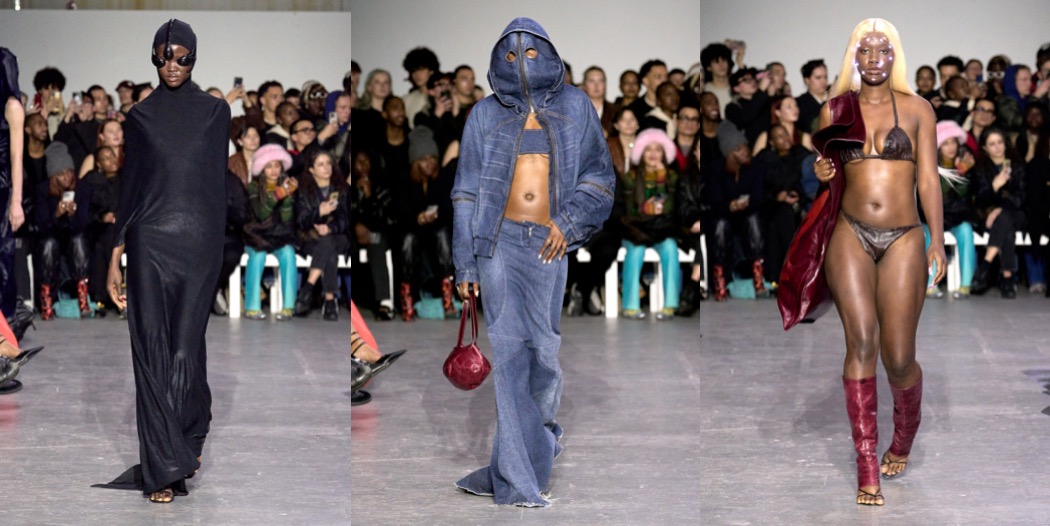
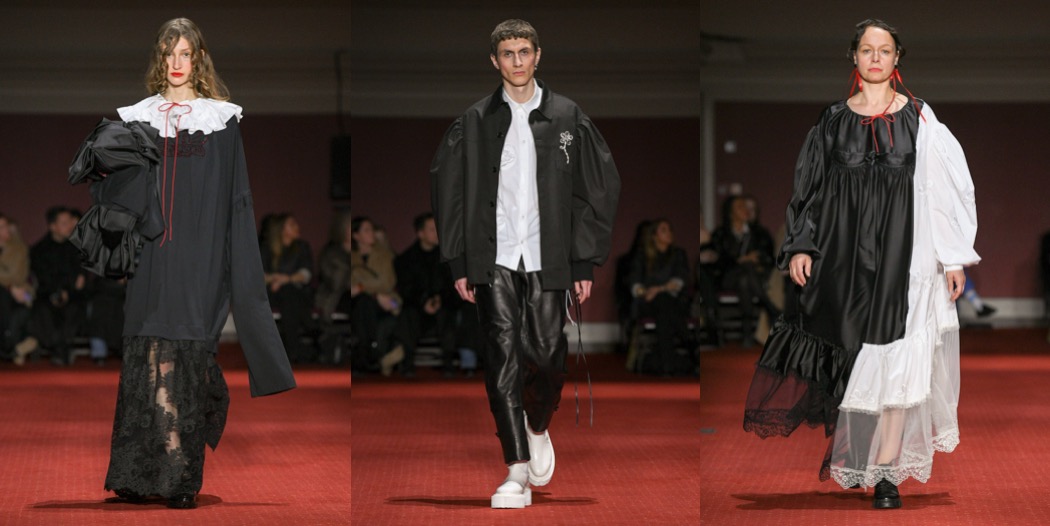
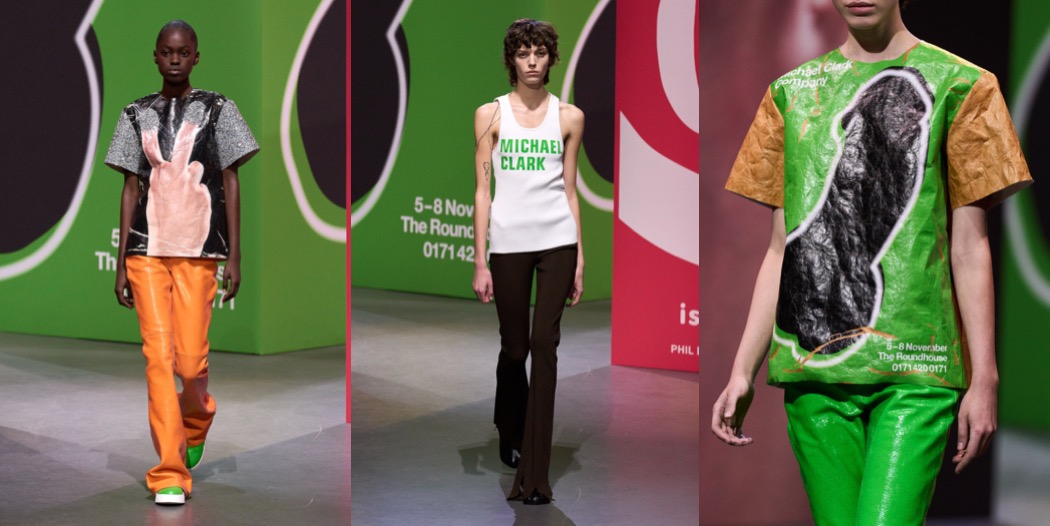
London Fashion Week started with a moving memorial service for Vivienne Westwood. The spirit of the Dame is in the air, and it just makes you reflect on how the late designer pushed London to being the place for emerging designers with off-kilter style to start their careers and evolve. Like Dimitra Petsa, who with every season makes the fashion industry fall harder in love with her ethereal world. Inspired by her Greek heritage and its ancient mythologies, Di Petsa‘s designer looked to the story of Persephone for autumn-winter 2023. For those unfamiliar: she was the daughter of the goddess Demeter, who was abducted by Hades, and then later became the queen of the underworld. With the collection, titled Breaking and Healing, the designer wanted to honor the growth and transformation that Persephone has experienced. Petsa was on her A-game with her latest offering, whether it was her popular wet-look illusion dresses, which have been elevated in Lycra and silks in dark hues, or the placements of healing crystals like clear quartz – to encourage “tenderness, and letting go” – as decorative features on dress straps and headdresses. Elsewhere, paneled leather and velvet were sensuously placed like mosaics on mesh dresses, a new technique for the brand. In a continuation from last season, Petsa developed new twists on maternity styles, only this time, certain pieces were designed for those who want to be “pregnant with themselves,” via corseted hand-embroidered bumps. Knitted denim separates with frayed panels inserted vertically also stood out as a strong moment. For the finale, she showed a cut-out silk chiffon dress that featured corset boning wings, a silhouette that elevated (quite literally) her otherworldly sensibilities.

Collage by Edward Kanarecki.
Don’t forget to follow Design & Culture by Ed on Instagram!
NET-A-PORTER Limited

Labour Of Love. Richard Quinn SS23

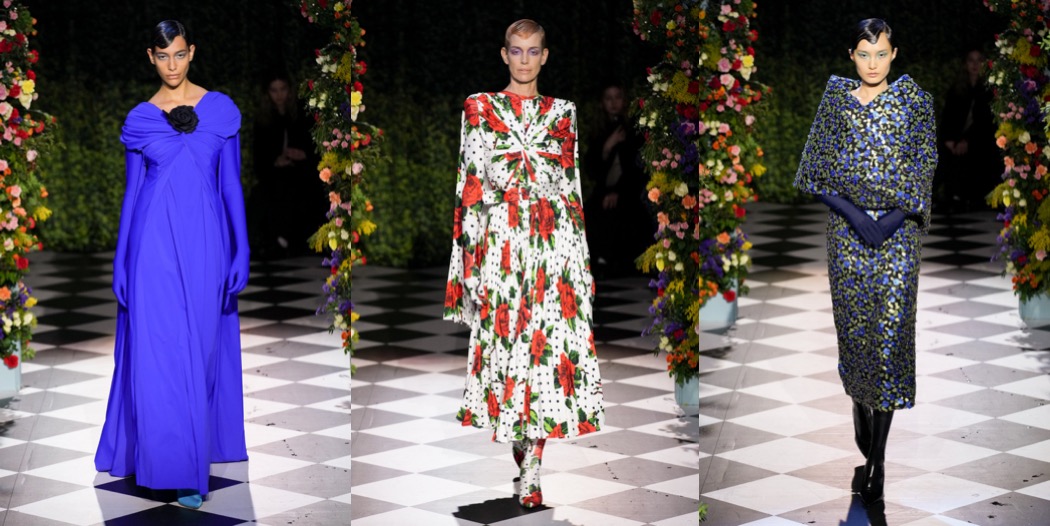
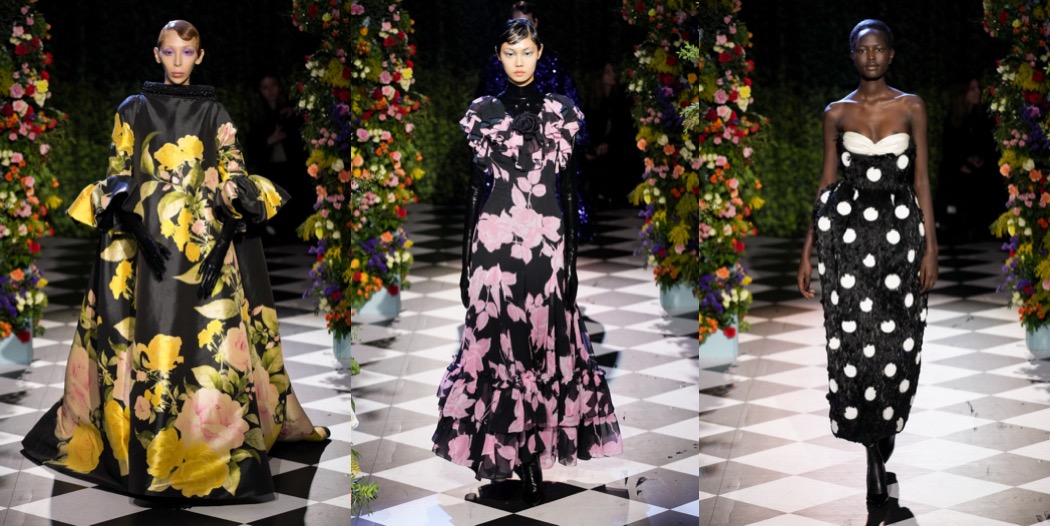
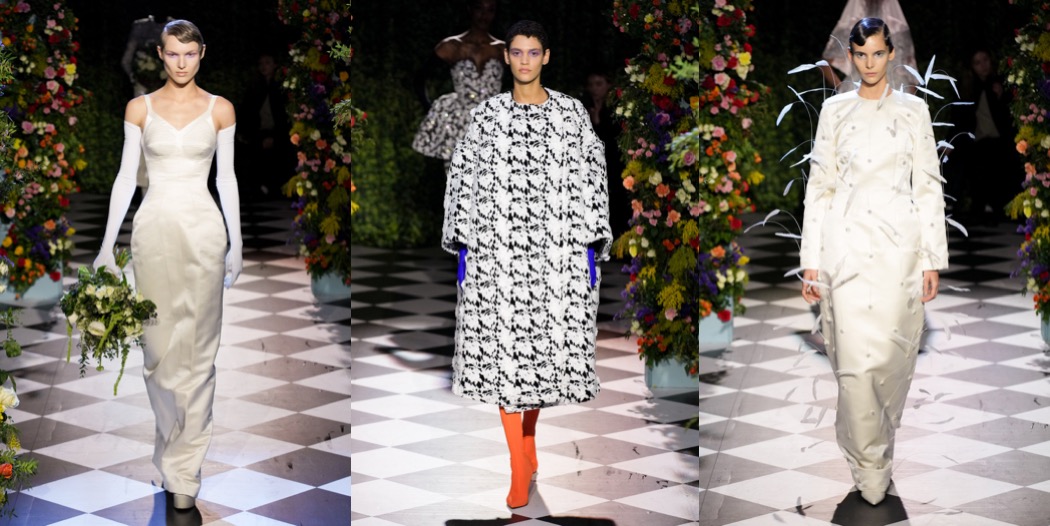
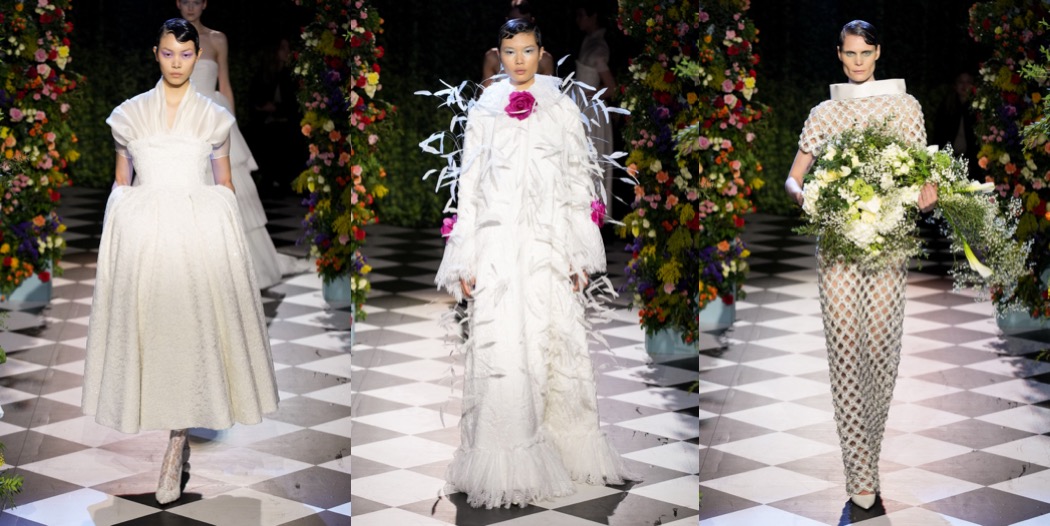
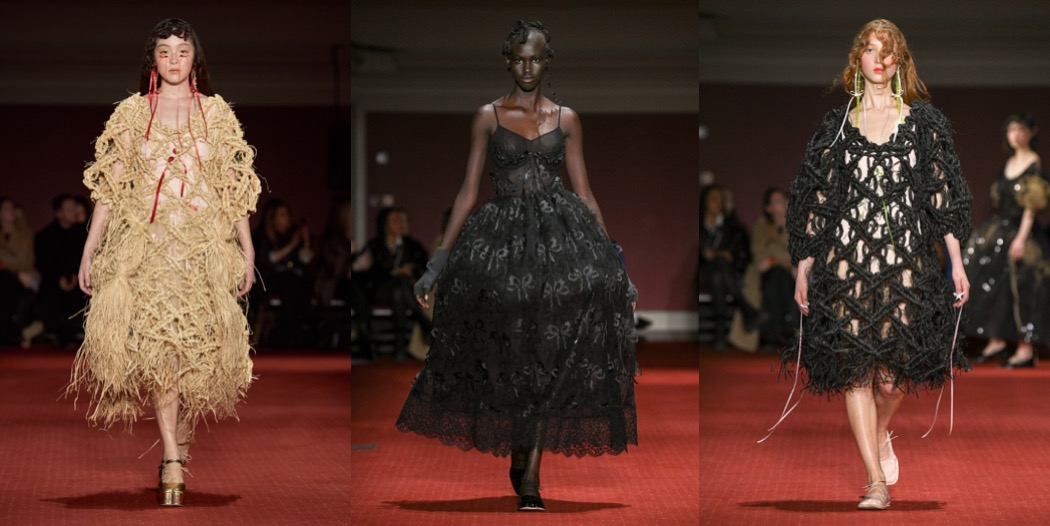
Richard Quinn offered and very fitting a moving show as for London Fashion Week’s finale – an unprecedented kind of fashion week, done during national mourning. The designer’s response to Queen Elizabeth II’s death pushed him of colorful, multi-floral prints to prove, in tribute to her, that he can also make as elaborately and extensively in black. The first 22 looks, many heavily veiled in black lace, were made by Quinn and his core team of six, and 20 show-time helpers, day and night, in the 10 days since the Queen died. “It was almost cathartic for us to put all of our emotions of mourning into it,” he said. “We wanted it to have that kind of real craftsmanship, the beauty of royalty, and to try to turn all of the shapes and embroidery that we do into that kind of that idea of uniform dressing up they did when her father [King George VI] died.” Quinn, of course, owes more of a debt to the late Monarch than any other designer in London fashion history, since she came to his debut show in 2018 and presented him with the first annual Queen Elizabeth II Award for Design, her legacy for emerging fashion designers in Britain. He changed the set he’d planned, draping the walls in black and playing fragments of video footage of her young days on screens inset on a suspended central installation. Quinn pulled out all the stops on multiple silhouettes for that section: black swing coats, his translations of fitted 1950s formal dresses, vast capes in lurex, a velvet tunic dress with a big glittering jeweled brooch. All the model’s faces were either completely obscured in floor length lace veils, or masked in point d’esprit netting. Under one, a tiny black crown was visible.

And then, well, it was on with part two: the show that should have been. That had been intended by Quinn to be spun around a concept about public surveillance. There were CCTV cameras bristling from the central ‘chandelier.’ The Queen video screens switched to live footage of the audience. Then came renderings of multi-colored bulbous-topped bodysuits, his signature floral coats, feathered polka-dot embroideries, a pair of short bejeweled capes. Understandable if that part didn’t have the chance, or the atelier-power to fully make its point. All the young minds and hands at Richard Quinn had been devoted to proving they were equal to showing up for an historic moment. The black put it in the shade, in a good way. The finale however, brought back the lace veil in a hopeful way: a bride, in white, with a huge spray of flowers. Weddings have become a mainstay of his business since Elizabeth II gave him his first boost. He can thank her for that, too.

Collage by Edward Kanarecki.
Don’t forget to follow Design & Culture by Ed on Instagram!

NET-A-PORTER Limited

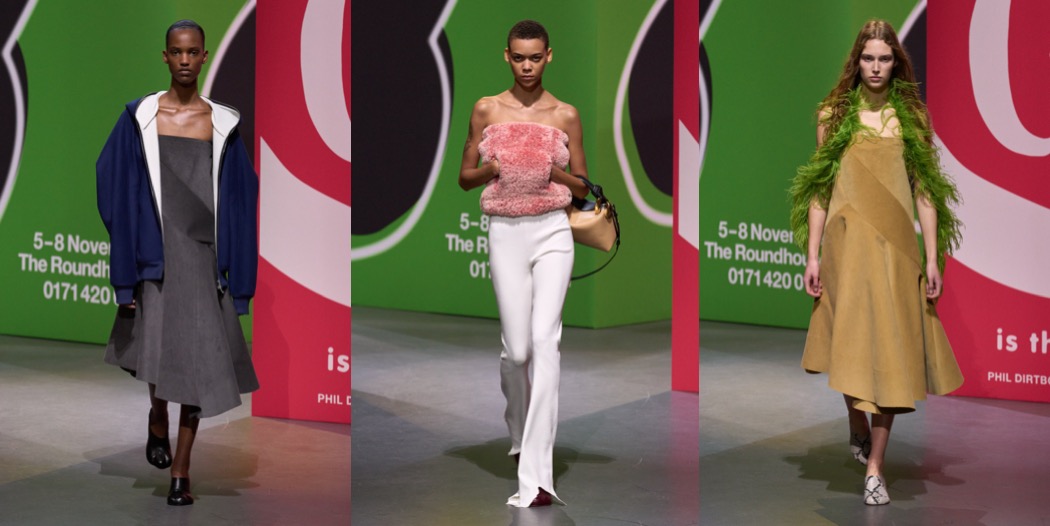
Sharp Femininity. Emilia Wickstead SS23

When Emilia Wickstead began researching ideas on uniforms and the work of visual artist Man Ray, it didn’t take long to join the dots to the spirit and style of Lee Miller, a regular reference point on Wickstead’s mood boards. “She’s the consummate polymath: artist, muse, model, surrealist, journalist, Vogue photographer, and the first female war correspondent,” said Wickstead. As the London-based designer explained, this collection touched on the many facets of Miller’s career but at the forefront of it all was her determined independence and freedom to move across those different worlds. At its most obvious, the idea of uniform was evident in oversized shirting with neat boyish collars and utilitarian flap pockets, rendered glamorously in sheerest organza, and beige wide-leg trousers in silk satin, not workaday cotton. Miller’s sensuality and her love affair with Man Ray were explored via off-the-shoulder shapes, a glimpse of underpinnings, and a feeling of unraveling – of fabrics peeling away. One of the most interesting references was how Wickstead approached Miller’s pioneering photography techniques. Miller and Ray discovered solarization, a process that gives photographs a ghostly, glowing, and surreal quality. Wickstead took this as a way to experiment with prints. Her painterly florals on silk were blurred and became further distorted overlaid with printed organza; the effect, she noted, was as softly focused as a Vaseline-smeared lens. Pleats were also warped – either stitched back or falling in rebellious folds rather than rigid, linear formations. This was a collection with all kinds of shapes and silhouettes, from rigorously fitted and immaculately tailored to easy and loose, from ultrashort to long and narrow gowns with trains. Others were full and floor skimming. Overall it was feminine and formal but with a spicy undercurrent of edge and modernity. It’s this clever and precise balance that ensures Wickstead’s clothes don’t veer too far one way or the other.

Collage by Edward Kanarecki.
Don’t forget to follow Design & Culture by Ed on Instagram!
NET-A-PORTER Limited