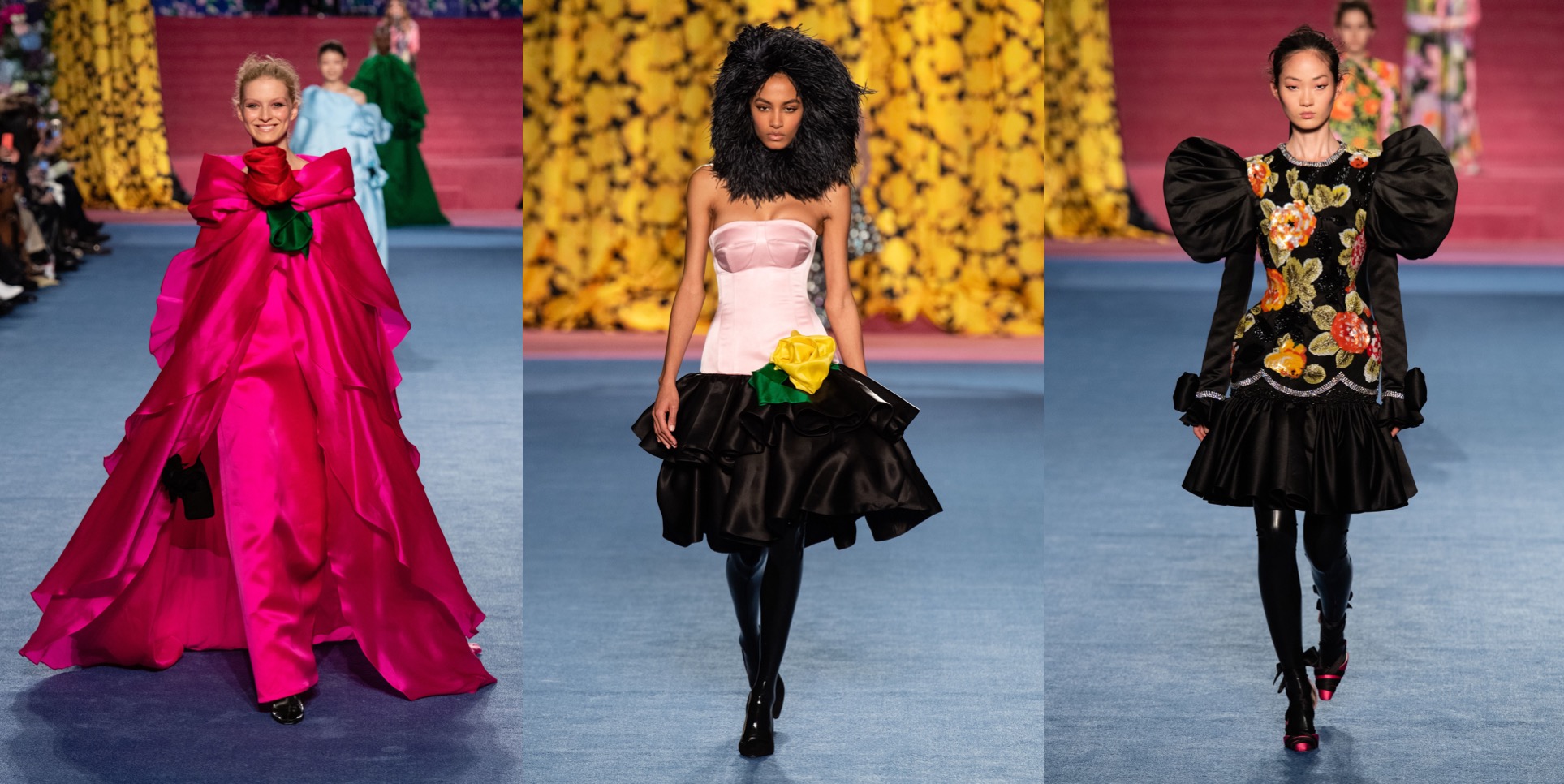
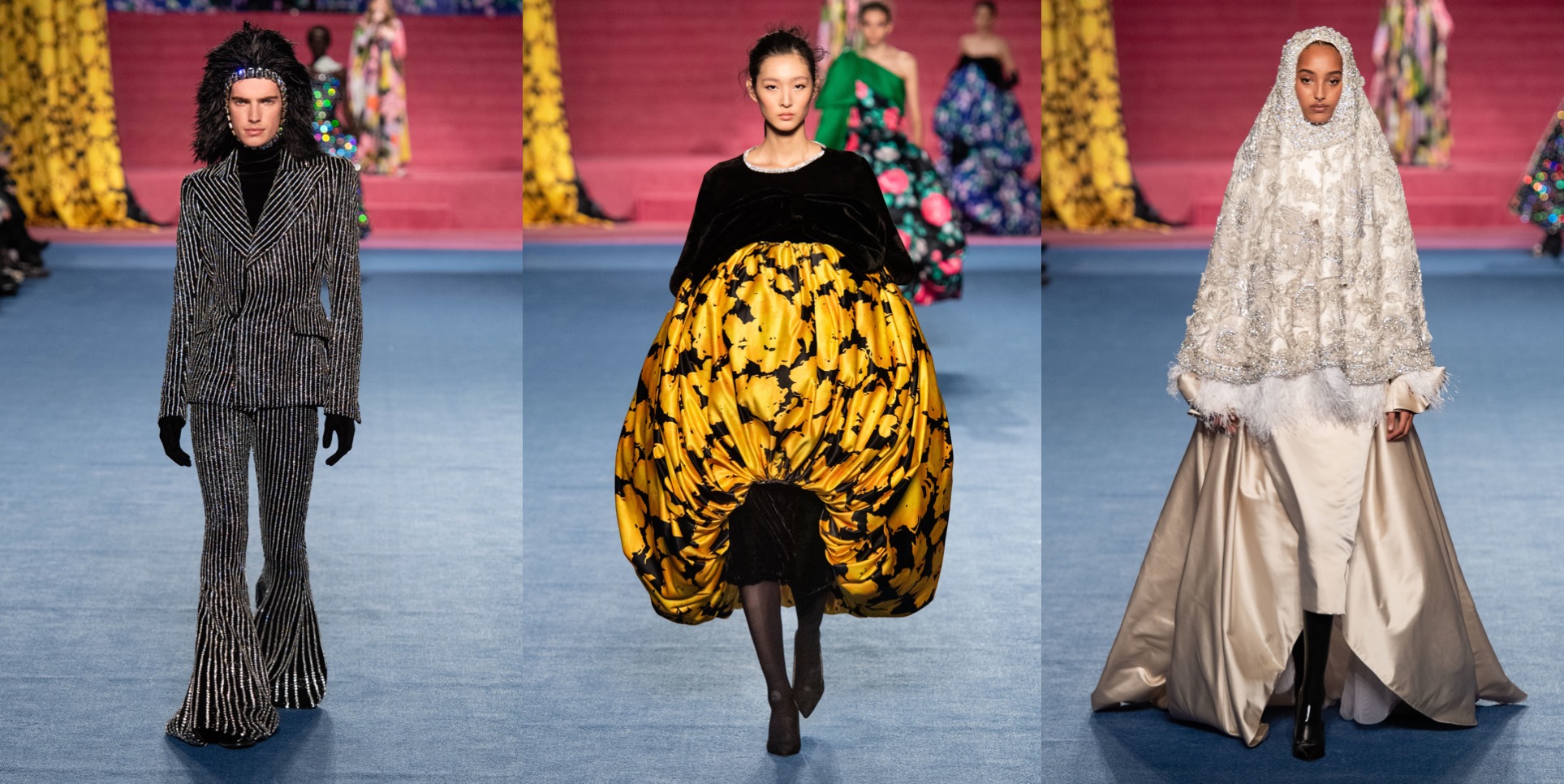
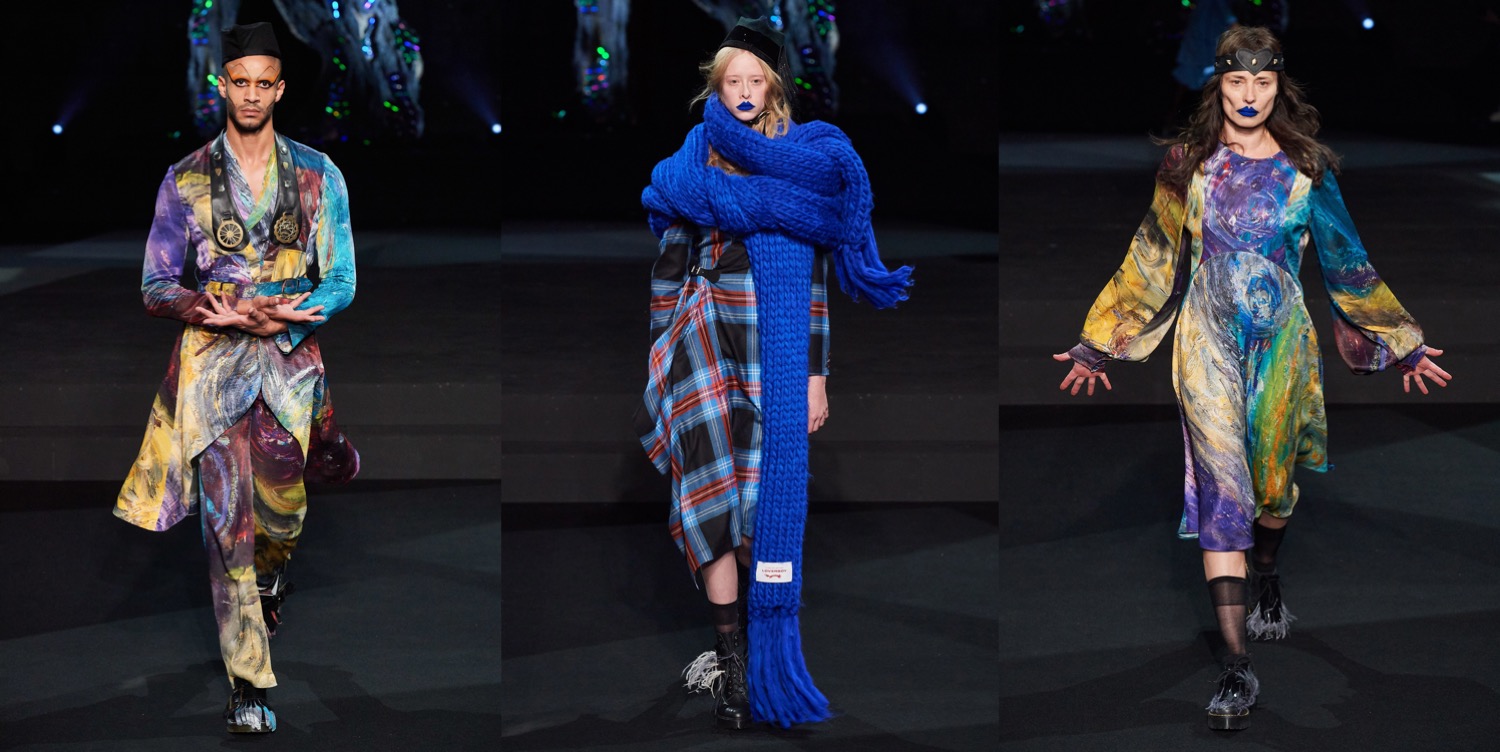
The House. Richard Quinn AW20

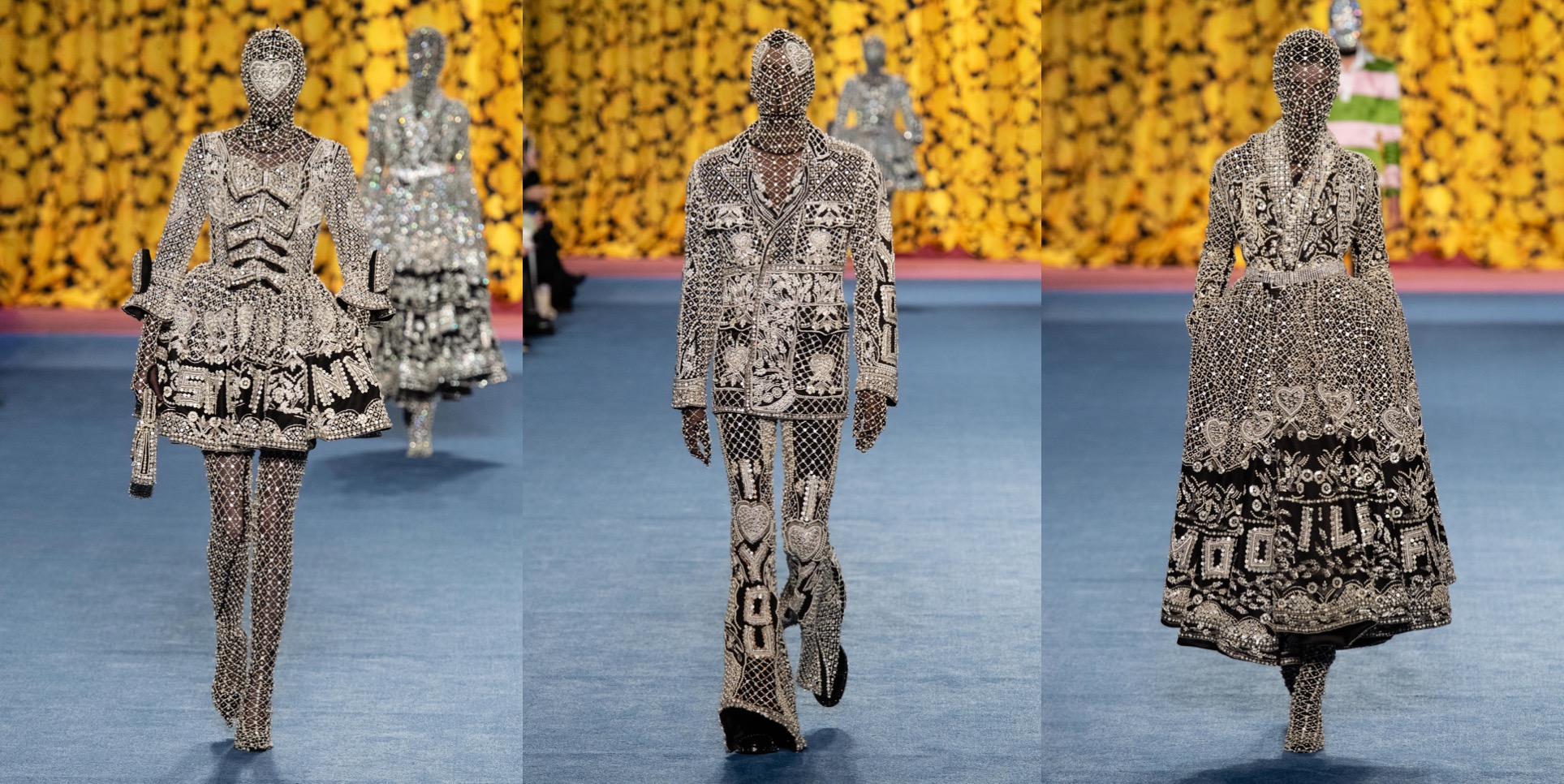
I want it to be London-centric, but looking out towards the world,Richard Quinn declared after his autumn-winter 2020 show. The set – a house facade with his name above the door – was right there. And then the doors opened and the inhabitants, smothered head to foot in crystal and pearl from gimp masks to shoes, began to walk out. The first two were a bedazzling haute-couture beaded sublimation of a London king and queen. GOD SAVE THE QUIN was embroidered amongst their insanely armored finery. Yes, Quinn debuted menswear. That was a surprise. “If we’re building a house, we need men and women in it,” said Quinn. “I’m imagining a house with rooms that have all these different people living in these interiors, whether they’re the harsh, dark and sexy S&M ones, or the more romantic ones.” The idea – and a very Yves-Saint-Laurent-meets-Christian-Lacroix execution – feels appealing. But I just can’t get why Quinn, whose label is so young, does nearly the same thing over and over again. I understand that he wants to establish the brand’s codes, but isn’t it too early to be so retrospective? The dresses come in identical silhouettes every season, while his prints – which are also his house-made signature! – always end on big florals. He’s a big talent, but I really want to see his creativity go elsewhere from time to time.
Collage by Edward Kanarecki.
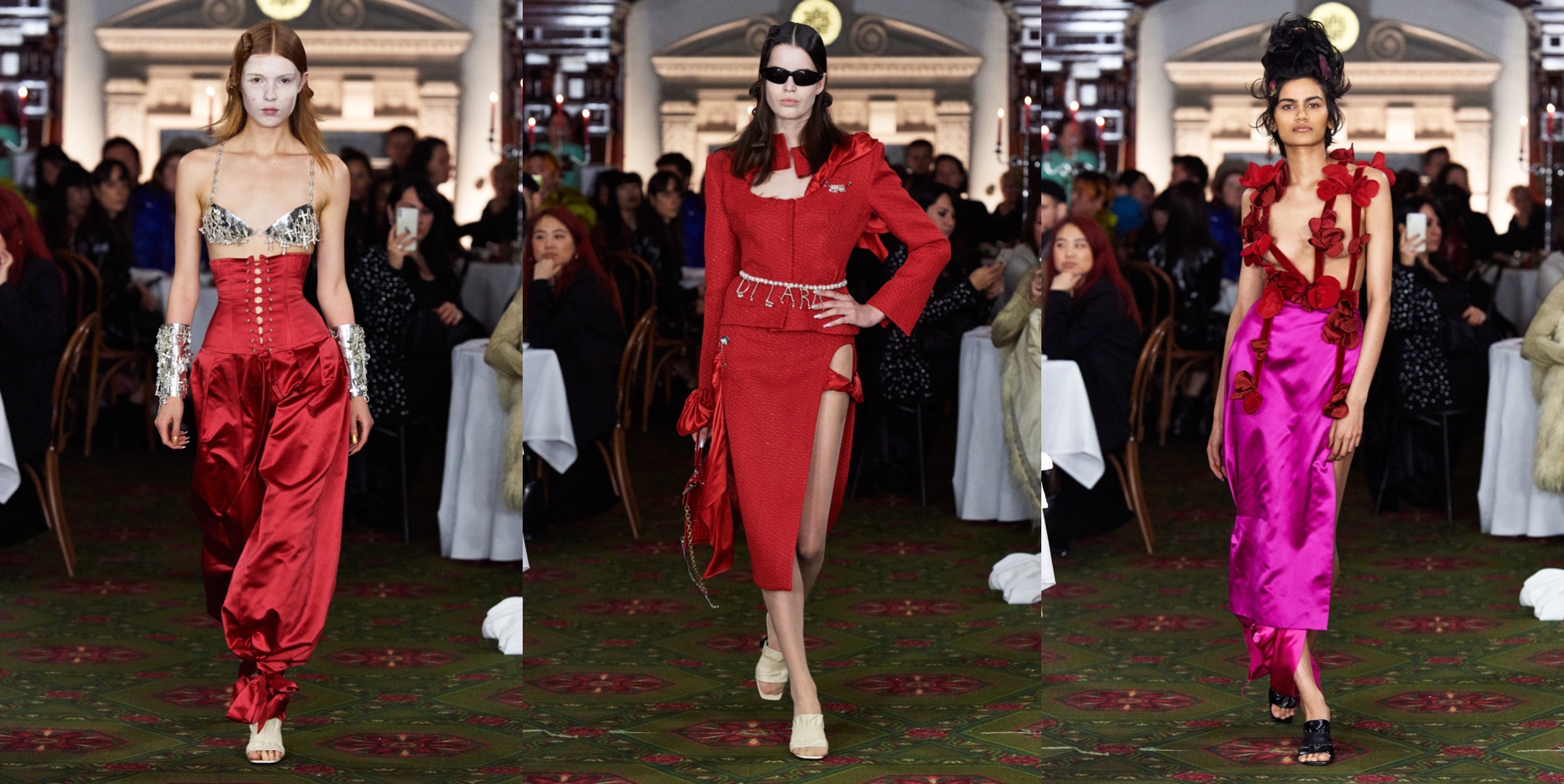
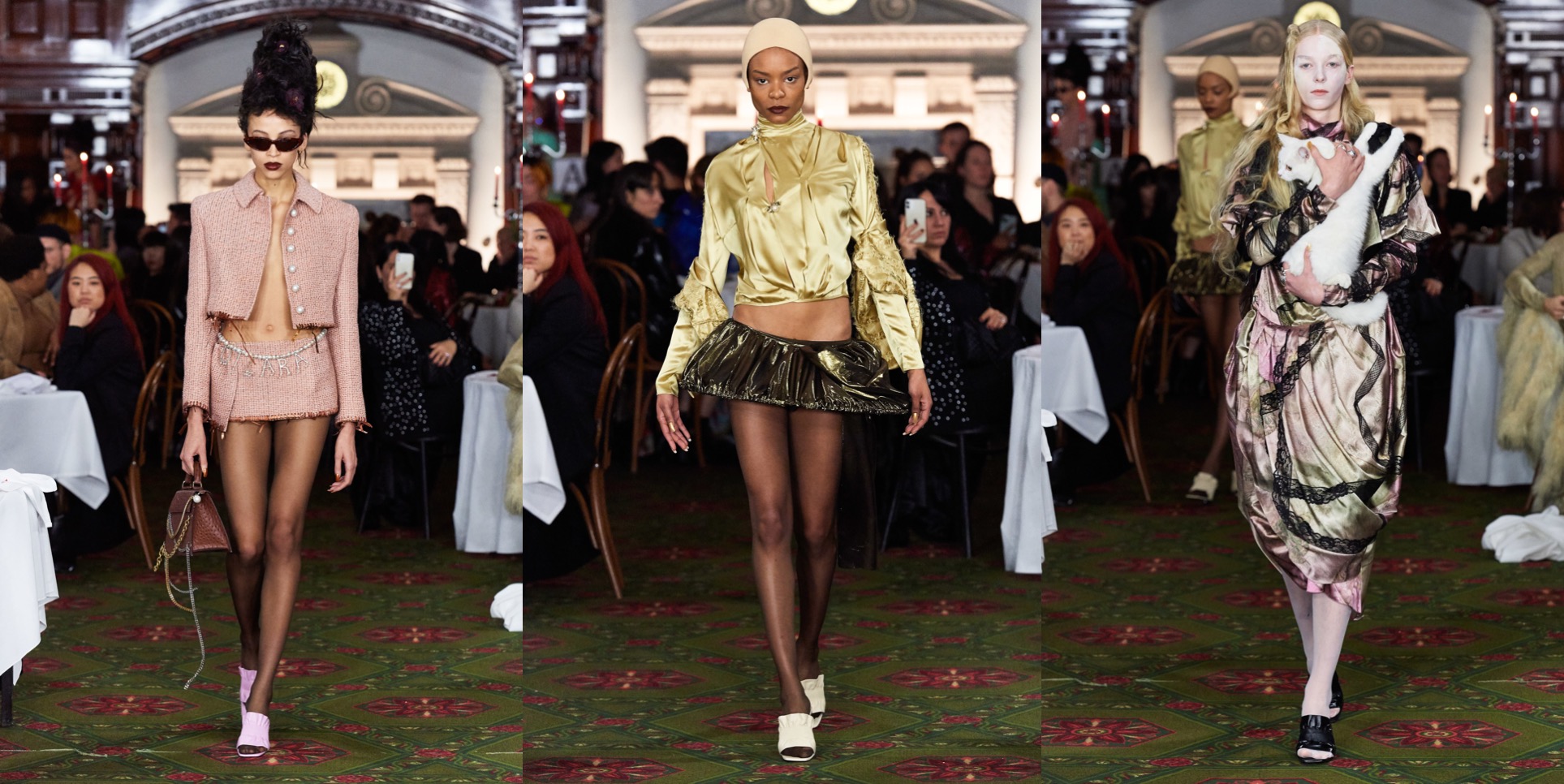
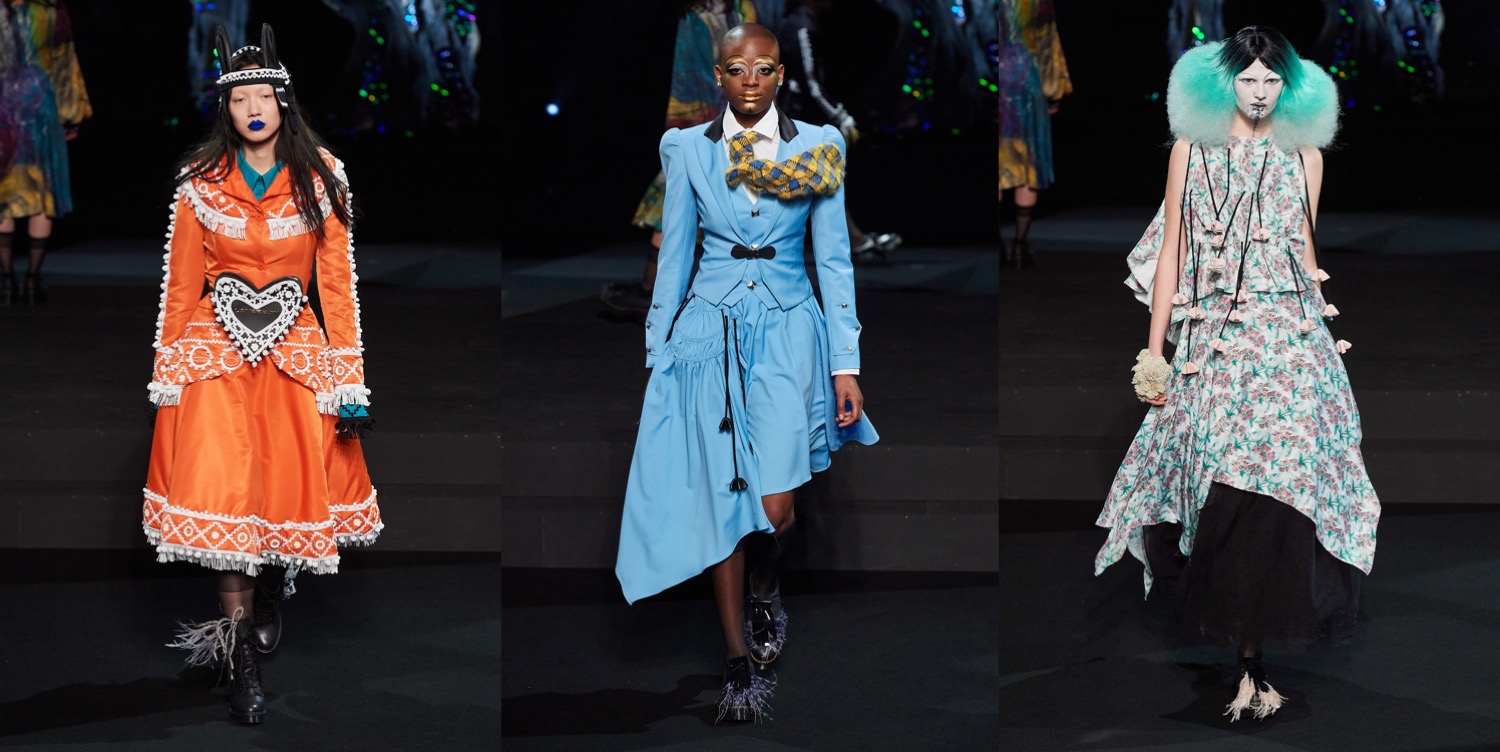
Personal. Dilara Findikoglu AW20

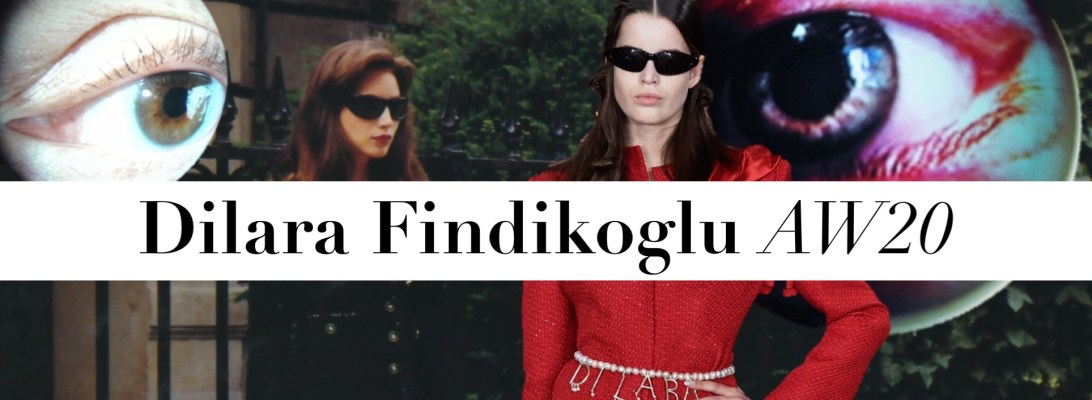
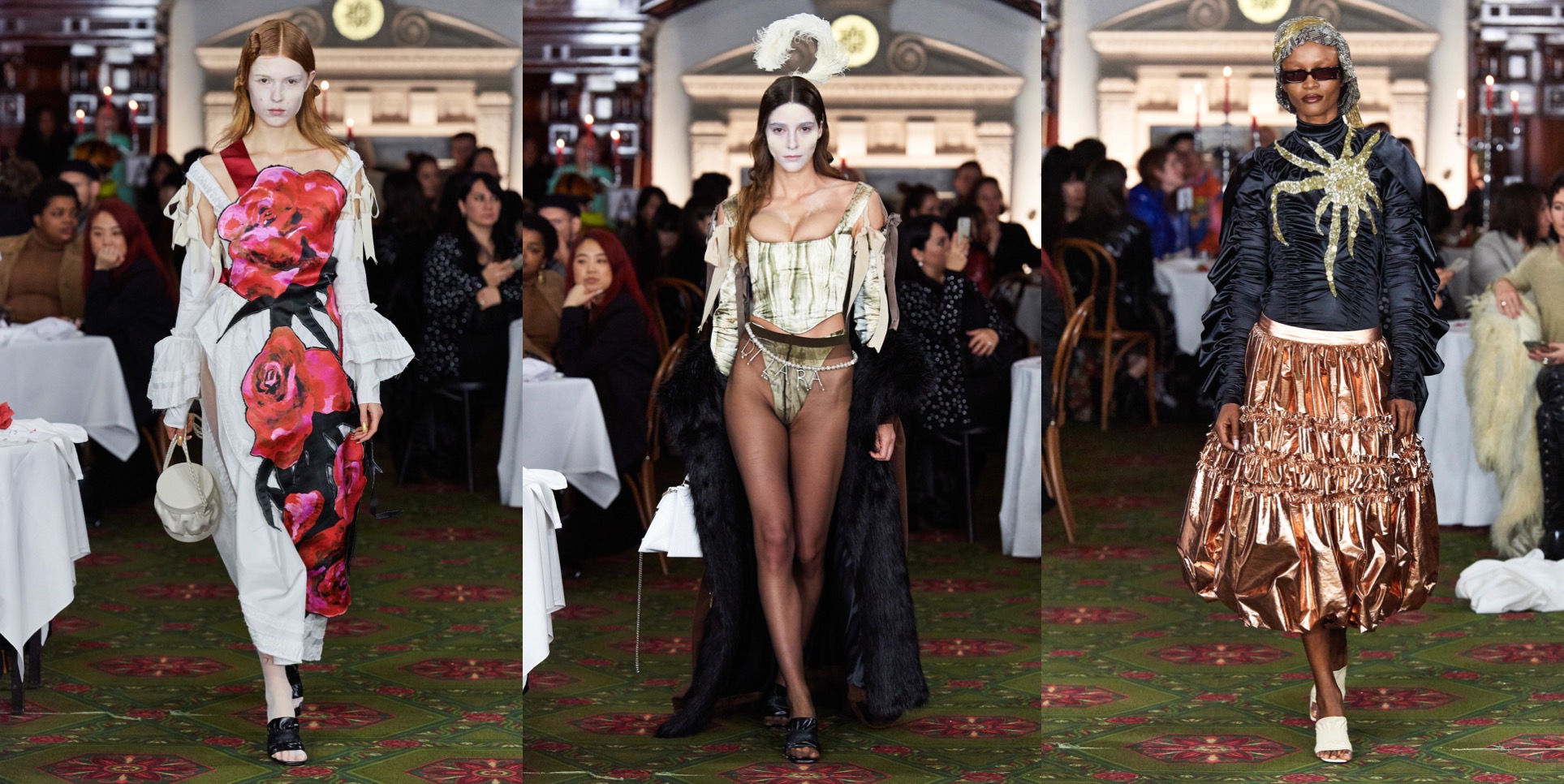
Dilara Findikoglu is a designer who injects cultural commentary into each of her collections, having spoken out about climate change, women’s rights, marriage equality and gender disparity in recent seasons. For autumn-winter 2020, she’s speaking out for herself. Backstage, Findikoglu explained how events in her personal life led her into a deep introspection. She psychoanalyzed herself in this collection, christening her models into two sects: light Dilara and dark Dilara. The division didn’t exactly correlate to a color palette or silhouette, but was more about mood. As is her habit, each look was named. Here are some of the most brilliant looks: “Mother” was a blooming harness top in fuchsia with a red, slashed-away maxi skirt. “Self Destruction” was a viciously ruched dress that appeared on the runway on a model holding a white cat. “Borderline” was a ruched black bodysuit, “Insecurity” was strips of silver fabric with floral appliques worn with a bridal veil that came after “Future”, a similar ensemble cut out of blood red fabric. A crimson tweedy skirt suit with a logo belt was called “Gabrielle” (as in Chanel). “Enfant Terrible”, long-sleeved corset top with low-slung skirt, would work for day job goths, as would “Real World”, Findikoglu’s version of a business suit with pointed breasts darted into its vest and high-cut briefs stitched into the trouser. Pretty much always (if we aren’t speaking of anonymous, fast-fashion studios, of course) a designer’s collection is somehow autobiographical and personal, but in case of Findikoglu, this really blurs the lines between fashion and psychology.

Collage by Edward Kanarecki.
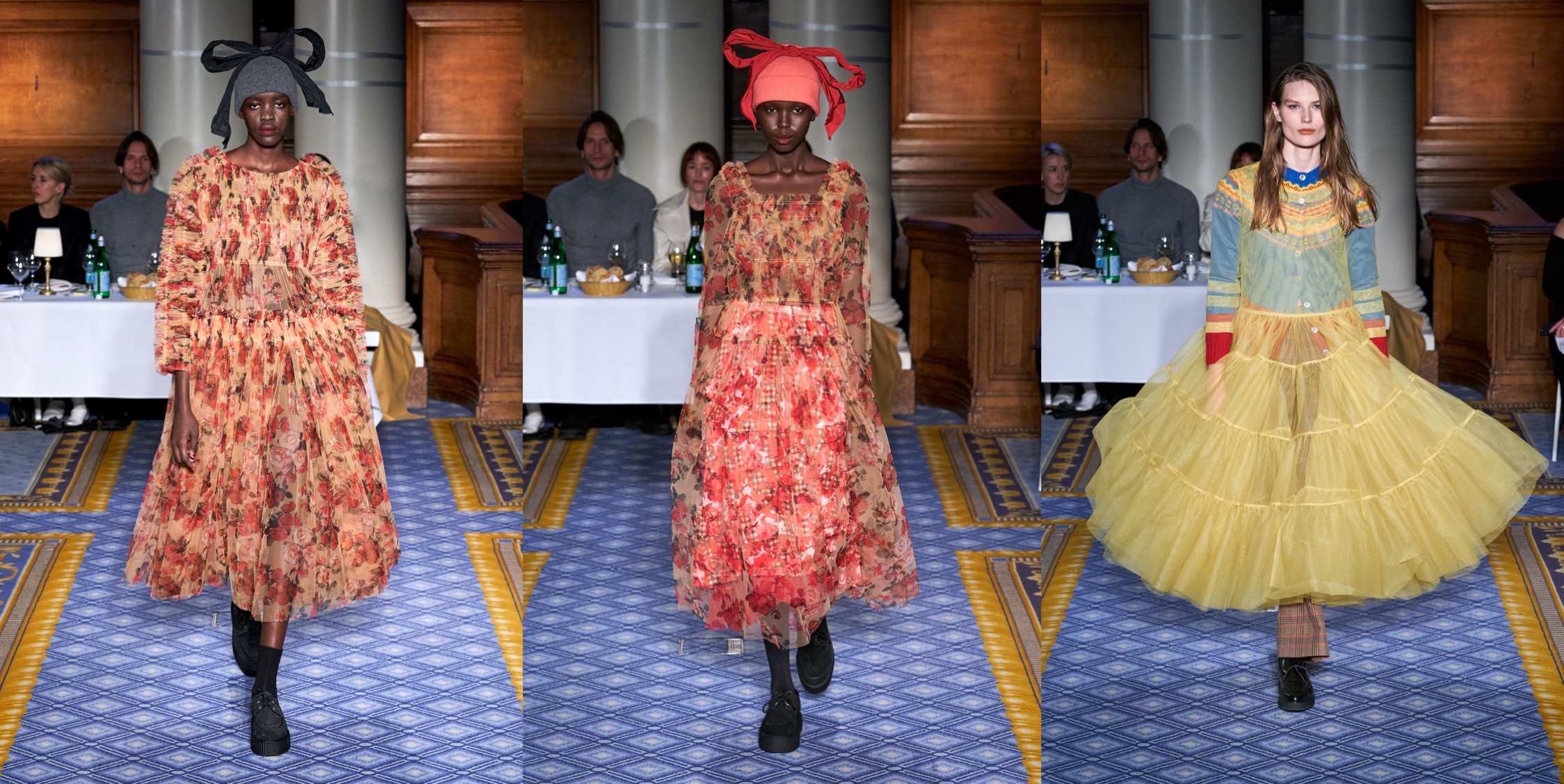
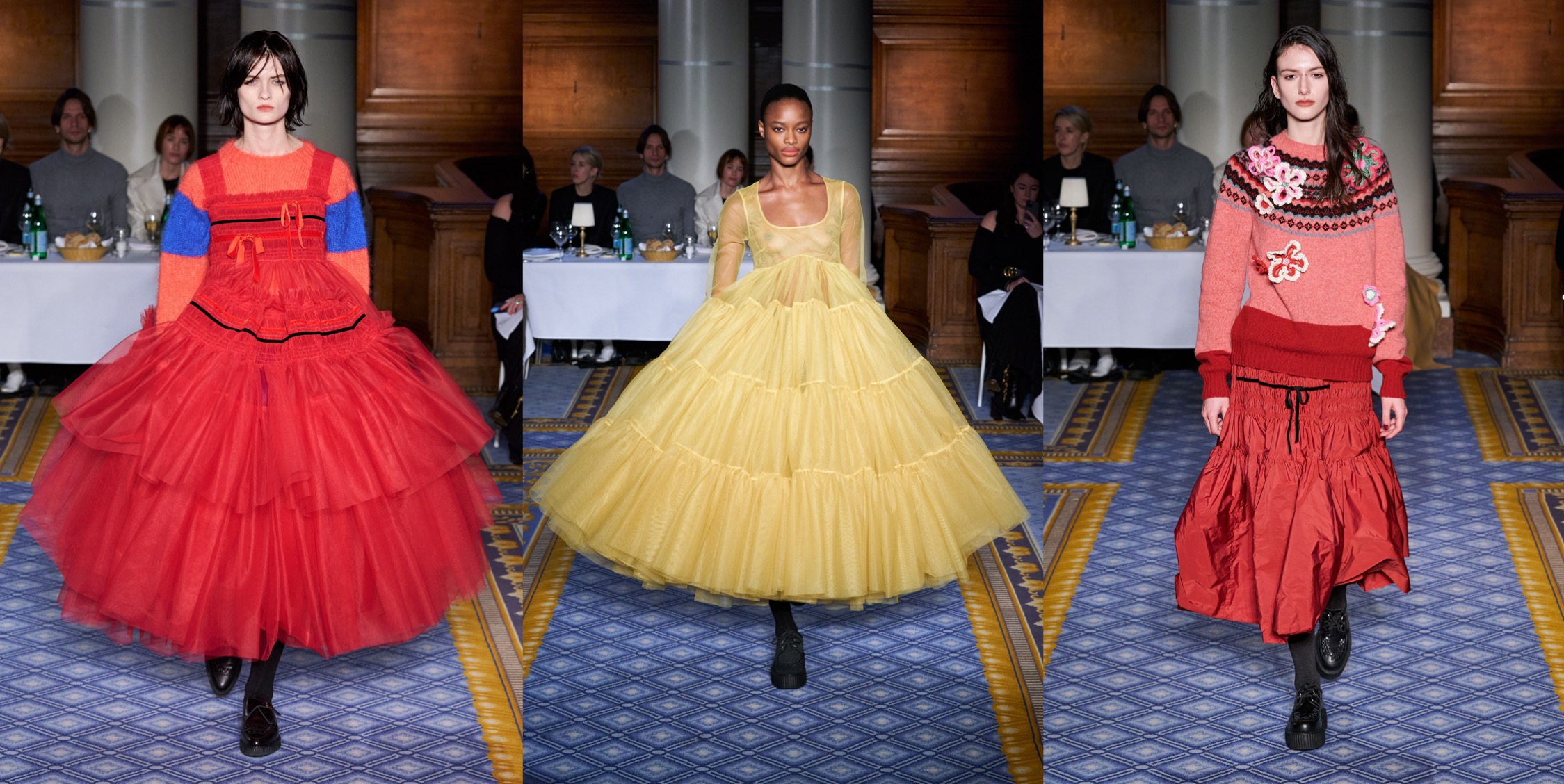
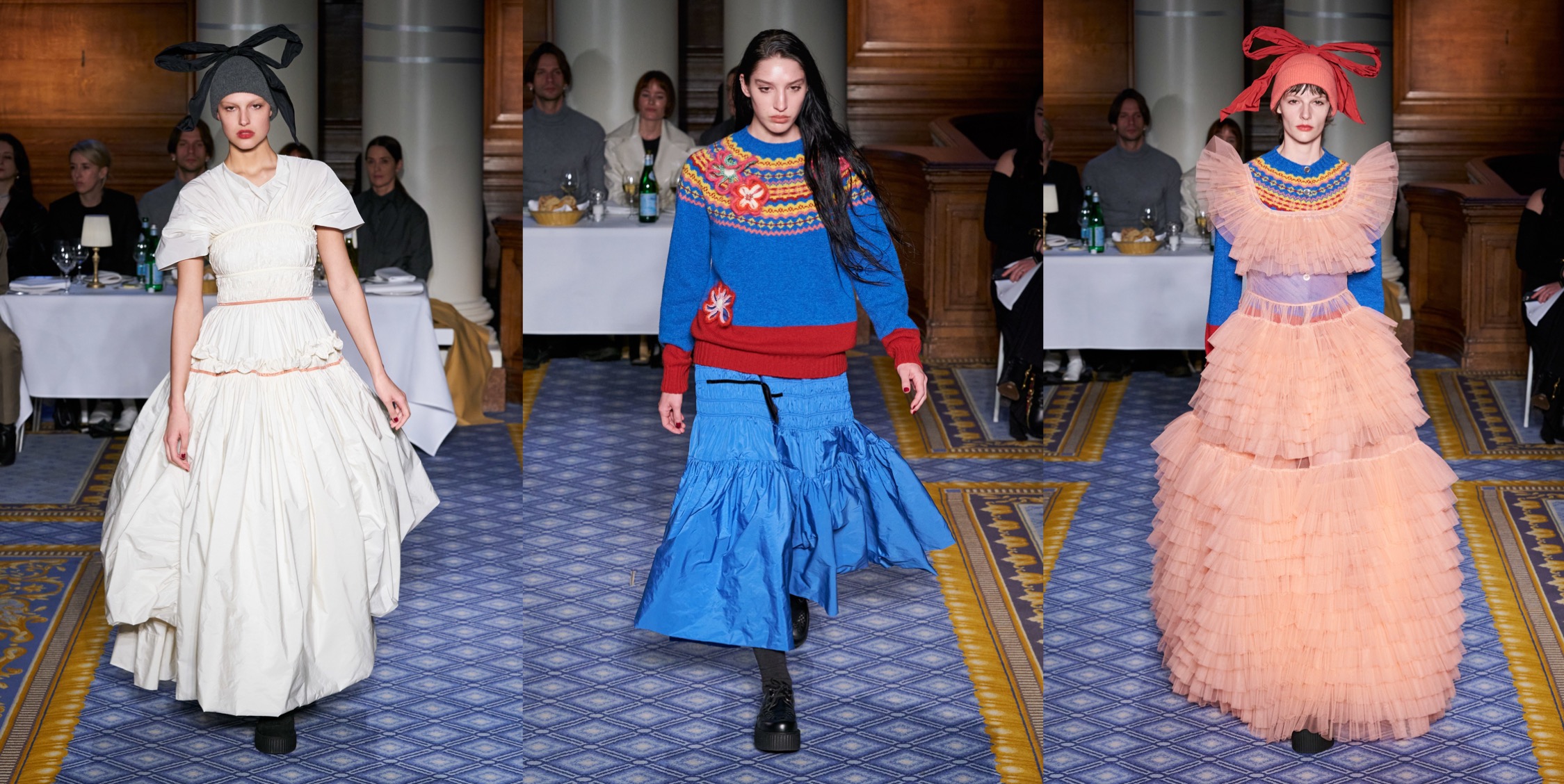
Your Inner Child. Molly Goddard AW20

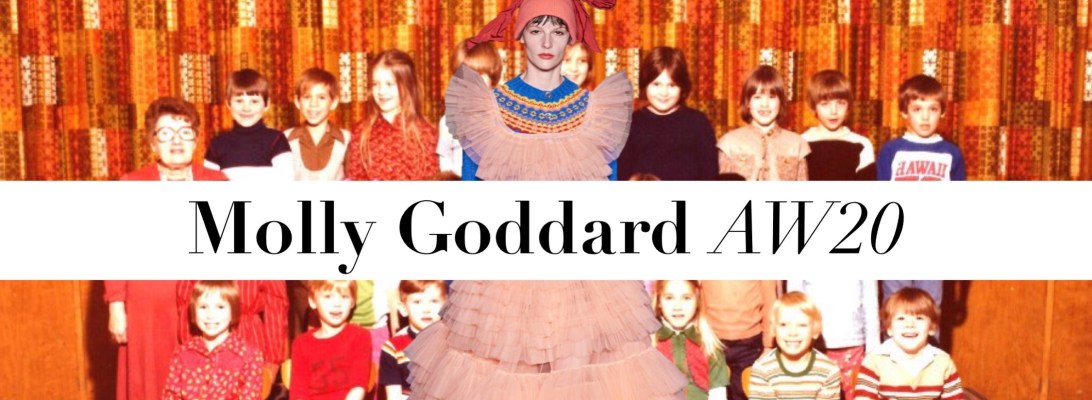
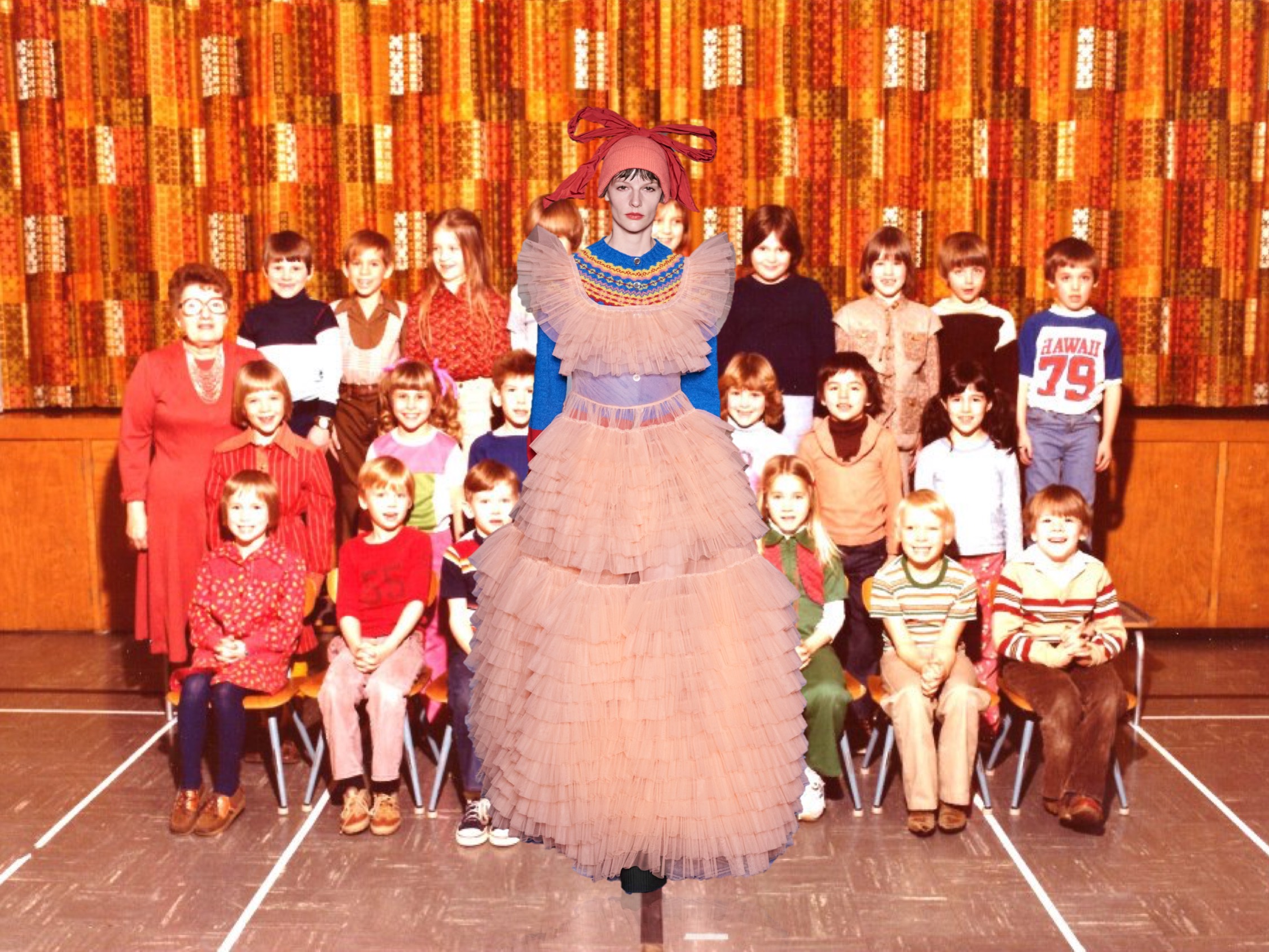
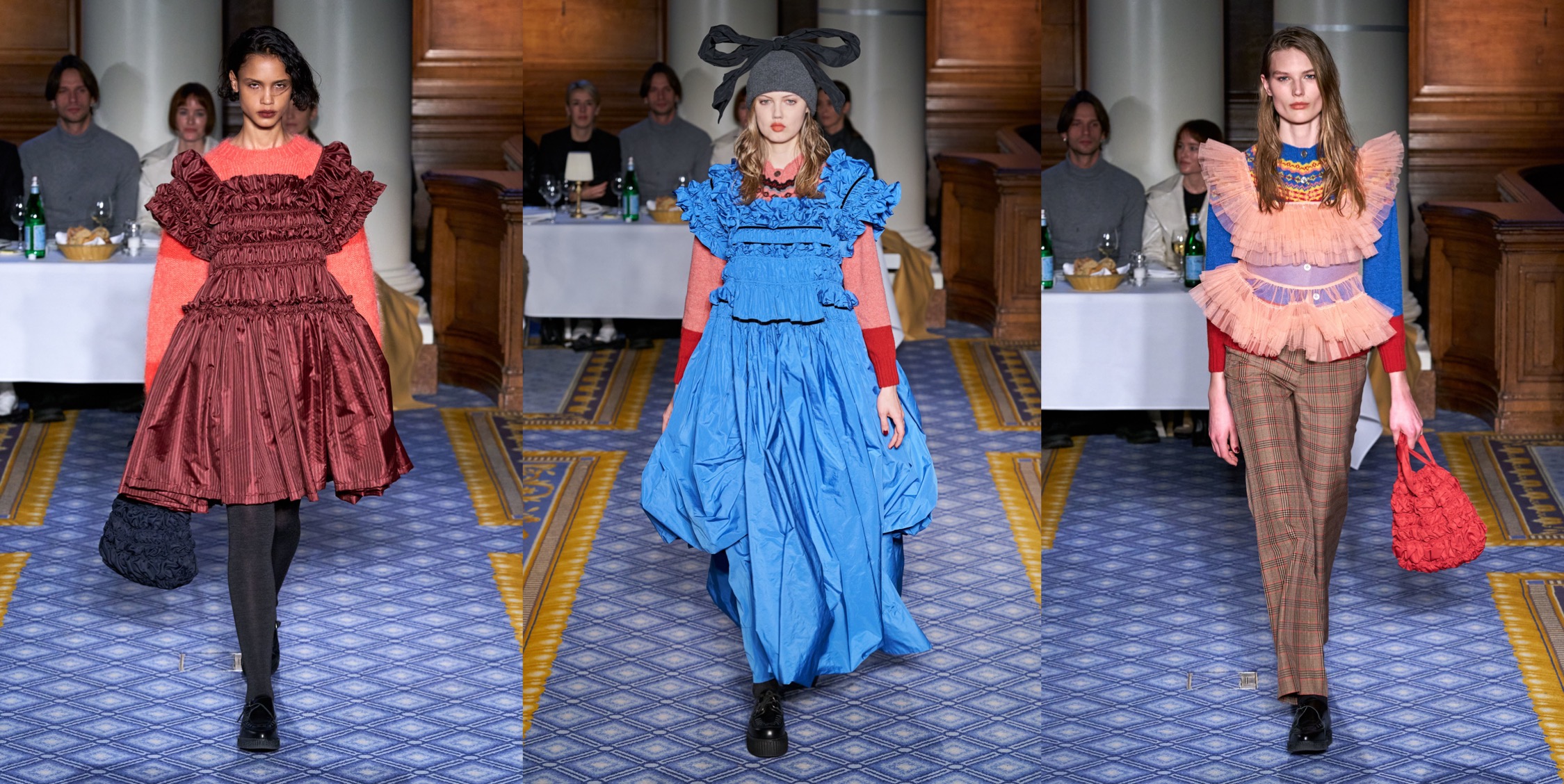
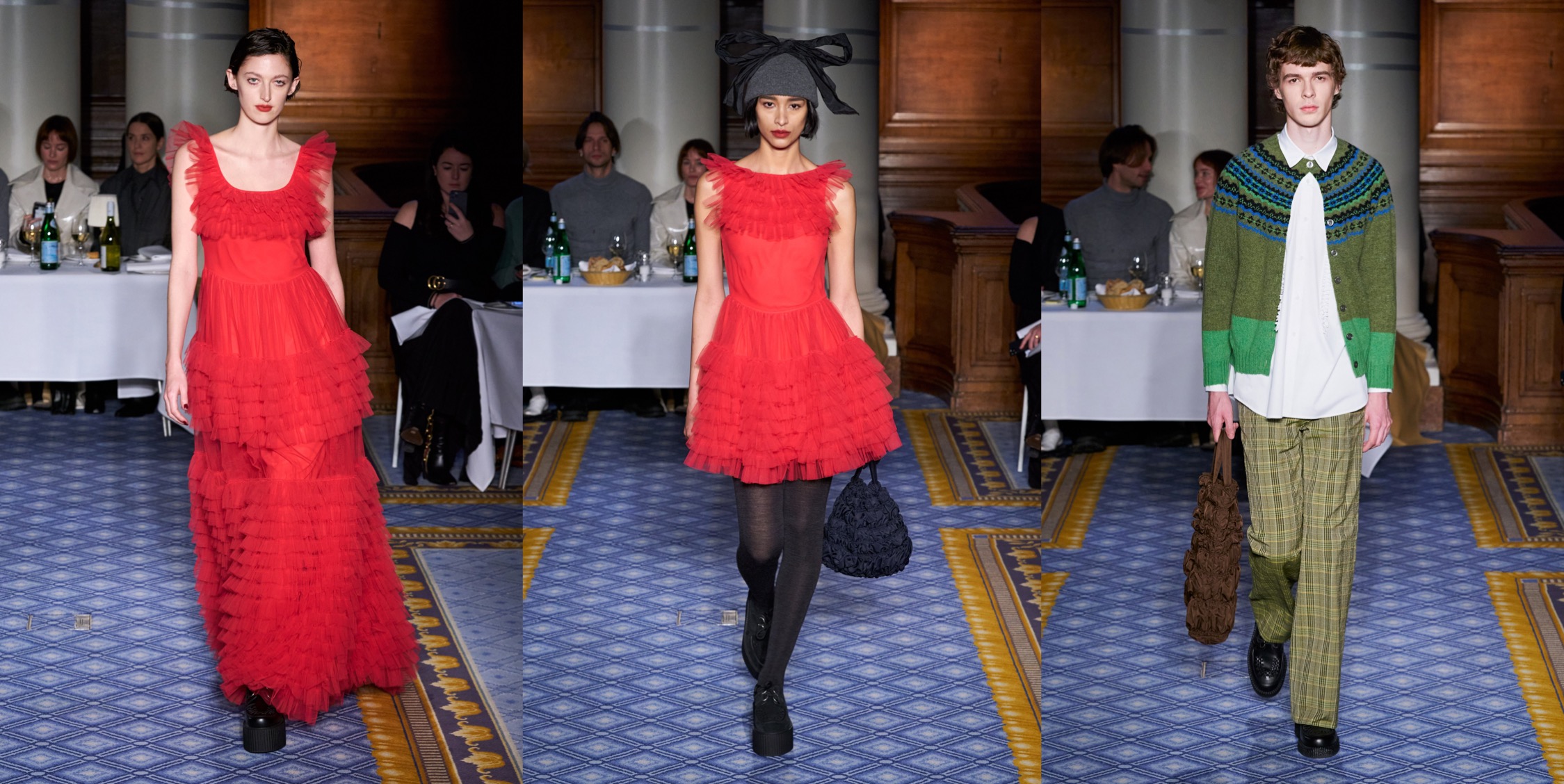
Freeing your inner child through fashion began this season at Alessandro Michele’s Gucci menswear and recently has also appeared at one of my favourite labels in London – Molly Goddard. In lieu of a press release, Goddard sent out a throwback London street style photo as the explainer for her new collection. First published in Fruits, the cult Japanese magazine, back in 1992, the image features just the kind of cool-looking dad and daughter duo you’d expect find on bohemian Portobello Road: him in distressed denim-on-denim and a baker boy hat, his insanely cute sidekick dressed in a tiny ruffled skirt over jeans and a chunky knit sweater. “The little girl is me!” said Goddard backstage at the autumn-winter 2020 show. “I remember those times growing up in Notting Hill so fondly, and really wanting to get dressed up for the market and all the characters who lived there.” In this joyful line-up, you could trace the influence of her toddler self, starting with an exploding blue taffeta dress that was layered over a salmon pink cardigan and worn with chunky creepers, then topped off with a beanie hat that was topped with a giant bow (the accessory of the season is here!). Then, things got even better: Molly’s signature tulle dresses in crayon kept on growing in size, while her sense of layering made it all look somehow… wearable. Goddard showed menswear for the first time this season, largely inspired by her musician-turned-fashion-PR boyfriend Tom Shickle. “He always moans that there’s nothing for him to wear, so I made a suit,” said Goddard, laughing. The retro-leaning checkered tailoring she created had a nerdy sway about it, something you could imagine Jarvis Cocker might have worn in the 1990s. One of these Fair Isle cardigans, please!

Collage by Edward Kanarecki.

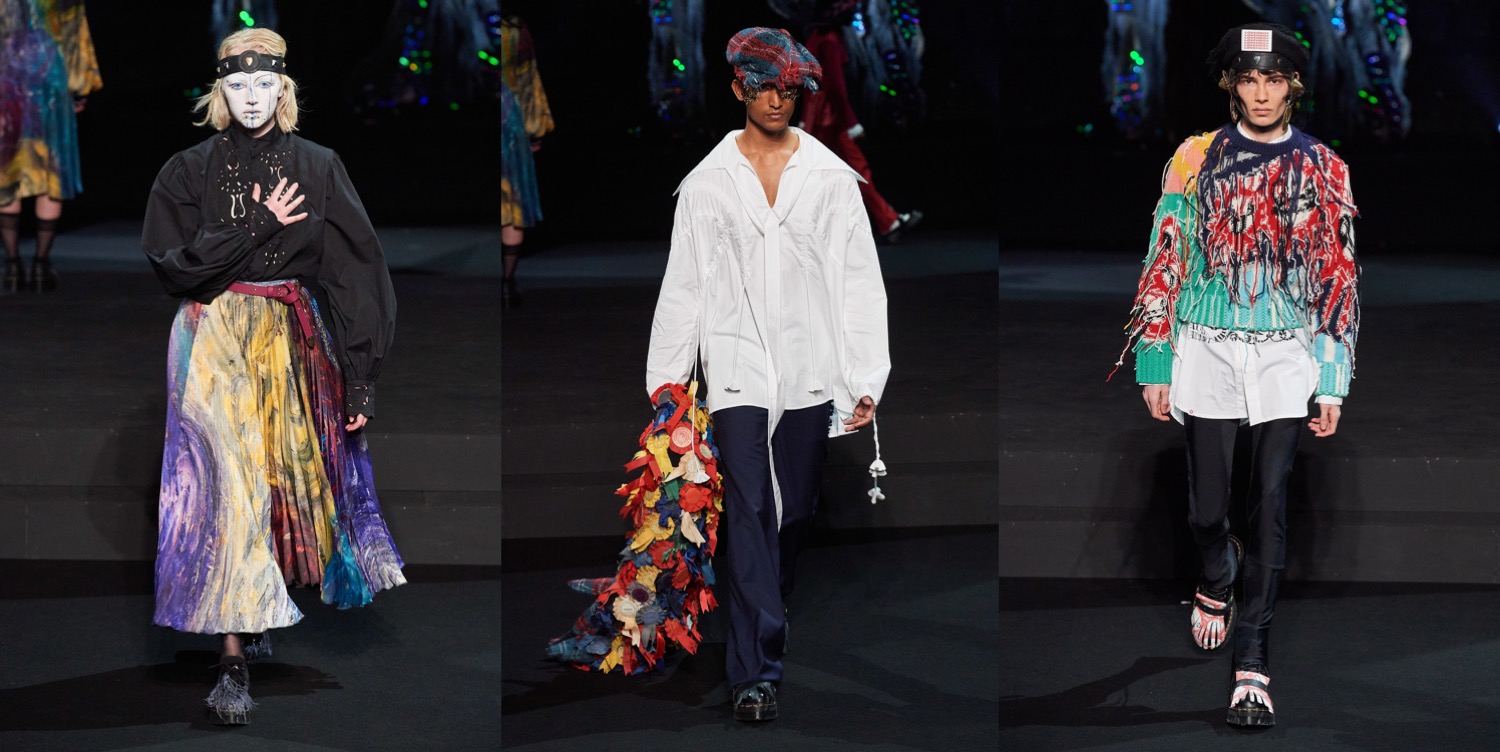
Men’s – Lovers Rock. Wales Bonner AW20

For her autumn-winter 2020 show in London, Grace Wales Bonner had friends and audience members sitting at tables around a dance floor, joining her celebration of Lovers Rock, the specifically British Afro-Caribbean music scene sprung from underground London house parties in the ’70s. “Lovers Rock was created by second generation Jamaicans in this country, their own kind of sweet mix of reggae and soul,” the designer explained. “It’s a reflection of my family on my father’s side. My grandad came from Jamaica in the 1950s. My dad used to work on Lewisham Road, and I found these documentary photographs by John Goto of teenagers at Lewisham Youth Club in the ’70s.” What fascinated and touched Wales Bonner was how kids of her dad’s generation wore clothes which referenced Jamaican style and Rasta flag colors, woven into a “a fun mix-up” of standard English smartness, “irreverent, but always elegant.” There was a denim tailored coat lined with velvet; a women’s look featuring  a corduroy patchwork matching shirt and skirt color-blocked in red, yellow, green, and black; slim-fit ’70s track pants; and “the kind of Adidas trainers Bob Marley would have worn.” The full repertoire of Wales Bonner’s refined tailoring was on display as well: tweedy suits, separates and coats, worn over body-hugging sweaters and roll-necks, with a stronger representation of womenswear in combinations of blazers and full pleated skirts. The self-knowledge Wales Bonner has gained over the years means she knows who she is and what her brand stands for by now. “It’s coming up for five years,” she summed up to the press. “I’m looking back and consolidating. For me, my approach is elegant, designed, and crafty—about what’s the perfect suit? Now I want to build the business.”

Collage by Edward Kanarecki.

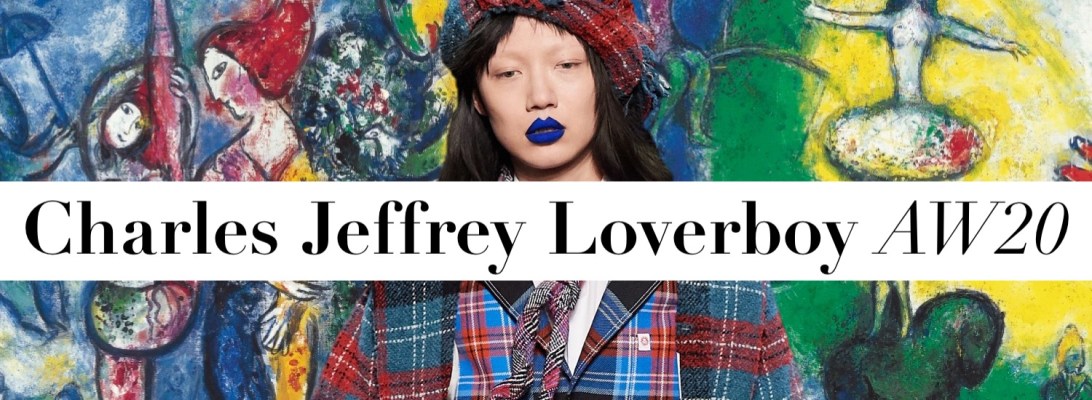
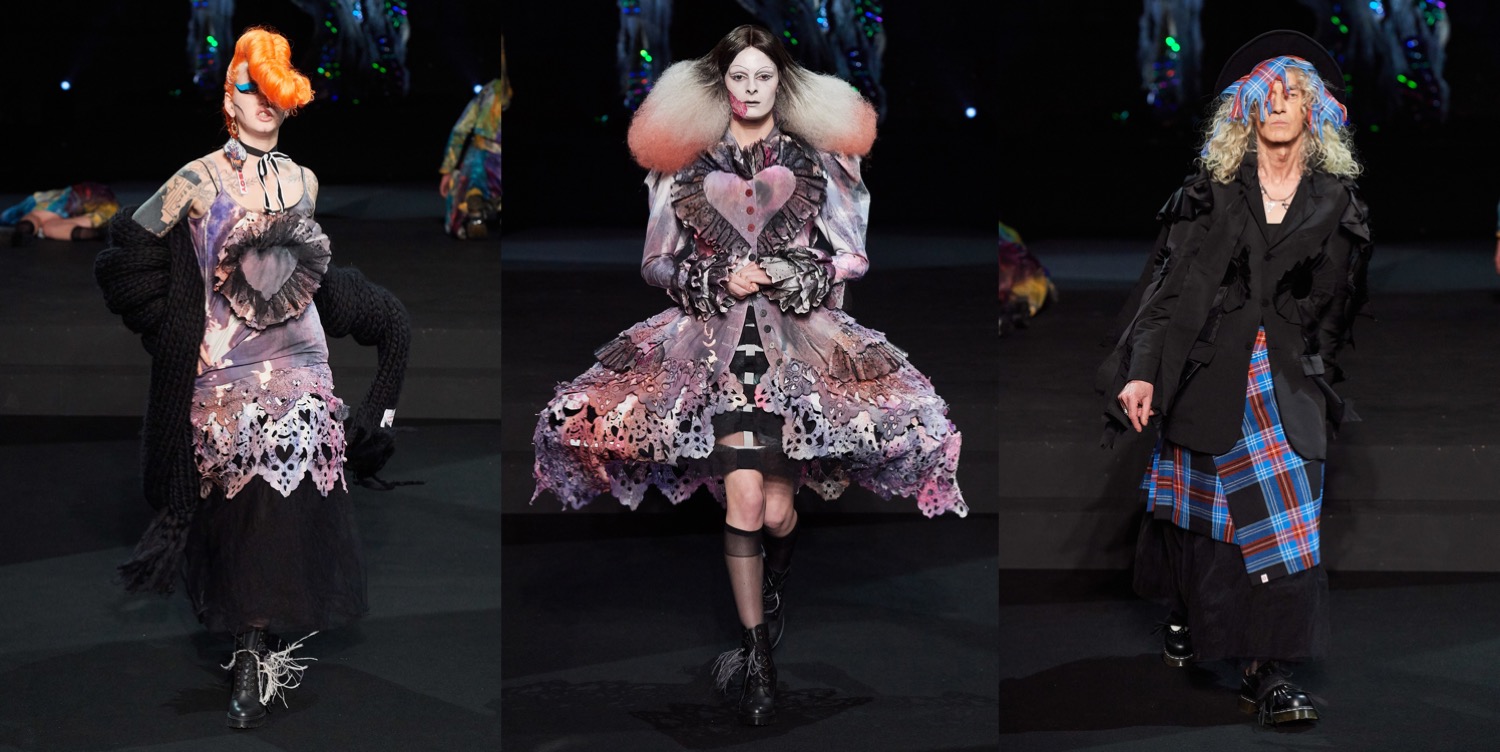
Men’s – Ritual. Charles Jeffrey Loverboy AW20

While men’s London fashion week seems to get gradually less and less popular, there are still some labels that shine some hope for the once prospering event. “It was a modern-day Scottish sacrifice,” said Charles Jeffrey backstage of his Loverboy show for autumn-winter 2020 season. There was an installation of a hollowed-out tree hung with CDs and topped by a disco ball silhouetted against the dark on a platform at the end of his runway – a place for the ritual propitiation of the ancient, abused forces of nature. So it seemed, as his characters came and went, some dressed in costumes hung with horse brasses and sporting huge equine quiffs, others in Loverboy tartans, and still more in pannier dresses. Another sect looked like a cult of eco-paganists clinging together in their own dance of lament. But other than theatrics, this line-up was the most accomplished collection from the designer yet, clothes-wise. Jeffrey has traversed that stage of his career where he has presented symbolic statements and reached a point where his tailoring fits impressively (and sexily). His waisted, puff-shouldered jackets, flared asymmetric suits and tartan trousers beat with London’s old school spirit. Fantastic dresses (genderless!) and great coats. Even the “commercial” part of the collection – bold Loverboy merch – feels right.

Collage by Edward Kanarecki.