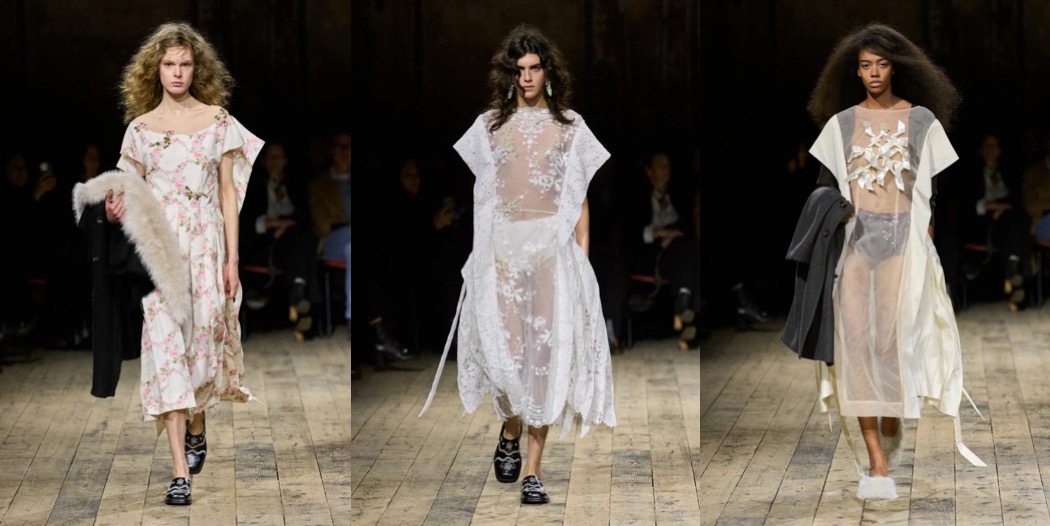
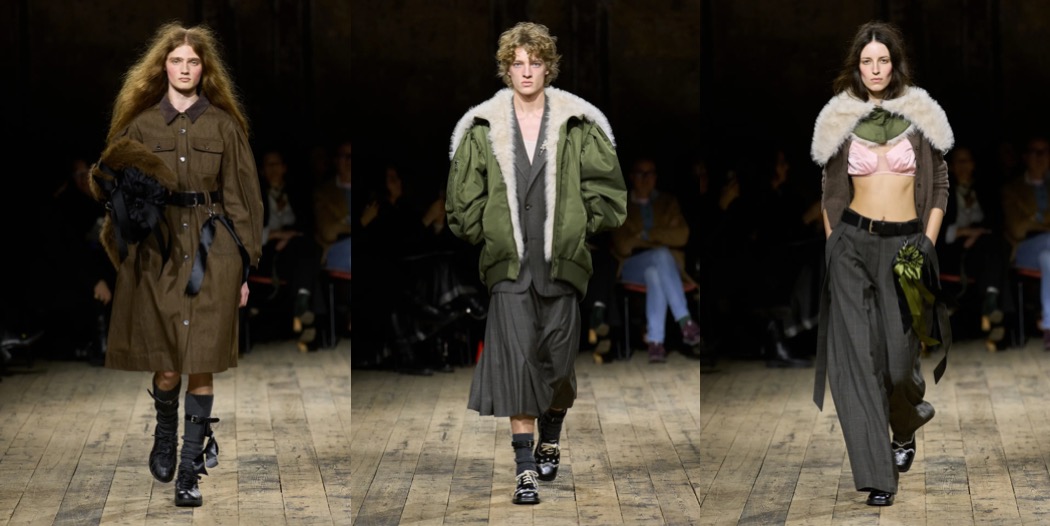
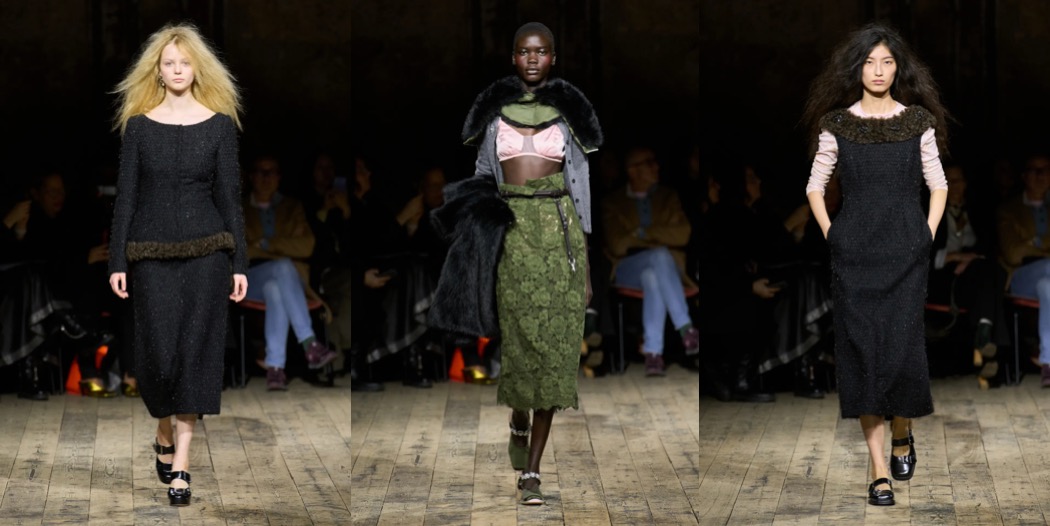
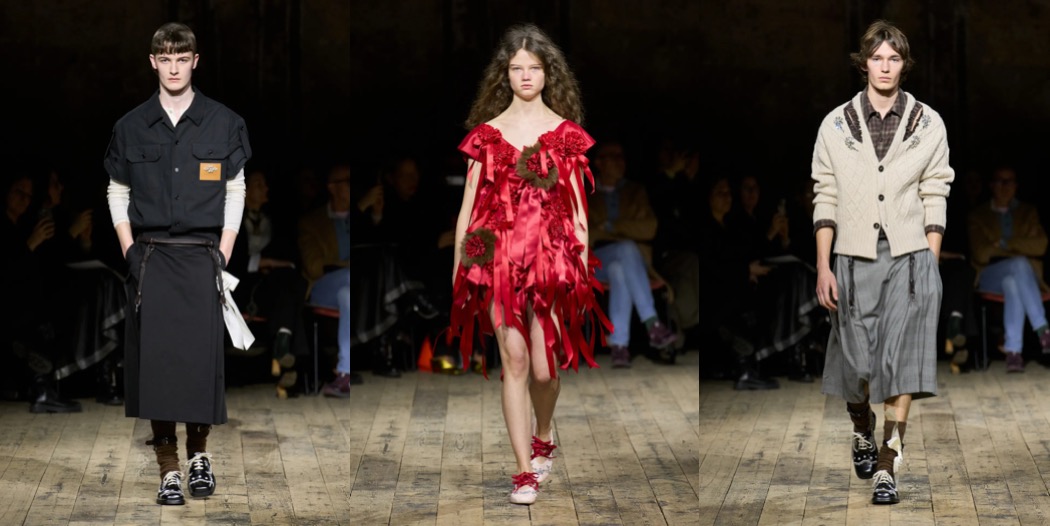
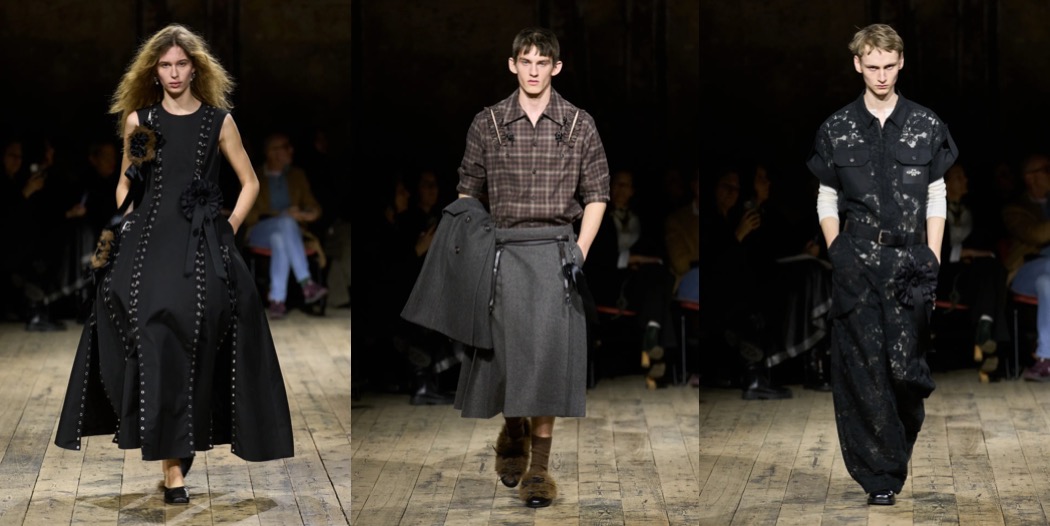
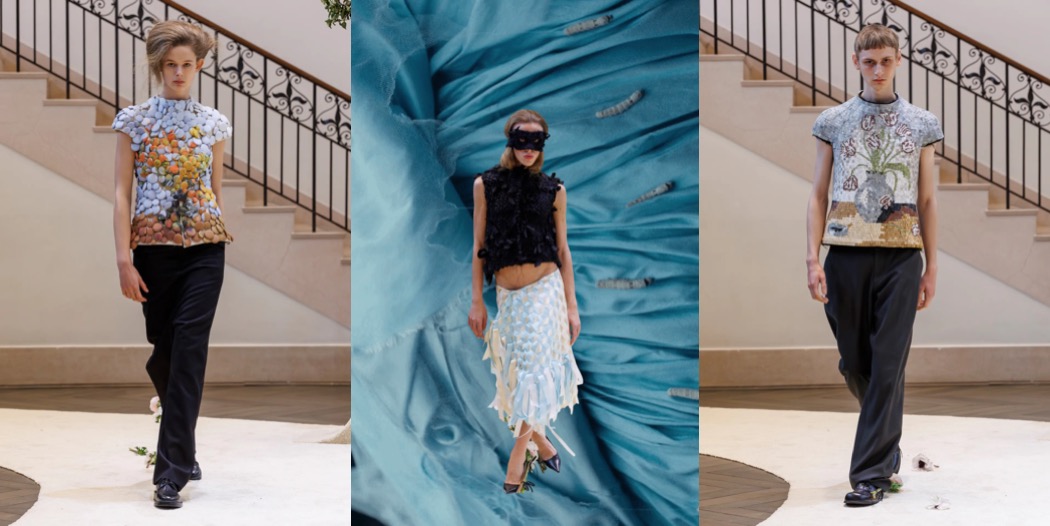
What I love about Conner Ives’s latest collection is how unfussy, unpretentious, and effortless it feels – while remaining absolutely glamorous. The designer drew inspiration from Weimar-era Berlin: a time of freedom and untamed expression, a moment of societal shift, and the rise of a queer community that helped shape modern art. Echoes of the 1920s came alive in Ives’s low-waisted dresses with fringed hems and sleeves, as well as in a phenomenal fur-trimmed silk coat adorned with chinoiserie motifs. READ MY FULL REVIEW HERE.
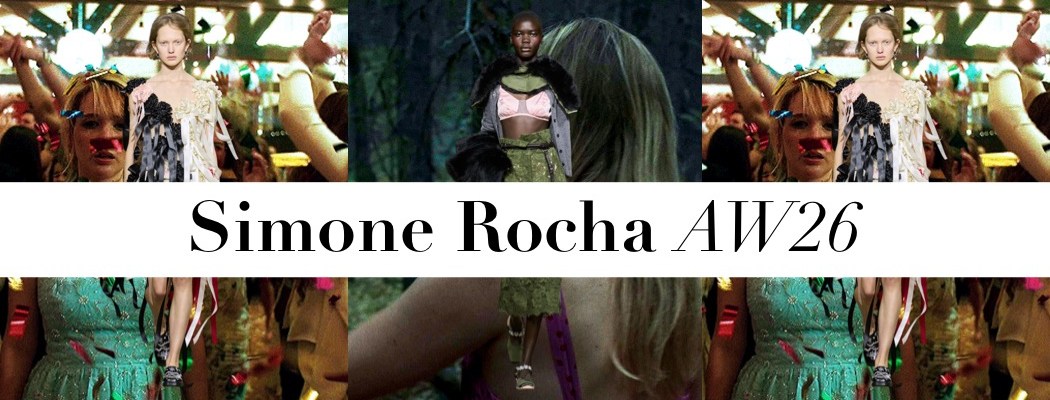
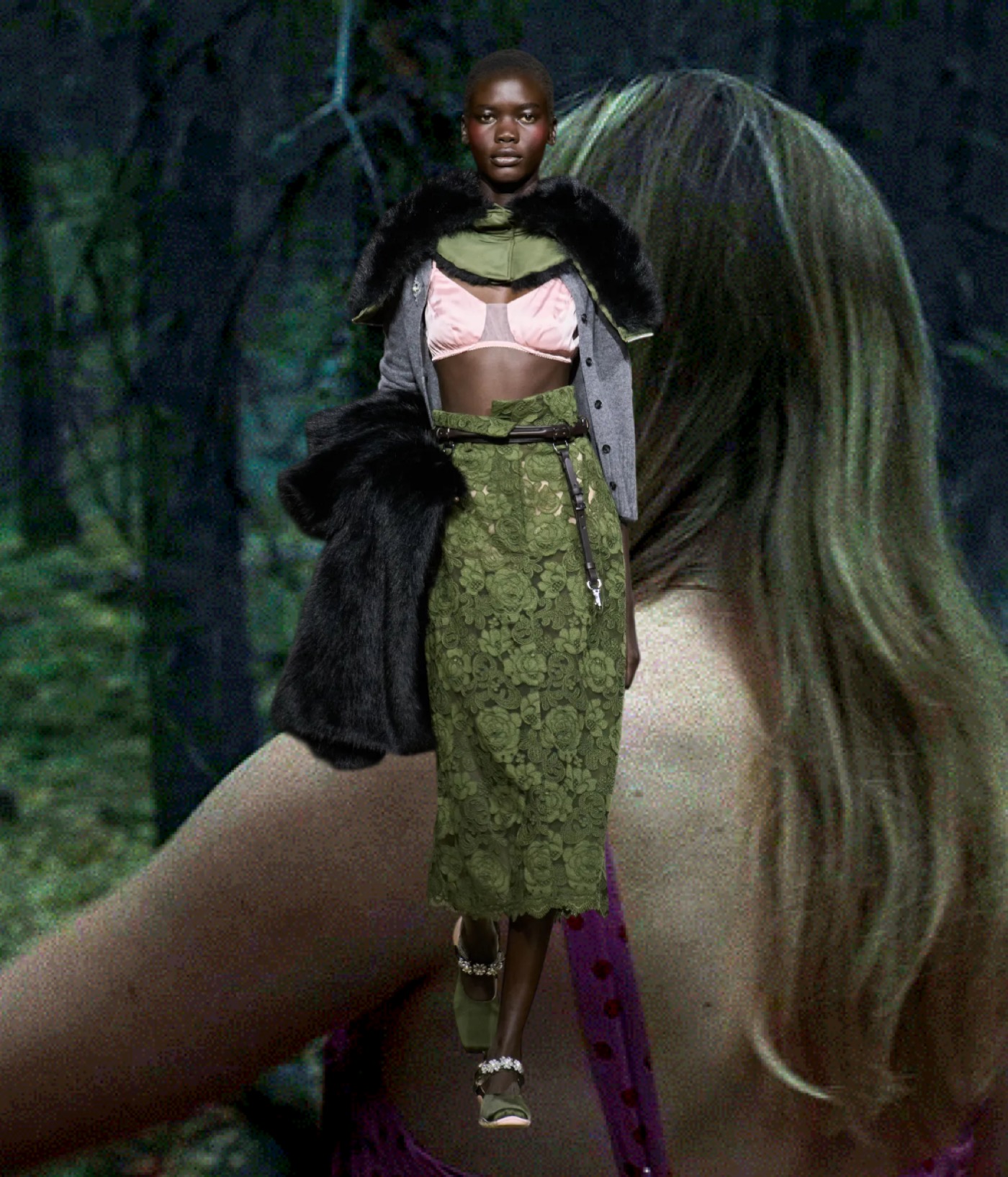
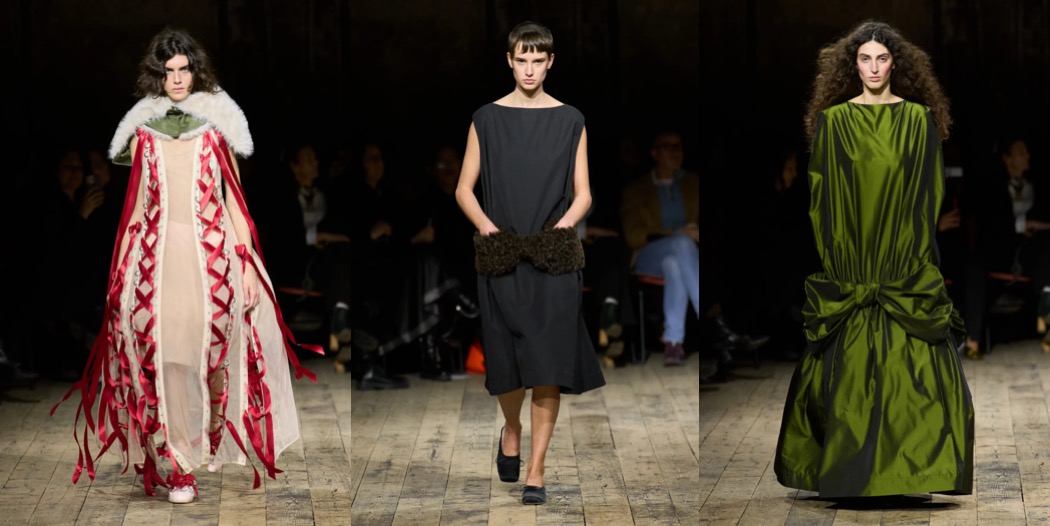
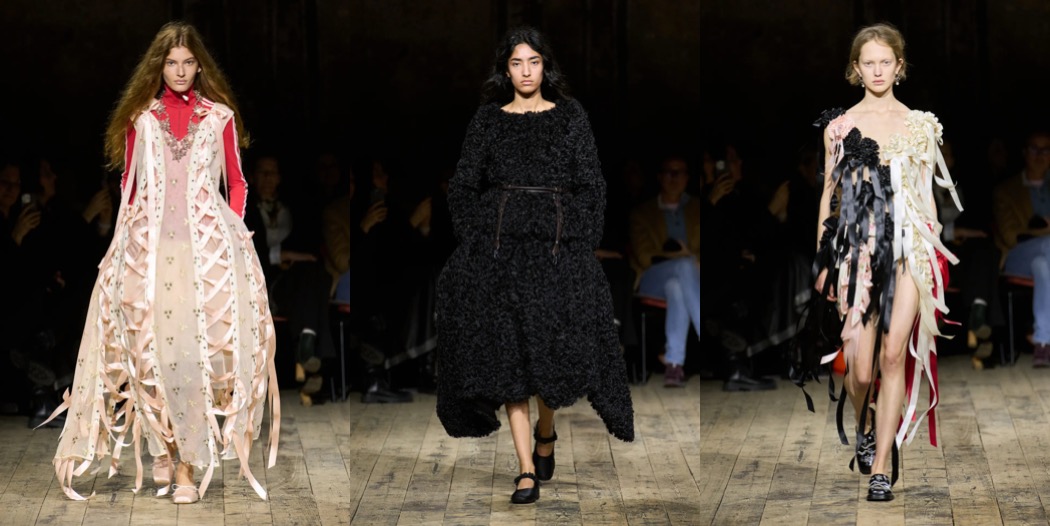
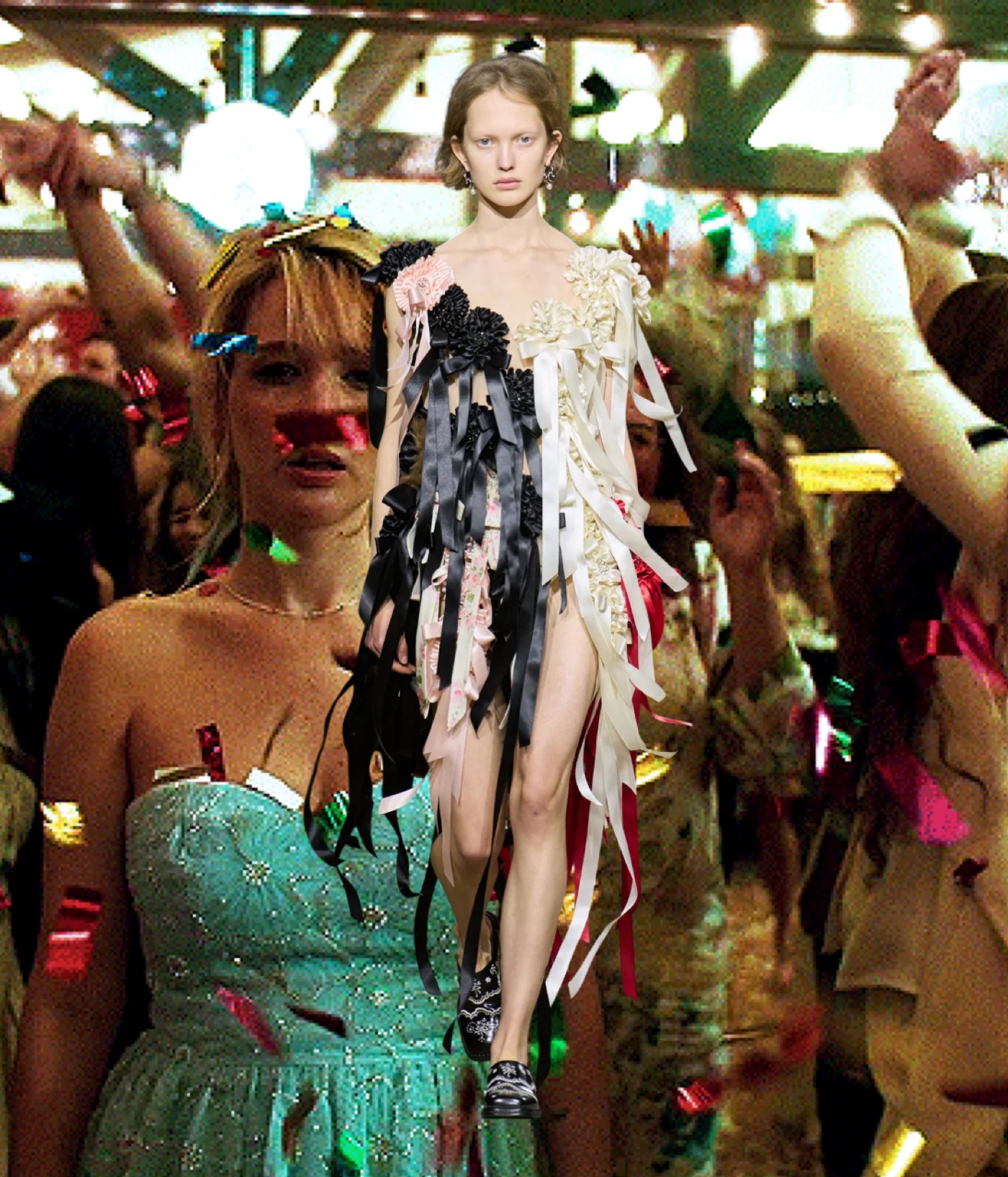
The woman on Simone Rocha’s mind this season is someone who has truly lived. She has pushed through thorny rose bushes, crossed rain-soaked moors, and ridden a horse or two – beginning with Enbarr, the all-white horse of Irish mythology, the only means of reaching Tír na nÓg, the land of eternal youth. Yet Rocha’s protagonist does not dwell on the windswept pages of “Wuthering Heights“; she is far more grounded in reality than one might expect. Hence the variations of the MA-1 jacket in olive nylon, layered over rosette- and ribbon-trimmed dresses. A harness-evoking crinoline functions as armour, while the red tracksuit from the Adidas collaboration becomes a kind of modern hauberk. The collection’s “pretty” flourishes, set against a shaggy, almost animalistic roughness, imbue Rocha’s proposition with palpable tension and intrigue. Her signature of sorts.
Collage by Edward Kanarecki. Don’t forget to follow Design & Culture by Ed on Instagram.
Hey, did you know about my newsletter – Ed’s Dispatch? Click here to subscribe.
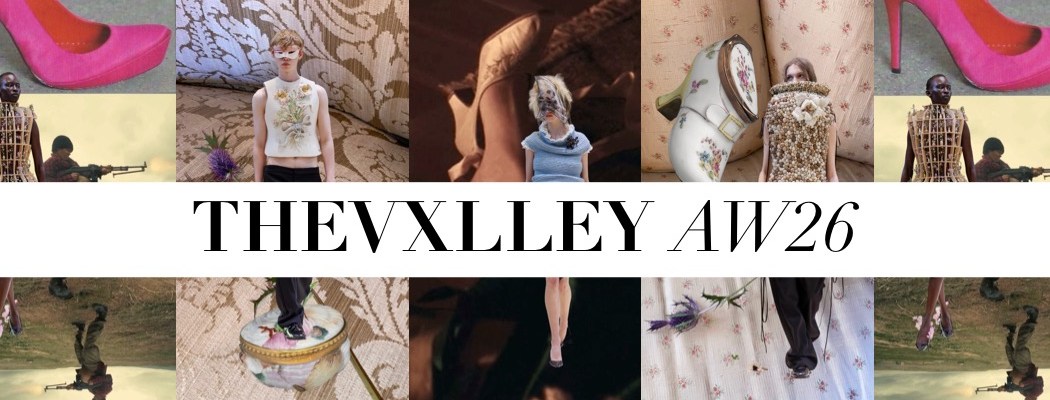
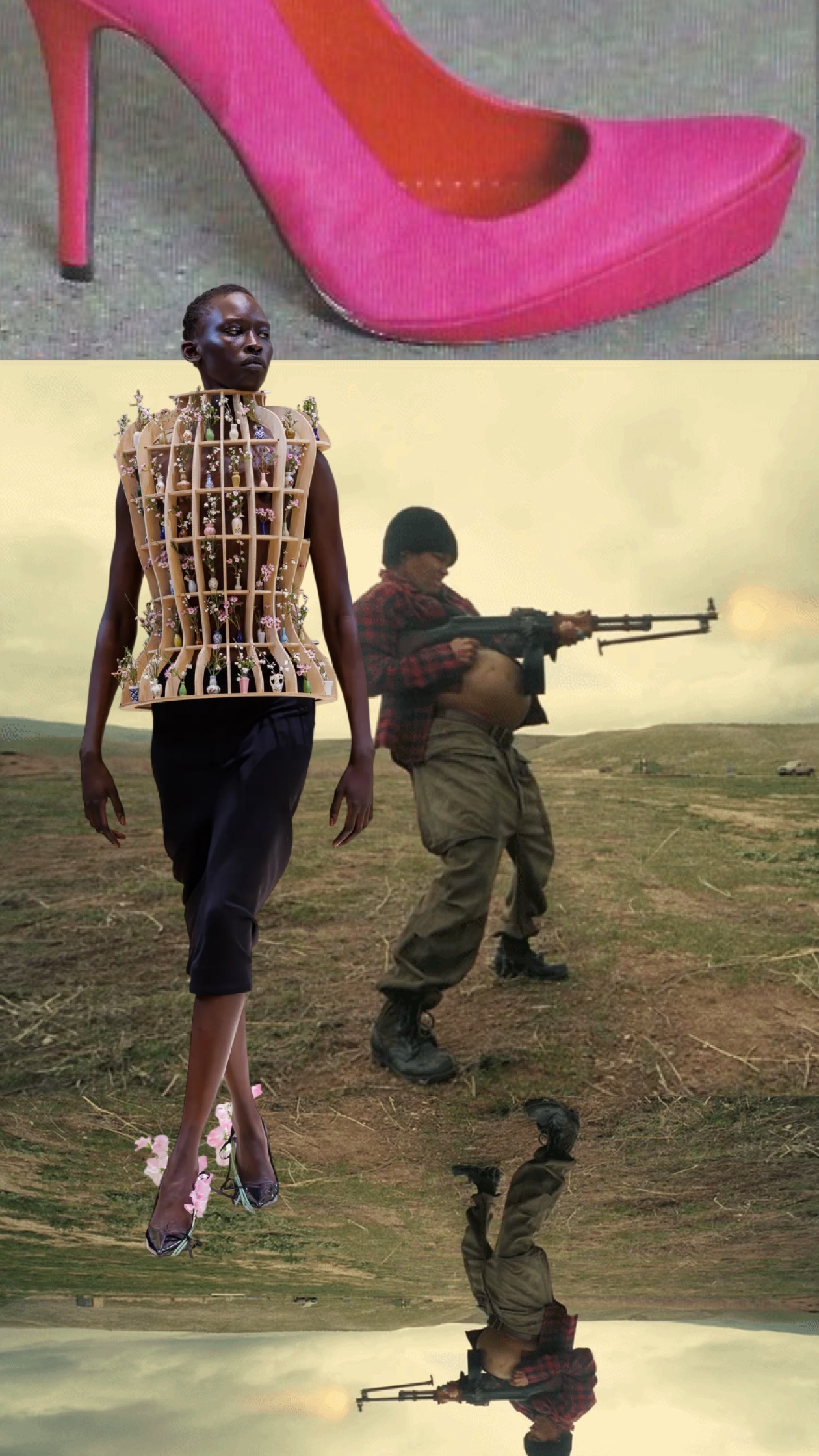
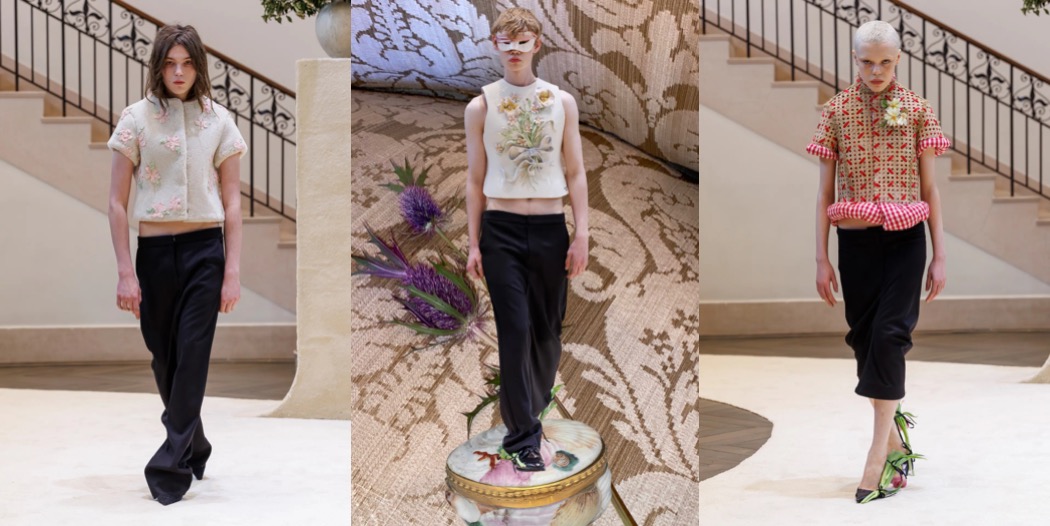
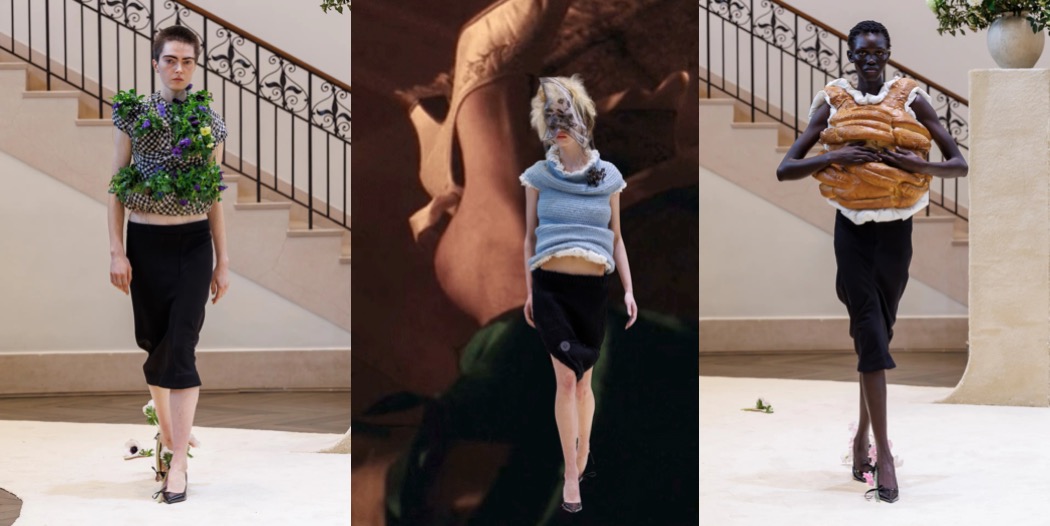
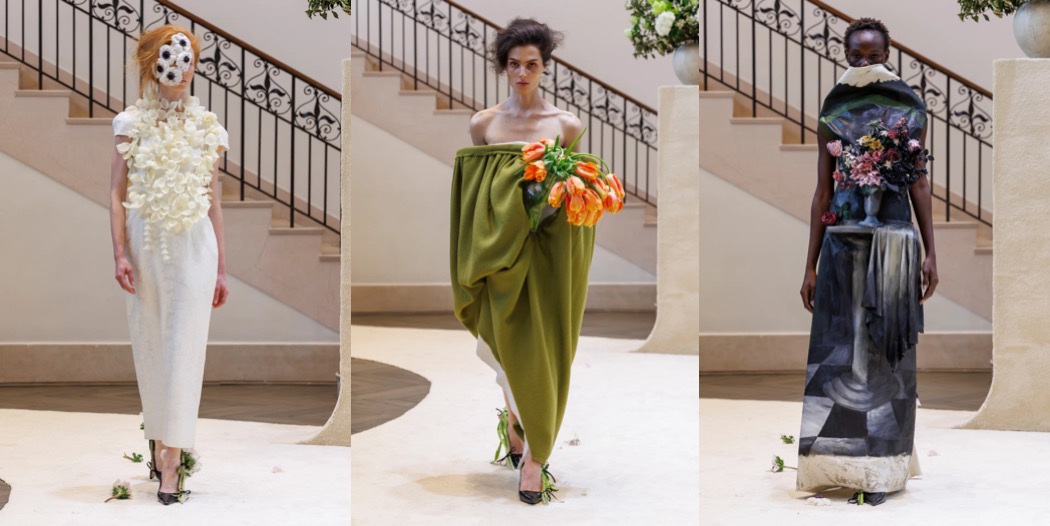
Creatives like Daniel Del Valle remind us why London Fashion Week – even at its weakest – still matters. The 2026 LVMH Prize semi-finalist and founder of THEVXLLEY does not call himself a designer, nor does he classify his brainchild as a fashion brand in the traditional sense. His latest work, “The Narcissist”, is a collection of wearable art that has been three years in the making.
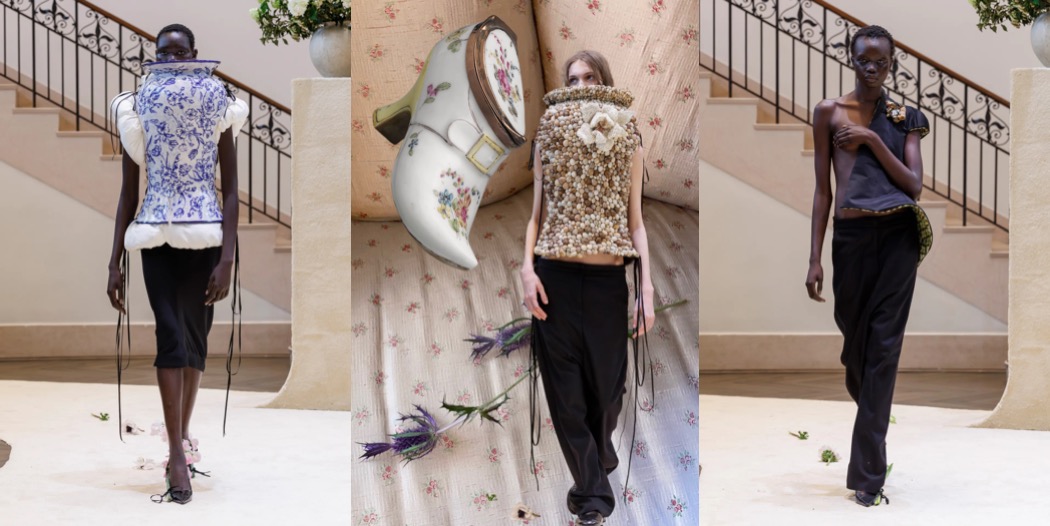
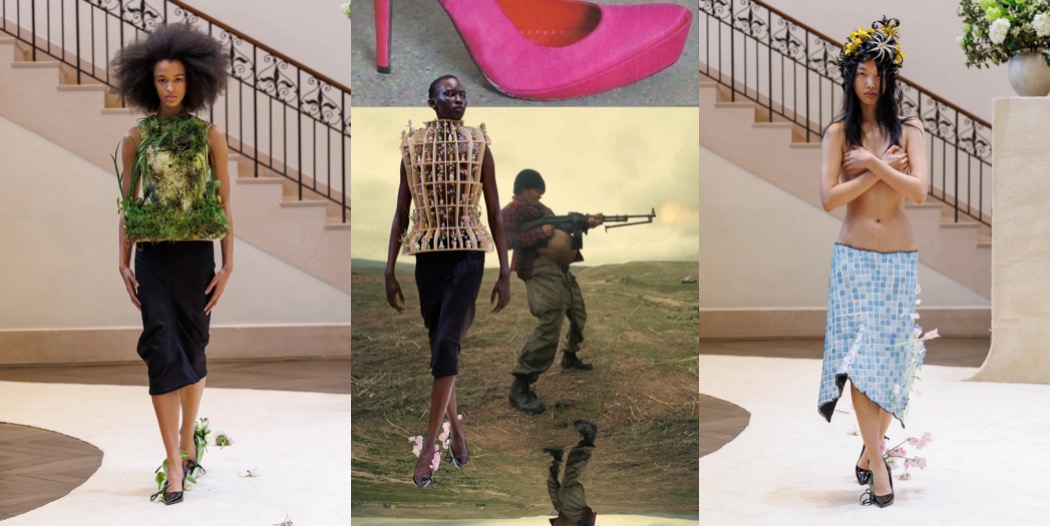
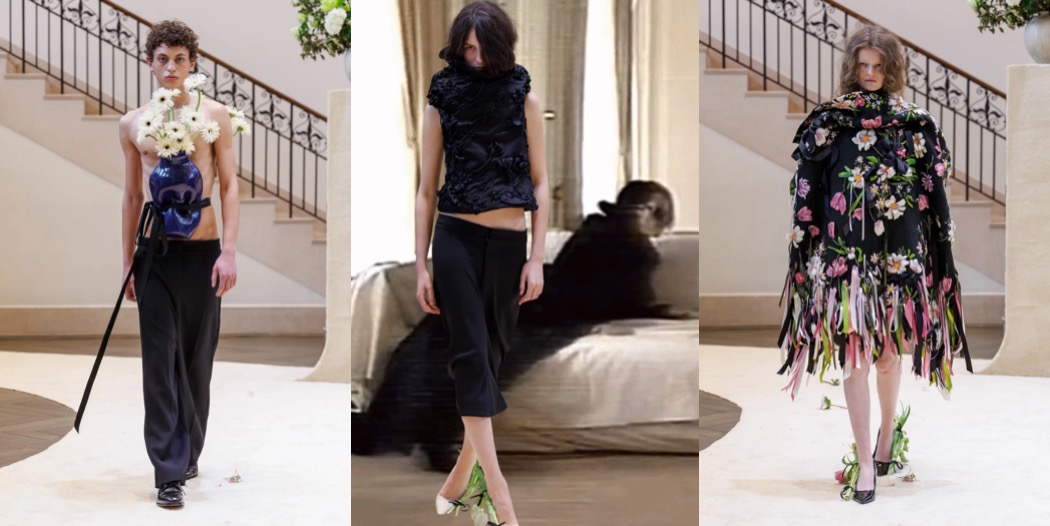
A former florist, Del Valle drew on the world of fleeting beauty to create body-morphing garments: monumental porcelain vases were transformed into bodices; delicate cropped sweaters and tops were bound with branches or burst forth with bouquets; an artisanal T-shirt was crafted from a literal mosaic depicting blooming tulips; and a hand-painted dress adorned with ornate orbs evolved into a three-dimensional tableau vivant. When flowers were not integrated into the wearable vases, they shot out from the models’ heels, were strapped to their feet, and trailed behind them in a scatter of petals.
There was something profoundly heart-wrenching about the collection – so fragile, yet so defiant. At a time when everything in London can feel calculated and commercial, THEVXLLEY rekindles the spirit of dreamlike experimentation that defined the great fashion conceptualists of the late 1990s and early 2000s.
Collage by Edward Kanarecki. Don’t forget to follow Design & Culture by Ed on Instagram.
Hey, did you know about my newsletter – Ed’s Dispatch? Click here to subscribe.
Days of London Fashion Week have passed under the sign of general underwhelm. The first collection I genuinely found worthy of attention was Emilia Wickstead’s.
Known and loved by her loyal clientele for her regal approach to old-school elegance, the designer lets her horses loose this season, sending her typically uptight (and always impeccably dressed) woman off to work with her hands. Channeling a Buñuel-era heroine, the archetype Wickstead envisioned was embodied by Fano Messan, actress and part-time sculptor: a woman of many trades, wearing a paint-splattered apron over an evening dress, unmoved by societal norms and intent on living life on her own terms.
The result is a collection of exceptional, assured tailoring that radiates ease – 1950s boarding-school tweed dresses with roomy pockets layered over denim, and ball gowns in wallpaper florals grounded by chunky sweaters made for the moors rather than soirées. It is not the first time Wickstead has taken notes from Miuccia Prada – particularly in the cropped red skirt suit styled with monk-strap shoes and socks – but she can be forgiven. She adopts those “ugly chic” cues thoughtfully, and they feel entirely at home within her distinctly British universe.
At heart, Wickstead is an eccentric who loves the classics just as much as she enjoys subverting them. She is not the only designer in London working in this vein, but compared with, say, Erdem, her results feel markedly sharper, mercifully free of ornamental frou-frou.
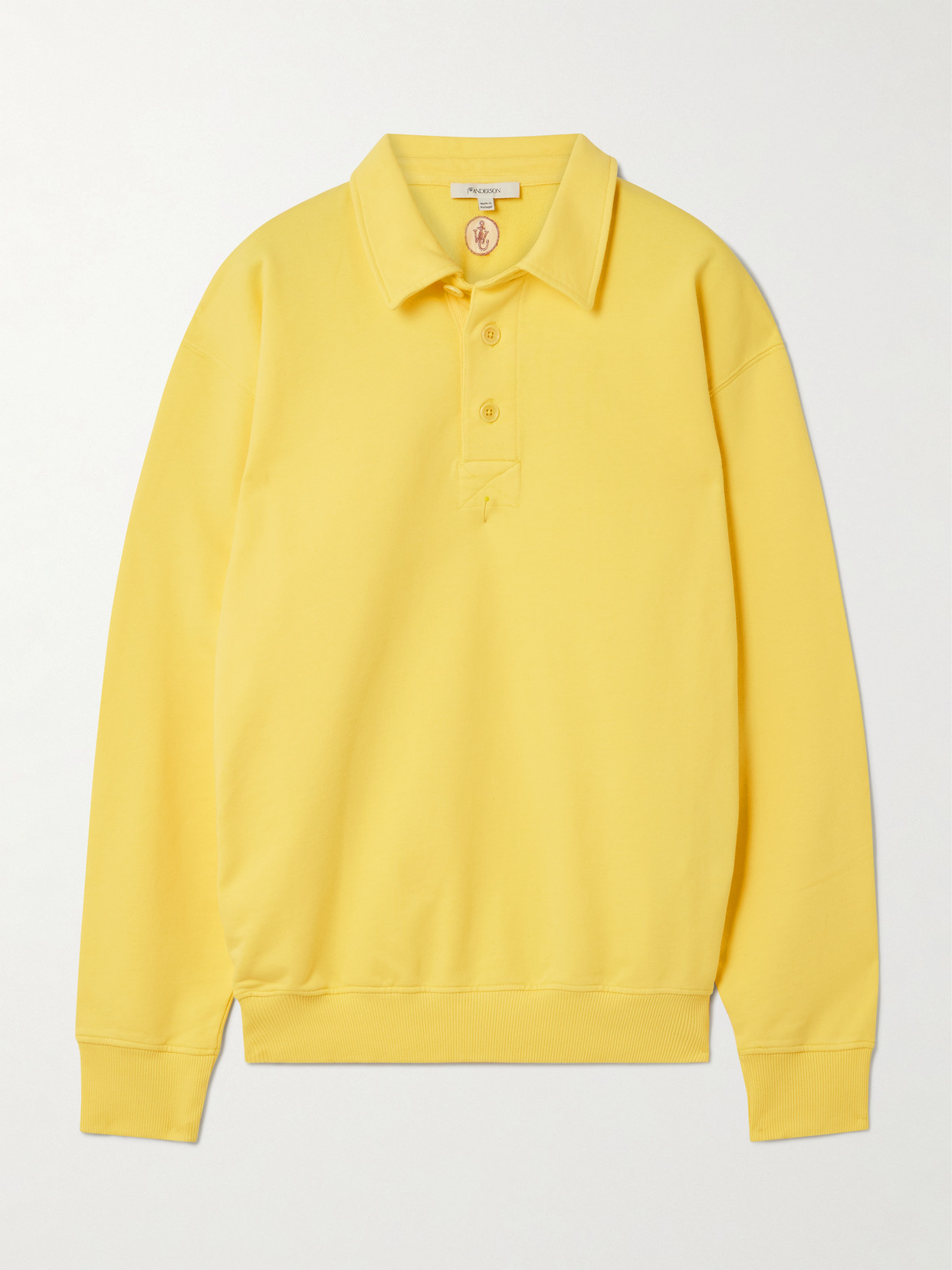
Jonathan Anderson’s rebranding of his London-based label is a unanimous success. It has brought clarity and ease to JW Anderson, which is now more focused than ever on IRL retail spaces that mingle impeccably crafted flannel shirts and denim with objects sourced across Britain. No fashion shows – just simple lookbooks starring Anderson’s friends, who wear the brand and embody its witty (and unobtrusively sexy) character.
There’s Ashley Heath in a T-shirt emblazoned with the word “Porn” and pink satin shorts; Kylie Minogue in a crochet dress with a yellow car motif; Tim Blanks in a short-sleeved shirt in a cocky print, digging in with a garden fork; Alice Temple looking absolutely badass in a classic leather jacket. Then come the home accessories – organically dyed cushions, stripey hand brushes – all so British and so desirable, even if you might not actually need them in your life.
It seems that JW Anderson has become the designer’s outlet for slowing down, a moment of respite from his other, far more intense role in Paris. His second Dior menswear show is just around the corner.