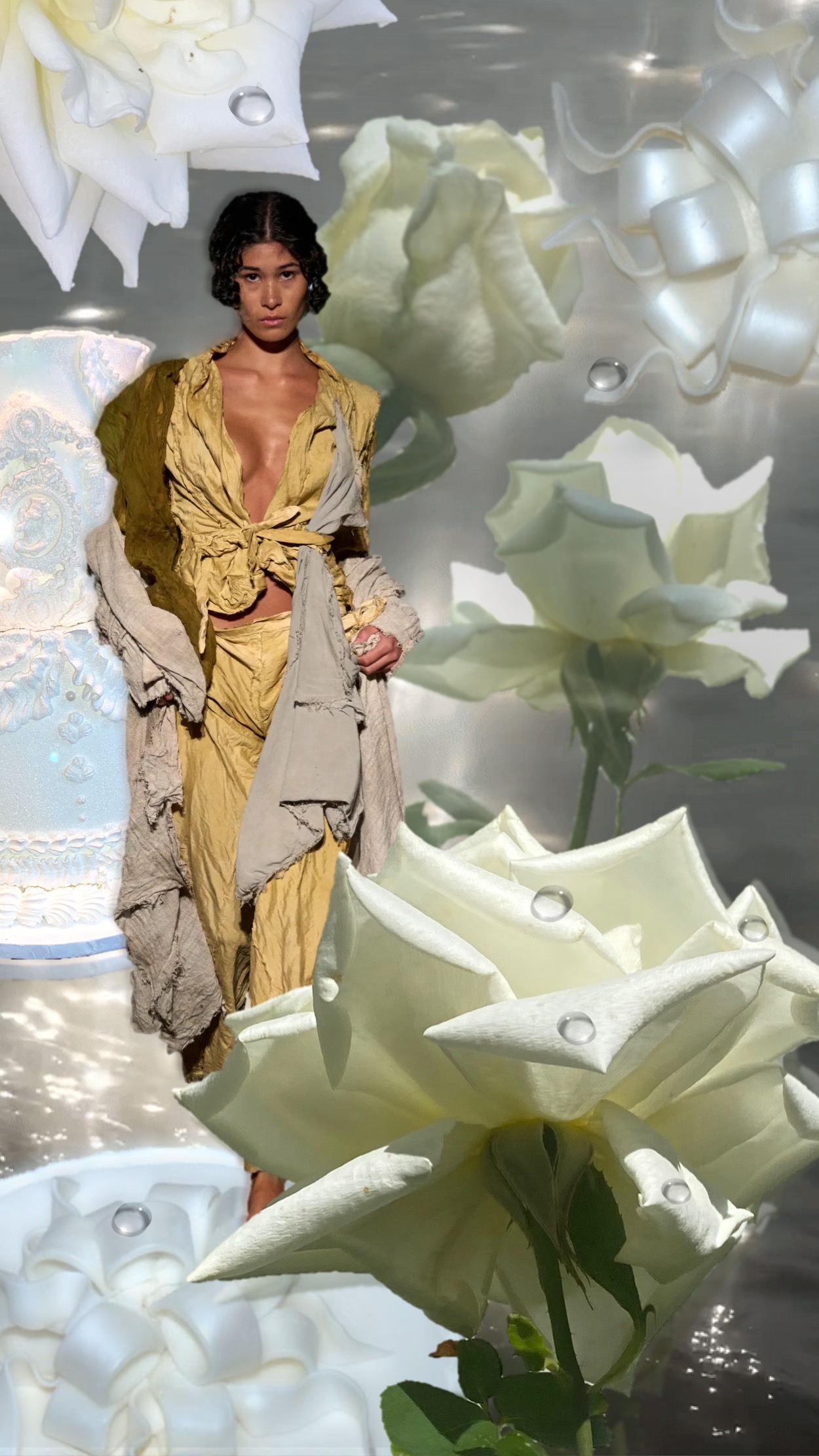
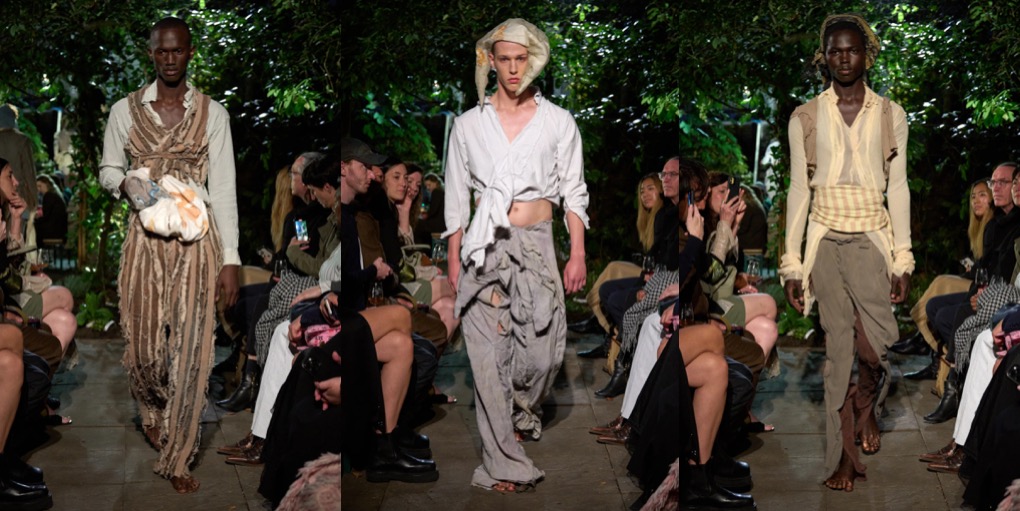
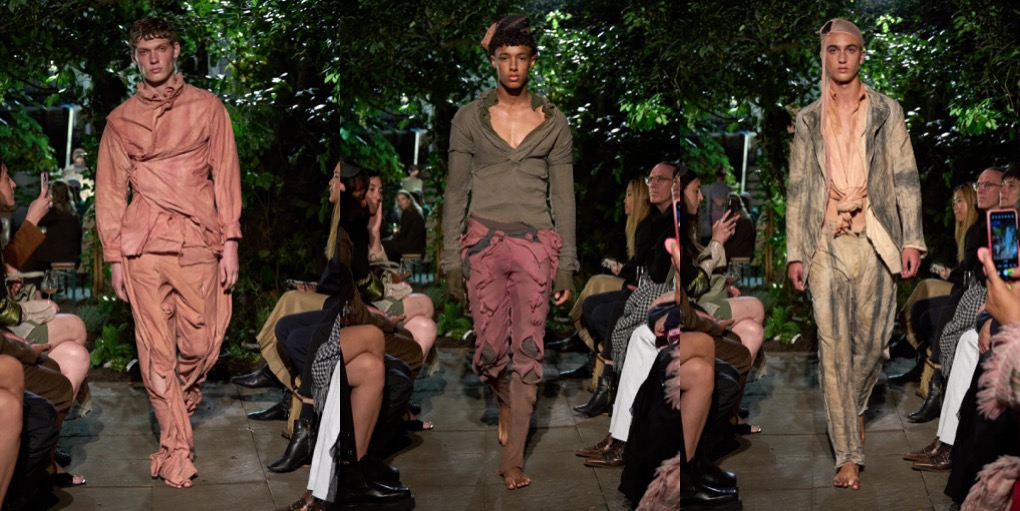
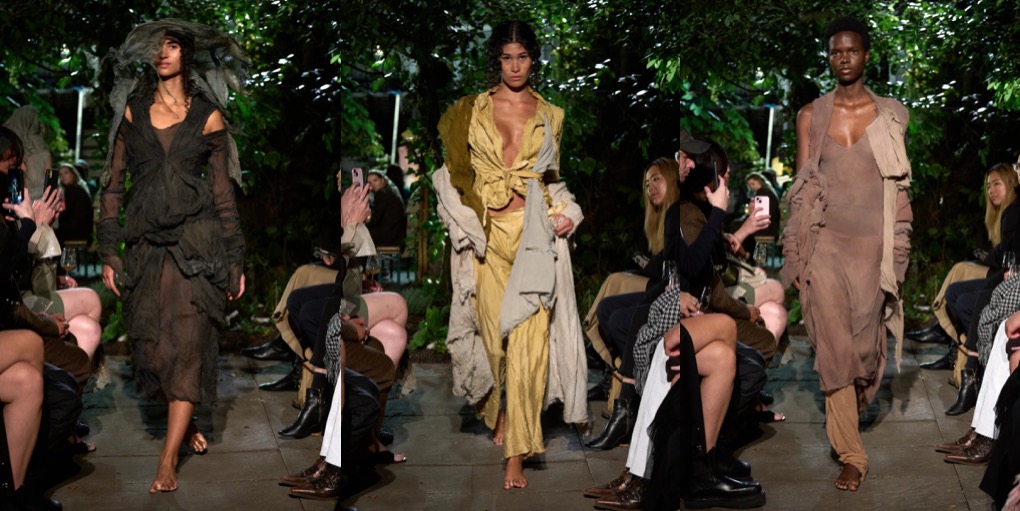
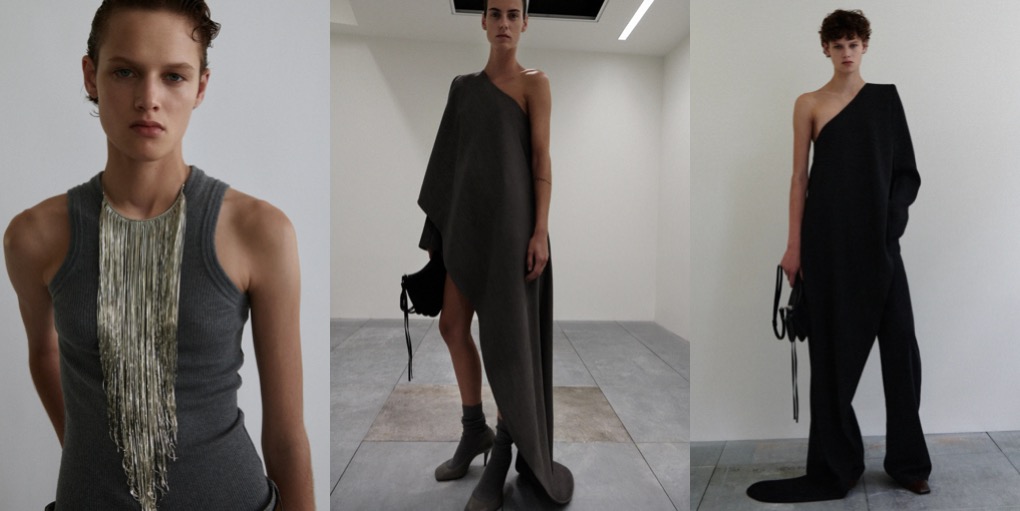
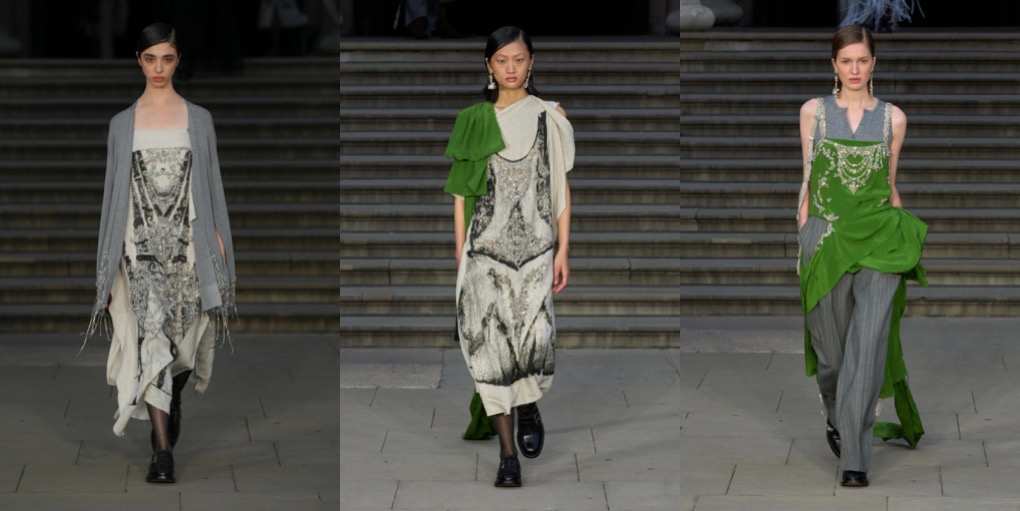
As we’re approaching 2025, everybody seems to look backwards at the last quarter of the century in fashion. But let’s also take a look at the future. Paolo Carzana, the London-based designer, makes one feel very hopeful about. The über-talented designer, a finalist for this year’s LVMH Prize, uses plants and natural pigments like burnt umber to dye his crafty, gender-fluid garments. Carzana’s signature is the raggedy, lived-in look of his garments that makes men and women look as if teleported from another century. There’s also that hazy, misty, as if seen through a broken lens, lyrical silhouette of his clothes: the pinstripes on a pair of men’s trousers look blurred, the Caravaggio-esque drapes of the dresses seem to be shaped by gushes of unexpected wind. The gauzy layering and the buttonless, zip-free poetry of Carzana’s work makes him a truly, truly unique creative who doesn’t obey the industry norms of production scaling or aggressive marketing. No other contemporary designer sees beauty and strength the way he does.
Collage by Edward Kanarecki. Don’t forget to follow Design & Culture by Ed on Instagram!
Hey, did you know about my newsletter – Ed’s Dispatch? Click here to subscribe!
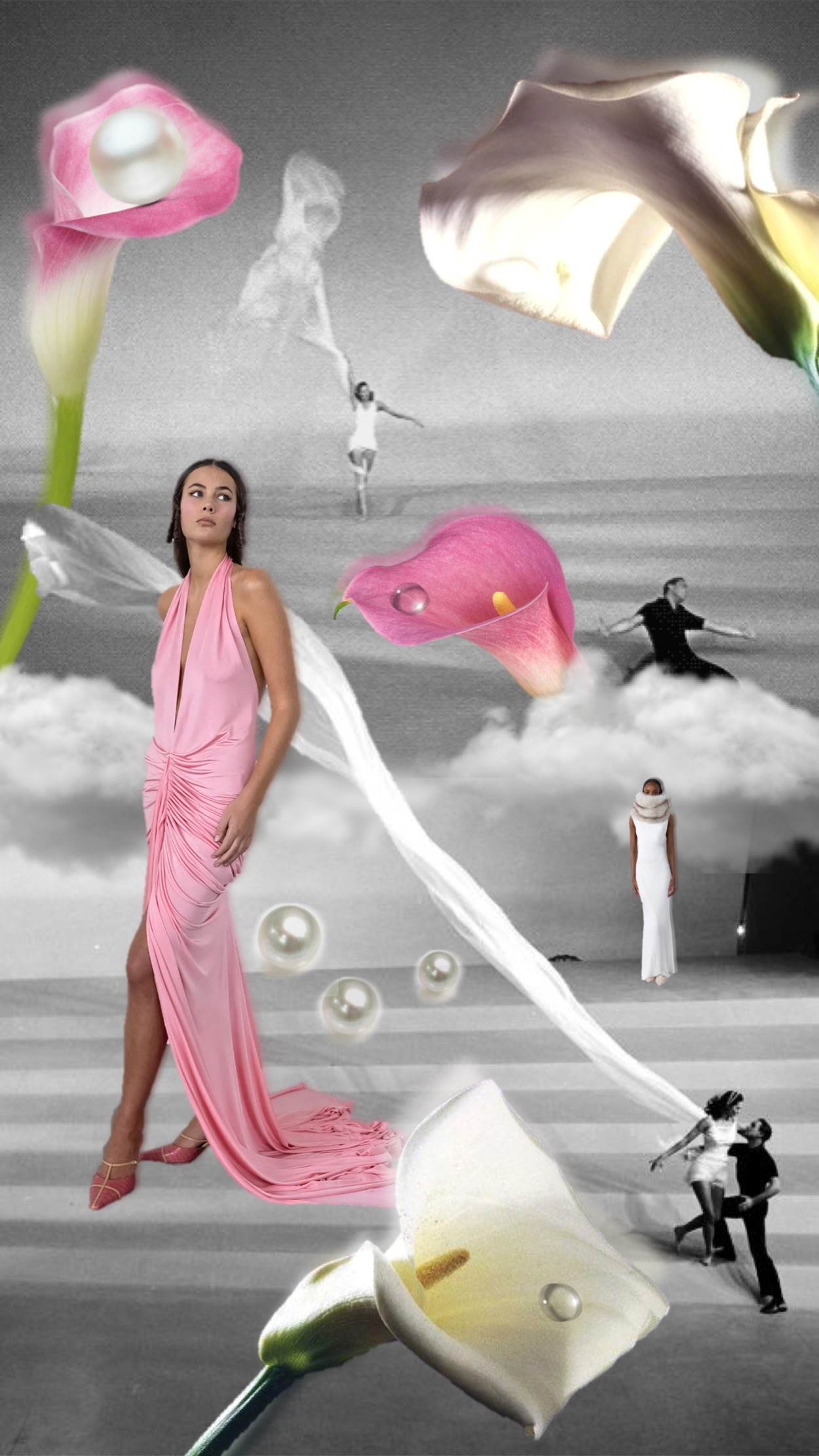
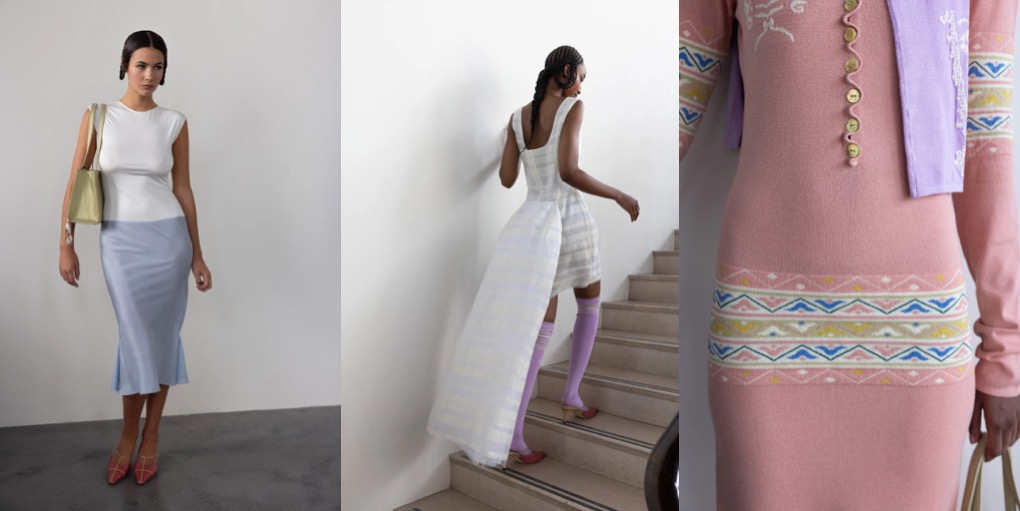
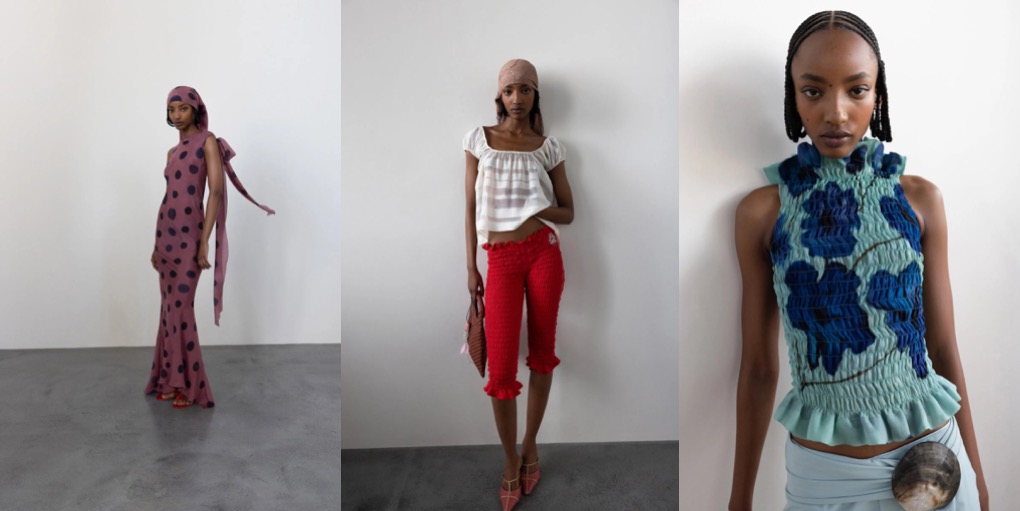
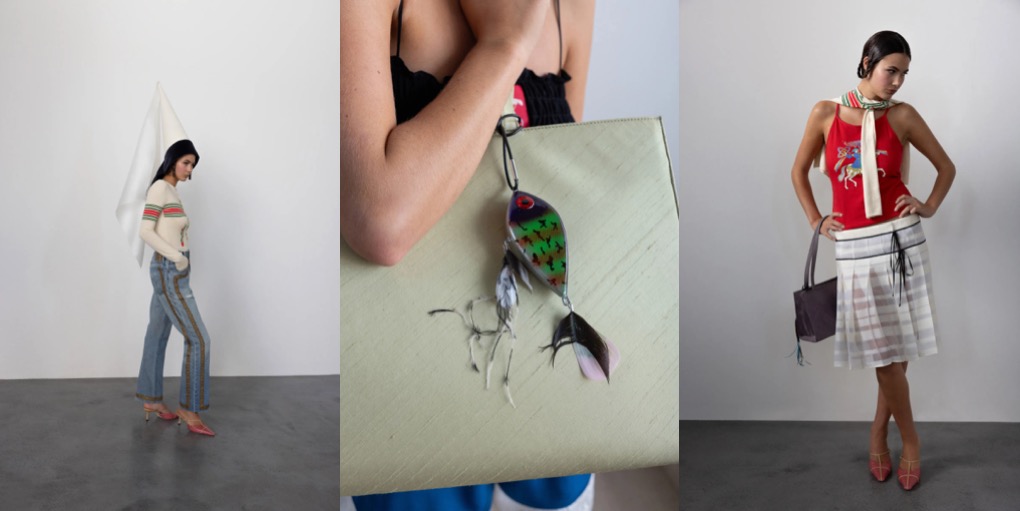
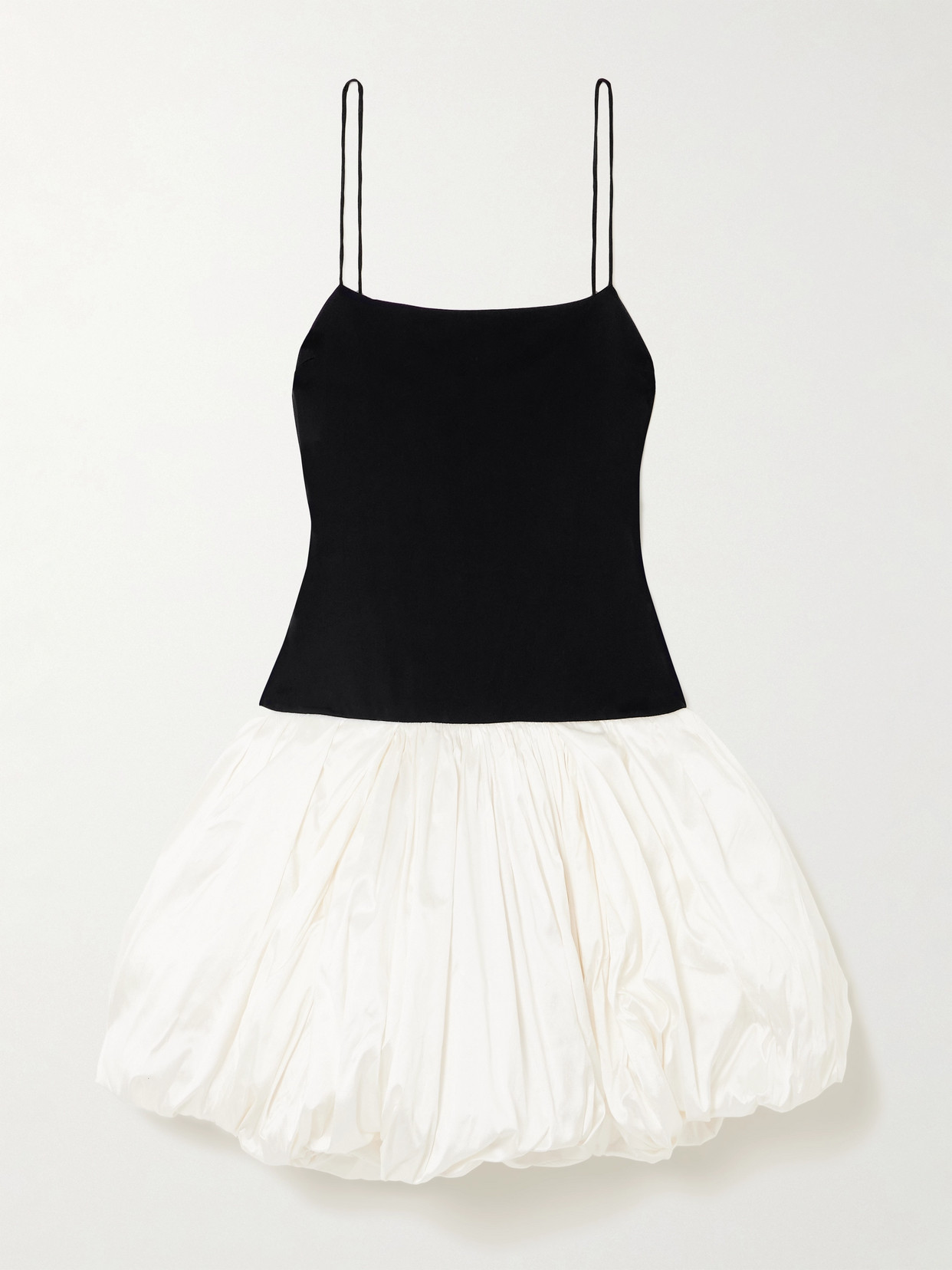
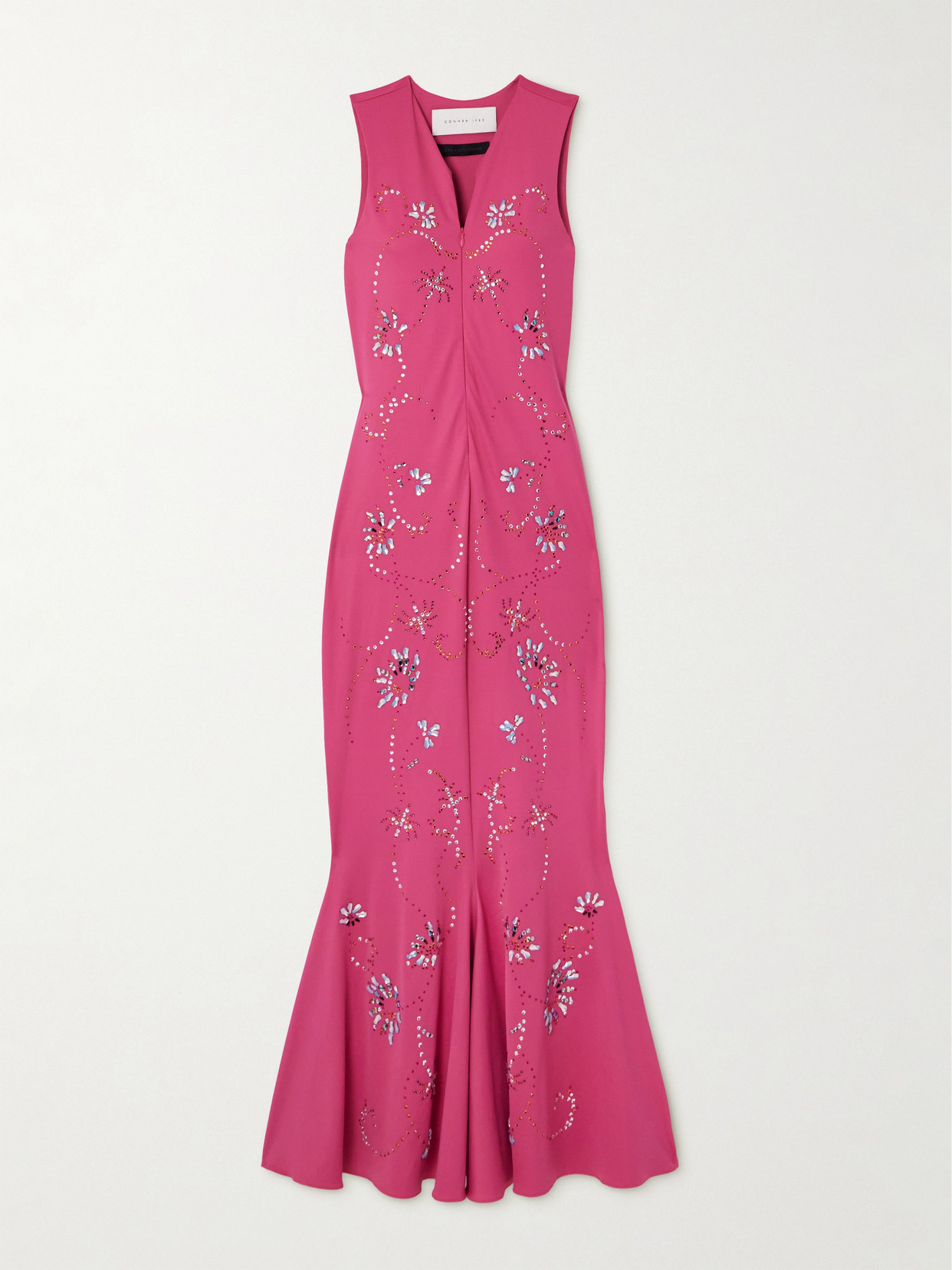
Conner Ives isn’t only a talented designer, but a great storyteller whose fashion fairy-tales make you believe in fantasies and miracles. For his spring-summer 2025 collection, the London-based, American designer took us on a journey from the medieval lords and ladies of Arthurian legend to the invocation of Camelot by Jackie O’ to describe the Kennedy administration. The eclectic patchwork of centuries and eras – medieval England, 1960s Americana, the It girl of today – made for a line-up with truly wonderful clothes (and desirable accessories, like the “hard-bodied bias” bag inspired with a vintage clutch from his mother’s wardrobe or an actual hennin hat). Slinky knit dresses with trumpet skirts were inspired by cotehardies (long-sleeved medieval garments), while jacquard knitwear took its cues from the elaborate motifs found on 17th-century clocked stockings (just the right kind of whimsical chic). There was plenty of fabulous, demi-couture dresses for the loyal coterie of glamorous party girls that surround the designer (think Ivy Getty), from a swishy mauve pink dress hand-painted with polka dots to his final, swan-like bridal look, a silk jersey column dress worn with a dramatic vintage fox-fur collar.
Ives’ eveningwear, even though packed with history and sentiments, never feels like “too much” or too retro (even though the term “vintage” plays an important role in the designer’s brand, noting all the upcyling practices). You can picture both a Carrie Bradshaw and a real, contemporary girl wearing those dresses. And Carrie would definitely style them with one of the season’s most adorable accessory: upcycled fishing lure charms adorned with colorful feathers and tinsel of the kind Ives remembered seeing glitter from his Florida aunt’s bait and tackle box as a child. You really want to read deep into Conner’s fairy-tale.
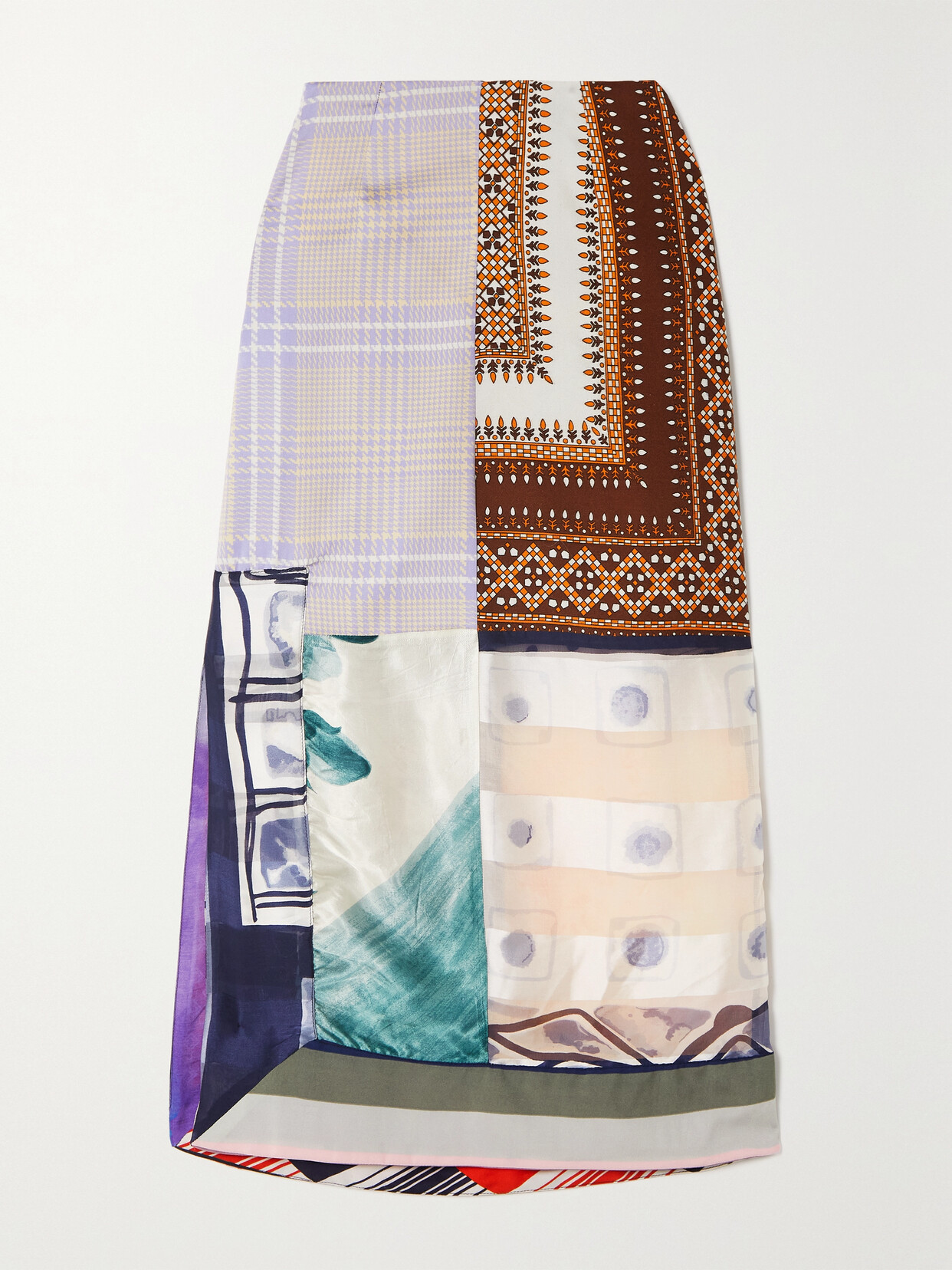
Here are some of my favorite Conner Ives pieces you can get now…
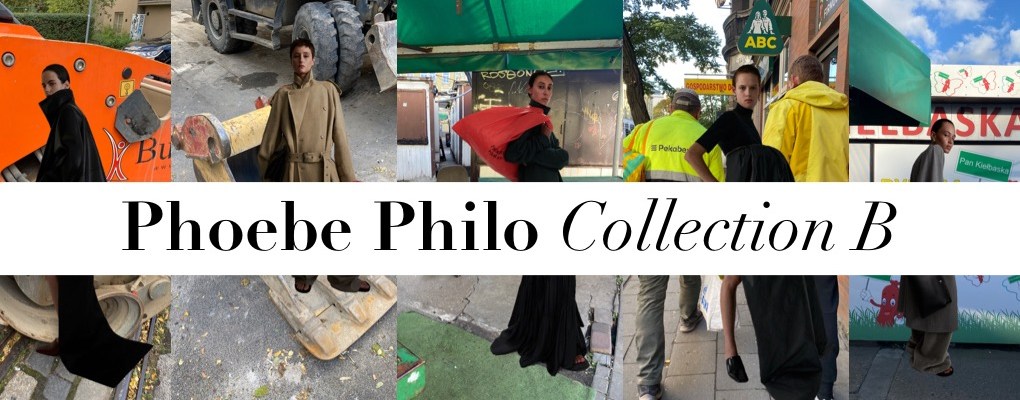
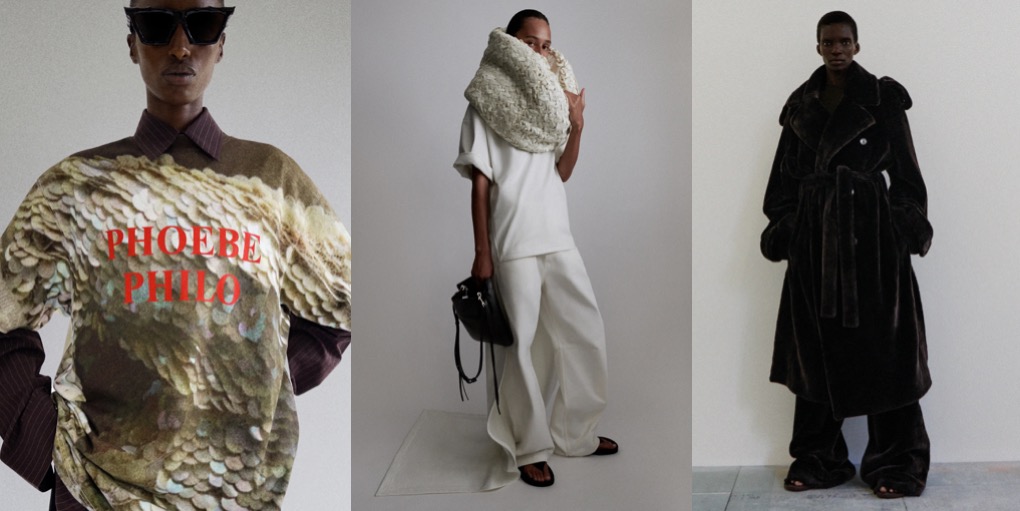
On a mid-week afternoon, Phoebe Philo dropped the preview of her latest collection – “B” – that will be available in her on-line shop (and among a tight group of selected brick-and-mortar retailers) in the beginning of 2025. The newest offering is both a continuation of and a departure from her debut, which was a very thoroughly considered edit of styles that kept the industry in aesthetical chokehold throughout this entire year: from COS and H&M to Proenza Schouler and Saint Laurent, a vast number of brands, big and small, had iterations of Philo’s cargo volumes, commanding visuals and the new, rough sensuality the British designer is channeling so well. Even the biggest nay-sayers of Phoebe’s venture must admit: this designer still has a massive influence on fashion. Why? Because like no one else, she knows what contemporary women want (unlike her male counterparts like Alessandro Michele or Sabato De Sarno. Even Jonathan Anderson’s latest collection for Loewe, which I thought in the beginning of the month was truly contemporary, now feels overly decorative).
The Phoebe Philo woman doesn’t care about trends. But she’s aware of good fashion. And style. She might be a restaurateur, own a flower shop (a big one, all very organic). She isn’t entirely politically correct. She swears a lot. And she doesn’t treat clothes as something fragile or too precious: they should serve her well. And might get dirty. That’s what makes Phoebe Philo’s brand feel much more viable for the real life than The Row: you don’t have bathroom slip-ons made from silk that won’t survive a subway. But you’ve got a big, red plastic bag – a theme Philo debuted in her swan song collection for Céline, IYKYK – that will fit everything and more. And has this odd, but absolutely desirable twist that has always been Phoebe’s signature spice.
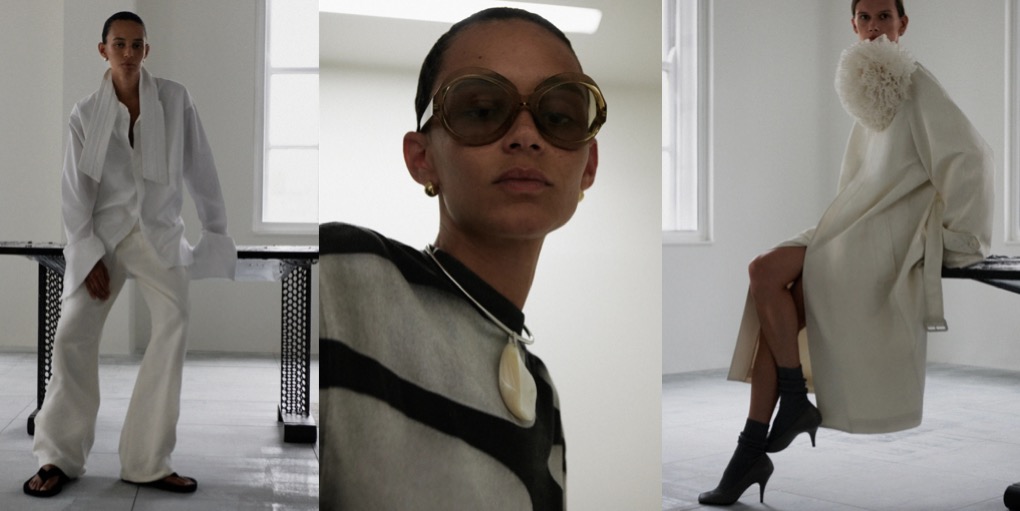
In collection “B“, there are no design after-thoughts or anything that feels superfluous: the ultra-shaggy shearling coats are total investments, just as all the super-versatile day-to-night dresses, masculine tailoring or utterly perfect shirting proposals. But the line-up has something Philo’s debut offering lacked: easier entry-points that are (hopefully) more affordable than all the outerwear, leathers or knits. Oversized t-shirts with prints of Talia Chetrit’s photos and the brand’s red logo? A guaranteed sold-out, and an item I will totally save up for. It’s also very intriguing how Philo decided to reuse the photographer’s highly-persuasive shots: there are no printed look-books, the brand’s Instagram feed is frequently erased, so in the end, a t-shirt becomes a (wearable) ephemera of the brand’s visual identity.
Philo proves that her brand isn’t cold-minimalist or soullessly stern (many had this impression with her first collection). She lets wit in with organza collars and teddy-bear-ish volumes. A sense of warmth – and glamour, as Cathy Horyn rightfully noted! – comes in vintage-inspired, bigger-than-life jewellery. What Phoebe Philo is doing feels like a much-needed mutiny towards fashion and its old ways – and its endless pursuit after the new thing. Continuity and assertive trust in your own instincts: that’s true defiance. A bit like Charli Xcx’s “Brat“, an unprecedented success of an absolutely non-commercial album. Philo’s “B” collection reminds me more of “Brat“‘s remix album: even better, even sharper, even more intense than the first.
Collage by Edward Kanarecki. Don’t forget to follow Design & Culture by Ed on Instagram!
Hey, did you know about my newsletter – Ed’s Dispatch? Click here to subscribe!
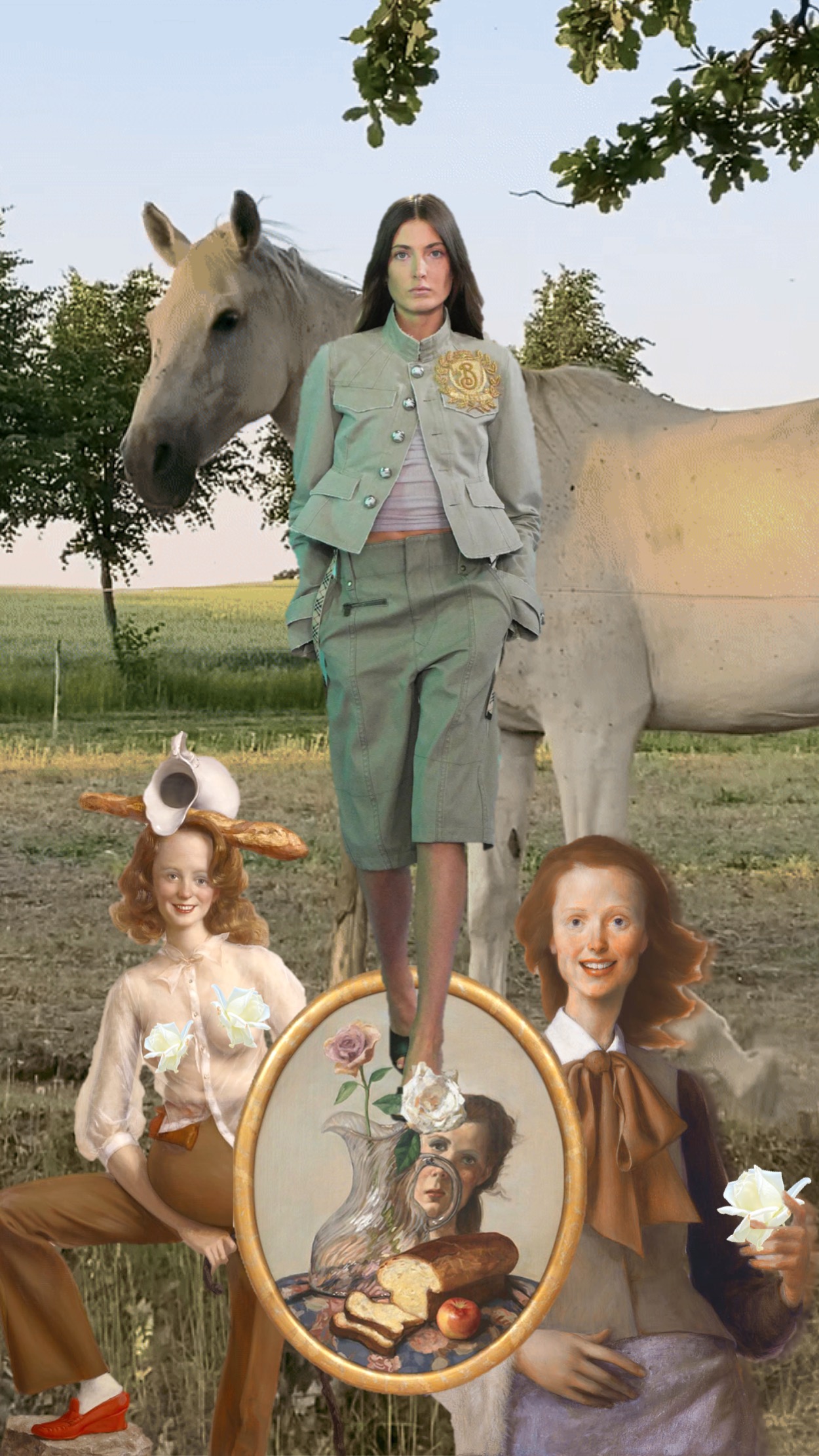
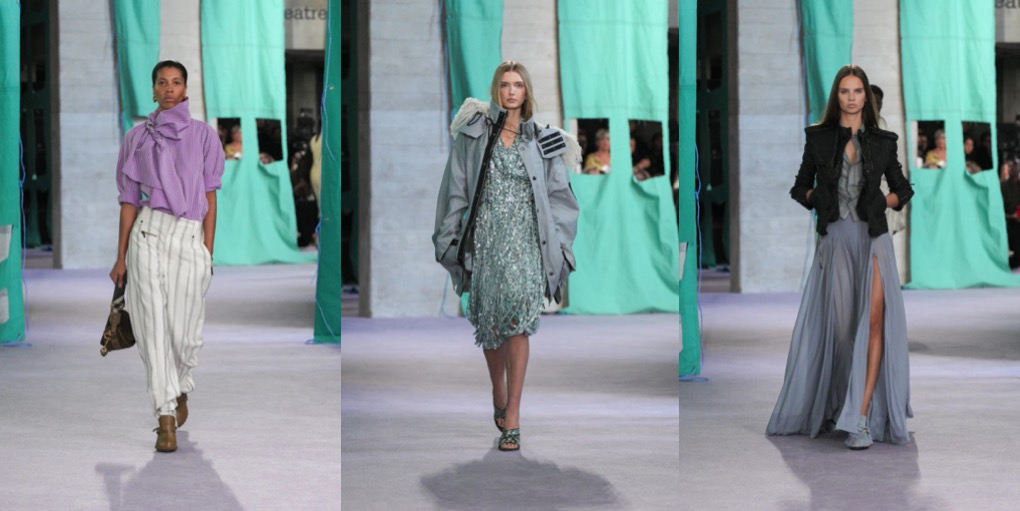
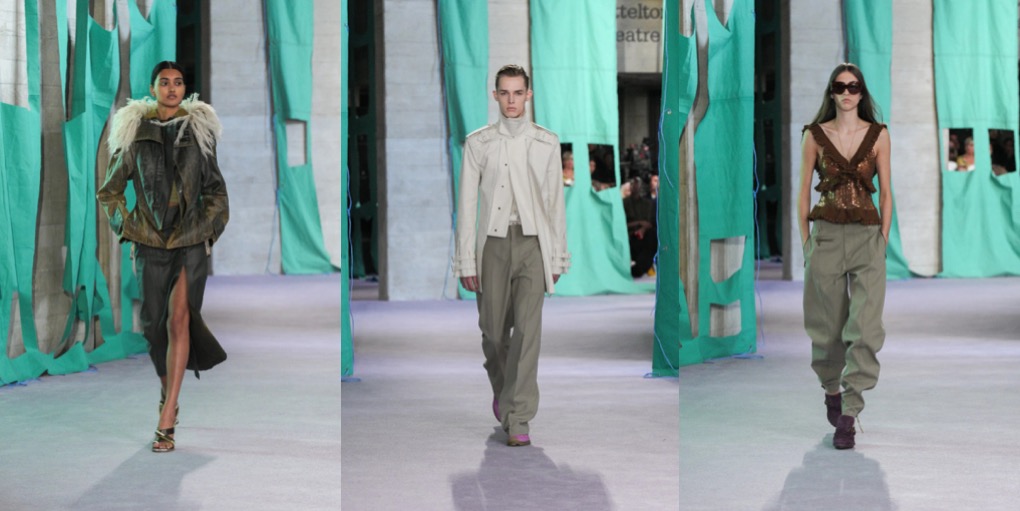
While Burberry‘s financial performance is under scrutiny, it seems to me that Daniel Lee has found his ground at the brand. His last collection already had that “something”; spring-summer 2025 is a further exploration of Britishness (through a London lens) meeting modernity. A spirit of late 2000’s London style was palpable, especially in the imaginative clash of high and low: maxi-skirts worn with polos, utilitarian parkas with dazzling, embellished dresses. A cropped trench jacket styled with cargo pants was another highlight, just like Maya Wigram’s faded-green denim look. The storm flap, epaulettes, shoulder vent, Napoleon collar and belt of the house-archetype trench were intelligently applied across multiple garments including open-backed dresses, a popper-peppered twinset, and abbreviated, feather-collared jackets. This was a good show with good clothes.
Collage by Edward Kanarecki. Don’t forget to follow Design & Culture by Ed on Instagram!
Hey, did you know about my newsletter – Ed’s Dispatch? Click here to subscribe!
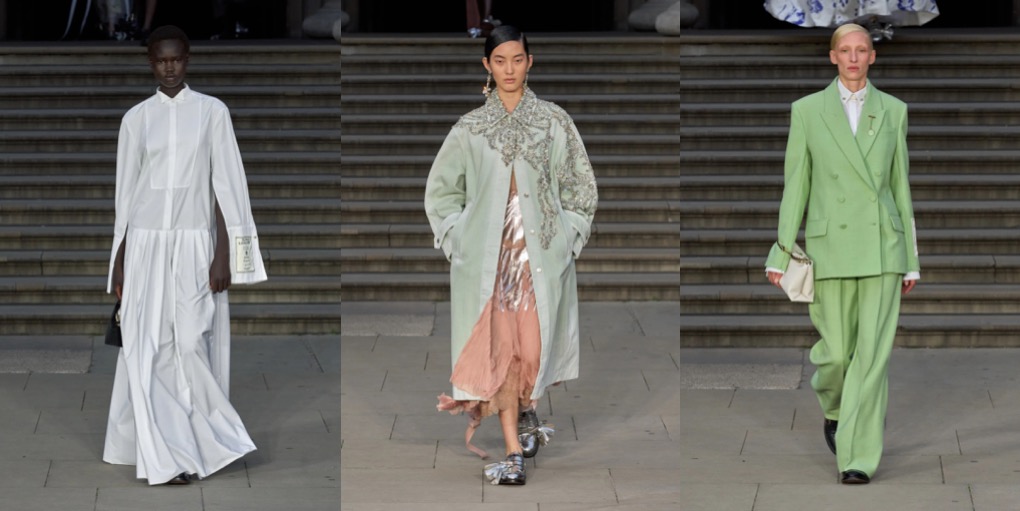
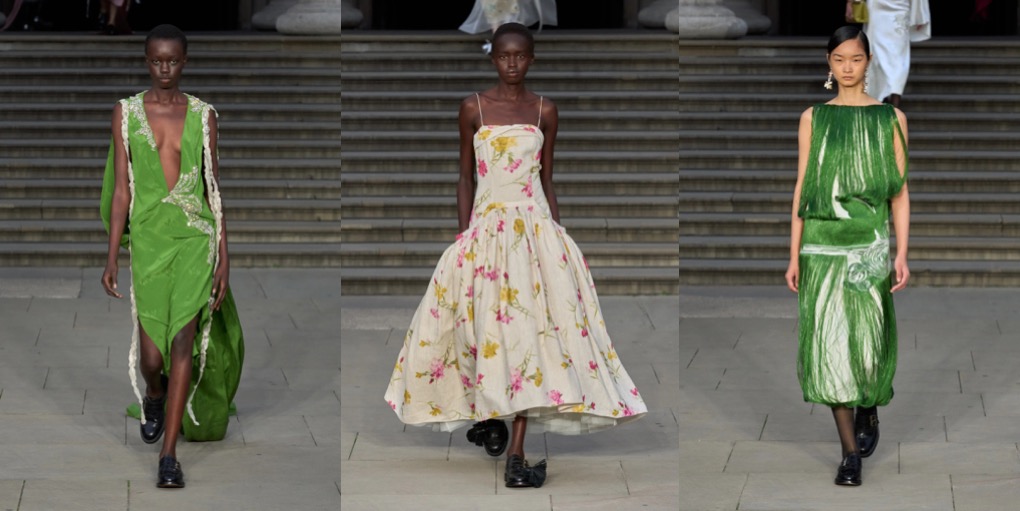
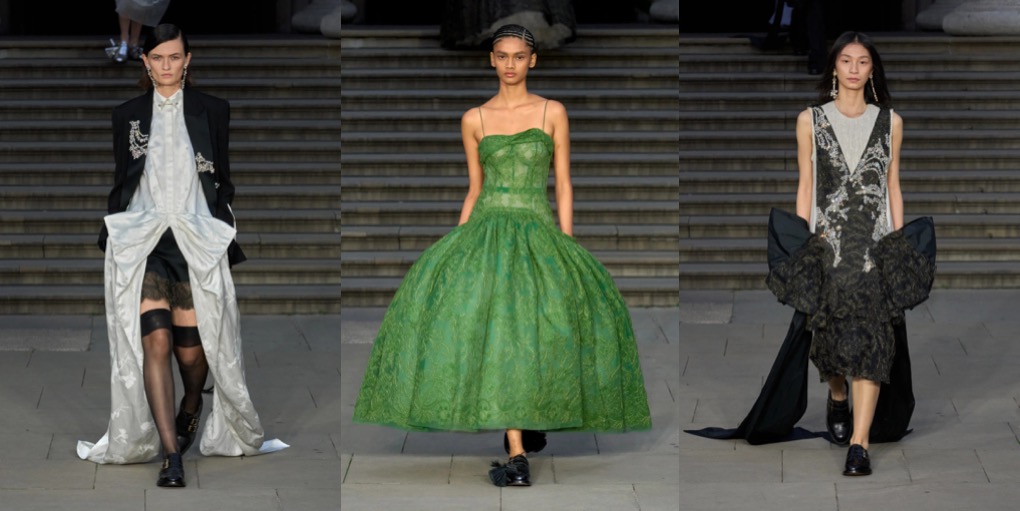
This season, Erdem delivered one of his best collections… ever. It’s just felt breathtakingly beautiful without being frou-frou. There was an aristocratic, yet romantically decaying quality about it. And between the lines, a meaningful context that didn’t make the spring-summer 2025 collection feel heavy with history as it often happens with Erdem Moralioglu’s work. The title page of Radclyffe Hall’s “The Well of Loneliness” was printed on cavas and sewn as a badge of honor to the cuff of every suit – with a monocle pinned to each of the lapels. The novel was notoriously banned by the British government in 1928 for its portrayal of a female character called Stephen and her lover Mary. “Radclyffe was born Marguerite, and went by the name of John,” said Moralioglu. “What I was most interested in was how intensely she was masculine, and how feminine Una was.” Una, Lady Troubridge, who mostly wore pretty dresses, was reflected in the flapper-ish eveningwear bedazzling with chandelier crystals and fragile cotton. Trouser suits were an ode to Radclyffe. The collection resonated with the audience, and marked another great moment of this London Fashion Week.
Collage by Edward Kanarecki. Don’t forget to follow Design & Culture by Ed on Instagram!
Hey, did you know about my newsletter – Ed’s Dispatch? Click here to subscribe!
















 Design & Culture by Ed