Then ride it with my surfboard, surfboard, surfboard
Graining on that wood, graining-graining on that wood.
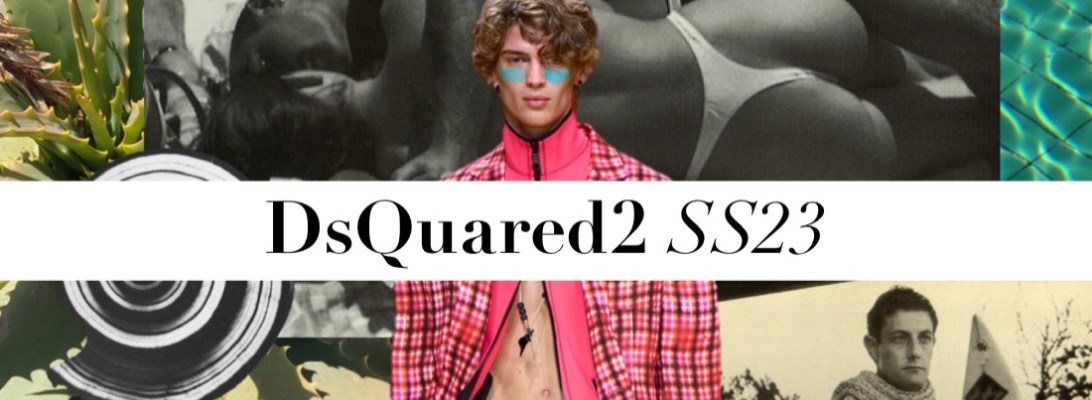
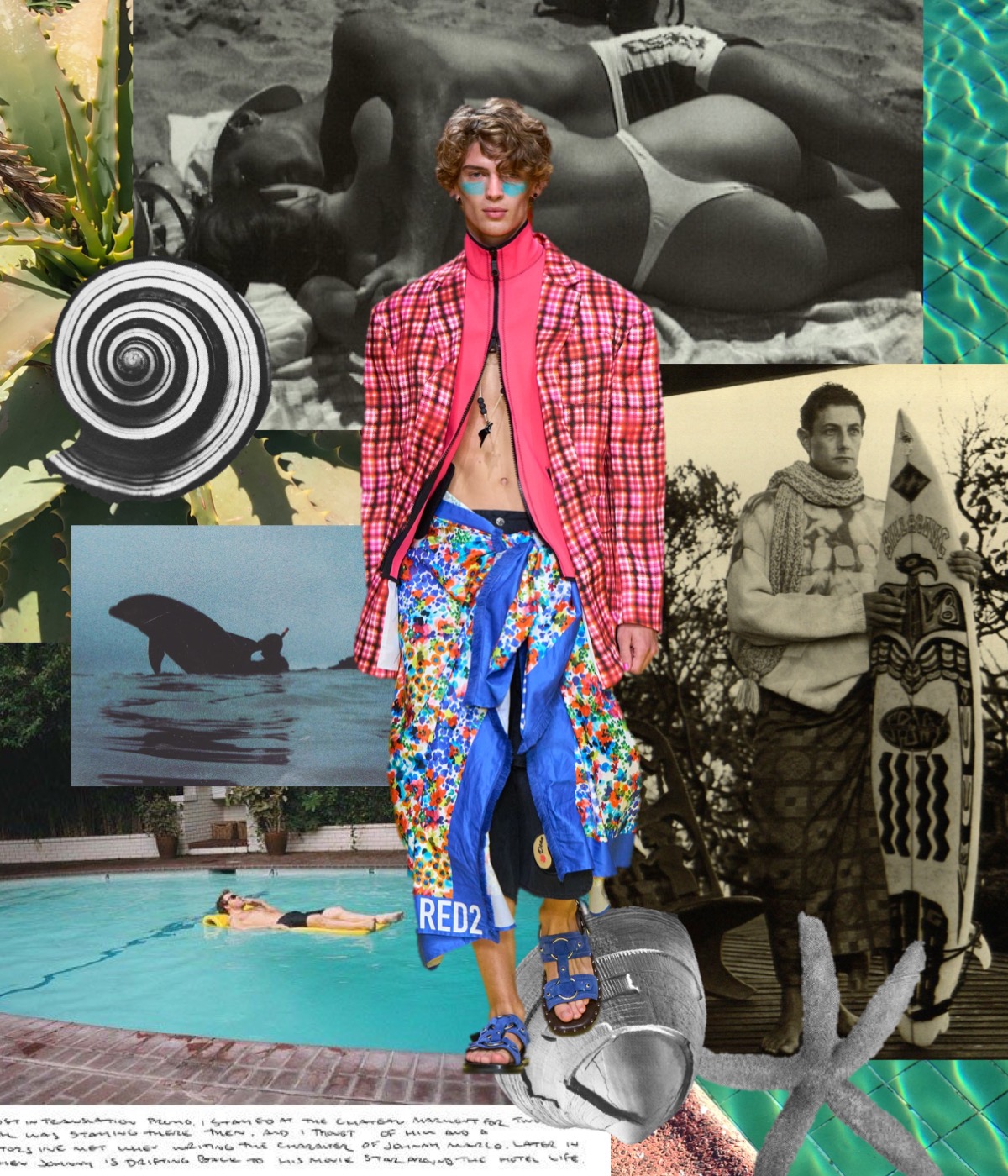
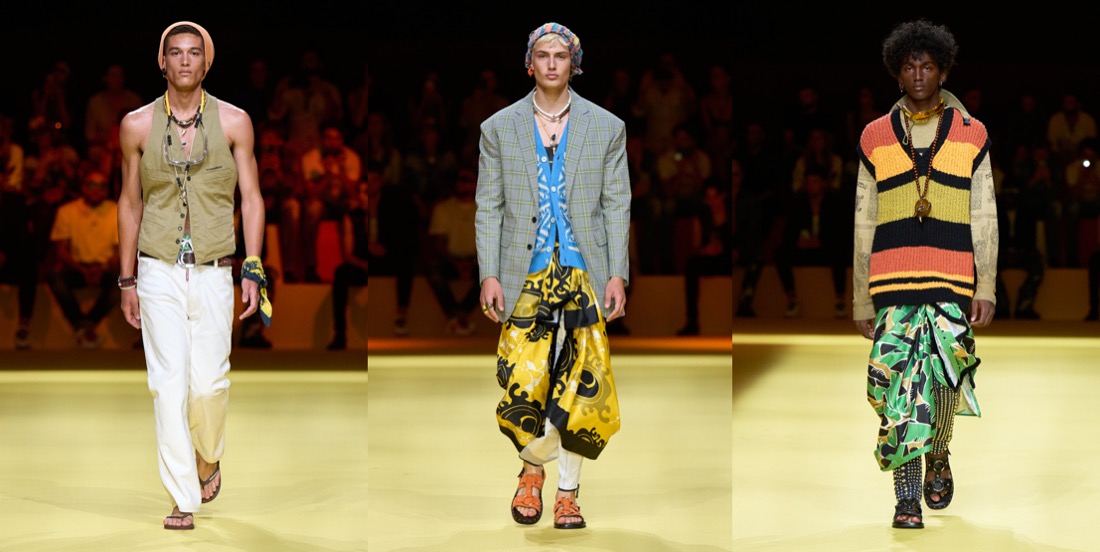
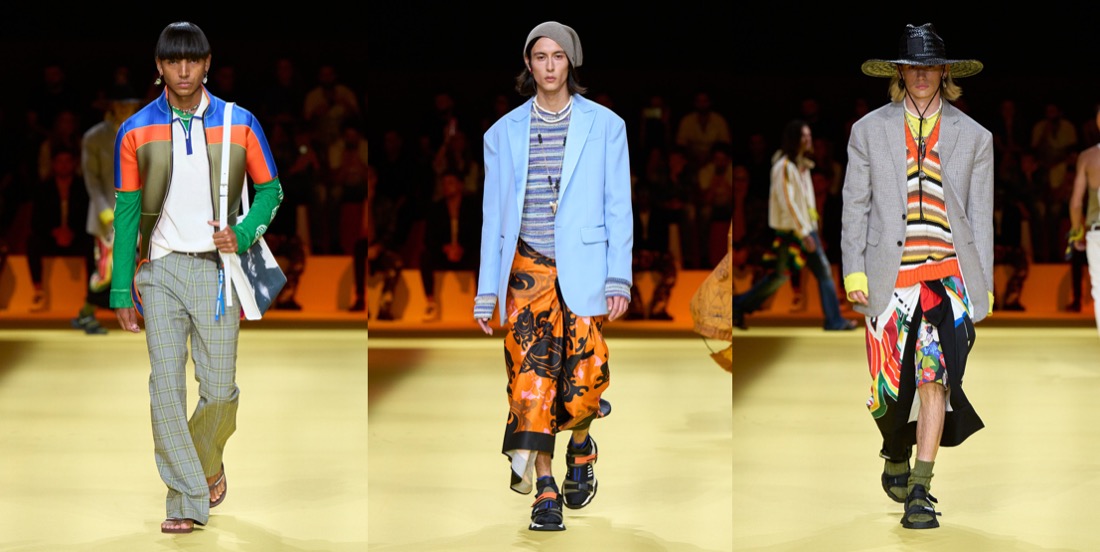
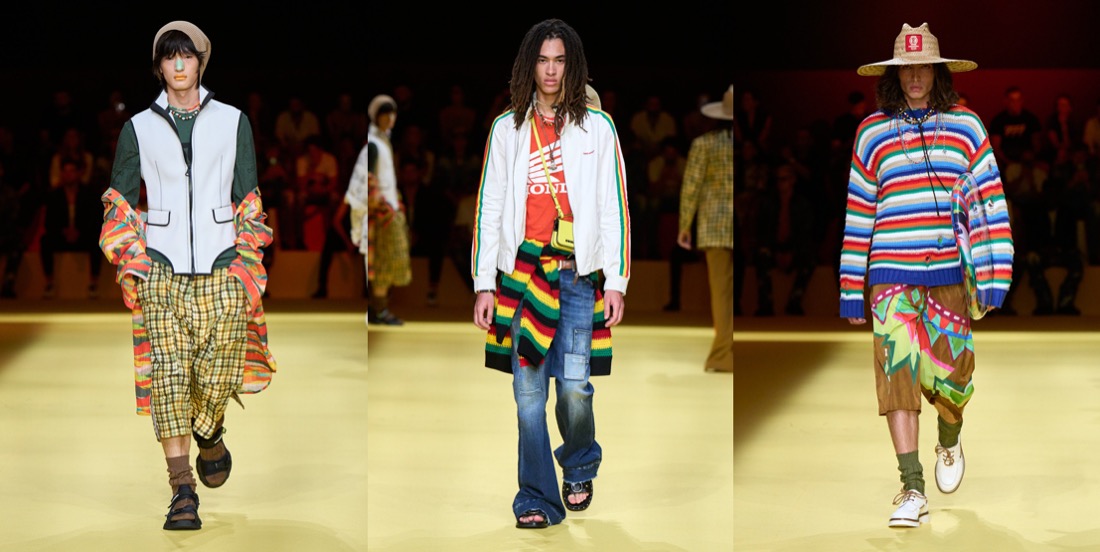
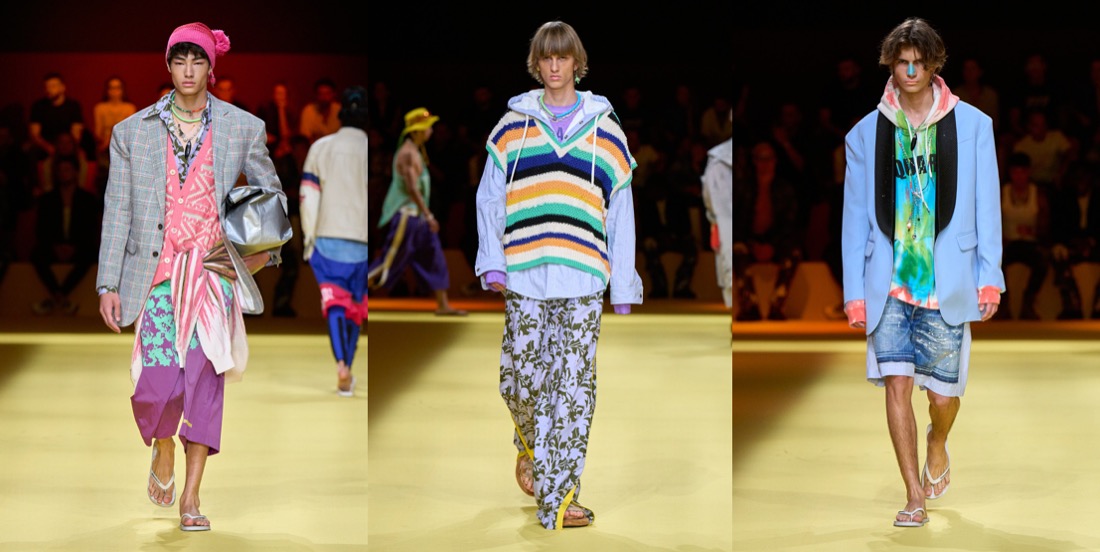
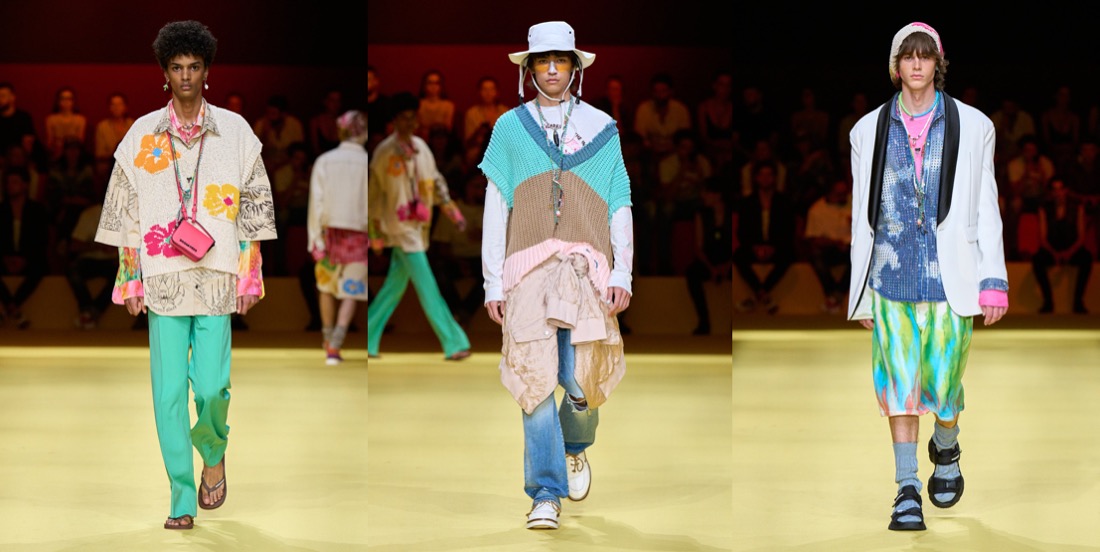
For spring-summer 2023, DsQuared2 went surf-boy-mode. Dean and Dan Caten’s layering extravaganza inspired by surf culture and 1970s Jamaica is just what a stinking-hot summer wardrobe needs and wants. The Catens worked with the Bob Marley Foundation, which granted them permission to reproduce a portrait of the reggae genius on T-shirts, beach totes, and bags. “We liked the vibe of that time, and the freedom and rebellion he represented,” they said backstage. “Peace and love, and the joy of music.” From the Jamaican flag they extracted bursts of color punctuating the sporty pieces they excel at, while cool formal options were styled imaginatively in well orchestrated chaos, as in the collection’s hero ensemble: a sloped-shoulder evening tux or checked blazer worn with a low-slung tie-dye sarong, or over multicolor printed beach pants. Each passing season, the Catens’s layering reaches new heights – with Vanessa Reid’s masterful styling help. It’s a fun formula that they’re able to articulate with gusto, keeping it rather fresh and entertaining. Another collaboration, this one with Honda, energized biker jackets and various patched leather pieces with a ’70s flavor. They added a tougher spin to the mellow, quirky surfer look of slouchy striped knits, humongous bermudas in printed nylon, and patchworked flares with appliqué marijuana leaves.
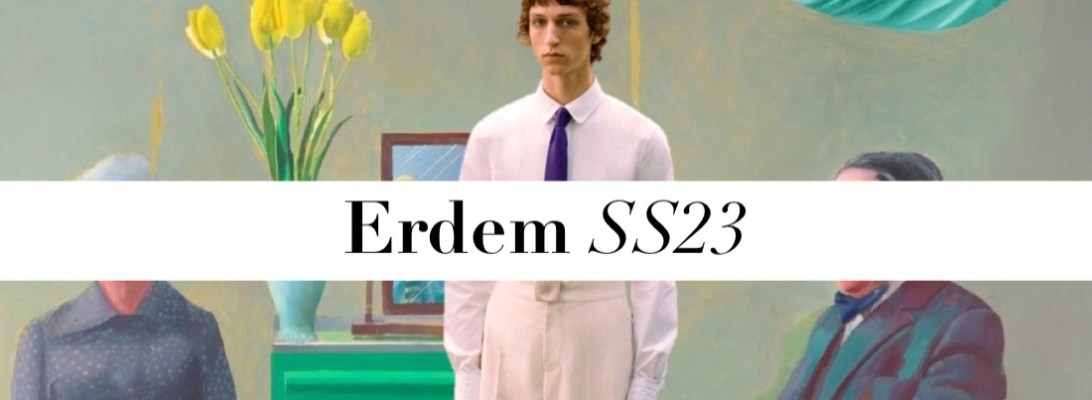
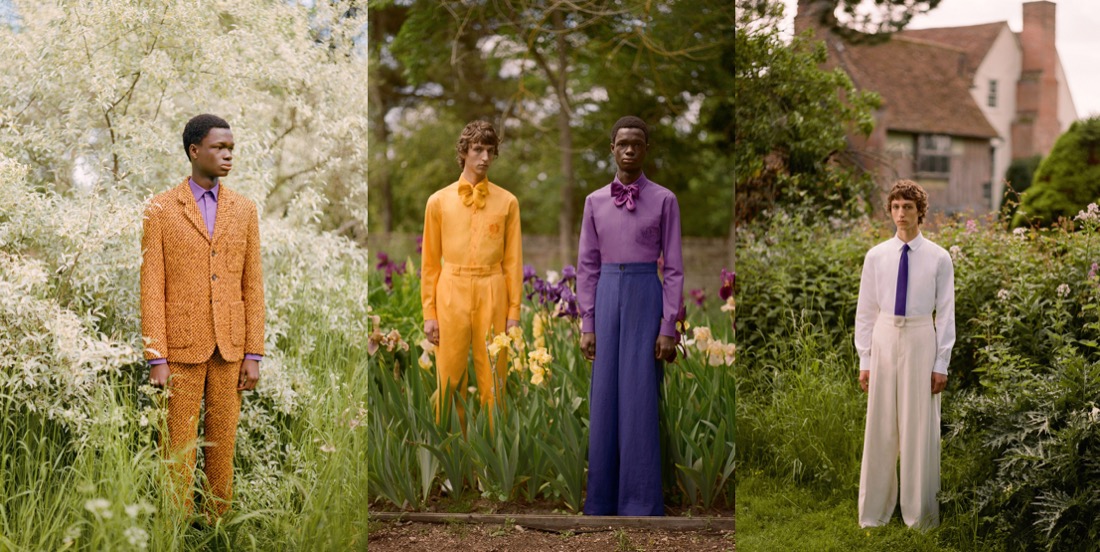
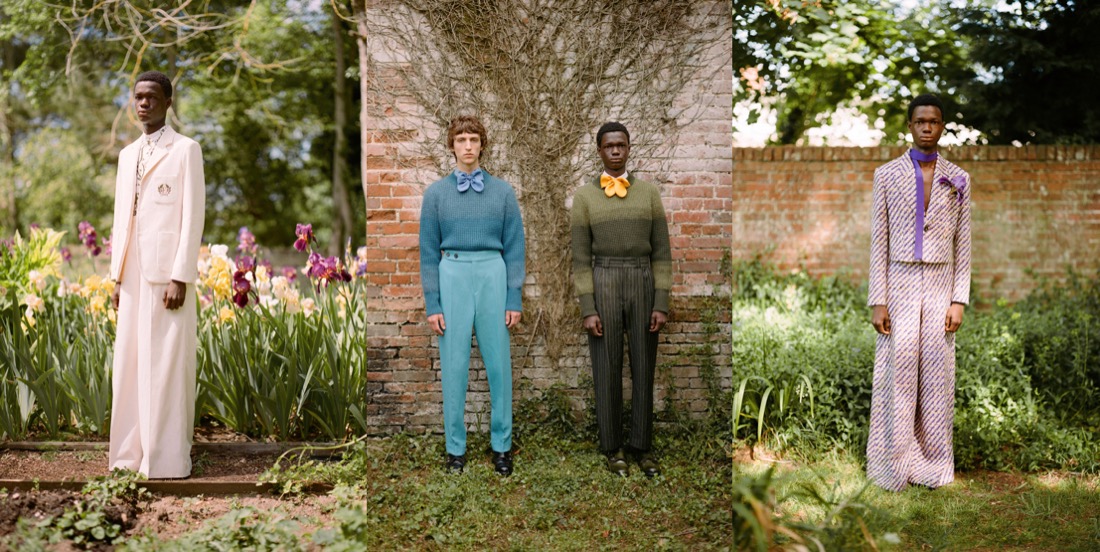
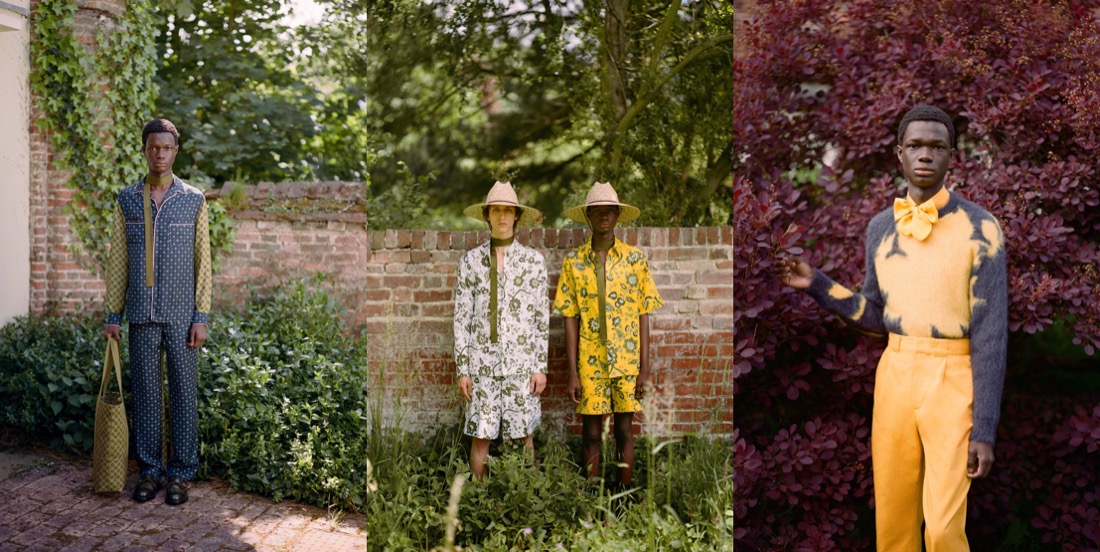
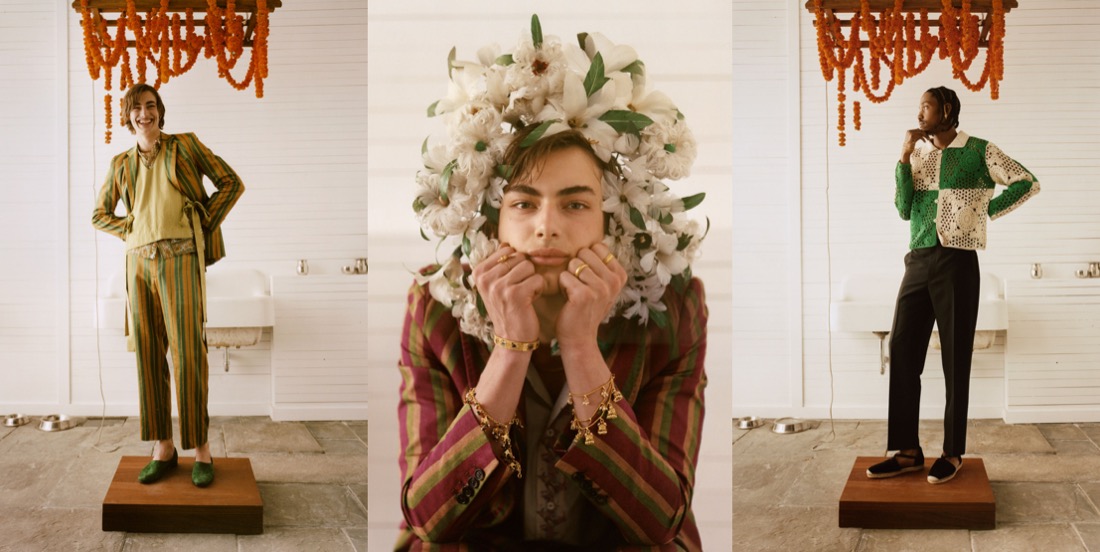
This is Erdem Moralioglu‘s second menswear season, and his vision of the Erdem man becomes more refined and clear. Handsome, young men standing in an English country garden, against beds of succulent purple and yellow flag irises. With his cinematic eye for glancingly historical biographical references, Moralioglu almost conjured a reincarnation of an everyday scene from the country life of the painter and plantsman Cedric Morris. It was shot at Benton End in rural Suffolk, Morris’s home from 1939, where he created a microcosm of an artistic avant-garde bohemian life with his lover Arthur Lett-Haines, as well as founding an art school. Lucian Freud was an early pupil. Cedric Morris, it turns out, was a friend and supplier of the society florist Constance Spry, who designed the Queen’s Coronation and who had her highly successful shop a few doors down from where the Erdem flagship is now. Connie Spry and her aristocratic clientele are all over his collection. There’s nothing like a romantic coincidence to get Moralioglu going. This one was a pure gift in terms of the colors he loves, inspiration for his boyishly foppish sense of style all the way through to the floppy, blowsy bow ties which seem almost like blooming corsages picked from Morris’s iris beds. The idea for digging into this aristocratic alternative history had actually hit him a little while ago at a Cedric Morris exhibition at the Garden Museum. Even without knowing a thing about this artist, though, you can sense the spirit of the 1940s that Erdem picked up in photos and paintings: Englishmen in hand-knitted sweaters, tweeds, shorts, and silk dressing gowns.
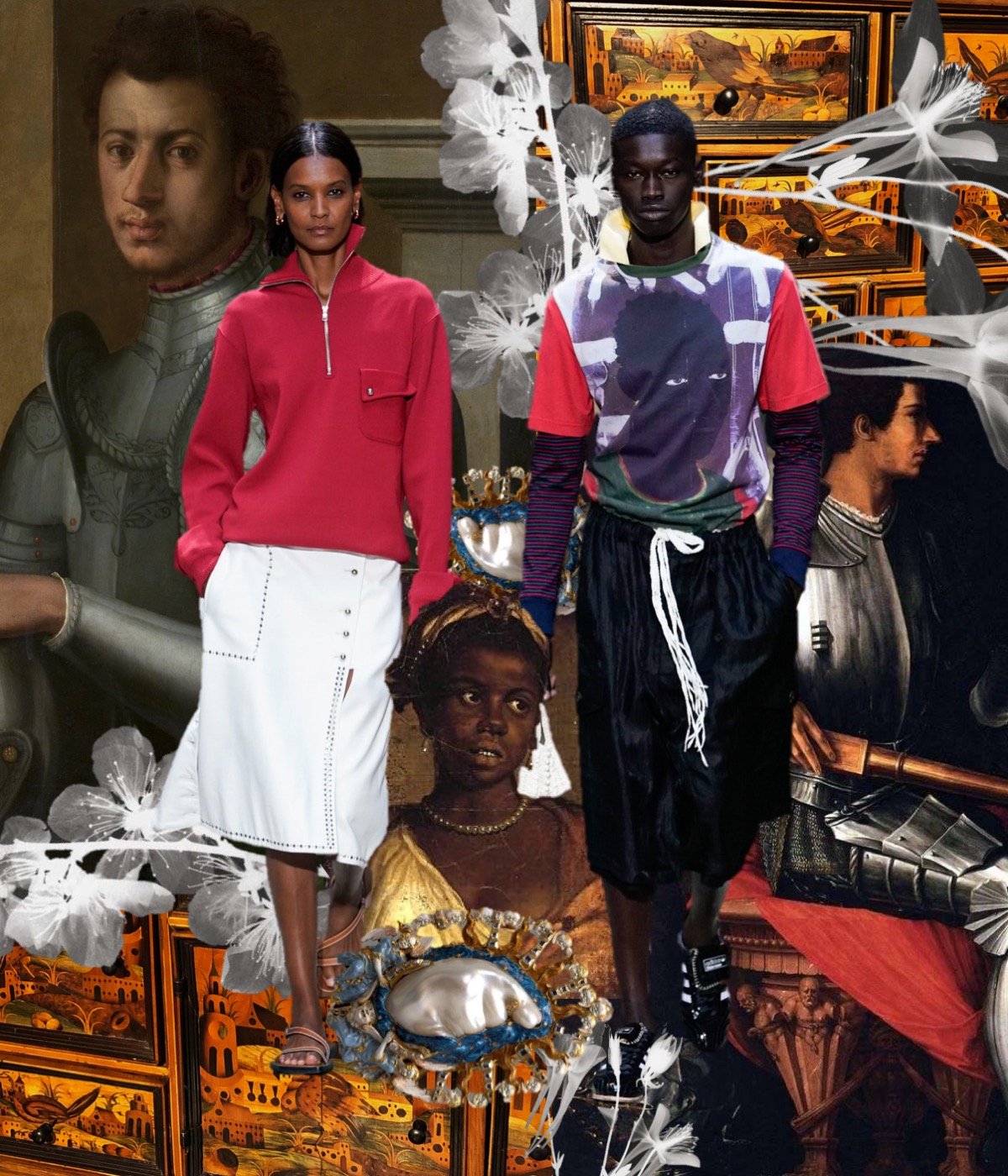
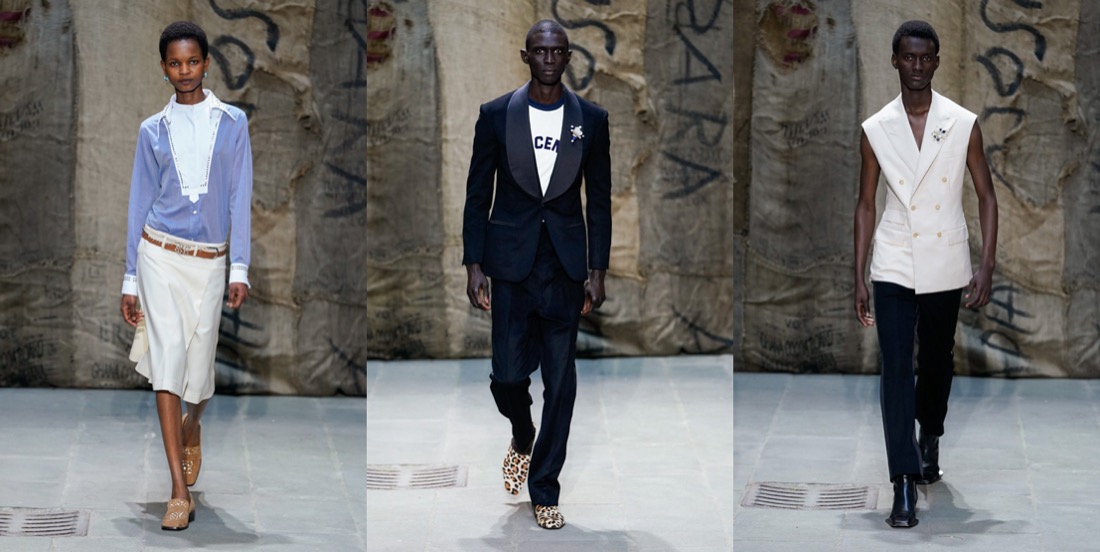
Towards the end of the press preview of this sumptuously progressive show, Grace Wales Bonner mentioned Sankofa. This bird-looking-backwards symbol of Ghana’s Akan people, she said: “means’ ‘going back to go forward.’ It is not about being nostalgic or historical. It’s about taking something from the past in order to pass it forward and make it useful for the future. And that’s the spirit of this collection.” Wales Bonner was speaking in the central courtyard of Florence’s Palazzo Medici Riccardi, a space where one Pitti Uomo executive mentioned in passing that there had never before been a live fashion show. It was as if the Palazzo had been waiting 485 years – the time since it was once home to the first Black head of state in modern Europe – to become the outbound runway for this evening’s Sankofa flightpath. Its starting cipher was Alessandro de Medici, who until his assassination in 1537 at the hand of a cousin ruled here as the first hereditary monarch of the Florentine Republic. His mother was named Simonetta da Collevecchio – aka “Soenara” – and was Black. She, history a little shakily relates, was a house servant who became mother to Alessandro after an encounter with either Duke Lorenzo (the official father) or Pope Clement VII. “I wanted to acknowledge that presence but also think about the idea of arrival,” said Wales Bonner. The building also held an additional layer of resonance relevant to her practice of excavating multifaceted manifestations of cultural intersection through garments. The palazzo was commissioned by Alessandro’s ancestor Cosimo in 1444, around the same time that he hosted the 17th ecumenical council, a global gathering of Christendom which according to historian Paul Strathern included: “Armenians and Ethiopians… other entourages included Moorish, Berber, and black African attendants.”
All of this context served as evidence that the building around us has played a role in the history of Black agency and participation in Renaissance Italy. It was leveled by the intervention in the Palladian architecture by the artist Ibrahim Mahama, who clad the space in a huge patchwork of hand stitched jute sacks originally used to export cocoa from his home country of Ghana – where Wales Bonner met him several months ago – into the global markets. “It was important to have an equal representation within the space,” said Wales Bonner. The opening look featured the reproduction of an artwork by Kerry James Marshall. This was another pointer towards Wales Bonner’s intention to rehang the display of menswear in Florence just as one would rehang a gallery – in order to shift the visitors’ experience. Just as effective was the slow coalescence of menswear forms – some sourced from the previously mentioned binary of contemporary European tropes of formality and informality, and others from a broader array of traditions whose boundaries were broken down by adjacency. Paris’s Charvet provided handsome robes and day-pajamas in jacquards whose patterns were drawn from Wales Bonner’s research into West African tradition. The macramé womenswear dresses were set with hand-made glass beads by Ghanaian artisans, and the heat-dryed hand-dyed jersey had been fashioned in Burkina Faso (Wales Bonner was building new trade routes between Africa and Italy, and Savile Row too). In menswear there was genre-busting back and forth between futuristic sportswear (which included a hand-made adidas shoe whose trefoil looked lacily artisanal) and Wales Bonner-directed, Anderson & Sheppard-cut tailoring in cashmere and camel hair that was de-conventionalized through emphasised shoulders and small sly acts of sartorial ‘wrongness’ that looked incontrovertibly right. So back to Sankofa. What was the backward-looking-bird returning to, in order to pass forward for the future? Said Wales Bonner: “It’s about bringing an Afro-Atlantic spirit to European luxury by honoring these traditions wherever they are. And making something hybrid or integrated through working with different people.”
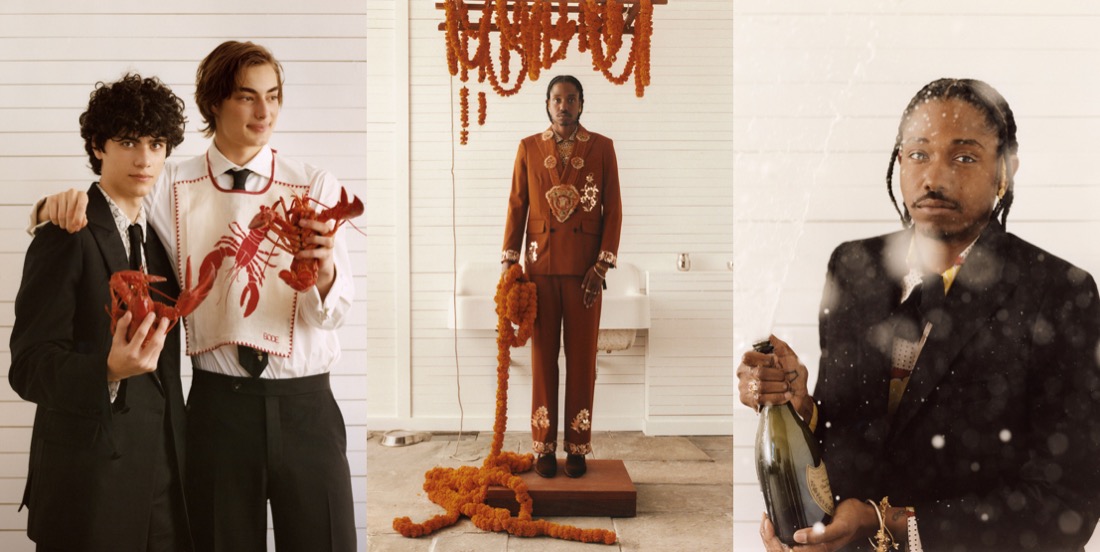
At the New York-based brand Bode, Emily Adams Bode Aujla’s collections have always been rooted in the persona. The lived histories of friends, family members, and even places all hold keys that unlock the fantastical trove of embroideries, embellishments, prints, and colors that have established Bode as one of the most exciting new American labels on the scene. For pre-fall 2022, now hitting the stores, however, Adams Bode Aujla turned inward, looking for inspiration to her own wedding to her longtime partner and collaborator Aaron Aujla, which took place in their newly purchased home upstate and brought together Punjabi traditions from his upbringing as well as ones from her mixed Southern/East Coast heritage. “The foundation of Bode is personal narrative and our emotional relationships to materials and material culture, so the wedding is very much an epitome of that relationship,” Adams Bode Aujla explains. “From a more pragmatic side, I love dressing people for weddings. A lot of the fabrics that we sell lend themselves really well to weddings: lace, eyelets, details like pearl buttons, working with people’s family histories and their initials and embroideries, so it kind of made perfect sense to make this a holistic idea.” She estimates she made over 250 pieces for their friends and family to wear to their nuptials, including matching tuxes for the groomsmen and dresses crafted from piano shawls for the bridesmaids, along with the various outfits she and Aaron wore throughout the four-day festivities.
The most obvious way the wedding influenced this collection is in the emphasis on formal wear, something that she has dabbled in since opening the Bode Tailor Shop next door to her Manhattan flagship. There are classic shapes like tuxedo jackets and tails done in traditional black and white that will find wide an audience, but it was the Bode-fied versions that had the most appeal: a dark brown three-piece suit embellished with gems in the shape of flowers, a linen marigold single-breasted suit with tonal fringe appliqués and vintage marbles decorating the sleeve vent. The colors she used – “depression-era” green, tobacco brown, and purple, and marigold – all held personal meaning for the designer and her husband. It’s her exploration of what formalwear silhouettes can be that is really exciting. A lightweight tropical wool wrap jacket with a gathered waist may resemble a traditional women’s blouse on a hanger, but when worn over a crisp button-down shirt and matching trousers, it transforms into a smart alternative to the structured suit, lending an air of ease and comfort. A similar feeling was evoked by matching sets of shirts and trousers, inspired by Aujla’s penchant for pajamas. “He wears pajamas even with a tux,” Adams Bode Aujla explained. “It was really important to him that he had [them], especially for morning prayer.” Here they run the gamut of materials and fabrications, from simple versions done in white cotton voile to intricately embroidered styles. The concept of “home” was also present in the collection through the use of crochet fabrics and embellishments, as in a white shirt covered with brown popcorn chenille, which is typically found in bedspreads, and a matching shirt and trouser set appliquéd with animal shapes in various prints, which was a reproduction of a baby quilt originally made from feed sack scraps. “During the Great Depression, companies were noticing that women were making clothing from feed sacks and grain sacks, so they started printing on the fabrics to encourage people to do it.” Adams Bode Aujla is keen on the importance of research and preserving history through the things that she makes, tracking down names and provenance. “When we do historical reproductions, we can tell that narrative in a much broader scale, and it got me thinking about how you can encourage people to preserve something, not just by mending o repairing things like that, but preserving it in the idea that they’re preserving culture and the techniques,” she said. It’s easy to see how Bode has found success; her customer understands that when they buy one of her designs, they are buying a little piece of history for themselves, a shirt (or pants, or a jacket) imbued with meaning and ready to be passed on to the next generation.
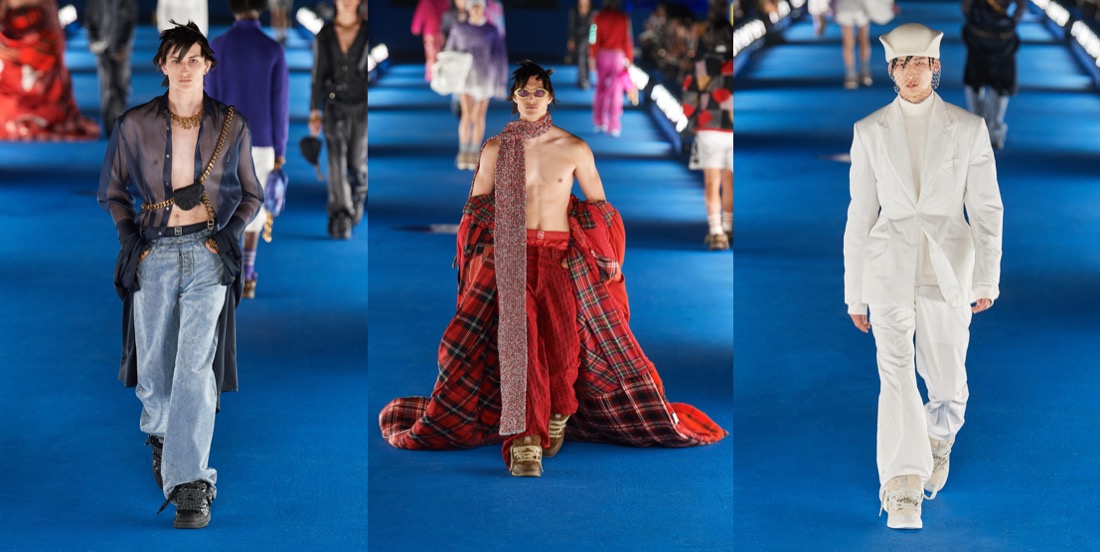
You could see the crest of a 30-foot blue nylon wave from several blocks away on Pacific Avenue in Venice Beach, part of the impressive ocean-themed runway set design that was constructed for Dior Men’s show last night. With Californian designer Eli Russell Linnetz of ERL signed on as the house’s latest guest designer, it made sense that creative director Kim Jones would choose to show the capsule collection against the backdrop of this well known Los Angeles beachfront. “I grew up in Venice Beach, I came to this street all the time,” said Linnetz speaking at a preview before the show. “This was basically my backyard.” Linnetz’s story is straight out of Hollywood. A film student turned designer, he cut his teeth in Kanye West’s artistic studio, directing videos for the likes of Teyana Taylor. Since launching his ERL brand in 2018, his fanbase has swelled year on year and includes the likes of A$AP Rocky and Hailey Bieber. He’s also one of several bright young finalists up for this year’s LVMH Prize. “We have lots of people in common,” said Jones, explaining that the pair were introduced by mutual friends and started the conversation over DM about a year ago. When Jones arrived at ERL HQ in Venice Beach to work on the capsule, their creative chemistry was almost instant. “I was 99% excited at the idea, 1% scared that I would lose myself, just because Kim has such a strong vision of the world and his collections are so refined and striking. My world is so much more chaotic,” said Linnetz. “But the second Kim came to the studio, it felt easy, seamless.”
The pair used Linnetz’s date of birth, 1991, as a jumping off point for the collection, mining the Dior archives for clothes created that year. “I think people would assume that I would be more into the Galliano archive because it’s so theatrical, but actually through my research I become more interested in diving into something that hadn’t been touched before,” said Linnetz. They landed on the maximalist elegance of Gianfranco Ferré’s designs for the French House, the kind of opulent tailoring you might have seen sauntering down Rodeo Drive at the time. Cue the opening look, a gently padded silk satin suit in Dior’s signature dove gray created with the lining twisted inside out and worn with wide-legged pants puddling over chunky skater sneakers. It was a sweet marriage of Parisian executive realness and SoCal cool, or what you might call “California Couture,” a slogan that appeared on at least a few cozy turtleneck sweaters. Several of ERL’s quirky design flourishes were filtered through a sophisticated lens. There were baggy skater boy shorts galore, only done for evening with an eye-catching beaded trim. Clearly Linnetz and Jones had a lot of fun dreaming up the accessories. According to Linnetz, the pillbox hats worn backwards with beaded veils were a cheeky nod to Jackie O. Strung on a heavy duty gold chain and worn across the body, the tiny tinsel saddle bags were a very elevated take on the classic skater keychain wallet that are bound to be a hit with Dior Men’s streetwise fashion guys alongside those ingenious sneakers. The yin-yang motif Linnetz is known for got a look in too and was rendered in an intricate embellished wave on a gray marl hoodie. “It’s interesting to see how Kim works because he really approaches everything like a film director,” said Linnetz. “And that’s very familiar to me.” In a sense the bigger picture here felt decidedly fresh, an example of what can happen when two creative minds from seemingly different ends of the fashion spectrum – and different sides of the world – come together to exchange ideas and find common ground. In the new fashion landscape, playing it safe hardly feels modern. Exchanging ideas in a freewheeling way is the new wave.












 Design & Culture by Ed