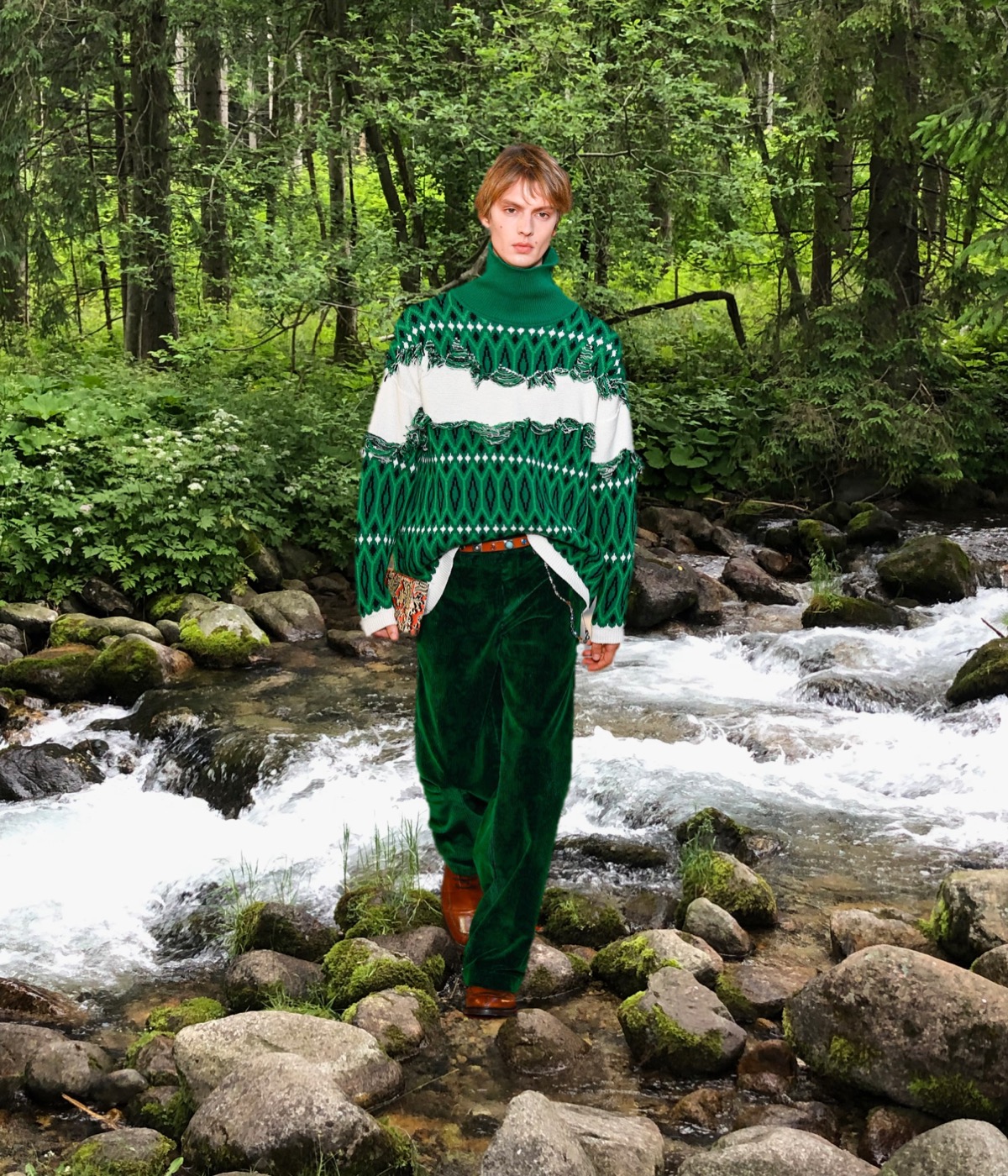
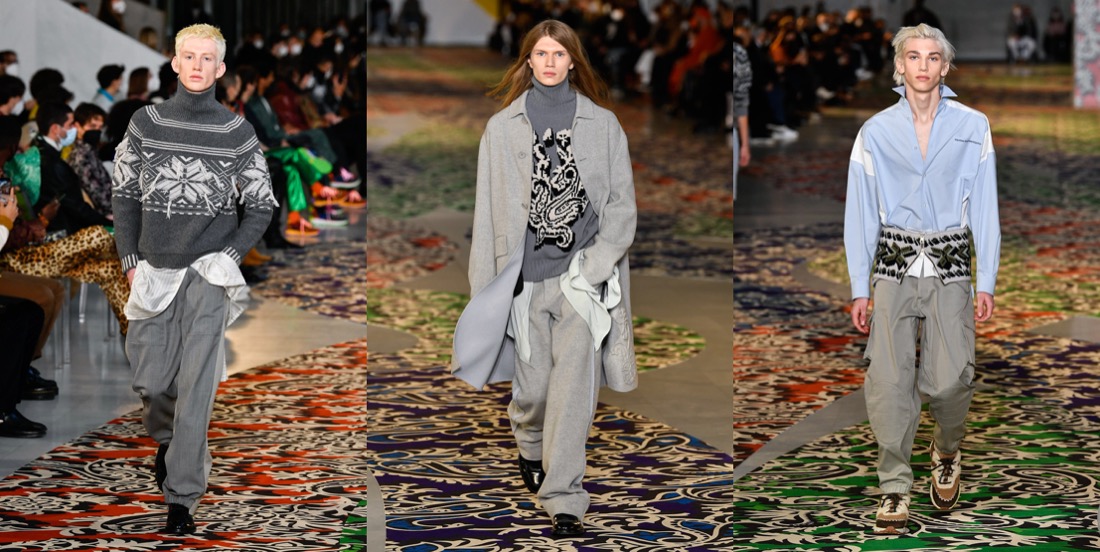
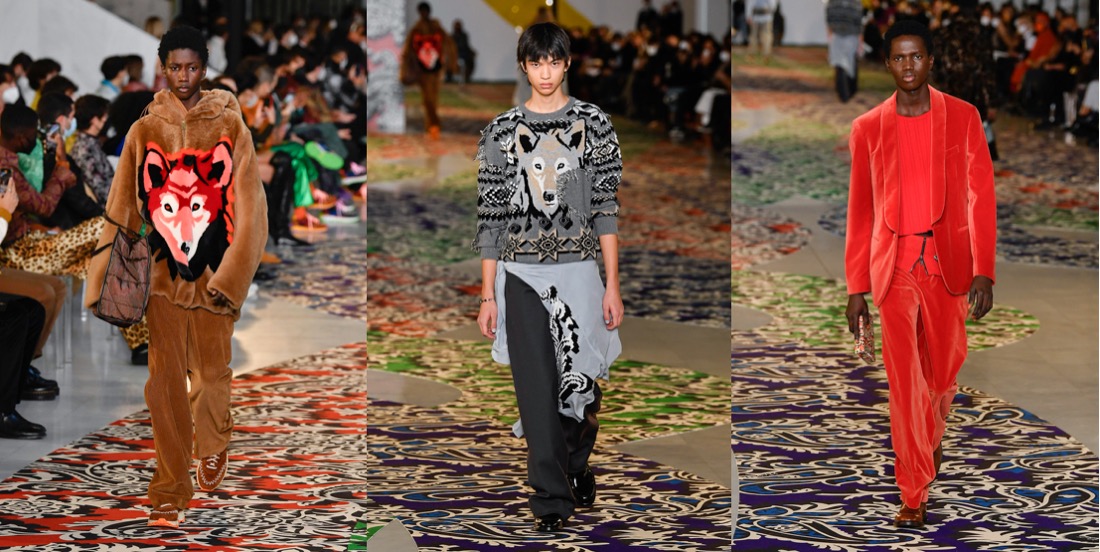
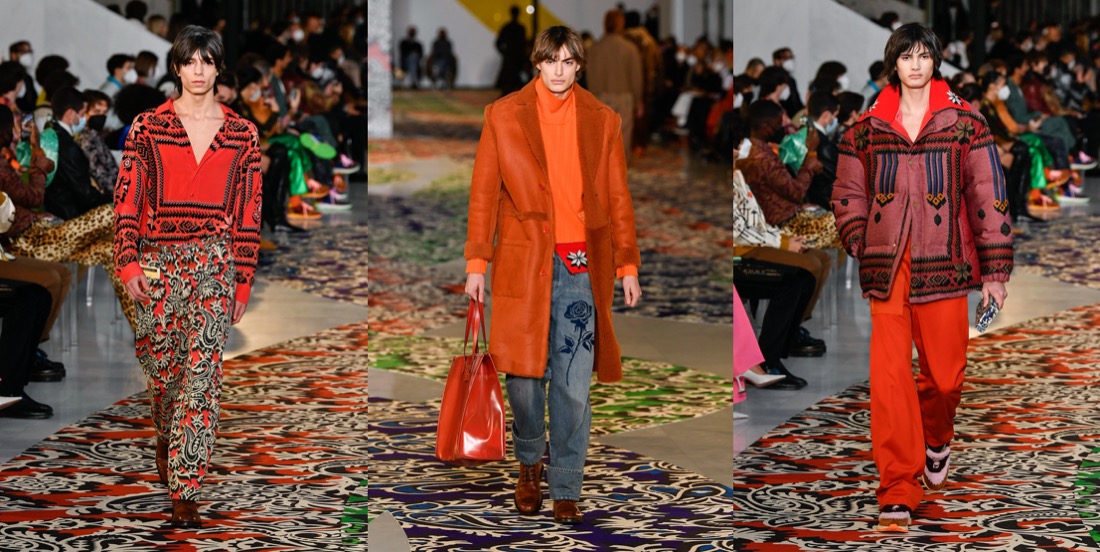
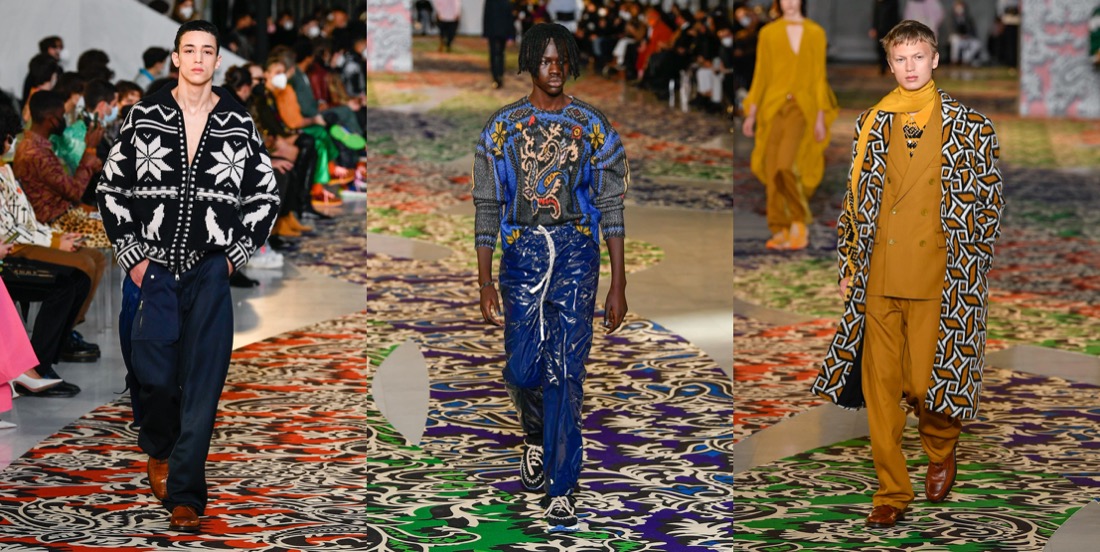
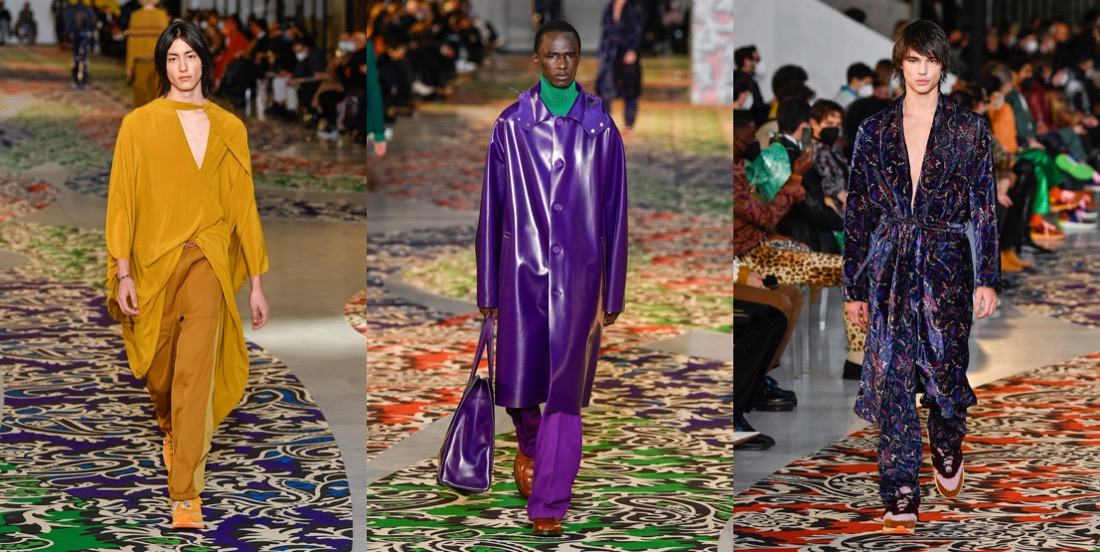
Kean Etro‘s autumn-winter 2022 collection is to die for! The Etro offering for men delivered rushes of wildness and preppy, a combination that isn’t that easy to pull off. Royal velvets meet knitted sweaters with tearings; shearling jackets with folklorish embroideries styled with slightly scruffy, vintage-y denim pants; wolf motif layered over the brand’s signature paisley pattern. This is certainly a wardrobe for lovers of eclectic dandy-ness with a hedonistic twist. I wonder if Etro had Luke Edward Hall‘s style on his moodboard, because I definitely see him wearing most of these outfits. The collection orbited around the idea of contrasts. We’ve got a cool, solid PVC coat in purple, and the other moment a billow-y, romantic, chest-revealing silk blouse in mustard. This is one of those collections that are both desirable and filled with styling tips ready to be implemented into a guy’s autumn wardrobe.
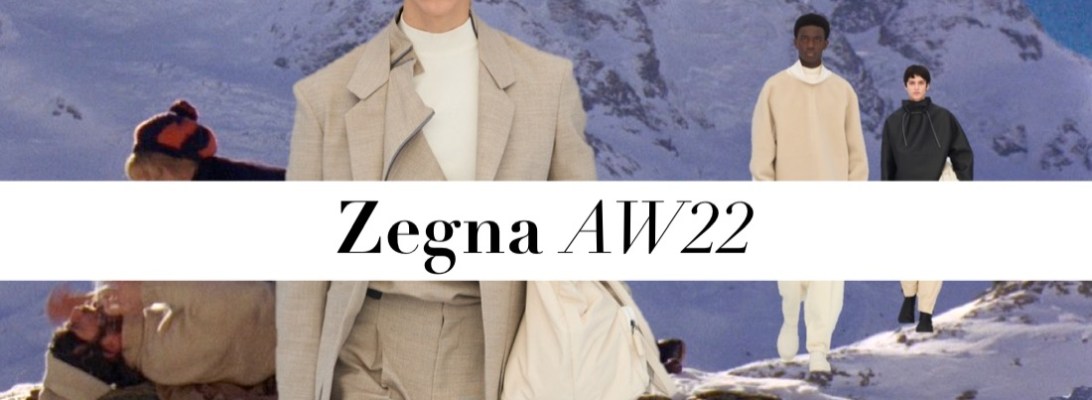
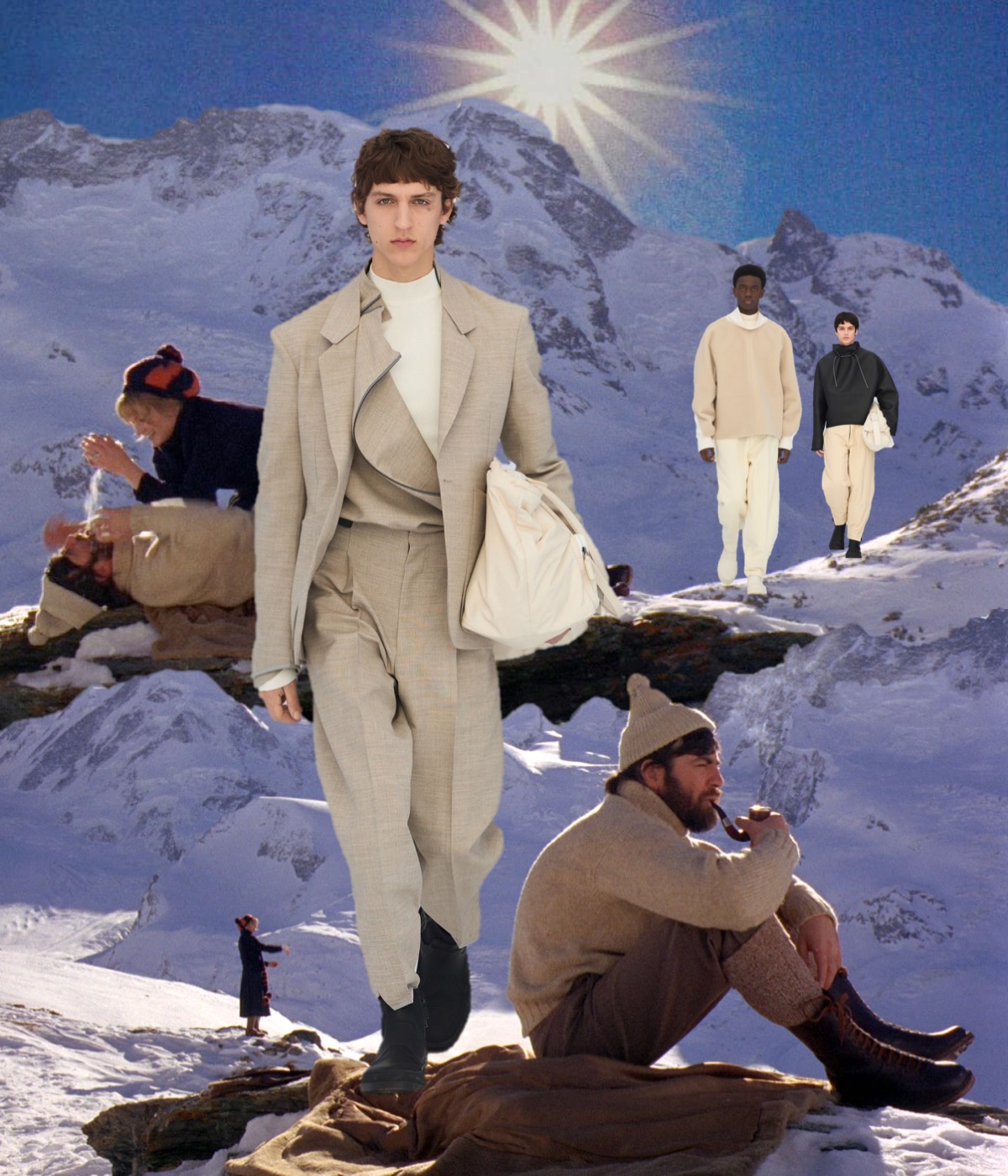
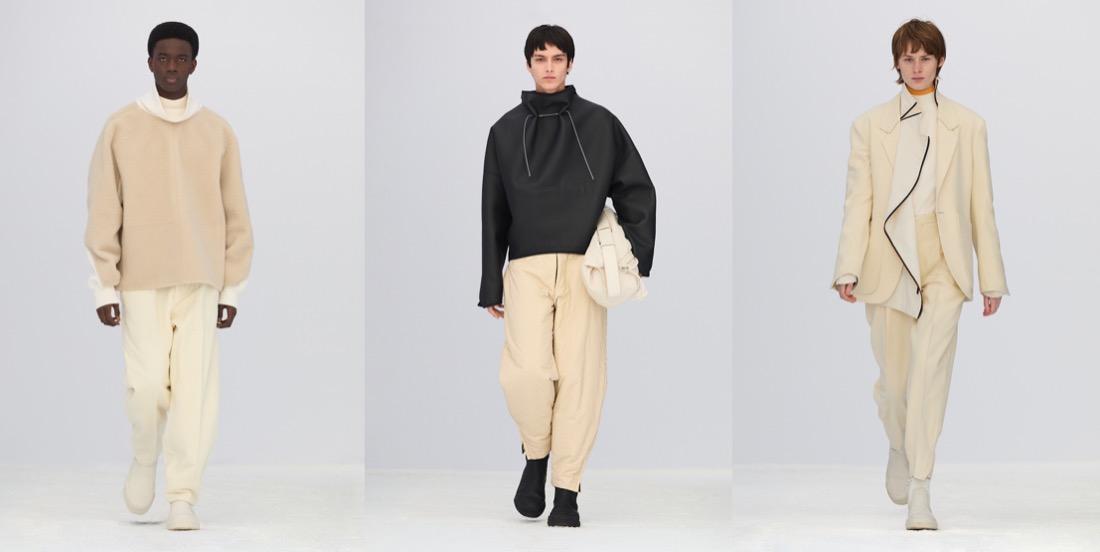
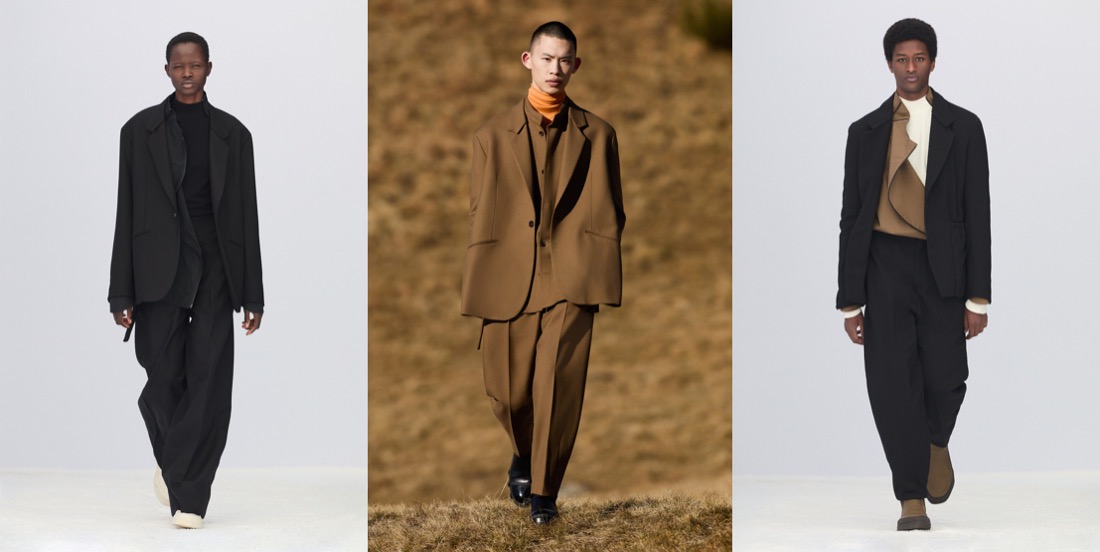
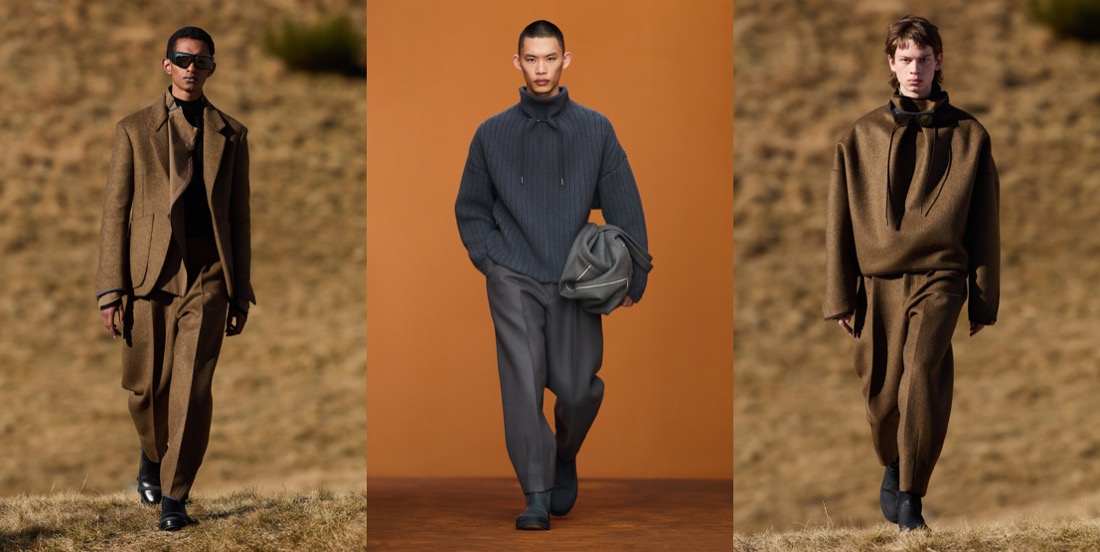
Men’s Milan Fashion Week has officially started! And here’s lesson number one: you just can’t go wrong with Zegna. I know it myself – I’ve got a couple of my dad’s clothes coming from the brand, and really, this brand is not just timeless, but its quality is indestructible. Alessandro Sartori, Zegna’s creative director, embraces what the Italian brand stands for with every season, delivering absolutely desirable, refined and relevant investment pieces for a contemporary man. For autumn-winter 2022, Sartori said he was presenting “il nuovo abito“: the new suit. Yet this collection represented something far bolder than that. It was a tilt at meeting that migration by erasing the categorical imperatives that have long codified menswear. These old-fashioned either-ors include formal and casual, sartorial and sporting, street and fashion, executive and worker, masculine and feminine – all of them habit-forming dichotomies that signpost the traditional menswear roadmap. This shift came in sync with multiple others in Zegna’s landscape. Early last month the company dropped the Ermenegildo from its title and also quietly phased out the really excellent sub-brand Z Zegna in order to combine everything under one mainline menswear empire. The simplification is meant to add emphasis to the Zegna identity, which is now represented by a signifier-logo that sandwiches the brand name within two vicuna-toned strips of brown with a strip of black between them. The logo represents the road that winds through the 100 km2 of land – the Oasi Zegna – that the original Ermenegildo purchased, reforested, and conserved in order to increase the quality of life and wellbeing of the employees and their families at the original Zegna lanificio, which continues to operate today. Another categorical dichotomy that Sartori has worked to blur is that of physical vs digital – fashion-wise, phygital was first coined here back in 2020. Today’s presentation had been planned as what Sartori today called “metatheater – not the metaverse – a combination of cinema, fashion, and live… My goal is a digital background to a live presentation, and I am sure we will do it in June.” The latest offering was shot between the Oasi Zegna and a Milan TV studio over five days. But those clothes don’t need any additional, fancy background. A dark, gabardine jacket that featured an eye-catchingly unorthodox notch lapel construction, no bolstering material in the shoulder, and no buttons at its split cuff. This was worn atop matching pants, vaguely carrot shaped like most here, and the handsome galvanized slip-on ankle boots that were also shown on most looks treading through the snow in the Oasi. Under the jacket was an oatily-toned midlayer that featured a one-sided, curved flap that lent the look a roguish, piratic air. When the model took the jacket off, it turned out that midlayer was a soberly silhouetted technical turtleneck whose curving came from the shape of the zippers running across the body. You could see the fossilized remains of both sportswear and tailoring in the look’s elements, but when worn as an ensemble it did, indeed, look like an outfit that was uncategorizable as either. Other highlights included sharply silhouetted deformalized jackets and pants in ultra-thin padded fabrics, parkas in wool ripstop, and shirting with fabric-soft panels of leather cut into their cashmere whole. Knitwear featured tonal jacquards whose abstract shapes reflected the patches of forest and snow they were shot against. Whether in camel hair, scuba, or cashmere, the shacket-and-pant fusion ensemble – a luxury-chore-jacket-workwear outfit meets supremely-soft pajama – was well represented and made a powerful candidate for Sartori’s post-abito habit.
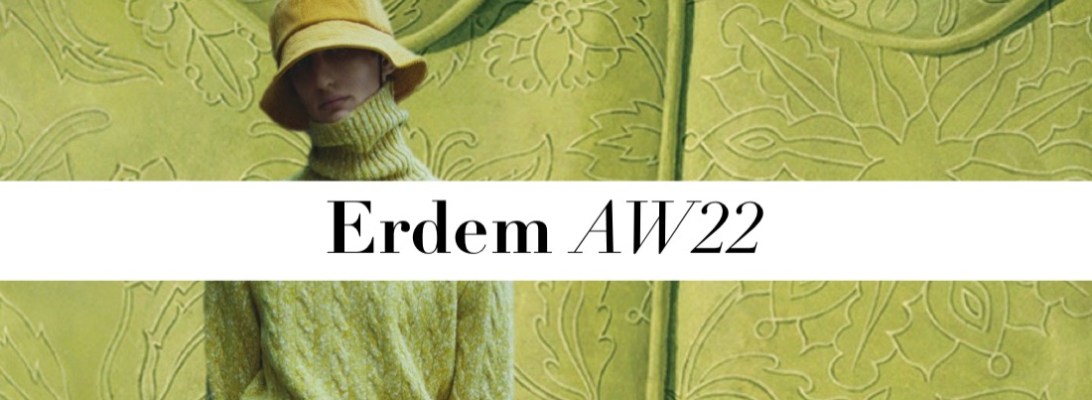
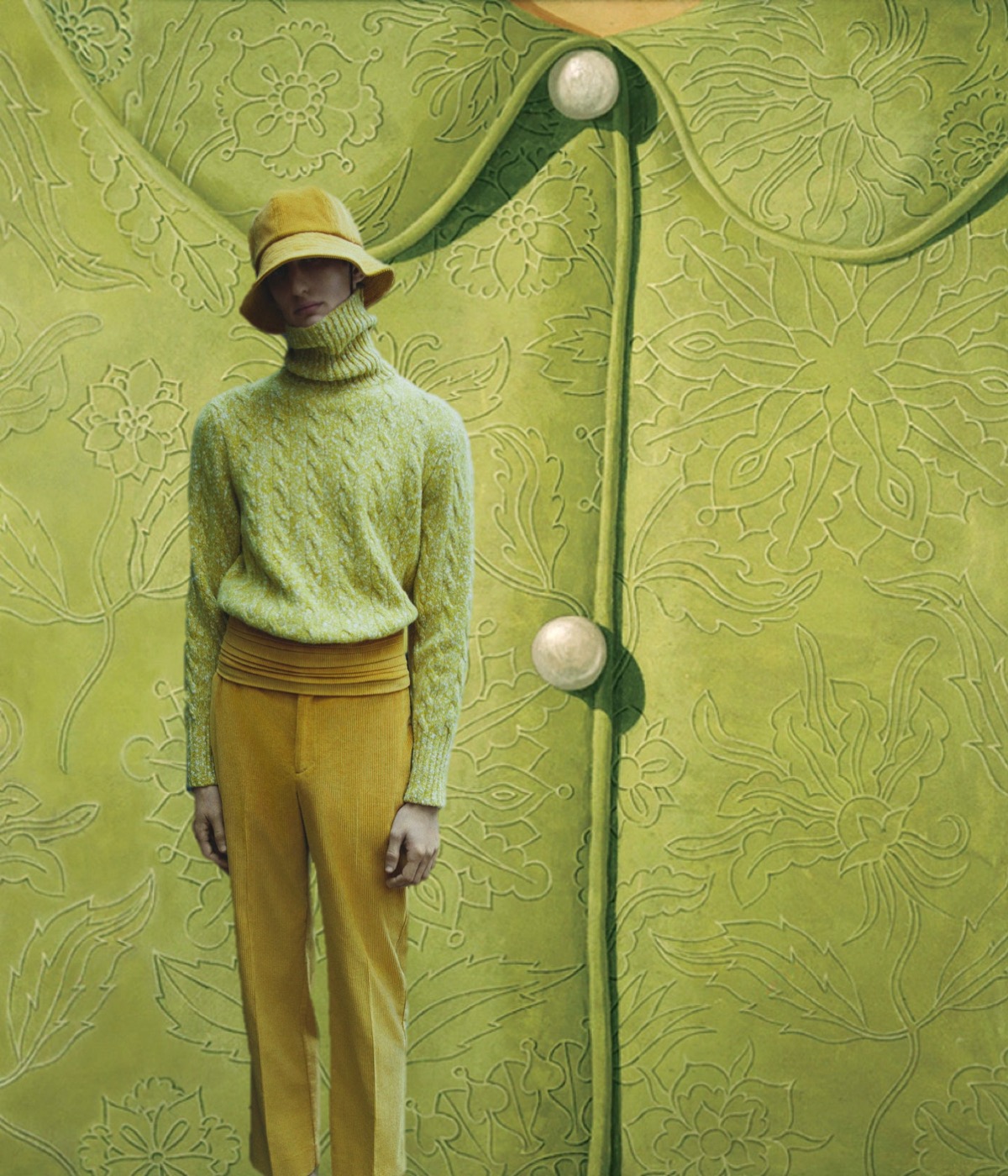
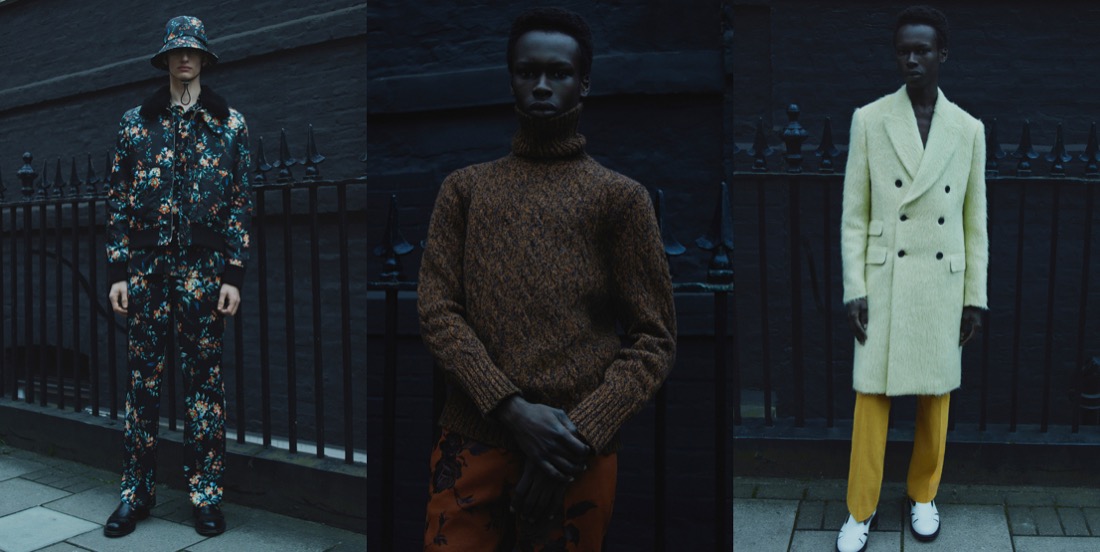
In his second menswear collection, Erdem Moralioglu goes for streetwear – something you never see in his often dramatic women’s offering. “Utilitarian romanticism” is how the London-based designer summed up his newest creative venture. He has a point: in a world where people wear couture-house joggers to dinner, and even Moralioglu surrenders to sporty dress codes, streetwear is really just daywear. “It’s a boiled fleece hoodie with a tailored, nipped jogger,” he said of the collection’s most informal look, describing those garments exactly like he would his ladylike womenswear. But unlike that womenswear Erdem’s men’s world has a relaxed, almost light-hearted quality about it. The designer has been living in the spring men’s collection since he received the first pieces, and, as he confirmed, “it’s very personal.” While the first collection only started to arrive in stores in November, his recipe of ravishingly-colored knits, corduroy, and printed denim has seen great response from the yet-to-be-defined Erdem men’s customer, and has gone down well with his trusty female clientele, too. This season, he took inspiration from the work of two women, who may as well have played muses to one of his women’s collections: Madame d’Ora, a Viennese portrait photographer and contemporary of Picasso, and Madame Yevonde, a portrait and still-life photographer who worked in London around the interwar era. Together, their subjects, grading techniques, and the latter’s use of color inspired a 1930s-driven collection, which borrowed from the women’s wardrobe of the time, and fused those references in Moralioglu’s contemporary “utilitarian romanticism.” What emerged through Moralioglu’s second menswear proposal was a men’s wardrobe of conventional contradictions: feminine vs. masculine, formal vs. informal, Old World vs. new world. Those dichotomies are hardly new territory in menswear, but through the lens of Erdem – with all its history and romanticism – this menswear brand already feels unique and familiar in a way that gives it a character of its own on a very saturated market.
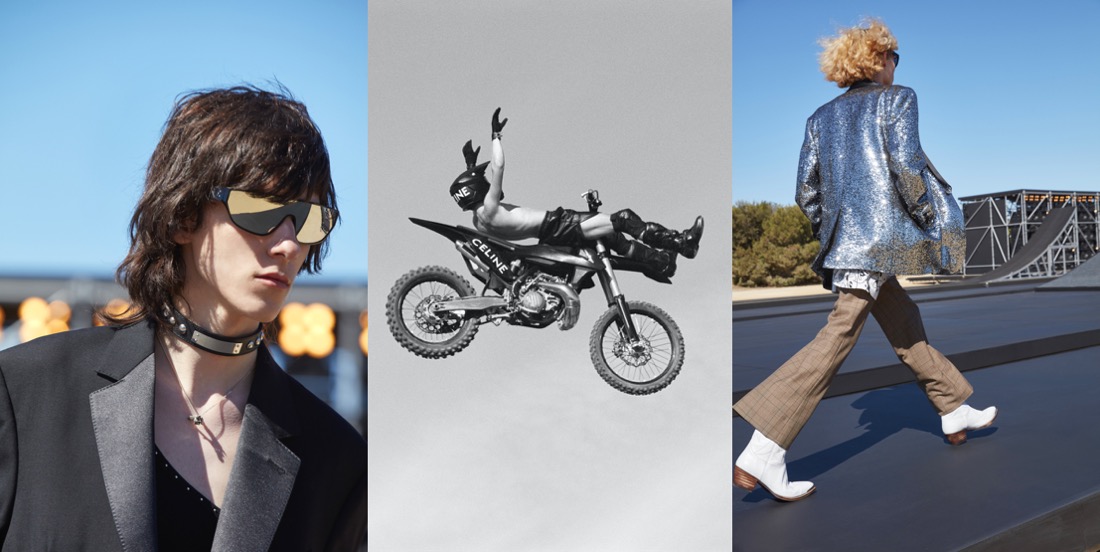
As Phoebe Philo is coming back to fashion, the Celine wound seems to heal. Which doesn’t mean I suddenly love Hedi Slimane‘s vision – but at least I can tolerate it. Still, his men’s spring-summer 2022 collection left me with some mixed feelings. This season, we’ve got an action-and-item packed Celine show recorded by drones somewhere on the Archipel des Embiez in the south of France. On a black runway set up with freestyle motocross ramps and jumps, teams of shirtless Honda-riding boys leapt and arced against the Mediterranean sky. The location is apparently not far from where Slimane lives outside St.Tropez, and this was Slimane on home territory in more ways than one: capturing his endless obsession with male teen energy, studding the collection with multiple art collabs, and wrapping it all up to the beat of a mesmeric looped soundtrack. The FMX bikers belong to a community that invented its renegade free-riding sport in the hills of California in the early ’90s – Slimane has been documenting them since 2011, when he came across them while he was living in L.A. This time, he commissioned and co-produced the music with Izzy Camina, intersecting the long, slouching march of a black-leather and silver-sparkled collection with souvenir slogan T-shirts and prints made by 14 of the emerging artists he collects and promotes. Since the pandemic hit, Slimane has shifted his Celine productions into the open air and into spectacular French locations. Wherever he lands, though, be it a Formula One racetrack, a chateau in the Loire valley, or this time, on a rocky coastline, there’s always the same, recognizable atmosphere, the romantic-erotic stamp Slimane puts on a world inhabited by young men. His meeting of motocross daredevilry and neo-rave frippery nailed the current summer of spring-summer 2021 teen spirit – a full-ranging breakdown of XXL elephant jeans, mirrored bug sunglasses, scaled-up bombers, tour jackets, and draped tuxes. Black capes flew over black leathers; sequins, crystals, and silver western boots glinted. Slimane targets Gen Z, and he confidently thinks he knows what they want. But I’m not sure if his take on youth is actually that relevant today. To me, it feels like an over-done costume. And Gen Z look forward to the unforced sense of authencity.
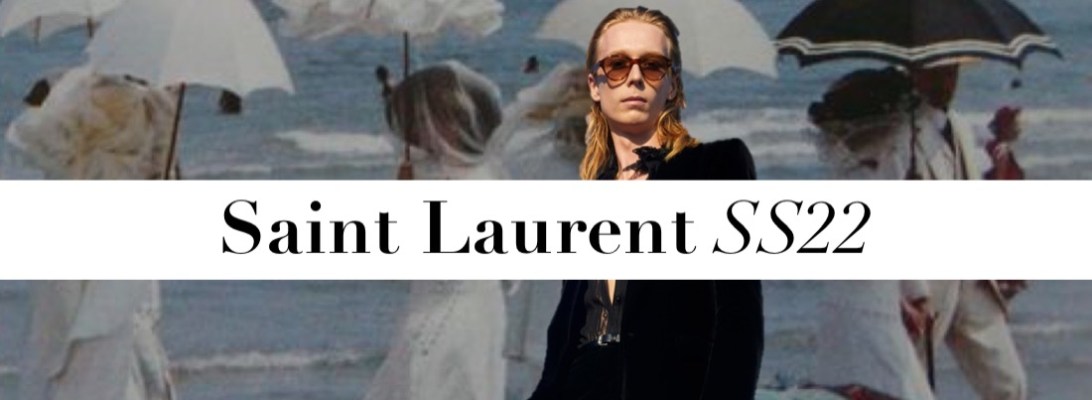
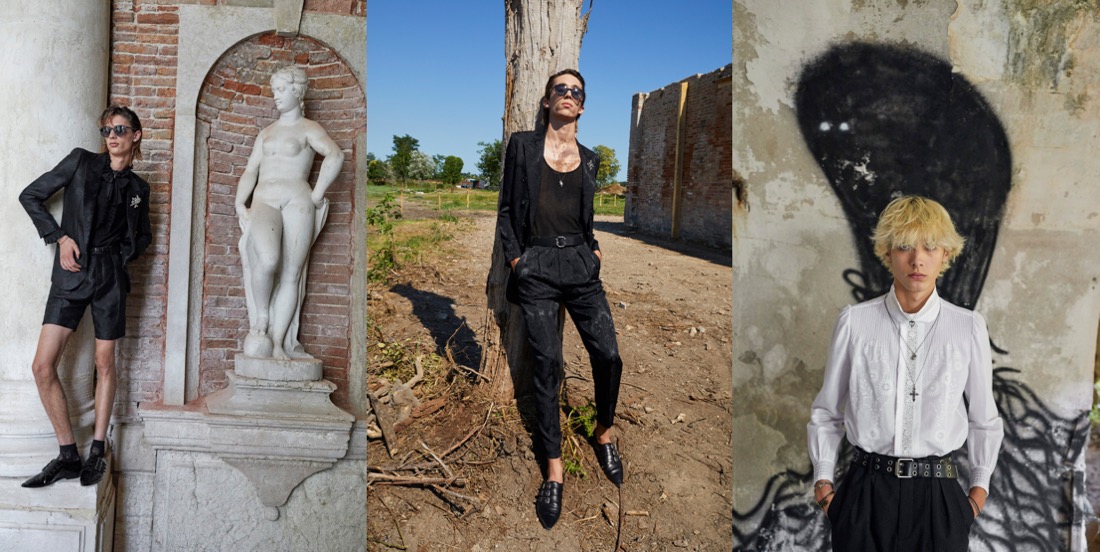
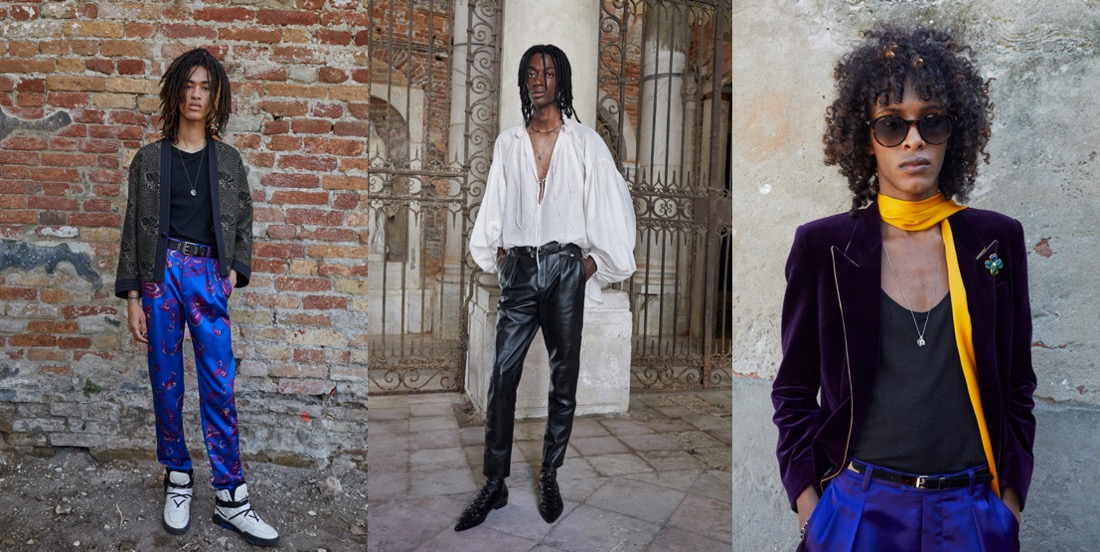
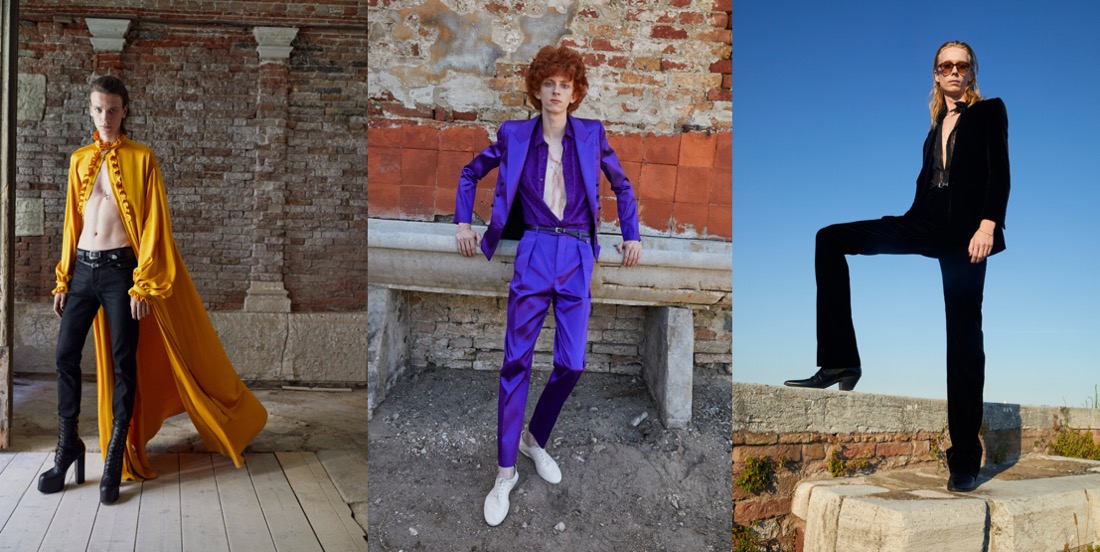
With Venice’s winding lanes and piazzas relatively empty, not exactly overwhelmed with visitors, an army of very slender wraiths, confettied with tattoos, bristling with attitude, and wafting around the city’s fabled landscape, seemed even more conspicuous. These proved to be the (extra, extra skinny) models and brand icons of Anthony Vaccarello’s Saint Laurent, in town to walk the runway in the designer’s collection. In keeping with the city’s current focus on the possibilities of architecture, Vaccarello collaborated with the genre defying artist and filmmaker Doug Aitken (who won the International Prize at the 1999 Venice Biennale) on an environment to showcase his collection. Aitken created Green Lens, an amazing mirror-faceted structure that was assembled in a month on the Isola della Certosa, and planted with hot house jungle greenery. It serves as a response to the question posed by the Biennale, harmoniously blending futurism with the natural landscape. “All the sets of Saint Laurent I’ve always done myself in a way,” Vaccarello explained, at the magical post-show dinner set in the roofless ruin of an old brick structure on the island, “so it was nice to share a concept for the first time with an artist who I truly admire, and it was fun. That concept was supposed to be for the women’s show last year,” Vaccarello added, “and because of the pandemic we pushed it to now. In the end it made more sense to have it in Venice than in Paris, especially with the Architecture Biennale – and with that collection, which is a mix of a lot of influence of Saint Laurent and a lot of Venetian ‘New Romanticism.’ Not putting them into the historical, classical Venetian way, but in a futuristic environment. I think after COVID you want to look more into the future than the past – and I like that mix of the past in the references in the clothes, and the future in the setting.” During the fast-paced show the structure reflected the blue skies, dusk light, and dappled lagoon waters while Aitken’s lighting transformed the mood from moment to moment, suggesting by turns a flaming sunset or a glacial blue Scandinavian dawn. Refracted in those mirrors, Vaccarello’s tribe strode forth in lean jackets or billowing piratical blouses, and cigarette-leg pants with winkle picker ankle boots extending the slender silhouette further still. In a timely reversal of the endless womenswear borrowings from the traditional men’s wardrobe, Vaccarello also had fun exploring the unparalleled Saint Laurent archives for women’s wear pieces that could be appropriated by the guys, including jacquard crepe de chine blouses and shirts from the early ’70s, cropped toreador jackets and spencers from Picasso line-up, and a padded brocade bolero from the China collection reimagined as a bomber and worn with black jeans, as well as a number of variations on Le Smoking. In homage to the host city there was Venetian carnival drama too in the dramatic billowing capes, including one in brilliant yellow silk that evoked a faille example shown in Saint Laurent’s autumn-winter 1983 haute couture show. “I think it was fun to see how a young guy could assume it,” said Vaccarello of his gender fluid propositions, “And I have to say they assumed it very naturally, [whether] a lace shirt, or platform shoes.” With this most convincing menswear line-up to date coming from the designer, hope to see more of such moments coming from Vacarrello in the future.










 Design & Culture by Ed