Wild At Heart. Khaite SS23

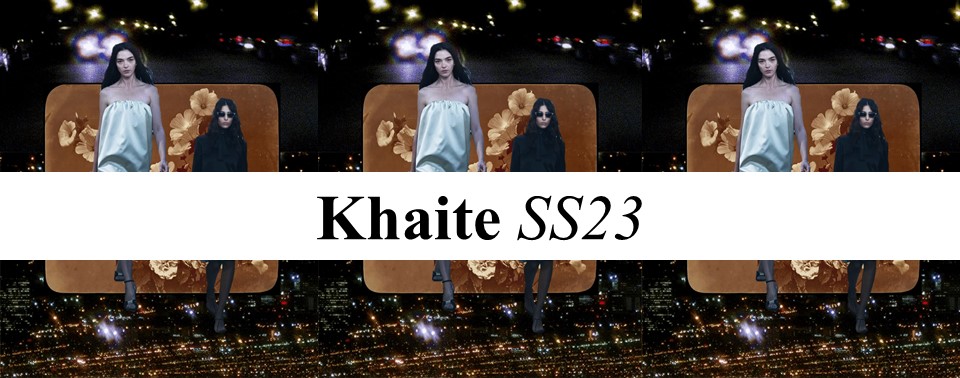
Khaite is now one of New York’s must-see brands. Celebrities jostle for seats and, editors are eager to buy and wear it. Catherine Holstein knows her audience. “That independent, New York, strong, stealth woman – that is who I’m designing for,” she said backstage of her spring-summer 2023 show. For spring she sent out her dependable mix of sequins and silk fringe, leather and denim. Because she was looking at the 1990s films of David Lynch, Wild at Heart in particular, there was a good amount of python print. Nicolas Cage’s character wears a python jacket in the movie; Holstein stamped the pattern on leather for exaggerated bombers and pencil skirts, and silk charmeuse for a voluminous peasant dress. A little python goes a long way, admittedly. The other novelty here was bubble skirts (a trending item this week). Their horsehair reinforced waistbands sat at the crest of the hip bones below everything from a mesh bustier to a crystal embroidered shirt. The low waistlines gave those outfits a cool attitude – polished but not pretentious. Because Holstein is designing for herself and for women like her, she’s got the attitude aspect nailed, but that’s not to diminish her eye for proportion or the exacting lines of her tailoring. A strong-shouldered, elongated jacket with crystal-studded lapels was a looker. You’ll be seeing it around next autumn with a tie-neck silk blouse and jeans and those little sandals.

Collage by Edward Kanarecki.
Don’t forget to follow Design & Culture by Ed on Instagram!

NET-A-PORTER Limited

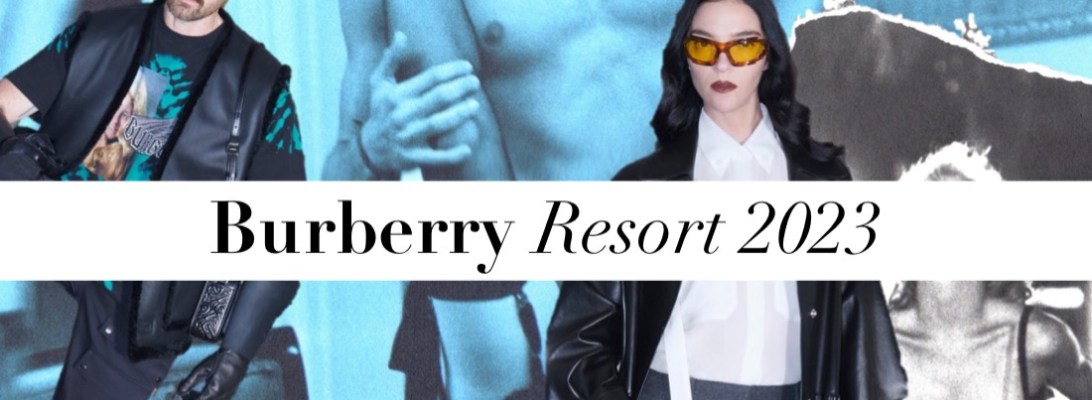
Hard Candy. Burberry Resort 2023

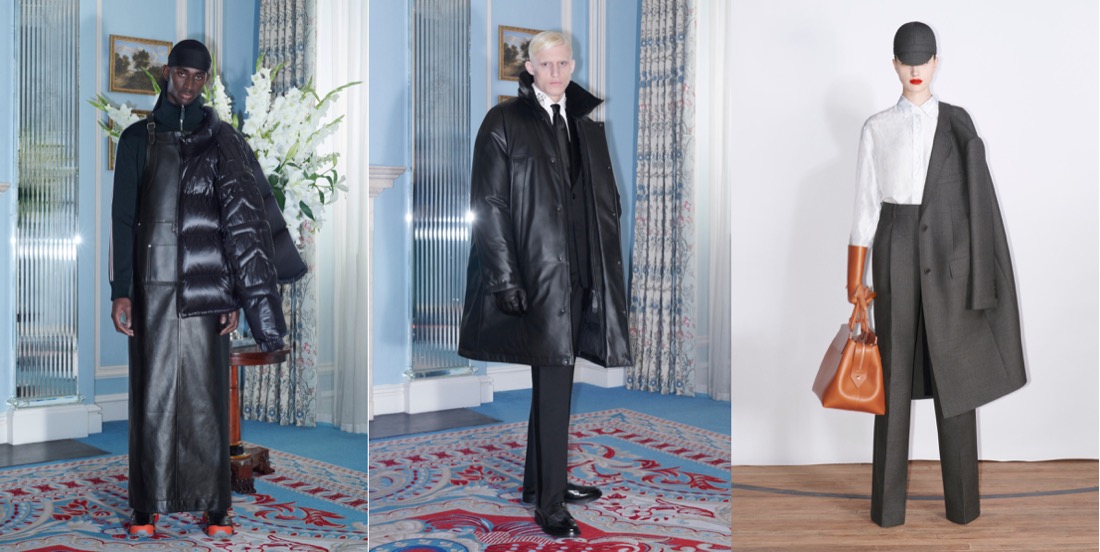
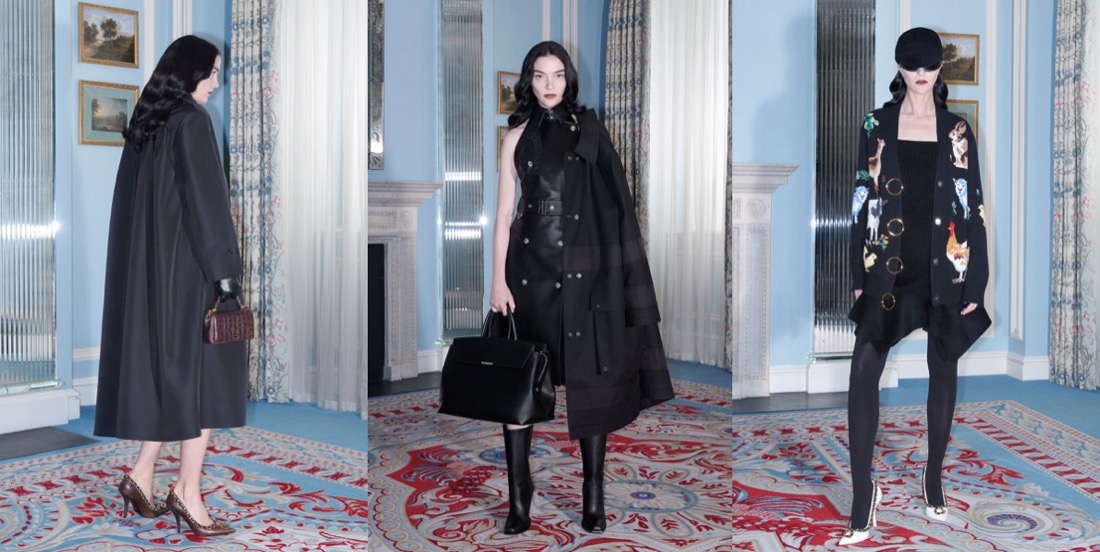
Burberry, with the Italian creative director Riccardo Tisci in charge, is one British institution which continues to believe in centering itself on border-free, non-nationalistic points of view. Tisci’s policy of turning over his pre-collections to perspectives on Burberry’s Britishness from his international network of “friends and family” is a proof of that. This season, he looked to his American friend, the artist Jared Buckhiester, to collaborate. According to notes winged from Burberry HQ, the two see eye-to-eye on looking at the brand signatures through the lens of UK rave culture – the lasting impression of the late ’90s which Tisci has held close to his heart since he studied at Central Saint Martins over 20 years ago. Maybe no one ever actually turned up to illegal warehouse raves in Kings Cross or one-nighters in the muddy fields of England looking like the people in the lookbook. The remnants of that rave past seemed to have been cleaned up and embedded, perhaps, in hybridized military bombers and tailored coats in the form of the classic Burberry trench fused with a biker jacket. But really, the Tisci /Buckhiester vision is a far more polished, lux-ed up vision of what the notes called ‘workwear,’ spiked with some glam heavy-duty black leather and contemporary twists of gender non-conformity. As part of that, there are long, tailored column skirts – or possibly maxi-aprons – that appeared to be assigned to the menswear side of the collection. There are Burberry customers with conservative tastes, or, put it this way, people who are in the market for straightforward classic clothes without any overt branding. Tisci hasn’t forgotten to design for them this season. Alongside the Burberry plaid denims, the male maxis, and some of Tisci’s hyper sexy slit skirts and curve dresses, there were moments when clean, sharp tailoring – particularly two black tuxedo jackets – stood out. With all the black leather, sometimes head-to-toe, the dark sexiness returns for good to Tisci’s repertoire. It’s something we’ve all missed since his best Givenchy years, and wanted to see again at Burberry. Finally, we’ve got it back.

Collage by Edward Kanarecki.

Don’t forget to follow Design & Culture by Ed on Instagram!

NET-A-PORTER Limited

Soft Pragmatism. Salvatore Ferragamo SS21

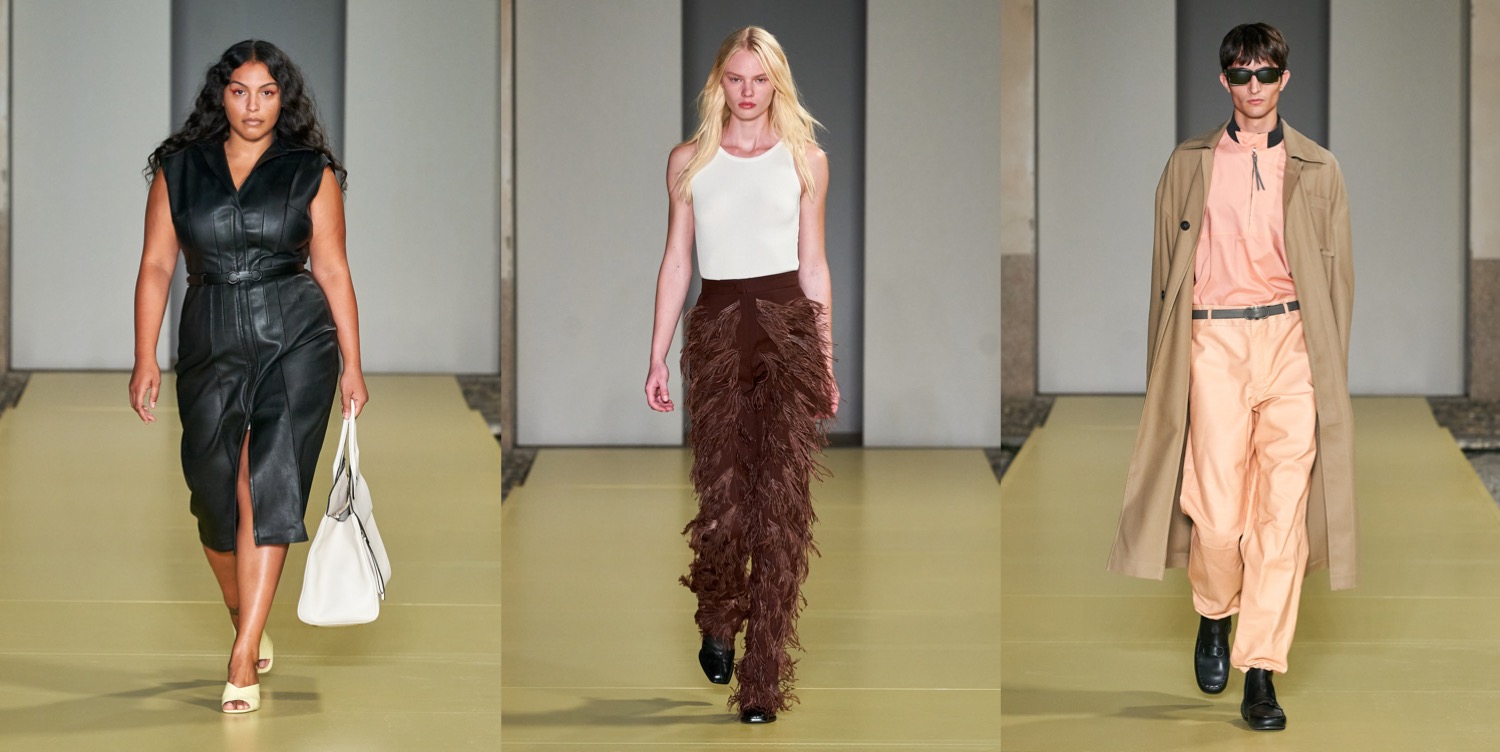
As I wrote earlier this week, it’s really all about pragmatism versus escapism this season. Designers seem not to even look for a balance between the two – they are either this or that, period. And in Milan, we see this division the most clearly. During lockdown, with time on his hands and having exhausted all of Netflix, Salvatore Ferragamo‘s Paul Andrew went on an Alfred Hitchcock binge. The Birds, Marnie, and Vertigo were at the top of his best-of list; he found out that the same obsession was also shared by director Luca Guadagnino, who in his film Io Sono l’Amore apparently referenced a lot of Hitchcock – the gestures, the lighting, the poses; a certain high-class look of enigmatic sophistication. Andrew wasn’t sure at that lockdown time if and when he would be able to stage a real show, so he decided to go for a short movie instead. Asking Guadagnino (I adore him!) to work together on a project for the spring collection was just in the cards – and a thrilling opportunity. The film, shot in an eerily empty and utterly Hitchcockian Milan at the beginning of August, opened Salvatore Ferragamo fashion show, which was staged in the open air in the hectagonal colonnaded courtyard of the late Baroque period Rotonda della Besana. Backstage before the show, Paloma Elsesser was looking intently at one of Andrew’s moodboards, wearing an hourglass black leather number that could’ve come straight out of Kim Novak’s wardrobe in Vertigo. The dress signaled a more sensualist, high-gloss direction for the designer; he tried his hand on less oversized proportions, favoring instead a shapely, more feminine, form-fitting silhouette. The color palette, inspired by the chromatic quality of Technicolor, also added a hint of sensual vibrancy, and visual punch. “That’s my favorite, Tippi Hedren’s green,” he said, pointing out a neat little tailleur with a waisted jacket in eau de nil; it would’ve actually looked slightly bourgeois, if not for the off-kilter intervention of a fluid sarouel, replacing the more conventional pencil skirt. While sticking to the refined linearity he has envisioned for Ferragamo, Andrew punctuated this collection with impactful highlights – think a seersucker checkered fabric with a tactile finish; thick knitted and knotted pieces with an artsy flair; quivering feathers sparsely scattered on straight cotton pants or on a pinafore. The co-ed collection was edited down by Andrew to just 30 looks, which was surely beneficial to conveying a convincing rhythm and a focused message. “Less but better, it’s our way forward,” he said. “I’m really into it.” The Andrew/Guadagnino connection also proved a winning creative combination, to be hopefully continued in the future. “Lockdown has been dark, surreal, and mysterious, like a Hitchcock movie,” chimed Andrew. “But strangely, like in a Hitchcock movie, the ending is always somehow beautiful. I’m trying to celebrate the beauty that is going to come out of it.

Collage by Edward Kanarecki.

Italian Summer. Valentino Resort 2021

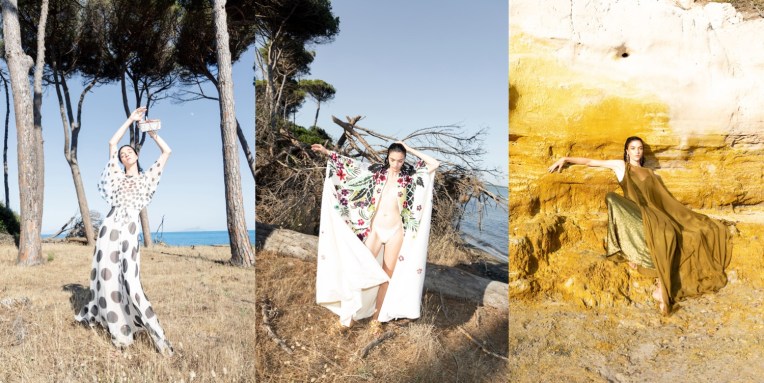
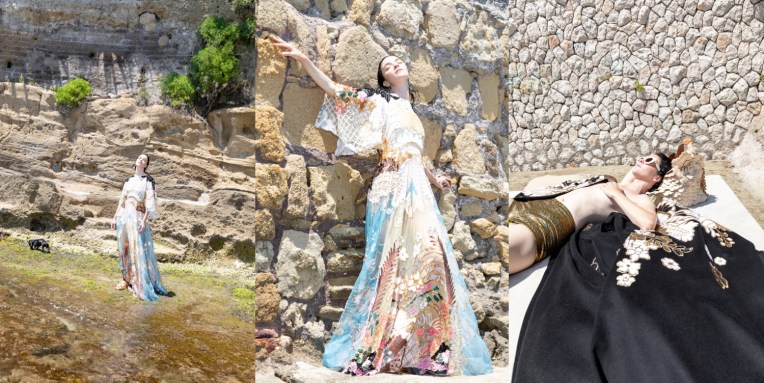
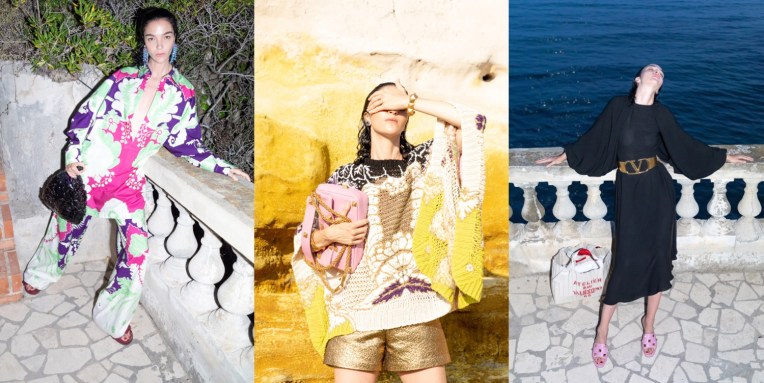
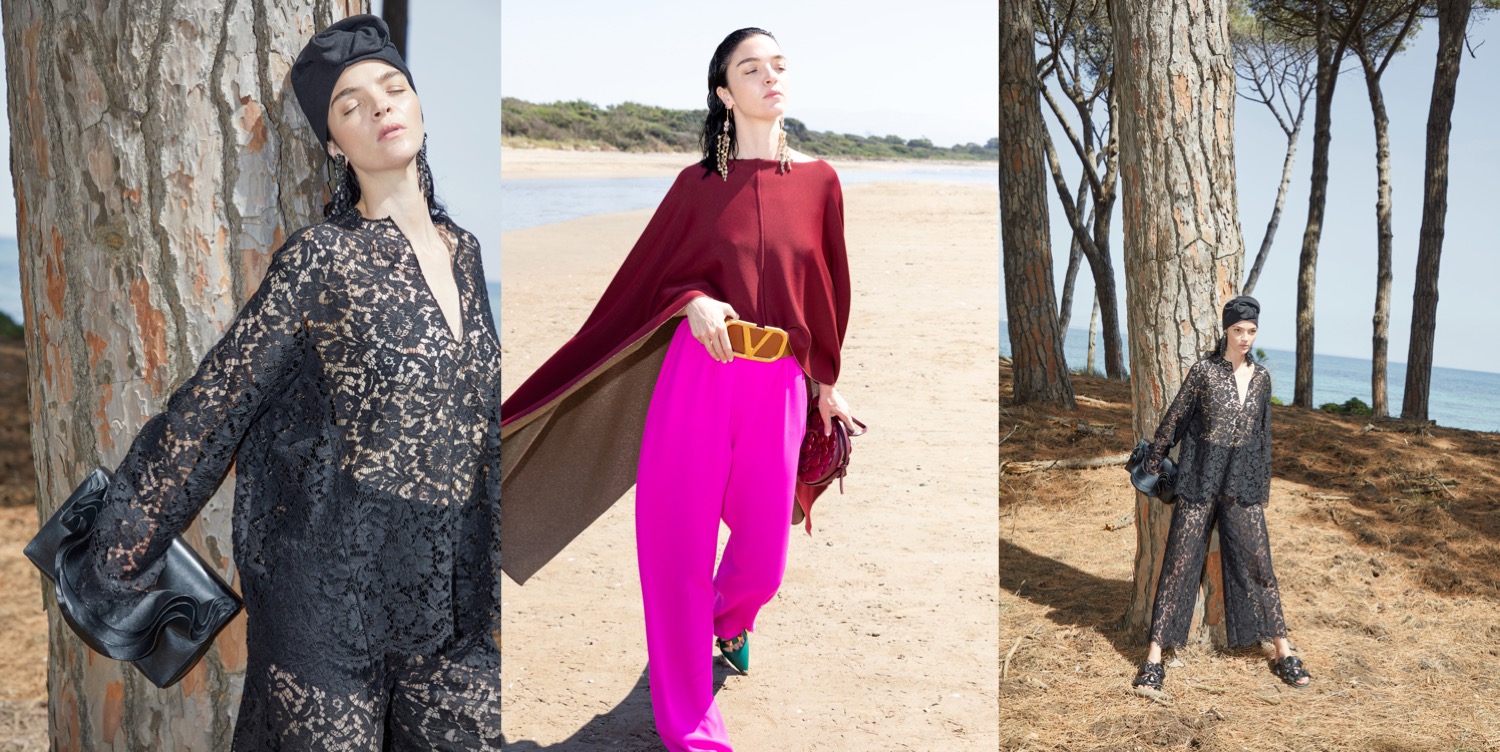
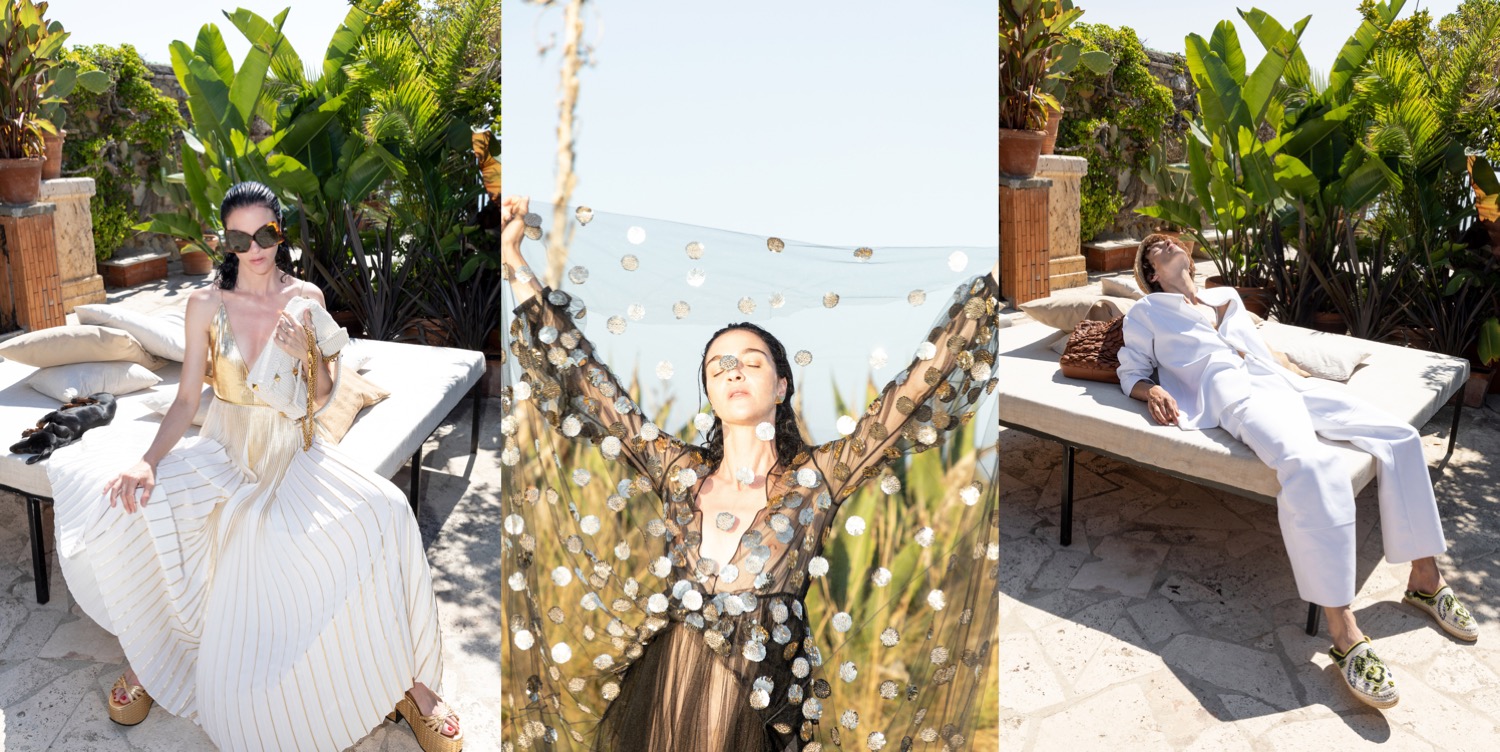
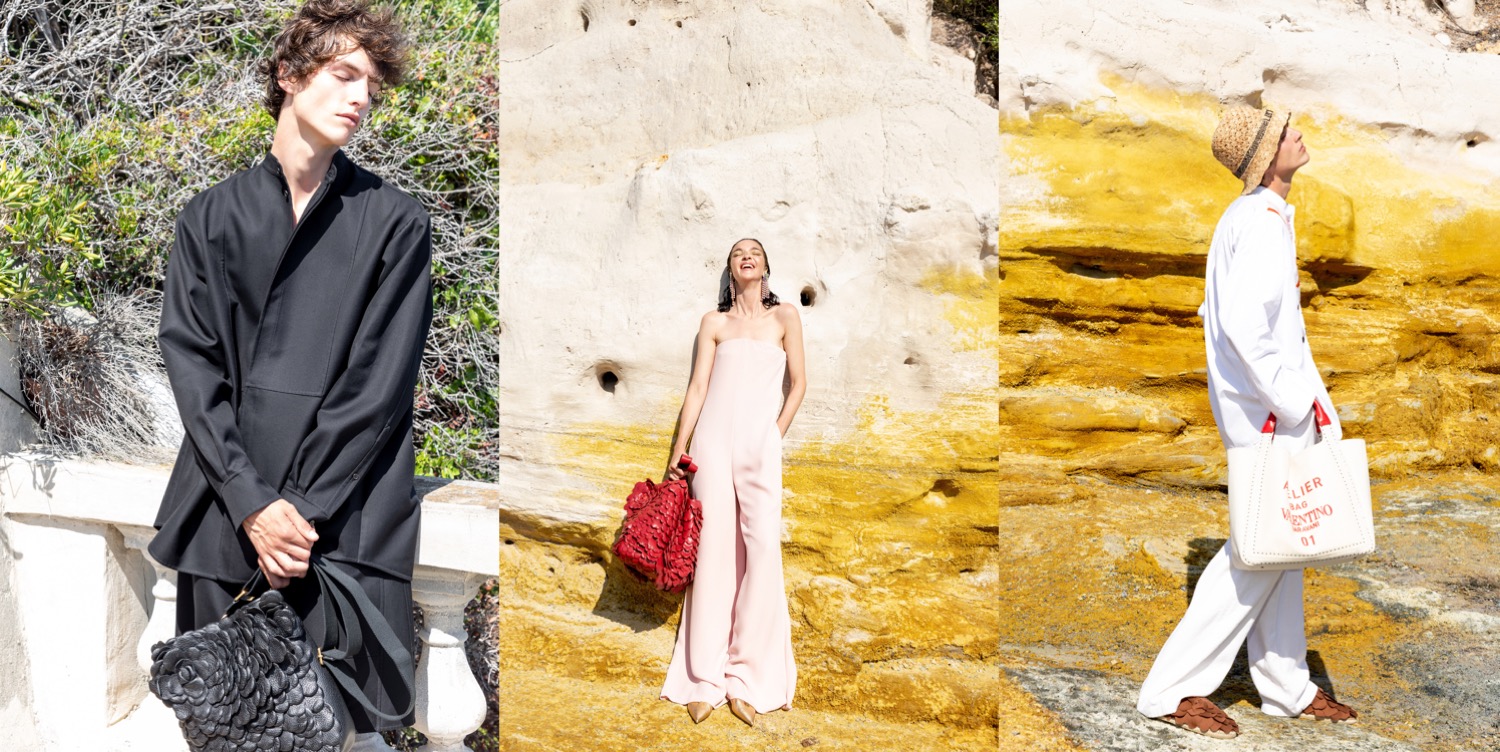
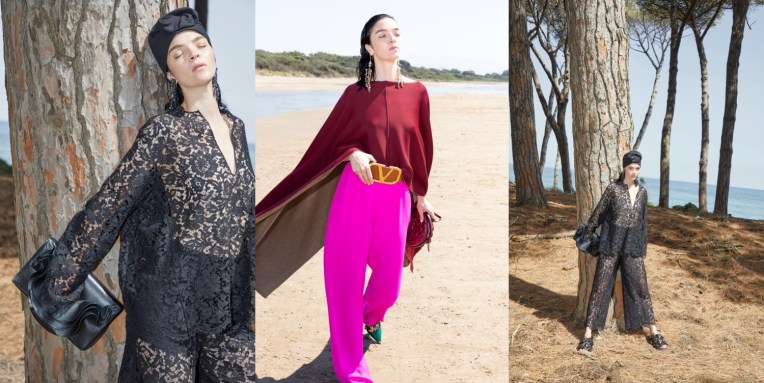
This is the ideal summer state of mind: Mariacarla Boscono dancing, laughing and sun-bathing at the Italian sea-side, wearing Valentino and being photographed by her friend – and the brand’s creative director – Pierpaolo Piccioli. Italy was the European country that was first tragically hit by COVID-19, and to many it seemed that good days aren’t coming back anytime soon. Now the country seems to gradually revive and the dream Italian summer is back on track. Optymism is winning. “I never stopped working,” Piccioli told Vogue during a Zoom call. “I profoundly love what I do; this is my passion, something fundamental for me – it isn’t just work.” The resort 2021 collection is the byproduct of the time spent alone drawing and painting, while remaining connected with his team. “I wanted to convey spontaneity and truth, even imperfection—but it’s the feel of human imperfection you long for right now,” he explained. “The collection was born out of flat drawings – paper and pencil, no styling, no mood board, just researching on paper shapes that linger in your head. A pure fashion process, as it should be done.” The human quality of creativity is paramount to Piccioli’s practice. He has imbued the rarefied world of couture with emotional values – exposing and revealing its craft and handmade processes, and shining a light on his team of seamstresses and artisans as essential players behind his fabulous creations. This center still firmly holds. “I wanted [to communicate] something even more personal, very close to myself. Conveying a sense of intimacy, a sentiment of individual connection, of emotion. I decided to photograph the collection myself because it seemed more coherent in this moment to send out a message with no filters, no manipulation, no other interpretation or mediation. I didn’t want the usual glamour of a fashion shoot,” he continued. “What I was interested in focusing on was what I’ve missed most in this confinement – the simple feeling of human connection, of shared love and friendship. This is what I wanted to bring about in my images.” Not surprisingly, simplicity is the collection’s key word. “It’s a radical simplicity though,” reflected Piccioli. “I wanted to be even more radical, in that the simplicity I’ve tried to achieve in shapes, volumes, and construction comes at the end of a process of resolved complexities. It’s a study and a project on cut, proportions, balance. Reducing and subtracting to reach the core, something essential and pure – but not more banal. Simple, not simplified.” There’s an ease and a fluidity of movement, a feel for freedom and effortlessness exuding from the lean silhouettes of caftans, elongated shift dresses, capes, and separates. Defined by strong, solid colors inspired by Mark Rothko’s chromatically powerful palette, pure shapes were infused with a vibrant, joyful flair. A few prints inspired by 18th-century tapestries were rendered as inconspicuous abstract strokes of color, as if they were just traces of memories, or shadows of the decorative motifs’ former selves. And what’s more special than a dear friend you’ve known and loved for years? “Mariacarla and I, we go back a long way,” he said. A spontaneous energy radiates from the images, shot by Piccioli in the natural surroundings of his home: a lake where he goes swimming; a sulfur mine where Pier Paolo Pasolini shot some scenes from his 1964 movie Il Vangelo Secondo Matteo. There’s a palpable sense of intimacy and of a familiar bond between photographer and model. Again, individuality and humanity are the pivots around which the collection, which was designed to appeal to both genders, came alive.
Collage by Edward Kanarecki.