Proper Classics. Fendi AW21

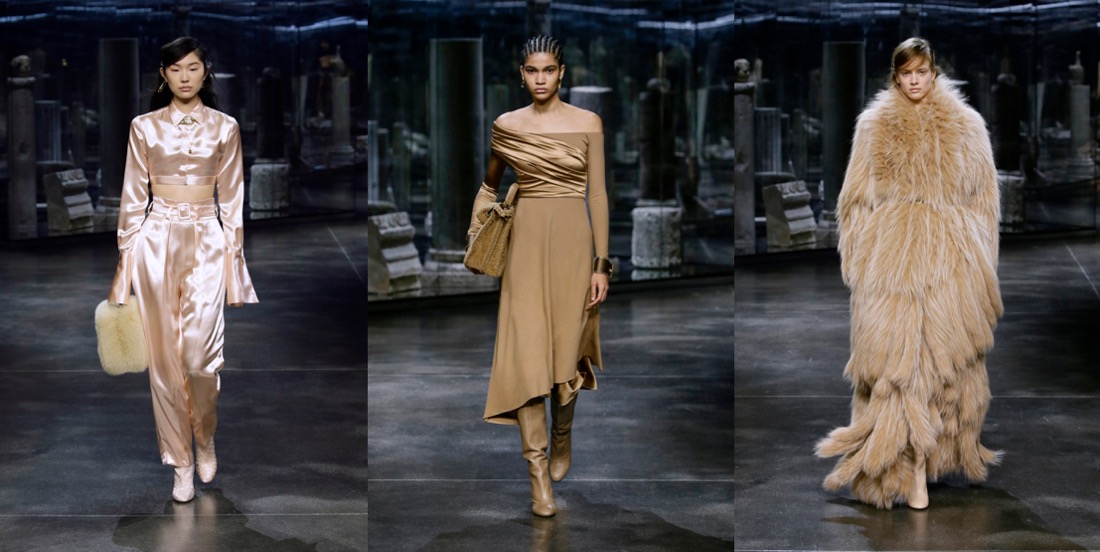
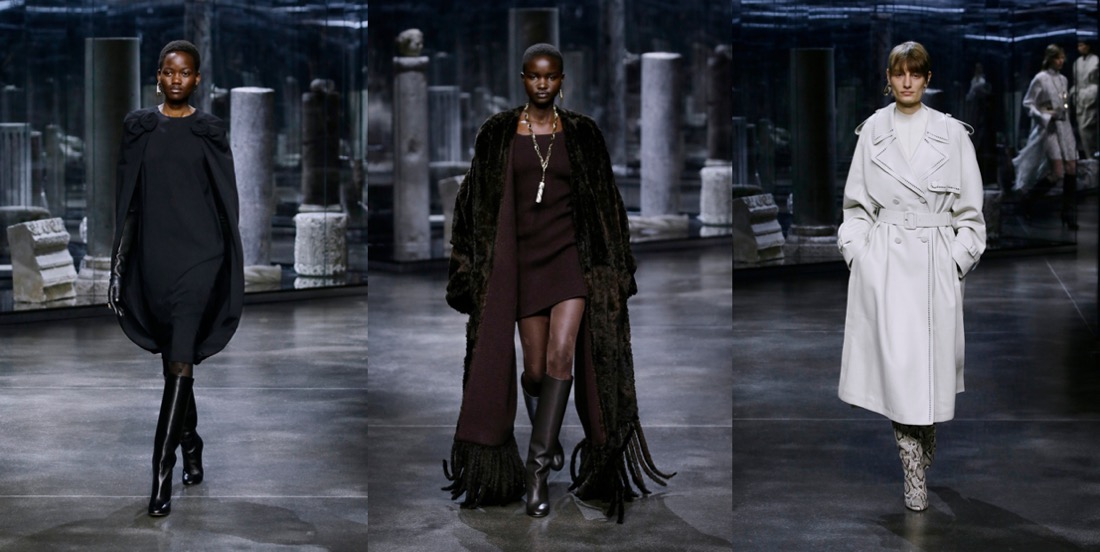
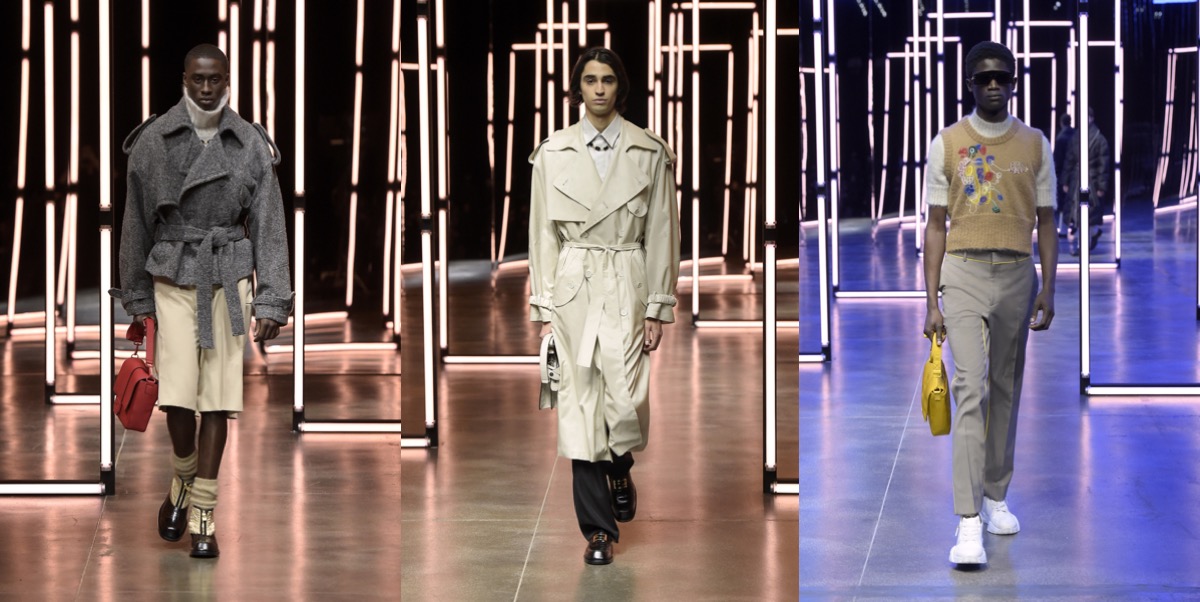
Kim Jones‘ first collection for Fendi, which was a haute couture line-up starring the designer’s friends like Demi Moore, Kate Moss and Naomi Campbell, polarised the audience. Surprisingly, his ready-to-wear debut wasn’t such noteworthy event – no big names among the models, and instead of some sort of Insta-extravaganza, we’ve seen a very classic, proper Fendi collection. Wisely, Jones neither committed himself to reflecting every aspect of the Fendi story, nor contained himself to narrowly defined elements of it. Instead he allowed the collection to unfold for the watcher as the city unfolds for the visitor, a multitude that coalesces towards the impression of a whole. The looks were all in neutral shades, both to reflect the mineral colors of the city and the organic shades that have dominated in Fendi’s history. Spaghetti-fringed furs in contrasting herringbone, striped silk shirting, and the opening loose-sleeved suede bonded mink evoked the period of Fendi’s first great flowering under the stewardship of the founders’ five daughters Paola, Anna, Franca, Carla, and Alda. It was they who recruited Karl Lagerfeld in 1965, and his great influence was stamped most clearly in a soft tote whose F-framed handle evoked his famous ‘Fun Fur’ of that period. Significantly, many pieces were punctuated with the 1981 ‘Karligraphy’ monogram. The biggest innovation here was the way the topic of fur was handled. The grandest fur on show was a long-haired fox whose raw material had been upcycled from previous pieces. Jones said of upcycled fur “that it is probably more challenging to work with for the artisans, but they enjoy being challenged.” He also pointed to the abundance of by-product shearling and added that his approach in this regard is to balance two questions: “What does the customer want and what can we do ethically?” Maybe this collection wasn’t overly charismatic or loud, but I bet it will do well in the stores next autumn.

Collage by Edward Kanarecki.

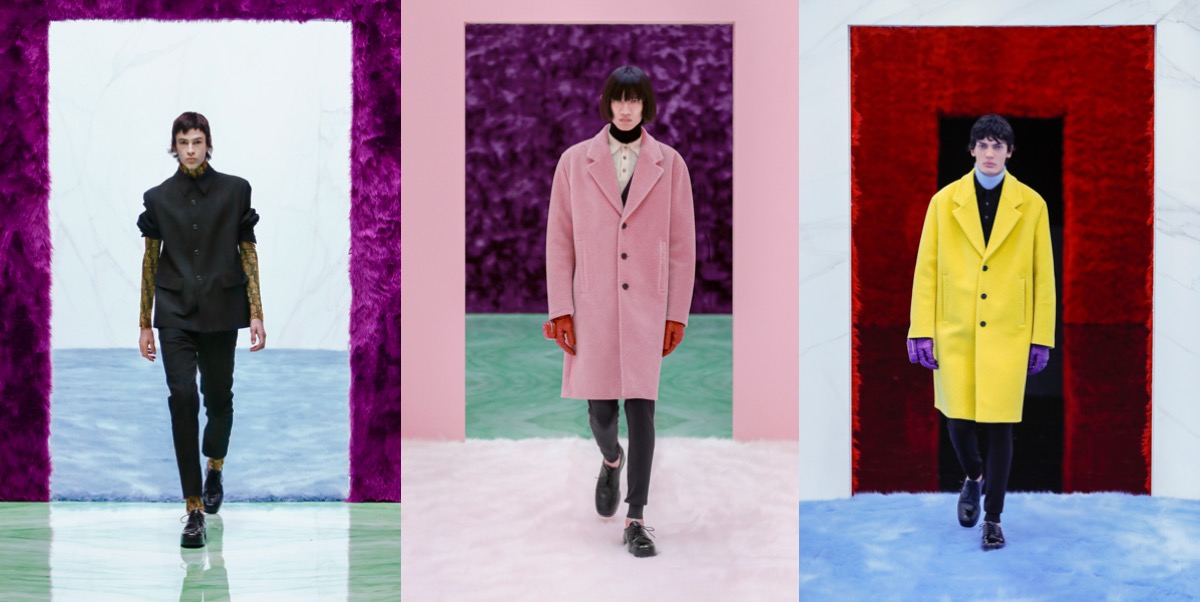
Men’s – Mystery. Prada AW21

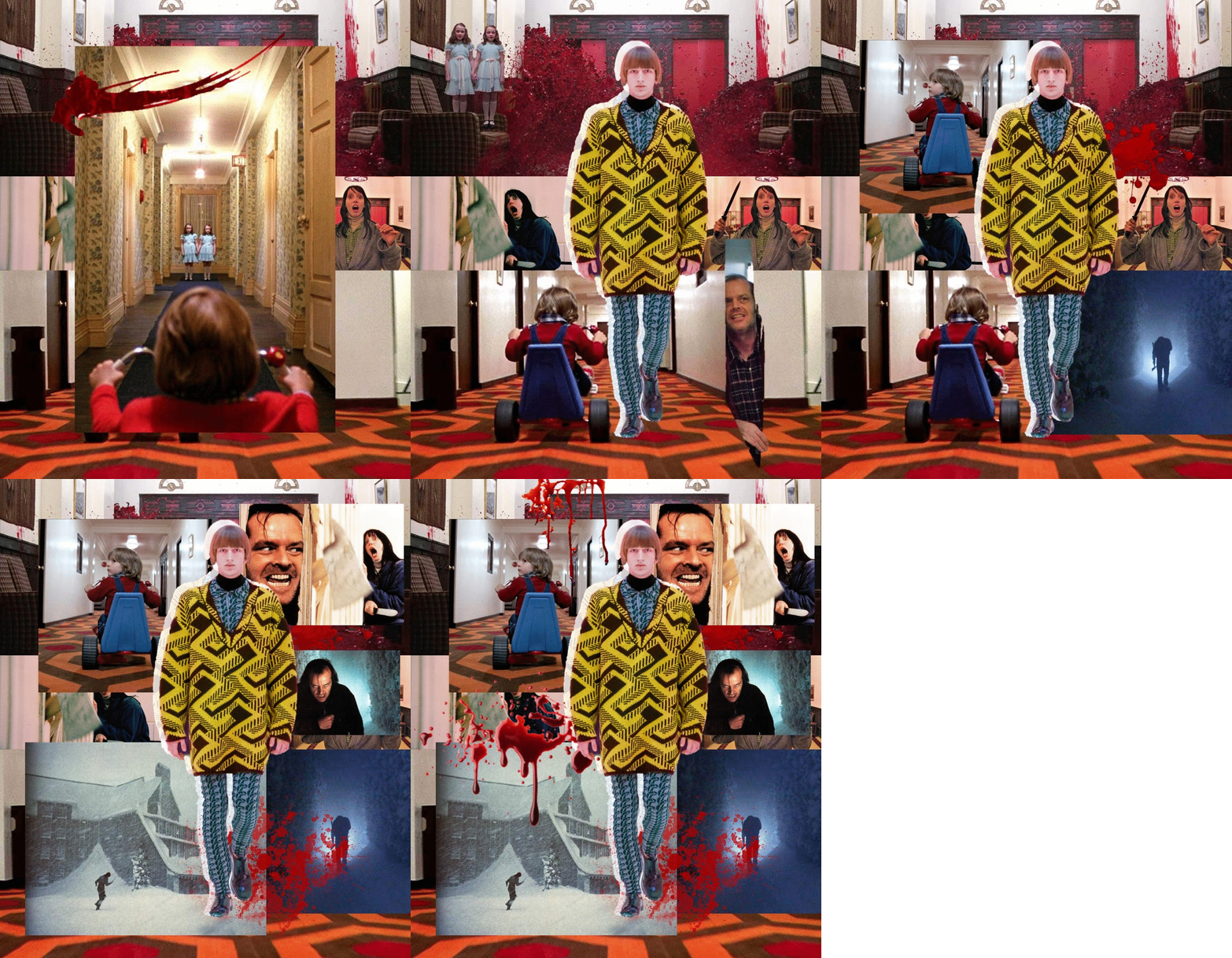
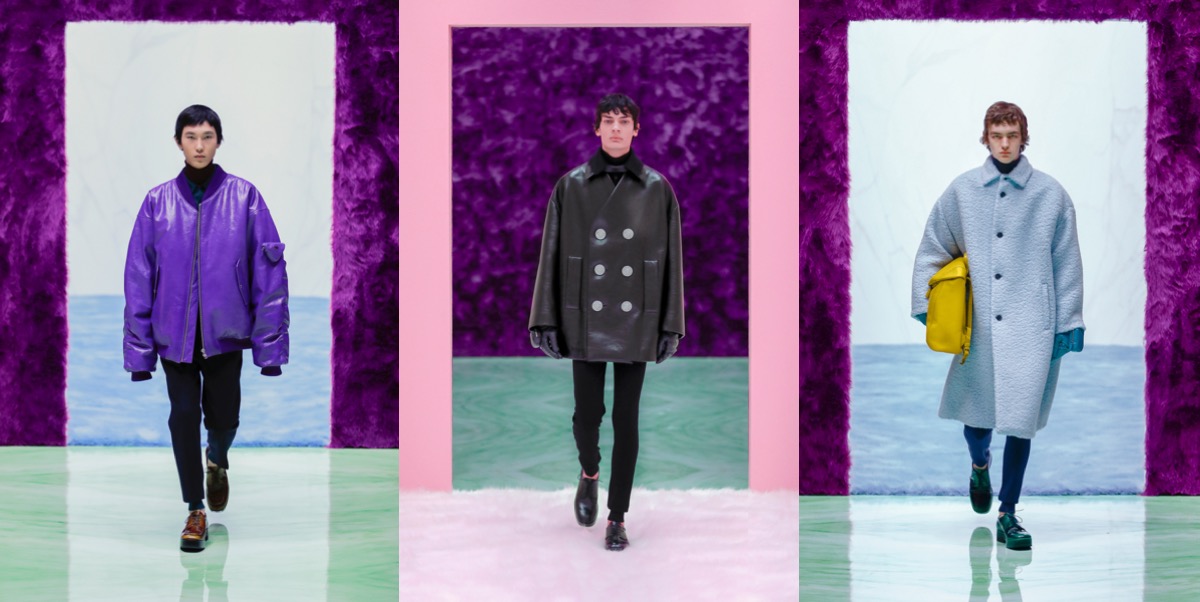
And just like that, we’ve got the second fruit of Miuccia Prada and Raf Simons‘ partnership at Prada – the autumn-winter 2021 collection for men. My first impressions are equal to the ones I had after their debut back in September: a cocktail of feelings. What hits first while watching the fashion show video is the pure mystery, something fashion has forgotten in the last couple of years. The set – a number of geometric chambers made of contrasting colours and textures – had you wonder if it reflects the indoors or outdoors. Or some sort of another dimension, maybe? The analogous sensation of contrasts (something Miuccia always loves) was delivered in the line-up: the oddest colour combinations that worked incredibly well, and clashing textures, from tactile camels and corduroys to synthetic PVC and nylons. Then, the question: who are those guys? Where are they heading to? In the post-show interview with selected students from all over the world, Simons highlighted that he and Miuccia aren’t working with themes. For them gestures, notions and the “unsaid” are much more important. And that keeps the mystery oozing from those characters, who in short video intervals are caught dancing to Plastikman’s soundtrack made specially for the show. Maybe they are raving in the post-COVID world where big gatherings are no longer remembered? As you see, the show sparks a fountain of questions (which don’t really need precise answers). For the clothes, there were some surprises, like knitted body-suits: those “long Johns”, as the designers called them, are body-hugging and “a little dangerous”. There was one take-away that felt distinctly Simons and new to Prada: the bomber jacket, a garment that’s present in Simons’ solo work since the beginning of his name-sake, Antwerp-based label. Another observation: of I course loved each of Miuccia’s men collections, but in the last couple of years there was something mature about them, very grown-up. And Simons, who’s forever youth-obsessed, balances that and invites a younger customer with some signature layered knits and outerwear. Good news: not a lot of logos this time, however, expect for the metal insignias on the patch of jackets and gloves (must-haves!). Similar to the womenswear show, which was like a tabula rasa, the men’s runway line-up featured all new models who had never appeared on a catwalk before. Some of them had home-cut, boyish bangs, just like Danny Torrance, the child character from Stanley Kubrick’s cult classic, The Shining. Who knows, maybe after alll Prada and Simons had that 1980 classic on their secret moodboard. The unsettling ambience of the show, the dramatic music, the unknown destination of the models, even some elements of the peculiar space… there might be some parallels with one of the greatest horrors in history (plus, we’ve seen Raf referring spooky film classics at Calvin Klein!). Summing up: Prada and Simons are warming up, and I’m sure with every season their dialogue will unfold even more intrigue.

“Live” collage by Edward Kanarecki.

Men’s – Updated Classics. Fendi AW21

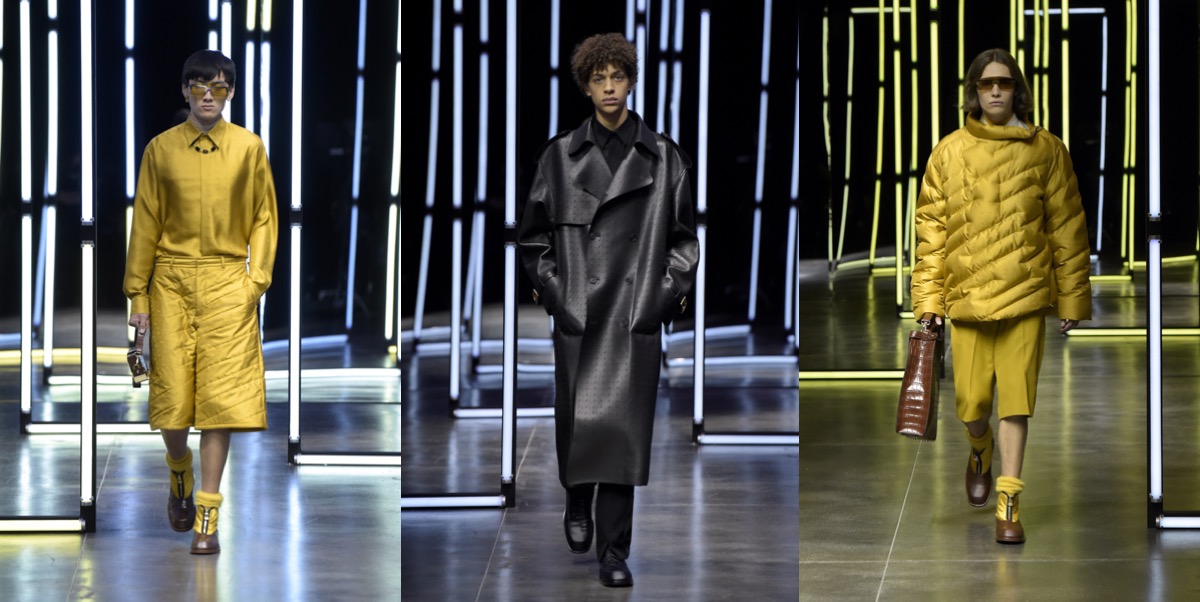
While Kim Jones is about to present his vision at Fendi, menswear is Silvia Fendi‘s territory. This collection contained both examples of bed-to-bodega attire, along with gorgeous intarsia shearling coats and powerfully colored piumino pajamas. Hidden in plain sight among them was a look that Silvia Fendi laughingly conceded was arguably this season’s most transgressive: a black evening suit that was made extra thanks to its pajama-acknowledging blue piping and a louchely low double-breasted construction, but which was a black evening suit nonetheless. The collection was all about laid-back and relaxed feel, however layered with luxury. Camel hair topcoats; hooded shearlings; mink liner-jackets – that reflected a collection of pieces she called: “very tactile – so soft you can sleep in them – and also very functional. Clothes that make you feel good. Because I do think that fashion can have a therapeutic aspect.” Accessories included slipper-spats for seamless indoor-outdoor footwear functionality, and mini-trolleys to reflect our shrunken but still aspirational physical horizons. As Fendi demonstrated, many of the garments were reversible to double their dosage of potential therapy. And the population of patients who might benefit, she added, was purposefully broad: “To avoid that fashionista attitude, I like to consider menswear through many different men who keep their personality… I think in the future, fashion is going to be more individualistic, and I wanted to keep that idea in the show.” One attention grabbing aspect was the inclusion of artwork (including that cursive Fendi lettering) by Noel Fielding. Probably best known as a host of more recent series of The Great British Baking Show, Fielding is a stalwart of British alternative comedy – see The Mighty Boosh and The IT Crowd – of whom Fendi said: “I like him as a man, and he is a multifaceted talent: writing, comedy, music, art. This is something we all have to do today, I think, to change our own skins. And speaking of therapy, in his graphics you can read what you want to see, like colored yarns that have been thrown on the floor to make a pattern.” What Silvia wants, or at least hopes for, she said, is that this collection “will be something that can be worn on the street next winter, and be enjoyed for its bright colors and tactile feel.”

Collage by Edward Kanarecki.

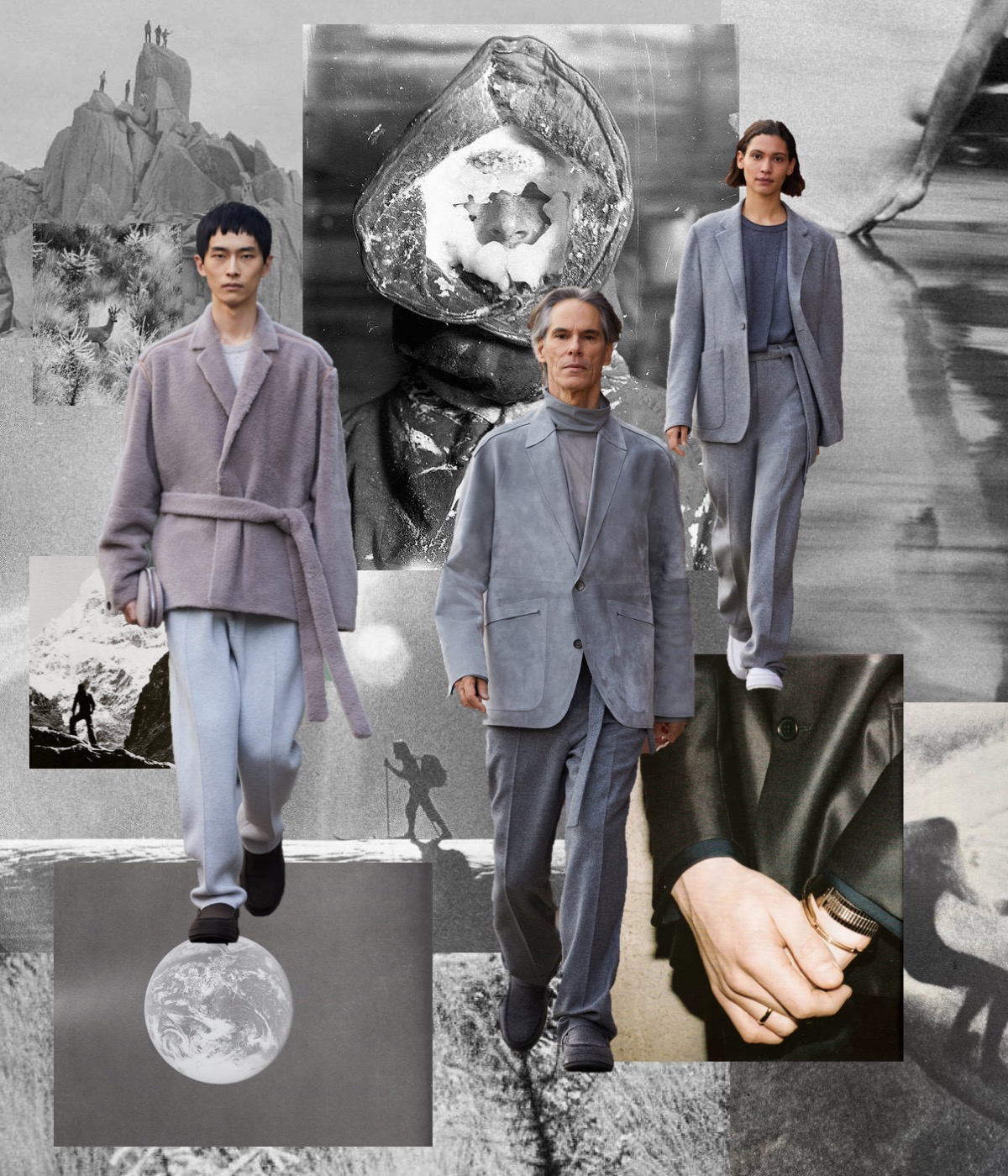
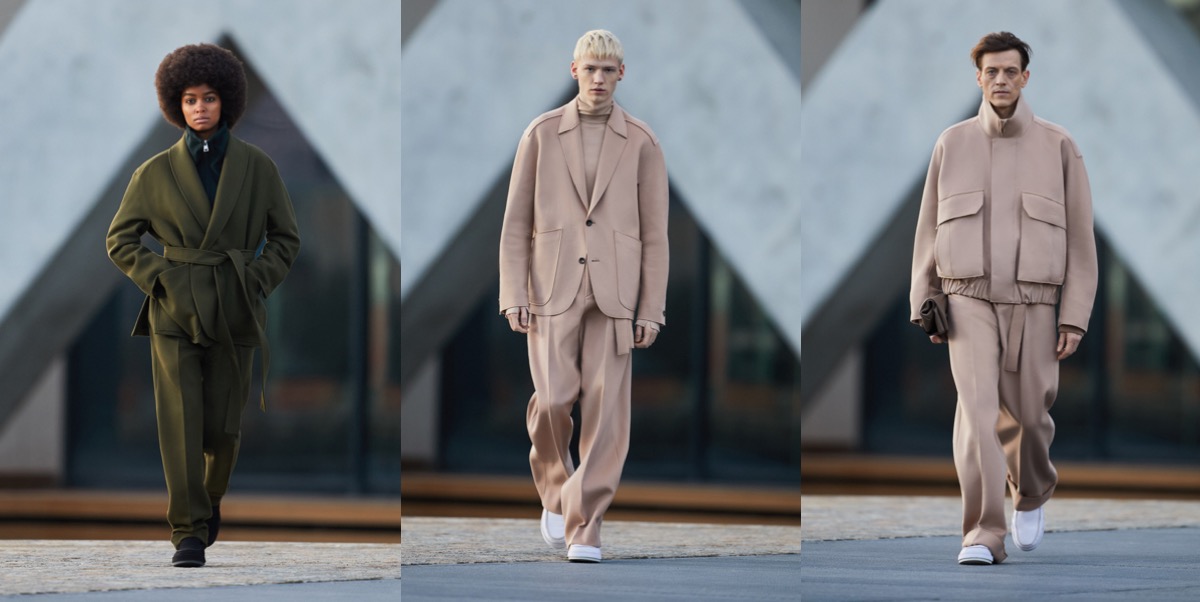
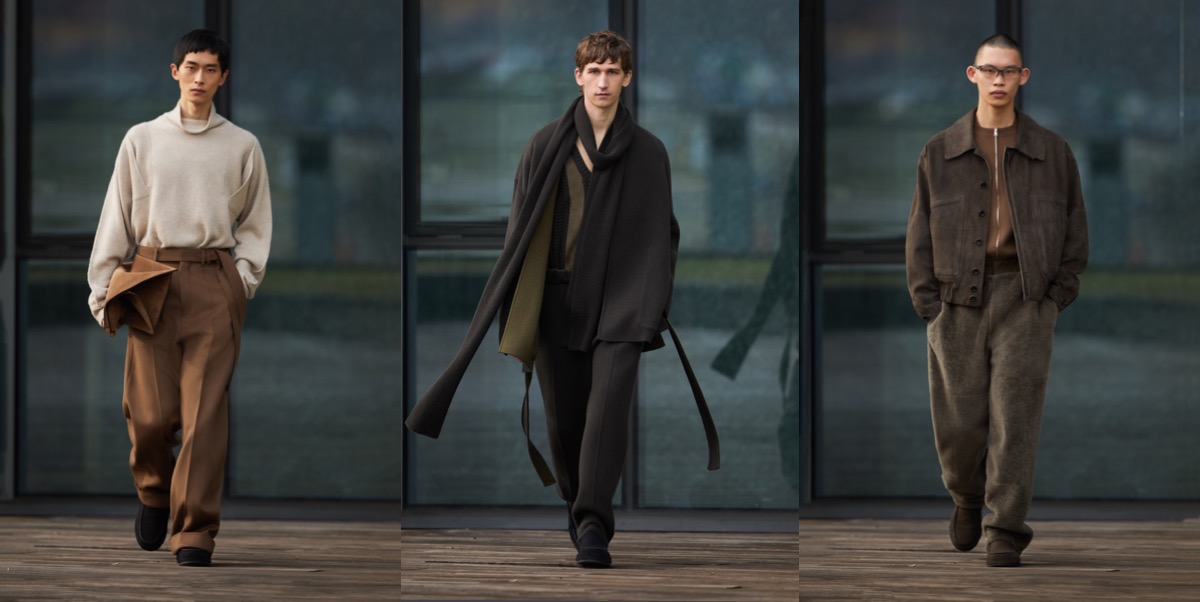
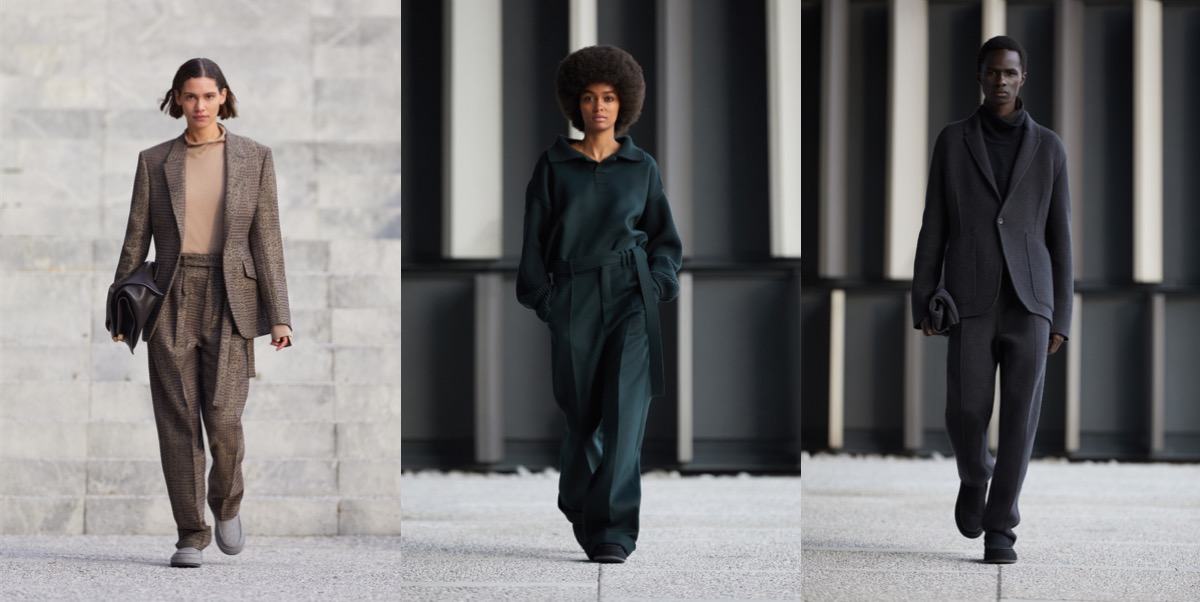
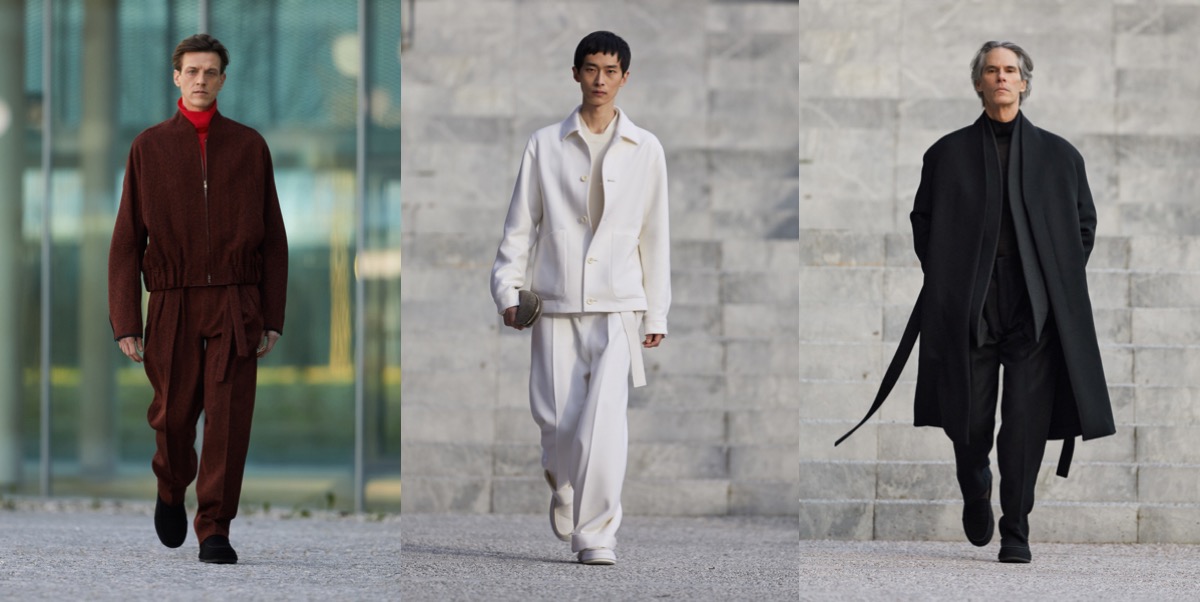
Men’s – Refined-At-Home. Ermenegildo Zegna AW21

The “phygital” men’s Milan Fashion Week started really well with Ermenegildo Zegna‘s stunning exercise in stay-home refinement. Alessandro Sartori, the brand’s creative director, won’t let Zegna clients do WFH style in basic sweats. Just like the architecture of Milan’s Bocconi campus (Zegna’s HQ) in which the collection was framed, the clothes on show were hyper-contemporary yet contained echoes of past forms; some jackets in suede or felted cashmere bore lapels split at the collarbone, or pockets cut on the hip. Fine knit or even nylon turtlenecks – loose at the throat to create a fresh substitute for the shirt collar and consign to history the tie – had buttonable cuff details. These details were nods to a lineage of traditional tailoring that increasingly seems relegated to habit and history, yet the philosophy of tailoring was refreshed and applied to forms once deemed beyond it. Chore coats, updated leisure suits, and softened outwear—often with slit sides to allow the hands to nestle in cozy internal pockets – will all be offered on a made-to-measure basis for men and women. Like the single shoe style of the collection – a rubber-sole, shearling-lined slipper – these garments were built to service a post-pandemic world in which business life is expanded beyond the office to the home, or as Sartori put it, “a world where the indoor and the outdoor are colliding.” The indoor world was shown via a studio set of 12 open-wall rooms in which the models lived their best Zegna lives, sometimes connected, sometimes apart. Ultimate highlights of this season? The striped jacquard wool suit and overcoat and many of the cashmere jersey pieces which are in line with the Zegna “Use the Existing” policy of presenting its collections in fabrics made from materials recovered during the manufacturing process, a philosophy that is continuously being expanded in partnership with house suppliers to apply right down to shoe linings. Other items, like a long green coat in quilted suede or oversized sweaters decorated with stitched leather, might have been entirely new to existence yet demanded to be worn into vintage old age.

Collage by Edward Kanarecki.

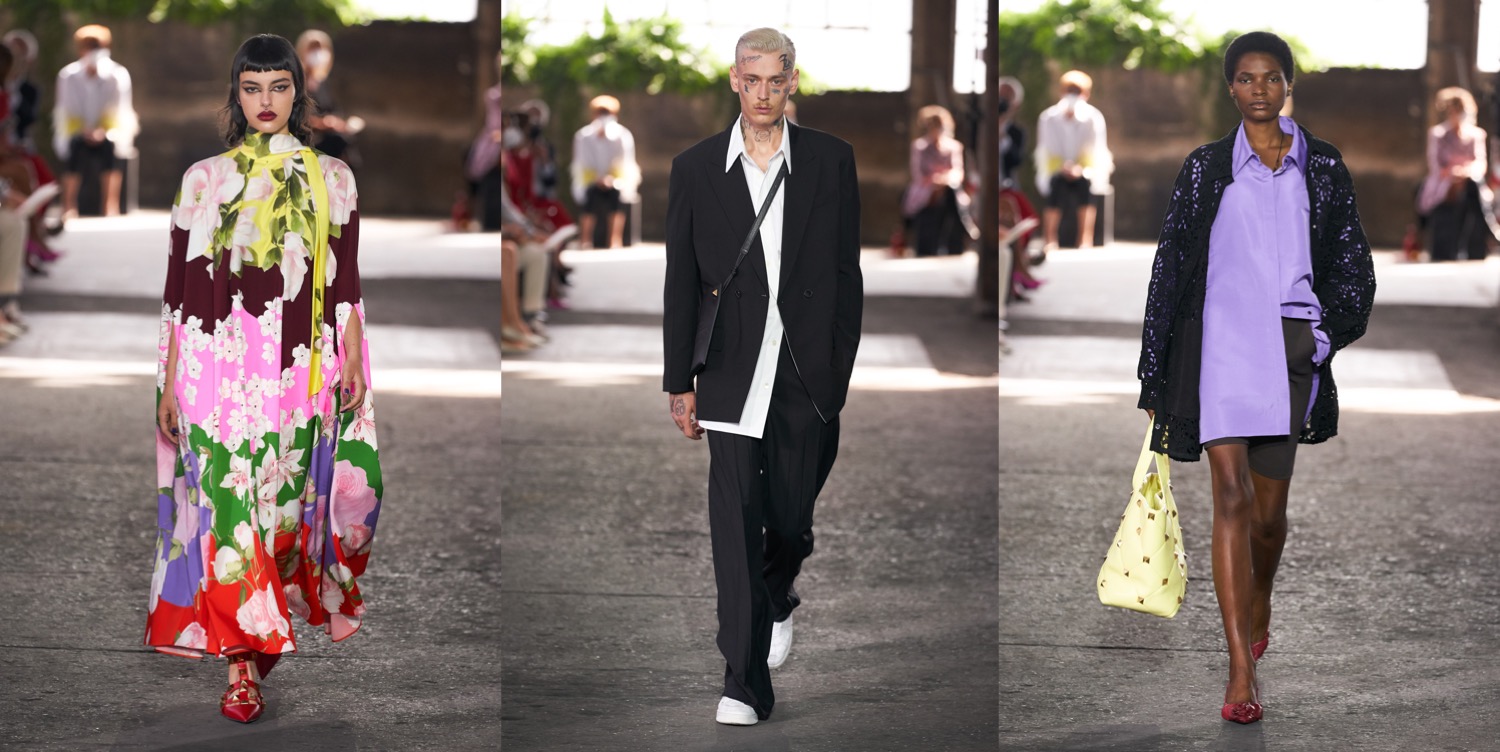
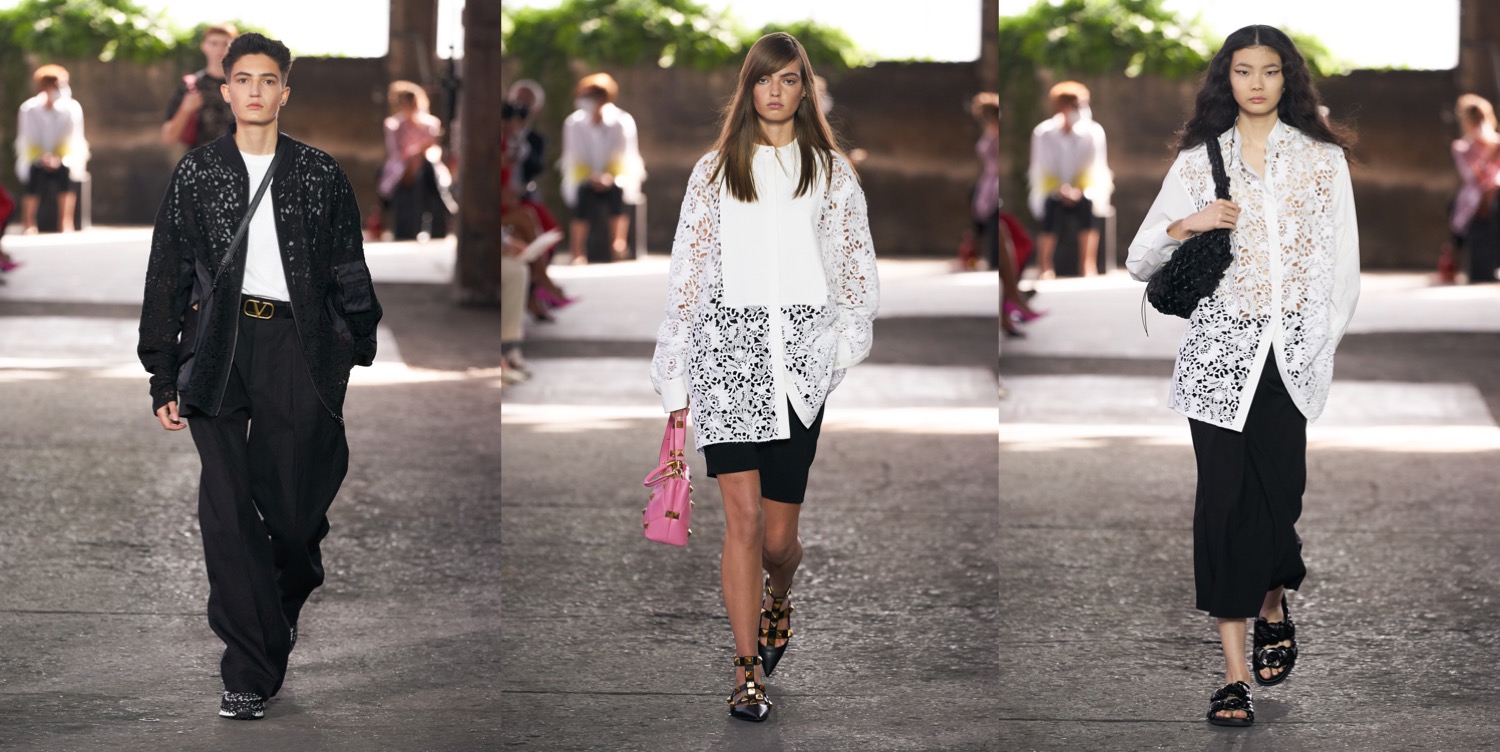
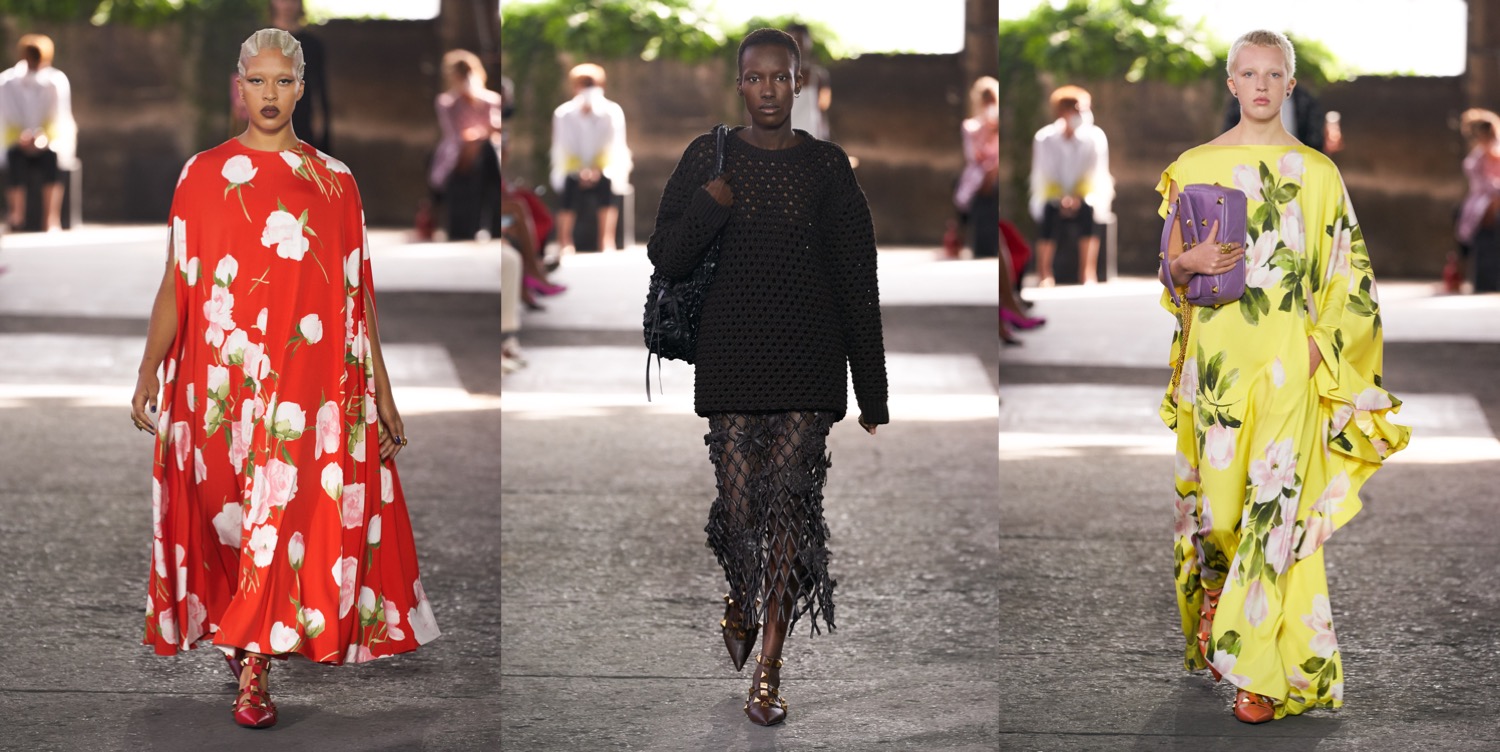
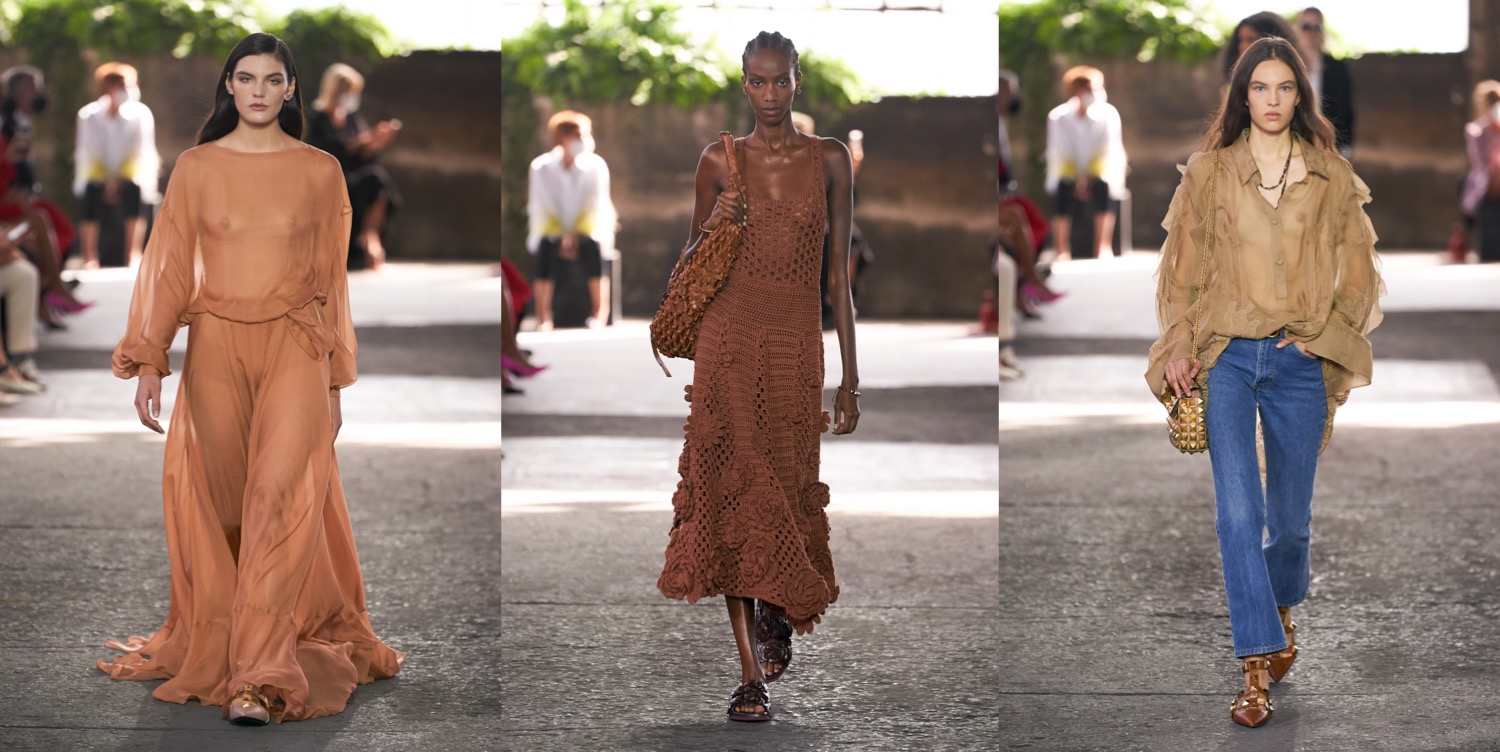
Radical Romantic. Valentino SS21


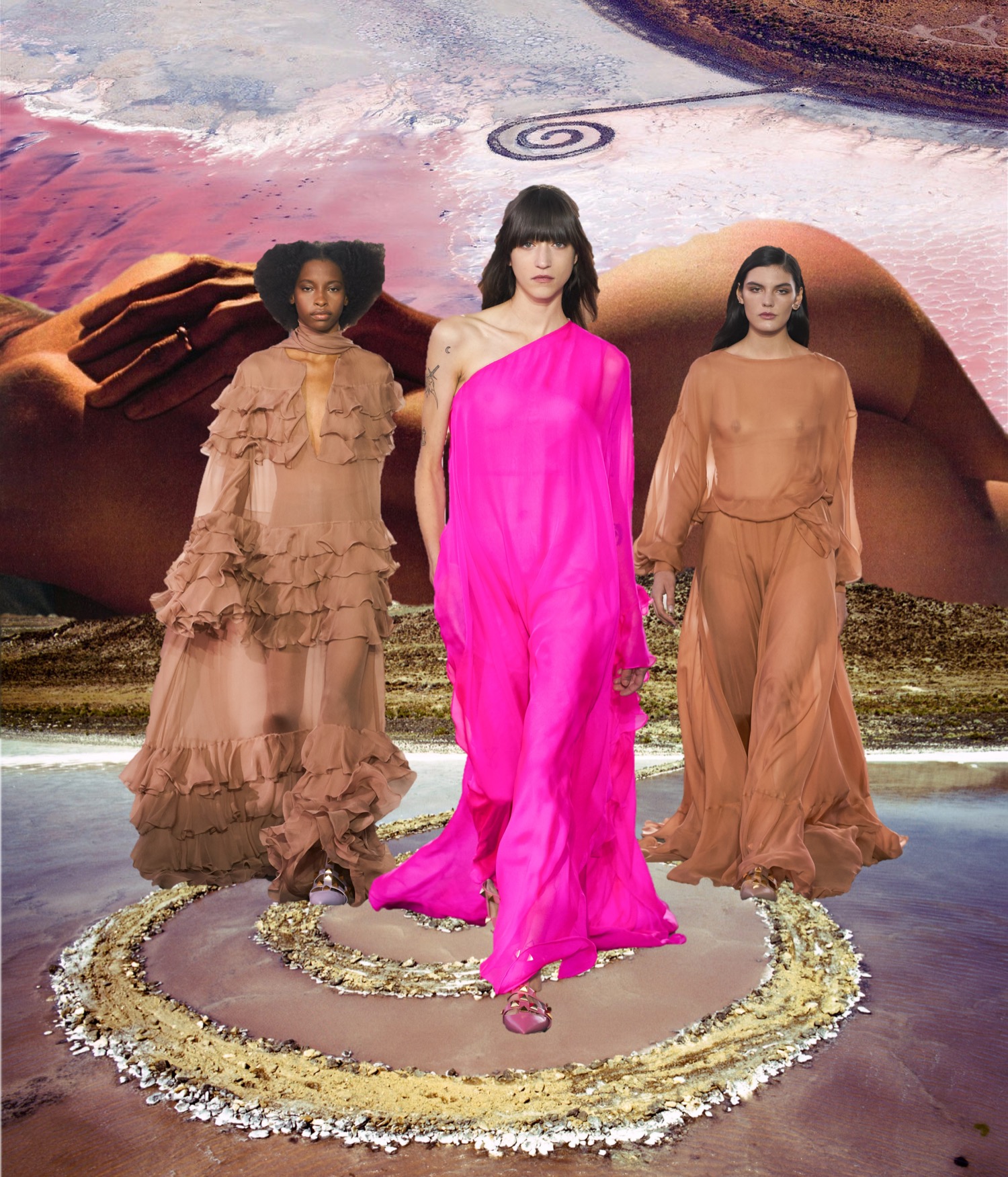
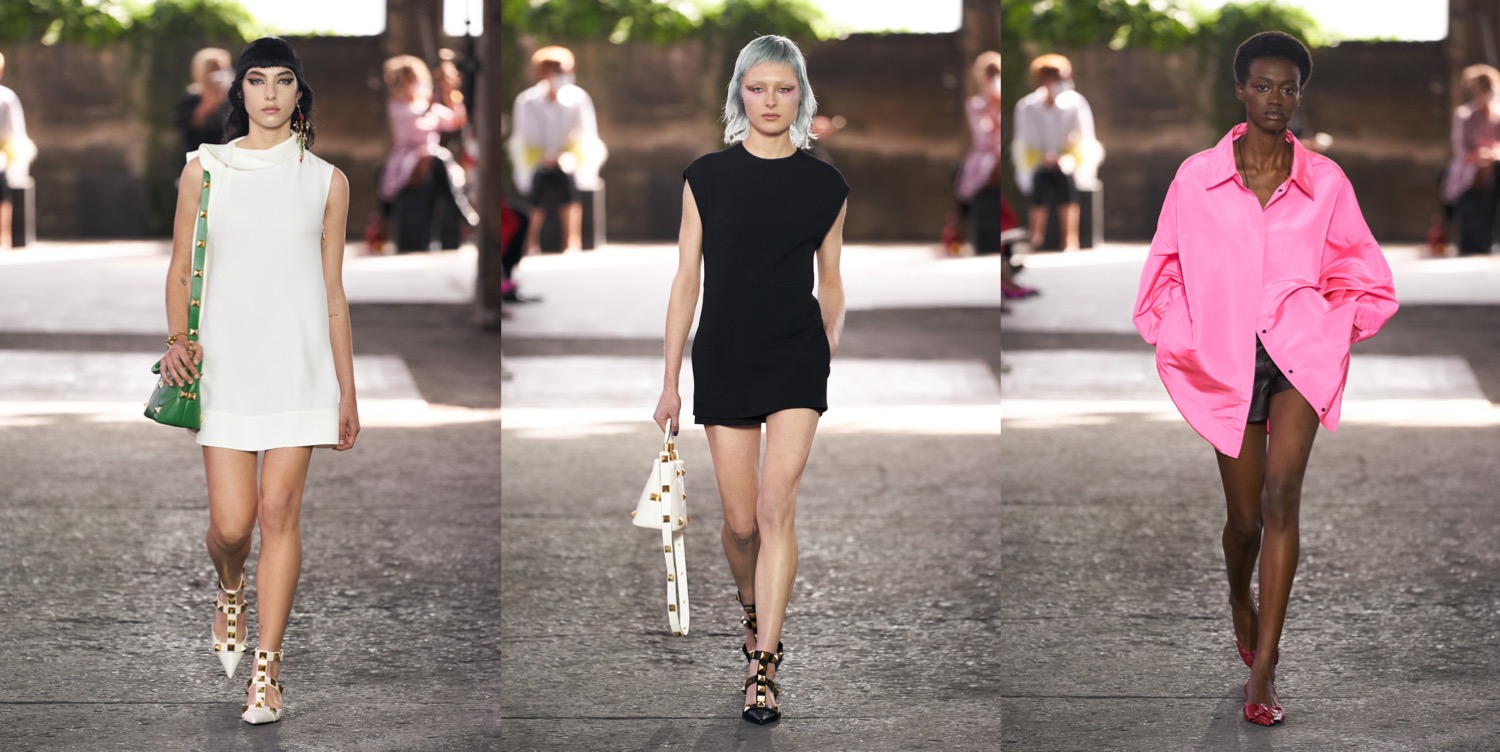
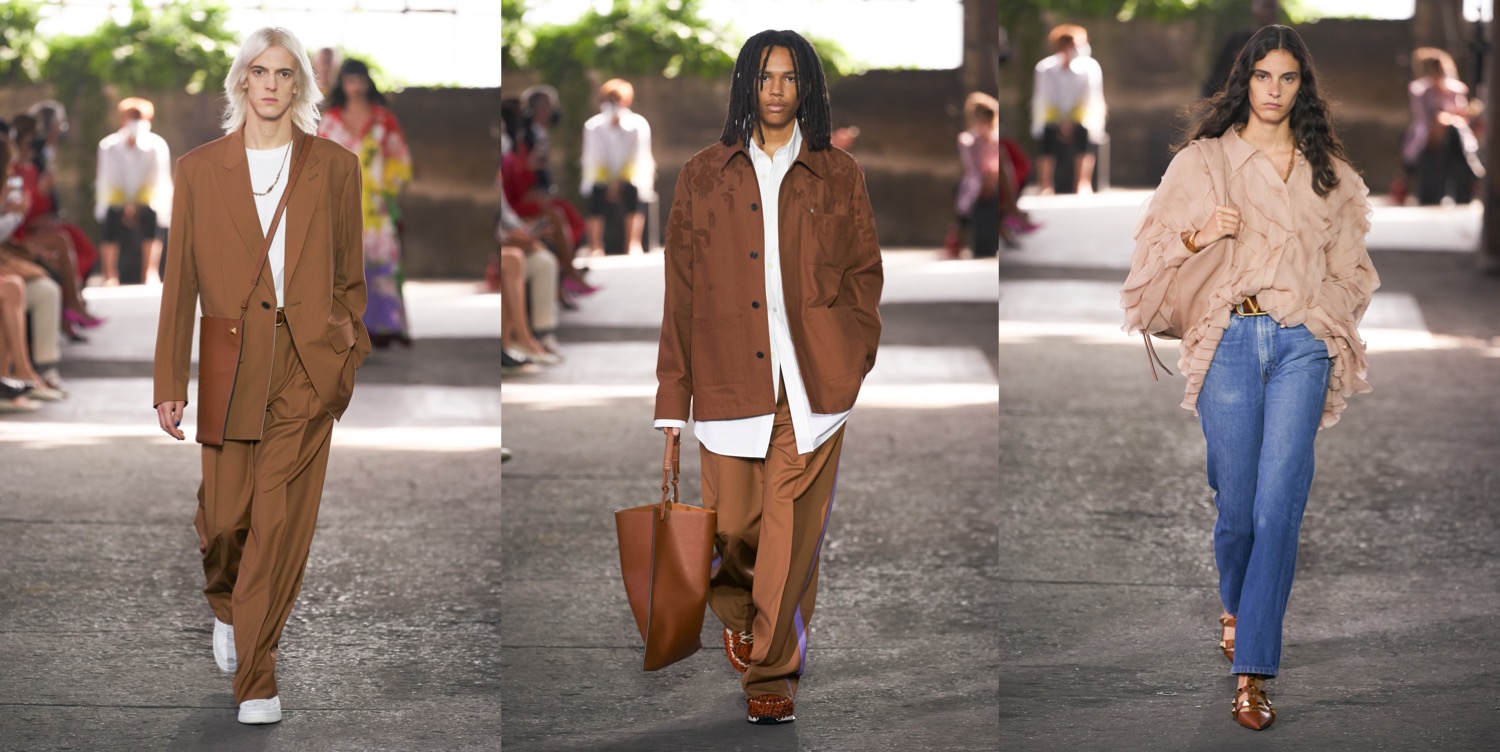
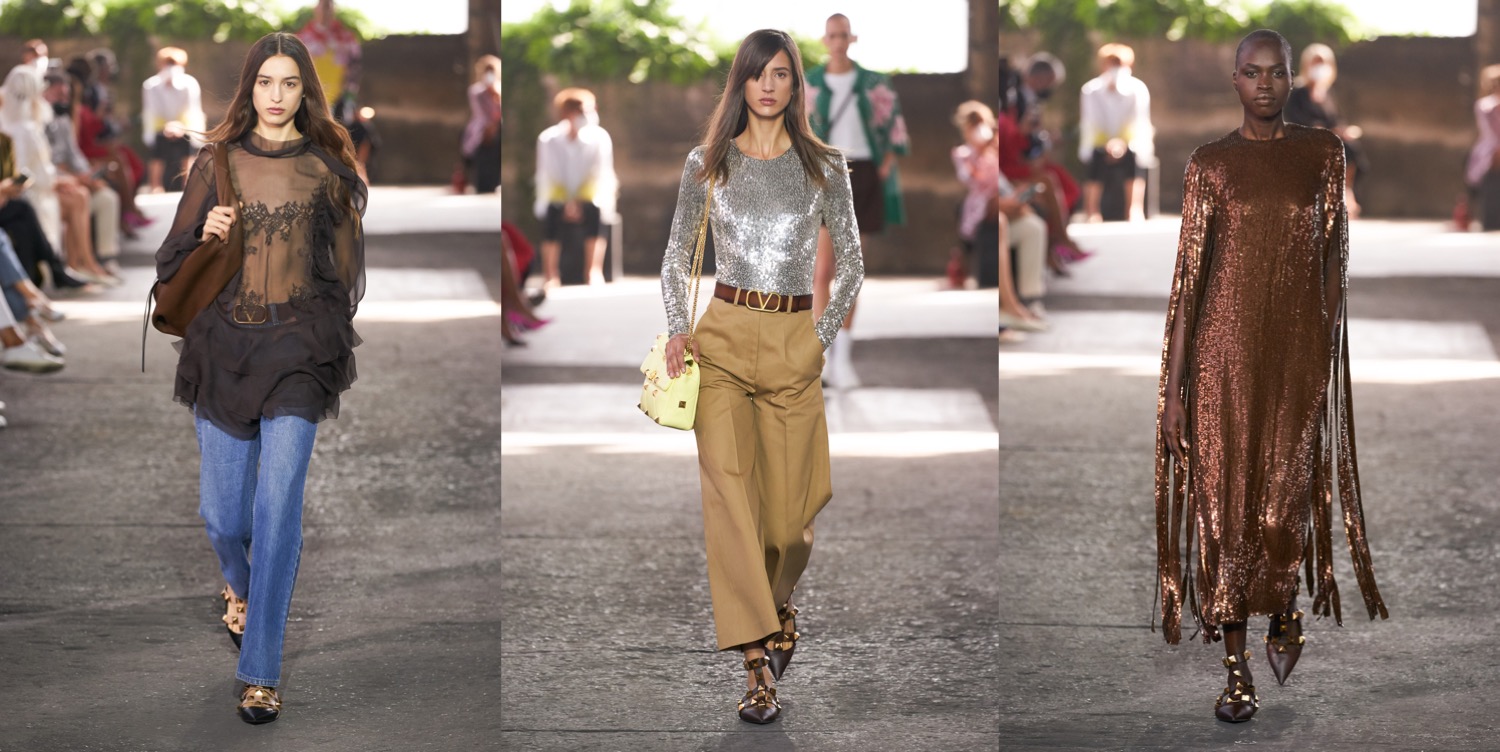
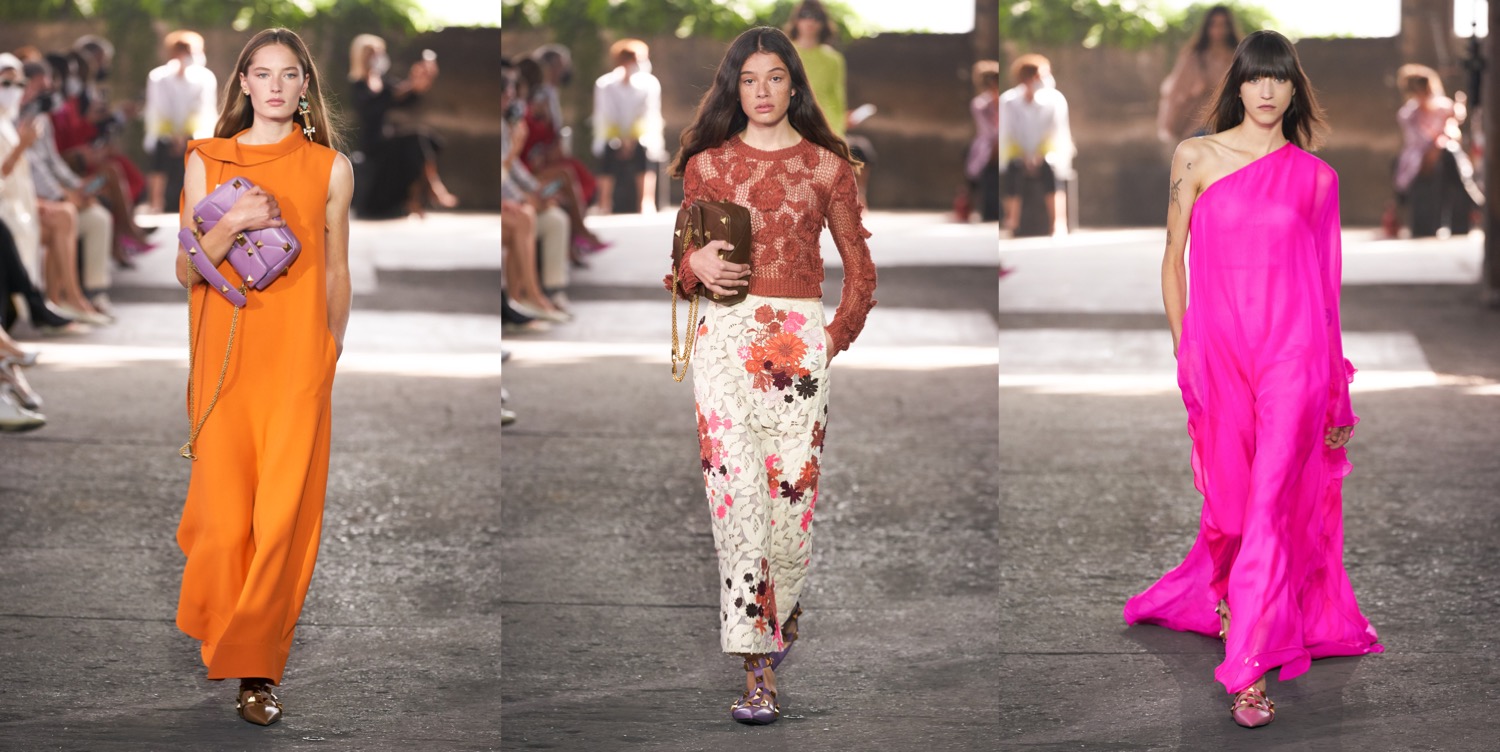
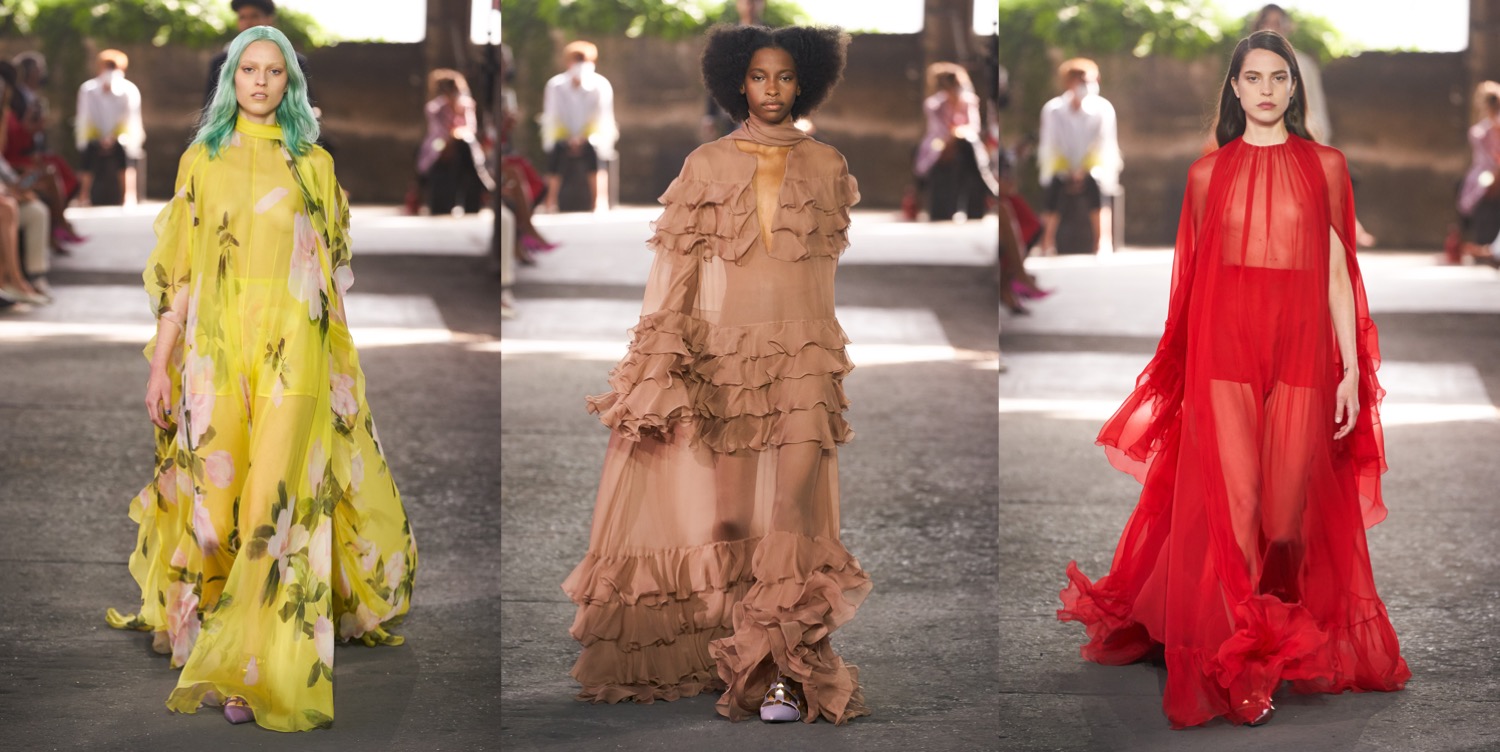
There was something truly powerful about the feeling conveyed by Pierpaolo Piccioli‘s Valentino spring-summer 2021 collection. It was so heartfelt, sincerere, honest. The line-up was presented for the first time in Milan, not in Paris, which in a way also changed the aura. In a declaration of support for the Italian fashion system and making the most out of the difficult circumstances the pandemic has forced upon us, Piccioli opted for an act of bravery – and bravura. He decided to decamp from the ornate Parisian fabulousness of the Salomon de Rothschild salons for the powerful industrial rawness of Fonderie Macchi, a metallurgical foundry active in Milan from 1936. “In this moment, sticking to an old mindset for me just wasn’t an option,” he said at the post-show press conference. Choosing a venue at odds with Valentino’s typical optics, so deep-rooted in couture, signaled the bold stance Piccioli was taking in the re-definition of the house’s stylistic codes – a process he called re-signification. “I focused on working more on Valentino’s identity than on its aesthetics,” he reflected.  As always with Piccioli, his approach was as instinctual as it was sophisticated; he’ll go down as one of fashion’s romantic visionaries, able to orchestrate moments of true creative enjoyment, both emotional and visually elevated. Romanticism was actually much on his mind while working on the collection. He called it radical. But what does it mean being a radical romantic today? “For me, it rhymes with individuality, with the freedom to express our very own identity and diversity,” he answered. Being romantic means also not following the rules, embracing idealism, being rebellious- fighting for a better world. Believing that things can change: “Fashion for me is a way to talk about the values that matter today,” he said. “The true acceptance of diversity. Tolerance and kindness. This is the world I want to tell through my work as a designer.” If aesthetics can actually suggest something about one’s life, then the collection’s street casting was a celebration of the many diverse-looking people Piccioli wants to include in his narration. Each look was individual, thoroughly chosen according to the personality of the character, young men and women coming from different backgrounds and walks of life. Yet from a fashion standpoint, the collection looked more toned down than usual: streamlined and with fewer of the decorative flourishes and certain hyperbolic gestures of couture. Lace, macramé, crochet, and embroideries were among the textural couture accents reworked here with a crafty, more palpable ‘human’ touch. Both the women’s and men’s lines shared shapes, volumes, and fabrics; the same wardrobe staples were often proposed in identical versions for both genders. Progressing from linear, almost minimal looks, the collection flowed into the ethereal evening options that have become synonymous with Valentino style; here the sophisticated shapes of caftans and cape dresses were designed with fluid, efficient precision. Highlighting a somehow reductionist approach, the only print was a vibrantly-hued floral revival of an archival dress: a glamorous yellow number famously worn by Anjelica Huston and lensed by Giampaolo Barbieri in 1972. Arrangements of wildflowers and plants filled the vast industrial set in a powerful installation by Japanese plant artist Satoshi Kawamoto; Piccioli envisioned it as a disruptive element of beauty inspired by guerrilla gardening’s practice of growing delicate plants in gray concrete spaces – another romantic act of urban resistance. The flowers had a story of their own: originated in eight different countries, they were grown in a nursery in Milan, where they’ll be returned after the show. Piccioli is the modern-day master when it comes to turning fashion shows into emotionally charged moments of visual seduction. Music always serves his purpose well. This time, he entrusted the singer, songwriter, and producer Labrinth to perform stirring renditions of some of his hits. It all worked together in a delightful way.

Collage by Edward Kanarecki.