Carte Blanche. Jil Sander SS18

Slide1-kopia

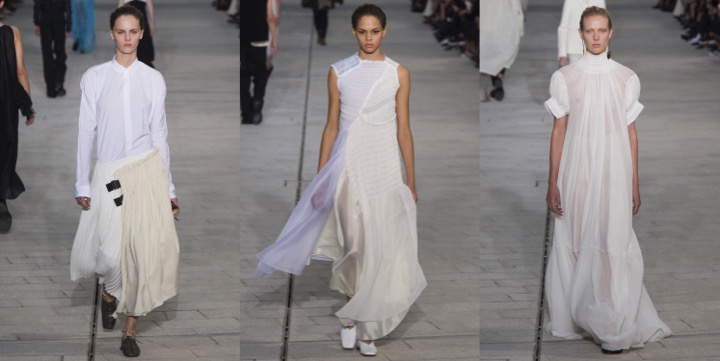
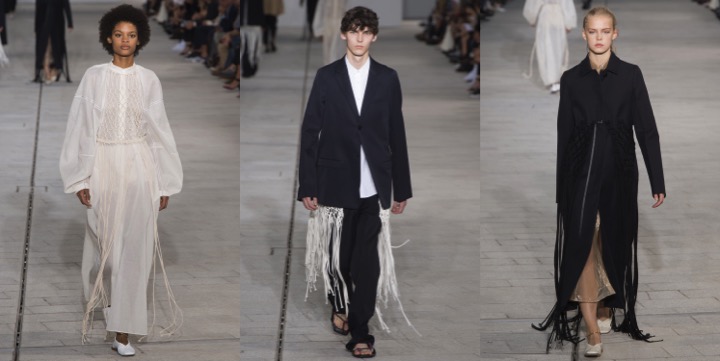
Lucie and Luke Meier are an ultimate fashion couple. The first one worked along Serge Ruffieux at Dior for a couple of season’s after Raf Simons’ sudden departure; the latter worked for Supreme and cofounded the menswear label OAMC. Now, they meet proffesionally under one roof – at Jil Sander, the empire of minimalism with German origin. Leading the brand with typically minimal, 90s-inspired aesthetic isn’t as easy as it sounds. Pure simplicity, that seems to be rooted in Jil Sander, isn’t a promise of succes: as Sander exited her label, nobody really came close enough to make it feel relevant (except Raf Simons) and really authentic. But that’s the perk of designing for a brand like Jil Sander – there’s only one master.

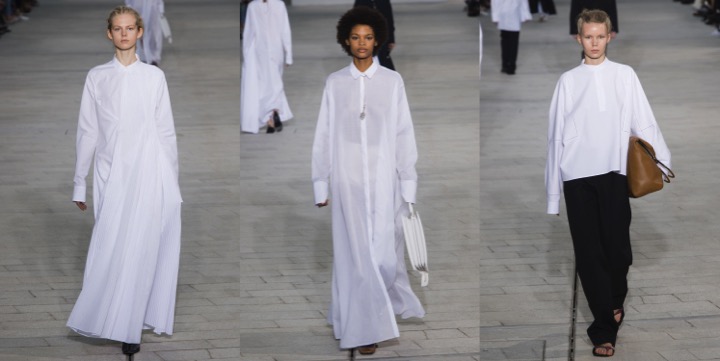
The new designers did two things that felt like their personal take on the brand. First, they presented their debut collection not in Jil Sander headquarters, but outdoors at soon-to-open mall with a view on Zaha Hadid-designed tower. A breath of fresh air, an eye-opening perspective. Second, it was their feminine sensivity that appeared throughout the entire show. The Meiers smartly noted that “a lot of the time, the first impression of her (Jil) is cold, sparse, and hard – what she did, was also feminine, light, and sensual; that was the approach for us.” Of course, the brand’s signature white crisp shirts were present, but they looked softer than usual. Romantic, white maxi-dresses swept the runway’s floor. Black coats weren’t that mournful. There was also some craftiness, that unfortunately felt quite inconsistent and unsynchronised with the rest. Still, those big chunky sweaters and knitted dresses looked good, even if they had not much to do with the brand’s founder and her style codes. Debuts are debuts – to get the full picture of Meiers’ Jil Sander, we’ve got to take some time.
Slide09Slide10Slide11Slide12Slide13

Collage by Edward Kanarecki.
TBT: Margiela’s Hermès Years

Slide1-kopia 5

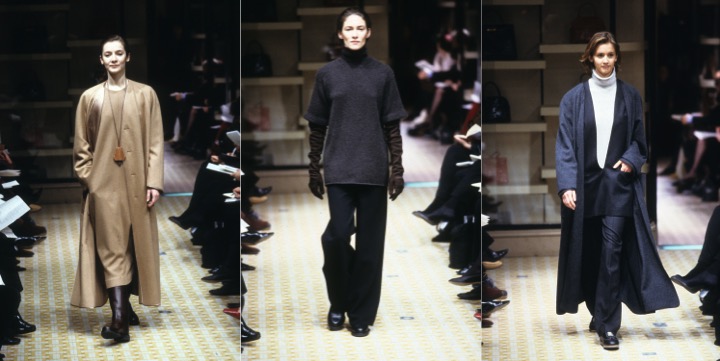
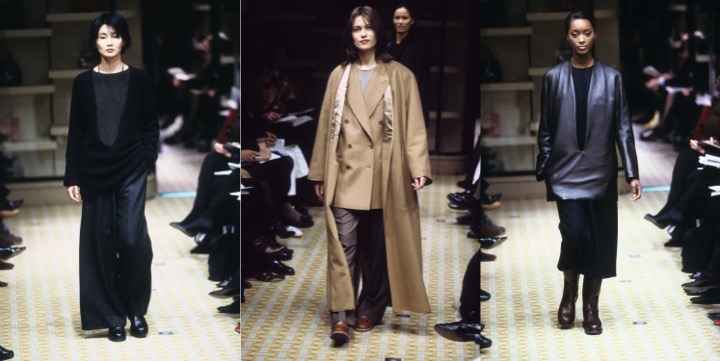
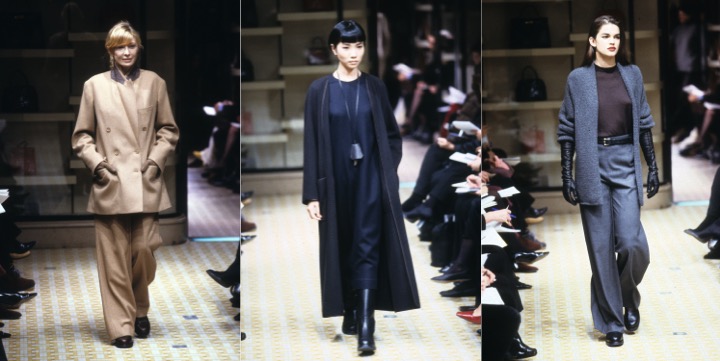
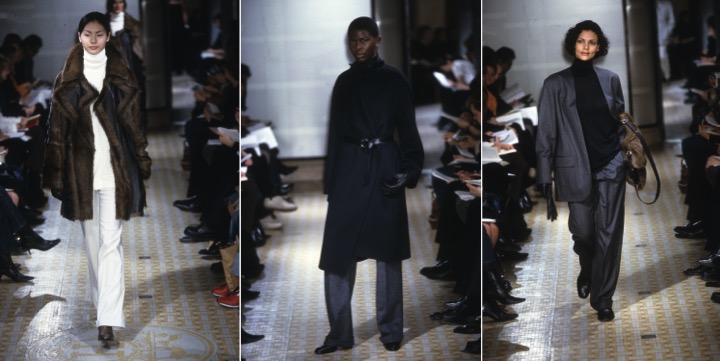
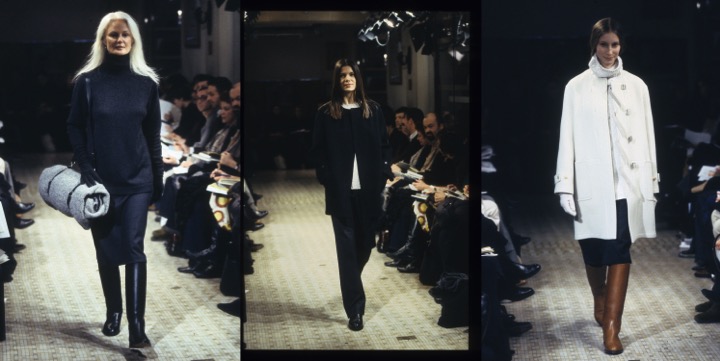
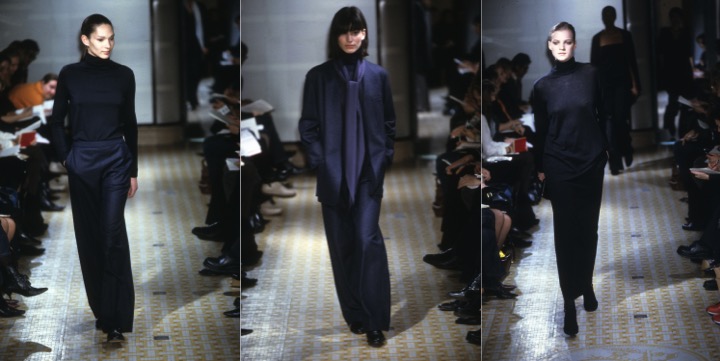
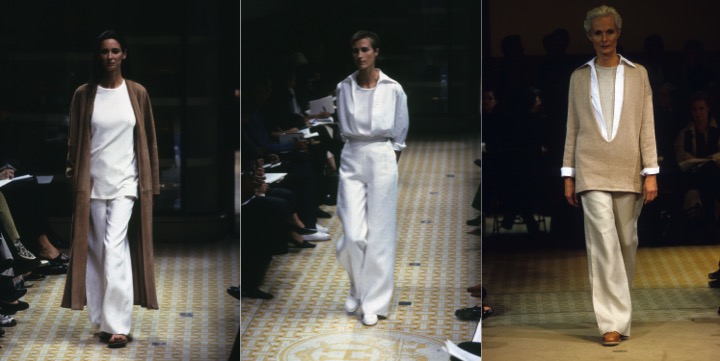
It’s funny that Martin Margiela‘s tenure at Hermès suddenly appeared on everybody’s lips after this year’s exhibition at Antwerp’s MoMu It took nearly two decades for the fashion industry to wholeheartedly appreciate the Belgian visionary’s contribution at the maison, that’s probably most associated with very-rich-women kind of ‘luxury’. At his eponymous label, Maison Martin Margiela, the famously anonymous designer used to redefine such terms as ‘avant-garde’ and ‘minimalist’ in one single garment – meanwhile at Hermès, it was a different philosophy. Tranquil, understated and low-key – that’s how the guests of his shows at Rue Saint-Honoré flagship store (12 in overall, between 1998 and 2002) described the atmosphere. So were the clothes, kept mostly in black, beige or navy. Fashion tends to forget its references, and as you can clearly see in images below, it wasn’t Phoebe Philo at Céline, Christophe Lemaire (he designed for Hermès before the current creative director, Nadège Vanhée-Cybulski) or The Row who were first to decide on making a perfectly tailored camel coat the focus of their collections.

For Margiela, ready-to-wear with a Hermès tag had to be of the best quality materials, made with the biggest attention to details (no flashy embroideries meant here) and with the aim to be worn for the next 20 years. This is what actual ‘luxury’ in fashion meant to Martin, even though he would never use that stabby and deprived of its meaning word. For a brief moment, Hermès was more than fancy foulards and bags (note: for spring-summer 2000, Margiela casted Jane Birkin as the show’s model, making a nod to, guess what, the Birkin bag). It was about the clothes, too, and very well constructed clothes: warm cashmere sweaters, crisp white shirts, masculine blazers, eternally chic black gowns. And sneakers – remember, we’re speaking of 90s / beginning of 00s, when only stilettos mattered on Parisian catwalks. There’s no surprise his shows weren’t received that well. Many thought that Hermès was just ‘boring’ with Martin’s conservative approach: those were the 90s, after all, and fashion loved FASHION. The time has shown, however, that those who bought Margiela’s Hèrmes were the smart ones. Finding pieces from that era is quite a struggle, and when you find anything, the prices are killer. Martin Margiela is an acclaimed designer for more than one reason, but his underrated creative direction and aesthetic at Hermès is… timeless.

Slide01Slide02Slide03Slide04Slide05Slide06Slide07Slide08Slide09Slide10

Collage by Edward Kanarecki.

Her World. Céline Pre-Fall 2017

Slide1

To be honest, it’s hard to flip from Gucci’s resort 2018 Italian glamo-mania to Céline‘s world of minimal silhouettes and modern woman-dressing. But I feel much more comfortable in case of the latter – in Phoebe Philo‘s world. For her pre-fall 2017 collection (presented as usual, just before the clothes hit the stores), the brand’s creative director does what she does best. Empowering shirts and all-day dresses; incredible, probably the  most perfectly tailored coats in fur and leather; pleated midi-skirts with feminine, leg-exposing cuts. Thick, plaid shirt appeared to be the most unexpected piece in the entire collection – somehow, though checks became forgotten, they will surely comeback for autumn in not so average, laid-back version. Although the colour palette is quite earthy, Philo splashed some colour through geometric patterns on the knits and blouson. It all looks like made in heaven. In Céline heaven!

All collages by Edward Kanarecki.

Throwback Sunday – Céline Pre-Fall’10

15fullscreen

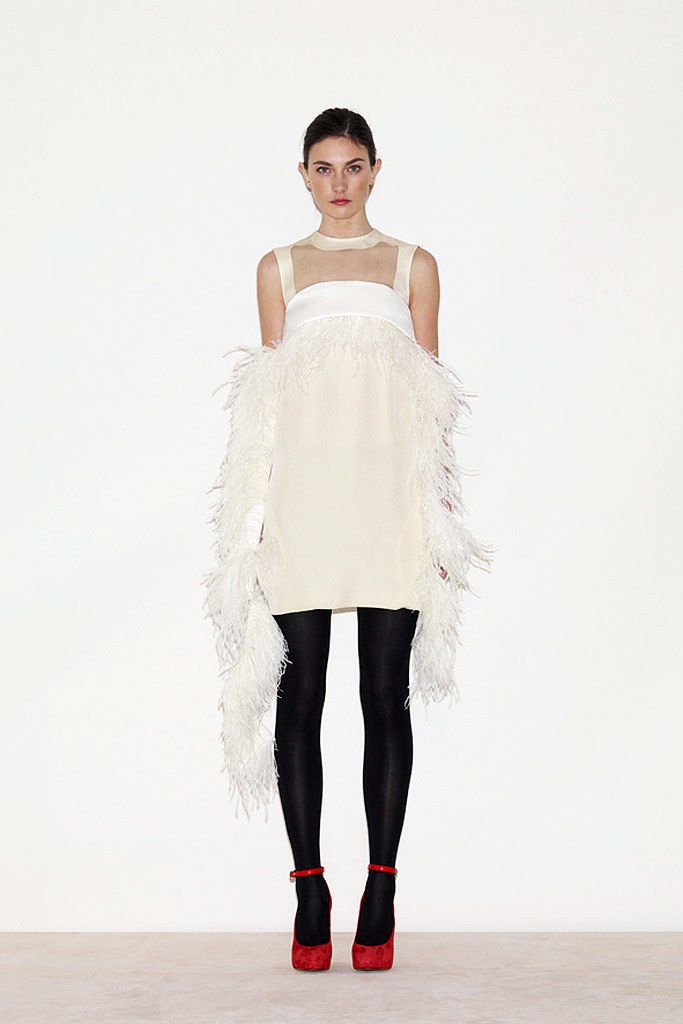
When you come to a certain conclusion that her 2010 pieces for Céline would look perfect in 2017: that’s the power of Phoebe Philo‘s fashion. Those masculine, mid-lenght coats; beige cardigans with leather pockets; evening tops with feather inserts. It’s hard not to love the flared pants or this simple, little black dress styled with red tights. Pre-Fall 2010 was her third collection for the French house and it’s interesting to observe how she incorporated some of the brand’s heritage codes. The knit with a vintage automobile print used to be Céline Vipiana’s long-time signature, while the belt buckles had the brand’s old logo on them.
Slide1

Scandi Attitude. Freya Dalsjø SS17


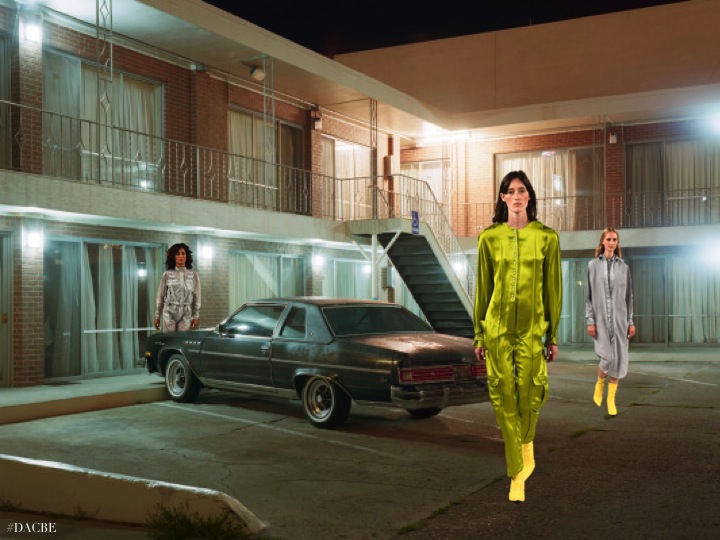
Copenhagen Fashion Week is a great occasion to observe, how Danes do fashion. This time, I’m in love with Freya Dalsjø‘s spring-summer 2017 collection. Dalsjø has a new take on heritage techniques with an avant-garde approach in her work, deconstructing and exaggerating forms and silhouettes. The collection is quite simple at the first glance, but just have a look at the voluminous coats and parachute dresses. Raw-cut denim and pajama shirts with elongated sleeves make me think of the ‘Vetements factor’, but in a much more clean, Scandinavian version. Dalsjø’s strong point of the collection is the colour palette – lime-green jumpsuits, chocolate-brown skirts and bold-yellow, polished boots. Oh yes, the boots… too good to be true. Always unconventional in model casting, clothes with Freya Dalsjø tag live their life on diverse women with attitude.