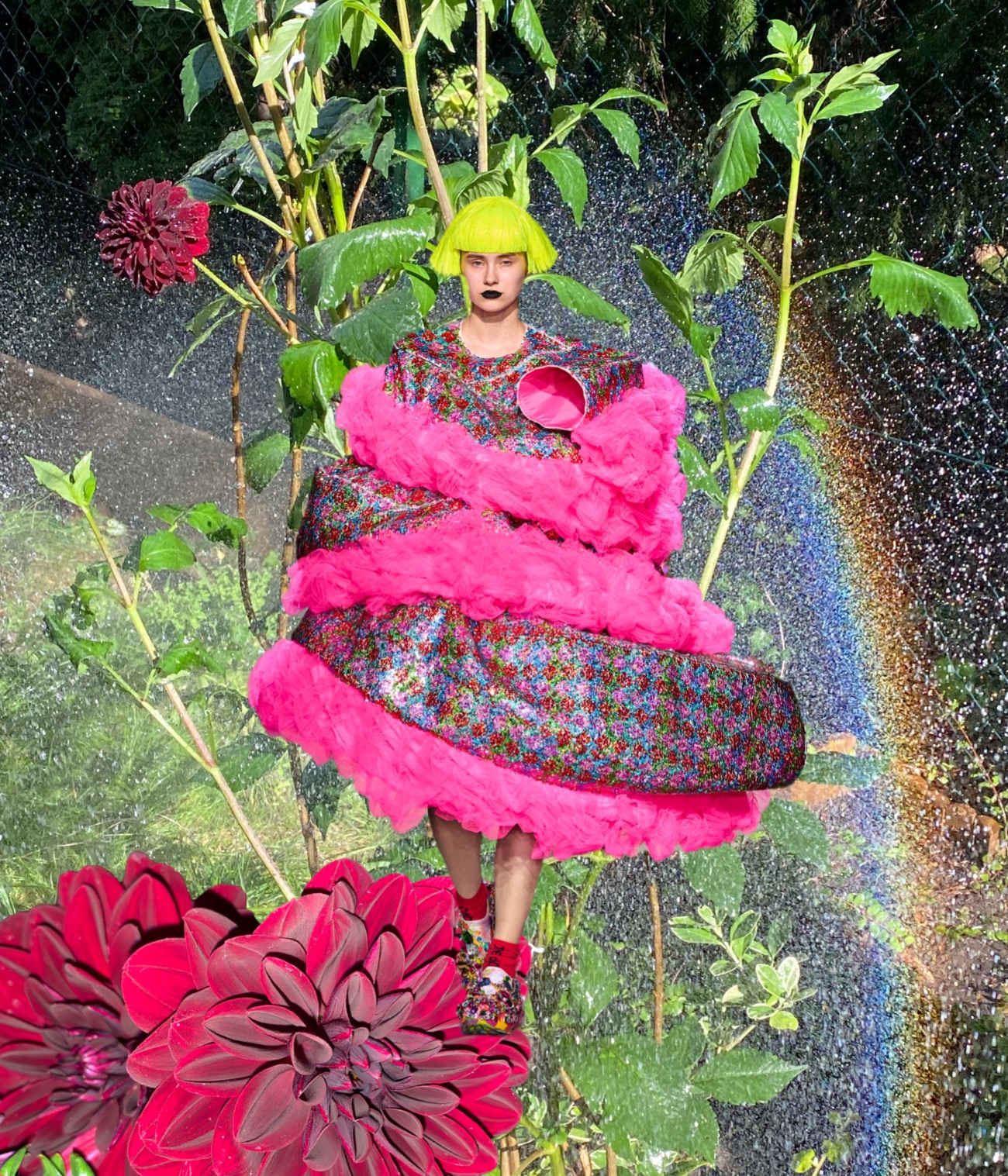
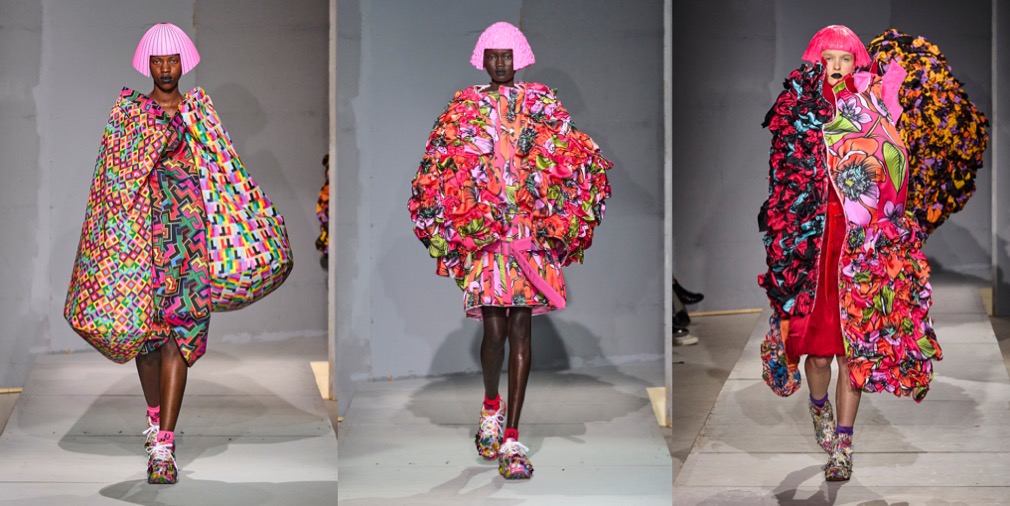
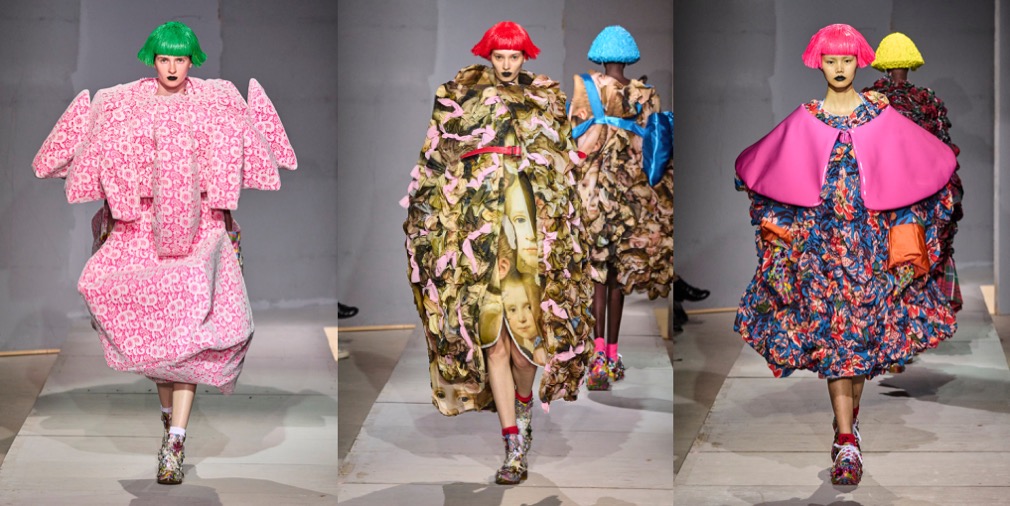
Rei Kawakubo, the visionary designer who is known for responding to global unrests and deep, existential dilemmas through her Comme Des Garçons garments, this season seemed to simply say “fuck it, let me have some fun” with the cacophony of electric colours, hysterically clashing patterns and a range of fantastically irrational, bulbous shapes. Finding happiness and emanating with joy are some of the biggest forces of resistance.
Collage by Edward Kanarecki. Don’t forget to follow Design & Culture by Ed on Instagram! By the way, did you know that I’ve started a newsletter called Ed’s Dispatch? Click here to subscribe!
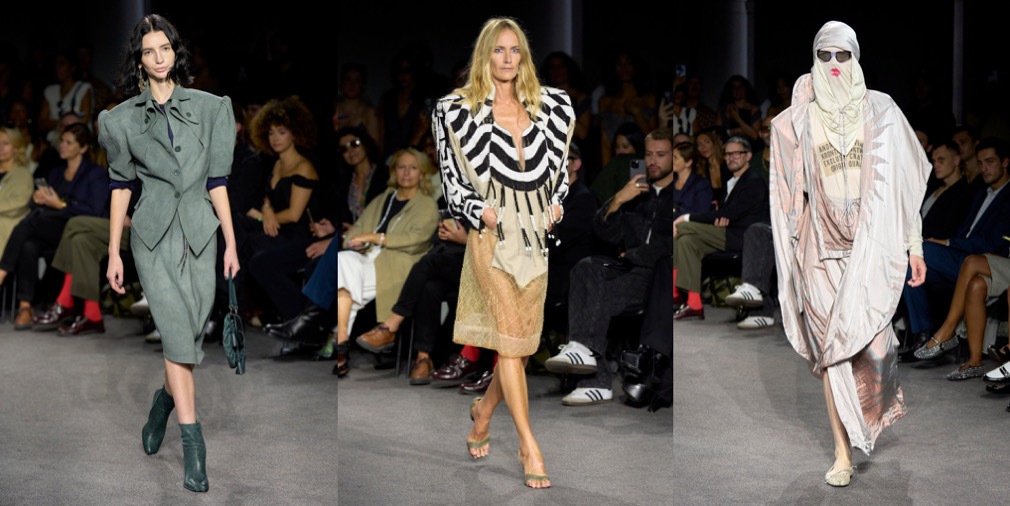
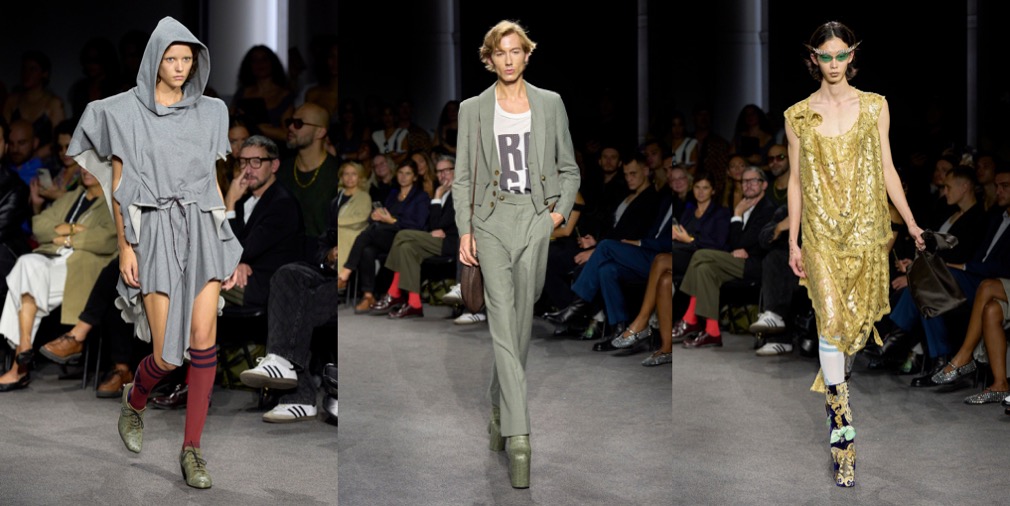
As Andreas Kronthaler put it pre-show, his spring-summer 2024 Vivienne Westwood collection was a synthesis derived from his contemplation of his late wife’s own clothes. Some months ago, he faced the emotional task of packing up her personal wardrobe. “There were maybe 250 looks’ worth, something like that, and as I did it I knew this was going to be the collection,” he said. He decided to go for around 40 looks, which he says he chose from the 250 and arbitrarily ordered for this show by picking the numbers of those he’d archived out of a hat. Whether it was via serendipity or the magical emotional personal lay lines that most-loved and lived-in garments sometimes acquire, his first pick was the number of a brown micro-corduroy suit from 2004 that Westwood had worn day to day for nearly two decades, sometimes patching along the way. Here it was reimagined in a pale berry tone and looked easily the most interesting piece of womenswear tailoring of this Paris season so far: its harmonically incongruous “mistakes” were as wonderful to watch as it looked comfortable to wear. Kronthaler’s loving but also clear-eyed curation of these looks generated a collection that appeared not fleetingly radical, but timelessly so. The linen cape in look six was a reworked version of one Westwood wore when riding in a tank to the house of a disastrous British prime minister to park it on his lawn in protest back in 2015. The penultimate dress, based originally on a Velázquez painting she adored, was worn to an opera in Salzburg: “Some of the things she had worn only once, you know,” said Kronthaler. Westwood’s erudite, curious, and activist intellectual identity added up to a mindset no big bucks creative agency could ever fashion. She was also a woman designing for women (although there was a smattering of men’s looks here). This was a wonderful survey of a design dialect unlike any other.
Collage by Edward Kanarecki. Don’t forget to follow Design & Culture by Ed on Instagram! By the way, did you know that I’ve started a newsletter called Ed’s Dispatch? Click here to subscribe!
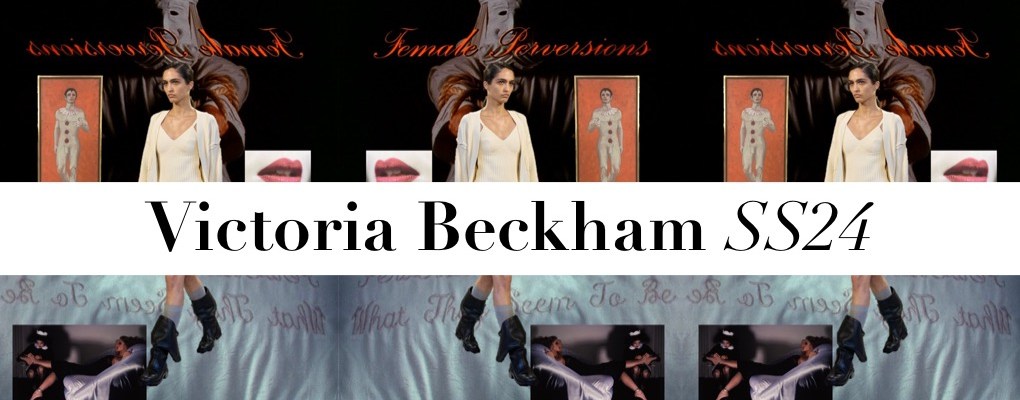
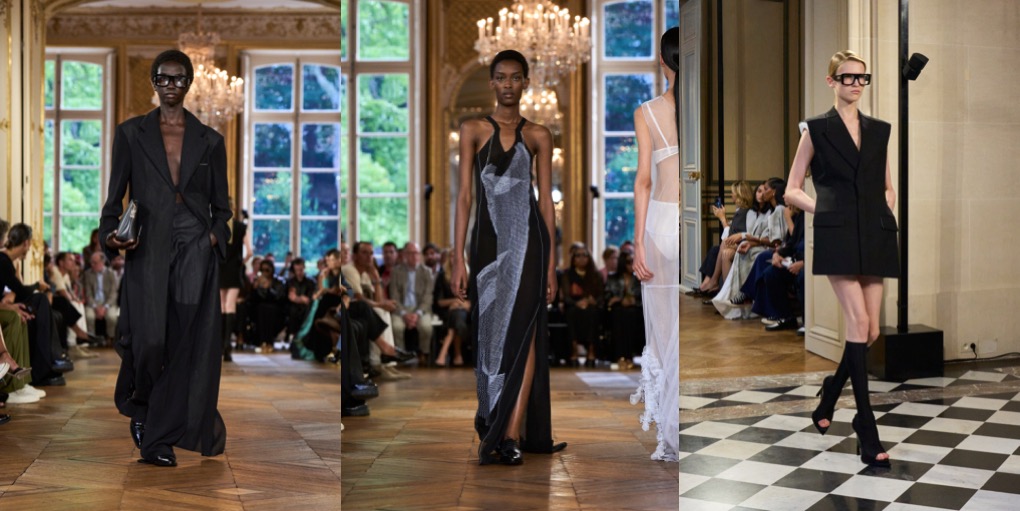
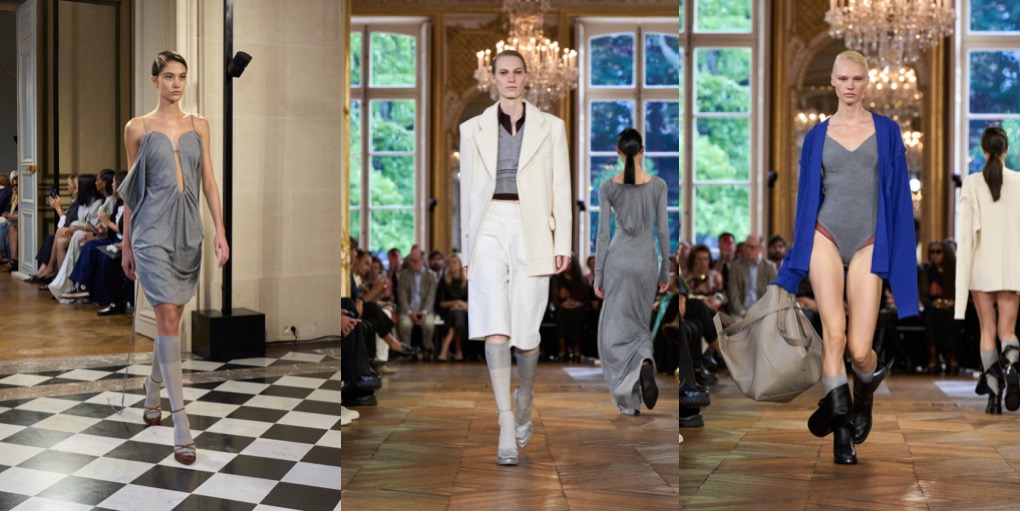
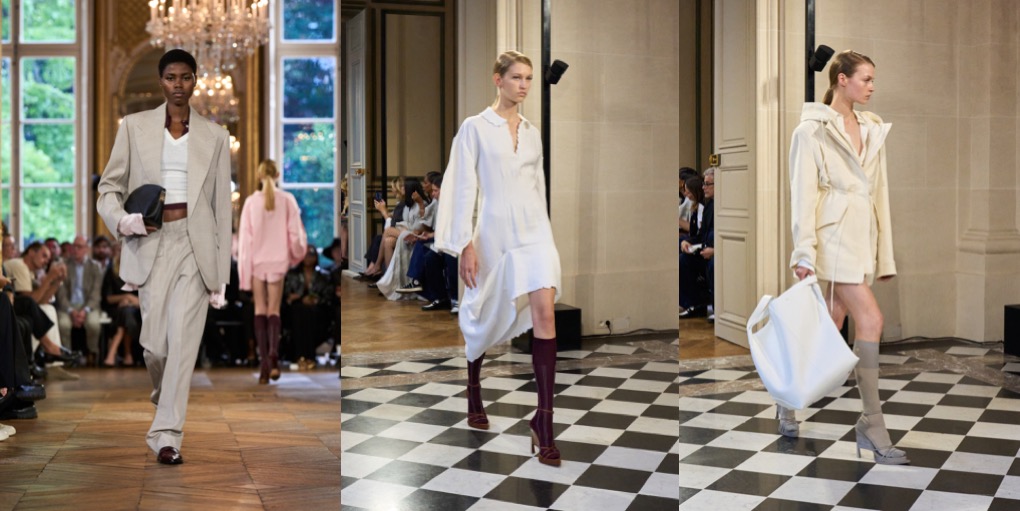
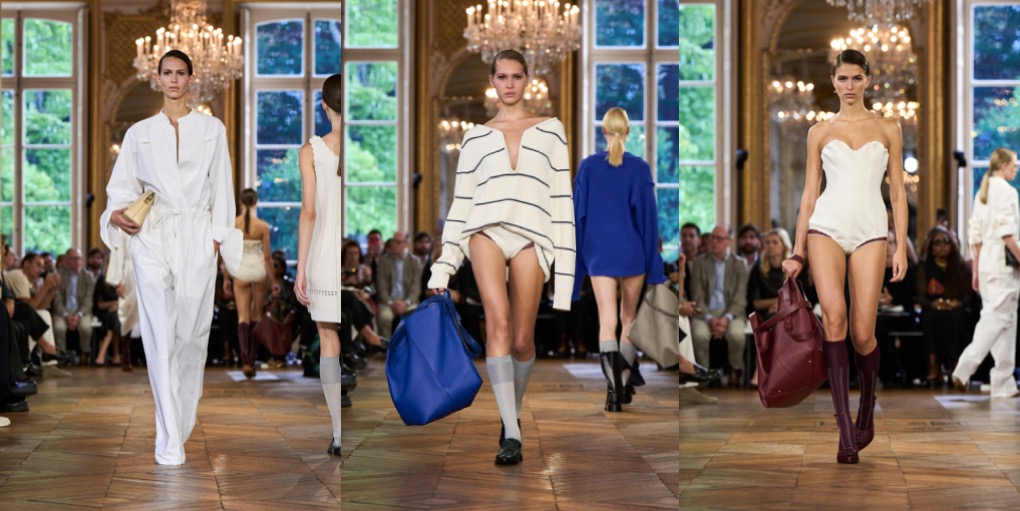
This Victoria Beckham collection felt kind of undecided. Preceded with a fragrance line launch and Kim Kardashian’s late arrival to the fashion show, Beckham’s spring-summer 2024 outing offered many ideas of what this brand could be. But when there are too many answers available, the picture becomes foggy. One good thing about it: the designer is finally overcoming Philo-mania (which she might replace with a Jenna-Lyons-obsession, judging by her appearance in the front row and all the big glasses the models wore), and seems to go her own, aesthetic direction(s). Beckham’s collection was founded in her teenage memories of the intense classic and contemporary ballet training that eventually got her into musical theatre. Taking her starting point in the unassuming rehearsal wardrobe of ballet, she reflected the current fashion climate’s inclination for reduction but invigorated her stripped-down silhouette with intriguing gestures of motion. Simple jersey T-shirts with droplet décolletés were suspended from wire in ways that freeze-framed the movements of ballet and injected the clothes with character. Beckham exercised the same ideas in dresses and knits worn as dresses, all quite abstract but easy to wear. She rendered the collection in the faded pastels of Degas’ ballerina works and Monet’s paintings of haystacks, as well as the metallic effects of his iterations on the Houses of Parliament. Then, the designer went for the style of British countryside. Next to boyish country tailoring and field jackets, she mirrored her idea of infusing clothes with character in the antique furnishing textiles she’d seen around old houses outside of London where she spends her weekends, from tablecloths to curtains and everything in between. They inspired the embroideries and general eccentricity of tea dresses that embodied the 1930s spirit, which lately characterises Beckham’s silhouette. As far as storytelling went, these clothes certainly had some tales to tell.
Collage by Edward Kanarecki. Don’t forget to follow Design & Culture by Ed on Instagram! By the way, did you know that I’ve started a newsletter called Ed’s Dispatch? Click here to subscribe!
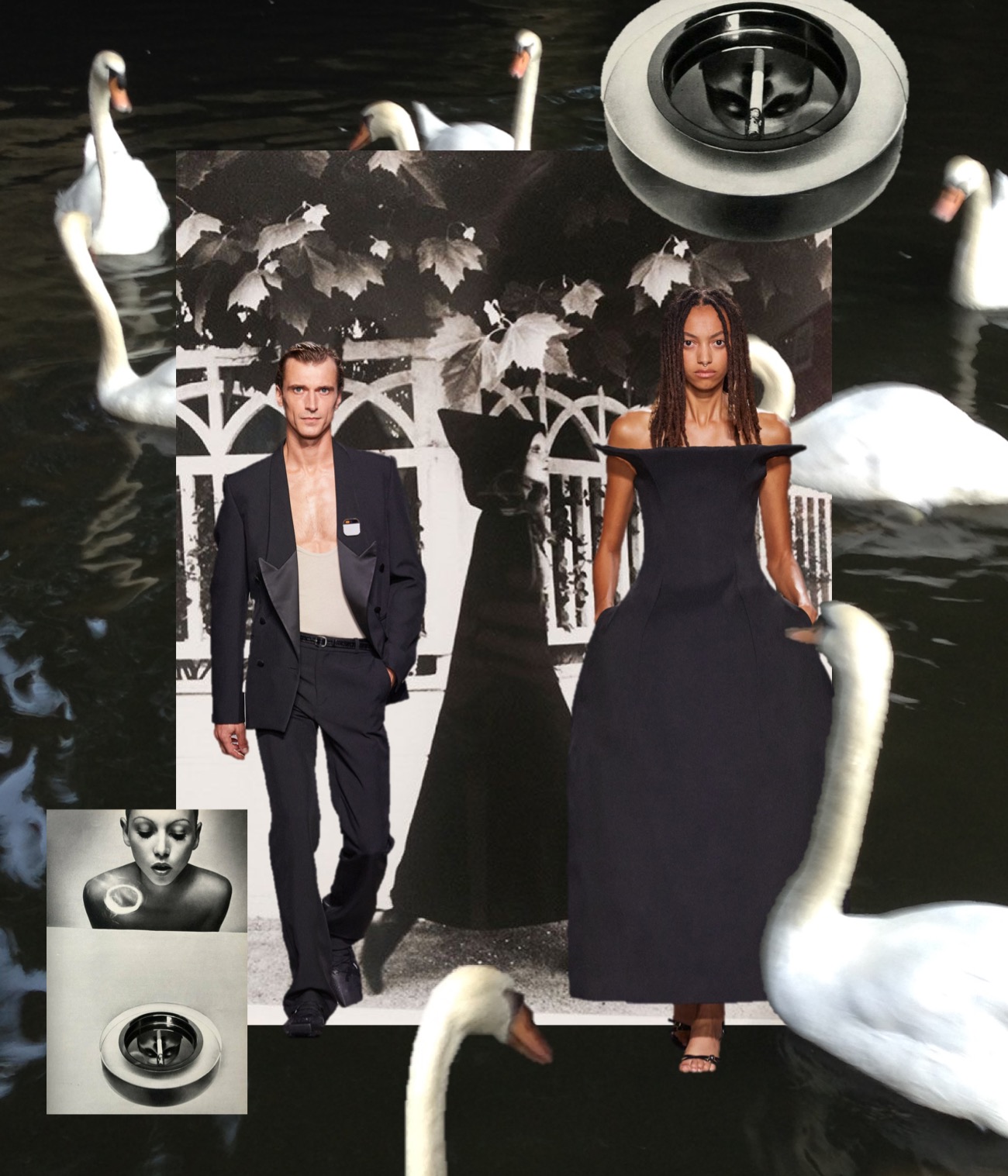
Coperni stands for blending the fascination for technology with contemporary garment design. Sébastien Meyer and Arnaud Vaillant dialed down on another big noise moment, focusing on the clothes. Almost. The hi-tech came first, via flat speakers by Transparent, integrated into an opening leather jacket, a men’s sleeveless T-shirt, and other pieces. Many of the models wore small devices on their chest: these were produced by a start-up named Humane and called AI Pins: apparently when released very soon they will “enable contextual and ambient computer interactions”. But even without all these developments, this was a decent, thorougly-considered line-up. A white lace-detailed dress was strewn with 3D printed “flowers” that were generated by cymatic production. A skirt in metallic herringbone was meant to mimic the casing of an old-school microphone. The collection found its eye-catchiest tempo when contemplating older technologies. Vaillant asserted “the triangle is the smallest instrument and makes the loudest noise” in the orchestra: the insertion of triangles into the backs of jackets and the necks and waistlines of evening dresses was immediately arresting. Brass was represented by a trumpet-bodiced dress, and near to the close came a resoundingly volumed black dress.
Collage by Edward Kanarecki. Don’t forget to follow Design & Culture by Ed on Instagram! By the way, did you know that I’ve started a newsletter called Ed’s Dispatch? Click here to subscribe!
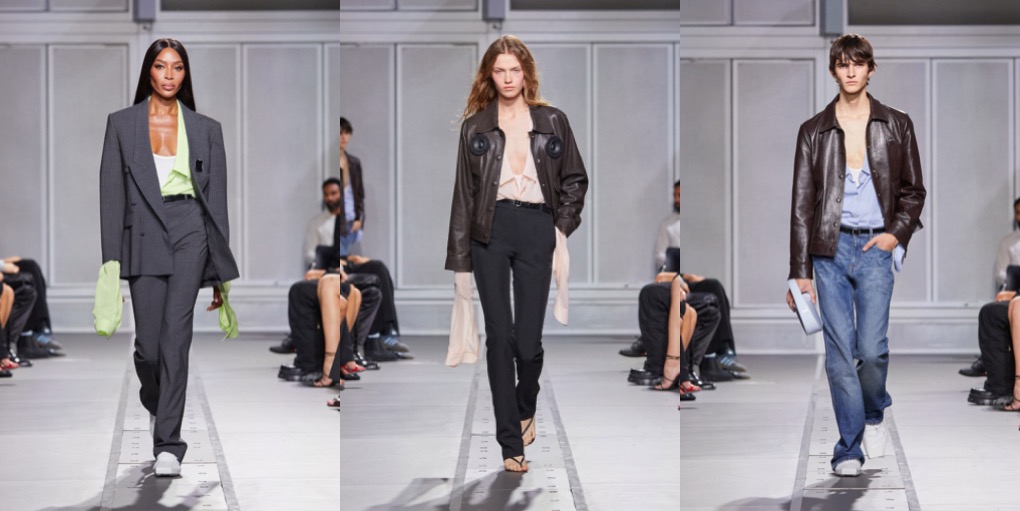
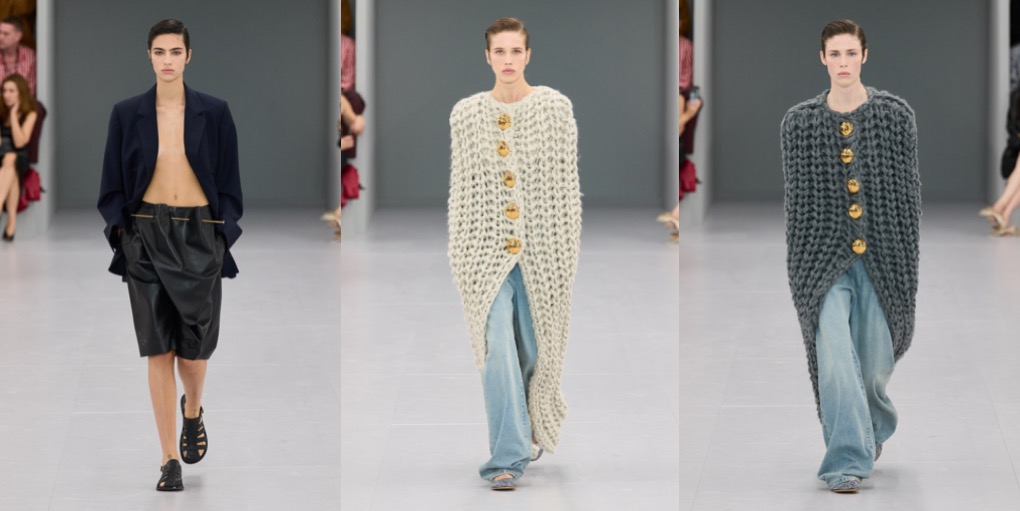
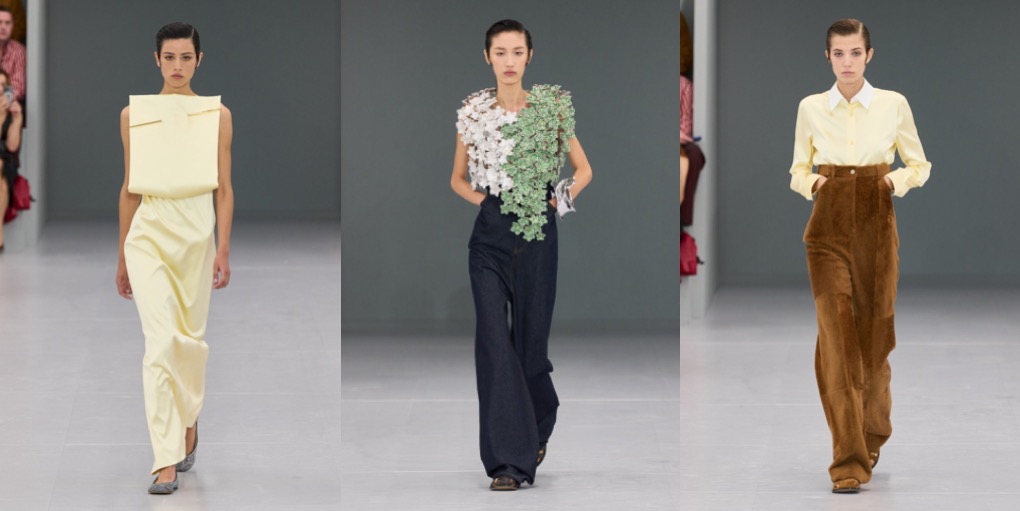
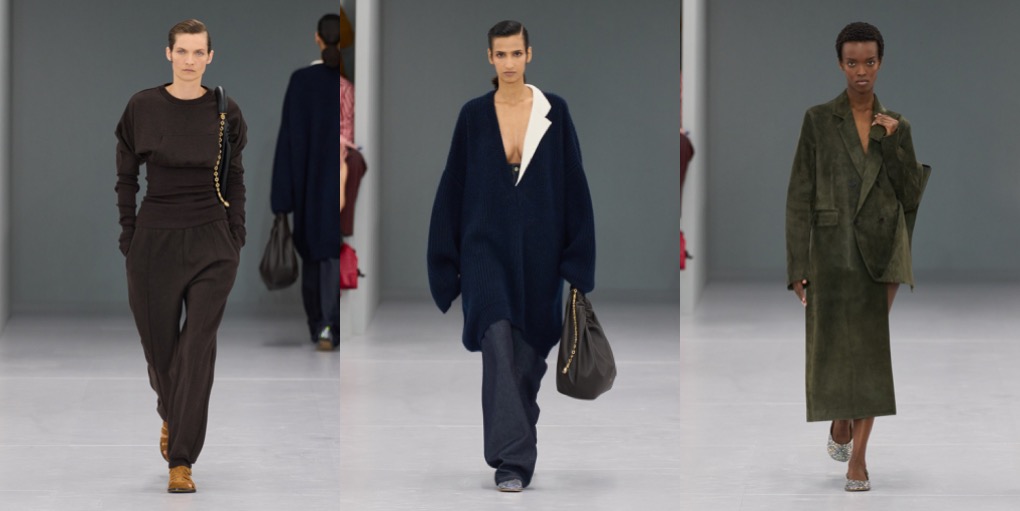
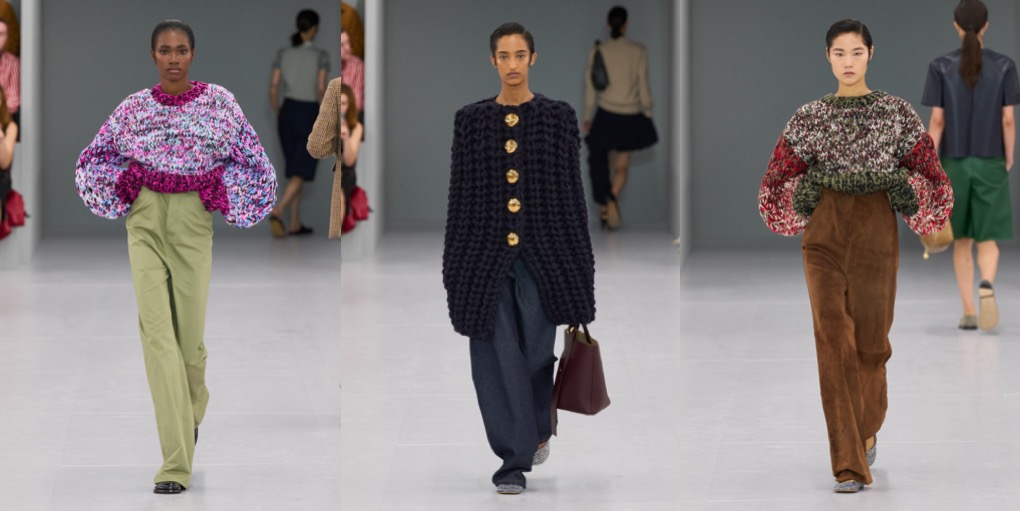
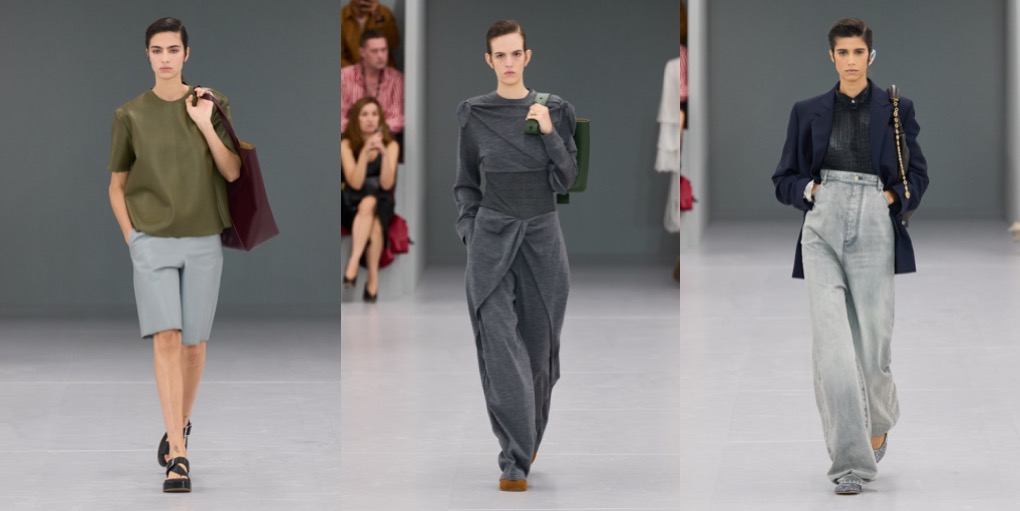
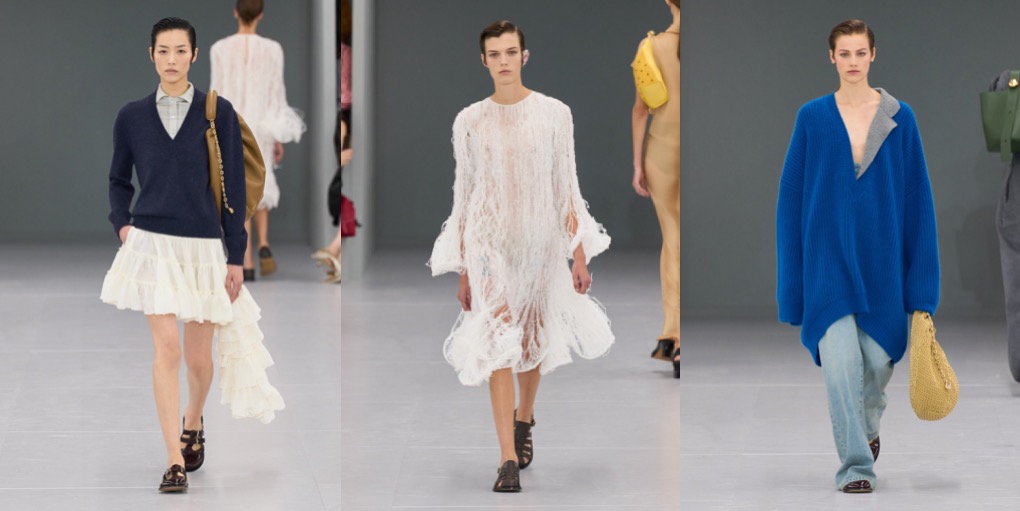
Jonathan Anderson’s Loewe was a dialogue between the normal and the extreme. He proved that we can have both at the same time. The spring-summer 2024 collection kicked off with an Anderson statement of reduction, where cardigan-dresses were knitted with a loose gauge and fastened with beaten gold buttons, blown up to playful proportions. The silhouette from the designer’s recent menswear show – high, high trousers and a cropped shirt – influenced a couple of womenswear numbers. Anderson is a master of making mundane clothing spectacular, and the spectacular clothing, astonishing. Take the leather shorts which were pinned with a sewing needle crafted in gold-toned metal, artistically holding the pleats in place. On the other hand, two tops were created from crystal-encrusted flowers, hanging together like one sculptural piece. Skirts were all about the art of asymmetry to create pleats that fell like an accordion down one side of the leg. The designer also indulged in proportion play: things that aren’t usually massive, like a ring, were huge. Jeans were wide wide. Cocoon ponchos were so comfortable you just wanted to wrap yourself up inside it. But then, in true whiplash fashion, Anderson presented silk dresses that effortlessly flowed down the runway, topping the chest with a pin-punched square.
Collage by Edward Kanarecki. Don’t forget to follow Design & Culture by Ed on Instagram! By the way, did you know that I’ve started a newsletter called Ed’s Dispatch? Click here to subscribe!














 Design & Culture by Ed