Domestic Chic. Batsheva Pre-Fall 2021

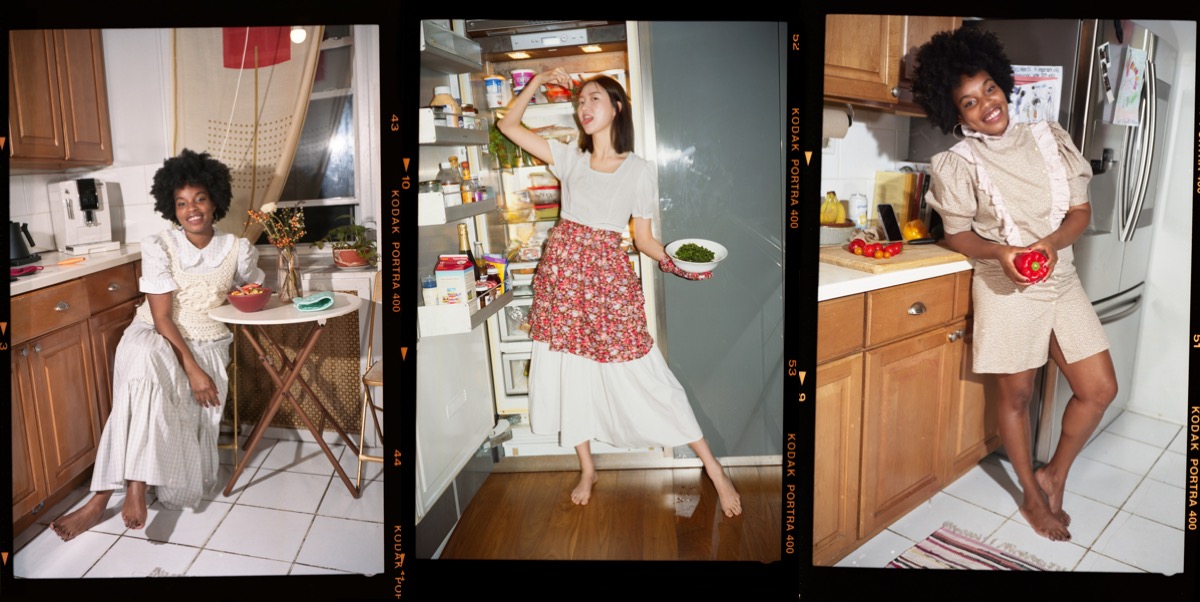
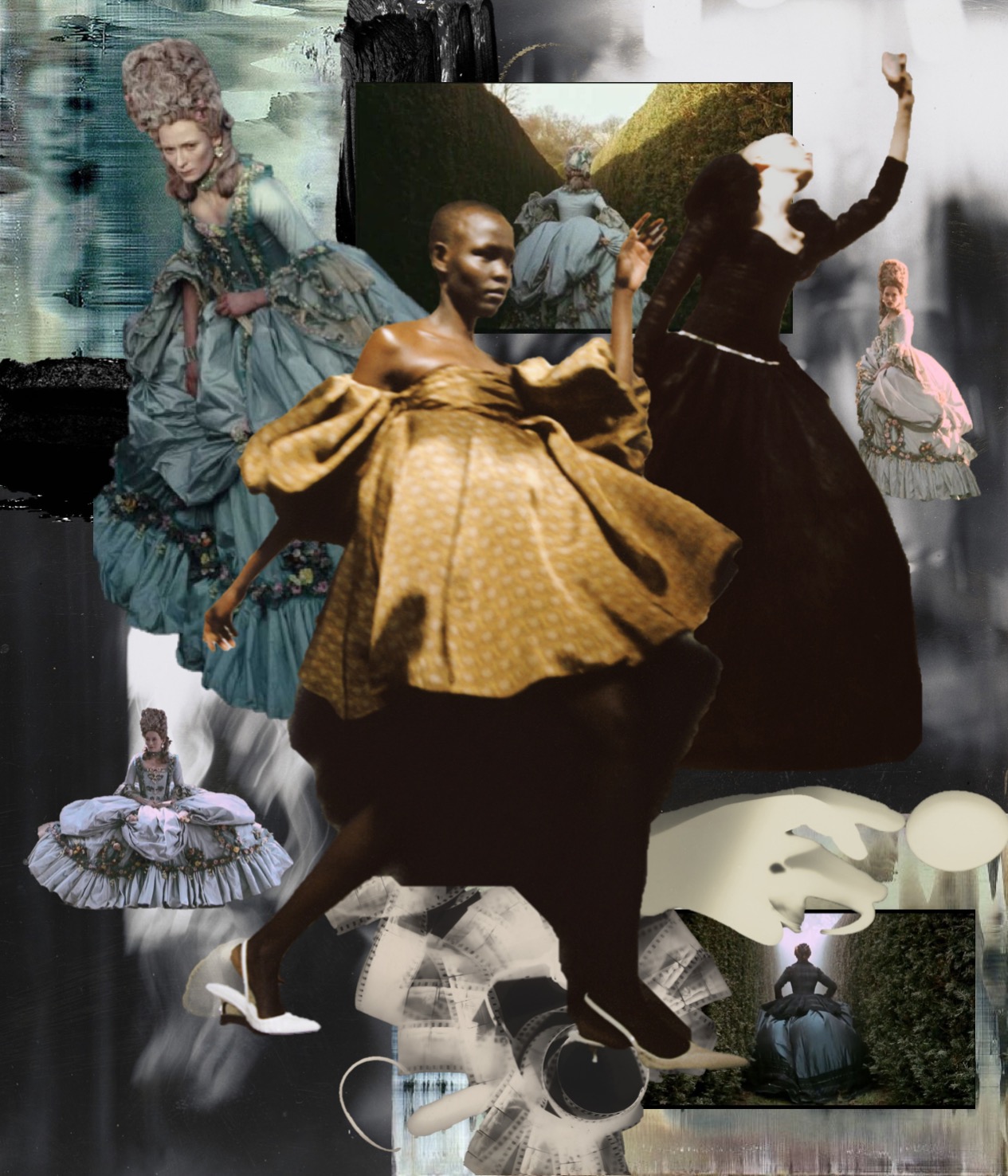
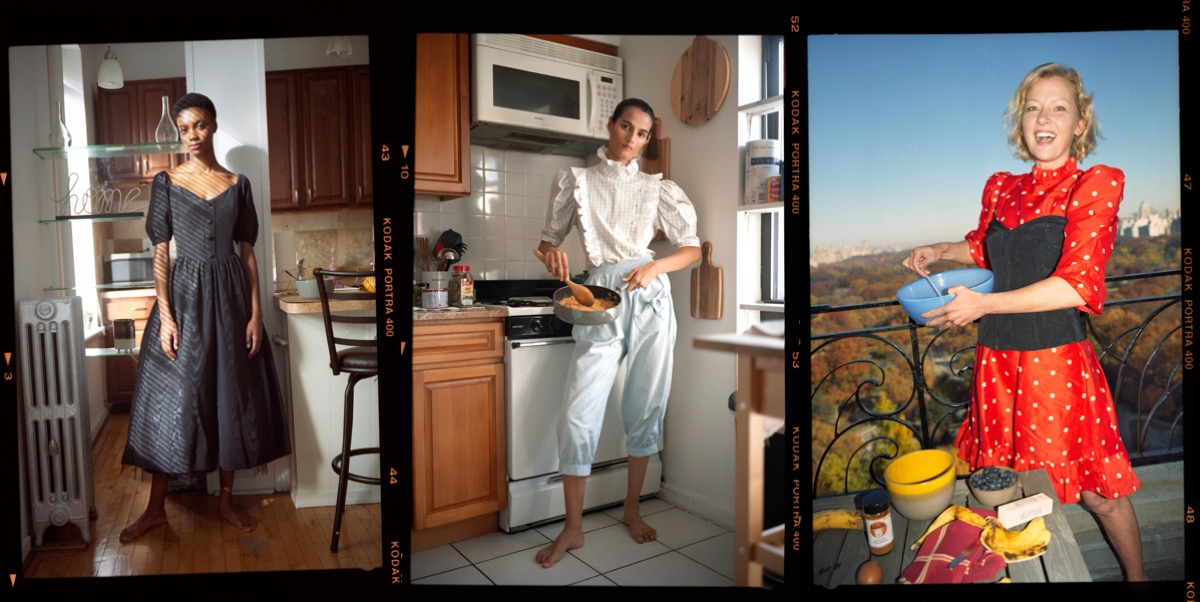
Many brands that start with one, sharp, distinct, signature piece, quickly reach its peak popularity… and equally fast fall down the cliff of oblivion. Just think of all the bag labels that had that singular “it bag” and couldn’t maintain the momentum. But Batsheva is a different story. First, Batsheva Hay‘s dresses just don’t get boring – how can such versatile must-have ever become outdated?! – and second, the designer gradually expands her universe, making old clients come back and new ones feel attracted. And the brand’s pre-fall 2021 look-book makes it even more relatable and relevant to our lockdown lives and habits. In her work, Hay has taken the symbols of femininity, domesticity, and intimacy and made them things for women to be proud of, not ashamed of. Typically, the industry rewards designers who offer more modern, minimalist takes on female style or versions of womanhood that are so fantastical and exaggerated they can only be described as “whimsical” or “dreamy.” Hay’s work is neither: it’s quirky, messy, funny, and embraces the chaos of a woman’s life. And in the new season, the Batsheva woman even cooks in Batsheva. The collection’s fantastic look-book stars real women, from club legend Susanne Bartsch to actress Gretchen Mol, wearing her latest wares in their own kitchens. Hay and her husband, Alexei, the photographer, traveled around New York taking the portraits, discussing the recipes with each woman, and eating each meal. The results will be published in a cookbook next year. “Seeing the way other people wear the pieces is so important,” Hay says, stressing that each piece must feel like “a wanted garment.” If it doesn’t elicit love from her ladies, it doesn’t get made. The garments that did get made continue to recast the possibilities for ruffles and floral prints. Hay is leaning into big 1980s graphics and piecrust collars à la Princess Diana. Those developments, she explains, were designed with an eye to Zoom routine. From the waist up, she’s offering a new bolero jacket, added embroideries and details on yokes, and expanded her offering of gorgeous crocheted tanks and hooded pullovers. Pants, skirts, and a new wrap dress round out the offering. “When I started, I thought I would run out of things to do with ruffles on dresses pretty quickly,” she told Vogue with a smirk. But trying to define what it means to be a woman in this world is an endless journey – and one of constant reinvention.
Collage by Edward Kanarecki.
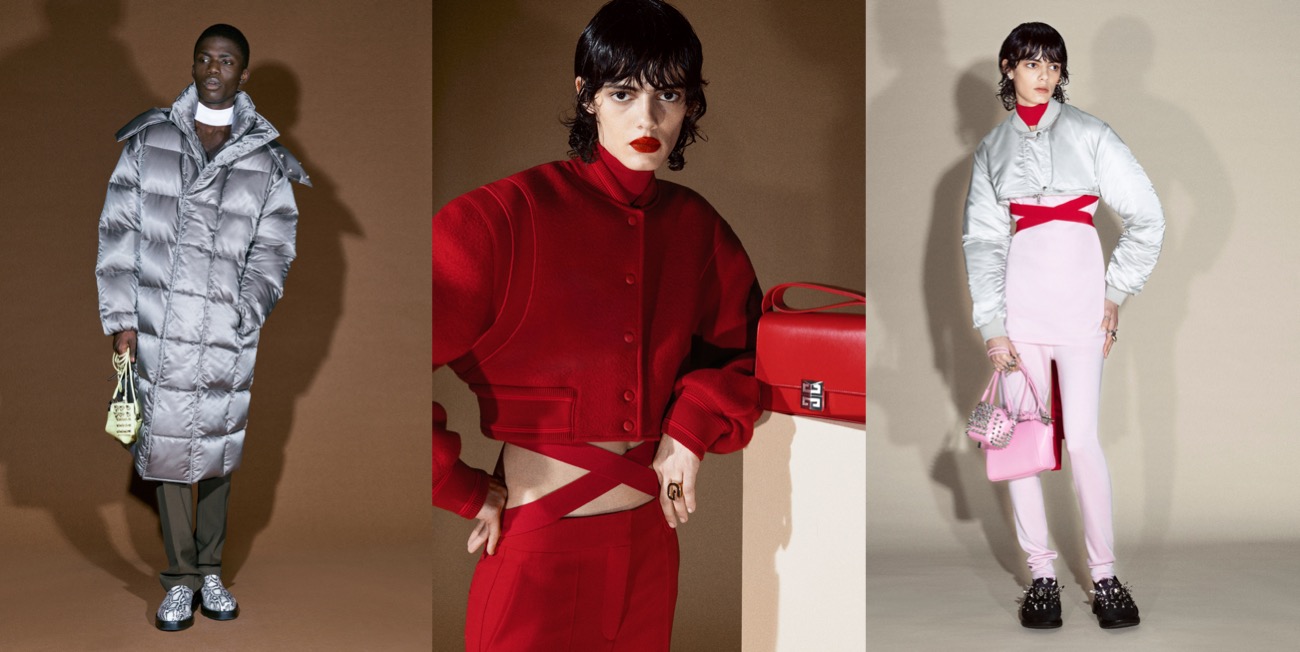
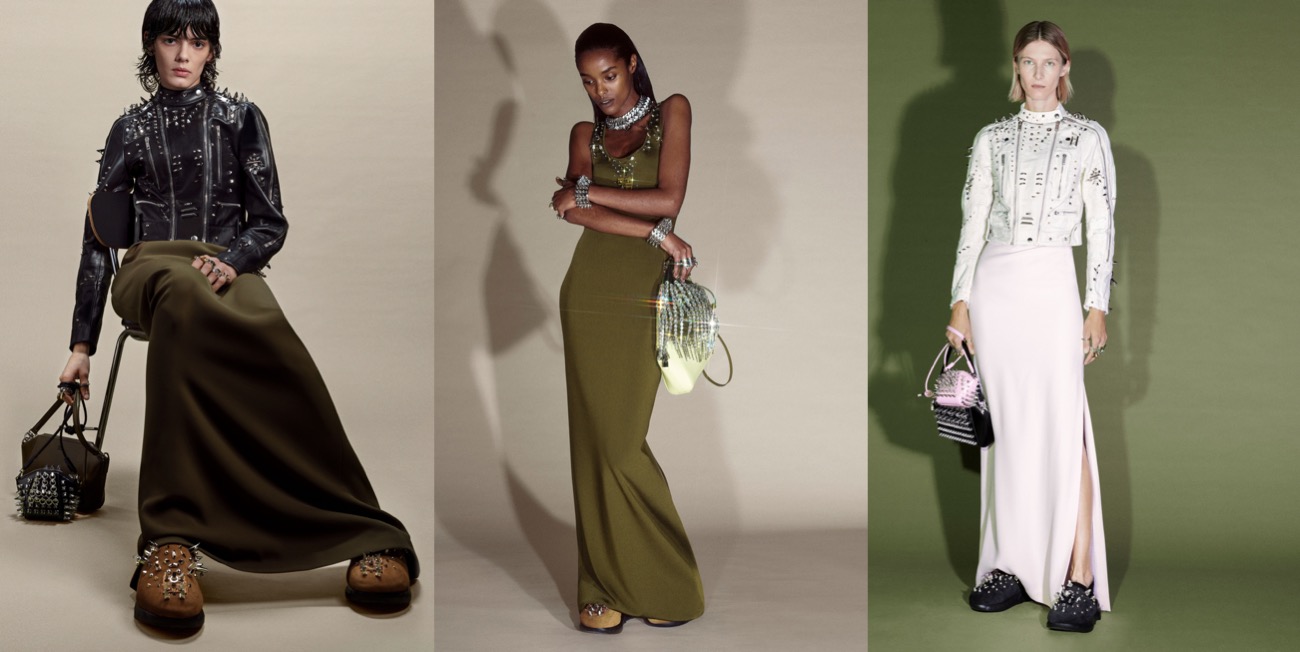
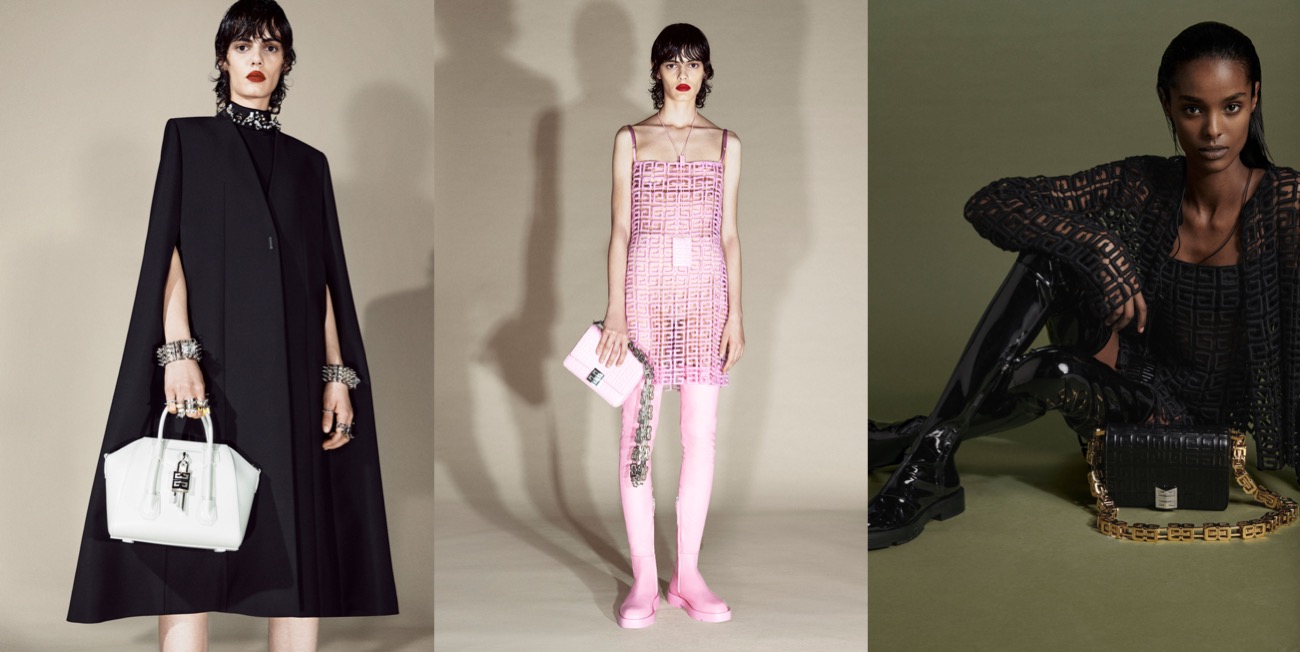
Revisited Classics. Givenchy Pre-Fall 2021

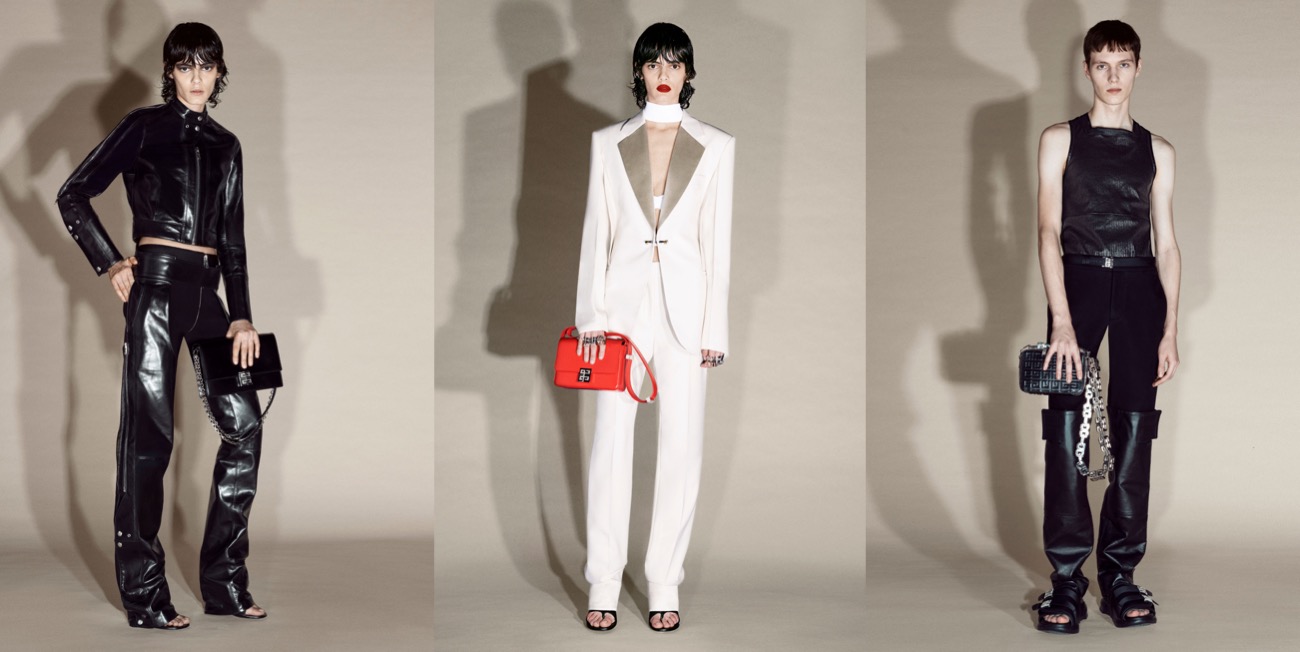
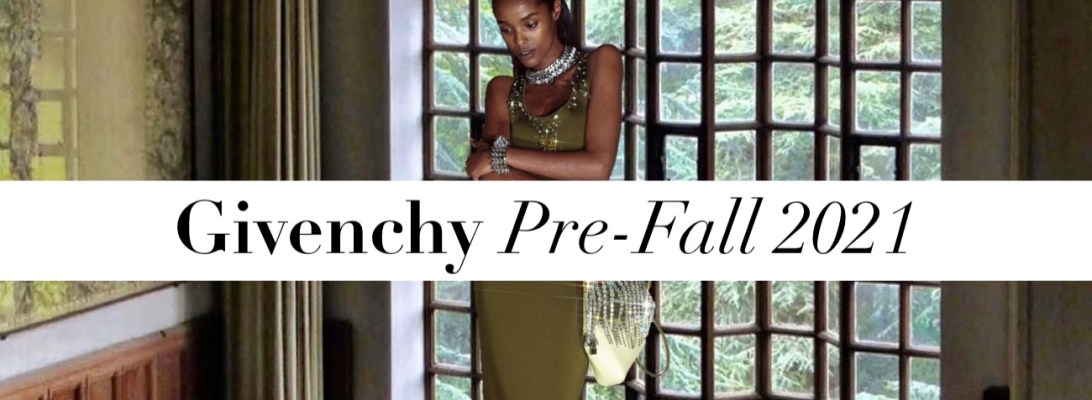
You might be on fence with Matthew M. Williams‘ style and aesthetic, but you’ve got to admit one thing: this guy knows how to shake up a brand and make present it all over the place (even if that revamp isn’t overly ground-breaking). Talking about his first pre-collection for Givenchy, he evaded questions of the specific visual references that may have inspired it, choosing instead to focus on nerdy things like cuts and fabrication. No mood-boards here. “I don’t really work like that, actually. I’m more on the body, touching materials. Sometimes there’ll be imagery that inspires things, but it’s very instinctual,” he told Vogue. Williams is emblematic of a new wave of designers for whom fashion is often less about producing the flashy statement piece than about perfecting the unassuming wardrobe staple – of course, with an endlessly-studied twist. “What I find exciting is often things I would wear myself,” as Williams said. “As somebody who shops, if I’m buying a suit and I want to wear a t-shirt with the suit instead of a button-up, I want that brand to have a nice t-shirt for me to wear.” His new collection for Givenchy proposes a series of wardrobe staples subverted through his soft-versus-aggressive lens. A classic letterman jacket chopped into a bolero and realized in a super luxe, tonal red knitwear; a rather normal long-sleeved black day dress hacked up at the waist like a little piece of architecture; business-ready blazers with complex lapel and collar structures seemingly morphing in and out the fabric. “For me, it’s really finding that tension between my real world – how I wear clothes on a daily basis – with this magical dream world of the maison,” he said. The knitted, slightly figure-hugging dresses continued to outline his womenswear silhouette for Givenchy, which debuted in his first line-up, while silk leggings and EVA-soled suede sliders represented the elevated sportswear element of the collection. Interestingly, Williams’s take on Givenchy isn’t too sporty. “I do wear suits,” he reiterated. “It feels more like me.” Of course, that’s not to say that a generous amount of logos – another pillar of the social media generation – didn’t find their way into the collection. This kind of makes Williams’ vision feel like Riccardo Tisci’s logo-heavy Givenchy off-spring. Williams latticed a lace dress in Givenchy’s archival four-G logo, embossed them on bags and forged them in bag chains. Well. While every fashion magazine has a new Givenchy special in it, 500 million people were reached in October with the brand’s social media campaign featuring everyone from Kim Kardashian to Julianne Moore, and first designs designed by Matthew are hitting the stores, time will show if that “perfect” recipe actually works.

Collage by Edward Kanarecki.
Intuitive Reality. Khaite Pre-Fall 2021

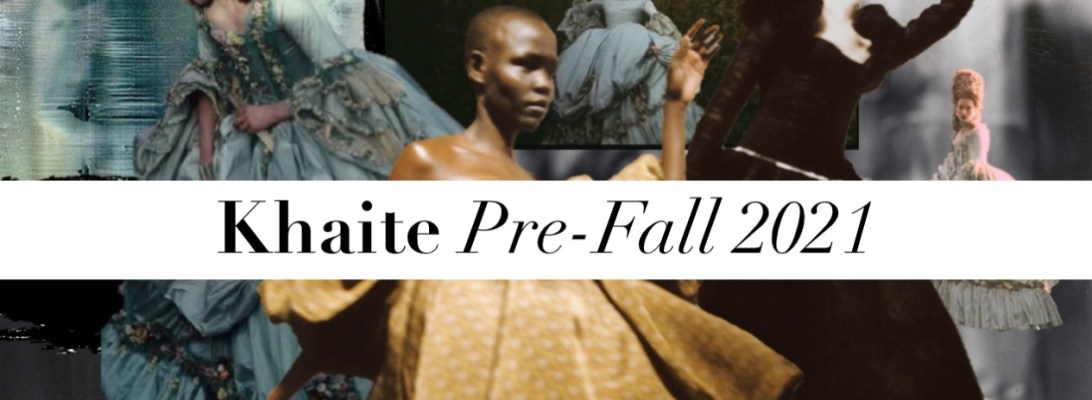
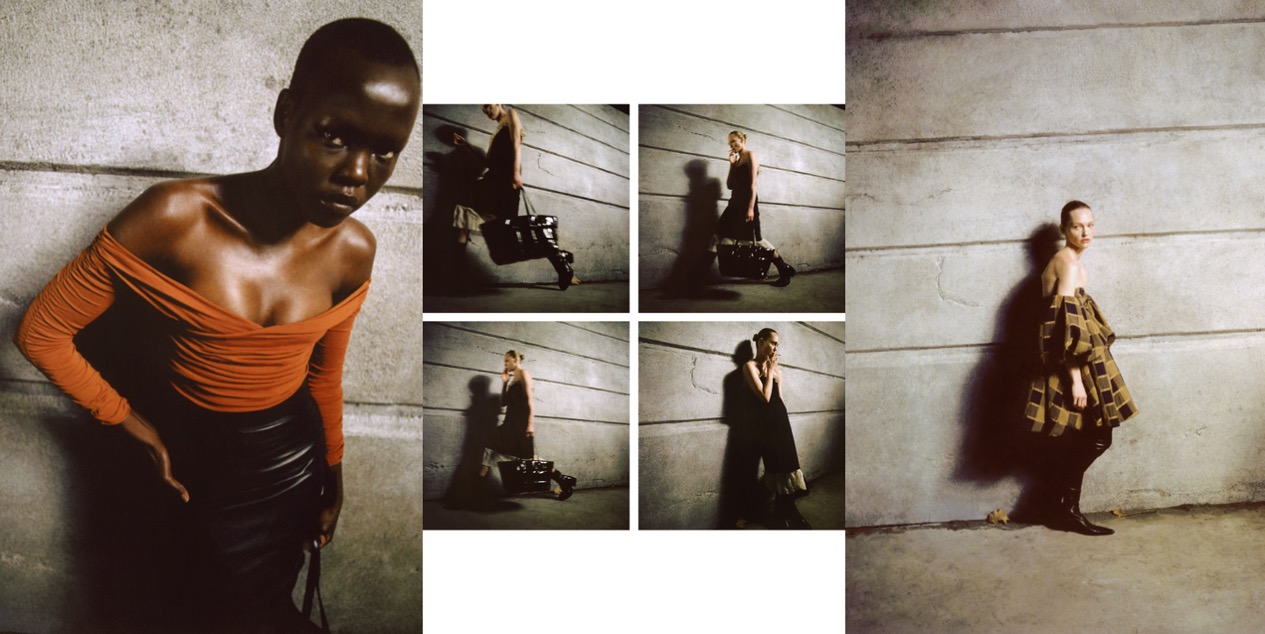
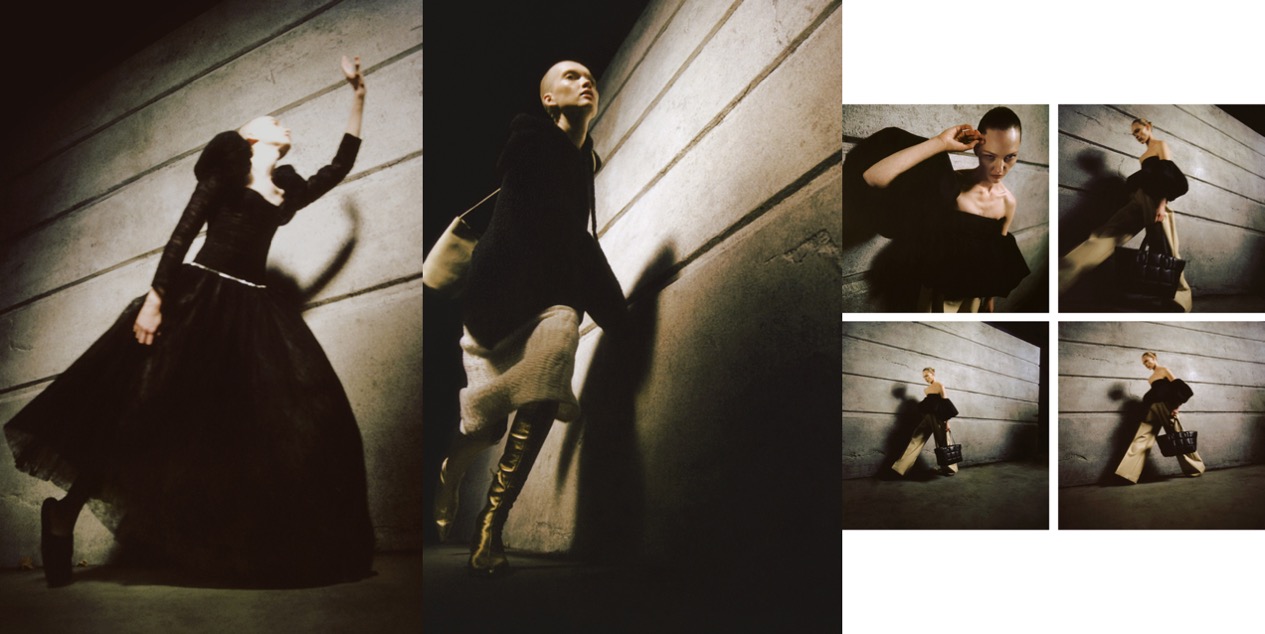
It’s quite incredible that Khaite, a relatively young and small brand, has such distinct signatures and a loyal clientele. I bet many, much older and famous labels dream of credentials Cate Holstein‘s brand can boast with. The pre-fall 2021 collection sums up Khaite’s biggest hits and classics, but it didn’t lack novelty. With a basic QR code, you can beam Lia Pavlova into your living room. It takes a minute to get the hang of “placing her” in the space, but then she’s walking, posing, and giving you multiple angles of Khaite’s new collection. The augmented reality experience is an evolution of the one Catherine Holstein launched for spring 2021, which included only shoes; now we’re getting the full look, and it’s surprisingly realistic. What makes this particular AR experiment successful is that most of these clothes will, in fact, look right at home in your apartment. Holstein is an intuitive and product-oriented designer who cares about how her clothes are worn and lived in, not just how they look on a catwalk or in a moody video. For the new season, she was especially focused on comfort, practicality, and ease – “nothing frivolous,” she said. Floor-sweeping hemlines felt excessive, so there were boxy peacoats and ’60s-ish miniskirts instead. The stronger, tougher feeling of spring 2021 carried through in the combat boots and patent over-the-knee styles, shown here with voluminous evening tops, cozy knit dresses, and narrow jeans. Even her signature bubble dresses felt casualized and couch-friendly, whipped up in crinkled viscose and styled on Sasha Pivovarova with a shrunken blazer, black tights, and no jewelry. Holstein said she wasn’t really thinking about the quite abstract “re-emerging” many designers are talking about lately; she prefers to design for the moment she’s living in, not for some hazy future. Still, she hopes her clients will  likely be in the mood to dress up, but with items that feel comforting and sensitive to the year we just endured. You’ll notice there are exactly zero stilettos for pre-fall, and little in the way of flashy embellishments. The androgynous, hardware-free leather and suede jackets and flat knee-high boots – including a pair in burnished gold – will offer a just-right balance of excitement and ease in 2021.

Collage by Edward Kanarecki.
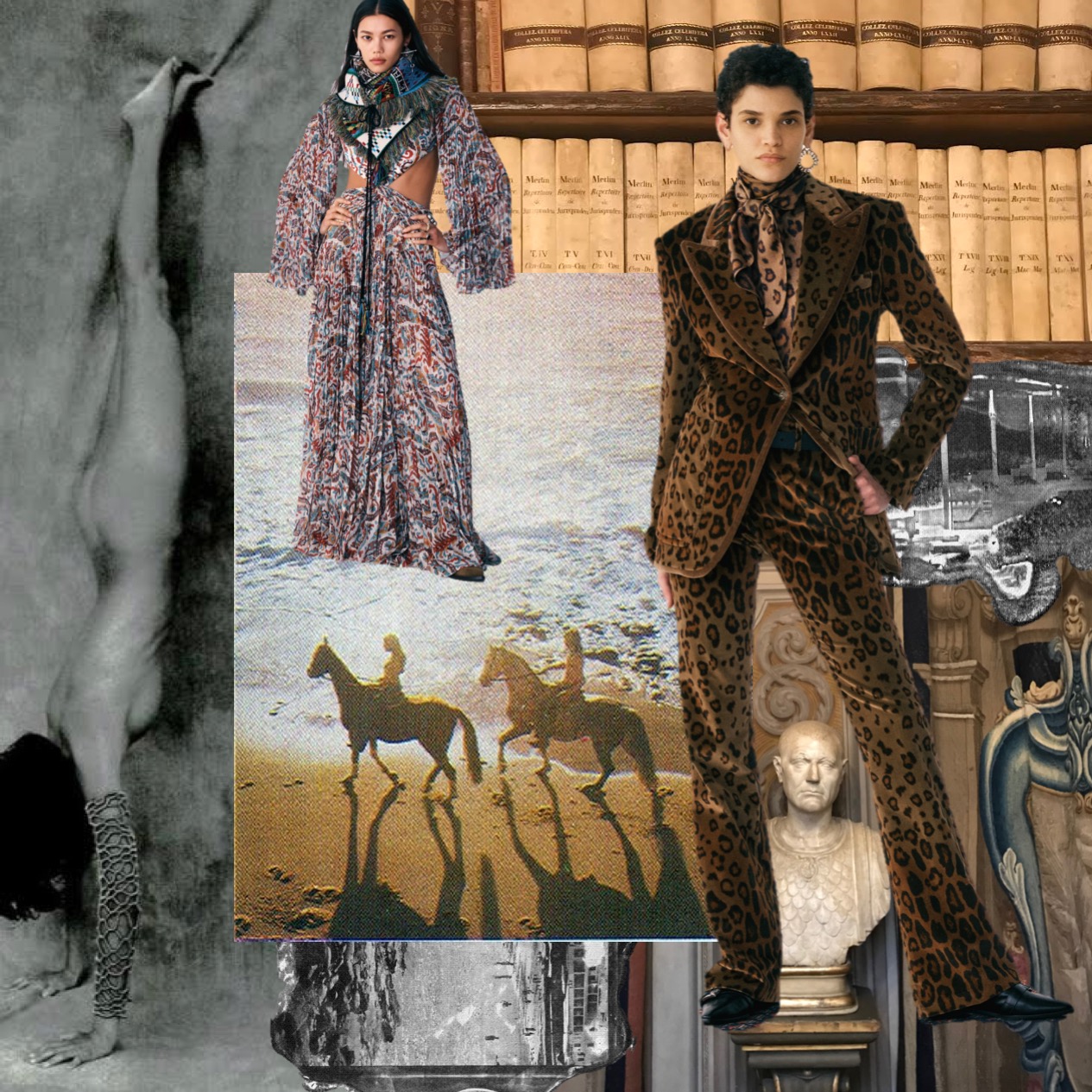
Voyager. Etro Pre-Fall 2021

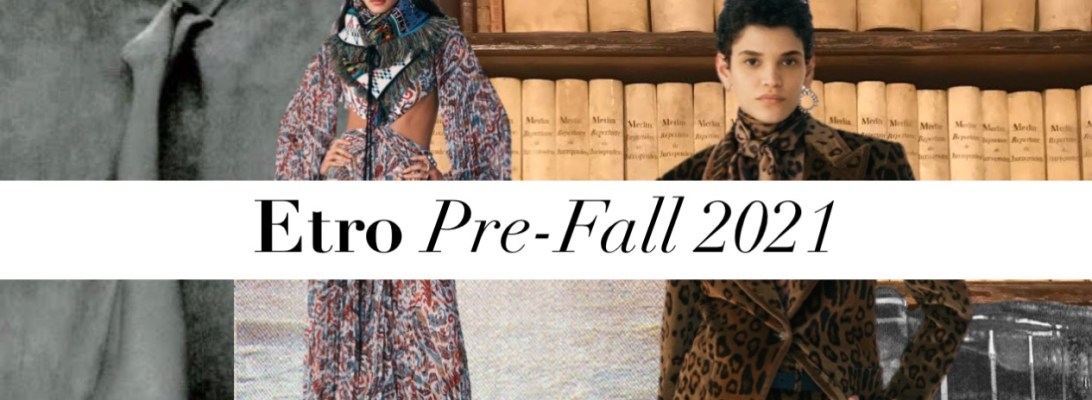
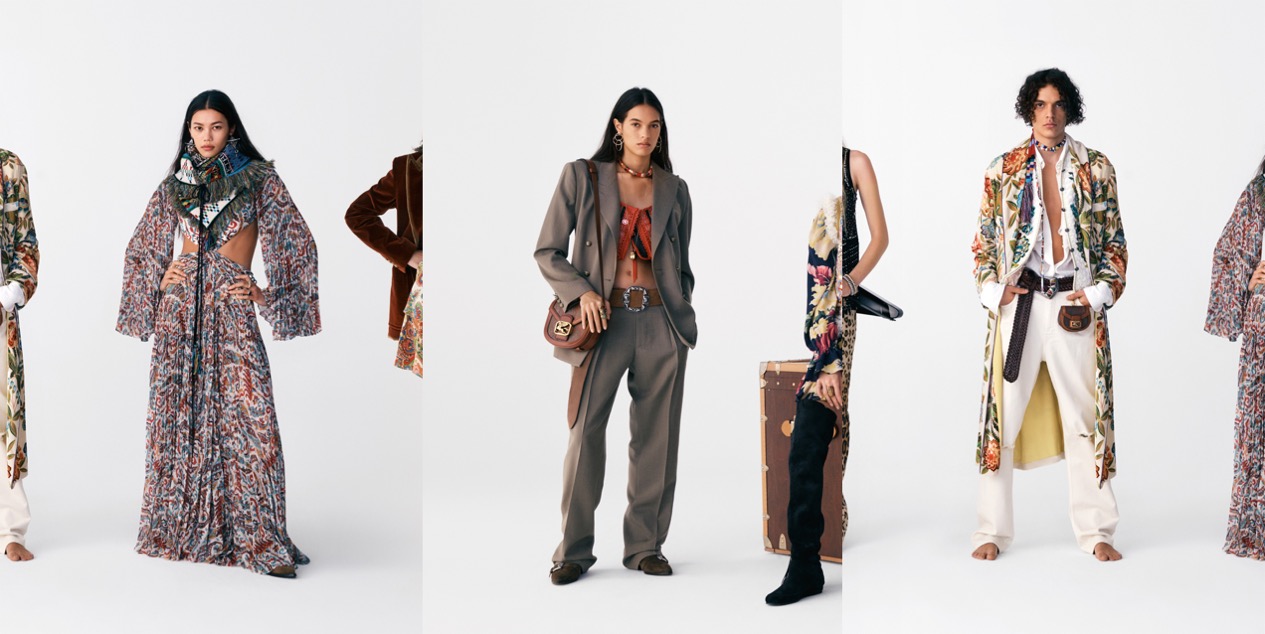
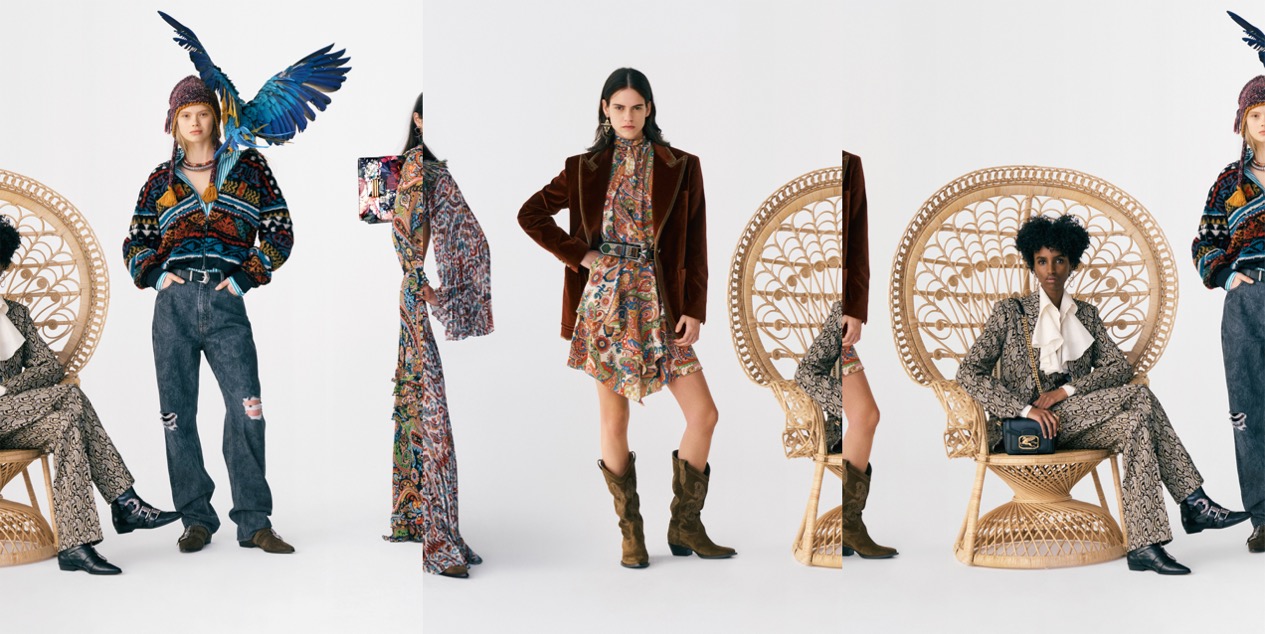
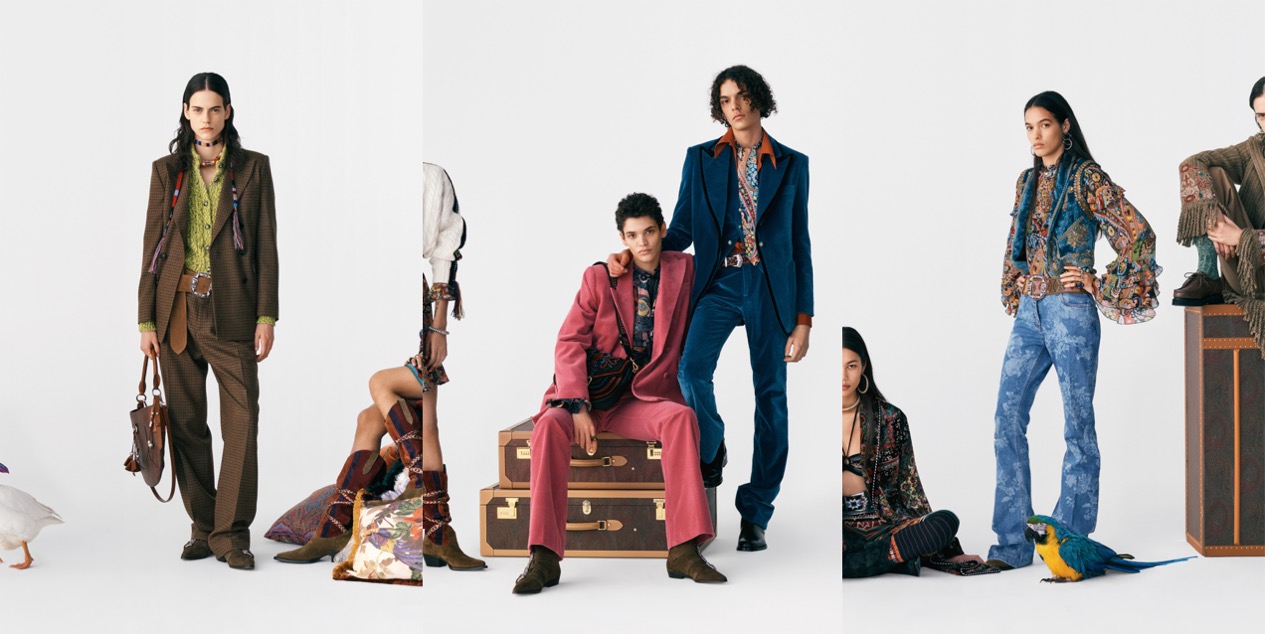
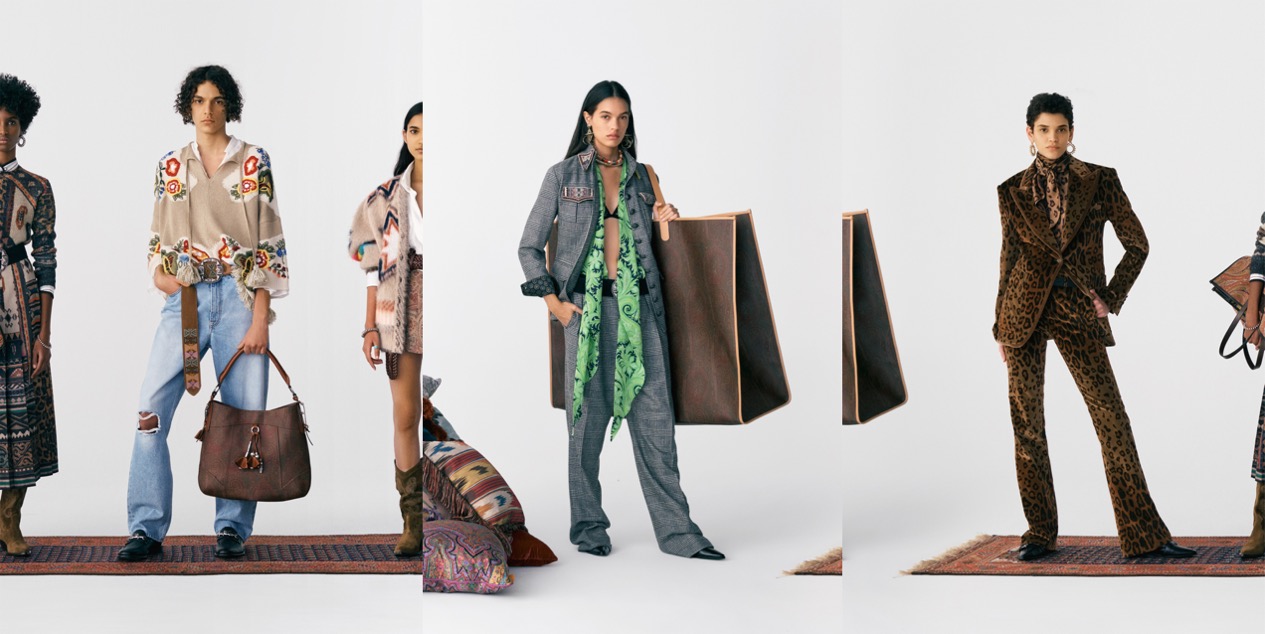
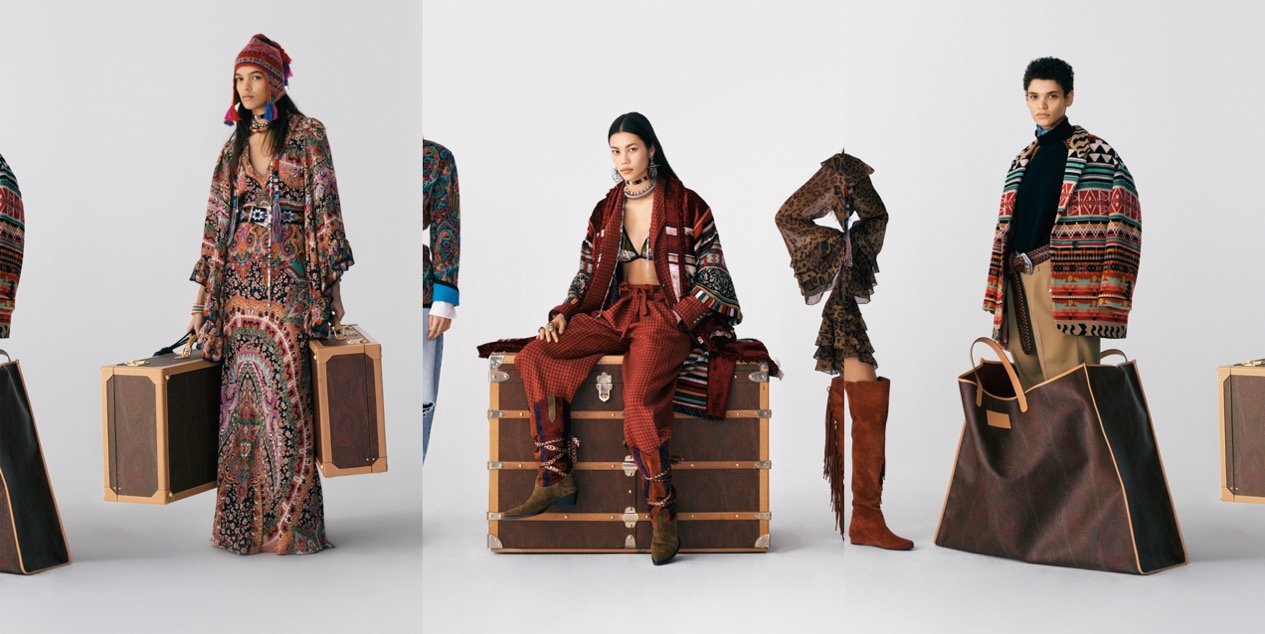
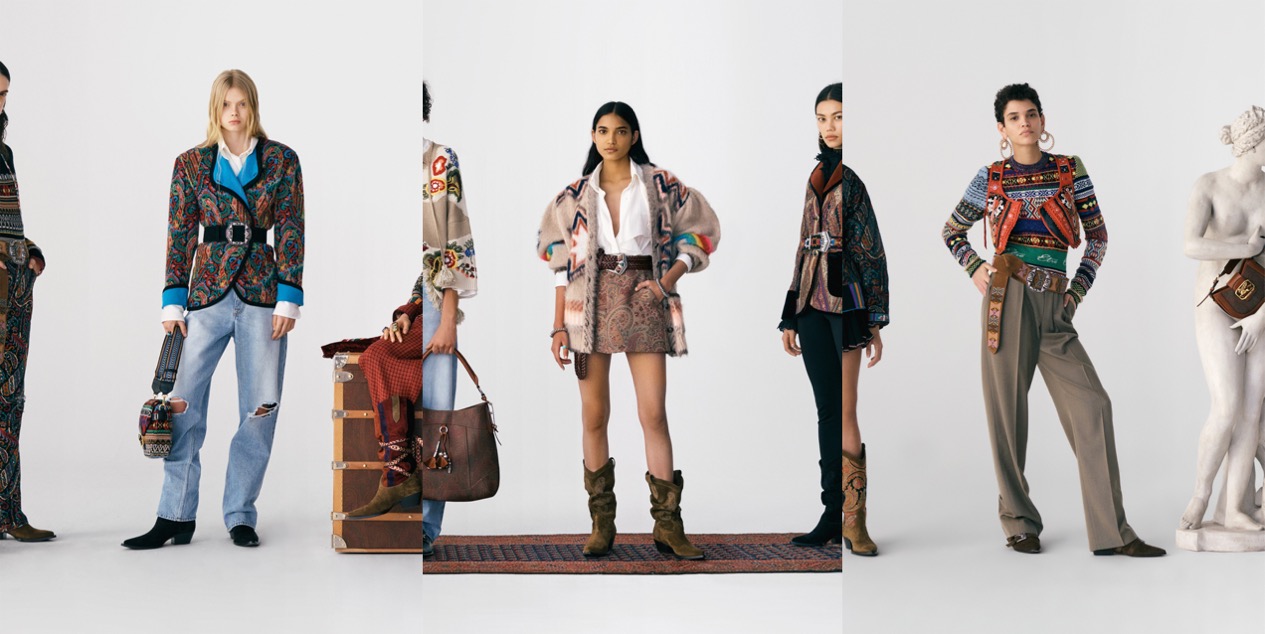
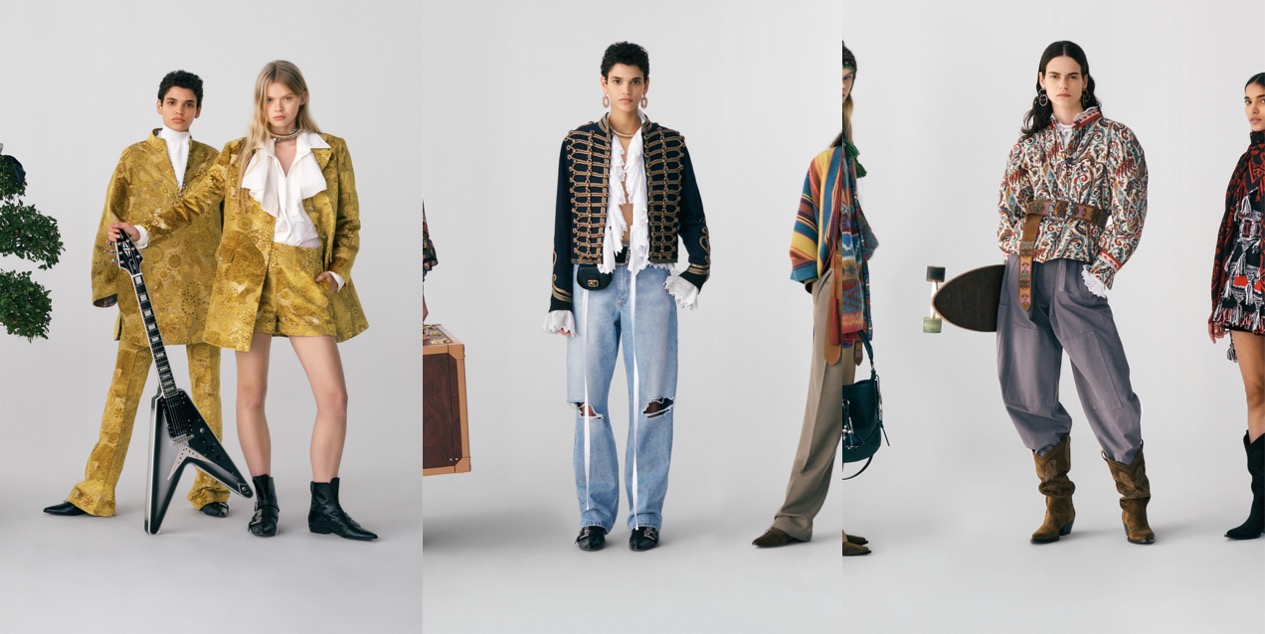
For the past few seasons, I take peeks at Etro and I must admit that something good is going on there. Comparing to the pretentious dustiness I always had in mind when thinking of the Italian brand, now I’m really intrigued with its fresh, revived care-freeness. And guess what – it’s not about a new creative director, since Veronica Etro designs womenswear since 2000. “I’m a natural-born optimist, I always try to see the glass half full,” said Veronica to Vogue during a Zoom review of Etro’s pre-fall 2021 collection. Italy is still in its second lockdown with no sign that Christmas travels will be possible, but Etro nevertheless sounded positive. “When we finally get out of this – and we will get out of it sooner or later – we’ll be ready to enjoy life to the full again. To travel, to party, to meet with friends, to get our freedom back,” she said. With her hopeful disposition, Etro hasn’t been tempted in the least to propose the elevated version of the stay-at-home loungewear that many designers have turned to for their post-pandemic collections. She believes that fashion should help women to be better versions of themselves, no matter the circumstances. A need for comfort is an inevitable byproduct of our present WFH limitations; it can’t be ignored. However, she said, “Etro has always been about a natural sense of ease, so I didn’t have to change my perspective much. It’s more about celebrating the freedom we’re craving to go back to. I thought about the future, about the clothes we’ll feel good in, and how we’ll enjoy getting dressed.” The collection reads as a free-spirited round-up of the best of the label, individual pieces as imaginative and romantic as they are effortless to wear, spiced up with a dash of Etro’s haute-bohemian flair, and all worn by a community of diverse characters. Paisley-printed garden party dresses alternated with soft tailored pantsuits in plush velvet, while languid tapestry dressing gowns, richly printed kimonos, and jacquard-knitted cozy wool cardis looked versatile enough to sit comfortably in a masculine/feminine wardrobe. “Traveling is always a learning experience and I miss it terribly,” said Etro. So much so that in the look book a model carries an amusing XXXL paisley-printed shopper, big enough to hold the entire collection. A true voyager’s dream!

Collage by Edward Kanarecki.
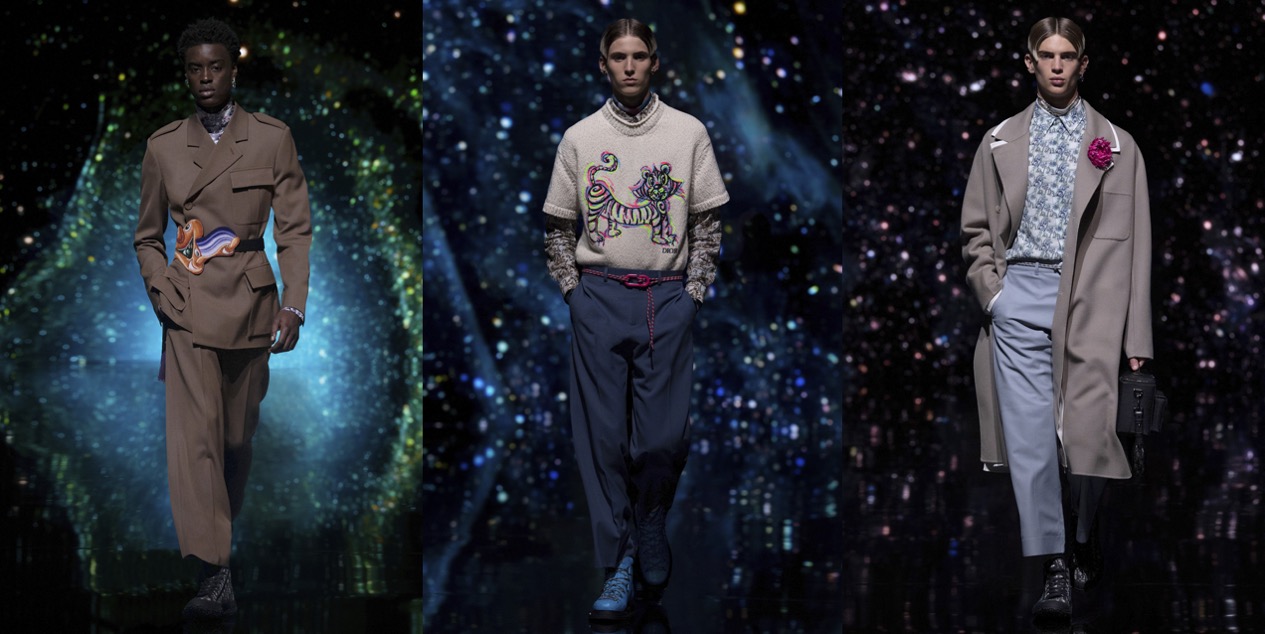
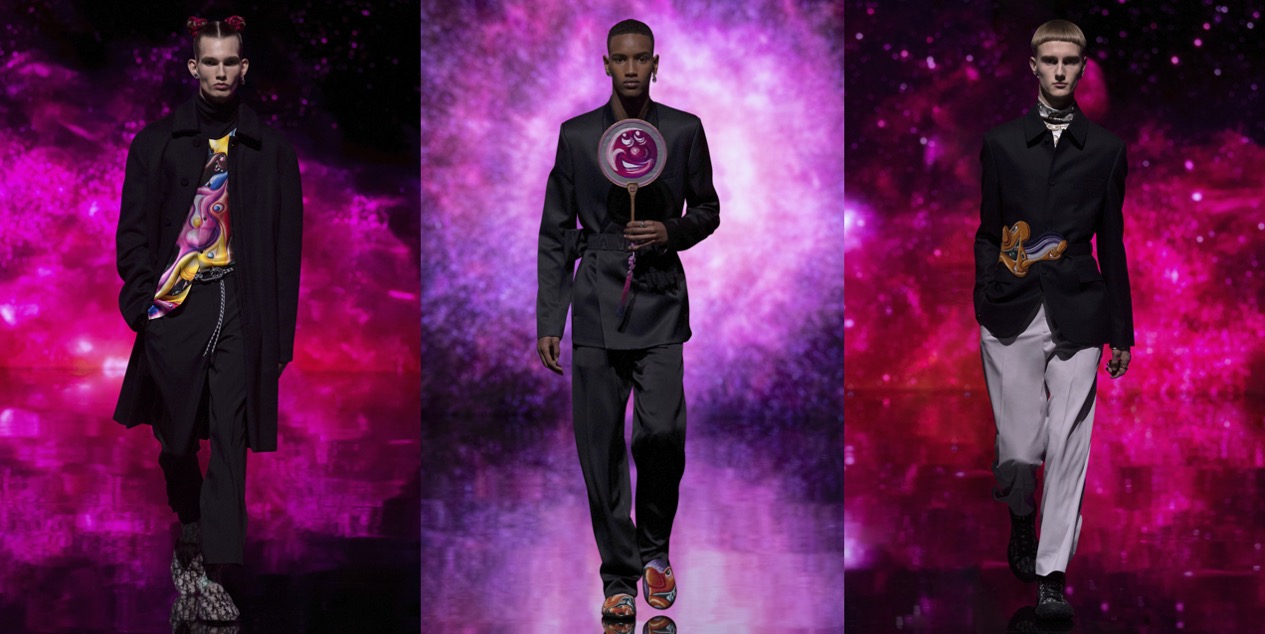
Trippy Elegance. Dior Men Pre-Fall 2021

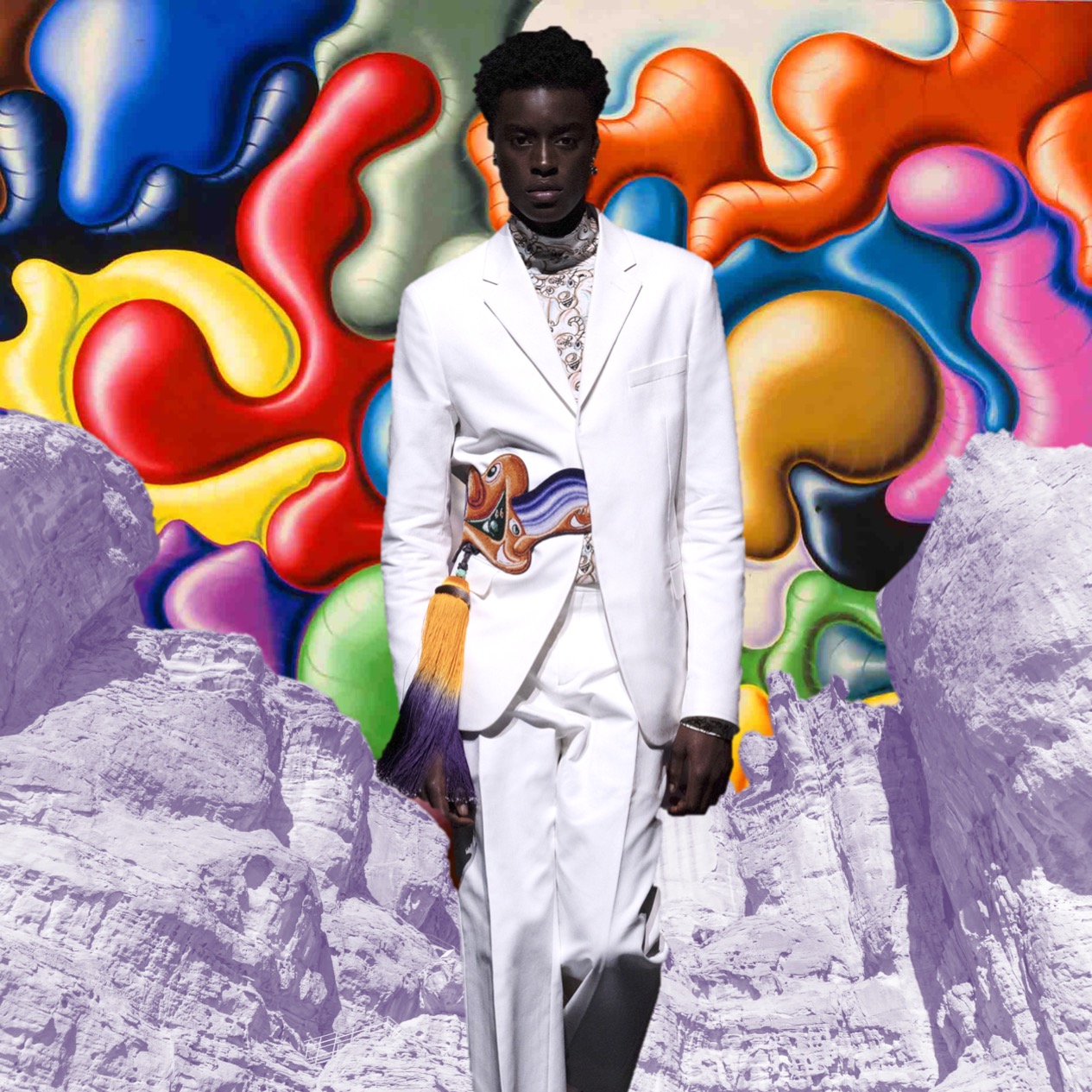
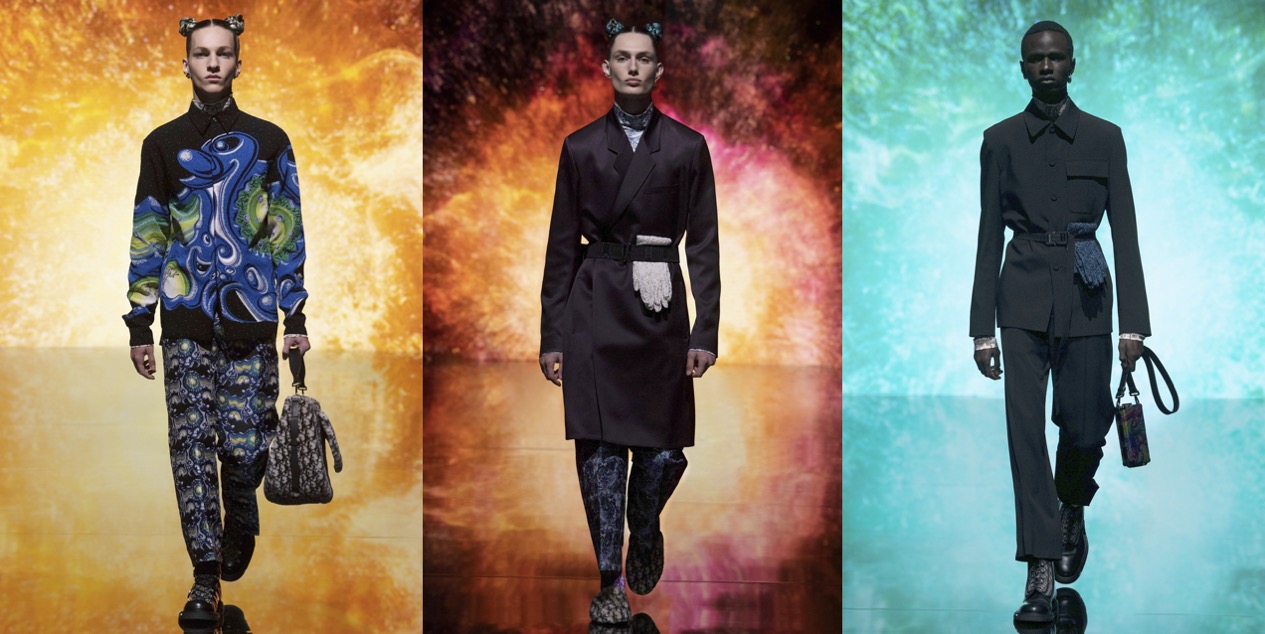
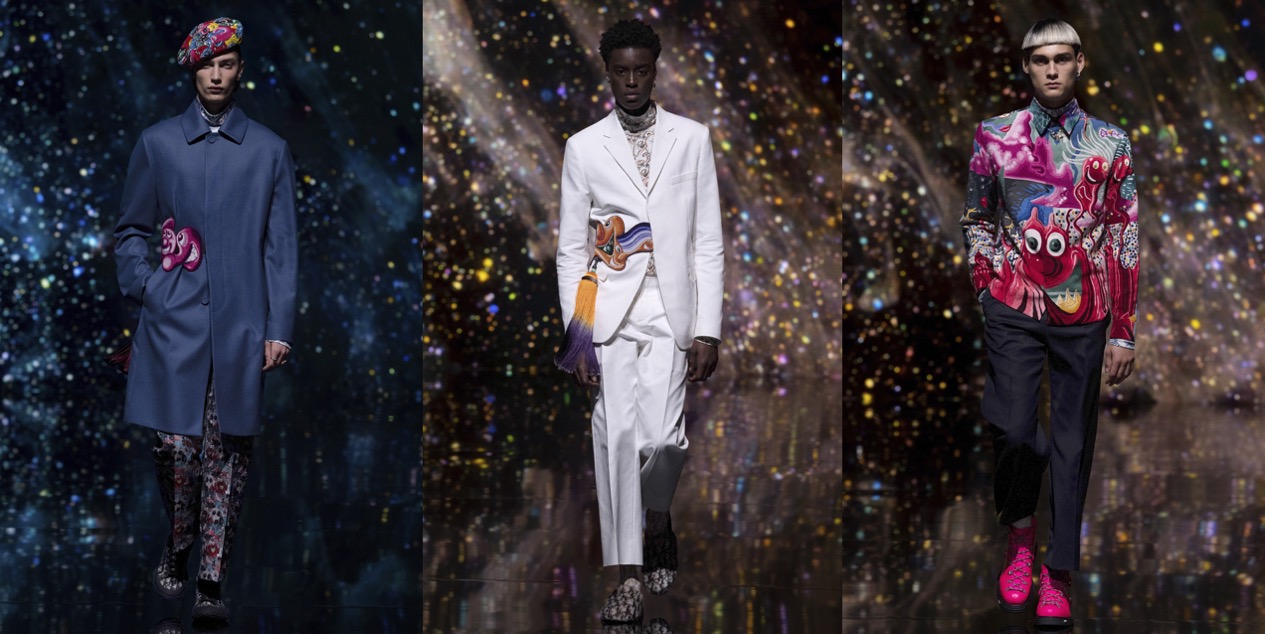
This time last year, Kim Jones’ many fans across the fashion and art worlds were gathered in Miami Beach. His Dior Men show was a Basel-adjacent affair, complete with a walk-through of the new Rubell Museum. Last moments of old reality. The pandemic scuttled plans to stage a show in Beijing for Jones’s latest outing, and this way sole focus was directed at the clothes. Last year, Jones revealed a colorful collaboration with Shawn Stussy, the streetwear OG. This season, he tapped Kenny Scharf, an American artist who emerged from the 1980s East Village scene, making street art alongside his friends Keith Haring and Jean-Michel Basquiat. “The fun and the energy of that time – you see young kids being excited by Kenny Scharf’s work. It’s speaking across generations,” Jones told Vogue via Zoom. Scharf’s canvases can now fetch up to six figures, but he still has street cred: via “Karbombz,” a public art project, he’s tagged upwards of 300 cars with his imaginary creatures – all for free. Scharf, whose first show was at New York’s Fiorucci boutique in 1979 and earliest fashion hookup was with Stephen Sprouse, is the perfect Jones collaborator. His work gleefully obliterates boundaries too. “I’m one of the inventors of all that,” Scharf said on a call from his L.A. studio. He raved about Jones: “He’s a listener, he’s a learner, and that shows. He went really deep into what I’m doing.” Together, the designer and the artist selected contemporary pieces and older ones to reproduce, including When the Worlds Collide, a 1984 canvas in the Whitney’s permanent collection. Scharf also designed 12 Chinese zodiac signs for the show’s knits and underpinnings, and, of course, he had free rein to reinterpret the Dior logo. “I just wanted it to be a very full-on version, using specific techniques to recreate his work in really beautiful ways, to make it even more Pop,” Jones said. In some cases, the Dior ateliers were joined by Chinese artisans who rendered Scharf paintings in delicate seed embroideries. Silhouette-wise, Jones’s instinct was to soften his distinctive tailoring and give it a more lounge-y attitude. Jackets are belted like robes and pants are easy; some of the models wear Oblique-patterned slippers. We are still locked in, after all – lets keep it stylish.

Collage by Edward Kanarecki.