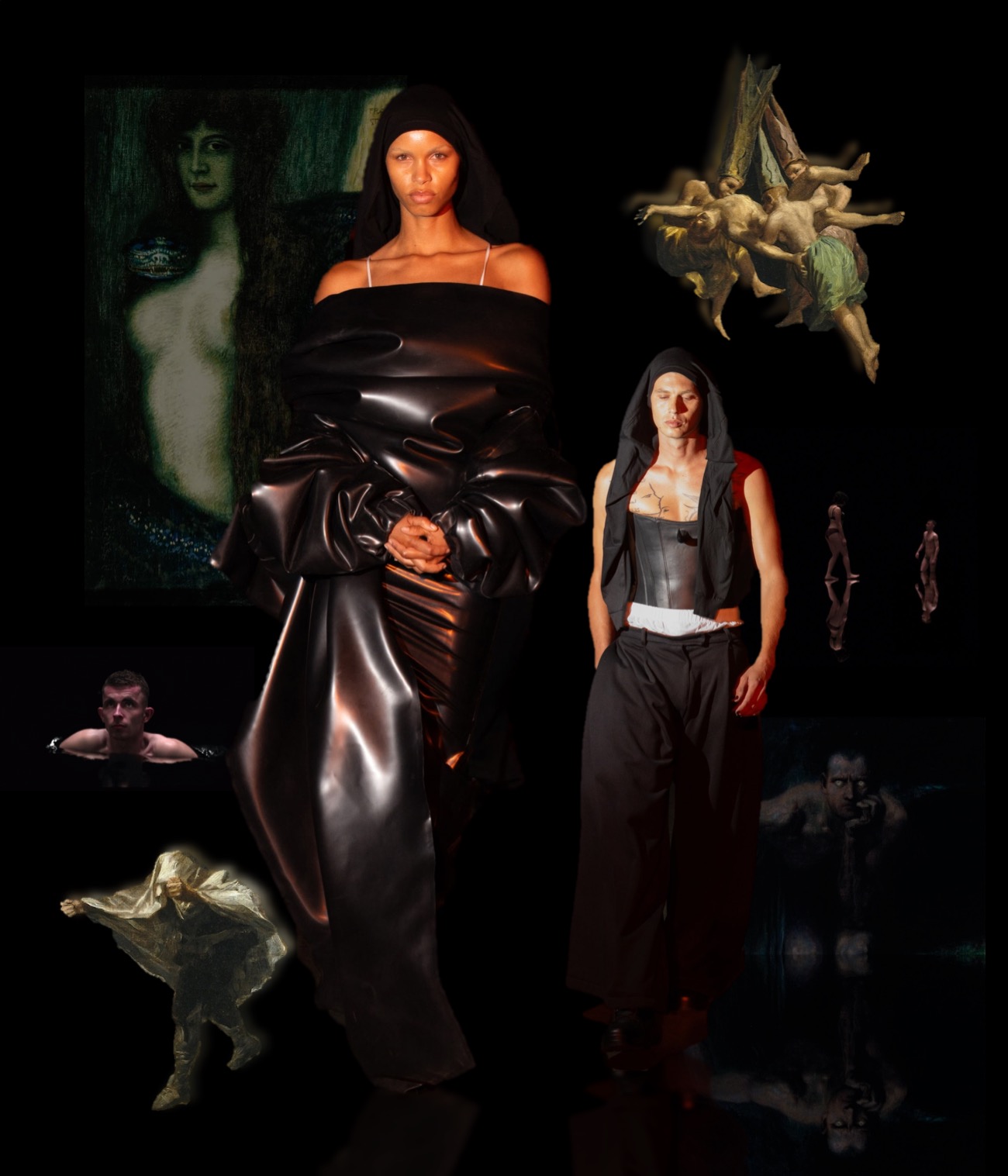
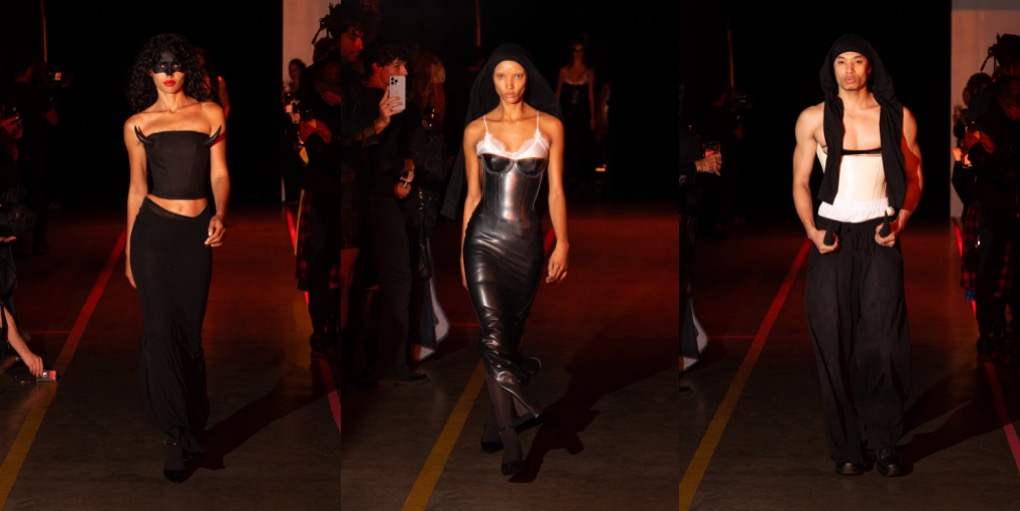
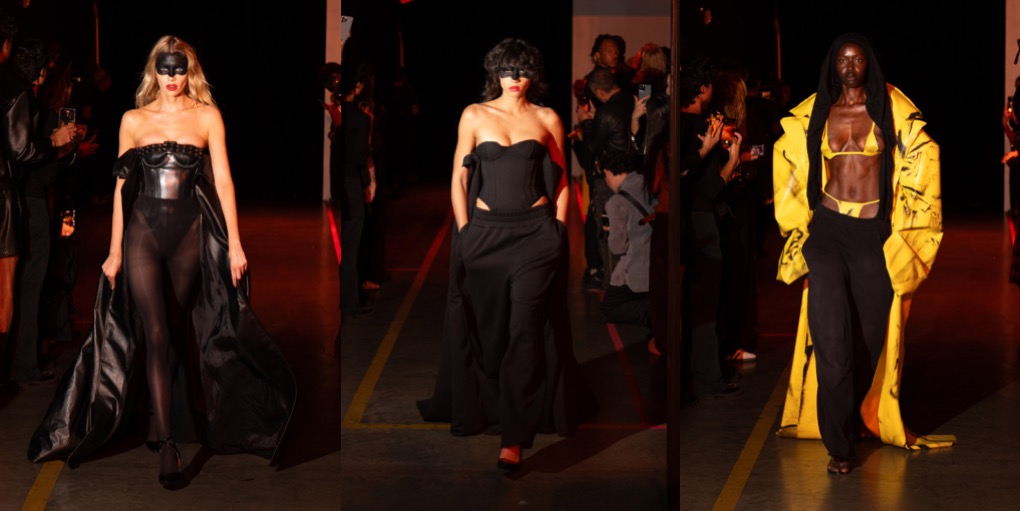
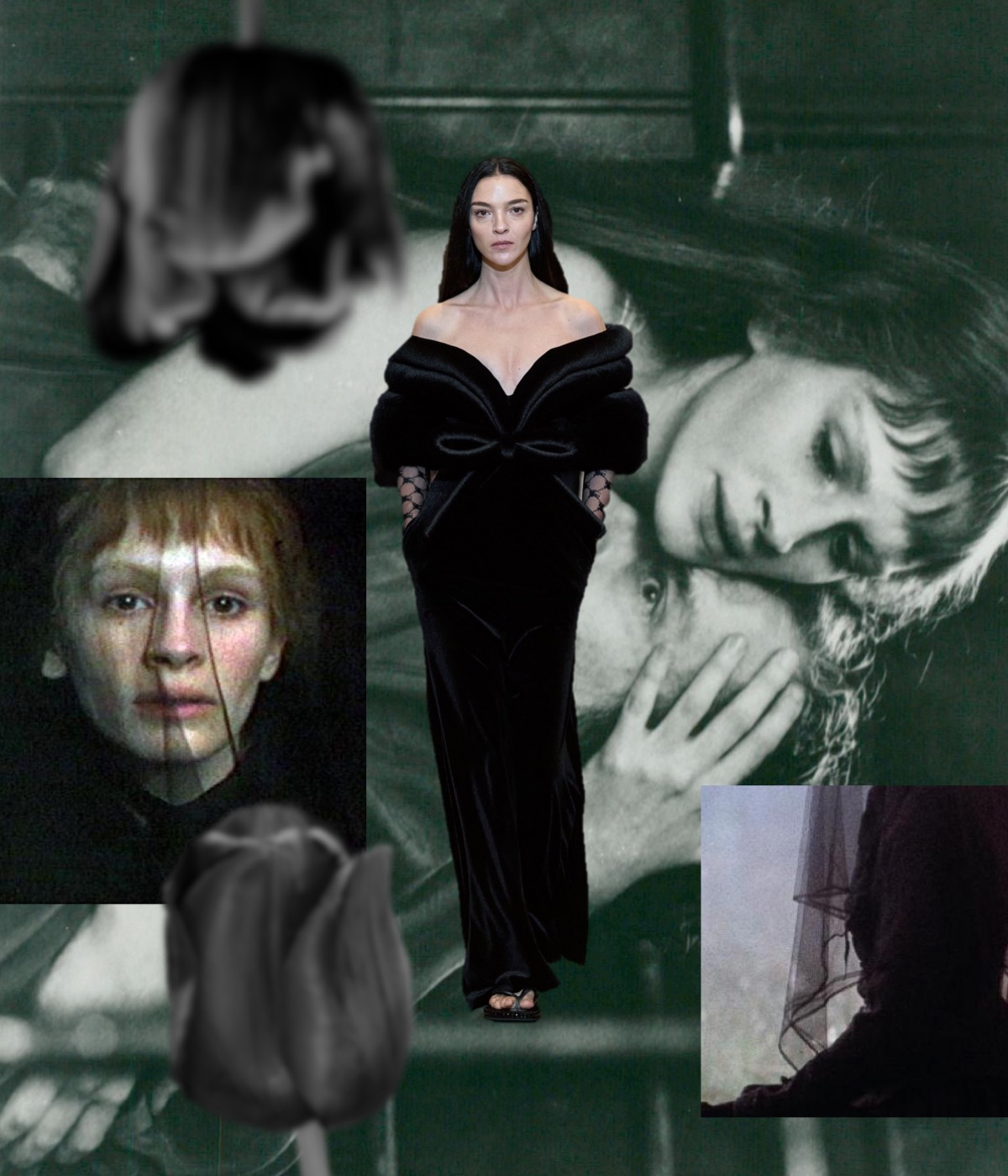
Luis De Javier, Spanish-born, London-based designer, presented his spring-summer 2024 colection in a space smack in the middle of Hollywood, just above Sunset Boulevard. The designer brought on a new stylist – his mentor, Riccardo Tisci. Judging by these few sentences you can already predict this was a hot fashion moment. Against a techno soundtrack, de Javier presented a collection that has evolved from his previous ones, with a matured sense of proportion and volume. He continued his exploration of political commentary through clothing inspired by Spain’s 1990s hardcore rave movement, La Ruta del Bacalao. Since it was shut down by an oppressive government, the collection imagines a utopia in which the movement would still be alive today. Corseting was the common denominator, as it was in past seasons, communicated in different materials such as leather, canvas, and latex, and layered under and over other pieces. A latex coat with exaggerated shoulders draped fluidly; constructed as a corset or dress, it covered the body as if it were poured over it. The bling came by way of chains and cords draped over jersey dresses, and unlikely materials, such as extra-long ballerina nails, that were reimagined as dramatic fringe on an asymmetrical evening dress. Mixing club kid vibes and Cristobal Balenciaga-inspired could easily go wrong. Tisci’s mentorship lends refinement to de Javier’s vision. Where his past collections had obvious references, this one is more subtle, and what might have previously been rough around the edges now came with the romantic darkness Tisci is known for. Tisci’s touch in the styling was evident as well, via the restrained color palette, the delicate mix of lace and leather, and belts cinched tightly across the bust. The jersey t-shirts worn over the head recalled a nun’s veil, which is in line with the religious references Tisci used during his time at Givenchy. This was a strong, evocative collection, and also a big reminder that fashion needs more of Riccardo Tisci.
Collage by Edward Kanarecki. Don’t forget to follow Design & Culture by Ed on Instagram! By the way, did you know that I’ve started a newsletter called Ed’s Dispatch? Click here to subscribe!
Burberry‘s garments and accessories are inextricably linked with the phenomenon of “Britishness.” These timeless classics are woven into a British identity that is constantly evolving and ever-changing, like fashion. “Burberry has been a British institution since its inception in 1856” – says Naomi Campbell, who has regularly been the face of the historic brand’s advertising campaigns over the years. “By wearing Burberry, I feel that I am representing my country. I believe that British style always leads the trends. We Brits don’t just wear it, we live it,” she explains. The last two decades, through various creative directors and their visions, have established Burberry as a heritage brand , which remains at the forefront of fashion and its associated culture.
However, the aforementioned Britishness is a flexible and multifaceted concept. Perhaps because this phenomenon is full of paradoxes, and consists of opposites that mutually attract each other and organically coexist. The history of imperialism and the controversial Brexit are associated with the term Britishness as much as the beige trench coat, rainy weather and ironic sense of humor of the English. British society is made up of people who wear all sorts of uniforms, yet are true rebels. What they have in common is a multi-generational love of Burberry.
The brand naturally communicates many expressive signs of a collective, internationally understood notion of Britishness. In the 18th century, France saw a fashion trend perceived as British – it was called Anglomania, and the clothes associated with it were simple, well-tailored, often made of linen and wool, without unnecessary ornamentation. Ideas of functionality and utility are central to the British way of life, hence perhaps the reason why, a century after the Anglomania phenomenon, rainproof outerwear by Thomas Burberry made of luxurious but eminently practical fabrics has become a symbol of Britishness around the world.
Burberry’s Britishness also encompasses distinctive clichés – like the fashion brand’s focus on weather resistance. Burberry’s clothes and accessories are designed for the British rains, which last year-round, and ironically refer to the famous British propensity to discuss just the weather. Words like “democratic” and “egalitarian” come up when it comes to the British clothing discourse – and when it comes to Burberry. After all, the design of Burberry’ s iconic trench was taken from the world of uniforms. This is, of course, related to the idea of practicality. The brand’s clothing is inspired by workwear: it might as well be a tailored suit as a handmade fisherman’s sweater. Burberry trench epitomizes this kind of pragmatism: every element of it was created with maximum comfort in mind as a reaction to everyday life. Another of the brand’s main hallmarks is, of course, the globally recognized Burberry check, a streetwear uniform since the early 1980s. It was then that the iconic grille became a representation of affluence as well as youthful aspirations. It had a similar significance in the mid-1990s, when, representing Britishness, it became a symbol of the Cool Britannia movement and a favorite of such homegrown cultural figures as Liam Gallagher of the Britpop band Oasis.
Burberry appeared on the map of true high fashion thanks to Christopher Bailey, who for 17 years presented the brand’s show collections during London Fashion Week. Over this period of time, Burberry became synonymous with contemporary fashion that allowed itself to experiment within the safe confines of the lexicon of the aforementioned Britishness. From 2018 to 2022, Riccardo Tisci, the Italian designer who resurrected the Parisian fashion house Givenchy, tried to pull Burberry out of its stylistic comfort zone – which did not always end in commercial success. For him, working at Burberry was an exploration of the concept of national identity and its ever-changing nature (especially in the context of Brexit). “Here we have monarchy, art, elegance, perfection. And we also have that other, darker side: punk. That’s the beauty of Britain: incredible diversity,” the Italian designer concluded in an interview about his role at Burberry. British rebels continue to inspire: if in the mid-20th century the perception of Burberry largely leaned towards the style of dandies and aristocrats, today the brand is taking the aesthetics of British anarchy as far as possible. Tisci’s collections were created under the influence of the style of punks and mods, as well as casuals – the youth of the 1980s who wore Burberry in a non-conformist, rebellious way.
In February this year, we met a new chapter of Burberry, under the leadership of Daniel Lee – the British designer who was responsible for the global success of the “New Bottega” phenomenon a few years ago. Unlike Tisci, however, Lee is definitely going for a more settled Burberry image, closer to the image that Bailey so painstakingly promoted (it’s no coincidence that today Bailey acts as a mentor for Lee). Lee’s debut collection for the autumn-winter 2023 season has sparked a debate on social media: is it revealing and innovative enough? In this patchwork of Burberry’s signature checks, blanket coats perfect for nature, cozy knits and airy dresses in a romantic rose pattern, it’s hard to find any real fashion news. But Burberry was never meant to be a fashion concept, but a mainstay of comfortable classics and high quality.
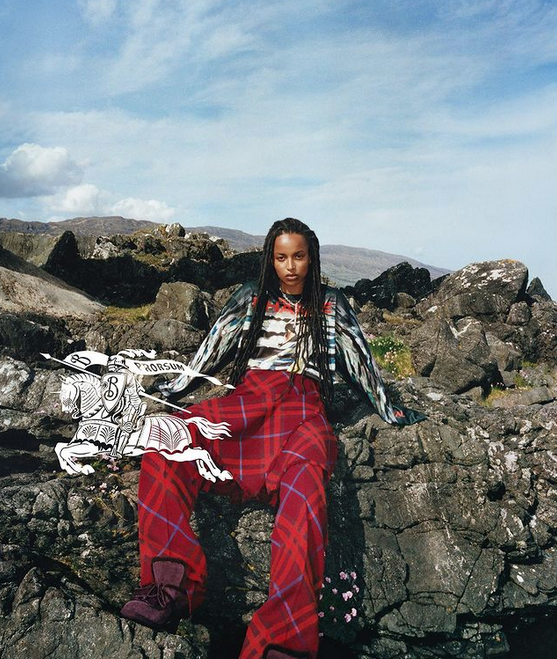
“I think the brand is all about functionality,” Lee told the press after presenting his fall collection. His men’s plaid pants with zippered pockets allude to clothing ideal for walks in Britain’s damp moores, while the women’s kilts have a casual cut reminiscent of picnic blankets. Of course, the collection did not lack wellingtons kept in intense colors. The designer is eminently versed in creating desirable accessories. Kit Butler appeared on the catwalk wearing a hand-knitted trapper’s hat in the shape of a duck head. This sight caused a real sensation on Instagram.
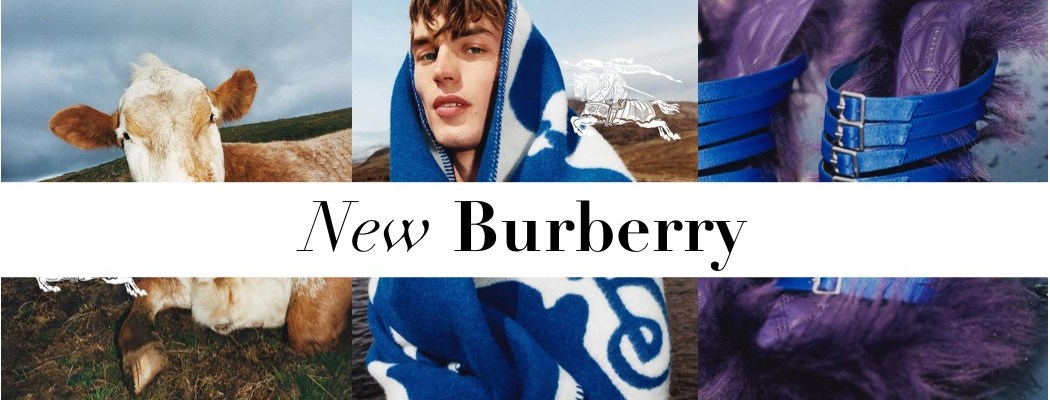
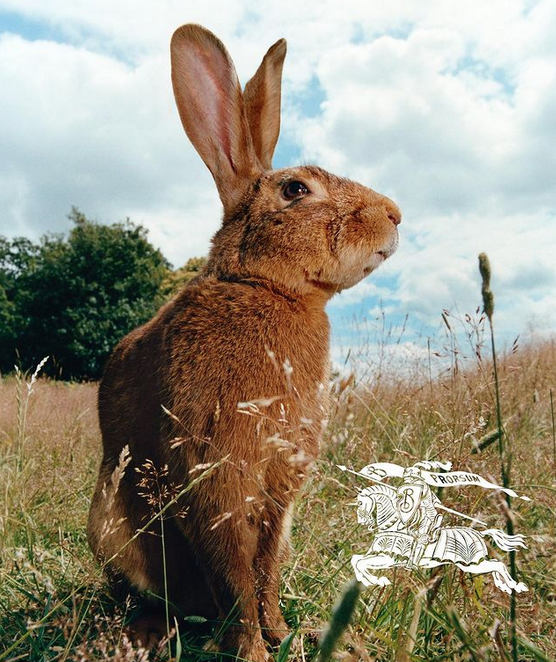
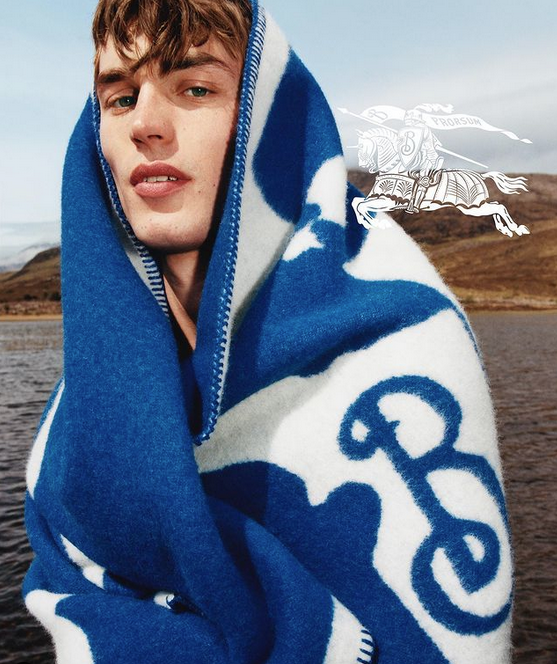
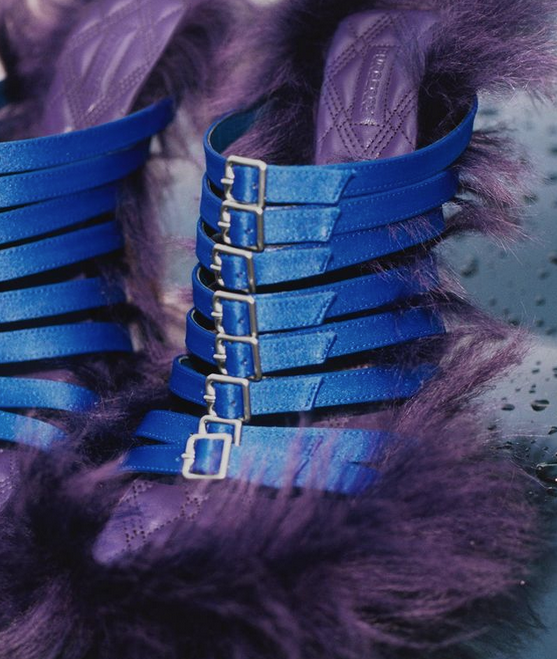
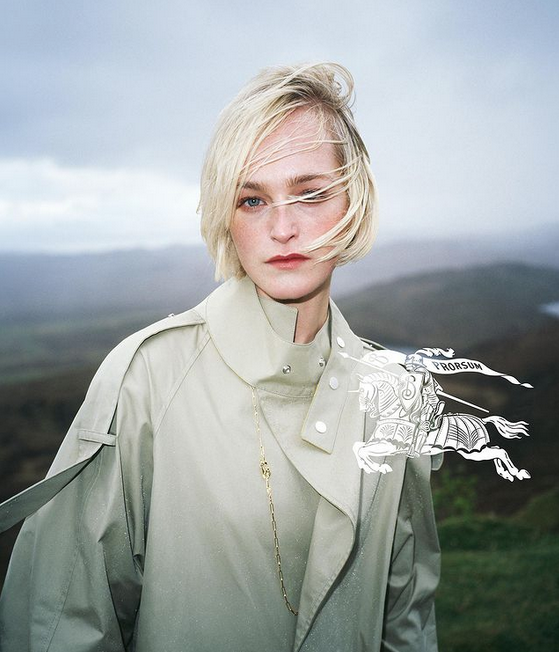
The capacious bags and panniers are fastened with clip-ons in the shape of a “B” (like Burberry), and are decorated with dangling tails of faux fur. This kind of English eccentricity is something Lee plans to develop in his collections in future seasons. Instead of a banal logo with the brand’s name, Lee promotes a somewhat forgotten but iconic Burberry symbol: a medieval knight on horseback. The emblem appeared on white dresses as well as over-size scarves. The brand’s new “flagship” color is also an interesting treatment. It’s all about the shade of deep, vivid blue. After the success of the memorable green colour with which Lee won the hearts of Bottega Veneta customers, will the “Burberry Blue” color become a new hit? Time will tell.
The text was originally written by me for GentleWoman. All images via @burberry, photos by Tyrone Lebon.
Don’t forget to follow Design & Culture by Ed on Instagram! By the way, did you know that I’ve started a newsletter called Ed’s Dispatch? Click here to subscribe!
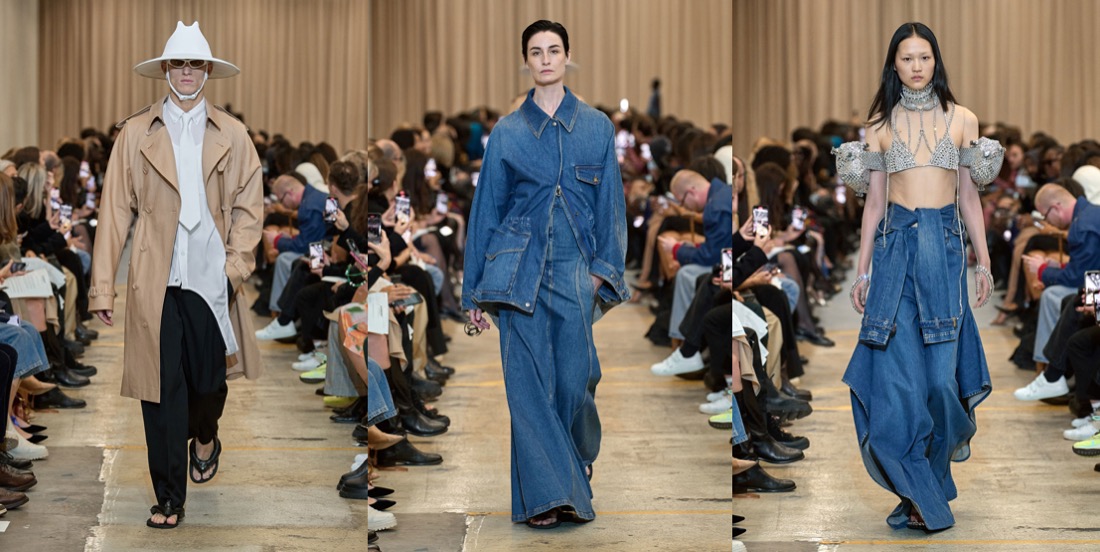
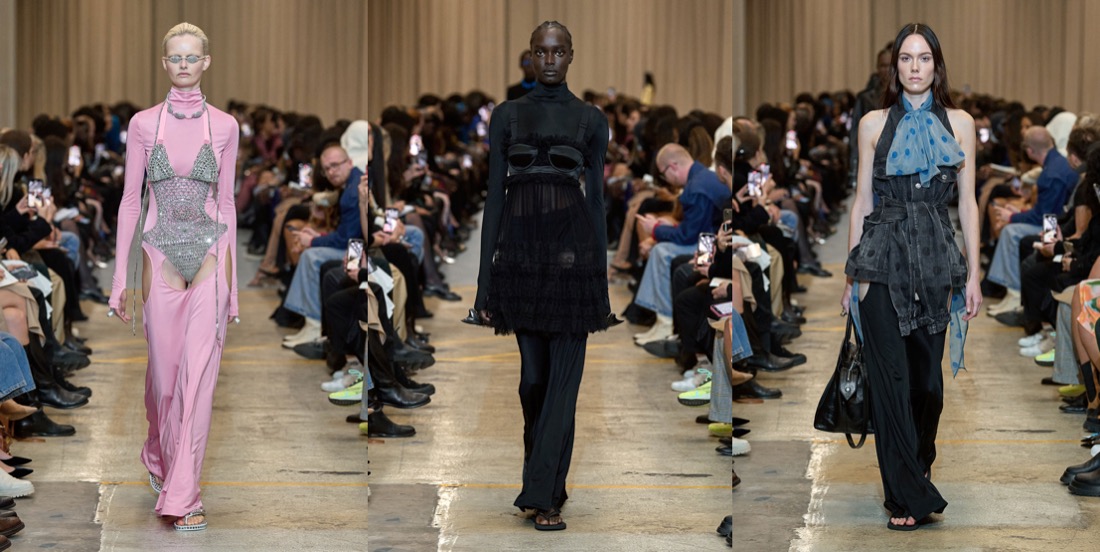
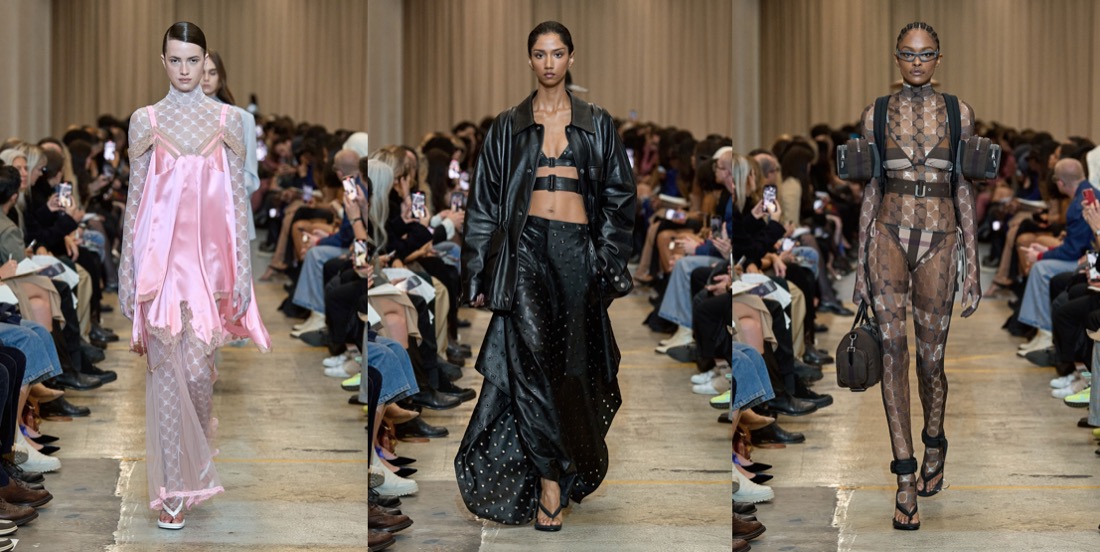
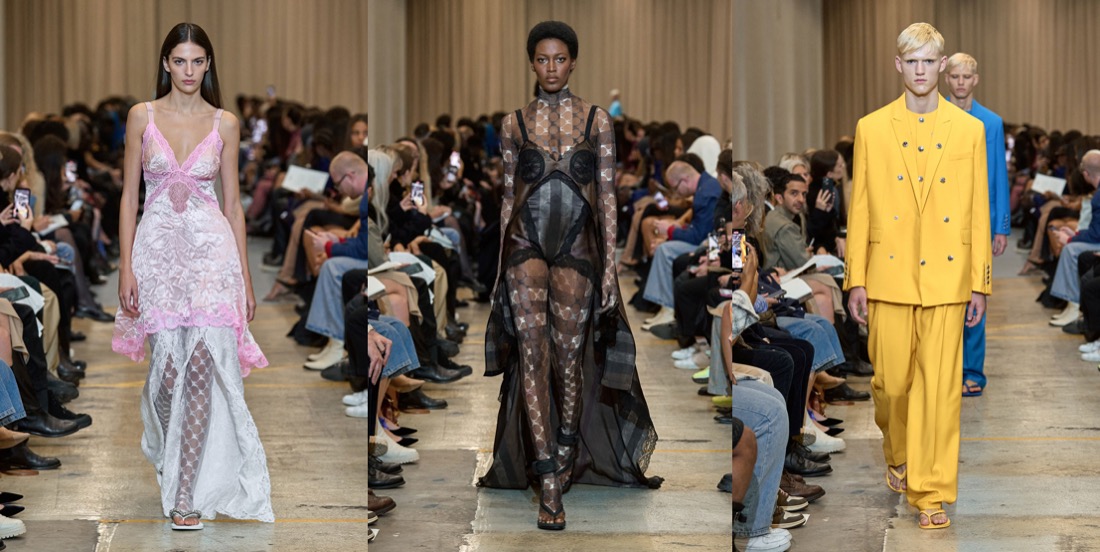
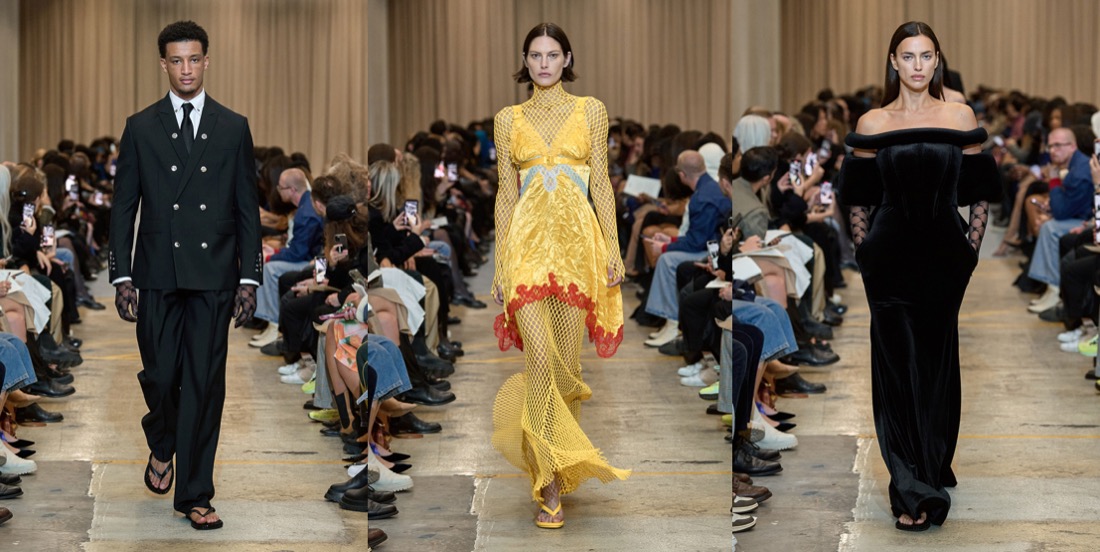
For Burberry‘s spring-summer 2023 collection, Riccardo Tisci seemed to have many ideas. But in the end, the overall result was messy and unedited. It came as a surprise, because his recent offerings for the British brand suggested he finally found the right track. After five years in England, Tisci (so often labeled “goth” by the fashion press) has gained a better understanding of the intricacies and eccentricities of British society – such as the beach and summer culture that inspired his spring collection for Burberry. “British summer is very different to anywhere else in the world, because Britain is basically built on big cities on the water. That means you really see people dressing on the beach, because you never know when it’s going to rain or when there’s going to be sun. The beauty is the goth on the beach, like these kids we filmed the other day,” he said after the show, referring to the show’s goth-tastic teaser filmed in Margate. “Or, you’ll see a wedding, or someone who’s gone there at lunch time to read. It’s all different personalities.” Since Tisci brought a more sensual spirit to Burberry, its swimsuits have risen to best-seller status. That fact, mixed with his homage to the beach-going goth, created a collection of swimwear fusions and hybrids. Press release is one thing; in reality, the concept looked too awkward and clumsy. The model casting, featuring Naomi Campbell and Karen Elson, didn’t help in elevating these clothes. Swimsuit elements like bikinis and bathing suit cut-outs were entered into dresses and tailoring, which simultaneously incorporated the trademarks of the goth wardrobe: lace, netting, perforation, gothic fonts, and crinkled negligees. De- and reconstructed outerwear evoked the dress codes of the industrial corner of the goth population, with dissected hoods and sleeves tied around the waists of trench coats and three-piece suits with big-buttoned gilets replacing the traditional vest. After Burberry canceled its original presentation during London Fashion Week out of respect for the national mourning period that followed the death of the Queen, Tisci squeezed the show in on the Monday between Milan and Paris. Presented in a naked warehouse in Bermondsey – the London Contemporary Orchestra lined up in the middle of the space – it unfolded in complete silence before the soprano opera singer Nadine Sierra broke out in a poignant aria. It wasn’t until the finale that the orchestra joined in. “It was a moment of respect. She was the queen of the world – every country respected her,” Tisci said.
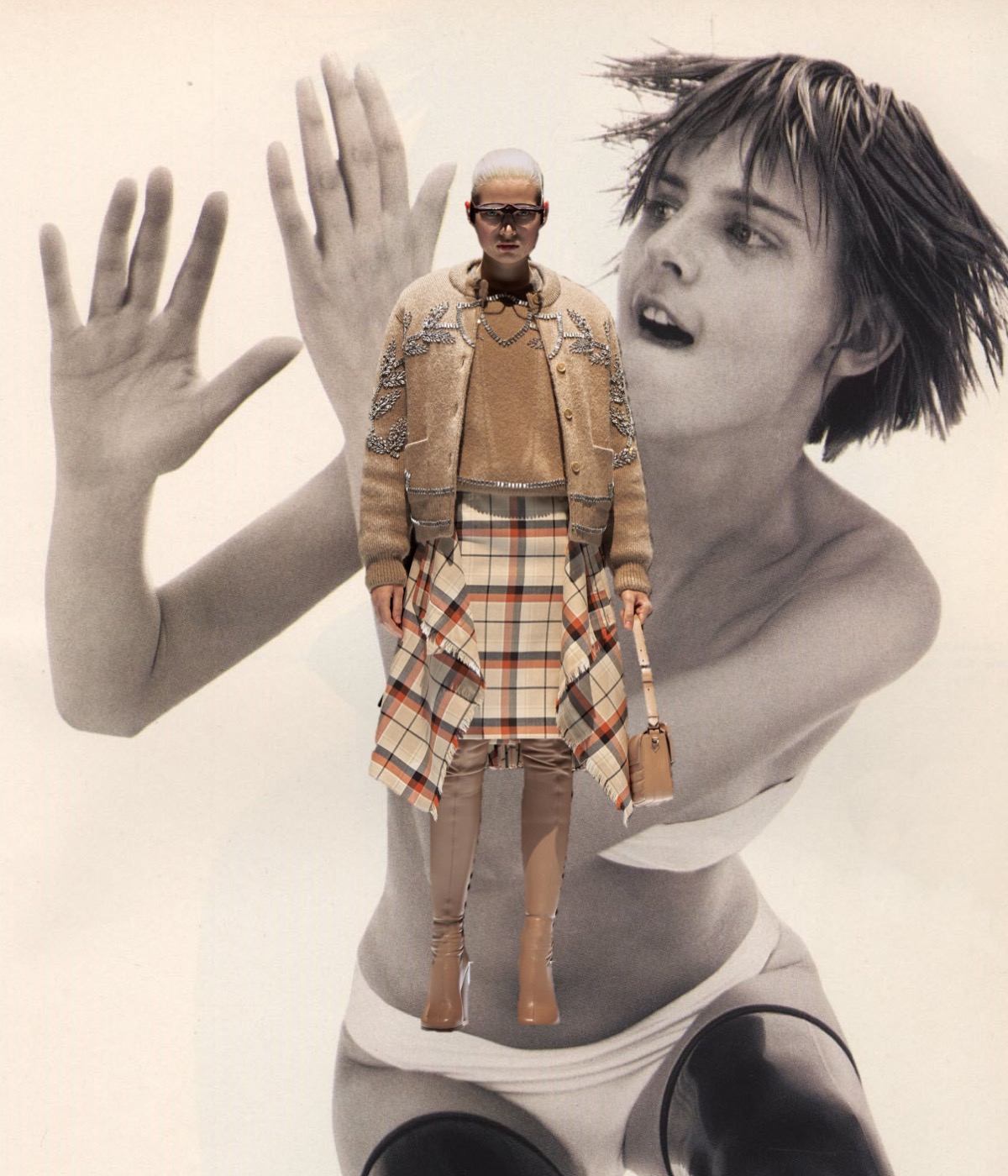
Collage by Edward Kanarecki. Don’t forget to follow Design & Culture by Ed on Instagram!
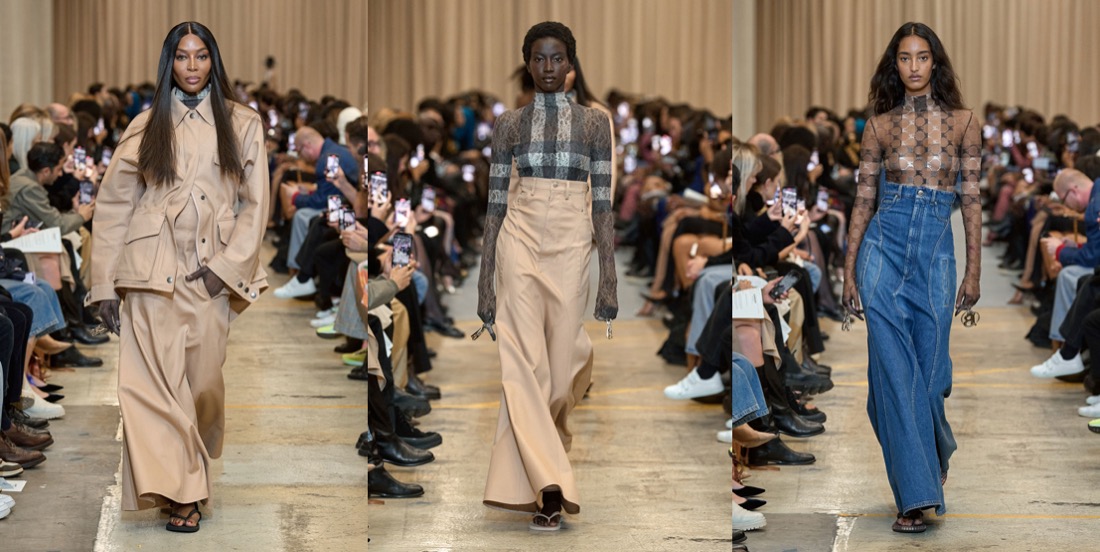
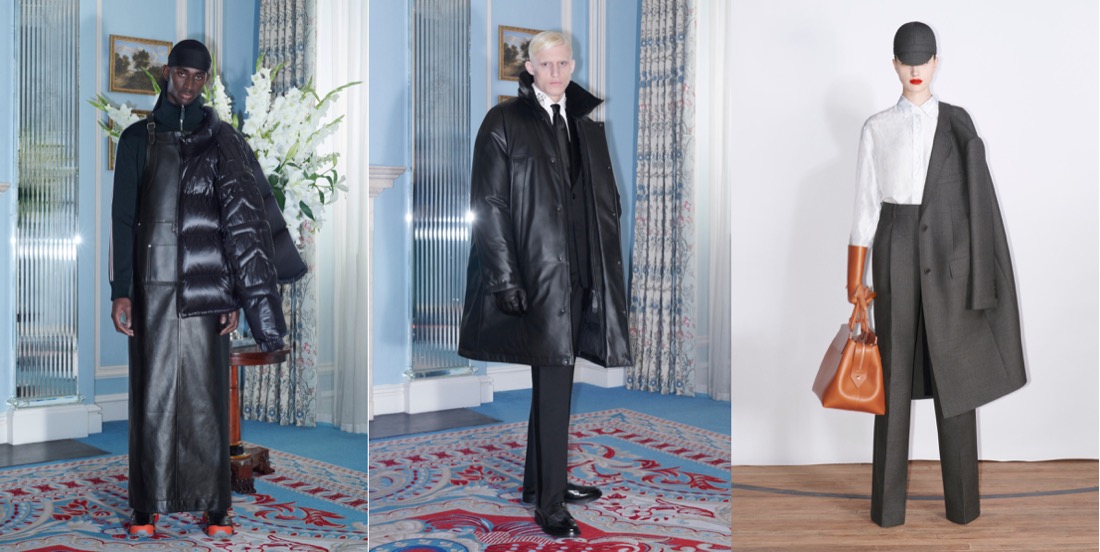
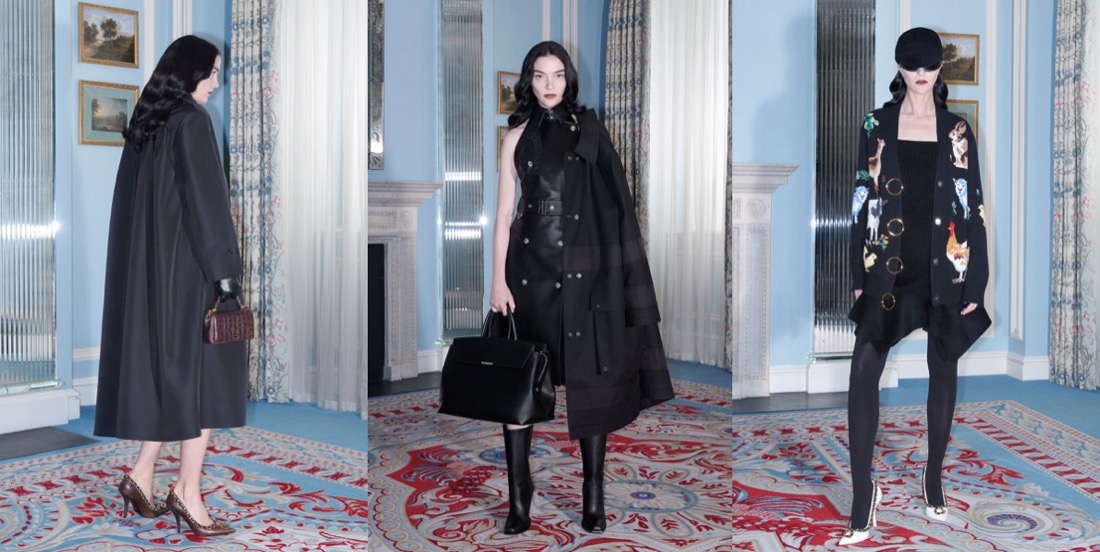
Burberry, with the Italian creative director Riccardo Tisci in charge, is one British institution which continues to believe in centering itself on border-free, non-nationalistic points of view. Tisci’s policy of turning over his pre-collections to perspectives on Burberry’s Britishness from his international network of “friends and family” is a proof of that. This season, he looked to his American friend, the artist Jared Buckhiester, to collaborate. According to notes winged from Burberry HQ, the two see eye-to-eye on looking at the brand signatures through the lens of UK rave culture – the lasting impression of the late ’90s which Tisci has held close to his heart since he studied at Central Saint Martins over 20 years ago. Maybe no one ever actually turned up to illegal warehouse raves in Kings Cross or one-nighters in the muddy fields of England looking like the people in the lookbook. The remnants of that rave past seemed to have been cleaned up and embedded, perhaps, in hybridized military bombers and tailored coats in the form of the classic Burberry trench fused with a biker jacket. But really, the Tisci /Buckhiester vision is a far more polished, lux-ed up vision of what the notes called ‘workwear,’ spiked with some glam heavy-duty black leather and contemporary twists of gender non-conformity. As part of that, there are long, tailored column skirts – or possibly maxi-aprons – that appeared to be assigned to the menswear side of the collection. There are Burberry customers with conservative tastes, or, put it this way, people who are in the market for straightforward classic clothes without any overt branding. Tisci hasn’t forgotten to design for them this season. Alongside the Burberry plaid denims, the male maxis, and some of Tisci’s hyper sexy slit skirts and curve dresses, there were moments when clean, sharp tailoring – particularly two black tuxedo jackets – stood out. With all the black leather, sometimes head-to-toe, the dark sexiness returns for good to Tisci’s repertoire. It’s something we’ve all missed since his best Givenchy years, and wanted to see again at Burberry. Finally, we’ve got it back.
Collage by Edward Kanarecki.
Don’t forget to follow Design & Culture by Ed on Instagram!
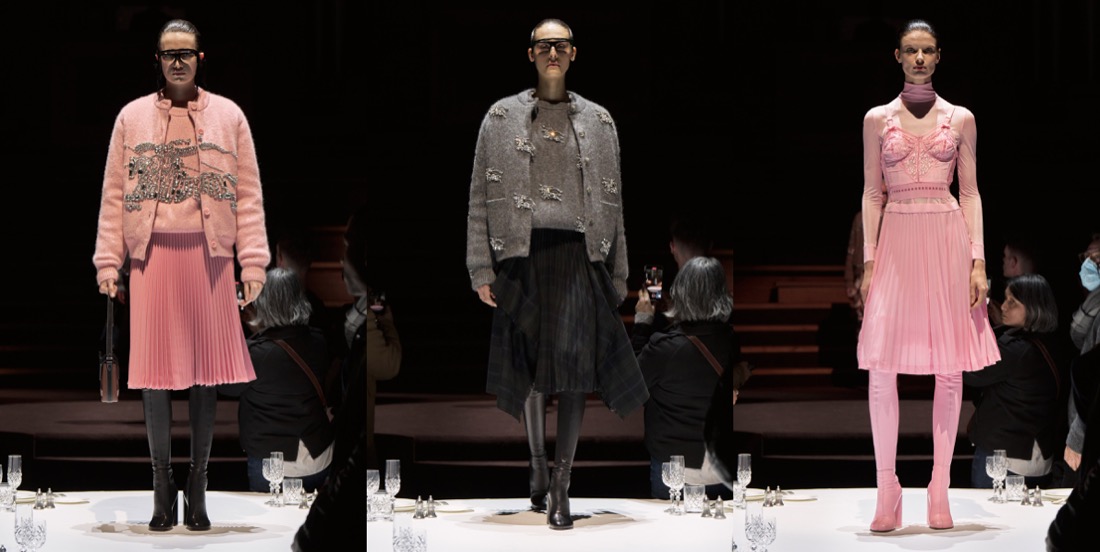
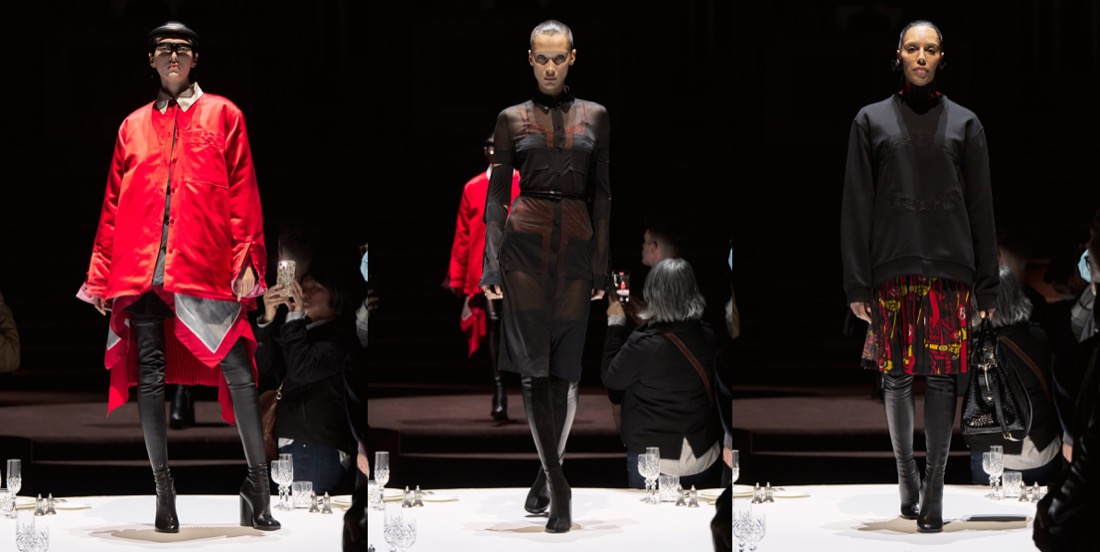
In 1856, young Thomas Burberry set out to equip local sportsmen from a small outfitter’s shop in Basingstoke, England. He made his name by inventing gabardine, a waterproof, tightly woven cotton inspired by the loose linen smocks worn by English shepherds and farmers. And by the early 1900s, business was booming in the Burberry emporium on London’s Haymarket street. The firm gained prestige by outfitting high-profile Antarctic explorers, aviators, and mountaineers. And, in addition to kitting out more humble seekers of adventure – golfers, skiers, horsemen – it soon got into the business of fine everyday outerwear, too. It’s an unmistakably British brand, and in 2022, it’s really worth digging into a brand’s heritage and redefining its codes. After seven full seasons, Riccardo Tisci is finally on (what seems to be) the right path. For the autumn-winter 2022 fashion show, presented a few days after fashion month’s finale in London’s Central Hall Westminster, guests stood massed together in the dark, shuffling back to give way to Tisci’s supermodels, friends, and artist-celebrities as they descended from somewhere high up in the wood-paneled auditorium. Clad in the spectrum of Tisci’s ideas about global, generational, and gender non-conforming realities, British tradition and, of course, Burberry checks and trenches, they climbed up to pose on tables which were set with silver and crystal, as if for a country-house dinner. “It’s a reconstructed collection of what I find in Burberry, and what I’ve been living as human in this moment in Britain too,” Tisci said before the show. “It’s a different perspective – you know, the way you feel things was a very deep different journey.” That stood as an explanation for the leveling, everyone-together breaking of catwalk convention, except that the event simultaneously managed to be a bombastic reclaiming of Burberry’s corporate position, a landmark of the British fashion business with global reach. So two collections came out – a menswear one and the women’s. For women, he ran the gamut of trench-and-check daywear through to grand ballgowns, segueing though deconstructed evening trenchcoats. He said he’d pulled it together by focusing on country waxed and quilted coats, and pulling out the symbol of the Burberry Prorsum knight on horseback. There were blanket-skirts and tartan capes, as well as old-school, fleecy twinsets. The designer reflected on how he was initially daunted by paying tribute to Britishness, but now feels much freer about applying his own instincts. “I was scared,” he admitted. “You know, as an Italian, Britain is important – it’s a such an historical country, with so much to say. So at the beginning, it was like the first kiss. It takes time, you know. And now I find my own way.”

















 Design & Culture by Ed