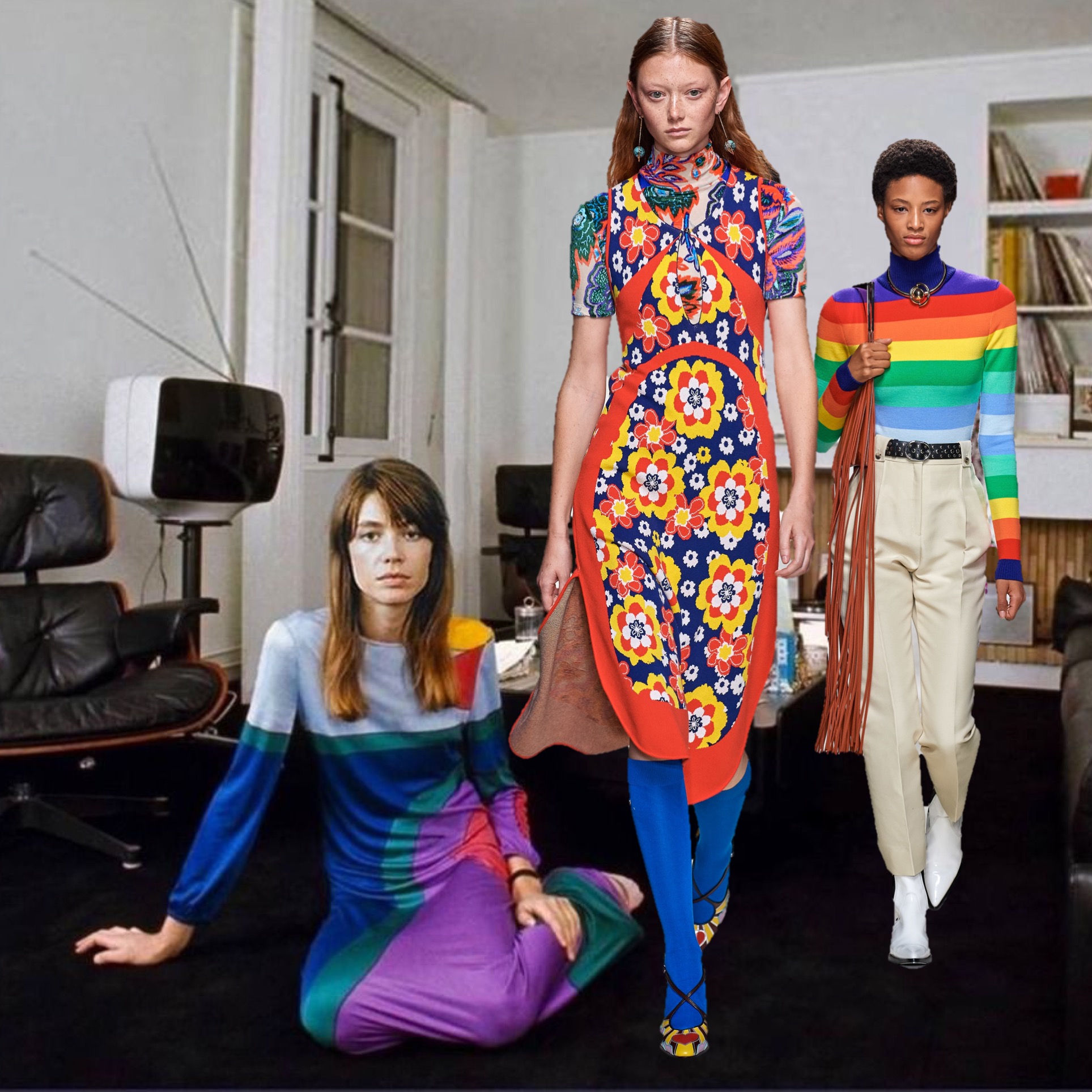
Sweet, Sweet Times. Paco Rabanne SS20

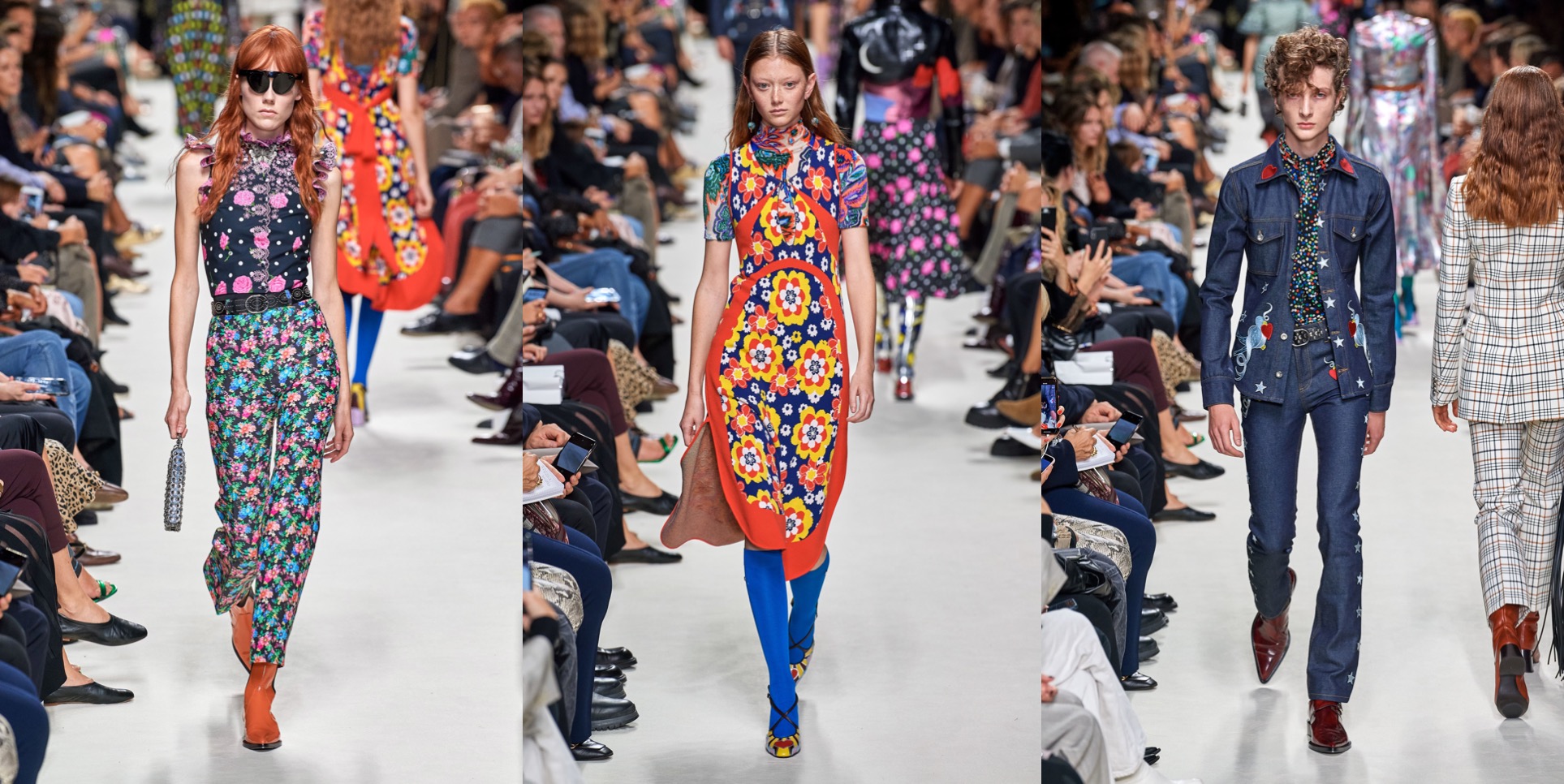
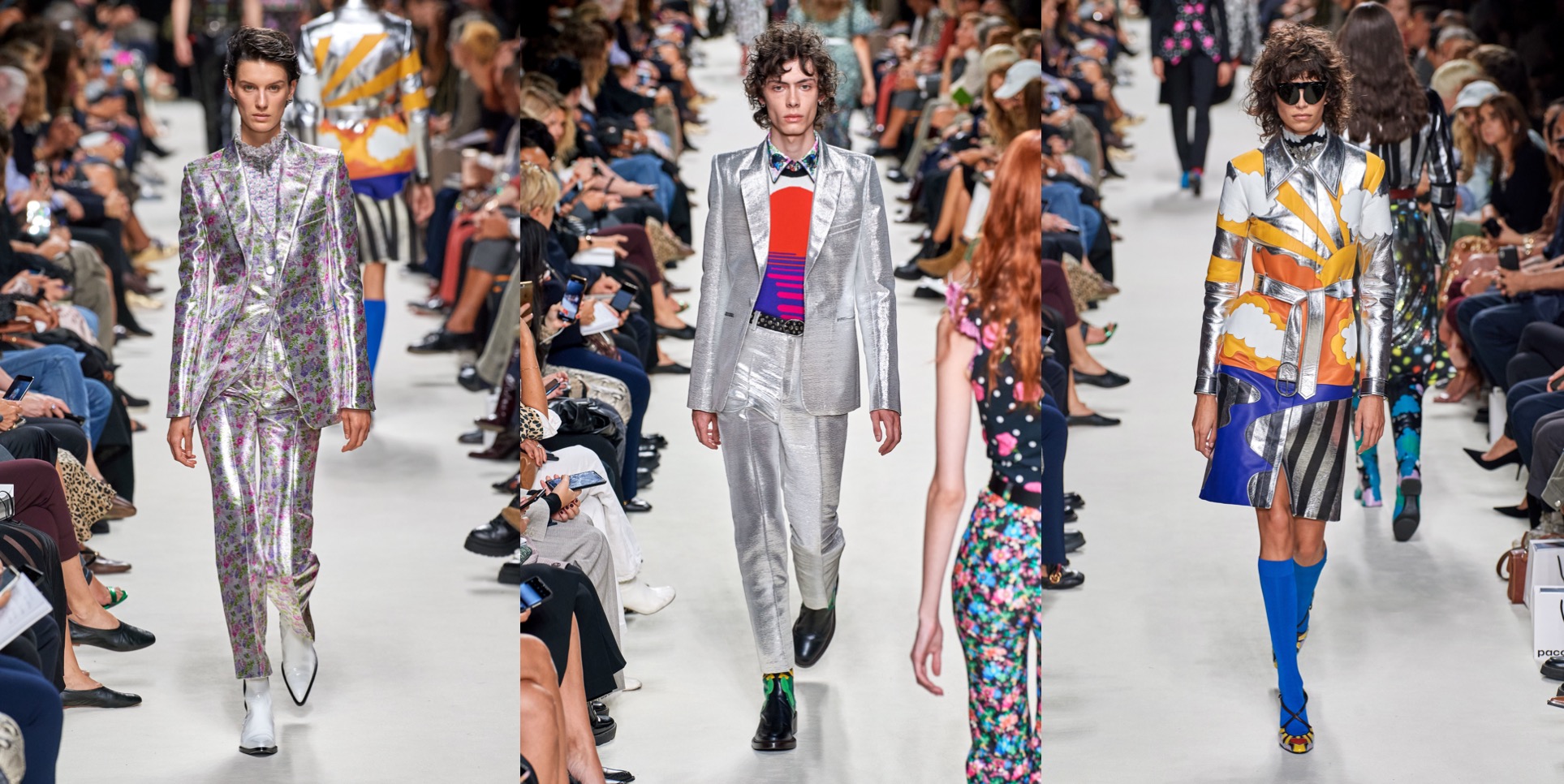
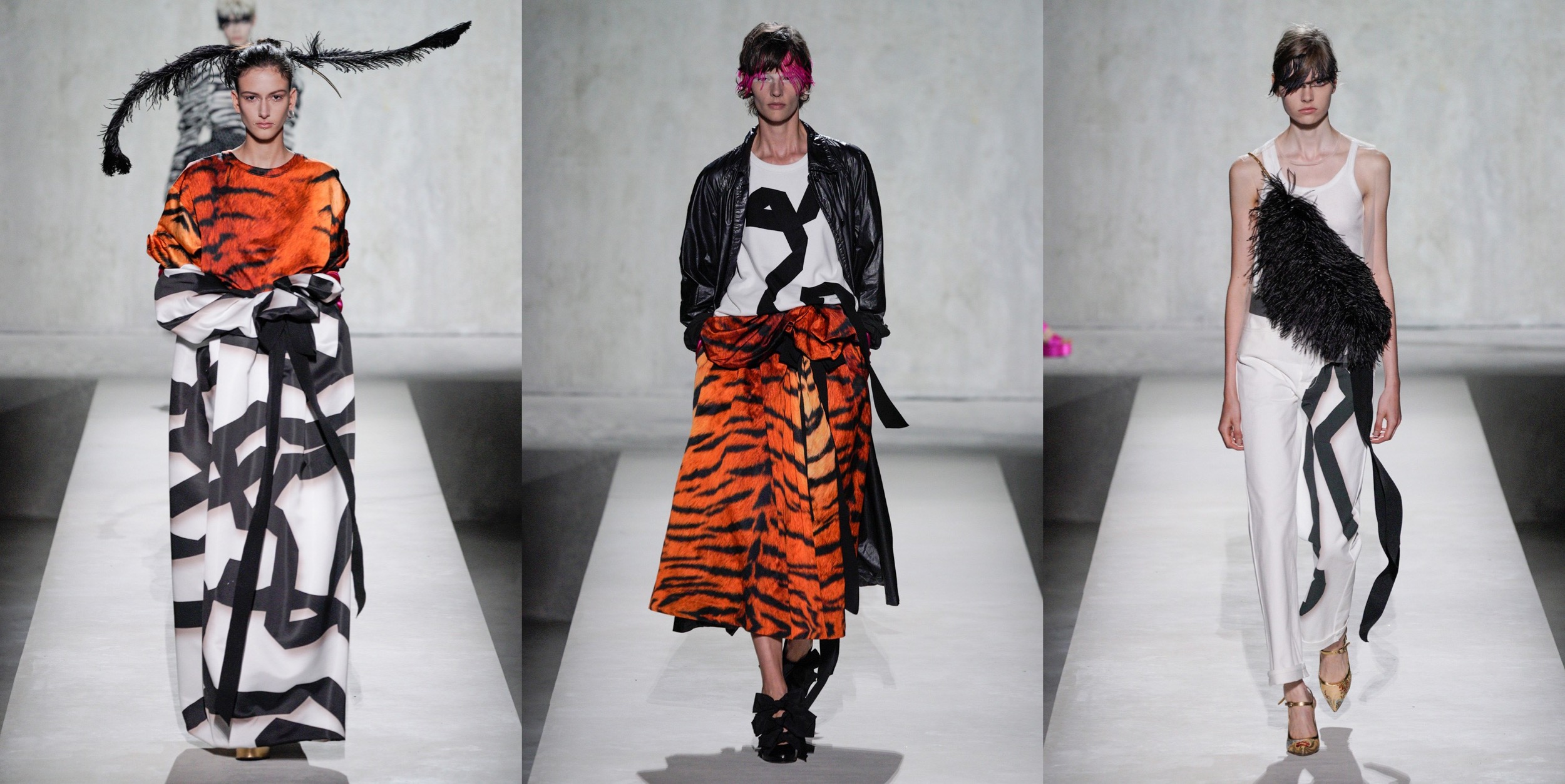
Nostalgia has conquered fashion, and nothing can be done about that. But some designers make it really, really joyous. Paco Rabanne‘s Julien Dossena is a great example. Since his last spring-summer collection for the brand, something finally clicked and the designer finally seems to be feeling more confident with his vision for the brand. Chain-mail dresses aren’t the sole focus. He looks at the Paco Rabanne heritage from another angle. “He was utopian, not dystopian”, Dossen says of Rabanne. The 1960s and 1970s, when Rabanne was the bright new thing, were times of limitless optimism in France and for the enviably stylish and beautiful people who were part of a generational awakening. Julien took 1970s pop and psychedelia under the lense, creating something carefree and fun. “A dreamer and a realist…symbols of naiveté rather than nihilism.” A big red heart was placed in the center of the bodice of the first dress he sent out, and repeated in men’s chain mail top in the finale. “To me, it’s about a kind of strength. Being proud of being nice and kind. It’s something that I value now,” said Dossena. “I don’t know if that makes sense visually, but it’s what I’ve been thinking about.” The puffed-sleeve lamé blouses and the skirts, and the mod pants suits (based on templates pioneered by Françoise Hardy and Prince) were the collection’s major highlights, just as the juicy Guy Bourdin colour palette. A standout piece? The patchworked leather jackets with rising sun and cosmic planet motifs. It’s a delightful line-up, which instantly lands on my ‘season’s favourite’ list. Also, this collection will sell like hot buns, I think.

Collage by Edward Kanarecki.

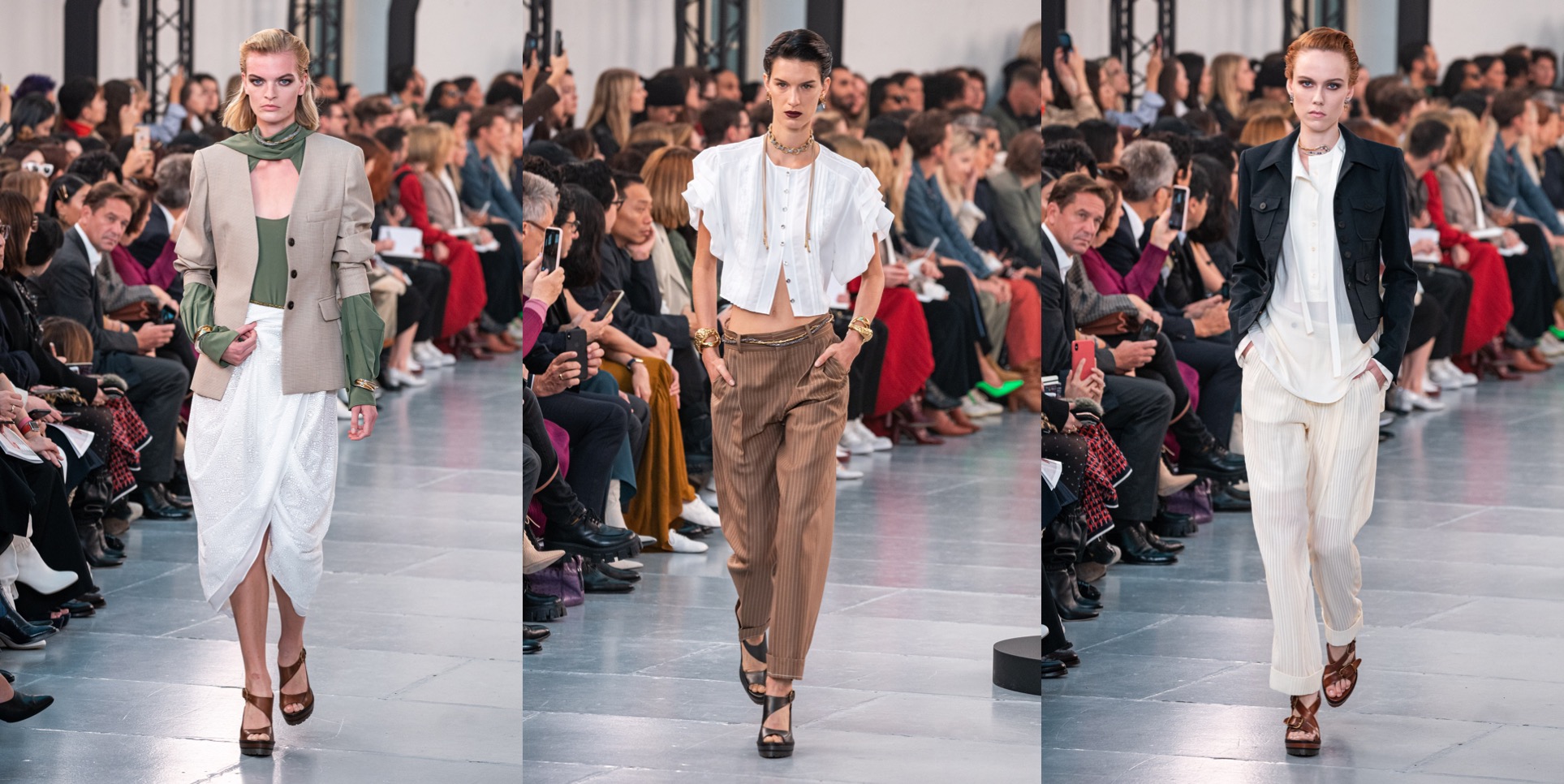
Simpler. Chloé SS20

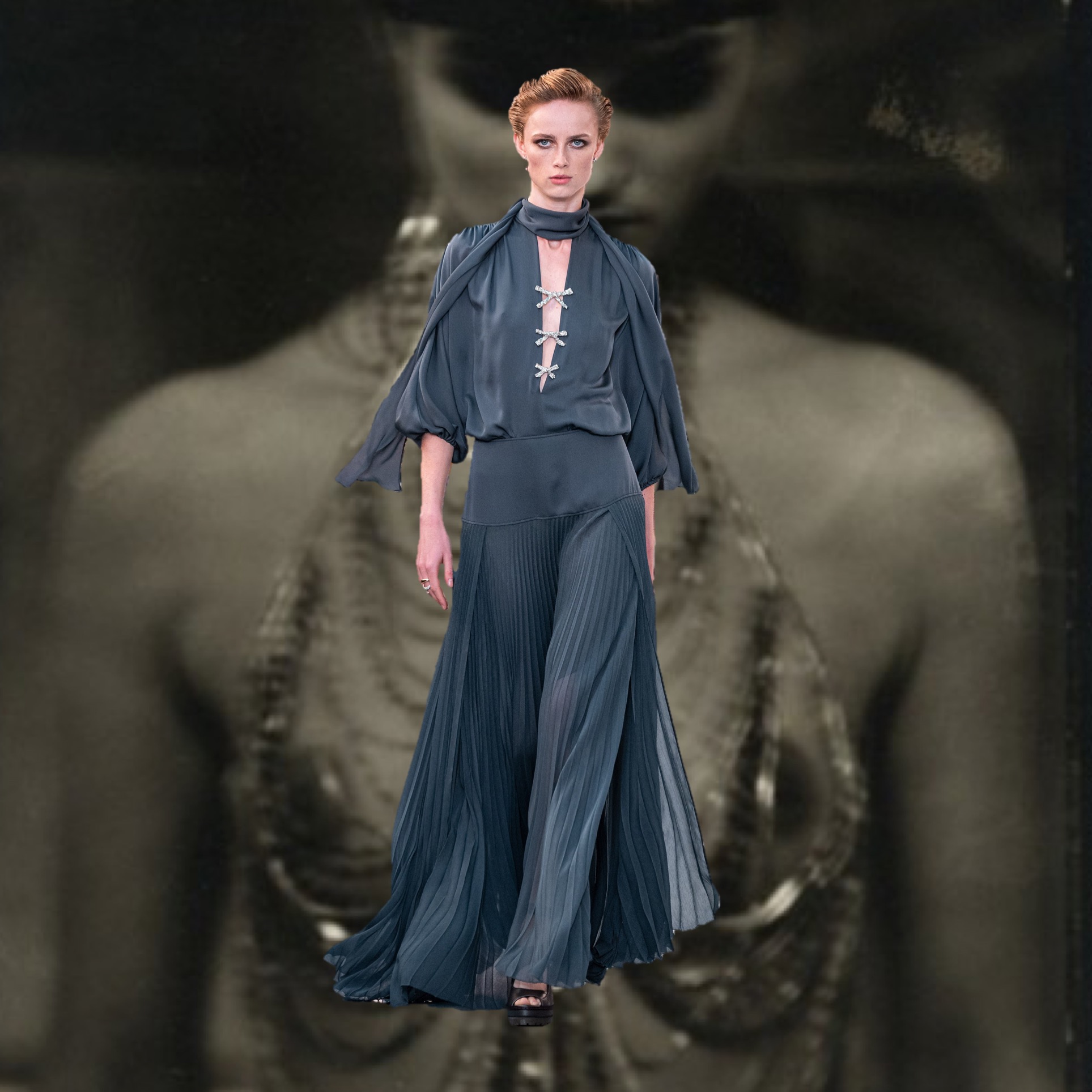
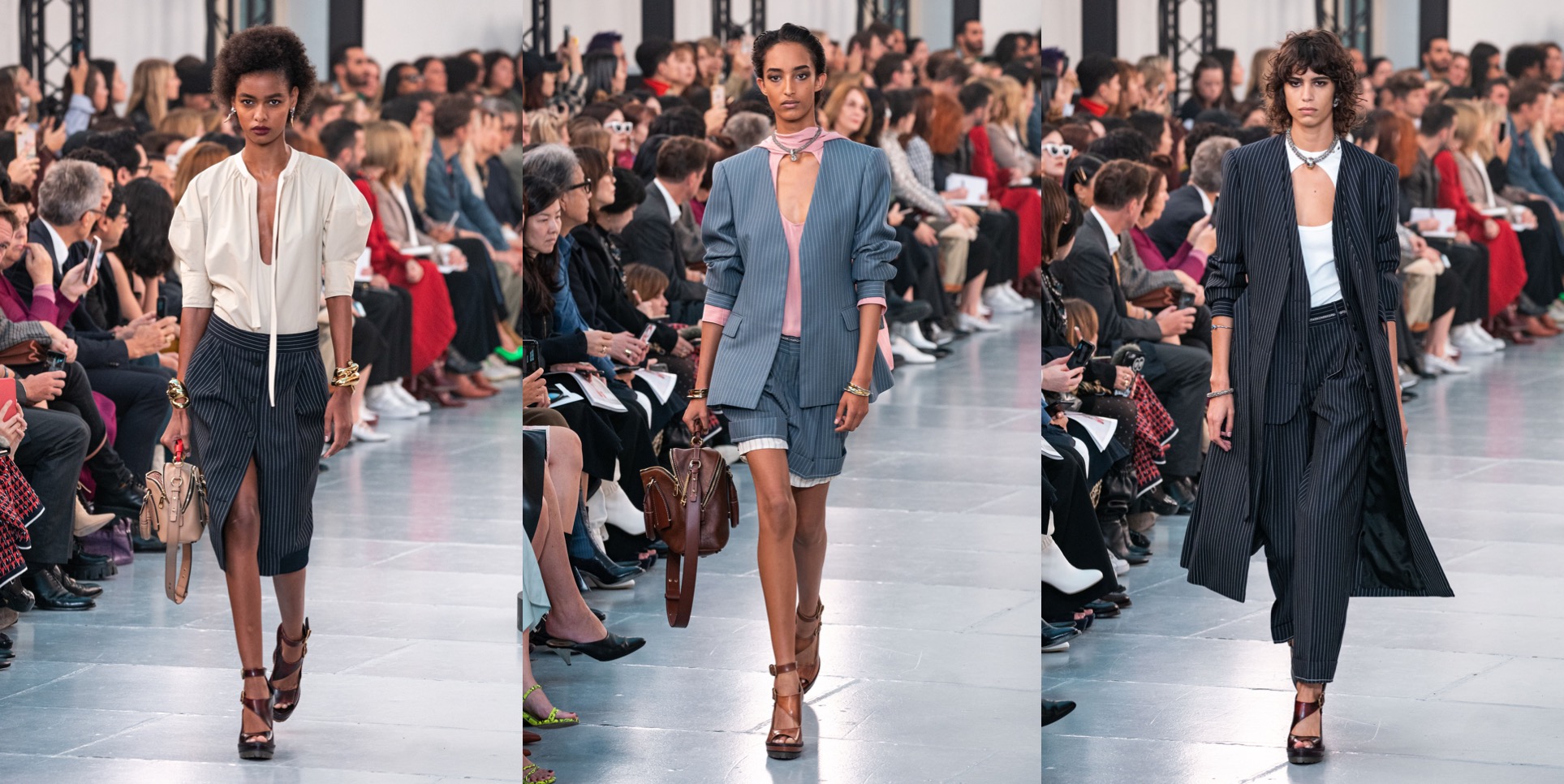
It’s Natacha Ramsay-Levi’s fifth season at Chloé, and she decided on some changes. Less over-sophisticated details, boho prints and messy accessorising for spring-summer 2020. “I’m thinking of it as chapter two for myself. I’ve tried a lot of different things; I thought, let’s simplify – be honest and true.” While such approach results in less ‘show-stoppers’ for magazine editorials (and stuff that always ends up on heavy discount), this collection proved to be one of her strongest in a while. Where earlier Ramsay-Levi might have avoided familiar Chloé-isms, like the particular shade of creamy peach associated with the brand since Karl Lagerfeld’s days, here she used them a lot: the show ended with a pair of long, graceful pleated dresses in the color. Micro-floral-print frocks were styled unbuttoned and worn over a silk bra and trousers – the look had a romantic, vintage feel. Making things simpler really works from time to time.

Collage by Edward Kanarecki.
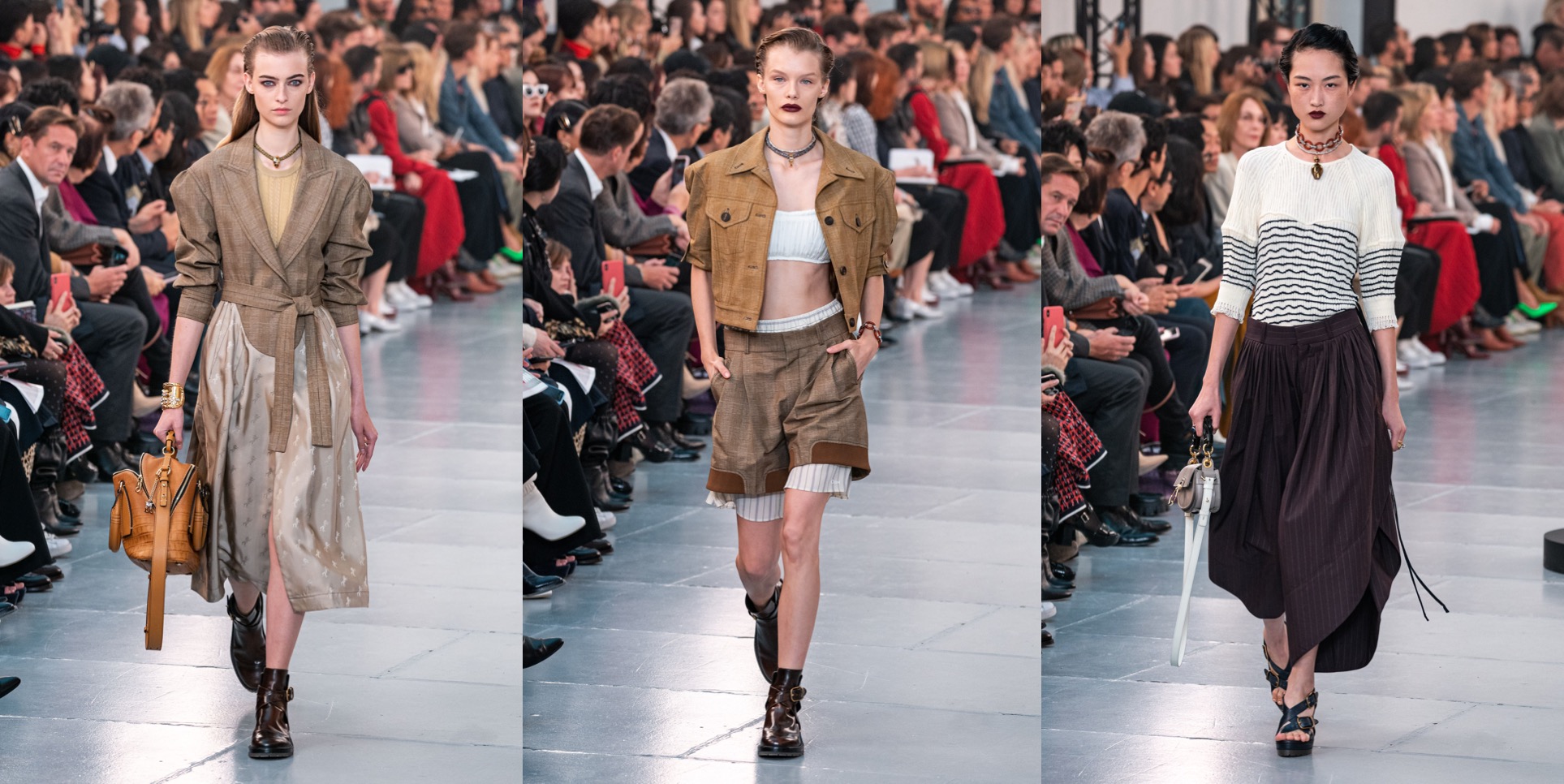
Smiley. Patou SS20

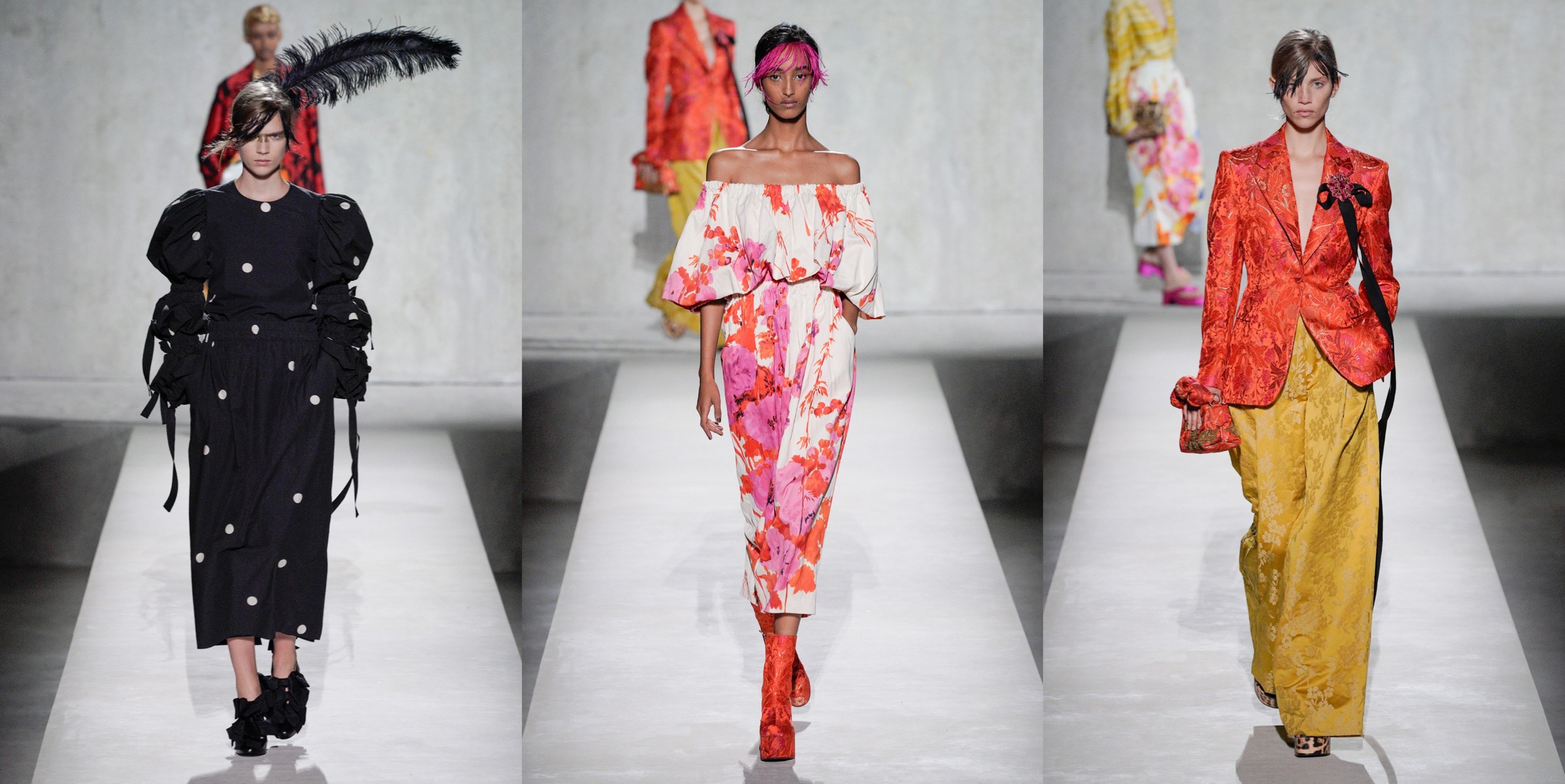
The last time Patou, the over 100 year old French maison founded by Jean Patou, hit the runway was in July 1986 during the Haute Couture presentations. The maison’s designer at that time was Christian Lacroix and, the day after the show, he resigned and established his own label with the financial support of Bernard Arnault. From then on, the brand became dormant, barely surviving through its cosmetics and fragrance businesses. It’s 2019, and the label is resurrected by the man who brought life back at Carven (it didn’t survive without his creative direction, as the latest news prove) and Nina Ricci: the extremely talented Guillaume Henry. And looking at his joyful debut, I doubt this project will either be a blow (Vionnet comes to my mind) or another exhausting French brand revival (Courrèges). The spring-summer 2020 look-book is a line-up full of beautiful, wearable, quintessentially French clothing that doesn’t fall into cliches. “Personally, I want to go back to dressing my friends,” he told the press. ”Patou was a couture house back in the day, so I want to keep that philosophy, with an atelier—but with reality.” What to love? The lace blouses and very French short navy A-line skirts, the bubble dress, or the chic-modern pink wide-leg trouser suit with a silk shirt with an extra long, trailing scarf-tie. Or it might be the neat, sporty sweaters with the original JP logo from the ’20s and lovely denim.The black coat with white lace collar and mis-matched buttons is another favourite. “It’s a friendly brand; I’m dressing real girls,” said Henry. ”I want it to have a smile and enthusiasm.” One more thing: the label plans to sell its high quality clothes at prices that are much more affordable comparing to other Paris-based luxury labels.

Collage by Edward Kanarecki.
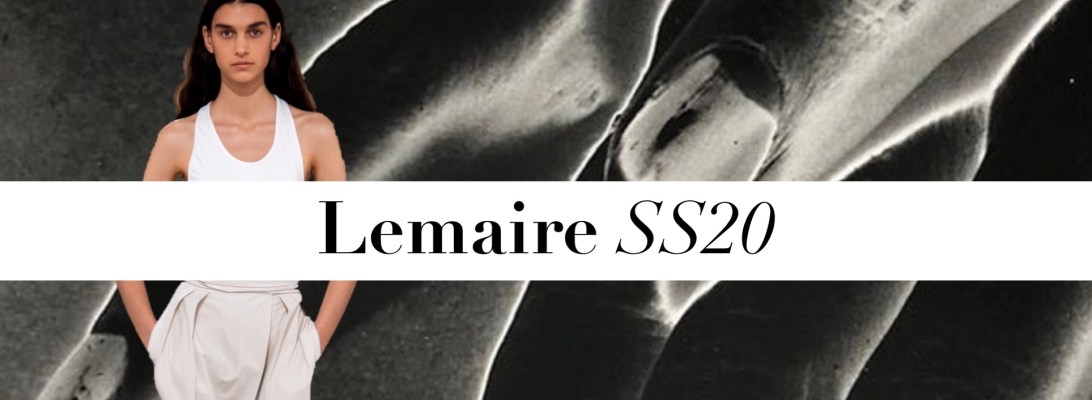
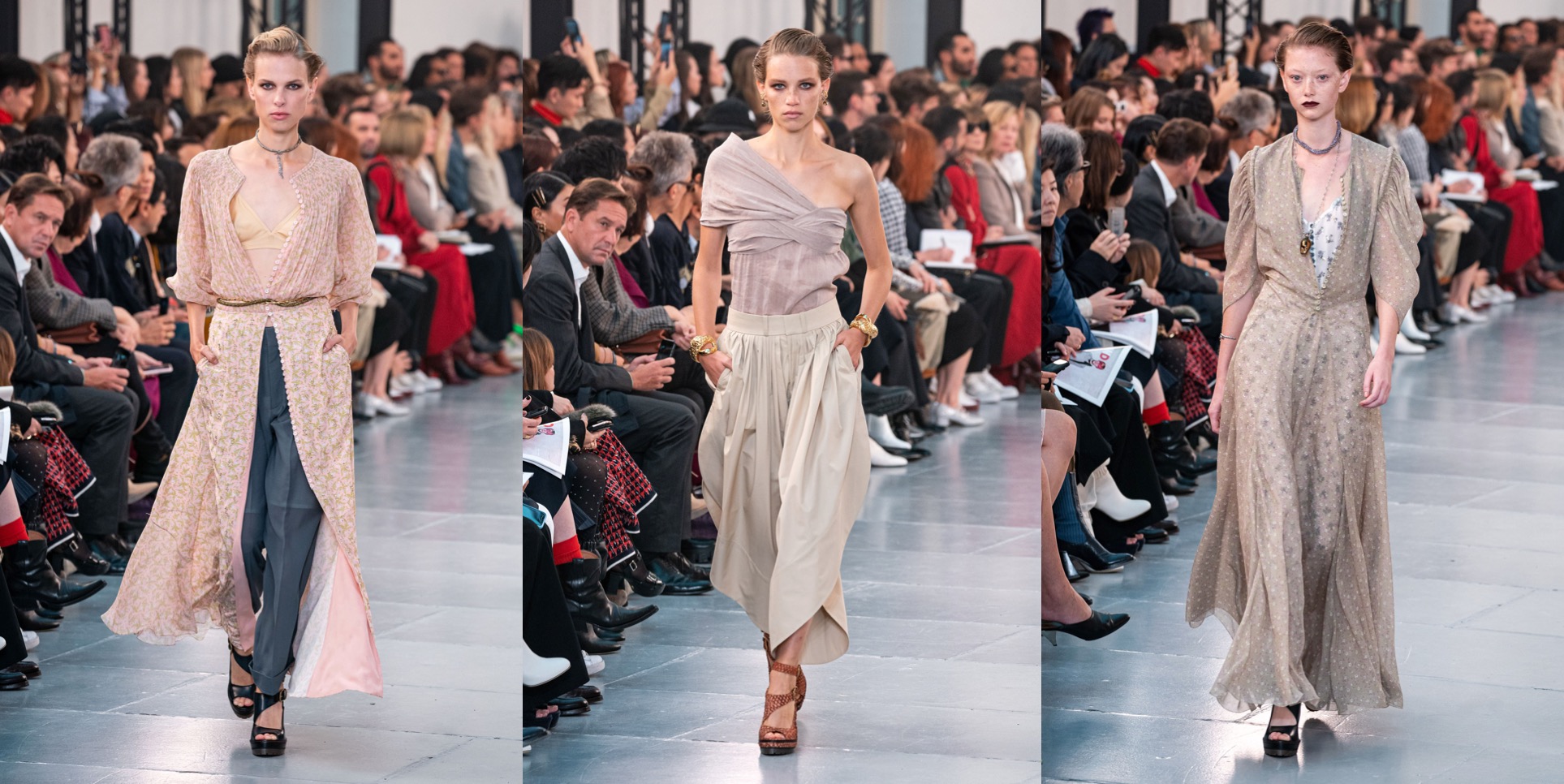
Stable and Slouchy. Lemaire SS20

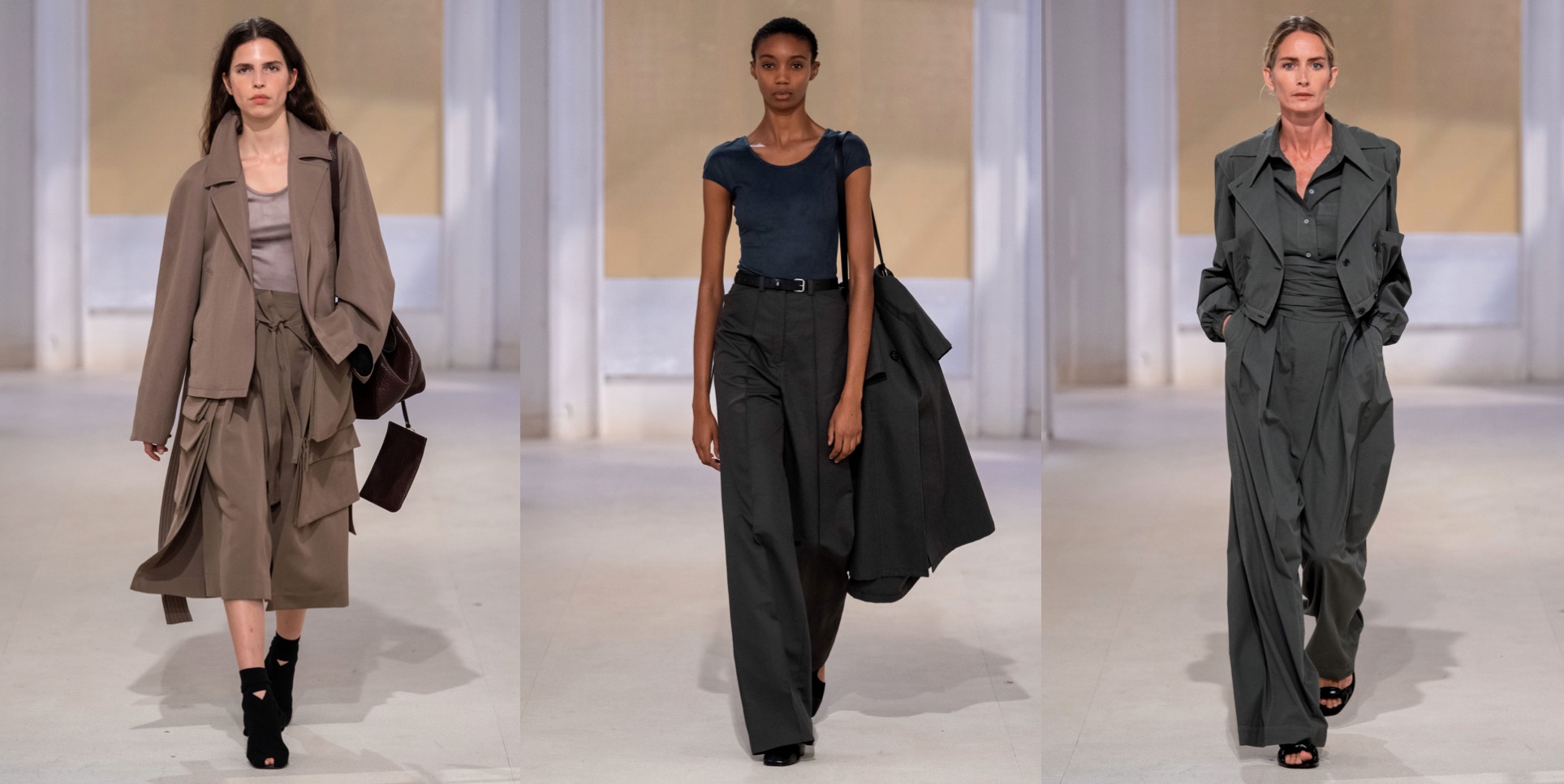
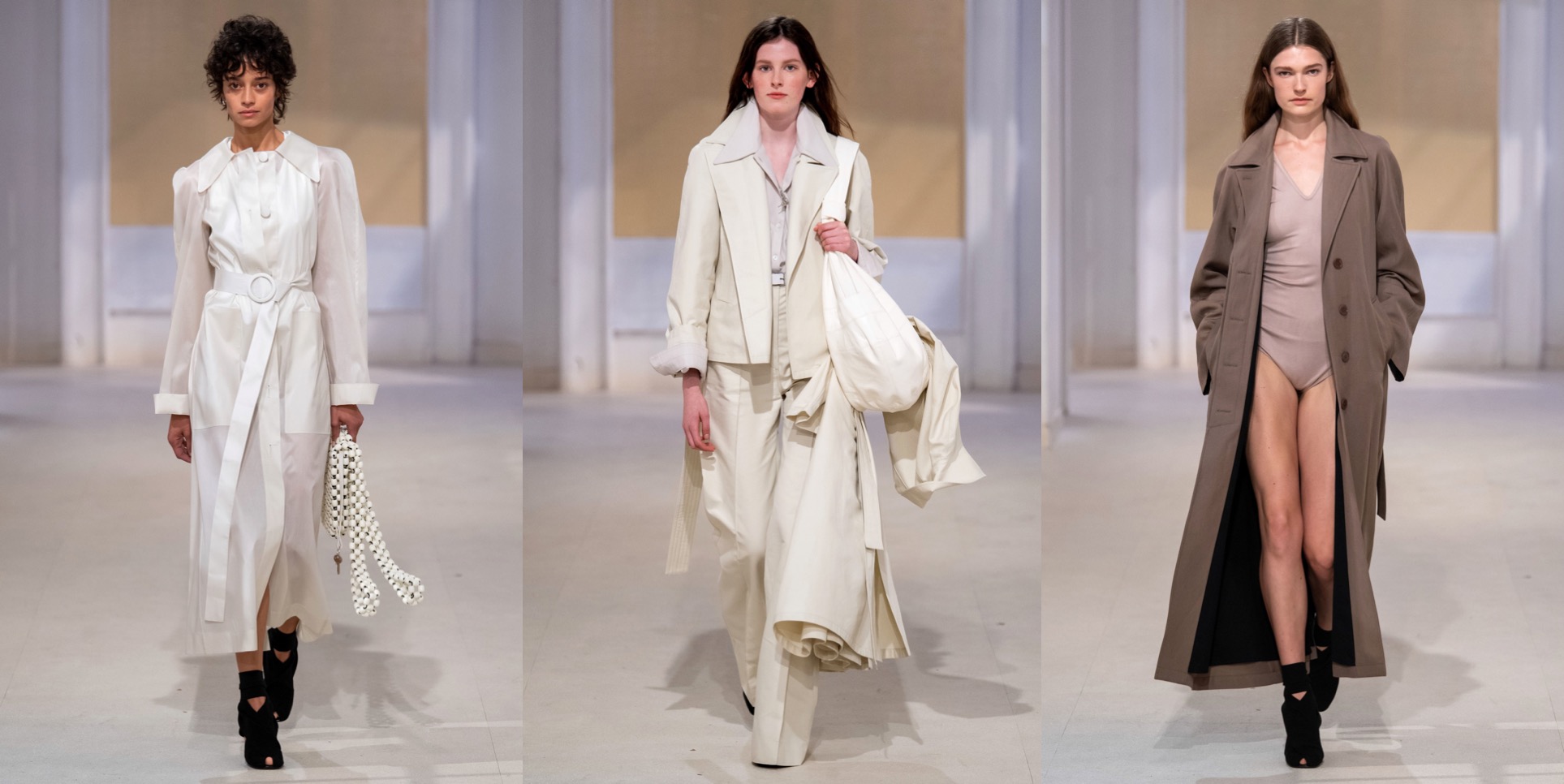
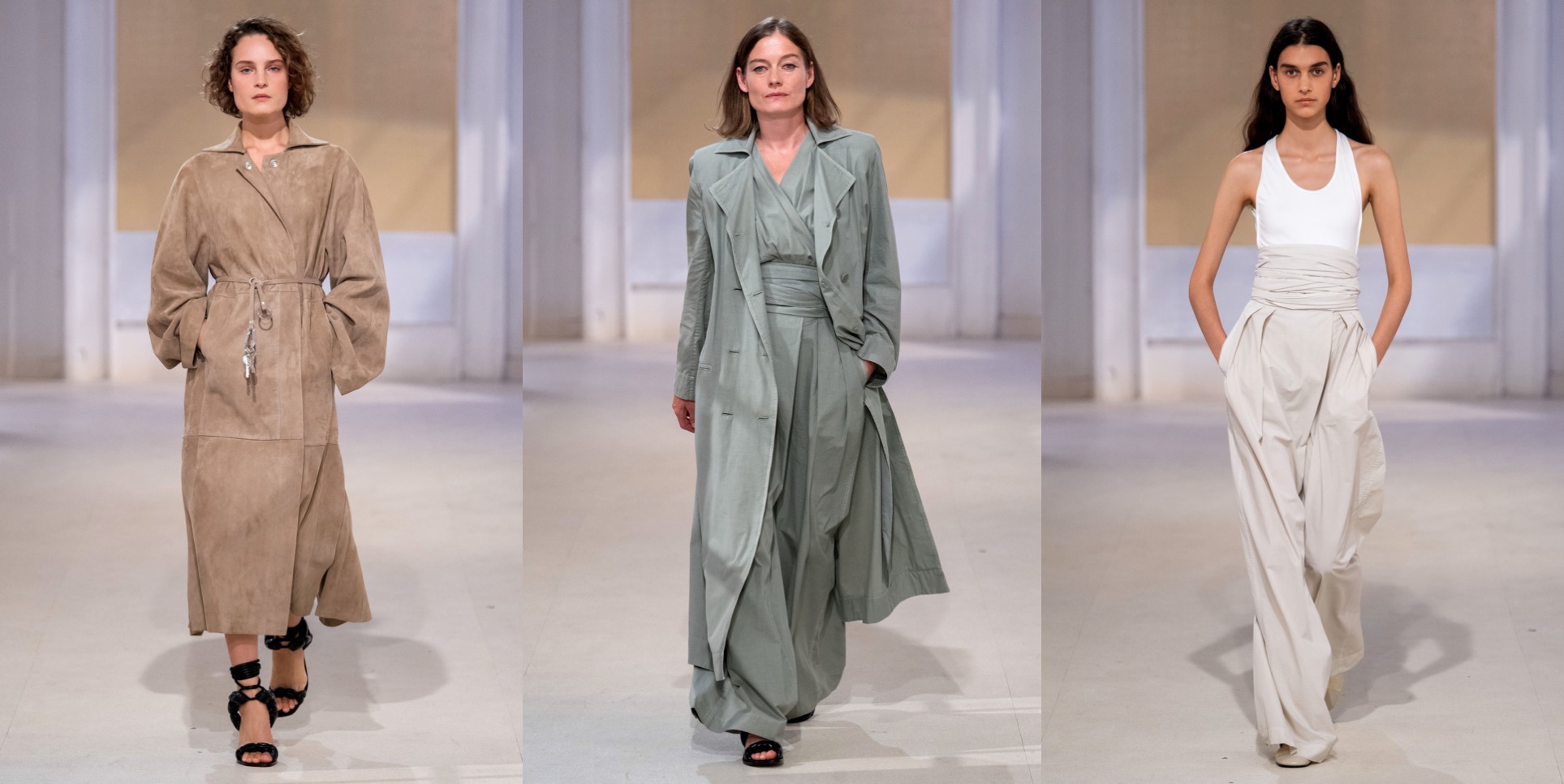
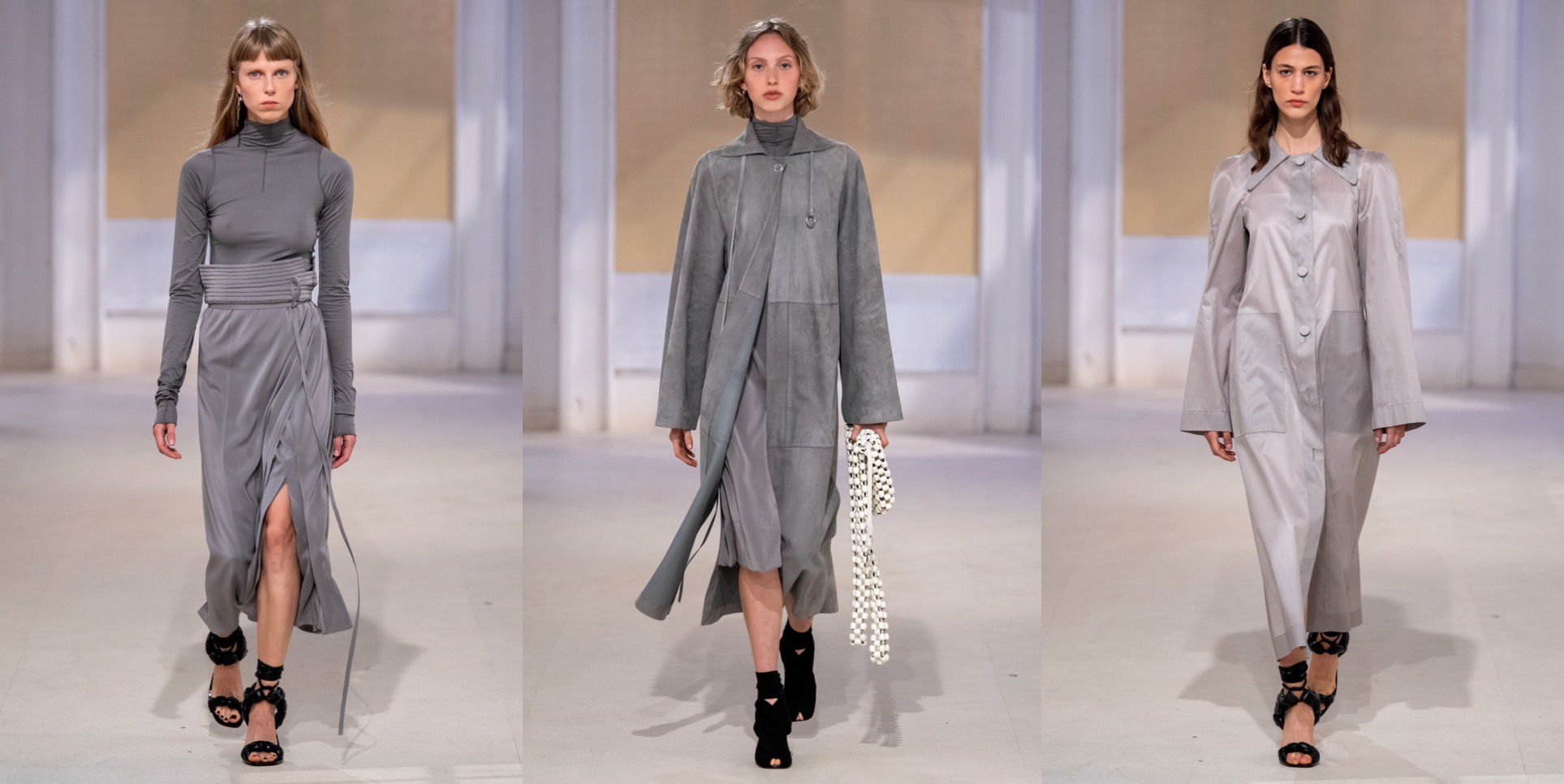
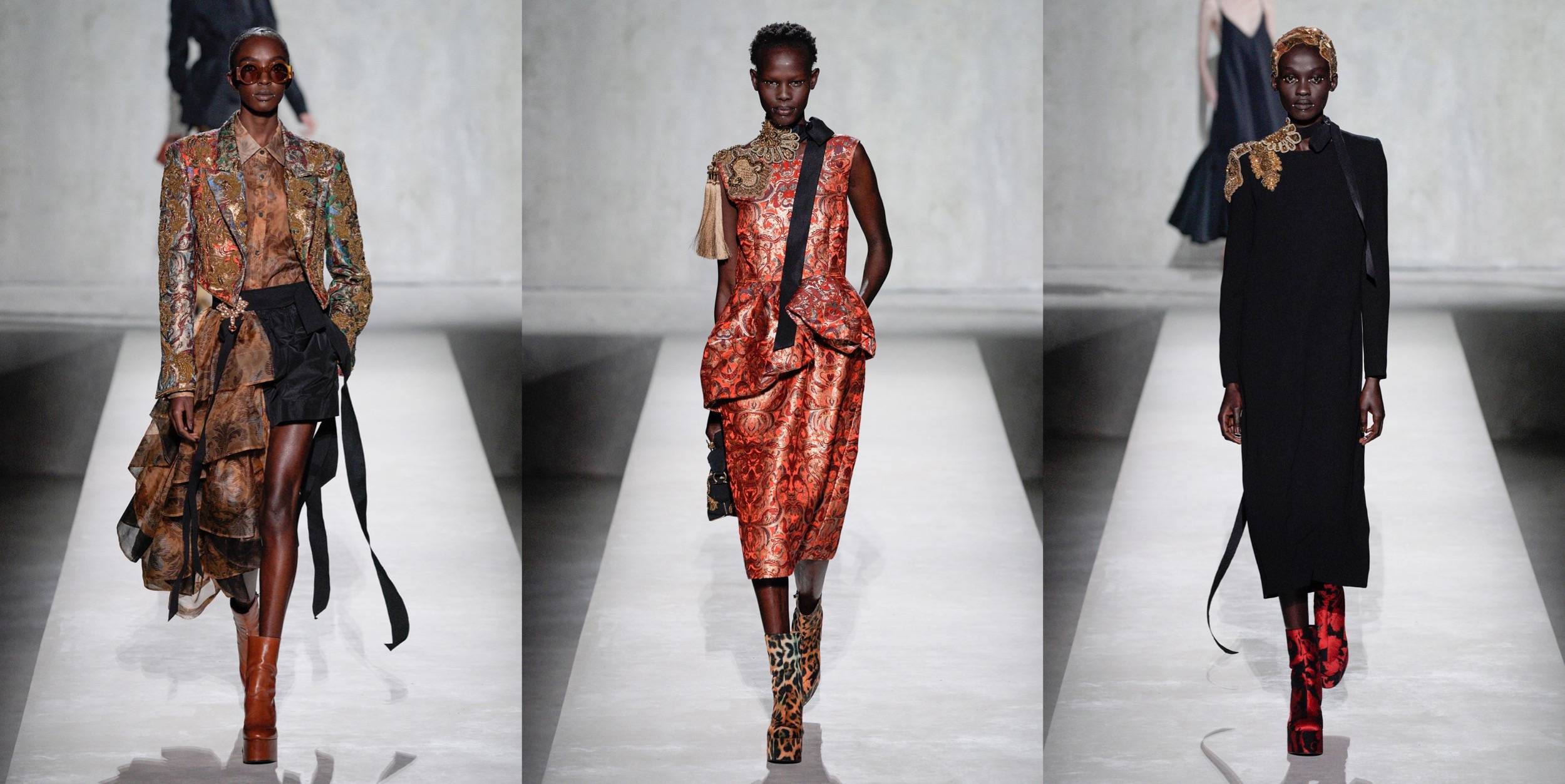
At Lemaire, references and messages are absent, or very subtle, and comparing to most other labels, here the clothes do the talking. Christophe Lemaire and Sarah Linh Tran‘s woman doesn’t change from season to season – her style is consistent, just as the label’s style. For spring-summer 2020, the designers used a colour palette full of timeless neutrals, which perfectly fits their new bodysuits, pleated stone-colored chinos with a rib-grazing wrapped waistband or over-sized waxed-cotton coats. The brand showed a handful of belted styles, all of them easy enough to be tossed over a handbag strap when it gets warmer. In the designers’ words, the collection is about “stable, but slouchy” shapes. Its impossible not to be convinced by Lemaire’s comfortable elegance this season.

Collage by Edward Kanarecki.
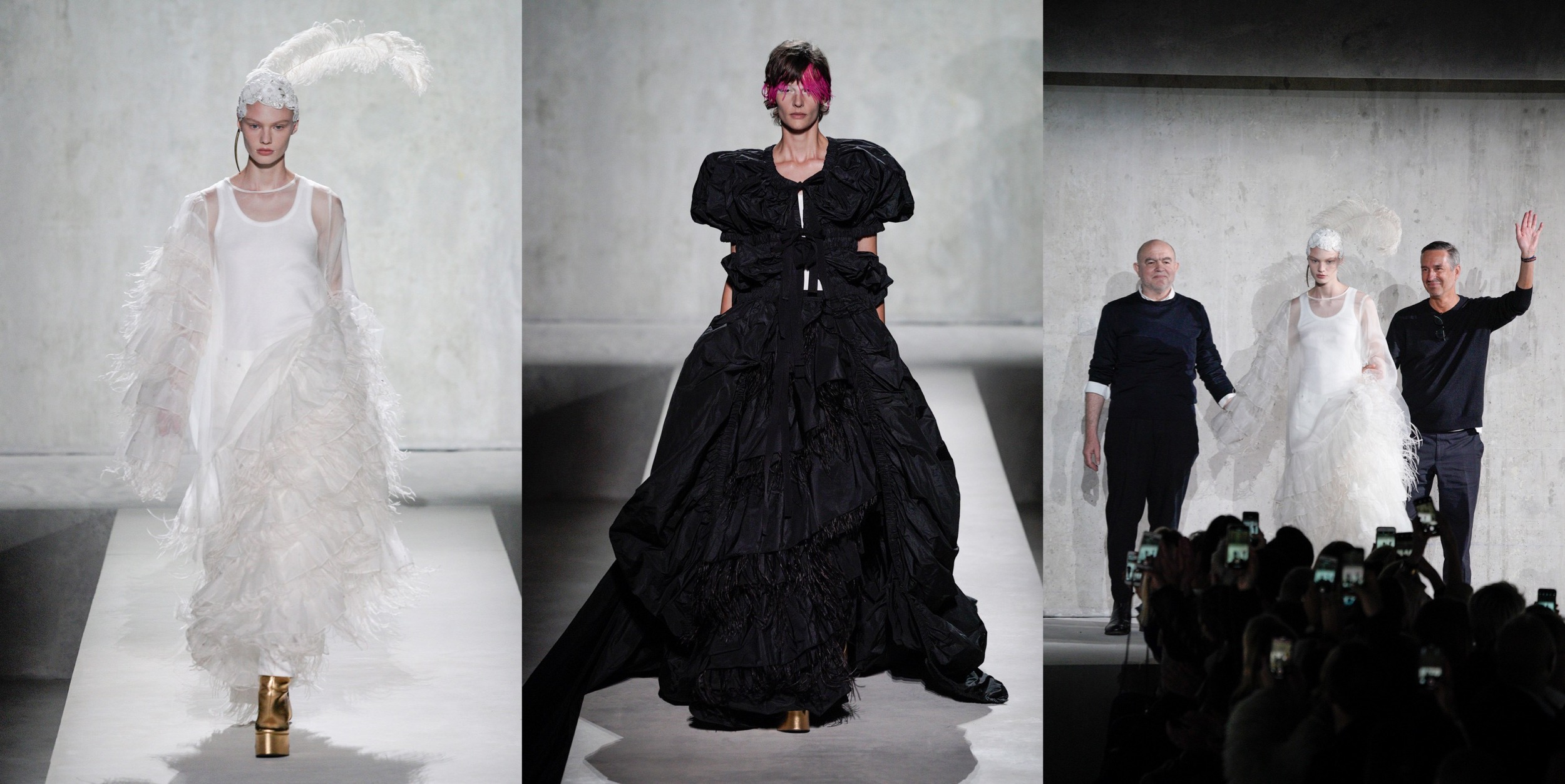
A Match Made In Heaven. Dries Van Noten SS20

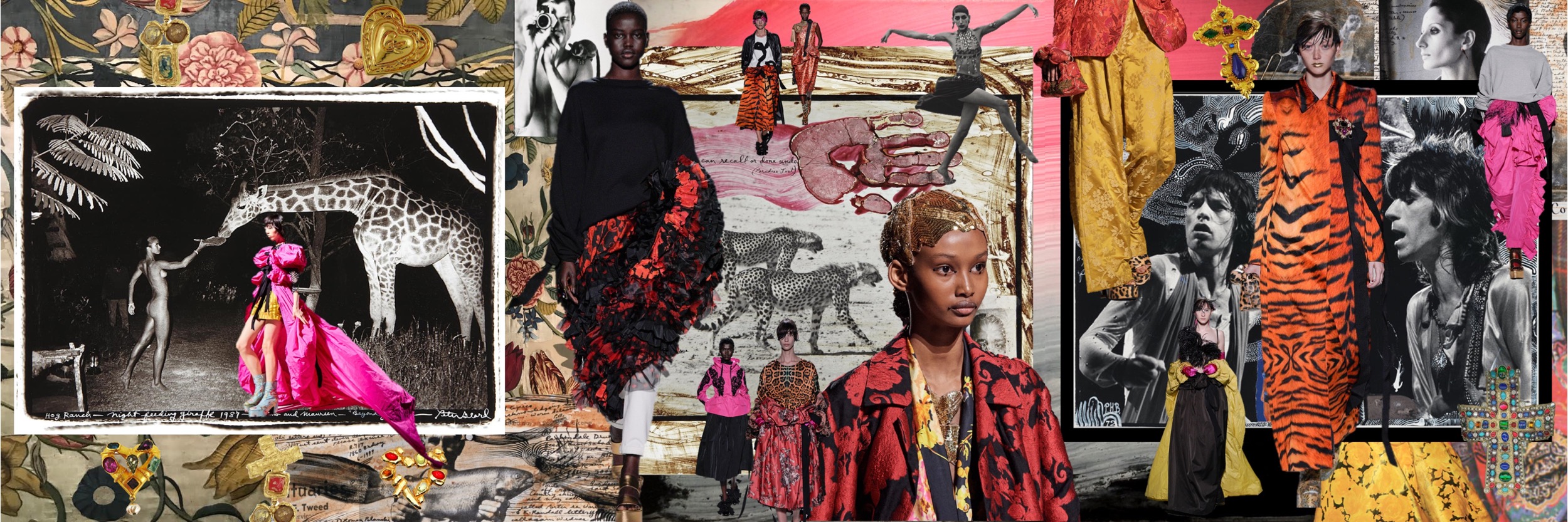
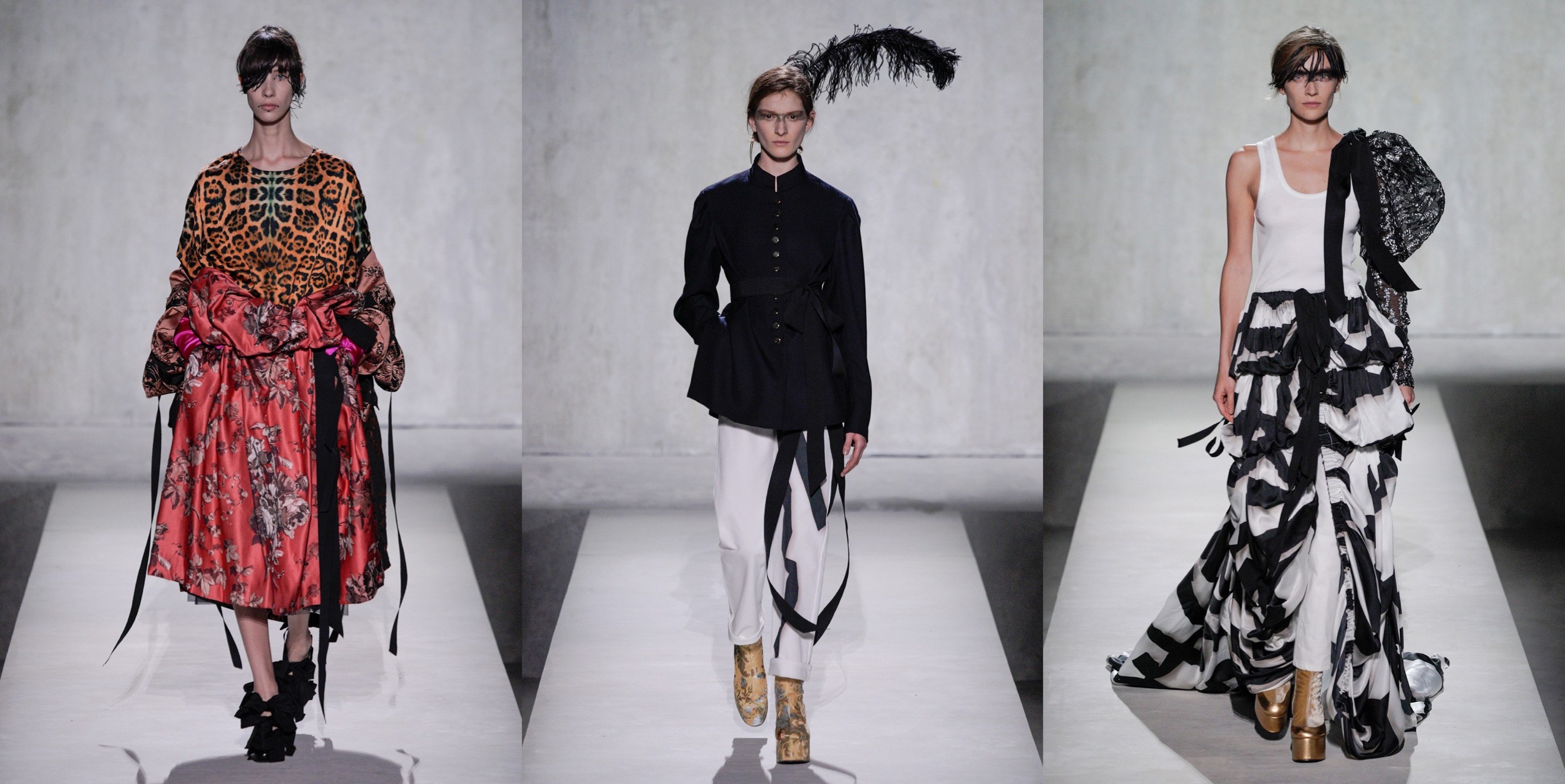
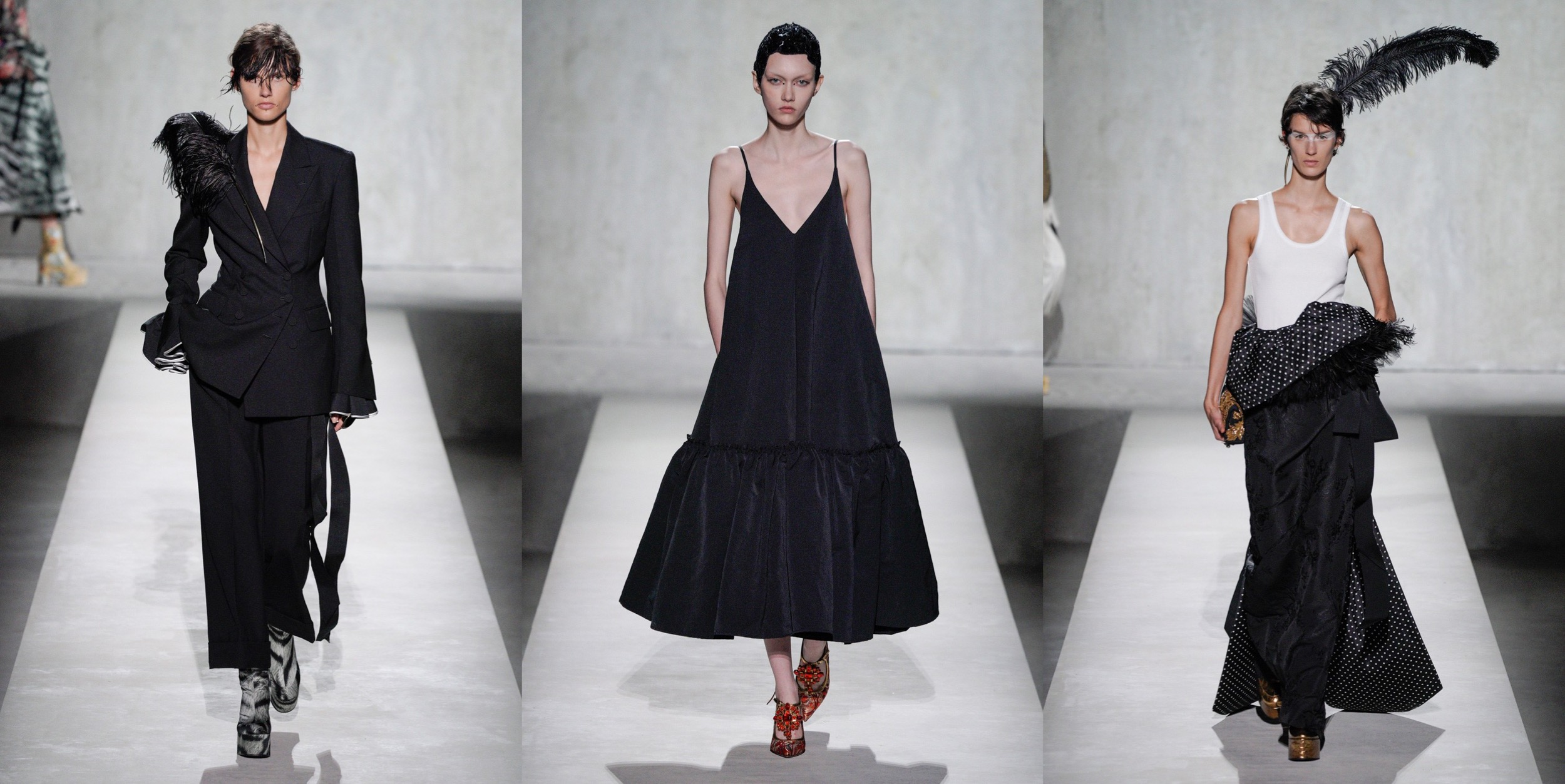
Here’s my ultimate favourite of the season, even though we’ve still got a couple of PFW days to go. Dries Van Noten collaborated with legendary designer Christian Lacroix for his spring-summer 2020 collection. When this bacame a fact yesterday in the afternoon, in that very moment the planets moved or maybe the time stopped. This is a real, real fashion moment of 2019. This collaboration is something you never thought you needed in your life. I’m still in absolute awe, while going through the looks over and over again. “The idea is to bring fun ideas, nothing too serious, things that I think perhaps we have lost a little in fashion”, Van Noten told the press. “I wanted to do something joyful”. Dries and Christian weren’t acquainted before their collab (it came up spontaneously), but their contrasts became actual similitaries once they started working together. They fulfilled each other. Lacroix’s iconic legacy of ‘never too much’ combined with Van Noten’s mastership of colour-and-print balance. Looking at the final result, all the Lacroix signatures are in place, filtered through Van Noten’s sensibility: polka dots, broad stripes, animal prints, ruffles, matador jackets, gigot sleeves, silks woven with flowers scaled up and brighter, pouf skirts, duchesse satin and grosgrain. The vocabulary of Dries Van Noten is fused with that of Mr. Christian Lacroix throughout: said jacquards have been scanned and appear as prints across cotton and organza; lightweight polyesters, made out of recycled plastic bottles and coated papers rustle alongside precious French silks; billowing trains grace nothing more haute than a parka, albeit gold. Basic white singlets are decorated with a single overblown embroidered sleeve here, jeans with an appliquéd feather or feather print on one leg there. If Mr. Christian Lacroix was among the most feted couturiers of the latter part of the twentieth century (in his own words, he “failed with ready-to-wear”), Dries Van Noten is one of the pret-a-porter leaders of today. It’s a match made in heaven. I guess this is the collection where all the money should go to when it hits the stores. Such fashion wonders happen very, very rarely. To learn more about the designers’ meeting of minds, watch their interview here.

Collage by Edward Kanarecki.