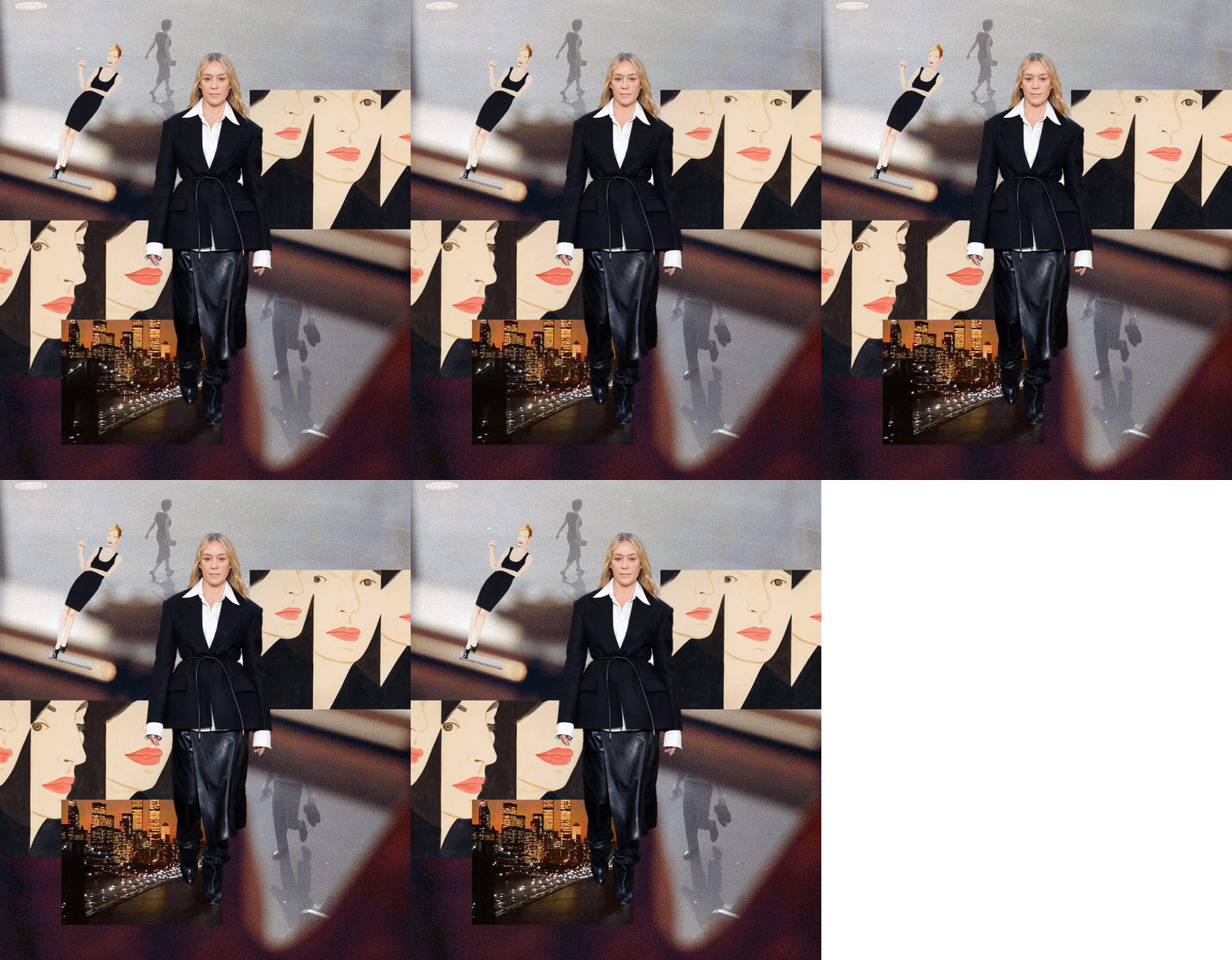
A New York Moment. Proenza Schouler AW23

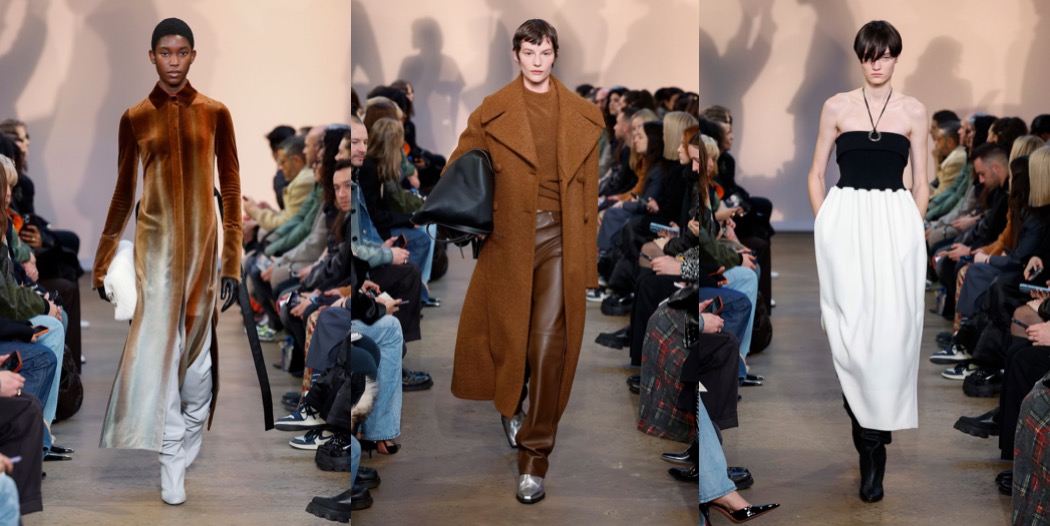
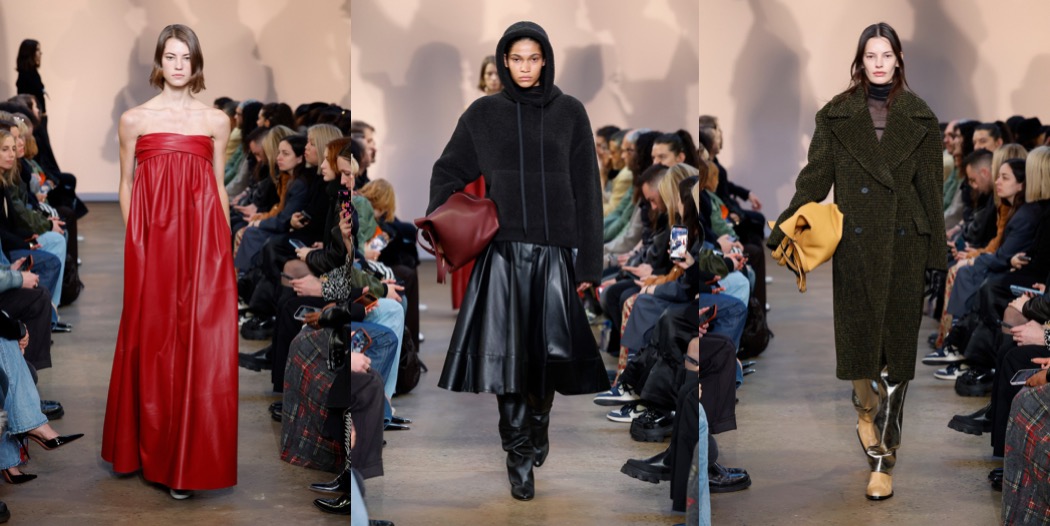
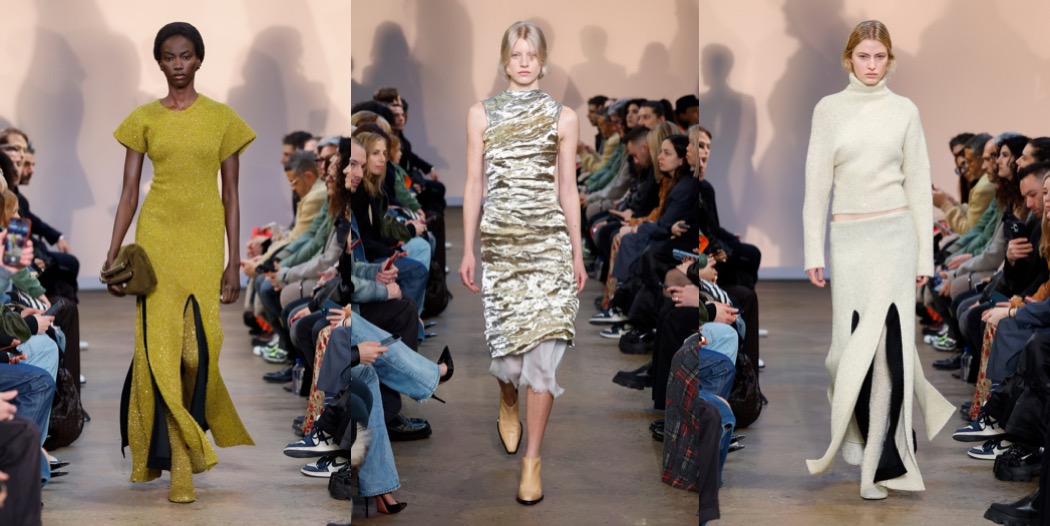
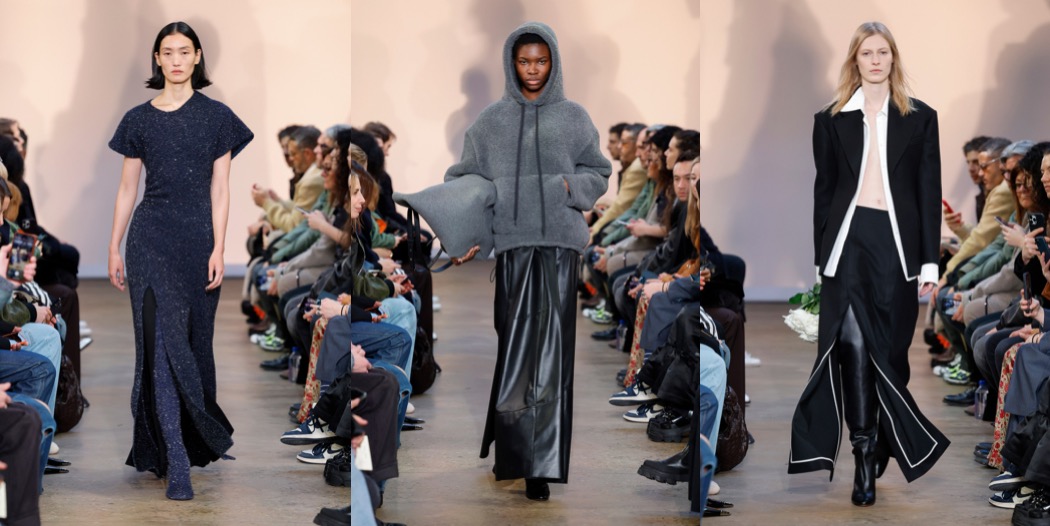
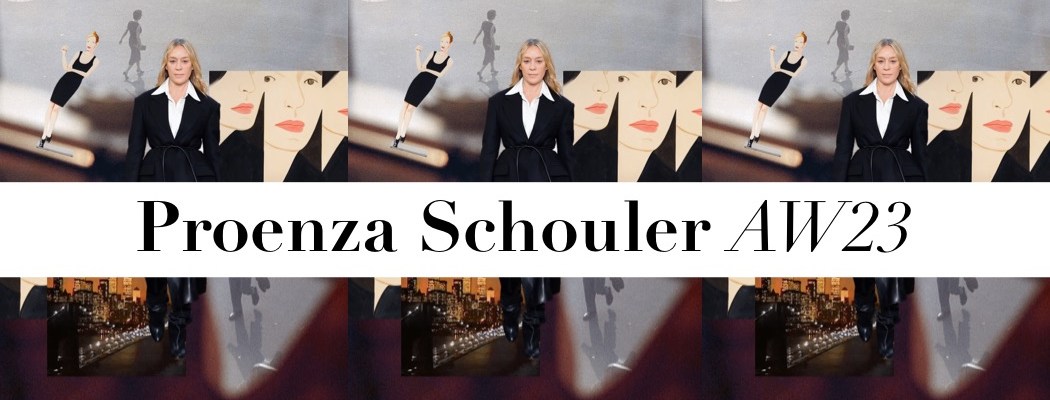
What a New York moment. Chloe Sevigny opened the autumn-winter 2023 Proenza Schouler show. She’s worn Jack McCollough and Lazaro Hernandez’s clothes since the beginning, even a couple of times to Met Gala; they were New York ingenues together 20 years ago. But this wasn’t an anniversary show, the designers insisted. They said they’ve been taking stock, thinking about the friends and customers they’ve made over two decades. “This is our most personal collection yet,” said McCollough. “It was less revolving around a theme, more looking at the actual women in our lives: What is it they want?” Like Sevigny and Olympia Scarry, who walked later a few looks later, the women in McCollough and Hernandez’s lives have grown up, and grown out of some of the Proenza Schoulerisms they’ve honed over the years. Prints were kept to a minimum here. The ones that did turn up were remnants from past collections, and only appeared as the linings of dresses, visible through a side-slit in the midi-length skirt, or on straps pulled off the shoulders and left to peplum at the waist. There was no room for ruffles or bows, either. The only real embellishment they used was white pom pom fringe on a black velvet dress, but it was mostly obscured by the charcoal wool skirt that their stylist Camilla Nickerson, another friend they mentioned by name, layered over it. Other signatures stayed in the picture, but in updated versions. A pair of narrowly cut velvet shirt dresses made with dyed ice cubes that dripped their deep colors from neck to hem were evocative of their best-selling velvet tie-dye dresses of 2018, only subtler, more adult. The spongy, stretchy evening numbers with the sequins “baked in” were elaborations of simpler t-shirt dresses from a couple of pre-collections ago. In the studio Hernandez said, “it’s about using our ingredients and not throwing it all out and starting from scratch every season.” If you looked closely you could see that the short sleeves were differently shaped. Other knits were constructed in a similarly askew way; they twisted across the body, elevating them out of the ordinary. Over sounds by the musician Arca, Sevigny’s voice was on the soundtrack, reading “diary entries” written by the author Ottessa Moshfegh, with whom they’ve collaborated before, “kind of like an inner monologue.” Clothes-wise, the idea was to make an art of the everyday. By adding vertical zippers to the back of blazers that flashed a hint of skin but also enhanced ease of movement, by whipping up a hoodie in the softest, plushest knit, and by cutting “jeans” in a glossy gold leather, a nod to Helmut Lang, a few of whom’s runway looks were surely pinned to the mood board along with photos of their Sevigny et al.

Collage by Edward Kanarecki.
Don’t forget to follow Design & Culture by Ed on Instagram!

NET-A-PORTER Limited

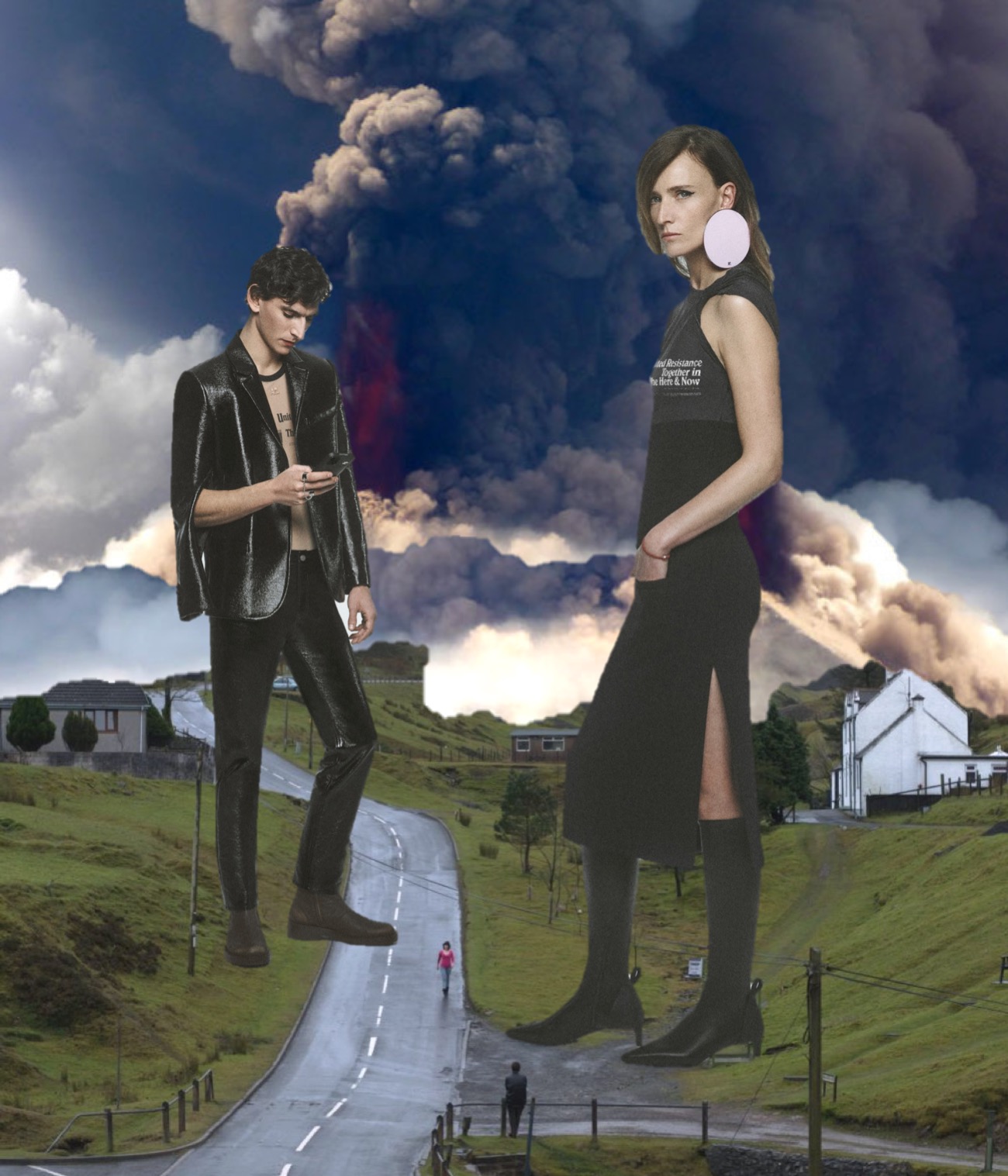
Men’s – On The Phone. Courrèges AW23

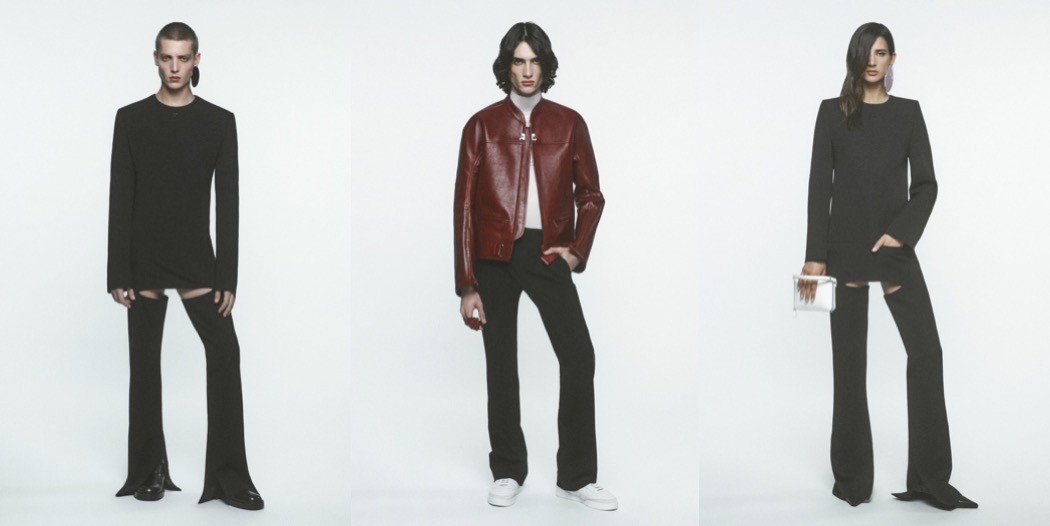
Courrèges is gradually becoming a brand with a contemporary feel that offers some truly desirable clothes. All that thanks to Nicolas Di Felice, who with every season redefines what this French label is to a modern-day audience. The most important aspect the designer orbits around is the functionality of clothes seen through the lens of social observation. In the men’s autumn-winter 2023 (and women’s pre-fall) line-up, his thought process was triggered by watching the phenomenon of people hunching over their phones. “I’m really working on kind of a new silhouette that is really, like, bending,” he said. “It really seems like nothing, but actually it’s something, this reflection of us on our phones.” Somehow, that idea bloomed into a sexy and cool wardrobe. Technically, Felice’s inspiration of the staring-at-screens impact on human posture brought about a slight forward-tilt of the shoulder line – and the ingenious idea of inserting an invisible zipper extending to the elbow on the inside of tailored sleeves, “so you don’t have to ruin you clothes!” The lines of Courrèges are sharp, mostly dark, and cleverly sliced by Di Felice to adapt the original space-age minimalism of the founder for the new generation. That’s another of his talents: witness what he’s named “mini-skirt pants.” It looks like a plain black long-sleeved tunic, but there’s a narrow gap, high up on the thigh; a flash of flesh where the hem meets the pants. An incendiary item he proposes for all genders. Très cool.

Collage by Edward Kanarecki.
Don’t forget to follow Design & Culture by Ed on Instagram!
NET-A-PORTER Limited

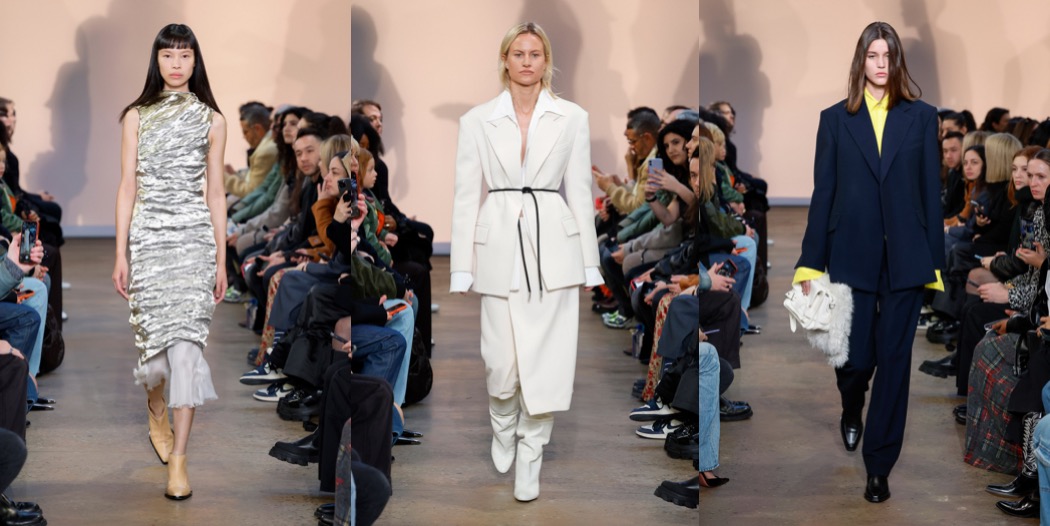
To Nature. Uma Wang SS23

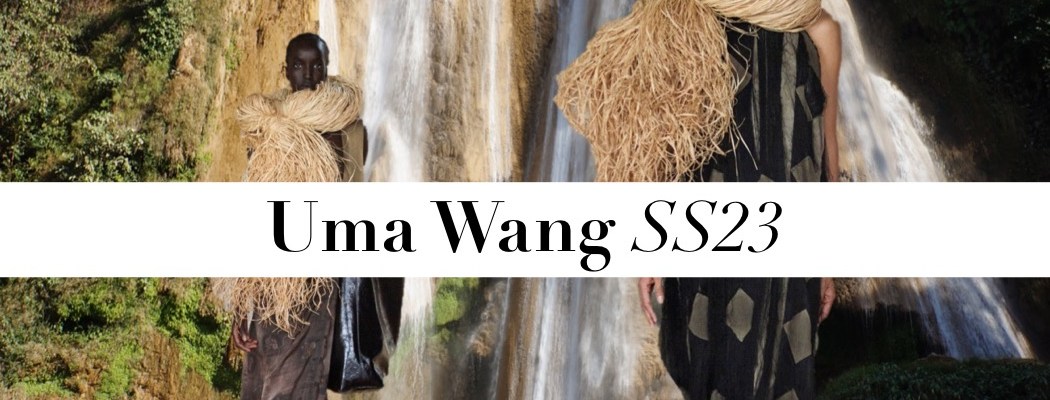
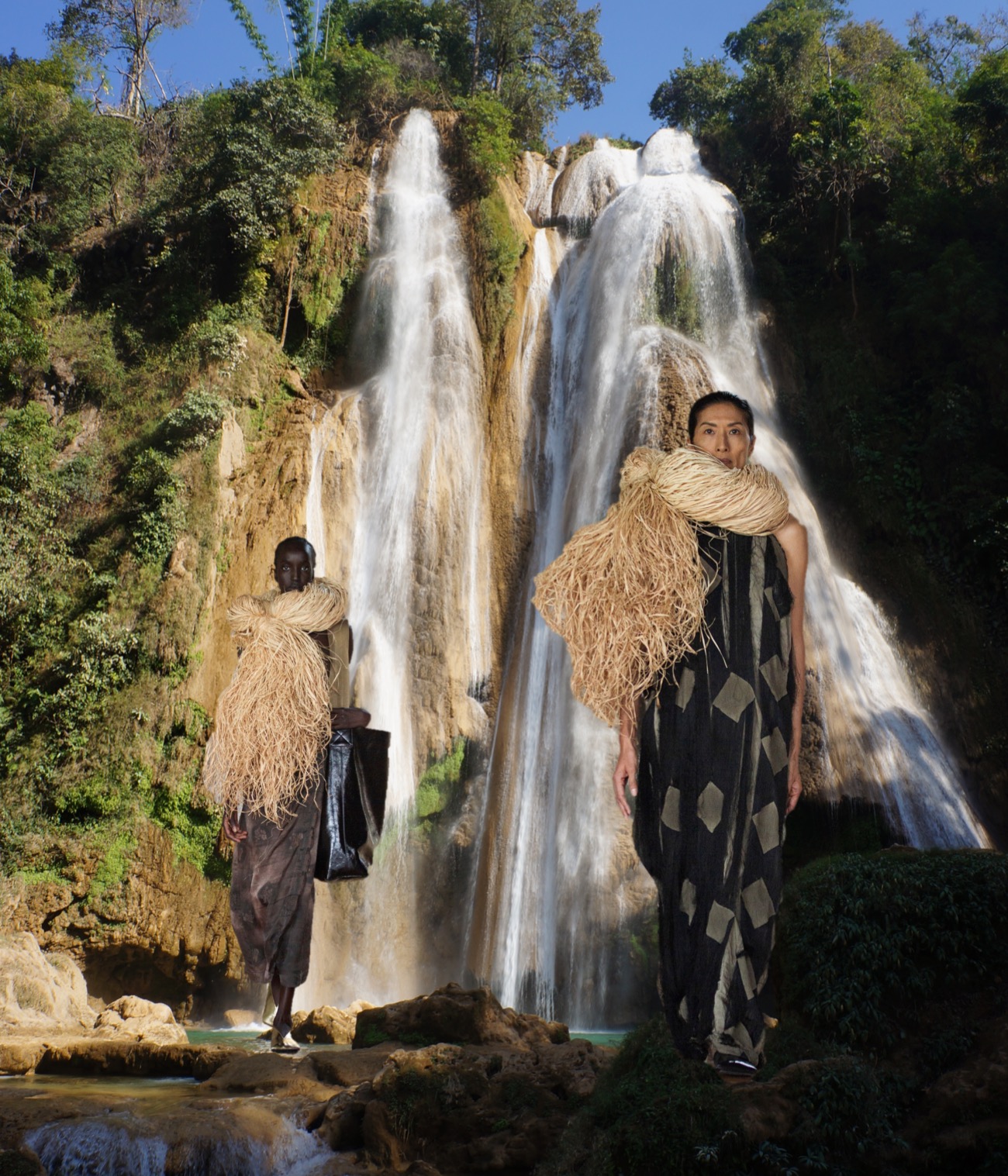
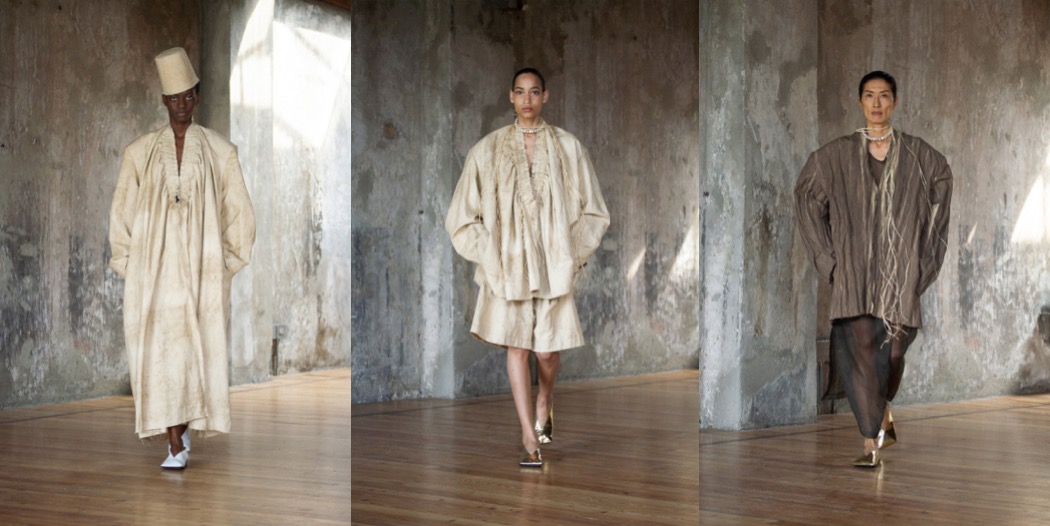
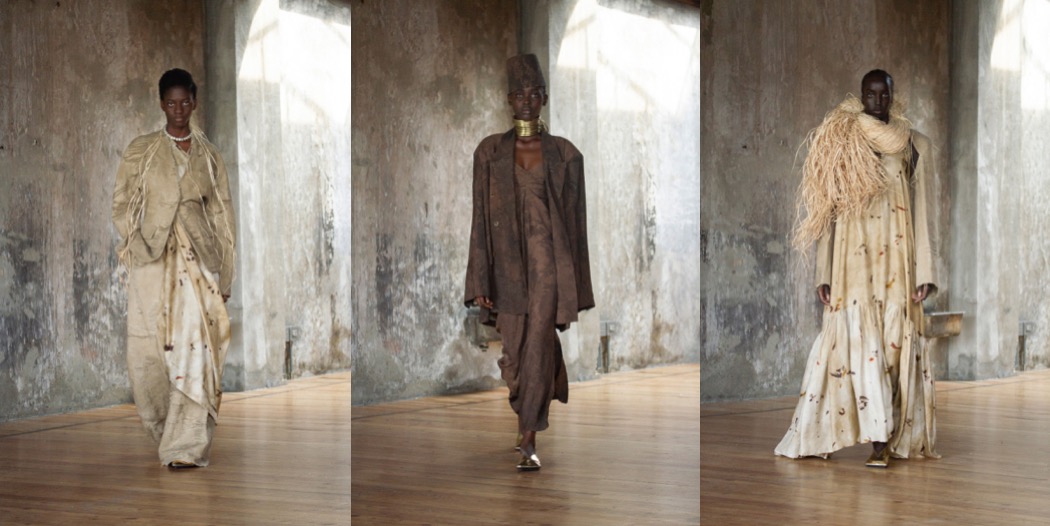
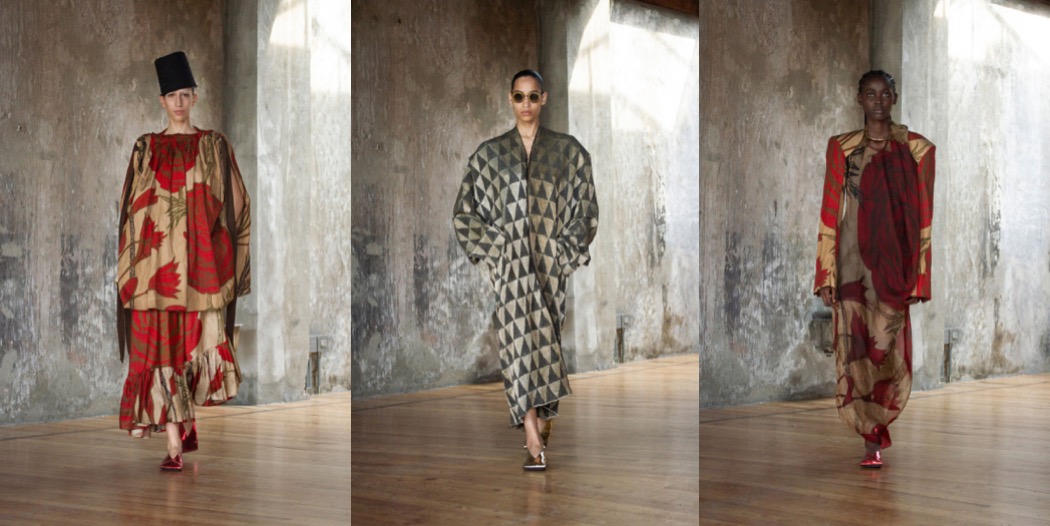
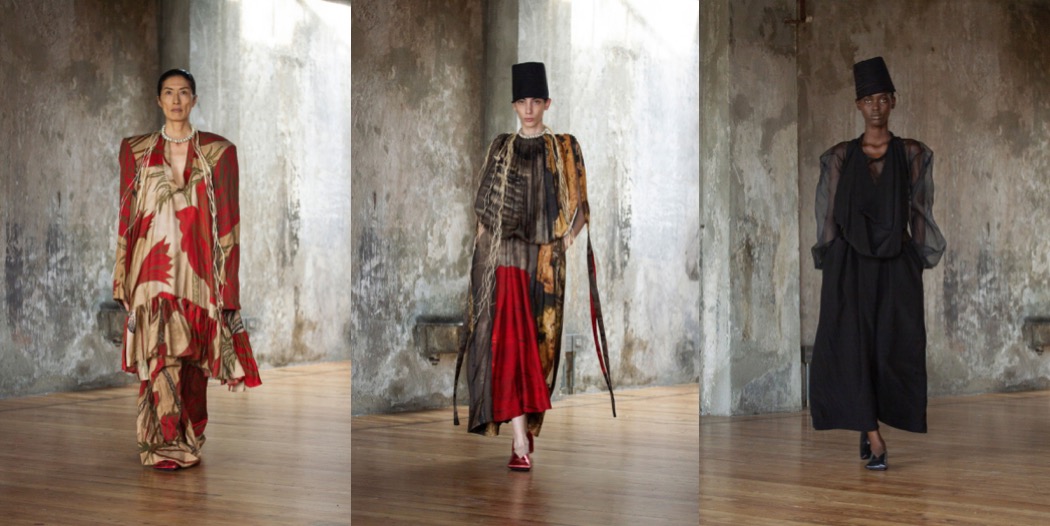
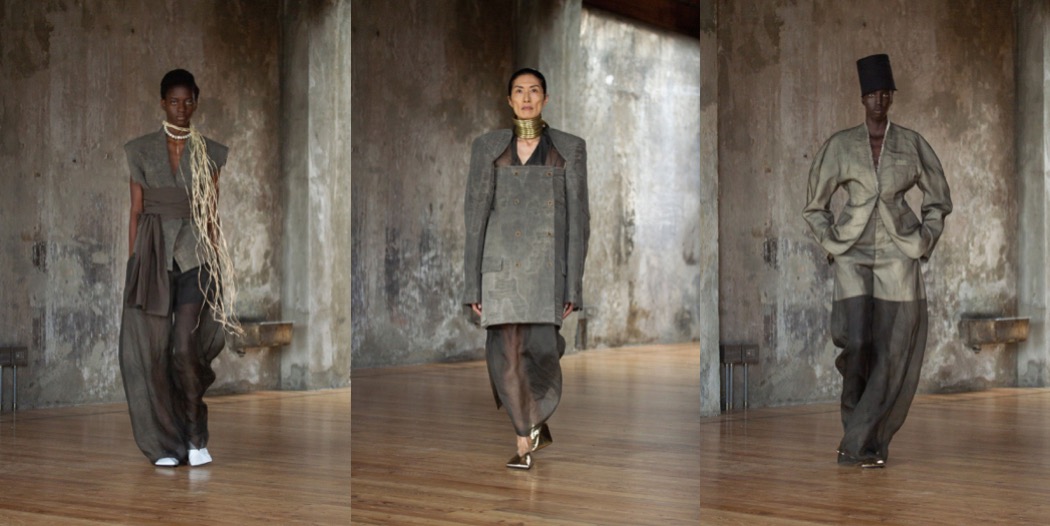
Sometimes, you’ve got a fashion collection that is pure poetry. Uma Wang‘s spring-summer 2023 is one of these rare examples. Her line-up is an ode to nature – but not in a cliché way. The neutral palette conjured the serene eternity of desert sands; coffee dye gave an earthiness to some of the materials. The second look was created from one length of a metal and cotton fabric that resembles tree bark. Sheer nylon was used, said Wang, to evoke “a white cloud in the sky.” Just as Wang harnessed different natural elements – sky and earth, for example – so she combined menswear touches with soft draping, flou, and structure. This collection read as mature as opposed to trendy because of the clarity of Wang’s vision, which is largely derived from her passion for materials. The designer works closely with Italian mills creating incredible, often textural fabrics, which help to inform the silhouettes. In general, Wang’s stories are like collages of different stories that somehow make sense when connected. For spring, Wang borrowed from the world of interiors a frayed cotton meant to evoke a woman wearing something she found at an antiques market. There was an ’80s boldness to menswear-inspired coats, jackets, and sleeves, for example. The square-toe shoes were inspired by those worn during the Ming Dynasty. The styling of the necklaces and hats tripped up a narrative that otherwise felt like a true fusion of elements relating to culture, history, and gender forged into something new. In her show notes, Wang wrote of nature existing beyond boundary and taboo; she associates wilderness with freedom. The humility one feels in the face of the natural world finds a parallel in the designer’s respect for textiles and craft, but otherwise this collection, which showcased Wang’s formidable talents, celebrated the power of a woman, giving her the option to stand strong, proud, free with the sturdiness of a tree or the gentleness of a cloud.

Collage by Edward Kanarecki.
Don’t forget to follow Design & Culture by Ed on Instagram!

NET-A-PORTER Limited

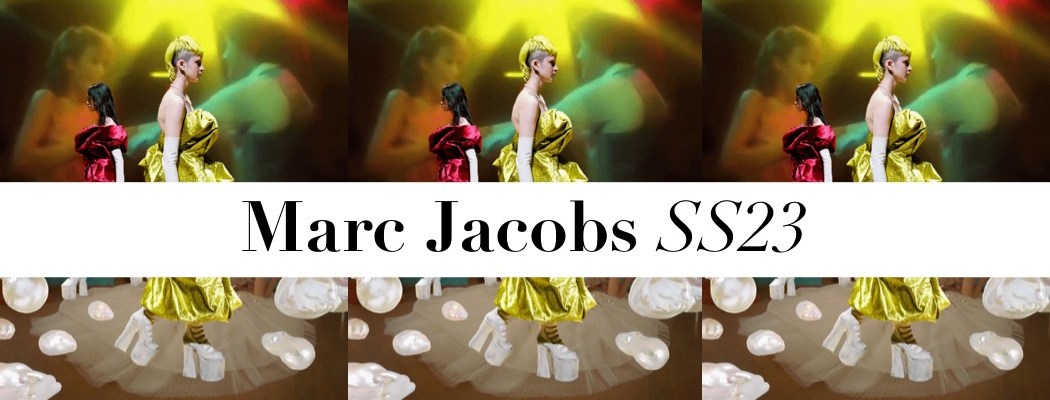
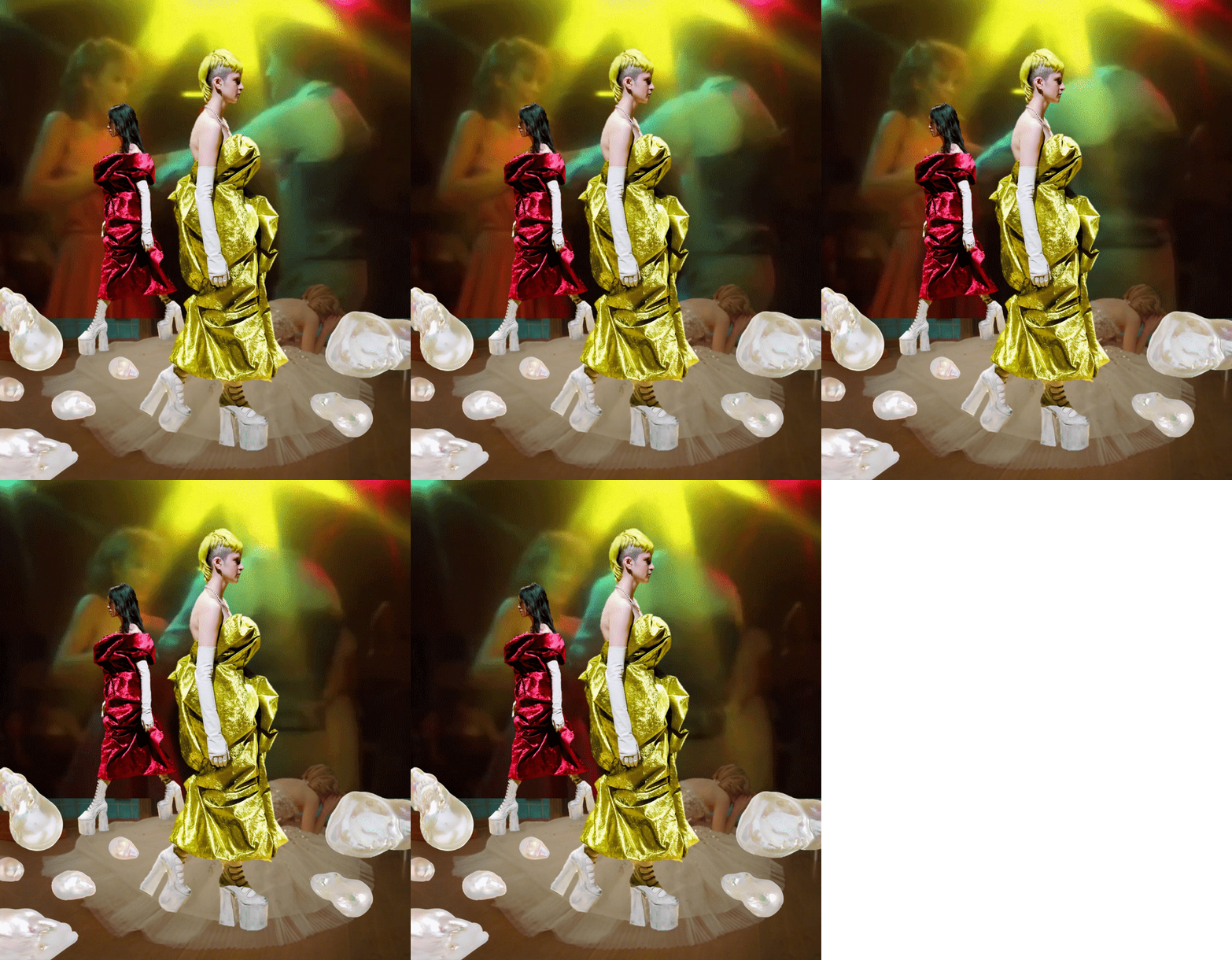
Heroes. Marc Jacobs SS23

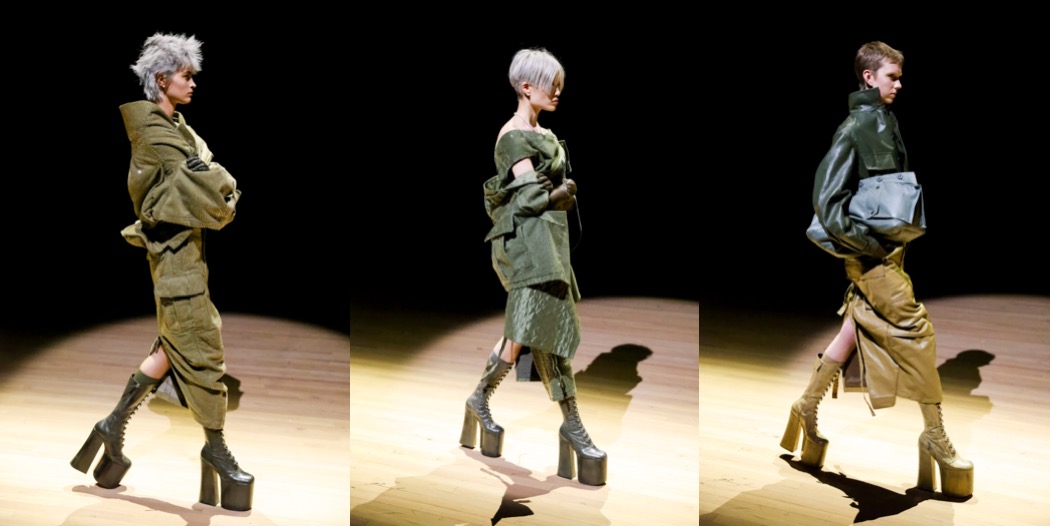
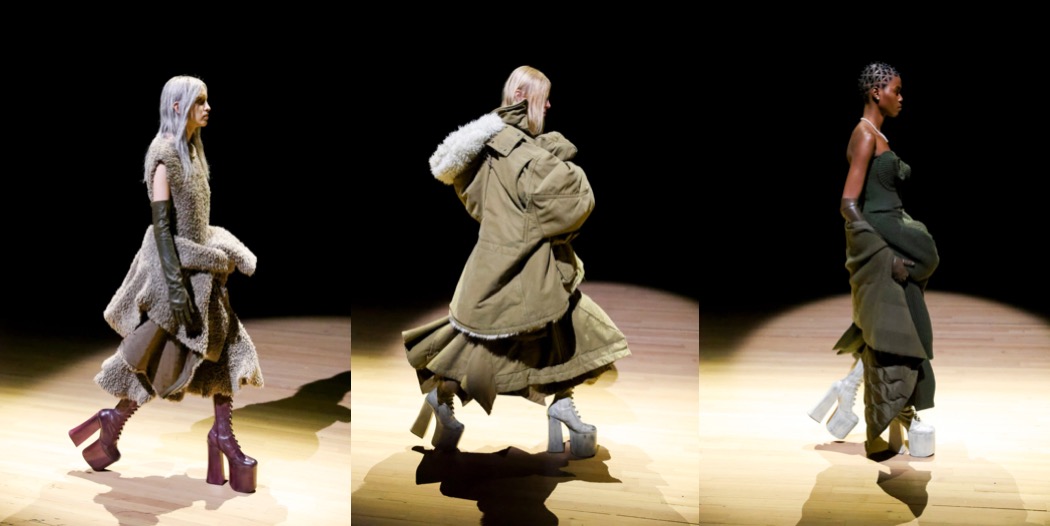
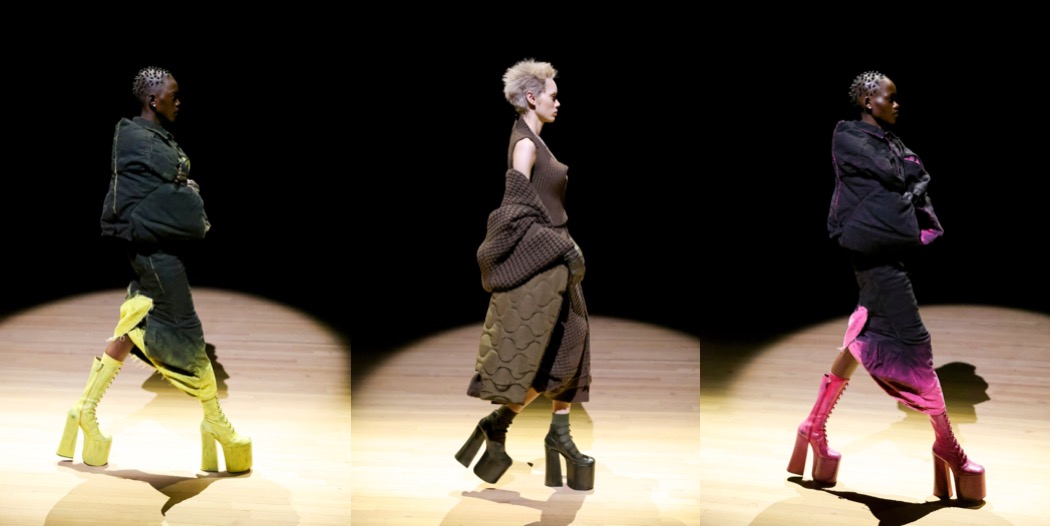
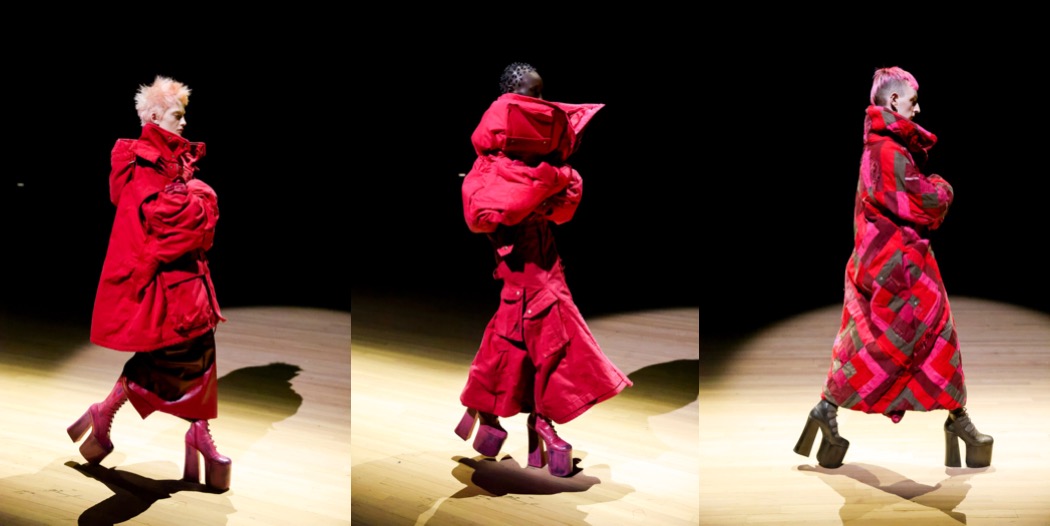
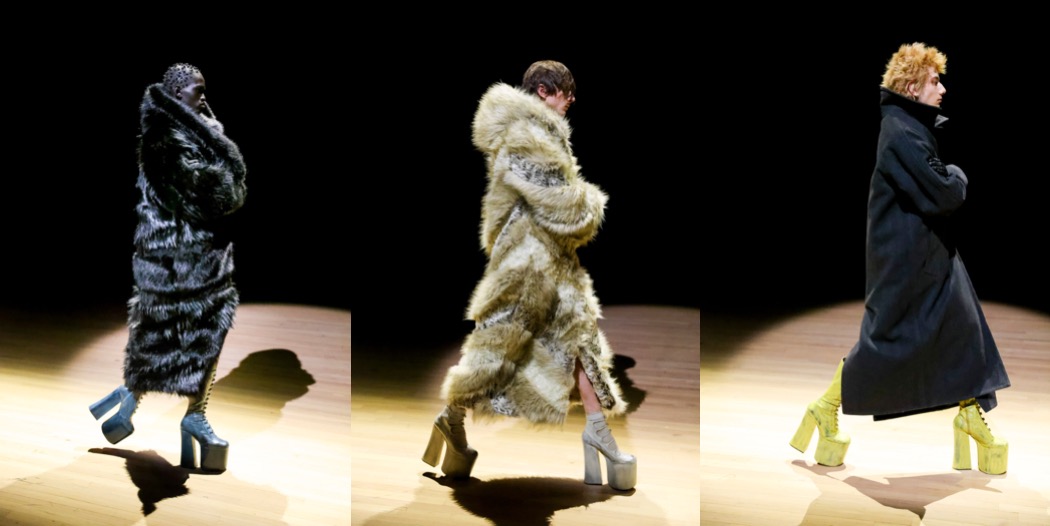
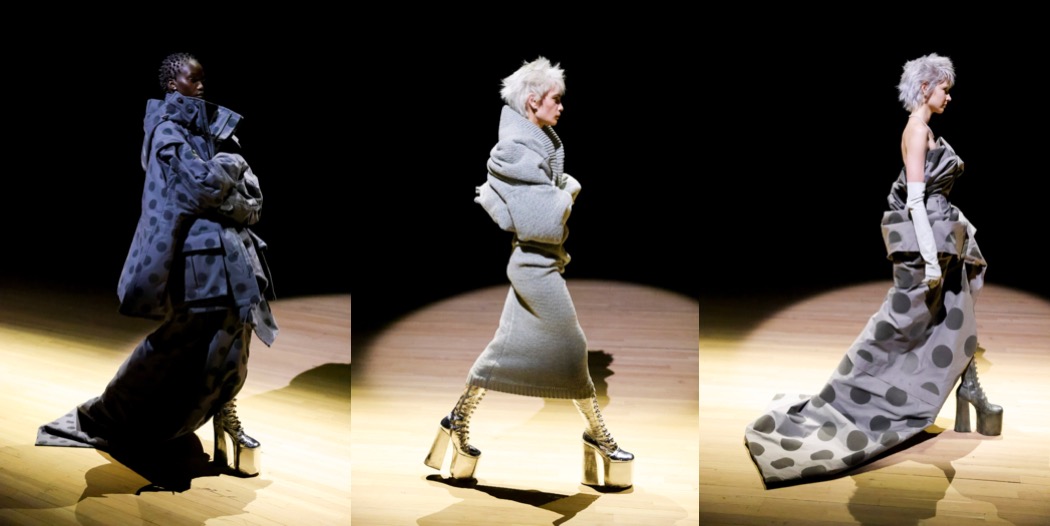
Marc Jacobs held his latest fashion show in the Park Avenue Armony, a week before New York Fashion Week officially begins. Even if the king of New York’s fashion scene doesn’t return to the event, the entire outing felt very New York. The giant room was pitch dark and almost empty, save for a single row of chairs and spotlights illuminating the space in front of them. A solo violinist, Jennifer Koh, played a portion of Philip Glass’s “Einstein on the Beach.” Jacobs gave the collection a name – “Heroes” – and included a Vivienne Westwood quote in his show notes more earnest than irreverent: “Fashion is life-enhancing, and I think it’s a lovely, generous thing to do for other people.Westwood died in December at 81, and when she passed Jacobs posted a black-and-white photo of the legendary designer as a young woman. In it, she wears her bleached blond hair in spikes and a button-down stenciled with the words: “Be reasonable, demand the impossible.” At the time, Jacobs wrote that he was heartbroken, saying, “I continue to learn from your words, and all of your extraordinary creations.” This collection was an emotionally charged homage to the “godmother of punk,” from the top of the models’ peroxide wigs to the bottom of their platform shoes. Naomi Campbell, you’ll remember, famously fell in her platforms at Westwood’s autumn 1993 show. But Jacobs has learned much more than that from the late designer. The “tit tops” of Westwood’s Pirate collection circa 1981, in which she twisted t-shirt fabric into nipples, were reinterpreted as casual knit leotards and nipped and tucked sheath dresses. Here, the romantic silhouettes that Westwood lifted from old master paintings, with their bustles and bustiers, got a dressing down in military surplus, heavy on the cargo pockets. Jacobs recreated her signature volumes by turning a shirt into a skirt and tying its sleeves in the back, or by dressing models in upside-down jackets, hems dramatically framing their faces. A few of the models walked past with their arms crossed, pantomiming Westwood’s defiant audacity. Long-line coats with the geometric patchworks of quilts may not be of direct lineage, but their DIY-ness chimes with Westwood’s punk ethos. They’re special pieces, not precious because of the materials Jacobs used – they actually looked quite humble – but because of their remarkable handwork. Tinged with sadness, but also with moving, creative expression, this collection proves again that no one does it like Marc.

Collage by Edward Kanarecki.
Don’t forget to follow Design & Culture by Ed on Instagram!

NET-A-PORTER Limited

Why Do I Make Clothes? Marni AW23

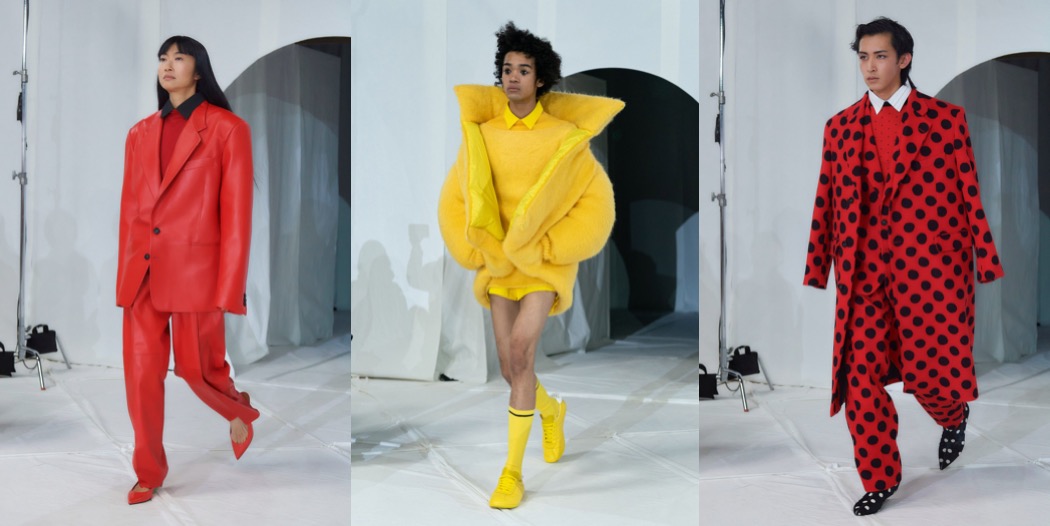
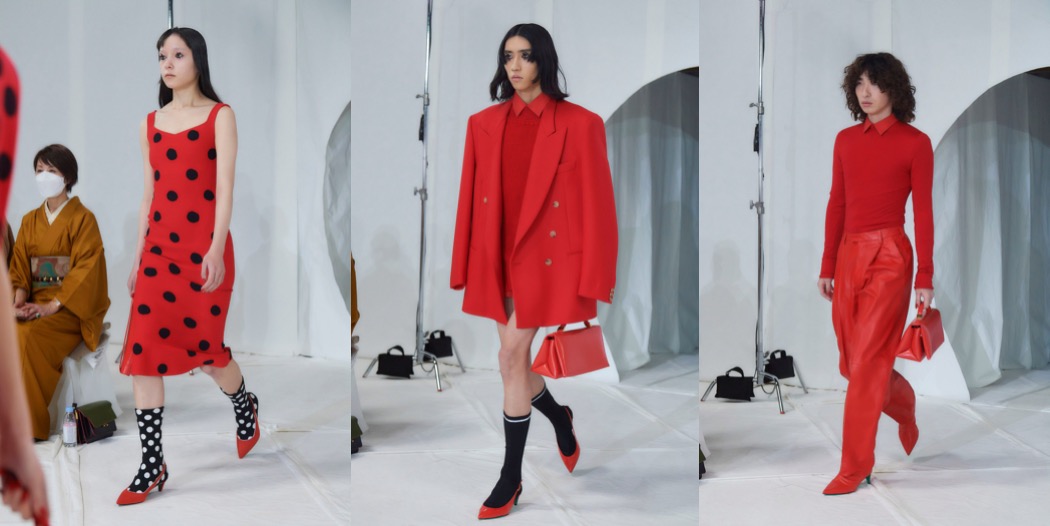
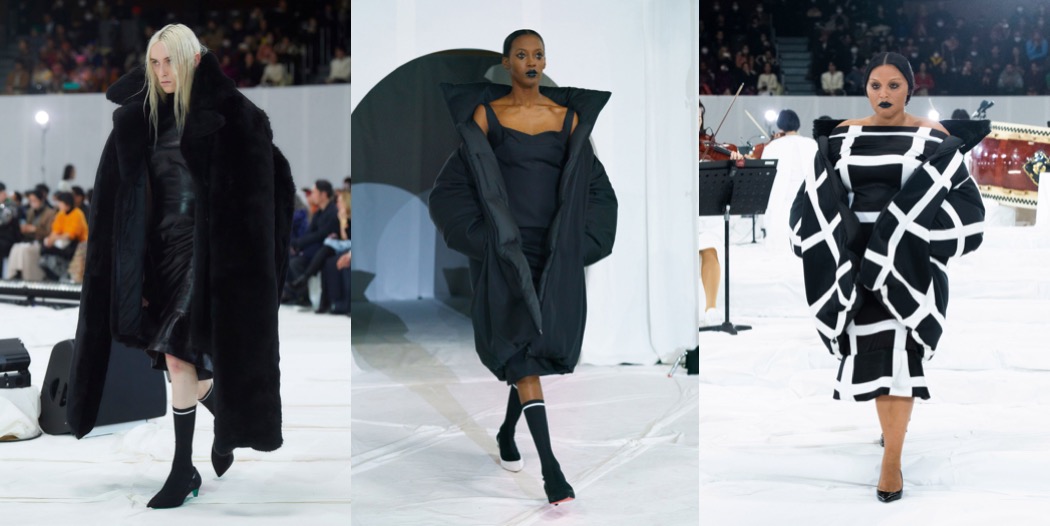
Marni‘s autumn-winter 2023 collection by Francesco Risso felt like a big shift. Not only because it was presented in Tokyo (Marni travels the world – last season, the brand opened New York Fashion Week), although that certainly became a new context for comprehending what this Italian label stands for today. The Yoyogi National Gymnasium, the fashion show’s spectacular venue, was built by the architect Kenzo Tange for the 1964 Summer Olympics. It’s a structure, as Risso pointed out, “both rigorous and intimate – it looks to the future while keeping a feel of enveloping protection, like if you were in a womb.” This way of balancing discipline and humanity, cutting-edge design and domesticity, connects with the soul-searching Risso has been doing on the meaning of making clothes. “Here in Japan I’ve found a profound sense of patience, of stillness, of respect, something that in the West I believe we’re losing.” He continued: “We’re surrounded by futility. After three years of pandemic, where we all have been vocal about the changes we wanted in the system, to slow down, etc., we’re back to square one. We are again devoured by the brutality of the algorithm.”Going back to the love he feels for his metier keeps him grounded. At the show, on each of the paper-covered seats, he left a handwritten letter whose opening line asked: “why do I make clothes?” For the Marni creative director, clothes are living creatures, they touch, breath, move; it’s a love dance, a sentimental relationship: “Because they’re our companions, and there’s more to them than just air kisses. I don’t know if I make clothes that people need, or if I make clothes that need people, or if I make clothes for the people that I urgently need to need the clothes that need them… What I do know is that today we need less and less clothes that are needless.”

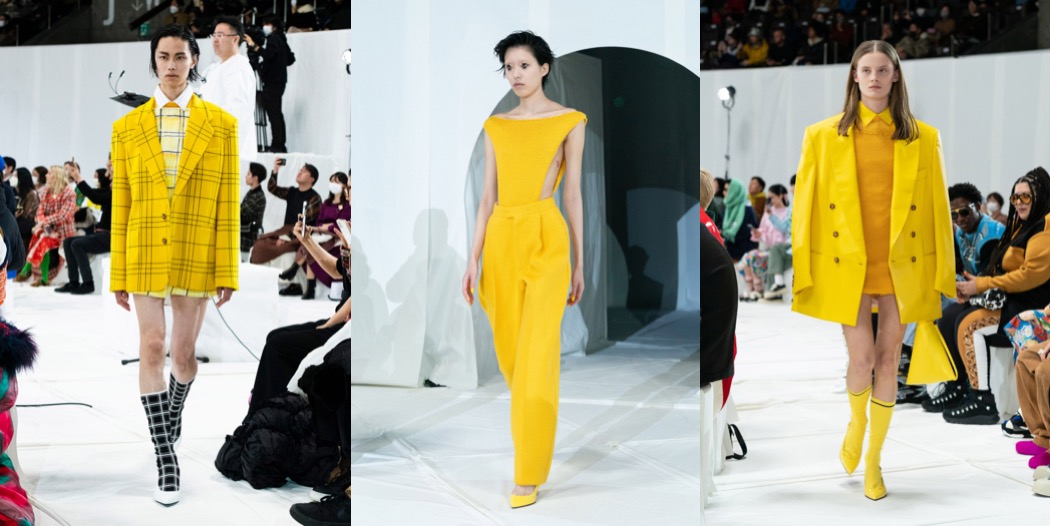
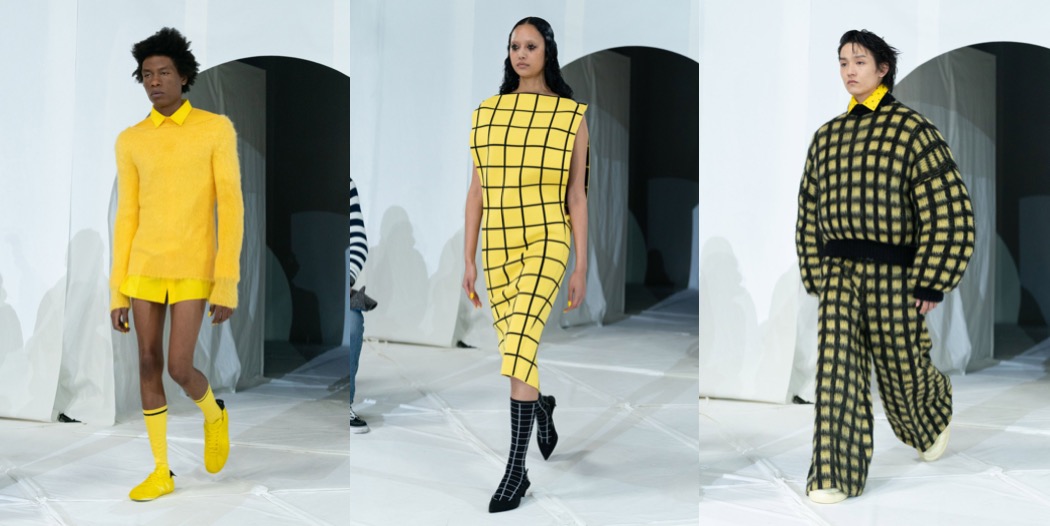
White is a non-color that speaks of absence, but also of clarity. It is a carte blanche on which new words are ready to be written. Wrapping the arena in white paper spoke of a desire for simplicity, for reducing noise and distractions. But Risso is no minimalist, and even if he preached rigor and linearity, the collection had presence, density, and punch. He traded his usual slightly bonkers decorations for starker, elemental graphics, and reduced the palette to a few saturated primary colors: yellow and red playing against white and black. Every look was an all-over proposition, and for both men and women in the mostly local cast (plus Marni favorites like Paloma Elsesser and Angel Prost), silhouettes alternated between slender and form-fitting and bulky and bulbous. Tailoring was offered in oversized versions, and knitwear, a Marni forte, had fuzzy mohair surfaces, as in the jumbo round-cut piuminos that were among the collection’s standouts. The swirling, magical motifs of sirens and unicorns of previous outings were nowhere to be seen, replaced instead by kinetic grids and optical checks, and by slightly Yayoi-Kusama-esque bouncing dots of various sizes. Rectangular tunics and angular apron dresses contrasted with form-fitting, heart-shaped bustier dresses that were kept neat rather than sensual. Cocoons in padded leather or wool conveyed enveloping, comforting warmth. “It’s a collection with one foot in tradition and the other in a not-impossible future,” he said backstage. “It’s a sort of rhythmic alternation of proud normality and proud creativity.”

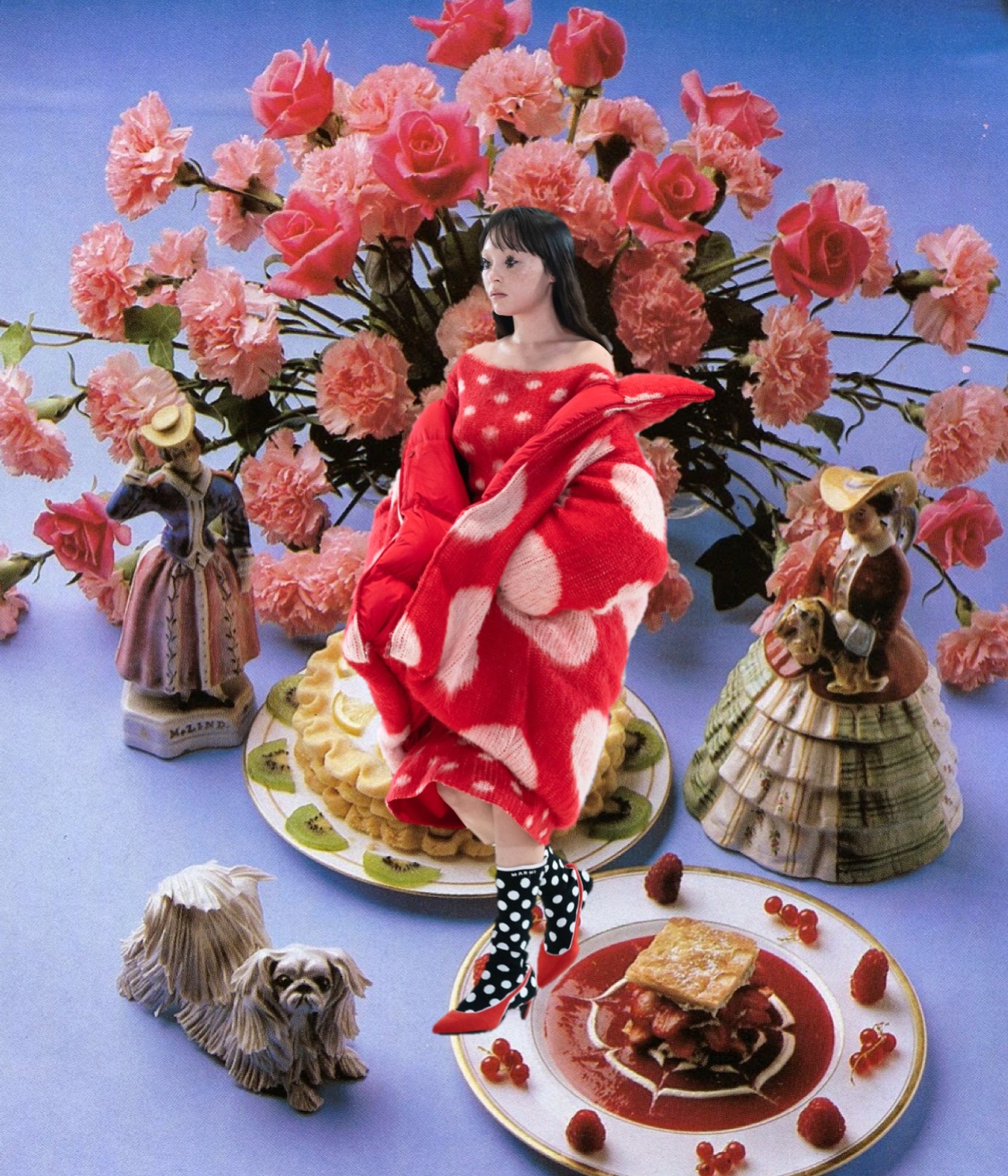
Collage by Edward Kanarecki.
Don’t forget to follow Design & Culture by Ed on Instagram!

NET-A-PORTER Limited