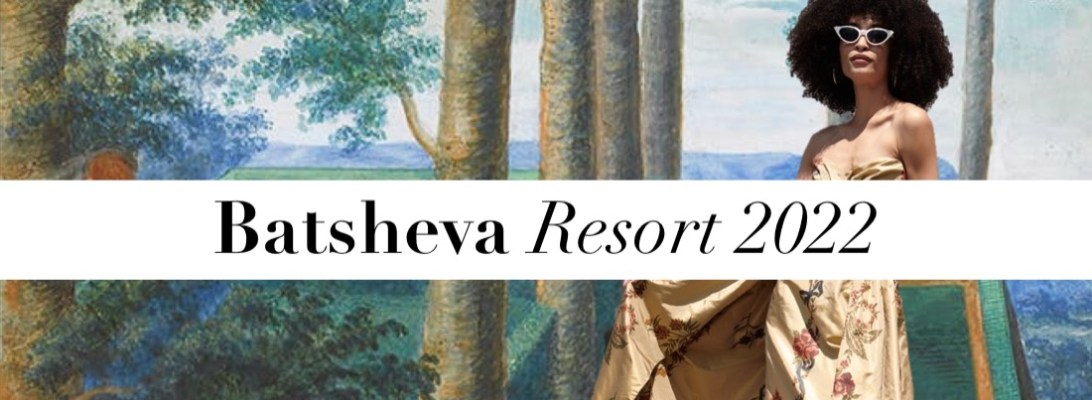
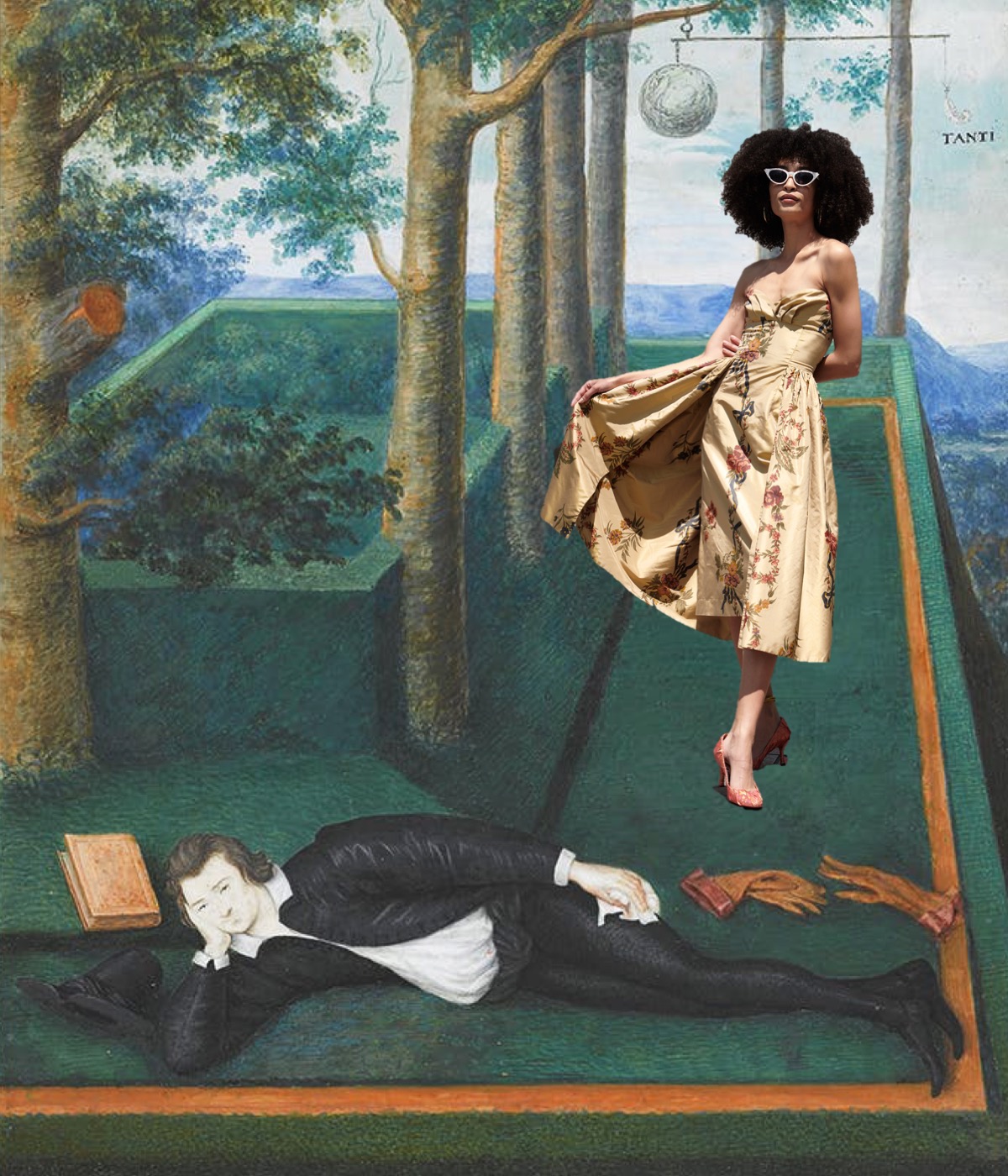
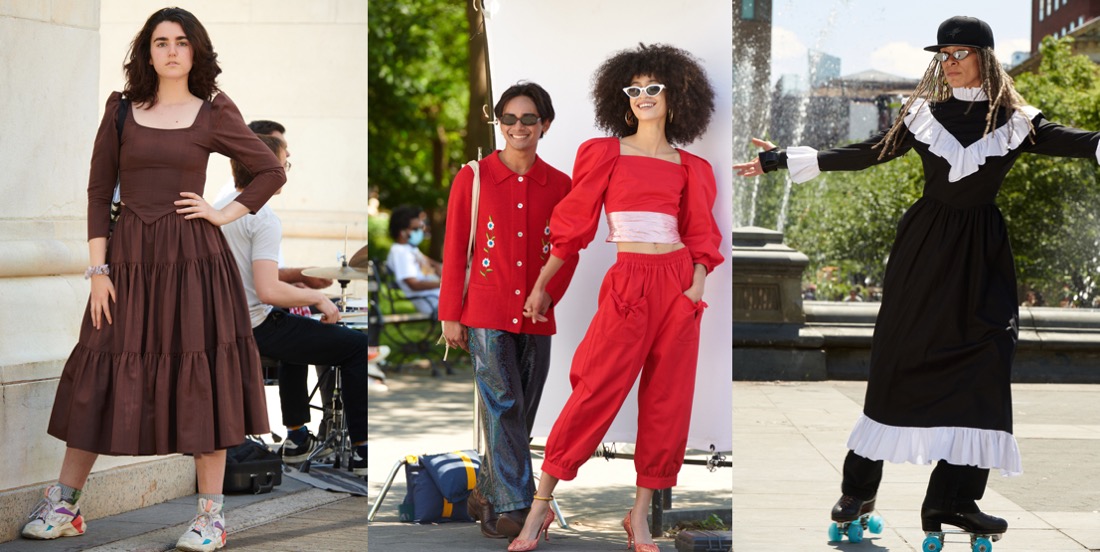
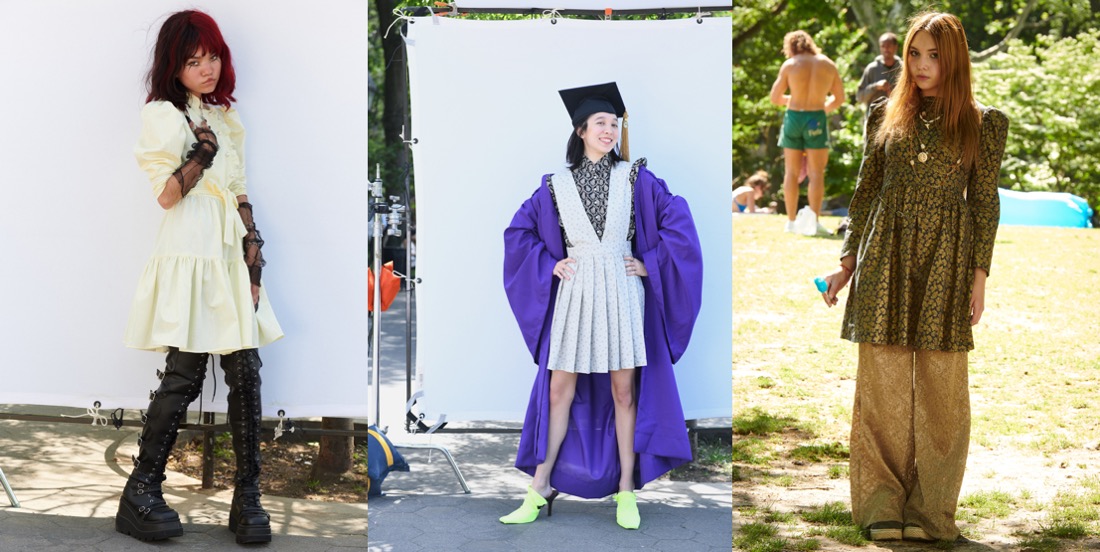
Batsheva‘s resort 2022 is a love letter to New Yorkers, all of it photographed on and worn by the beautiful locals. With her photographer husband, Alexei Hay, she set up a booth in Washington Square Park and recruited people in the area to change into her spring offering and model it spontaneously. One went full Dovima in a strapless ’50s-style golden gown and kitten heels. Another just tossed an ivory dress coat over their regular clothes, coffee cup in hand. There are teen goths, lovers, sisters, NYU graduates, and passersby smiling throughout the look book, a total celebration of New York back in action. The breadth of this season’s offering is as diverse as the people in the clothes: a skateboarder wears a roomy midi-housedress in a hologram print. Best friends sport a shapeless glittery dress inspired by a traditional Hasidic style and burnout velvet pants. A roller skater chose practical black-and-white ruffles while a pair of sisters model crochet tops and skirts. This is probably as close as we’ll get to “probably back to normal” this summer – and it looks great. And what’s new in the designer’s gradually-evolving dictionary? On a basic level, school clothes make sense as an inspiration for Batsheva Hay – and not just for their sweetness. She started her brand as a young mother, aiming to make funny dresses that work for working moms. Now her daughter, Ruth, is well into elementary school with a uniform of a pinafore, shirt, and cardigan. Hay has sized up each of these to an adult scale and rendered them in shades of neon yellow, brown, and cherry red, adding rosettes to the boxy sweaters.
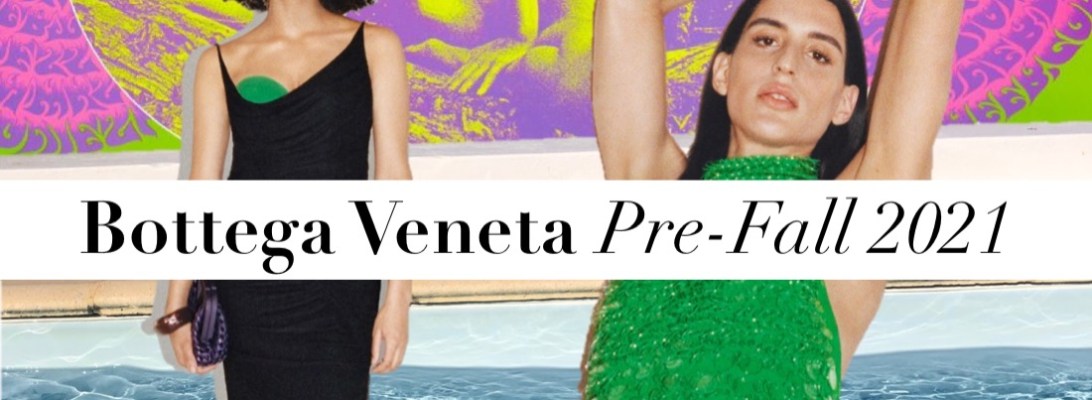
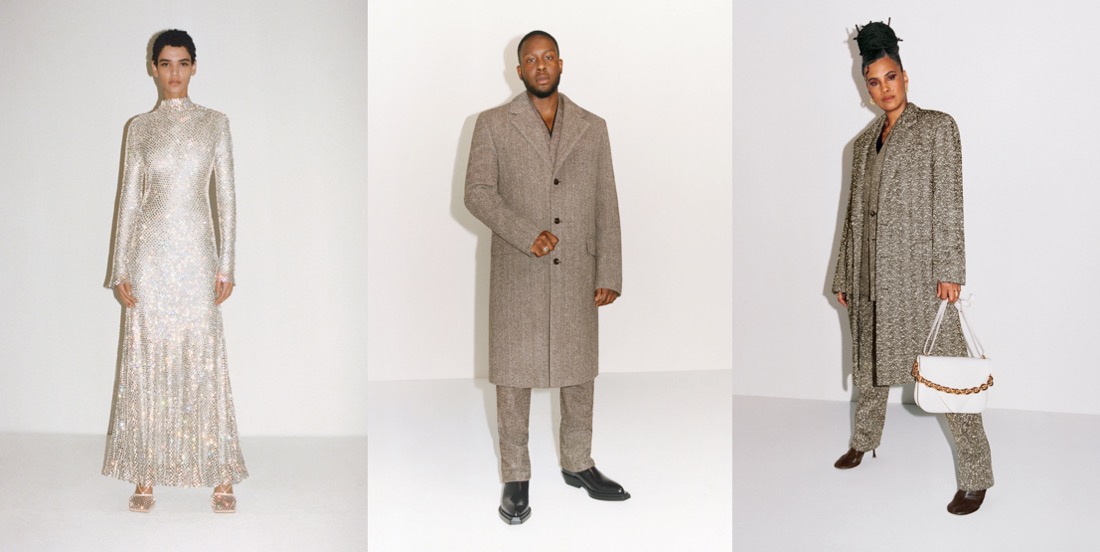
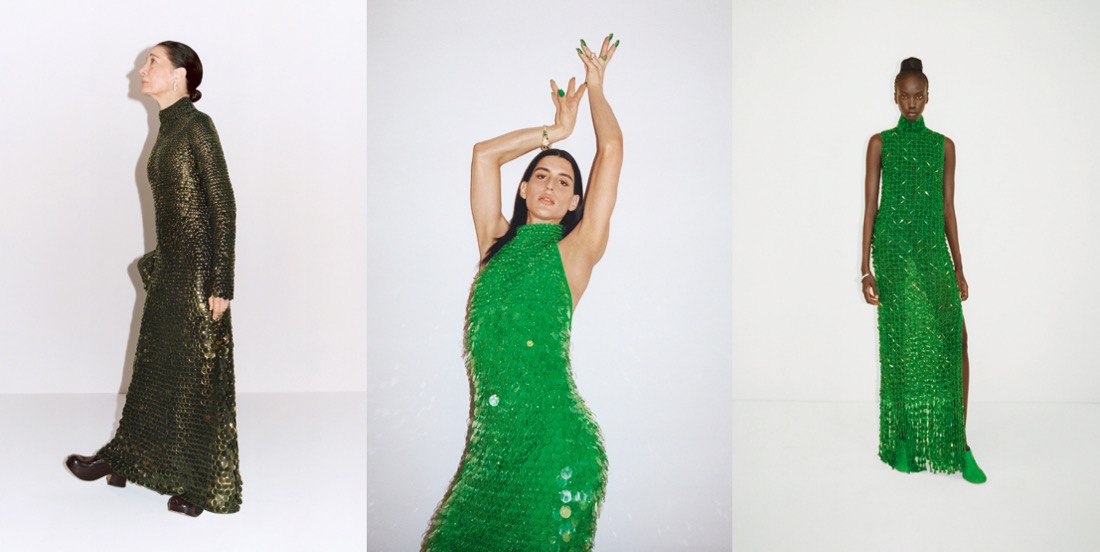
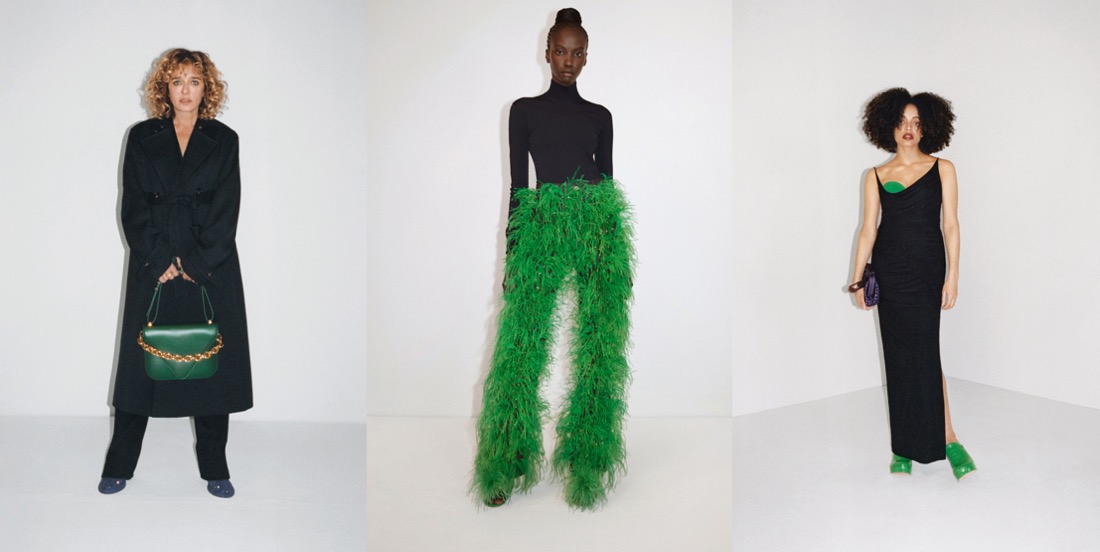
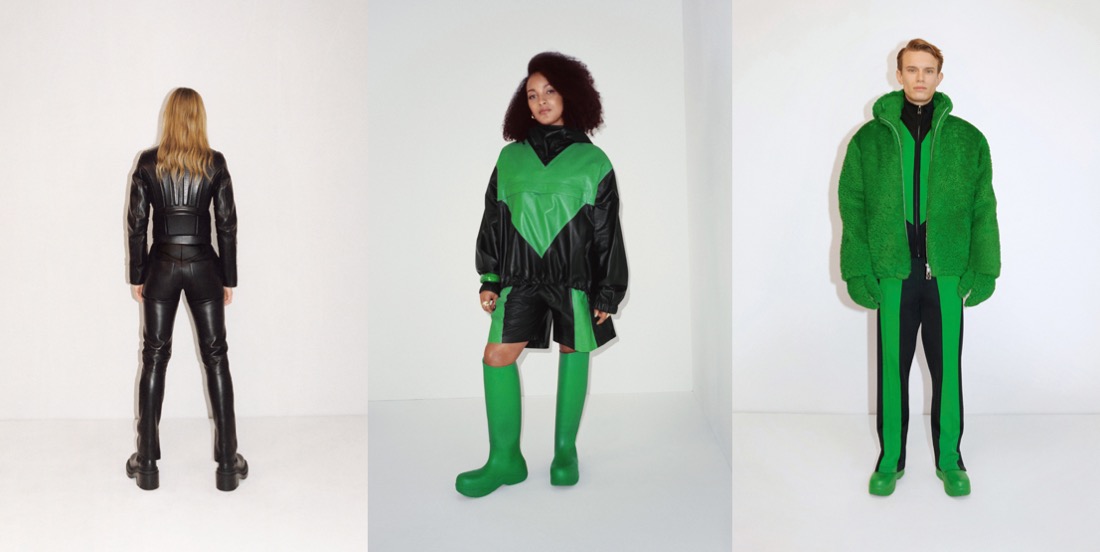
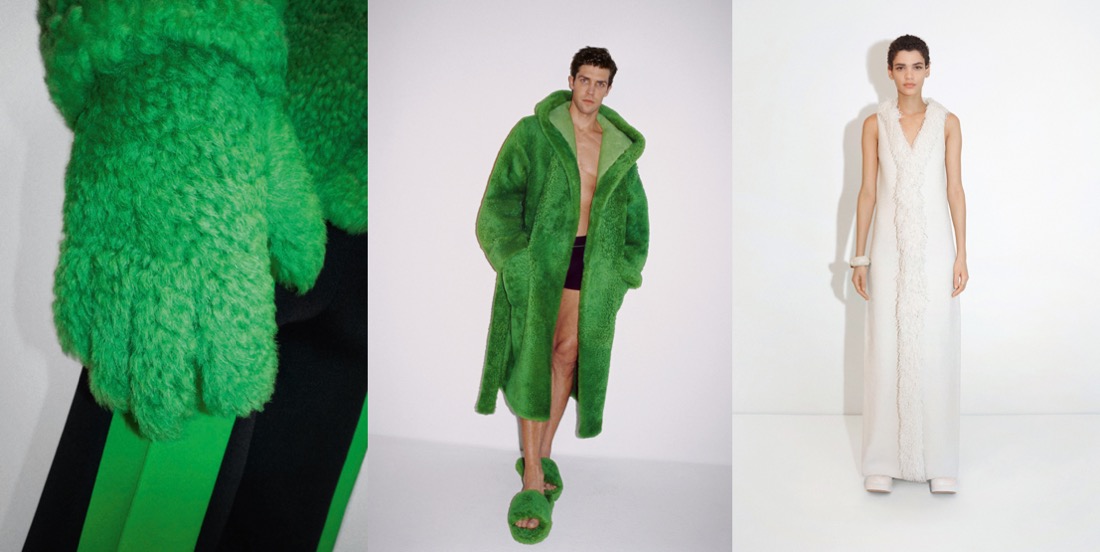
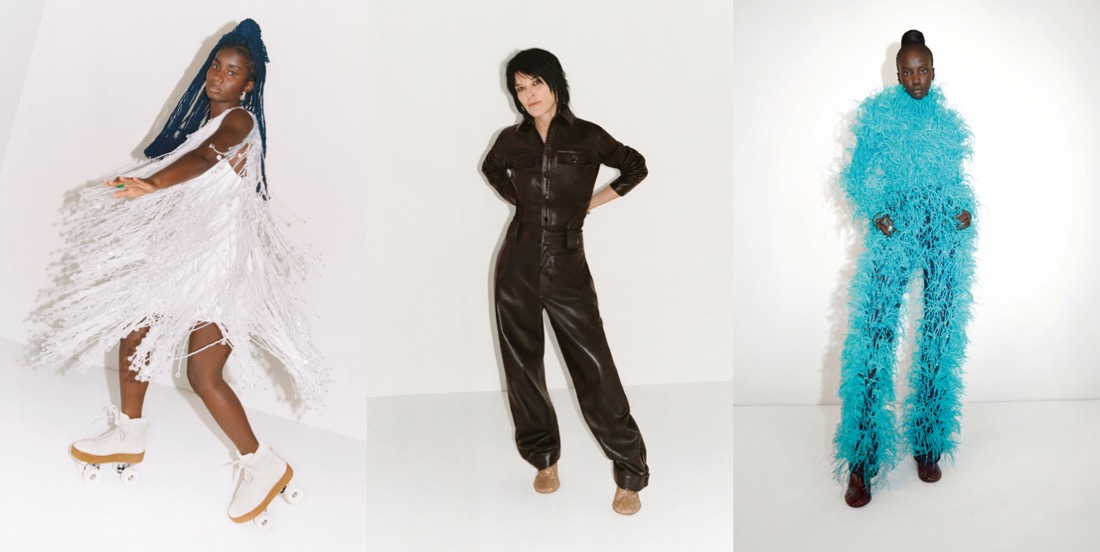
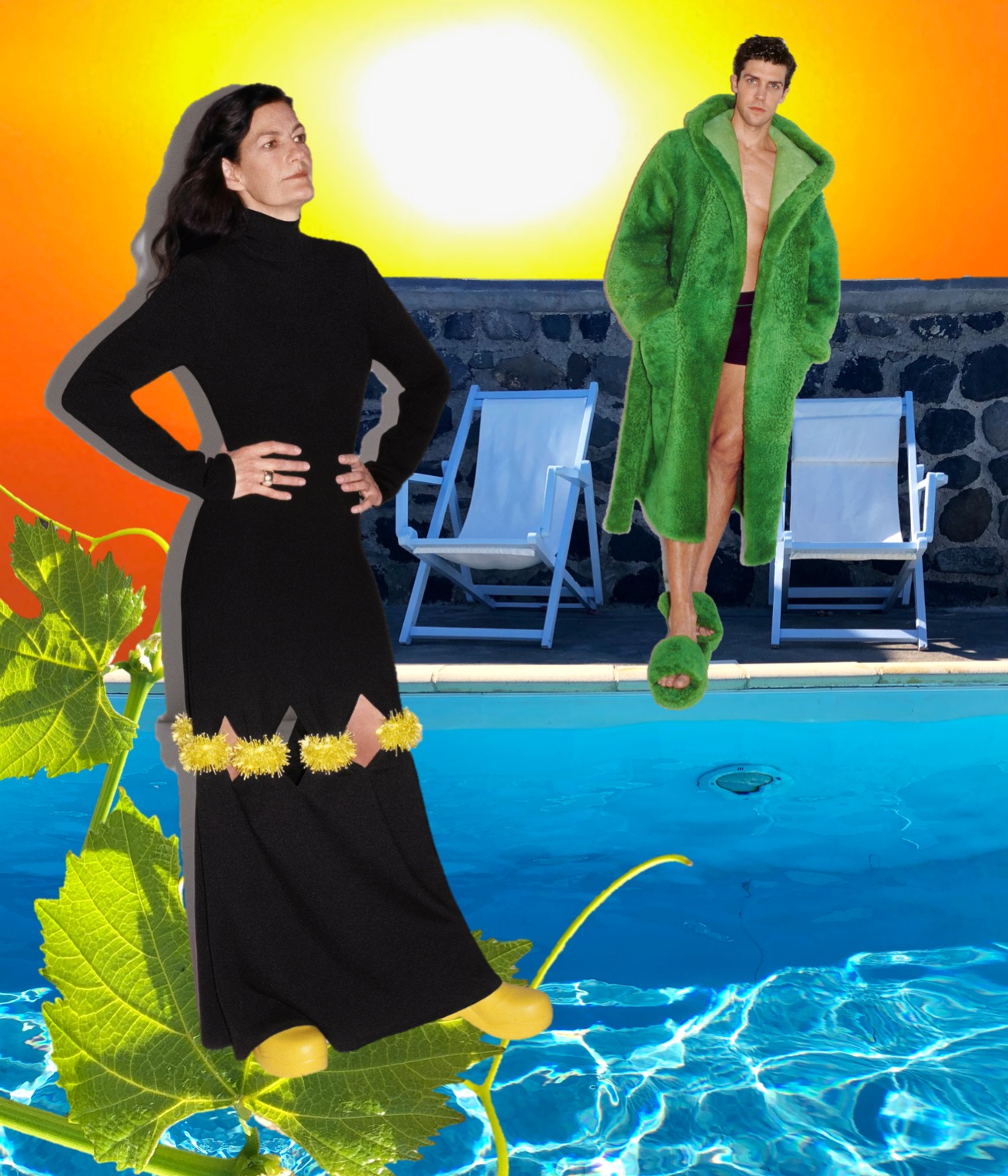
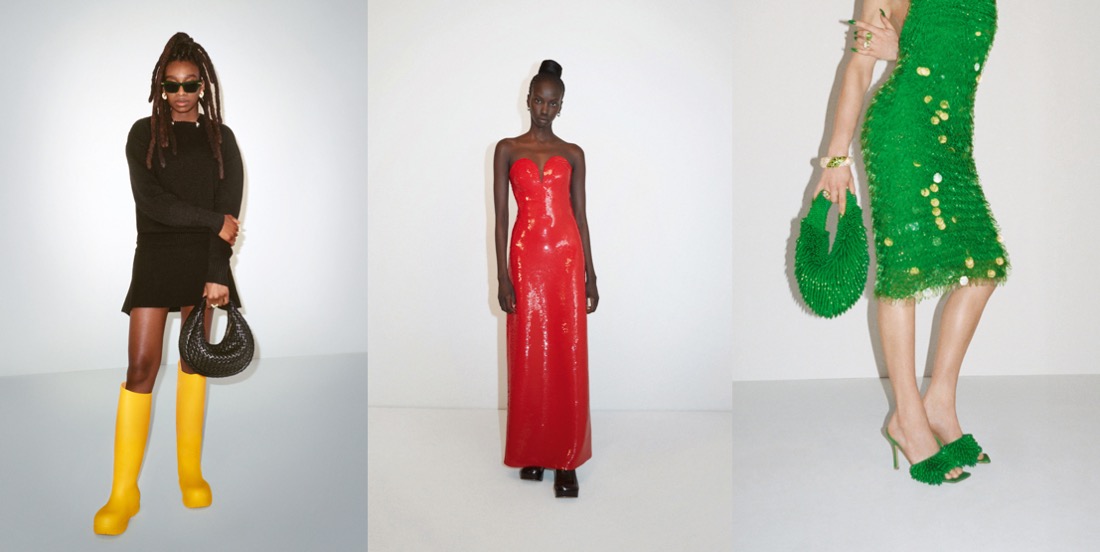
Daniel Lee and his Bottega Veneta are definitely in a good mood, and look forward to the the joyful re-emergence that might finally arrive this summer-slash-autumn. The pre-fall 2021 outing that (Instagram-less) brand calls “Wardrobe 02” is a bold line-up of essentials sprinkled with a few of the so-odd-it’s-good whimsies that will soon become collector’s items. Yes, the company will be selling the roller skates that Oumi Janta and Malick Bodian model in these pictures. It’s also a branding exercise, with a look book lineup that includes, in addition to the roller skaters, the musicians Skepta, Arca and Neneh Cherry; the dancer Roberto Bolle; artist Mark Leckey; and Central Saint Martins B.A. fashion course leader Sarah Gresty, a friend of Lee’s from his school days. “It’s people who we aspire to see in the clothes,” he told Vogue. “And there’s big diversity, from music, film, dance, theater, art, skateboarding.” As that roster suggests, and as previous Lee runways have told us, there’s nothing conservative about Bottega Veneta essentials. For Lee and his team, clothing is performance. That’s clear from a look that’s feathered in aqua blue plumes from its high neckline to its pants hem, from an intricately beaded knit BV-green evening dress, and from a giant leather belt that twists around the torso like a helix. But it also goes for straight-world-passing tailoring. The tweed suits are boardroom safe, but they’re definitely not boring. “They’re generic in a way. I like this idea of quite banal everyday clothes” Lee said. “But when you see the fabrics in real life there’s always more to [them]: the tweeds that stretch, the beautiful fabric development, the garments that are constructed without linings. There’s a lot of love and attention in the details, and that we really get off on, honestly.” What you can’t miss is the sense of fun Lee and company are having. His feathery party pants are a guaranteed good time and the clearest signal yet that post-pandemic fashion is going to roar indeed. “The world needs fun now. We want to be provoked,” Lee concluded.
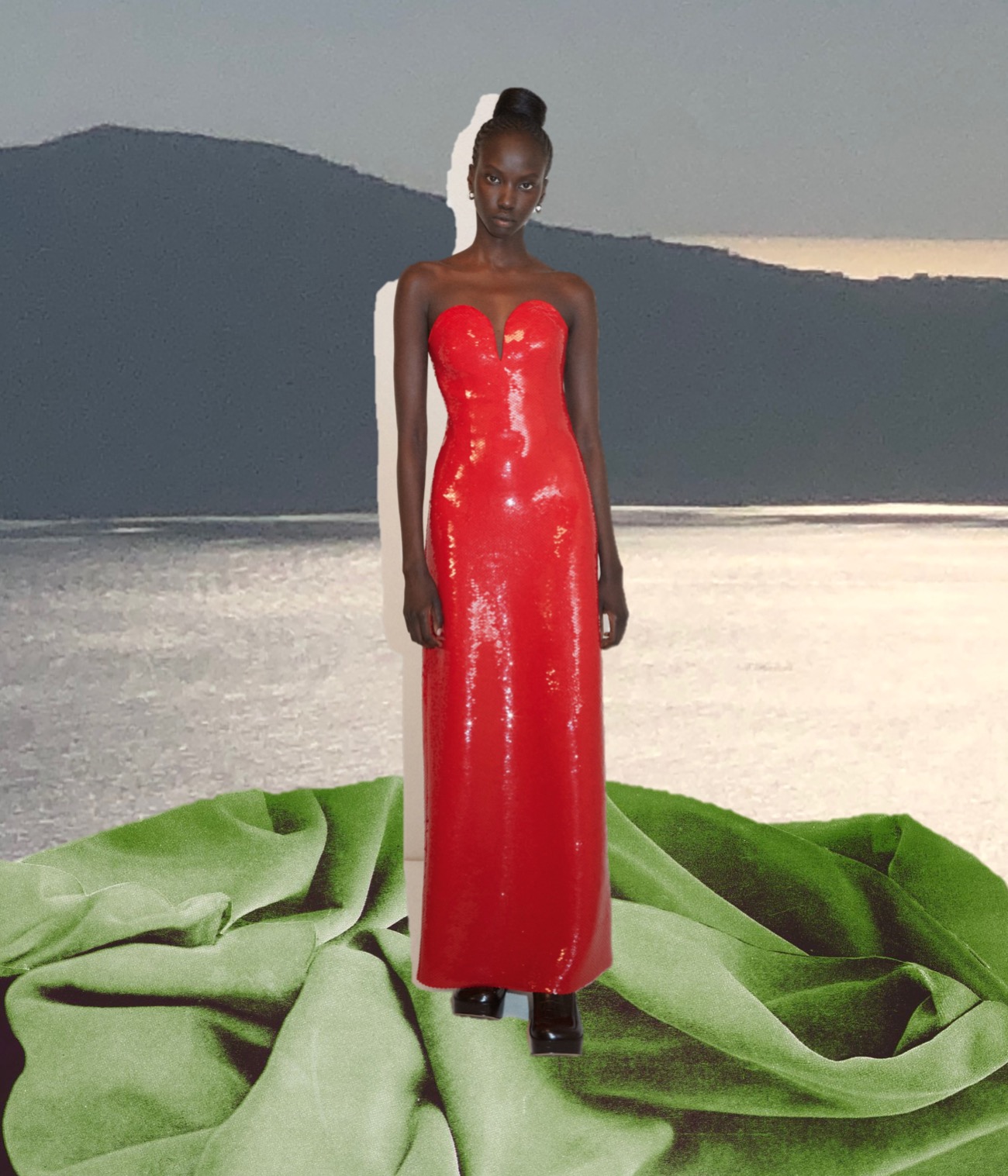
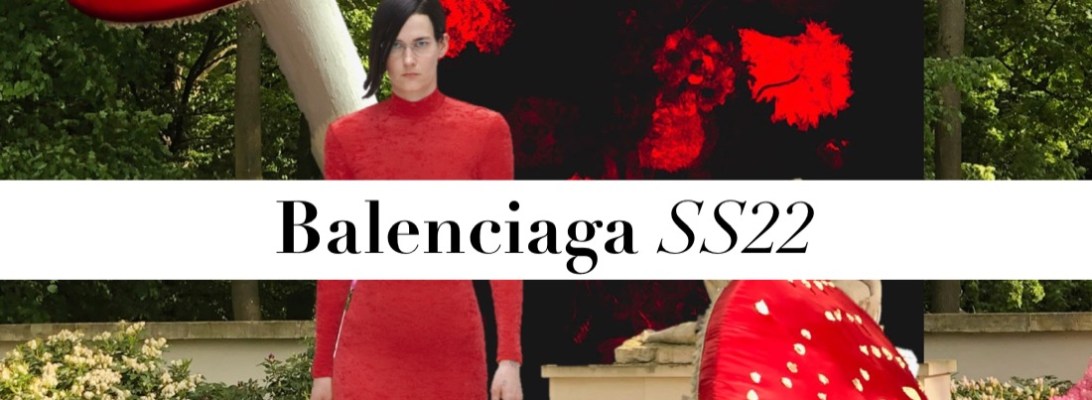
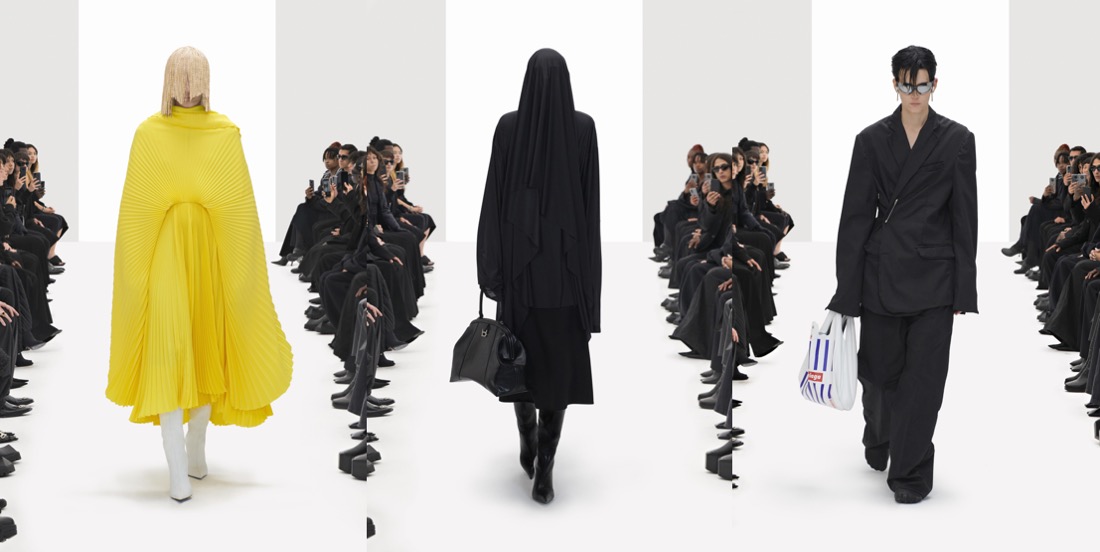
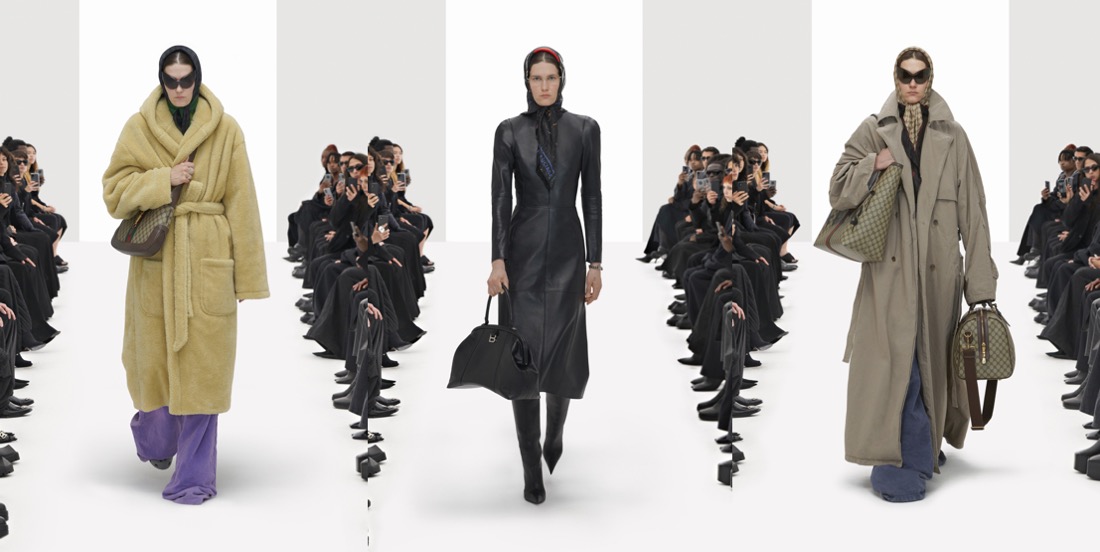
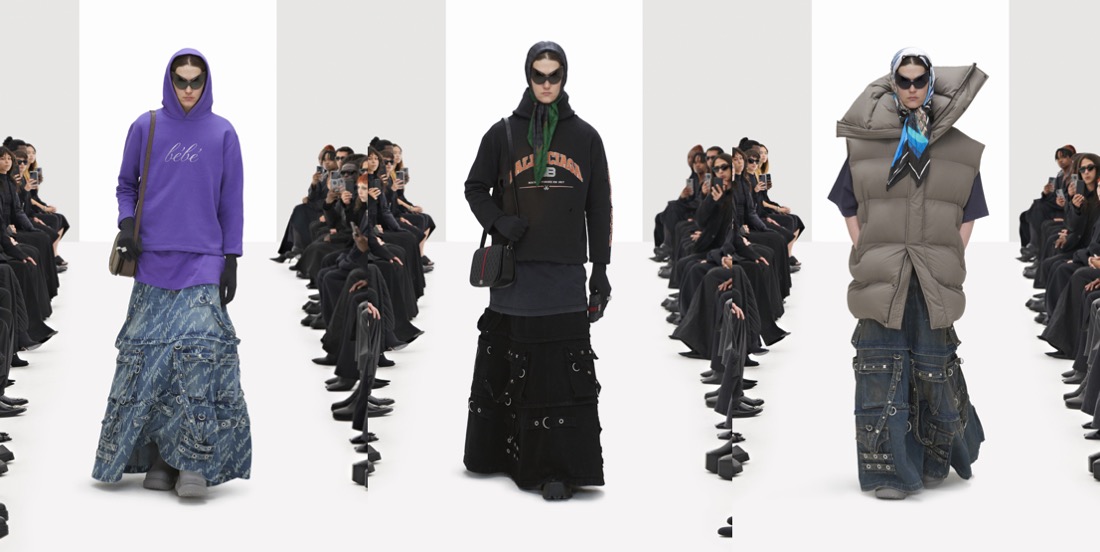
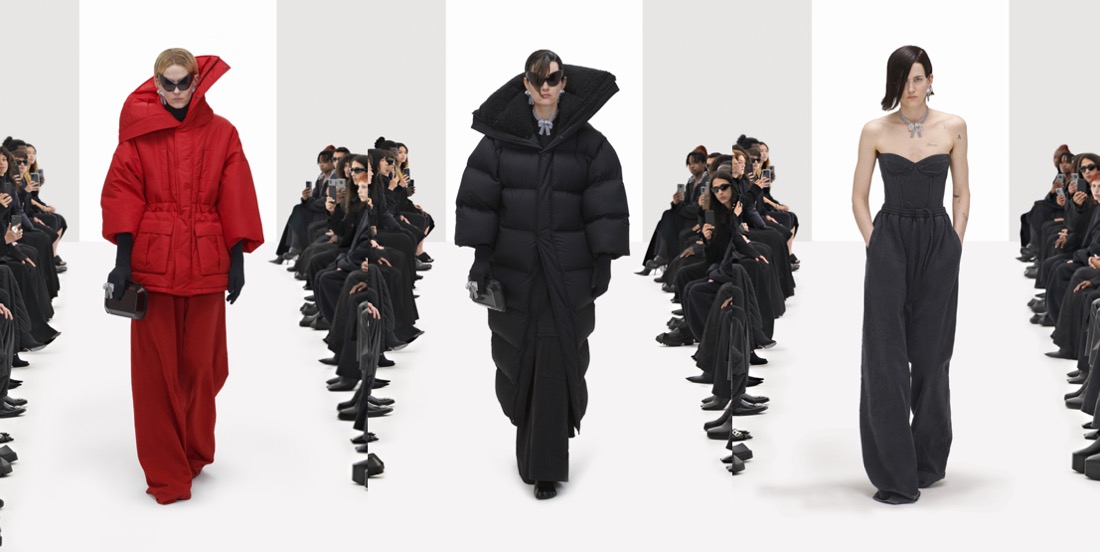
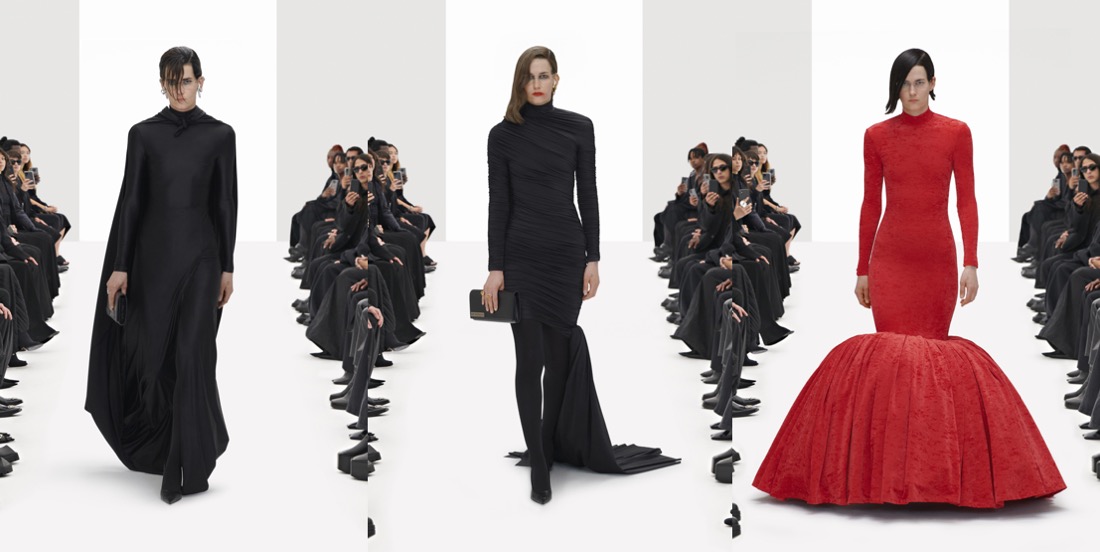
Balenciaga‘s Demna Gvasalia wouldn’t be Demna Gvasalia if he didn’t sprinkle a pinch of irony to his fashion. “It’s a deep fake of a fashion show,” declared the designer ahead of the launch of the ultra-high-tech video for his spring-summer 2022 “Clones” collection. “What we see online is not what it is. What’s real and what’s fake?” Ostensibly, one model – the artist Eliza Douglas, who has opened or closed Balenciaga shows since Gvasalia’s first collection for the house in 2016 – appears wearing both women’s and menswear on a white runway in front of a black-clad audience. But no one was “there” and no one is “real.” “It’s a show that never happened,” Gvasalia laughed. “But the clothes are real; they were made.” Accompanying information came in a deluge of language detailing the techniques the video producer Quentin Deronzier deployed to fake up Douglas’s appearance: photogrammetry, C.G. grafting of her scanned face, planar tracking, rotoscoping, machine learning, and 3D modeling. We’re in a new world now, in large part because all designers have had to grapple with 15 months of the pandemic preventing real-life show gatherings. What’s the alternative onscreen? Gvasalia, for one, has delighted in grabbing the opportunity to shift the medium of brand Balenciaga ever further into the realms of multilevel, conversation-and-meme-generating entertainment. There’s the Hacker Project – this season’s return match with Gucci, in which Balenciaga has “stolen” classic Gucci bag shapes and reprinted them with BBs instead of GGs, just as Alessandro Michele reproduced Demna Balenciaga patterns and diagonal branding in his last collection. There’s a Gucci best seller GG buckle belt redone with BBs too. “Alessandro and I are very different,” Gvaslia remarked. “But we both like to question this whole question around branding and appropriation…because everyone does it, whether they say it or not.” One of the totes comes knowingly scrawled with the graffiti legend “This is not a Gucci bag” – a reference to René Magritte’s 1929 painting The Treachery of Images. Questioning the authenticity of what we’re looking at has been going on in art since Surrealist times. The result here: a perfectly oxymoronic range of “genuine counterfeits” for our mind-twisted times. Other than the Gucci clash, there’s no mistaking Gvasalia’s roster of signatures: the supersized tailoring and coats; the loose printed dresses; the ski jackets, hoodies, and streetwear; the cyber-Gothic denim; the severely elegant eveningwear. With them, a vast range of distinctive Balenciaga accessories, from a reissue of the Crocs collaboration to the diamanté bow jewelry that originated in the house archive. There’s a part of Gvasalia that wanted to illuminate his fake runway with a bit of light and hope, he said. The first look to step out, in black velvet with a heavy veil, refers back to his prophetically apocalyptic show of February 2020. “It’s almost like mourning something, where we’ve all been,” he said. “But I wanted it to go into a bright space. And I ended it with a red ballroom dress.” After the retreat of the Balenciaga clones, he has the exact opposite planned: the showing of his much-anticipated first haute couture show, in real life, in Paris in early July. Handmade, in the works for more than a year, in front of a small audience, it’ll be his next big creative step forward. Can’t wait.
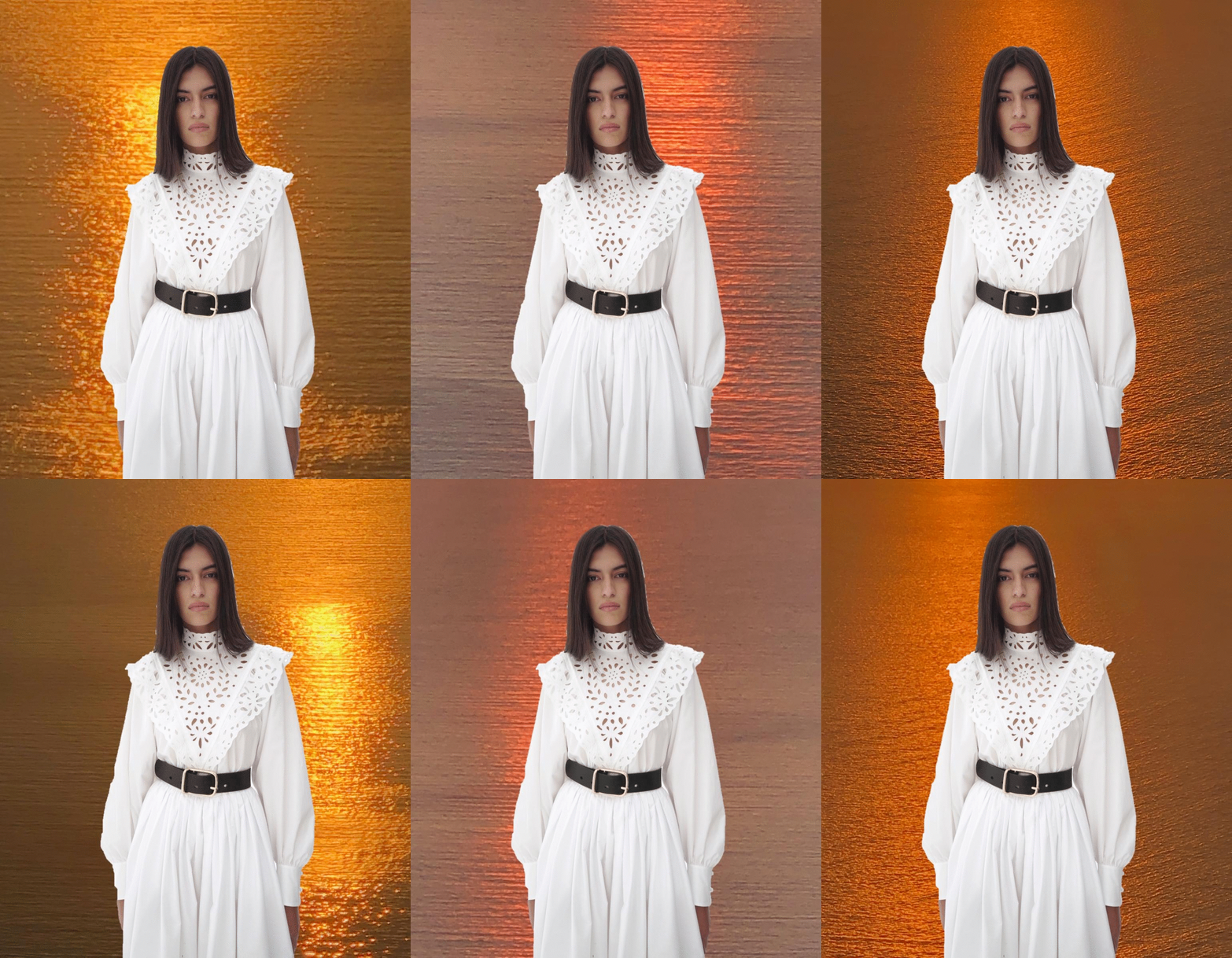
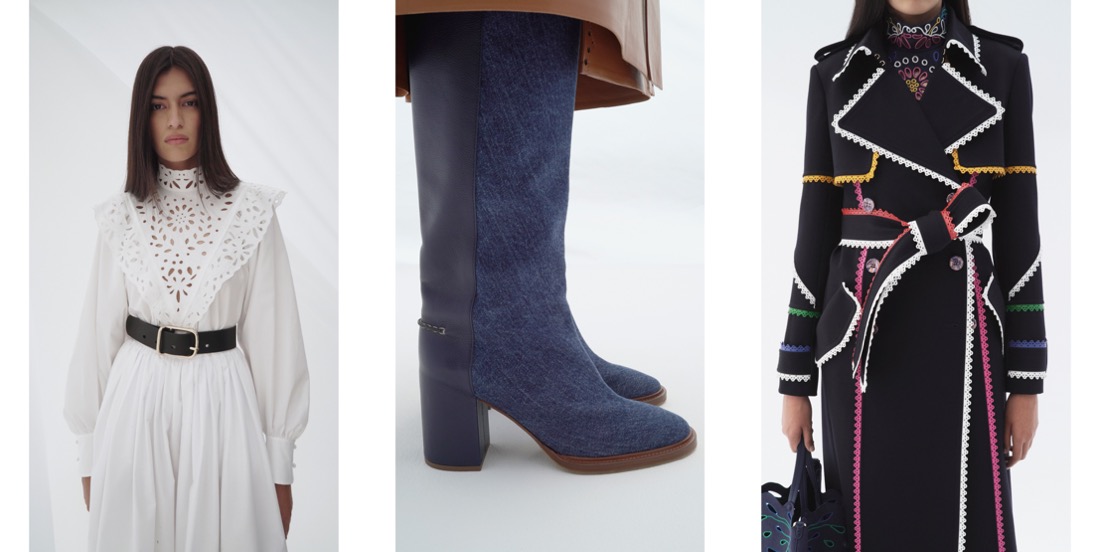
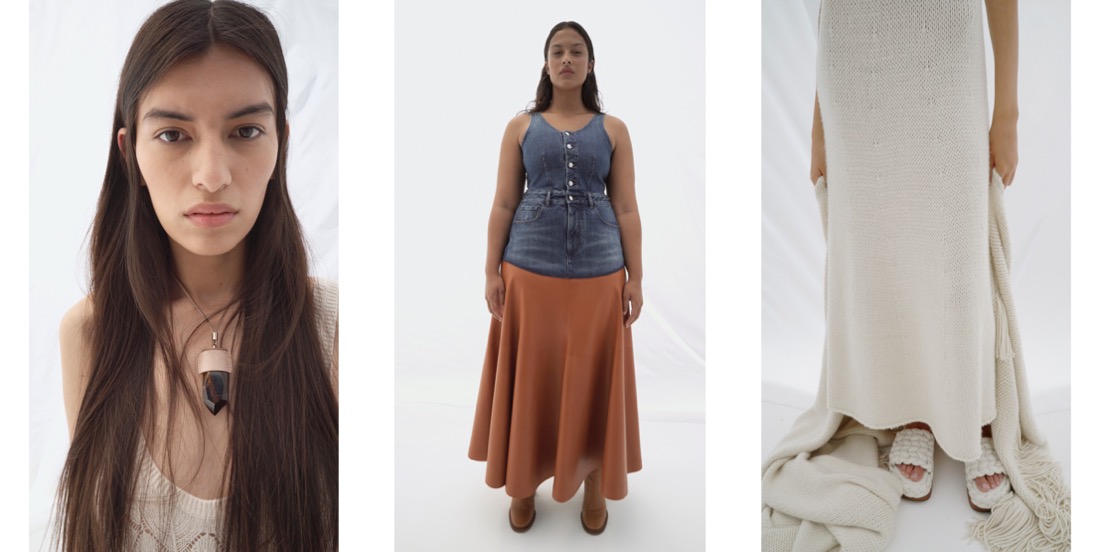
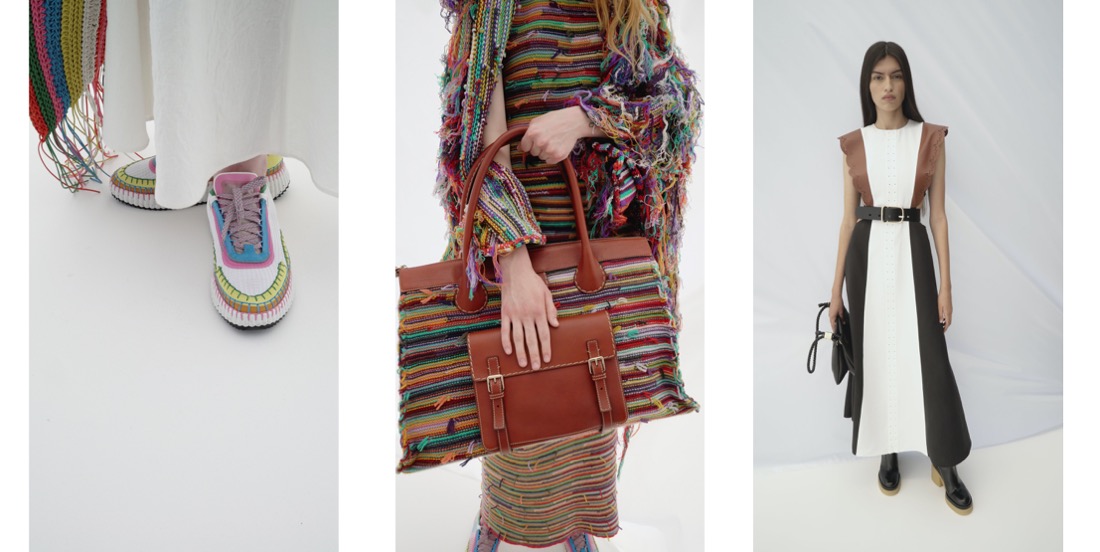
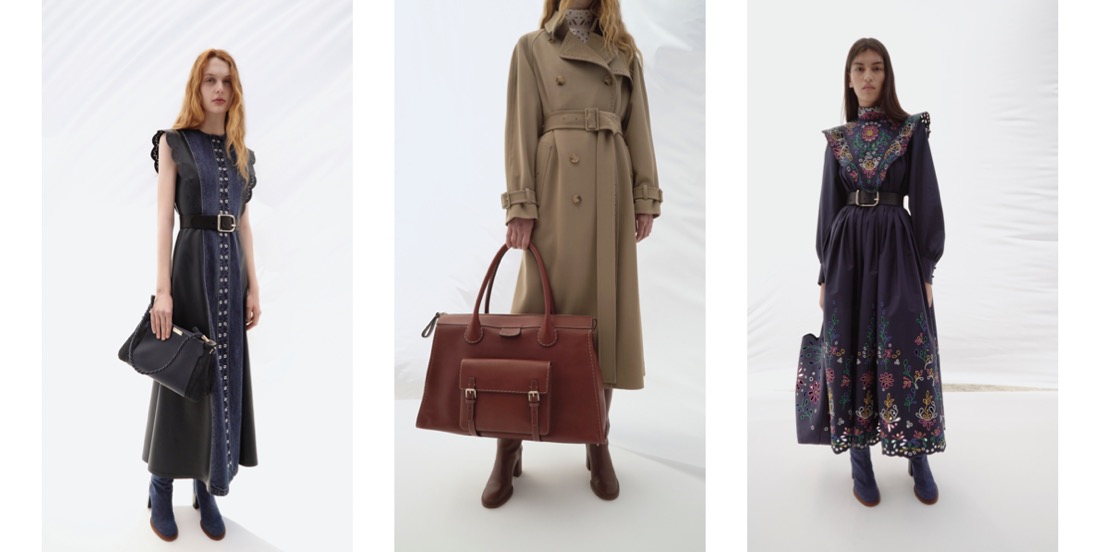
Gabriela Hearst delves deeper into the sustainable achievements of her Chloé residency, and it looks beautiful. Although I was not in love with Gabriela Hearst’s debut collection for Chloé, her next steps at the Parisian maison are promising. First, the direction of the brand’s Instagram, which is all about Zoë Ghertner’s raw, yet sensual photos of nature and female bodies – no aggressive product placement, no logo rebrandings, just idyllic visuals featuring poetic musings in the captions. Second, the resort 2022, which is a far better image of what Hearst vision for the brand really is. “We’re here on a mission,” she told Vogue, listing the impressive measures the house is taking to make its collections sustainable. If you came for the romantic mood boards and the classic tales of trips to the archive, this wasn’t it. “I haven’t gone to the archive,” Hearst said. “I feel like I’ve loved Chloé for so long and I have this idea of what it looks like. It’s not that I don’t respect what’s been done in its history, but I want the representation of what Chloé means to me to come out first.” Instead, the collection was an accelerated exercise in what we might discover to be our post-pandemic fashion mindset: What you wear is only as good as its social and environmental footprint. “We can’t deny what we went through on a global scale. Things are going to be different,” she said, referring to a cataclysmic year that shifted our understanding of environmental impact and made companies like Chloé – already on a sustainable path before her arrival – look to eco-conscious figureheads like Hearst. “Each collection is an opportunity to do it better,” she said. “I already did the least sustainable thing you can do, which is to have three kids.” In spirit, her proposal was geared toward those kids: the next-generation mentality Hearst says can’t come quickly enough. “We need to move out of the way and let them take over. They’re wired in a different way. They have a different perception.” In design, the collection’s Chloé-revering bohemian pragmatism reached out to generations somewhat older. Puritan-ish dresses were constructed in circular deadstock denim – with no metal, laser treatment instead of water, and recycled wood buttons – scalloped leather, and deadstock broderie anglaise. Linen trench coats trimmed with embroidered white edges demonstrated how Hearst might see a classic wardrobe staple through the instinctive Chloé lens she talks about. Blanket coats and fringed hand-spun dresses riffed on the hippie-esque references we historically relate to an eco-friendly wardrobe – not one for a cliché, Hearst likened them to techno dance parties. “Rave against the machine,” she punned, showing off a matching multi-color debut Chloé sneaker defined by its great, big stitches, every component created from recycled material. “I’m really attracted to product that feels handmade. I want to feel like a human worked on it.”
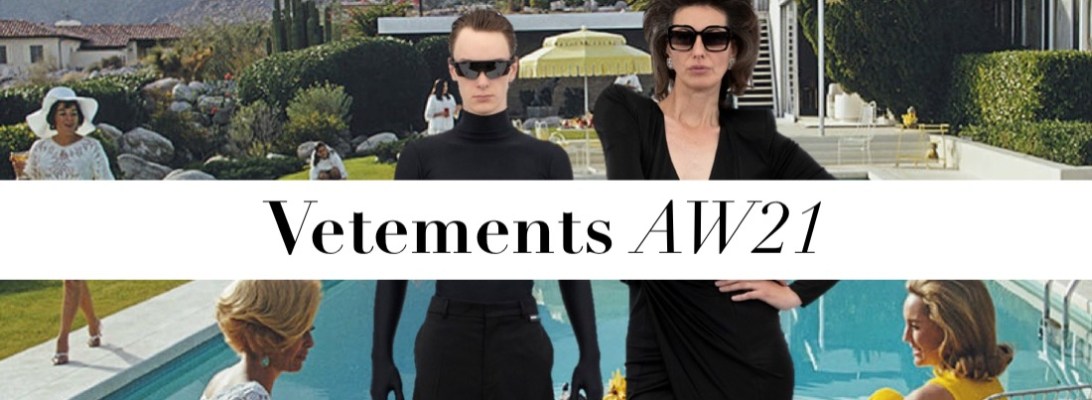
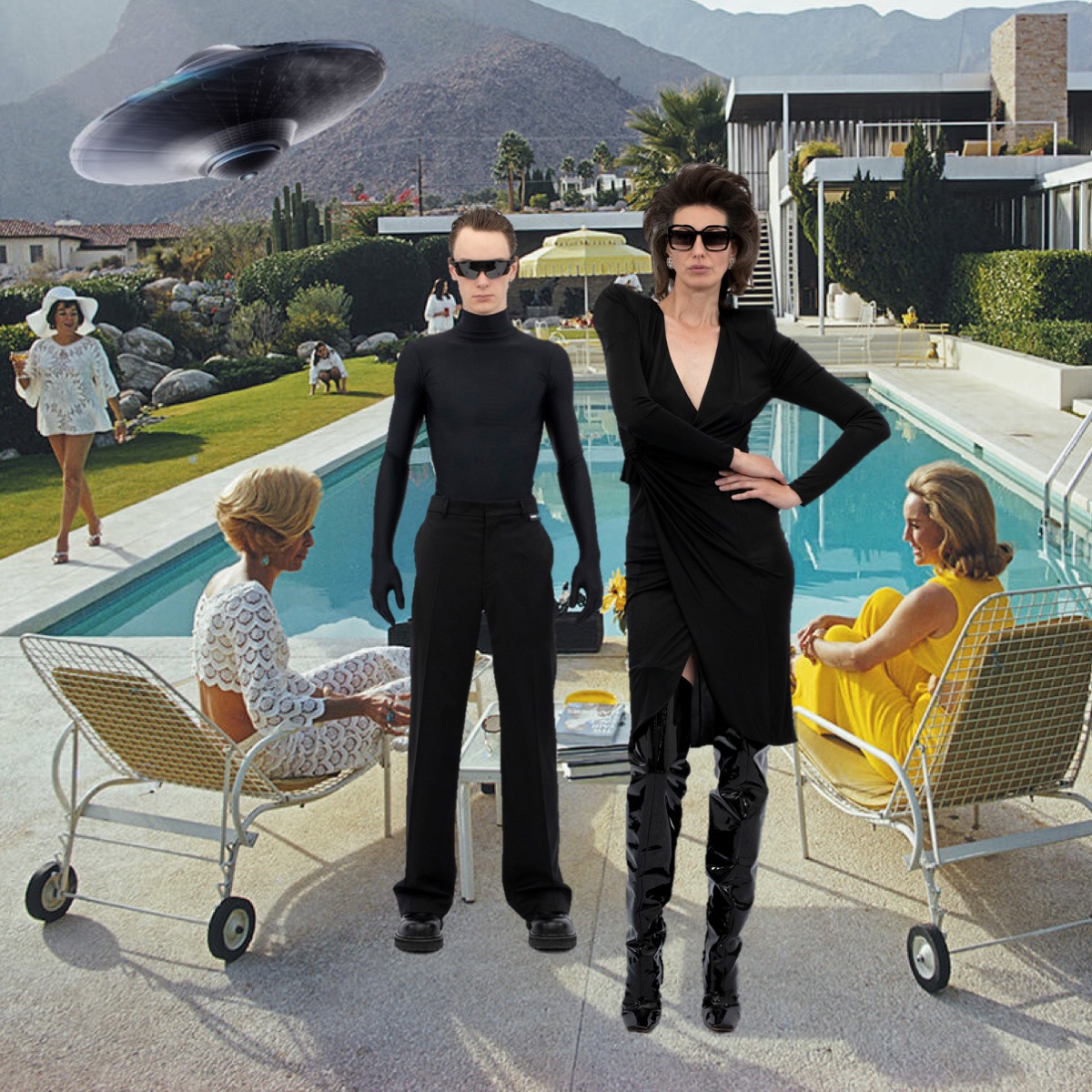
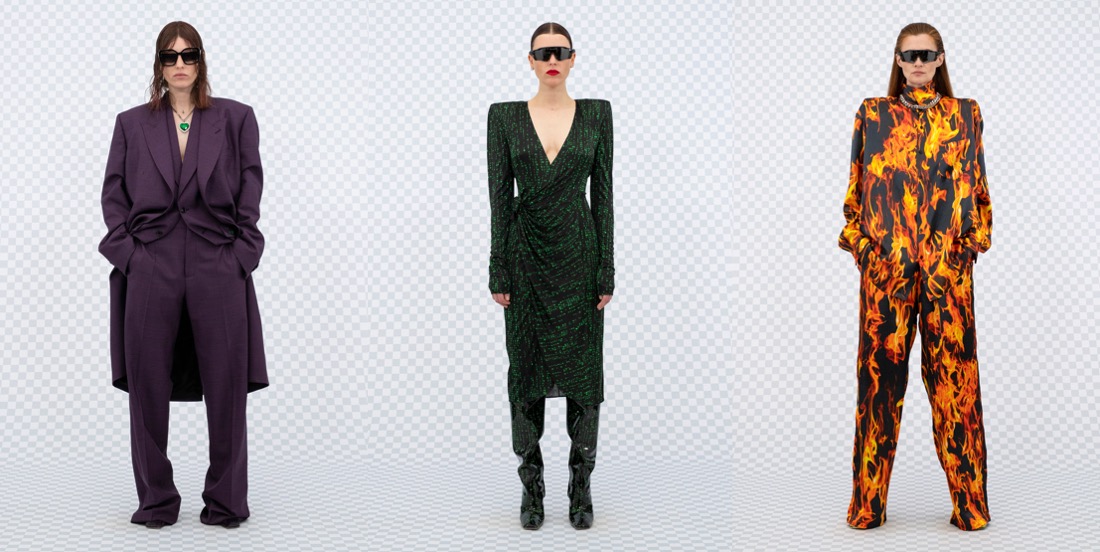
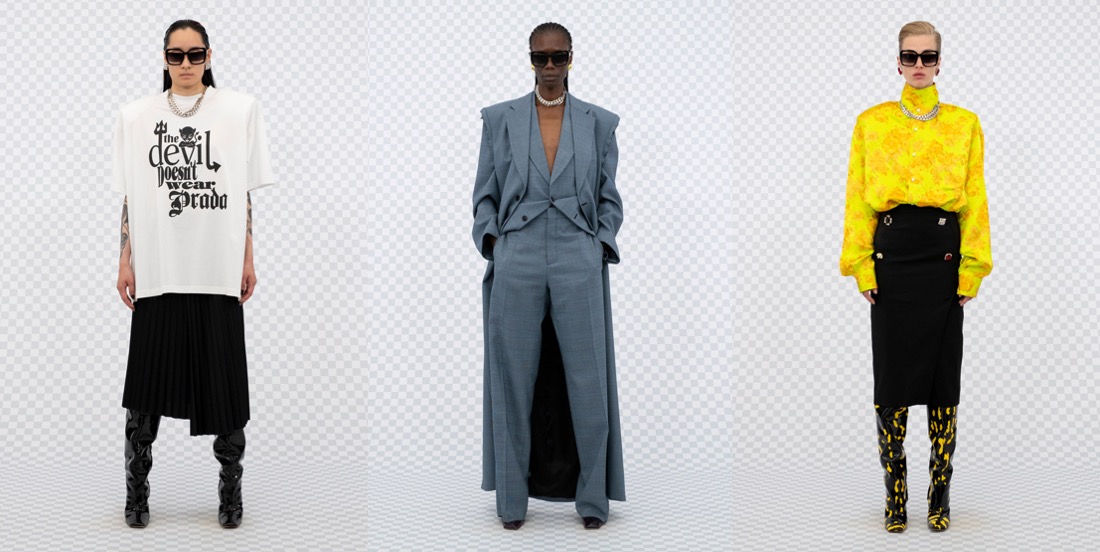
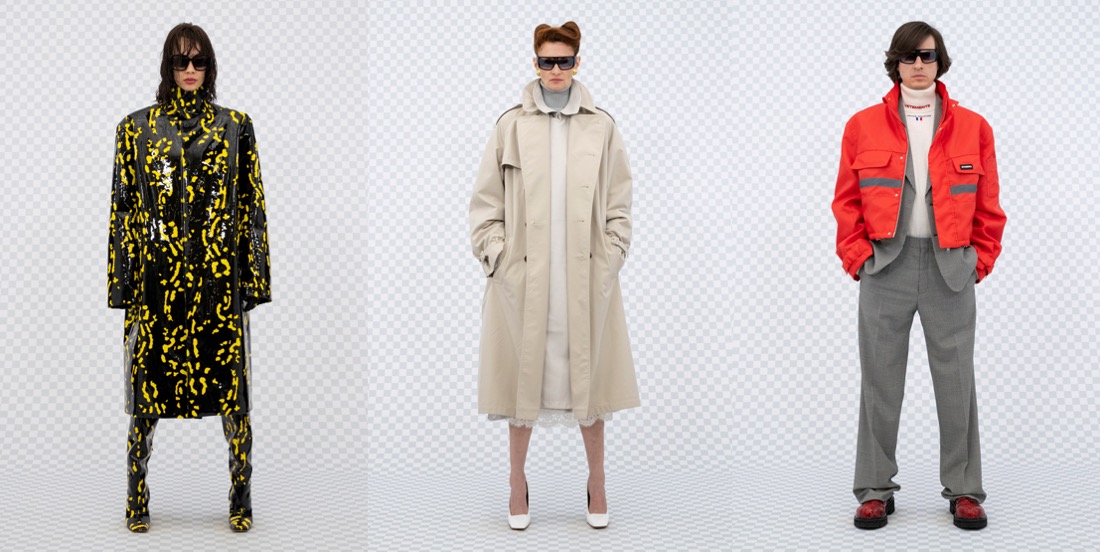
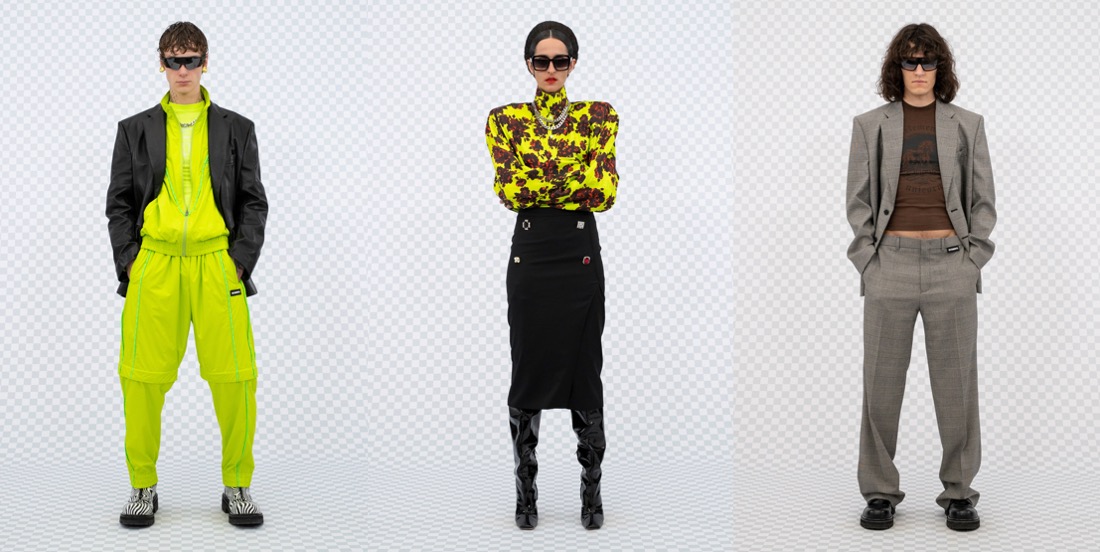
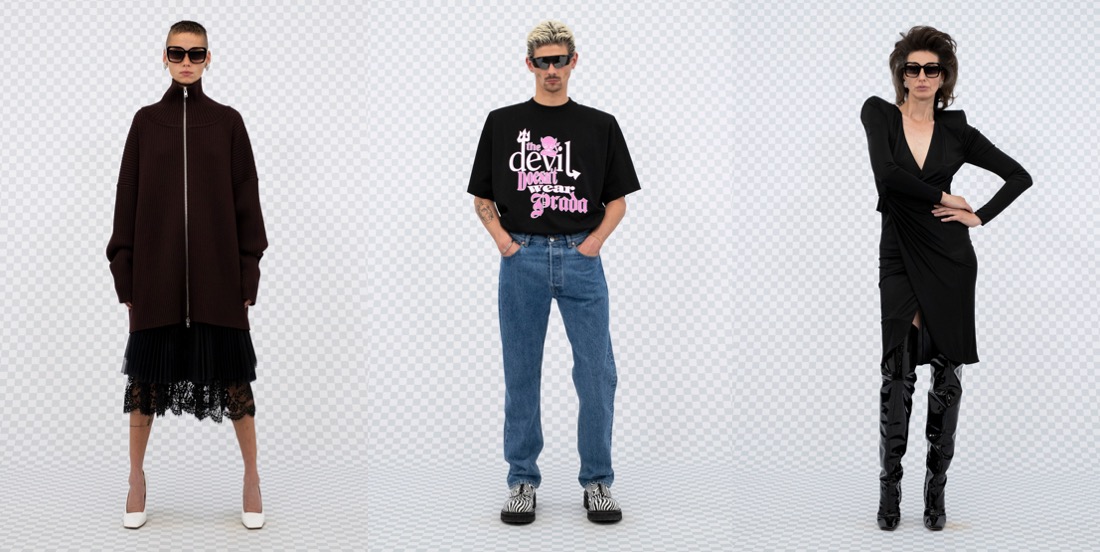
Vetements isn’t what it used to be, and for a couple of seasons now – ironically – the label feels like a mimic of itself. Since Demna Gvasalia’s departure from the label to focus solely on Balenciaga, the brand seems to put emphasis on more commercial stuff. Still, in the spring-summer 2022 look-book featuring over a hundred looks, there are some bits of the Vetements energy that made the brand so controversial (and appealing) a couple of years ago. The checked backdrop of the collection will be familiar to Photoshop users. It’s the background against which graphic designers do their work, and it offers a hint as to what’s on cofounder Guram Gvasalia’s mind. He told Vogue he’s been thinking a lot about our digital existence: “I started to ask myself: What is reality today? We live in this 2D world; the question is, when you scroll through Instagram, is it photoshopped or is it real?” Here’s another one: “Do we consume the internet or does it consume us?” Public opinion may be souring on Silicon Valley, but its digital products have us more firmly in their grip than ever. The pandemic deepened our connections with our computers and smartphones, even as we longed to reacquaint ourselves with nature. The jumbled wires of server farms and a computer font straight out of The Matrix (a timely reference, with The Matrix 4 due out at Christmas) mix with pixelated salamanders and flower prints so bright they almost glow. For every shell suit there was a siren-y gown, and logo-stamped jeans were dressed up with a seriously sharp double trench. The masculine tailoring with its strong shoulder lines, the floral dresses, the puffers and parkas – it’s all about the Vetements foundation pieces. And the slogan tees and hoodies are cleverer than ever; “The Devil Doesn’t Wear Prada” example, Gvasalia said, is an idea he pinned to his mood board some time ago, for a would-be collaboration. A flame print that appeared on a wrap dress and matching boots, among other sportier pieces, was reprised from the brand’s last time on the runway, circa autumn-winter 2020. The boldness of a Vetements show has been integral to the brand’s success from its start. The problem with 2D? It’s not 3D. Gvasalia seemed enthused about the prospect of returning to the runway post-pandemic. “We are 100% going back the moment we can travel,” he promised.












 Design & Culture by Ed