Smart Femininity. Chloé SS21

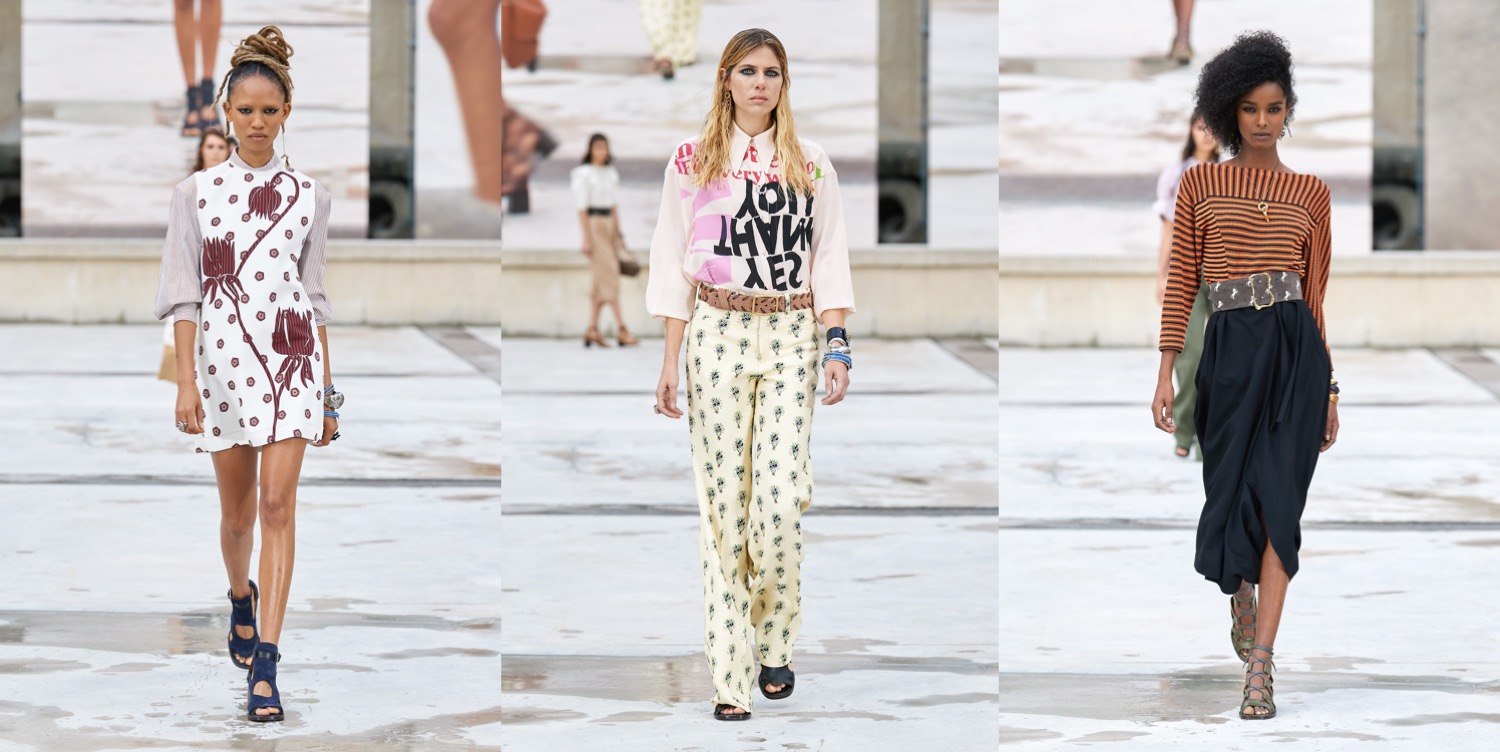
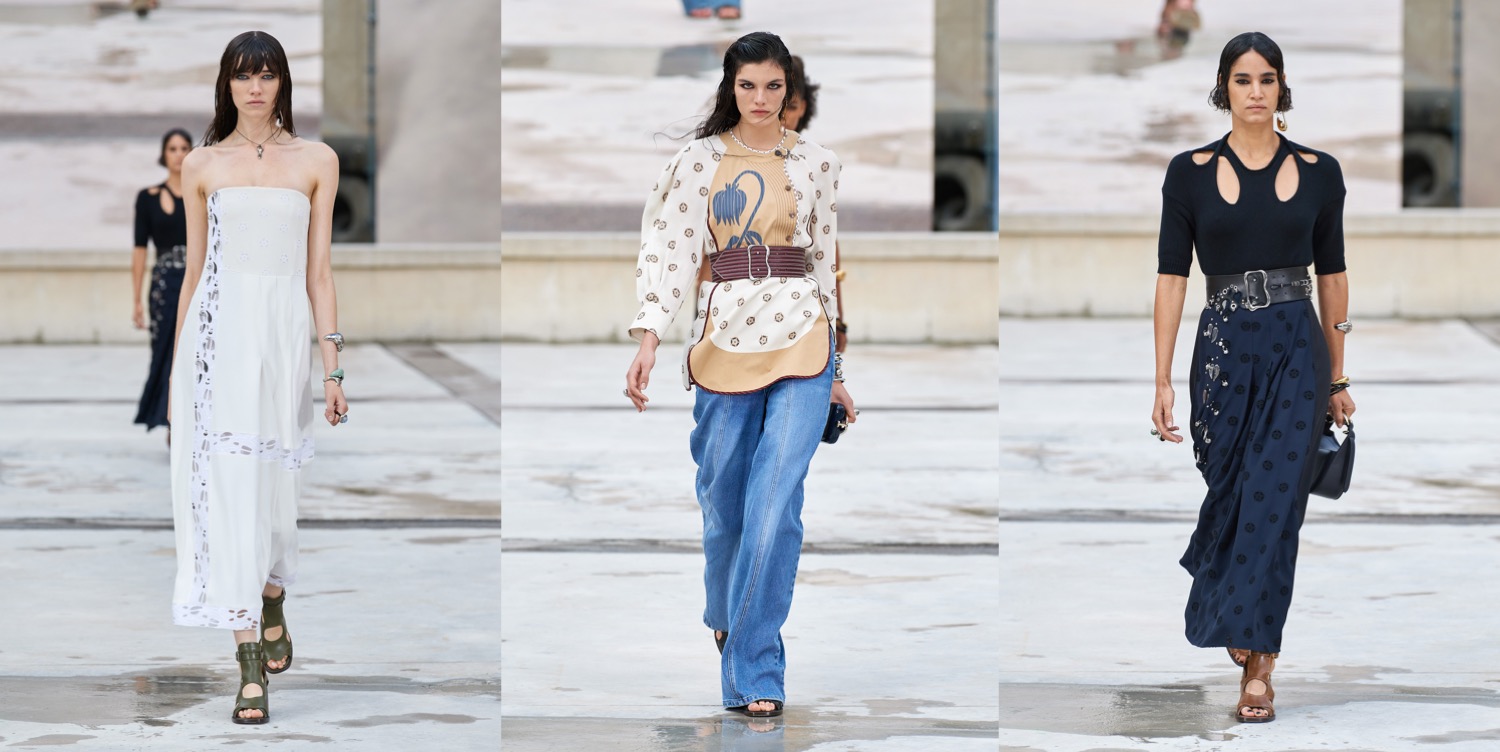
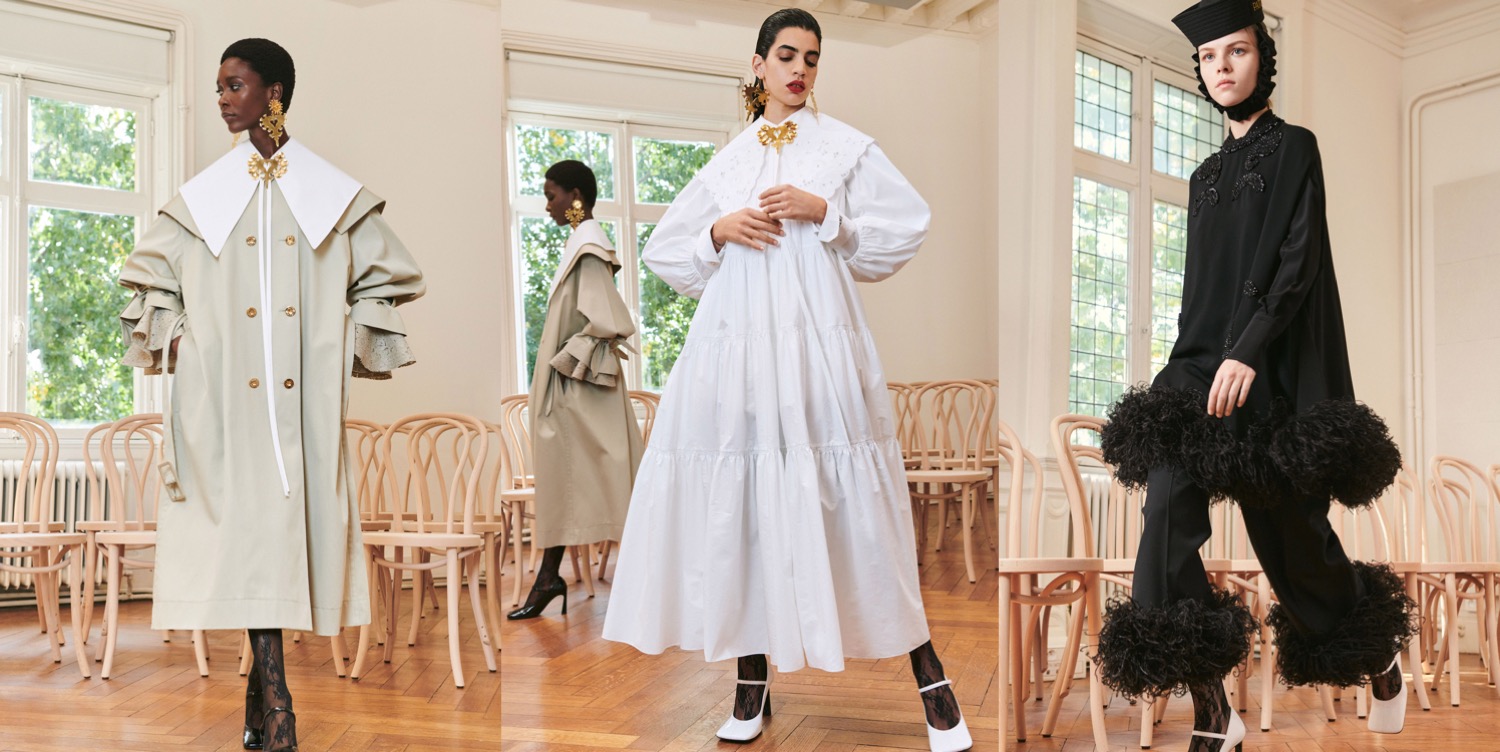
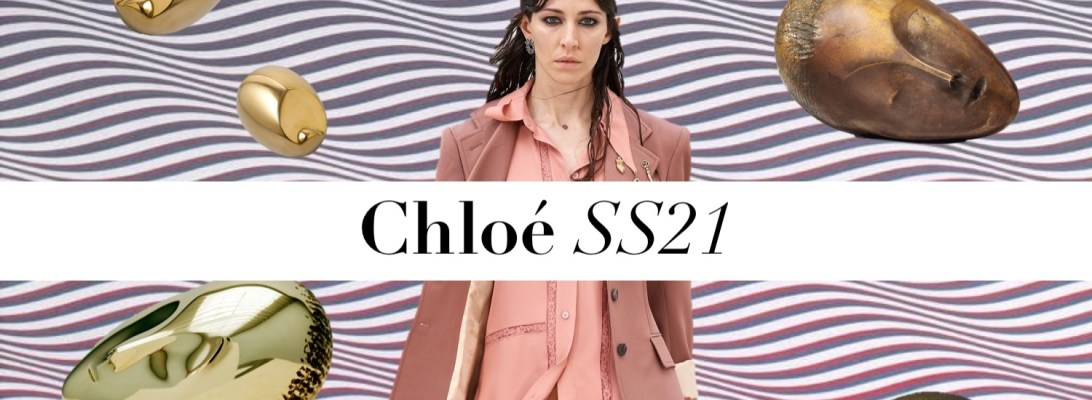
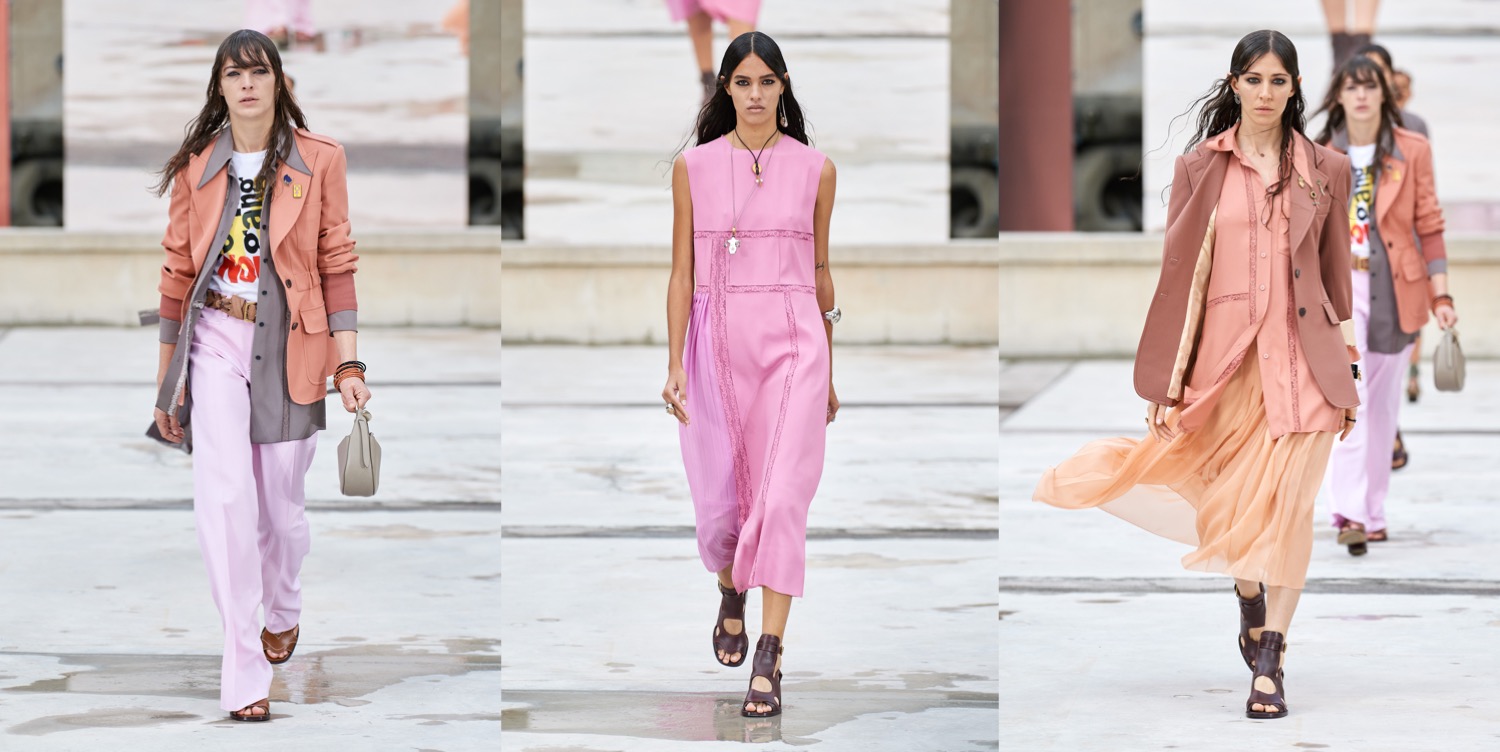
This was a classic Natacha Ramsay-Levi collection for Chloé, meaning smart femininity that works everytime. Which doesn’t mean that there was no novelty about her spring-summer 2021 collection. There is a number of cliché topis and questions that pop up every moment during the post-lock-down fashion month: what will we want to wear after a year spent in confinement, should face masks be a fashion item, are socially distanced spaces a necessity? For Ramsay-Levi, those questions triggered some far bigger ones: How does our wardrobe affect the way we move and behave in the public space? How does it impact our body language? She staged her Chloé show within the monumental courtyard of the Palais de Tokyo. On three massive screens, live footage captured her models making their way to the runway – which was really, really good. Wearing the collection, the Chloé women were scattered around the streets of the area engaging in normal situations. Some were strolling down the bank of the  Seine, others were seen crossing a street or chatting on the steps of a building. Eventually, they stepped into the imposing courtyard with a different purpose to their step, visibly adapting to new surroundings. “The idea was to pick them up within their own intimacy of real life,” Ramsay-Levi said, referring to the cameras’ zoom lenses. “It’s about showing something that’s more attentive, more spontaneous, and more intimate, and taking time to look at a woman and the way she moves and acts in a much more natural way. Rather than just say, ‘Okay, you should walk like this.’” Her point was to study, evaluate and define the values of the everyday wardrobe Chloé provides for its customer. Since Ramsay-Levi joined the house in 2017, she has gradually been doing just that, editing and refining her expression to determine an idea of the essential. The answer to her questions this season clarified that approach to a further extent. “Things take time. We need to repeat things before we understand them. When I look at fashion, sometimes I only start to understand the point of view of a designer in the second or third season. I think it’s important to be committed to what you do,” she said. Her philosophy was reflected in a collection that largely built on elements introduced in previous seasons, and reduced them – in cut and decoration – to a sense of the universally desirable, and the more affordable, too. She loosened her Chloé silhouette, touching on the post-quarantine theme of comfort dressing, and toned down her embellishment in favor of a focus on colors. “A question that was very strong in confinement was: How long does a product last?” Ramsay-Levi said. “And it’s not enough. Basically, until we can change that rhythm, it’s important for me to be able to say ‘for a while,’ and not change my mind all the time. As far as being business-driven, it’s about being truthful and consistent. Some products only last three months maximum in a boutique. If you keep arriving with something new that makes that outdated, I think that’s not valuable as a position.” Food for thought for many, many in the industry.
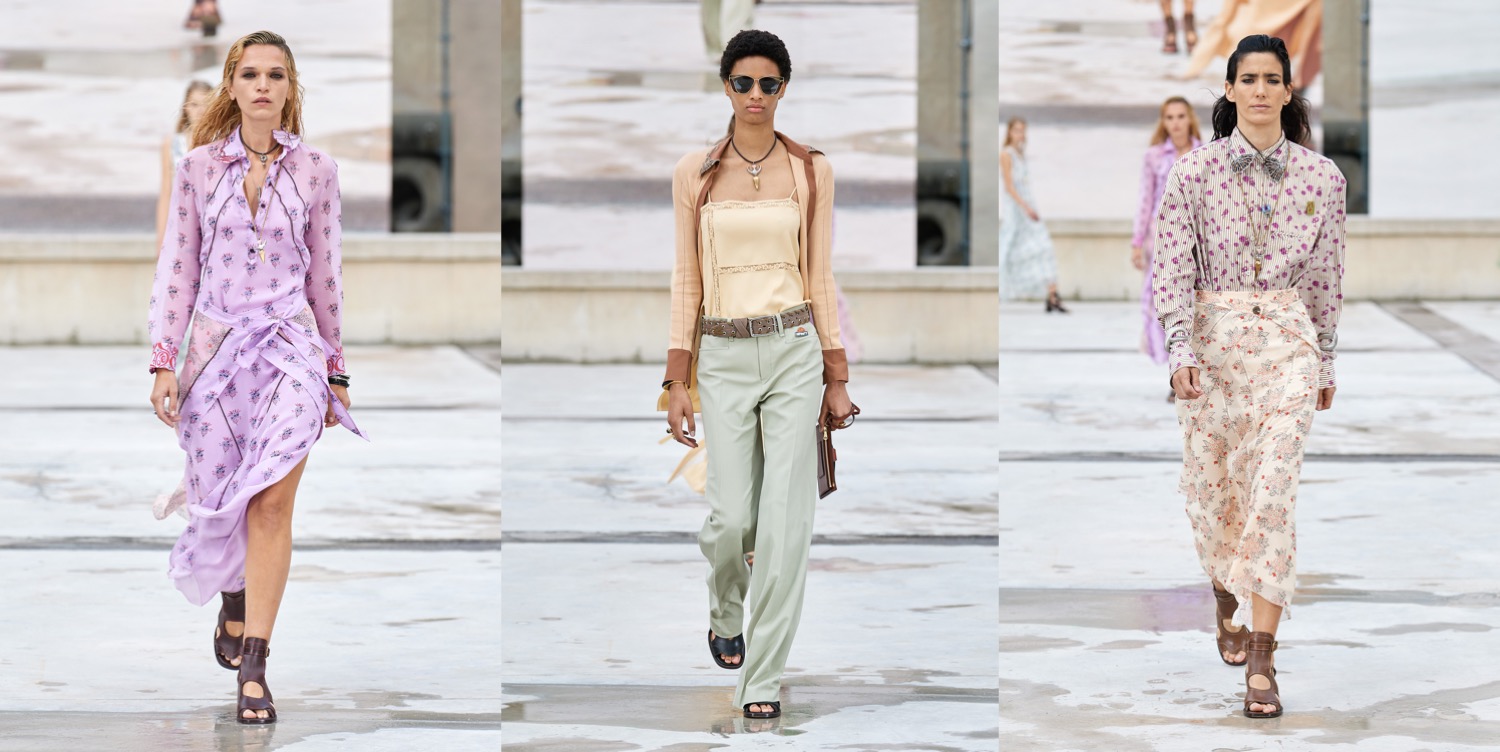
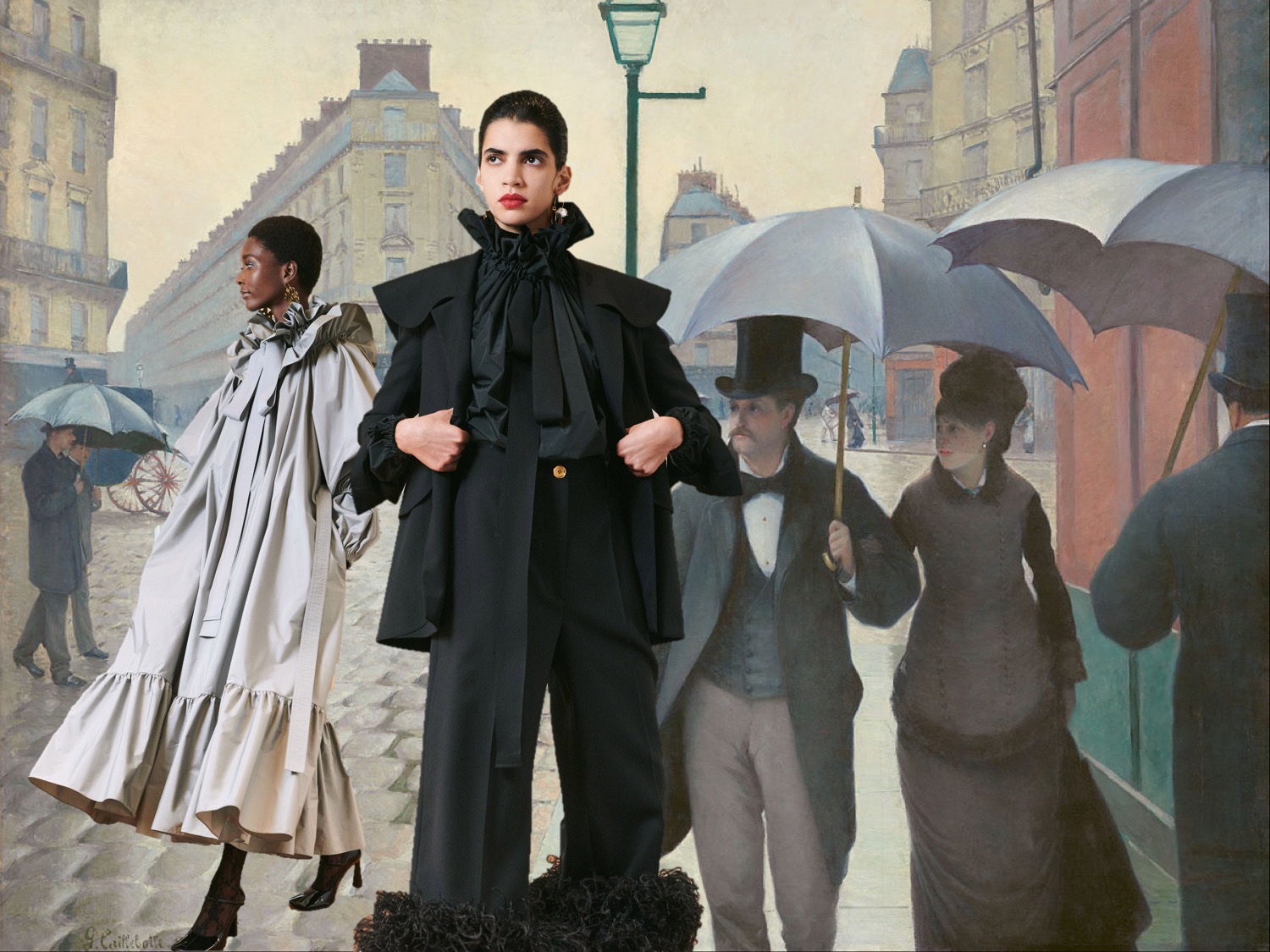
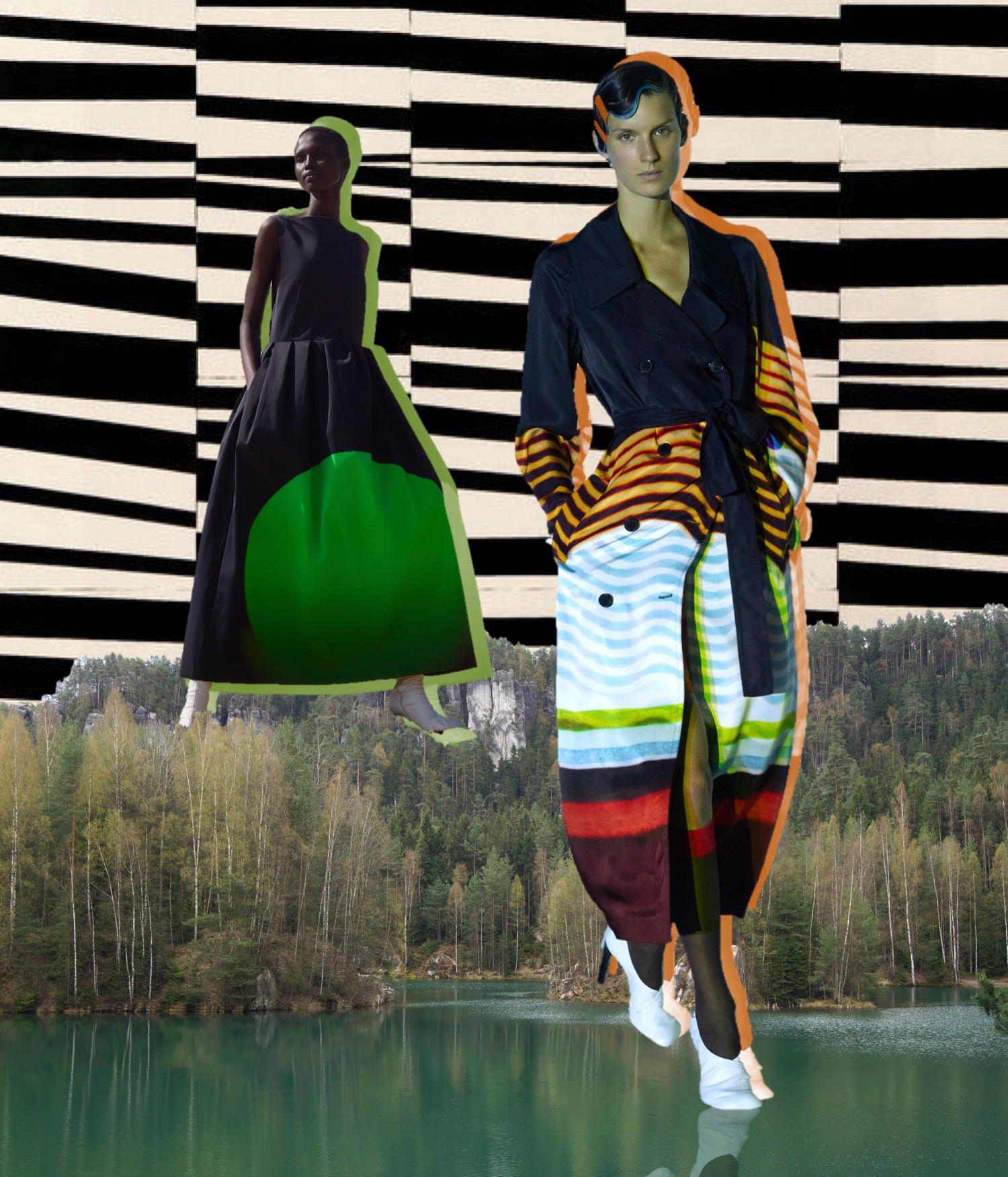
Collage by Edward Kanarecki.

Oh La La! Patou SS21

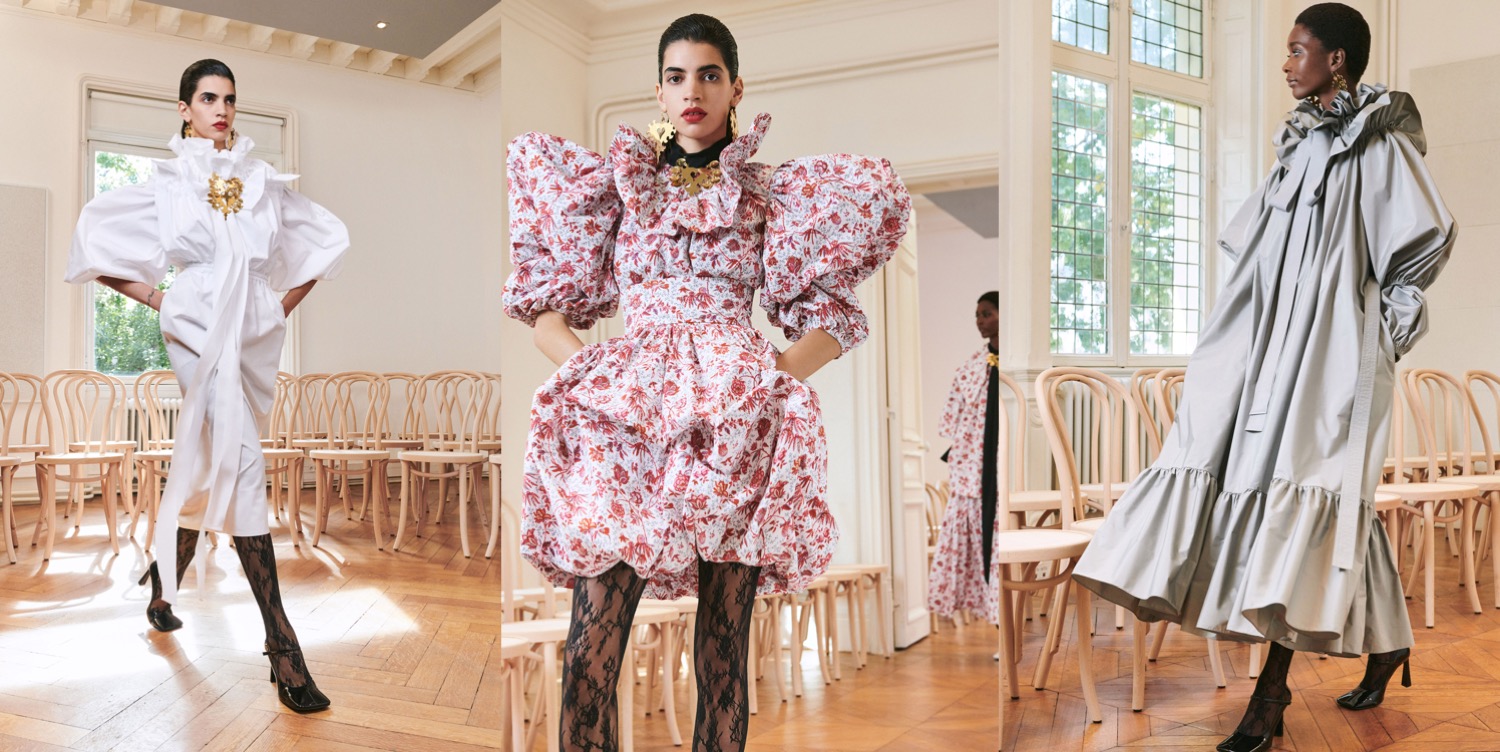
The fashion industry should finally give some love for Guillaume Henry‘s brilliance at Patou. I even think that the buyers should give the brand a chance. Why? Really, nobody else does French chic this good right now. For his presentation, the designer welcomed people to an absolutely delightful Patou runway show that didn’t really happen yesterday. “It’s a show with empty seats and no models!” he laughed. “We’ve turned our studio into a catwalk.” The models you see sauntering across the parquet in their puffballs, voluminous smocks, Provençal collars, and jaunty sailor hats had played their parts, sans audience, a couple of days ago at the label’s Île de la Cité HQ. For spring-summer 2021, Henry offers meringue-sque Provençal-printed puffed sleeves, a pie-frill collar, and a mini-balloon skirt, which all came from his 1980s childhood imagination. But wait, it’s not as easy as it sounds. All made from organic cotton poplin – 100% GOTS cotton, it said. “Yes, we’re 70% recycled and organic materials in this collection,” Henry exclaimed, “and we’re aiming for 100%.” This is the most modern thing about the rebirth of Patou: it comes with full-on French style, transparent sourcing, and non-ridiculous prices. “Patou is about a wardrobe, and it will always be,” said Henry. “But this time we turned this wardrobe into something more fantasy! I wanted to go back to this love of fashion I had when I was nine years old, drawing dresses in my bedroom—and nobody was talking about fear or the economy. It was just about fun, flamboyance, joy, enthusiasm. I wanted to go back to that exuberance.” And so it reads. Exaggerated silhouettes have been steadily inflating over the past few seasons. Ideal timing, then, for the comeback of Henry’s memories of being enthralled by watching the likes of Christian Lacroix on French TV news. “He was a huge influence on me when I was nine, 10, in the late ’80s, early ’90s. So I wanted the silhouette to be ‘couture’ even if you can break it all down separately.” Lacroix, as all fashion history geeks know, started his rise to fame at the house of Patou, so his puffball silhouettes, succulent bows, and French-regional references resonate happily through Henry’s collection. The difference, in the hands of the younger designer, is the practicality and sense of economy that underpins his design. The huge white collars are accessories – they’re meant to be laundered and used as styling pieces. The silhouettes that appear to be frivolous one-party outing dresses (like the captivating Provençal look) are often actually skirts and tops, intended for multiple reconfigurations. “A blouse, a skirt, and a dress,” as he put it. Smart, chic, fun, sustainable. Et voila!

Collage by Edward Kanarecki.

Energy Boost. Dries Van Noten SS21

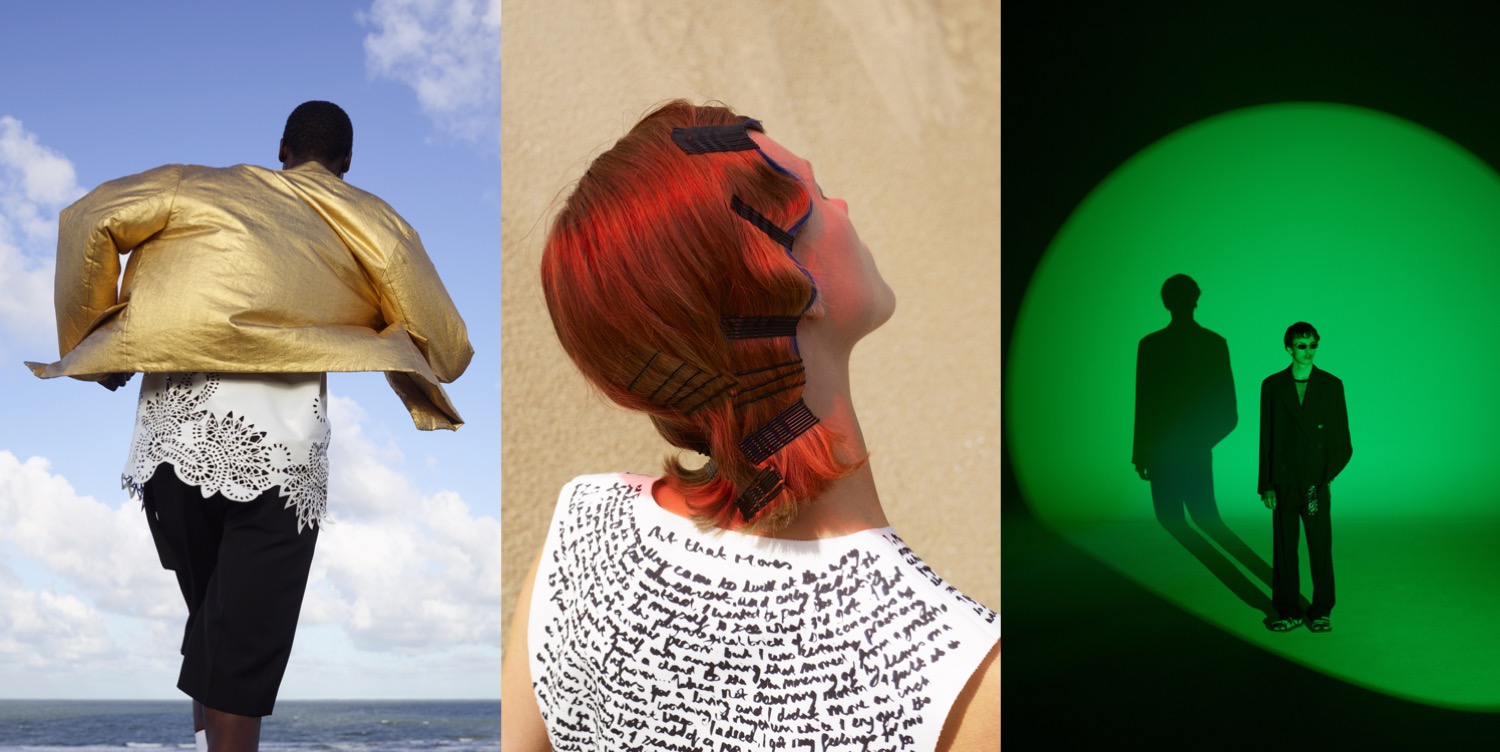
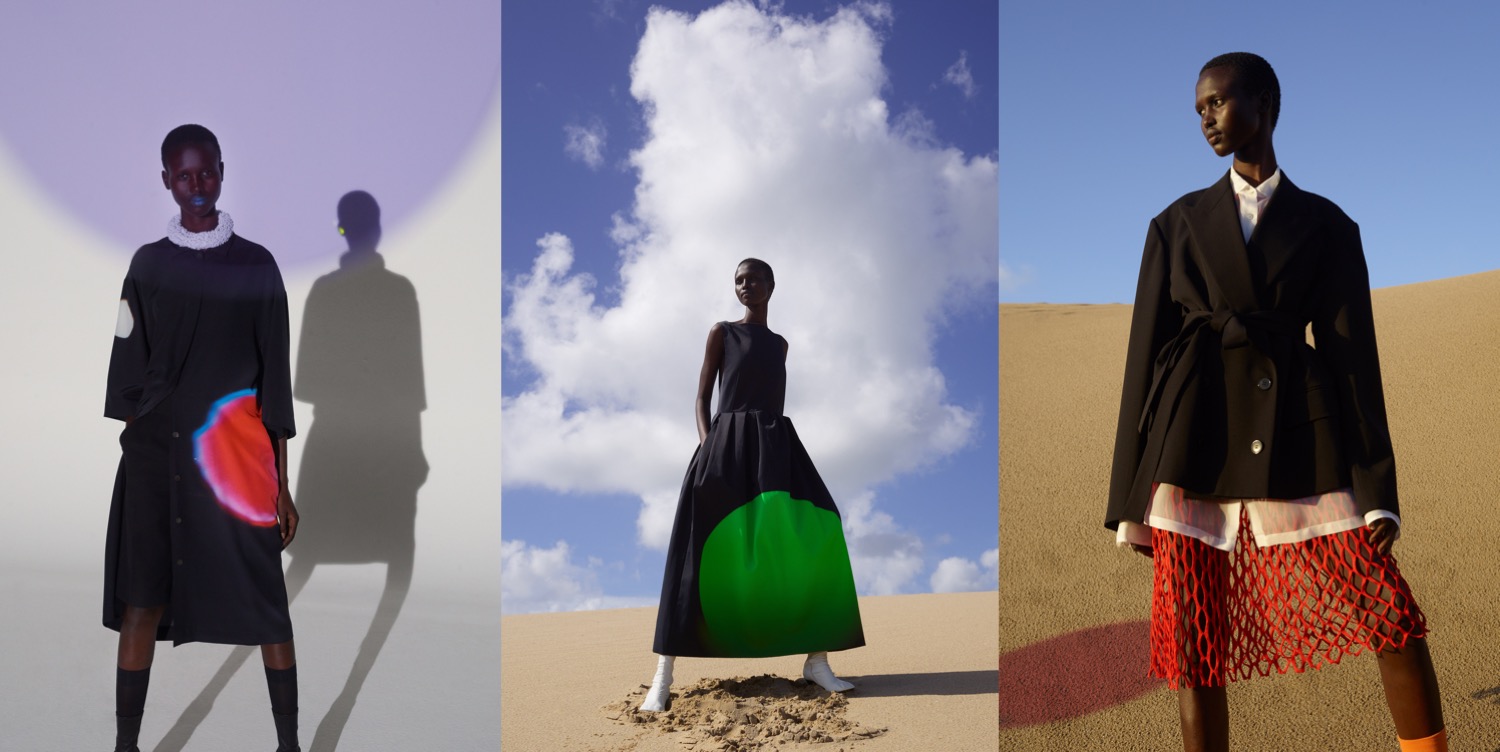
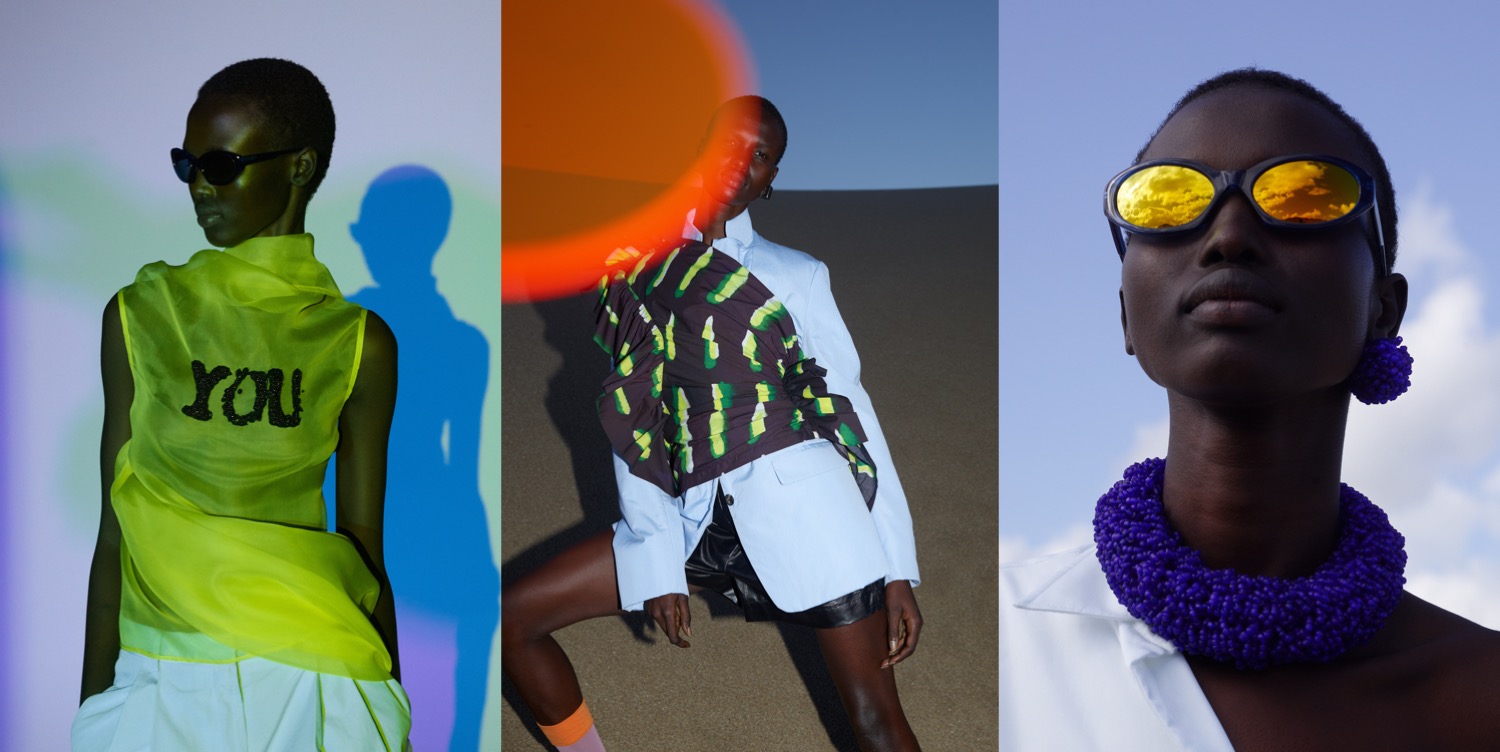
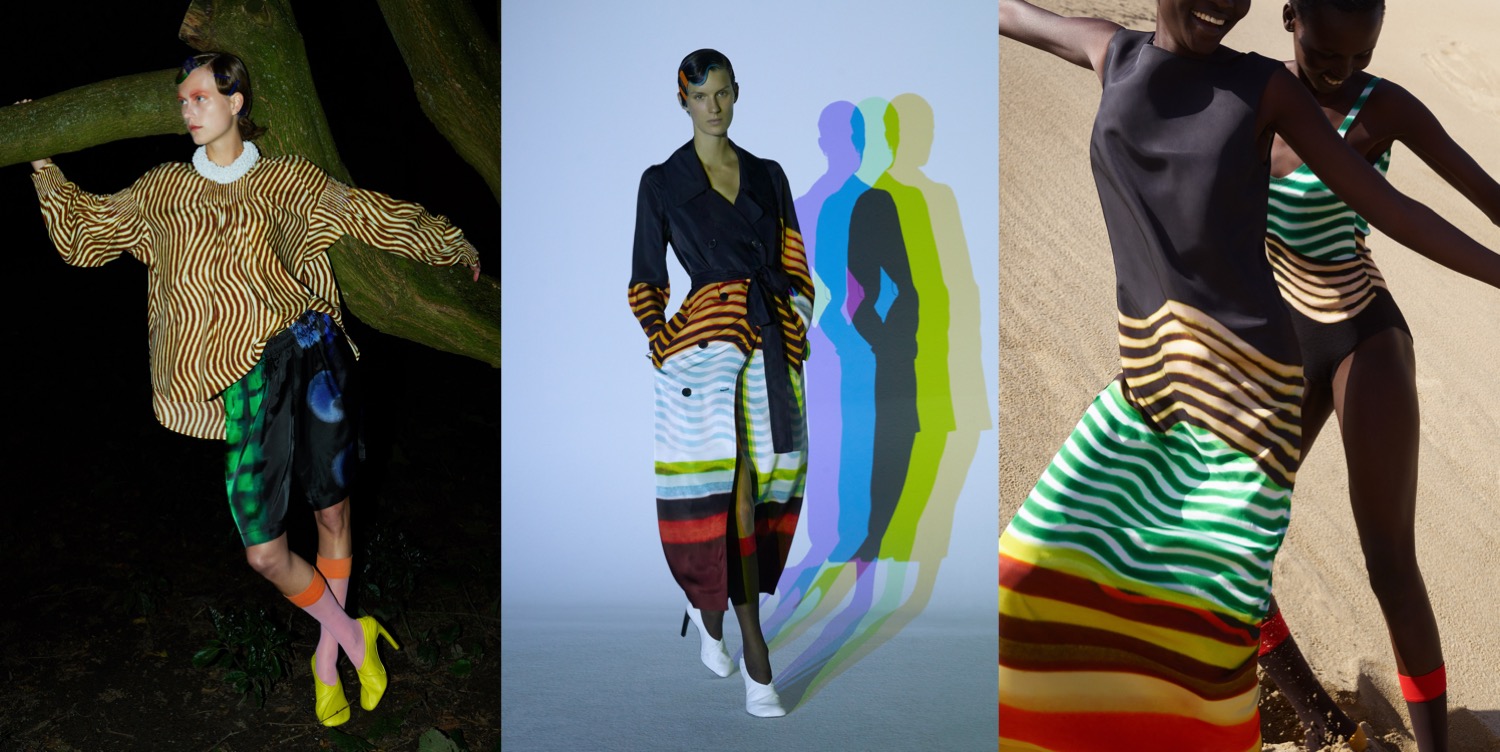
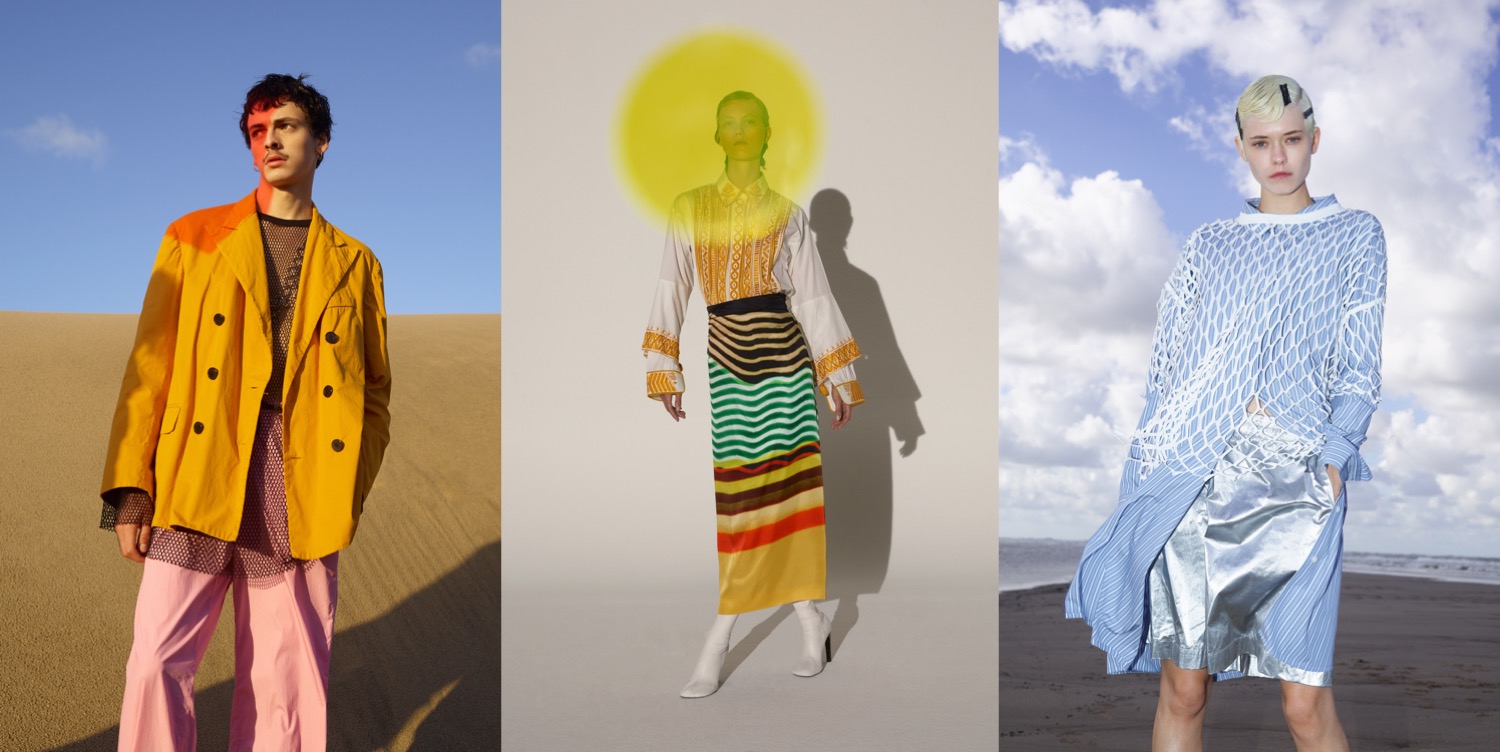
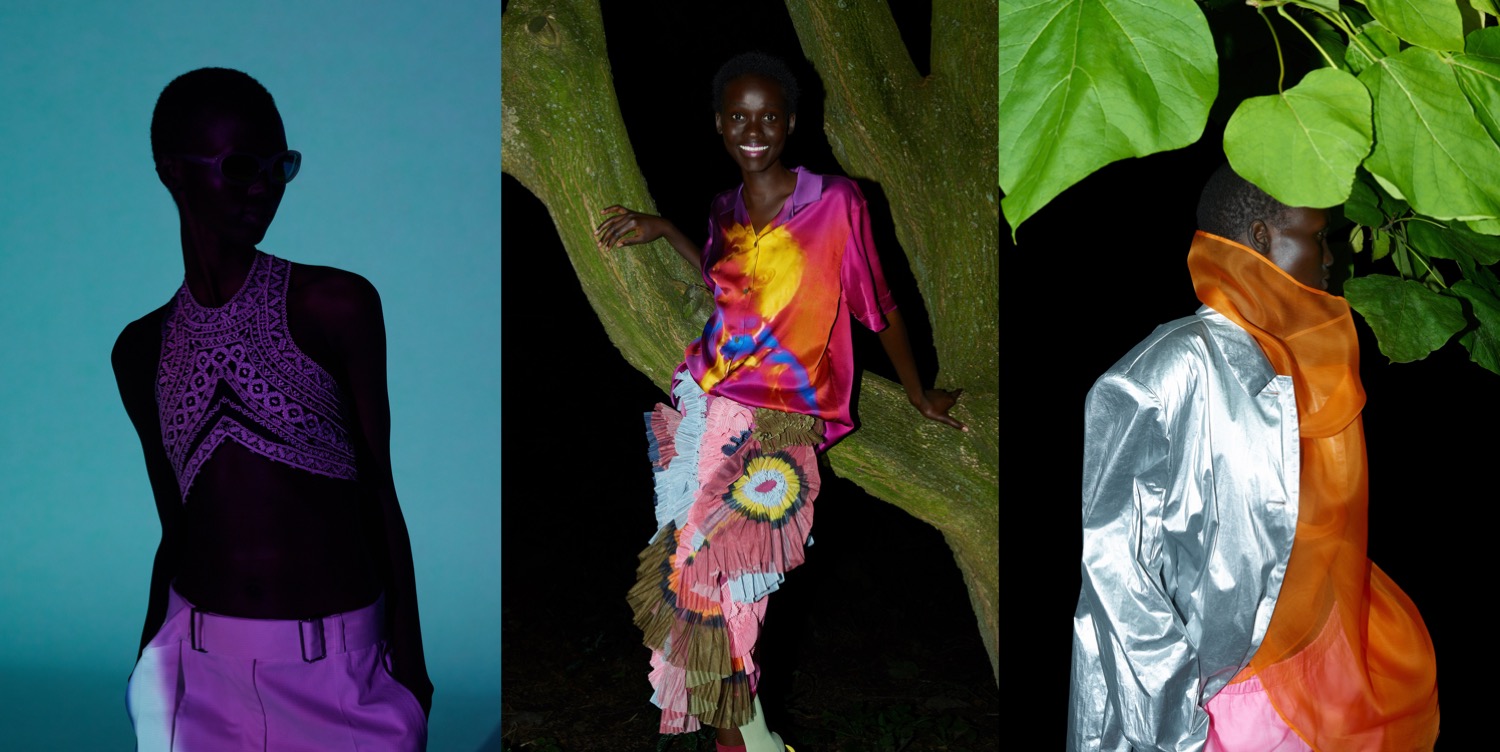
Seeing a Dries Van Noten collection not on a runway is a strange and unusual experience. But when your look-book is photographed by the one and only Viviane Sassen, it just can’t go wrong. The designer himself wasn’t entirely happy with missing out on the runway, but he sees good sides in it, as a sort of detox treatment. “You know how fond I was of fashion shows? The whole collection was built up around the idea of putting it on a catwalk. But this time, it was thinking about clothes for a shoot.” That’s a first in a 34-year career. “Because we’ve never had an advertising campaign. We lost things, but we learned things. It’s pushing a new kind of creativity.” Another first is the fact that Van Noten has co-ed his women’s and men’s collections into one – a process of rationalization, which was already underway before the pandemic. When you dive into the photographs – partly shot on a breezy day on a Rotterdam beach – the design symbiosis makes total sense: board shorts, Bermudas, easy cotton jackets worn by both boys and girls. “We wanted to work around beauty [that] evokes energy—not one that makes you dream or linger on things that are past, which makes you nostalgic,” he says. “It had to push you to the future, to give energy.” The collection’s vibrant, main theme comes from work of the New Zealand artist Len Lye, whose pioneering technique of painting on celluloid film predates psychedelia by decades. “He was such a discovery for me. He started to do this in the late ’20s, early ’30s.” Working with the Len Lye Foundation, Van Noten developed the prints that run through the collection, “psychedelic sun, sunshine and moons, light bars, and palm trees.” And quite brilliant effects they are, for a designer whose innovation must always move forward through print – the attraction for his art-conscious customers – and through pragmatism. Other highlights: jackets made of “two layers of cotton [that] are foiled and slightly padded, very soft, nice to touch”; black papery cotton dresses with cutout necklines; an oversized parka printed inside and out with a new inkjet technique. Maybe this isn’t the most exquisite collection coming from Van Noten, but surely a sharp and heart-warming one. “I’m quite happy,” he reflected. “The limitations are not always limitations for me anymore.

Collage by Edward Kanarecki.

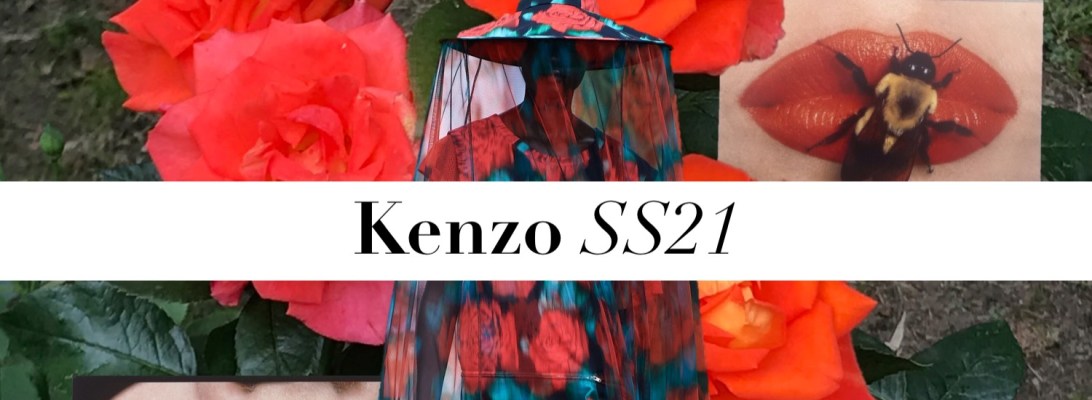
Beekeepers. Kenzo SS21

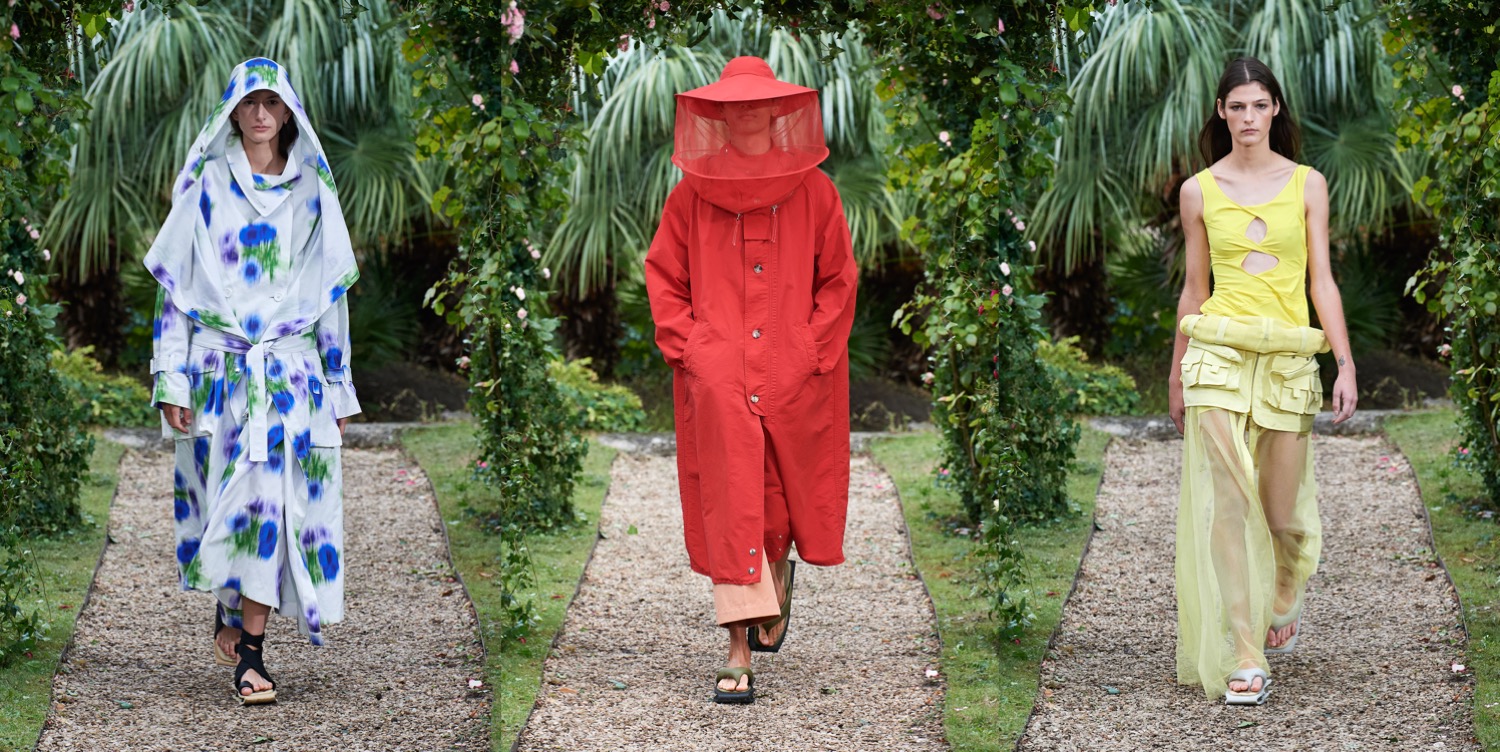
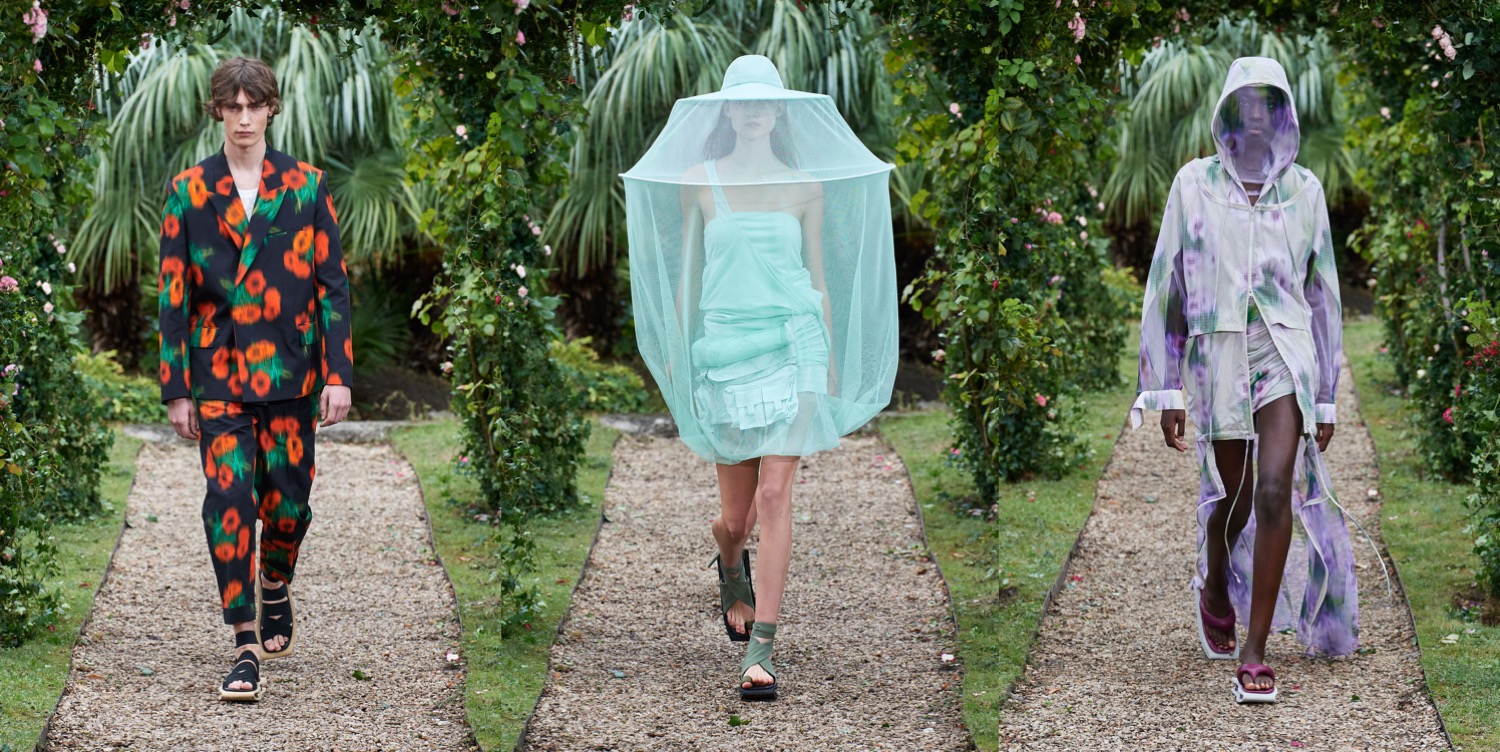
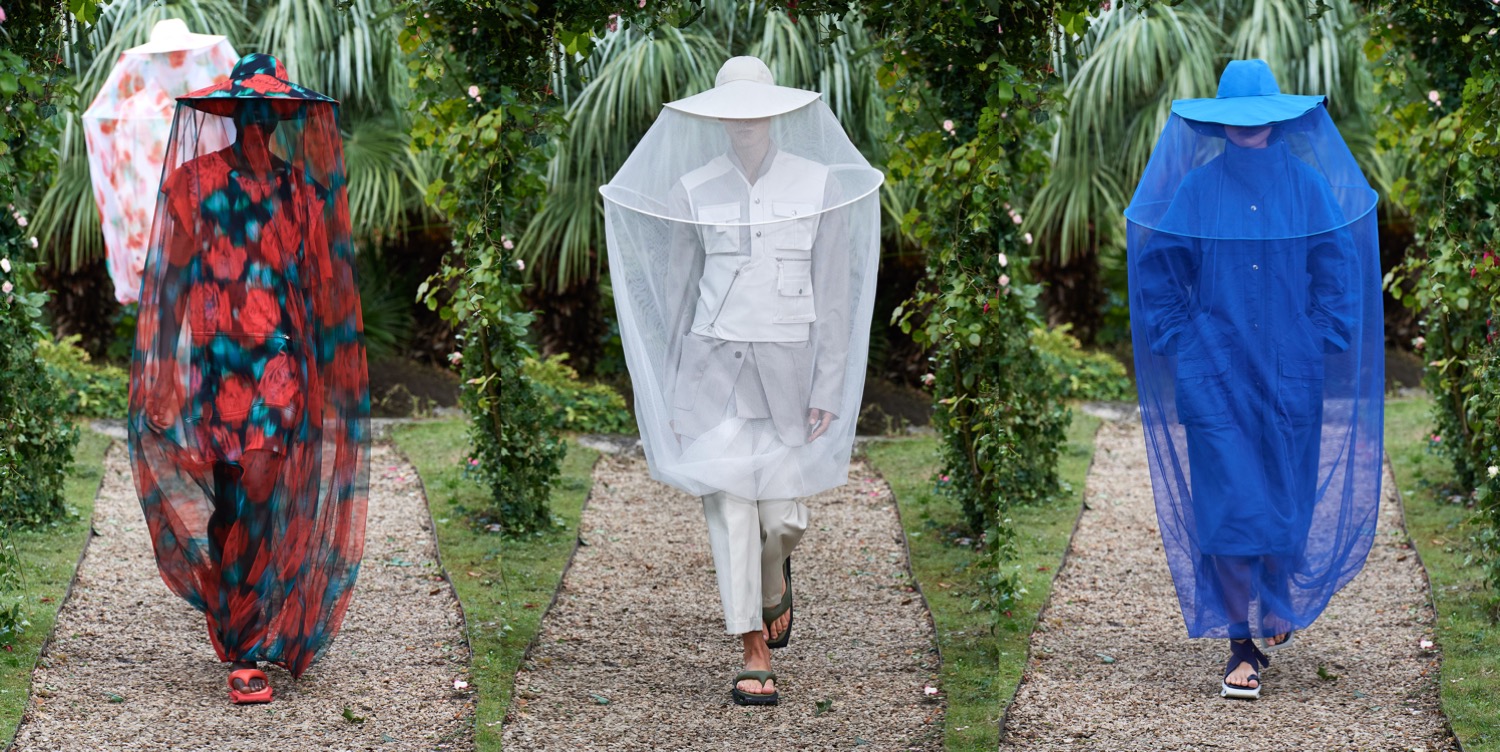
Kenzo is one of those brands, which is always out there, but seems to be unsure of its position on the market for years. Humerto Leon and Carol Lim made Kenzo cool again in the early 2010s thanks to their logomania injection and youthful, colourful approach, but their later, more creative ventures were killed by the brand’s over-commercialised approach. Now, it’s under Felipe Oliveira Baptista‘s creative direction for the second season (I didn’t feel his debut to be honest) and looking at his spring-summer 2021 collection, there’s a chance that Kenzo will turn into a smart fashion brand again. We know Oliveira Baptista for his name-sake brand (which is currently dormant) and few years spent at Hermes and Lacoste. He’s good at reviving French brands that have this sort of “athletic”, active side. In his recent collection, affected by coronavirus reality of course, the designer showed his wit, which actually resonates with the current times. Oliveira Baptista, a nature obsessive with roots in the luxuriant hills of the Azores, wants to instill his work with the harmonious and optimistic aspects of the environment, themes that are also core to Kenzo. He strictly uses recyclable plastic, is working with WWF to double the global population of tigers (Kenzo’s trademark), and has a number of other environmentally conscious projects in the works. The veiled beekeeper suits that opened his collection, however, inevitably felt more Contagion than Honeyland, the 2019 documentary about a beekeeper in rural Macedonia, which served as a reference. The film portrays the contrast between its protagonist, a lady who respects the bees and only ever takes the honey she needs to survive and her industrious neighbors, who deplete the natural resources and end up killing the bees. “It’s one of the most ancient collaborations between man and nature,” Oliveira Baptista said, explaining that the image of the beekeeper came to him amid what he sees as a moment in which humankind is bargaining with the ecosystem. “I wanted to express something about the fragility of the situation we are in. Everyone goes to the low of the situation – fear and anxiety – but we go to the high: dreaming of optimism and a future and going back to the things we’ve been missing.” That may be the case, but the elements with which he imbued his collection felt more geared toward survival than picnics – even if there was a jar of honey on guests’ seats. An adaptable coat with multi-pocketing could be wrapped up into itself and transformed into a bum bag. Out of the zipped bottom of round leather bags came a separate giant shopping bag. A cocoon coat with a caped hood layered over its body easily tapped into said sci-fi quarantine vibe. And floral prints from the Kenzo archives, which had been faded to look clinical and blurry, evoked the effect of flowers sticking to a window in the rain, like something you might have seen in confinement. Oliveira Baptista’s perhaps inadvertent tendencies for the dystopian serve to his advantage. If dark undercurrents didn’t make their way into his delicate veils, lace raincoats, and little summer dresses, they wouldn’t put up any resistance to the flower-power universe of Kenzo. Rather than cute, there was a feeling of self-protection about his collection that hit an obvious nerve in a time when the environment is fighting back, giving us a taste of our own medicine. “We don’t even know what to be afraid of and what to believe in. The whole idea of protection becomes abstract,” the designer said, summing up the broad spectrum of sociopolitical current affairs.

Collage by Edward Kanarecki.
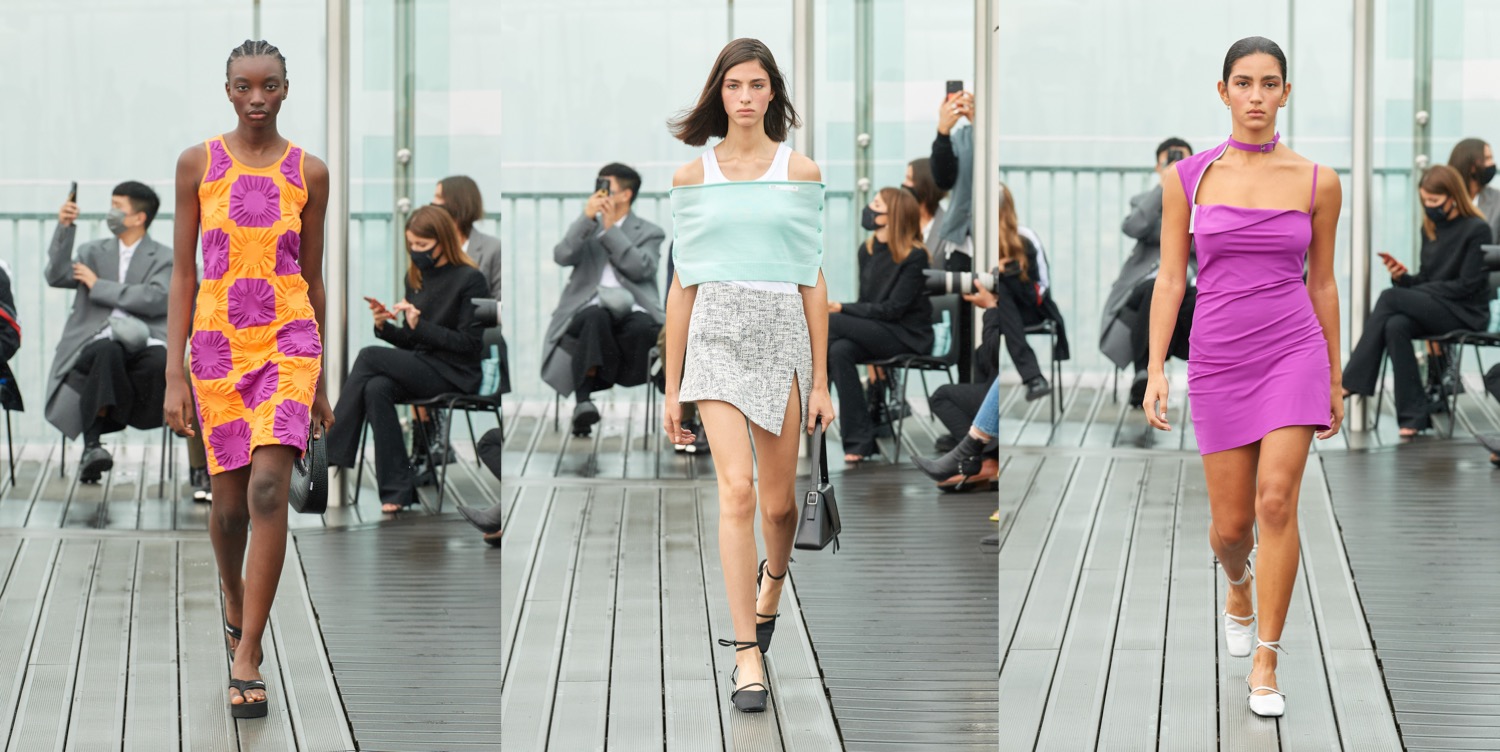
Protective Chic. Coperni SS21

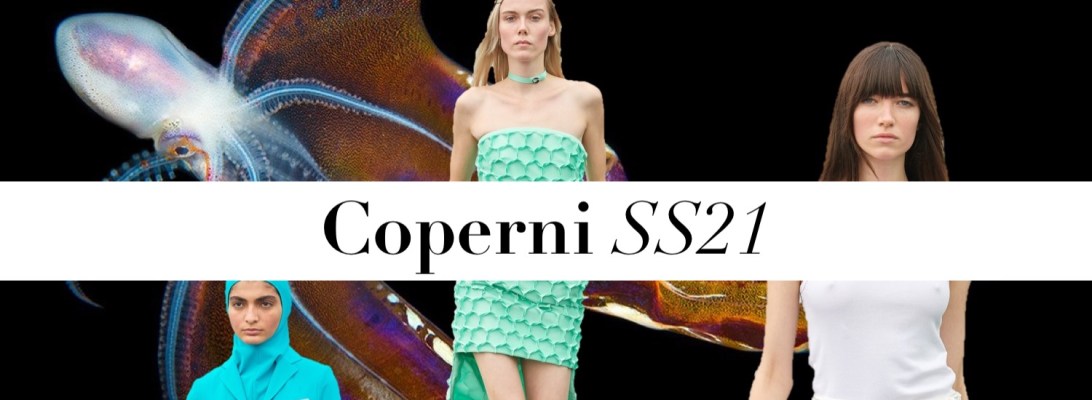
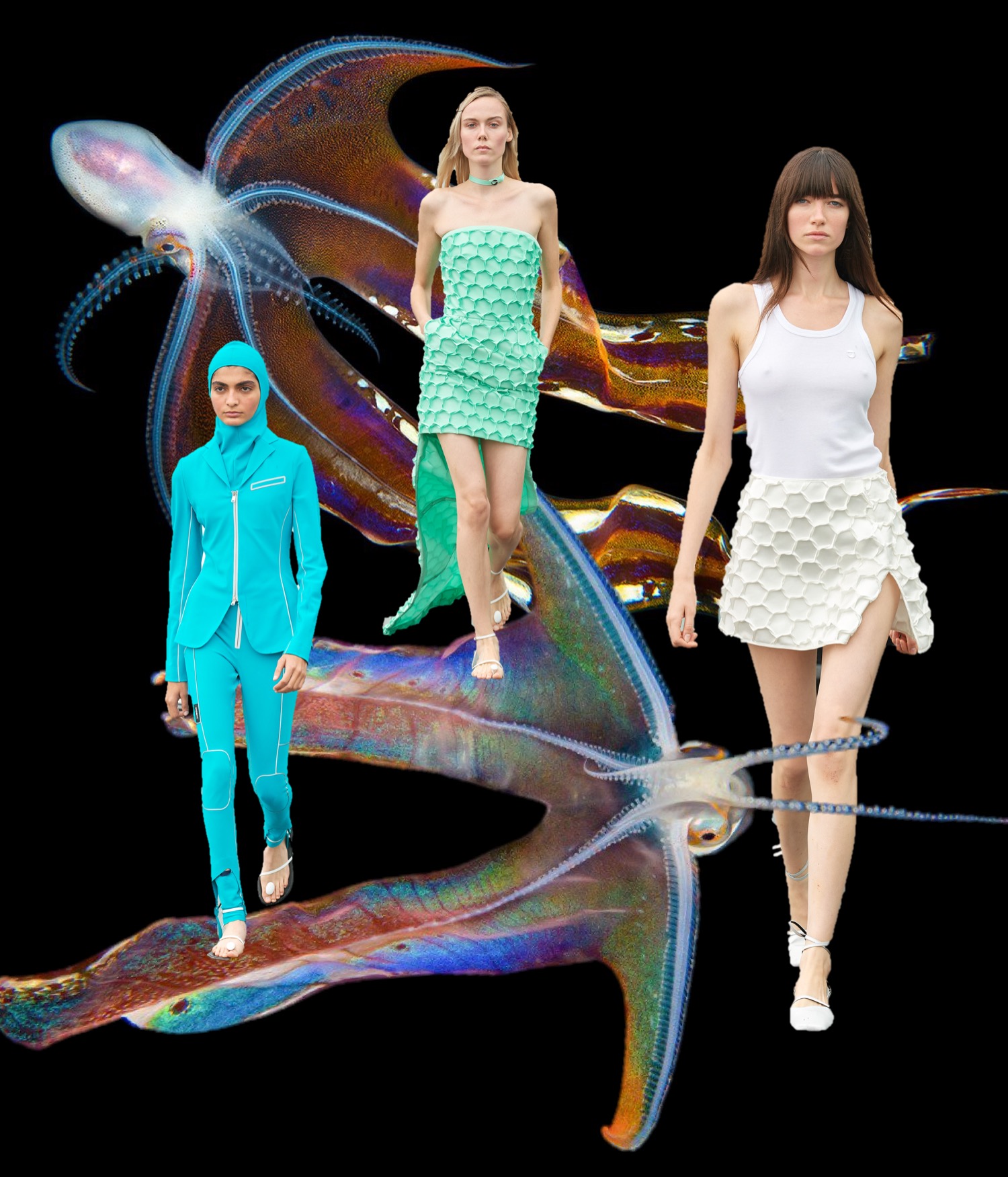
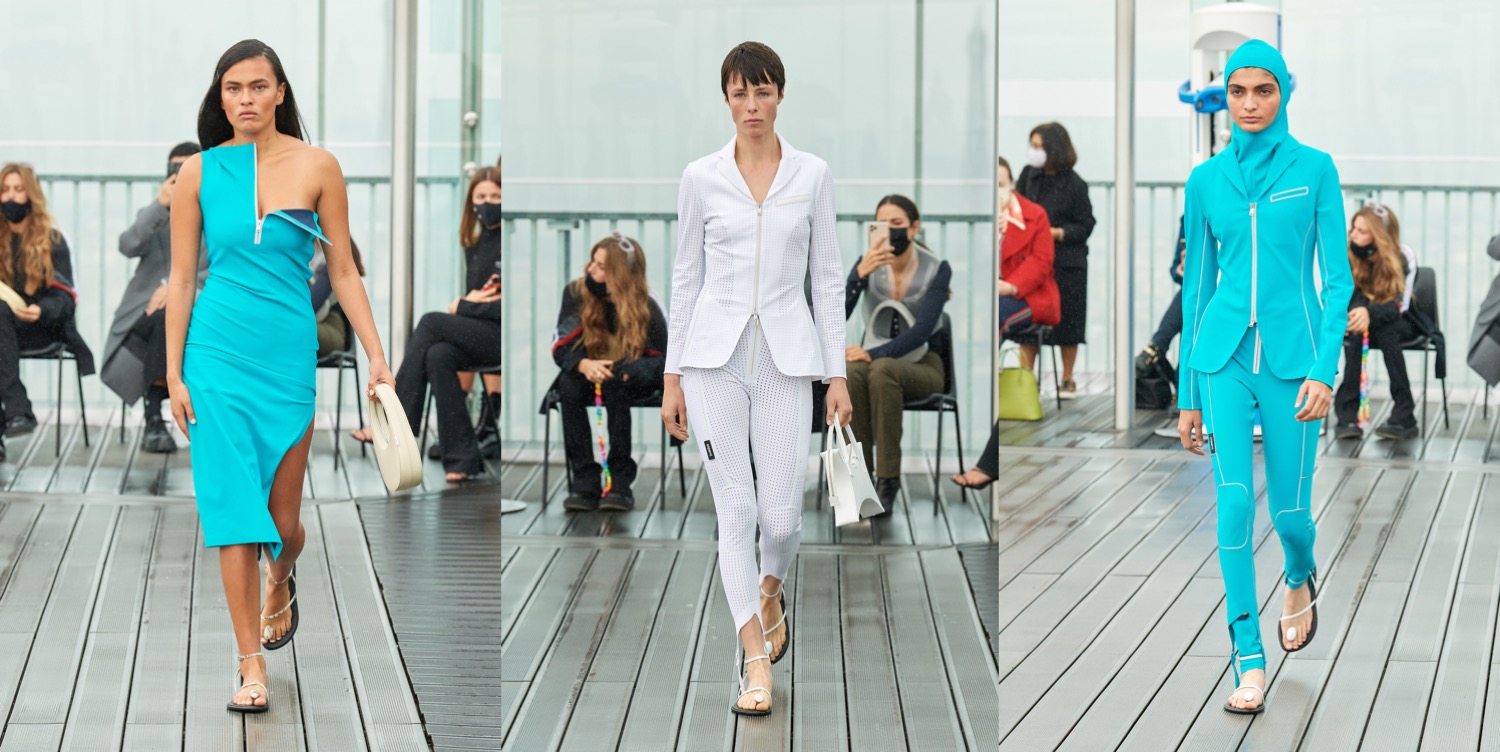
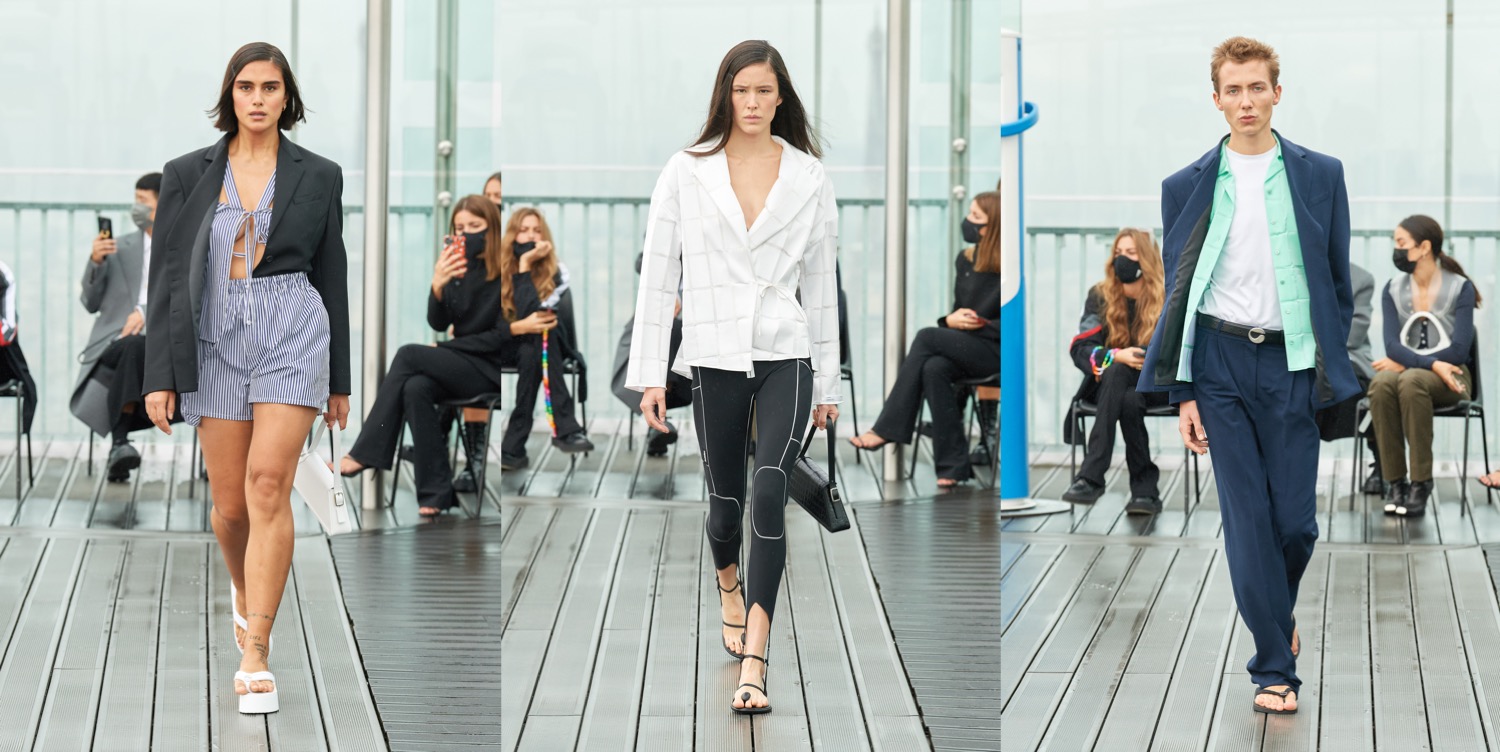
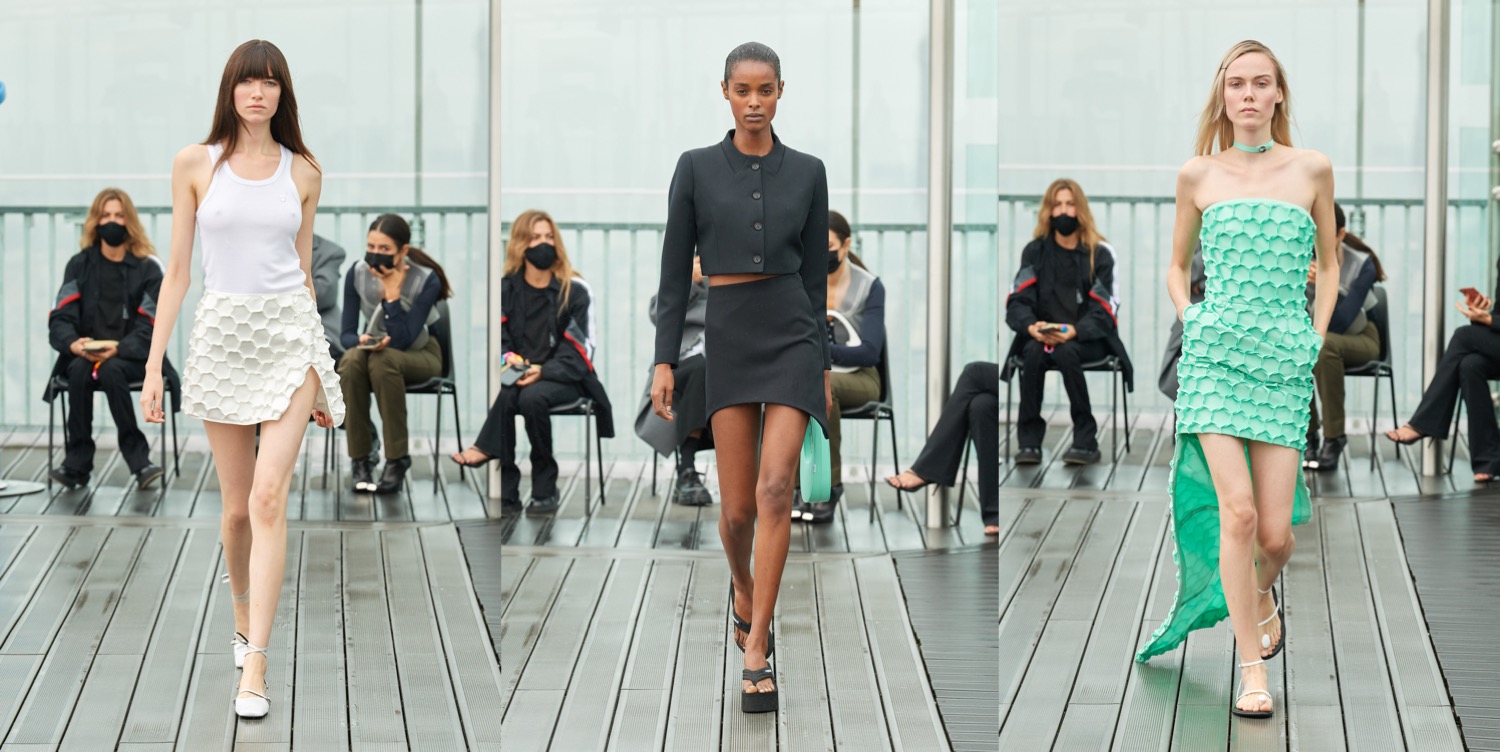
Lockdown has been especially tough for small and medium-sized labels. Coperni, the Paris-based label created and designed by Sébastien Meyer and Arnaud Valliant, is somewhere between small and medium, and is known for making exceptional, well-tailored garments with a hi-tech twist. Also, they keep it quiet and unfussy, which makes it double-hard in facing the giant brands, which desperately produce mega-productions to lurk any customer to their shops in the COVID era. Yet somehow, the boys managed to present a remarkable fashion show in the first days of this very unusual Paris Fashion Week, and keep their distinct, understated style afloat. And also, they are the first to introduce as to protective chic! In lockdown, Meyer and Arnaud Valliant launched a DIY mask making project on Instagram. This was in the early days of the pandemic, when solution-oriented designers scrambled to fill in the gaps left by overwhelmed and underperforming governments. “We were inspired [to start making masks] by our family, most of whom work in the medical field,” they said at the time. “We immediately wanted to help, even with our limited assets.” Soon, they started receiving selfies from Instagram followers around the world who used their easy-to-sew pattern to make masks. As they started to work on this collection, they found themselves hooked on the feel-good results of their problem-solving and decided to make it part of their mission at Coperni. On a Zoom call with Vogue the day before their show, they proudly showed off a new technical jersey material dipped in a solution that renders it anti-UV and antibacterial as well as wrinkle resistant. For years, fashion watchers have been waiting for the runways to catch up with the technical advancements happening in the outdoors and sporting markets. Coronavirus, the drastic accelerator, has hastened that process for the Coperni duo. “The starting point of the collection was how can we improve things and how can we protect everybody?” said Valliant. Meyer added: “I think for designers it’s our duty to evolve the clothes and make them more protective and more comfortable.” The jersey, which they cut into aerodynamic jackets and body-conscious dresses is a preview of a future in which clothes do more work for their wearers, and a promising area of exploration for Coperni. The longer the coronavirus crisis draws out the more potential there is for fashion that’s merely decorative to seem frivolous. Then again, Meyer and Valliant aren’t about to abdicate the notion of fashion for fashion’s sake. Other parts of the collection showcased the graphic fabric manipulation and the spare but idiosyncratic patternmaking that they’ve made their specialities. They staged their show on the roof of La Tour Montparnasse, the highest skyscraper in Paris, under a light rain. The designers see it as an optimistic gesture in a moment that has sharpened their focus. “It hasn’t been an easy season and it’s been stressful,” said Valliant, “but we have to stand up.

Collage by Edward Kanarecki.