Sustainable Practice. Gabriela Hearst Resort 2021

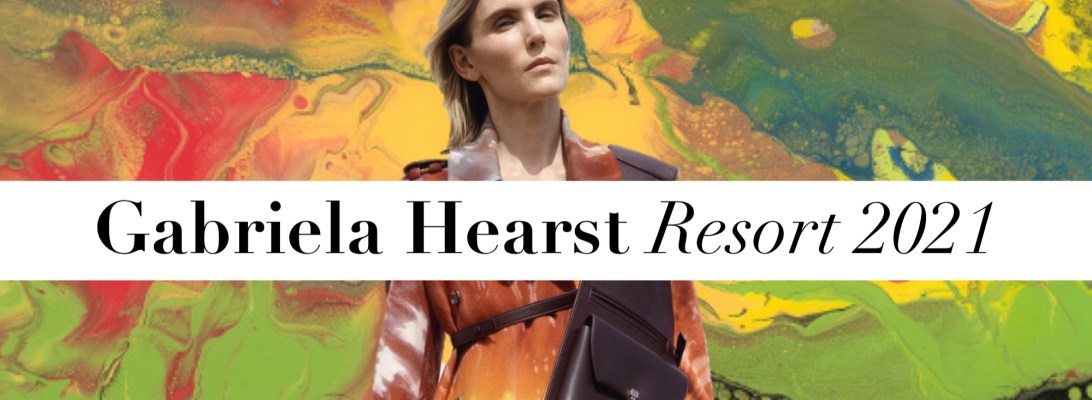
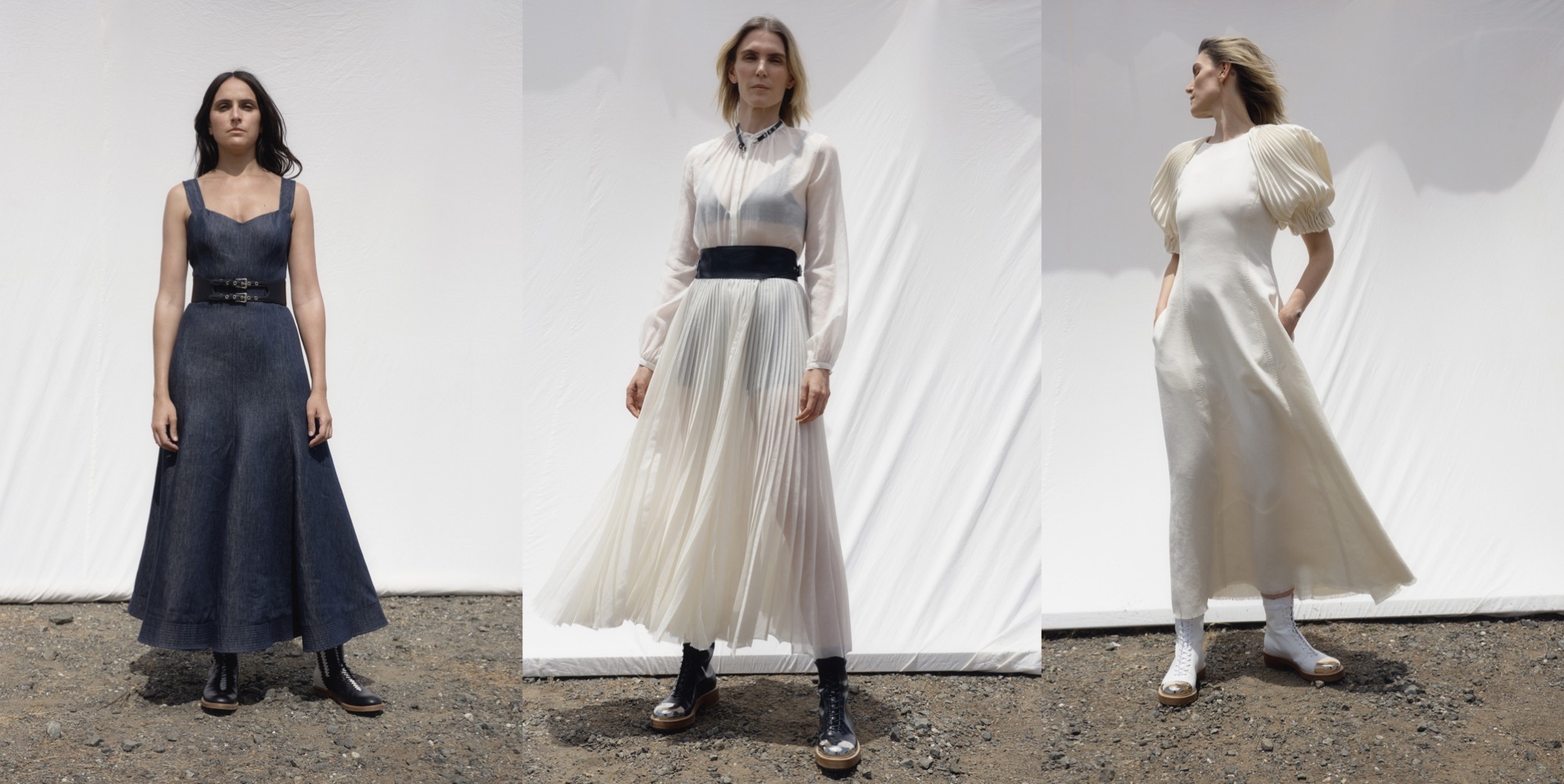
With every season, I’m enjoying Gabriela Hearst‘s collections more and more – and the entire process of sustainability that occurs backstage of every single garment she produces makes the brand even more worth of you attention. Hearst sent over a resort 2021 box to the press with about 35 fabric swatches, one more sumptuous than the next, and many of them recovered from deadstock supplies. Hearst’s plan is to prove the mutual compatibility of luxury and sustainability, the thinking being that the more you normalize the likes of repurposed silk cotton voile and recycled stretch polyester, the more you problematize materials such as standard issue cotton and polyester, which require obscene amounts of water to grow, and virgin plastic to manufacture, repsectively. That said, there’s nothing normal in the least about Hearst’s materials. You need only brush your hand against the multi-ply of her handknit cashmere sweaters or take a longing glance at the fiery tie-dyed cashmere flannel of a coat. The designer produced a short Zoe Ghertner-lensed video for the collection in the California desert in which she appears alongside her sister, riding a horse bareback. On the voiceover Hearst says, “my sustainable practice is exactly what that word is: it’s a practice. You never achieve perfection, but you have to start. We don’t have an option.” The spring line-up’s ultimate stars are a black leather trench with hand-painted white leather lace “stripes” down its back, and another coat in that fire tie-dye, with a spectacular matching blanket shawl. Rounding it out is Hearst’s minimalist tailoring, made a little less minimal this season with a knotting detail on the lapel, and dresses and separates in cotton voile and denim-look linen with elevating metal-trimmed leather collar details and belts. Her new boots come with metal toe caps that took her seasons to get right. It’s a wardrobe for some good times ahead. “We have to dream,” she says.

Collage by Edward Kanarecki.
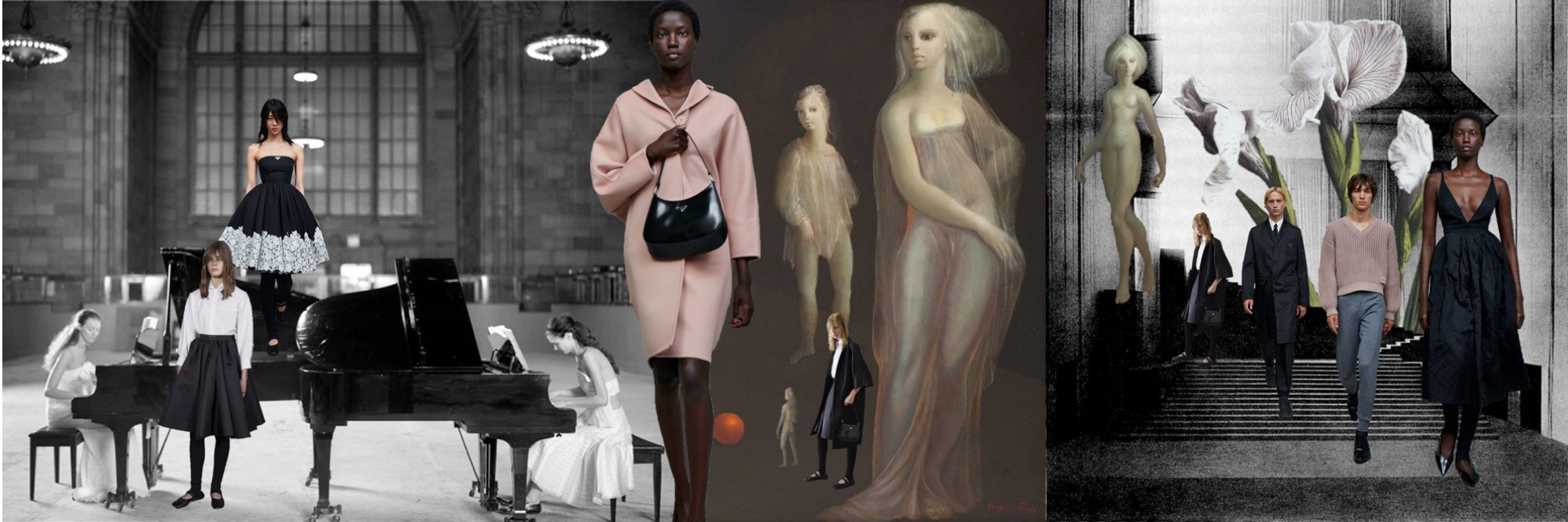
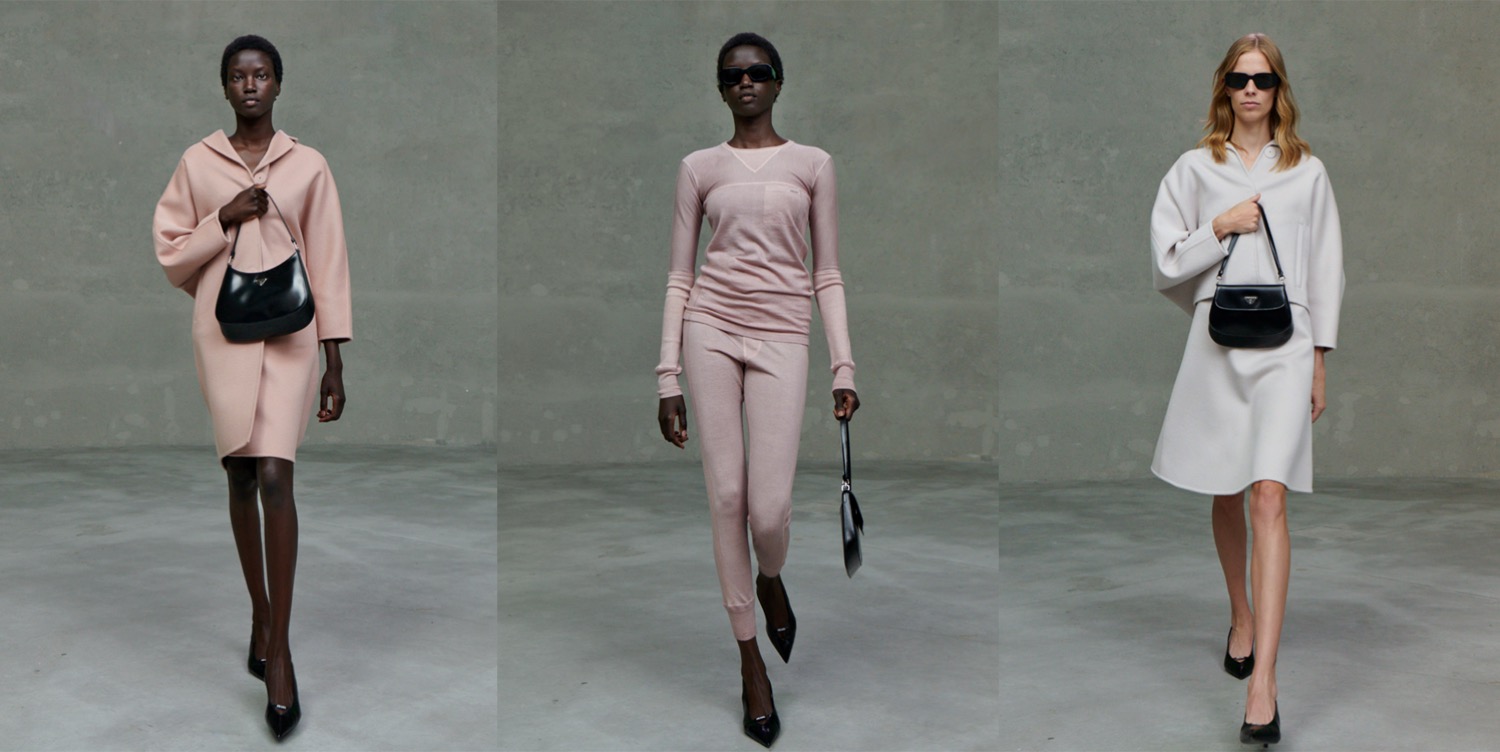
Honesty and Intelligence. Prada Resort 2021 + Men’s SS21

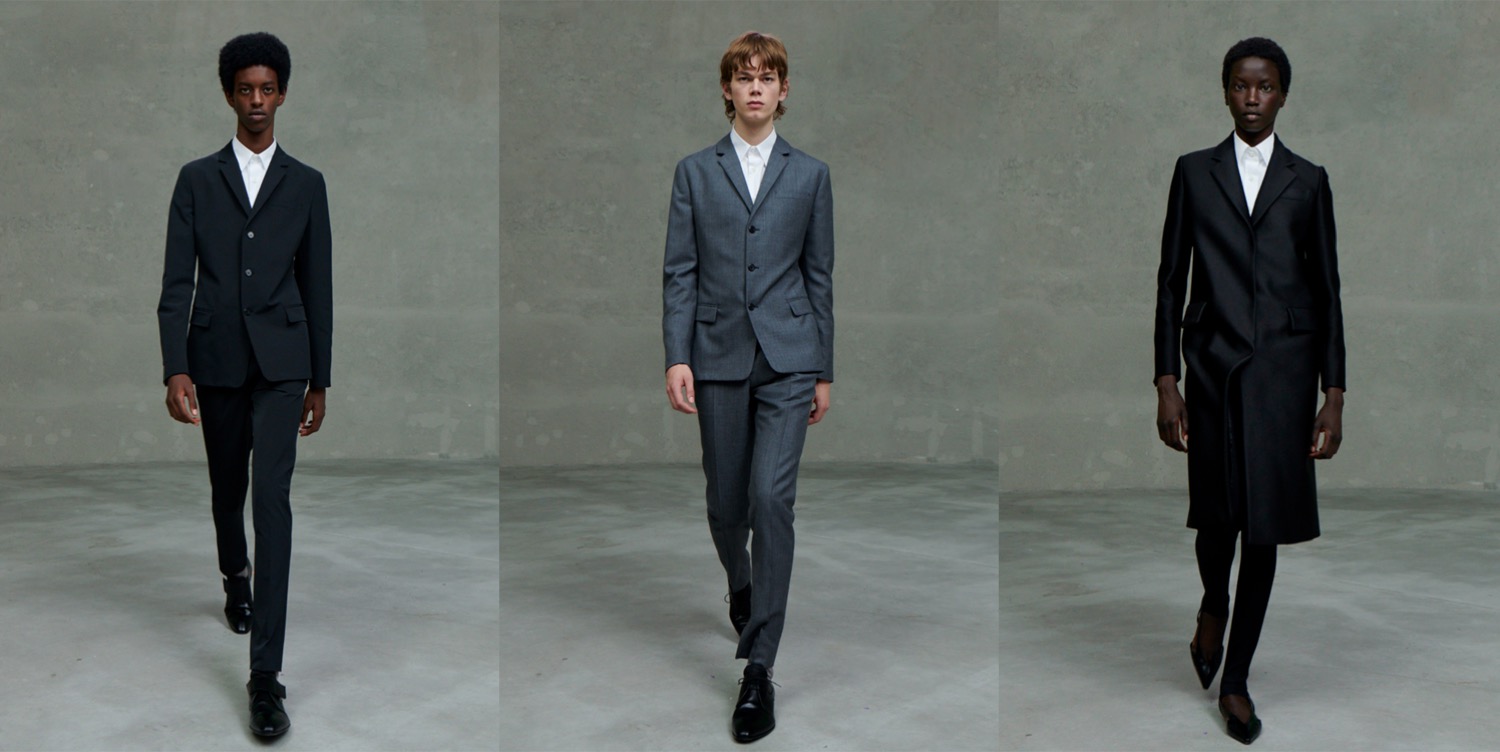
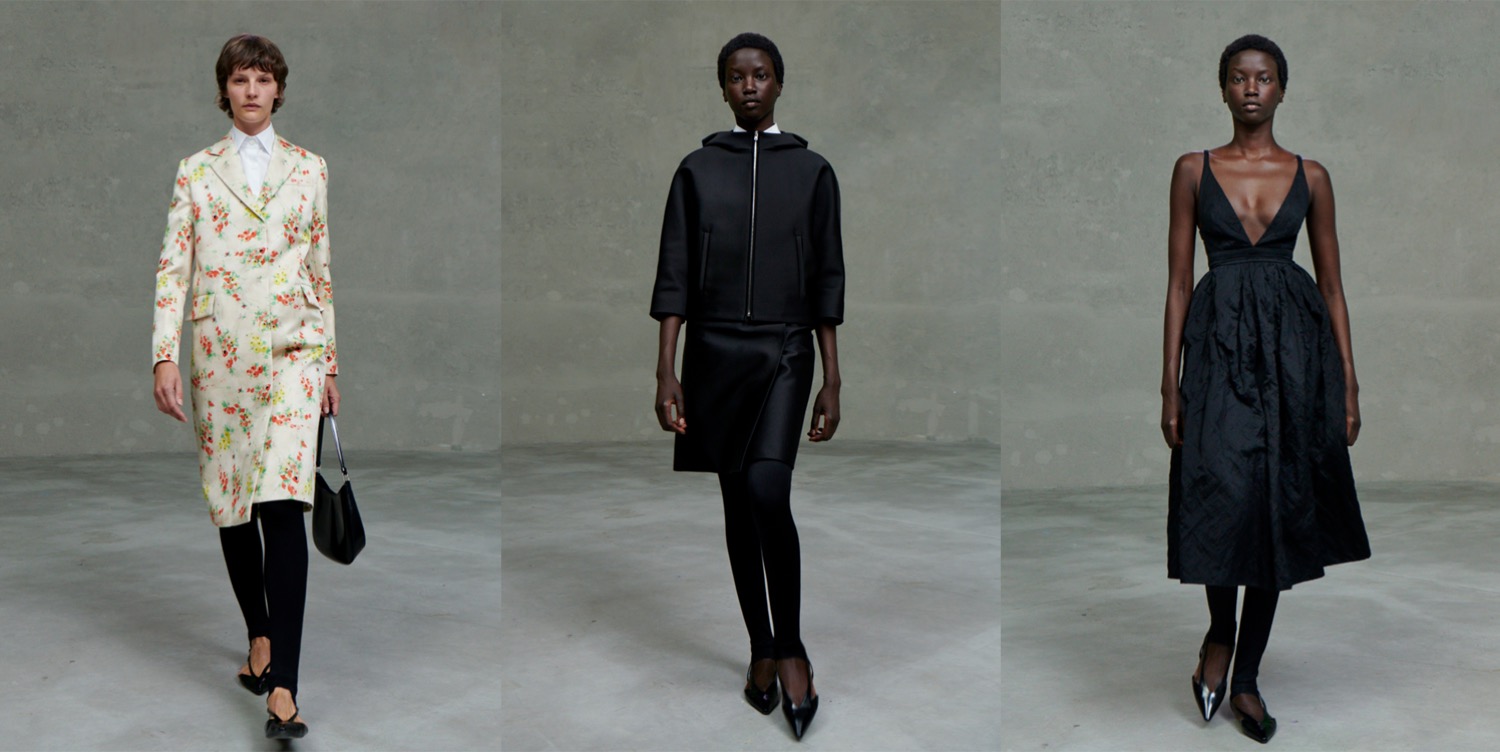
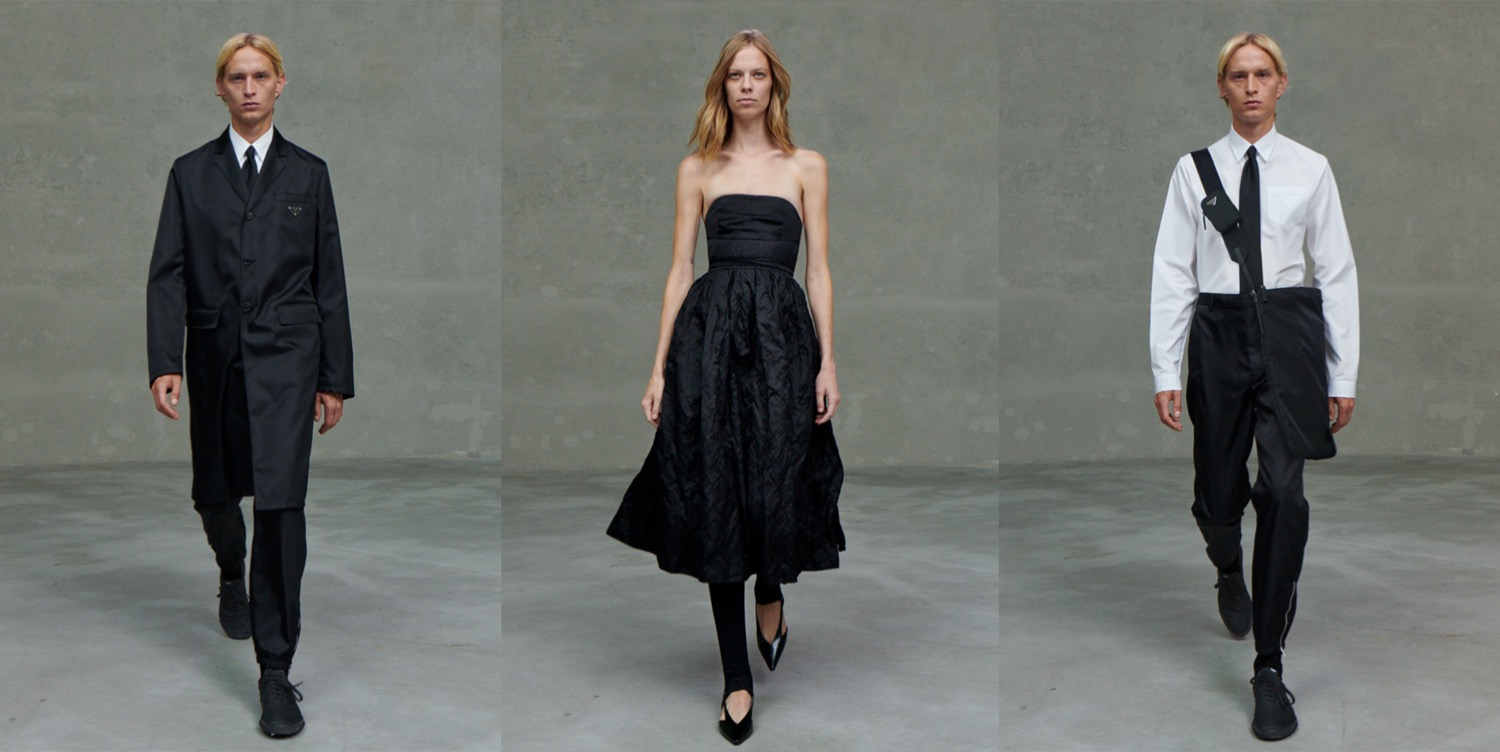
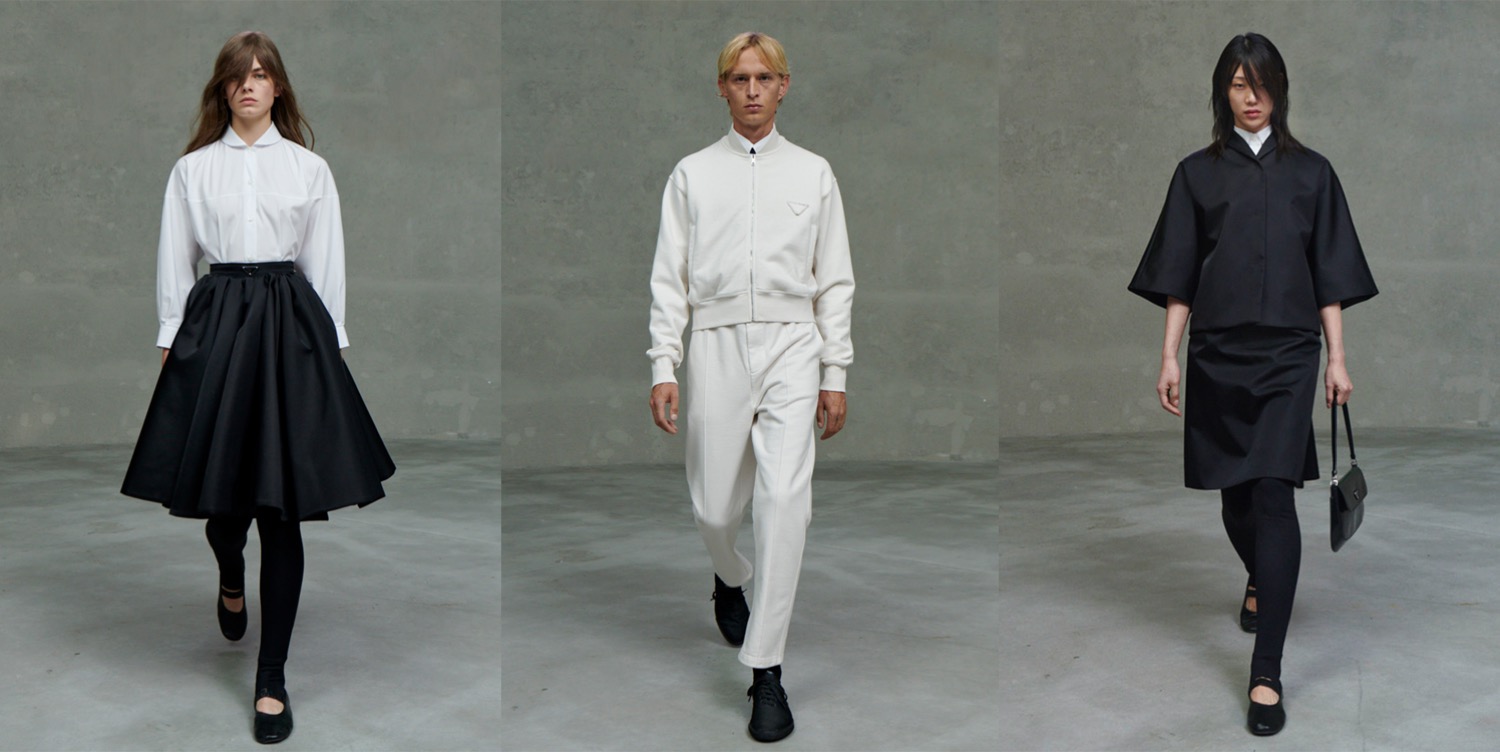
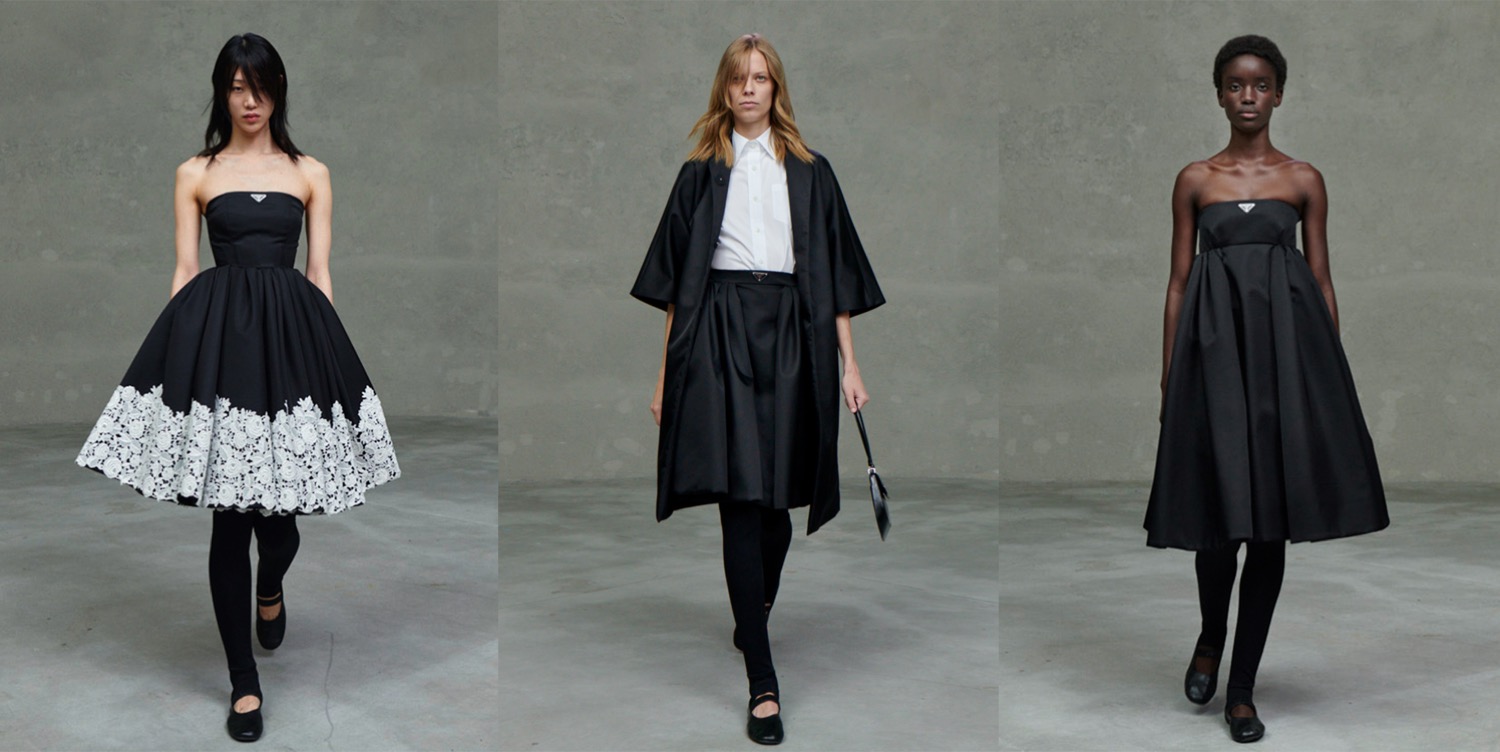
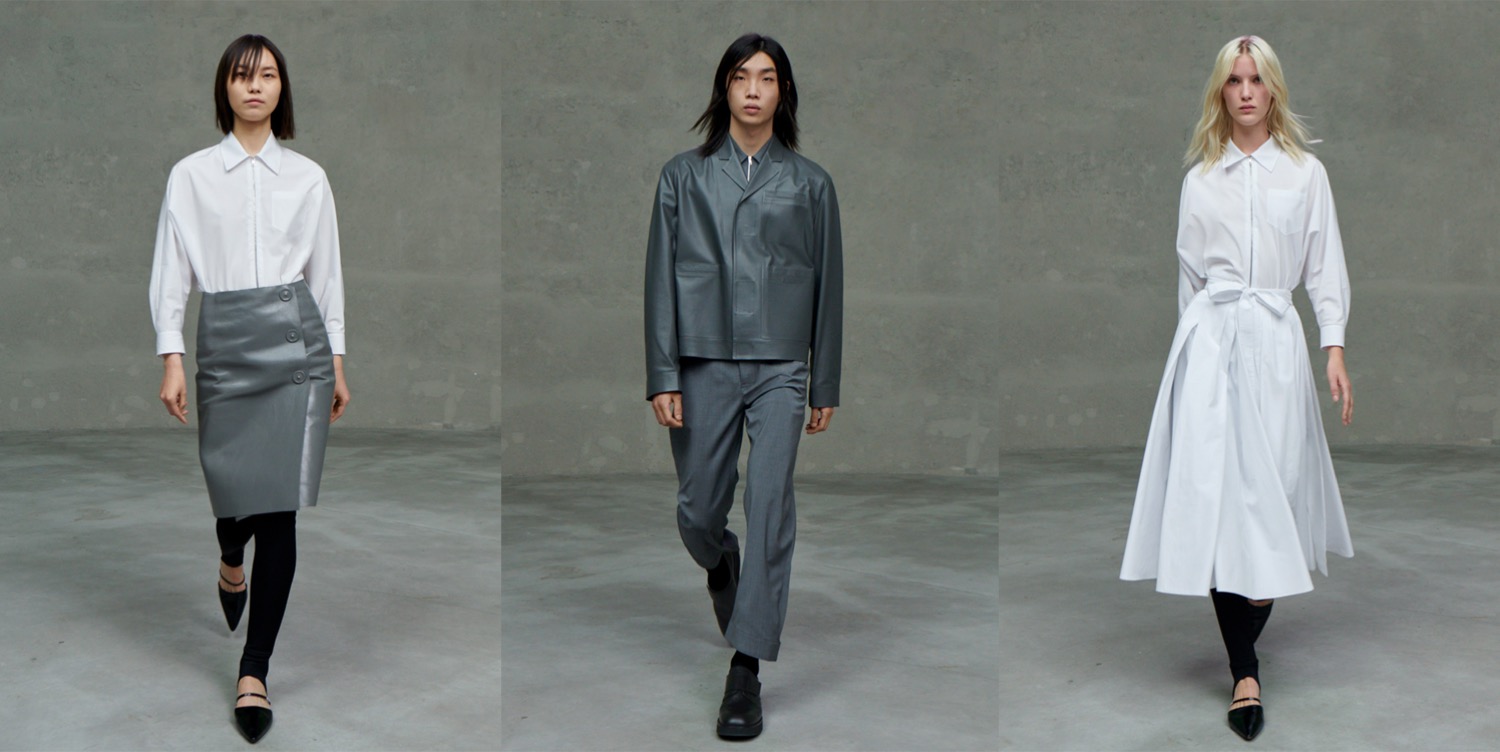
In her last solo “show”, before Raf Simons enters the role of co-creative designer in the September collection (I really, really, really can’t wait for this match to finally happen!), Miuccia Prada delivered a collection that was absolutely 100% Prada vocabulary. “As times become increasingly complex, clothes become straightforward, unostentatious, machines for living and tools for action and activity.” So said the press notes for The Show That Never Happened, which was a digitally delivered group installation of five Prada-facing films by Willy Vanderperre, Juergen Teller, Joanna Piotrowska, Martine Syms, and Terence Nance. They were all made at the Fondazione Prada, the company’s museum of contemporary art collection and the place of all Prada events. The film – which ran consecutively with the addition of a quick final walk at the end before Mrs. Prada’s usual fleeting, half-lateral bow – came to 11 minutes, the ideal duration of a live fashion show. The collection was all about pure elegance, simplicity and a sort of detox from fashion noise. Many looks were identical to Miuccia’s autumn-winter 1995 show, which forever became the image of 90s Prada. Architectural, 1950s silhouettes mixed with a touch of feminine cliché (of course, done in Prada’s ugly chic manner) for resort, and smart, business ready tailoring with a touch of nylon for men’s summer – ta-da, a collection that really got me obsessed in the last few weeks of digital presentations. The press release continued with more food for thought chez Miuccia: “I think that our job as fashion designers is to create clothes for people, that is the honesty of it. That is really the value of our job – to create beautiful, intelligent clothes. This season, we focused on that idea: It is about clothes, about giving value to pieces. The clothes are simple, but with the concept of simplicity as an antidote to useless complication. This is a moment that requires some seriousness, a moment to think and to reflect on things. What do we do, what is fashion for, what are we here for? What can fashion contribute to a community?” As Prada and her peers (plus Raf Simons, of course!) work to anticipate how change alters the specifications of taste and clothes it will be fascinating to watch the architecture of fashion change too.

Collage by Edward Kanarecki.
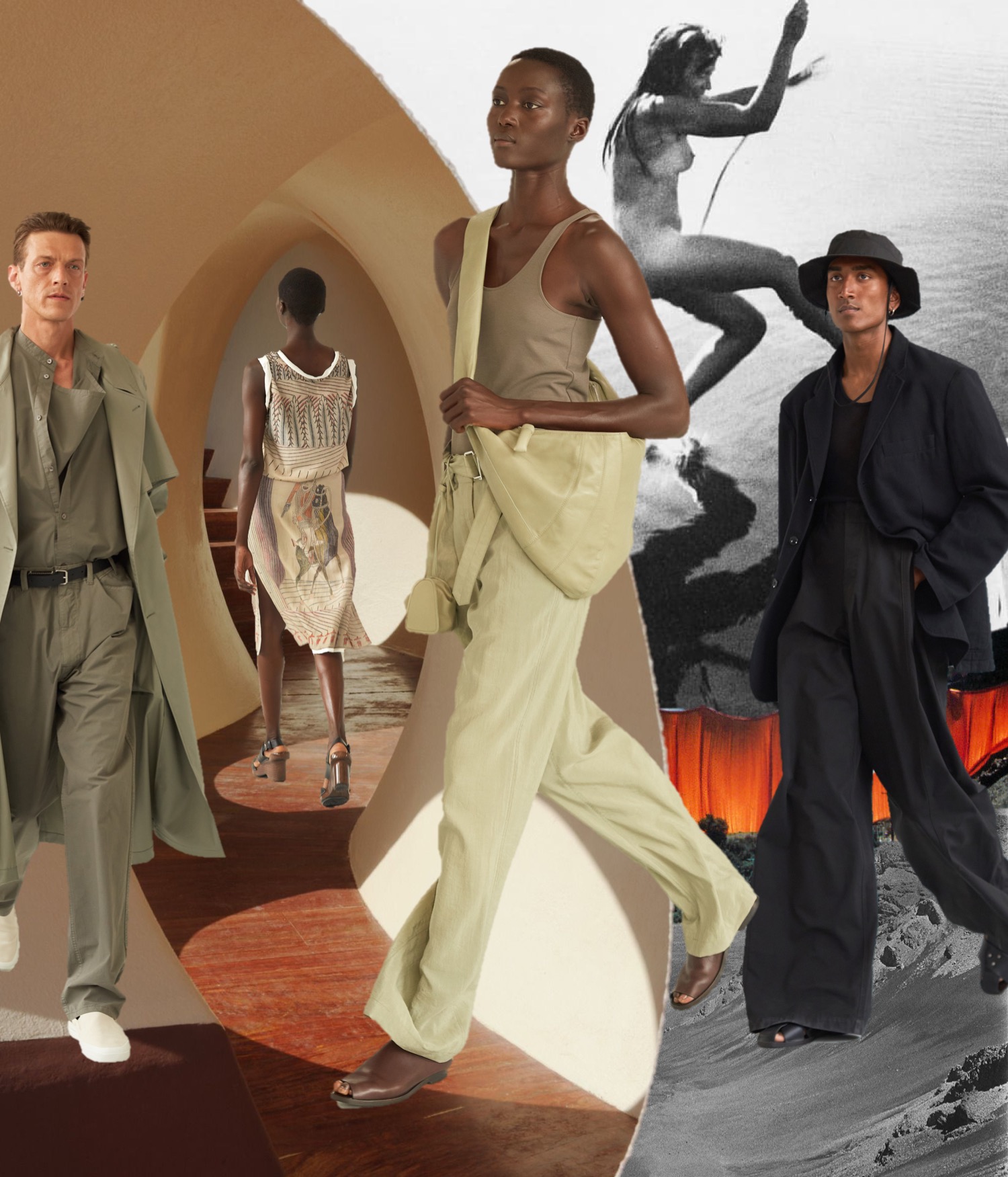
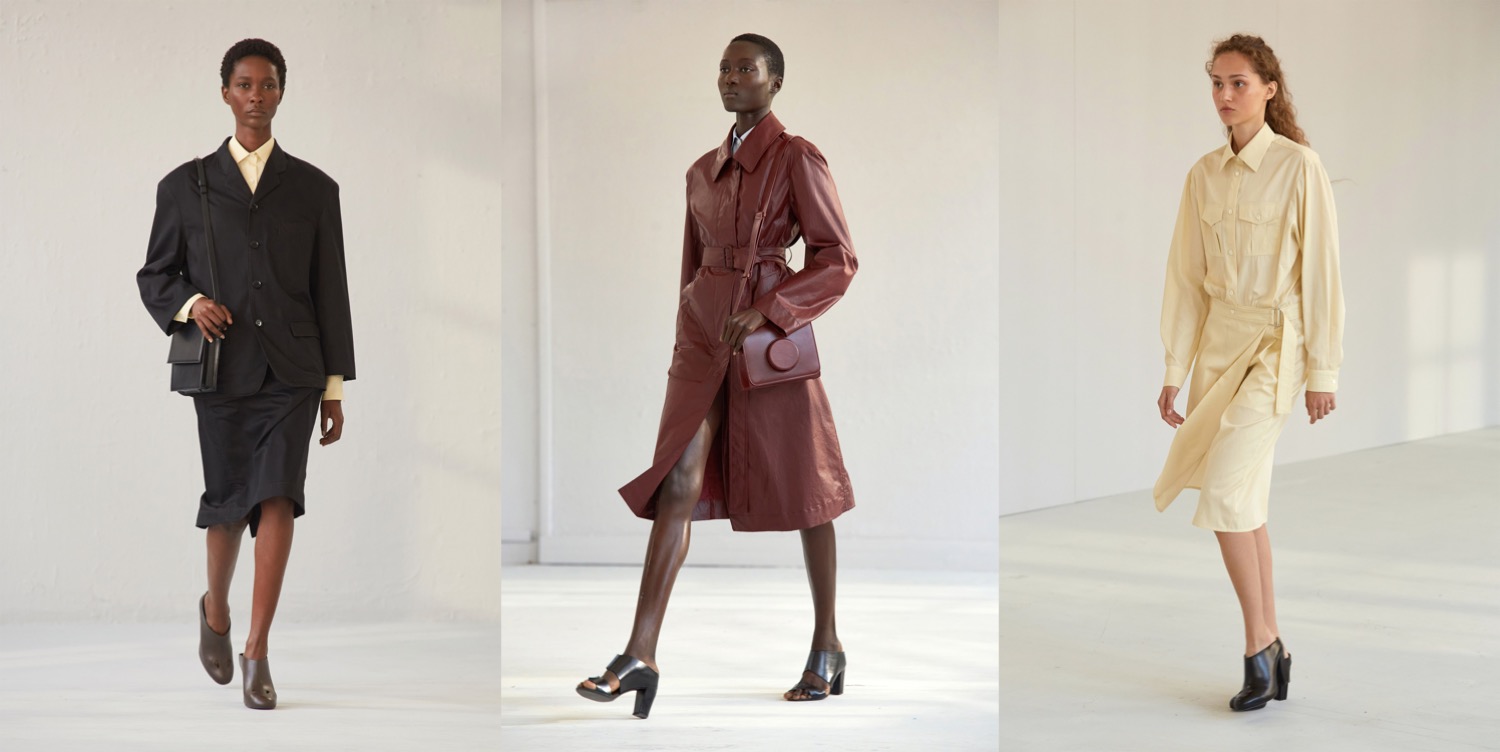
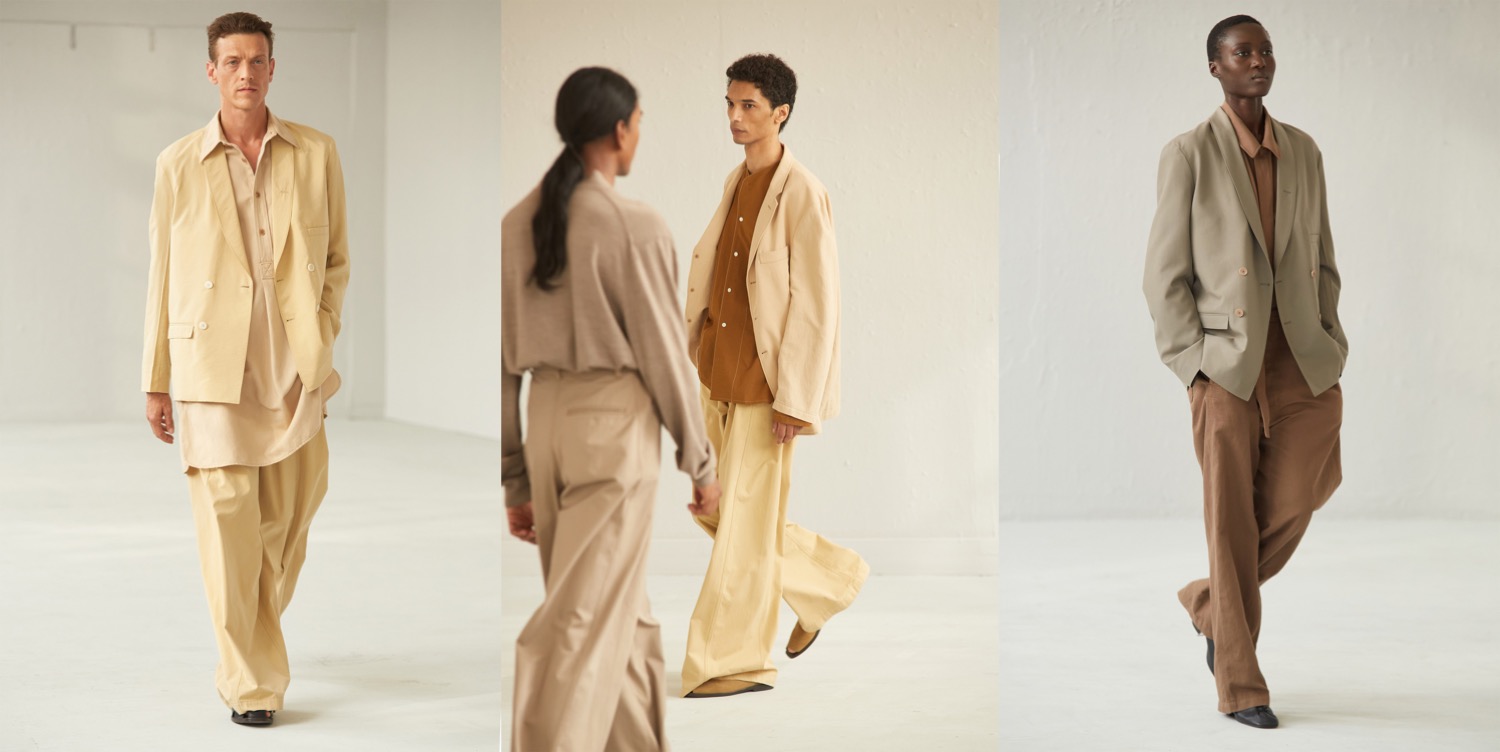
As Always, It’s Perfect. Lemaire SS21

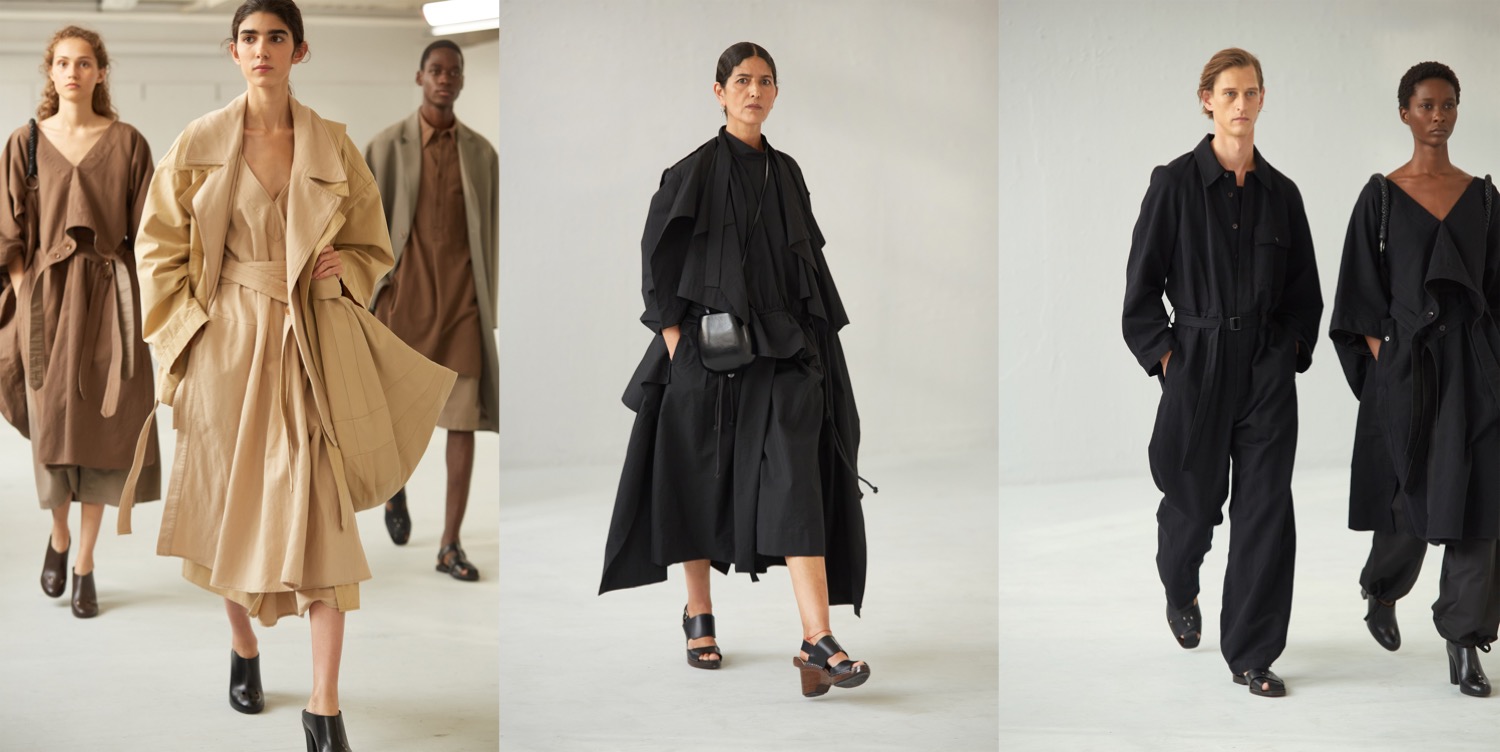
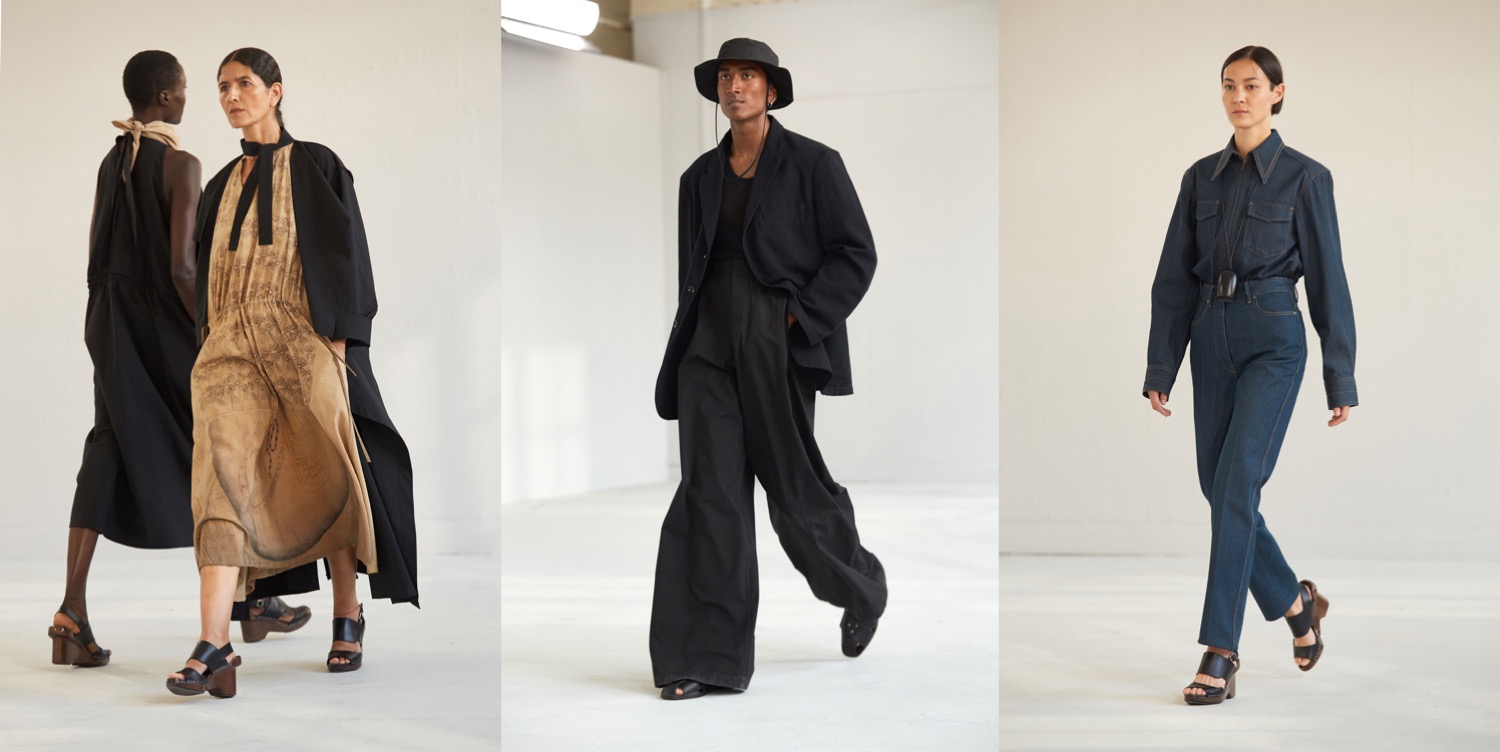
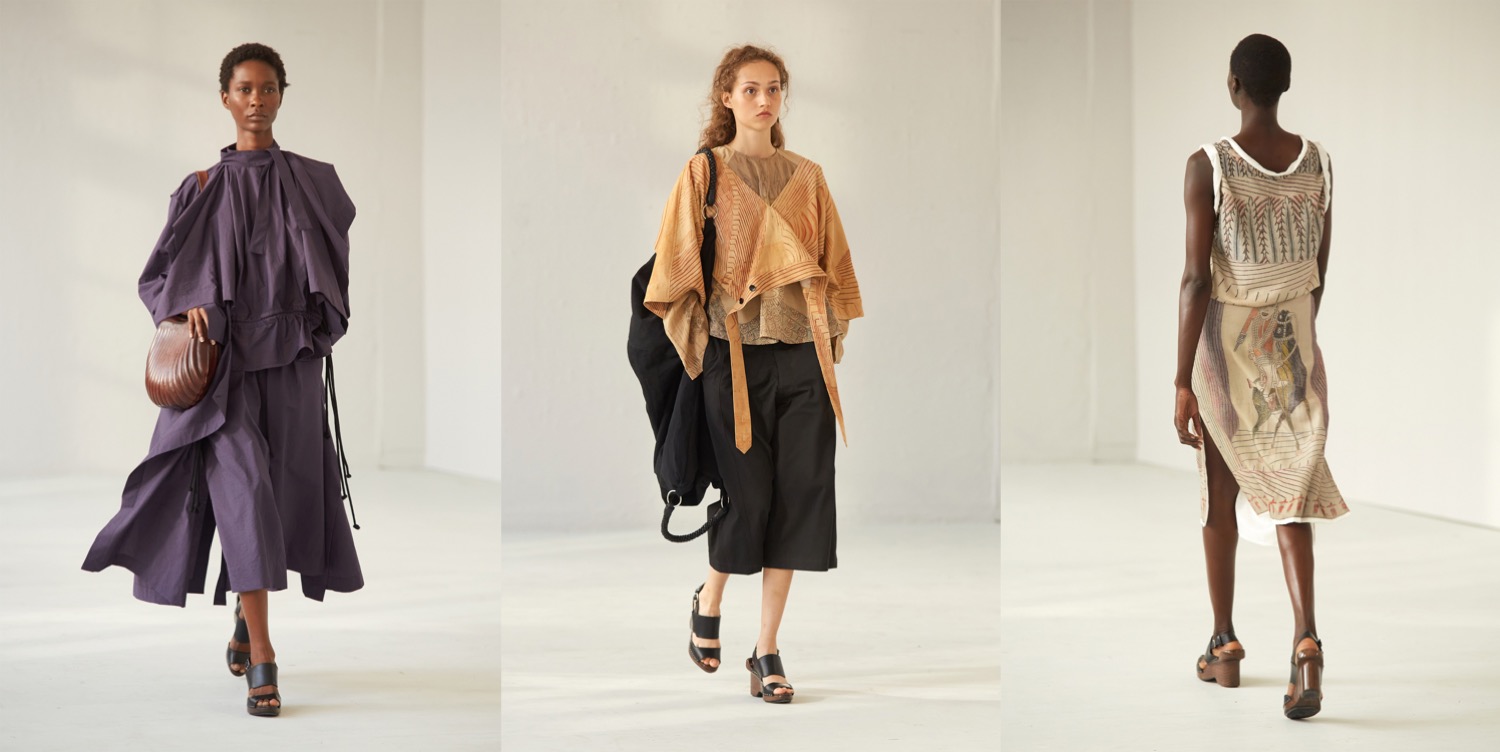
I don’t know how Christophe Lemaire and Sarah Linh Tran do it, but their collections always reasonate with me the most in terms of ready-to-wear. I can be obsessed with the most over-the-top dress and feel inspired by the most thoroughly planned visual production. But in terms of clothes, my heart belongs to Lemaire. Their spring-summer 2021 presentation, of course audience-less, is co-ed, as the designers depart from men’s and women’s division. Also, from now on, we will see their collections twice a year, during men’s fashion weeks. “We’ve been frustrated for a while by the timing of the schedule,” said Lemaire. “You know, showing the pre-collection for women together with the men’s and then waiting two months to show the second half of the women’s collection. For many different reasons it was complicated and frustrating for production and also buyers. So it’s obvious that this was an opportunity to show everything together, even though it was a big challenge for the team to develop the collection in time.” Well, it’s as effortlessly refined as usual – no marks of backstage rush visible. One of the ways they met that challenge, said Tran, was by working more closely than ever before. She added: “The men’s team and the women’s team worked hand-in-hand, choosing fabrics and colors in common… we focused on what was common between the man and the woman, and then we added more specifically women’s volumes and more specific men’s volumes.” The result was a highly coherent collection in which that commonality was evident but resulted in subtle gradations and hints of contrast, rather than the monotony of a monogamously unisex collection. As evinced in the lookbook shots where womenswear and menswear looks are shown in the same frame, a close affinity looks like complementary dressing rather than couple-coupling. There was a stirring marine green, a palest of yellow, a dash of denim. Many of the garments were in a kaleidoscope of neutrals – shades of clay, ochre, wheat – whose delicate differences became apparent and increasingly rich the more attention you paid to them. Men wore smocks and women boxy suiting either plain or in a beautiful Martin Ramirez landscape print. Tran concluded: “we build the collection as a wardrobe. The idea of being able to enrich the wardrobe is very pertinent to us.” Lemaire’s newly co-ed articulation shows that the designers do what they realy feel like is the most suitable for them – and this even more strenghtens mine – and other fans’ – love for the Parisian label.

Collage by Edward Kanarecki.
Colours of Paris. Saint Laurent Pre-Fall 2020

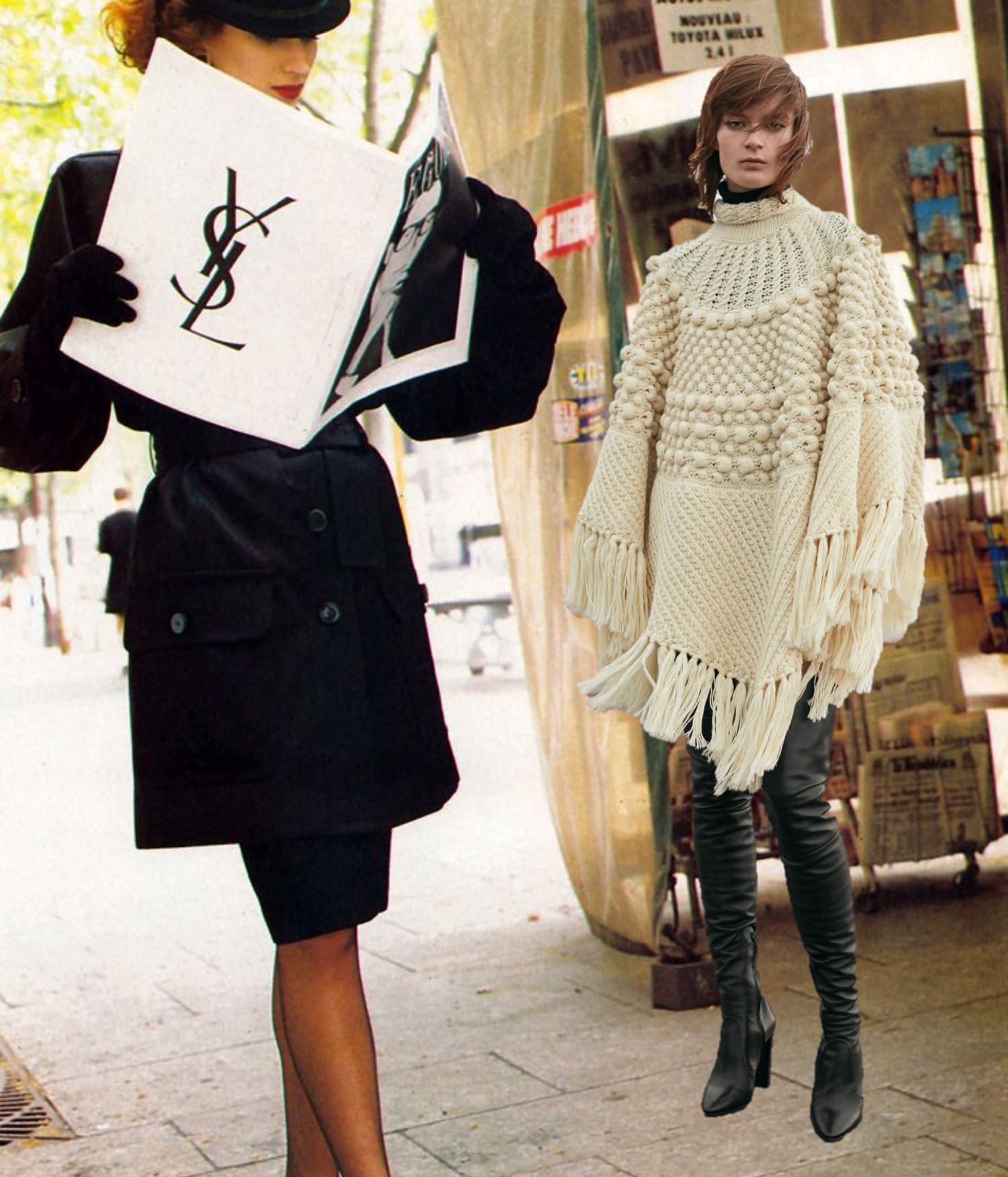
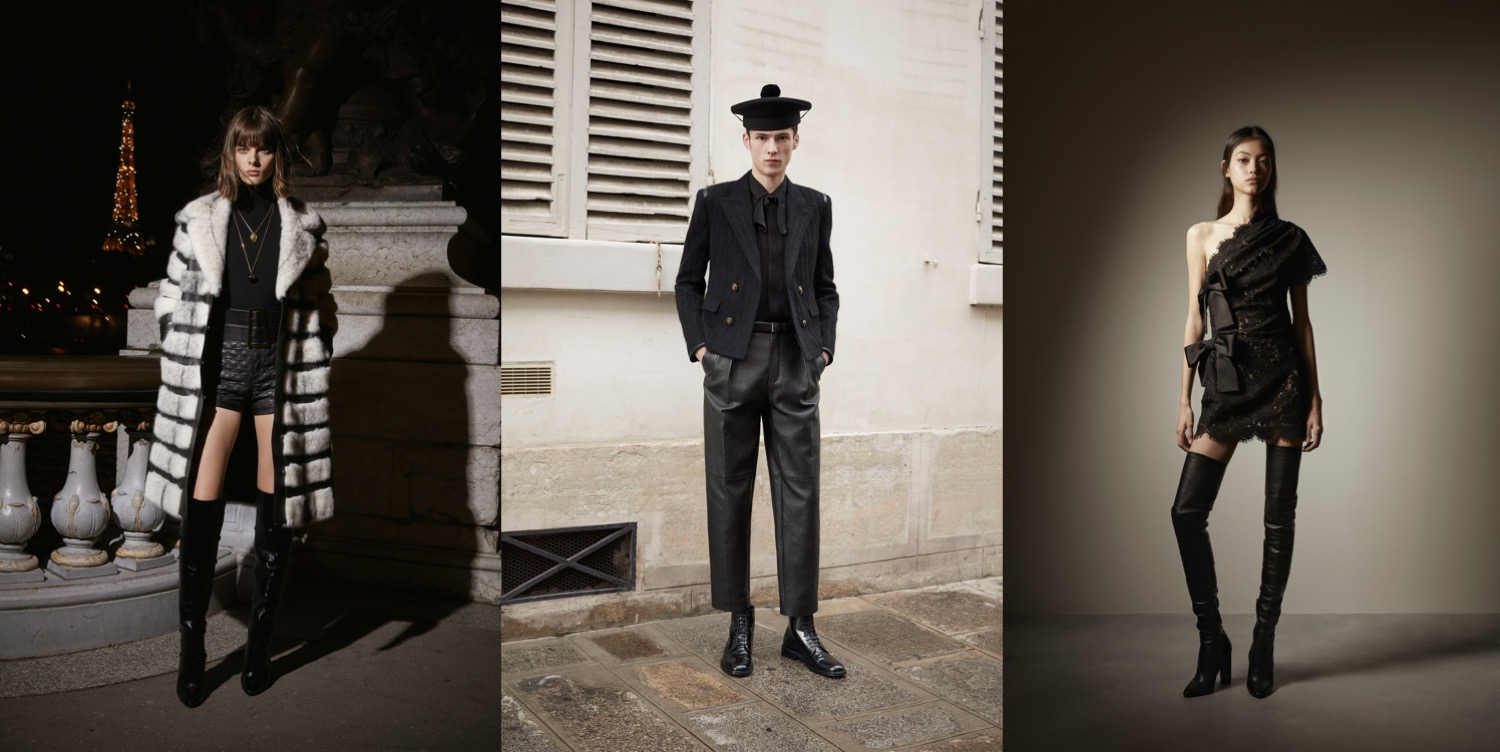
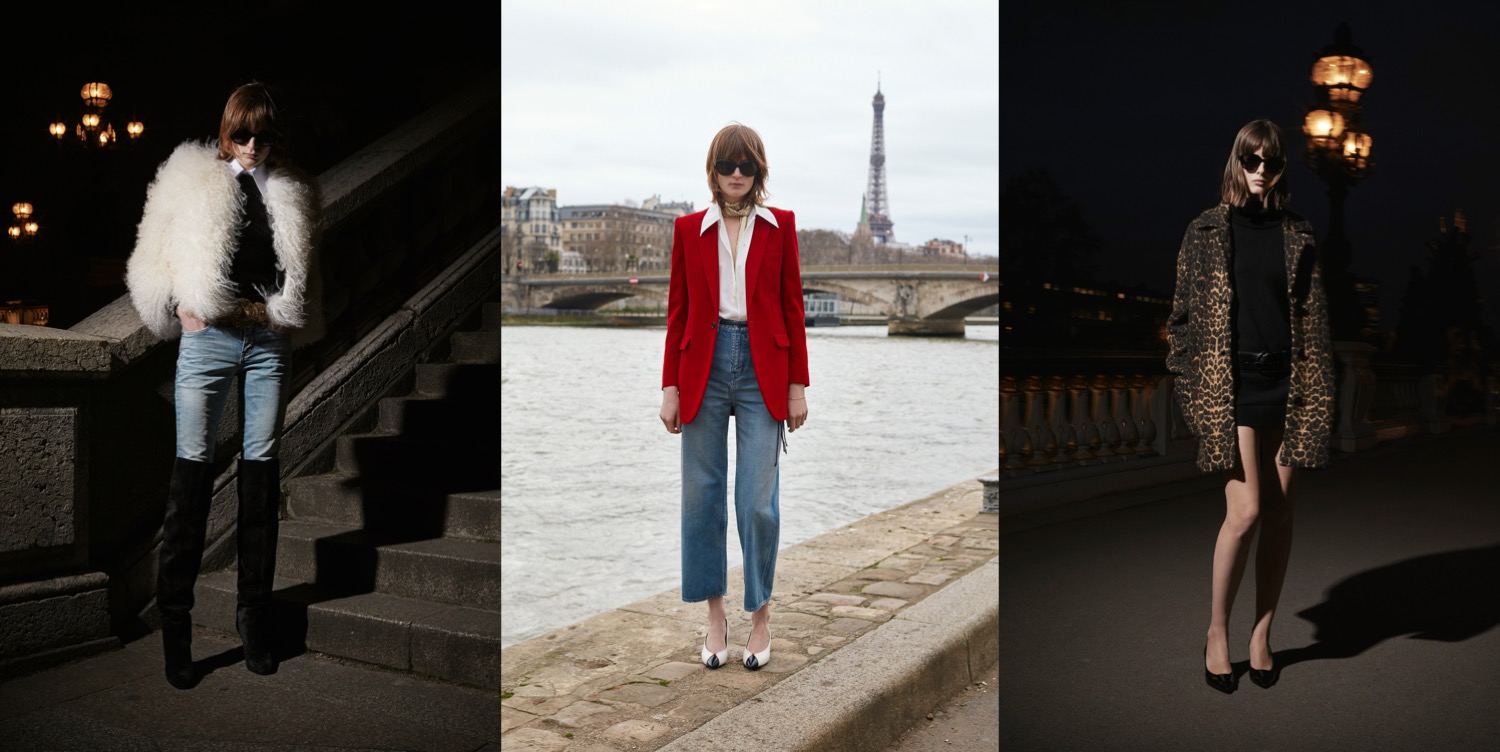
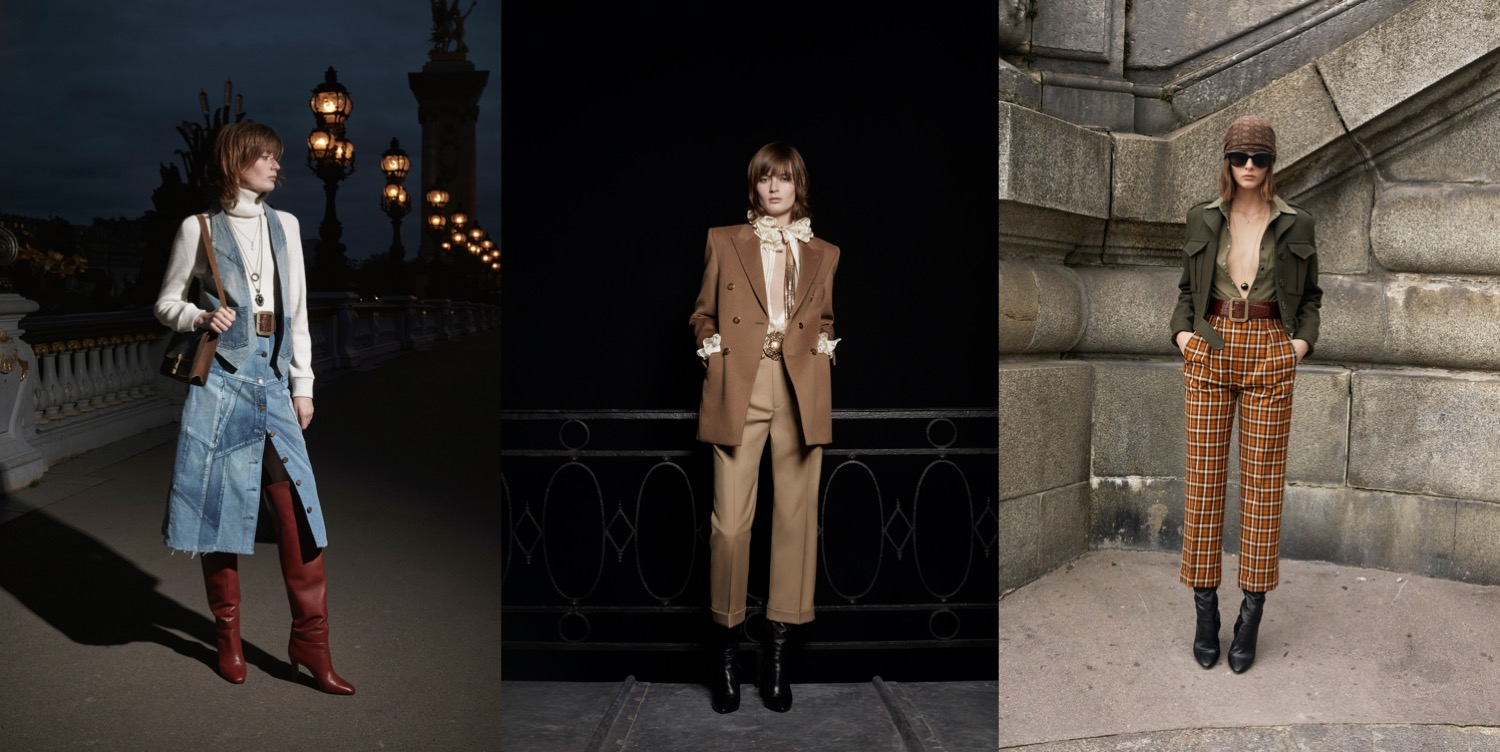
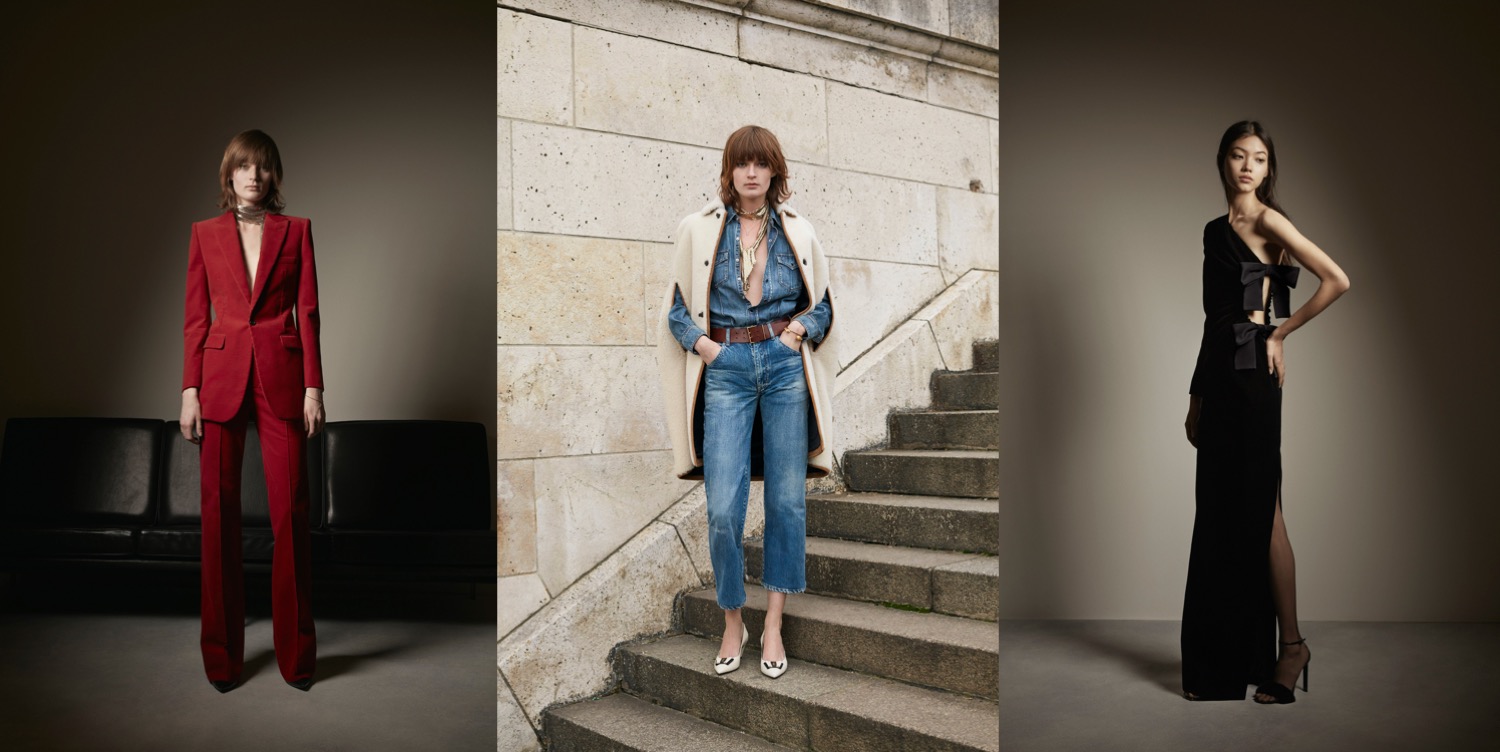
While Saint Laurent‘s pre-fall 2020 is released just now – the moment when the clothes hit the stores – it has the clues of the main, runway collection which we’ve seen back in March. It was Anthony Vaccarello‘s big success with colour, something so distinct and signature for Yves. “I started really enjoying those mixes of colors with the pre-fall” Vaccarello said. “It gave me the idea and desire to continue it for winter. I always thought that [color] was not my thing… but with time I have to say I just love mixing those improbable colors together, like in a painting.” With autumn there isn’t the same maitresse vibe of winter, but instead a softer, warmer approach, using color -mainly warm rust, ochre, a deep leafy green – in a judicious way so that it exalts and amplifies the kind of pieces Vaccarello sees as his perfect super-chic, super-Parisian wardrobe. That could mean a red velvet jacket over a white open-neck blouse and with beaten-up jeans. Or it could mean a kingfisher silk blouse gleaming from beneath an ocelot-like furry bomber and leather ski pants, the shade of blue set off beautifully by a hippieish gold metal belt. The other narrative threaded throughout this season at Saint Laurent are the 1970s. Here the decade is given a different cultural context by Vaccarello. He’s not looking so much at the likes of Betty Catroux or Loulou de la Falaise, but instead Jane Fonda. “[She] is always relevant, for everything she did in the ’70s and also for what she is still doing,” he said. “She is committed and active and never afraid to stand for her beliefs.” Incidentally, the year that her feminist-empowering thriller Klute came out – 1971 – was the very same year that Yves himself sent out his controversial ’40s-by-way-of-the-’70s collection. There are shades of both in this Saint Laurent autumn: the button-through skirt in leather or patchworked denim; the fluffy chubby; the squared-off shoulder line of a double-breasted jacket. I must admit that Vaccarello’s way of doing things at Saint Laurent gets better and better with time.

Collage by Edward Kanarecki.
Dress for Yourself. Balenciaga Resort 2021

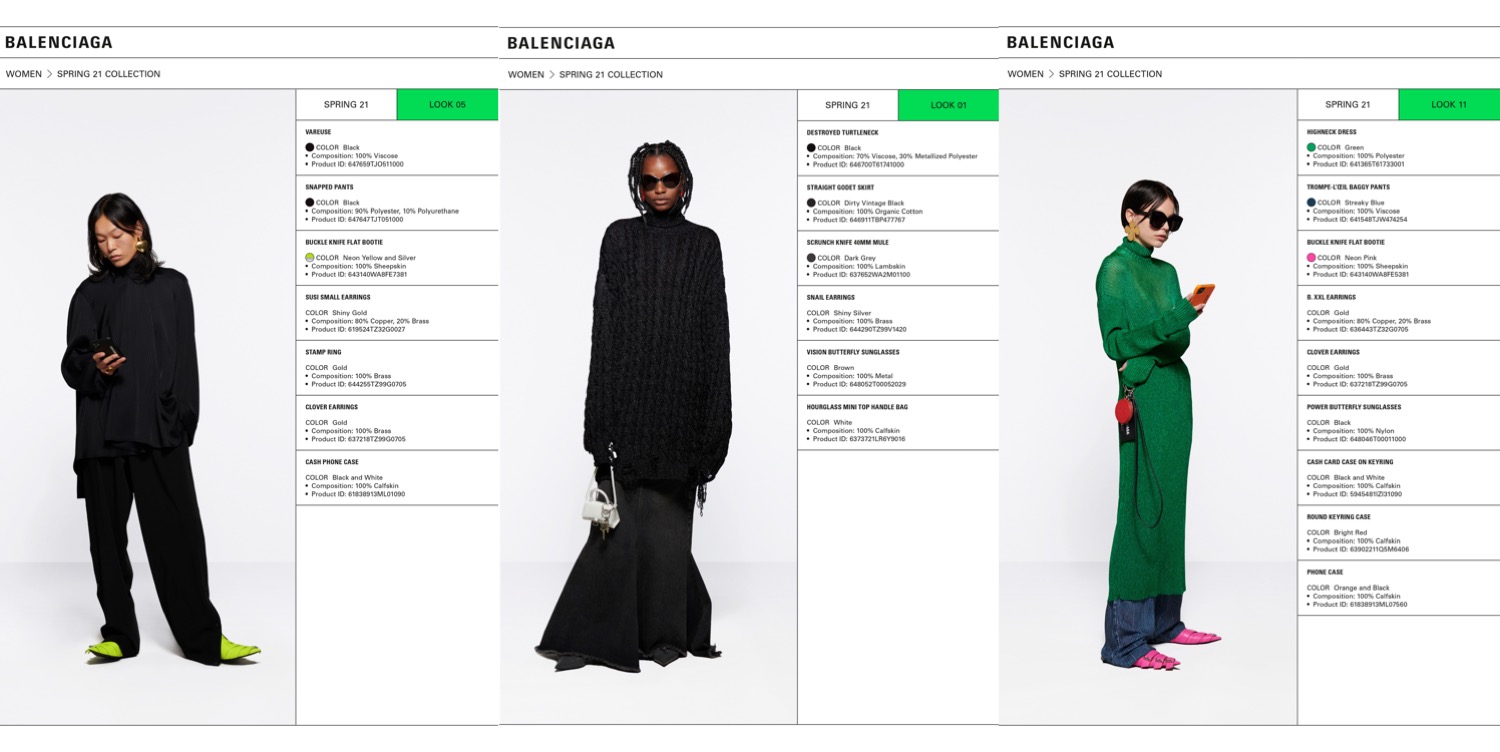
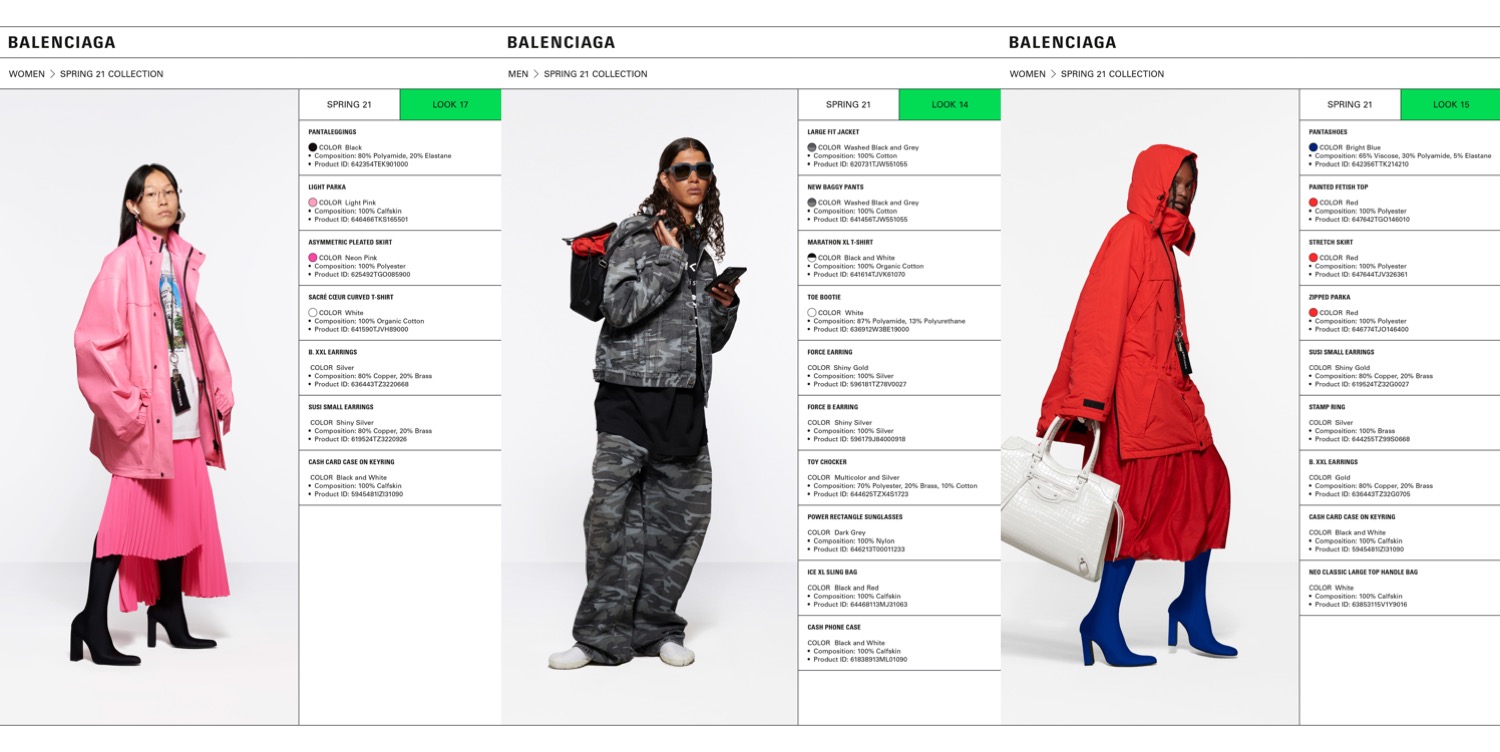
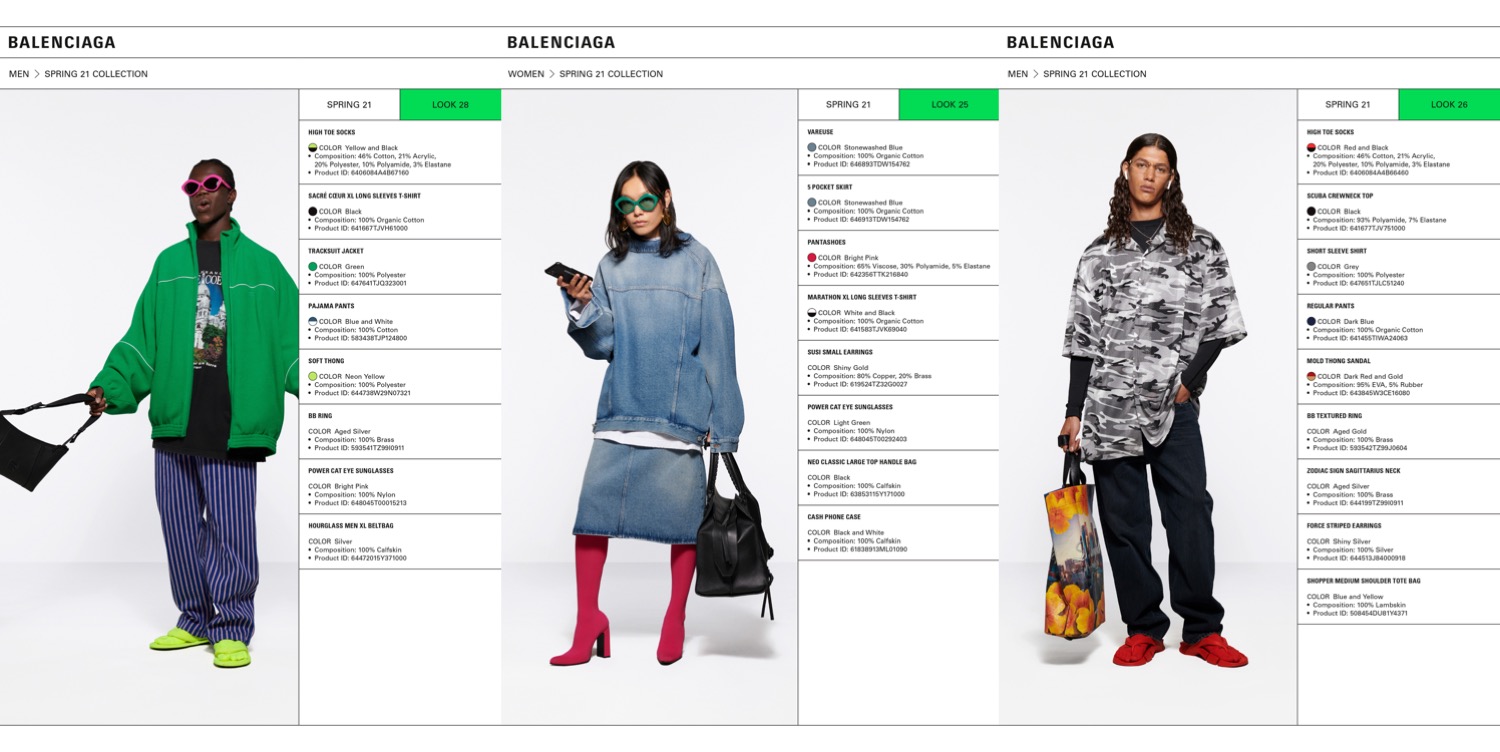
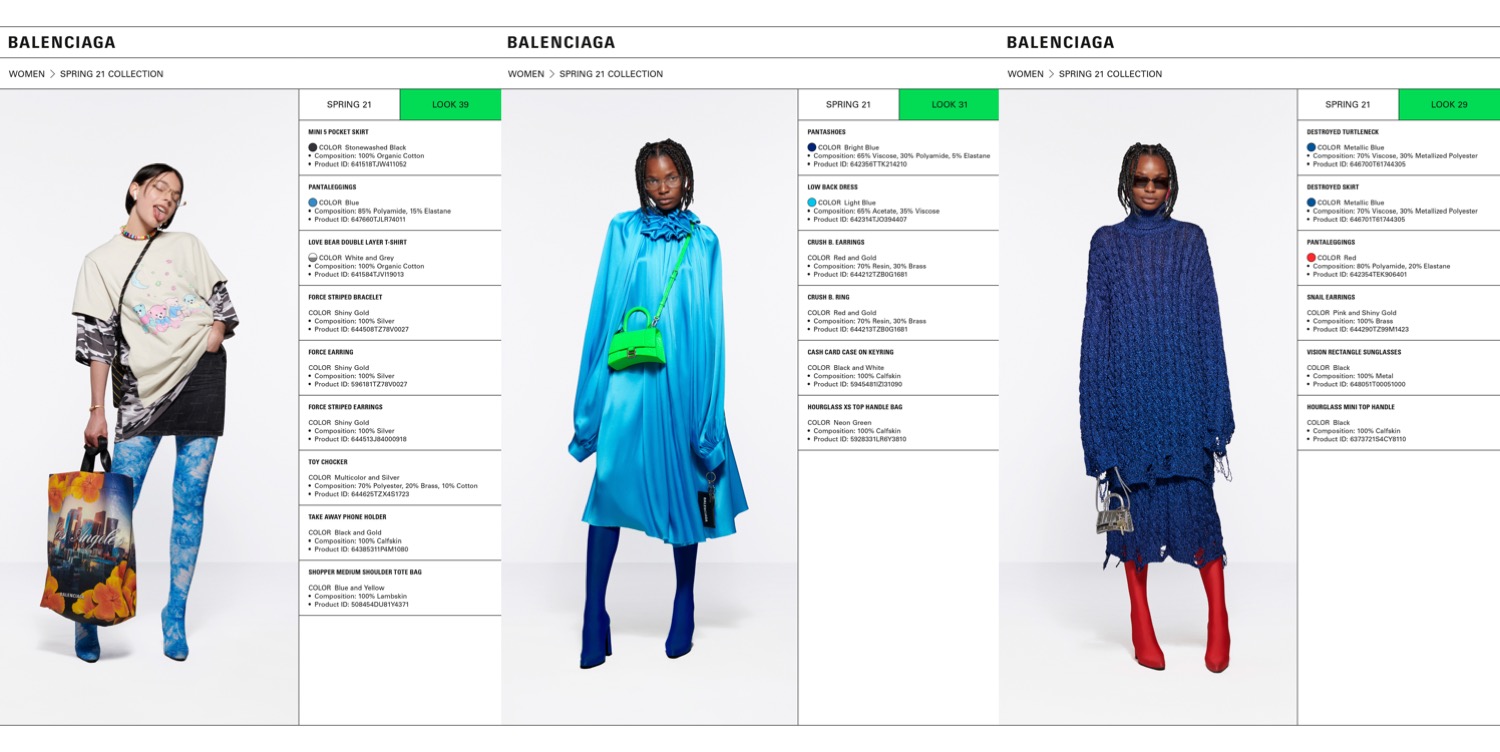
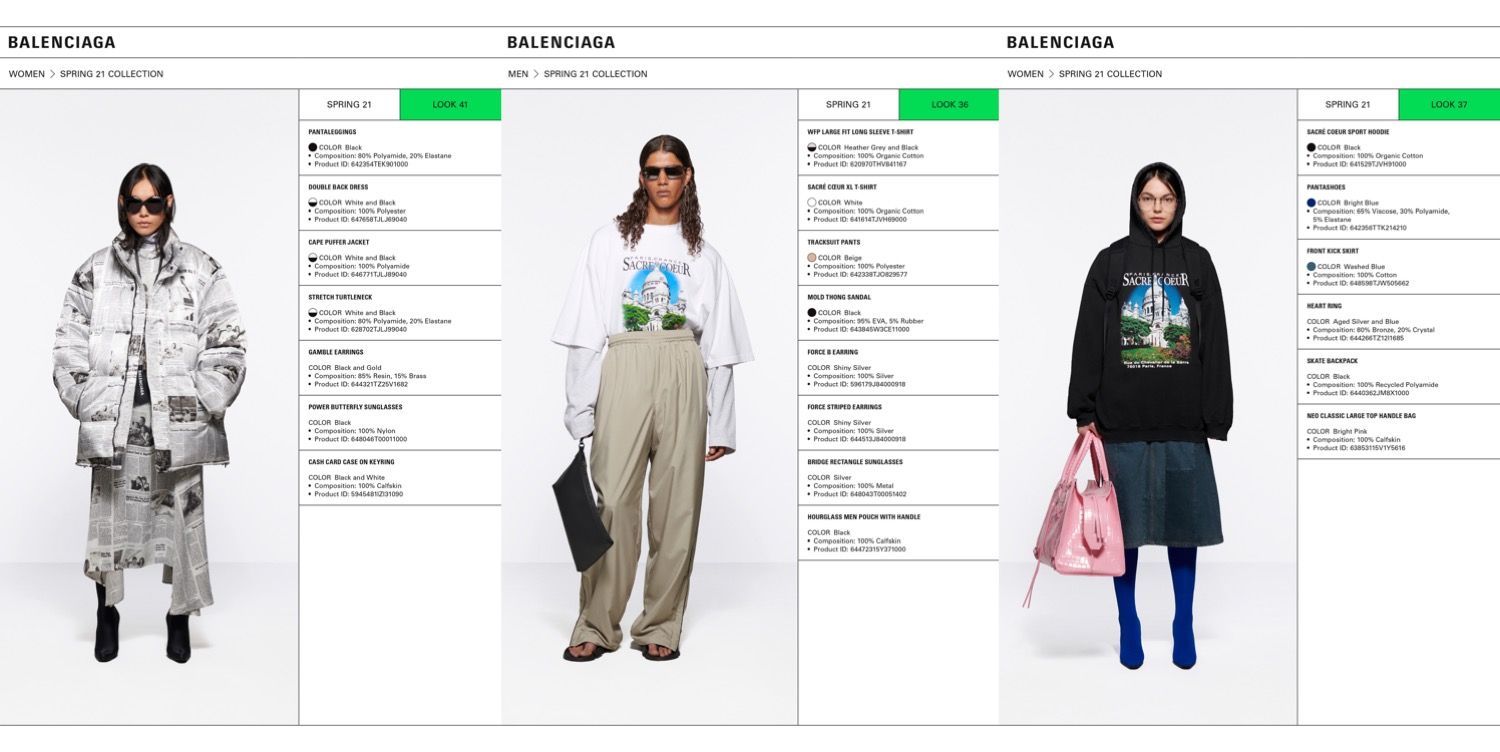
The latest Balenciaga show by Demna Gvasalia was unforgettably apocalyptic (and ironically realistic), with the first two rows of seats in the amphitheater submerged underwater and scenes of climate apocalypse on the screens above. All eyes will be on him in October – I really, really can’t wait to see how will the designer recycle all that happened in 2020 so far. In the meantime, for resort 2021, Gvasalia and his team came up with a clever, low-concept way to showcase the collection, playing up the lack of IRL appointments by including in these photos all of the line sheet information an e-commerce buyer might glean in a showroom, virtual, or otherwise – all the way down to the garments’ and accessories’ material compositions and product IDs. Gvasalia admits that Balenciaga’s pre-collections aren’t really about newness. The pre-seasons are chances to elaborate on what he calls the house’s “archetypes,” pieces like oversized car coats and parkas, the tea-dress, logo denim, all kinds of tracksuits, hoodies and t-shirts, and cult accessories (think the “Knife” panta-shoes). This time around, the styling was done completely on-screen. “It was an experiment in showing you don’t always need the new,” Gvasalia told the press. “Fashion has become a race, running after novelty, and more and more. And here we did the opposite. We looked at what we have and asked what we can do with it so it looks different for the customer.” And how did the confinement affect – or inspired – Gvasalia? “The theme,” he continues, “was dress for yourself. In this lockdown we understood what’s important for people who like fashion and like to dress up: You do it for yourself first and foremost. Working from home started with me wearing boxer shorts and pajama pants: very lazy. I thought, I don’t have to make an effort to make my look every morning, but then I started getting depressed. When I started to dress up every morning, it changed my whole mood, I started to feel good about myself. This is the task that fashion has,” Gvasalia concludes, “to bring this excitement or goodness to the person wearing it. That’s the least we can do.

Collage by Edward Kanarecki.