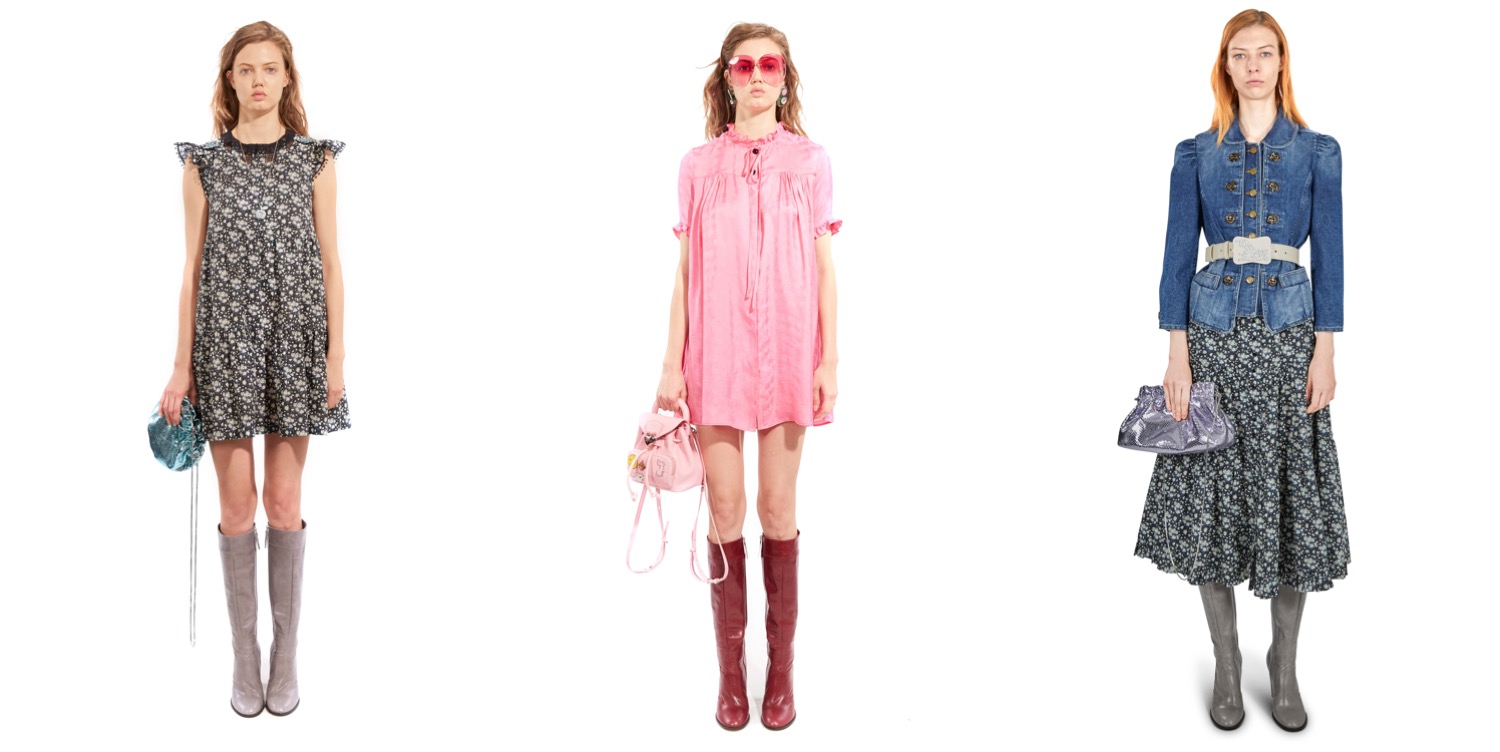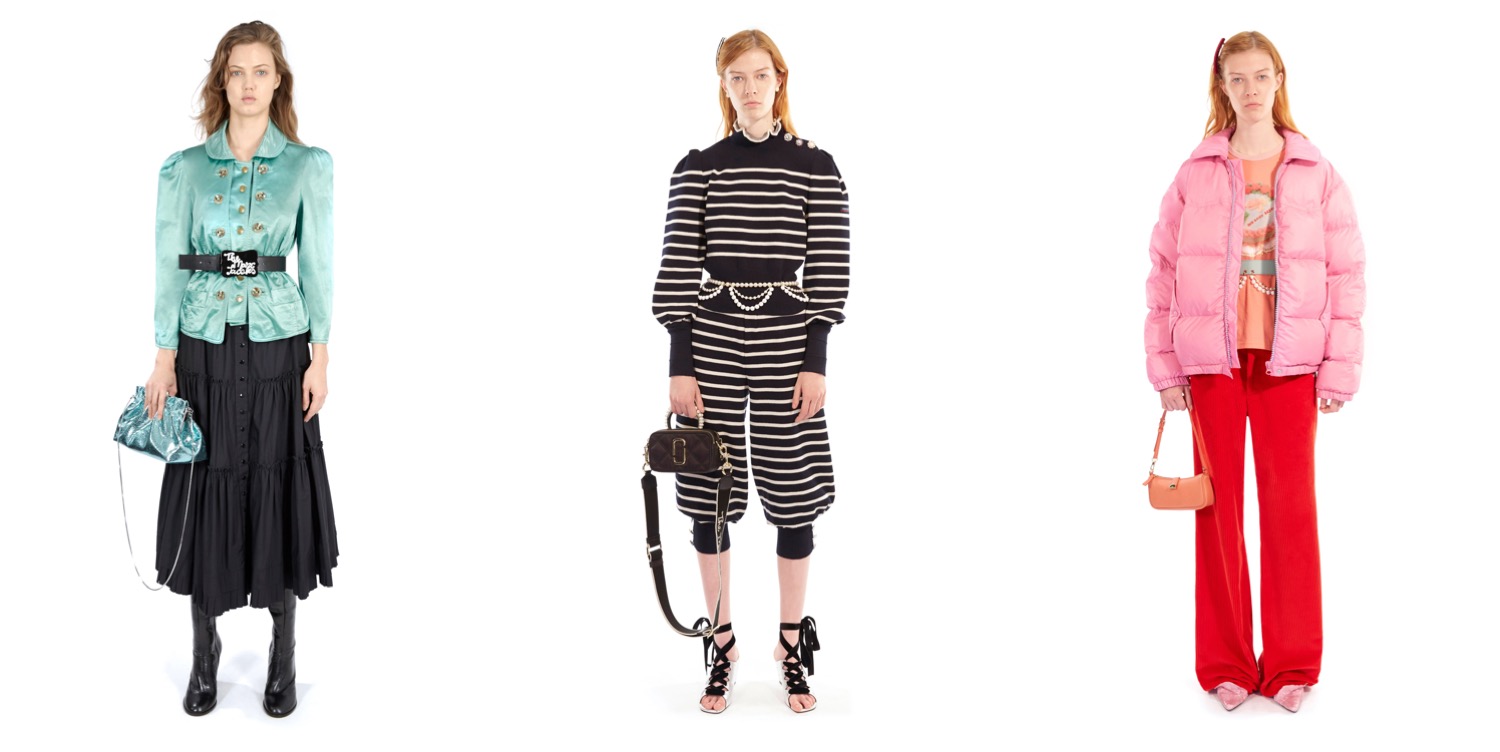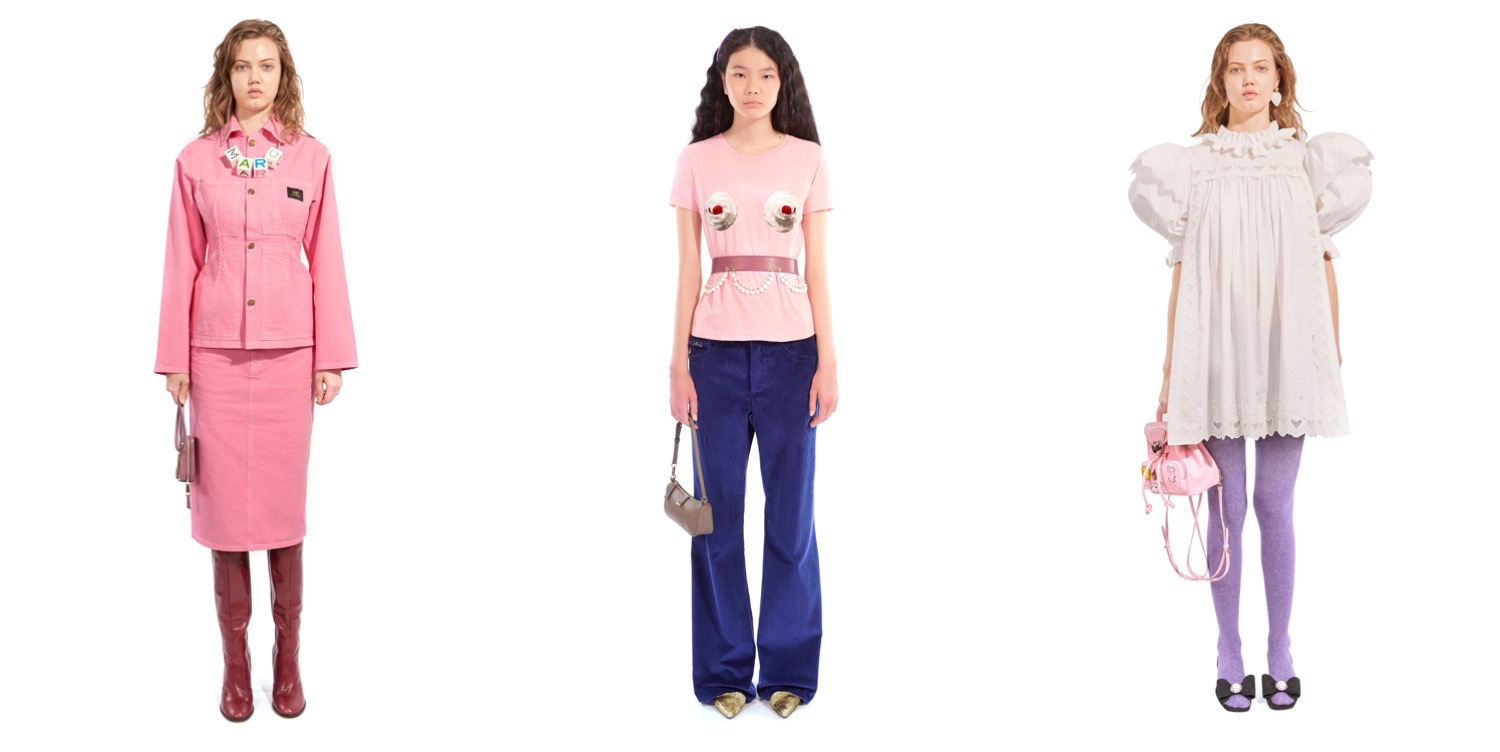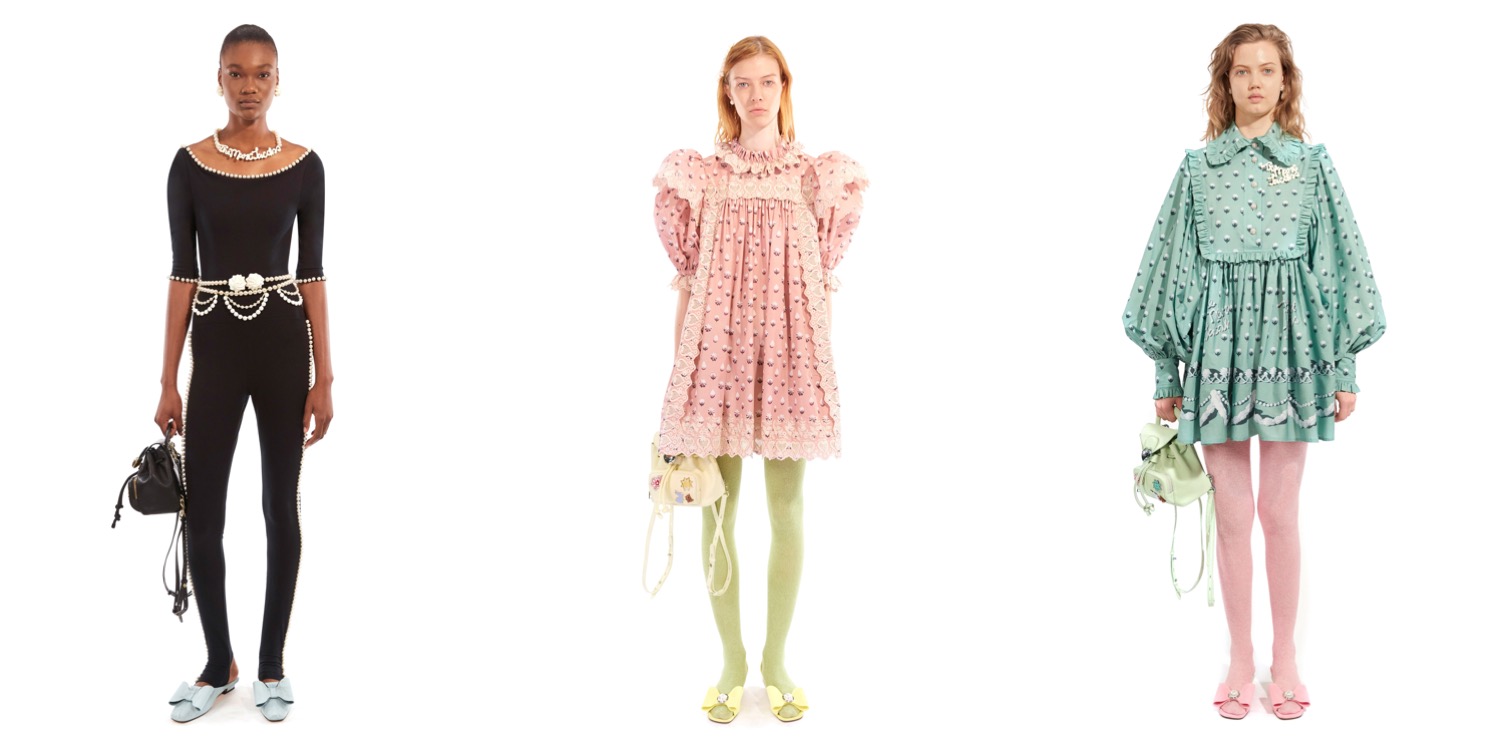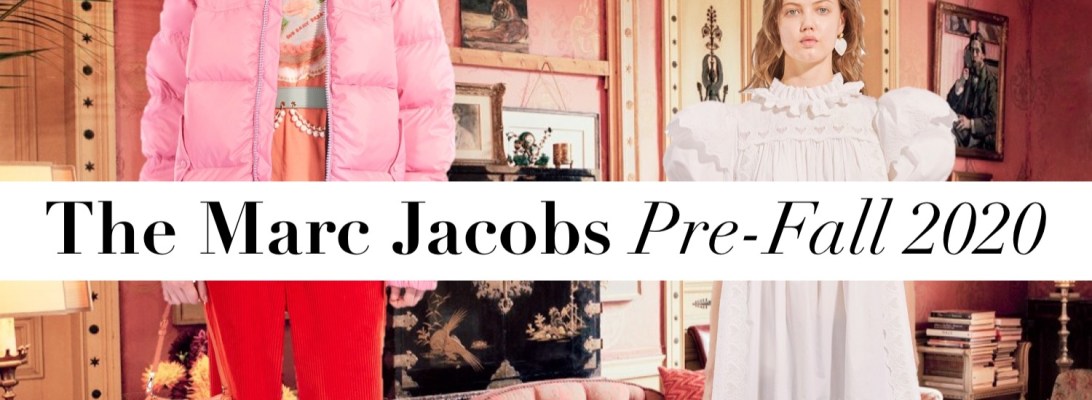
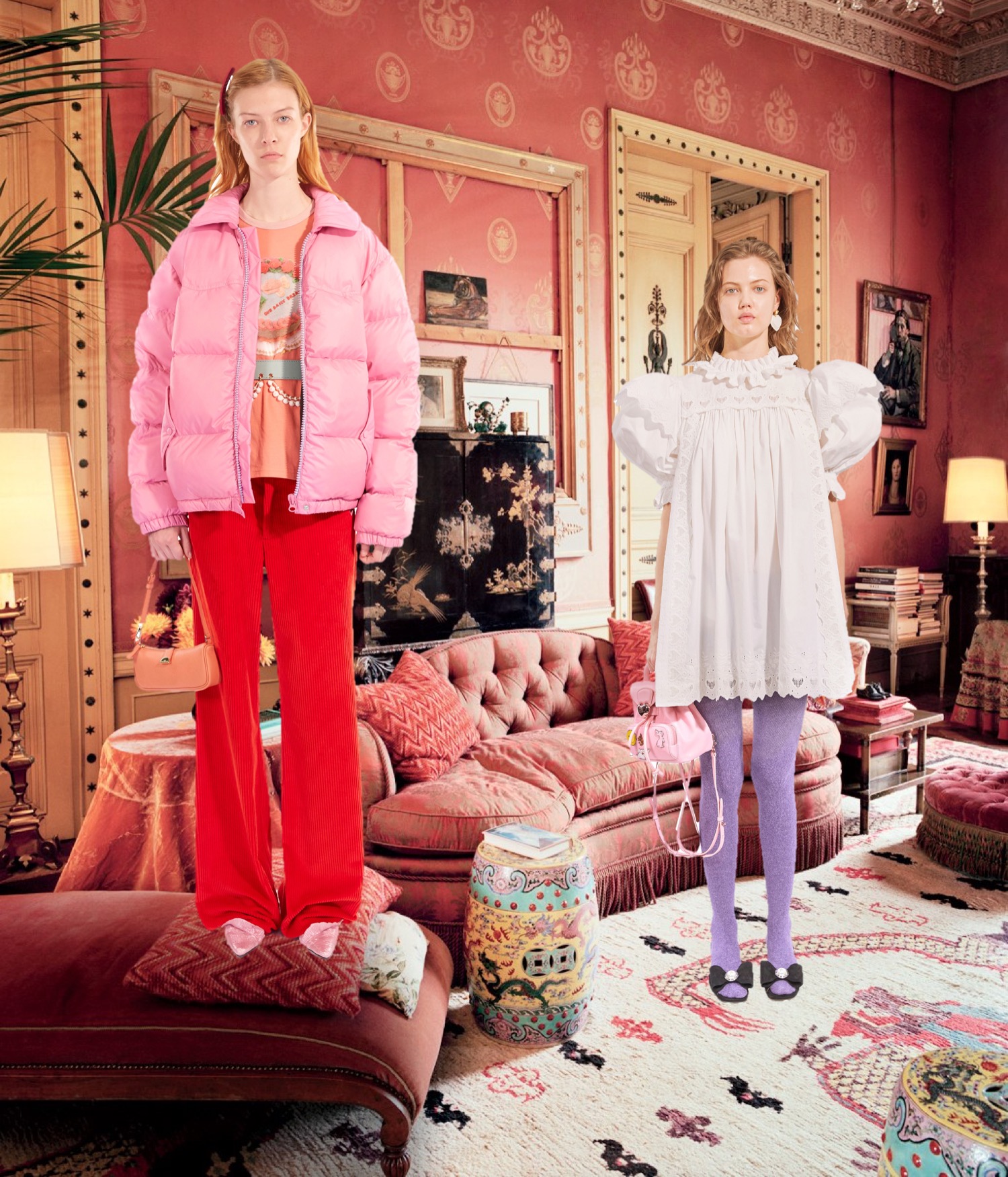
American Princess. The Marc Jacobs Pre-Fall 2020

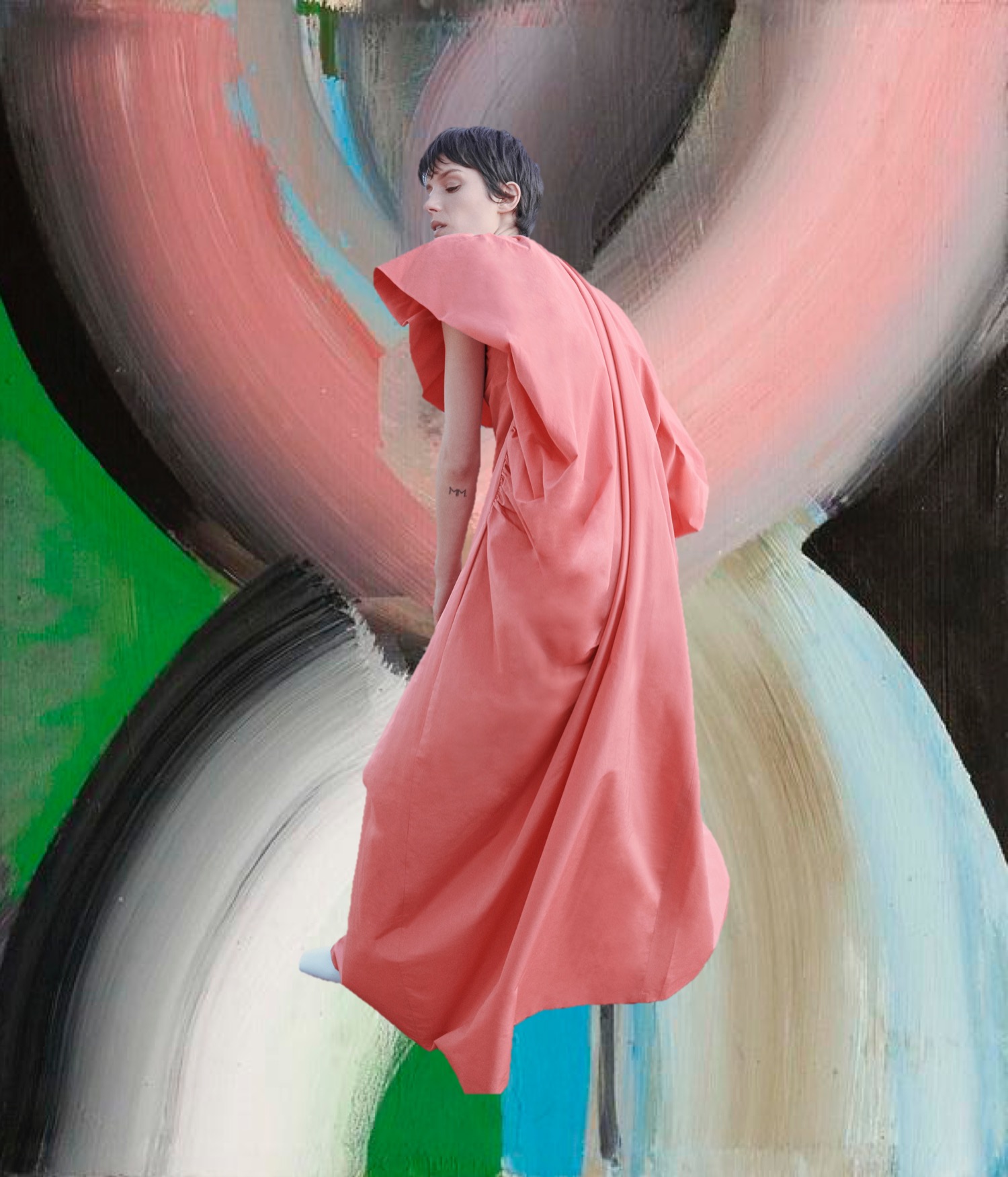
The sister line of Marc Jacobs is (finally) what Miu Miu used to be to Prada in the early 2000s – a more accessible, easy and care-free label that isn’t a license trash. The Marc Jacobs (the name is Marc’s actual Instagram handle) is the modern day Marc by Marc Jacobs, which comparing to its predecessor is presice in style and consistently rotates around some of the biggest Jacobs hits: a denim jacket with Victorian puff sleeves; grunge-y baby doll dresses; fun accessorising. The “American Princess” signs all over the belts and 90s mini-bags look like instant best-sellers, just as the colourful tights that will elevate every look or adorable variations of the prairie dress. The cupcake-boob t-shirts are hilarious in a good way. While today’s sister line fashion landscape  – think See by Chloe, Red Valentino, M Missoni… – rarely spark much interest and in general feel sleepy, The Marc Jacobs isn’t trying to be the main line at a lower price point. Instead, it sells great clothes that complete Marc’s brand.
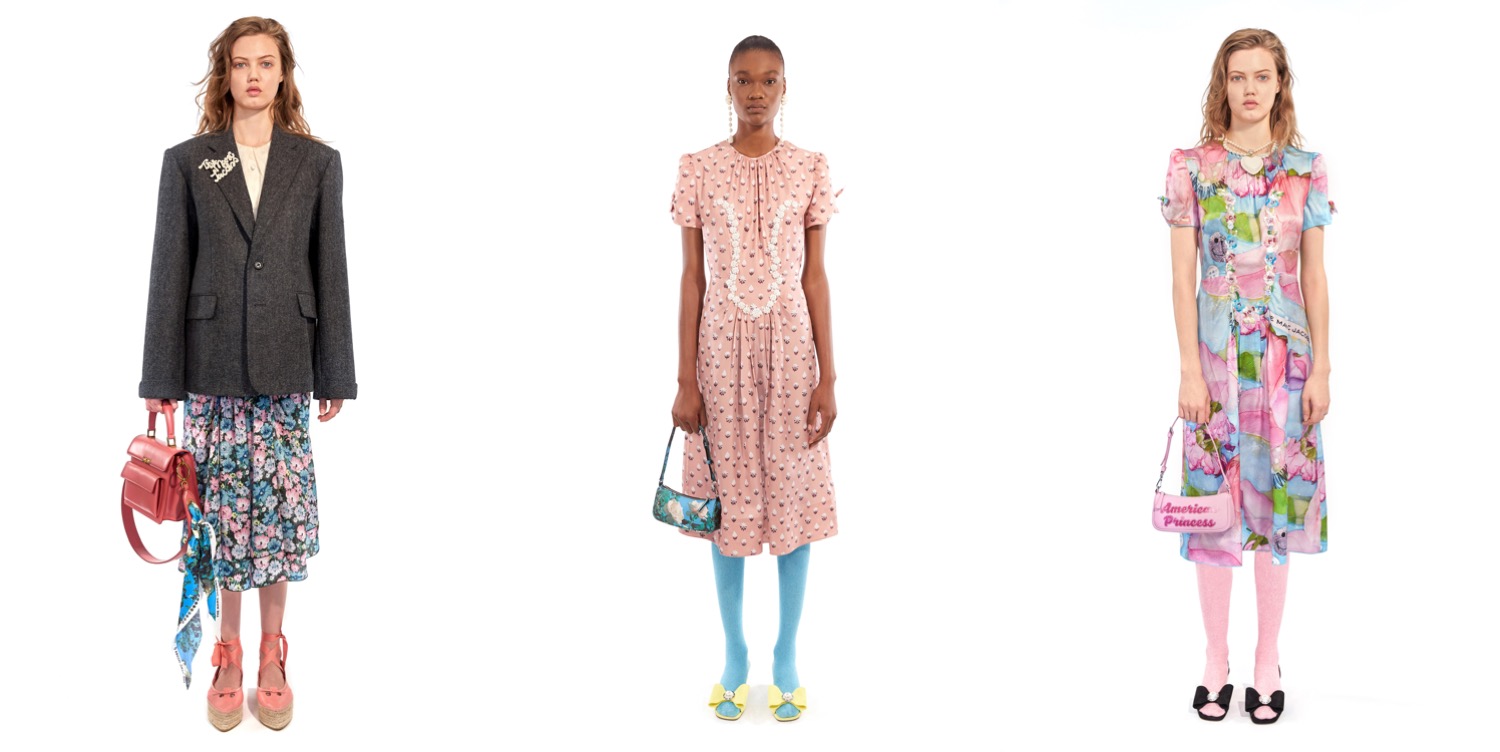
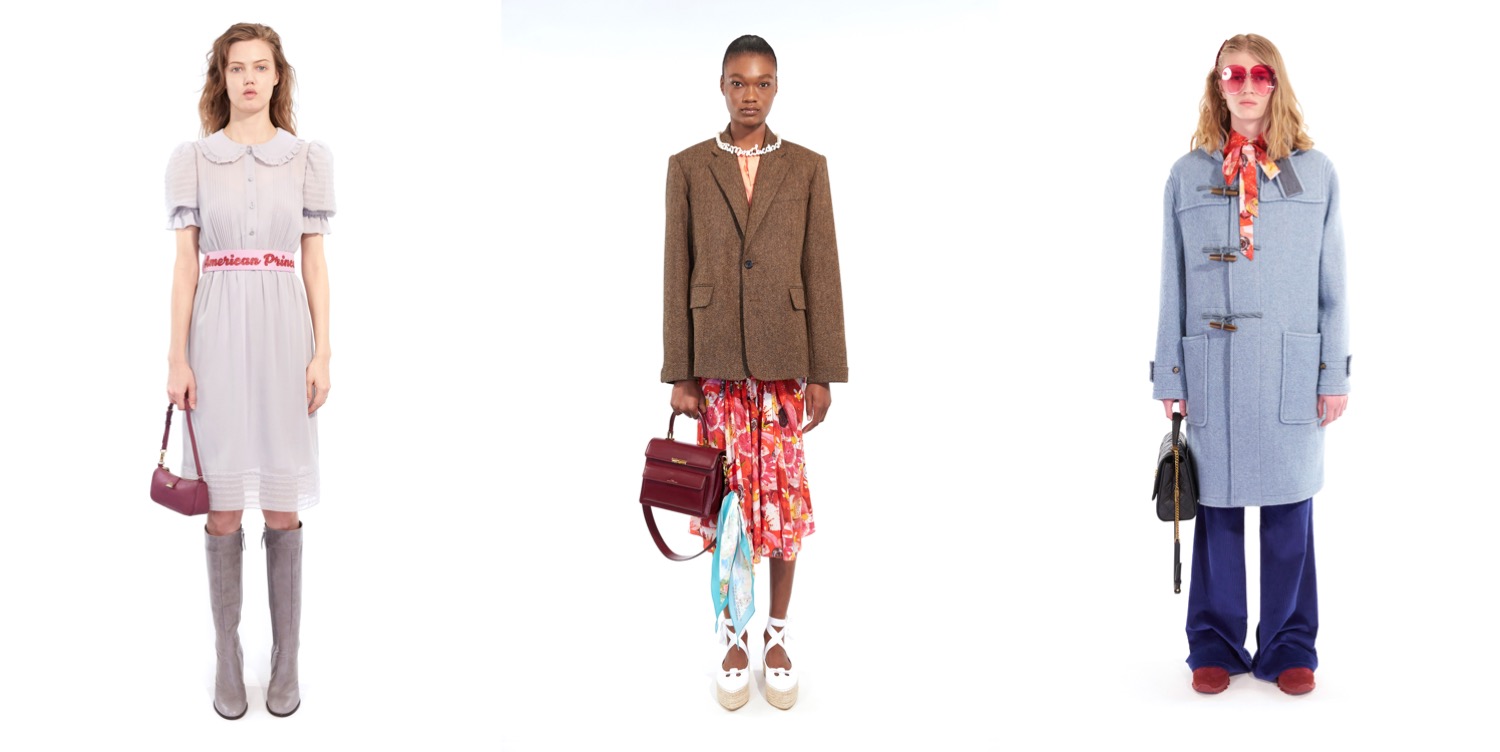
Collage by Edward Kanarecki.
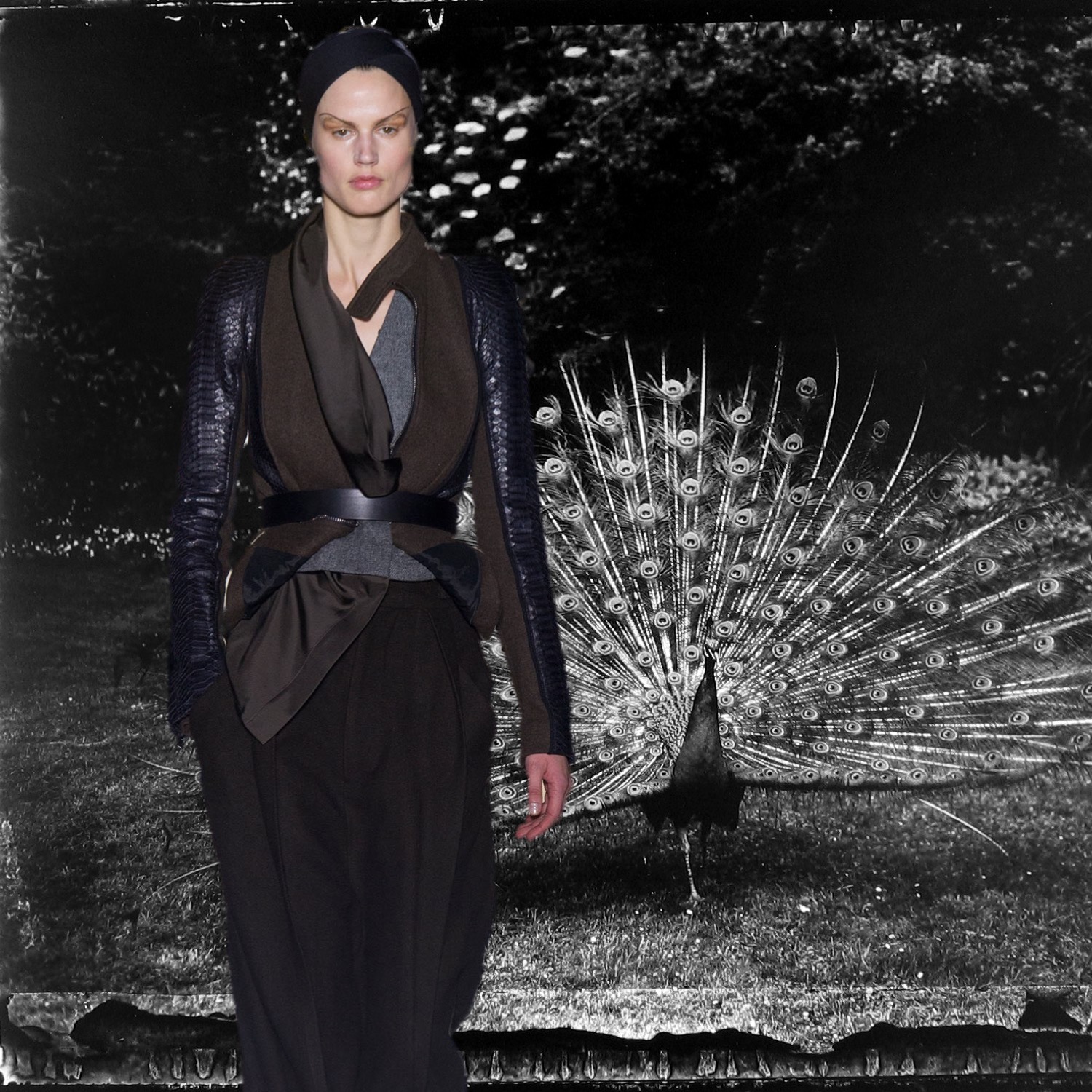
The 2010s: Haider Ackermann AW14

Believe it or not – I can’t! – but we’re heading towards a new millenium. So, how do you choose the most important collections, designers and labels of the decade? The ones that made an actual impact in the 2010s? Well, it’s not an easy task. It all began in September 2009 with New York’s spring-summer 2010 shows and ended when the autumn-winter 2019 haute couture shows wrapped in Paris. Few thousands of shows, by the way. There will be 19 posts (that’s really the only possible minimum!) reminding about the best – and if not the best, then strongly influencing – moments in fashion.

Haider Ackermann‘s AW14 perfection.

Of course, Haider Ackermann has many things to look back at this decade: his Berluti stint, all the custom looks he created for Tilda Swinton and Timothee Chalamet for their red carpet appearances, every single menswear and womenswear collection he presented… but there’s one line-up I will never forget. The autumn-winter 2014 collection. That time, Ackermann utterly seduced with his sensual silhouette, garbed in contrasting cuts and volumes. Some of the garments were built for street (biker jackets, mannish jackets, comfy cardigans, skinny cropped jeans), others were decidedly more refined (floor-sweeping duster coats, oversized trousers, draped jersey dresses, and plunging tops, all sent out in autumn-ish, masculine fabrics – tweeds, plaids, houndstooth, flannel, fur and felt galore). A poised, poetically dark allure.

Collage by Edward Kanarecki.

31 Rue Cambon. Chanel Pre-Fall 2020

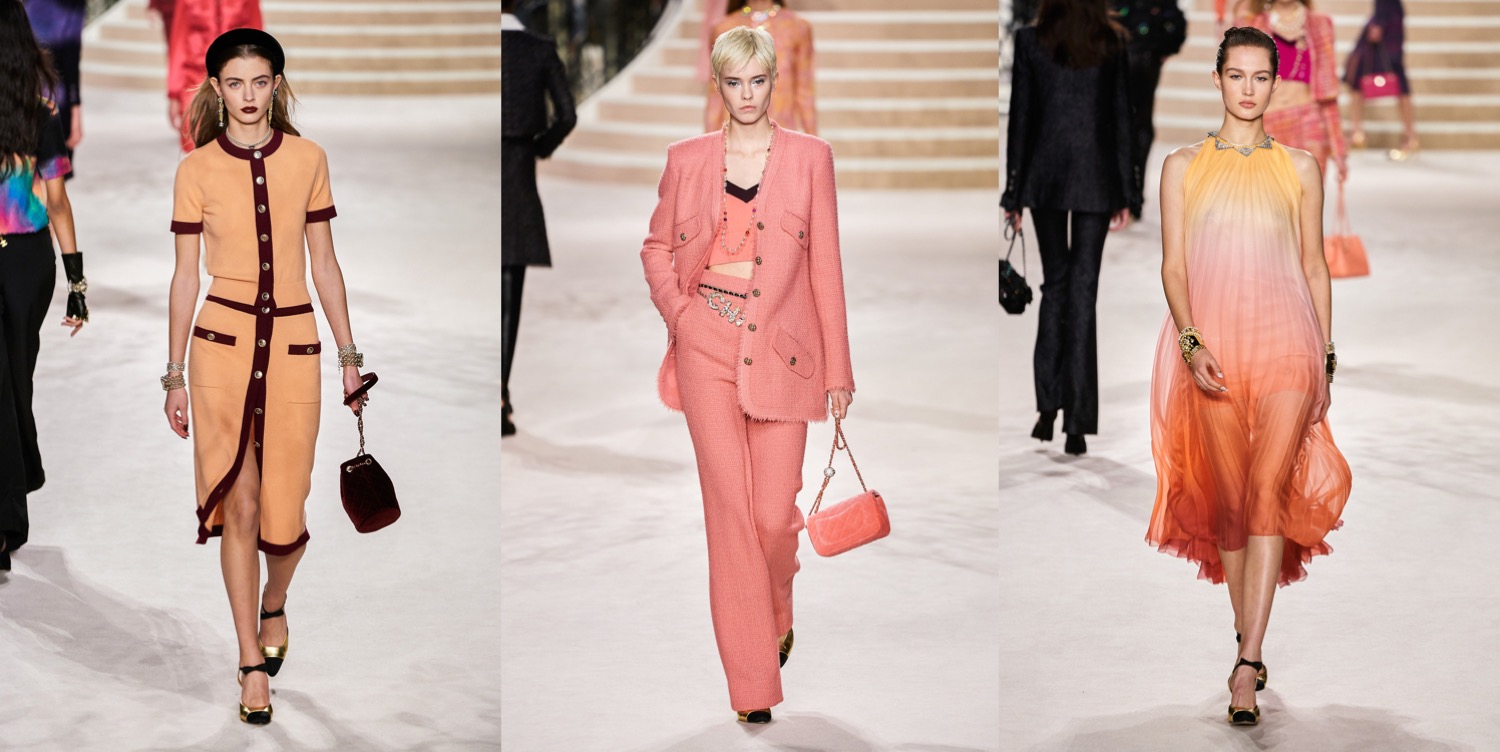
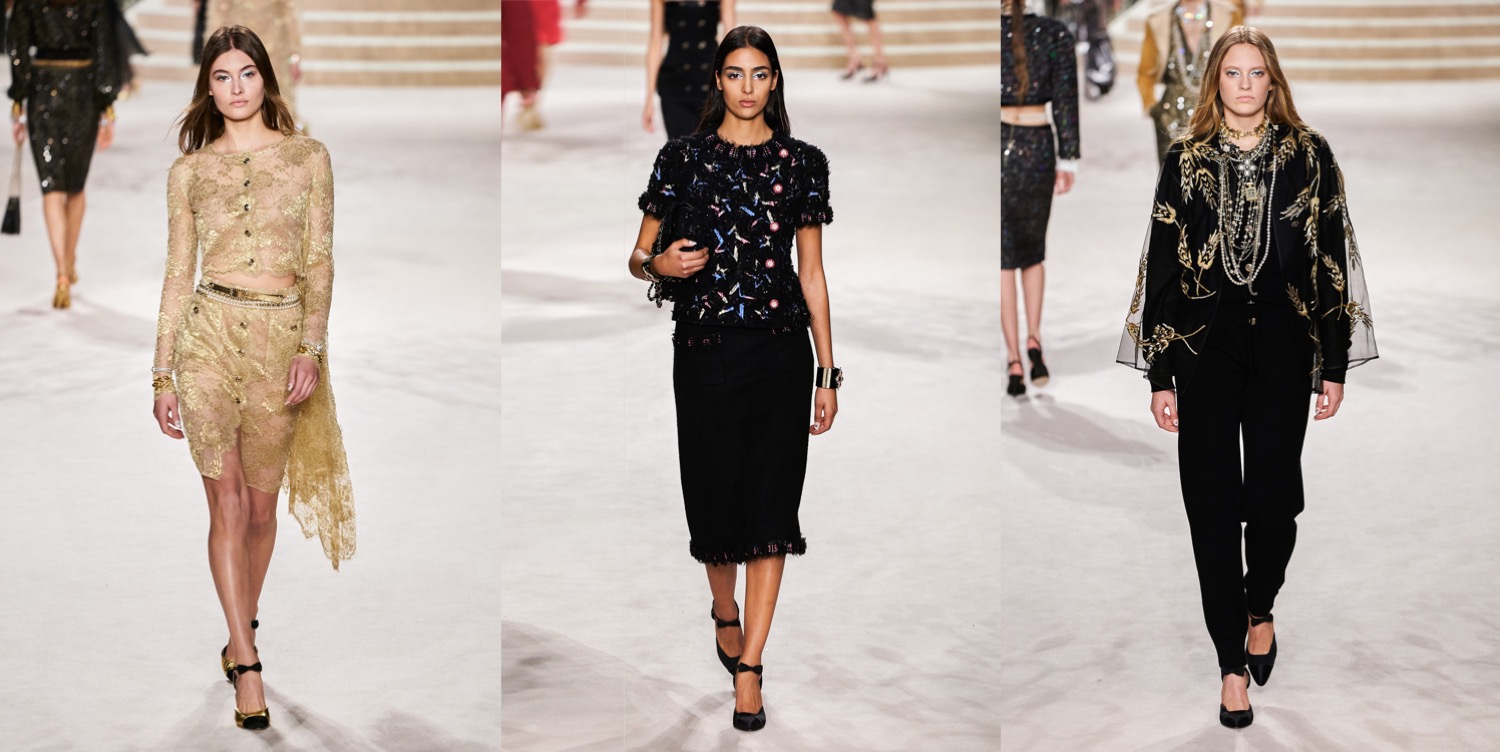
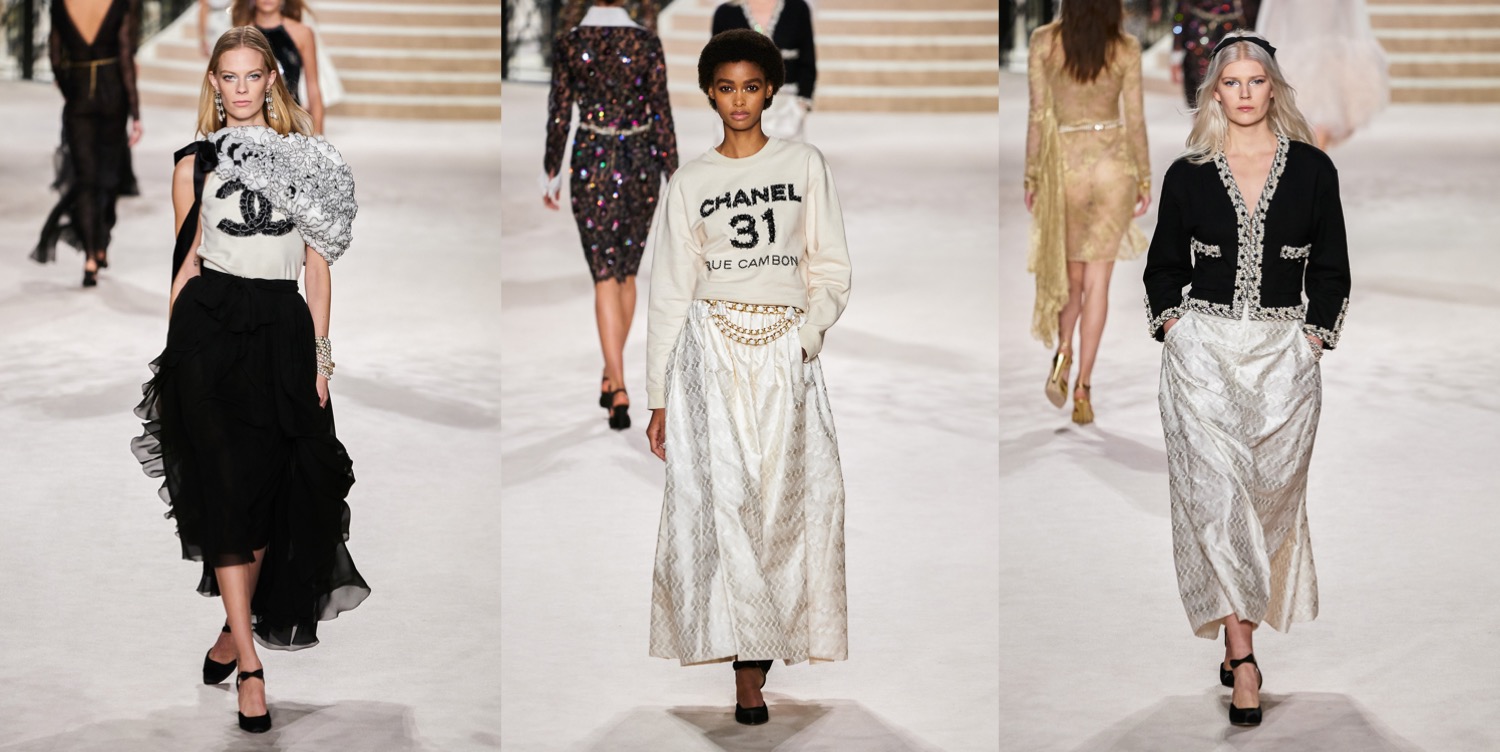
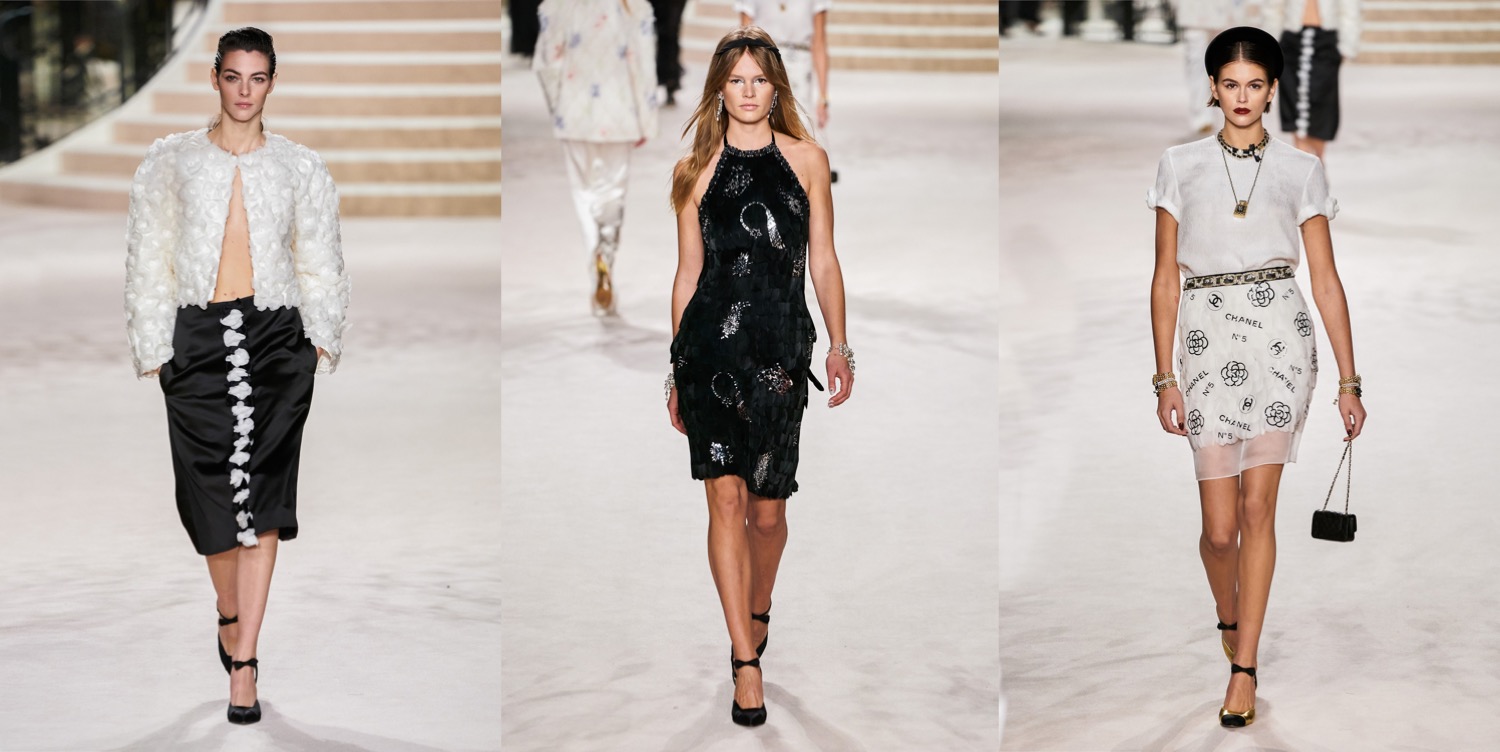
Virginie Viard takes Chanel to its (at times clichée) codes. Viard titled her Métiers d’Art show “Paris 31 rue Cambon” for the street where Coco Chanel first set up shop as a milliner in 1910 (“Chanel Modes” at Number 21), and where she later expanded her fashion empire to embrace six additional 18th-century buildings, with her legendary haute couture salons at Number 31. The guests sat inside of Coco’s legendary apartment, XXL-scaled and set up in Grand Palais (there was even the famous mirrored staircase). “I adore the apartment,” Viard said backstage, and she evidently found inspiration in this setting where Chanel retreated from the running of her house and entertained friends. The designer described the collection as “the things we like, a mix of Karl and Chanel—the codes.” Of course, comparing to Lagerfeld’s globe-trotting Méters d’Art fairy-tales – think Moscow, Edinburgh, Texas, the Met in New York – seeing Viard show in Paris felt quite unamusing. Nevertheless, the collection was properly Chanel – elegant, refined, refreshingly minimal, yet far from modesty. The pre-fall collections of Chanel showcase the incredible work of the luxury suppliers of the fashion industry – embroiderers, feather and artificial flower makers, milliners, custom shoemakers – many of which Chanel has acquired to keep them operational and the skills alive. Viard, who directed the Chanel studio under Lagerfeld for decades, has a fine appreciation of what these ateliers are capable of. A bolero jacket with broad feathers overprinted with a shadowy pattern of Chanel’s iconic camellias; a feather blazer worked into a subtle trompe l’oeil plaid; eveningwear kept in the most gorgeous, sorbet ombré colour palette… delightful. Viard proves once again that her Chanel takes a slower approach, one that cherishes the timeless classics and the artisan work. Less Instagram moments, more beauty in the details.

Collage by Edward Kanarecki.

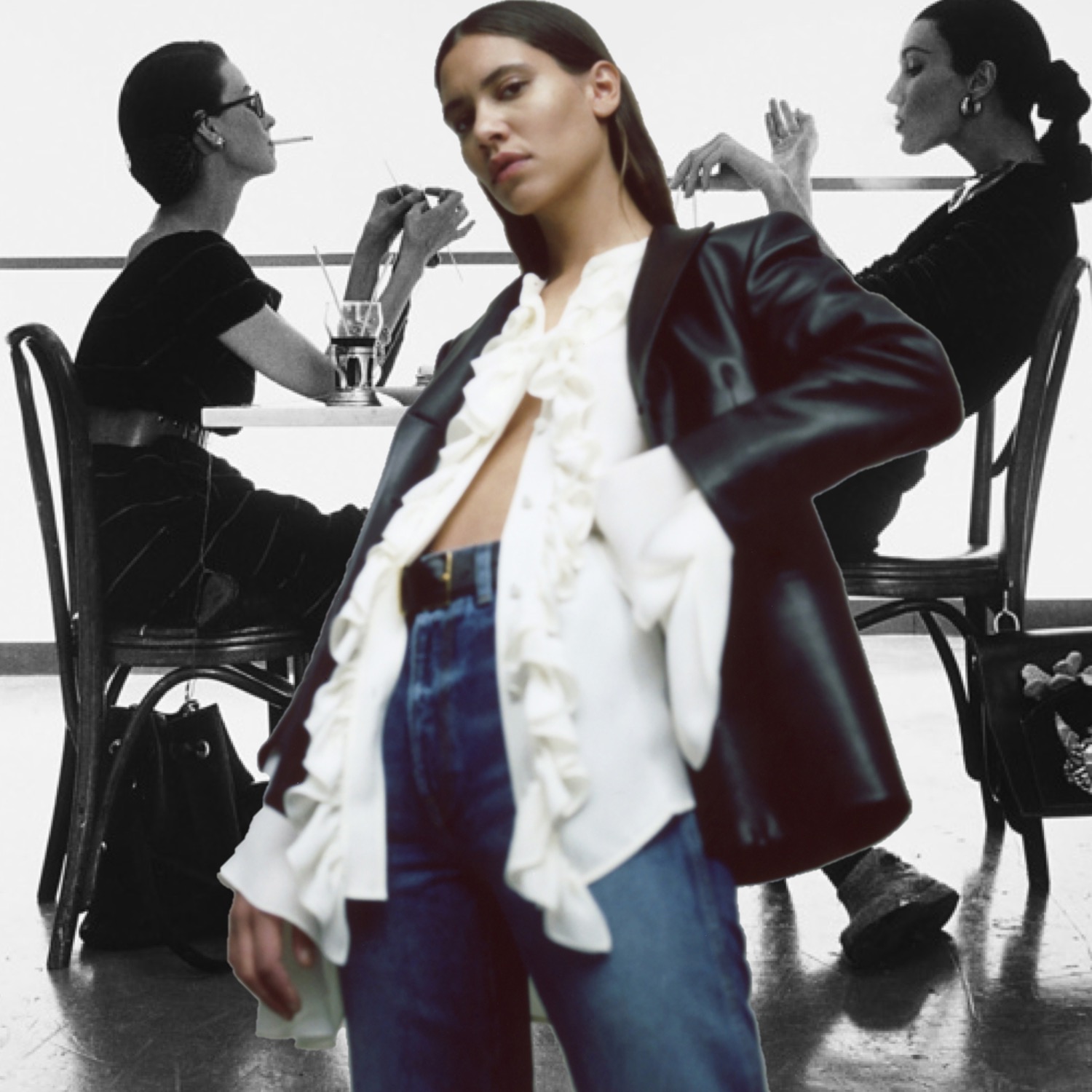
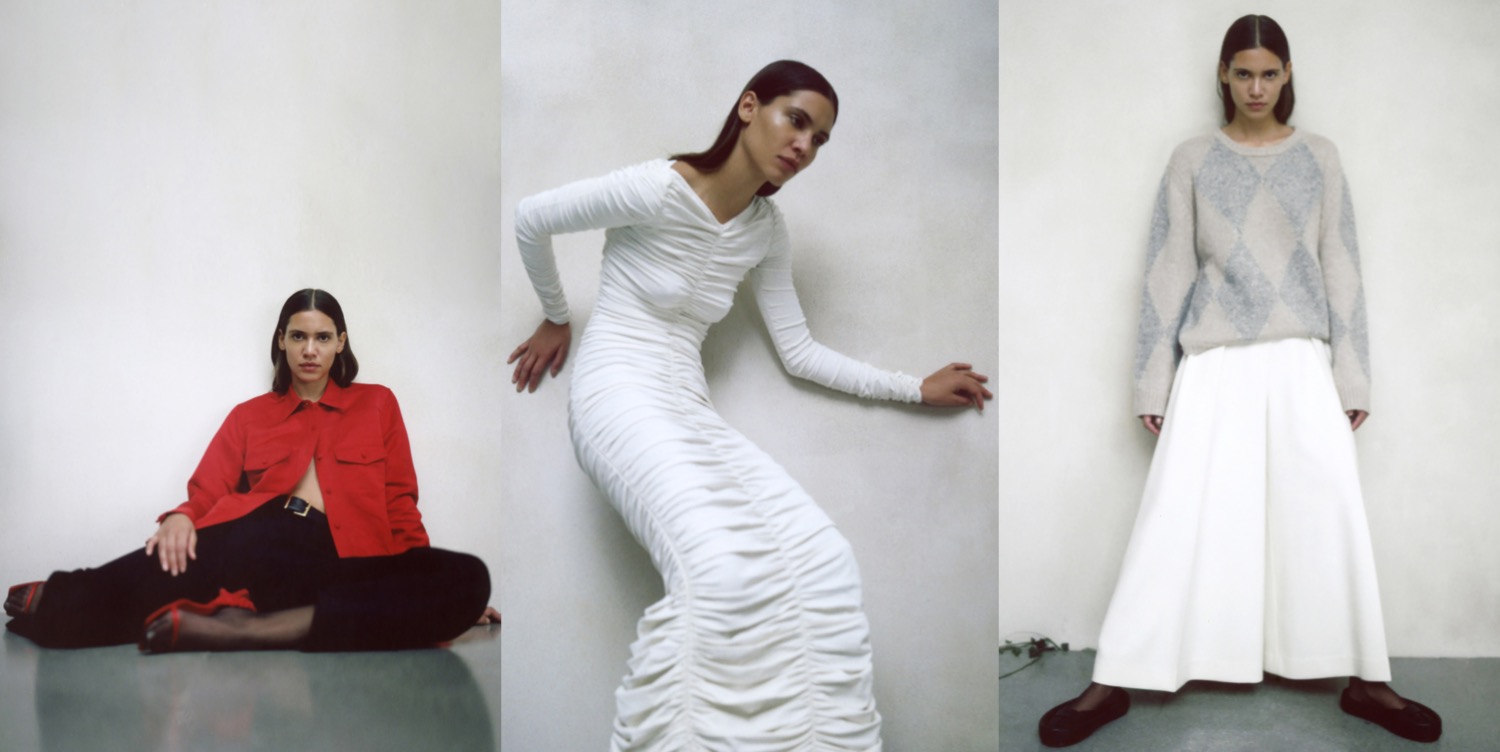
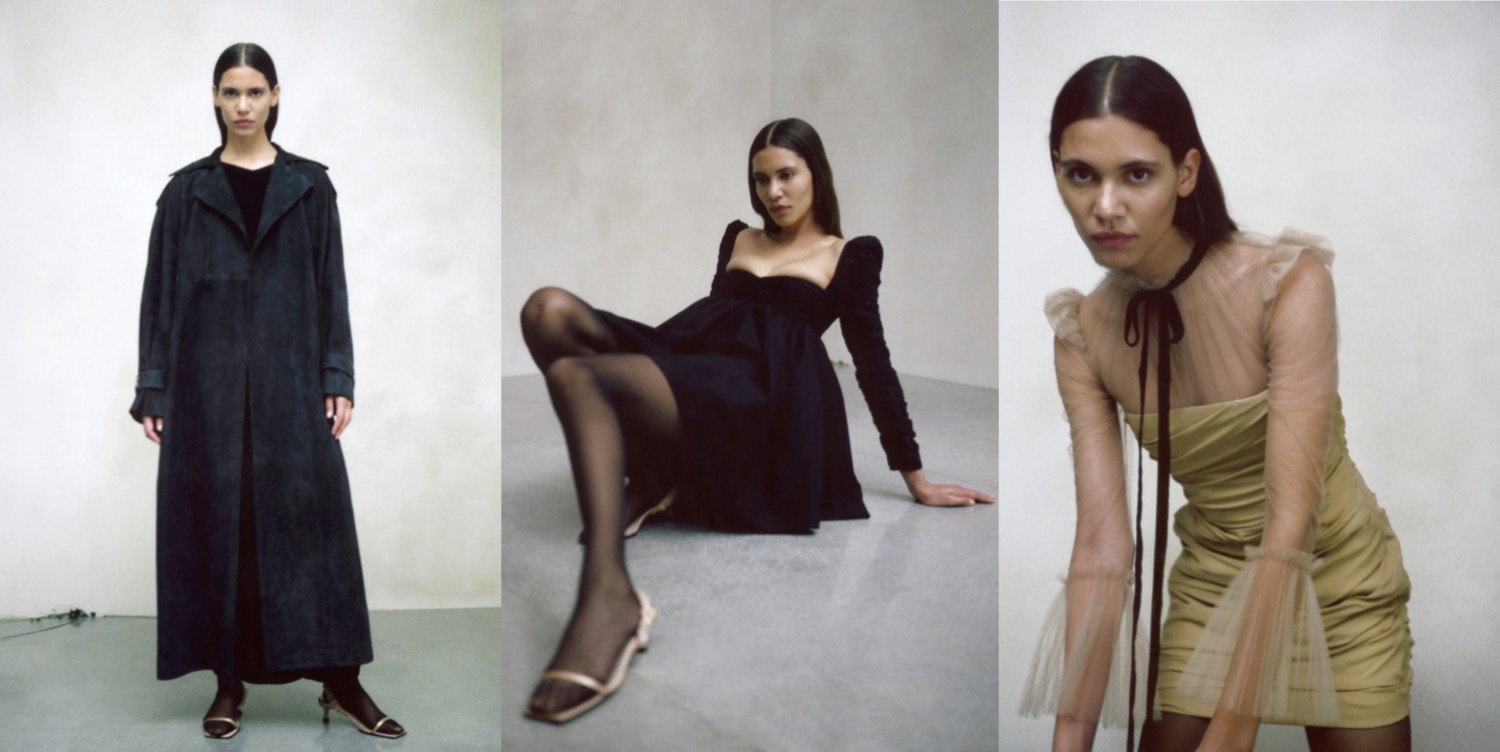
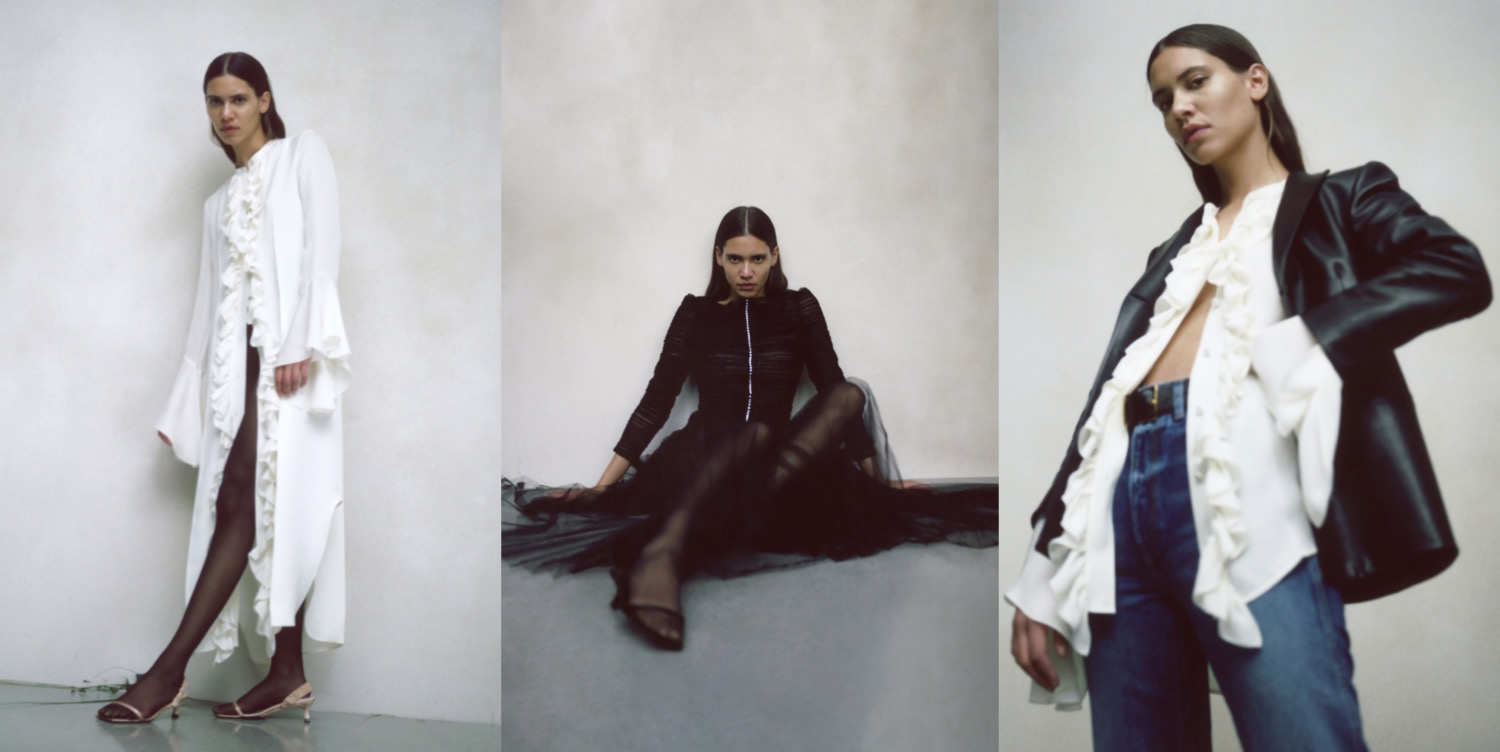
The New Sexy. Khaite Pre-Fall 2020

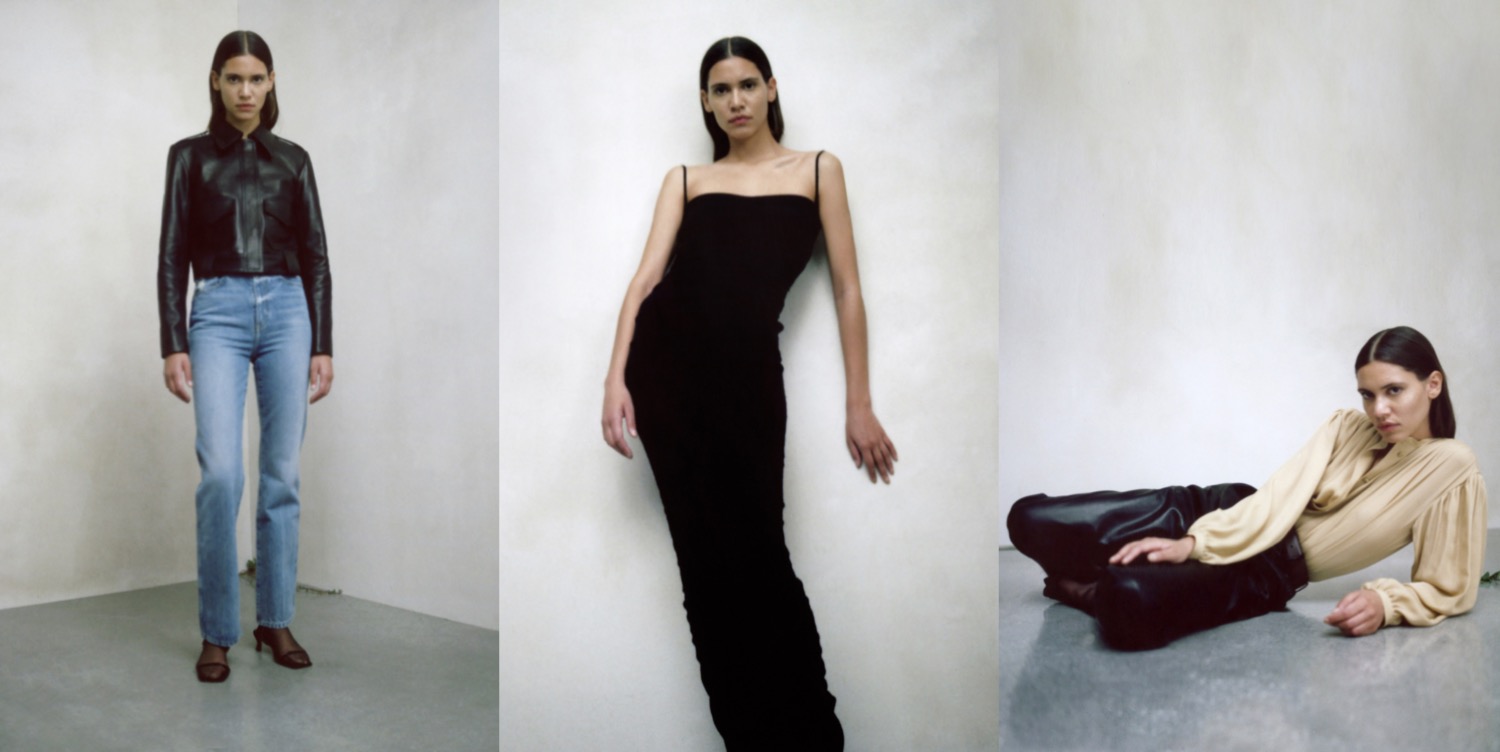
For pre-fall 2020, Catherine Holstein tweaked some familiar Khaite hits – Victorian blouses, romantic tulle dresses,  Western skirts, timeless denim – and sprinkled in a touch of 1960s rock & roll glamour. That said, the designer felt her greatest departure was in the ultra-short minidresses and body-hugging ruched gowns. “I’ve always avoided using the word ‘sexy’ to describe the clothes,” she said. “I would call them ‘sensual,’ which sounded more modern, or maybe more feminist. But I really wanted to embrace the idea of sexy and what that means for our woman right now.” Beyond the sheer blouses and minis, even the suits had a curvier, more womanly fit, with narrow, high-rise trousers and snug blazers. The sexiest look of all might have been the ivory pantsuit, shown with a black leather belt and nothing else.

Collage by Edward Kanarecki.

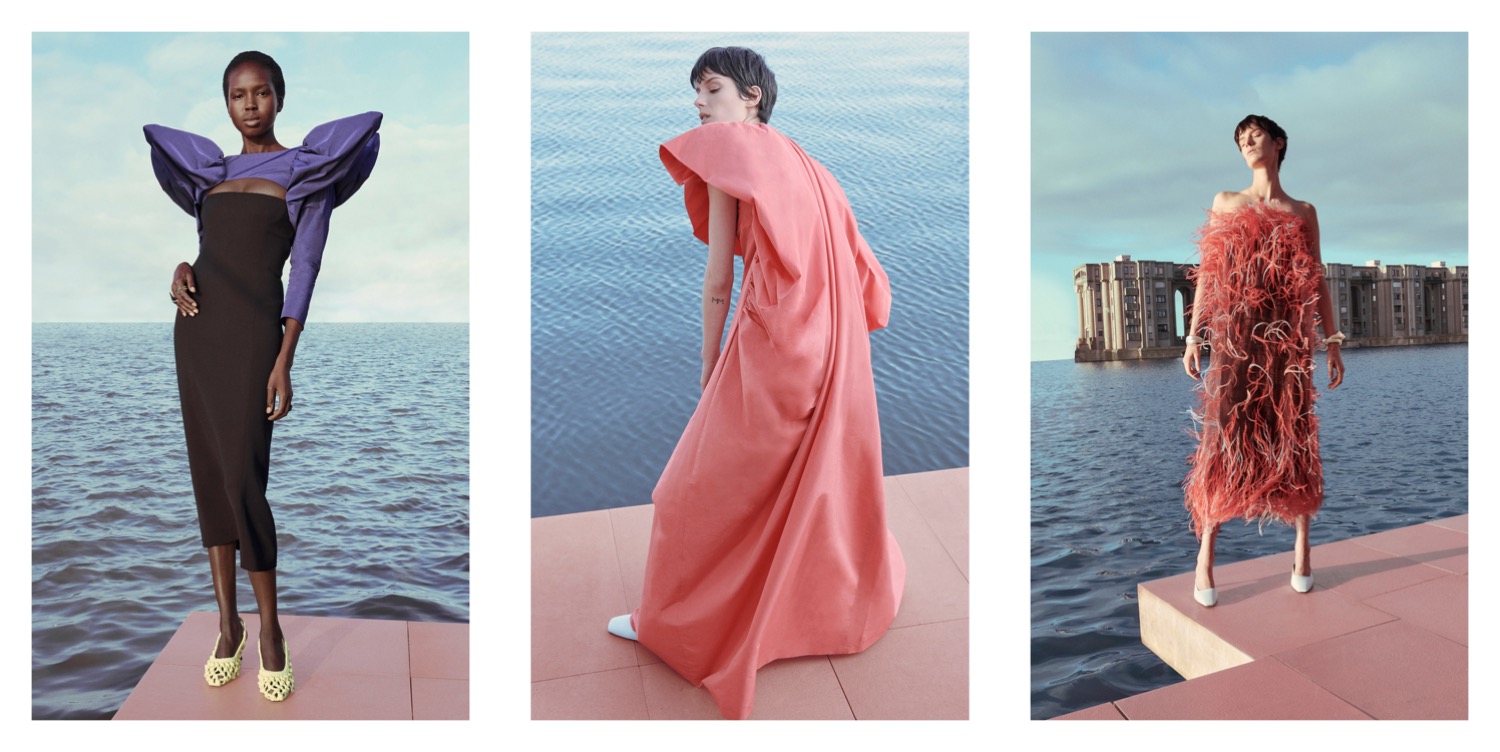
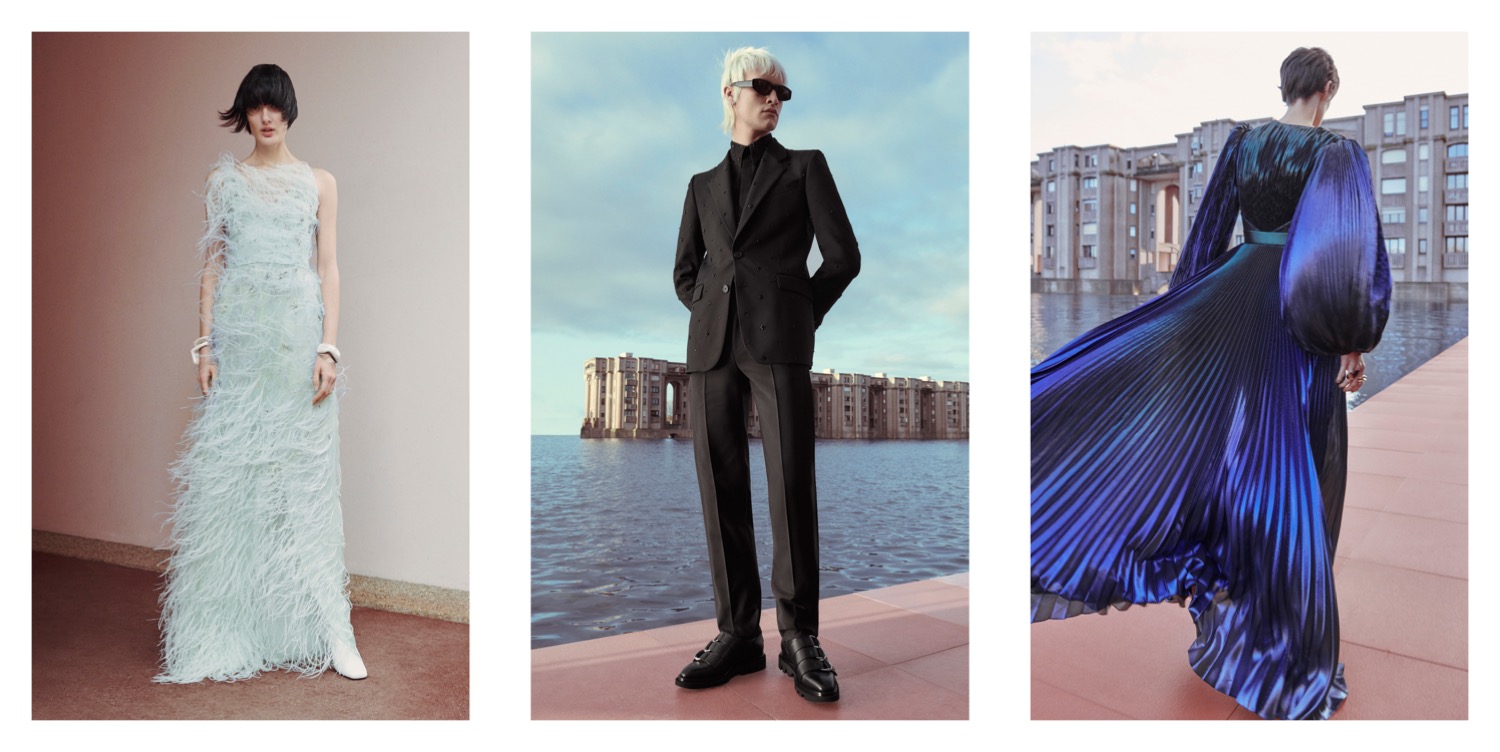
Wise Layering. Givenchy Pre-Fall 2020

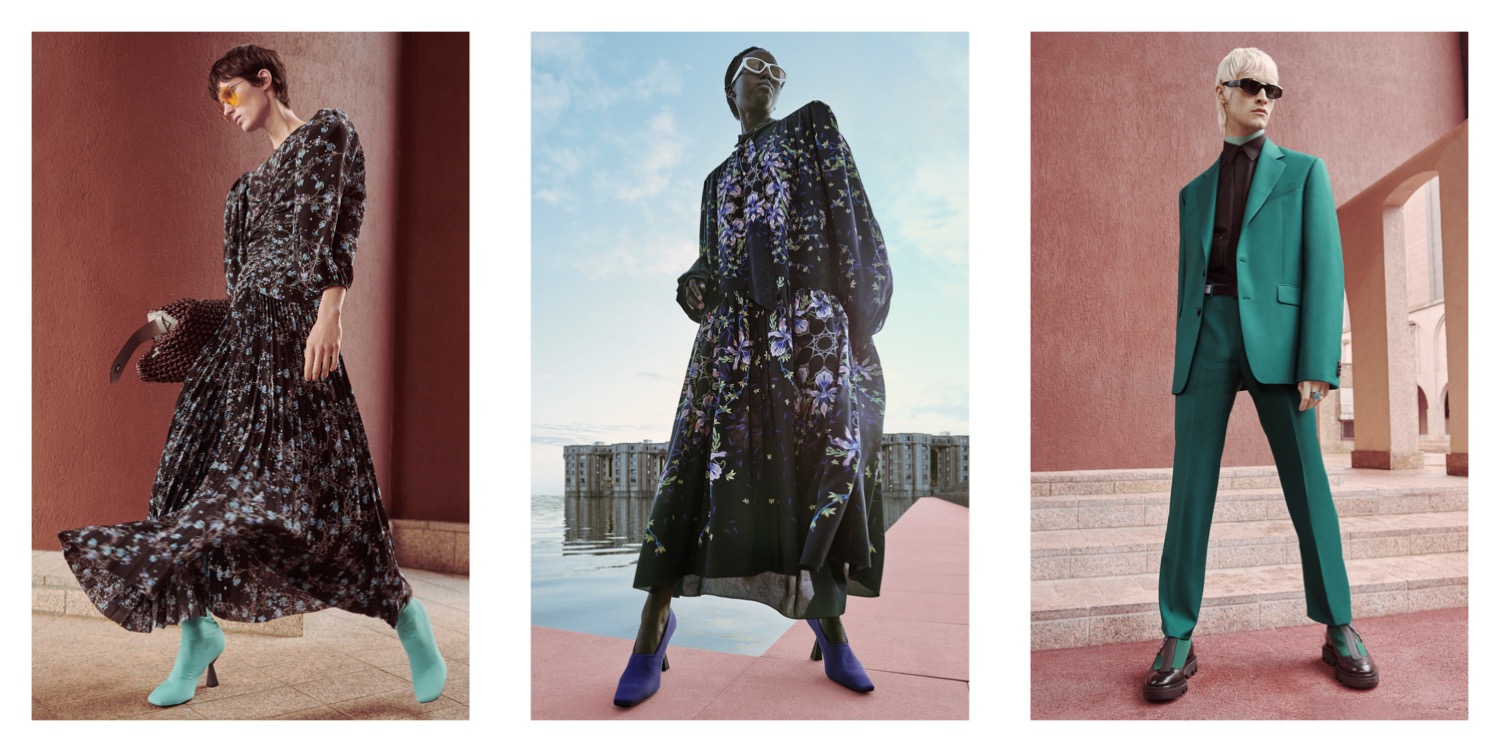
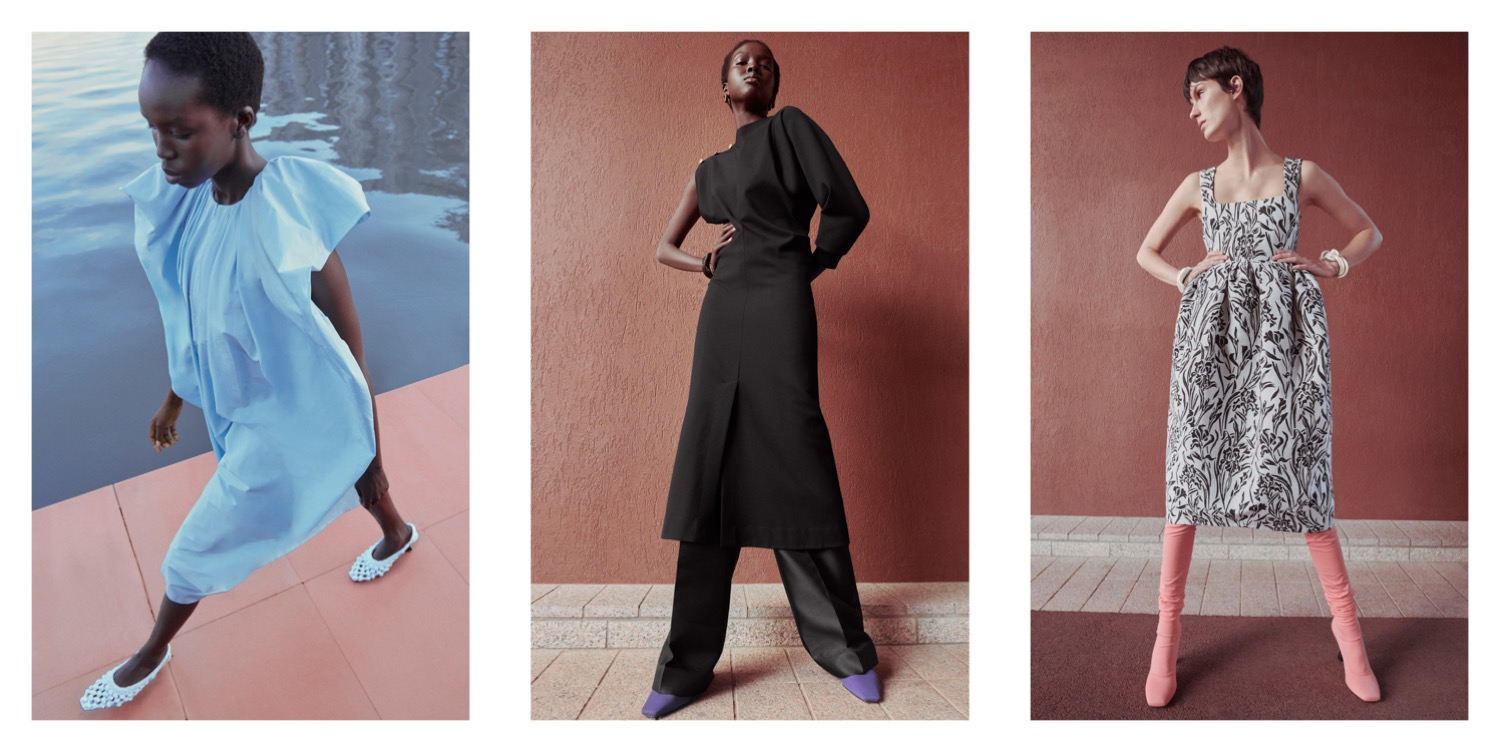
Utility, tailoring, glamour, chic – Clare Waight Keller‘s pre-fall 2020 collection for Givenchy has it all. One of Waight Keller’s strengths has always been her woman’s understanding of “lived” fashion – the wisdom accumulated by a designer who has to make sense of her own wardrobe, 24/7. Endless round of packing, traveling, and quick changes of clothes is familiar to every woman who has a professional life (and not only). In this collection, she’s taken an intelligent approach to tackling the silliness of one-wear evening dressing by suggesting, for example, how a very French, Givenchy-esque black dress with gold buttons on one shoulder can be worn over a pair of tuxedo pants. Or again, how those same trousers can go under a short, strapless tailored dress to create a chic tunic look. Other than the “smartness” behind the line-up, the designer took some first steps towards an enviroinment-focused approach for Givenchy. The collection uses permeable fabrics, some of which are organic and recycled. Sustainability is “very much top of mind” for her. One of the ways she’s tackling the issue is by aiming to build more versatility and longevity into her collections. “We need to wear our clothes for longer. It’s the throwaway aspect [of fashion] which is destructive. So the thought process, particularly in women’s, is to have a quieter sense of permanence. And I like the idea that so many of the pieces can be relayered.” In case of this one particular collection, the mission is well completed.

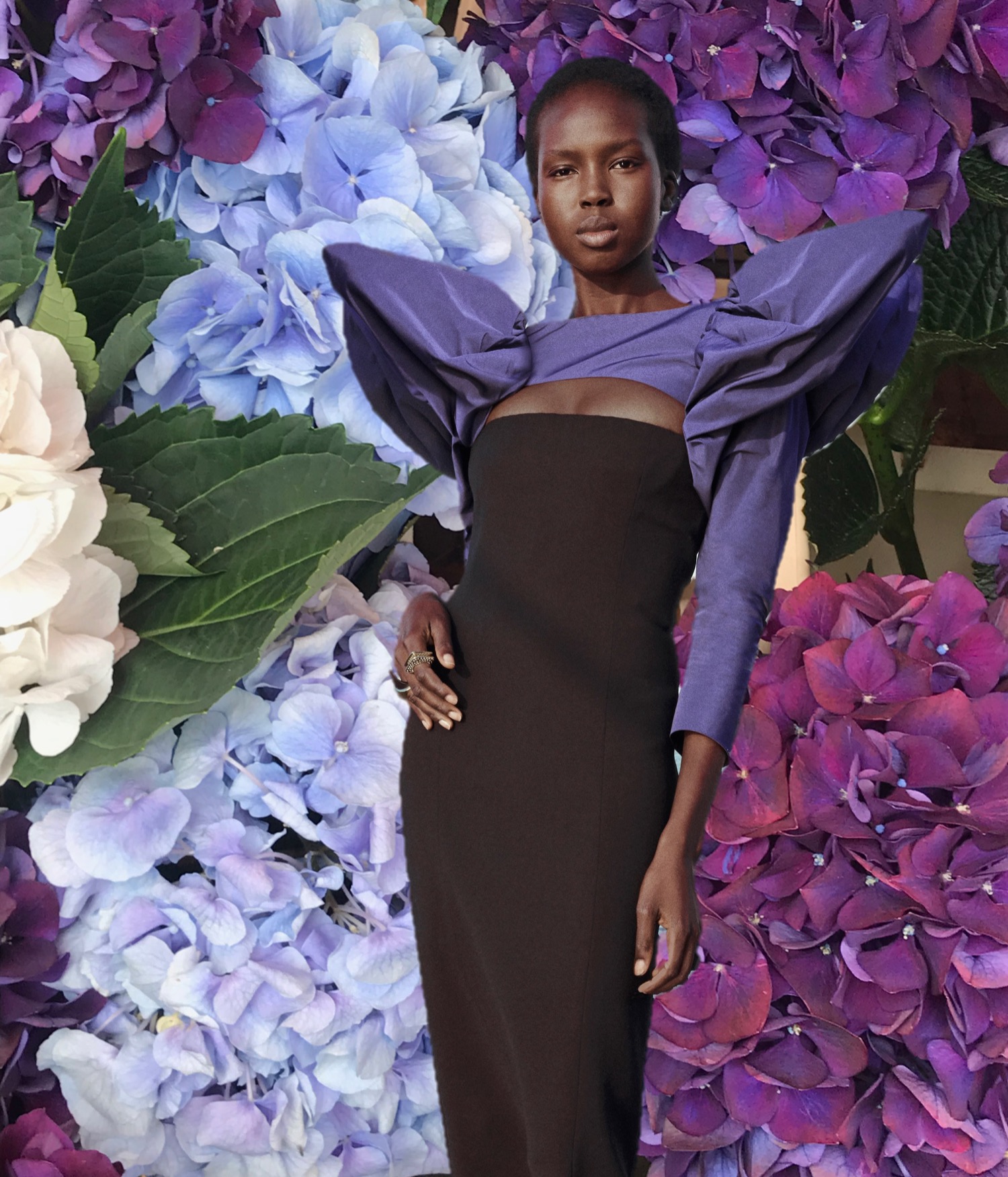
Collage by Edward Kanarecki.