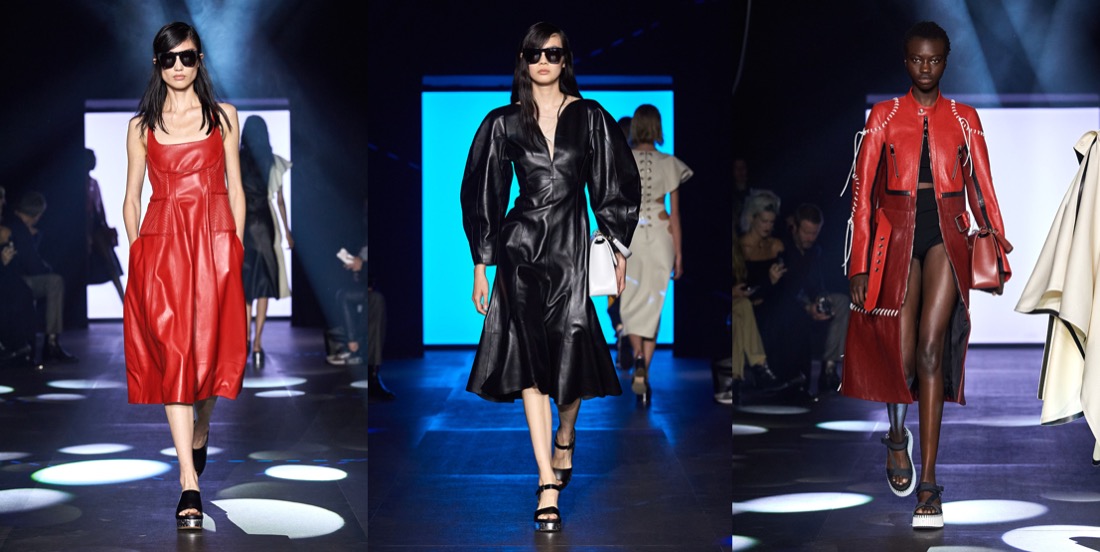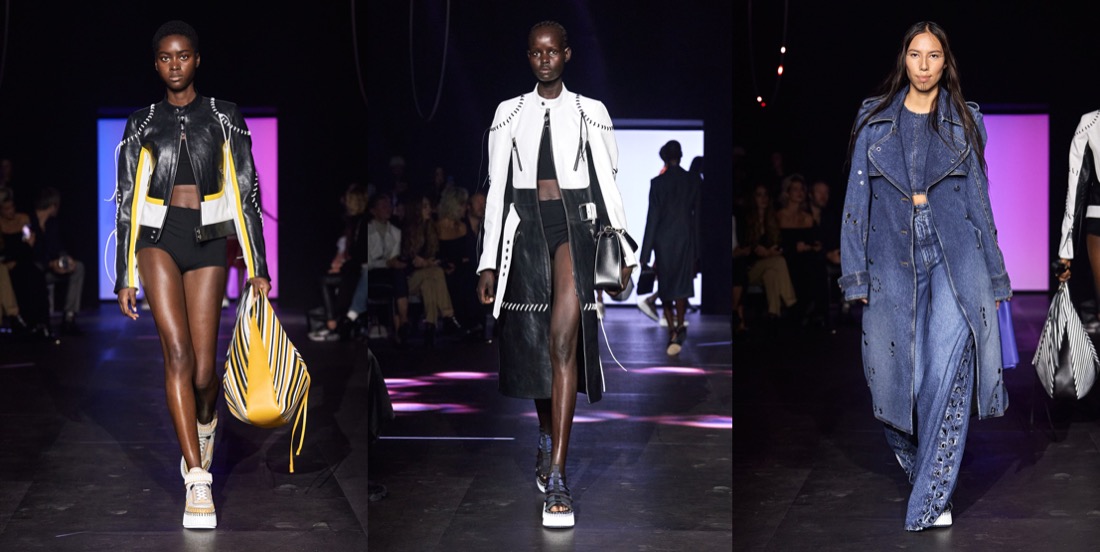
Nutico: Chocolate Leather

Let’s talk about chocolate – not the kind you eat, but the kind you wear.

Nutico™ – the first market innovation by Bio2materials, a Warsaw-based research and development company that creates sustainable material solutions based on waste processing and biologically sourced raw materials – is a leather-like material made from cocoa husks and walnut shells. The scientists and designer behind it call it chocolate leather – and yes, it really smells faintly like chocolate.
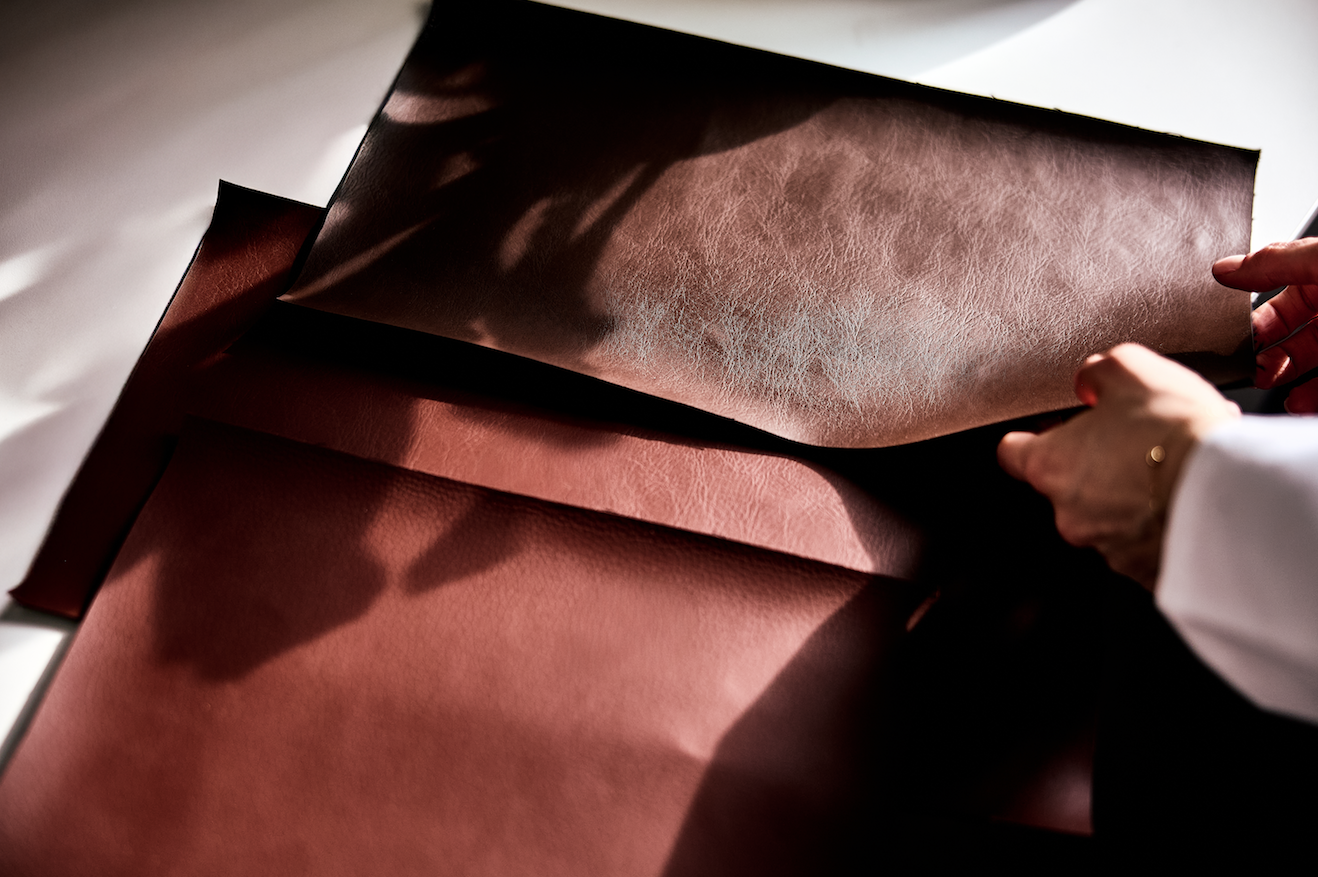
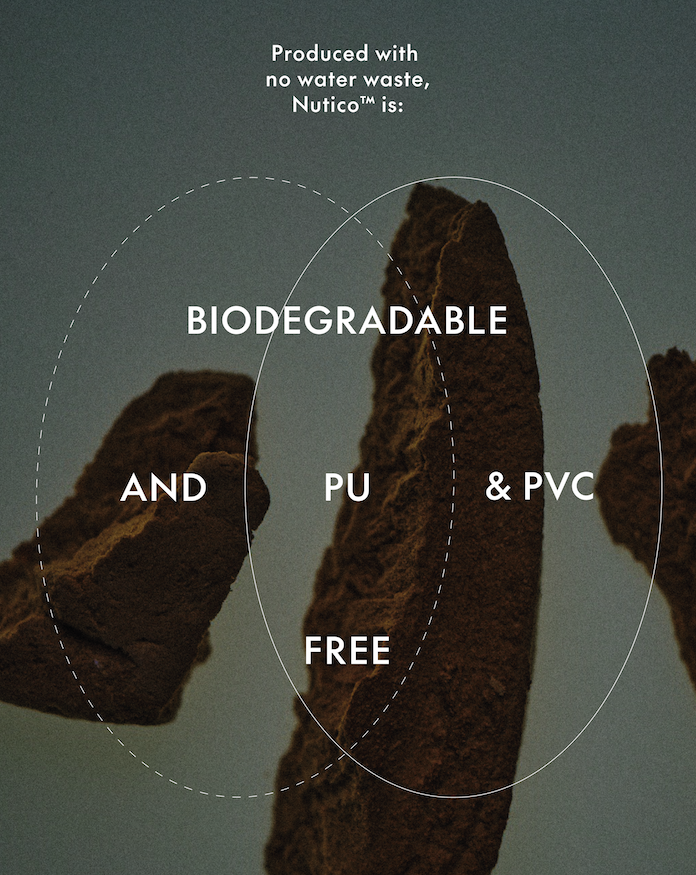
Born from years of trial, error, and a failed experiment involving apples (turns out apple leather ages faster than you’d want), Nutico is the result of thinking differently about waste. Instead of synthetic binders or water-intensive processes, Nutico is made with zero water, no polyurethane, and no PVC – just food waste, organic cotton, and some very smart chemistry.

It’s not just a material. It’s a confident rethinking of the misconception that sustainability has to compromise on beauty or durability. Soft, rich, tactile – it looks and feels like the real thing, minus the environmental guilt.

“We hope that materials like Nutico will help reduce the use of both natural leather and synthetics. But we don’t expect to eliminate them entirely – there will always be people who prefer traditional leather”,

says Katarzyna Szpicmacher, the founder of Bio2materials.
You’ll start seeing Nutico in fashion, furniture, interiors, maybe even the dashboard of your next car. It’s an investment, but that’s kind of the point – good things take time, and this one took seven years.

Nutico isn’t trying to replace leather. It’s offering a different story – one that begins with a walnut shell and ends with something worth holding onto.


Don’t forget to follow Design & Culture by Ed on Instagram!

Hey, did you know about my newsletter – Ed’s Dispatch? Click here to subscribe!

NET-A-PORTER Limited

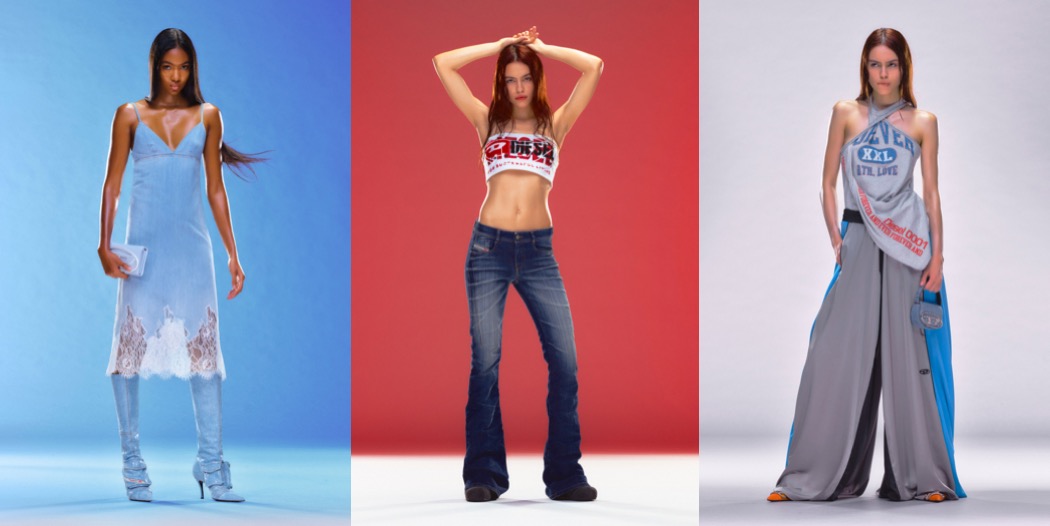
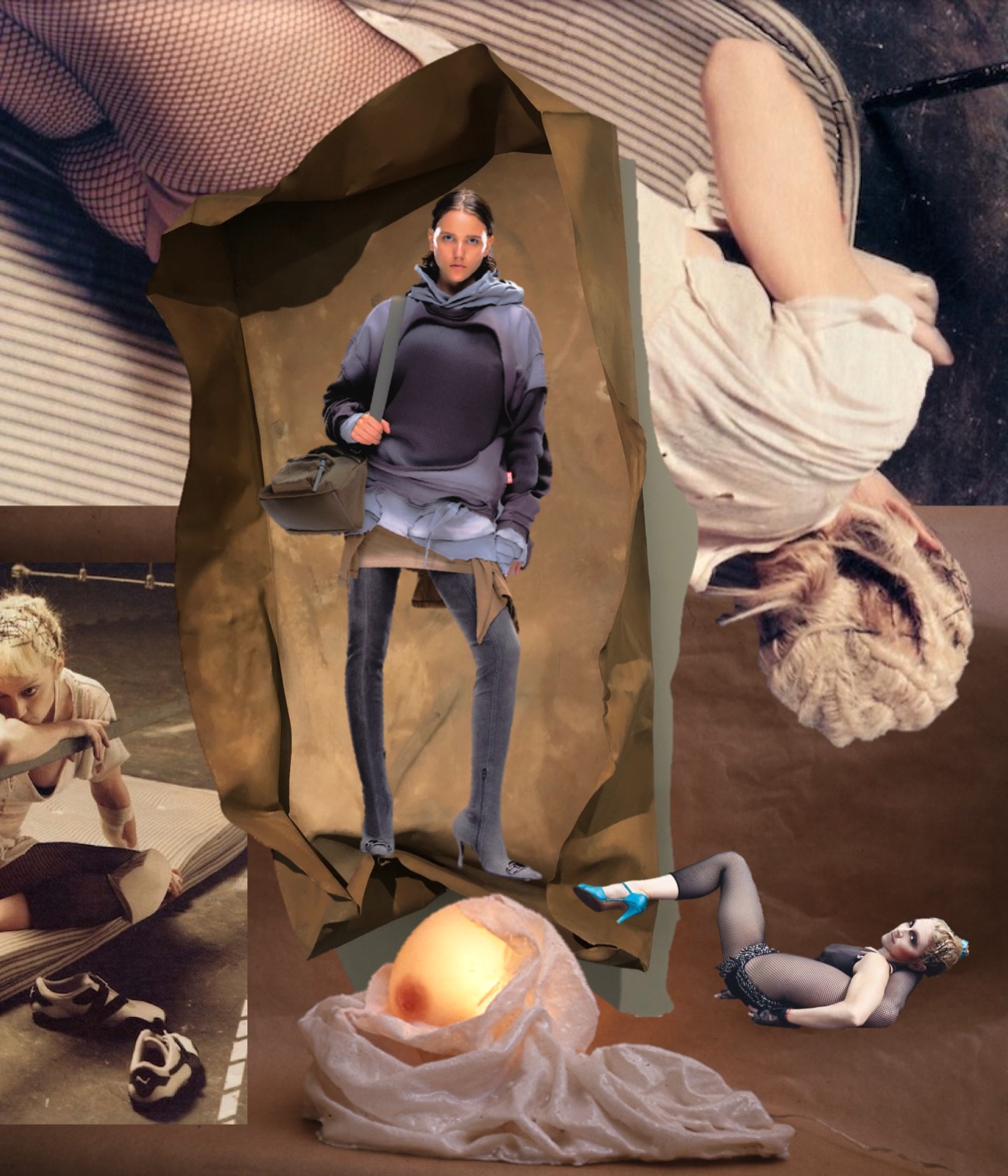
Performance-Wear. Diesel Resort 2024

We are continually evolving, it is about continuity,” said Glenn Martens regarding his process of reviving Diesel, and the democratic aspect of his resort 2024 offering. He added: “Perhaps more than anything I can say that what we did better this time was to take more carryover stories from the runway and industrialize them to create easier access price points for all of our stores and customers.” Another evolution, he said, was that his ambition to present Diesel collections as fluid, every-gender products on the shop floors has begun to manifest in certain flagship outlets – and that this lookbook was shot to reflect that. In other words, if February’s sultry, Durex-strewn Diesel show emphasized sex, then this follow-up collection was concerned with performance. The last-show iterations of Martens’ three Diesel pillars – denim, utility, and pop – were all harmniously diffused. Denim-wise, we saw the core material cut into jersey, leather, or bouclé panels on tough sportswear, trimmed with lace in easy-wearing little dresses, overlaid with oily or stonewashed color treatments, and used as a fabric for shoe uppers. The mainline collection’s intricate indigo dyed denim knits were reformulated in a fabrication designed to be color-fast as well as eye-catching. The designer emphasized that his foundational pivot to sustainability continues: “around 70% of all the denim here is produced through more sustainable processes,” he said. Elsewhere collegiate lettering on jerseys amusingly declared “Lies,” but this designer’s determination to green Diesel is no fib.

Collage by Edward Kanarecki.
Don’t forget to follow Design & Culture by Ed on Instagram! By the way, did you know that I’ve started a newsletter called Ed’s Dispatch? Click here to subscribe!
NET-A-PORTER Limited

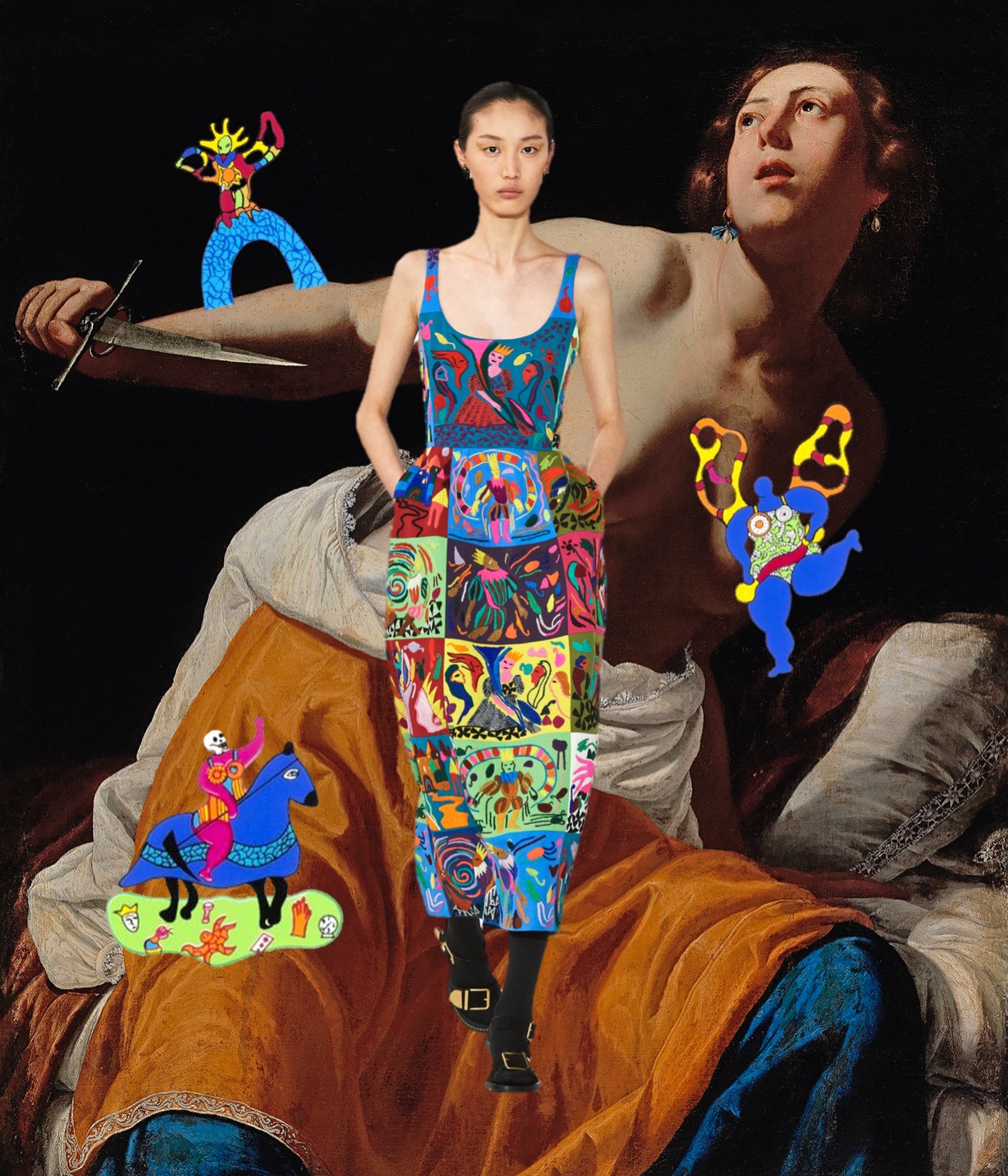
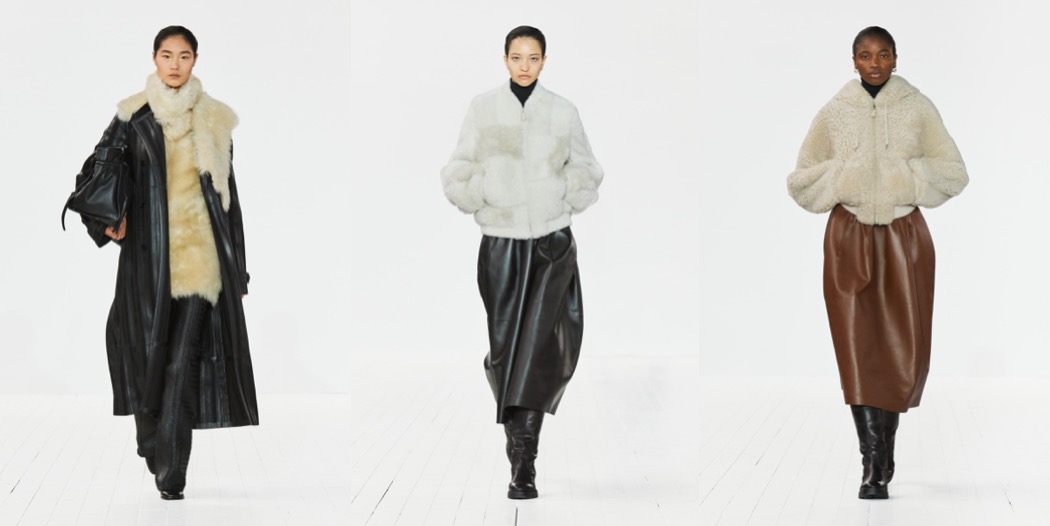
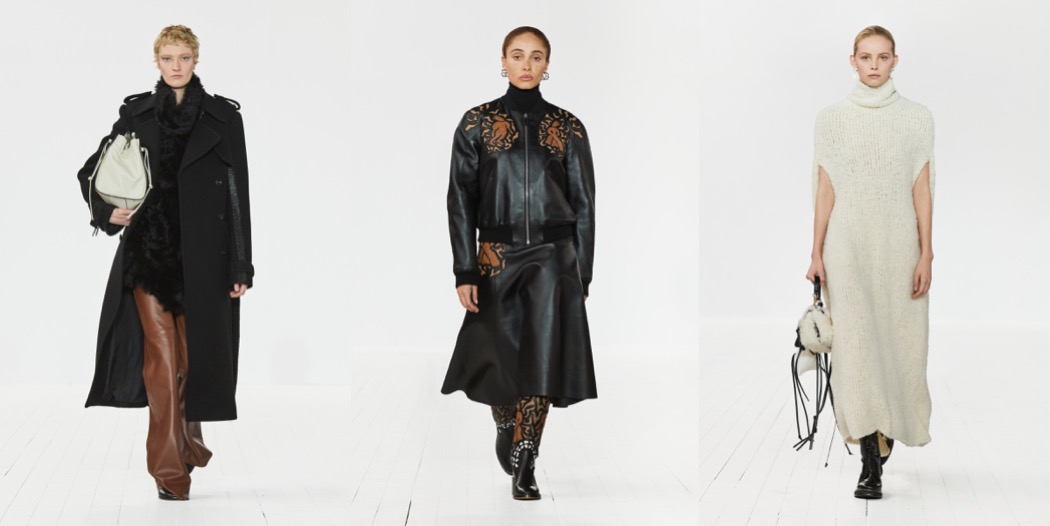
In Search For Renaissance. Chloé AW23

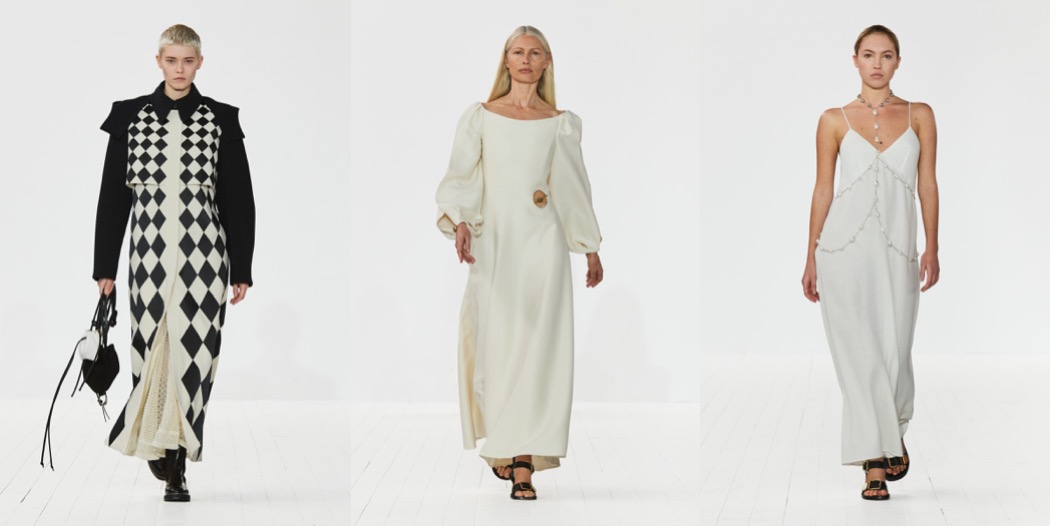
As usual in case of Gabriela Hearst‘s vision at Chloé, sustainability is the ultimate priority. She’s an expert on scientific progress, political initiatives, knows how to effectively replace environmentally damaging fabrics with better solutions, and she’s also a long-term supporter of many NGOs. She manages to pack all that ambition into her designs for the French brand and her eponymous, New York-based line. Sometimes, at an expense of the creative side of her work. The autumn-winter 2023 collection was, however, a bit more daring in terms of the “fashion”. Hearst found a muse, and that is Artemisia Gentileschi, the Renaissance painter. However, don’t expect baroque costumes. There was instead a lot of shearling and leather (the by-products of meat), fine-gauge lacy knits, and the ponchos. The vaguely medieval-inspired vertical strips of leather in yellow, black and white, and the harlequin pattern that emerged toward the end of the show, was a distant interpretation of the Gentileschi theme. “I like it that nothing is gimmicky. They’re not clothes for Instagram,” Hearst quipped. “I’m tired of working for Zuckerberg all the time – like, where’s my check?” I get her point, but… The Row, Lemaire and Hed Mayner are also brands that offer a non-gimmicky look, but this doesn’t mean their collections are that plain-looking. The best look from the Chloé show was a dress with vivid patchwork embroidery in the craft style of “Central America”. Sadly, Hearst just dropped that idea in the middle of the show, without expanding on it. And that that was actually a Chloé-kind-of look: feminine, a bit quirky, intriguing. The designer should try a more spontaneous, laid-back, less-serious approach in her creative process.

Collage by Edward Kanarecki.
Don’t forget to follow Design & Culture by Ed on Instagram!

NET-A-PORTER Limited

The Society Archive

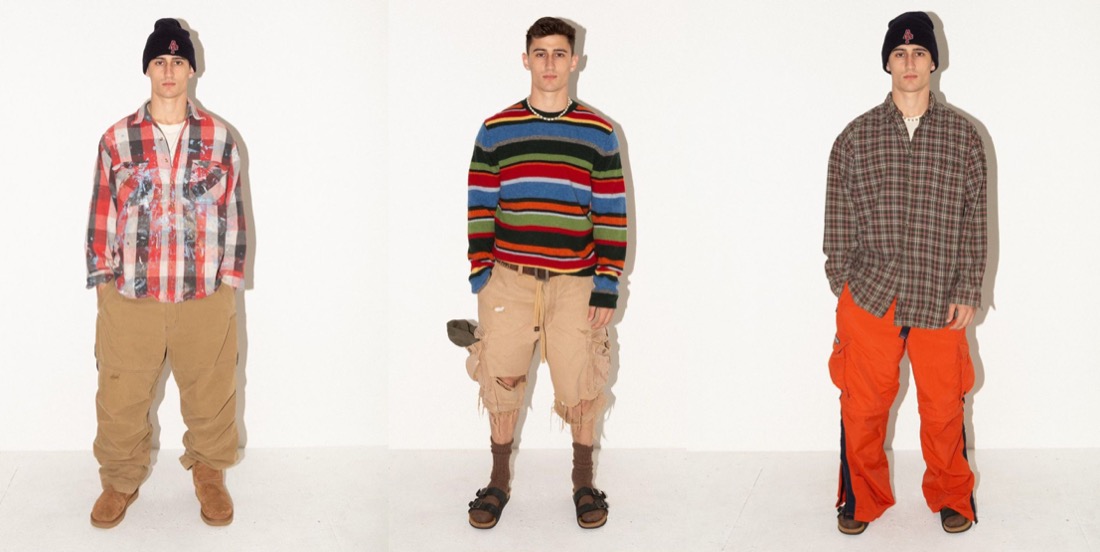
New collections come and go, but in the end, nothing feels as good as the timelessness of vintage. The Society Archive, a stylist-curated retailer of rare vintage finds from fashion and accessories to books and art, opened its by-appointment showroom during New York Fashion Week, and it seemed to be the most truly exciting event during these hectic couple of days. But The Society Archive isn’t just about selling vintage. The brainchild of the runway and editorial stylist Marcus Allen, the brand weaves a complex narrative capturing moments of past youth – the result being an extremely covetable time capsule of seasonally curated selections of vintage and ephemera paired with a curated edit of must-haves from The Society Archive’s capsule collection of designs. Hard-to-find pieces from pretty much every decade are hand-selected and styled together with a couple of in-house designed essentials, creating a cohesive collection. According to this Vogue feature, Allen especially has a long history with Abercrombie & Fitch. The stylist estimates he has more than 1,000 items, some of which date back to the 1960s. Allen worked at the infamous “all-American” mall brand when he was in high school in a small town outside of Boston. But his obsession boils down to the quality of yesteryear Abercrombie & Fitch, not its ethos that’s promoted today. “The technical and fleece vests are all Patagonia-level quality,” he says. “All of the distressing and vintage details are super authentic and not contrived-feeling at all.” Allen is not the only collector; there is a community of Abercrombie & Fitch archivists in Japan, which is primarily where he gets his pieces. “While runways were informing what mall brands were doing design-wise, they – A&F, etc. – were not skimping on the quality of the pieces.” He makes the comparison with a pair of jeans. “I have 5-pocket leather Gap bootcut jeans that are the same exact quality and cut of a pair of Tom Ford-era Gucci ones,” he says. And as a testament to the quality, currently, Allen keeps the first piece he ever bought, a multi-color striped Shetland wool sweater in his freezer.

So, what can you get from The Society Archive’s current capsule? First of all, some big styling ideas for autumn season – the look-book photos are just too inspiring! There’s The Face’s iconic issue 22 featuring Kate Moss photographed by Corinne Day. A vintage Banana Republic t-shirt which has the best imaginable fit. A couple of 1960s flannel shirts – to die for. Maybe a classic, over-sized A&F hoodie? I certainly need these beige snow pants, like now.

Collage by Edward Kanarecki.
Don’t forget to follow Design & Culture by Ed on Instagram!

NET-A-PORTER Limited

Fusion Rave. Chloé SS23

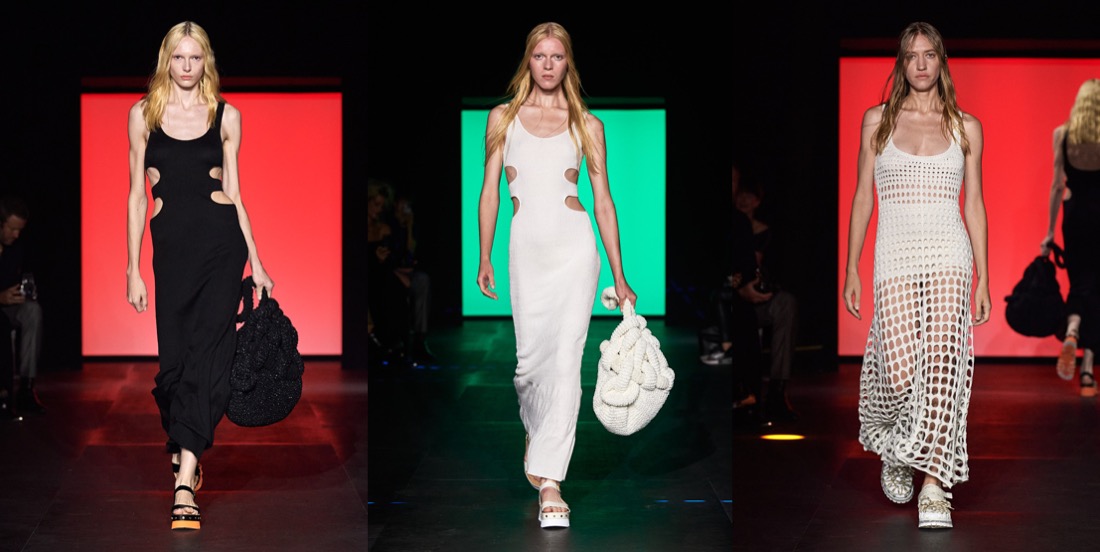
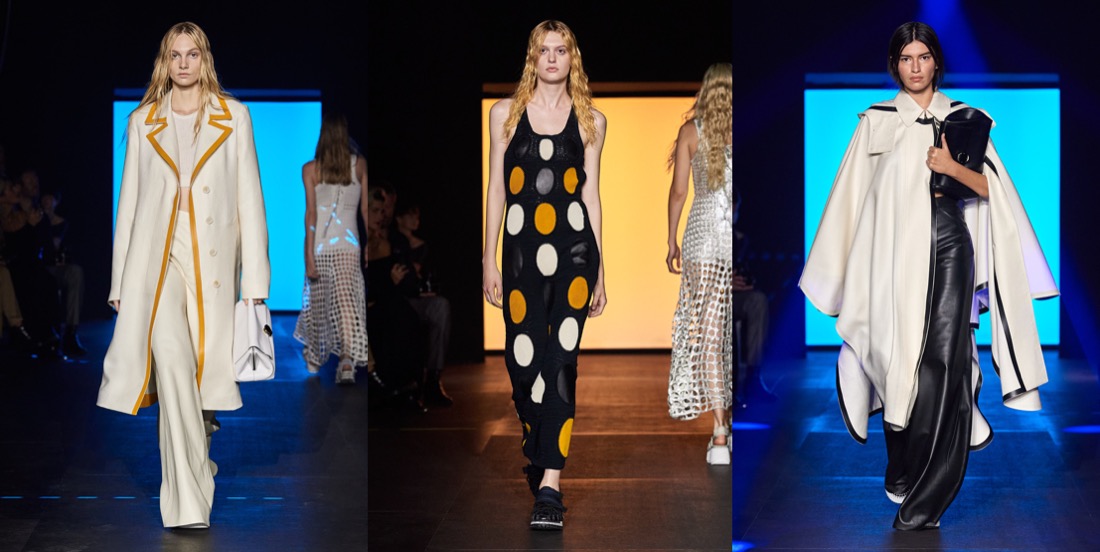
Gabriela Hearst went for a more laid-back look for Chloé‘s spring-summer 2023 collection. Her sustainability-forward ambitions, however, aren’t taking a rest. Hearst dedicated her latest offering for the Parisian maison to the promotion of fusion: “It’s basically the energy of the stars and the universe,” she said, flanked by representatives from ITER as well as Commonwealth Fusion Systems and Helion – companies which are working on harnessing this benign source of energy through giant round devices known as tokamaks. They can’t be used to produce a fashion collection, but, as Hearst said, “Eventually they will, because we’ll need the energy to make clothes. Imagine that whatever is a coal plant now will be a fusion plant in the future. The future is close.” She arranged the seats of her show to mimic the circular shape of the tokamak and surrounded the structure with hoops hanging from the ceiling and laser lights that evoked an industrial rave. That feeling reverberated through a collection that served as a figurative ode to fusion power, adapting the curves of the tokamak into silhouettes and surface decoration that looked part power plant uniform and part retro warehouse party. “The most important thing you need to know is that this is a source of clean energy with very little waste. A glass of fusion fuel can power a house for approximately 800 years,” Hearst said. All that sounded promising. But what about the actual clothes? I feel like the designer still has a problem in establishing her signature Chloé look. Knitted dresses with cut-outs created from recycled cashmere and blazers constructed in linen could use some rigor in their cut. Utilitarian outfits in head-to-toe certified European leather had the trending “Motomami” vibe that felt slightly out of place in Chloé’s lexicon. There was a coat with metal fastenings, made from recycled cotton that looked like denim, fully adorned with heavy-duty eyelets. In this spectrum of ideas, the concept of “fusion” was quite visible. Hearst needs a more bold, stylist-like approach to truly make her collections appealing in the future.

Collage by Edward Kanarecki.
Don’t forget to follow Design & Culture by Ed on Instagram!

NET-A-PORTER Limited