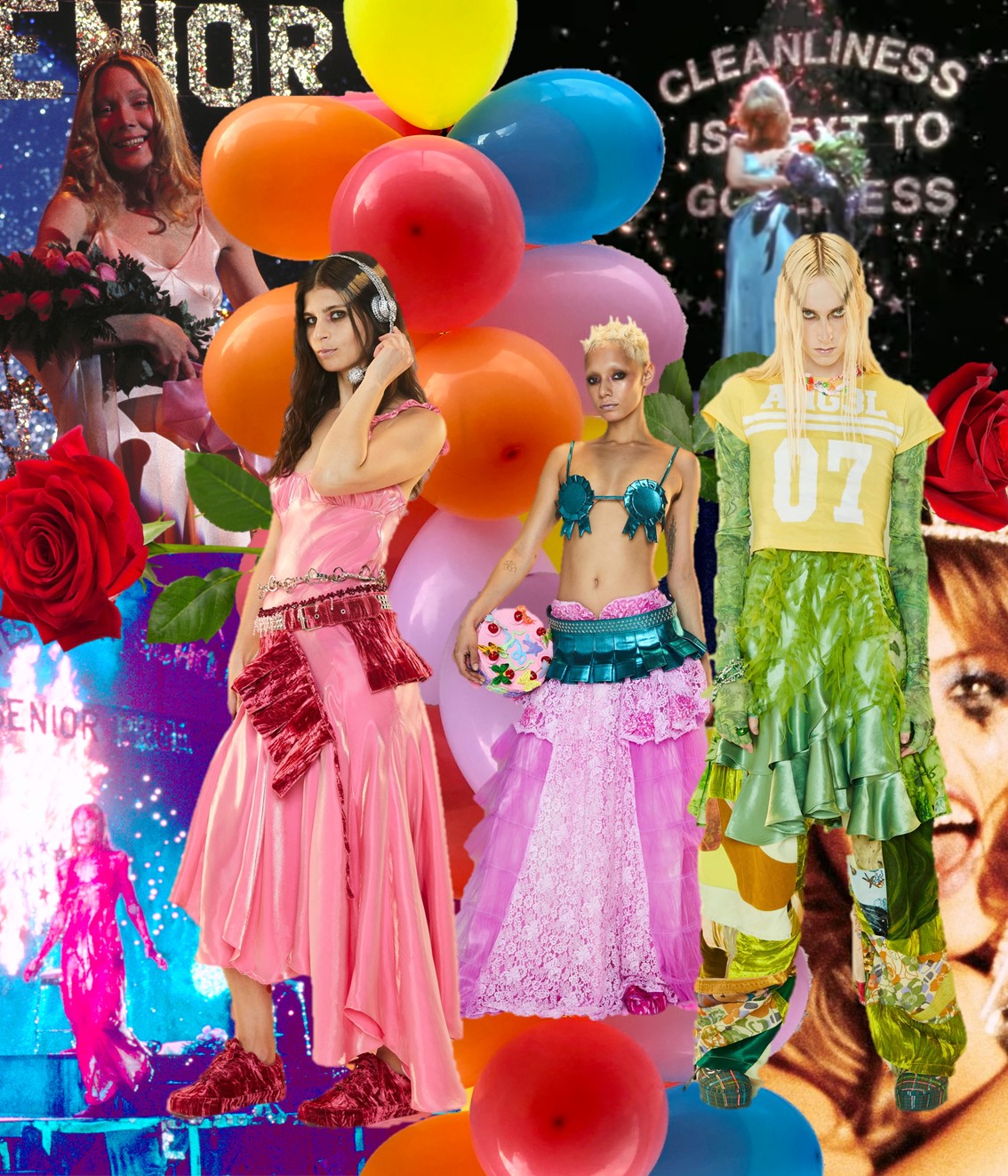
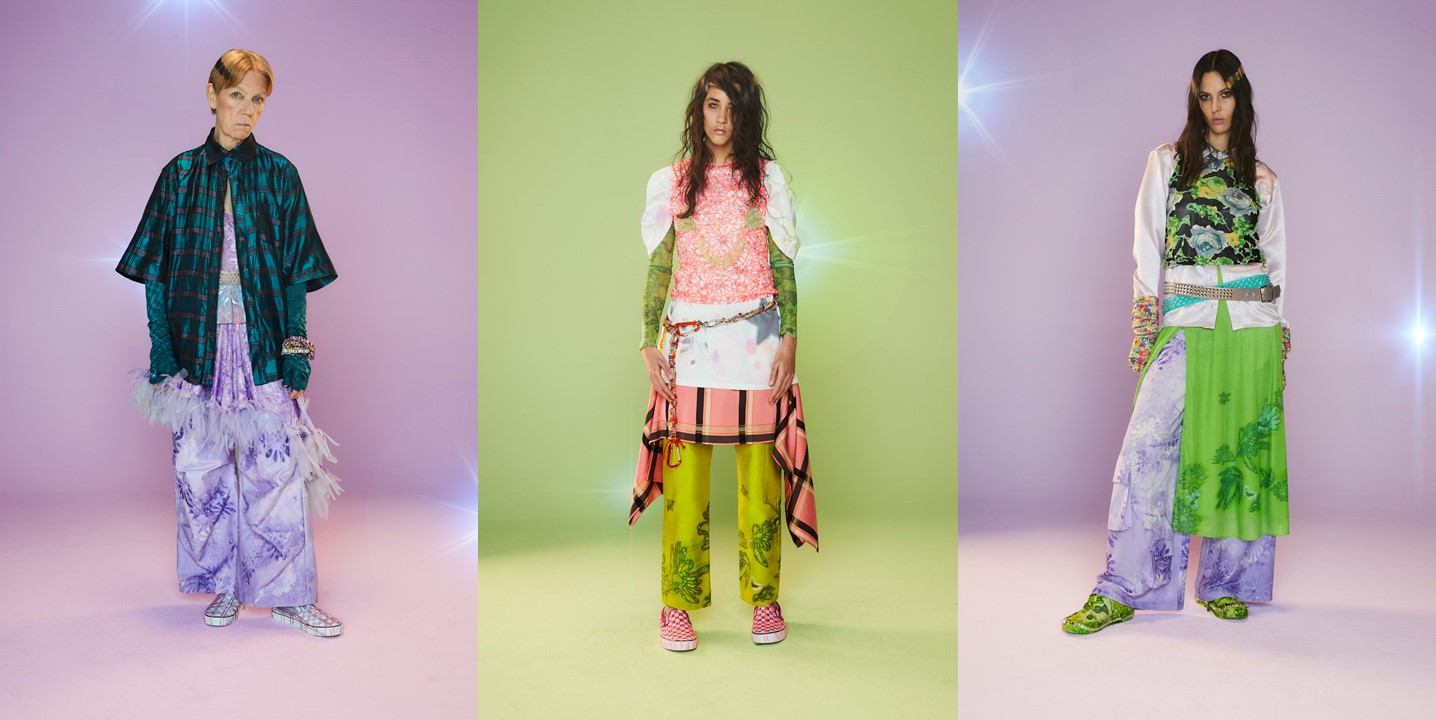
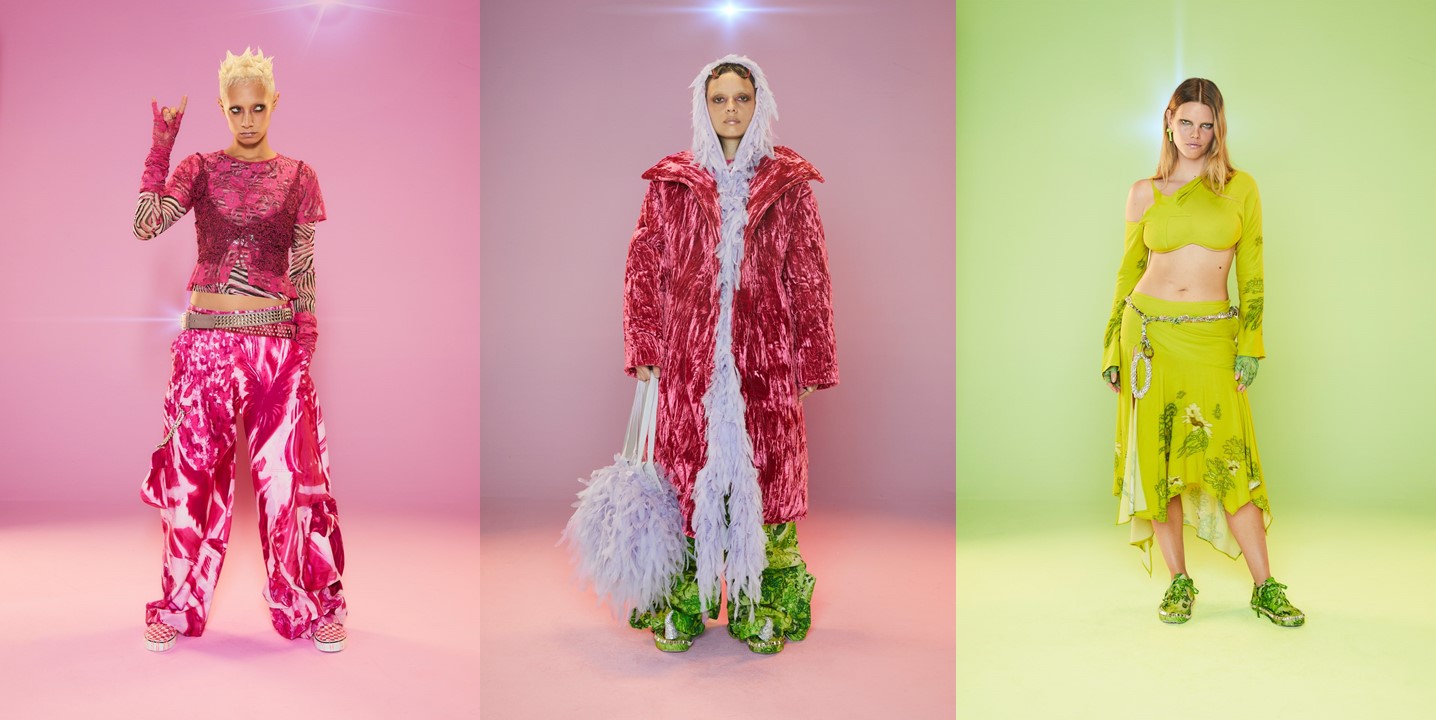
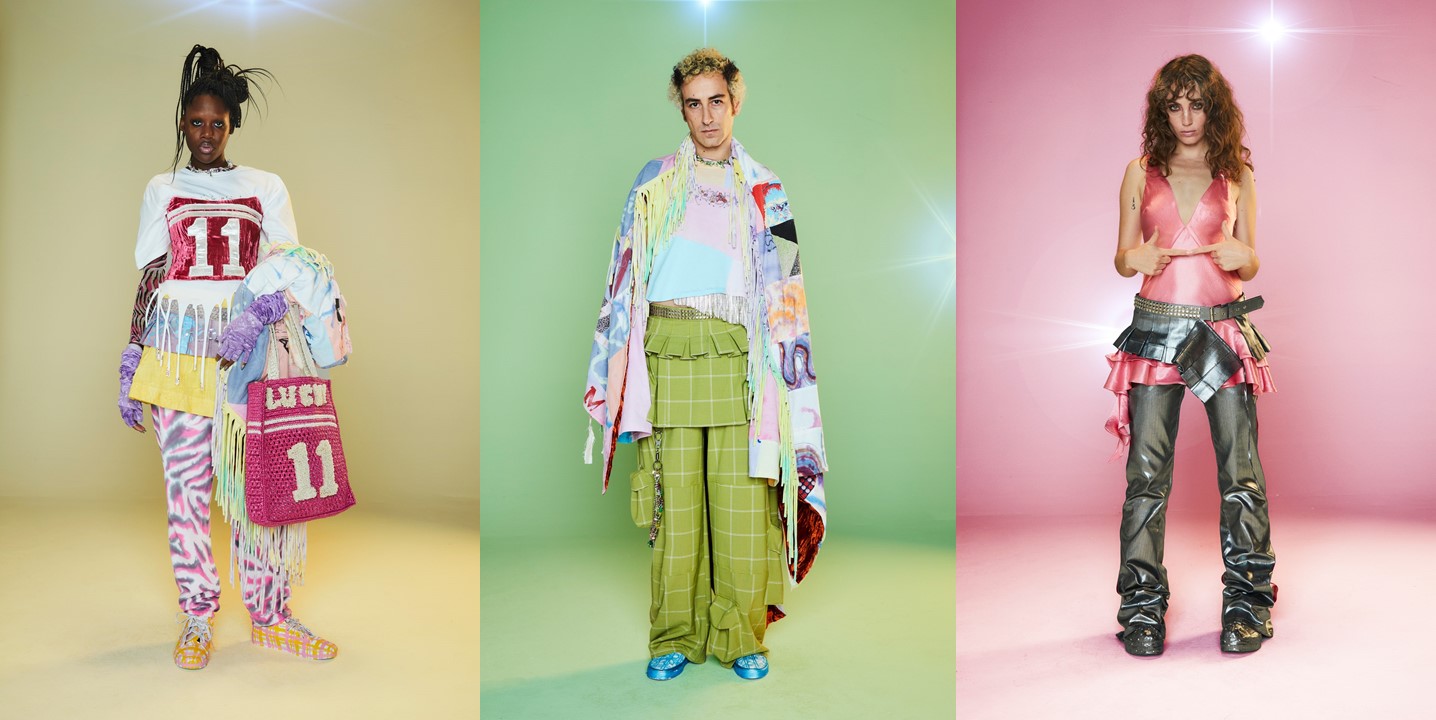
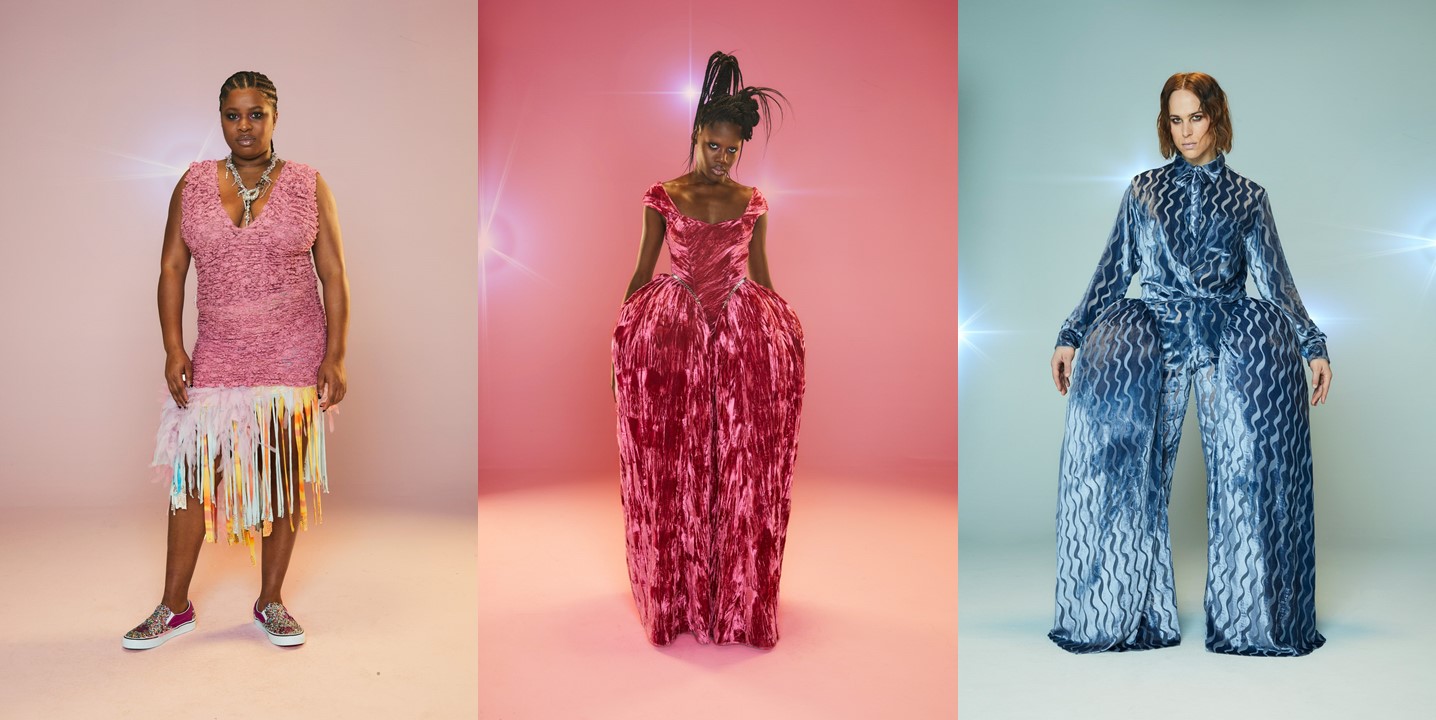
New York Fashion Week would make no sense without the energy of the city’s new-gen designers who fully embrace inclusivity, community and sustainability. This season, Collina Strada‘s Hillary Taymour showcased her exuberant and lively autumn-winter 2022 collection with a digital presentation, inviting the fashion set to experience its version of The Hills, entitled The Collinas. In the spoof, actor Tommy Dorfman makes her fashion week debut playing a twenty-something moving to New York City for a fashion internship at Collina Strada. Dorfman’s star turn was complemented by a large supporting cast: Rowan Blanchard, Marni’s Francesco Risso, Chloe Wise, Lynette Nylander, Jazzelle Zanaughtti, Ruby Aldridge, and Vogue’s Liana Satenstein – all friends of the brand. While the main character is rather clueless on how to actually do her job properly, she’s lovable with great taste – an aspect her peers can’t get enough of. The campy reality-TV pastiche wasn’t only entertaining and hilarious; it was a great background for Strada’s fabulous pleats, crushed velvet and metallic fabrics. Flashy colours and graphics inspired by 1970s psychedelic rock were mixed with genderless prom dresses and cargo pants made from upcycled materials. This season, Taymour evidentely entered her 2000s phase, and it’s working. Some ideas from spring 2022 carry over, like the Angel-printed tee and meshy layering pieces that have long been a staple. There is a low vibrating cake theme as well – Zanaughtti poses in a pageant ribbon top holding a pink cake; a pair of jeans were dyed using melted sprinkles. Chiffon is shredded to evoke feathers and studio detritus is cut into fringe. The eclecticism of Taymour’s earliest collections persists, and here we are with dozens of wearable and wantable garments that reflect the brand’s spirit.
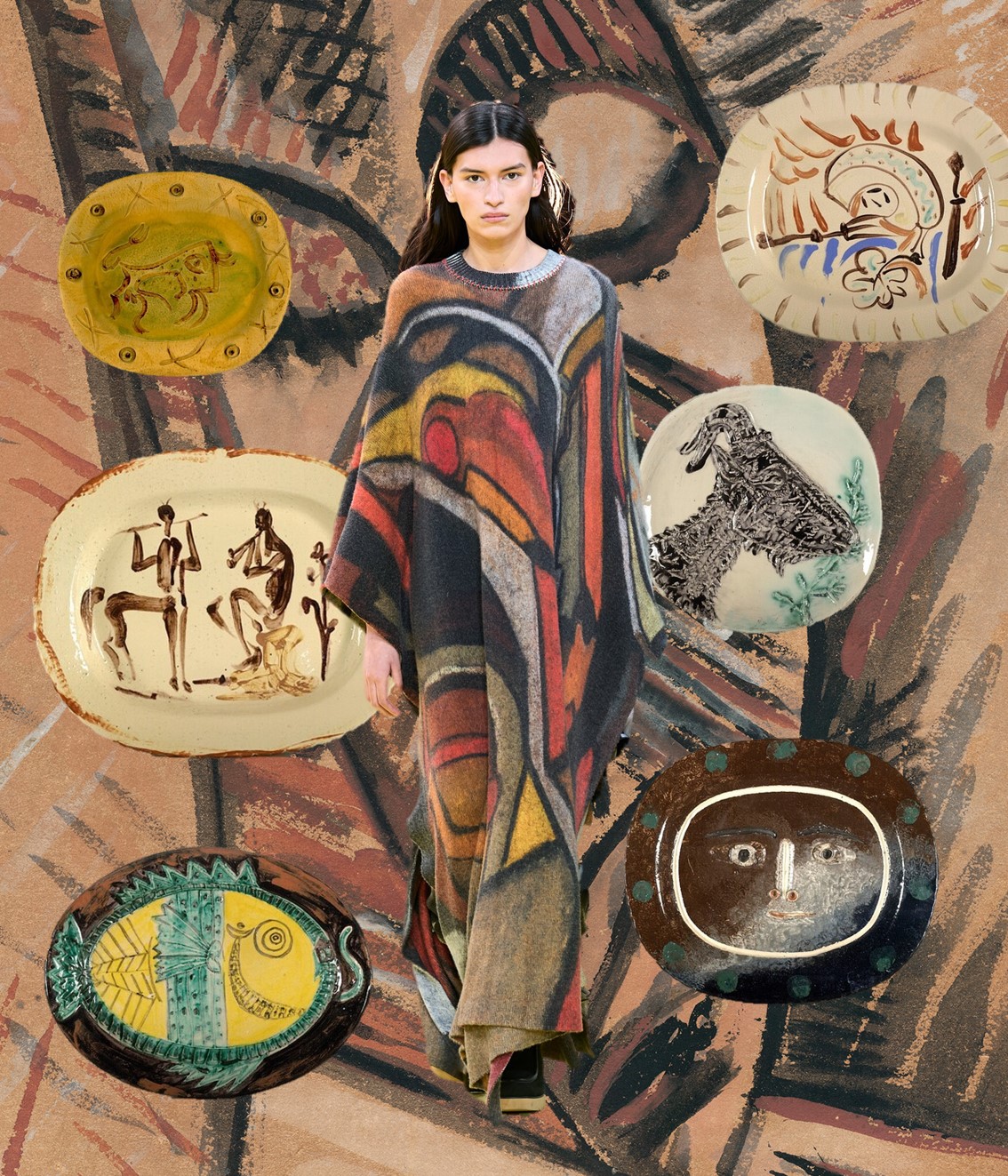
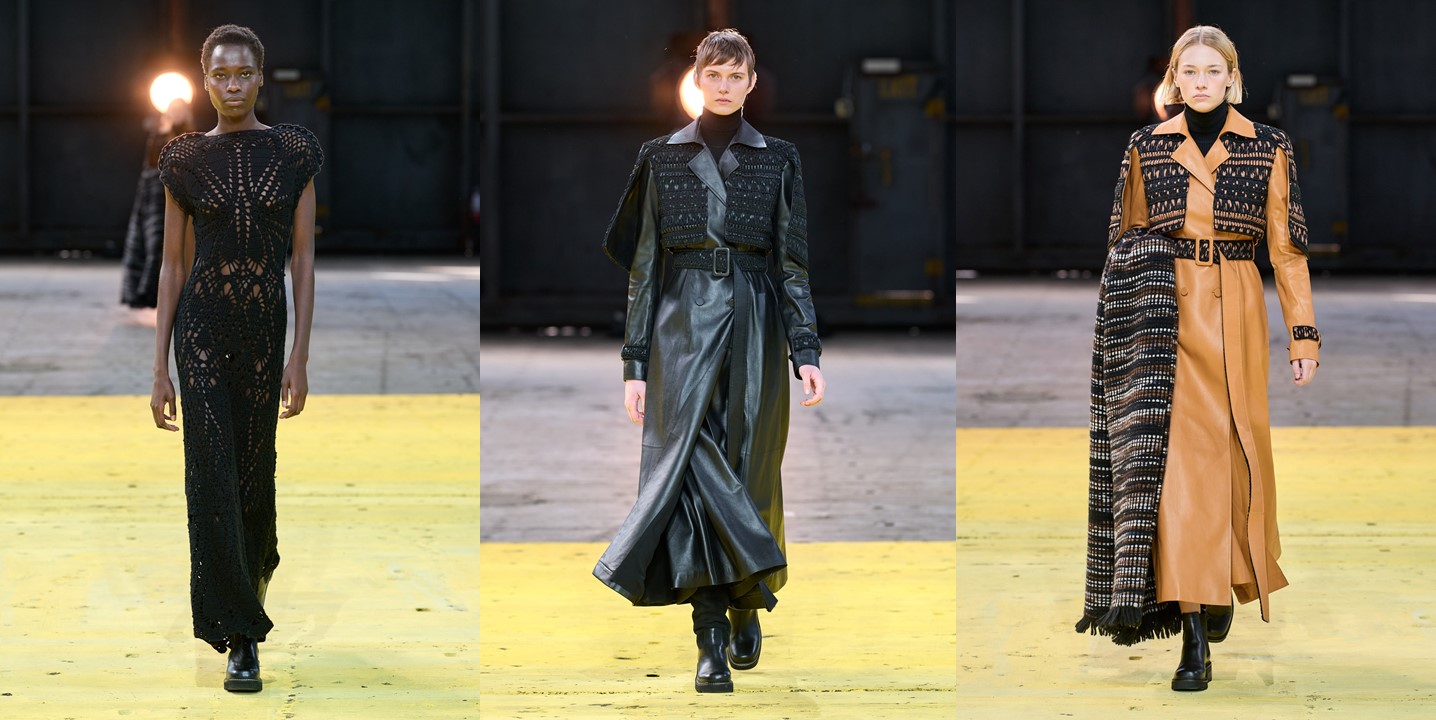
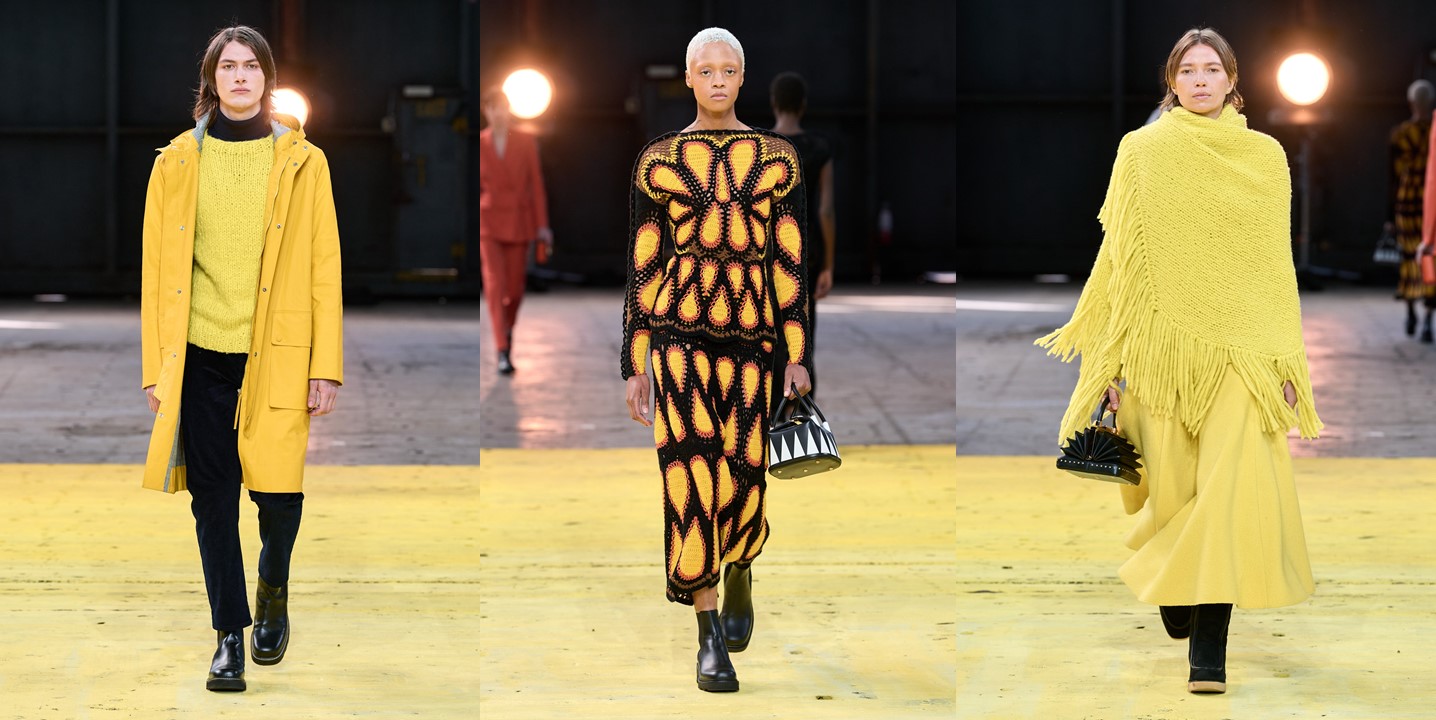
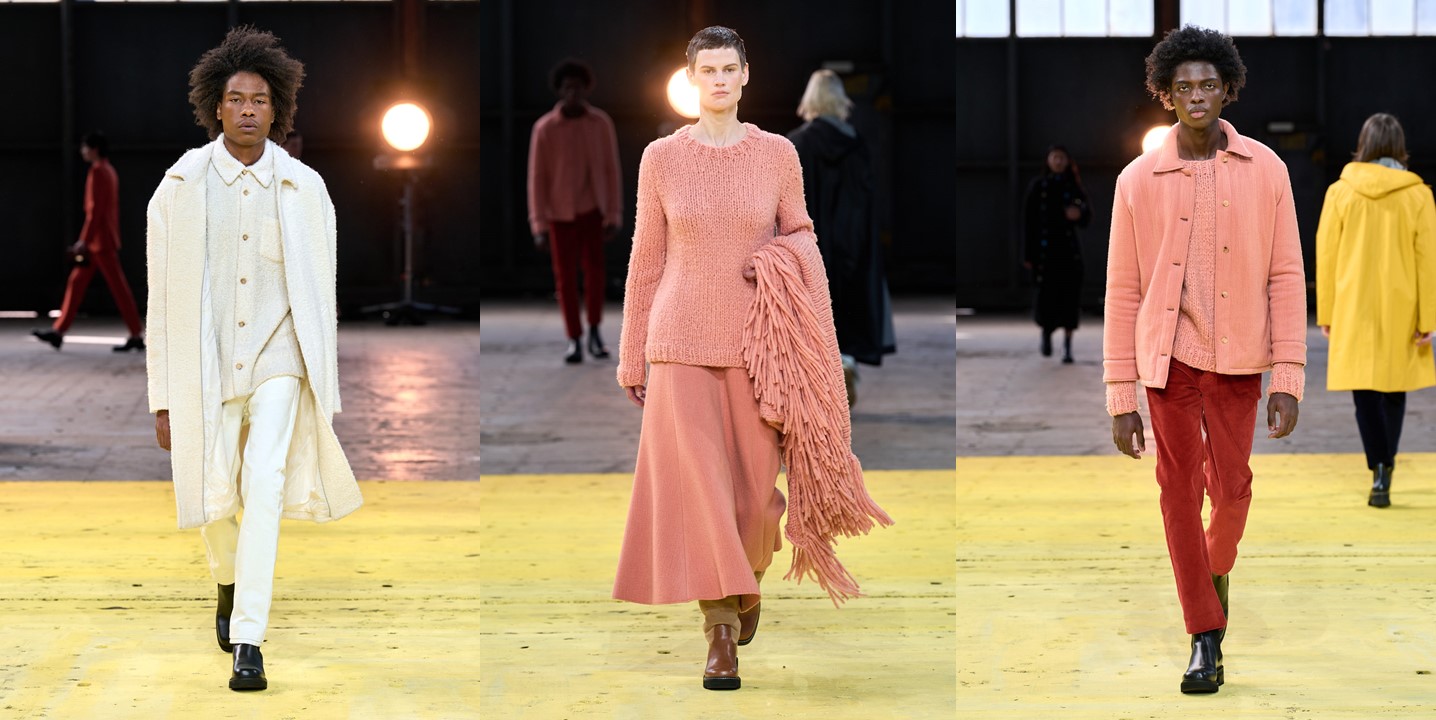
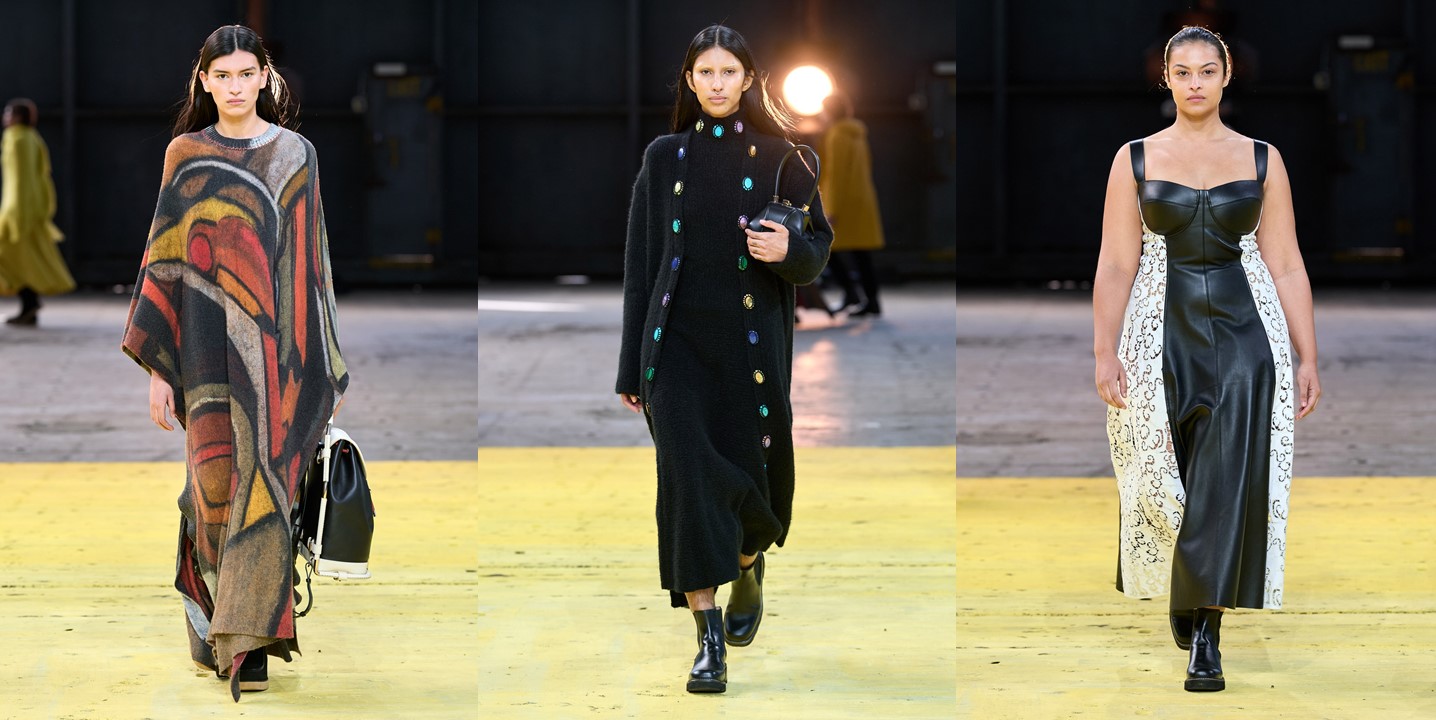
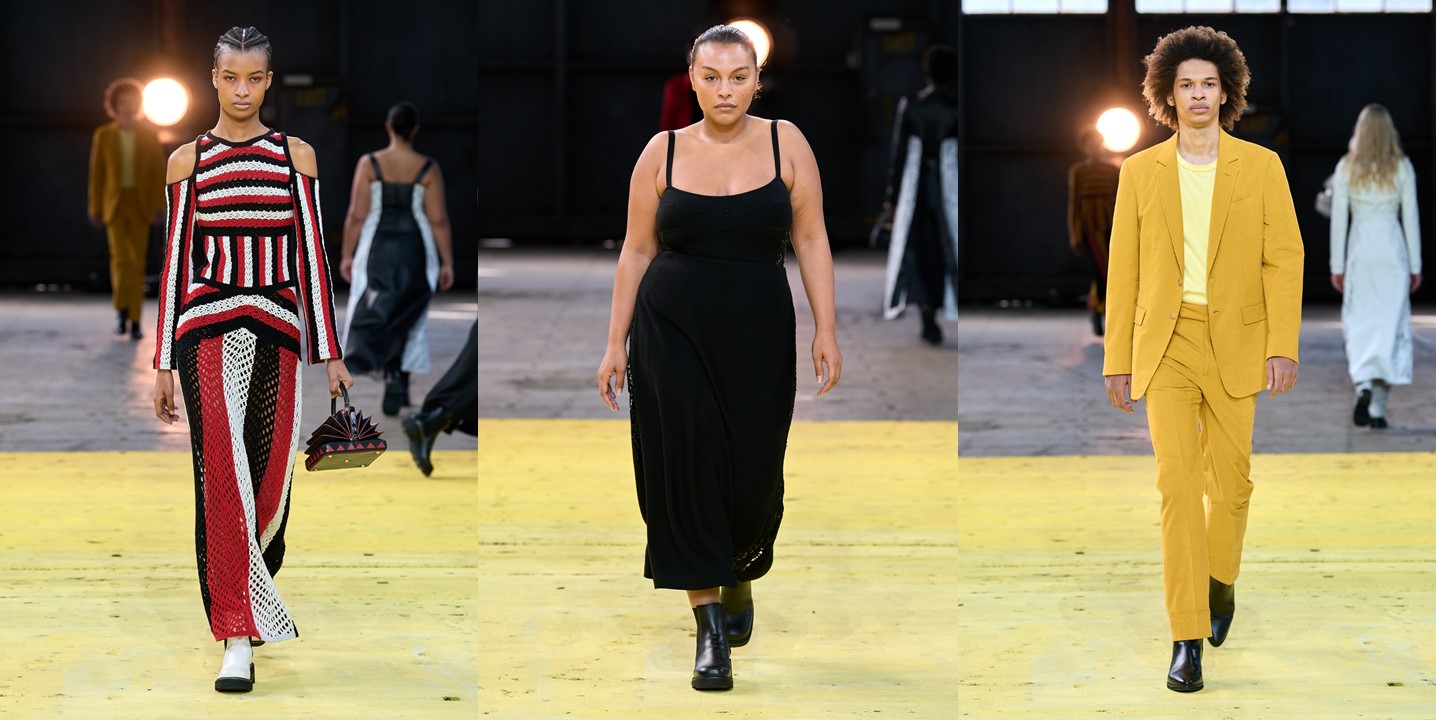
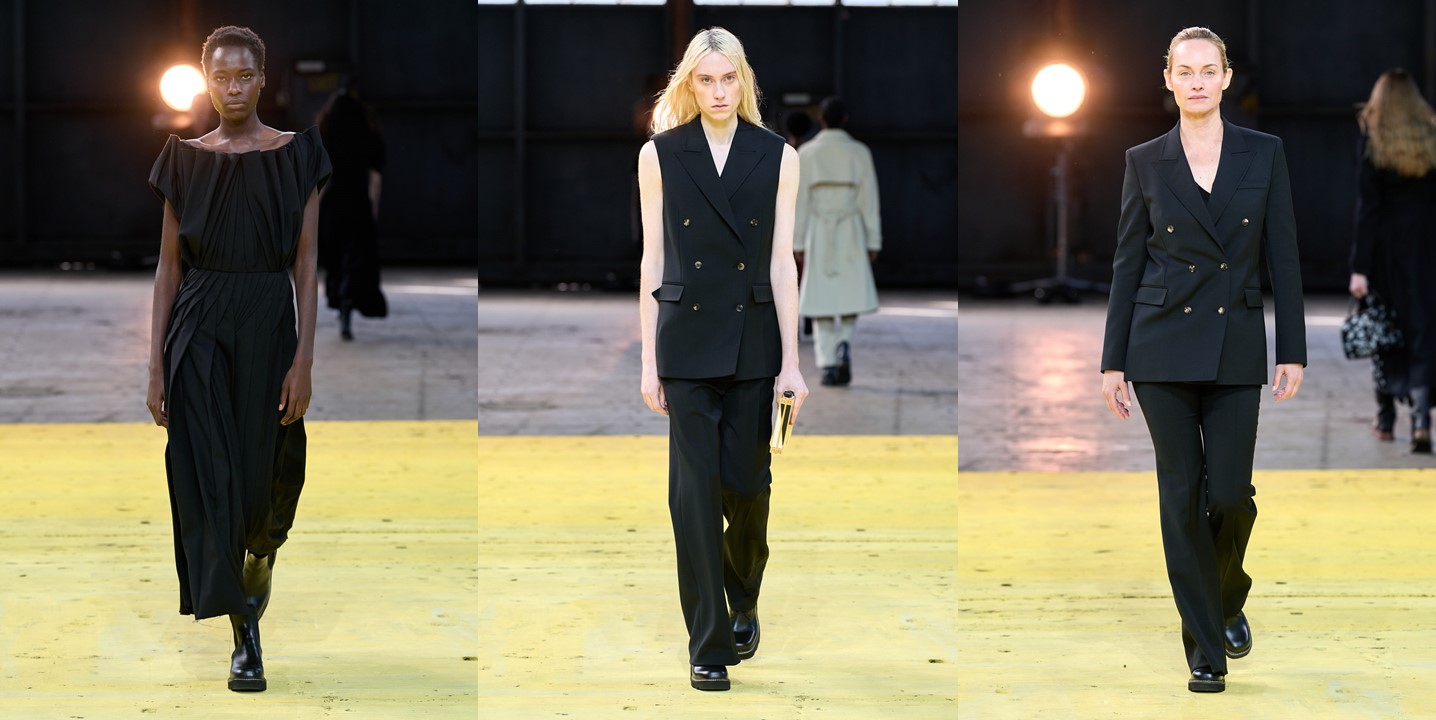
The runways have become a platform for the questioning of gender that has long occupied LGBTQIA+ communities. This has happened at the fringes for decades, but with a new wave of trans and androgynous models recasting our notions of beauty, the project is going more mainstream. Gabriela Hearst credits her teenage daughters for advancing her own thinking; their conceptions of gender are at odds with the more static understanding that her generation grew up with. “Kids want to be free,” she said at a preview. “For them, gender is an imposition.” As a designer, she makes few distinctions between her women’s and men’s collections. On the autumn-winter 2022 runway, colors, materials, and silhouettes were shared across them. If you are familiar with Hearst’s work, then you know how truly important sustainability is for her – at her brand, there’s no place for greenwashing. This season, the collection’s aesthetic is close to nature as well. The luscious citrine and watermelon colors of her Manos del Uruguay–knitted chunky cashmere sweaters were achieved via botanical dyes. The print on the cashmere-silk knit poncho that was a focal point of the collection was taken from the artist Ana Martinez Orizondo’s painting of a tree. And the crochet motif on a sleeveless dress and a long-sleeve top and midiskirt was inspired by a peacock’s tail feathers. Safe to say Hearst is the earthiest luxury designer around. But she can do worldly too. Amber Valletta closed the show in a double-breasted suit made from sportswear wool whose sharpness belied its comfort factor. Trenches were finished with storm flaps made from panels of woven leather and silk crepe de chine that Hearst likened to armor. She was equally proud to point out that the elaborate pleating on the bodice and sleeves of a flower-print dress was done in New York’s garment district.
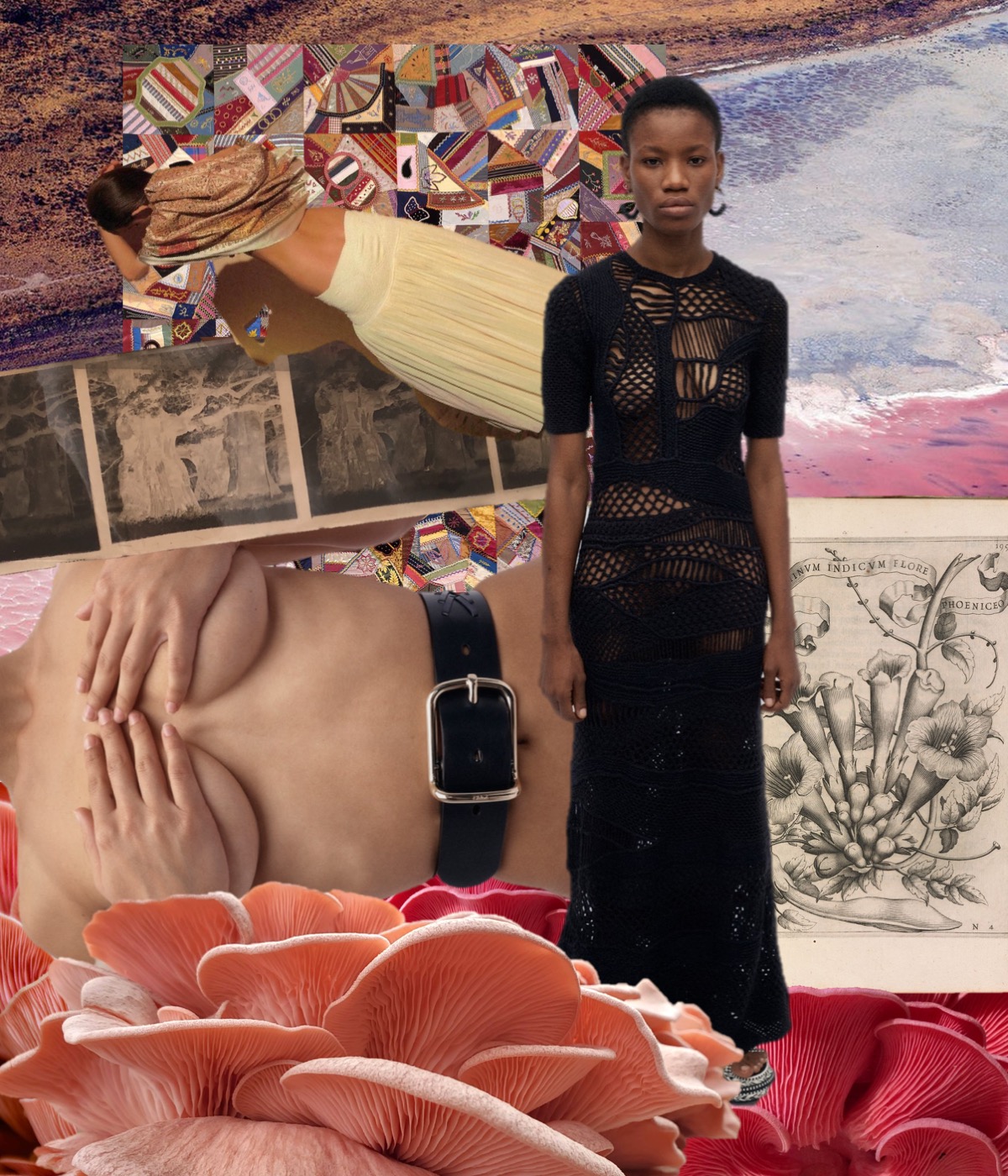
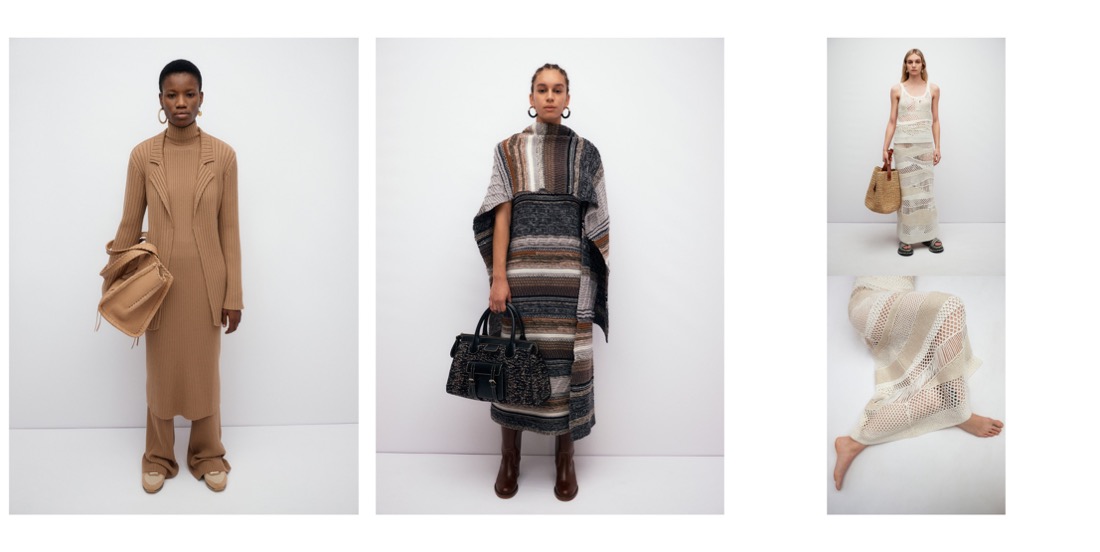
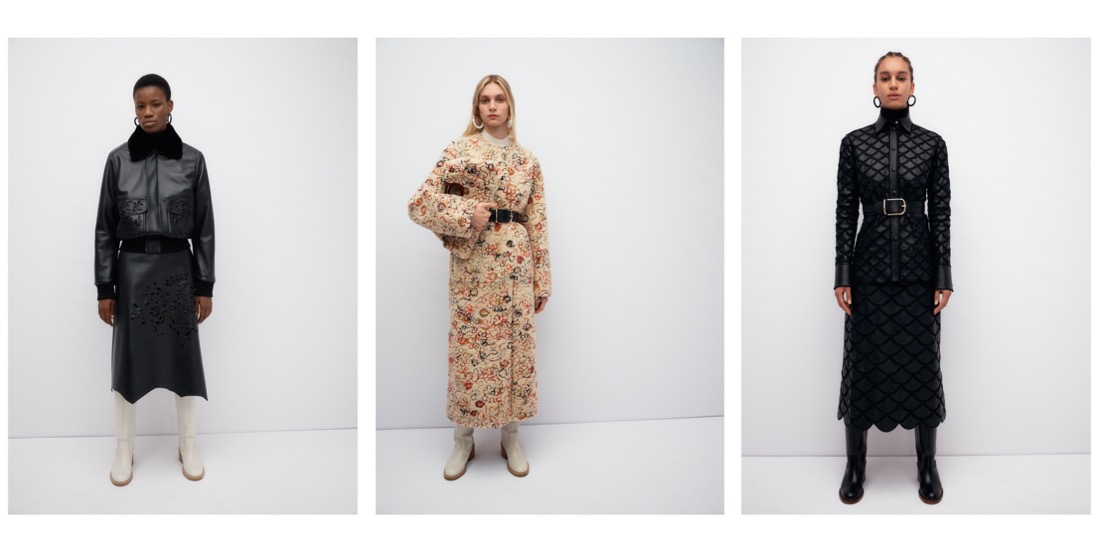
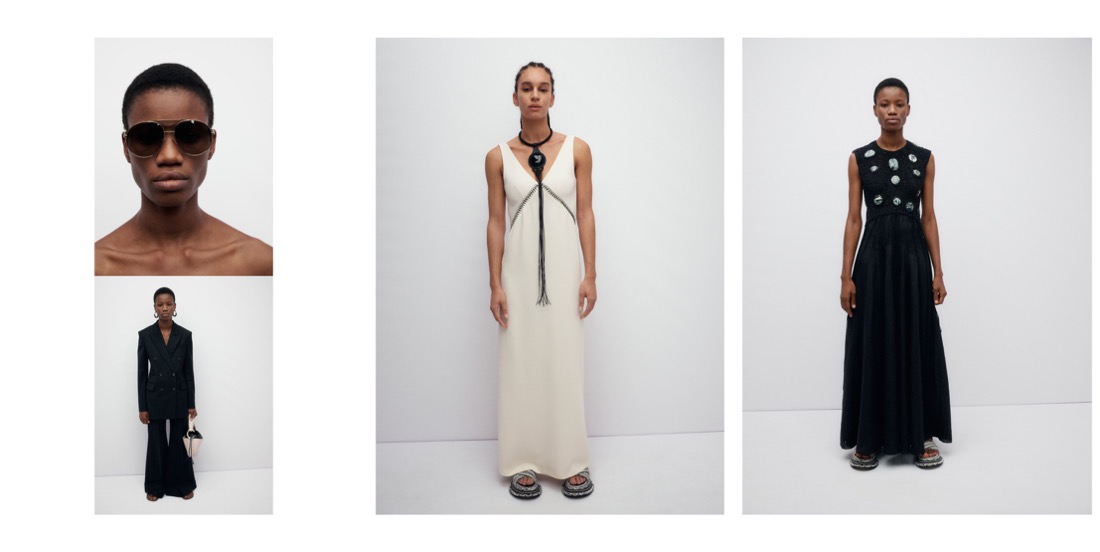
It’s nearly a year since Gabriela Hearst took Chloé under her wings, and it’s quite unbelievable how many sustainability goals the designer has already achieved. And those aren’t just words – numbers and statistics don’t lie. “To give you the exact facts, 70% of the product offer since I came in became lower impact. Compared to my first collection, (what) we did is up 40%”, she summed up. Women who are living under a cloud of post-COP26 anxiety might take some cheer from how openly Hearst is tackling the environmental and social problems inflicted by the workings of the fashion industry. The way she speaks of it, implementing the changes that lie within her power is as much her purpose as the mission to dress women in Chloé clothes. “Empathy, collaboration, lower impact – the right values need to come to the forefront. Collectively we at Chloé are working toward weaving that into the DNA of the company.” The clarity of style she’s brought to the house has become completely visible four seasons in. It’s streamlined and slick, a grown-up boho look infused with classic Chloé-isms and her own handcrafted, macraméd, whipstitched energy. She’s carefully corralled all the legacies that women designers have imprinted on the brand for decades: the reputation for a boot-cut, ’70s-ish pantsuit that Stella McCartney laid down; the balloon-y broderie anglaise sleeves that Phoebe Philo played with; and Chloé founder Gaby Aghion’s scalloped edges and taste for pinkish orange, the color of the Egyptian desert of her childhood. Meanwhile Chloé’s horsey heritage is a natural for Hearst, who brings her own Uruguayan ranch upbringing to her feeling for caped coats, French-style riding boots, and the thick leather girth strap she’s turned into a belt. “I love this buckle that I found in the archive from Hannah MacGibbon’s time,” she said. “We oversized it.” It all looks a lot like Hearst herself: tall, strong silhouettes; a practical modern vigor; a touch of the hippie sophisticate. Yet the main imprint she’s stamping on Chloé is in becoming one of the very few luxury fashion creative directors who are making it impossible to detach the conversation about pretty clothes from talking about what’s in them and how they are made. Moving rapidly along the vectors of transparent reporting, partnerships with women’s employment projects, environmental certifications, Chloé’s freshly acquired B Corp status, and new membership in the Ellen MacArthur Foundation (which champions circularity) – and shining a light onto the multitude of fashion’s hidden processes – is a business that continually brings up more questions.
Hearst is happy to point to several achievements in this collection. Botanical dyes are part of it—like the shade of Gaby Aghion pinkish orange in the merino wool skirt-and-sweater set. There’s also biodegradable denim, which Hearst cut into a pair of high-waist flares and a matching jacket. “This is the third season we’ve been working with Adriano Goldschmied [the legendary denim expert] on this project to resolve circular denim, following the Jeans Redesign Guidelines published by the Ellen MacArthur Foundation,” she said. The production of the new Chloé jeans eliminates rivets, which never break down, and the fabric is a mix of 70% recycled cotton and 30% hemp, “which is grown in France. Hemp and linen cultivation emit less greenhouse gases and require less water compared to cotton,” she noted. But to vegan and vegetarian customers – and anyone who’s read recent reports about fashion’s links with cattle farming and deforestation in Brazil – the noticeable amount of leather in the collection will raise eyebrows. “From the point of view of sustainability, I have a very specific position about leather,” argues Hearst. “Leather is biowaste of the meat industry. I am very against industrialization of meat – I’m really against the way livestock is being industrialized. I don’t think we can afford eating a high-meat-protein diet, and definitely don’t recommend it.” But while she accepts that moving toward plant-based diets “is better for the environment,” from her perspective, “the truth is nobody’s killing the animal for the leather. The price of leather is going down and people are wasting it.” That in itself creates an environmental disposal situation. “What are we going to do with the leather, other than just use it?”
The Chloé press release states how the sourcing of the Chloé leathers is certified by the Leather Working Group, which is “an international organization made up of stakeholders across the leather supply chain, working to promote environmental best practice within leather manufacturing and related industries.” The organization looks into the operations of tanneries, “meaning that the leather process is done properly, meaning not wasting water and not using harsh chemicals,” as Hearst puts it. Around 75% of the leather handbag offering is sourced from Leather Working Group–certified tanneries. Nevertheless, there is always further to look into. A report in The Guardian on November 29 spotlighted research by Stand.earth, a supply-chain research company partnered by the Slow Factory and Model Activist, showing that the Leather Working Group’s remit stops at capturing what happens in tanneries and slaughterhouses. Its visibility doesn’t reach back to what happens at the farm level, and therefore “does not ascertain whether hides are linked to deforestation.” Under normal practice, hides come into tanneries from multiple sources and are often mixed up, meaning that fashion brands – across luxury and mass manufacturing alike – are “at risk” of unknowingly buying into the destruction of the Amazon rain forest with the finished product. “As many Amazon leaders have warned,” the Slow Factory writes on its Instagram page, “this is a human rights/climate/biodiversity/public health crisis with consequences for the entire world.” That’s a much vaster issue than Chloé. It spreads across the entire industry and puts question marks over every leather bag, shoe, and coat we buy (it’s also an issue in the auto industry, which is the second-largest user of leather after fashion.) Only diligent and widespread normalization of tracing and labeling, and the development of sounder alternatives, can solve this. Knowing Gabriela Hearst, she’ll be among the first to step up to working on finding those answers.
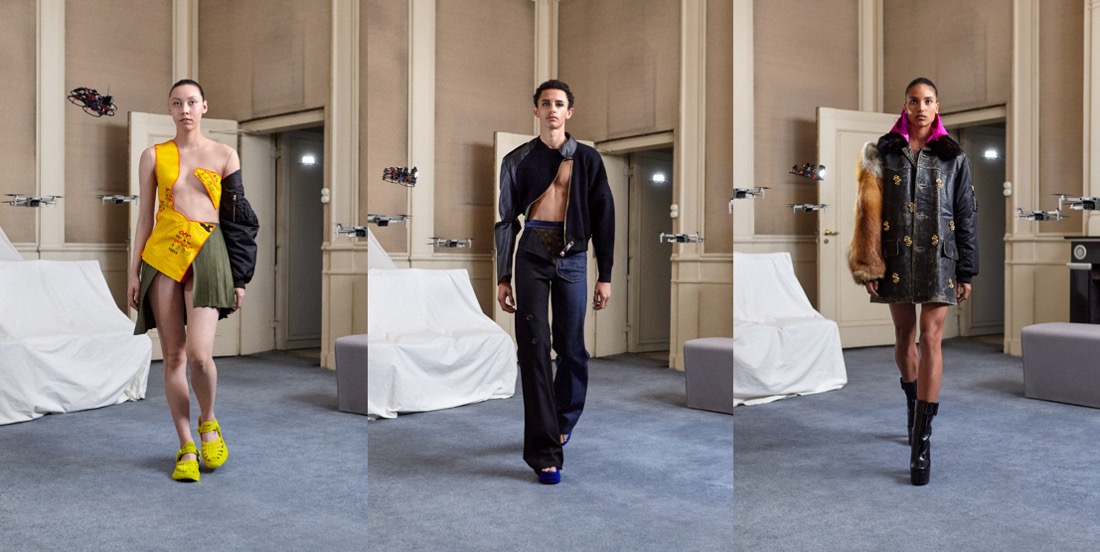
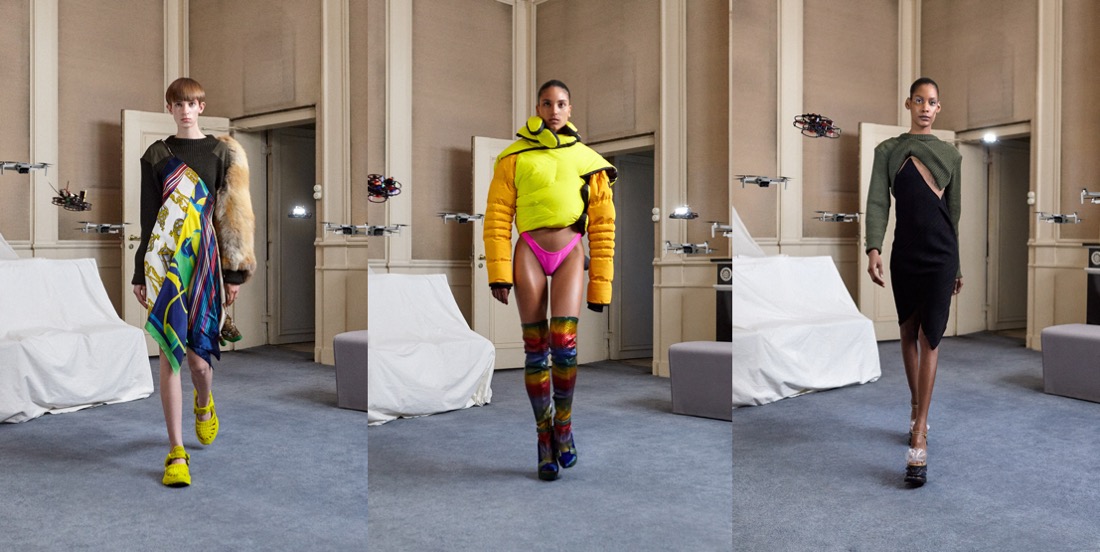
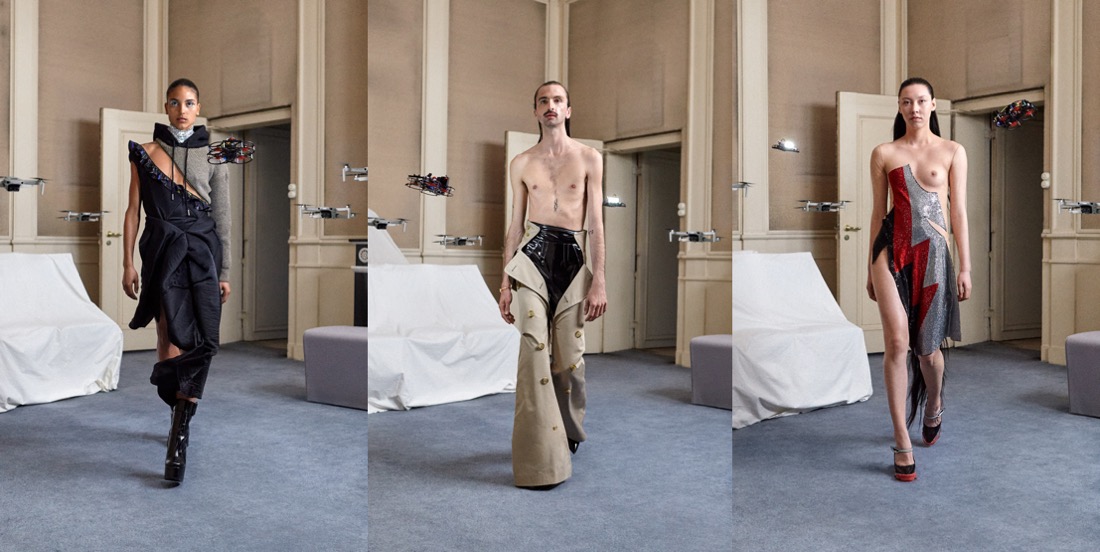
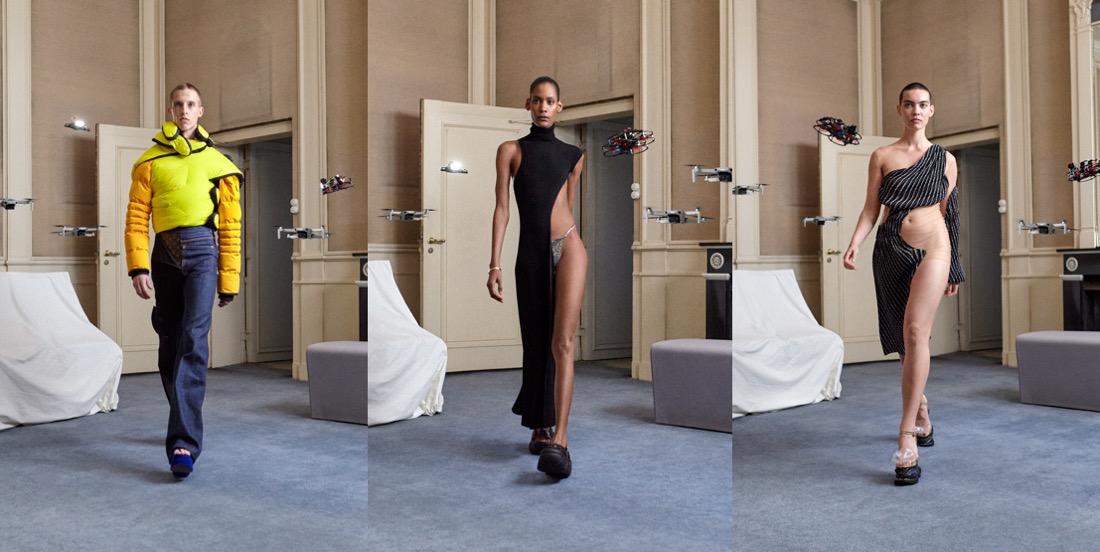
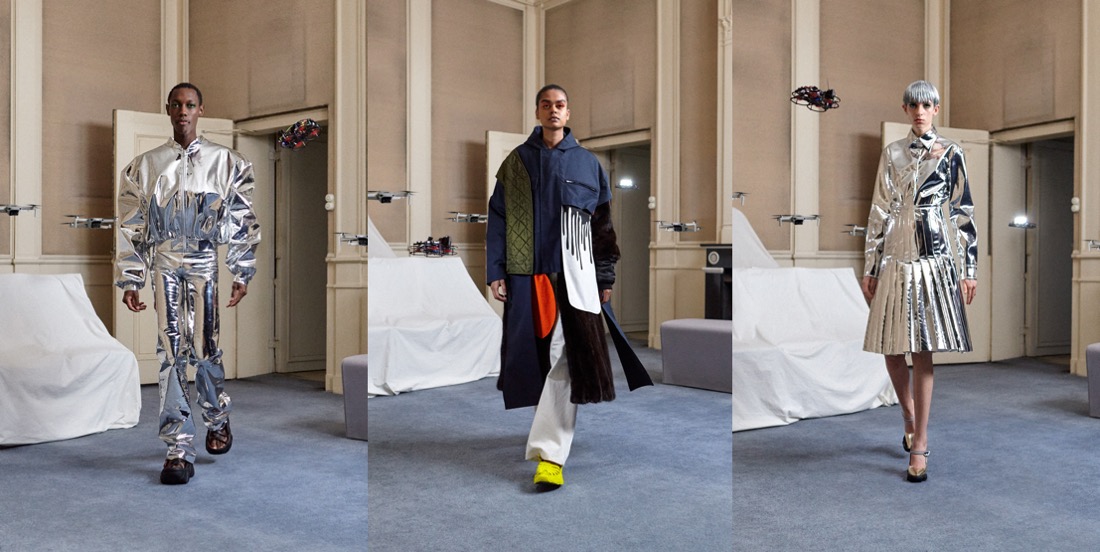
They say that fashion will never be 100% sustainable. A brand can do its best to keep things eco-friendly, but in the end, clothes are still being produced. But Duran Lantink‘s method proves the industry that there’s a revolutionary (and very witty) way of making fashion as wasteless as possible. His upcycling methods – repurposing unsold designer-label clothes in his pioneering, cheeky way – date back to 2013, but only now seem to fully resonate with a wider audience. Autumn-winter 2021 season is the designer’s first (of course digital) fashion show collection. “Basically, during lockdown, I had time to work with my assistant, Thibault, on all the materials I had left over from collaborations with stores and brands, and to come up with this, our first runway collection.” Thibault is in the show, wearing, in one of his exits, a swishing lemon yellow dress that is reconstructed from another dress which had been left over from Lantink’s collaboration with Ellery last year. The point was to give him free rein to recycle and give new life to their unsold inventory. Lantink pointed out to Vogue how he’s unpicked, restyled, and refashioned multiple piles of clothes lying around his studio which “used to be” garments by Balmain, Balenciaga, Prada, Proenza Schouler, Vetements, Marine Serre, and many more. “In the beginning, we started with stores to see how we could work with their deadstock to see how we could stop their clothes going into landfill. And that was the beginning of thinking how we could create a completely new form of business.” The collection is like an aethetical 2000s-style remix of sexy revealing, sparkle and sharp minimalism. There’s a zigzaggy sparkly dress – one breast out – remade from something unsold from Balmain, and naked illusion half-dresses sewn onto stretchy body pieces. A flash of a diamanté thong (made from recycled materials) is homage to Tom Ford’s Gucci 1997 moment, but with a Duran Lantink logo planted in the crucial place. Yet Lantink has also now come up with an ingenious plan for extending the buzzy fashion “moment” so that it can morph into potentially infinite new shapes for his followers. He announced the launch of a service on his new direct-to-wearer website. “When you’re fed up with something, you can click on two tabs. One, where you can resell. On the other, we will work with you to remake what you have to become whatever you like. So a coat can become a dress. A dress can become a shirt. A shirt can be trousers. Whatever you want!” People who are up for engaging with Lantink’s process are destined to be the happy recipients of fully documented online records of where their clothes originated, and how they’ve been altered over time: a personalized archive. That redefinition of being able to love and re-love clothes in a never-ending cycle restyled by a designer is something truly, truly innovative.
It’s no news that vintage became our (old) new favourite way to shop – especially now, during the global pandemic. Some consumers are thinking deeply about their carbon footprint for the first time, look towards a sustainable lifestyle or simply want a true, one-of-kind gem in their wardrobe. Although I’m selling vintage for years now with on Vestiaire Collective (find my page here!), I just now started buying vintage for myself. I follow plenty of vintage lovers and collectors, from the well-known ones (like Alexander Fury and Shrimpton Couture) to emerging names, and I feel constantly inspired by their knowledge and fresh take on wearable fashion history. There’s a whole huge splash of vintage shops on Instagram lately, but it’s really not just about having that 2000s Dior Saddle bag or a Jean Paul Gaultier tattoo top in store. A truly succesful, digital vintage spot doesn’t imitate anything else – the key is an authentic personal style, which sharply curates the new arrivals and drops. Below, you will find my favourite five Instagram feeds that sell the most exciting vintage fashion, from archival Prada skirts and over-the-top Blumarine dresses to hand-knitted vests and Anna Sui shearling jackets. And so much more, because brilliant vintage isn’t just about the tag, but the soul of the garment!
Olivia Haroutounian‘s Real Life As Liv is one of the hottest (and unique) on-line vintage shops out there. In her styling photos, the 22-year-old college student frequently wears vintage Manolo Blahnik kitten heels, ugly-chic Prada skirts and Anna Molinari velvet coats. She’s been a collector since she was 10 years old, so it was only a matter of time that she become a vintage seller. Now, her sales pay her tuition at the University of Houston, where she studies corporate communication with a minor in anthropology. Her brand new on-line shop is a treasure chest, including such finds as boldly printed Xuly Bet tops, Ozbek lace dresses, fluffy Miu Miu bags, a velvet Chanel evening dress or a cute Anna Sui hoodie. You just won’t buy something that isn’t in Olivia’s personal, fantastically eclectic style. Moreover, Haroutounian is obsessed with the Sex & The City wardrobe, and it’s truly exciting to see her finds she shares on Instagram (lately, she posted a sheer Marc Jacobs dress from 1998, which was worn by Carrie in an alternate intro version of the show!). “I truly believe that the vintage market is going to become as big as retail and as powerful,” she told Vogue’s Liana Satenstein (the founder of Schmatta Shrink!) in an interview. “Keeping that in mind, the most important thing to me is keeping it accessible and realizing that my business is a vehicle for promoting being environmentally conscious. Also, educating people on fashion history and designers people have forgotten about or never heard of.”
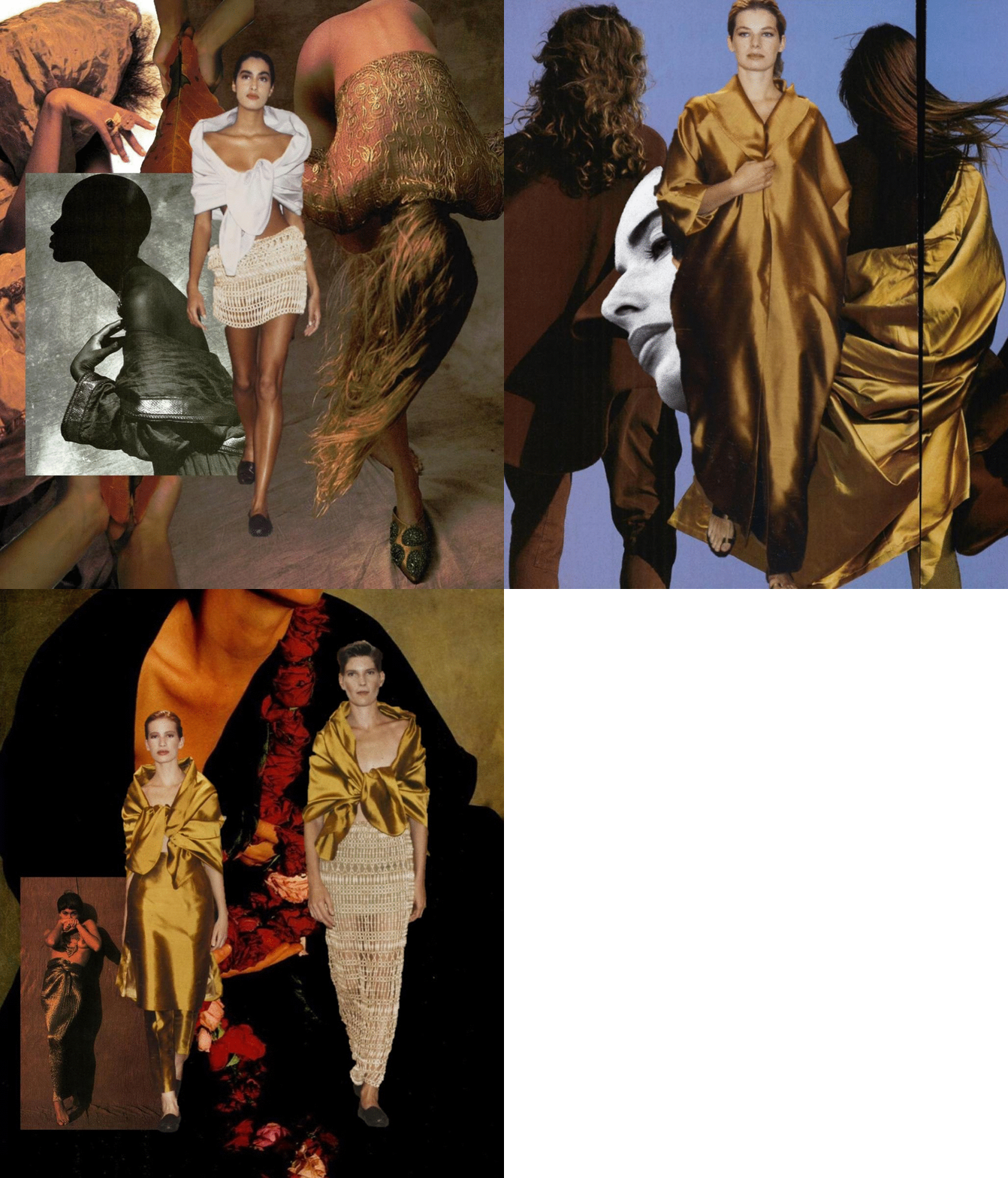
This is not only one of my favourite on-line vintage shops, but also one of my favourite feeds to follow on Instagram! Desert Vintage sells truly beautiful garments, and they also create incredible editorials featuring the rare pieces. The story of this vintage business is equally compelling. Desert Vintage was founded in 1974 on the boulevard of 4th avenue in Tucson, Arizona. In July of 2012, Salima Boufelfel and Roberto Cowan took over the already established Desert Vintage, with the desire to curate an undeniably stylish and eclectic mix of true vintage items for both men and women. Desert Vintage has come to be known as a great source for excellent, one-of-a-kind vintage pieces of quality and flair. They not only share a passion for vintage and antique items, but also love the art of mixing and styling collections in a contemporary and wearable way. The Desert Vintage website offers a variety of items that encapsulate the ultimate vision we have for the company. Throughout the website, you will find an eclectic mix of vintage that spans from the turn of the century through the 1970’s – like a Halston sequined dress or Chloé by Karl Lagerfeld gown. The inventory is forever revolving, and includes textiles from around the world, jewelry and leather collection of wearables and accessories.
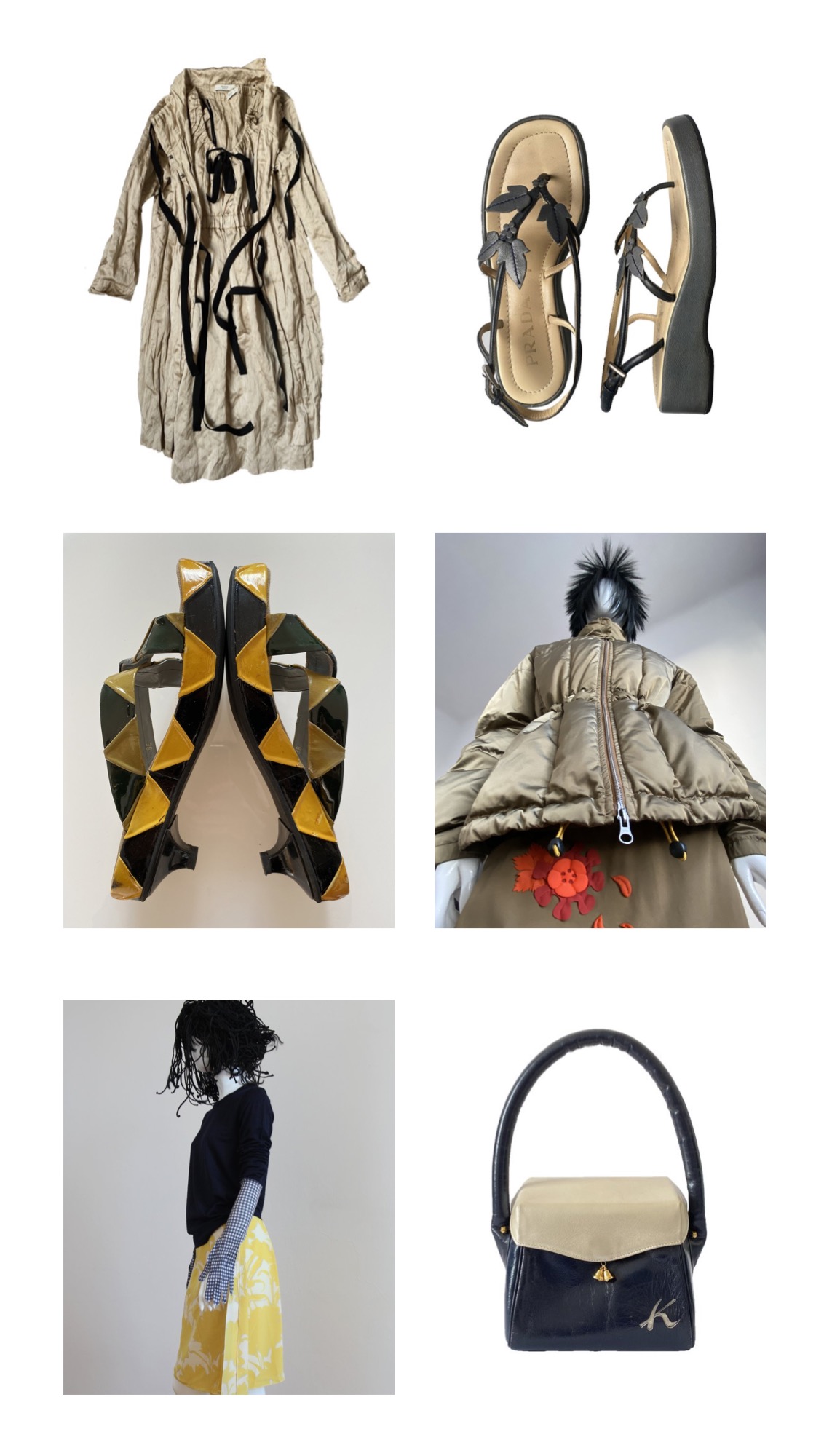
Archive Club is based in Warsaw and was founded by Emma Knaflewska. This vintage shop is absolutely extraordinary, and if you seek vintage Prada or underground Japanese labels, this is a digital heaven. Also, Archive Club’s aesthetic is so, so oddly phenomenal. Here’s an excerpt from their website, because it utterly explains the experimental spirit of this shop: “Who still remembers the year of 1586? That’s when I founded my shop, Archive Club. At first glance, it may seem strange. I mean, it was ages ago. Believe me, the flow of time is something quite illusive. Sometimes it feels like I remember what happened 420 years ago better then yesterday. I recall that objects meant something different back then. They say that when choosing one’s clothes or arranging one’s apartment, we reveal our personality (or put on a mask). Few centuries ago it was more of a mutual relationship. These objects could take hold of us or at least tell us something. The clothes we’re selling are ancient shells of our material existence. These shells cannot be heard anymore, we’ve lost our connection to them. We treat items as inanimate objects, but surely they can speak to us. In the recent past it was understood in the time of Fin-de-siècle. Unless you talk to your shoes sometimes too?”
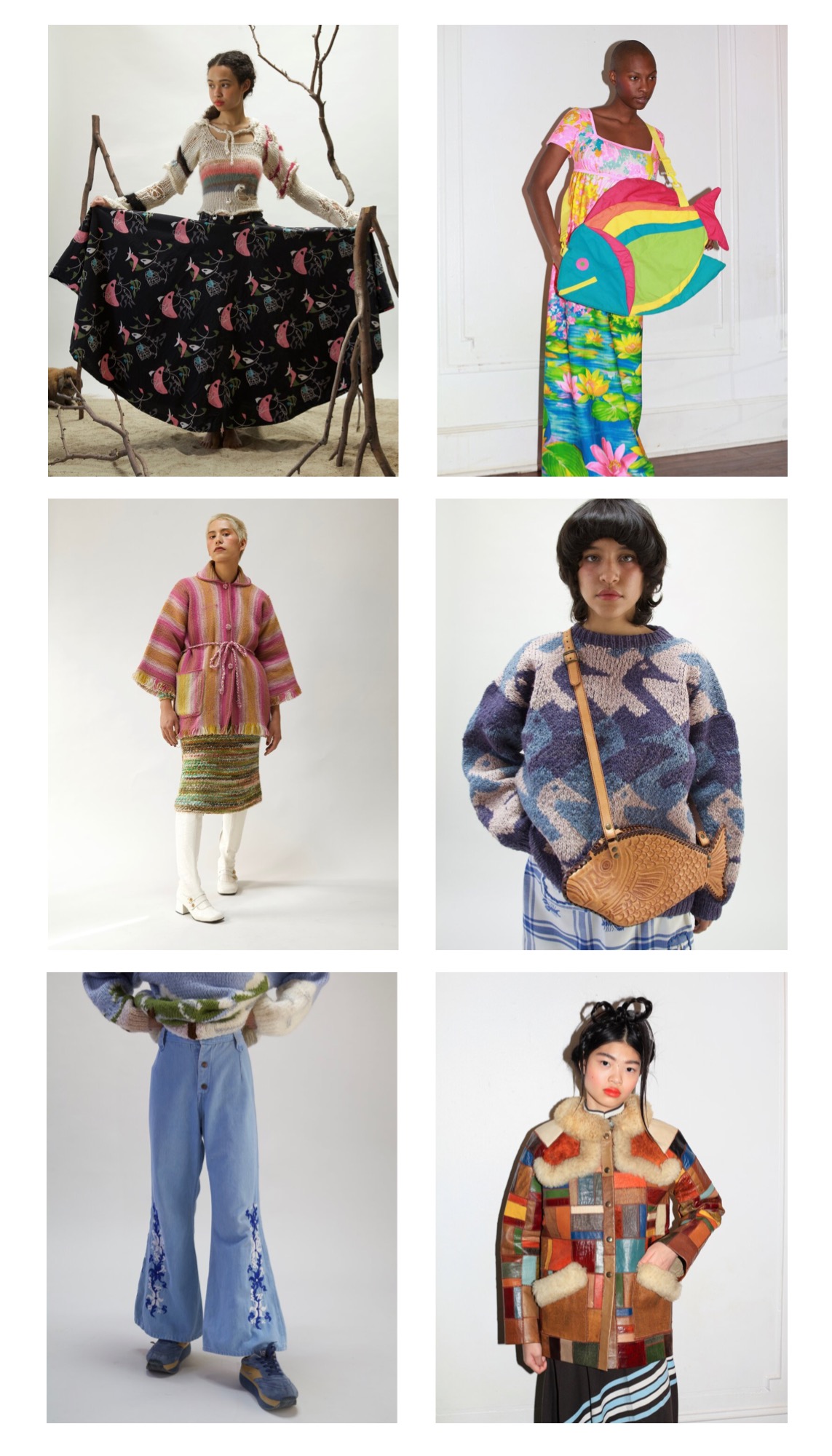
Lucia Zolea‘s carefully curated drops sell out in minutes. No wonder why, really – those pieces are just too good. A signature Lucia Zolea look? One of her cute knitted cardigans with roses or sheeps, a silk, pink night-gown (worn during the day!) and a 70s necklace with adorable, beaded flowers. I bet dozens of brands keep Zolea’s photos on their mood-boards.
Nong Rak is a Thai and American owned creative studio centered in sourcing and selling vintage and antique clothing, as well as working with photography, styling, creative direction, sustainable garment design and interdisciplinary design. Whether it’s a Victorian lace dress and early 80s Missoni cardigan or a 60s Woolrich blanket coat or one of Nong Rak’s “debris” crotchet designs, their idiosyncratic selection is all about intriguing textures, timeless quality and bold style. This is a vintage wonderland, I tell you.
“Live” collage by Edward Kanarecki. Photos sourced from the vintage stores’ Instagram pages and websites.









 Design & Culture by Ed