Core. Marine Serre AW21

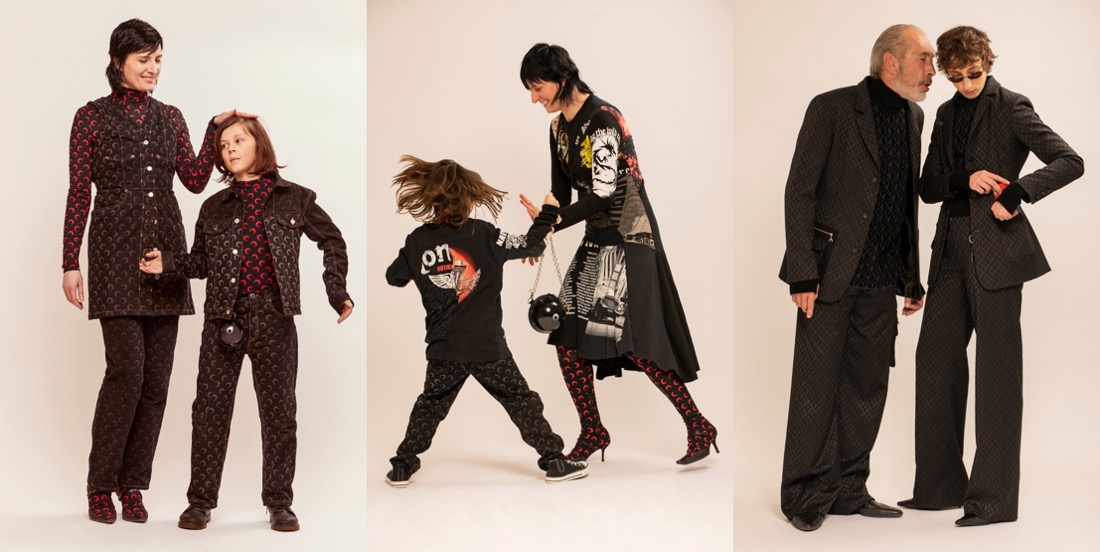
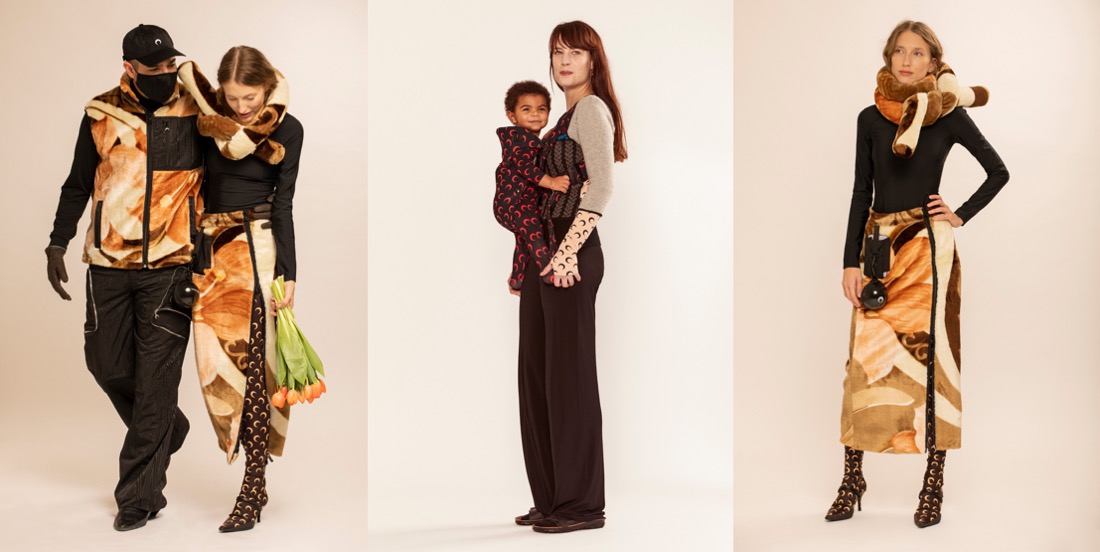
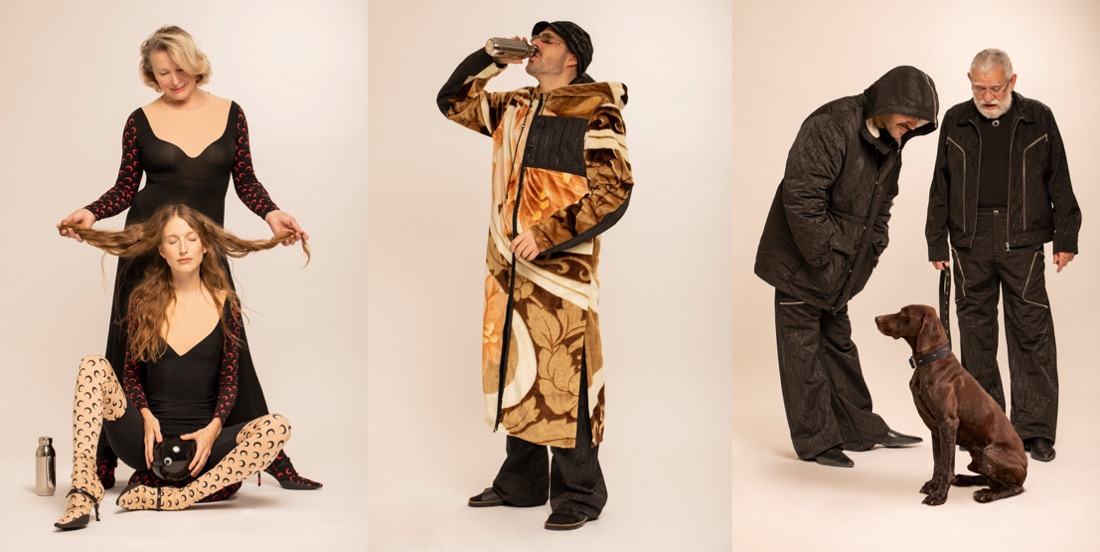
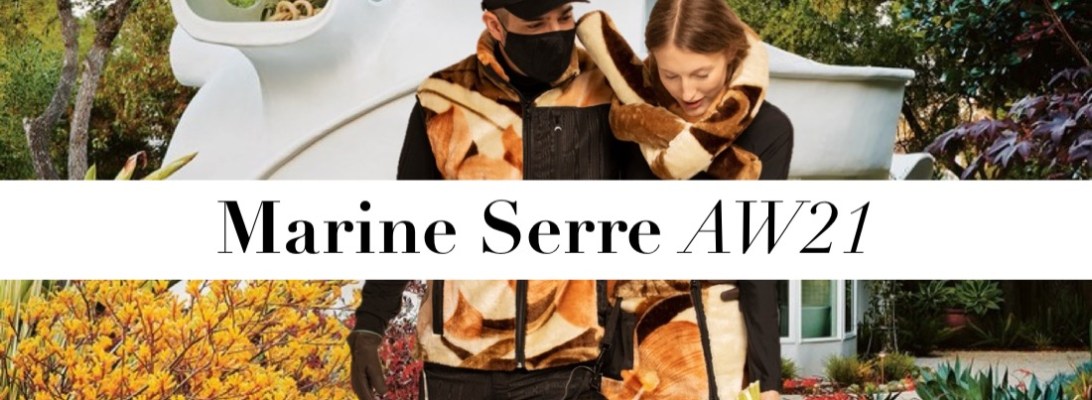
Digital Paris Fashion Week started today, and it hit off with Marine Serre‘s “Core” collections. We’ve got used to Serre’s dystopian visions, which appeared to be ironically precise (she pioneered face masks on the runway seasons ago…). However, her autumn-winter 2021 line-up is all about optymism and hope. The collection wasn’t heralded by a shallow short movie,  but by a website, http://www.marineserrecore.com, which went live at her regular spot on the Paris schedule. The website is a chronicle of all that goes into her designs, and ergo her view of the world, as much as it is a reveal of her new offering and a joyful, life-affirming celebration of family, friends, and community. “Core means the core of the brand, in much the same way as the idea of the core of a computer,” Serre said during a preview. “It’s all of the memory; how everything connects. Pragmatically,” she went on to say, “it’s been three years since we began. We’ve been doing a lot, being an extremely creative brand; we felt the urge to talk, ring the bell, raise the alarm, and reflect that in what we’ve created. This is maybe another moment. An opportunity to look at the interesting processes we’ve put in place; to really think about the garments and the materials we make them from – the transformation of those is really part of our creativity.” The collection is essentially a blueprint of all that Serre has accomplished since she launched the label, filled with her signatures. It’s also a pretty breathtaking and brilliant statement of what can be achieved in the space of three short years; what can emerge when you harness talent with a clear sense of purpose and convictions about what constitutes your values.

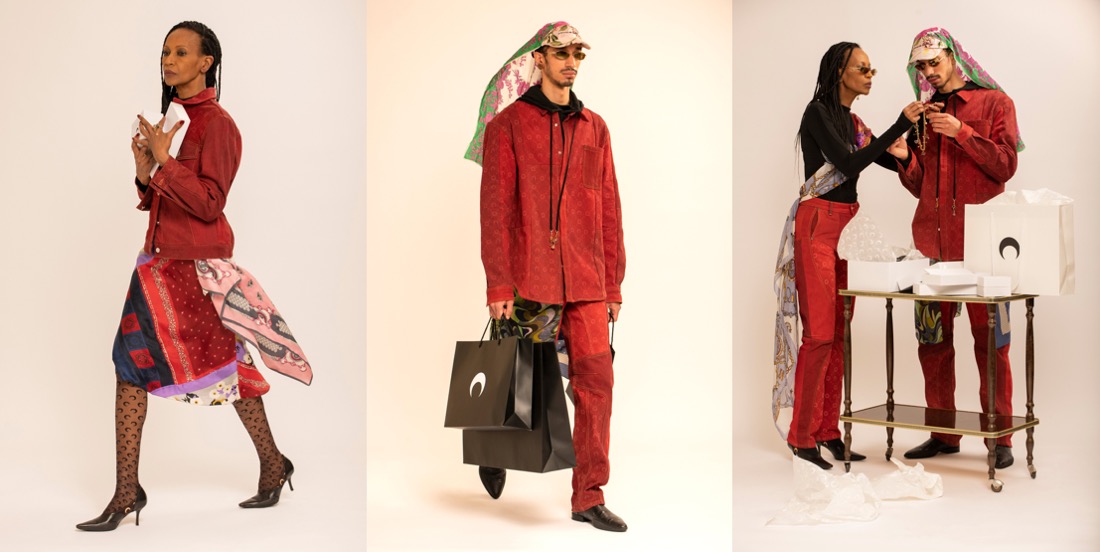
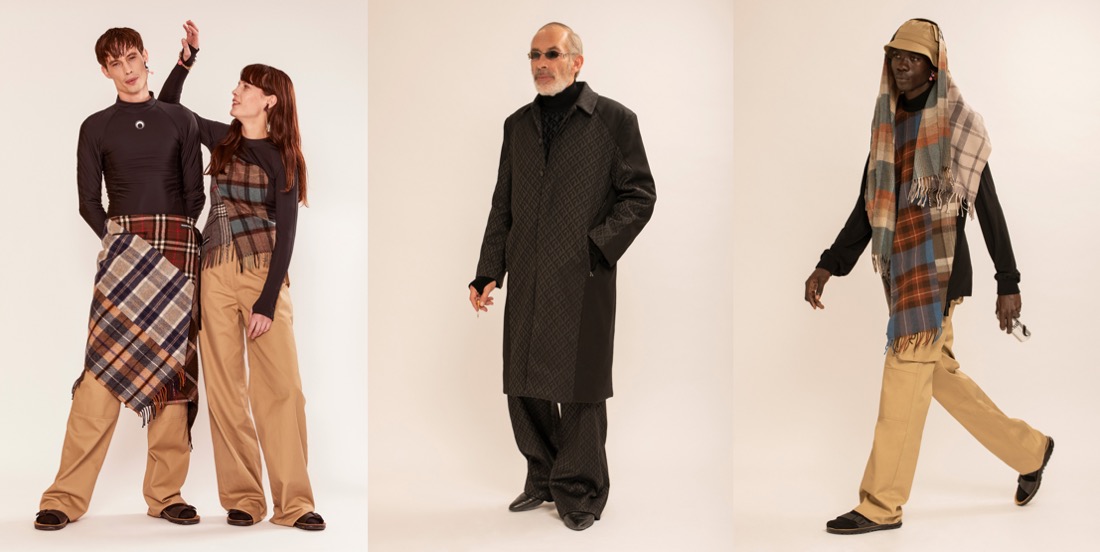
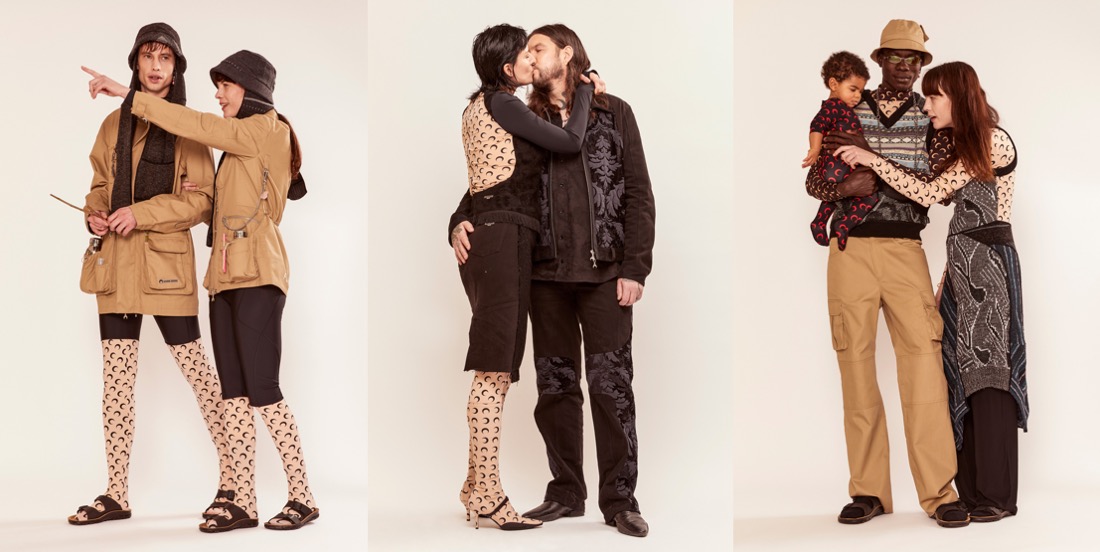
There are plenty of Serre’s upcycled silk scarves, draped around sinuous black dresses, which have been accessorized with talismanic metal belts and petite chain-strap bags, while other scarves have been worked into tunics and tees. Deadstock leather in shades of black, tan, and brown is graphically patched, with an anthropomorphic feel into blazers with squared-off shoulders, biker pants, and jeans-style jackets, sometimes layered up with short dresses created out of antique tablecloths. And the now iconic crescent-moon-motif-embellished bodysuits and regenerated denim or else was mixed with more hybridity in the form of sweaters and dresses collaged out of upcycled knits. All of this was shot on a terrific cross-generational cast of characters, kids included. “It was interesting to revise what we’d already done,” said Serre. “Basically the goal was to bring more real life to our design process, to bring garments into daily life.” Her solution was to ask the team to try things on, give their feedback, then modify to make everything more relatable. The website also houses a charming series of depictions of those within the extended Serre label family, wearing a few of the pieces, and engaged with their routines. “Cooking, spending time with your mother, in the garden, playing with your dog…pleasures which are simple,” said Serre, describing the scenes. “Fashion has always been about a dream, and I don’t like that. Here, fashion is the last thing you see. What you see first are the people.” Serre’s thinking about the site is akin to the way she thinks about her designs. Visit, spend time, come back, visit again, get to know what something means and what it stands for. Nothing should ever be fleeting, or disposable, gone in the blink of an eye.
Collage by Edward Kanarecki.
Surf and Quilt. Stan AW21

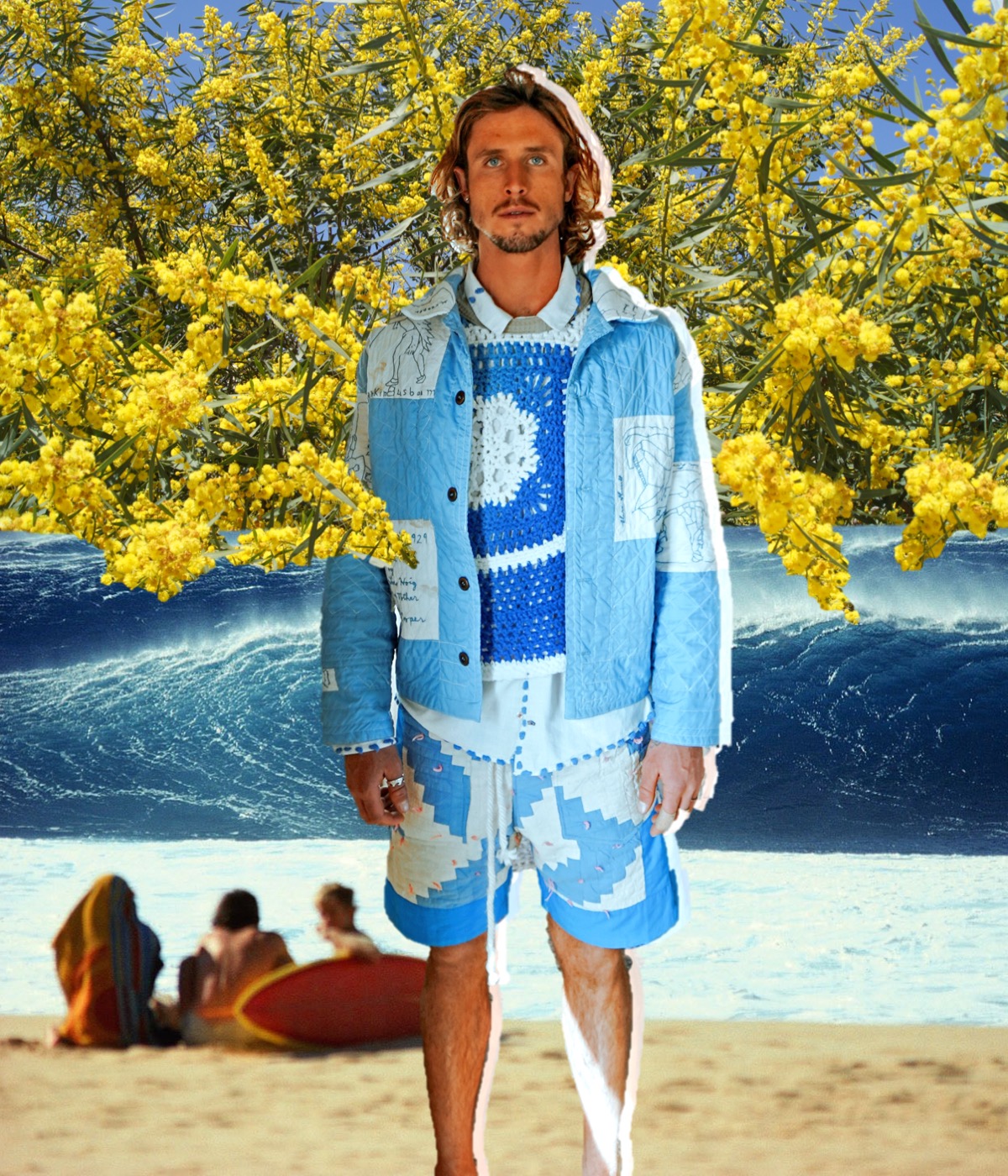
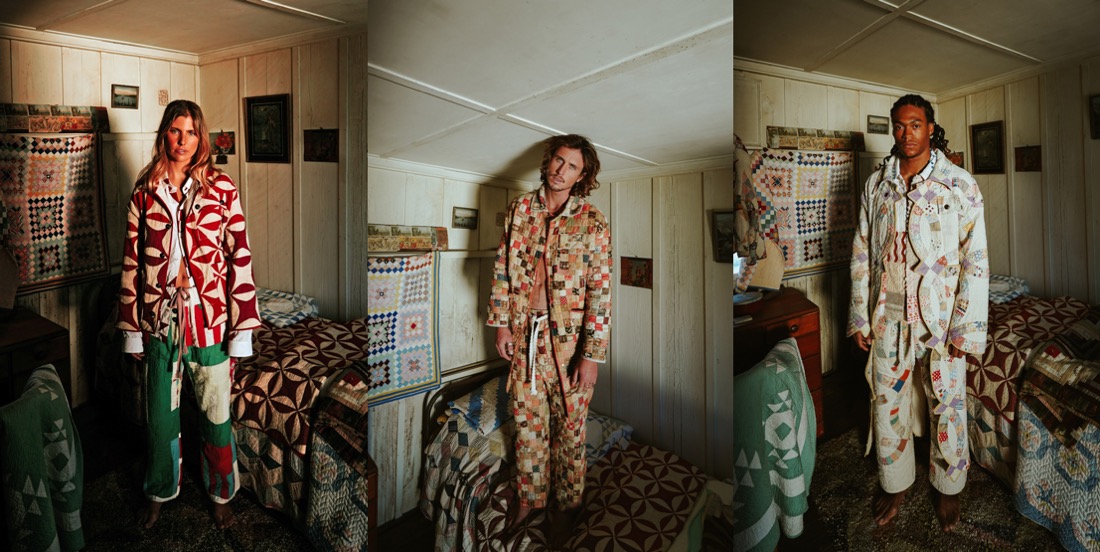
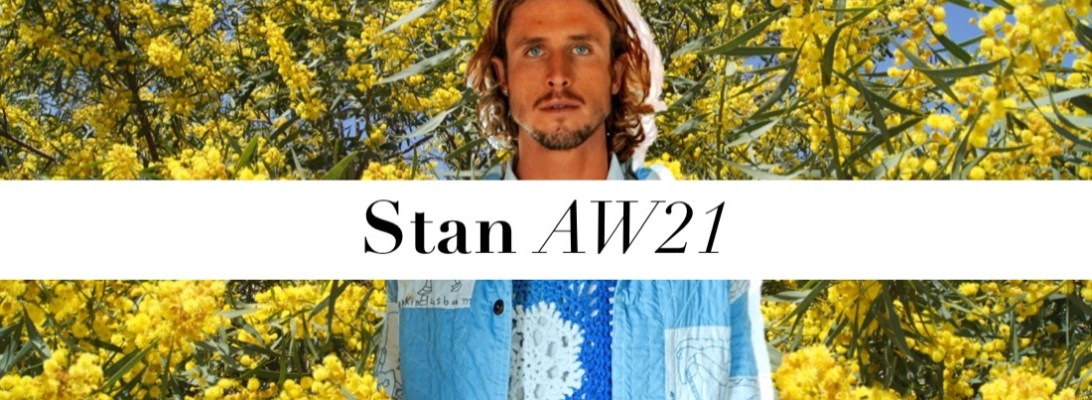
While New York Fashion Week feels very sleepy this season (due to quite understandable reasons), that state of slowness has has its advantages: there’s more time to discover the newcomers. Well, in case of Tristan Detwiler, he is new to the fashion insiders, but on TikTok, he has a following of over 133,000 users who watch him cut up antique blankets and quilts, some dating back to the 1800s, and transform them into chore jackets, Baja hoodies, board shorts, and cocoon coats. The videos offer a behind-the-scenes glimpse of the process and reaffirm Detwiler’s skills as a maker; when he wasn’t competing on University of Southern California’s surf team, he was taking fashion design classes and customizing his own clothes. Upcycled quilted jackets are Tristan’s brand Stan signature, with boxy, unisex fits that accommodate a multitude of sizes, genders, and ages. To hear him tell it, he made his first one in college to replace the quilts he draped over his shoulders for chilly mornings on the beach, but fell in love with the story behind old textiles, quilts in particular. In 2018, he joined the Bumann Quilters of Olivenhain, a group of ladies who have been quilting for decades. In addition to sharing the stories of their quilts and teaching Detwiler their techniques, they’ve gifted him with textiles and heirlooms to use in his collection. The opening jacket in his autumn-winter 2021 collection was made from one of those gifted quilts, a 1920s ‘one patch’ style in a checkerboard motif. It was large enough to make a matching pair of pants too. The second outfit’s ivory coat, chore jacket, and pants were all cut from the same 20th-century ‘wedding quilt,’ while other looks had a more haphazard mix. A jewel-toned jacket made from an 1890 Amish quilt was paired with trousers cut from a 1980s screen-printed potato sack. It’s worth mentioning that these items are already available to buy on Detwiler’s website; since they’re one-of-a-kind, fashion’s usual production time-table doesn’t apply (similar way of doing things at Imitation of Christ!). Detwiler describes himself as a storyteller and a curator, not necessarily a designer. He doesn’t aspire to be the next American mega-brand. But joining the New York Fashion Week calendar places him in the context of the mainstream fashion conversation, and inevitably draws comparisons to his peers experimenting with quilts and upcycling. Emily Bode comes to mind of course, though it isn’t really worth comparing their work; Bode’s is polished and fully “designed,” while Detwiler’s has the messier, intentionally rumpled attitude of California surf culture. Whether it’s a one-time fling or a serious venture into fashion, the vision of a sun-drenched surfer in his DIY quilted jacket and crotchet knit is compelling, especially in the COVID era.

Collage by Edward Kanarecki.

Act Compassionately & Sustainably. Imitation of Christ AW21

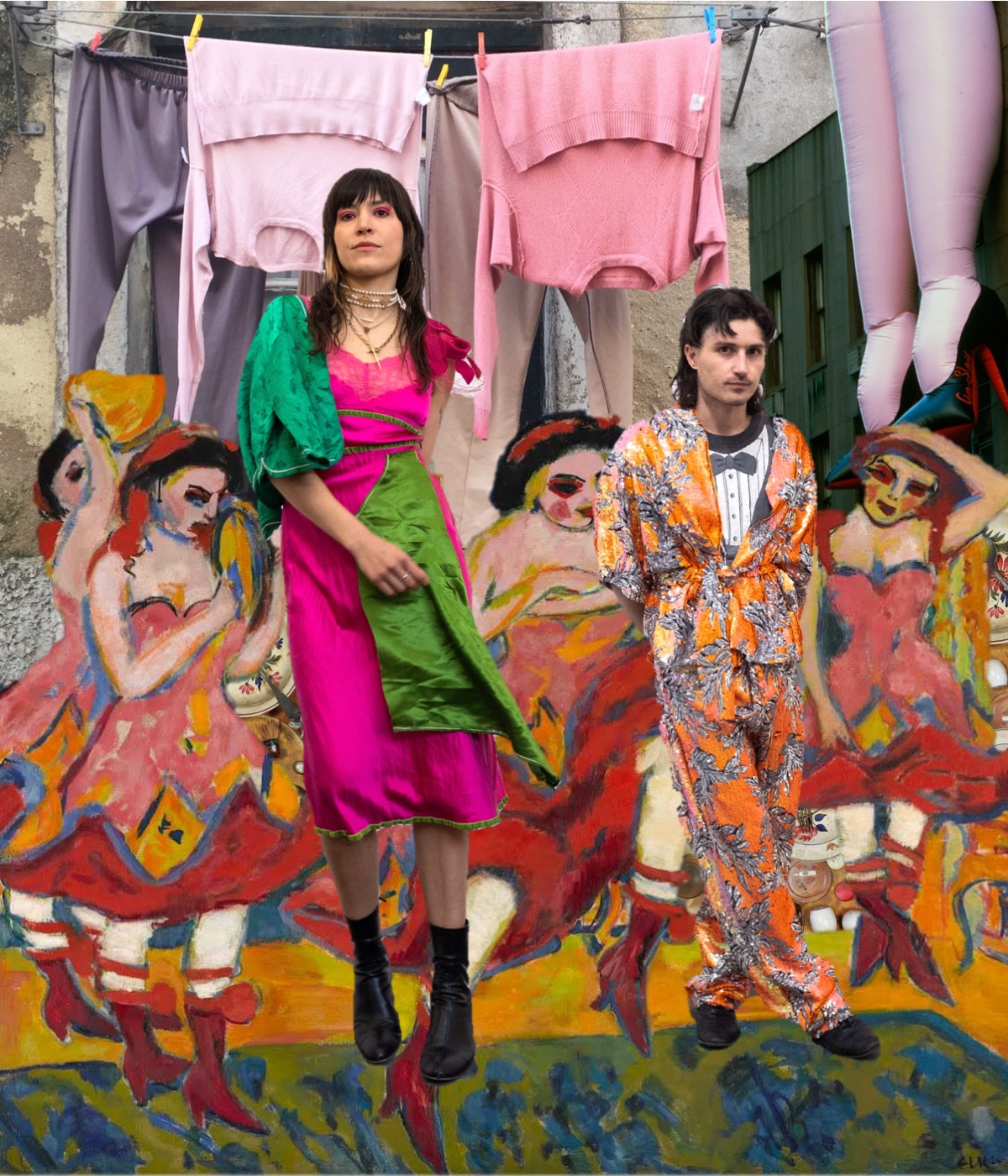
Imitation of Christ isn’t a regular fashion brand. Every single piece made (“produced” just doesn’t fit here) is one-of-a-kind. No pre-collections and no traditional business models, but rather spontainety and a sense of inspiring care-freeness is what prevails at Tara Subkoff‘s brand. And of course it’s one of the most ingeniously sustainable labels that exists. Second season in a row, Imitation of Christ’s upcycled collection is available and sold on The Real Real – and half the profits will go to Greta Thunberg’s Fridays for Future. Also, there’s no coincidence that the autumn-winter 2021 collection was presented on Valentine’s Day. It’s a reaction, said the designer on a call with Vogue, against “a Hallmark holiday or some consumer driven idea of romance.” Instead, the designer highlighted, the line-up (and the accompanying video) offers something “true.” The collection video, made in collaboration with Daphne Muller and Adam Teninbaum, is not for the squeamish. Though it features six hip Californians, a few of some renown, the piece is dominated by “a real 3D animated heart,” that is, admits Subkoff, “really shocking. We have this very strange idea of what a heart is, which is… really a cartoon version that we give to each other. We all have a heart pumping blood in our bodies and it pumps for a finite amount of time, then it’s over. And I think the more we understand that, maybe the more compassionate and kind we can be towards one another.” A similar feeling of compassion is present in the off-kilter garments. Subkoff  has always had a penchant for beaded dresses from the 1920s, and these were back and looking fresh. Deco beading was applied to pieces for men and women, and this incongruity was perhaps best exemplified by the pairing of a gray utility suit with shimmering white bead work (there’s a well-considered Martin Margiela method in these de- and reconstructed pieces). Subkoff believes that what good you do in the world becomes an ever growing legacy. She’s been serious about sustainability for decades and hopes, through her actions and messaging, to inspire others to design and act sustainably (“Please, other companies or other people – copy this, do this,” the designer offered).

Collage by Edward Kanarecki.
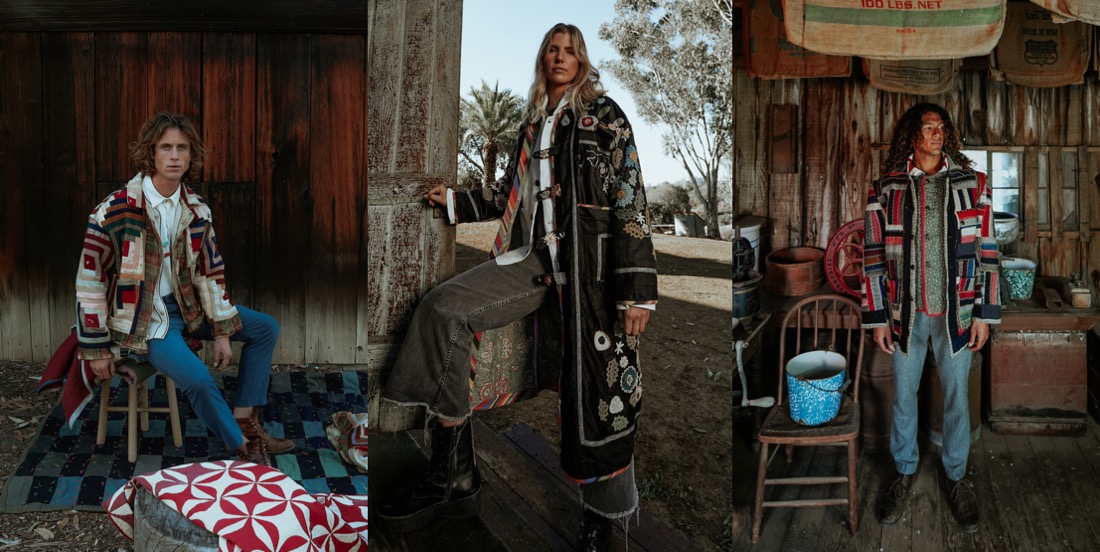
Men’s – Eclectic, Curated, Sustainable. Loewe AW21

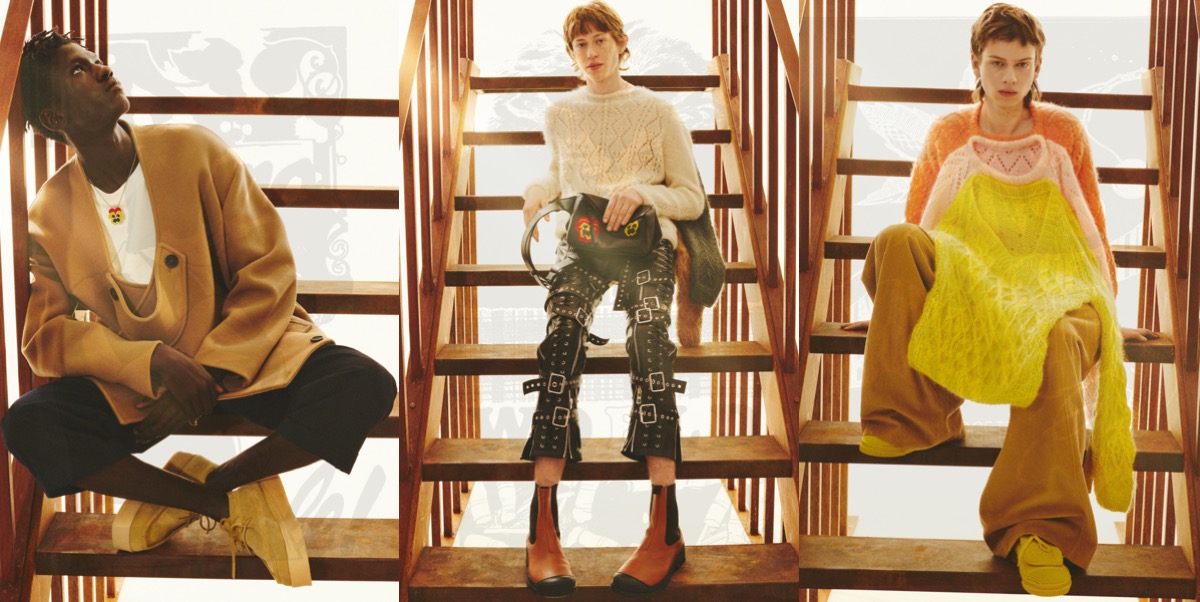
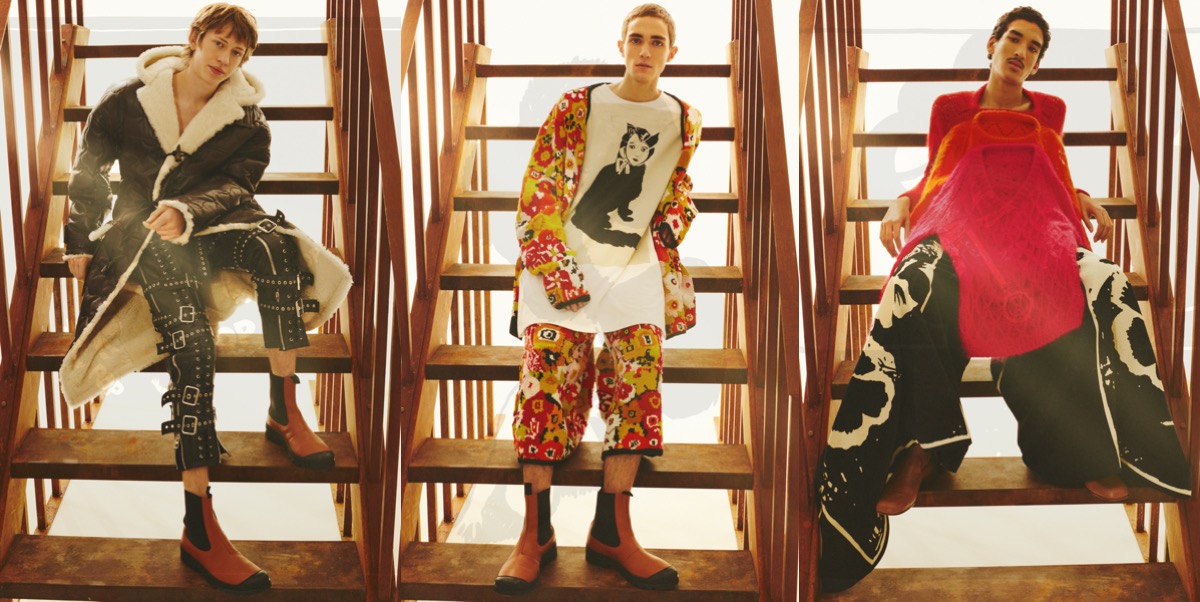
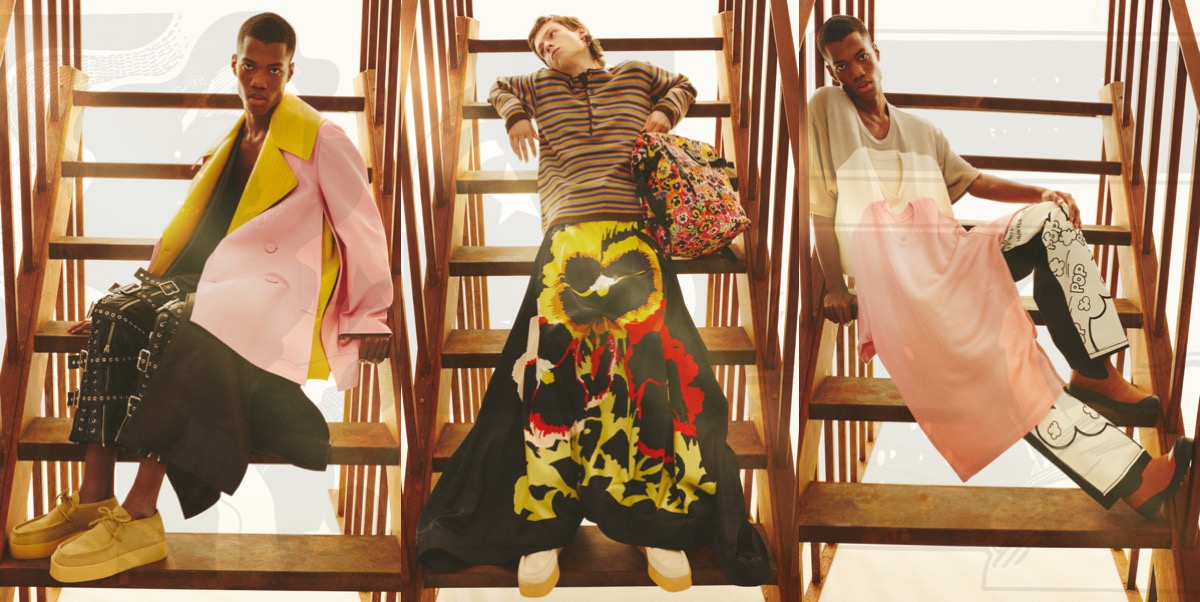
Jonathan Anderson‘s Loewe universe is a wonderland of eclectic, curated – and sustainable! – things. And the autumn-winter 2021 collection for men is like a treasure chest of details, curiosities, textures, crafts prints and colours. But to organize what we’ve got: this Loewe lookbook actually feautures two collections, and the one at the bottom is produce from the company’s Eye/Loewe/Nature sustainable-practice department. This time, the communication came as a show-in-a-book, wrapped up in a coffee-table sized monograph on the queer New York artist Joe Brainard, and as a show-on-a-shirt – a huge T-shirt printed with all the sustainable-practice pictures. Why Brainard? “I remember zines he’d done in the ’70s. We remade a book on him which we’ll be selling in bookshops, and the proceeds will go to the charity we work with all the time, Visual Aids, to help artists who have suffered from AIDS,” says Jonathan Anderson. “I felt like Brainard is so important. He was part of a huge movement, with his writing and his pansy collages – his work is now at MOMA and the Pompidou. I like his writing, it has huge optimism, questions sexuality and things like that. But he’s one of those underground figures.” Anderson talks through the collection in an open-access video on the Loewe website, where it’s easy to see the assembly of charming pansy patterns made into big cardigans, or vast rectangular trousers, or inset as leather marquetry on Loewe Puzzle bags. You also get to understand how the panels of a patchwork shearling are pieced together from reproductions of Brainard’s canvases. And how a tote bag is decorated with the artist’s painting of a whippet on a green background. It’s all adorable and completely wantable. And the extra kick to the feel-good sensation of buying it is that your money is also going to do some good in the world. “I think the whole thing now is about clothing and something else,” says Anderson. “I think the customer wants more than just the clothing now. They want to make sure you have a unique viewpoint and, at the same time, a moral viewpoint.” A joyful vision and a bit of a mad-creative take on fashion are also rare luxuries to enjoy vicariously these days, what Anderson calls “being imaginative with clothing.” His current work on extreme trouser shapes delivers all that. Besides the multi-strapped leather and grommeted punk trousers, the pieces that might read as maxi-skirts actually turn out to be pants too. “I did a lot of wide, wide, super-wide trousers. Kind of performance trousers – this idea of being in your bedroom and dancing on your own.” Which we know is an actual social phenomenon in these days of lockdown.

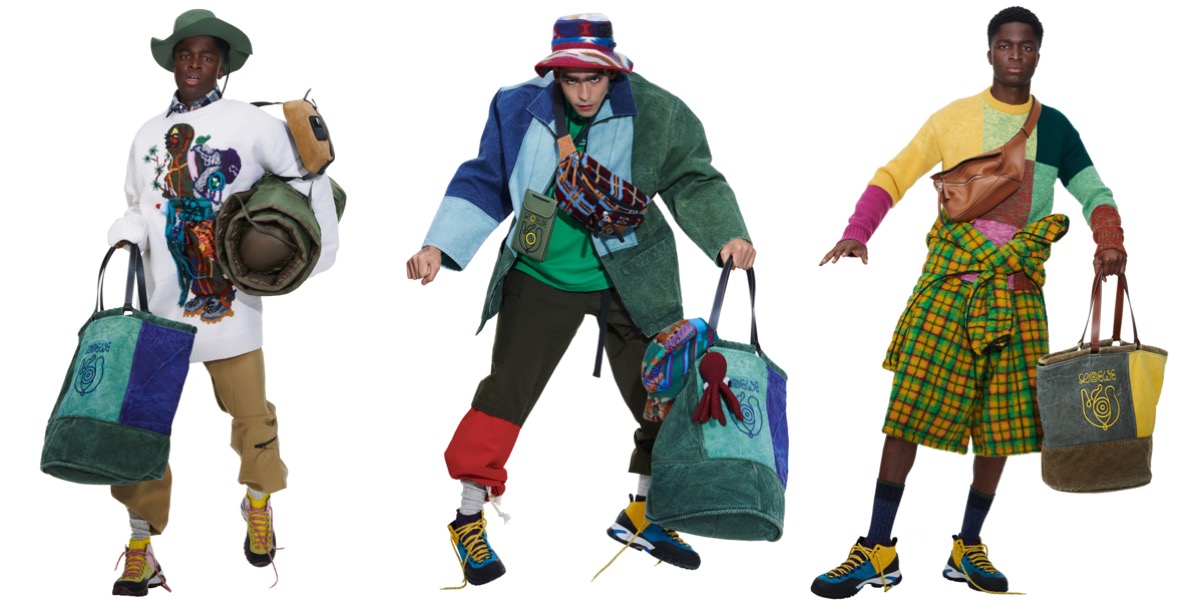
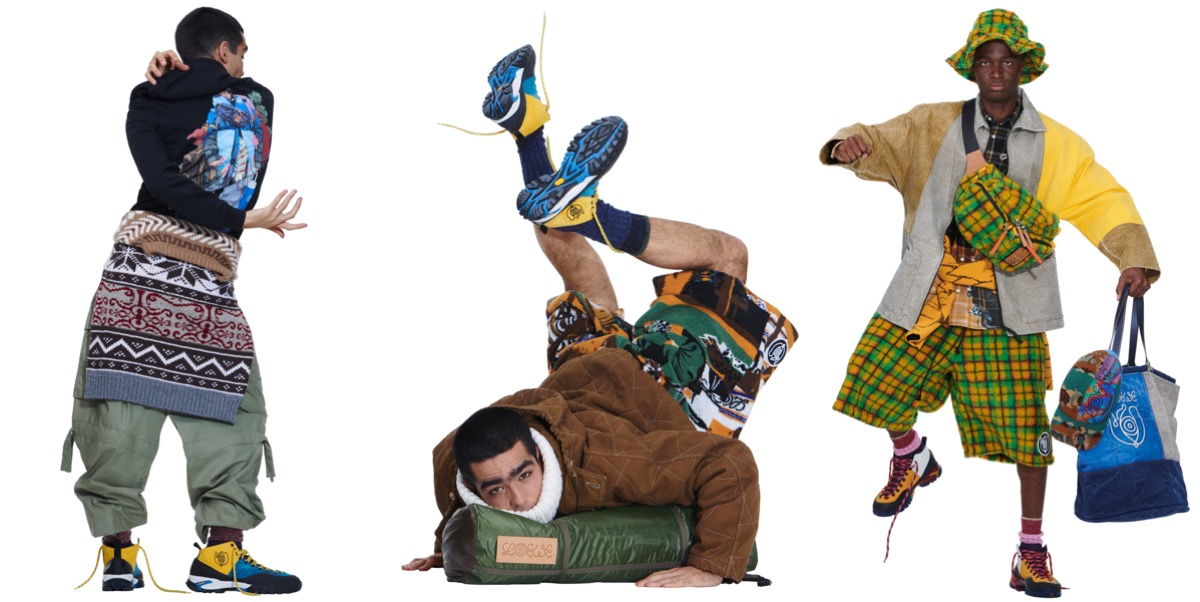
Amongst the collection is also a huge, cosy multi-patterned Shetland-cum-Norwegian type sweater, knitted together from upcycled yarns. It links directly into the work on sustainable research that’s been going on for four years with the Eye/Loewe/Nature collection. It’s much more than an isolated side-project, Anderson explains. “We set it up as an incubator inside Loewe to try to work out a long-term solution to sustainability. It’s where the entire design process is monitored from start to finish. Every year we try to chip away at something – buttons, zips, hardware, plastic clips – so that what was a problem becomes less of a problem. Because it then means that your supply chain can deal with it, manufacturing know how to deal with it, and the design team knows how to design within that framework,” he says. “And from those learnings, working with suppliers, we can disseminate elements into the bigger workings of Loewe.” In practical terms, it’s meant “buying a huge bulk of used knit sweaters, or denim, and working them into garments. The great thing is that the whole company is involved. What I like about the industrial side is the idea of talking to suppliers like YKK about a problem – and actually making it not a problem. The trouble is when you’re impatient, like me, you want to be completely sustainable tomorrow – but you have to realize it takes time. It means turning an industrial revolution into a new eco revolution. Ultimately, the big picture is, we all have to do it,” he says. “It’ll probably be an ongoing thing throughout my entire career.” If luxury goods companies ever worried that customers would baulk at buying products made of upcycled or non-traditional materials, then the testing ground of the Eye/Loewe/ Nature collection is beginning to prove them wrong. “This is the third collection now,” says Anderson. “And, you know, it’s becoming very, very popular.

Collages by Edward Kanarecki.

Re-New. Maryam Nassir Zadeh Resort 2021

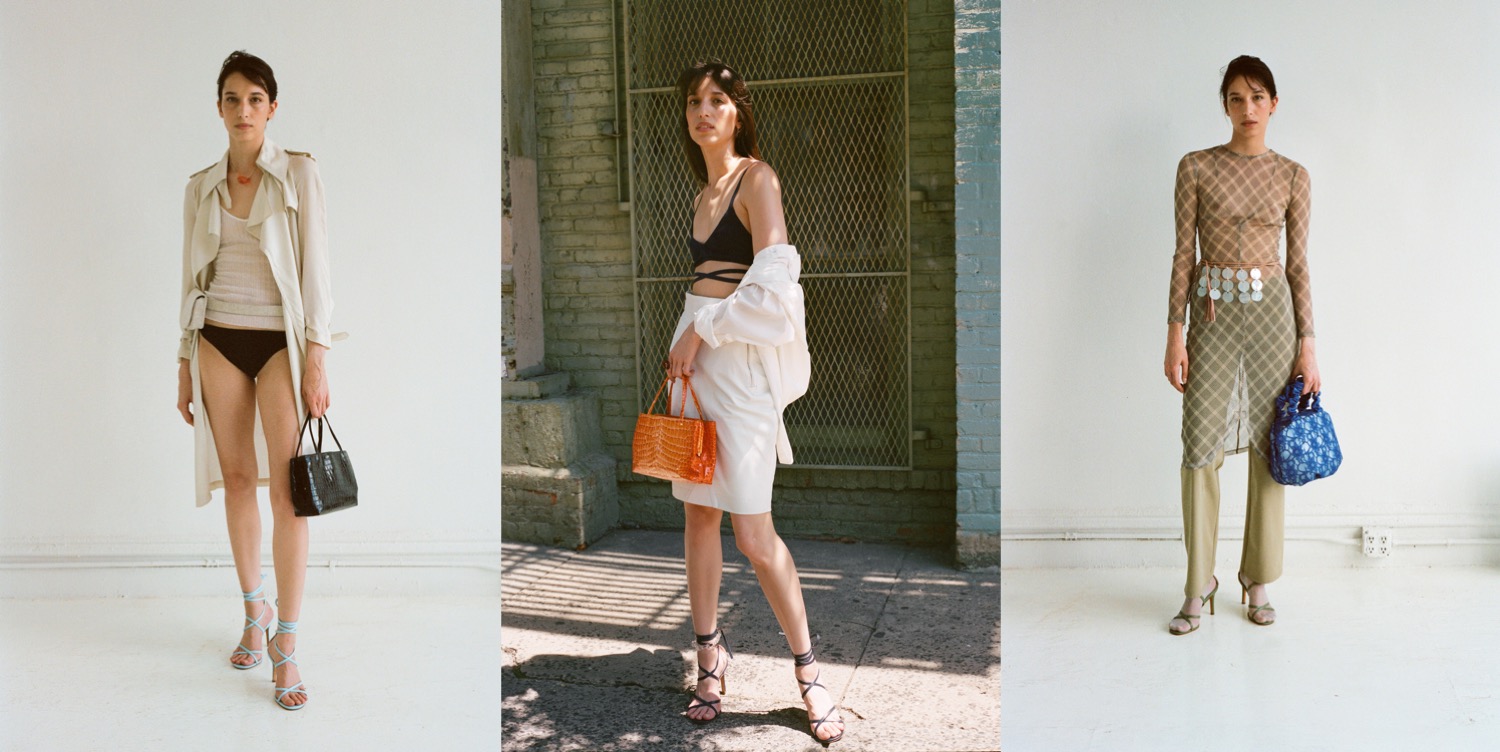
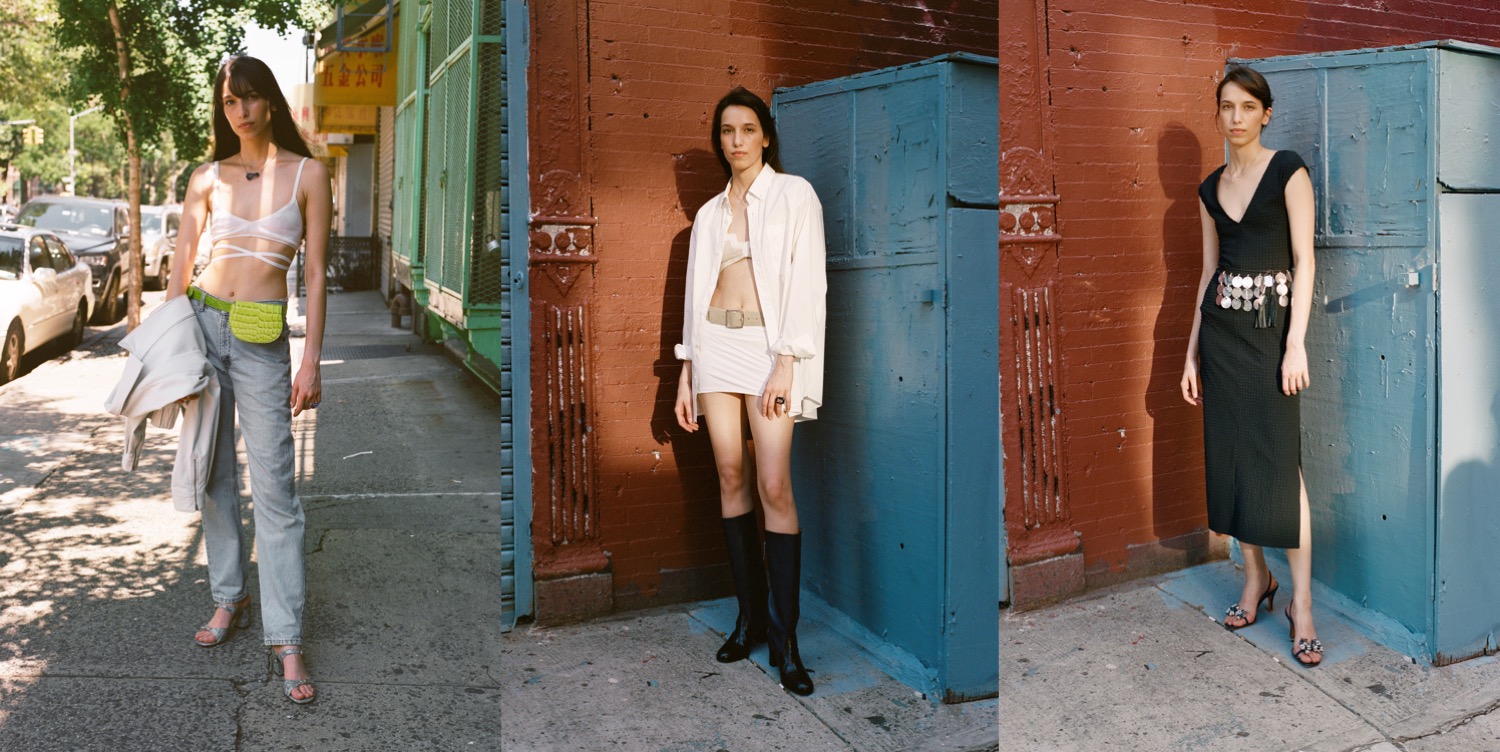
If there’s one thing you should read this weekend, it’s Irina Aleksander’s strikingly sharp and realistic feature for The New York Times on how the fashion industry collapsed, even before coronavirus became the new normal. I still believe that in the end, we will want to wear something else than just sweatshirts and sweatpants. But one specific part of this text seems to be so easy to comprehend that it’s unbelievable that the industry has never caught up with this concept: clothes aren’t food. They don’t rot after a week, neither after six months. According to Aleksander, some brands have in plans to push the unseen and unsold 2020 collections to 2021 to avoid losses. As simple as that… and yet, there’s one big obstacle. “The fascinating part is that in order to do that – to give that aged inventory value again – requires killing fashion, that nebulous deity that says something is ‘in’ this year and not the next”. So, to make it work, it’s not just about the designer – who would definitely love to take a break from everything to refuel – but the corporate floor and the customer. We should learn to slow down with that love for the “new” and appreciate what’s “now” – or at least, try to take a second look at it. To my surprise (as I already thought way back in spring that it’s a logical step to make for a lot of brands out there), for the resort 2021 season, Maryam Nassir Zadeh is probably the only designer who actually did this. She actually made old… new. Here’s how. Zadeh didn’t cut a single new garment. Instead, she put together a “hand-picked” collection of items from the past, reimagined and recontextualized for now. Years and seasons collapse in many of the looks: a white button-down from autumn-winter 2020 was styled with an ivory leather skirt from spring-summer 2020; a pair of striped shorts circa spring-summer 2019 were paired with a autumn-winter 2020 knee-high boot, redone here with a black lace shaft. Bikinis and strappy bras, often styled alone as tops nodded to her swim-heavy spring-summer 2018 show. Well… that’s brilliant! Maryam resurrected these items not just because they deserve a second look or feel newly relevant, but also because it seemed like a more sustainable way of doing things. In their walk down memory lane, Zadeh and her team only chose pieces they knew they had enough leftover fabric to make. They didn’t want to invest in making new patterns or ordering silks and wools from Italy: “It isn’t even just about sustainability in recycled materials, it’s about sustainability of time,” Zadeh told Vogue. “We never have enough time to order new fabrics from Italy, and the turnaround times [between collections] are so short.” And back to the collection: it’s quintessentially MNZ. Her sensitivity to what’s “in the air” means we will all soon be obsessed – and other brands as well. On the list are: shorter hemlines, colorful silk button-downs, men’s shirts and tailoring, anything lace, and retro embellished belts, styled here as “spice ups” on otherwise simple jersey dresses. “There’s a real personality and style to the collection,” Zadeh said. “It’s easy and wearable, but still special, because we’re mixing these strong basics with novelty accessories.” In the past, Zadeh has described that MNZ balance as “odd elegance”, and that’s still true for her eponymous label. Take notes everybody.

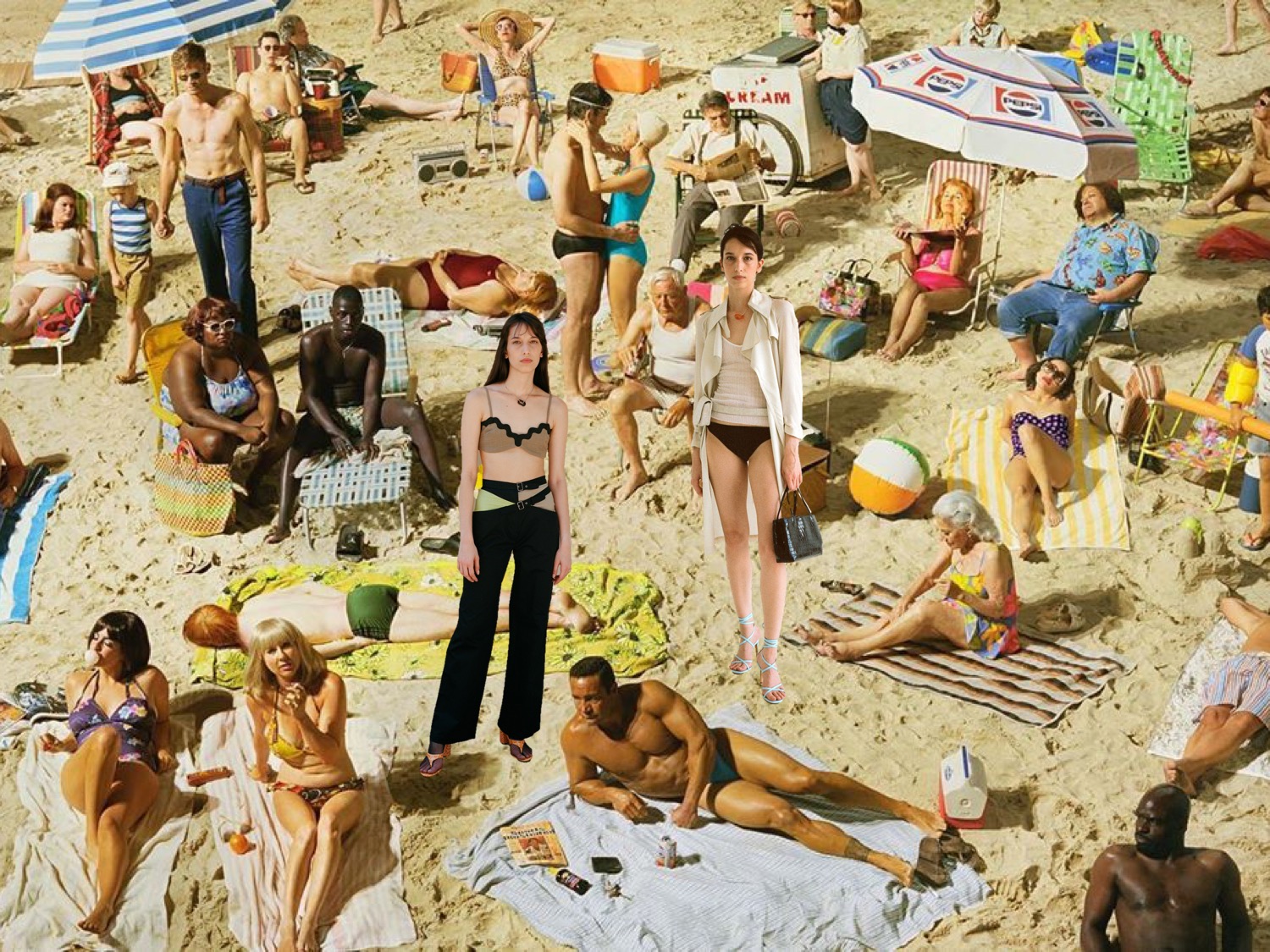
Collage by Edward Kanarecki.