Late Capitalism. Conner Ives SS24

We live in the times of late capitalism. It’s also how Conner Ives entitled his spring-summer 2024 collection, which starting point was a TikTok video he stumbled across a few months ago of a girl live-blogging her experience queuing for a fashion sample sale in New York as smoke from the Canadian wildfires bathed the city in an ominous orange glow. “As much as it felt like the end of days, there was also a dark humor to it,” Ives said at a preview. “It’s the beginning of the end of the world, and we’re waiting in line at a sample sale.” “Late Capitalism” – a collection that invitates to talk more openly about the economic realities of what keeps the fashion world moving – is “a subject that makes me uncomfortable, which made me feel like it was something worth talking about,” he said. Ives is one of a generation of designers for whom sustainability is something of a given, meaning he hasn’t telegraphed his eco-credentials all that loudly in the past (although with his signature approach of lending deadstock and upcycled vintage clothes a glamorous new life, you didn’t have to dig very deep to notice it). But he now feels a greater urgency to share the various methods by which he’s carved out his own, more responsible lane. “I think part of me didn’t want to get up on my soapbox, as I wasn’t sure if anyone really cared,” Ives said, noting that in his few years of doing production at scale, he’s repurposed nearly 15,000 T-shirts destined for scrap yards, while a new partnership with Depop will see him use the platform to source bulk raw material for production. And he’s open to talking about the fact that the system still isn’t perfect. Sure, he’s made a firm commitment to only staging a runway show once a year, but he still needs to produce lookbooks in between to allow him to sell year-round and keep his business afloat. “I’m very aware there’s an irony to the ‘Late Capitalism’ collection being an answer to getting more items into stores,” he acknowledged.

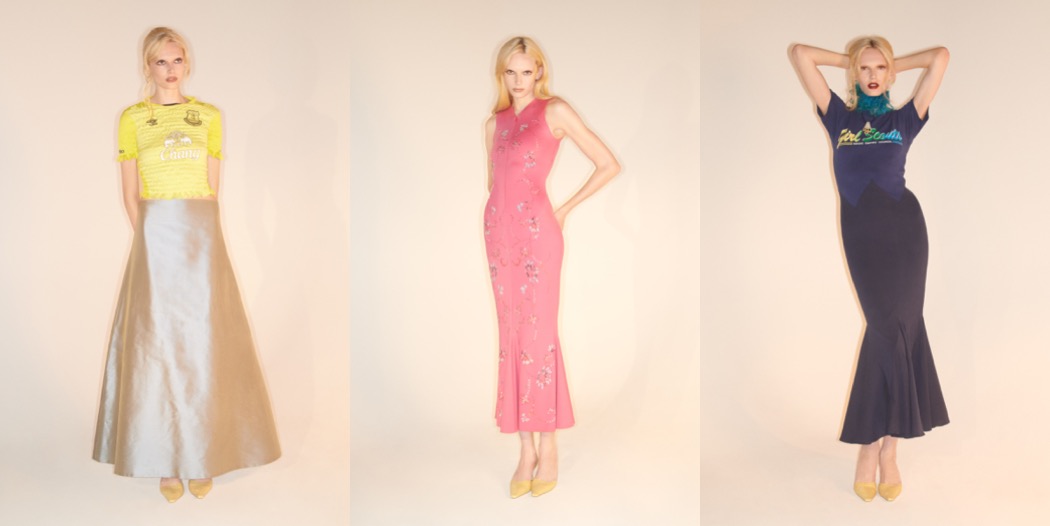
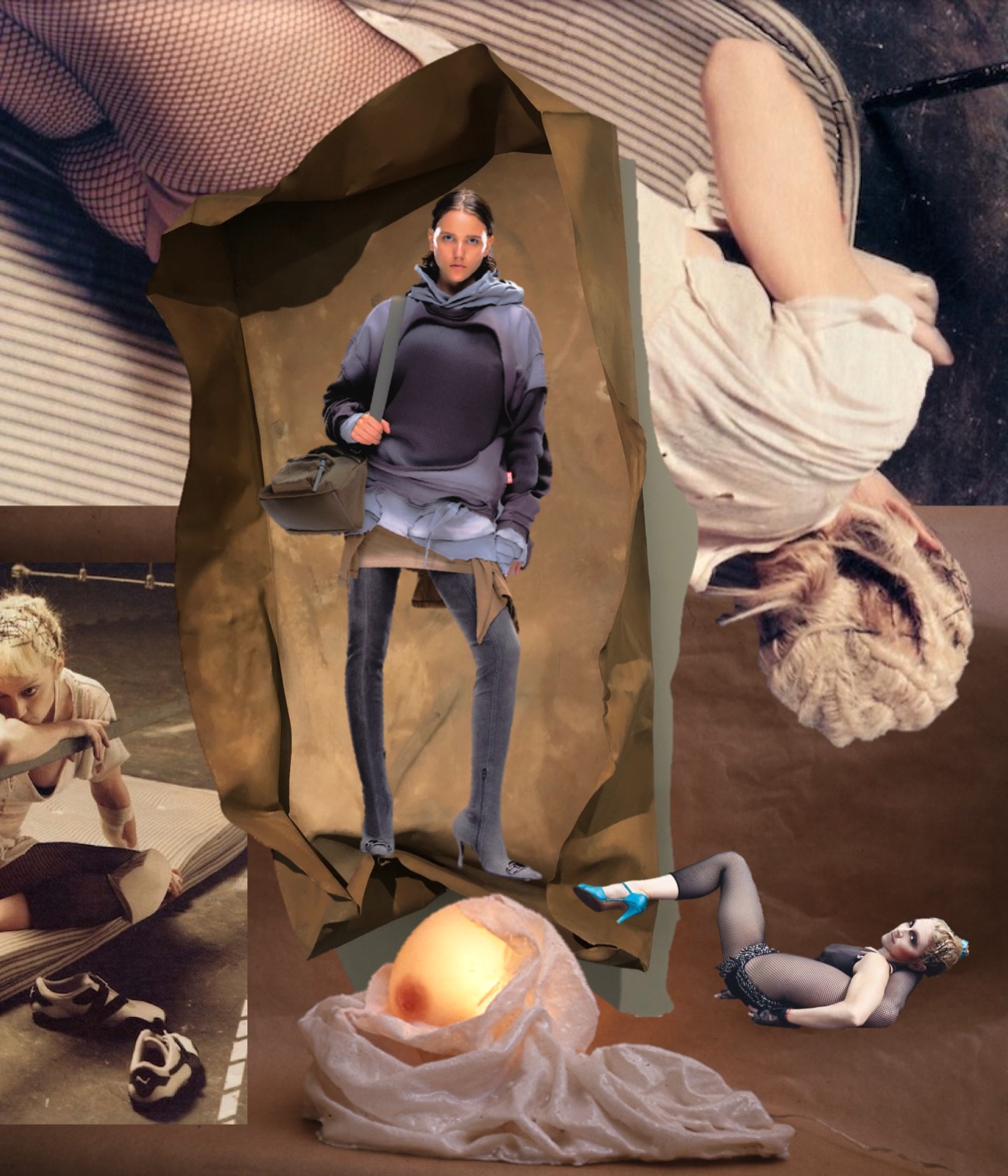
So, then, to the clothes. In his signature spirit of character-driven styling, Ives’s lookbook- photographed by Johnny Dufort, and starring the TikTok-favorite model of the moment Alex Consani – began with one of his “archetypes,” a T-shirt and skirt decorated with a swan motif as an ode to Natalie Portman’s doomed ballerina in Black Swan. Once again, there was plenty of fun to be had identifying the various figures he was paying homage to, from Charlotte York to Carmela Soprano. Ives also continued his journey of expanding out from the spliced T-shirt dresses that made his name as a fashion editor favorite, continuing to develop his tailoring and elevate his eveningwear offering. Highlights included a series of T-shirt dresses with 1930s-inspired trumpet skirts made of recycled jersey, a sheer bias-cut dress cut from baseball jersey material, and a swishy black halter gown with a mother-of-pearl shell as a belt buckle. But perhaps the most striking looks came at the end, in the form of a dazzlingly intricate dress strung together from 9,000 soda can tabs, and a slip made from cowrie shells strung together in a bias lattice. Cowrie shells, being one of the earliest forms of currency in human history as Ives pointed out, is another nod to the collection’s meditations on commerce.
Collage by Edward Kanarecki.
Don’t forget to follow Design & Culture by Ed on Instagram! By the way, did you know that I’ve started a newsletter called Ed’s Dispatch? Click here to subscribe!

NET-A-PORTER Limited

Performance-Wear. Diesel Resort 2024

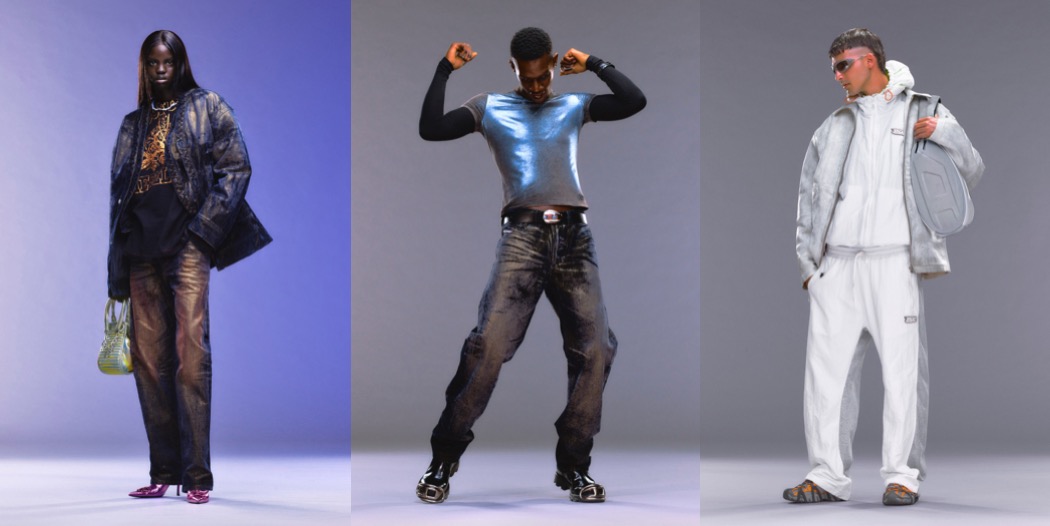
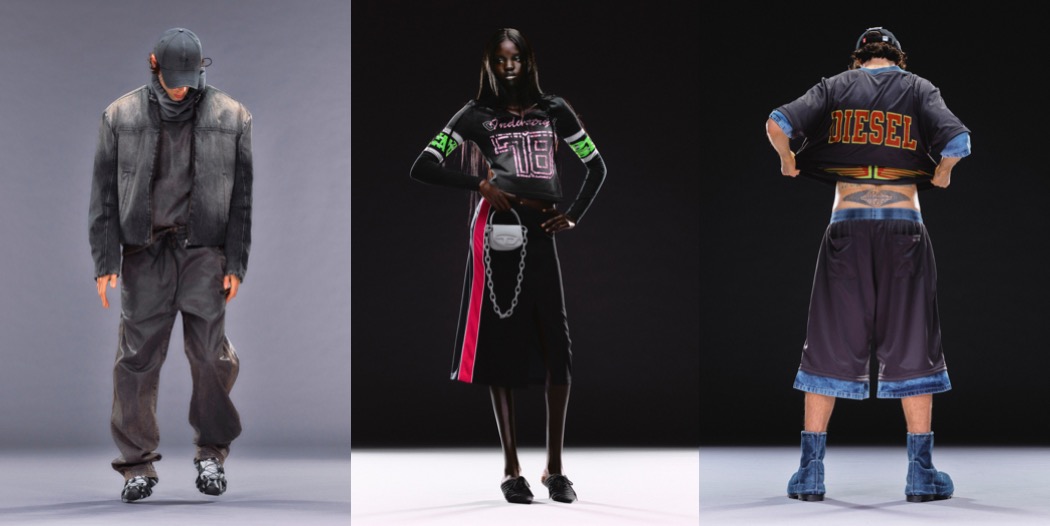
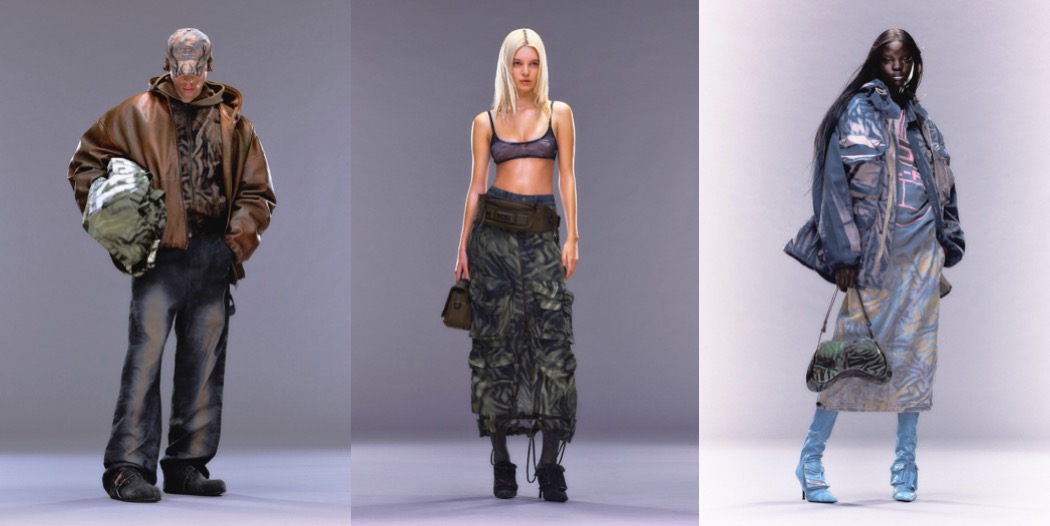
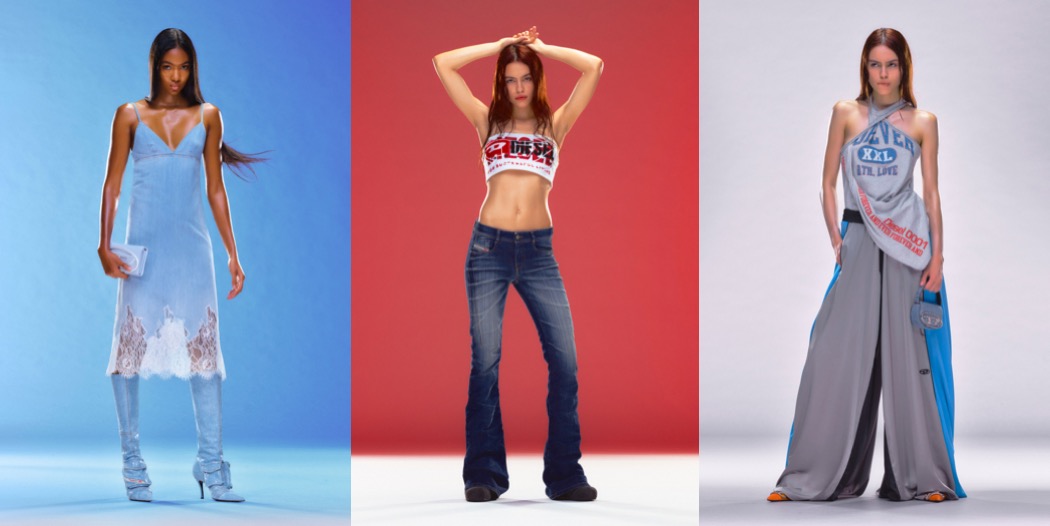
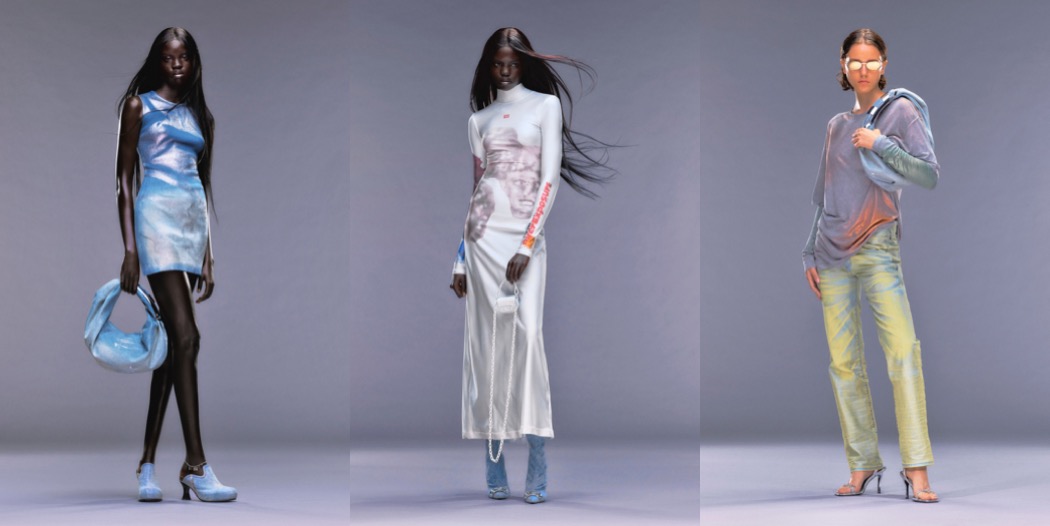
We are continually evolving, it is about continuity,” said Glenn Martens regarding his process of reviving Diesel, and the democratic aspect of his resort 2024 offering. He added: “Perhaps more than anything I can say that what we did better this time was to take more carryover stories from the runway and industrialize them to create easier access price points for all of our stores and customers.” Another evolution, he said, was that his ambition to present Diesel collections as fluid, every-gender products on the shop floors has begun to manifest in certain flagship outlets – and that this lookbook was shot to reflect that. In other words, if February’s sultry, Durex-strewn Diesel show emphasized sex, then this follow-up collection was concerned with performance. The last-show iterations of Martens’ three Diesel pillars – denim, utility, and pop – were all harmniously diffused. Denim-wise, we saw the core material cut into jersey, leather, or bouclé panels on tough sportswear, trimmed with lace in easy-wearing little dresses, overlaid with oily or stonewashed color treatments, and used as a fabric for shoe uppers. The mainline collection’s intricate indigo dyed denim knits were reformulated in a fabrication designed to be color-fast as well as eye-catching. The designer emphasized that his foundational pivot to sustainability continues: “around 70% of all the denim here is produced through more sustainable processes,” he said. Elsewhere collegiate lettering on jerseys amusingly declared “Lies,” but this designer’s determination to green Diesel is no fib.

Collage by Edward Kanarecki.
Don’t forget to follow Design & Culture by Ed on Instagram! By the way, did you know that I’ve started a newsletter called Ed’s Dispatch? Click here to subscribe!
NET-A-PORTER Limited

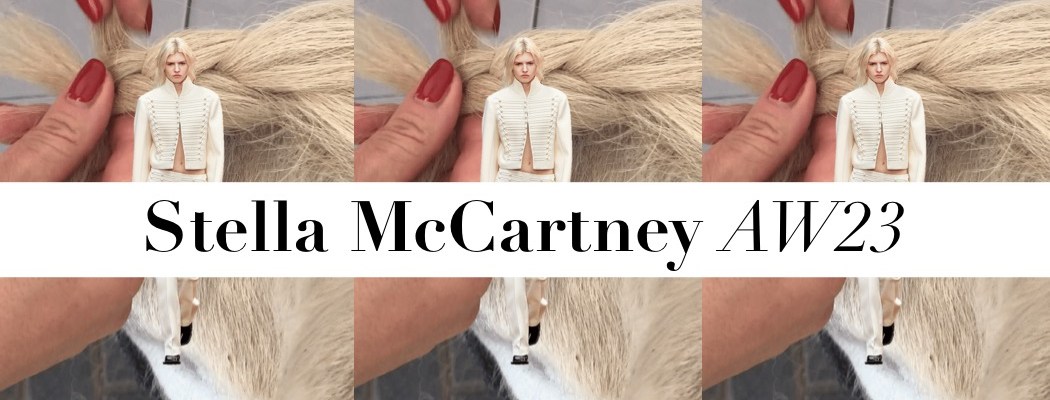
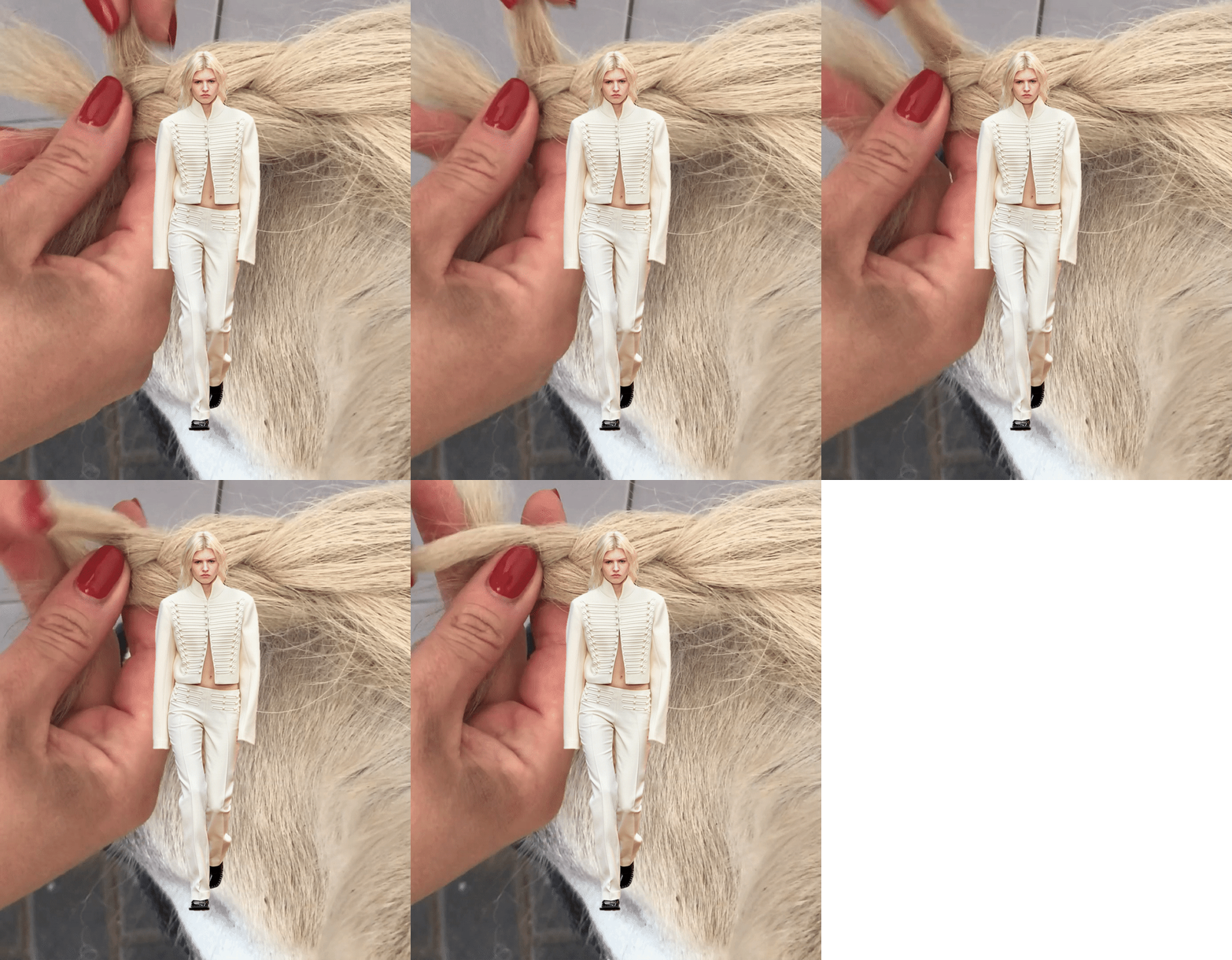
Horse Girl. Stella McCartney AW23

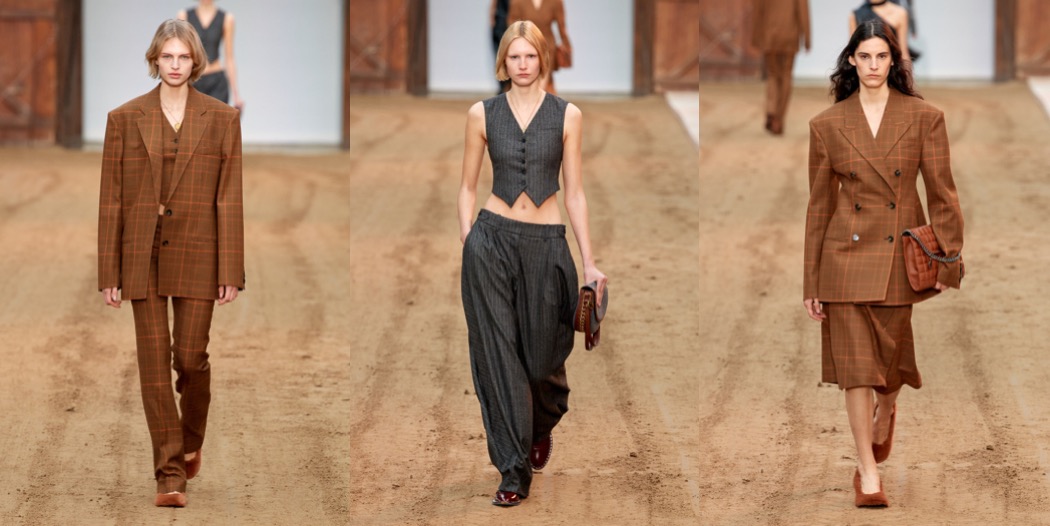
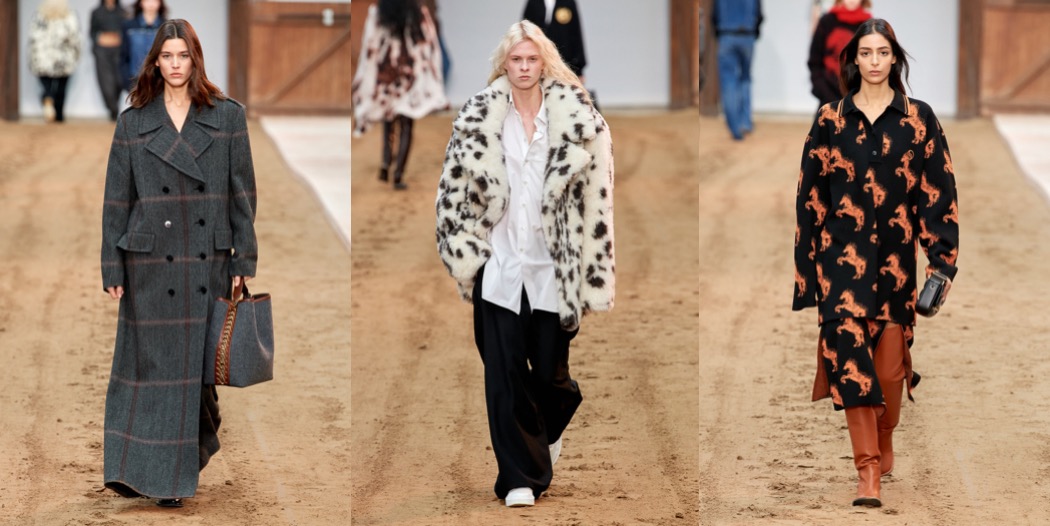
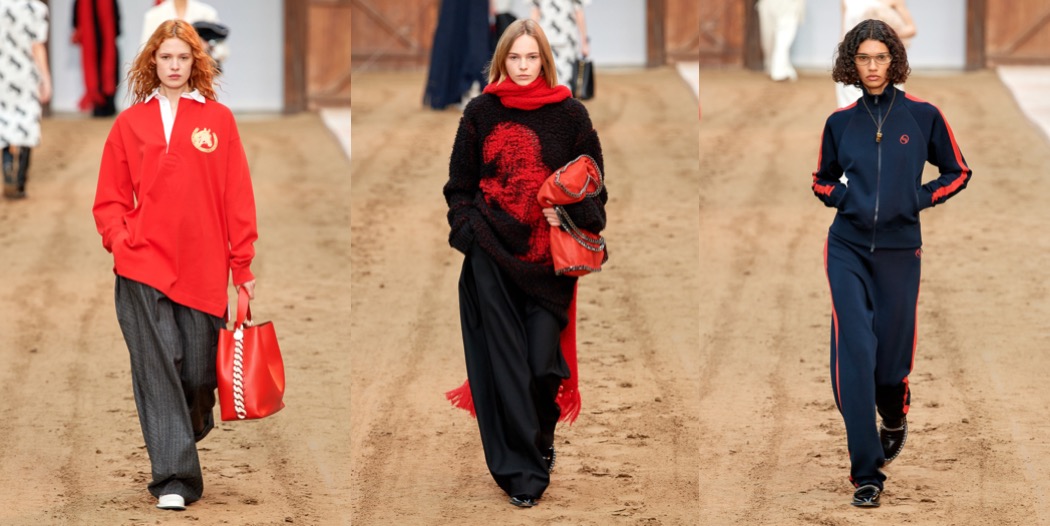
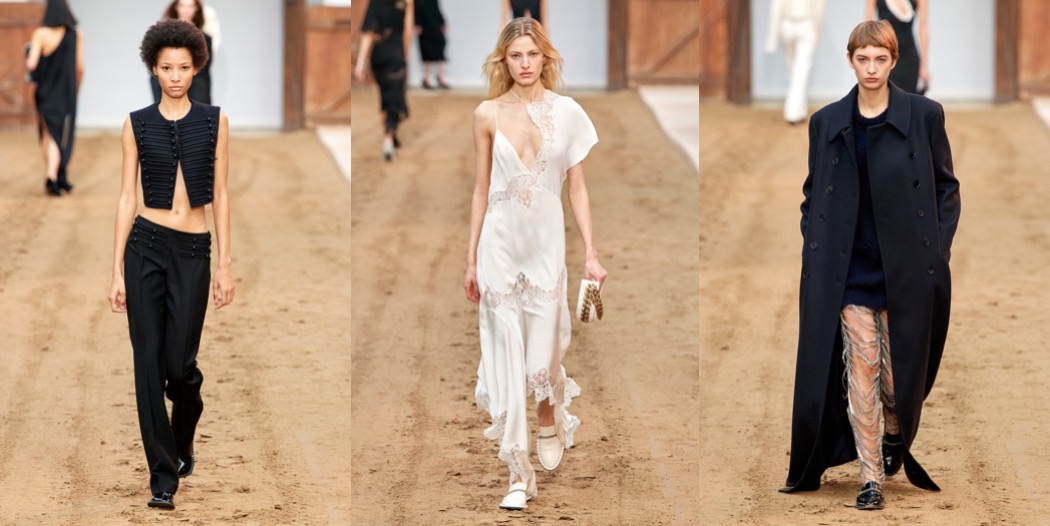
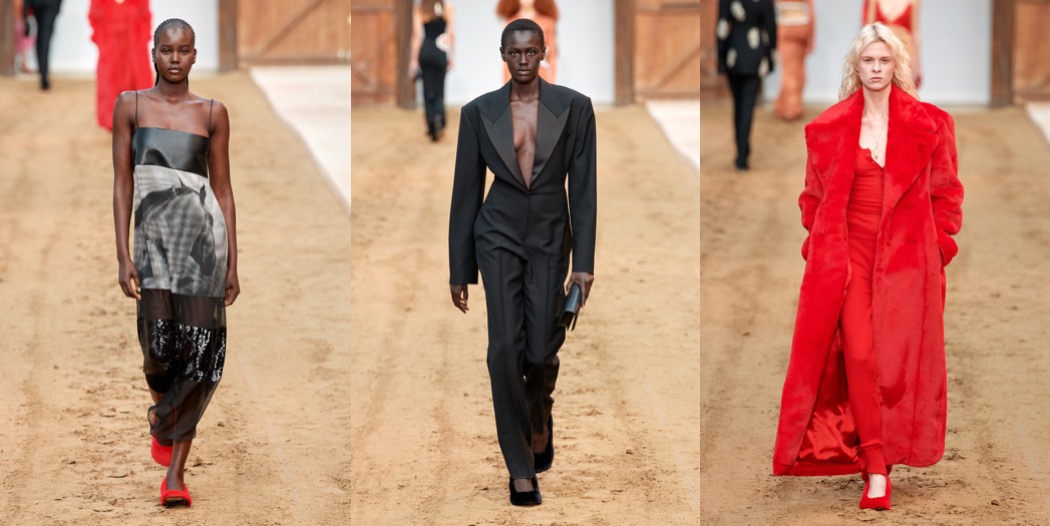
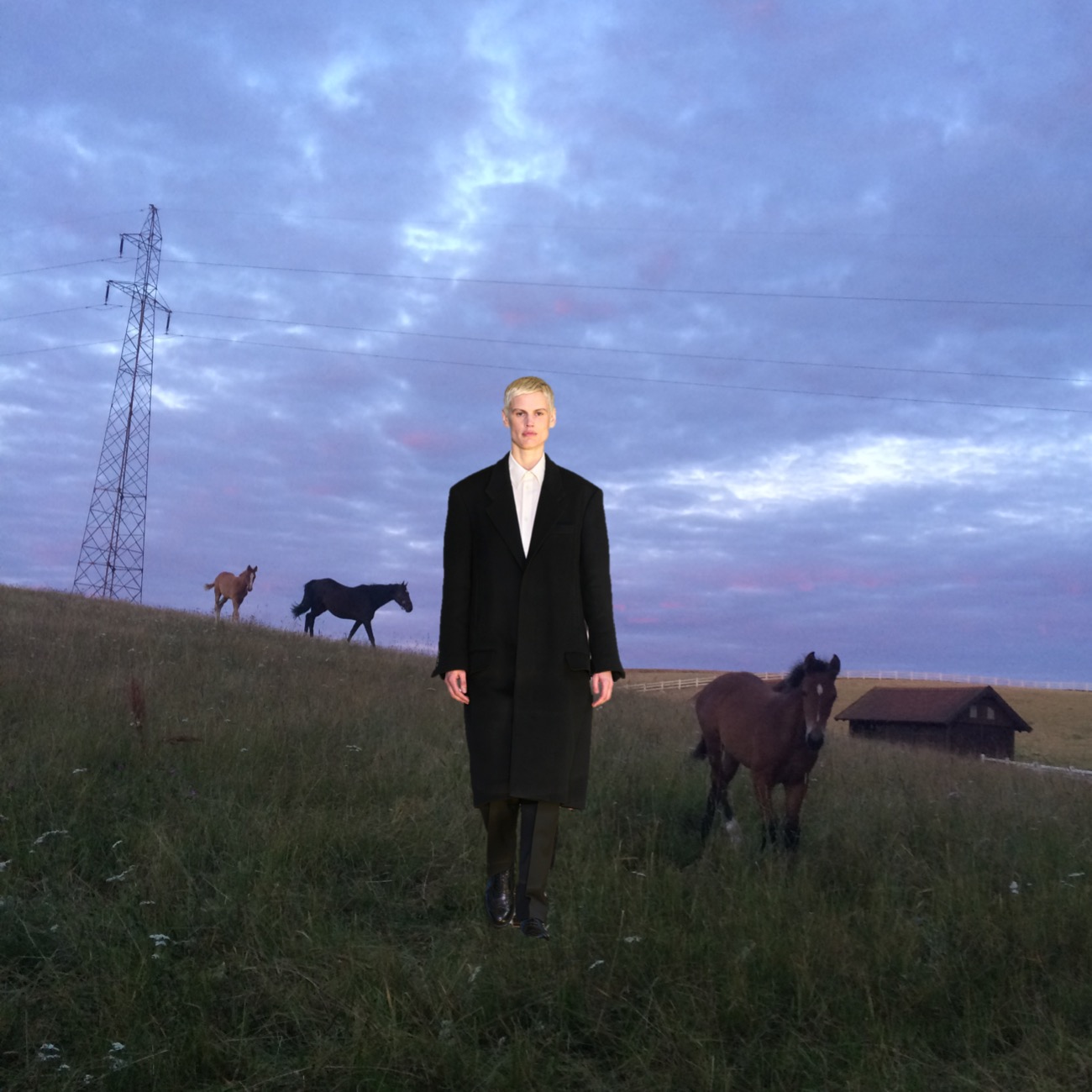
Stella McCartney‘s autumn-winter 2023 collection was all about her long-time obsession and passion for horses. Judging from the models’ calmness in the runway pictures, it’s hard to believe that seven un-haltered white Camargue horses were running around the sand-strewn arena immediately to the left of the runway. They were joined by the horse whisperer Jean-François Pignon, who gently encouraged them to rear, run in circles and roll around in the sand. “There’s so much leather and feather and fur on the runway, especially in winter, and I just wanted to show that you can do it in a different way. You don’t have to kill anything,” Stella McCartney said after the show. She nailed it. McCartney is vegan, but also someone who believes in harmonious relationships between humans and animals. Her mother Linda bred Appaloosa horses, and to this day, the designer still rides. She has a horse named Summer and keeps dogs, too. Her collection was an exercise in claiming and re-appropriating the codes of the British equestrian wardrobes associated with hunting and the warhorses of the Great War, and all the things McCartney doesn’t believe in. “It’s beautiful: the tailoring, the bespoke work. As someone who studied that for many years, you can’t get away from it,” she said, reflecting on those uniforms. “The relationship between the man and the woman and the horse and nature, it’s this kind of pull-and-push, and I think there’s a poetry at the center of it all.” McCartney applied her equestrian grammar to the Y2K language of her own fashion history – the Chloé era! – which she first re-introduced last season. The fusion materialized in skimpy hussar jackets, little cropped vests, deconstructed denim suits from another equestrian culture, and low-riding trousers that infused draped hip chains with fresh tack associations. Those memories continued in dresses and knitwear that revived the horse print from her spring/summer 2001 collection for Chloé, albeit in a blurry evocation. McCartney’s ongoing rekindling with her own archives from her tenure at the house is timely – it’s what the kids want (her daughter is the best example) but it’s clearly also invigorating the designer in new ways. Everything suddenly feels a little bit more impassioned in the house of Stella.

Collage by Edward Kanarecki.
Don’t forget to follow Design & Culture by Ed on Instagram!

NET-A-PORTER Limited

In Search For Renaissance. Chloé AW23

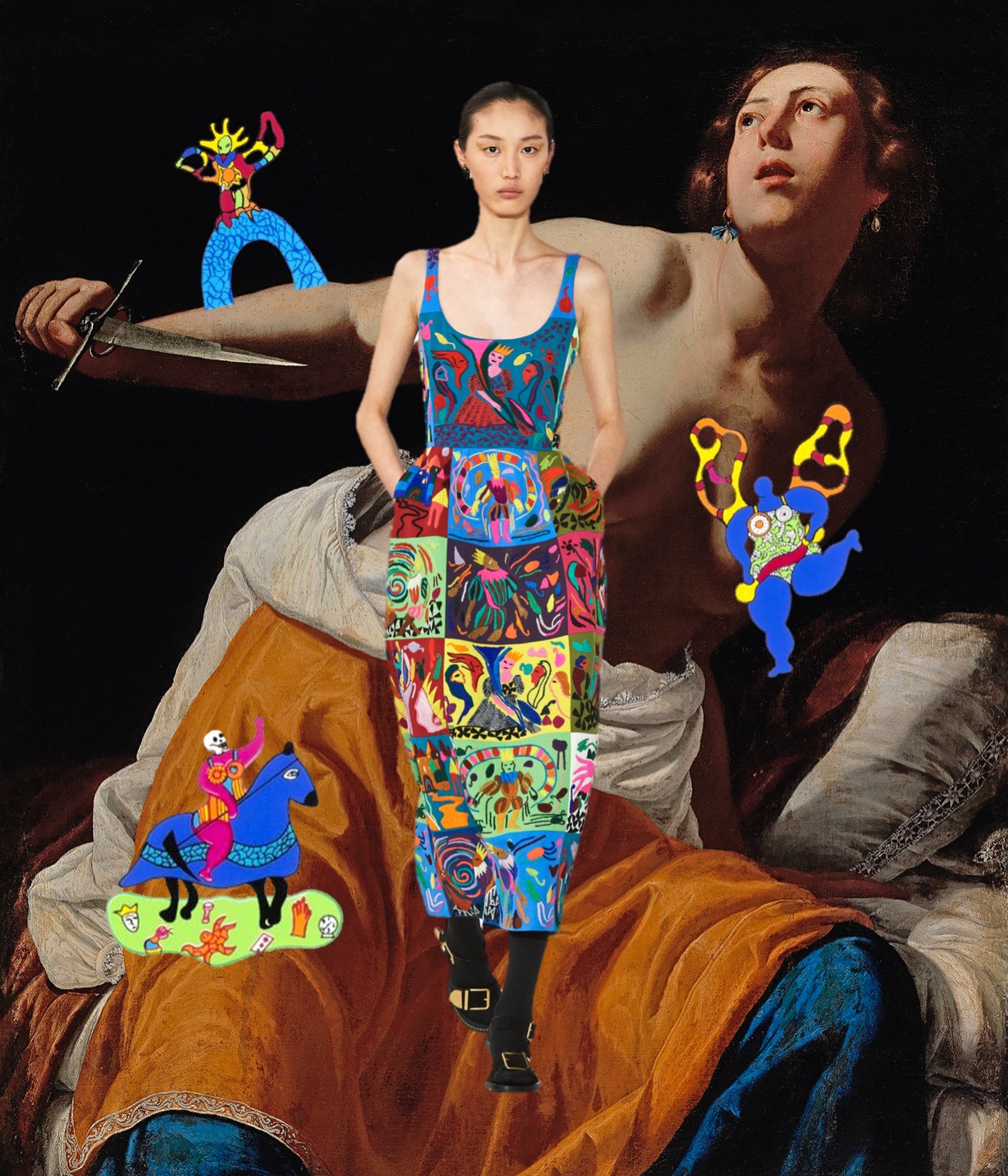
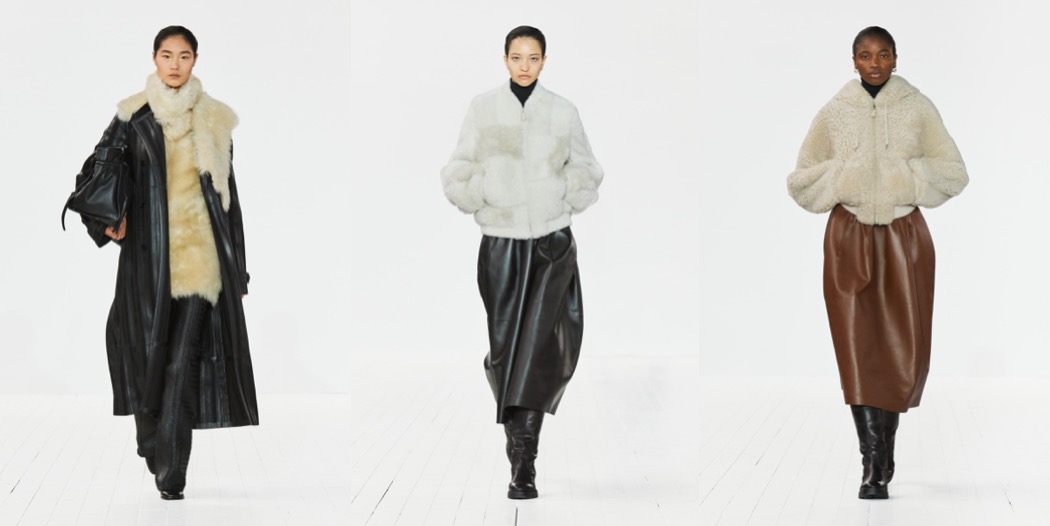
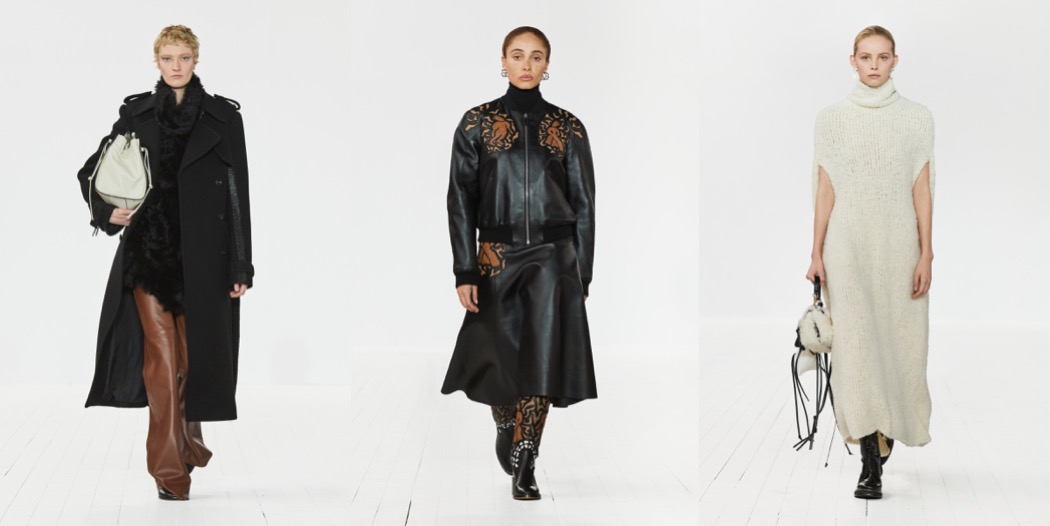
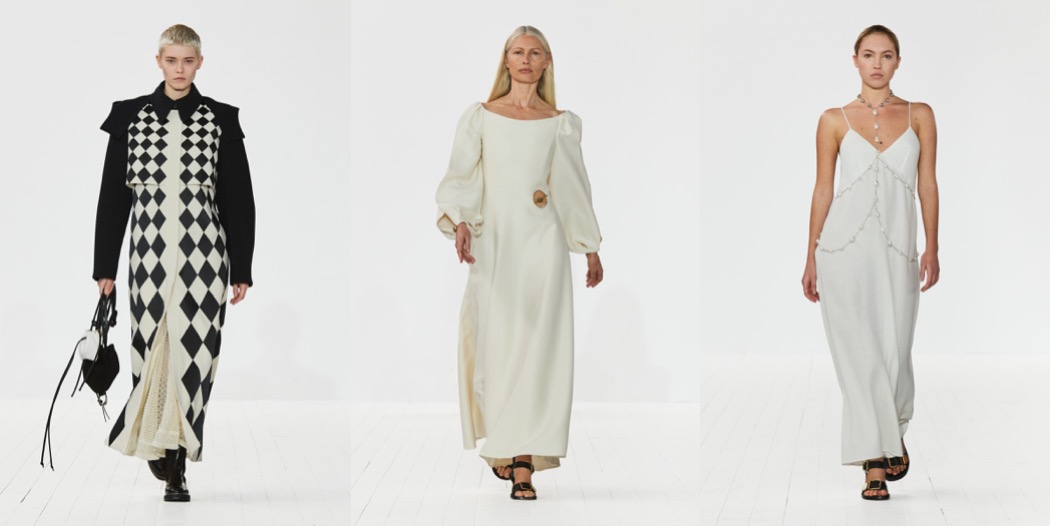
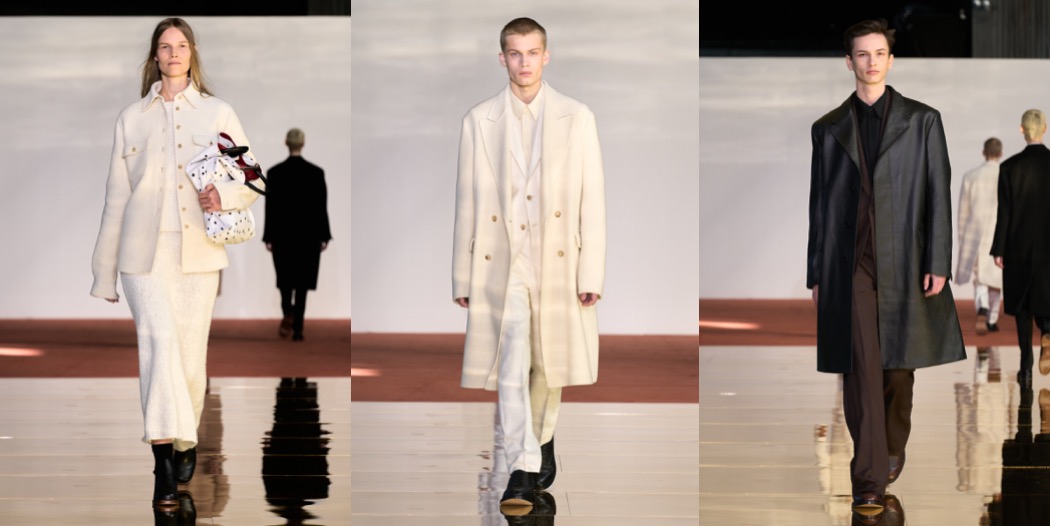
As usual in case of Gabriela Hearst‘s vision at Chloé, sustainability is the ultimate priority. She’s an expert on scientific progress, political initiatives, knows how to effectively replace environmentally damaging fabrics with better solutions, and she’s also a long-term supporter of many NGOs. She manages to pack all that ambition into her designs for the French brand and her eponymous, New York-based line. Sometimes, at an expense of the creative side of her work. The autumn-winter 2023 collection was, however, a bit more daring in terms of the “fashion”. Hearst found a muse, and that is Artemisia Gentileschi, the Renaissance painter. However, don’t expect baroque costumes. There was instead a lot of shearling and leather (the by-products of meat), fine-gauge lacy knits, and the ponchos. The vaguely medieval-inspired vertical strips of leather in yellow, black and white, and the harlequin pattern that emerged toward the end of the show, was a distant interpretation of the Gentileschi theme. “I like it that nothing is gimmicky. They’re not clothes for Instagram,” Hearst quipped. “I’m tired of working for Zuckerberg all the time – like, where’s my check?” I get her point, but… The Row, Lemaire and Hed Mayner are also brands that offer a non-gimmicky look, but this doesn’t mean their collections are that plain-looking. The best look from the Chloé show was a dress with vivid patchwork embroidery in the craft style of “Central America”. Sadly, Hearst just dropped that idea in the middle of the show, without expanding on it. And that that was actually a Chloé-kind-of look: feminine, a bit quirky, intriguing. The designer should try a more spontaneous, laid-back, less-serious approach in her creative process.

Collage by Edward Kanarecki.
Don’t forget to follow Design & Culture by Ed on Instagram!

NET-A-PORTER Limited

Classics & Basics. Gabriela Hearst AW23

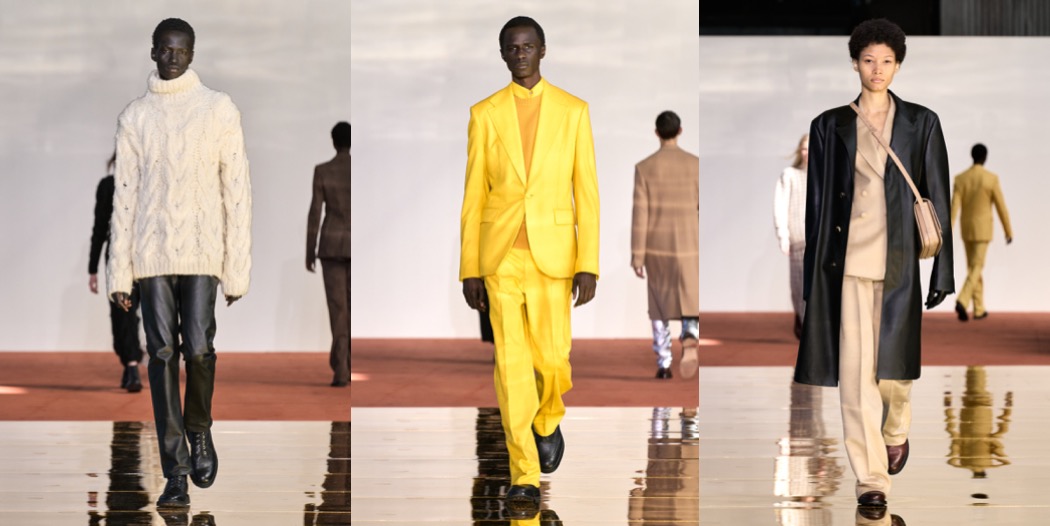
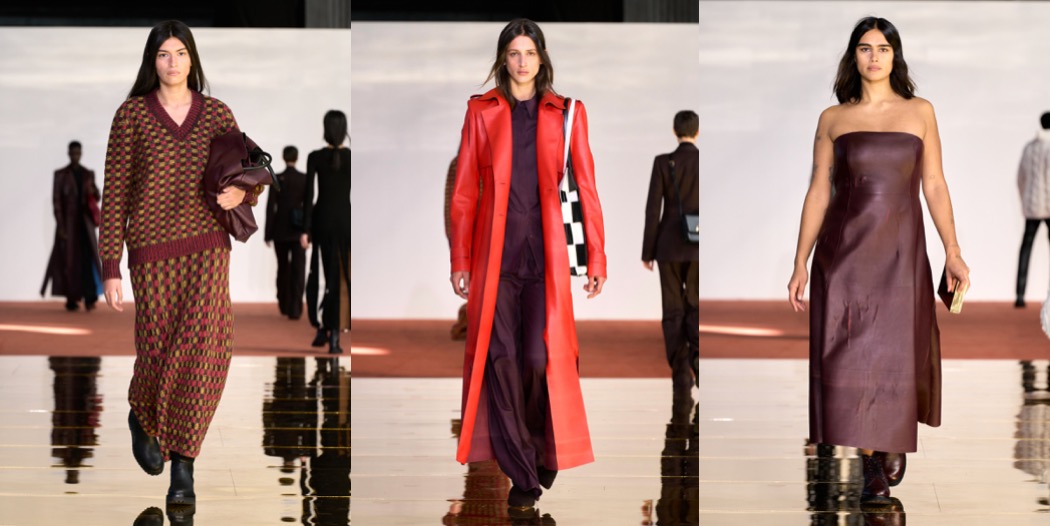
Gabriela Hearst stays in her comfy zone of classics and basics. With long sleeves, high necklines, and midi lengths, the designer’s dresses are the soul of discretion. This season’s version is colorblocked in squares of red, yellow, and black bordered by white. The motif was inspired by Eileen Gray, an early 20th-century architect and furniture designer who was often overshadowed by her male peers. Hearst tends to nominate under-recognized women as seasonal muses – Gray spent her last 30 years living a quiet life. Then, decades after her death a chair of her design that belonged to Yves Saint Laurent and Pierre Bergé sold for $28 million, the highest price ever fetched for a piece of modern furniture. There was a real connection between Gray’s vocabulary and Hearst’s today. The furniture designer’s lacquered wood screens provided the template for bags made from interlocking squares of leather. And a famous photo of Le Corbusier in the buff at Gray’s house E-1027 in Roquebrune-Cap-Martin, France, a large scar visible on his thigh, suggested the scarring effect seen on leather pieces. The slits cut into a burgundy trench flashed Mediterranean blue, while the ones on the burgundy strapless dress were fiery red. A pair of understated finale dresses with cut-outs on the sides from which metal panniers peeked out seemed to nod towards the chrome Gray used in her adjustable E-1027 table. She was the first to use the material, beating both Le Corbusier and Mies van der Rohe to the punch. Hearst was gesturing toward timelessness with this collection, which at moments felt simply… boring. It was rounded out with the minimal tailoring and robust cashmere knits for women and men that she’s known for, and a new collaboration with Tricker’s, the British shoemaker established in 1829. They’ll look smart with those knit midi dresses.

Collage by Edward Kanarecki.
Don’t forget to follow Design & Culture by Ed on Instagram!

NET-A-PORTER Limited