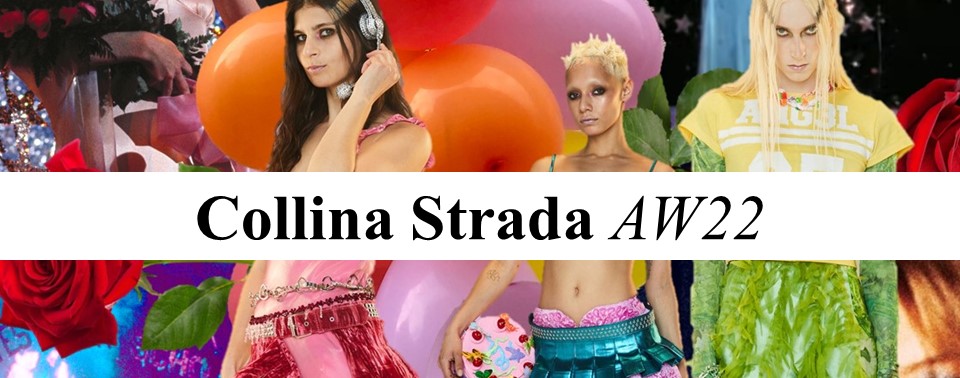
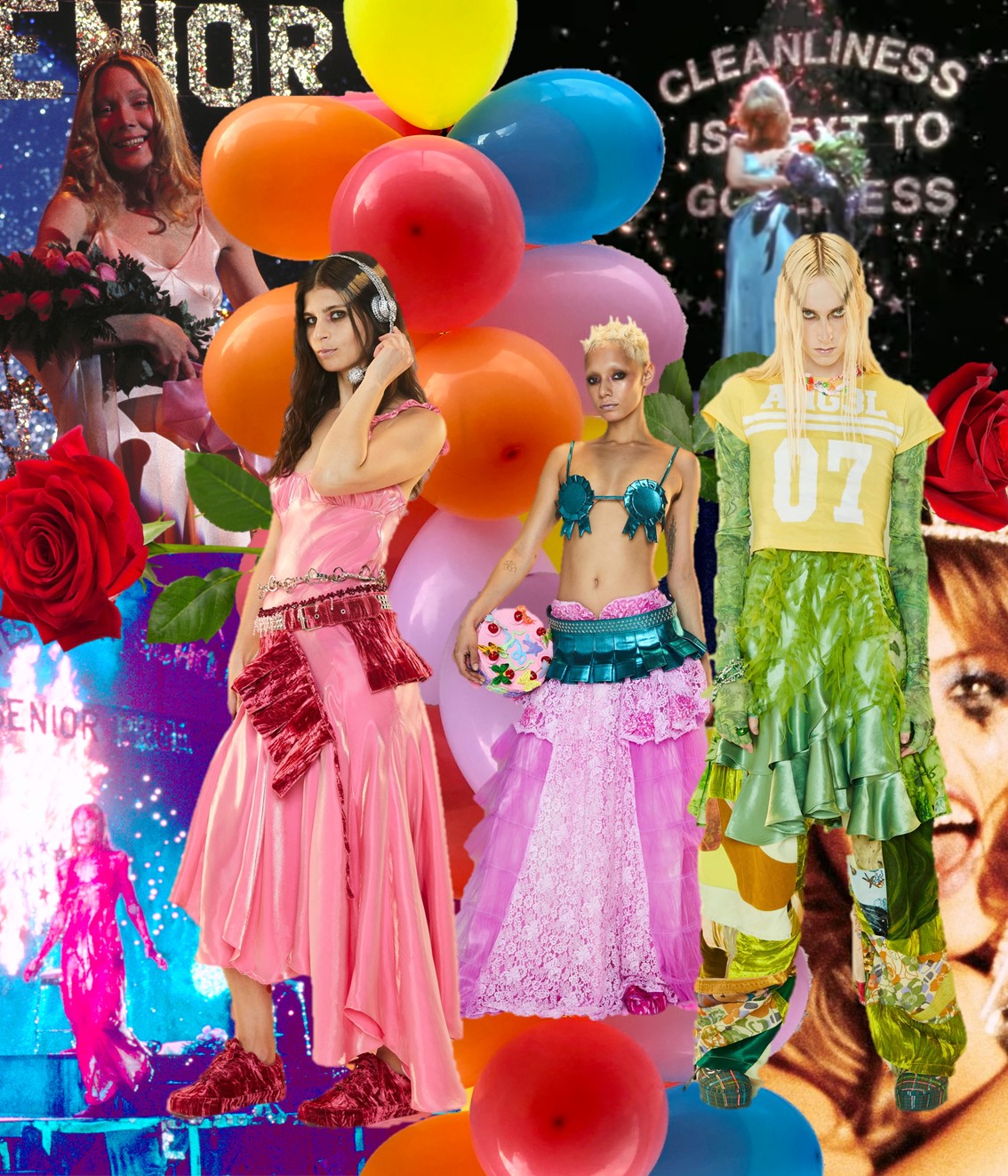
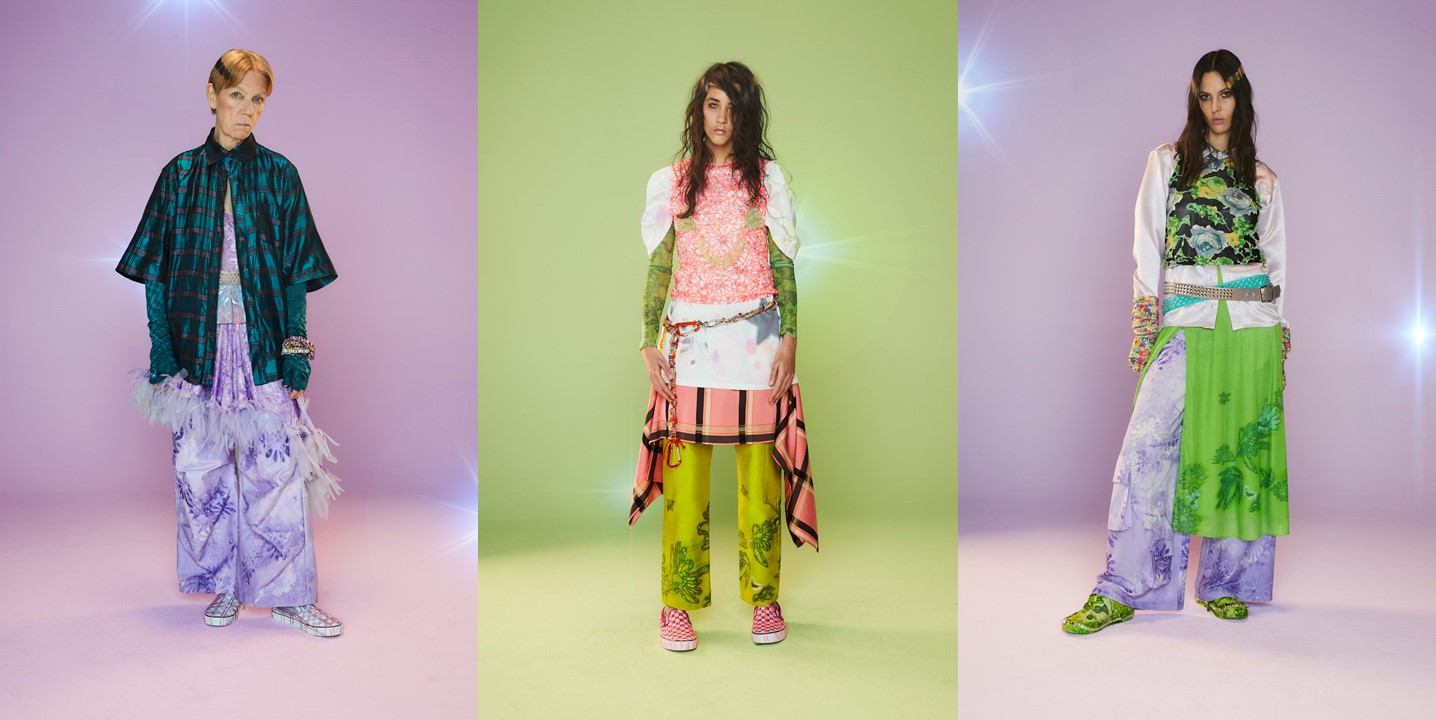
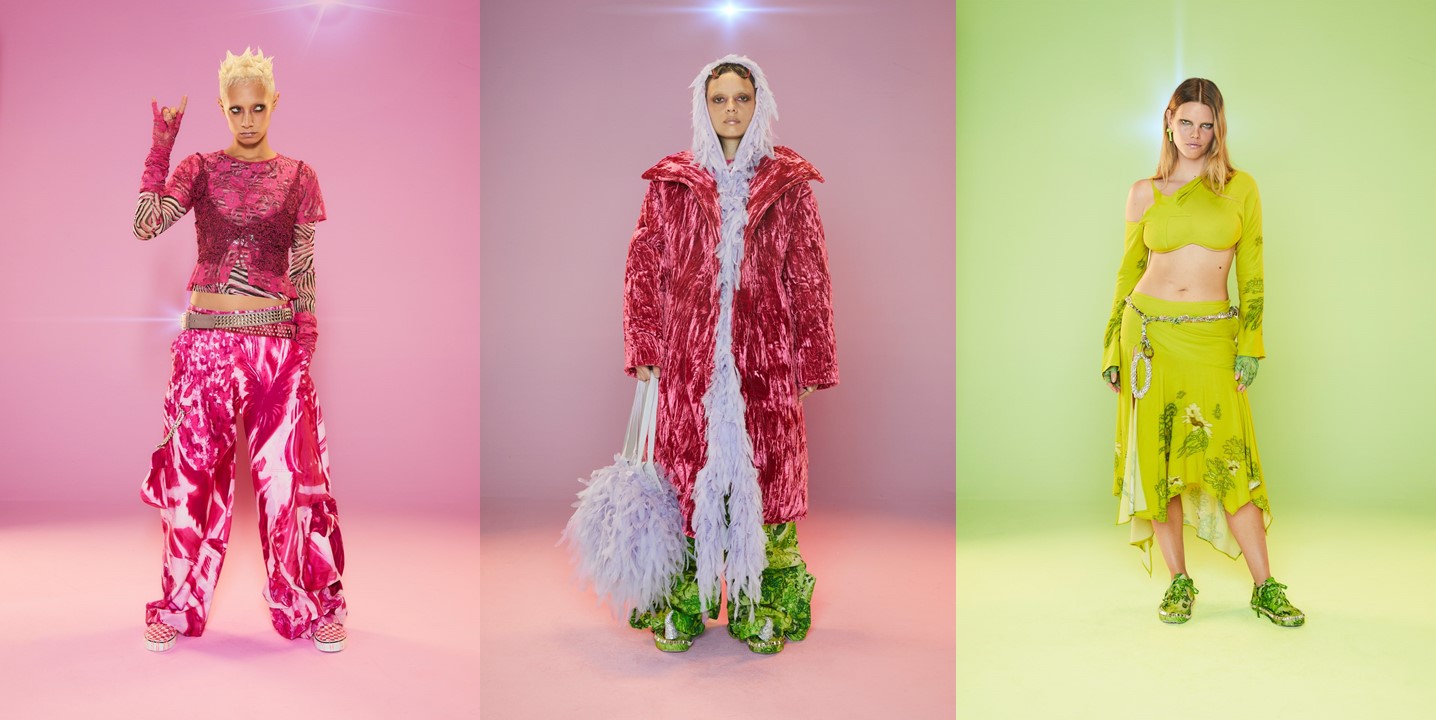
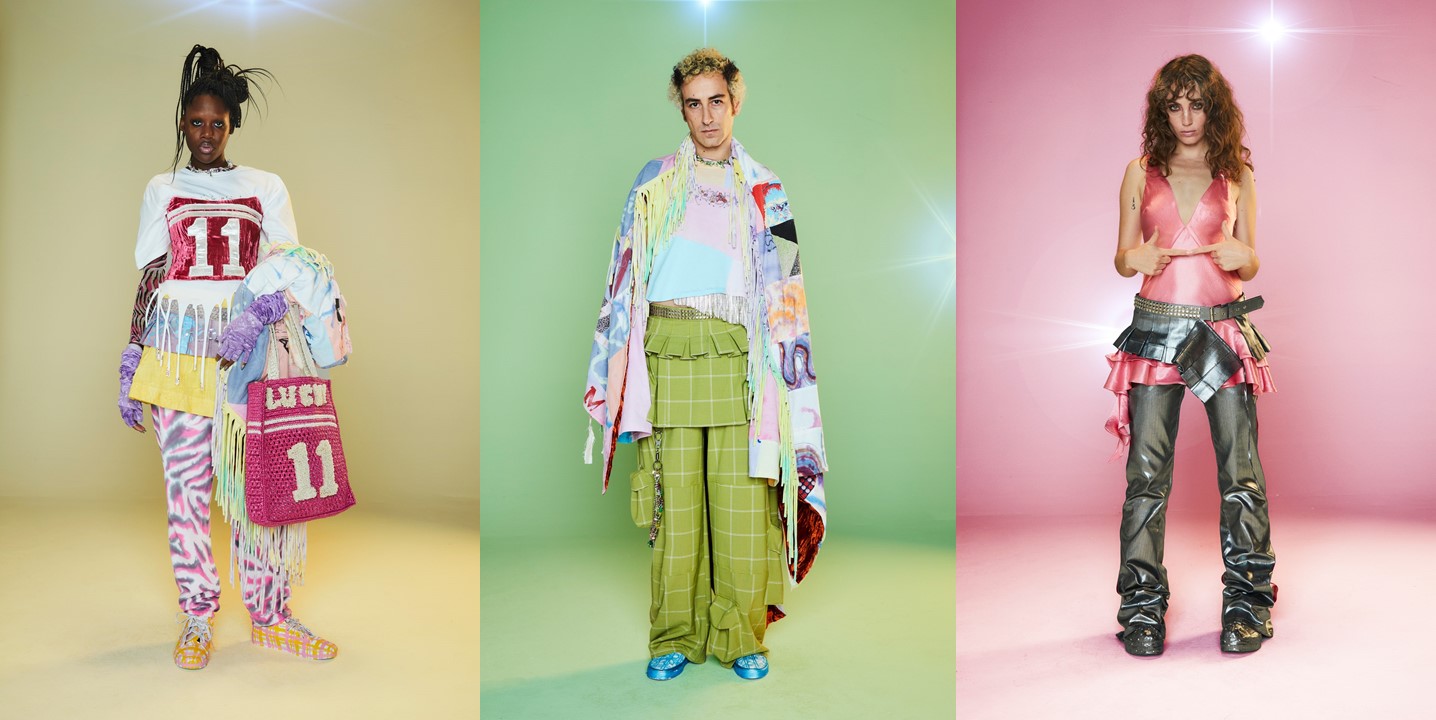
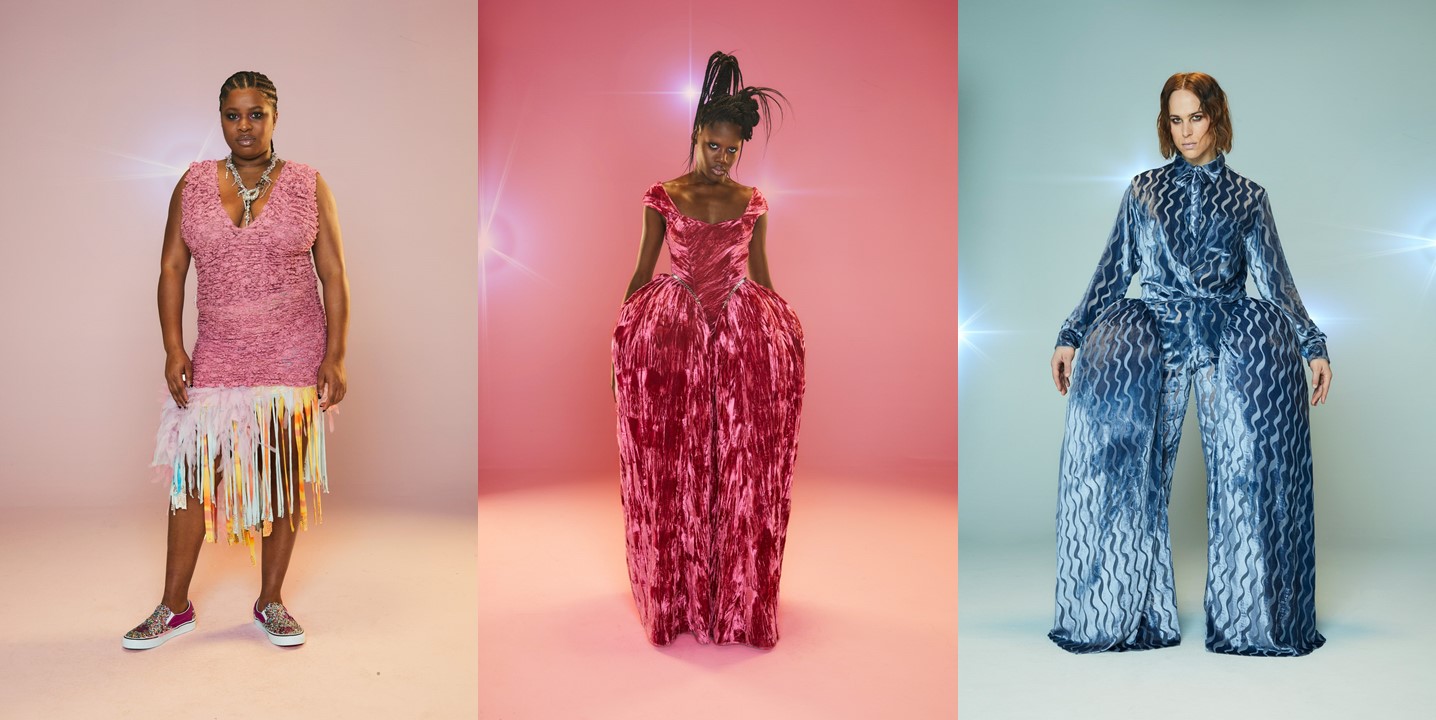
New York Fashion Week would make no sense without the energy of the city’s new-gen designers who fully embrace inclusivity, community and sustainability. This season, Collina Strada‘s Hillary Taymour showcased her exuberant and lively autumn-winter 2022 collection with a digital presentation, inviting the fashion set to experience its version of The Hills, entitled The Collinas. In the spoof, actor Tommy Dorfman makes her fashion week debut playing a twenty-something moving to New York City for a fashion internship at Collina Strada. Dorfman’s star turn was complemented by a large supporting cast: Rowan Blanchard, Marni’s Francesco Risso, Chloe Wise, Lynette Nylander, Jazzelle Zanaughtti, Ruby Aldridge, and Vogue’s Liana Satenstein – all friends of the brand. While the main character is rather clueless on how to actually do her job properly, she’s lovable with great taste – an aspect her peers can’t get enough of. The campy reality-TV pastiche wasn’t only entertaining and hilarious; it was a great background for Strada’s fabulous pleats, crushed velvet and metallic fabrics. Flashy colours and graphics inspired by 1970s psychedelic rock were mixed with genderless prom dresses and cargo pants made from upcycled materials. This season, Taymour evidentely entered her 2000s phase, and it’s working. Some ideas from spring 2022 carry over, like the Angel-printed tee and meshy layering pieces that have long been a staple. There is a low vibrating cake theme as well – Zanaughtti poses in a pageant ribbon top holding a pink cake; a pair of jeans were dyed using melted sprinkles. Chiffon is shredded to evoke feathers and studio detritus is cut into fringe. The eclecticism of Taymour’s earliest collections persists, and here we are with dozens of wearable and wantable garments that reflect the brand’s spirit.
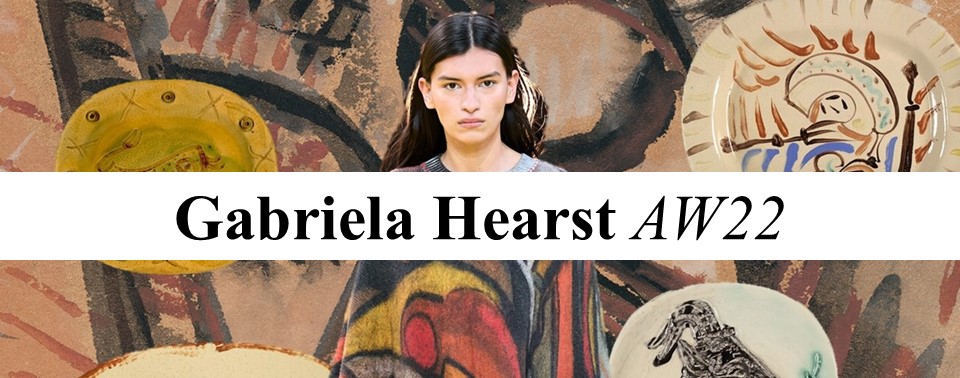
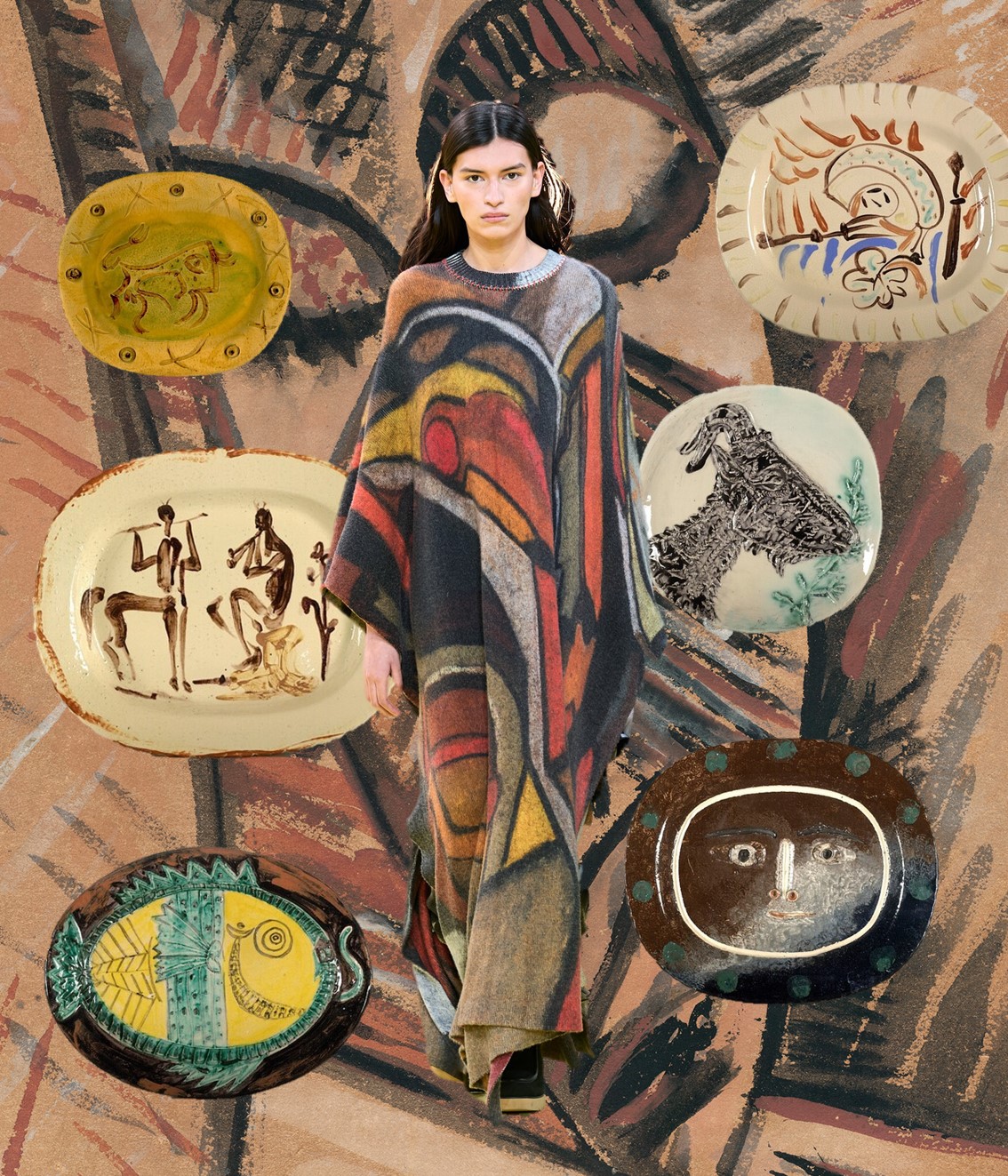
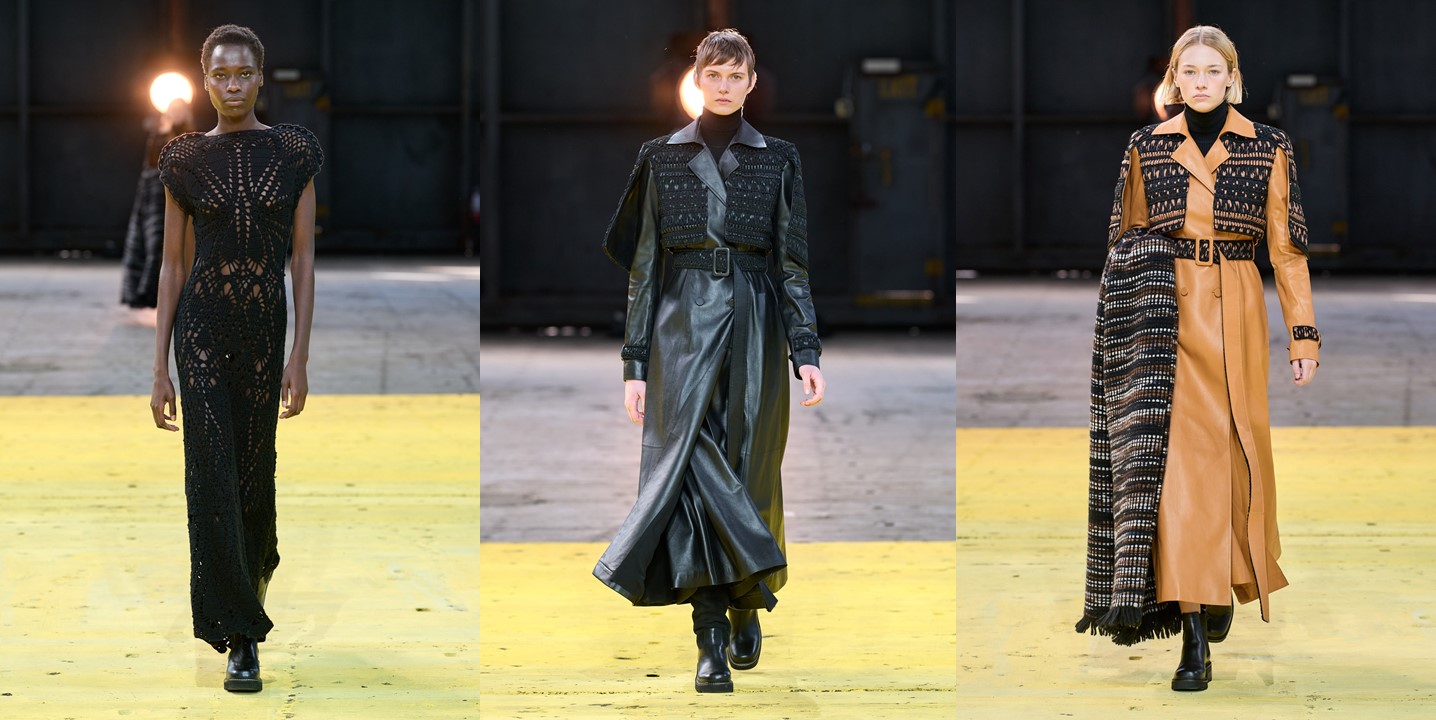
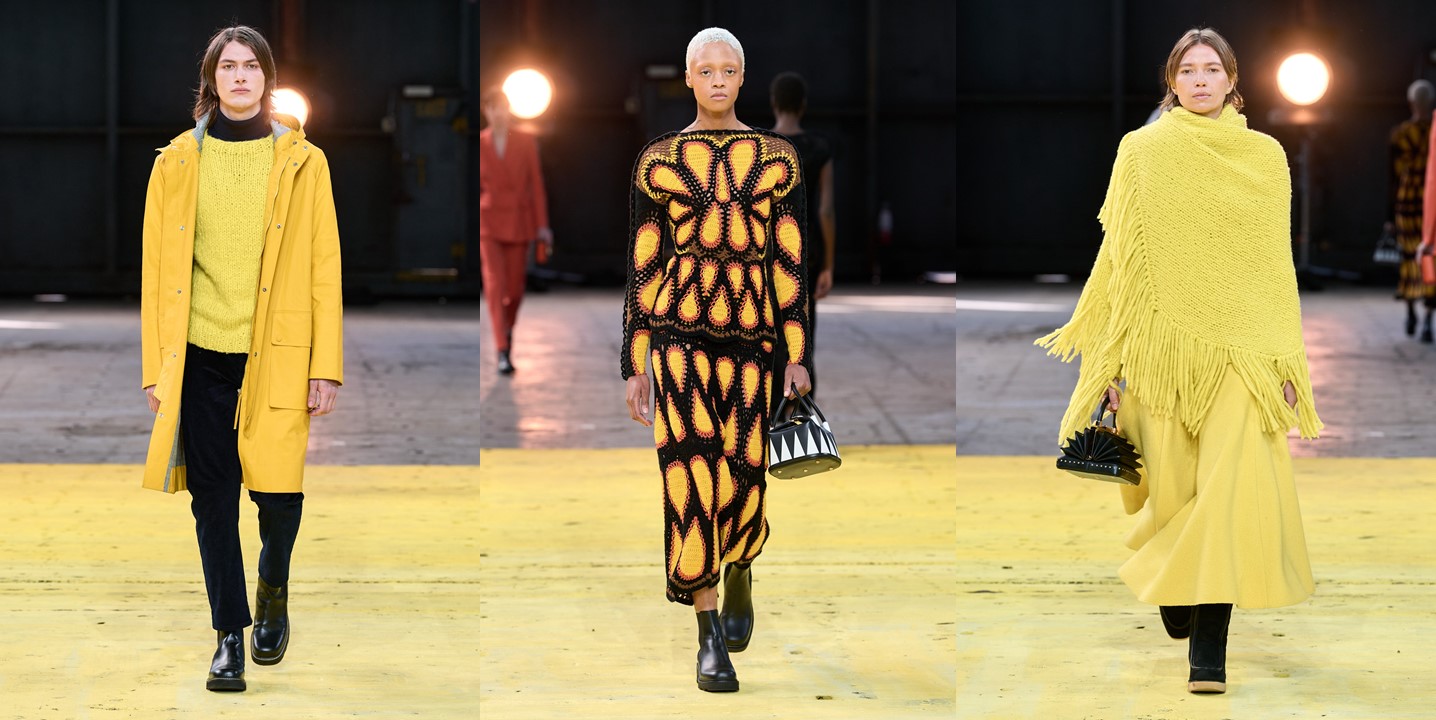
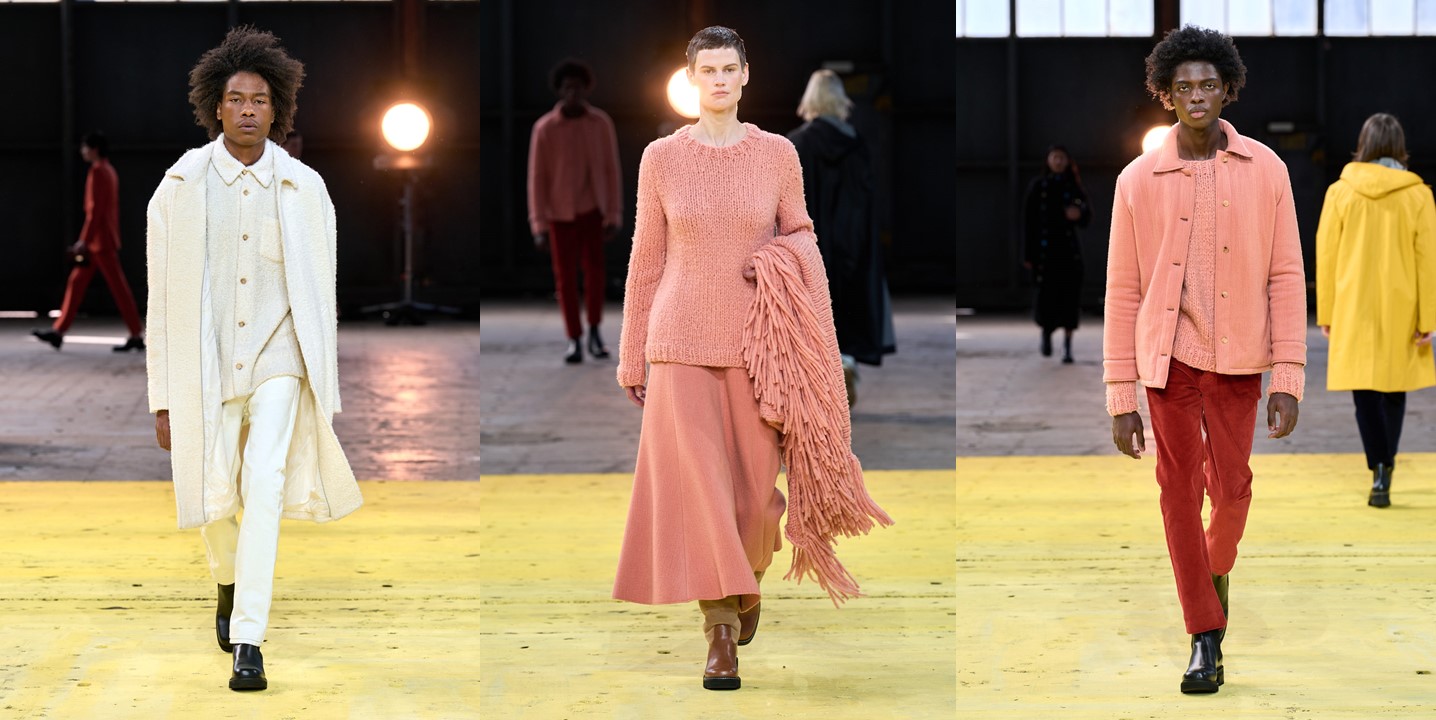
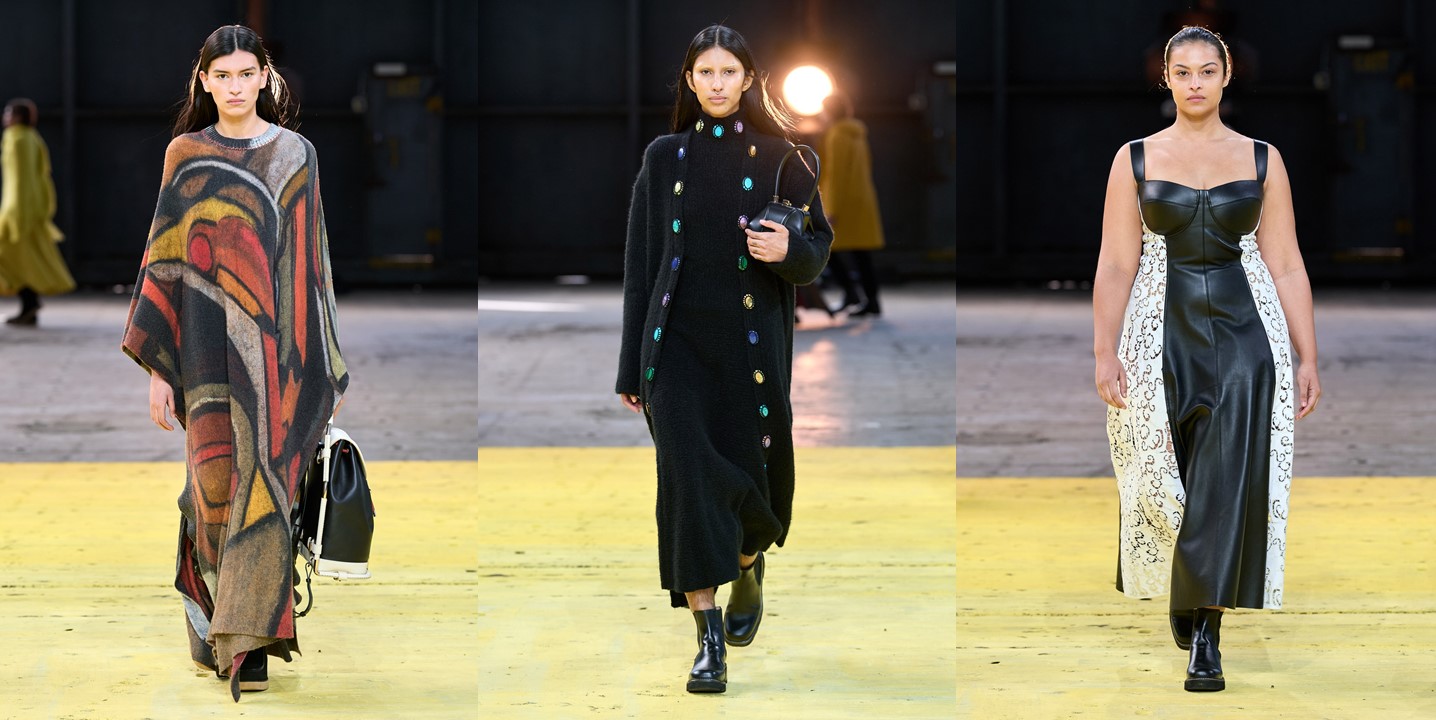
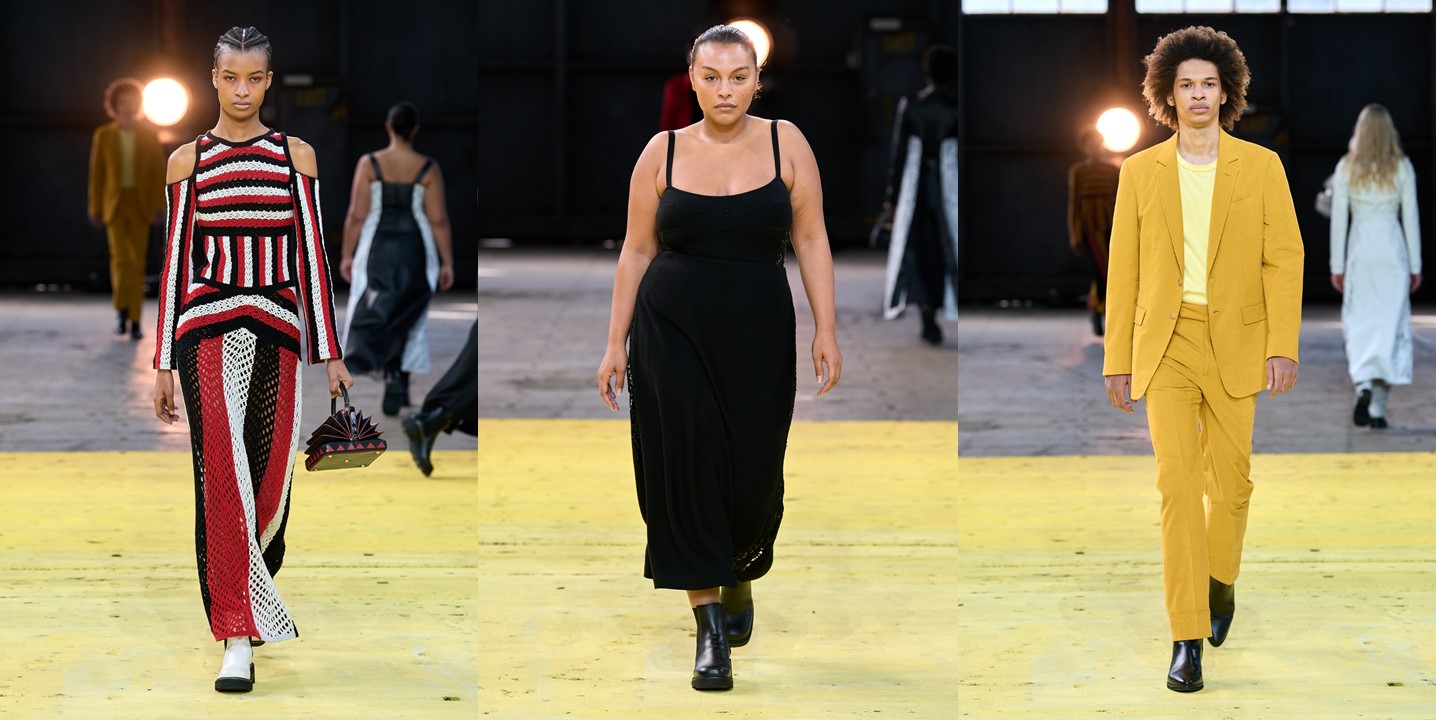
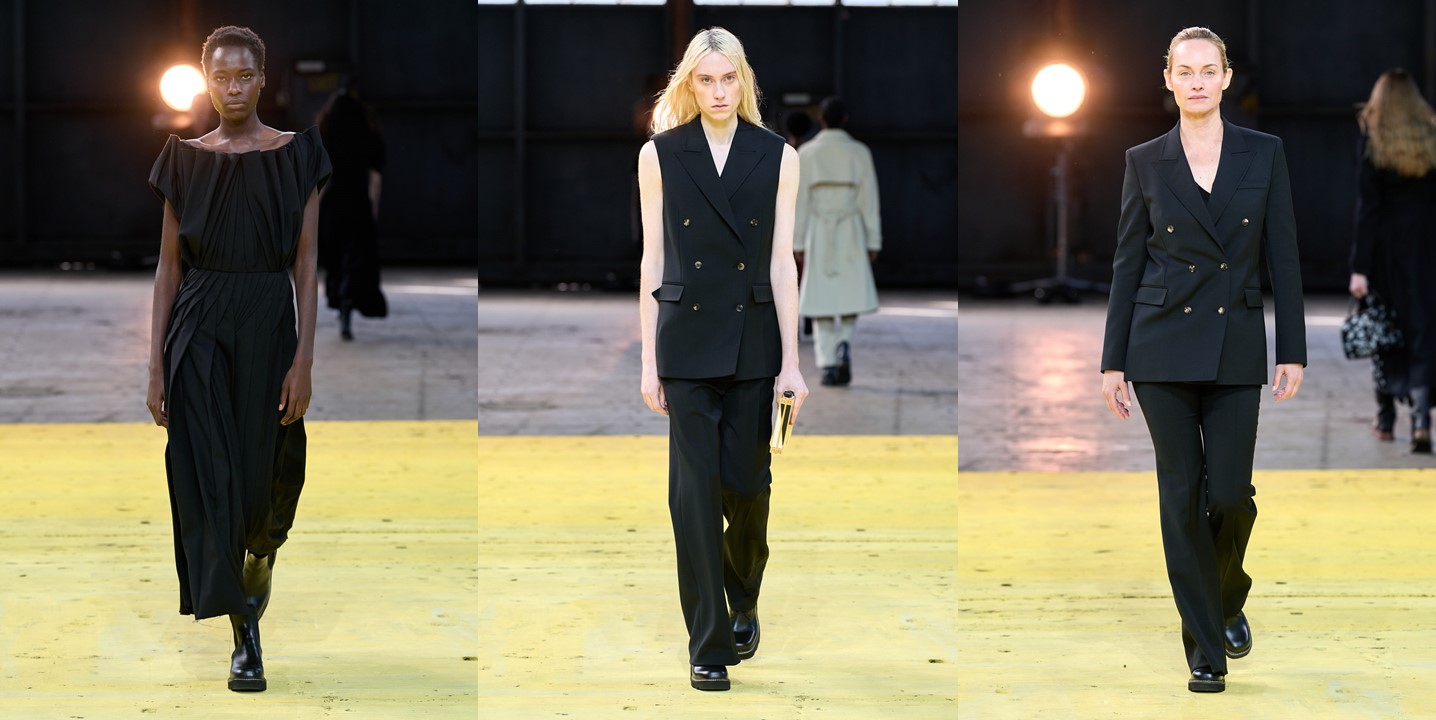
The runways have become a platform for the questioning of gender that has long occupied LGBTQIA+ communities. This has happened at the fringes for decades, but with a new wave of trans and androgynous models recasting our notions of beauty, the project is going more mainstream. Gabriela Hearst credits her teenage daughters for advancing her own thinking; their conceptions of gender are at odds with the more static understanding that her generation grew up with. “Kids want to be free,” she said at a preview. “For them, gender is an imposition.” As a designer, she makes few distinctions between her women’s and men’s collections. On the autumn-winter 2022 runway, colors, materials, and silhouettes were shared across them. If you are familiar with Hearst’s work, then you know how truly important sustainability is for her – at her brand, there’s no place for greenwashing. This season, the collection’s aesthetic is close to nature as well. The luscious citrine and watermelon colors of her Manos del Uruguay–knitted chunky cashmere sweaters were achieved via botanical dyes. The print on the cashmere-silk knit poncho that was a focal point of the collection was taken from the artist Ana Martinez Orizondo’s painting of a tree. And the crochet motif on a sleeveless dress and a long-sleeve top and midiskirt was inspired by a peacock’s tail feathers. Safe to say Hearst is the earthiest luxury designer around. But she can do worldly too. Amber Valletta closed the show in a double-breasted suit made from sportswear wool whose sharpness belied its comfort factor. Trenches were finished with storm flaps made from panels of woven leather and silk crepe de chine that Hearst likened to armor. She was equally proud to point out that the elaborate pleating on the bodice and sleeves of a flower-print dress was done in New York’s garment district.
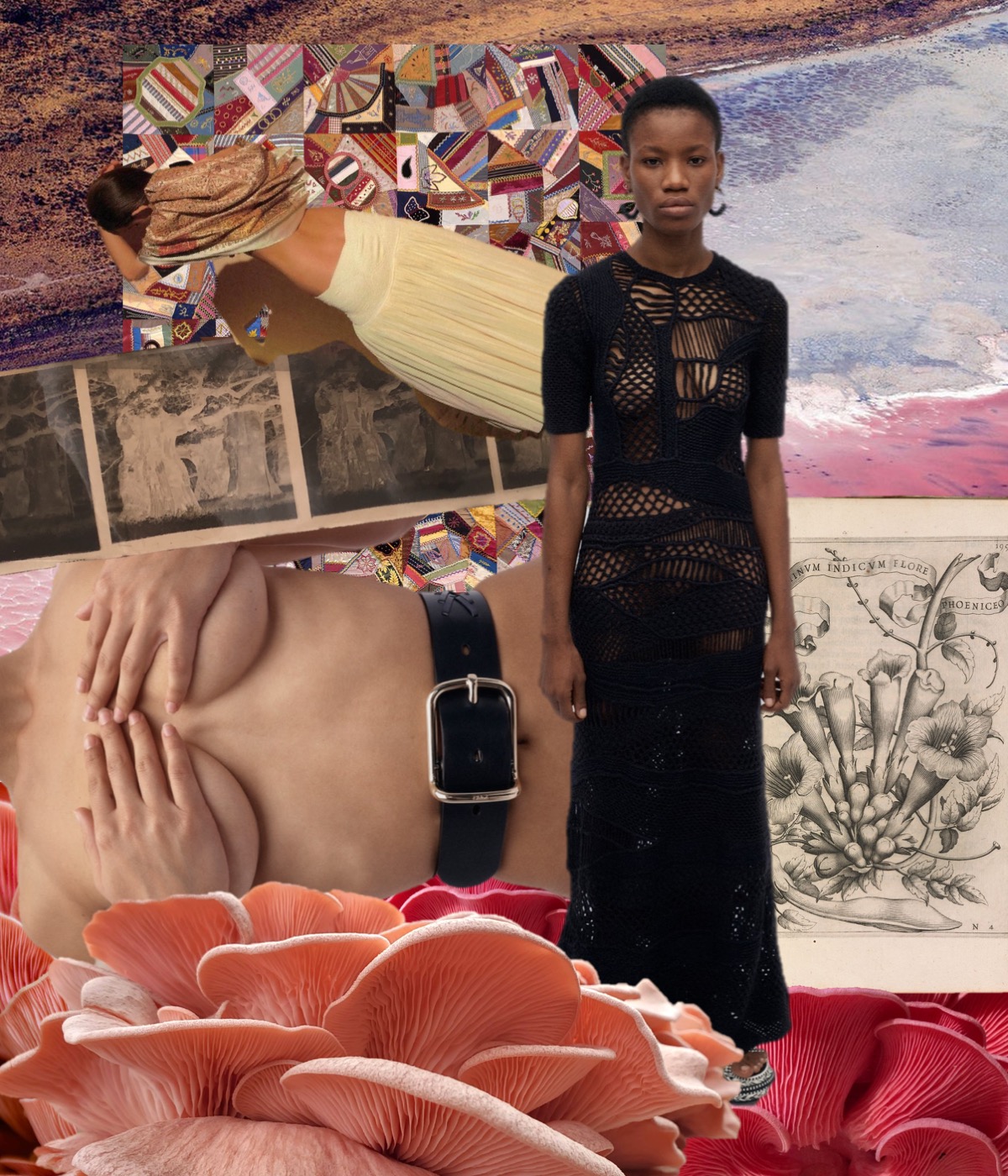
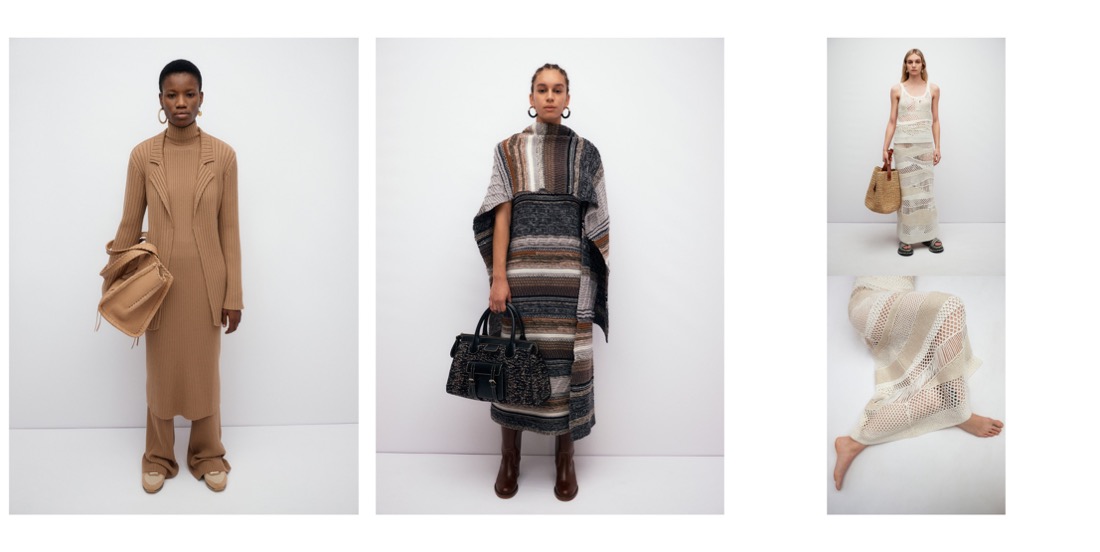
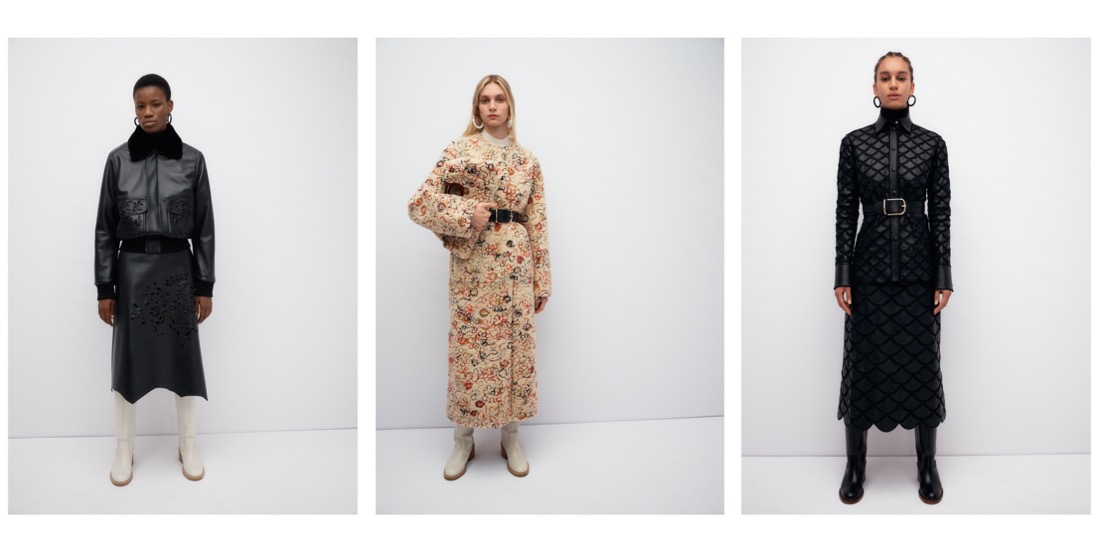
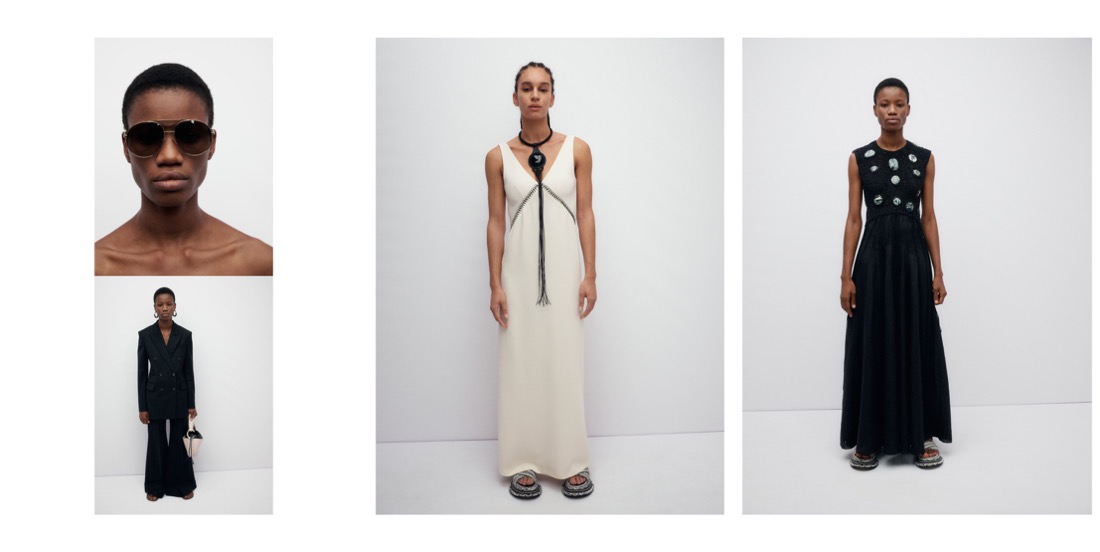
It’s nearly a year since Gabriela Hearst took Chloé under her wings, and it’s quite unbelievable how many sustainability goals the designer has already achieved. And those aren’t just words – numbers and statistics don’t lie. “To give you the exact facts, 70% of the product offer since I came in became lower impact. Compared to my first collection, (what) we did is up 40%”, she summed up. Women who are living under a cloud of post-COP26 anxiety might take some cheer from how openly Hearst is tackling the environmental and social problems inflicted by the workings of the fashion industry. The way she speaks of it, implementing the changes that lie within her power is as much her purpose as the mission to dress women in Chloé clothes. “Empathy, collaboration, lower impact – the right values need to come to the forefront. Collectively we at Chloé are working toward weaving that into the DNA of the company.” The clarity of style she’s brought to the house has become completely visible four seasons in. It’s streamlined and slick, a grown-up boho look infused with classic Chloé-isms and her own handcrafted, macraméd, whipstitched energy. She’s carefully corralled all the legacies that women designers have imprinted on the brand for decades: the reputation for a boot-cut, ’70s-ish pantsuit that Stella McCartney laid down; the balloon-y broderie anglaise sleeves that Phoebe Philo played with; and Chloé founder Gaby Aghion’s scalloped edges and taste for pinkish orange, the color of the Egyptian desert of her childhood. Meanwhile Chloé’s horsey heritage is a natural for Hearst, who brings her own Uruguayan ranch upbringing to her feeling for caped coats, French-style riding boots, and the thick leather girth strap she’s turned into a belt. “I love this buckle that I found in the archive from Hannah MacGibbon’s time,” she said. “We oversized it.” It all looks a lot like Hearst herself: tall, strong silhouettes; a practical modern vigor; a touch of the hippie sophisticate. Yet the main imprint she’s stamping on Chloé is in becoming one of the very few luxury fashion creative directors who are making it impossible to detach the conversation about pretty clothes from talking about what’s in them and how they are made. Moving rapidly along the vectors of transparent reporting, partnerships with women’s employment projects, environmental certifications, Chloé’s freshly acquired B Corp status, and new membership in the Ellen MacArthur Foundation (which champions circularity) – and shining a light onto the multitude of fashion’s hidden processes – is a business that continually brings up more questions.
Hearst is happy to point to several achievements in this collection. Botanical dyes are part of it—like the shade of Gaby Aghion pinkish orange in the merino wool skirt-and-sweater set. There’s also biodegradable denim, which Hearst cut into a pair of high-waist flares and a matching jacket. “This is the third season we’ve been working with Adriano Goldschmied [the legendary denim expert] on this project to resolve circular denim, following the Jeans Redesign Guidelines published by the Ellen MacArthur Foundation,” she said. The production of the new Chloé jeans eliminates rivets, which never break down, and the fabric is a mix of 70% recycled cotton and 30% hemp, “which is grown in France. Hemp and linen cultivation emit less greenhouse gases and require less water compared to cotton,” she noted. But to vegan and vegetarian customers – and anyone who’s read recent reports about fashion’s links with cattle farming and deforestation in Brazil – the noticeable amount of leather in the collection will raise eyebrows. “From the point of view of sustainability, I have a very specific position about leather,” argues Hearst. “Leather is biowaste of the meat industry. I am very against industrialization of meat – I’m really against the way livestock is being industrialized. I don’t think we can afford eating a high-meat-protein diet, and definitely don’t recommend it.” But while she accepts that moving toward plant-based diets “is better for the environment,” from her perspective, “the truth is nobody’s killing the animal for the leather. The price of leather is going down and people are wasting it.” That in itself creates an environmental disposal situation. “What are we going to do with the leather, other than just use it?”
The Chloé press release states how the sourcing of the Chloé leathers is certified by the Leather Working Group, which is “an international organization made up of stakeholders across the leather supply chain, working to promote environmental best practice within leather manufacturing and related industries.” The organization looks into the operations of tanneries, “meaning that the leather process is done properly, meaning not wasting water and not using harsh chemicals,” as Hearst puts it. Around 75% of the leather handbag offering is sourced from Leather Working Group–certified tanneries. Nevertheless, there is always further to look into. A report in The Guardian on November 29 spotlighted research by Stand.earth, a supply-chain research company partnered by the Slow Factory and Model Activist, showing that the Leather Working Group’s remit stops at capturing what happens in tanneries and slaughterhouses. Its visibility doesn’t reach back to what happens at the farm level, and therefore “does not ascertain whether hides are linked to deforestation.” Under normal practice, hides come into tanneries from multiple sources and are often mixed up, meaning that fashion brands – across luxury and mass manufacturing alike – are “at risk” of unknowingly buying into the destruction of the Amazon rain forest with the finished product. “As many Amazon leaders have warned,” the Slow Factory writes on its Instagram page, “this is a human rights/climate/biodiversity/public health crisis with consequences for the entire world.” That’s a much vaster issue than Chloé. It spreads across the entire industry and puts question marks over every leather bag, shoe, and coat we buy (it’s also an issue in the auto industry, which is the second-largest user of leather after fashion.) Only diligent and widespread normalization of tracing and labeling, and the development of sounder alternatives, can solve this. Knowing Gabriela Hearst, she’ll be among the first to step up to working on finding those answers.
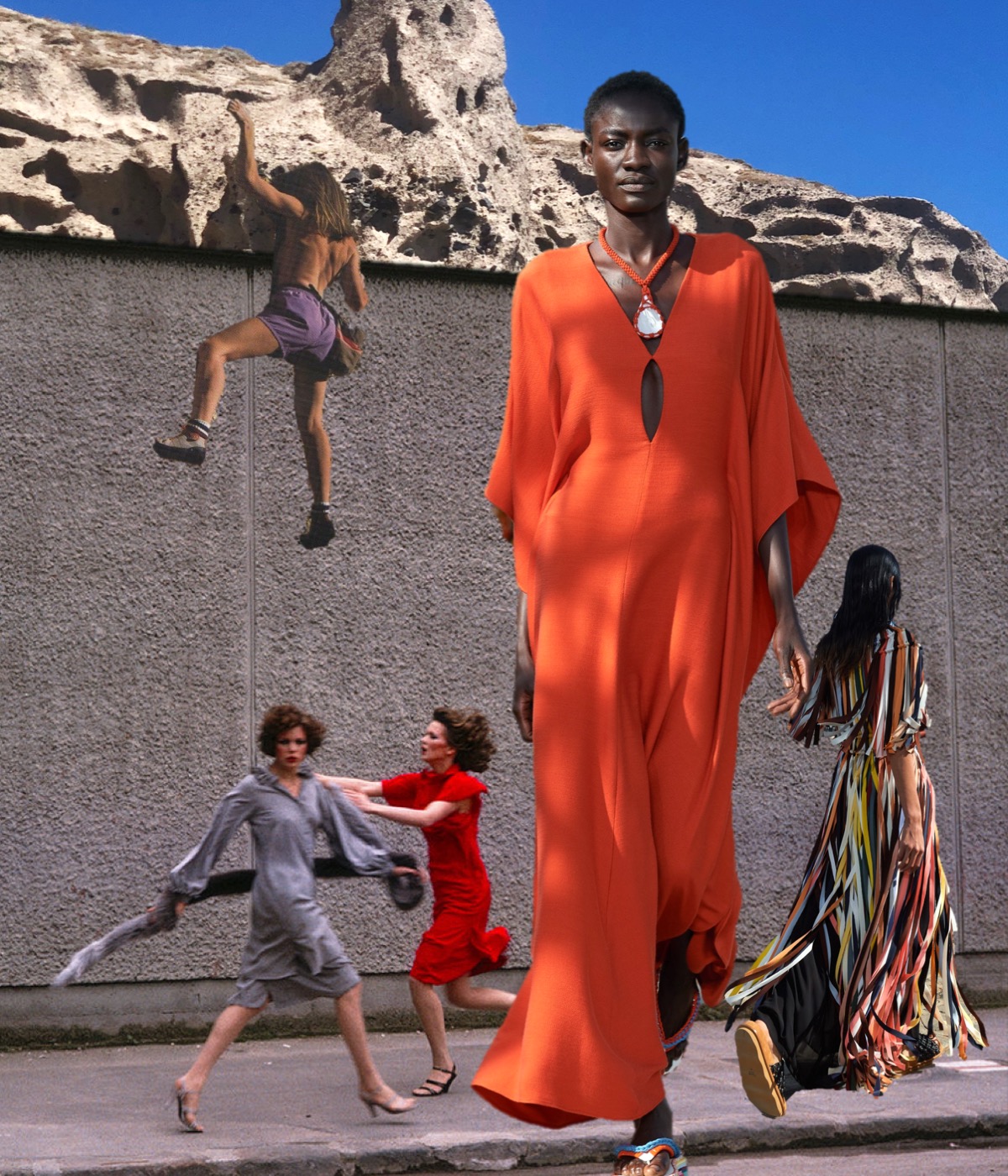
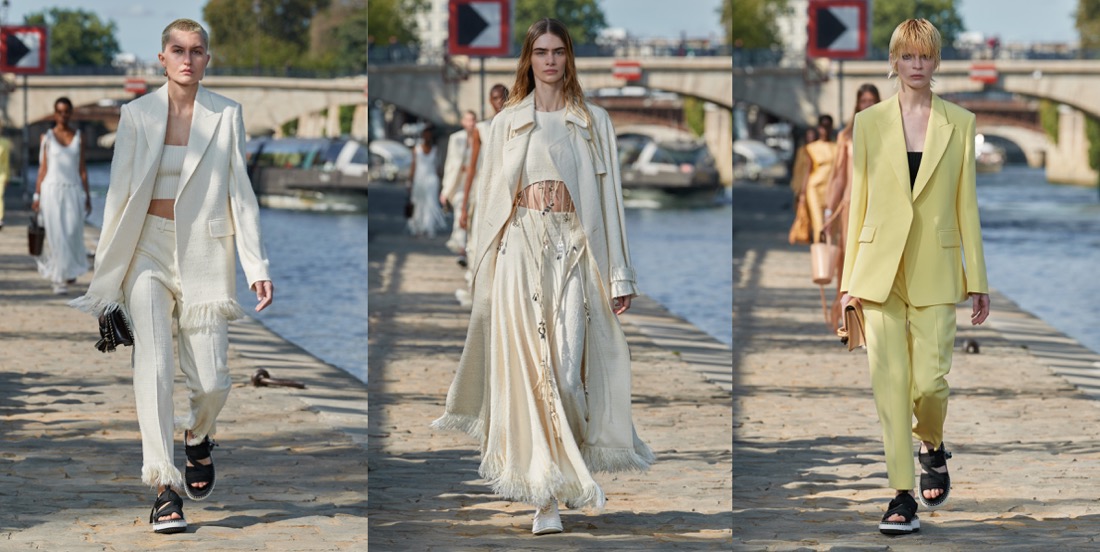
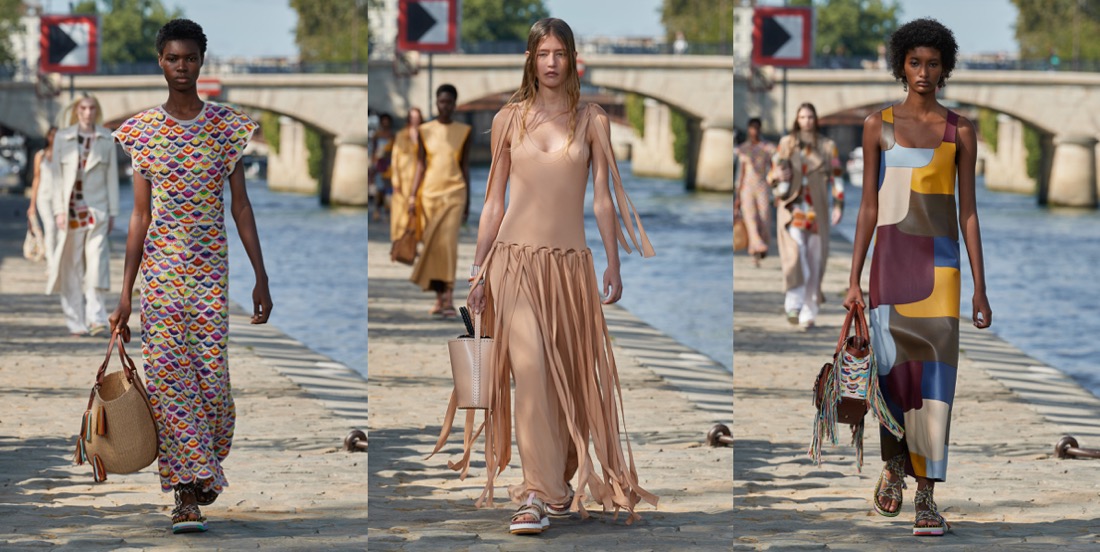
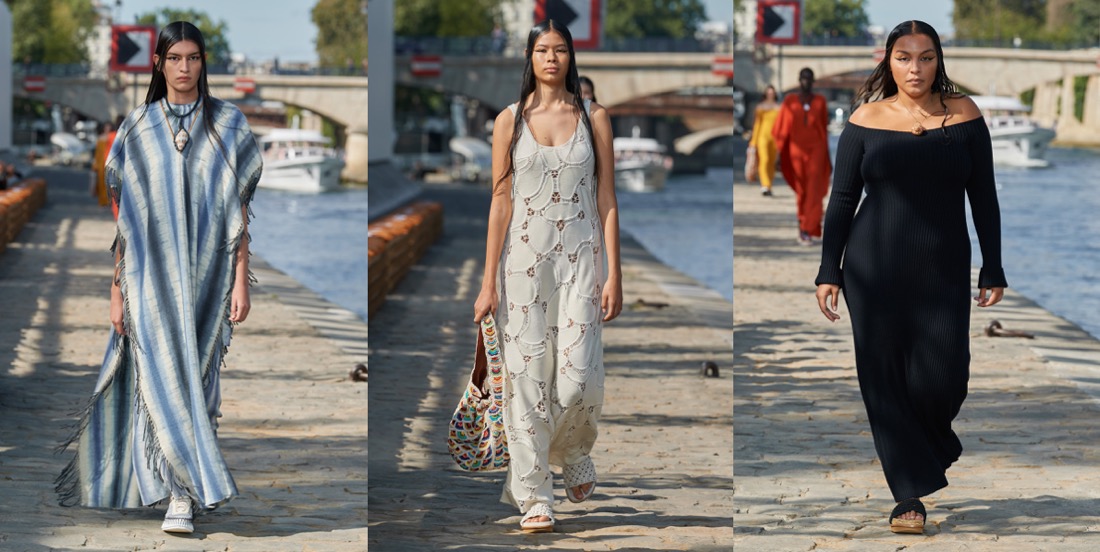
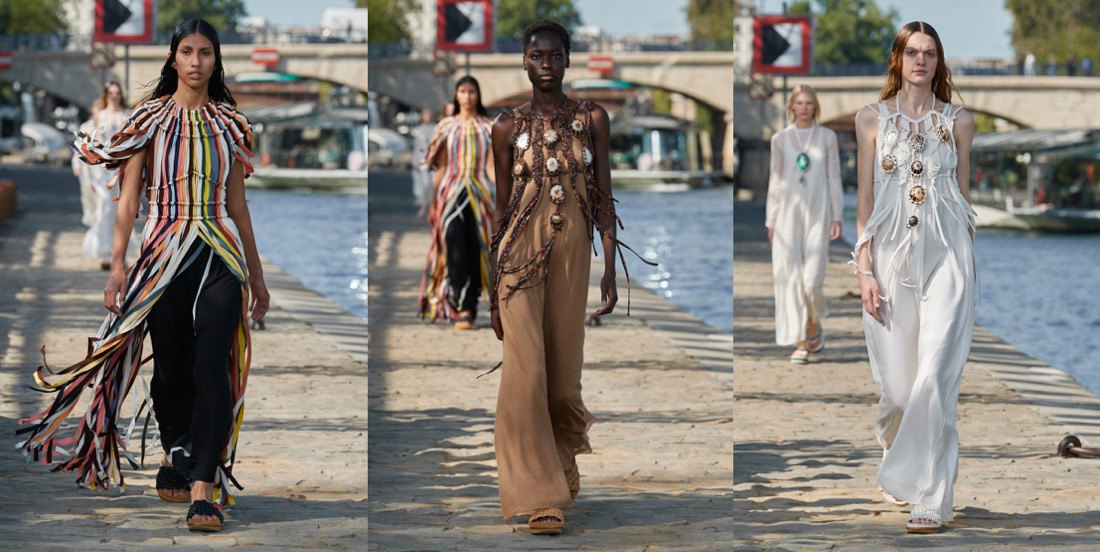
In her second season at Chloé, Gabriela Hearst convinces the Paris crowd that her take on the maison is truly worth observing and buying into. The show’s guests sat by the Seine, watching the inclusive model casting walk along the Quai de la Tournelle in brilliant sunshine. An accidental audience of Parisian passersbies and a packed riverboat made the IRL event feel even more… real. Somehow, this all felt like a very Gabriela Hearst moment, because the practice of sharing and openness is her all over. “As cheesy as it sounds, this collection is about love,” she said in a preview. “It’s really about the love of so many things: the love of craft, the love of friendship, the love of fellow humans. I literally have to memorize the many different NGOs, because I am working with so many this season.” You get the free-flowing, unforced boho spirit of what Hearst is doing with Chloé from the 31 pictures of the show. What with its summer-holiday caftans, ponchos, lacy dresses, and smattering of boyish pantsuits, the collection is fully in the tradition of the free-spirited Chloé girl brand identity that has been passed down from hand to hand by a succession of women designers, from Stella McCartney and Phoebe Philo onward. What’s very different with Hearst is, first of all, the reduced number of looks in the shows: down to 31 from sometimes more than 50. And second, the meticulous and quite formidable way she’s bringing in changes in sourcing, the supply chain, traceability, and environmental and social responsibility to a major Paris fashion brand.
All the information is documented in a Chloé press release and on its website: progress toward what all fashion houses ought to look like internally in this age of climate emergency. At points – when you consider how many women’s organizations and communities Chloé is benefiting through buying strategies around the world – it almost begins to seem possible that this work could even be marking a shift in the entire purpose of a luxury brand’s existence. One step in that direction is that the most exclusive level of Chloé luxury is now being launched as Chloé Craft – a group of products with a spiral logo, denoting, as Hearst puts it, “that only a human hand can make those pieces.” In the spring collection, those hand skills were evidenced in pieces like the petal-pattern crocheted dress and the intricately knotted streamer-harnesses made of strips of leftover fabric from seasons before – techniques created by Akanjo, a social enterprise organization in Madagascar. The chunky seashell and macramé necklaces, as well as baskets that come labeled with the name of the person who wove them, also bear the spiral branding. Shifting the needle toward causing less environmental harm primarily comes in Hearst’s creditable insistence on fabric switching. For example, there’s more linen and less cotton involved in this collection. It’s used to chic effect in the cream pieces, including a generous, Hearst-signature trench coat with a cool heft and whipstitched leather edging. And, more surprisingly, in a great indigo blue pantsuit that at first sight seemed to be denim, but was in fact a beautifully soft, supple linen. Underfoot, as well as the eco-friendly Nama trainers launched this year, a new and delightfully multicolored deep-soled Chloé flip-flop was treading the Parisian riverside quai. In fact, all the pretty pastel layers pressed into the soles were once other flip-flops. “They’re from Ocean Sole, which I’ve been wanting to work with for a long time!” Hearst declared. “It’s a Kenyan nonprofit that collects flip-flops from the ocean.” All the applause from the people of Paris, boat-trippers and fashion audience alike, was well deserved for the progress she’s pushing through.
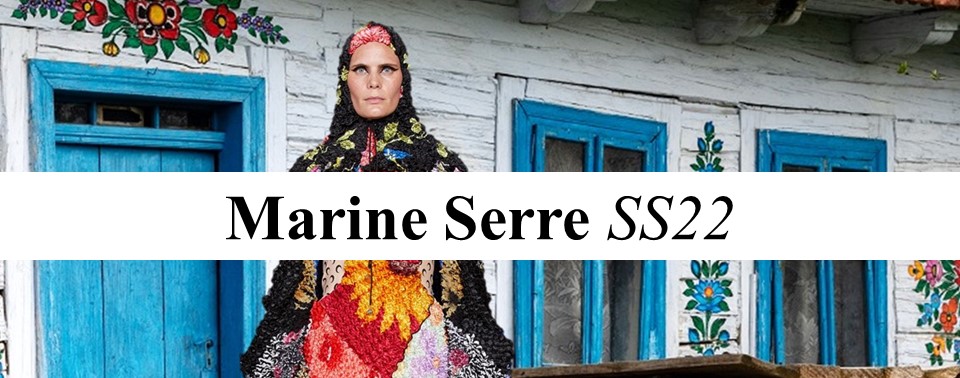
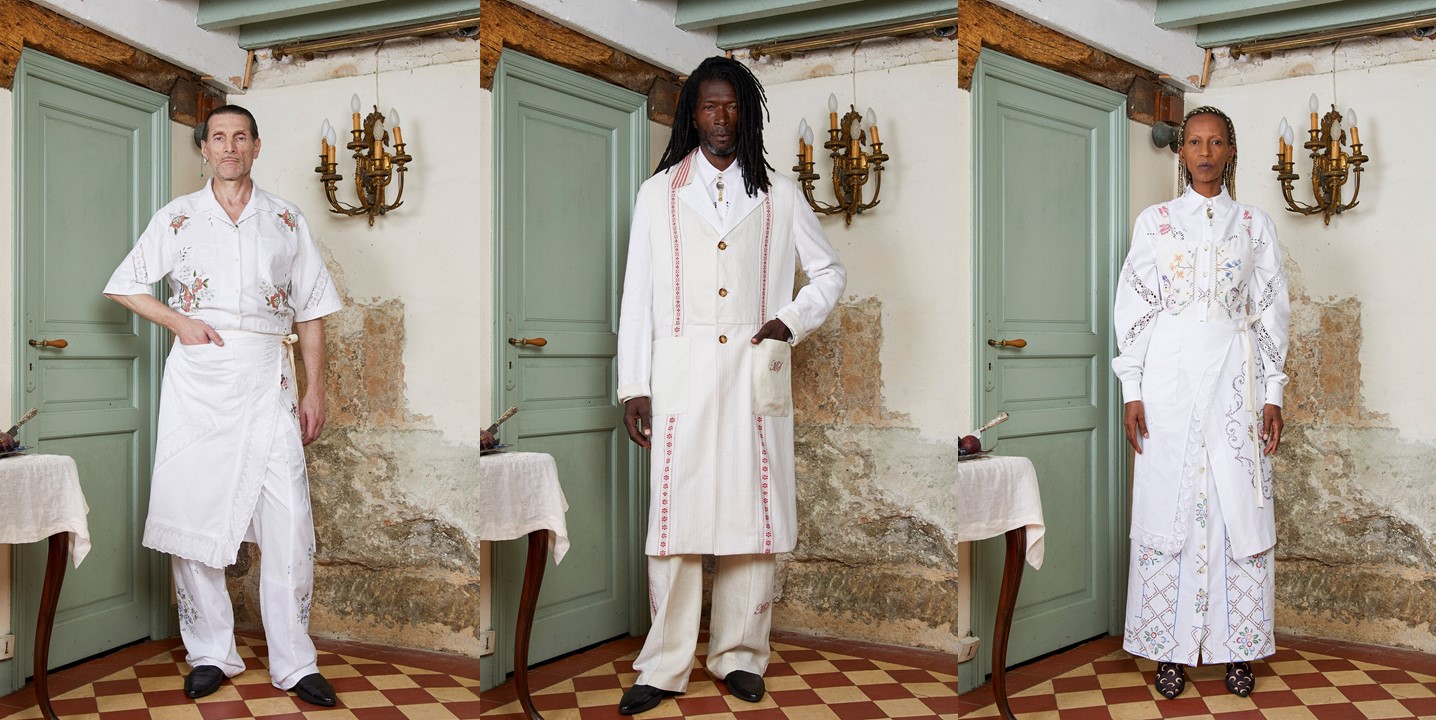
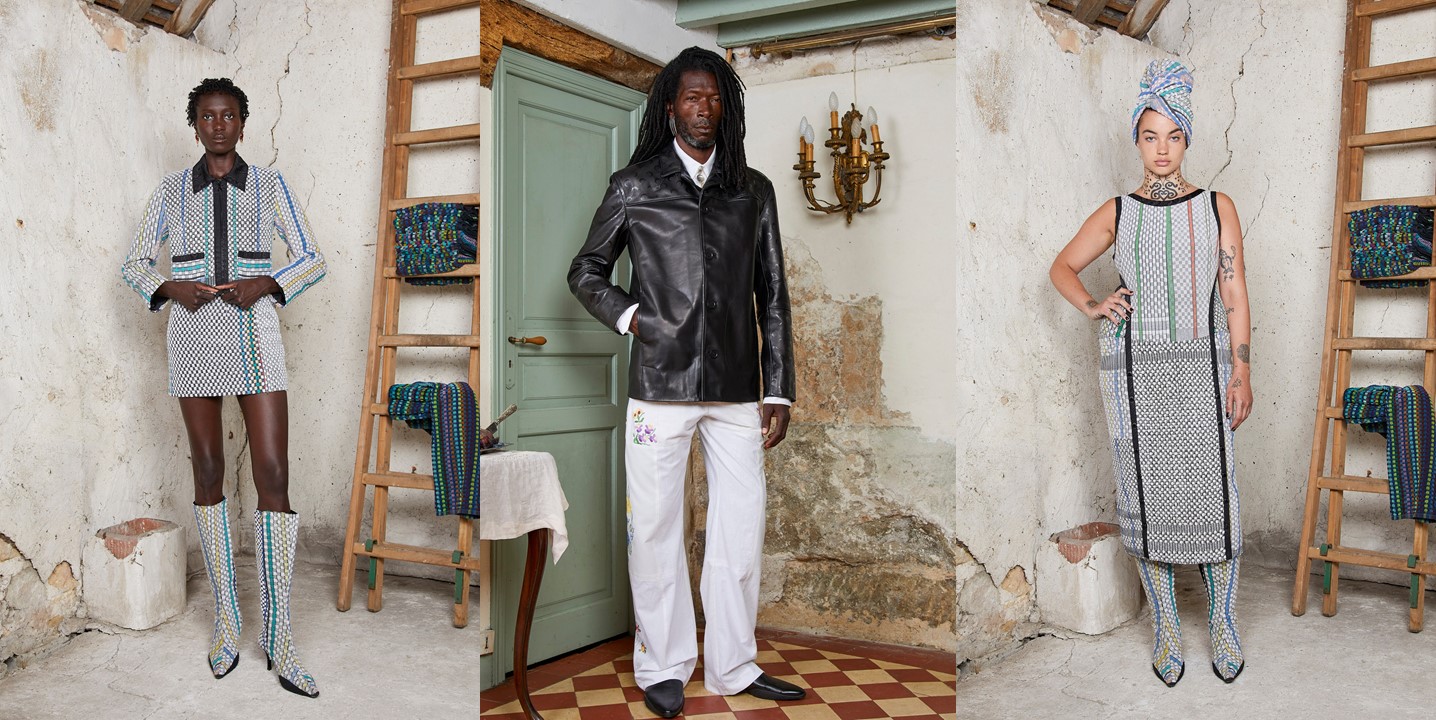
For the spring-summer 2022 collection entitled Fichu pour Fichu (“We are doomed”), Marine Serre pushes further her eco-conscious approach to fashion. Inspired by the ongoing state of flux the world is experiencing, the line-up focuses on reconnecting with others and our surroundings, and leading a life without the feeling of loneliness that comes with isolation. Accompanying the sustainable pieces, this season Serre delved even deeper into the power of film with Ostal24, a 13-minute short that transports us through interior and exterior worlds that could be situated somewhere in the past, present, or future. The title Ostal24, which means “house” in Occitan – a historical language spoken in Serre’s native region – grew from her belief that through sincere engagement with our primal instincts, we can create a sense of home wherever life takes us. “The most important thing for me is what people feel when they see Ostal24 rather than what they think,” Serre says. “I want people to feel the beauty and the simplicity of being together and finding joy in cooking, eating, dancing, yoga. And at the same time recognize that everyday we make choices that have an impact, so how can we be more responsible in the decisions we make? Fashion is about more than draping fabric and making a profit, it can be a place where we are free to take meaningful action.” And yes – those looks are made of upcycled towels and discloth!







 Design & Culture by Ed