Act Compassionately & Sustainably. Imitation of Christ AW21

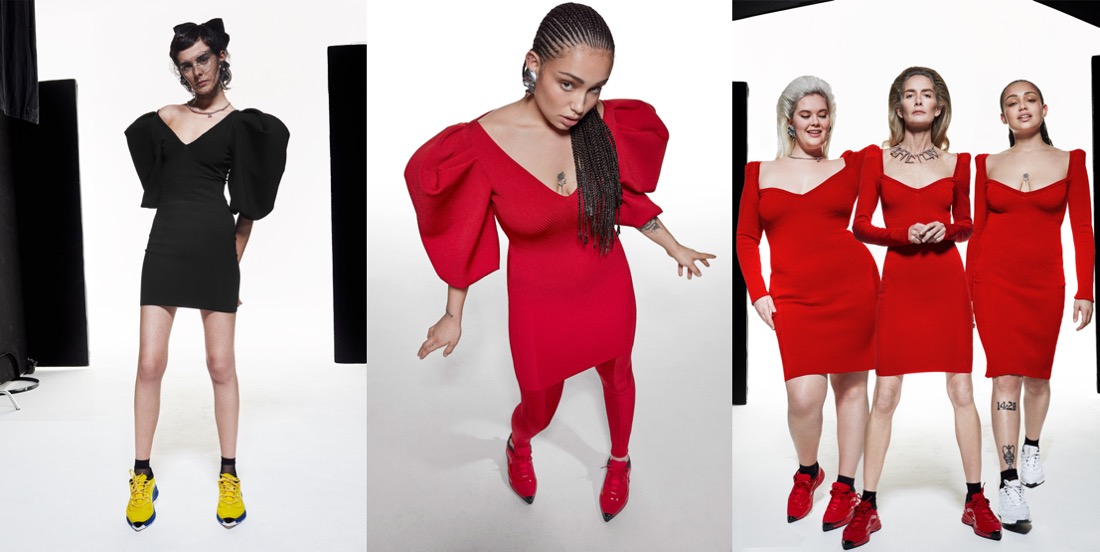
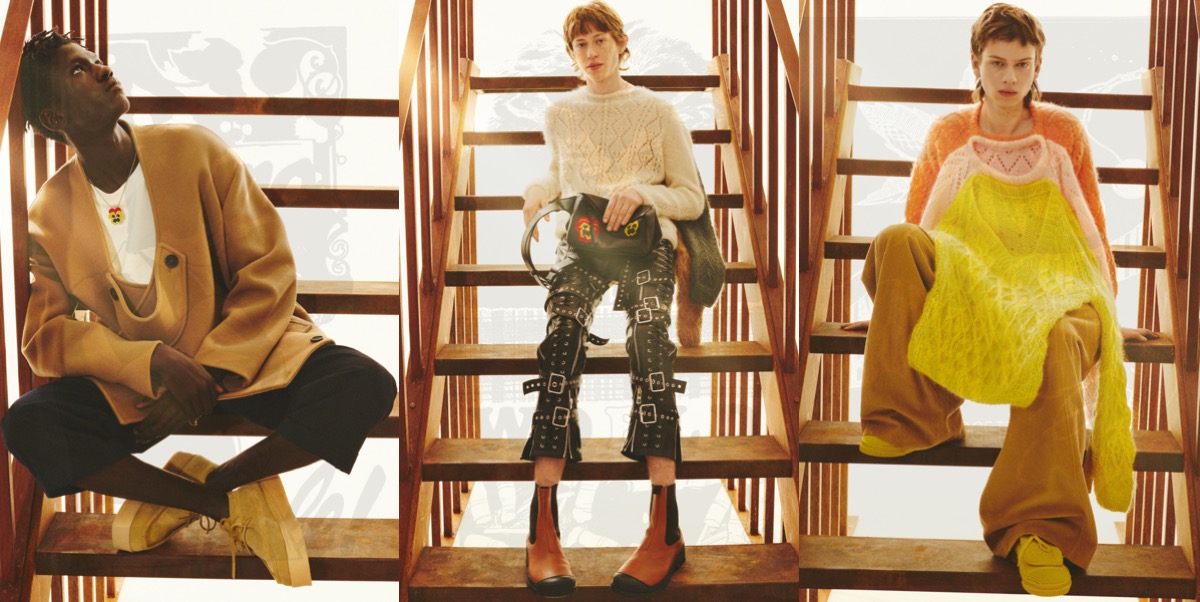
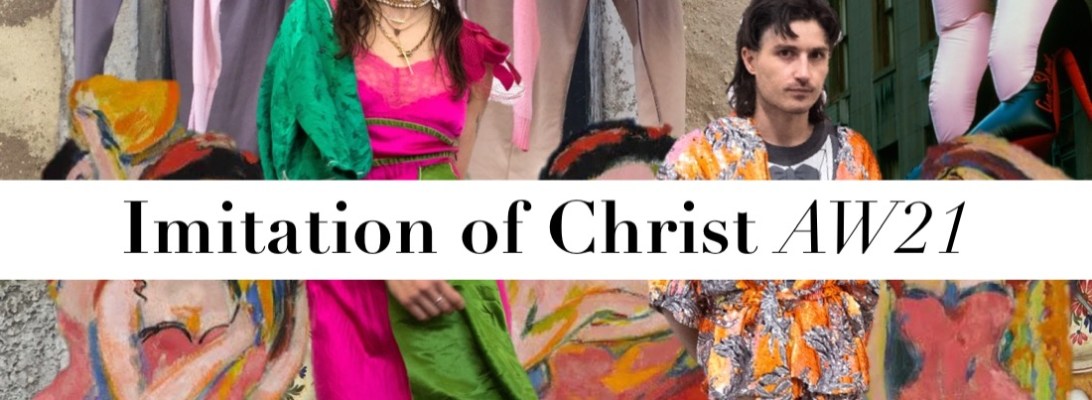
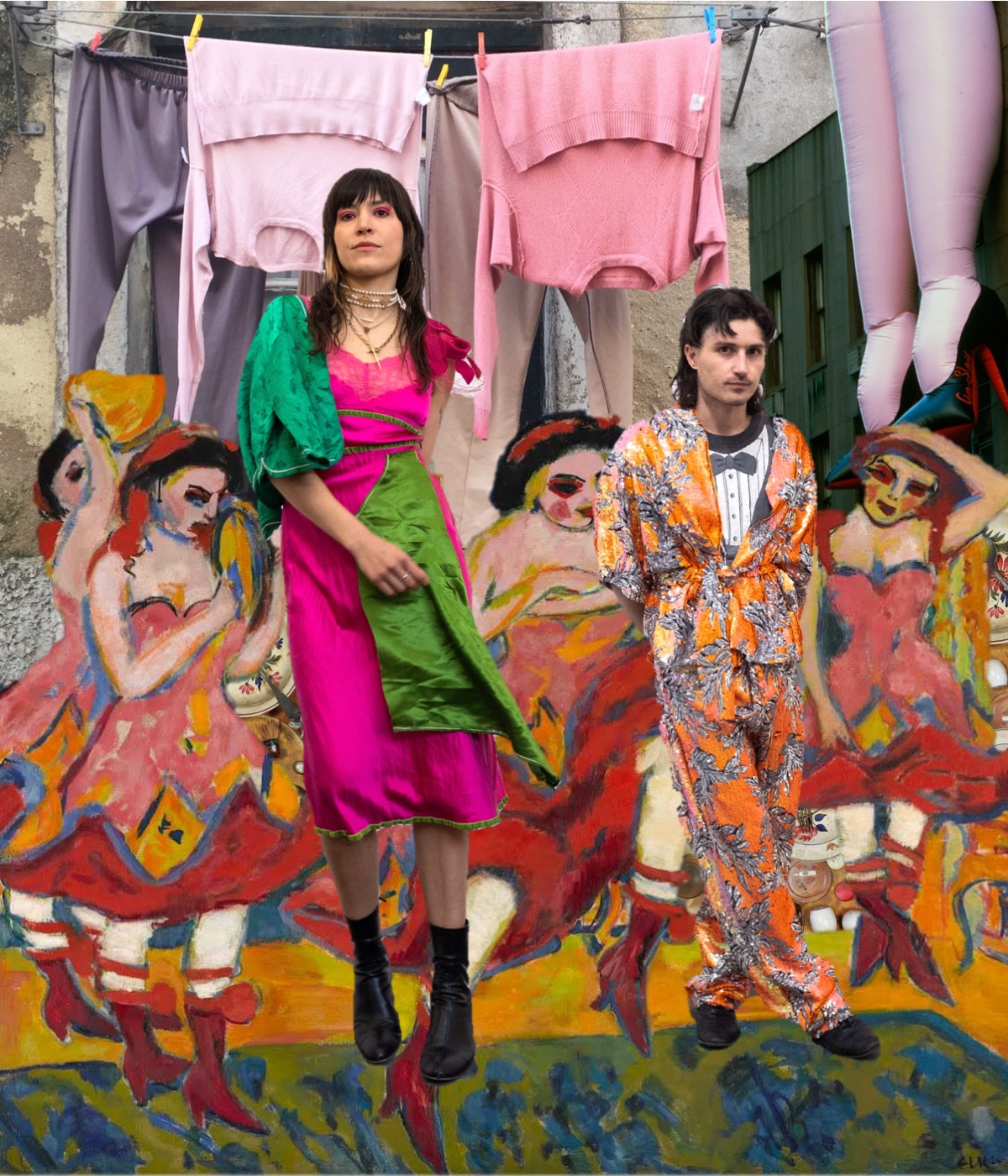
Imitation of Christ isn’t a regular fashion brand. Every single piece made (“produced” just doesn’t fit here) is one-of-a-kind. No pre-collections and no traditional business models, but rather spontainety and a sense of inspiring care-freeness is what prevails at Tara Subkoff‘s brand. And of course it’s one of the most ingeniously sustainable labels that exists. Second season in a row, Imitation of Christ’s upcycled collection is available and sold on The Real Real – and half the profits will go to Greta Thunberg’s Fridays for Future. Also, there’s no coincidence that the autumn-winter 2021 collection was presented on Valentine’s Day. It’s a reaction, said the designer on a call with Vogue, against “a Hallmark holiday or some consumer driven idea of romance.” Instead, the designer highlighted, the line-up (and the accompanying video) offers something “true.” The collection video, made in collaboration with Daphne Muller and Adam Teninbaum, is not for the squeamish. Though it features six hip Californians, a few of some renown, the piece is dominated by “a real 3D animated heart,” that is, admits Subkoff, “really shocking. We have this very strange idea of what a heart is, which is… really a cartoon version that we give to each other. We all have a heart pumping blood in our bodies and it pumps for a finite amount of time, then it’s over. And I think the more we understand that, maybe the more compassionate and kind we can be towards one another.” A similar feeling of compassion is present in the off-kilter garments. Subkoff  has always had a penchant for beaded dresses from the 1920s, and these were back and looking fresh. Deco beading was applied to pieces for men and women, and this incongruity was perhaps best exemplified by the pairing of a gray utility suit with shimmering white bead work (there’s a well-considered Martin Margiela method in these de- and reconstructed pieces). Subkoff believes that what good you do in the world becomes an ever growing legacy. She’s been serious about sustainability for decades and hopes, through her actions and messaging, to inspire others to design and act sustainably (“Please, other companies or other people – copy this, do this,” the designer offered).

Collage by Edward Kanarecki.
My Body. AZ Factory SS21

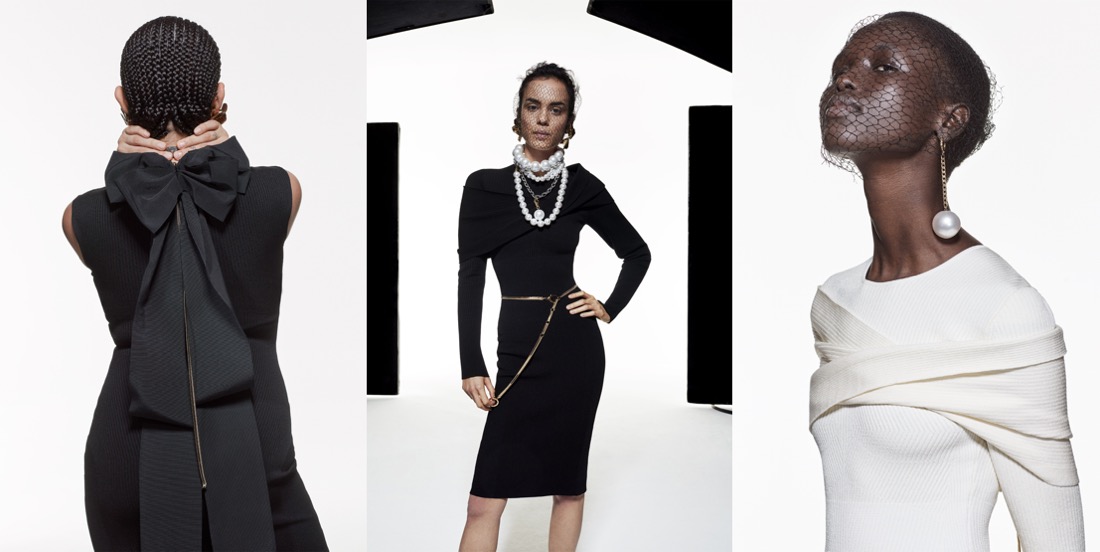
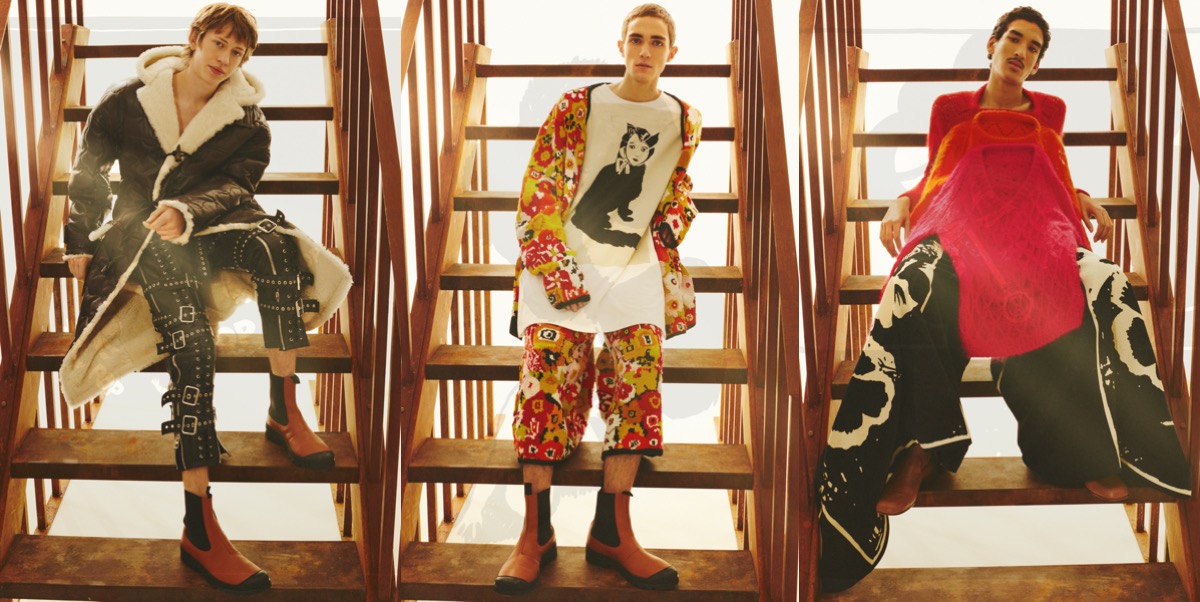
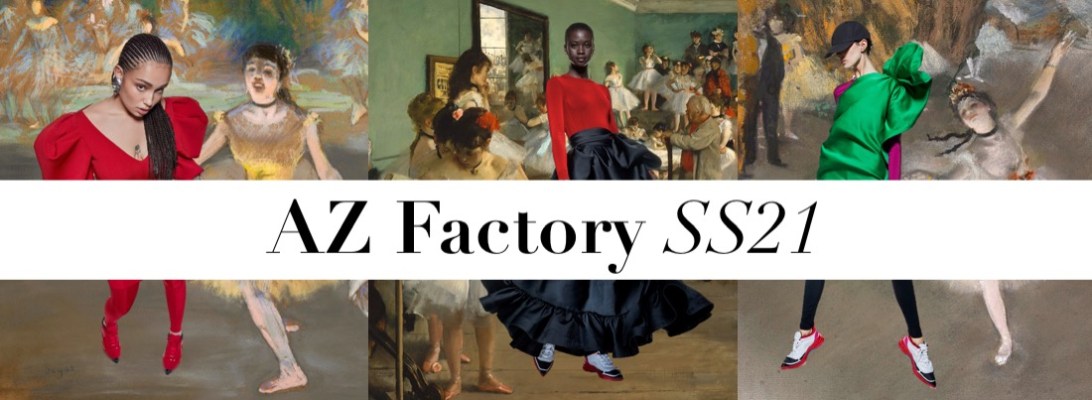
Alber Elbaz is back in fashion! Oh, how I missed his fabulous, perfectly imperfect dresses, joyous colour palettes and chic femininity he delivered at Lanvin. Five years after an abrupt exit from the Parisian maison, he returns with his own brand, which won’t be playing along the industry’s dusty rules. His debut AZ Factory collection, which is part spring-summer 2021 ready-to-wear (available now on Net-A-Porter, Farfetch and the label’s site), part couture, proves Elbaz truly reconsidered many things before starting his new venture. “I was doing a lot of observation,” he told Vogue. “I needed to run away. Somehow, I didn’t want to do any more pre-collections, post-collections. I had to question the present, and the future. I had so many questions: the world, women, technology, needs changed…so how is the industry going to change?” He’s embraced tech; he’s stepped up to environmental-responsibility, he’s taking on body-positivity – all things that seemed like far-off improbabilities in 2016, when he took a break from fashion. After taking a good look around – pending his time teaching, reading, visiting Silicon Valley, listening to women friends, researching new fabric technologies, he concluded there’s a place for a totally modernized approach to fashion. “I was thinking: What is the purpose of design today? Thinking, but not being intellectual. How can I help women? I wanted to work on new technology to develop some smart fabrics with factories [to make] beautiful, purposeful, and solution-driven fashion. That is for everyone.” The first offering from AZ Factory is “My Body,” a set of dresses engineered to consider the ergonomics of all shapes and sizes. Its implications are super-modern, practical, empathetic – and kind. “I saw for five years, women I met for lunch how much women were struggling with their weight, and sometimes that was hard to watch,” Elbaz said. “ Even in the ’50s, [fashion said:] ‘This is right, and this is wrong.’ I think that there is no wrong! I took a subject that is taboo, that you almost don’t want to talk about, but I said: Yes I will. We’re not here to transform women; we’re here to hug them.” His dream, he explained, was “to build a magical dress that was made of knitwear: an anatomical knit. There are areas that are a bit thicker, areas that are finer. I released the tension in the skirt, so you can walk faster, or dance if you wish.” AZ Factory has all the flourishes and colorful quirks his fans will easily recognize from his Lanvin days – the volumes and prints he so fluently dashes off from his pen. But this time, rather than going in the French haute couture party-gown direction, the ideas are sprung from athleticism and servicing real life. Developing his own bespoke fabric has made him break the wasteful old fashion-y habit of splurging on multiple options. “I said: Be strict with yourself!” he laughed. “I’ll do one jogging suit in seven colors and a few duchesse skirts in recycled nylon.” It can all be hand washed, too, thus eliminating dry cleaning impacts (and bills), while cutting down on washing machine water and electricity use. Just one thing I’m not sure of are the pointy-toe sneakers. But in overall, everything works really well. It adds up to a new way of doing things, that’s for sure: a far cry from catwalks and shows, a break with some of the bad old habits of fashion, and a leap to launch purely online. “And everything is 230 to 1,200 euros!” Elbaz concluded. A price point which is much, much lower than the one at Lanvin, for instance. It’s a new space in between, where something with design integrity and modern thinking is finally happening. Welcome back indeed, Alber.

Get your hands on the first AZ Factory must-haves: AZ Factory stretch-knit leggings, AZ Factory stretch-knit top, AZ Factory stretch-knit mini dress & AZ Factory stretch-knit bodysuit.

“Live” collage by Edward Kanarecki.

Men’s – Eclectic, Curated, Sustainable. Loewe AW21

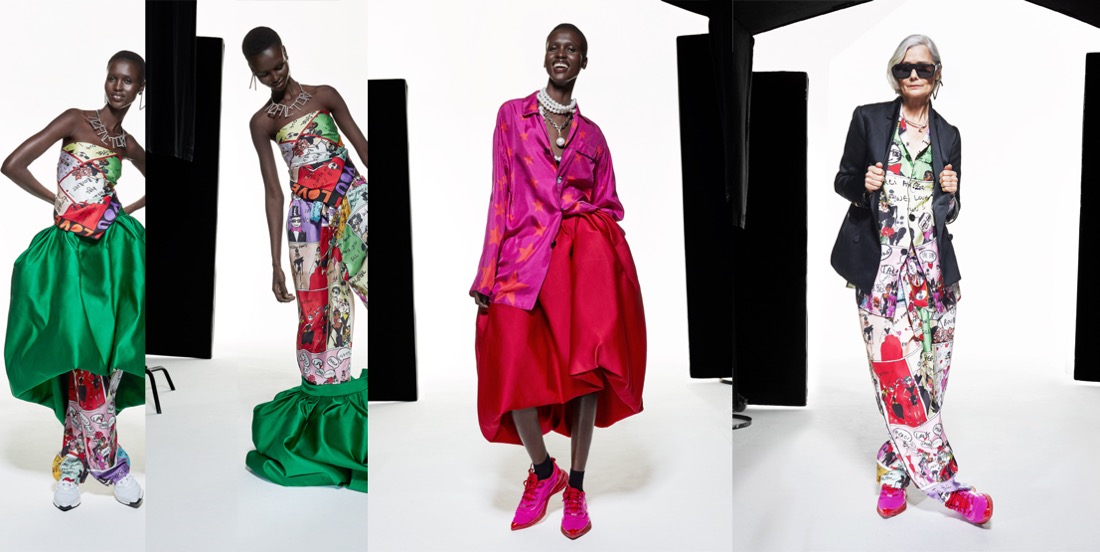
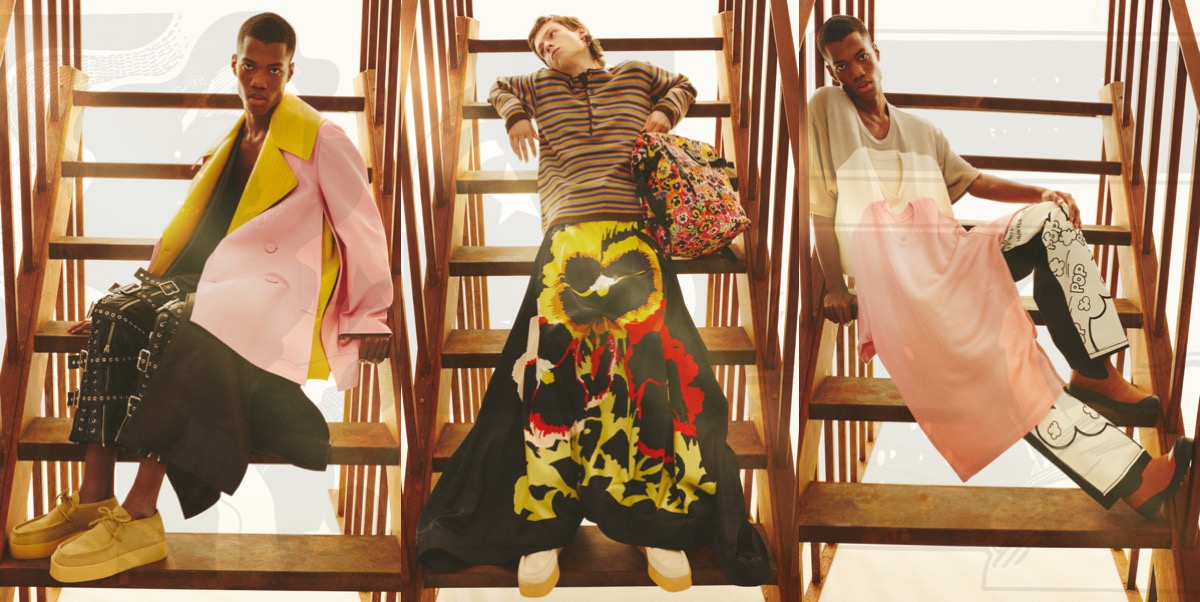
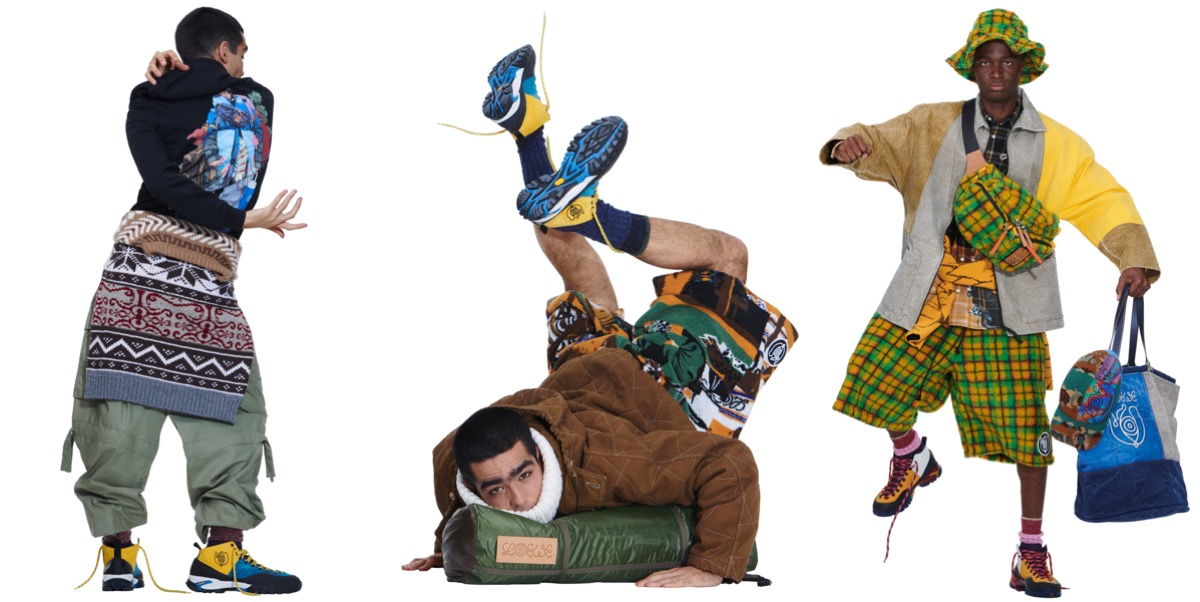
Jonathan Anderson‘s Loewe universe is a wonderland of eclectic, curated – and sustainable! – things. And the autumn-winter 2021 collection for men is like a treasure chest of details, curiosities, textures, crafts prints and colours. But to organize what we’ve got: this Loewe lookbook actually feautures two collections, and the one at the bottom is produce from the company’s Eye/Loewe/Nature sustainable-practice department. This time, the communication came as a show-in-a-book, wrapped up in a coffee-table sized monograph on the queer New York artist Joe Brainard, and as a show-on-a-shirt – a huge T-shirt printed with all the sustainable-practice pictures. Why Brainard? “I remember zines he’d done in the ’70s. We remade a book on him which we’ll be selling in bookshops, and the proceeds will go to the charity we work with all the time, Visual Aids, to help artists who have suffered from AIDS,” says Jonathan Anderson. “I felt like Brainard is so important. He was part of a huge movement, with his writing and his pansy collages – his work is now at MOMA and the Pompidou. I like his writing, it has huge optimism, questions sexuality and things like that. But he’s one of those underground figures.” Anderson talks through the collection in an open-access video on the Loewe website, where it’s easy to see the assembly of charming pansy patterns made into big cardigans, or vast rectangular trousers, or inset as leather marquetry on Loewe Puzzle bags. You also get to understand how the panels of a patchwork shearling are pieced together from reproductions of Brainard’s canvases. And how a tote bag is decorated with the artist’s painting of a whippet on a green background. It’s all adorable and completely wantable. And the extra kick to the feel-good sensation of buying it is that your money is also going to do some good in the world. “I think the whole thing now is about clothing and something else,” says Anderson. “I think the customer wants more than just the clothing now. They want to make sure you have a unique viewpoint and, at the same time, a moral viewpoint.” A joyful vision and a bit of a mad-creative take on fashion are also rare luxuries to enjoy vicariously these days, what Anderson calls “being imaginative with clothing.” His current work on extreme trouser shapes delivers all that. Besides the multi-strapped leather and grommeted punk trousers, the pieces that might read as maxi-skirts actually turn out to be pants too. “I did a lot of wide, wide, super-wide trousers. Kind of performance trousers – this idea of being in your bedroom and dancing on your own.” Which we know is an actual social phenomenon in these days of lockdown.

Amongst the collection is also a huge, cosy multi-patterned Shetland-cum-Norwegian type sweater, knitted together from upcycled yarns. It links directly into the work on sustainable research that’s been going on for four years with the Eye/Loewe/Nature collection. It’s much more than an isolated side-project, Anderson explains. “We set it up as an incubator inside Loewe to try to work out a long-term solution to sustainability. It’s where the entire design process is monitored from start to finish. Every year we try to chip away at something – buttons, zips, hardware, plastic clips – so that what was a problem becomes less of a problem. Because it then means that your supply chain can deal with it, manufacturing know how to deal with it, and the design team knows how to design within that framework,” he says. “And from those learnings, working with suppliers, we can disseminate elements into the bigger workings of Loewe.” In practical terms, it’s meant “buying a huge bulk of used knit sweaters, or denim, and working them into garments. The great thing is that the whole company is involved. What I like about the industrial side is the idea of talking to suppliers like YKK about a problem – and actually making it not a problem. The trouble is when you’re impatient, like me, you want to be completely sustainable tomorrow – but you have to realize it takes time. It means turning an industrial revolution into a new eco revolution. Ultimately, the big picture is, we all have to do it,” he says. “It’ll probably be an ongoing thing throughout my entire career.” If luxury goods companies ever worried that customers would baulk at buying products made of upcycled or non-traditional materials, then the testing ground of the Eye/Loewe/ Nature collection is beginning to prove them wrong. “This is the third collection now,” says Anderson. “And, you know, it’s becoming very, very popular.

Collages by Edward Kanarecki.

Craft. Gabriela Hearst SS21

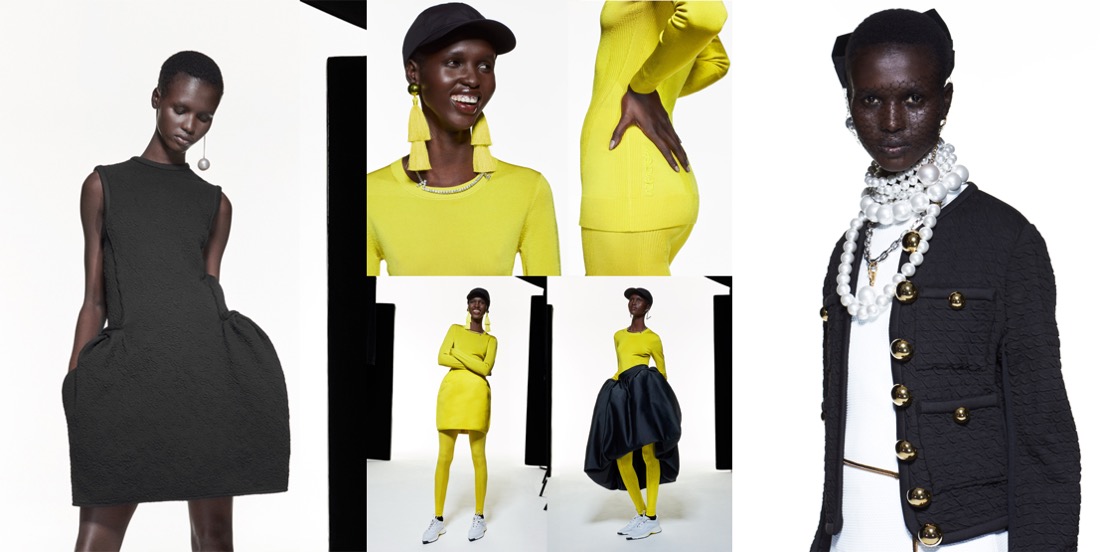
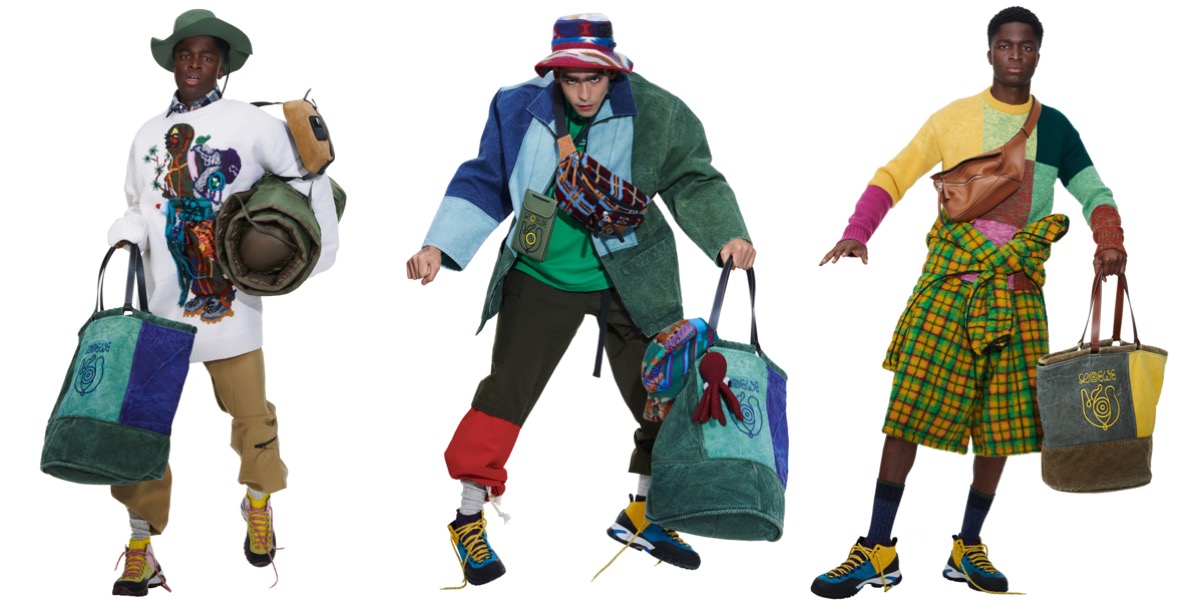
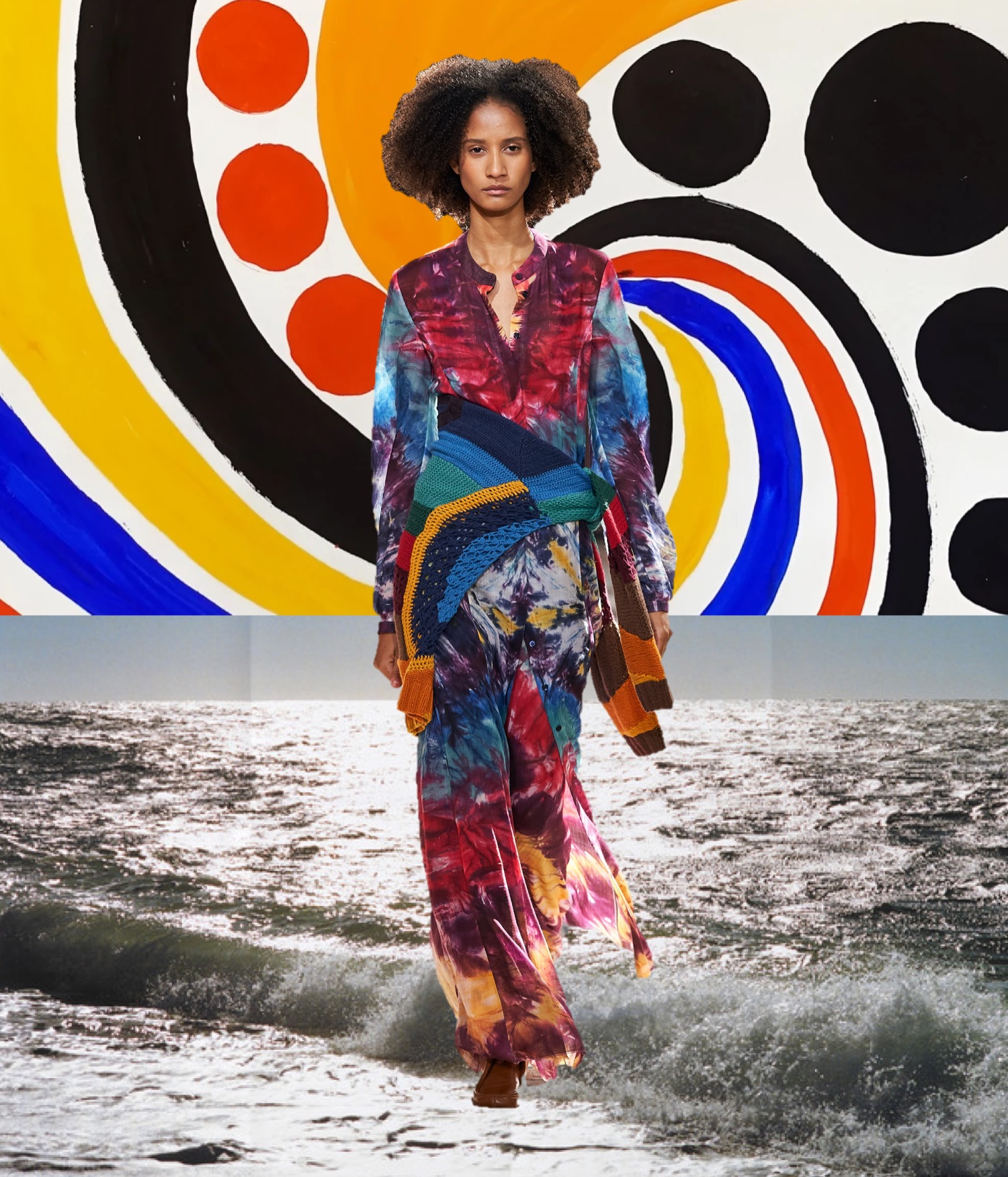
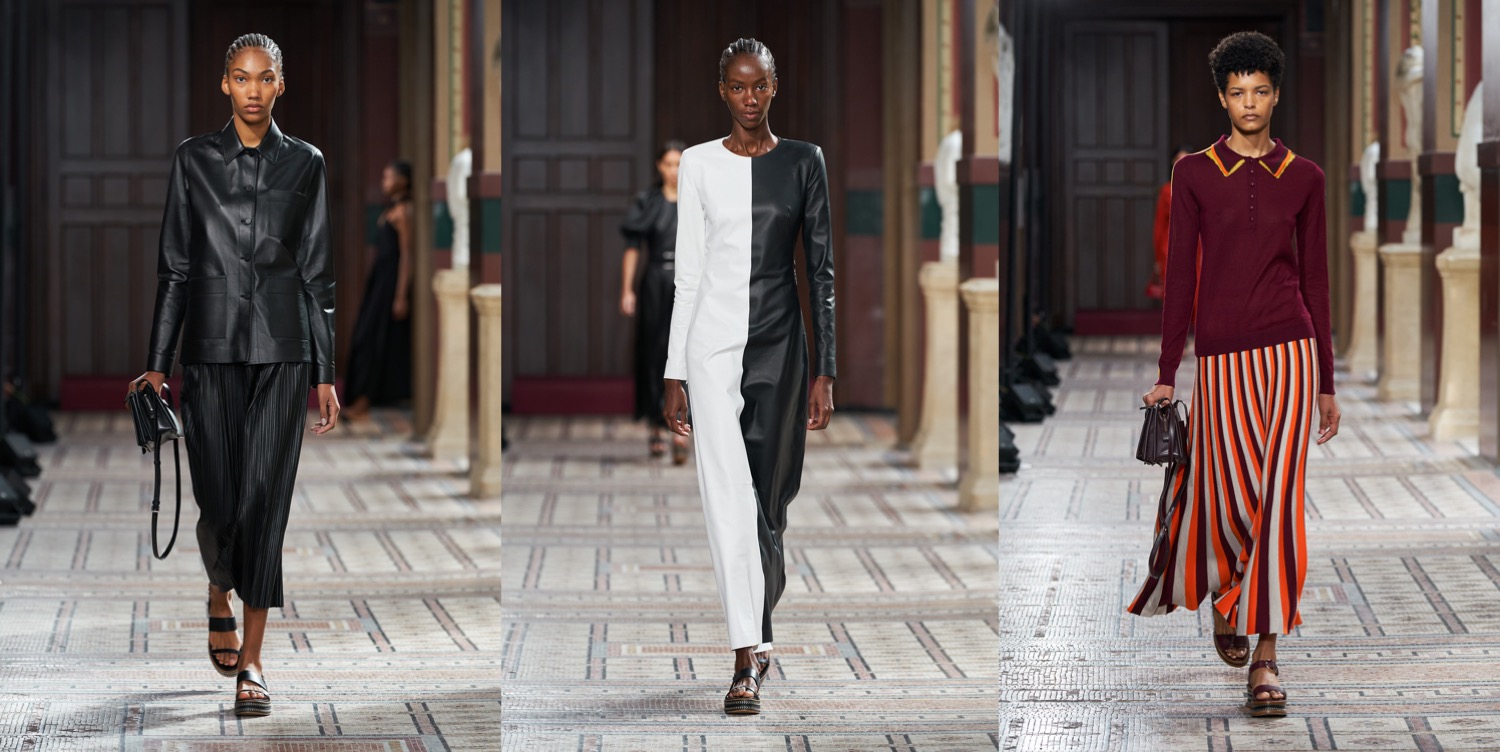
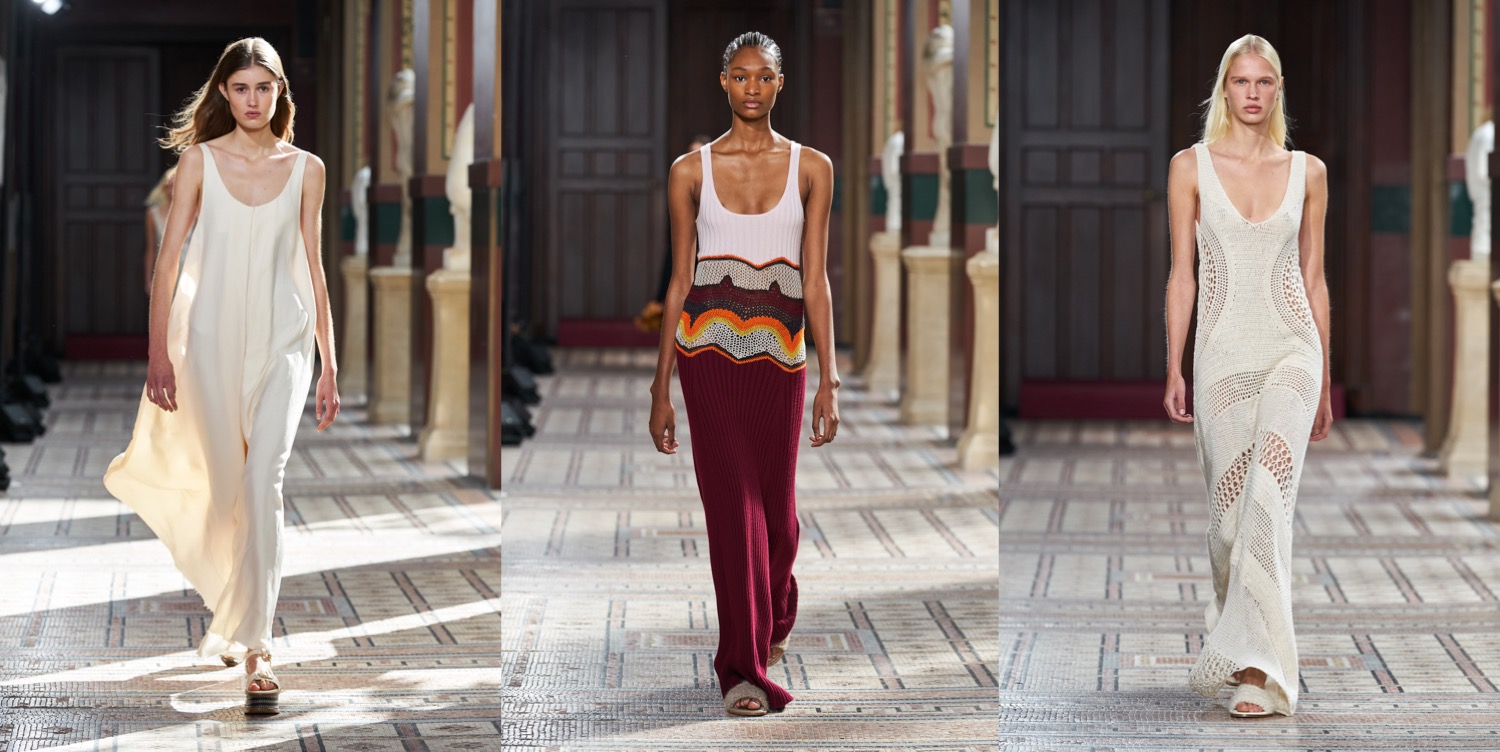
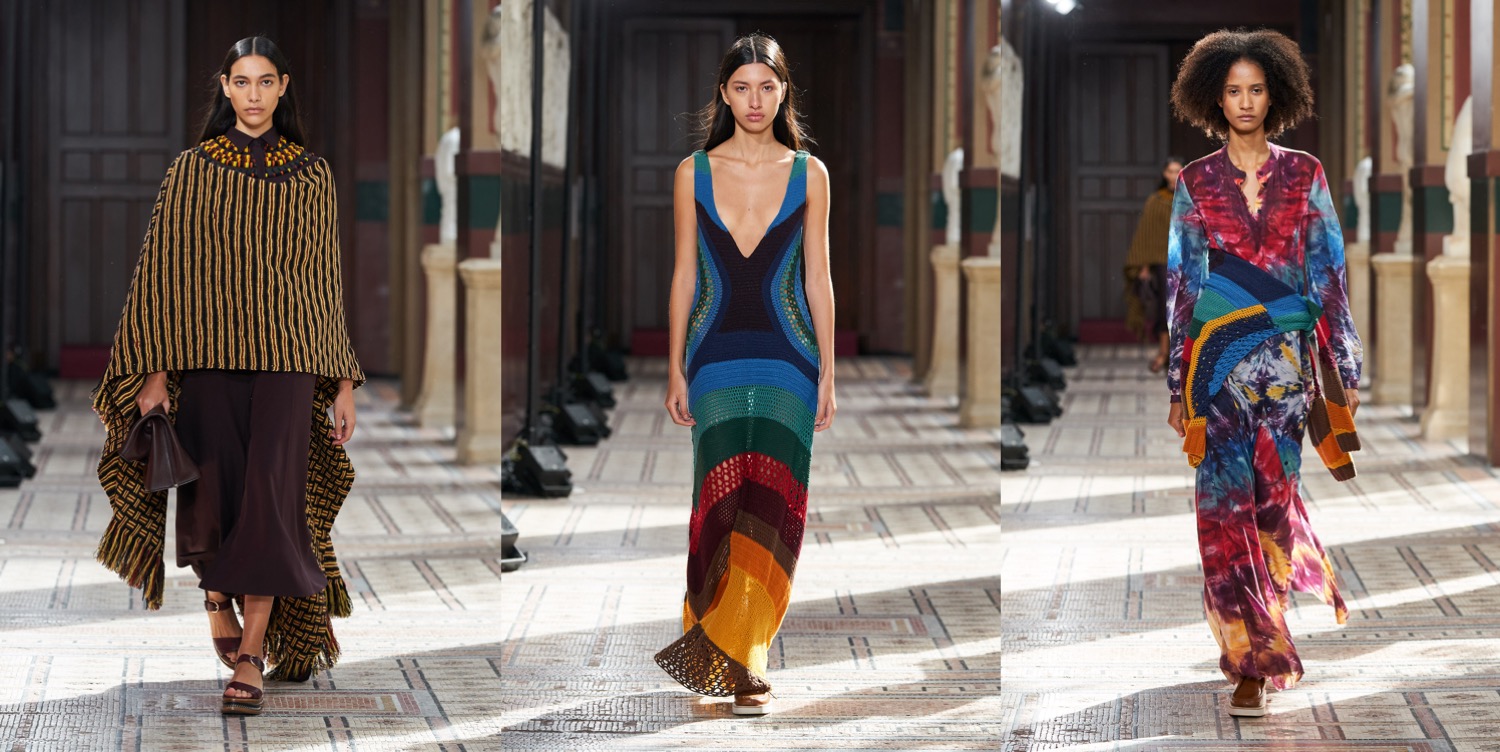
This season, Gabriela Hearst decided to show in Paris instead of New York not only to catch the spotlight in Europe, but also because it was the most sustainable and carbon-neutral thing to do – most of her samples and designs are produced in Italy. And since New York Fashion Week suffered from its cuts and was stumbling this season due to strict COVID-19 regulations, Paris really is a better option for brands like Hearst’s. “It was really important to us to push ourselves creatively, to not let the pandemic stifle us,” Hearst told Vogue. “It became the craft challenge.” The collection was a proper Gabriela Hearst line-up, relaxed, made out of top-notch materials (most from deadstock) and full of gorgeous, timeless garments. The tailoring that has made its way onto the backs of influential women like Alexandria Ocasio-Cortez, Jill Biden, and Oprah Winfrey, took a back seat. Instead, and in keeping with the themes of comfort and ease that have defined the season so far, Hearst trained her focus on knitwear: a long crocheted tank dress of many colors and its ivory sister were both striking, as were a pair of hand-knit cashmere ponchos with fringe that nearly reached the ankles in back. The collection’s genesis was a shell bracelet from Easter Island, a gift from Hearst’s mother back in January. The designer re-created it as shell trimming along the edges of circular cut-outs and on the straps of two repurposed silk dresses, making keepsakes to treasure of what were otherwise simple silhouettes. The shells led her to explorations of the golden spiral, which she reproduced in embroidered seaming details on a pair of slub linen trenches and on an aloe linen dress. Hearst knows that nothing is as important as the detail.

Collage by Edward Kanarecki.

Time For Reset. Balenciaga SS21

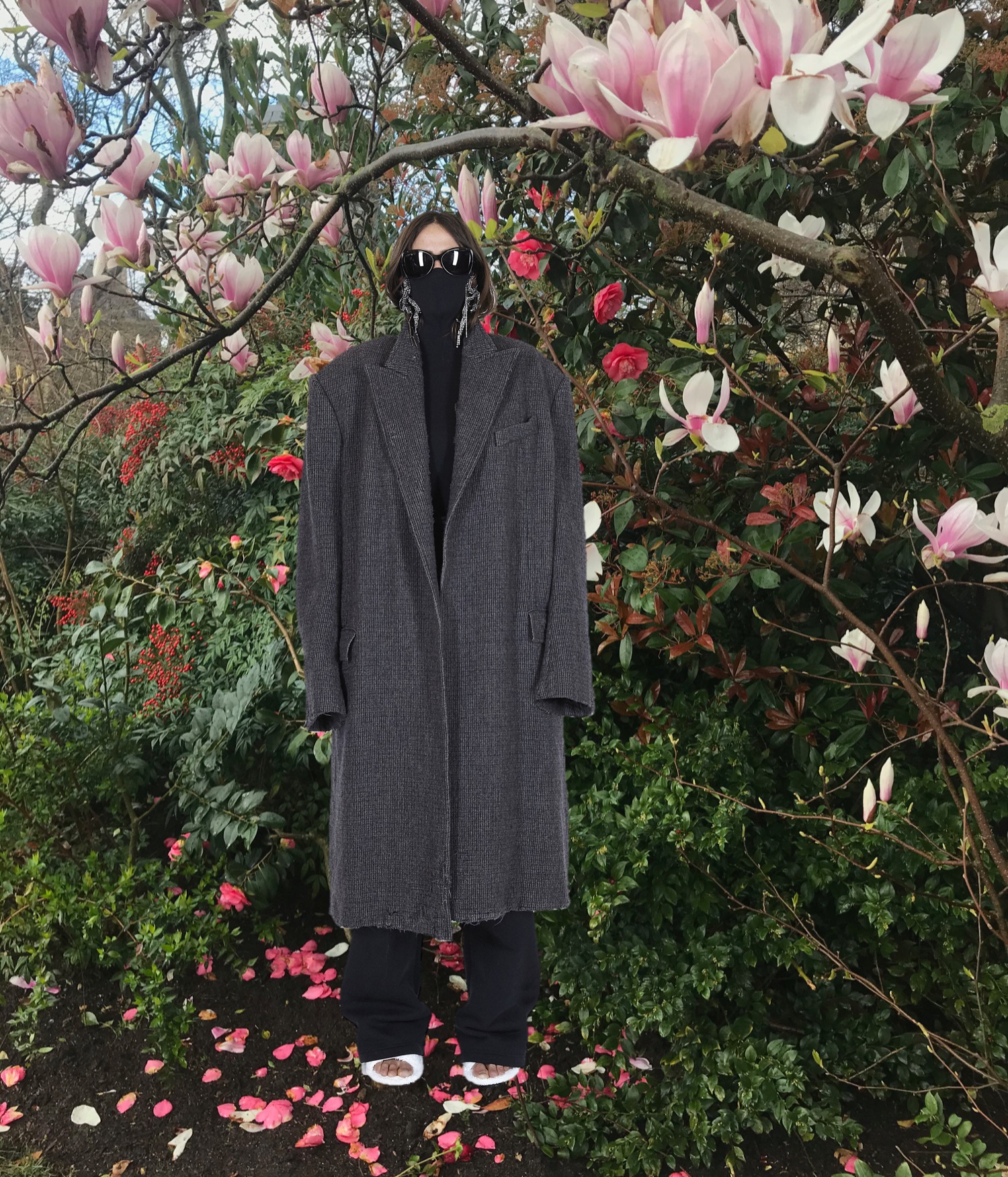
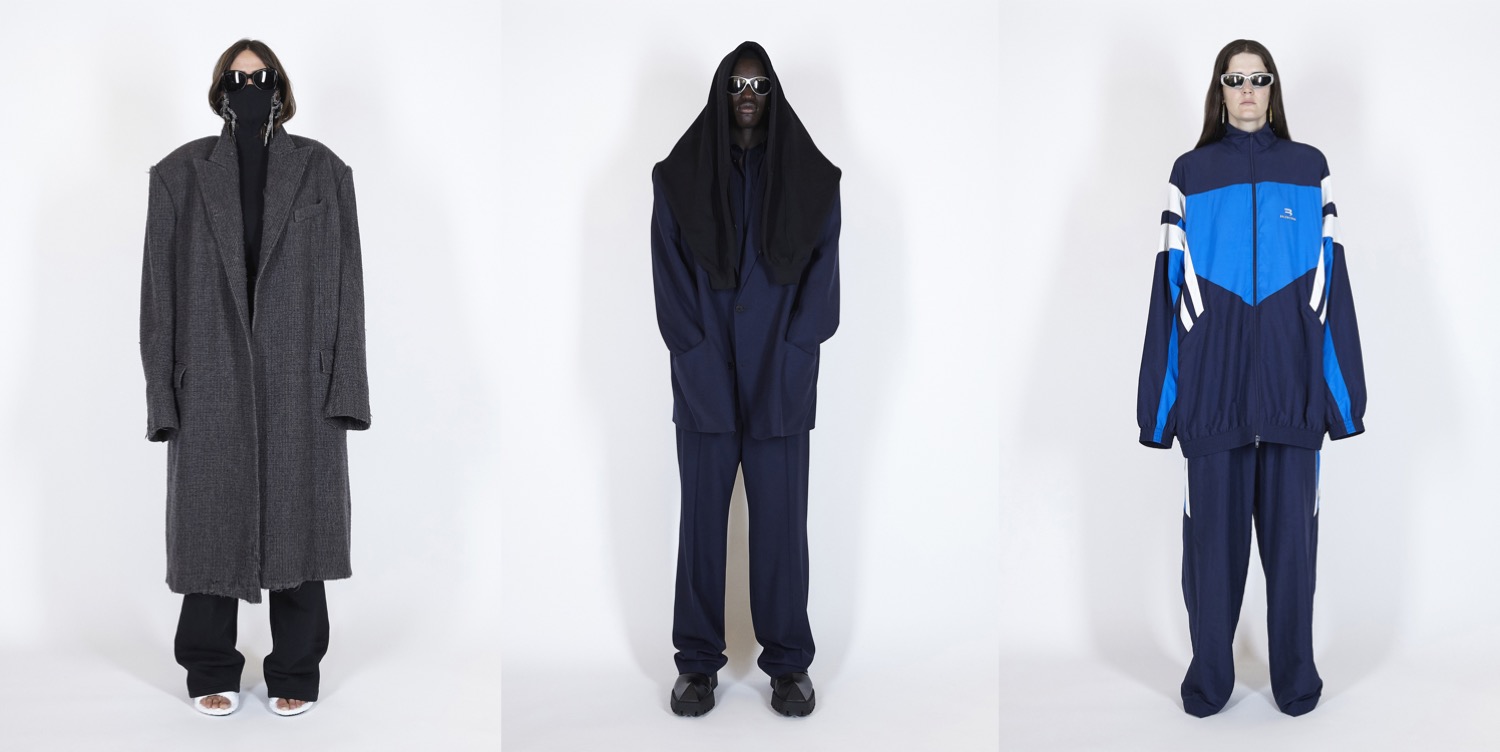
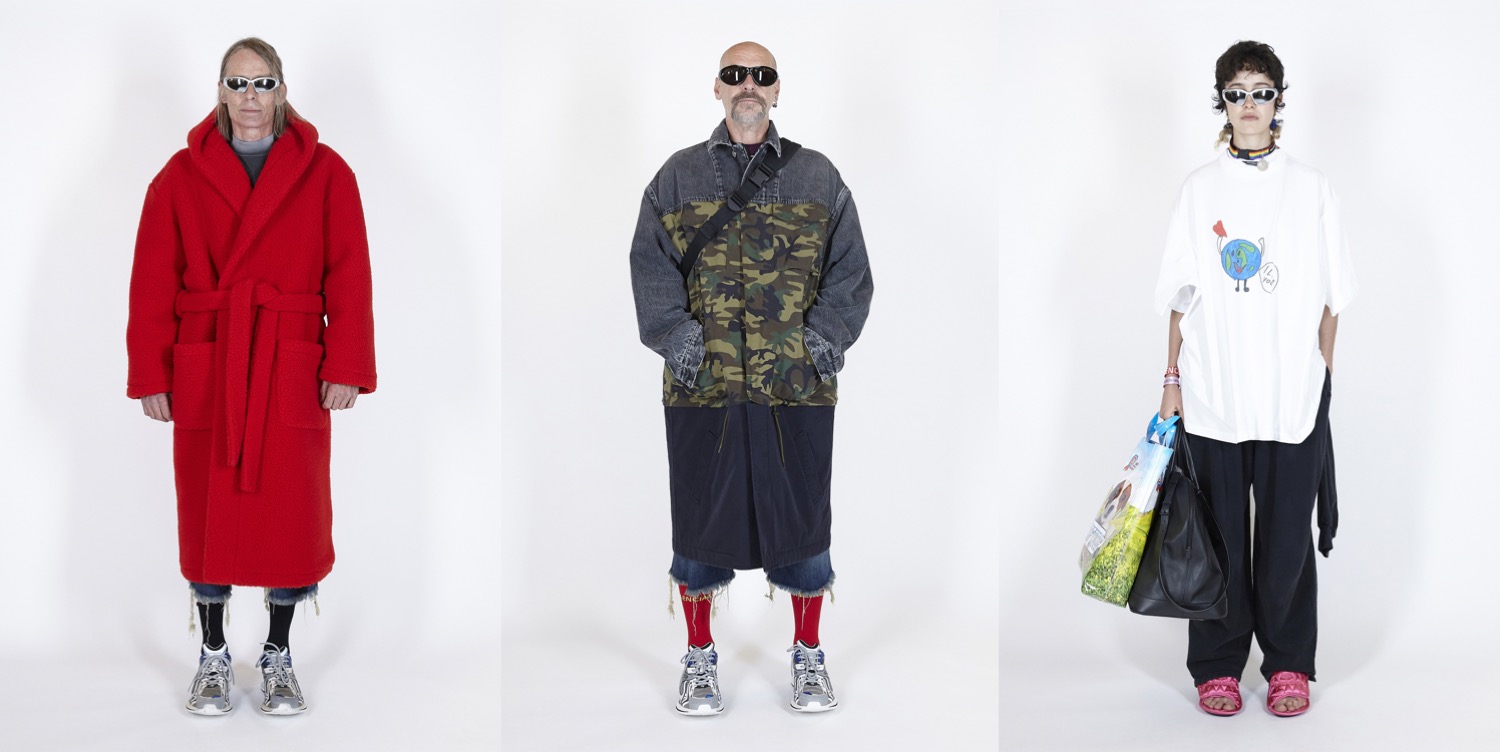
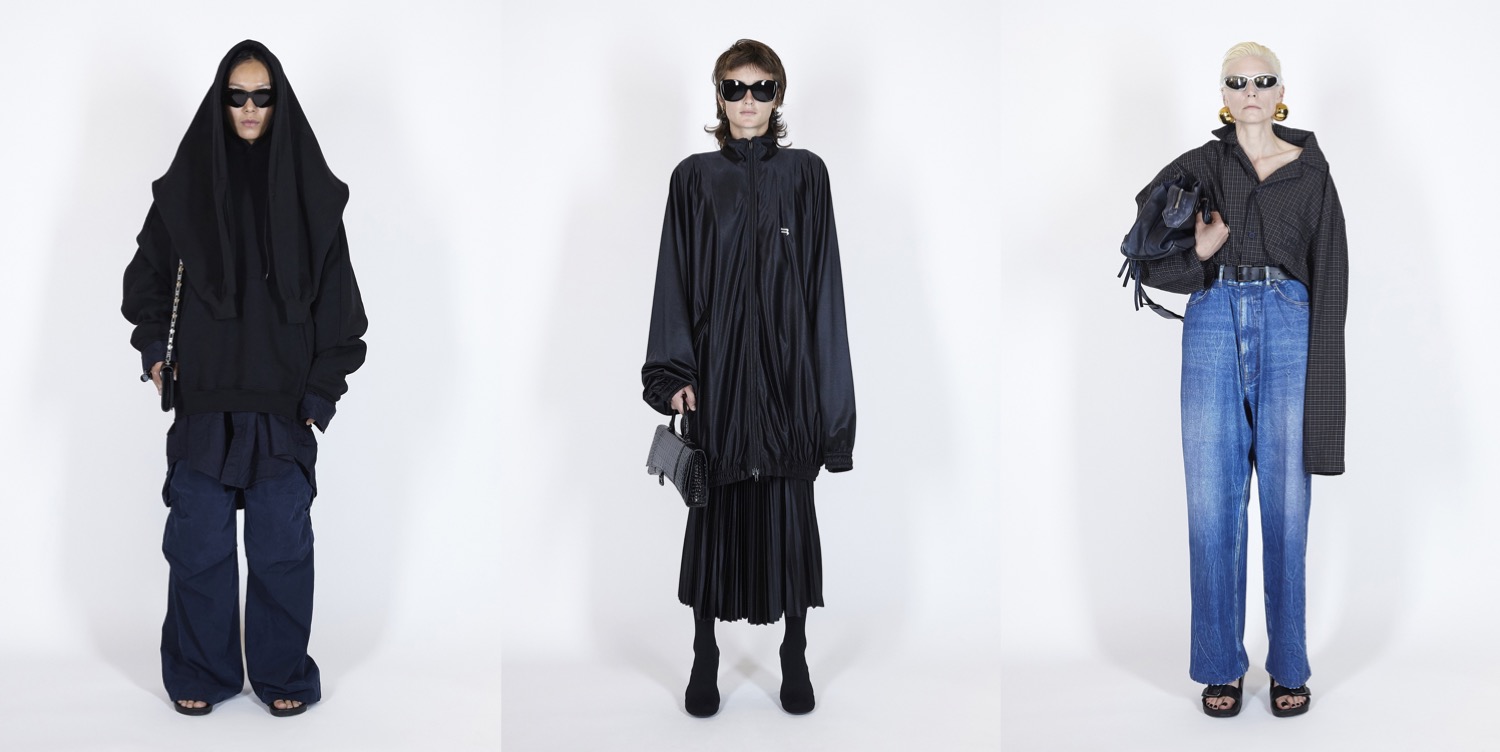
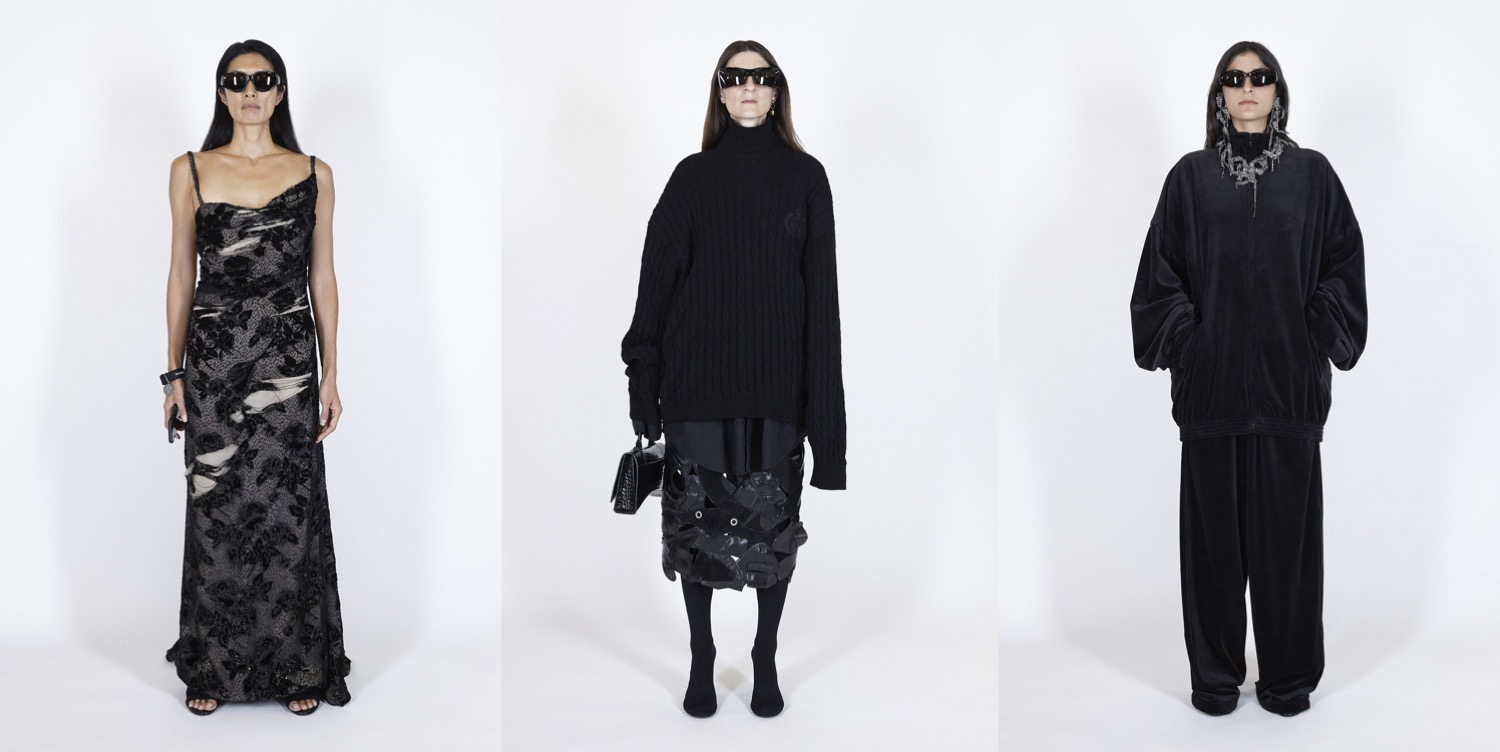
I expected to see something truly uncomfortably intriguing from Demna Gvasalia, but his latest, spring Balenciaga collection is radical in a different way. First thing you notice: it’s all about Gvasalia’s Balenciaga classics, stripped-back and simplified. And then you get it: it’s a line-up that to the bone reflects what most of us (if not all) really feel now. We need comfort. We feel secure when invisible. We don’t want to be bothered by others. And it’s great if our turtleneck can act as a mask. You can love a gorgeous, fairy-tale dress, but deep inside, under the pressure of the cracking world, a good hoodie, a big coat, and a pair of undemanding pants make us feel safe and relaxed. So, as a sort of middle finger to the industry where some still do business as usual, trying to sell a dream, Gvasalia lets us stay in the comfort zone. But then, the collection isn’t as grey and dull as it might sound. “Hope is the last thing to die. That’s the Russian saying. You know, I couldn’t wait not to do a show. It didn’t feel right with the way things are. So we’ve made a music video,” he told Vogue in a phone call from Switzerland, where he lives. “My husband recorded that ’80s track by Corey Hart, ‘I wear my sunglasses at night’—because you know, is there anything more absurdly fashion than that? It’s also allegorical. You know, where is fashion going? It’s out there, searching in the dark at the moment, not seeing…” But wait – there is nothing dystopian about this video. Gvasalia’s tribe of Balenciaga nighttime people are each captured as if heading somewhere with a purposeful step. We see them as they walk along the Rue de Rivoli, past the Tuileries gardens, embodying exactly the inimitable cool of the type of people who turn heads after dark on the streets of Paris. We clock them, we check out their clothes, how they’ve put them together, each to their own. They feel real. They are real. Demna confesses that something has change inside of him, in midst of the lockdown. The very man who plunged his fashion show audience into a terrifyingly apocalyptic show experience last season has come back with his head in a far more optimistic place. “Because some day we will be out of this.” He imagined a man who leaves the house near the site of Cristóbal’s maison – a guy, setting out in an oversized navy suit, wraparound shades, and what looks to be a sweater draped over his head (but is a ready-made Balenciaga accessory). “So,” Gvasalia related, “he walks through the night, going through lots of changes, morphing into her, him, them. And they end up meeting as friends, going to a party or a club maybe—and everyone is without masks. That’s the hope!” Pandemic-end pending, however, the film credits meticulously set out every detail of the COVID-secure measures taken to safeguard models and crew. Moreover, the impetus of the collection was “imagining how fashion will be in 2030. When thinking of the future, it’s not a Stanley Kubrick space-age vision for me. Mine is very much down to earth. Ten years from now, everything in fashion will be sustainable. No discussion, right? I think we will be reusing the clothes we have. Time makes things beautiful. I heard a quote from Martin Margiela when I was working there, about the value of ‘the trace of time’ in clothes. That touched me deeply. We keep clothes like that to death. I mean, I have a hoodie that’s 15 years old. It’s bleached out and has holes in it. But I cannot throw that away. So, I thought: In the year 2030, how will your favorite things look, aged and destroyed?” A press release specified: “93.5% of the plain materials in this collection are either certified sustainable or upcycled. 100% of the print bases have sustainable certifications.” This speaks for itself. With the resources of the Kering Group at hand, Gvasalia said, “we discovered we could do it quite easily, with the exception of the fibers that are in some of the existing fabrics. There are solutions if you look for them. There’s a need to revise things. To start a new chapter.” So, in the end, it’s not that depressing. A reset-slash-detox brings space and lets fresh air in. Gvasalia keeps on provoking the mind, even with the simplest gestures.

Collage by Edward Kanarecki.