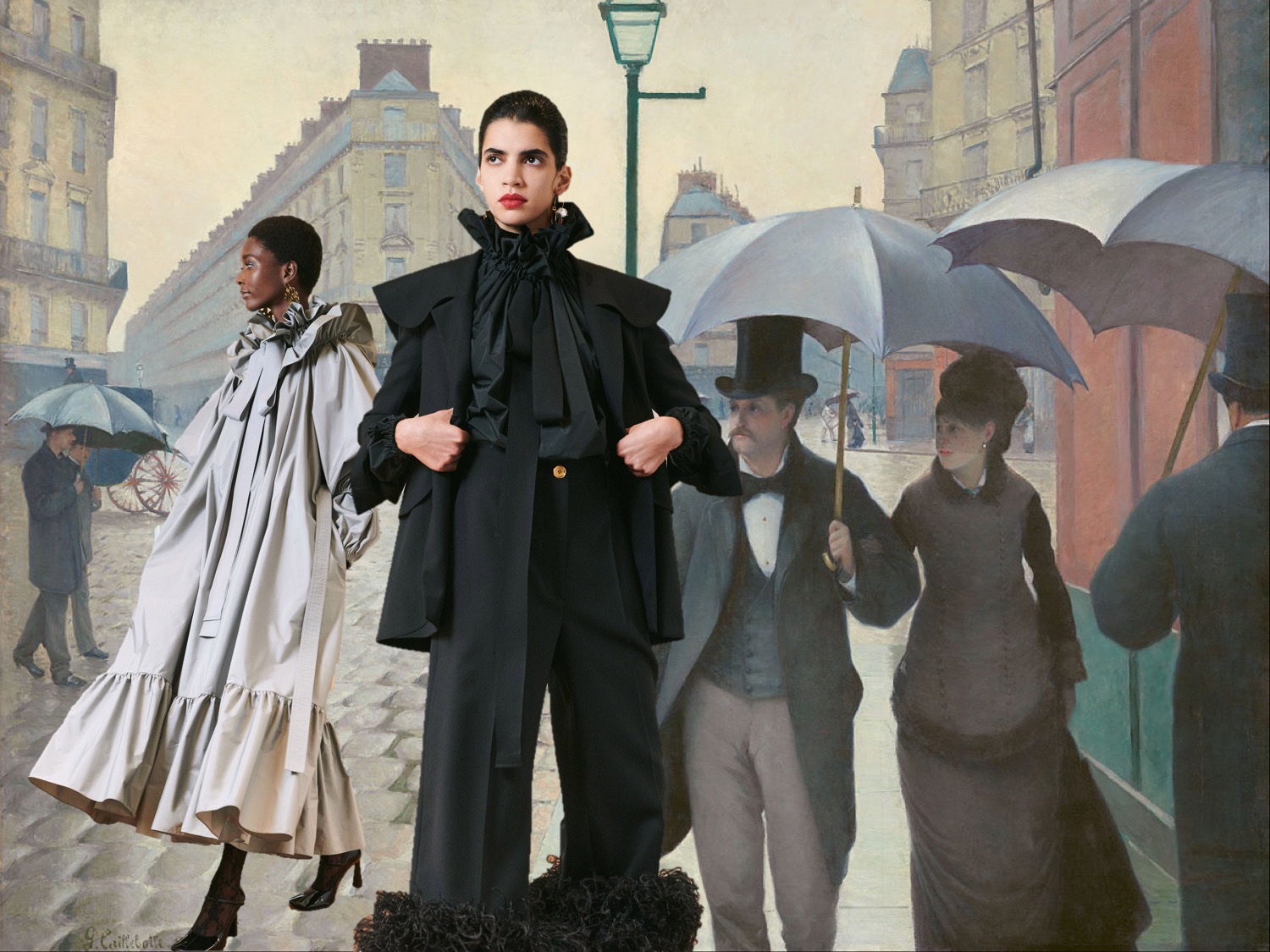
Oh La La! Patou SS21

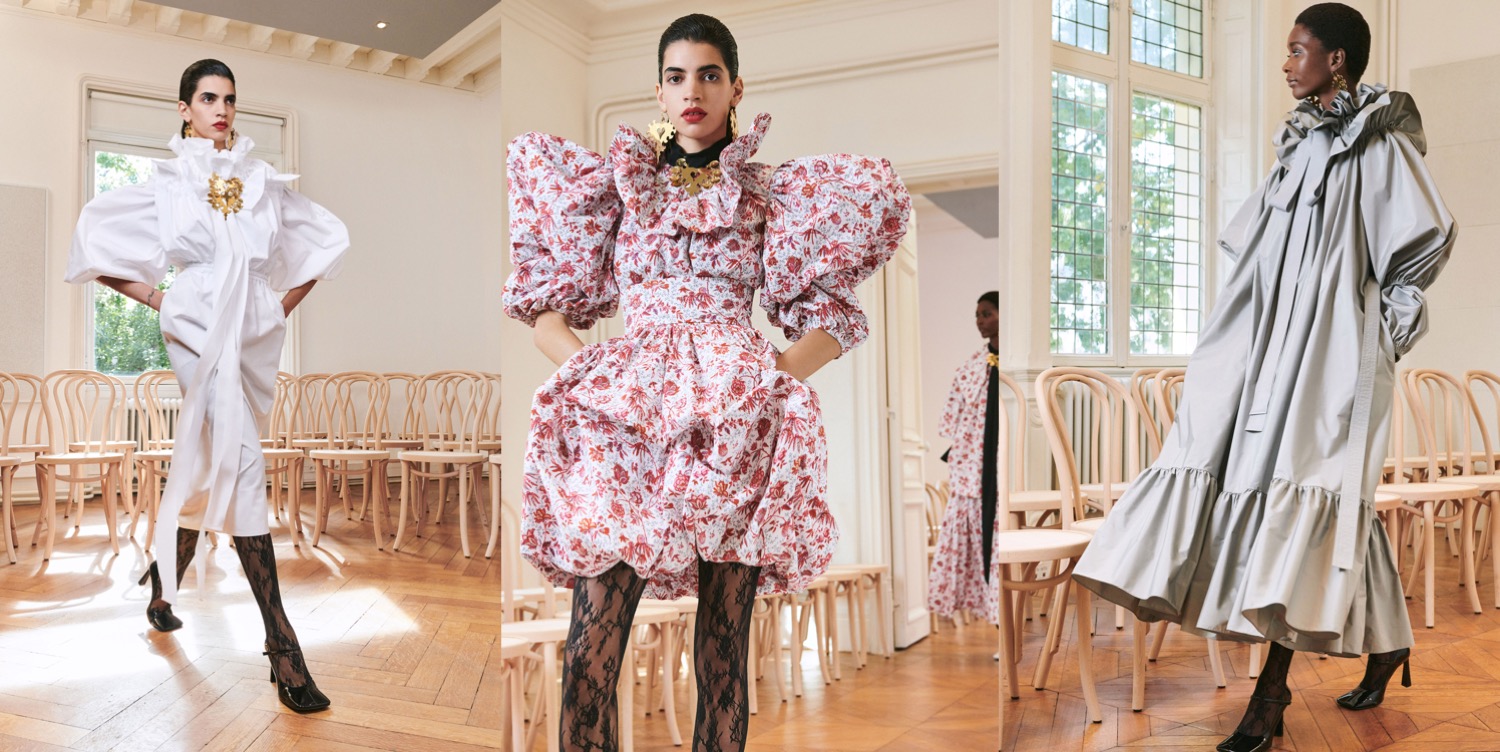
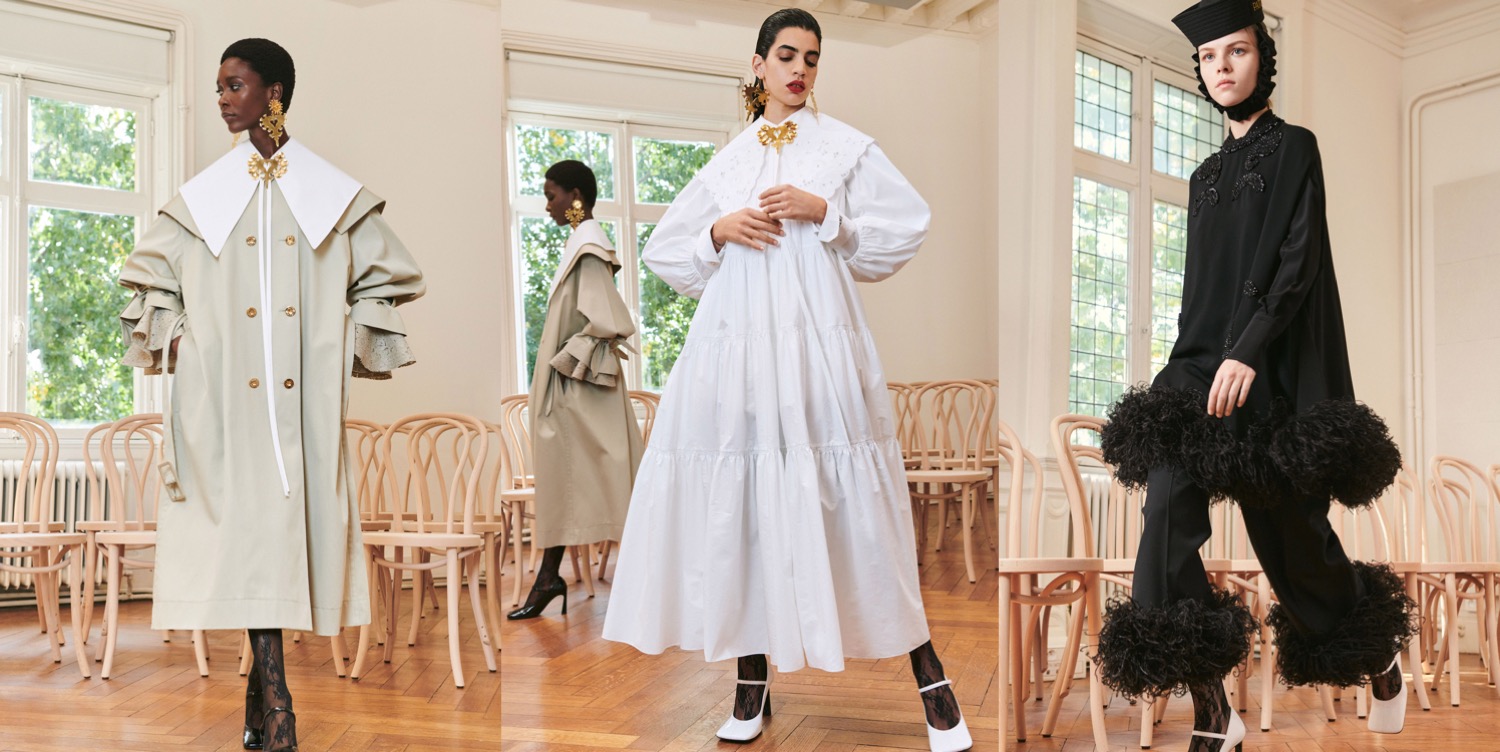
The fashion industry should finally give some love for Guillaume Henry‘s brilliance at Patou. I even think that the buyers should give the brand a chance. Why? Really, nobody else does French chic this good right now. For his presentation, the designer welcomed people to an absolutely delightful Patou runway show that didn’t really happen yesterday. “It’s a show with empty seats and no models!” he laughed. “We’ve turned our studio into a catwalk.” The models you see sauntering across the parquet in their puffballs, voluminous smocks, Provençal collars, and jaunty sailor hats had played their parts, sans audience, a couple of days ago at the label’s Île de la Cité HQ. For spring-summer 2021, Henry offers meringue-sque Provençal-printed puffed sleeves, a pie-frill collar, and a mini-balloon skirt, which all came from his 1980s childhood imagination. But wait, it’s not as easy as it sounds. All made from organic cotton poplin – 100% GOTS cotton, it said. “Yes, we’re 70% recycled and organic materials in this collection,” Henry exclaimed, “and we’re aiming for 100%.” This is the most modern thing about the rebirth of Patou: it comes with full-on French style, transparent sourcing, and non-ridiculous prices. “Patou is about a wardrobe, and it will always be,” said Henry. “But this time we turned this wardrobe into something more fantasy! I wanted to go back to this love of fashion I had when I was nine years old, drawing dresses in my bedroom—and nobody was talking about fear or the economy. It was just about fun, flamboyance, joy, enthusiasm. I wanted to go back to that exuberance.” And so it reads. Exaggerated silhouettes have been steadily inflating over the past few seasons. Ideal timing, then, for the comeback of Henry’s memories of being enthralled by watching the likes of Christian Lacroix on French TV news. “He was a huge influence on me when I was nine, 10, in the late ’80s, early ’90s. So I wanted the silhouette to be ‘couture’ even if you can break it all down separately.” Lacroix, as all fashion history geeks know, started his rise to fame at the house of Patou, so his puffball silhouettes, succulent bows, and French-regional references resonate happily through Henry’s collection. The difference, in the hands of the younger designer, is the practicality and sense of economy that underpins his design. The huge white collars are accessories – they’re meant to be laundered and used as styling pieces. The silhouettes that appear to be frivolous one-party outing dresses (like the captivating Provençal look) are often actually skirts and tops, intended for multiple reconfigurations. “A blouse, a skirt, and a dress,” as he put it. Smart, chic, fun, sustainable. Et voila!
Collage by Edward Kanarecki.

Focus On: Petit Kouraj

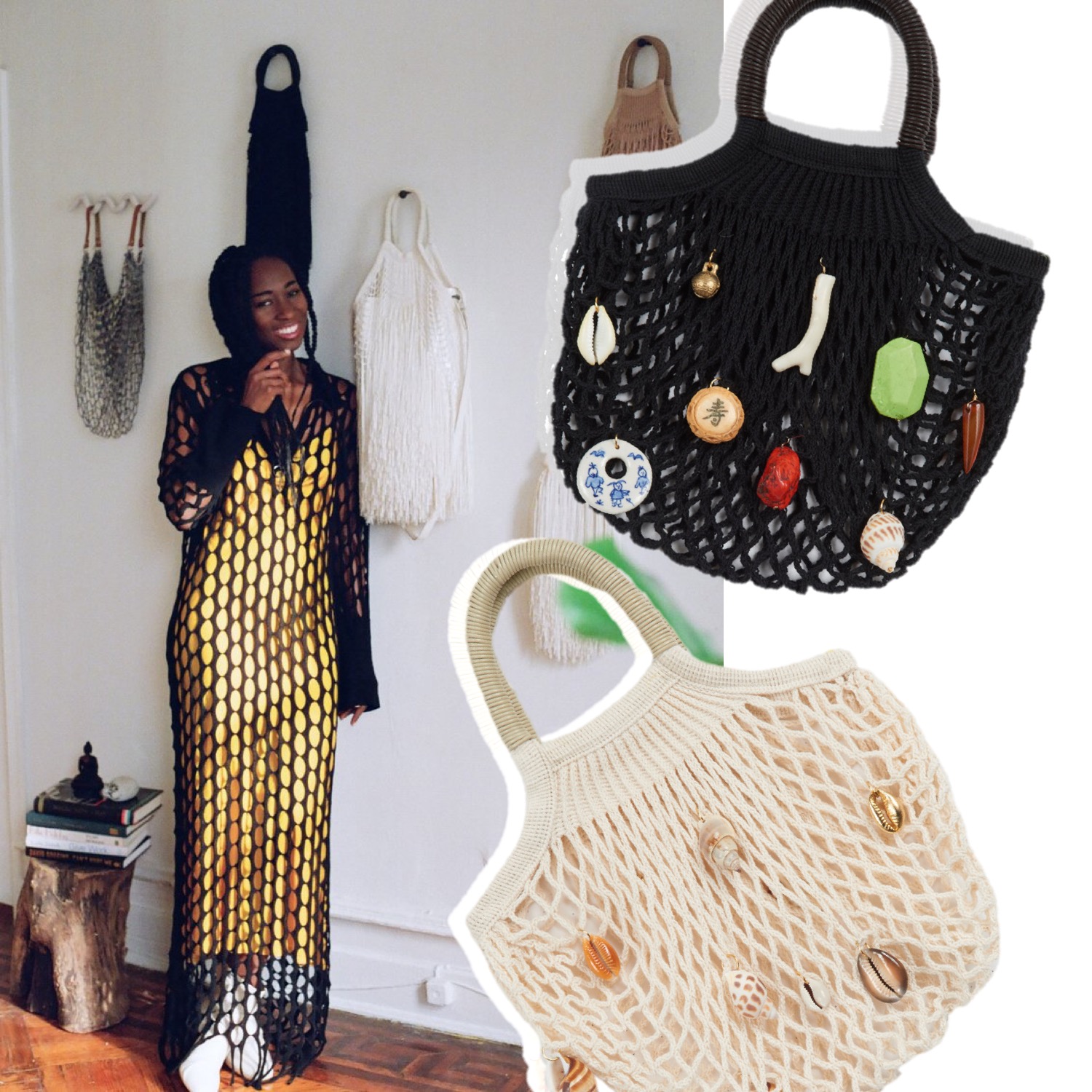
After discovering Petit Kouraj some time ago on Instagram, those bags are still on my mind, so I thought it’s worth sharing! The label – the name translates as “little courage” in Haitian Creole – is the creative child of fashion stylist, Nasrin Jean-Baptiste. Born in London to Haitian immigrants, Jean-Baptiste amassed over a decade’s worth of experience as an international fashion stylist before creating her brand. An innate desire to create something meaningful lead Jean-Baptiste to develop a luxury bag line full of unique personality; both lively and chic – qualities quite uncommon within conventional brands. Following a trip to her native country of Haiti in 2018, she was immediately inspired to do something that frightened her – acting from her core, and with the help of a little courage, Petit Kouraj was born. Based in Brooklyn (and handmade in Haiti in partnership with D.O.T Haiti, women-lead organization which works closely with local artisans to provide opportunities, education and vocation training), each of Petit Kouraj’s bags are lovingly handmade using organic cotton net bags, 100% leather handles and rayon fringe. Each strand of fringe is individually sewn 656 times to create the large bags and 342 times for the mini. It’s a labor of love, and it takes 8-12 hours of manual labour to complete a single bag. Petit Kouraj signature accessories are fun, whimsical stand-alone pieces of wearable art that celebrates love for haute-knitwear and identity. Shop them here! And here are some of my favourites:

All photos courtesy of Petit Couraj.

Re-New. Maryam Nassir Zadeh Resort 2021

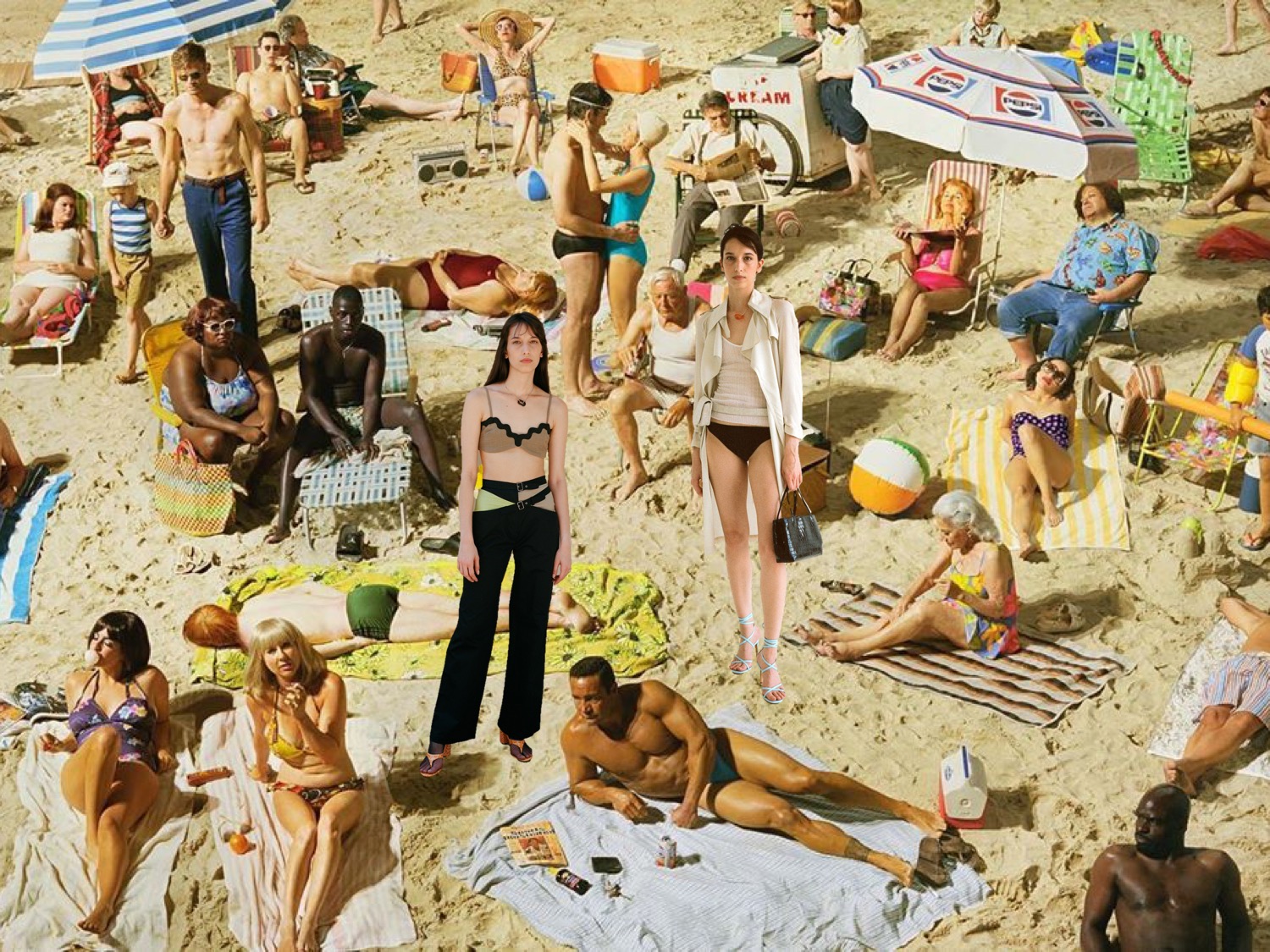
If there’s one thing you should read this weekend, it’s Irina Aleksander’s strikingly sharp and realistic feature for The New York Times on how the fashion industry collapsed, even before coronavirus became the new normal. I still believe that in the end, we will want to wear something else than just sweatshirts and sweatpants. But one specific part of this text seems to be so easy to comprehend that it’s unbelievable that the industry has never caught up with this concept: clothes aren’t food. They don’t rot after a week, neither after six months. According to Aleksander, some brands have in plans to push the unseen and unsold 2020 collections to 2021 to avoid losses. As simple as that… and yet, there’s one big obstacle. “The fascinating part is that in order to do that – to give that aged inventory value again – requires killing fashion, that nebulous deity that says something is ‘in’ this year and not the next”. So, to make it work, it’s not just about the designer – who would definitely love to take a break from everything to refuel – but the corporate floor and the customer. We should learn to slow down with that love for the “new” and appreciate what’s “now” – or at least, try to take a second look at it. To my surprise (as I already thought way back in spring that it’s a logical step to make for a lot of brands out there), for the resort 2021 season, Maryam Nassir Zadeh is probably the only designer who actually did this. She actually made old… new. Here’s how. Zadeh didn’t cut a single new garment. Instead, she put together a “hand-picked” collection of items from the past, reimagined and recontextualized for now. Years and seasons collapse in many of the looks: a white button-down from autumn-winter 2020 was styled with an ivory leather skirt from spring-summer 2020; a pair of striped shorts circa spring-summer 2019 were paired with a autumn-winter 2020 knee-high boot, redone here with a black lace shaft. Bikinis and strappy bras, often styled alone as tops nodded to her swim-heavy spring-summer 2018 show. Well… that’s brilliant! Maryam resurrected these items not just because they deserve a second look or feel newly relevant, but also because it seemed like a more sustainable way of doing things. In their walk down memory lane, Zadeh and her team only chose pieces they knew they had enough leftover fabric to make. They didn’t want to invest in making new patterns or ordering silks and wools from Italy: “It isn’t even just about sustainability in recycled materials, it’s about sustainability of time,” Zadeh told Vogue. “We never have enough time to order new fabrics from Italy, and the turnaround times [between collections] are so short.” And back to the collection: it’s quintessentially MNZ. Her sensitivity to what’s “in the air” means we will all soon be obsessed – and other brands as well. On the list are: shorter hemlines, colorful silk button-downs, men’s shirts and tailoring, anything lace, and retro embellished belts, styled here as “spice ups” on otherwise simple jersey dresses. “There’s a real personality and style to the collection,” Zadeh said. “It’s easy and wearable, but still special, because we’re mixing these strong basics with novelty accessories.” In the past, Zadeh has described that MNZ balance as “odd elegance”, and that’s still true for her eponymous label. Take notes everybody.

Collage by Edward Kanarecki.
Sustainable Practice. Gabriela Hearst Resort 2021

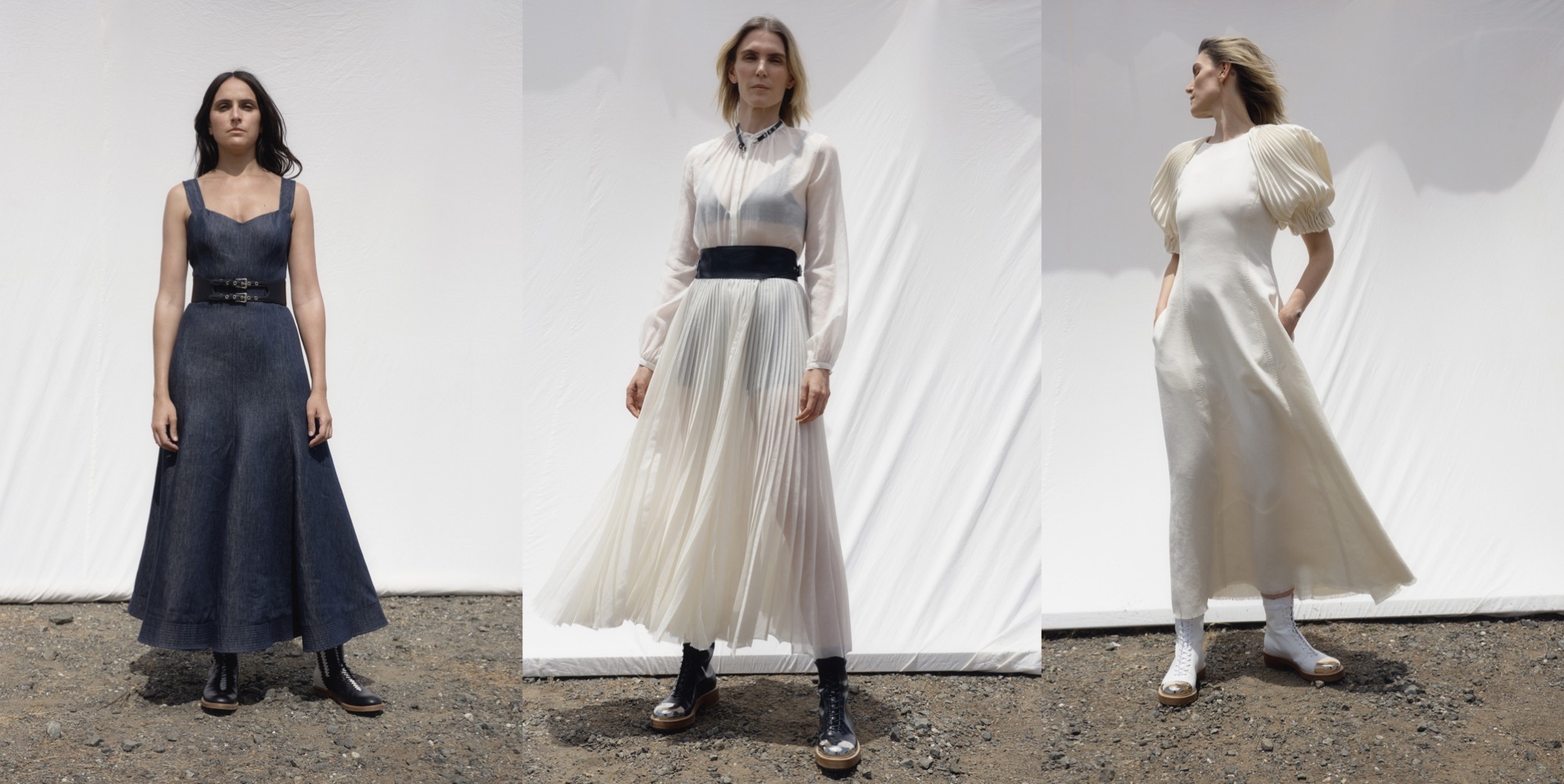
With every season, I’m enjoying Gabriela Hearst‘s collections more and more – and the entire process of sustainability that occurs backstage of every single garment she produces makes the brand even more worth of you attention. Hearst sent over a resort 2021 box to the press with about 35 fabric swatches, one more sumptuous than the next, and many of them recovered from deadstock supplies. Hearst’s plan is to prove the mutual compatibility of luxury and sustainability, the thinking being that the more you normalize the likes of repurposed silk cotton voile and recycled stretch polyester, the more you problematize materials such as standard issue cotton and polyester, which require obscene amounts of water to grow, and virgin plastic to manufacture, repsectively. That said, there’s nothing normal in the least about Hearst’s materials. You need only brush your hand against the multi-ply of her handknit cashmere sweaters or take a longing glance at the fiery tie-dyed cashmere flannel of a coat. The designer produced a short Zoe Ghertner-lensed video for the collection in the California desert in which she appears alongside her sister, riding a horse bareback. On the voiceover Hearst says, “my sustainable practice is exactly what that word is: it’s a practice. You never achieve perfection, but you have to start. We don’t have an option.” The spring line-up’s ultimate stars are a black leather trench with hand-painted white leather lace “stripes” down its back, and another coat in that fire tie-dye, with a spectacular matching blanket shawl. Rounding it out is Hearst’s minimalist tailoring, made a little less minimal this season with a knotting detail on the lapel, and dresses and separates in cotton voile and denim-look linen with elevating metal-trimmed leather collar details and belts. Her new boots come with metal toe caps that took her seasons to get right. It’s a wardrobe for some good times ahead. “We have to dream,” she says.

Collage by Edward Kanarecki.

Growing. Cecilie Bahnsen Resort 2021

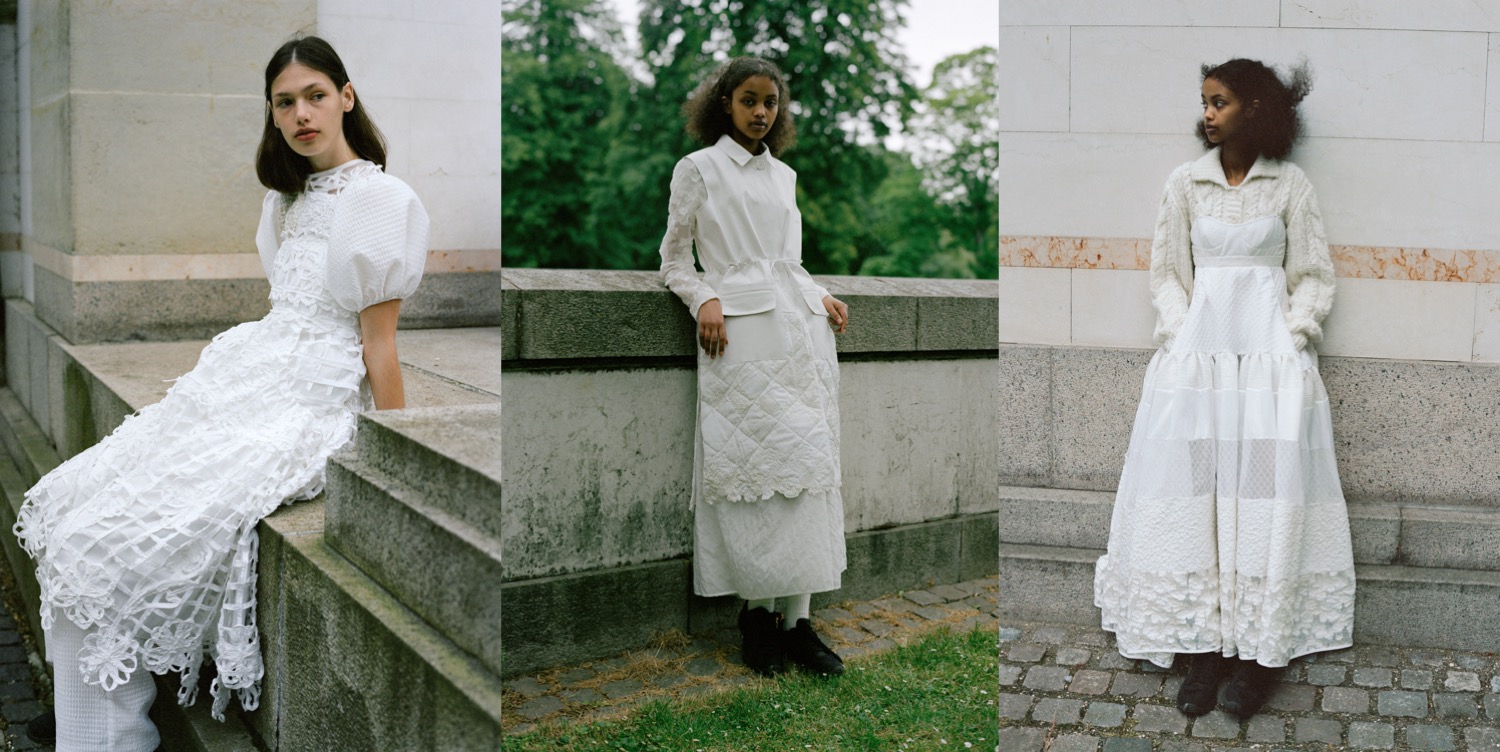
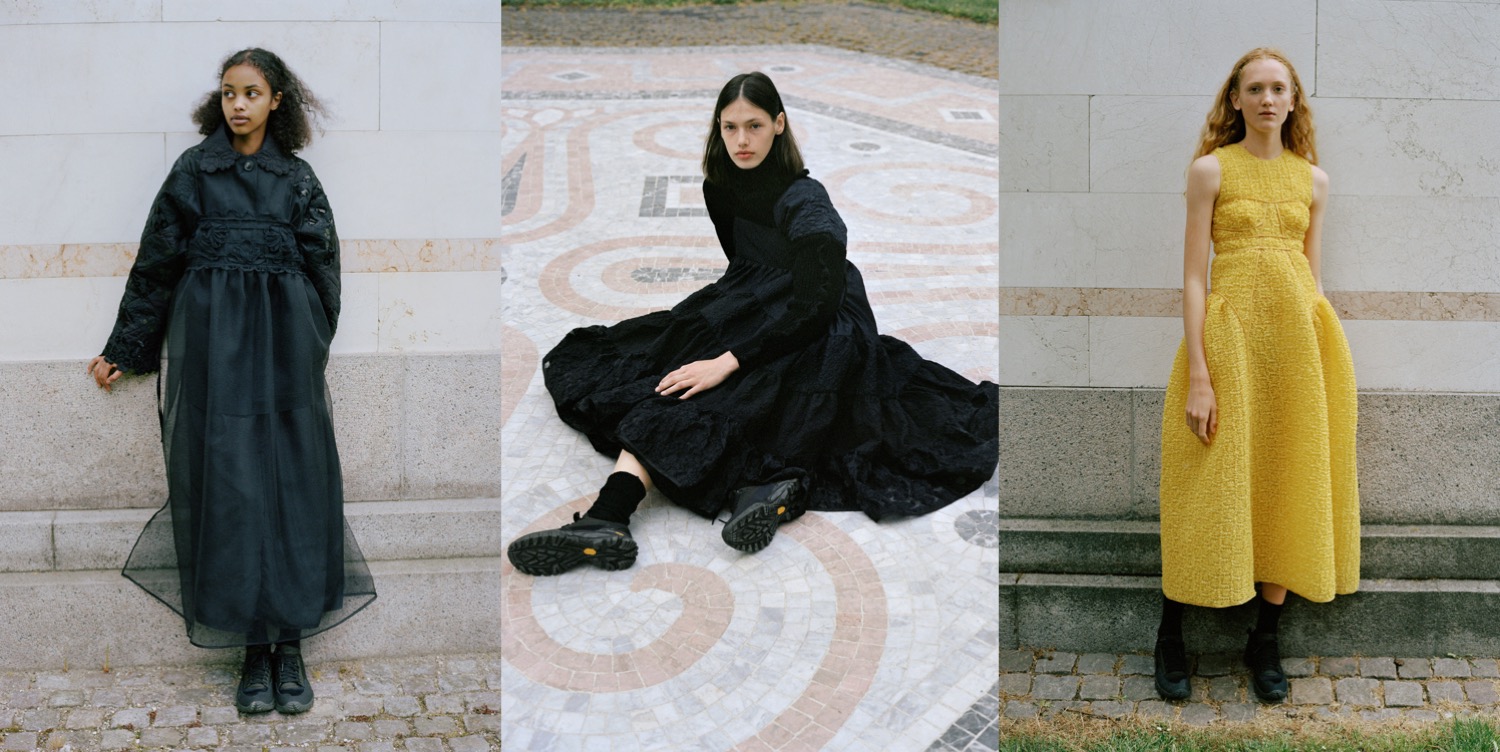
Being a small label, even an established one, might be even more nerve-wracking in the uncertain nearly-post-corona times, than when the pandemy striked in the beginning of spring and the whole population was equally confined and paralysed by the new reality. Just think of Sies Marjan, the New York-bsed brand designed by Sander Lak that seemed to thrive in its five-year existence, and then suddenly closed just a few days ago – due to the crisis. But then, not all young brands seem to be totally doomed. Cecilie Bahnsen, for instance, has a very distinct, signature product – her dreamy, ethereal cloudy-puffy dress – which has organically built a fandom around her small Danish label. She even released a resort 2021 look-book, something many labels quit or have delays with. And the idea behind this collection shows just how much the designer has grown and reconsidered her brand. Using 100% upcycled fabrics from previous collections – a response to lockdown limitations – Bahnsen created corseted and peplumed dresses and tops decked out with lace, as well as witchy black coats and jackets. Other pieces combine patchworks of quilting, embroidered organza, and sheer silk faille. One of the most dynamic looks in the collection was a canary yellow frock with a spliced-up cable-knit sweater and a caged floral overlay on the skirt. Another was a hybridized white sweater top and dress featuring no fewer than five different fabrics from Bahnsen’s archive. Moreover, the designer plans to continue experimenting with upcycling and will release smaller, monthly capsule collections made entirely from stockpiled fabrics under the name Encore. This month’s features not just dresses but also blankets and pillows. Speaking from her studio in Copenhagen, Bahnsen told Vogue she’s focused on accessibility: “I want the dresses and everything else to be worn in the streets, not just during special occasions. This was a creative challenge, as I normally work very clean and don’t like to mix too much. But I knew there were a lot of ideas hidden in these old fabrics, and I needed to reflect on them, to maybe be less precious and to give them new value.” Two take-aways from this small capsule: Bahnsen has a distinct point of view and it was satisfying to see her play around with it a bit more freely, mashing things up and giving new life to unused materials.

Collage by Edward Kanarecki.