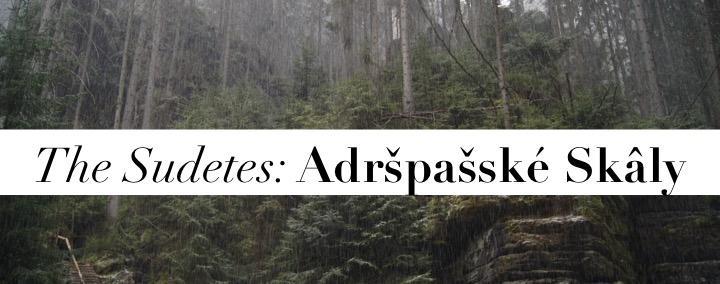
The Sudetes: Adršpach-Teplice Rocks

SONY DSC

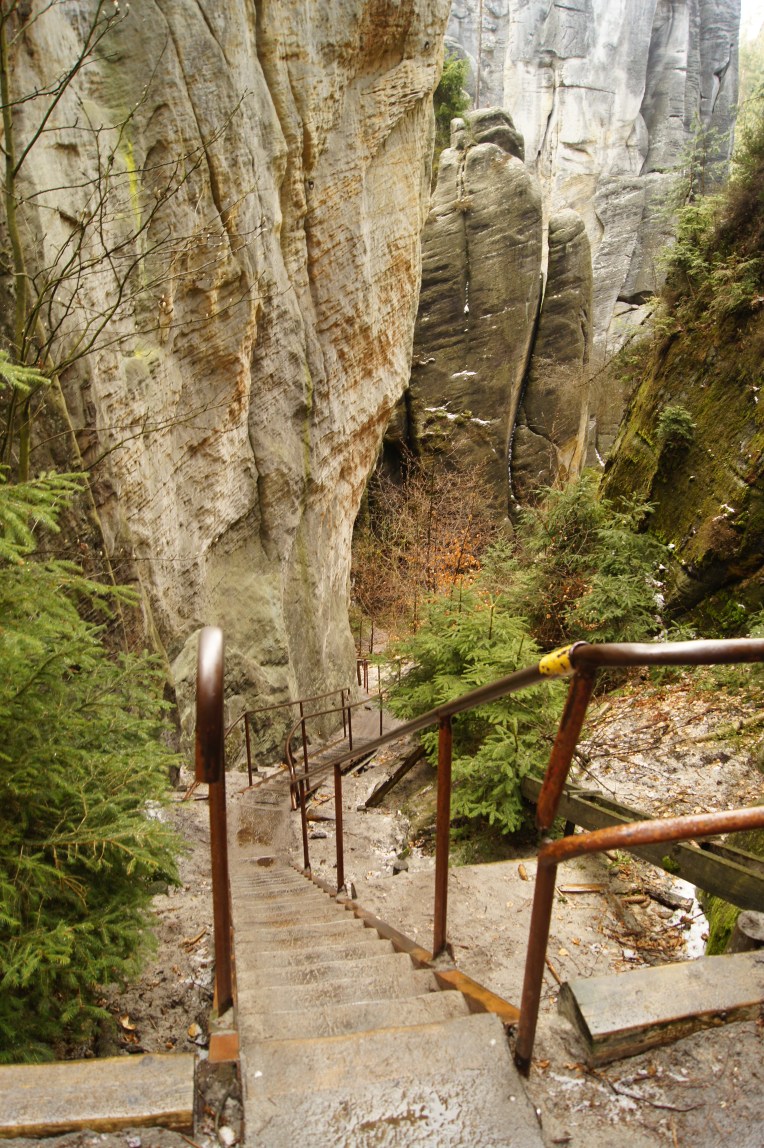
This is the last (and personally favourite) part of my Sudeten journal. Experiencing the famous Adršpach-Teplice Rocks was spectacular in every possible aspect, especially that at the beginning of my climb it began snowing, while minutes later the sun started to shine again. The mountainous landscape is the result of an unusual set of sandstone formations covering a part of northeastern Bohemia, Czech Republic. No words can express the beauty of this place, solely made by nature.

Have you missed the other two parts of my journal? Read them here and here.

The Sudetes: Sacred

SONY DSC

In the second part of my Sudeten journal, I’m happy to share with you the moments I’ve captured around the local churches. I was mesmerised by the sacred aura, which oozed in every corner of Basilica of the Assumption of the Blessed Virgin Mary in Krzeszów. Those magical arches, all the meticolously carved details and most of all, the mind-blowing baroque ceiling painting… incredible. Just like all the smaller, remote churches, which are scattered around the fields and forests (however, most of them are unfortunately closed).

In the Sudetes, it’s a common thing to see pastel-coloured bee-hives. While I was walking around them and taking photos of blooming cherry-blossom trees, I noticed a little Easter palm next to the wooden hut. So colourful and carefully kept by the owner – it will surely serve during the next year’s spring rituals.

If you’ve missed the first part of the journal, check it out here. The last part coming soon!

The Sudetes: Royal

SONY DSC

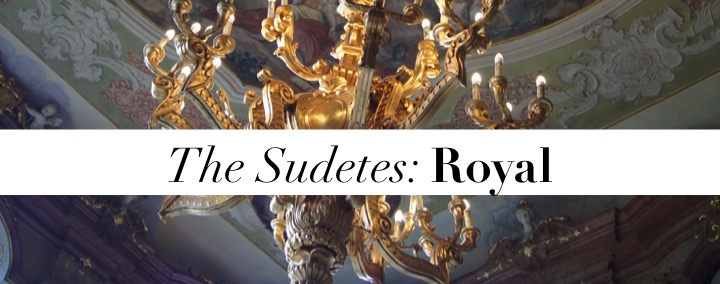
You’ve surely noticed that the last few days were pretty quiet on Design & Culture by Ed – but I’m back for good. The truth is I needed a moment for a well-deserved mind detox. To slow down, rest a bit. And going to the Sudetes, a mountainous region located between Poland and Czech Republic, was the best possible choice for me. So, I’ve decided to divide my journal into three parts – here’s the first one, titled ‘Royal’.

The first destination was the precious Książ castle (pronunciation: ksiowsh), which went through turbulent history. Situated on a beautiful, deeply forested hillside, the castle used to be the go-to place for Polish aristocracy and socialites before the First World War. Right now it’s under major reconstruction and refurbishment, but that’s not a problem, as the delightful baroque hall and terrace are truly breath-taking. Just a few steps from the castle, there’s the all-wooden royal horse stable. Actually, I’ve never seen anything like that before – it’s huge. Although I’m not a horse-riding fan, I fell in love with those beautiful creatures that are kept here. What’s more, local riders wear authentic, pre-war gears while they’re up on the horses, which makes this incredible place even more absorbing with its historic aura.

The ‘Wałbrzych Palm House’ arose from the initiative of the last representative of the Hochberg dynasty in Książ castle, Hans Heinrich XV. The Prince had it built for his spouse, Daisy (a passionate lover of flowers and plants). To this day, his expression of love holds a great charm. It’s said to be the only such facility in Poland that has been preserved in its original construction. Inside gardens are my soft spot, so you might imagine how happy I was to walk around this rather niche tourist attraction.

Stay in tune for more posts coming about the Sudetes!

Buly 1803

SONY DSC

Starting in the late 18th century, the famed “Bully”, established in 1803 on Rue Saint-Honoré in Paris, made a name for himself (which he then wore with a double consonant). At the turn of the 19th century, perfumers were still the heirs of the craftsmen from the Ancien Régime, and the keepers of their trade secrets. The vogue of perfumes followed in the wake of a fresh openness to the world and to its novel, sometimes exotic flowers – as with Joséphine de Beauharnais, who imported to France and acclimatized new olfactory species and audacities. Bully welcomed the advances of science and cosmetics to formulate his own inventions in form of perfumes and scented oils. Among these, his remarkable skin care products achieved lasting fame. Throughout the Golden Century of beauty, which witnessed the invention of the first formulations of modern cosmetics and perfumery, the ‘officine’ gradually established itself as a trend-setter.

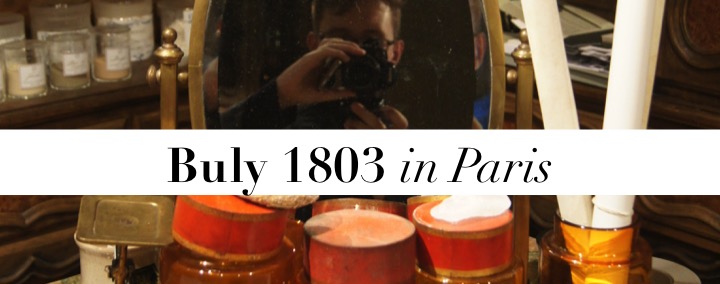
Today, Buly 1803 is reborn in Paris, on rue Bonaparte 6 in the sixth arrondissement, with a different spelling and a refreshed concept. Visiting their boutique was like entering a cabinet de curiosités, falling hard for the opulent marble furniture, antique illustrations on the walls, and Japanese porcelain flacons costing 3000 euros and up. Buly 1803 is a true gem and it’s quite unbelievable to find brands like this in our world of fast, mass-consumption.

Discover Buly 1803 finest products: Buly 1803 Pommade Concrète balmBuly 1803 Campagne D’italie candle & Buly 1803 tortoiseshell comb.

All photos by Edward Kanarecki

Sweetly, Ladurée.

SONY DSC

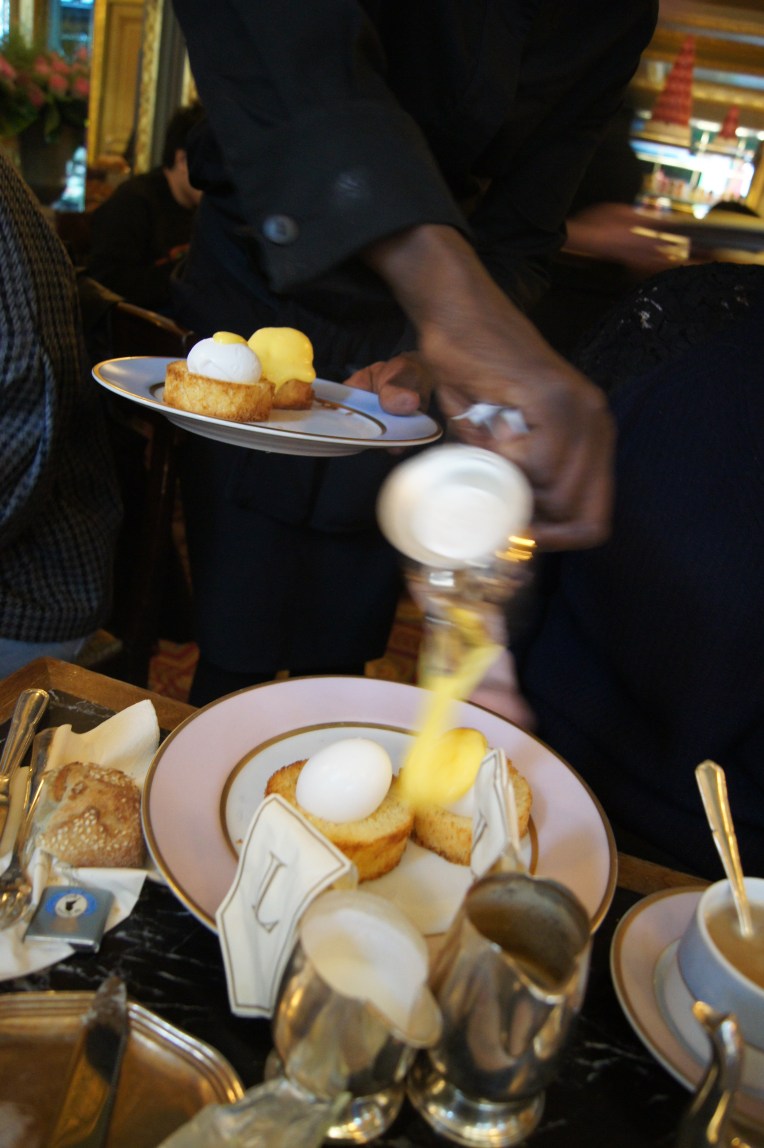
Don’t get me wrong – it’s not that I’ve suddenly discovered Ladurée out of the blue and thought it’s worth sharing. Ladurée is a Parisian landmark, a cult patisserie. There’s no need to introduce it. Everything is so sweetly aesthetical here, from the pastel-pink plates to perfume flacons. And coming here for breakfast means that your ultimate French breakfast dream comes true. During fashion week, Ladurée on rue Royale is a perfect morning spot for gossips. While eating my eggs Benedict served on a crispy brioche, I’ve overheard how a pack of PRs devastated a Dior person’s career, bitterly complaining about her ‘terrible, terrible’ incompetence. How mean. How fashion!

Ladurée / 18 Rue Royale

All photos by Edward Kanarecki.