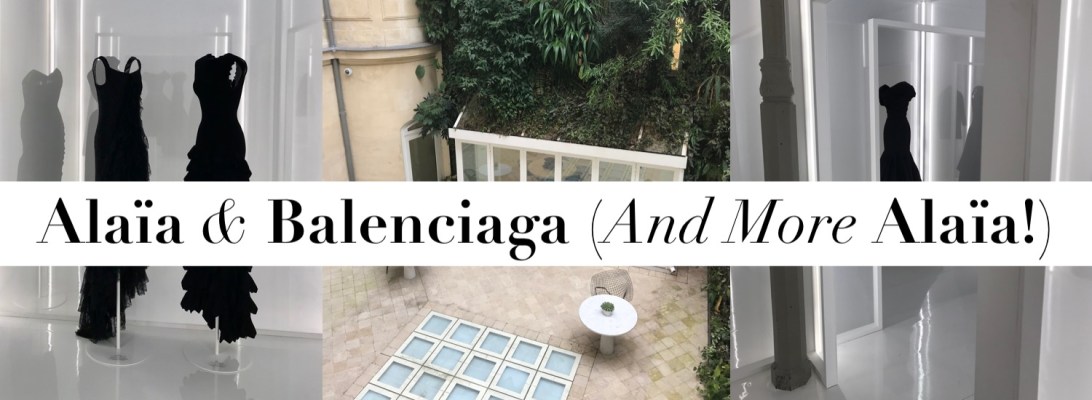
Alaïa and Balenciaga, the Sculptors of Shape (and more Alaïa!)

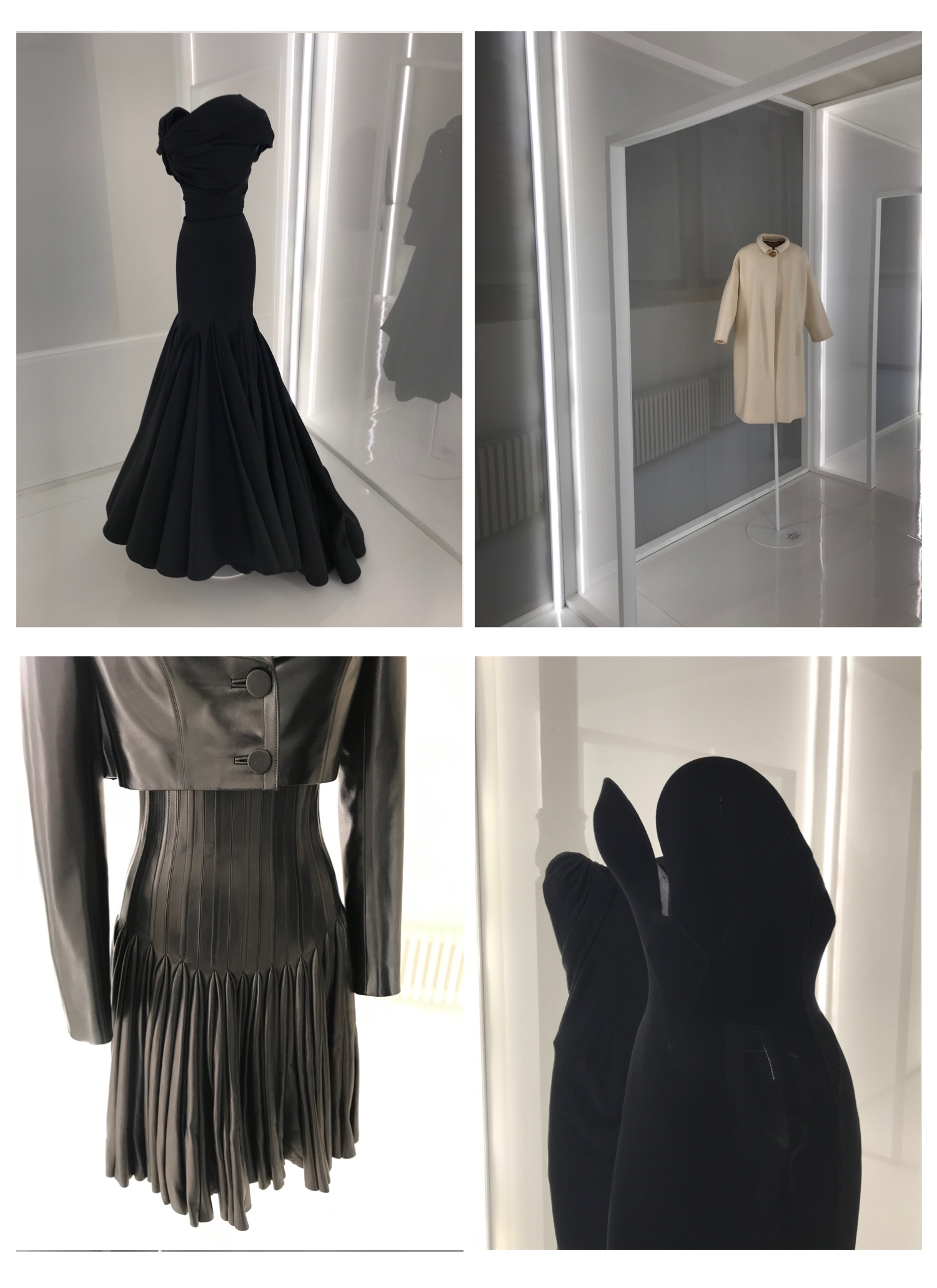
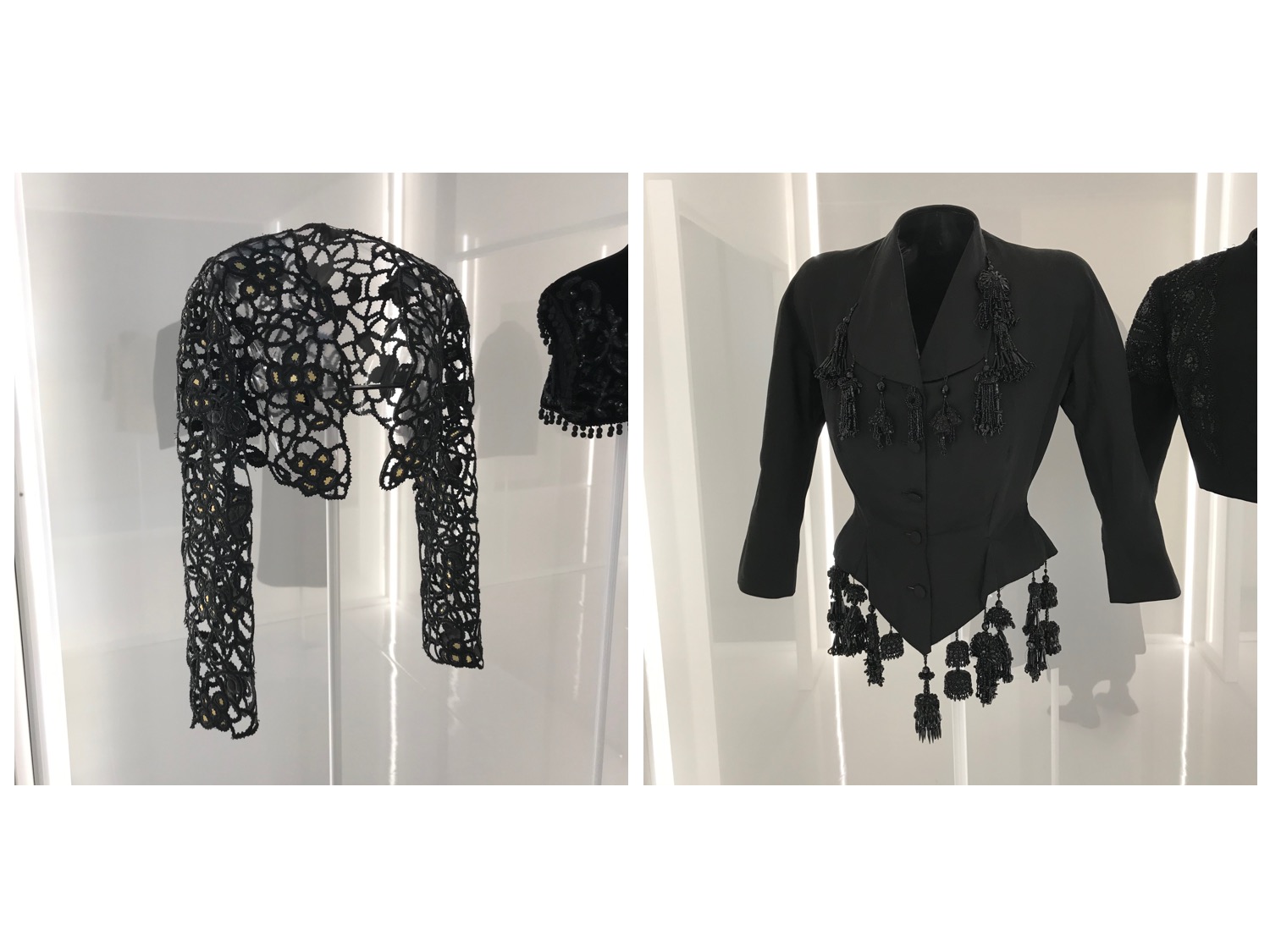
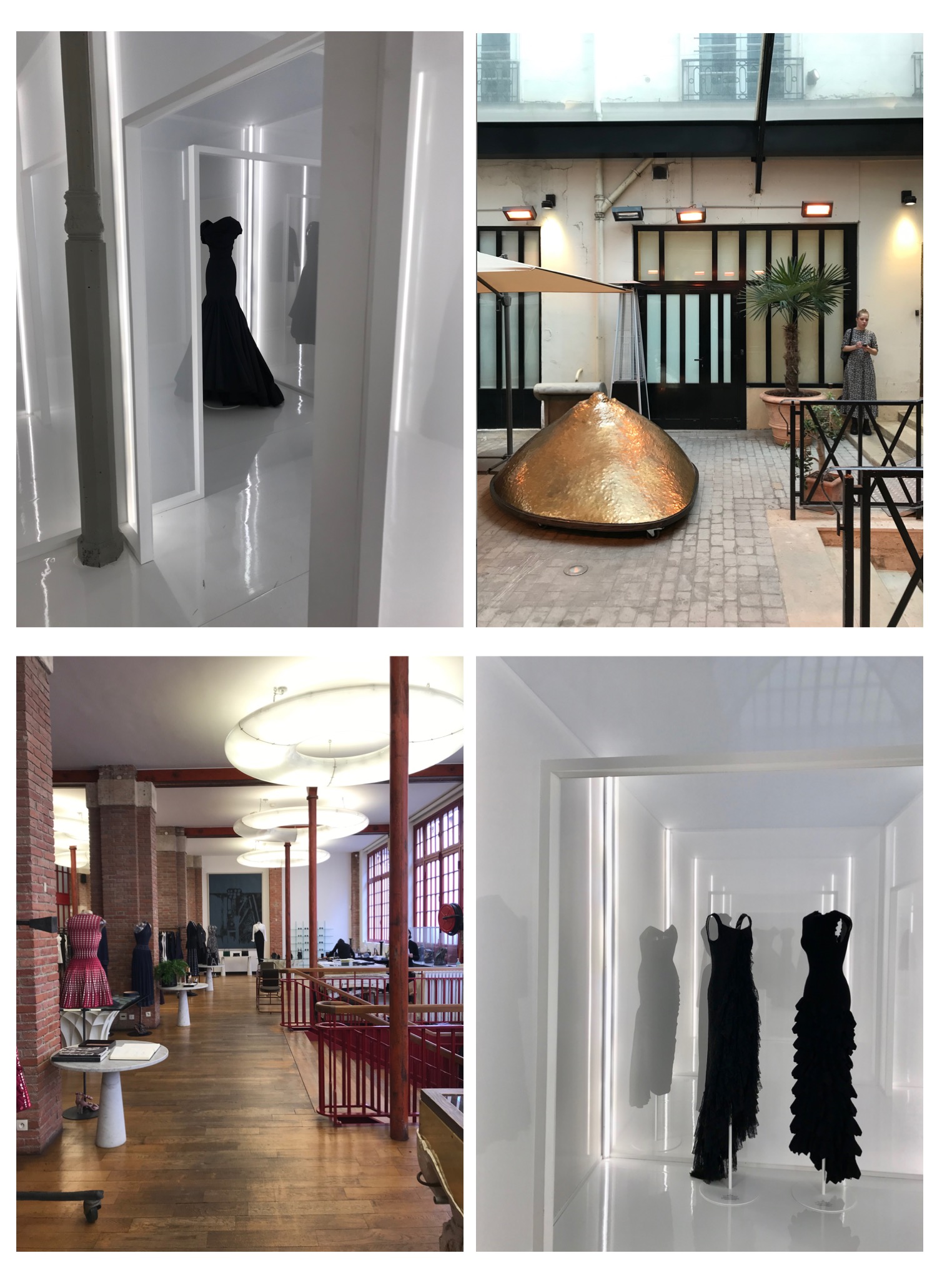
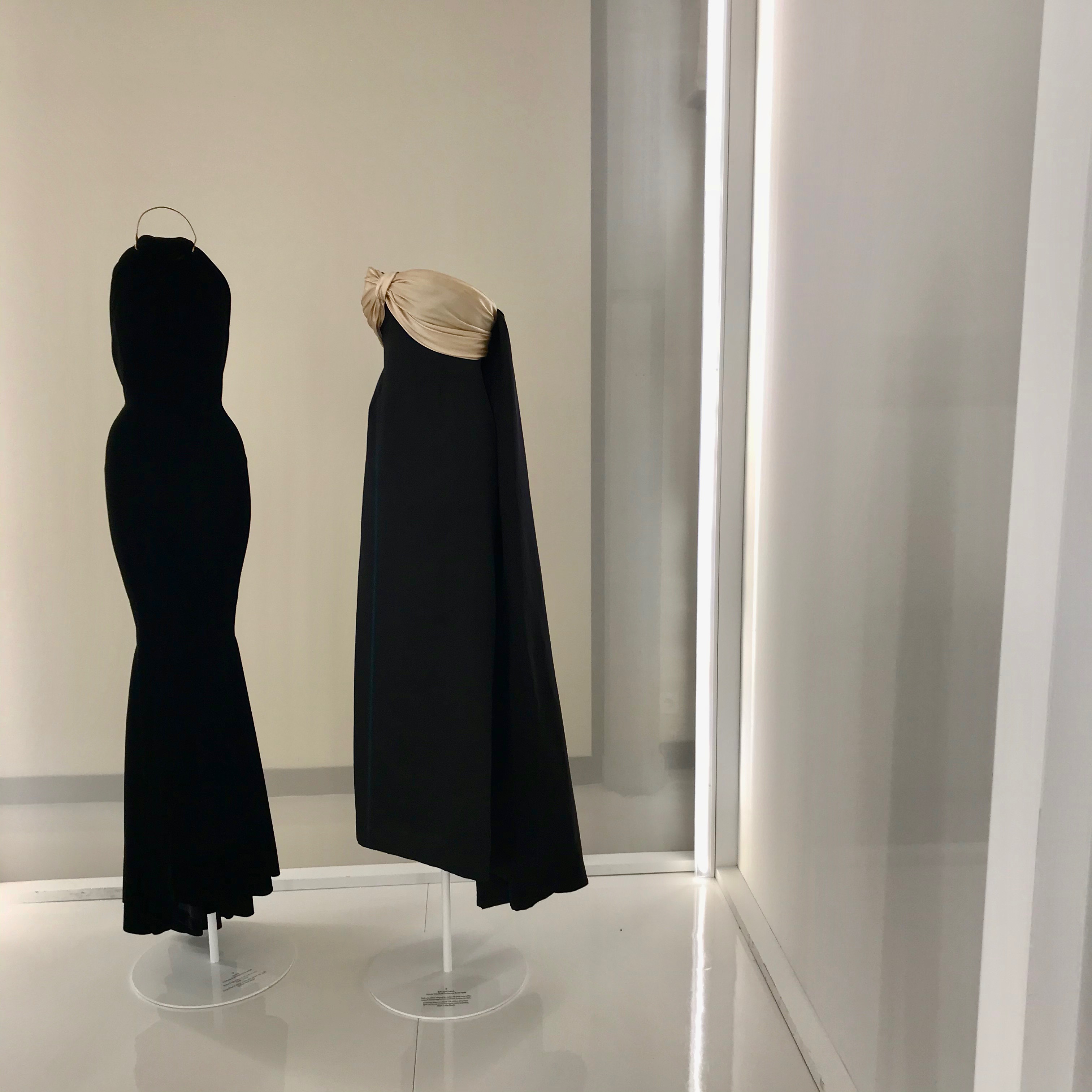
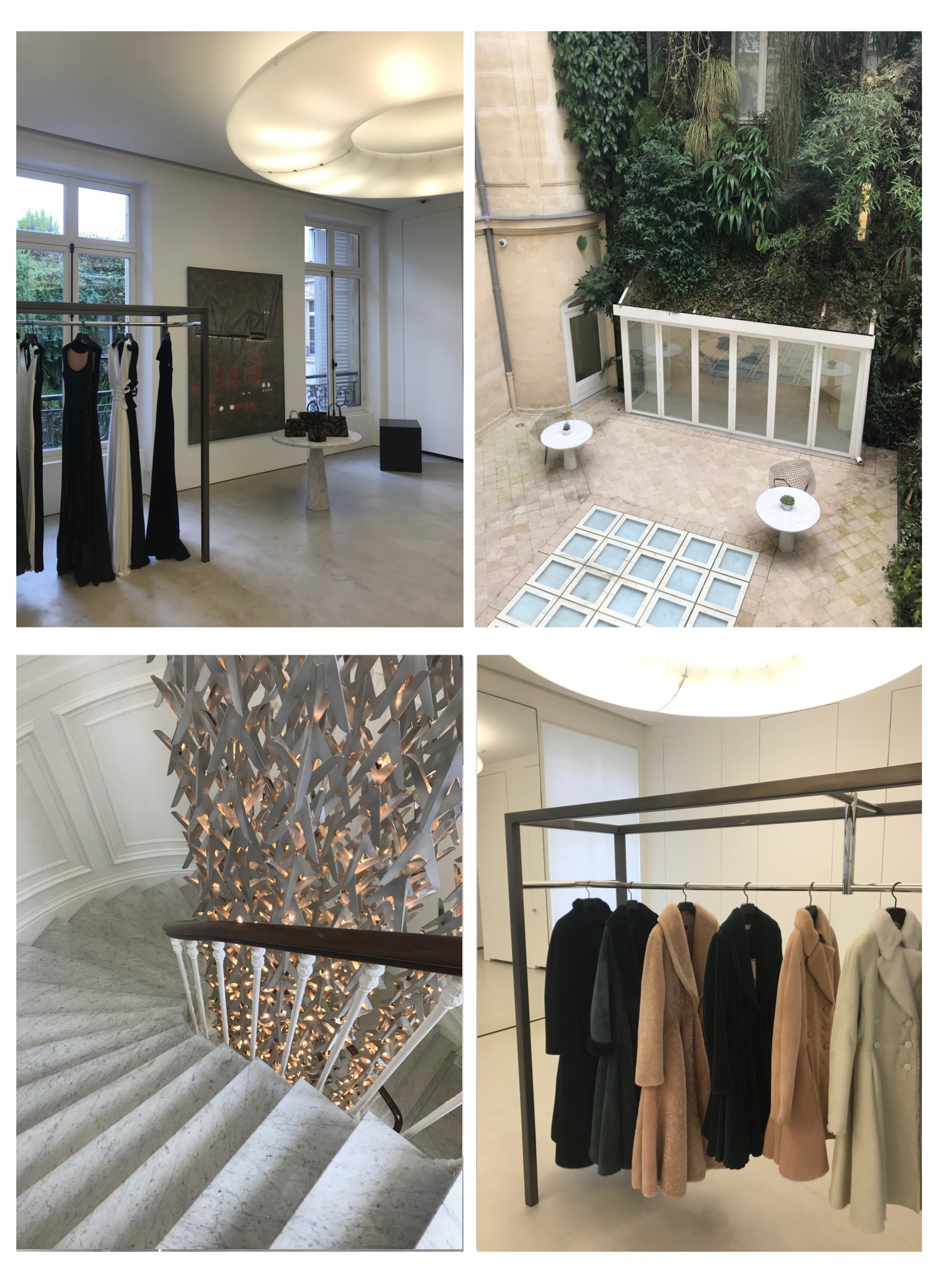
In 1968, as Cristóbal Balenciaga was preparing to close his eponymous fashion house, a young Azzedine Alaïa – already designing for private clients from his small apartment – received a phone call from Mademoiselle Renée, Balenciaga’s then-vice general director. She was concerned about the future of the Spanish couturier’s archive of gowns and unused fabrics and invited Alaïa to the maison to help himself to what was left, hoping he might re-cut and re-purpose the garments and cloth to give them new life. “That’s how his obsession for collecting fashion began,” says fashion curator and historian Olivier Saillard. “He was so moved seeing all those pieces that, instead of reworking them, he decided to keep them intact.” Saillard – who works closely with Carla Sozzani and Alaïa’s partner, the painter Christoph von Weyhe, to manage the late designer’s foundation, Association Azzedine Alaïa – has curated a new exhibition “Alaïa and Balenciaga, Sculptors of Shape” which runs until June 28 (temporarily closed now due to the coronavirus epidemy) at Galerie Azzedine Alaïa in Paris. Conceived as a sort of pristine white labyrinth, the exhibition sees pieces from both designers mirror one another without ever getting too physically close, reflecting the fact that the two couturiers never met in person. And, though Saillard might have been behind the exhibition’s content and design, he is quick to insist that the exhibition was not his own idea – rather that of another famed Parisian couturier, Hubert de Givenchy. “He came to see us in 2018, approximately six months after Azzedine’s death and, at 90 years old, completely blew us away with his old-school charm. He wanted to show the work of both designers at the Cristóbal Balenciaga Museum in the Spanish city of Getaria,” Saillard informs in the press notes. “Unfortunately, he died two weeks after that first meeting.” The curator then became in charge of fostering Givenchy’s idea, and the exhibition will eventually make its way to Getaria this summer. Identifying all the Balenciaga pieces in Alaïa’s collection was no easy feat. “Nothing was really archived, but we ended up finding more than 500 items,” remembers Saillard. “Then we compared them to Azzedine’s own work. That’s when I realised the extent of the Spanish master’s influence on him. Most of all, I think Azzedine always strived to equal Cristóbal’s technical virtuosity.” Did he succeed? “Well, there are very few 20th-century designers that mastered every step of the creative process, from drawing to cutting, sewing and assembling a garment, and they both did it. So yes.” Here are some photos I took inside this divine exhibition – partially located in the Galerie, partially over Alaïa’s boutique-slash-studio on rue de Moussy – but to really feel that mastership of cut and every single detail, these garments should be seen in real life. Here’s my post on one of the previous exhibitions presented here in case you’ve missed it: “Adrian and Alaïa. The Art of Tailoiring.”

Galerie Azzedine Alaïa / 18 rue de la Verrerie

Azzedine Alaïa Boutique & Studio / 7 rue de Moussy
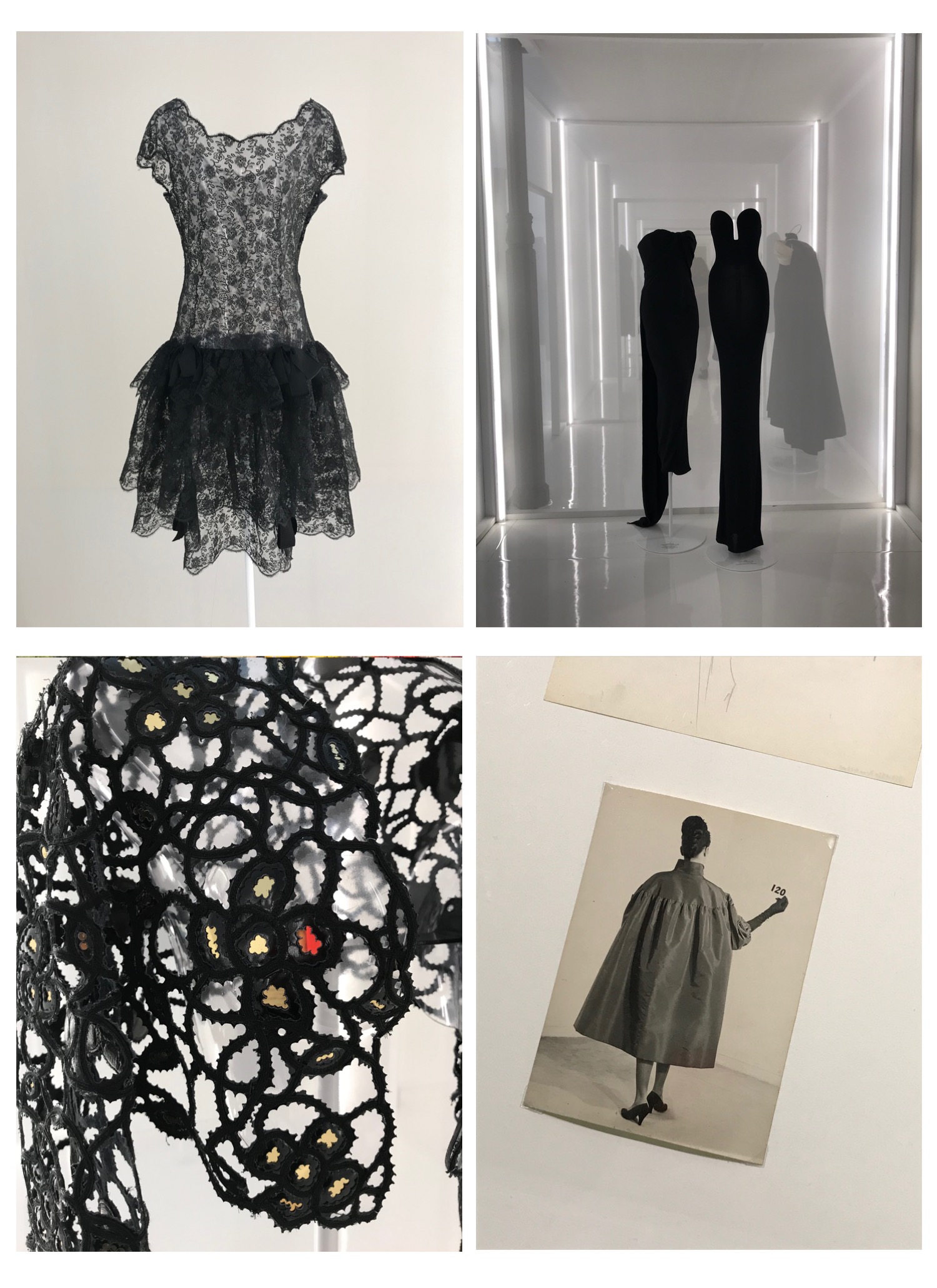
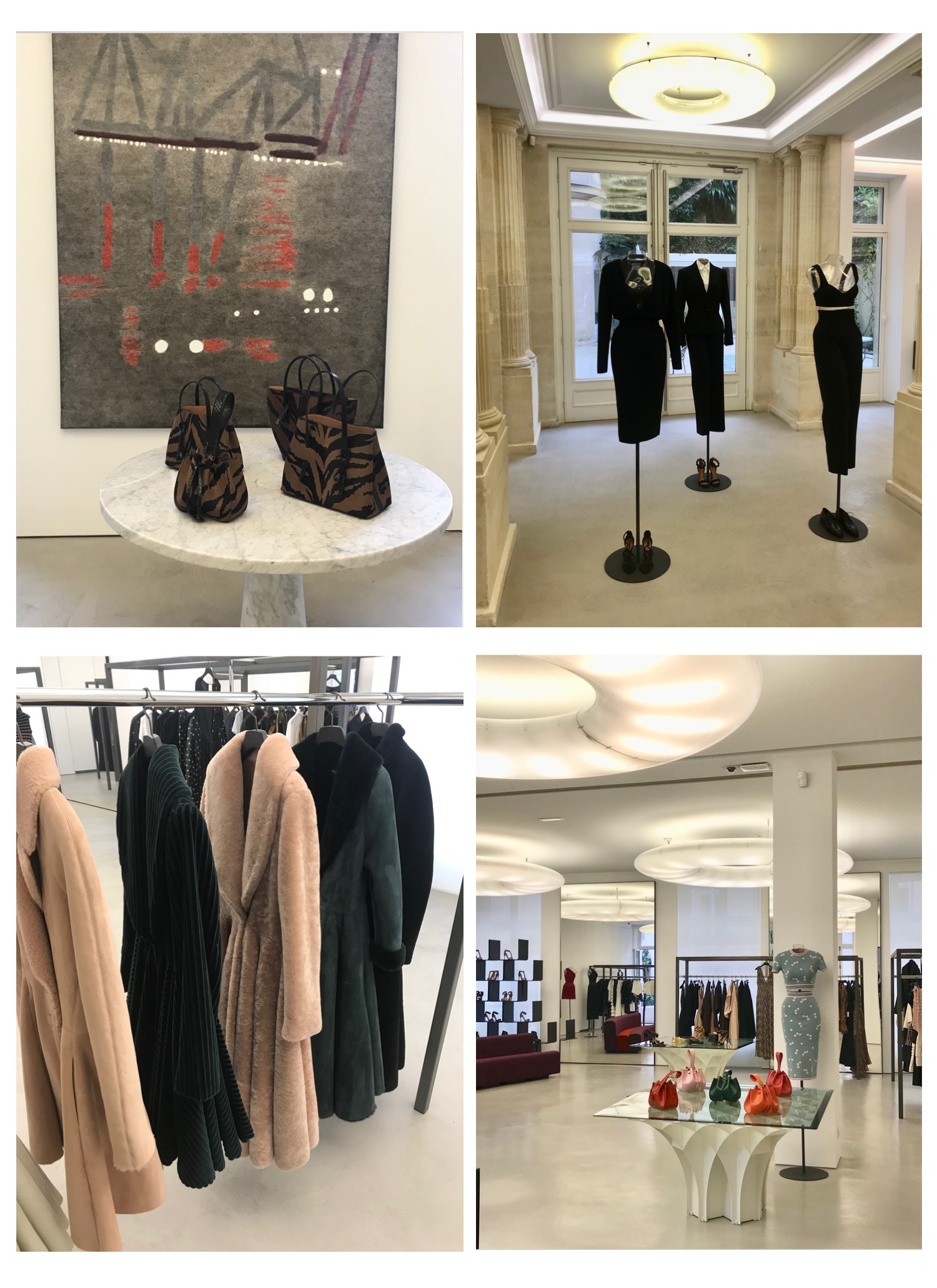
And now we’re jumping from Le Marais district to rue de Marignan (located near the posh Avenue Montaigne), where Alaïa’s second Paris flagship store is located. I’ve been there a few years ago after its opening, and now I was surprised to see that more floors are open to the clients. Here you will find the brand’s current collections (designed by Alaïa’s studio), as well as re-editions of some of the most cult Azzedine designs and motifs. Fact check: no other brand in Paris does as refined eveningwear as Alaïa’s maison. Oh, and shearling coats. When I saw that rack, my heart skipped a beat. Going to this store feels like a continuation of the exhibition tour, but this time you can try it all on and, if your wallet is a magic well, buy it. Never enough of Alaïa!

Azzedine Alaïa Boutique / 5 rue de Marignan
All photos by Edward Kanarecki.

(P.S. If you are inspired by my Parisian coverage, I’m really happy about, but please have in mind that now isn’t a safe time for any sorts of travelling. Stay at home!)
Atelier Brancusi

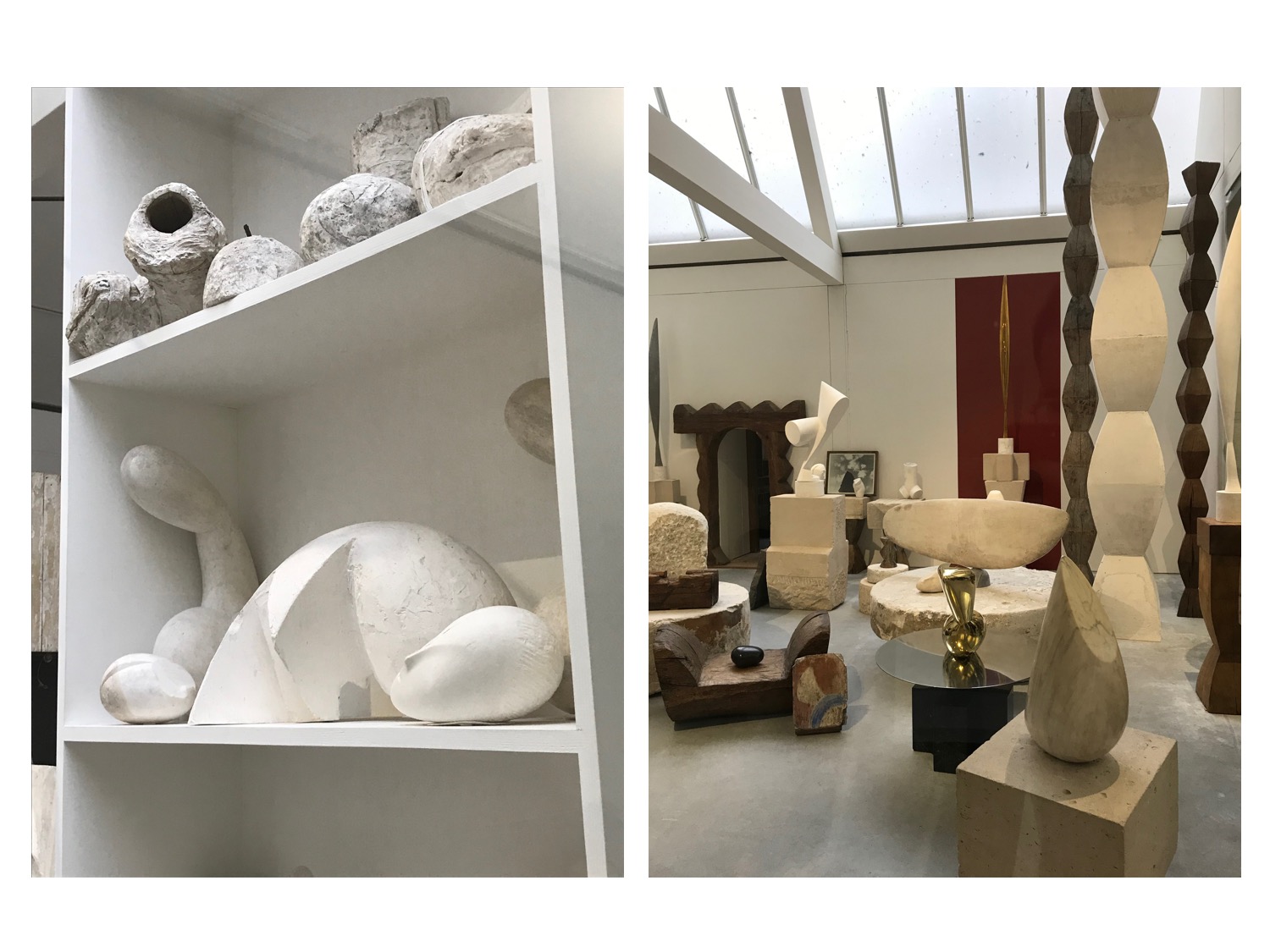
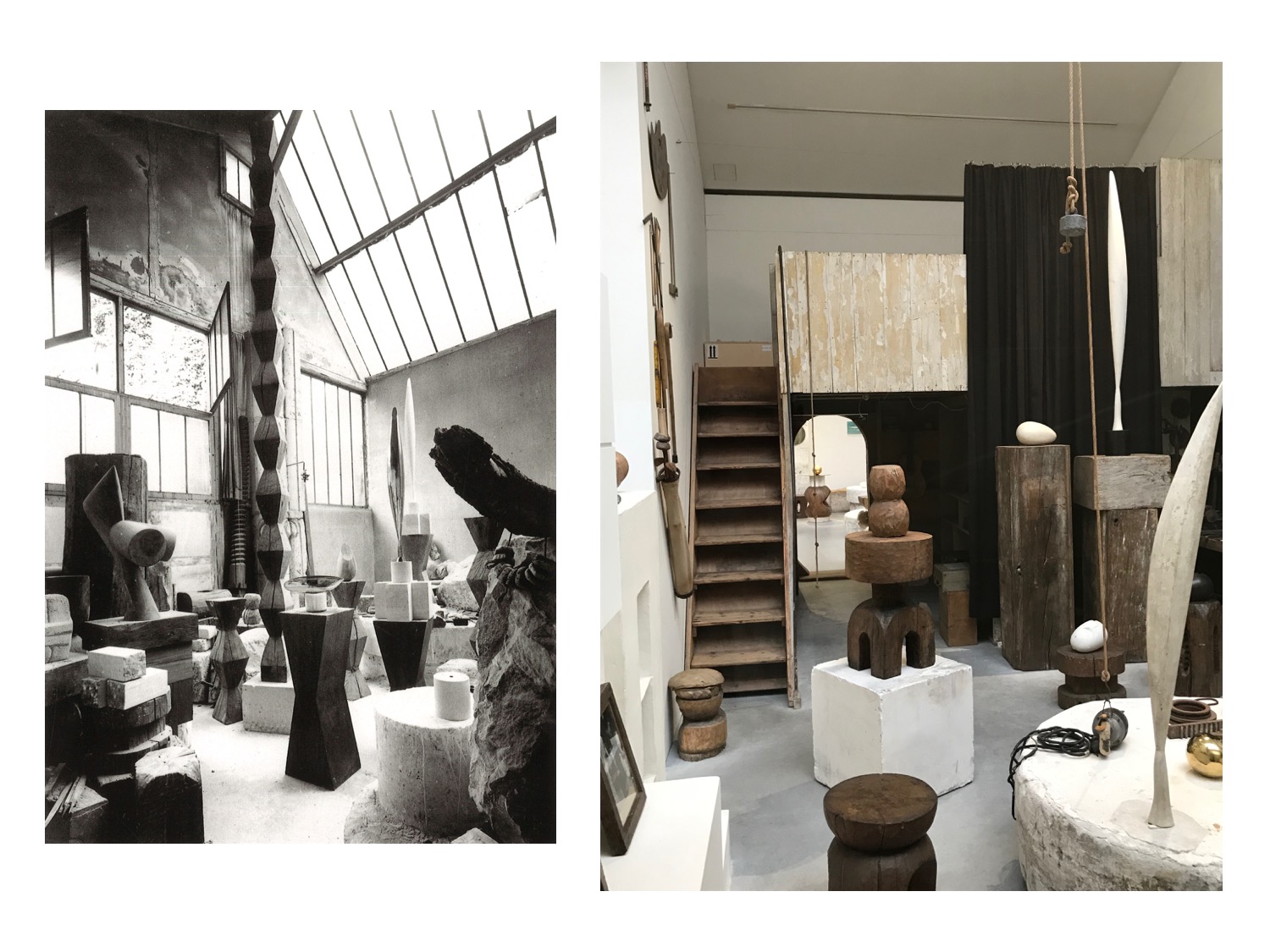
This place was on my “must see” list for a while. Finally, I visited Centre Pompidou’s Atelier Brancusi – a standalone pavillon dedicated to Constantin Brancusi‘s work. Born in Romania in 1876, Brancusi lived and worked in Paris from 1904 until his death in 1957, and this is where he produced most of his forever-inspiring work. In his will, he bequeathed his entire studio to the French state. Brancusi considered the relationship between sculptures and the space they occupied to be of crucial importance. In the 1910s, by laying sculptures out in a close spatial relationship, he created new works within the studio which he called “mobile groups“, stressing the importance of the connections between the works themselves and the possibilities of each for moving around within the group. In the next decades, the studio became an exhibition space for his work, and a work of art in its own right: a body consisting of cells that all generated each other. This experience of looking from within the studio at each of the sculptures, thus perceiving a group of spatial relationships, led Brancusi to revise their positions every day to achieve the unity he felt most apposite.At the end of his life, Brancusi stopped creating sculptures and focused solely on their relationship within the studio. This proximity became so fundamental that the artist no longer wanted to exhibit, and when he sold a work, he replaced it with plaster copy so as not to destroy the unity of the group. The present reconstruction, built by the architect Renzo Piano, is presented as a museum space containing the studio. Piano’s problem lay in making the space open to the public while respecting the artist’s wishes. While the architect did not attempt to recreate the intimacy of the original, he preserved the idea of a protected, interiorised space where visitors are isolated from the street and the piazza, in particular by an enclosed garden, from which part of the studio can be seen through a glass wall. I’ve spent there about 30 minutes, trying to absorb as much as possible with my eyes. And I went out feeling as relaxed as after a lovely spa.

Photos of the exhibition by Edward Kanarecki.

(P.S. If you are inspired by my Parisian coverage, I’m really happy about, but please have in mind that now isn’t a safe time for any sorts of travelling. Stay at home!)
Astier De Villatte

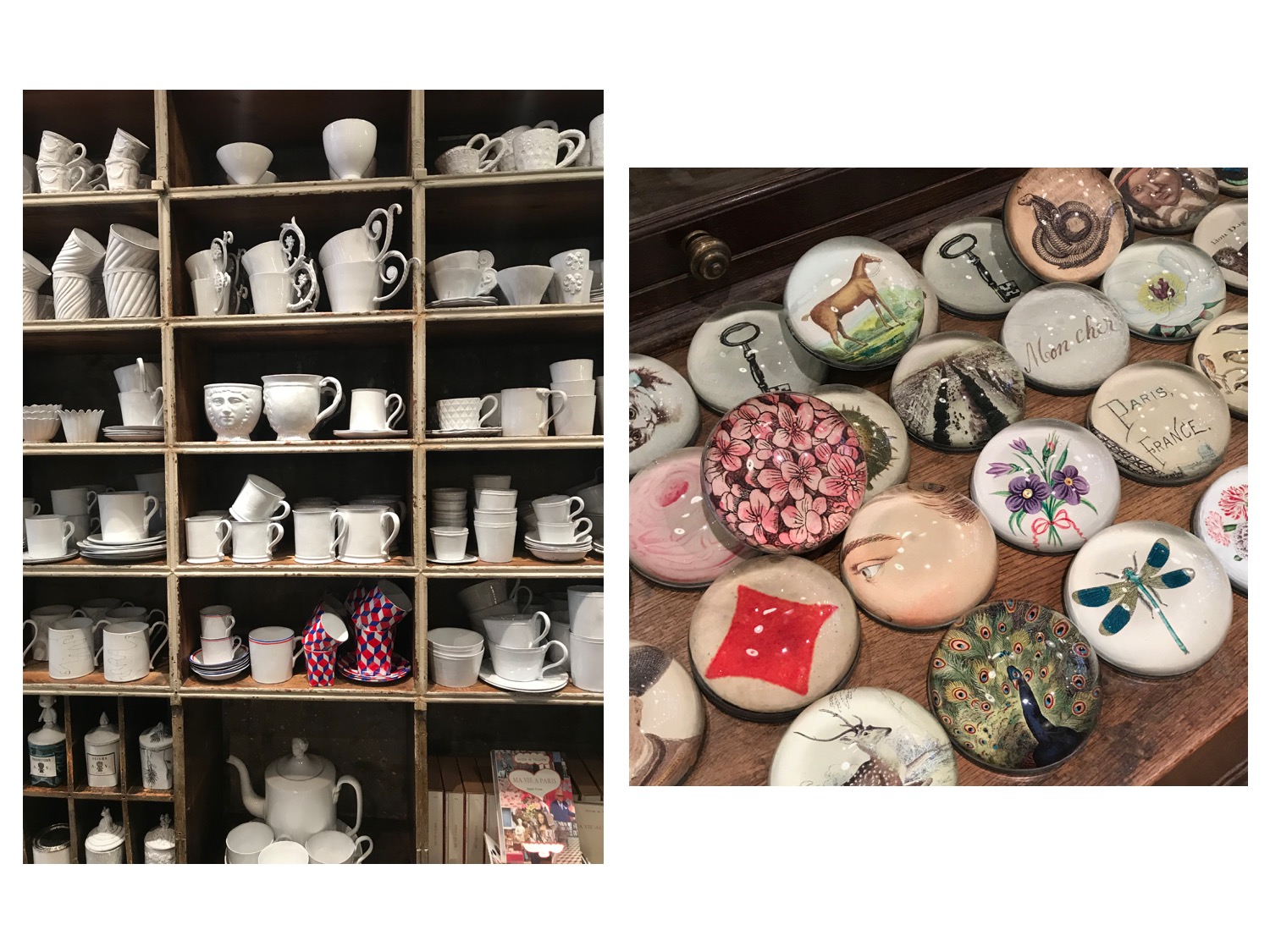
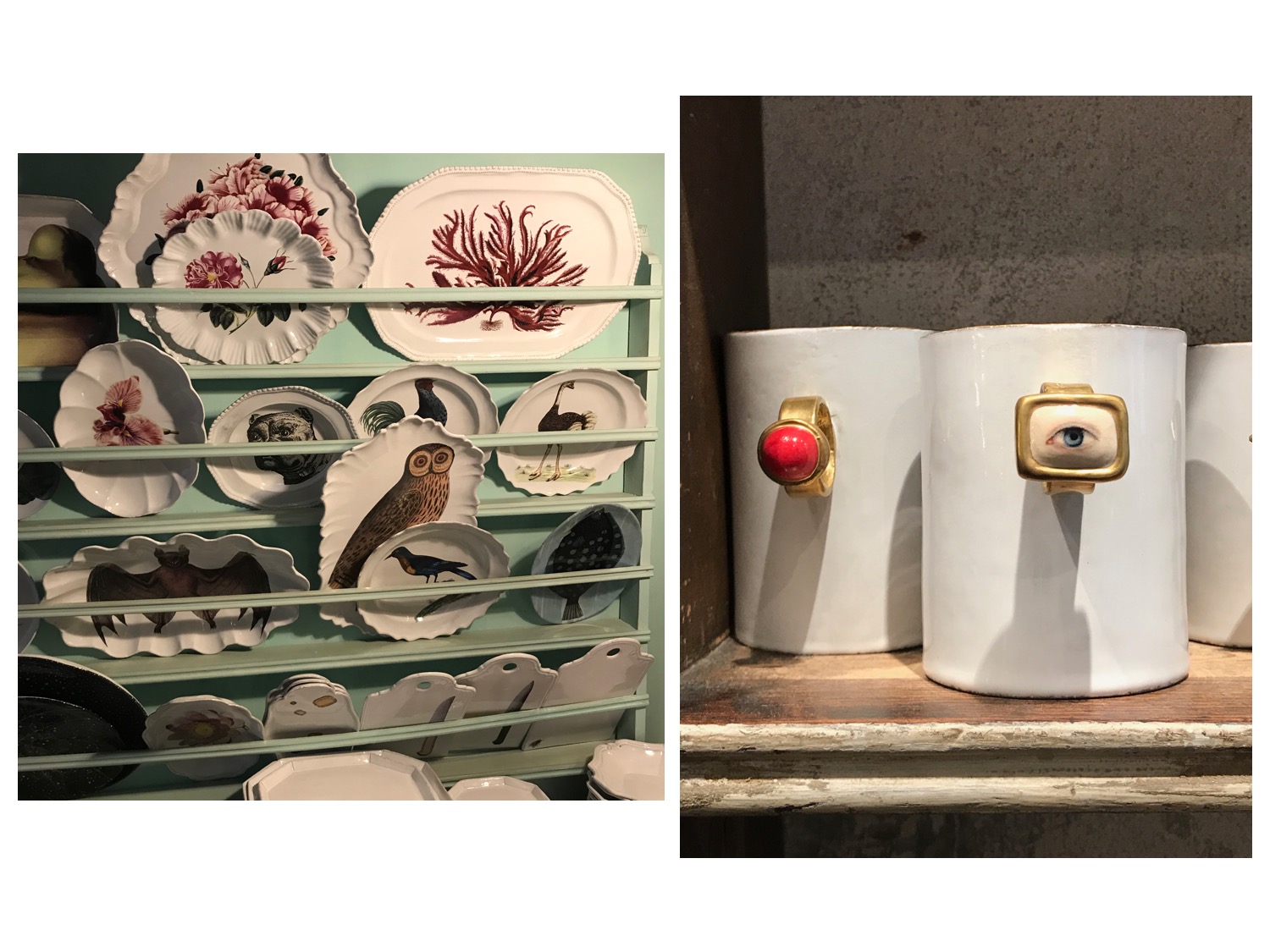
World renowned Astier De Villatte create their charming, one of a kind ceramics, pottery, candles and glassware in an antique Bastille workshop in Paris. Best known for their 18th and 19th century inspired handmade ceramics, Astier de Villatte have been making their ceramics here since 1996. Founded by Benoit Astier de Villatte and Ivan Pericoli, they continue to follow in the tradition of the great 18th century Parisian ceramic studios. Drawing inspiration from the history of decorative arts, folk art and abandoned objects, their team of twenty ceramicists make every piece of pottery by hand. Using traditional techniques passed down through the generations, everything in their exquisite range is totally unique. Sculpted out of black terracotta, each ceramic is then finished with a milky glaze to emphasise the character and imperfections of the clay. No two Astier de Villatte products are the same. Alongside their ceramics, Astier de Villatte make scented hand care products, incense and candles. Their Serena Carone mugs (see the above photo) are on my wishlist.

173 rue Saint-Honore

All photos by Edward Kanarecki.

(P.S. If you are inspired by my Parisian coverage, I’m really happy about, but please have in mind that now isn’t a safe time for any sorts of travelling. Stay at home!)

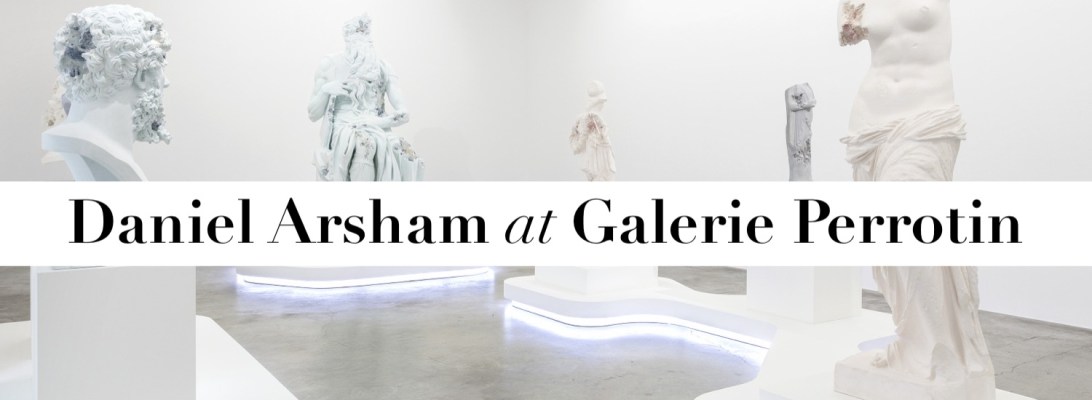
Daniel Arsham at Galerie Perrotin

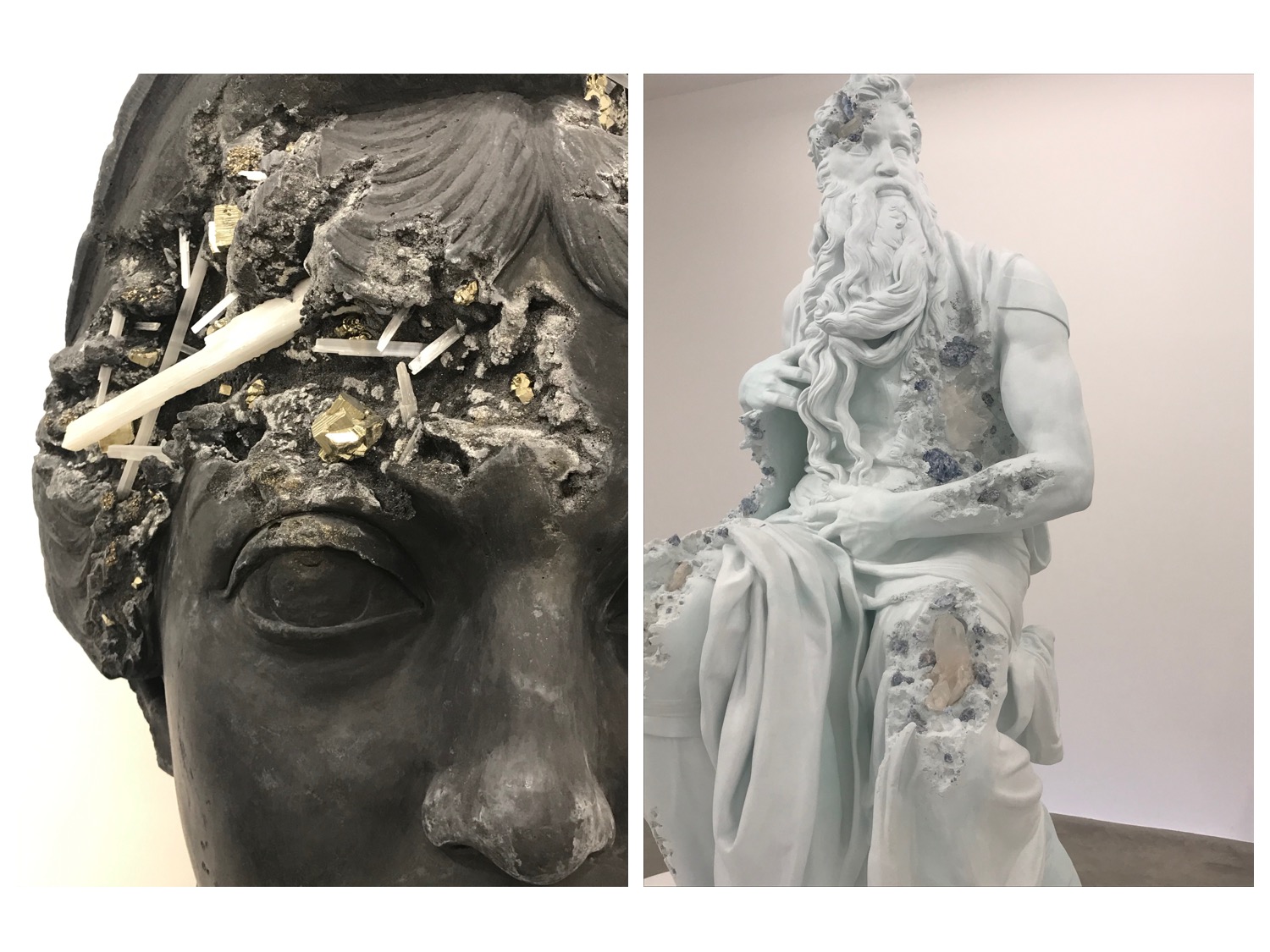
Although Daniel Arsham‘s exhibition “Paris, 3020” at Galerie Perrotin closed few days ago, I think it’s still worth writing about it. For his solo exhibition, the renowned, contemporary artist presented a new suite of large-scale sculptures based on iconic busts, friezes and sculptures in the round from classical antiquity. Over the past year, Arsham has been granted unprecedented access to the Réunion des Musées Nationaux – Grand Palais (RMN), a 200-year-old French molding atelier that reproduces masterpieces for several of Europe’s major encyclopedic museums. Arsham was able to use molds and scans of some of the most iconic works from the collections of the Musée du Louvre in Paris, the Acropolis Museum in Athens, the Kunsthistorisches Museum in Vienna and the San Pietro in Vincoli as source material for this new body of work. Interested in the way that objects move through time, the works selected by Arsham are so iconic that they have eclipsed their status as mere art object, and instead have embedded themselves into our collective memory and identity. Ranging from Michelangelo’s Moses to the Vénus de Milo, each item was cast in hydrostone to produce a perfect to scale replica of the original sculpture, a process that shares formal qualities with historic wax casting. Arsham utilizes natural pigments that are similar to those used by classical sculptors, such as volcanic ash, blue calcite, selenite, quartz, and rose quartz. From that, individual erosions are chiseled into the surface of the hydrostone, a nod to the sculpting techniques of the Renaissance sculptors. Finally, Arsham applies his signature tactic of crystallization (which has distinct, organic appearance). Making use of classical and ancient objects, this new body of work experiments with the timelessness of certain symbols, furthering Arsham’s previous investigations into “objecthood”.

76 rue de Turenne

All photos by Edward Kanarecki.

(P.S. If you are inspired by my Parisian coverage, I’m really happy about, but please have in mind that now isn’t a safe time for any sorts of travelling. Stay at home!)
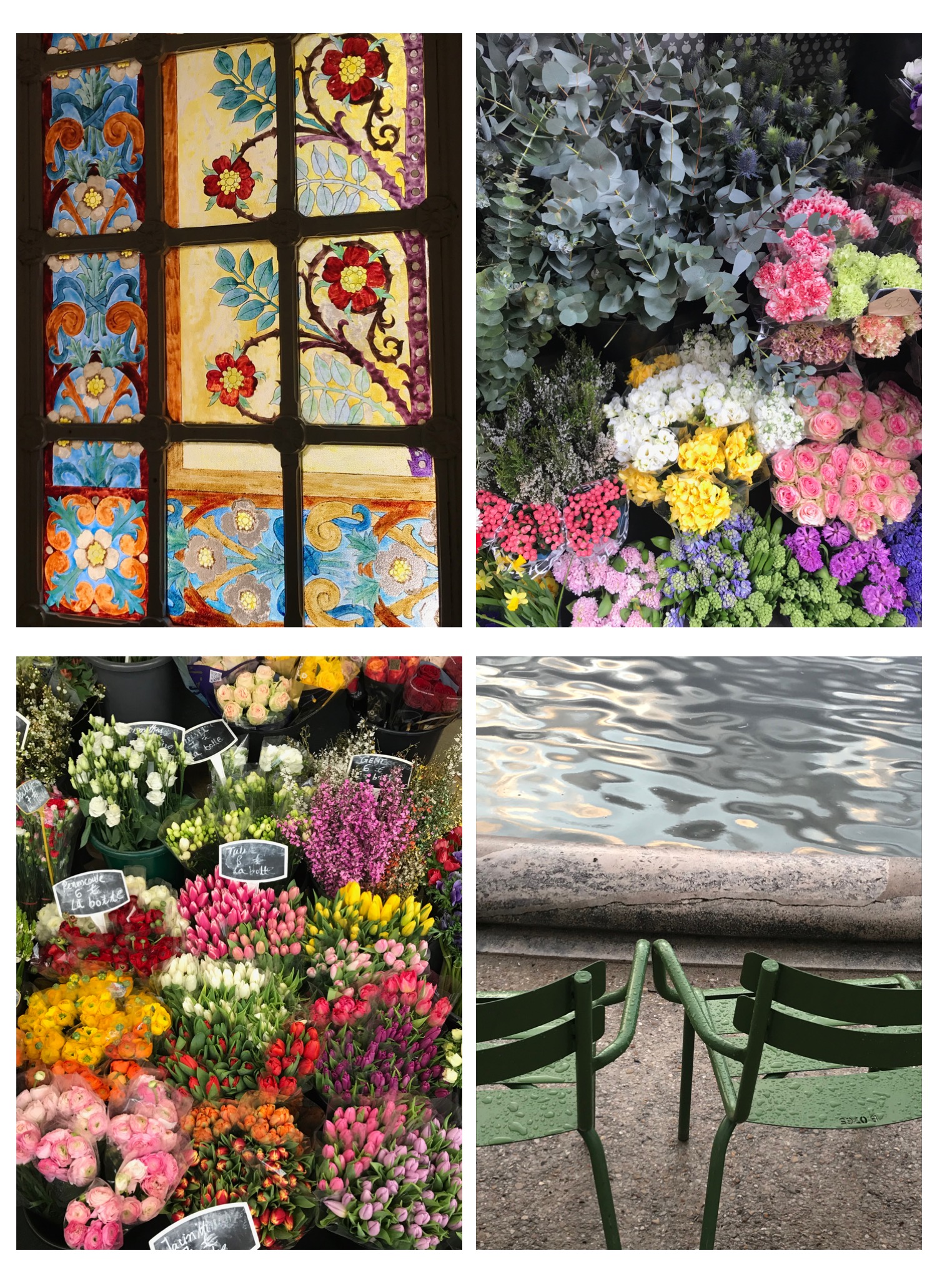
Paris in Bloom

Paris is blooming! No other tune comes to my mind when I think of the beautiful, Parisian spring. “Heaven Scent” by Soulwax and Chloë Sevigny is the ultimate mood.

Send me your majestic rain of roses
So that I may share your grace
Bless me with blooms of lily
Blooms of violet
Blooms of buttercups
Blooms of lilac
Blooms of jasmine
Blooms of hyacinth
Blooms of honeysuckle
Blooms of magnolia
Blooms of gardenia
Blooms of tuberose
Let fall from Heaven, please,
The Shower of Flowers
Let me be anointed with the splendor of their perfumed essence
So that I may see the face of God
In all people, and in all experiences.

All photos by Edward Kanarecki.

(P.S. If you are inspired by my Parisian coverage, I’m really happy about, but please have in mind that now isn’t a safe time for any sorts of travelling. Stay at home!)