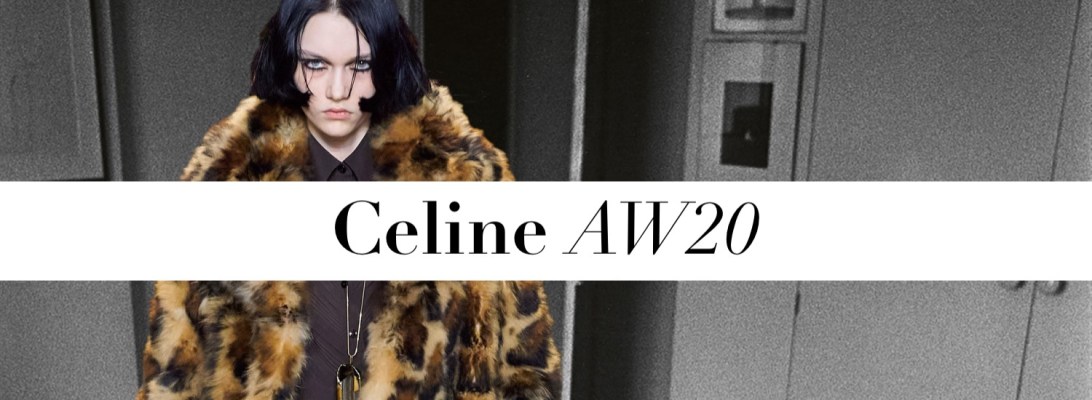
Over and Over Again. Celine AW20

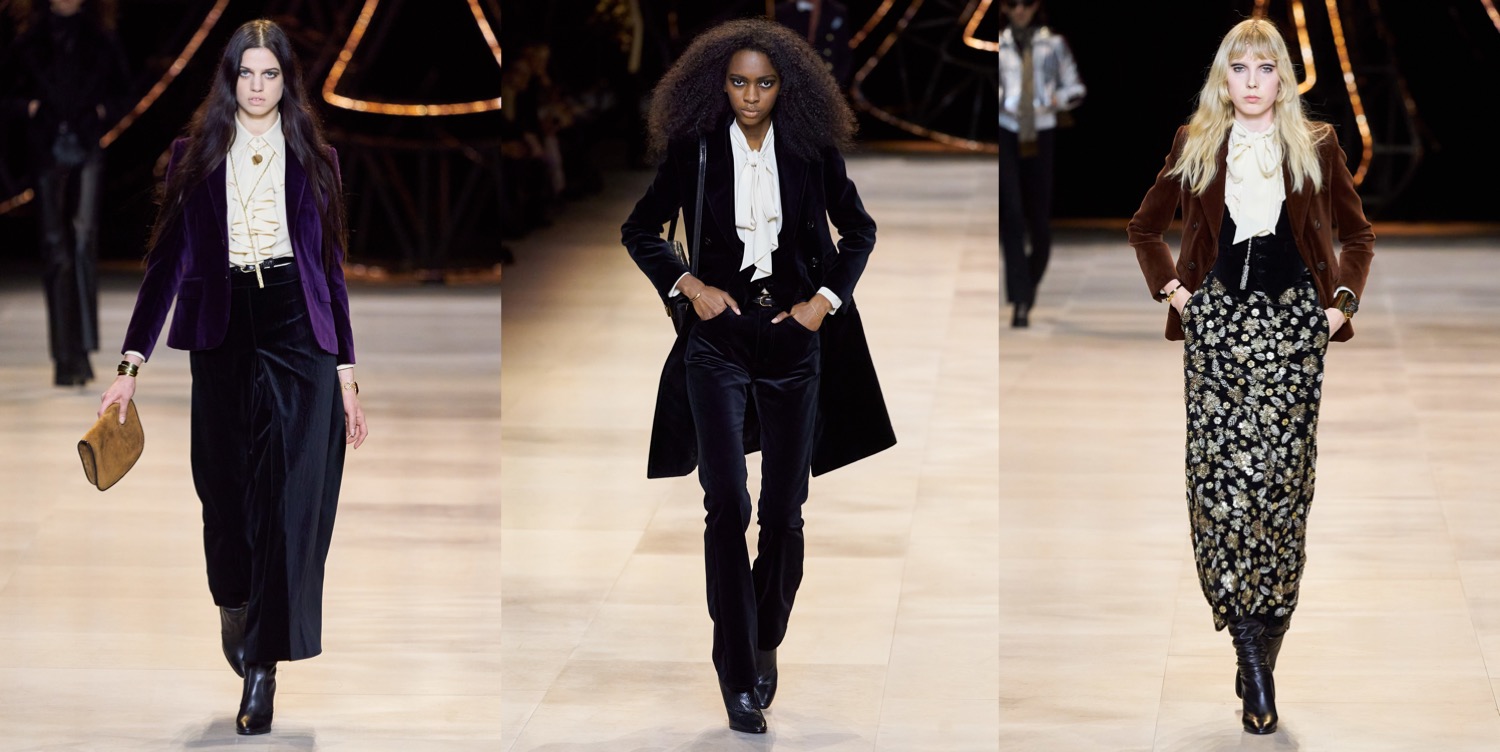
My reaction to Hedi Slimane‘s Celine follows the sinusoidal pattern of emotions I had about his work at Saint Laurent. First, I felt aversion. Then, for a moment, I was amused. In the end, I lost interest. Quite dangerously I’m entering the third phase. Consistence and assertiveness is key for a brand to succeed, yes. But Slimane’s stubborness – same venue, same models (now he even has the same faces he had back at YSL), pretty much the same music, and, what’s worst, same clothes, is quite the art of fashion procrastination. Yes, yes, I know the closing gowns are couture and they took hundreds of hours to embroider. And I’m aware that the 1970s nostalgia is a common, widespread thing for the last (and probably next) couple of seasons. Slimane doesn’t push the envelope, because it’s the aesthetic he loves and repeats over and over again. But he doesn’t even bother to rework it. It’s great that you can buy a pair of denim pants at Celine, or a corduroy mini-skirt, or a retro-lookig dress. But do we need a fashion show for this sort of clothes with more than 100 looks?

Collage by Edward Kanarecki.

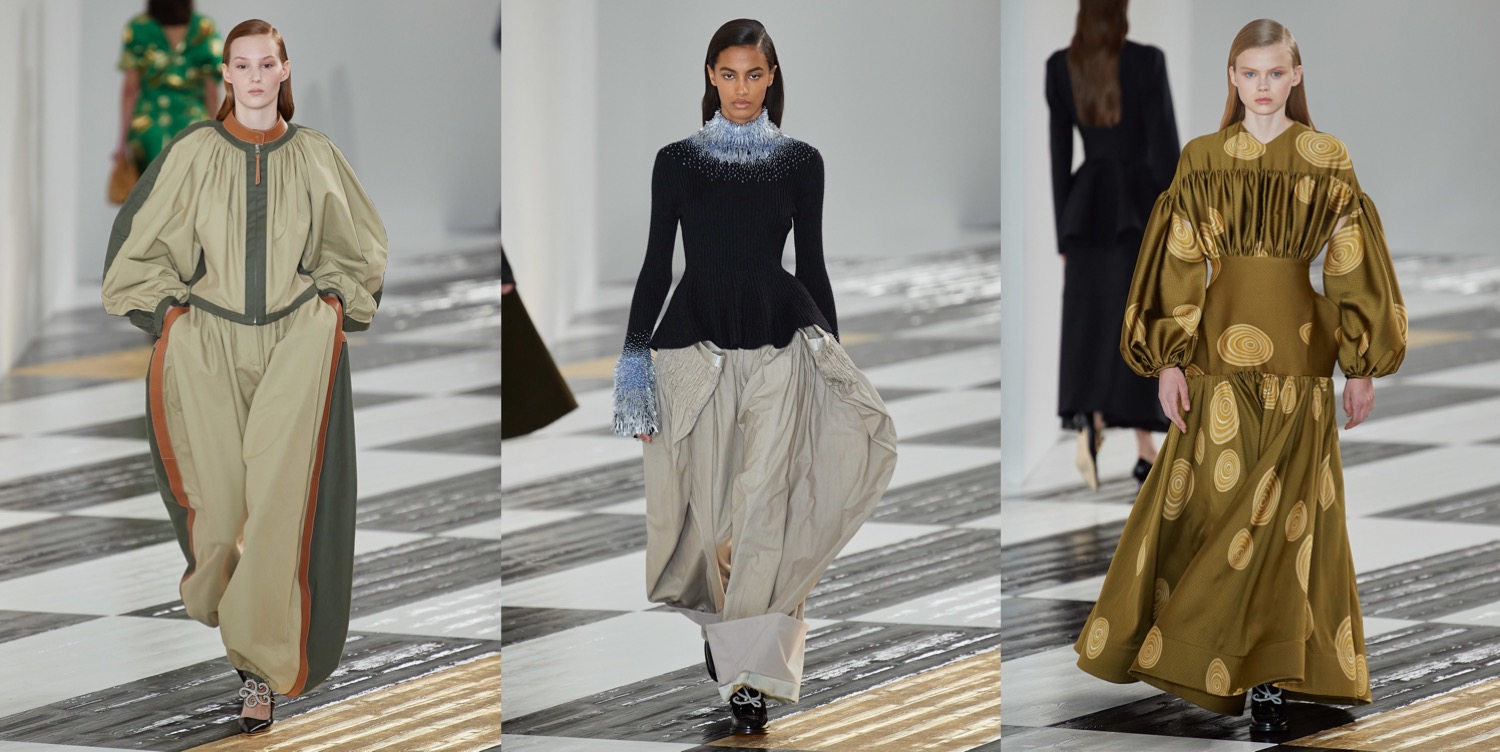
Dress To Impress. Loewe AW20

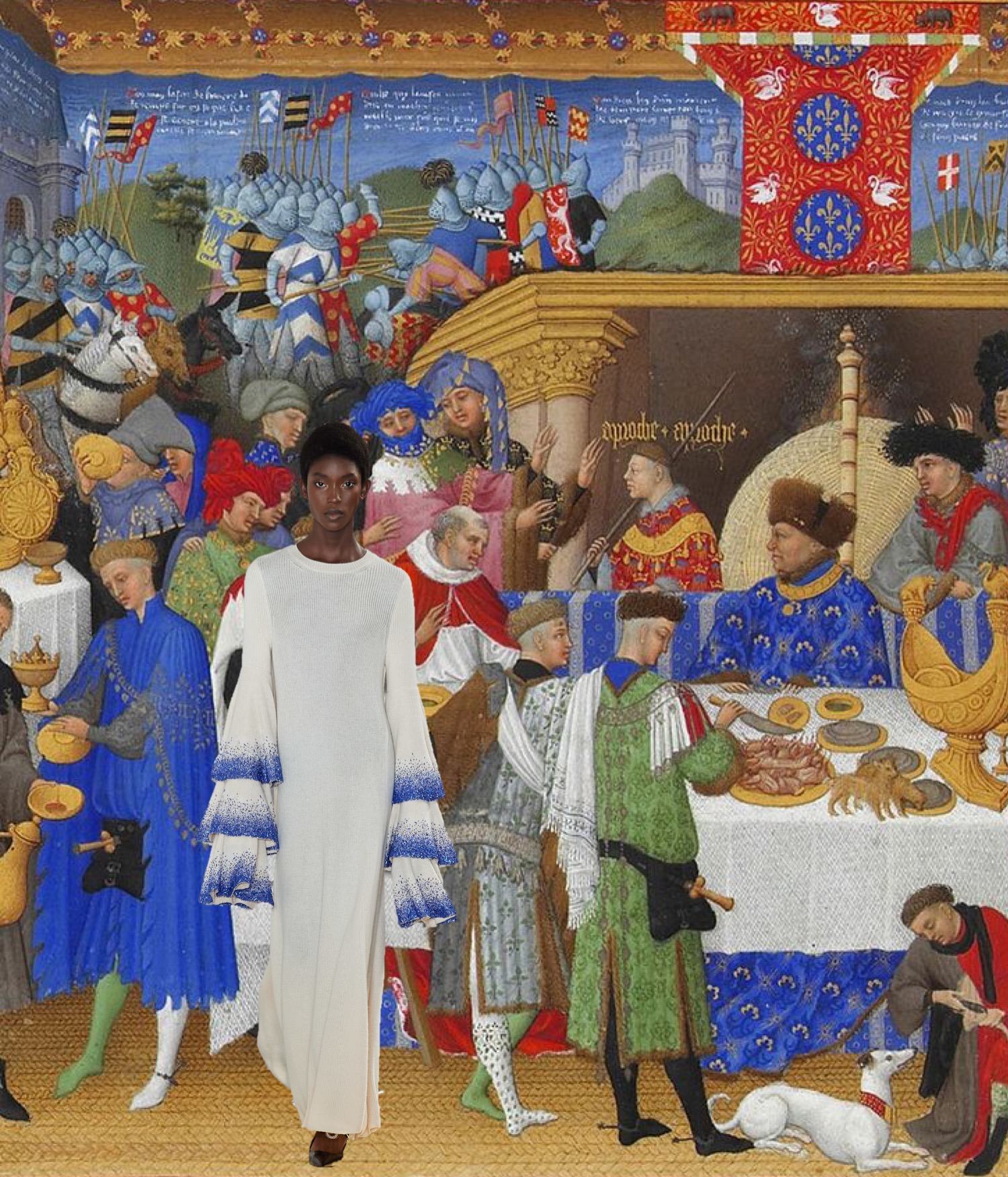
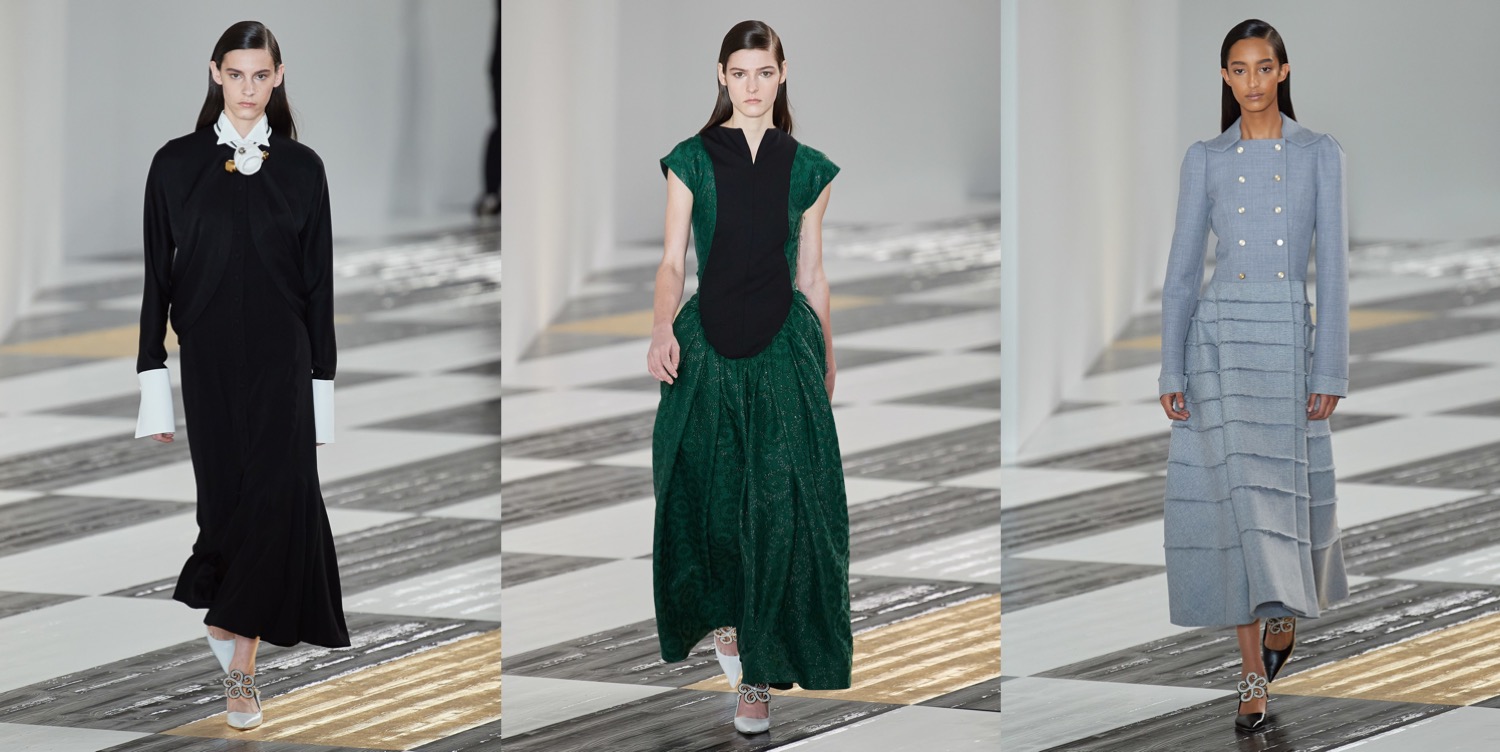
Dressing to impress—I think that’s an exciting thing,Jonathan Anderson declared backstage of his latest Loewe show. “Looking at building new types of silhouettes that can work in an abstract way. Trying to take a risk, maybe in my own self.” Taking risks is a trouble for many designers in Paris, so it’s great to see at least someone addressing that. What he began with – the volumized “entrance-making” shapes he showed in his JW Anderson collection in London – was followed through with inspirational conviction at Loewe. The collection at some points looked odd, but in a good, refreshing way. This line-up wasn’t obvious. What were these brocade dresses, gathered by Takuro Kuwata’s ceramic works? How to capture the shoulder-extending device from which caped-back sleeves were suspended? Anderson said he didn’t quite know exactly how he’d arrived at those ideas. “But sometimes it’s nice to feel vulnerable when you’re doing a collection – that you don’t know what the outcome is going to be before you start.” In pushing across the frontiers of the norm, Anderson relies partly on spontaneous curation. “Exaggerating by illusion” is one way he described the process. Yet the thing about Anderson is that his creative push is also part of his incredibly prescient long-term strategy to turn Loewe into what he’s called “a cultural brand” (he’s reconstructed it into a fashion home for the art-owning and gallery-going international clientele). This as well gets reflected in Jonathan’s fashion. Echoes of 17th century Spanish art – especially Zurburan and Velasquez – come in the subtle Spanish semiotics Anderson embeded in the collection. Maybe there was a hint of flamenco in the raw-edge tiers in a gray flannel coat and the triple-fluted sparkle-dusted sleeves of a ribbed-knit dress. But then, some of the dresses had volumes that made you think of medieval-wear we know from miniature illustrations.

Collage by Edward Kanarecki.
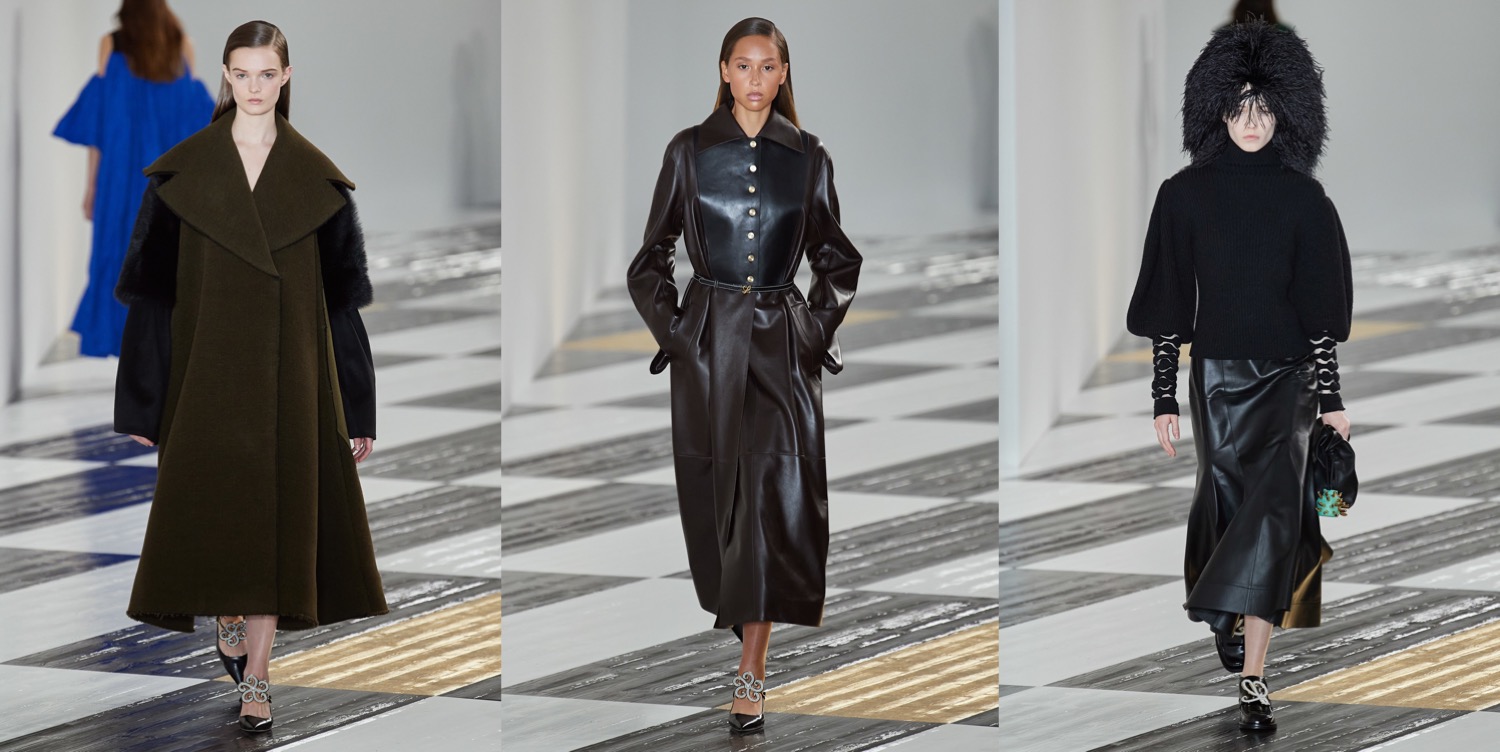
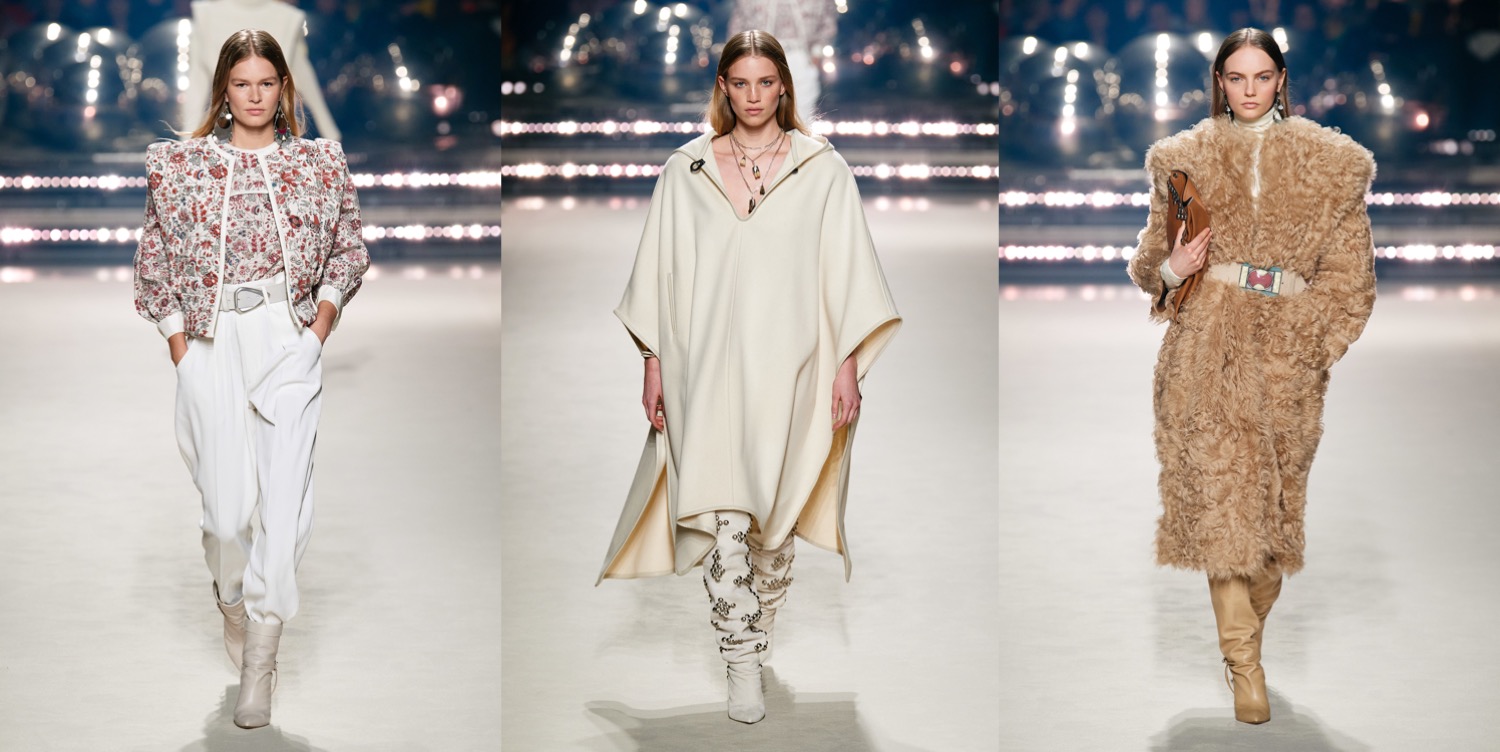
Comfort Zone. Isabel Marant AW20

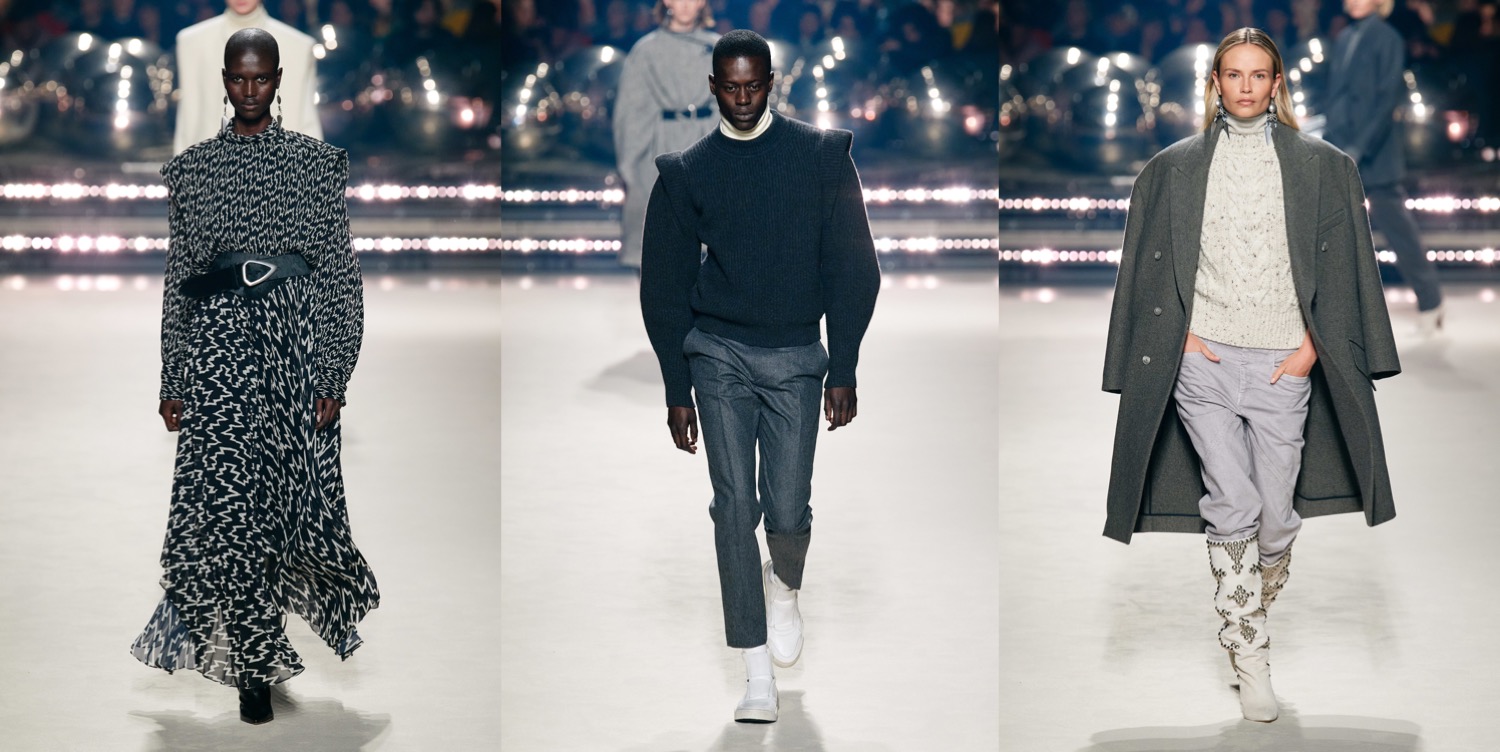
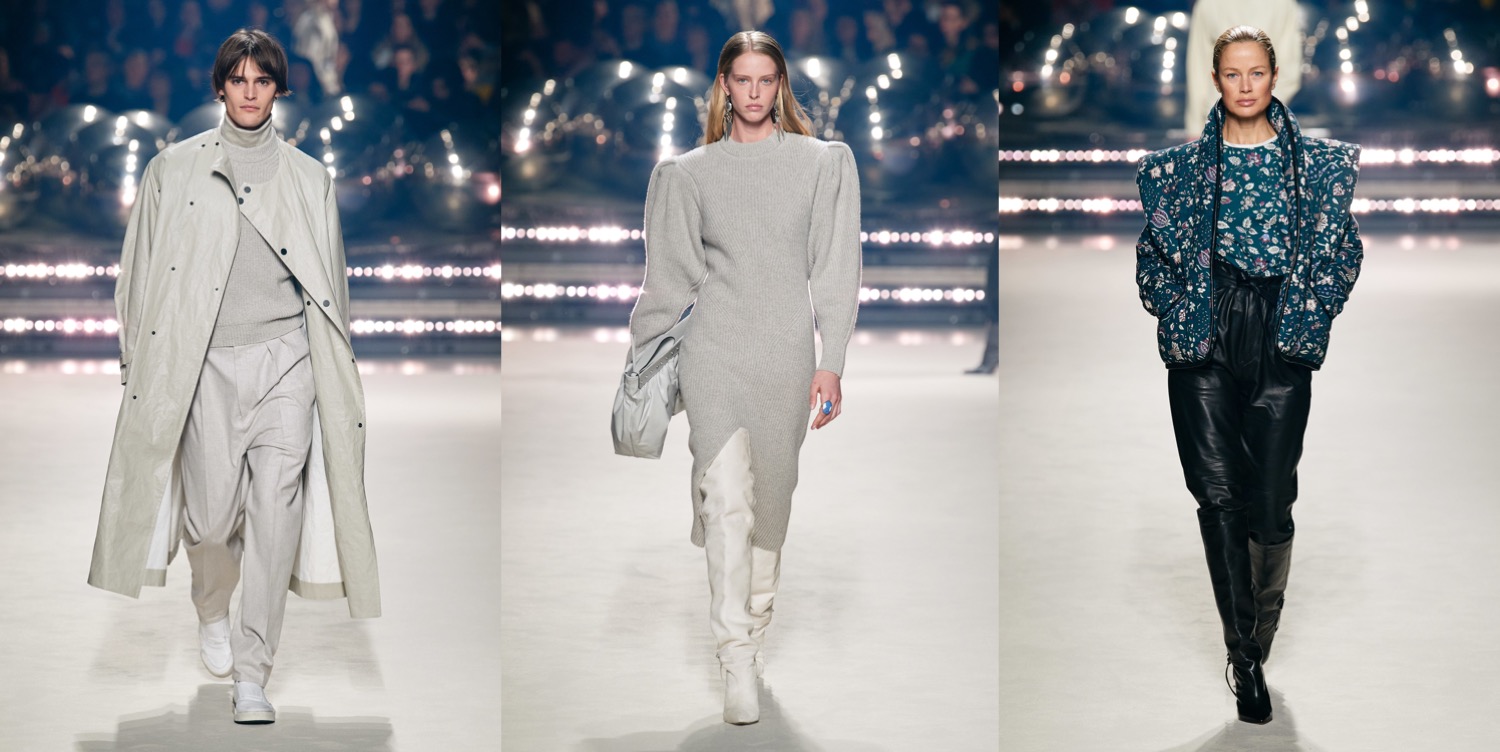
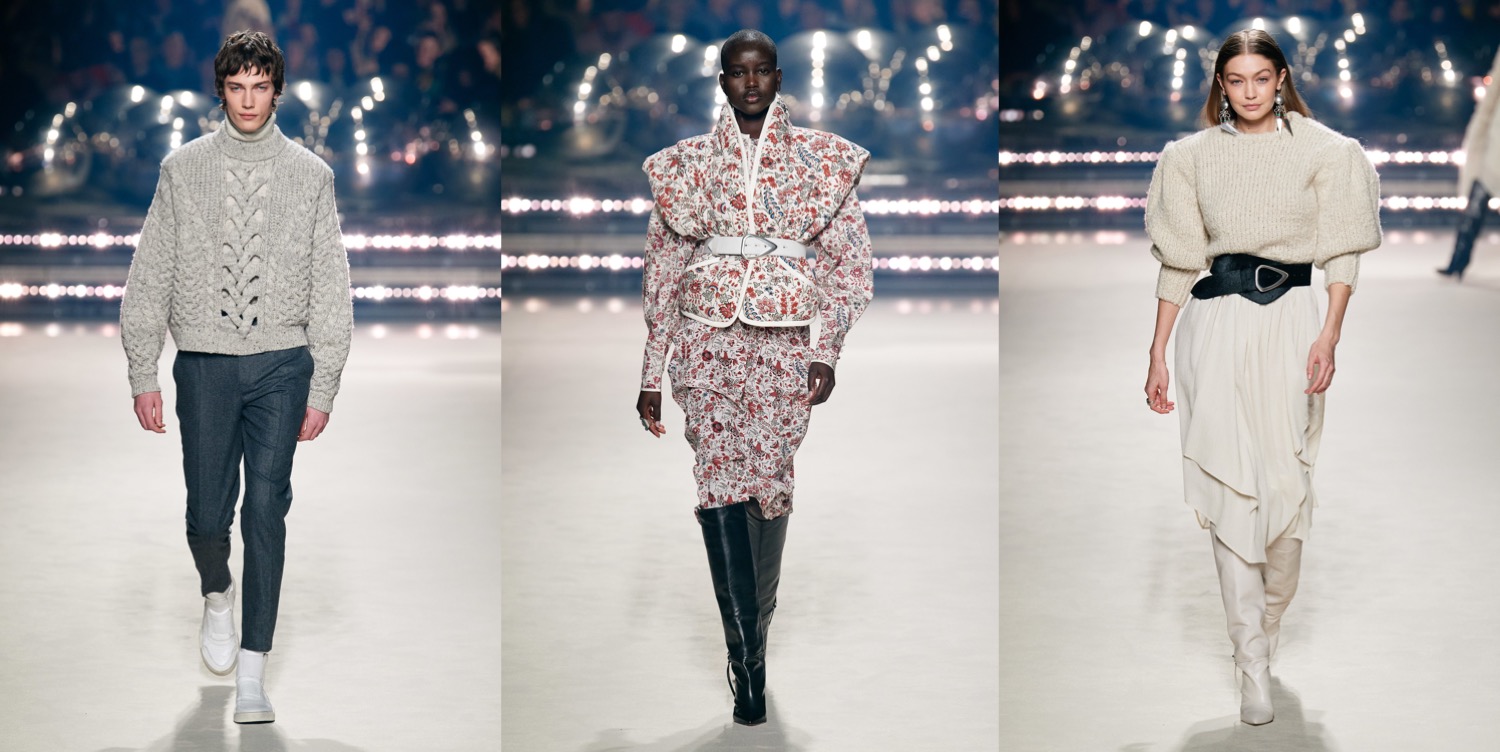
For autumn-winter 2020, Isabel Marant stayed in her comfort zone. Her signature, hourglass silhouette came in knitted dresses with over-sized shoulders and quilted varsity jackets with a sharp cut. Her trademark styling trick – in which a belt is used to cinch a voluminous jacket – was in full effect on shaggy camel-colored shearling and all-enveloping blanket coats. Mostly kept in layered neutrals, the collection pleases with its balance between minimalism and nomadic chic – something we all know Marant for. It’s one of those collections that comes nearly unnoticed, but when it hits the stores, everyone wants it.

Collage by Edward Kanarecki.

Rework The Past. Paco Rabanne AW20

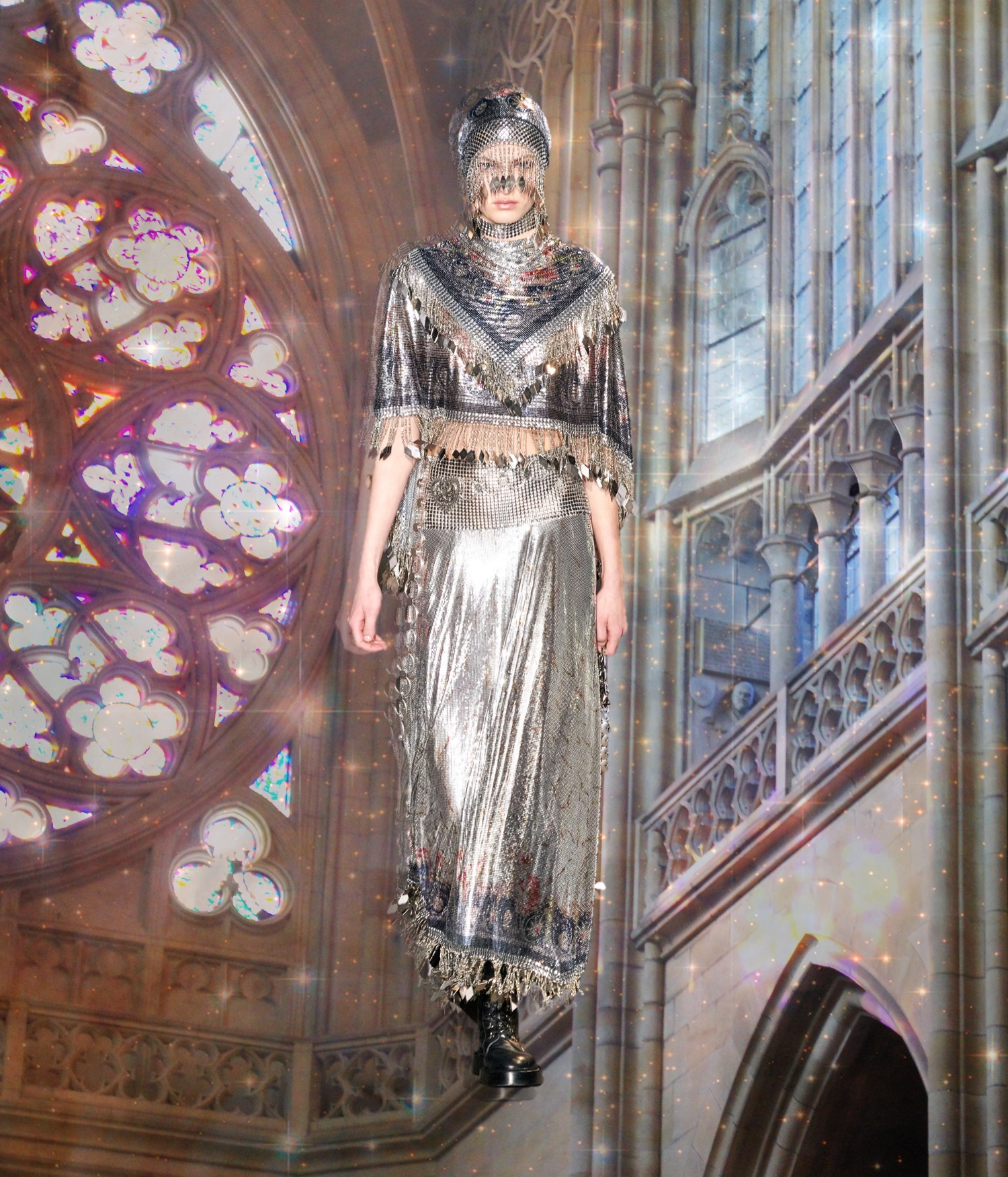
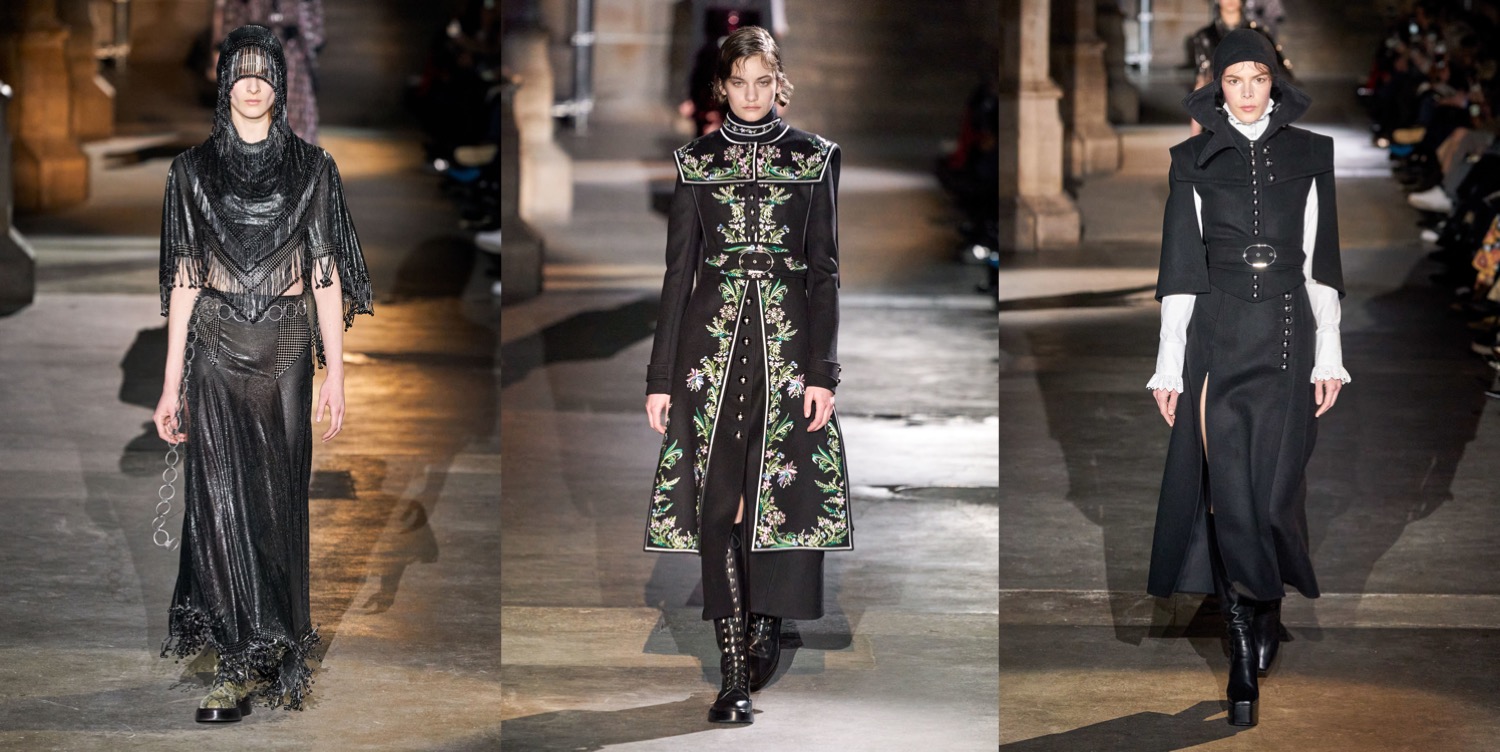
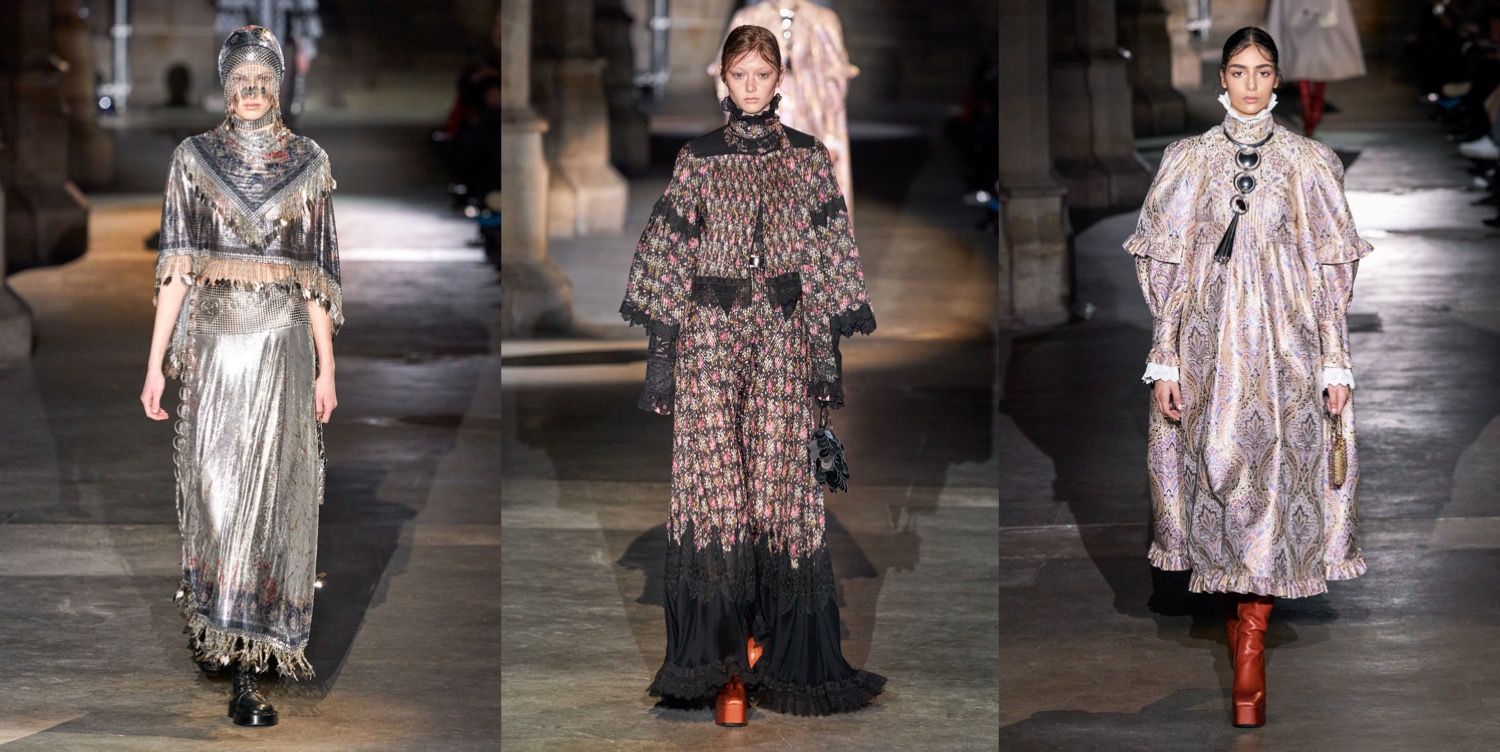
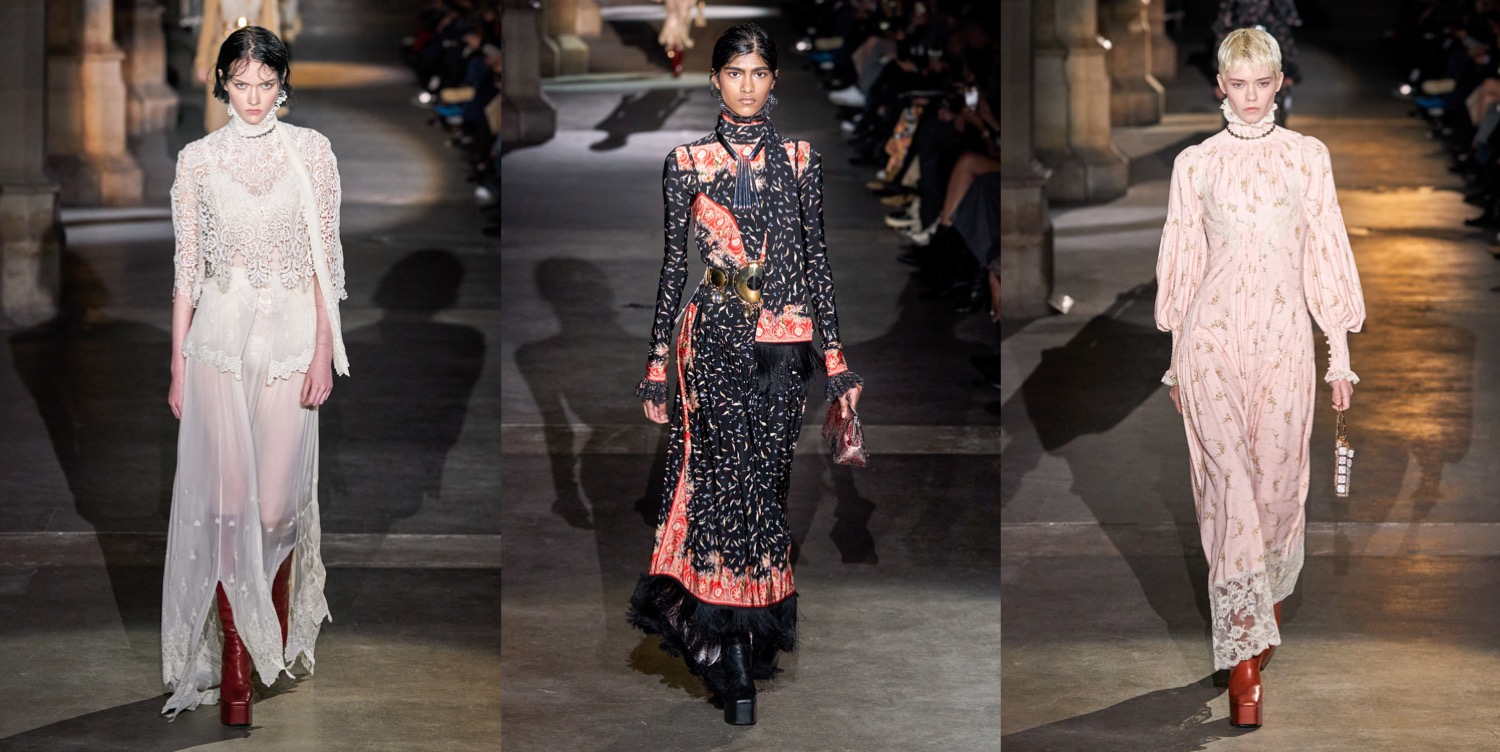
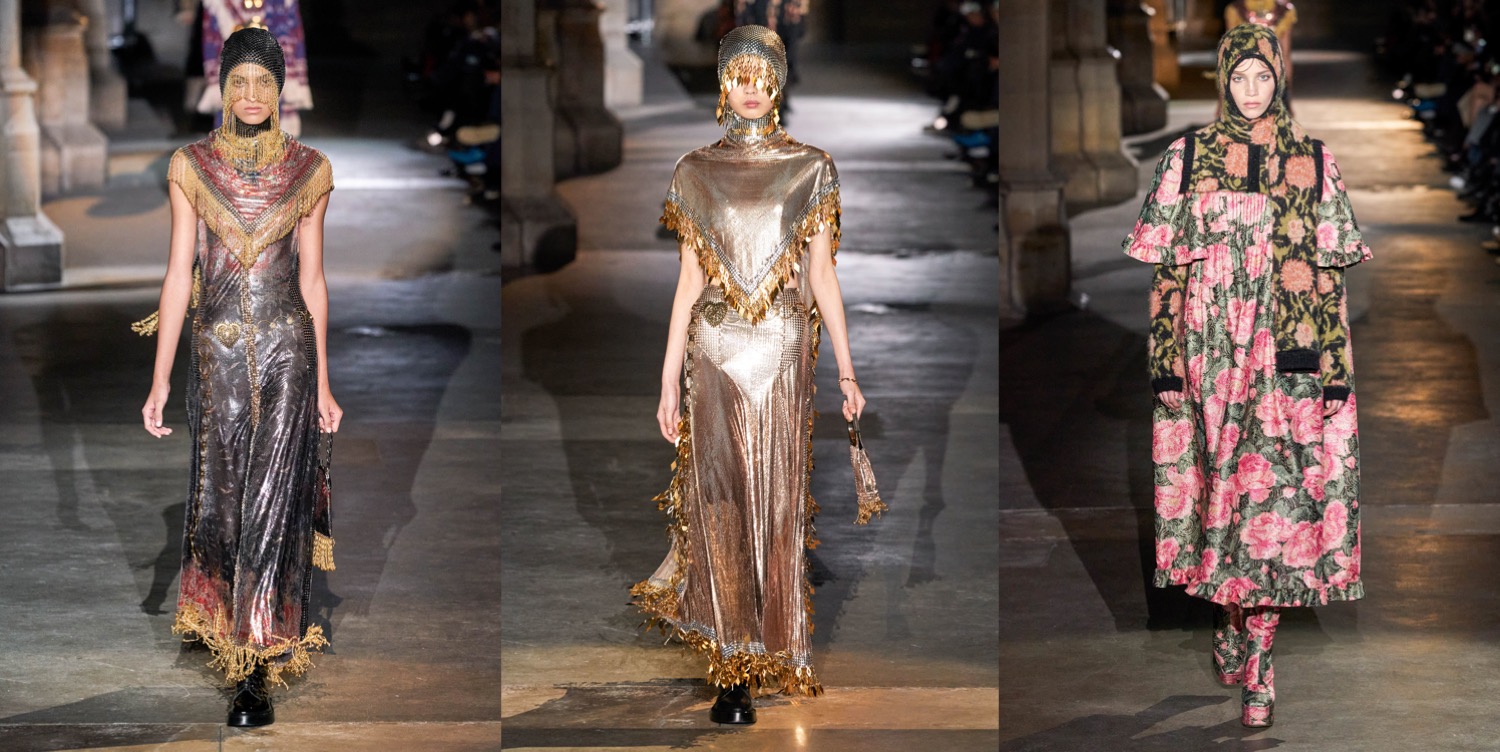
Paco Rabanne is the industry’s – and specifically, the buyers’ – current obsession in Paris. And one thing is for sure: Julien Dossena‘s collections aren’t intentionally commercial. But somehow, his ultra-light chain-mail dresses and accessories sell like hot buns. For some time now, Dossena has been exploring ways to extend the 1960s space-age limits that the house of Paco Rabanne is associated with. His own tastes have traveled, to much critical acclaim, toward a look that modernizes a glamour appropriated from the 1970s. But for autumn-winter 2020, there was something deeper and more subversive going on: a placing of the symbolism of spiritual-religious garb – allusions to clerical robes, monklike habits, and Joan of Arc armor – firmly within the female domain. “I don’t want to say that they’re a cult, exactly,” he said. “I’m not a believer at all, but I’m interested in how thinking about something that’s beyond still drives everyone, even in the age of technology.” The show was presented in an underground chamber of the Conciergerie (the place where Marie Antoinette once languished as a prisoner of the French Revolution, before she was hauled off to be guillotined), a perfect location for the mystical, magical procession of mysterious female priests. Hoods and ruffs, capes and slender maxi-coats, voluminous brocade dresses and fragile lace and flower embroideries – it all made so much sense. Dossena has the rare talent of reworking the symbolism and craft of the past in order to take them into the future.

Collage by Edward Kanarecki.