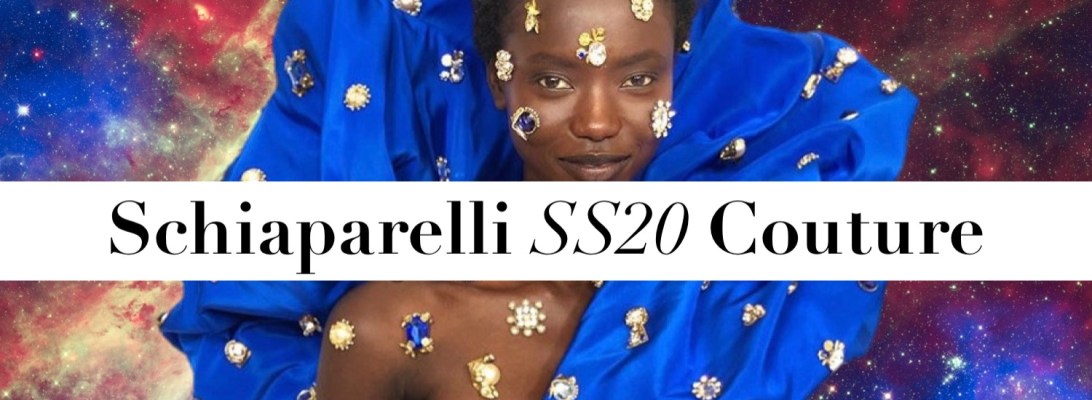
Sublime. Schiaparelli Couture SS20

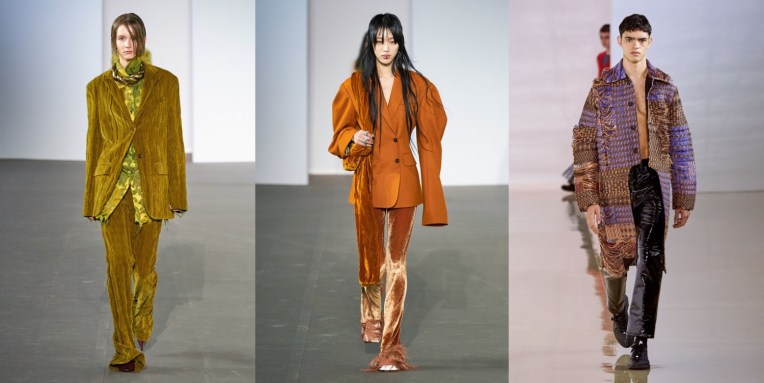
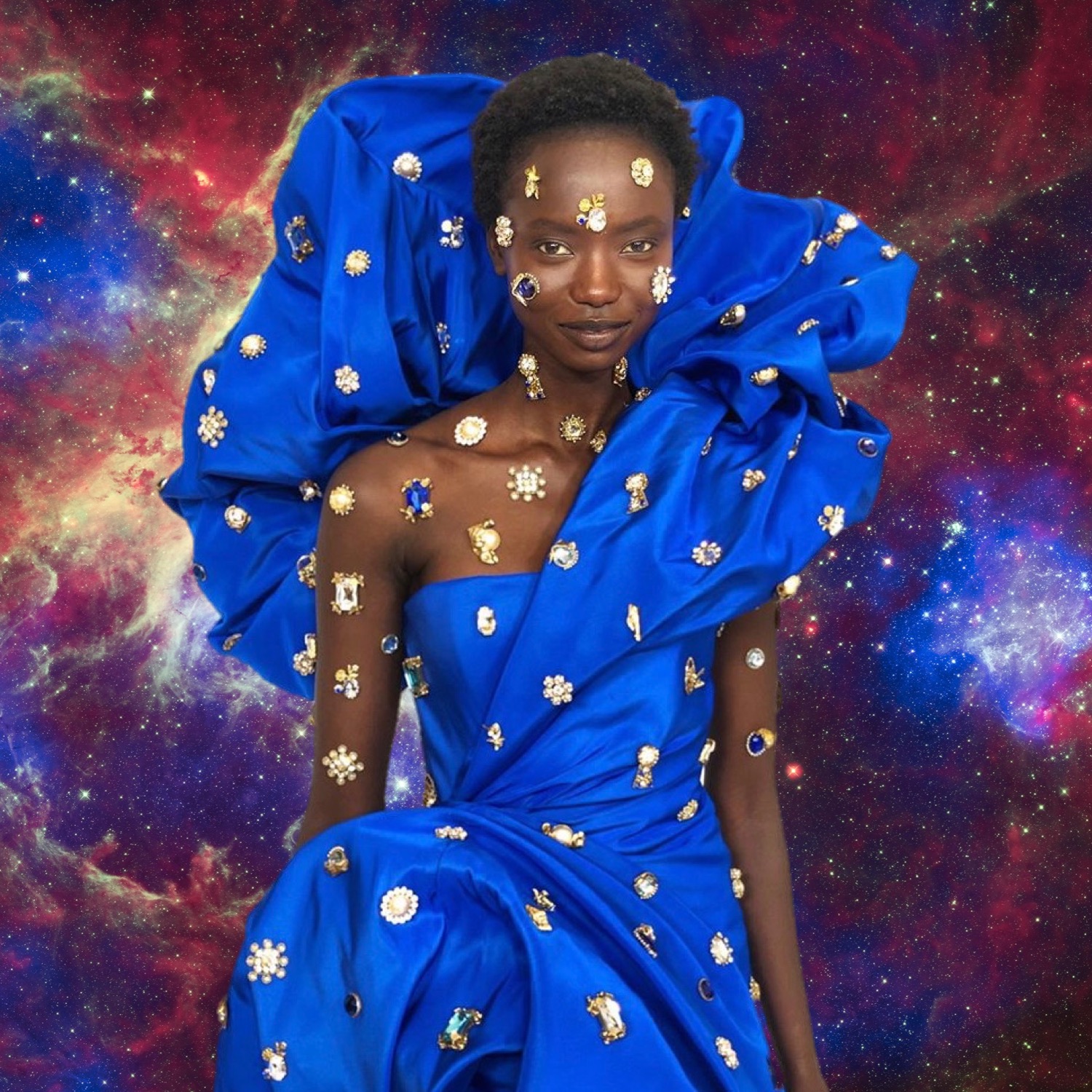
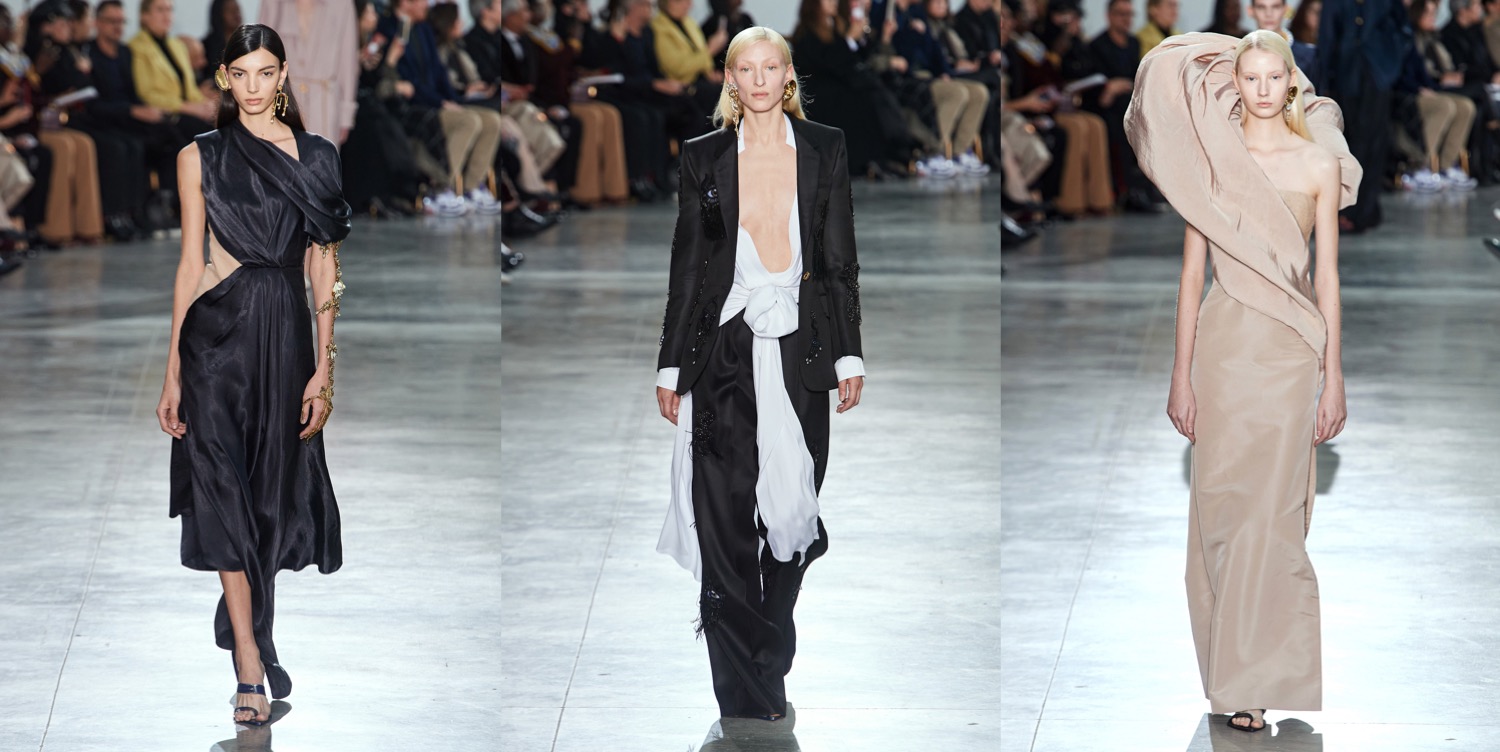
Comparing to his chaotic debut collection last June, Daniel Roseberry‘s take on Schiaparelli for spring-summer 2020 is sublime. S-U-B-L-I-M-E. For this couture line-up, the American designer decided to focus on the “double fantasy” of Elsa Schiaparelli’s style. He began planning the collection by looking at images of Elsa at work in her studio dressed in her inventive, but pragmatic daytime outfits. These he contrasted with “the incredible Surrealist parties that she used to throw – this idea of the woman who dresses for herself during the day but then there’s this duality at night where it becomes performative. I became obsessed with the contradictory personality, the introvert-extrovert idea,” he continued, “trying to embrace those two different extremes and remove all the middle, and do something that feels uniquely Schiap and personal.” Roseberry also looked at the designer’s 1930s friends and collaborators, including the minimalist Deco Moderne furniture and interior designer Jean-Michel Frank (for a daytime palette of cerused oak and parchment that he mixed with navy and cigar brown) and Alberto Giacometti (for the skeletal jewels and rhinestone “bone” embellishments that also referenced Schiaparelli’s own shocking padded jersey skeleton evening dress of 1938). Roseberry has had the opportunity to focus on tailoring (always important in Schiaparelli’s own work) and the collection opened with some stylish options for the couture client who actually works. The “psycho chic” day clothes, as Roseberry described them, morphed into evening pieces that evoked Schiap’s dreams (dreams that his program notes explained “were active, propulsive, exuberant, extravagant, rebellious, ambitious”) and nodded to Yves Saint Laurent and Christian Lacroix’s ’80s and ’90s couture work in striking ultramarine, scarlet, viridian, and of course the brand’s own shocking pink. Schiaparelli is finally back on its track. Roseberry is a wonder.
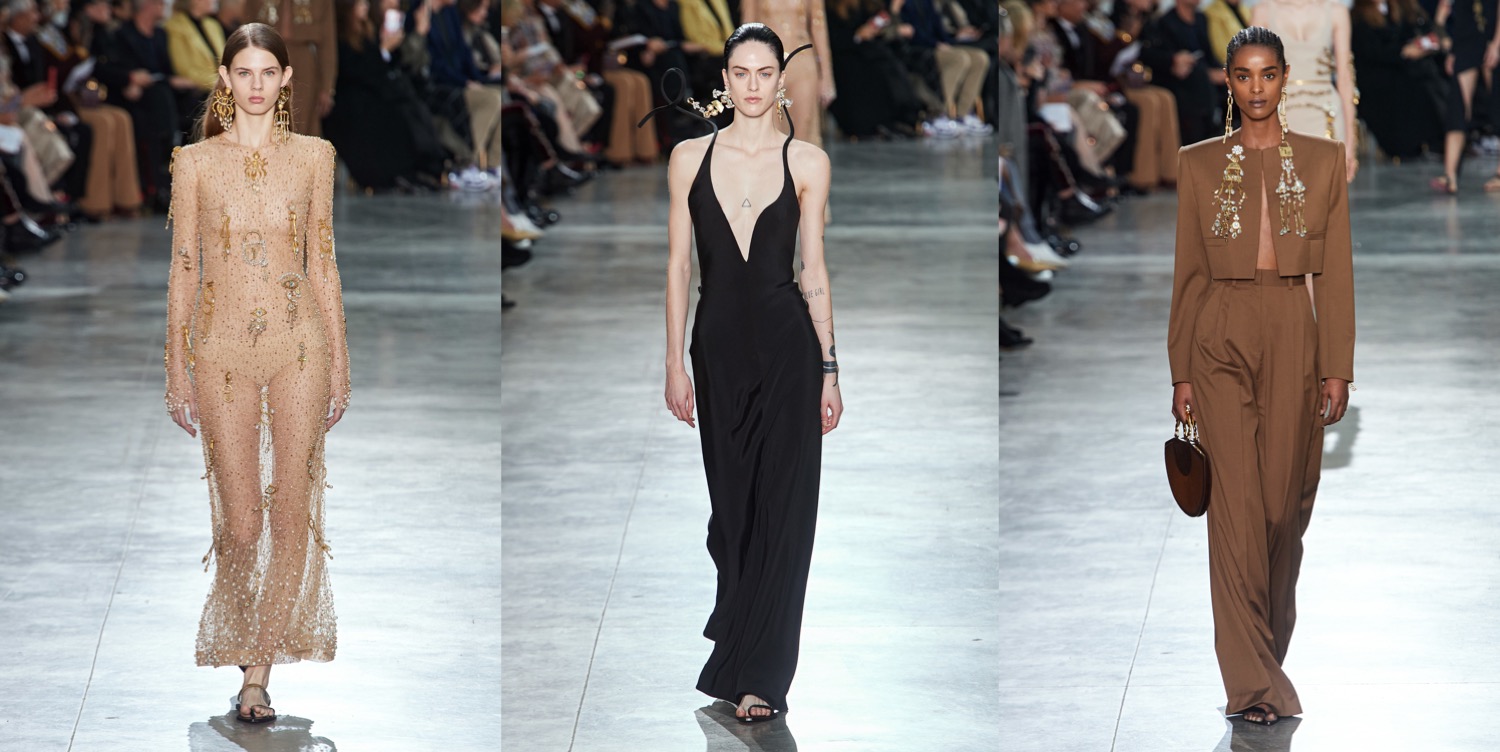
Collage by Edward Kanarecki.
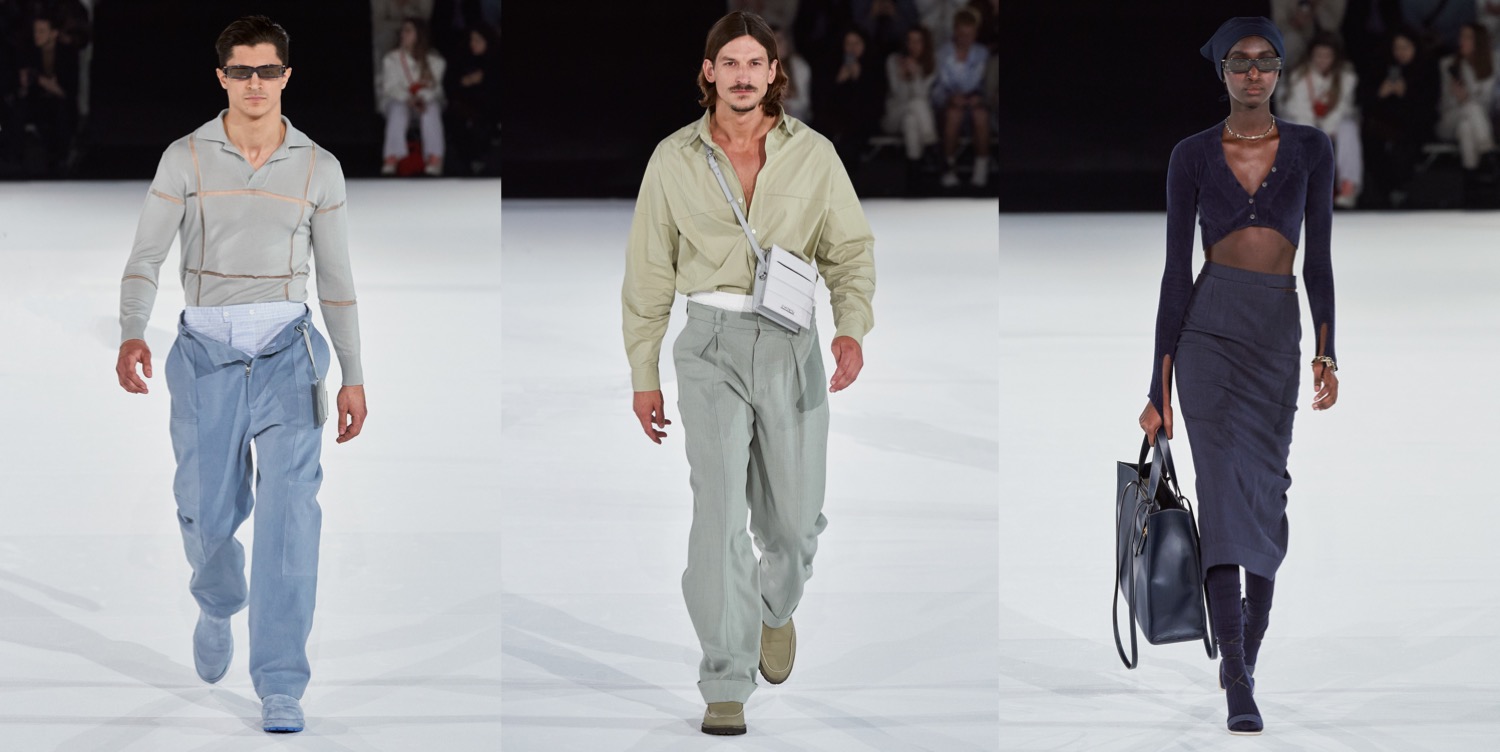
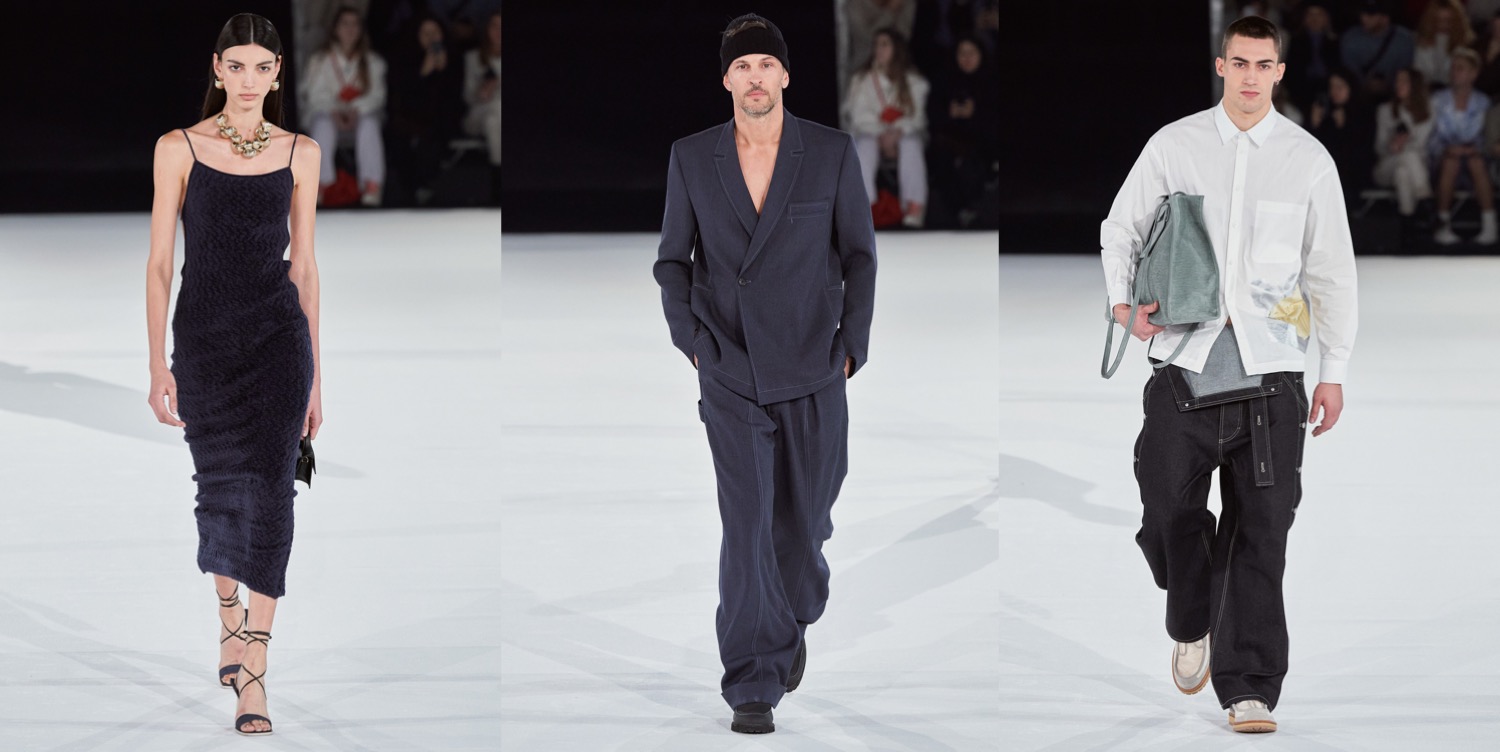
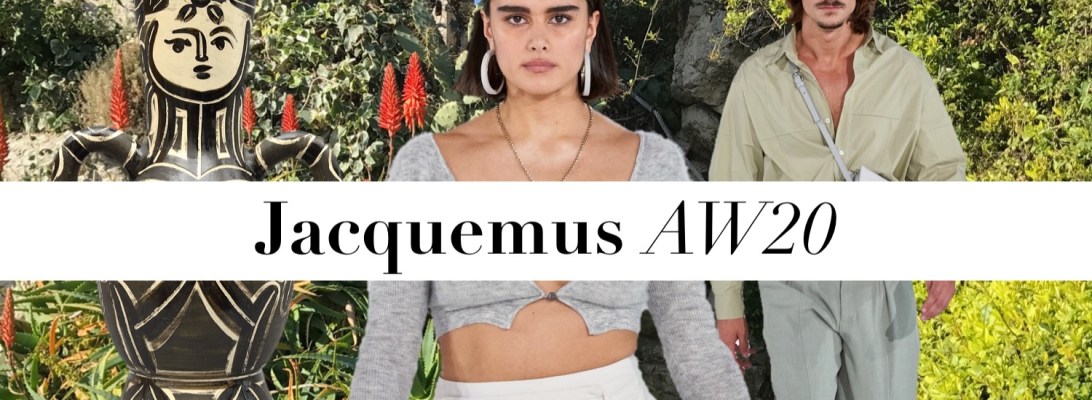
L’Année 97. Jacquemus AW20

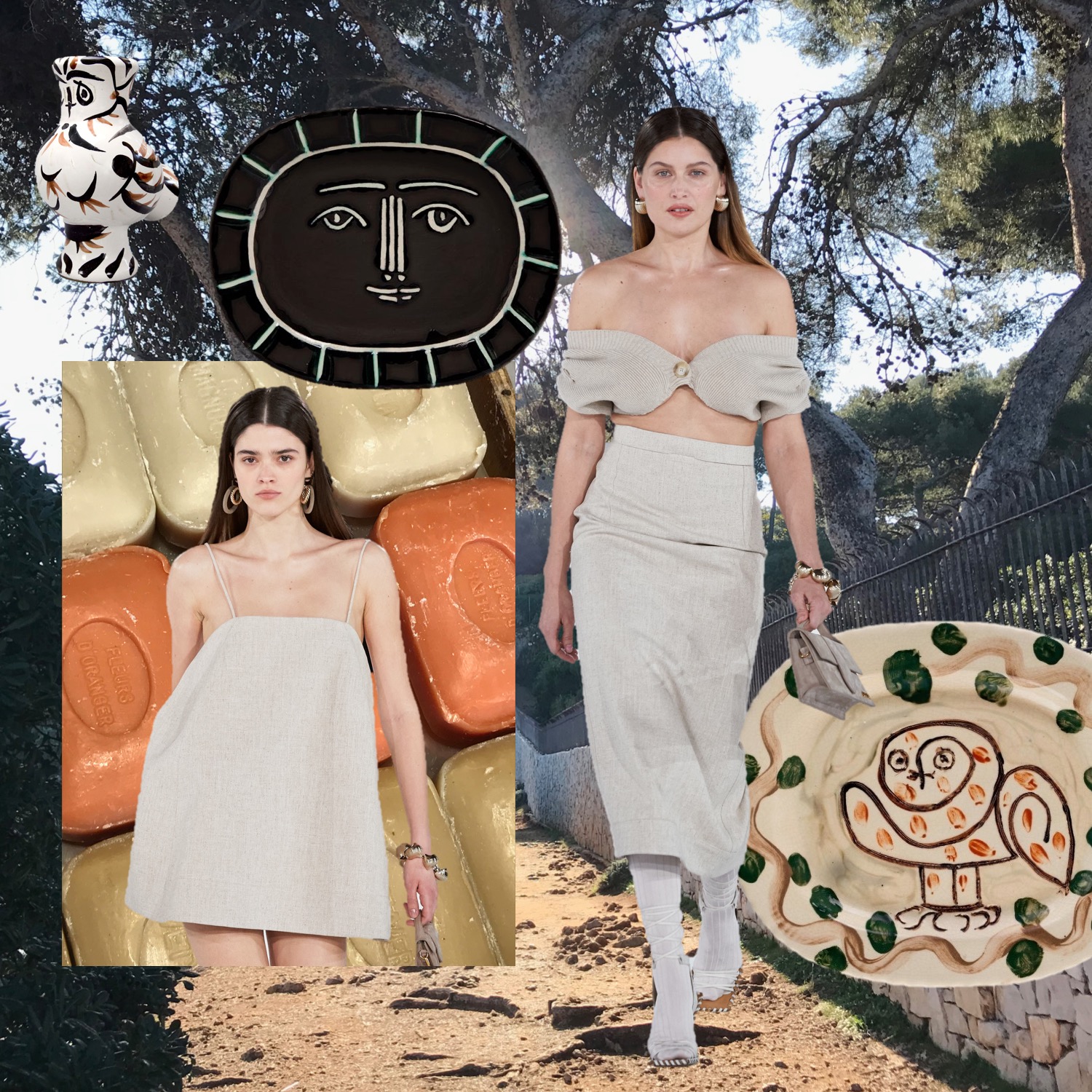
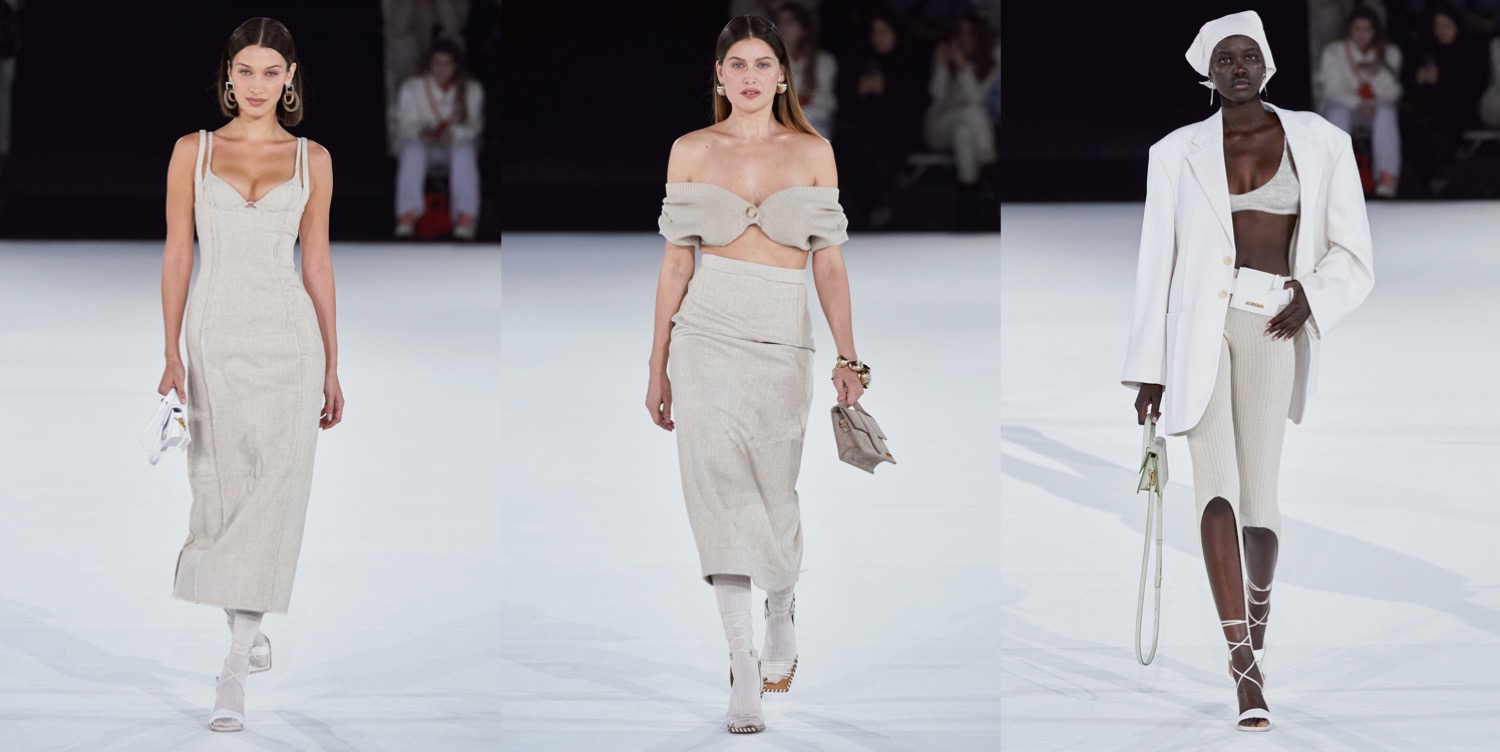
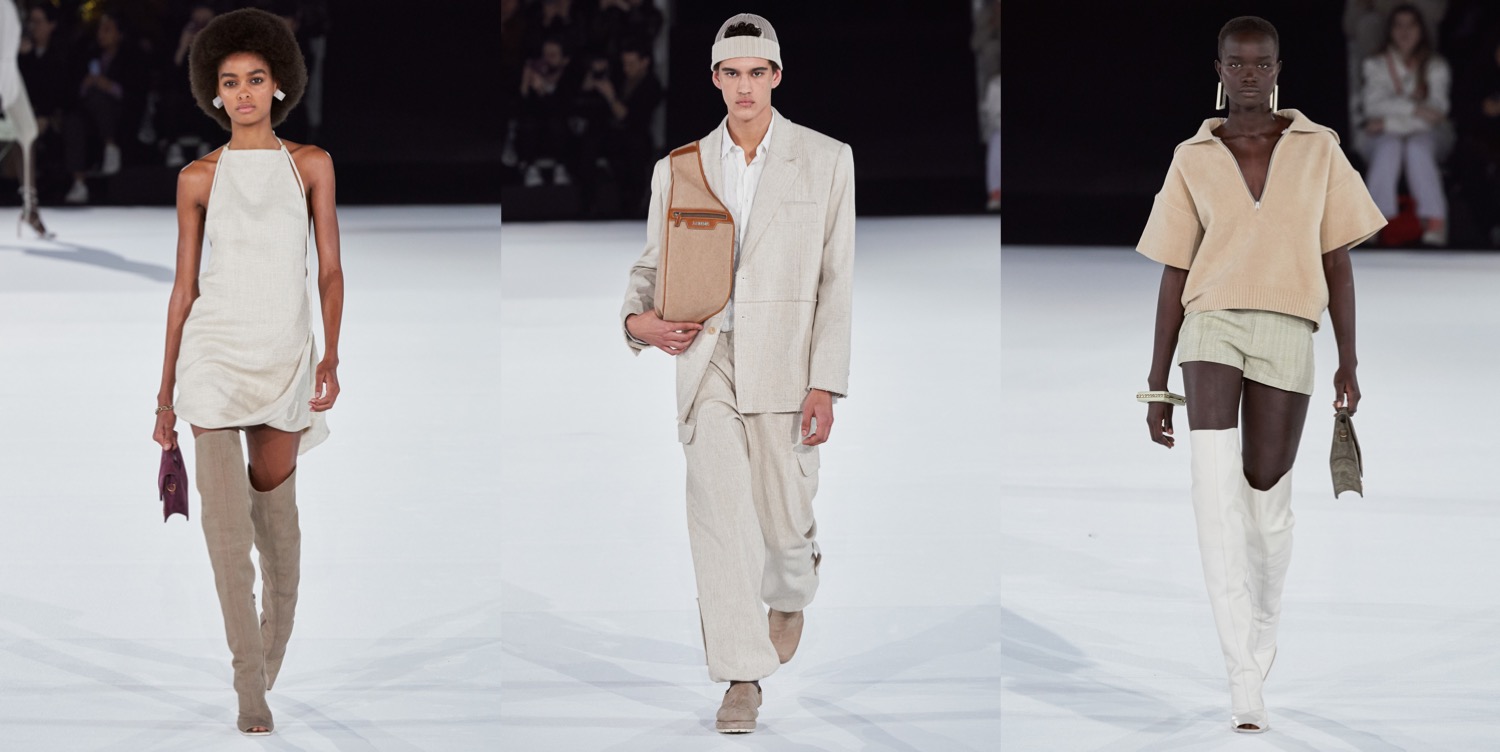
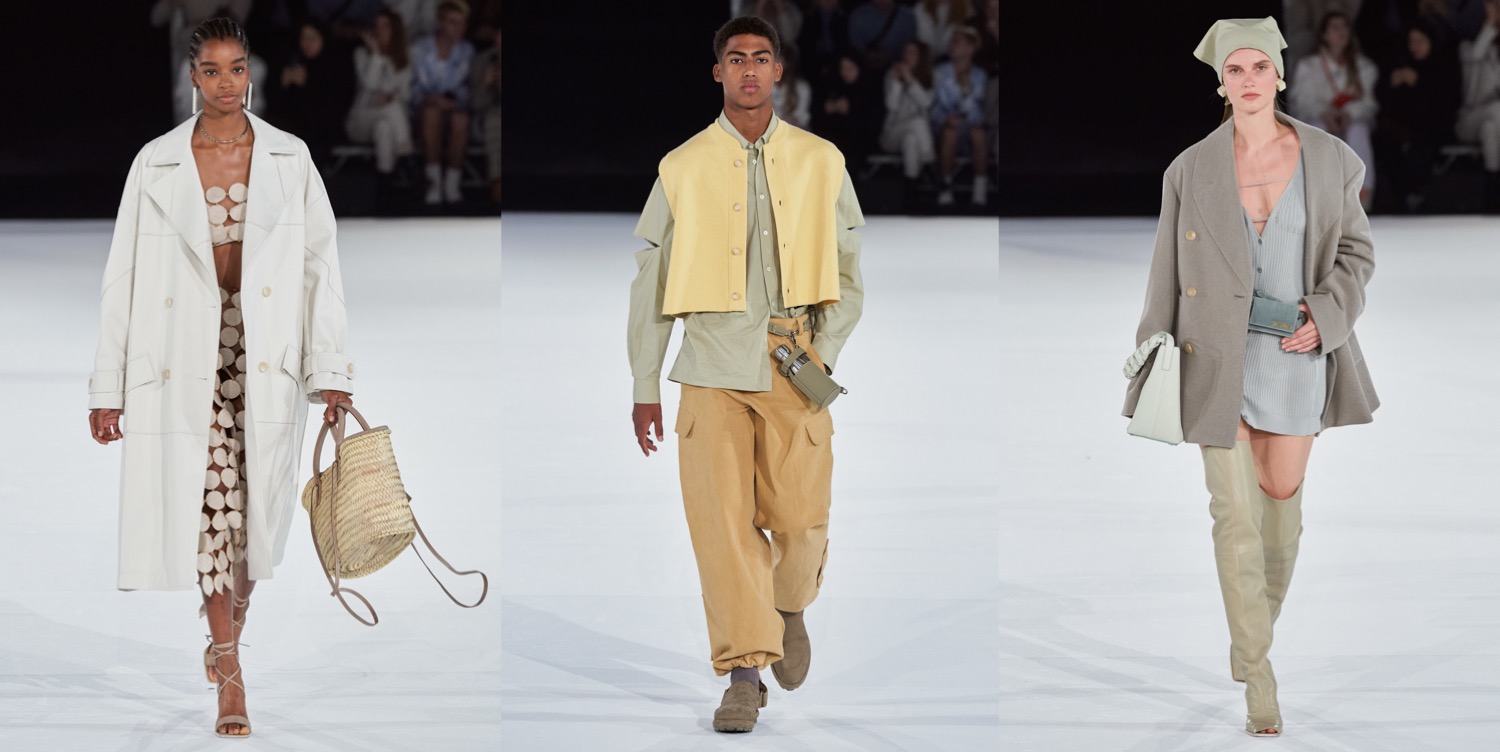
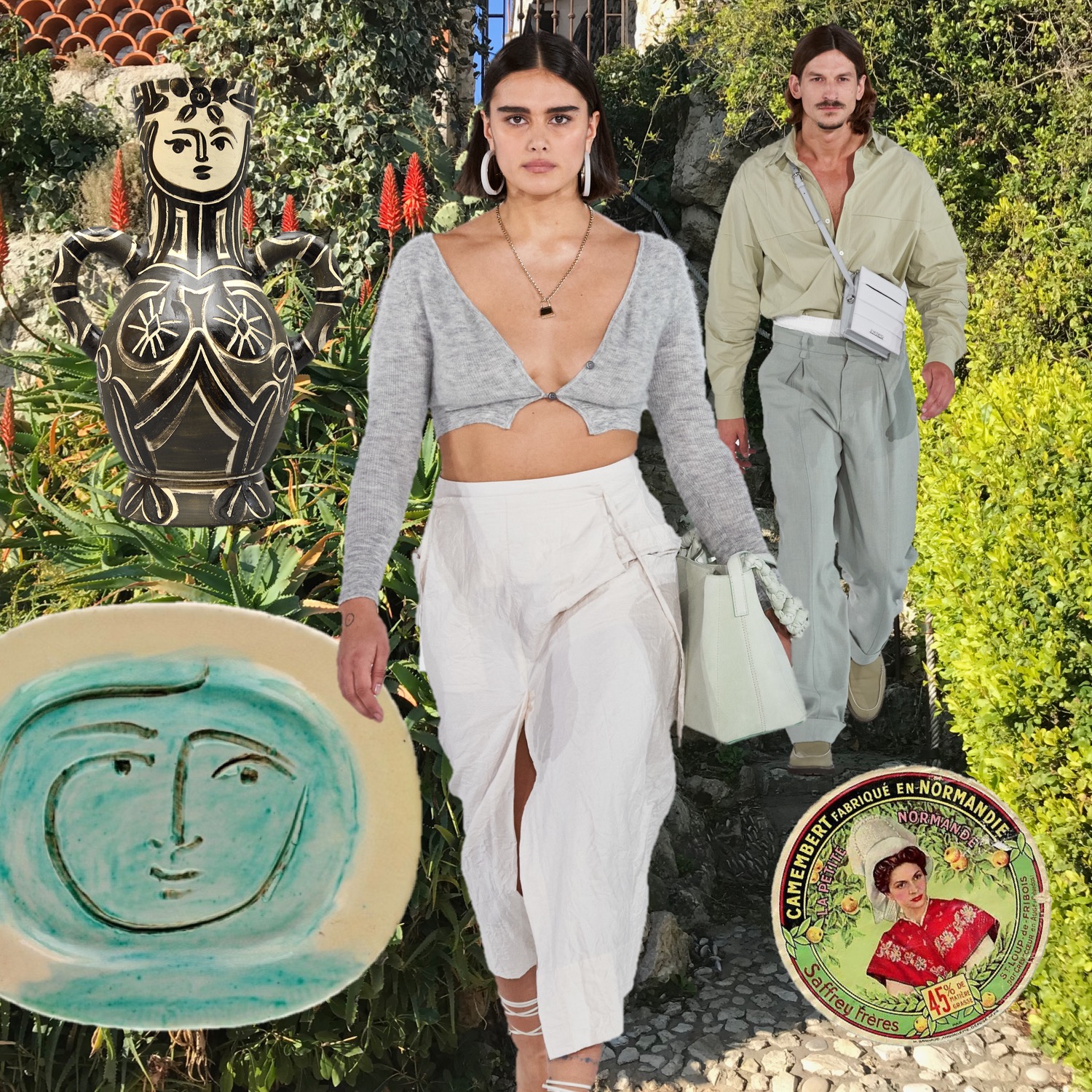
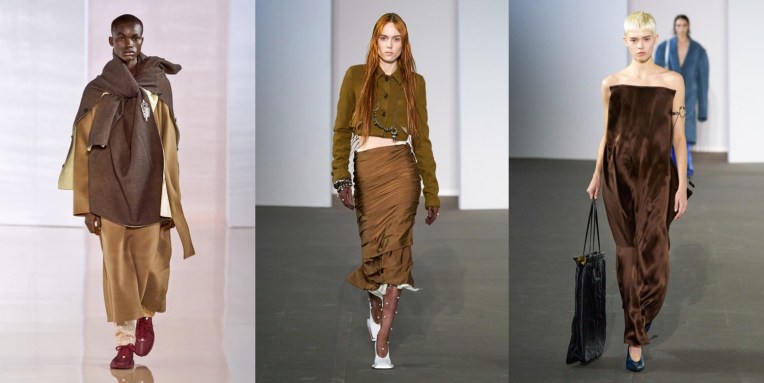
Last season‘s Provençal dream is hard to beat. So, in a way, Simon Porte Jacquemus didn’t intend to make his autumn-winter 2020 even more extraordinary and Instagrammable. Not meaning it was modest or small – showing at La Defense stadium with Laetitia Casta, the Hadids and a pack of supermodels isn’t really a quiet gesture. But design-wise, Jacquemus returned to the core of his style: it’s sleeker, cleaner, less quirky, toned (except for the brief splash of bold pink). And incredibly sexy (without being vulgar): the body-conscious fit, cropped cardigans, wrapped micro-skirts, thigh-high boots are just some of the “hot” piece. Guys followed girls in pants, which appeared to have their flies open (a trompe l’oeil). There were oversized blazers and roomy coats for both women and men, creating a sense of concealed sensuality. While we all got used to Jacquemus’ sun-drenched, French flavor, it’s good to see designers go out of their (already succesful) comfort zones. The backstory behind the collection was as personal and profound as it could be: “I was seven when I made a skirt out of a curtain for my mother, and she brought me to school wearing it.” The linen pencil skirt, which opened the show on Casta, was a personal memento of that, and the reason the fabric was an anchor for the collection. But business-wise, Porte Jacquemus realized that he could use his buying power to change things with his fabric manufacturer. “We’ve been working with them for 10 years, but they didn’t have a sustainable fabric that we wanted. Now, they do – because of the size of the order I can make. But you know,” he said with a smile, “what I want to say is, it isn’t just for ecology, it’s also people—their rhythm of work also has to have sense. I don’t say I’m a green brand or anything like that; it’s not marketing. But I think we have to think more like my grandparents did: like, we have tomatoes in the garden, so we eat tomatoes.” Wise words for the industry to consider.

Collage by Edward Kanarecki.
Old And New. Acne Studios AW20

Slajd2-kopia 3

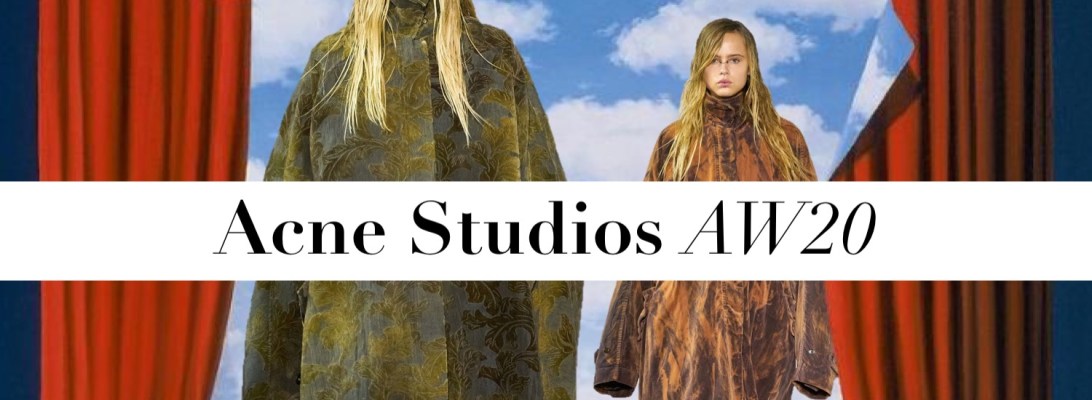
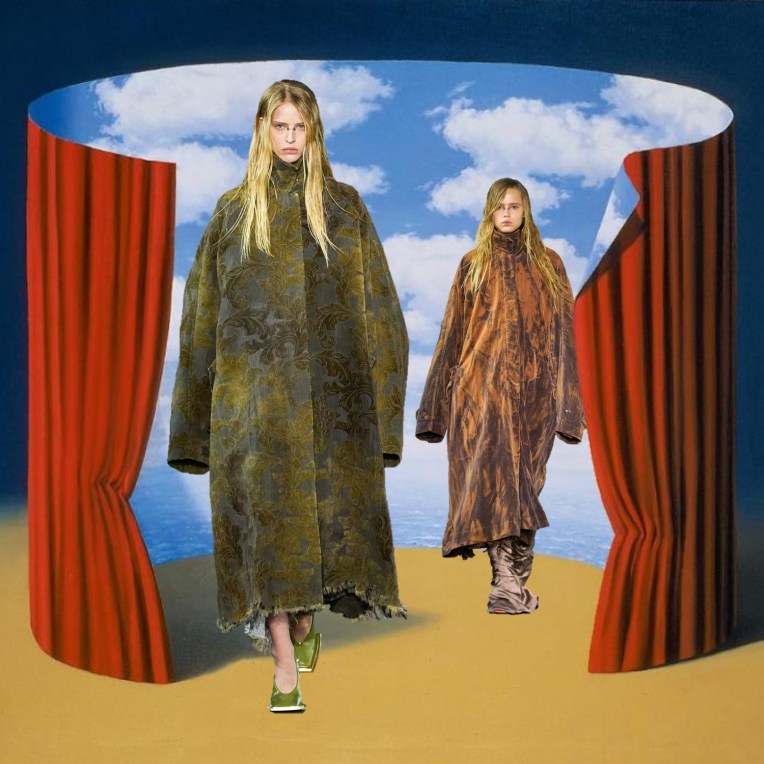
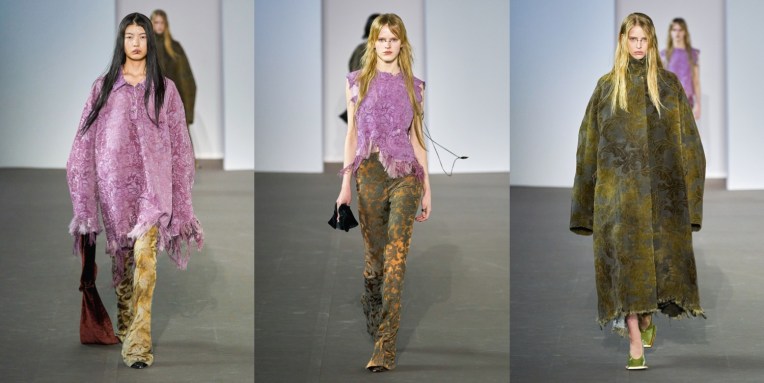
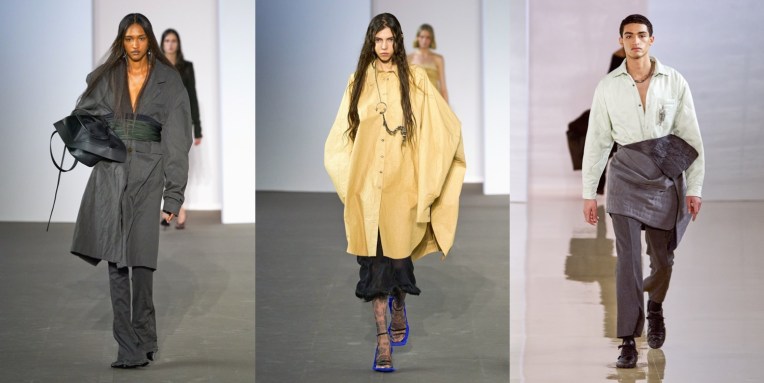
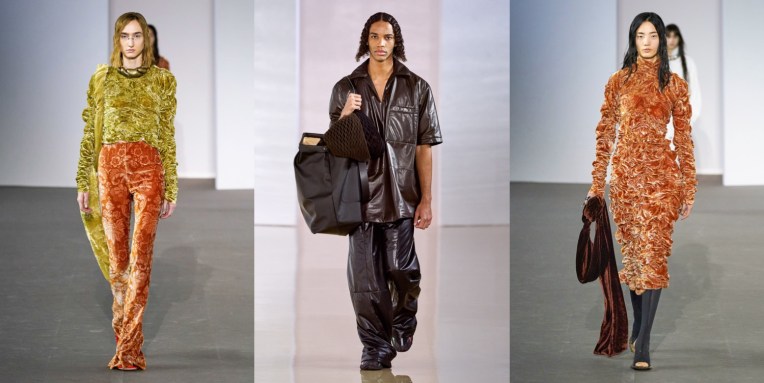
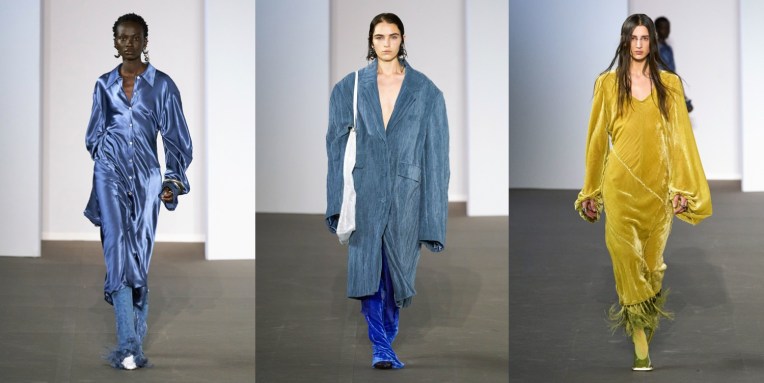
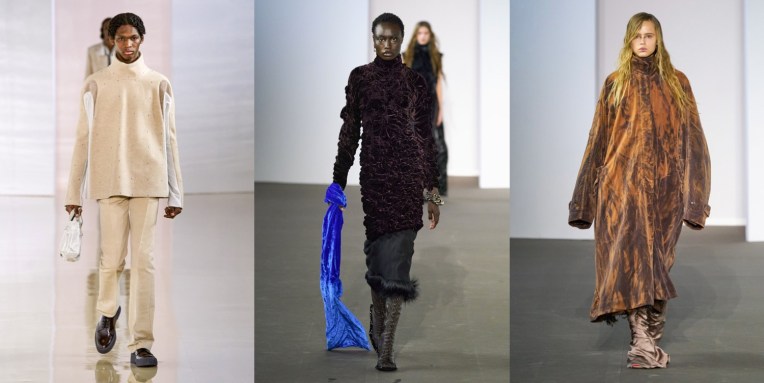
You wouldn’t know it from these photos, but the Acne Studios women’s and men’s collections took place together. Meaning, at the same time, in the same venue, with the same music. But instead of being shown together, they had been consciously uncoupled – separated by a featureless white wall running the length of the runway. Jonny Johansson, the label’s designer, explained that the men’s direction would be “forward” while the women’s direction would look back. More specifically, AI and algorithms contributed to the men’s designs, whereas Old Masters artworks and ornamental fabrics formed the basis of the women’s show. Beautiful jacquards, brocades, and velvets that might have otherwise been used for upholstery, theater curtains, or a mondaine’s corset were transformed into dramatic dress coats, cocoon-shaped tunics, and sumptuous suiting with edges frayed and tasseled to varying degrees of decadent distress. A series of twisted tailored looks, including a leather coat painted with a faded scene of classical nudes, reiterated a certain unhinged, arty attitude that comes so naturally to Acne Studios. A body-contoured dress enhanced with a burnout treatment that traced the acanthus pattern was gorgeous. The womenswear was, summing up, beautiful and really, really covetable. On the other side of the wall, thinks weren’t looking this great. The menswear was created in collaboration with a “generative artist” named Robbie Barrat, who writes algorithms to realize his projects. All Acne archives were filtered through Barrat’s algorithms to enable an AI-authored menswear collection. Definitely, a human hand had its part in the collection. However, the tech-authored designs looked clumsy and… overcomplicated? This time, the old way wins.

Slajd06Slajd07Slajd11Slajd08Slajd12Slajd09Slajd13Slajd10Slajd14

Collage by Edward Kanarecki.