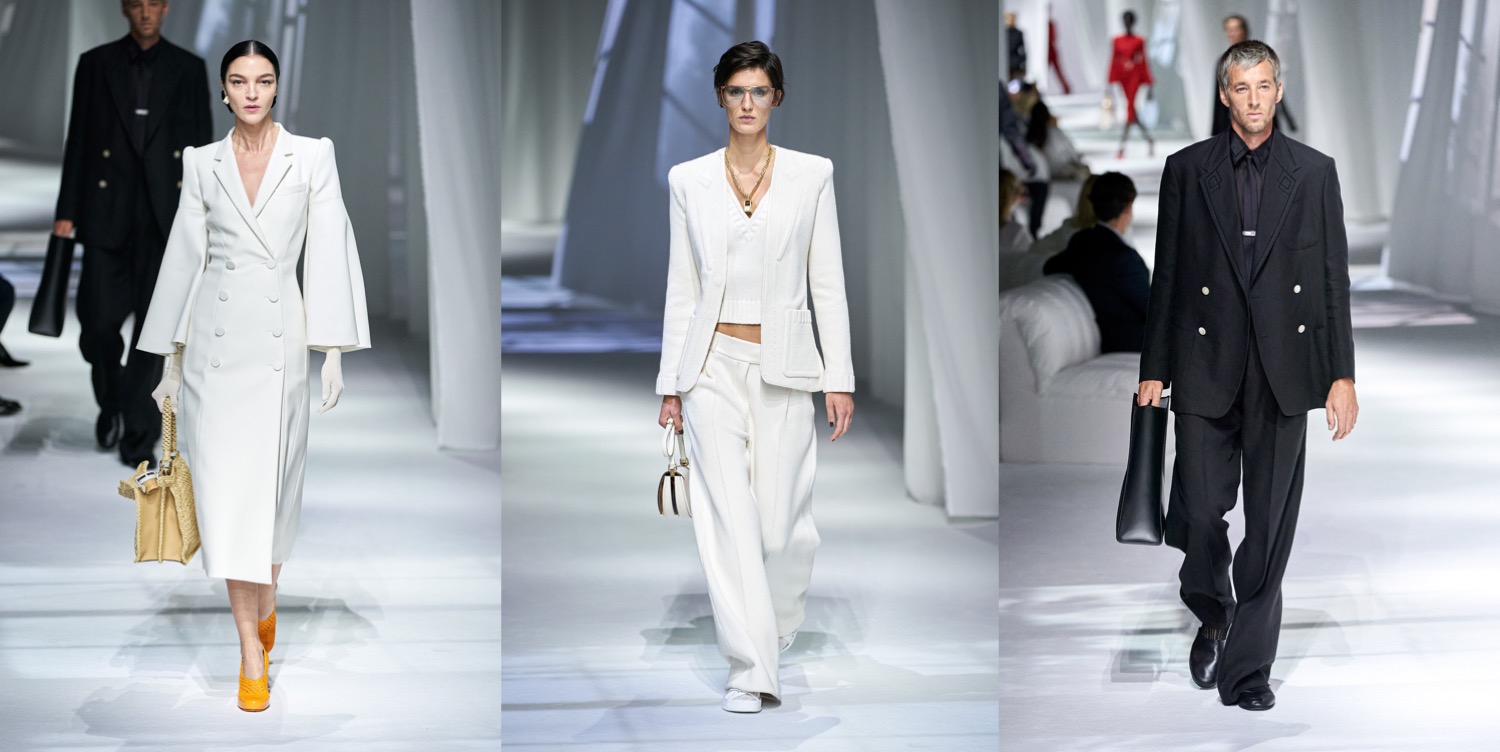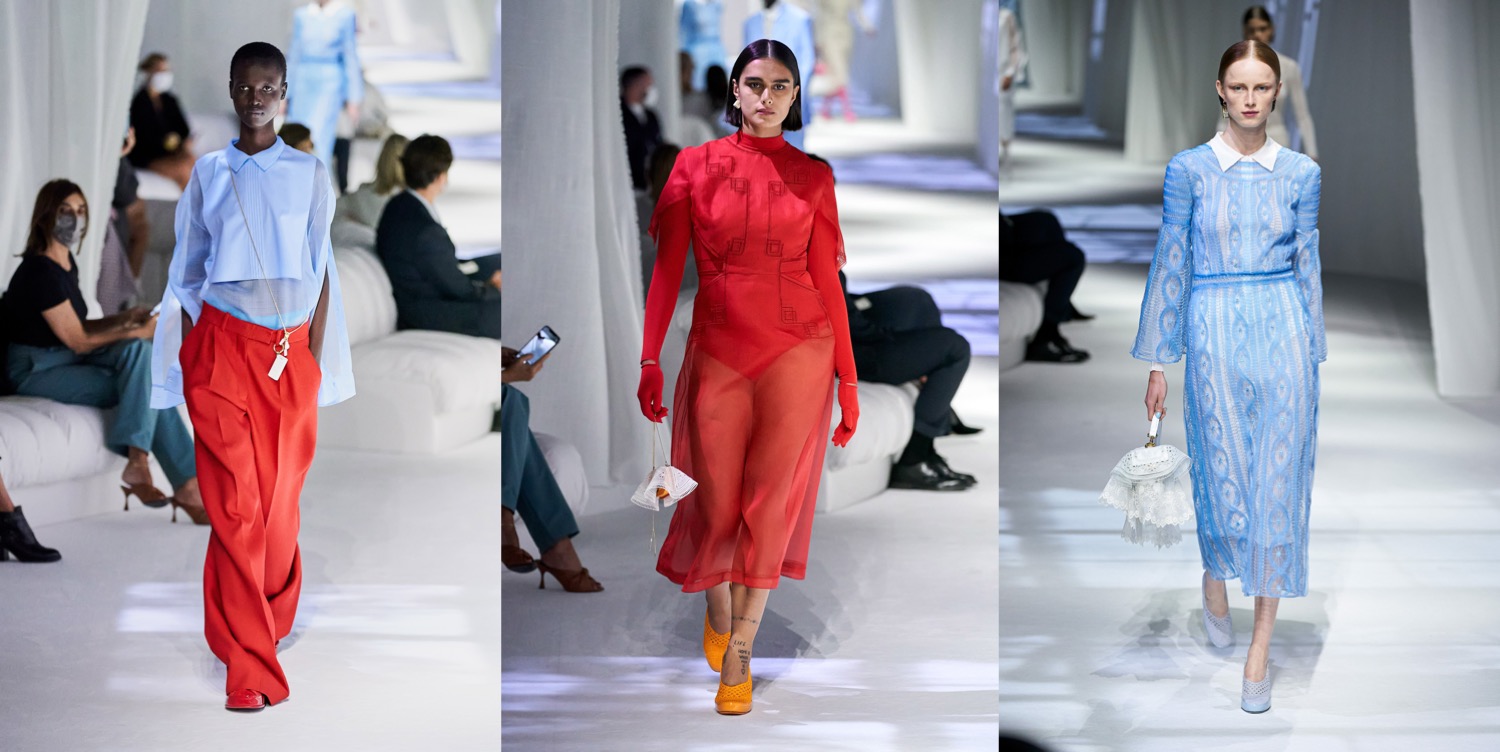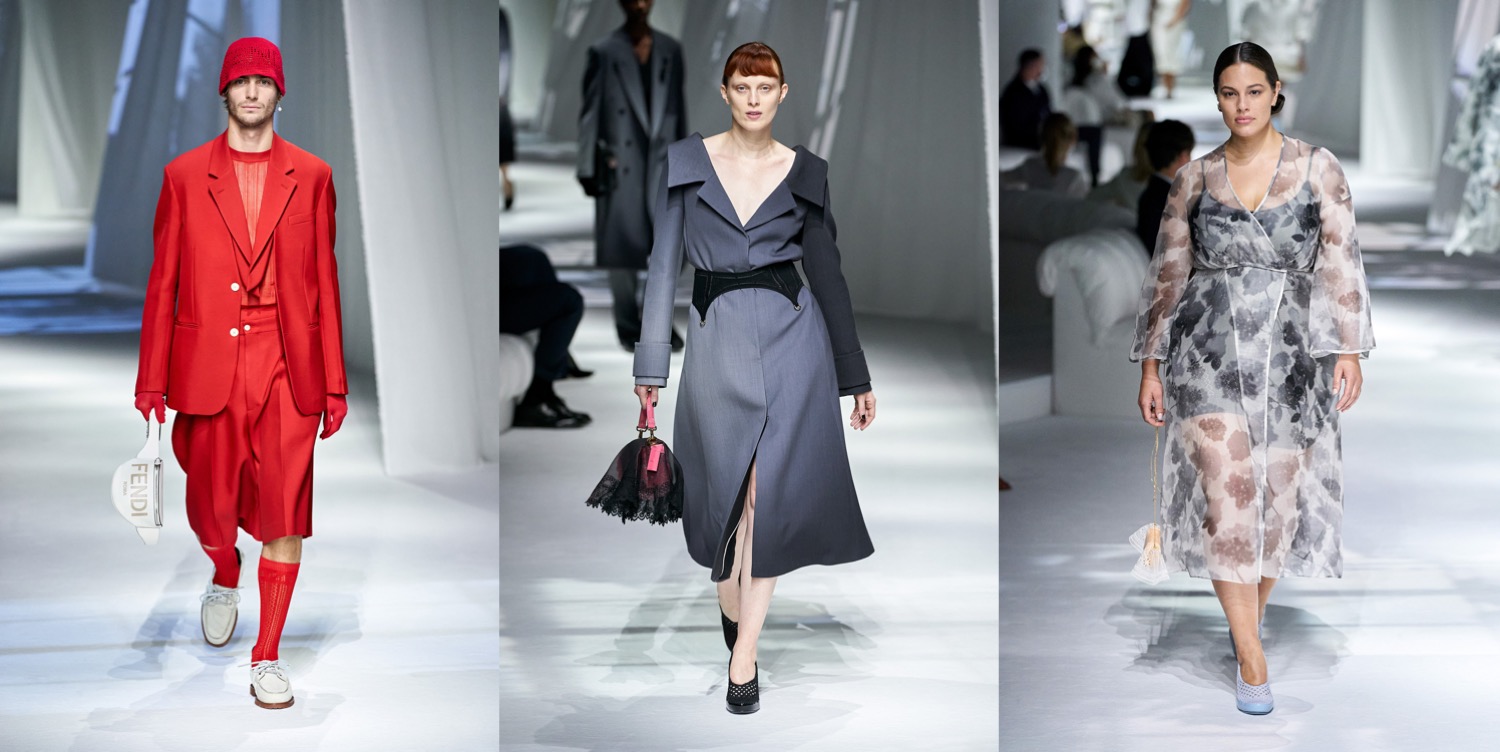
Aquatic Wonderland. Versace SS21

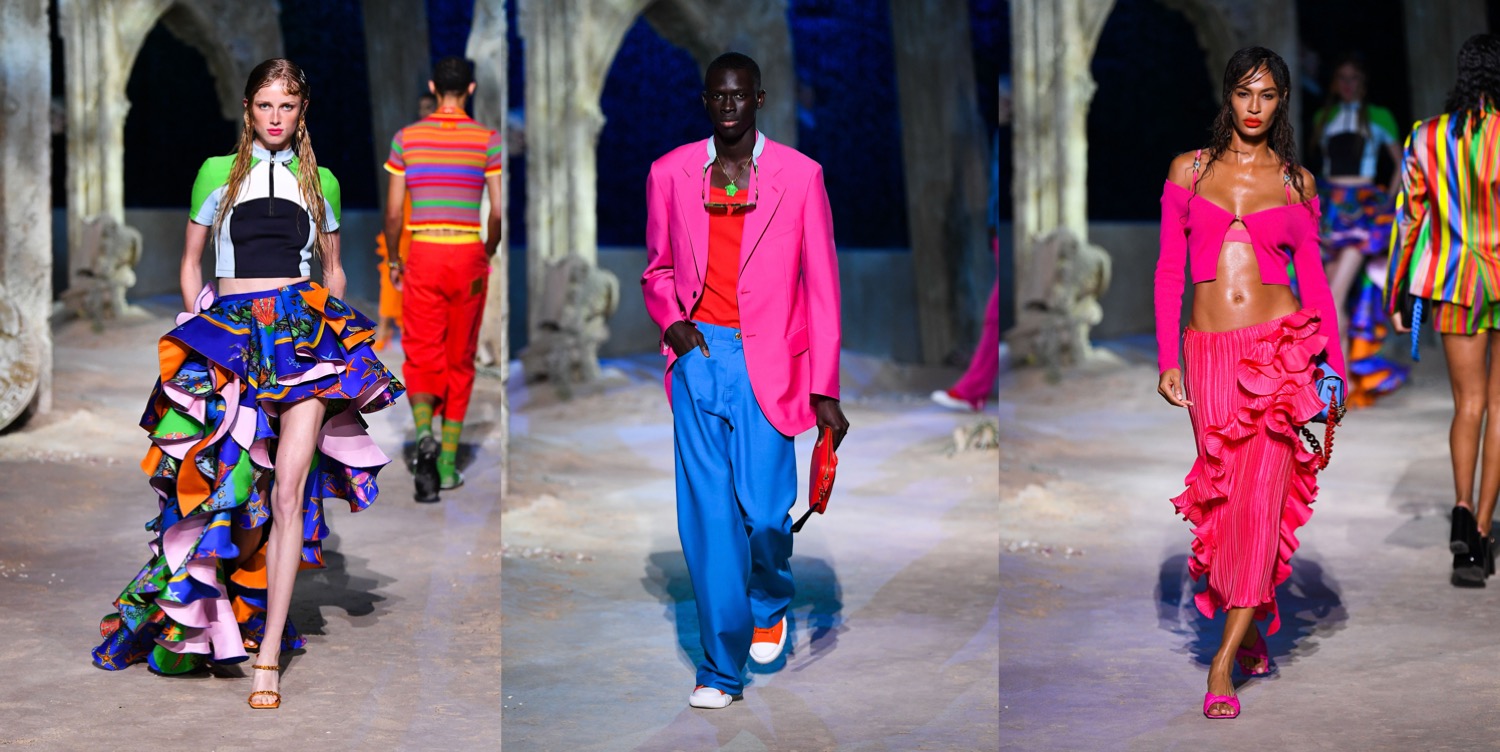
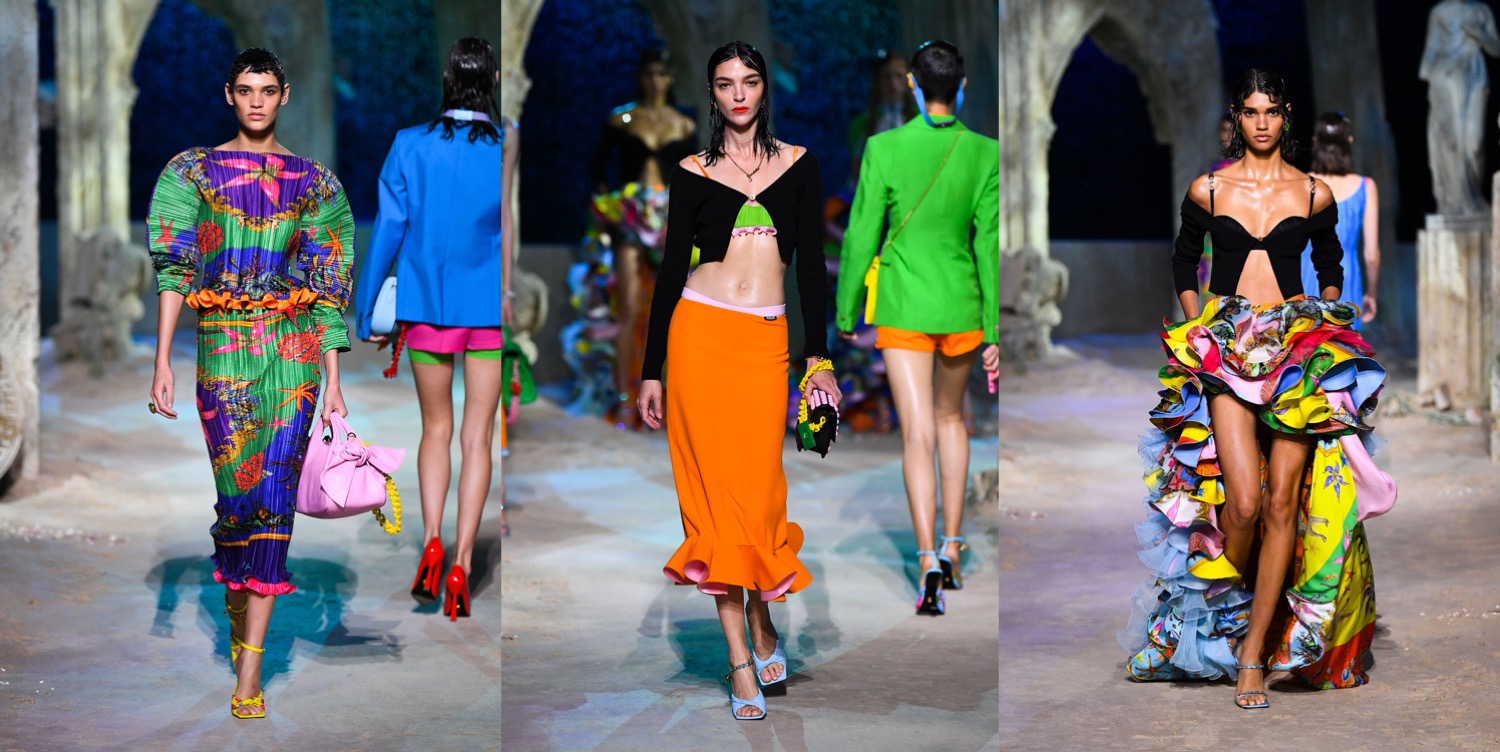
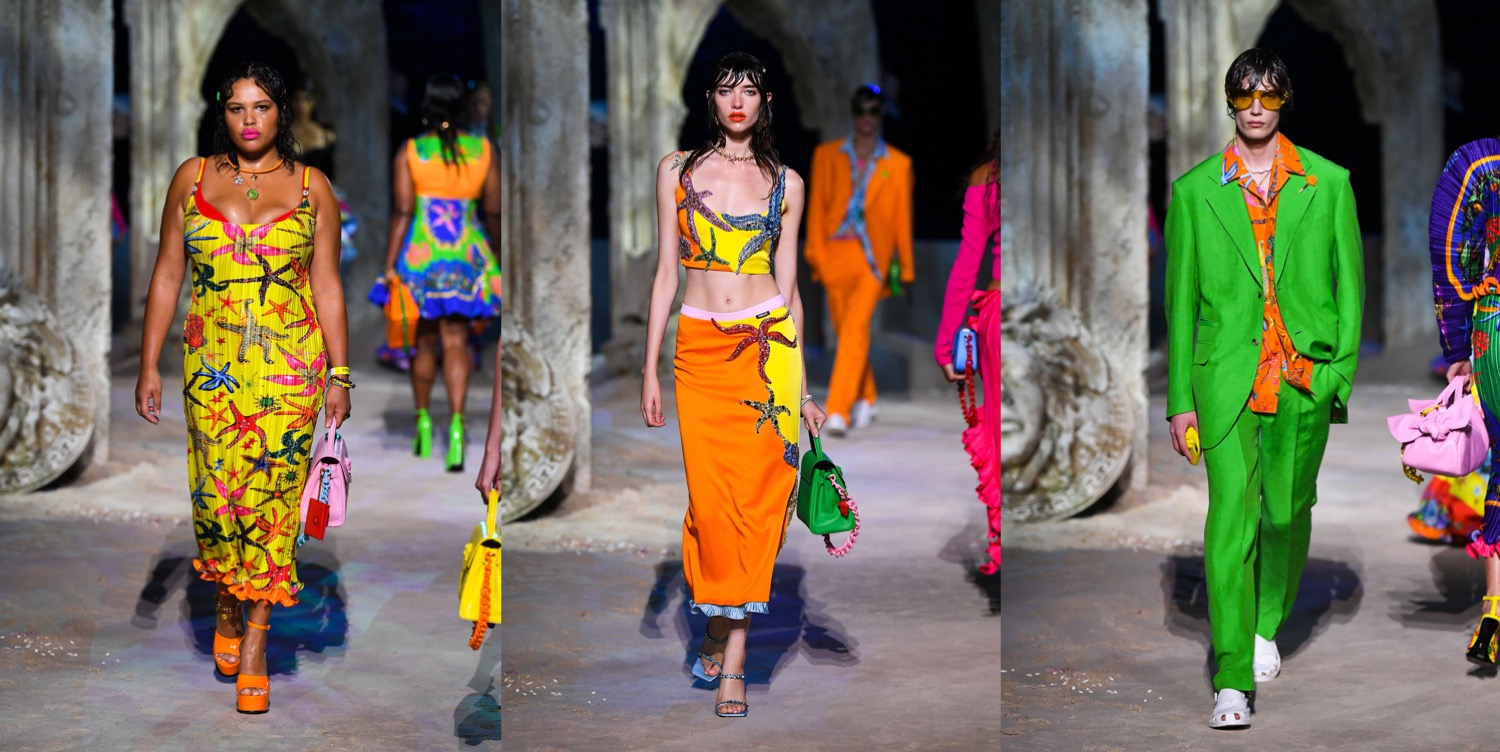
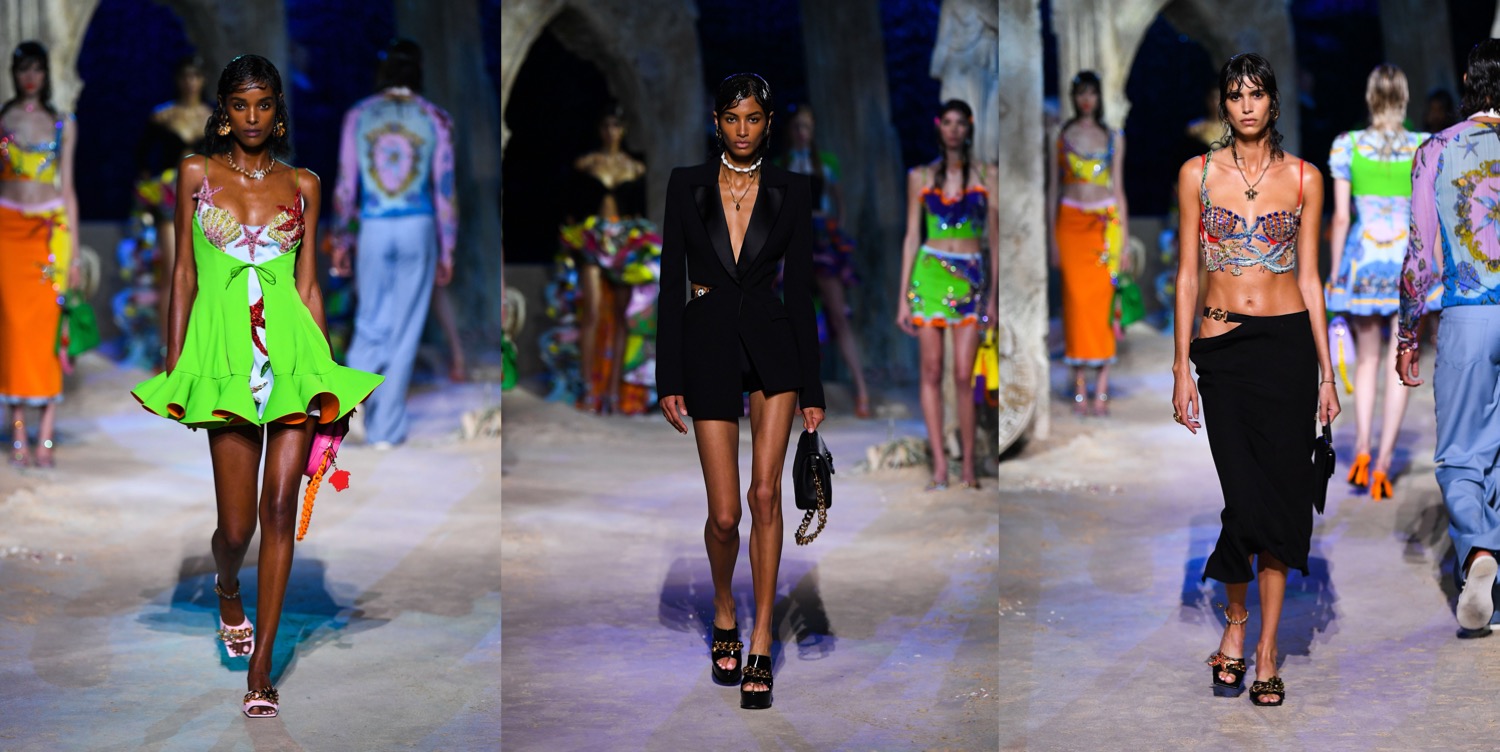
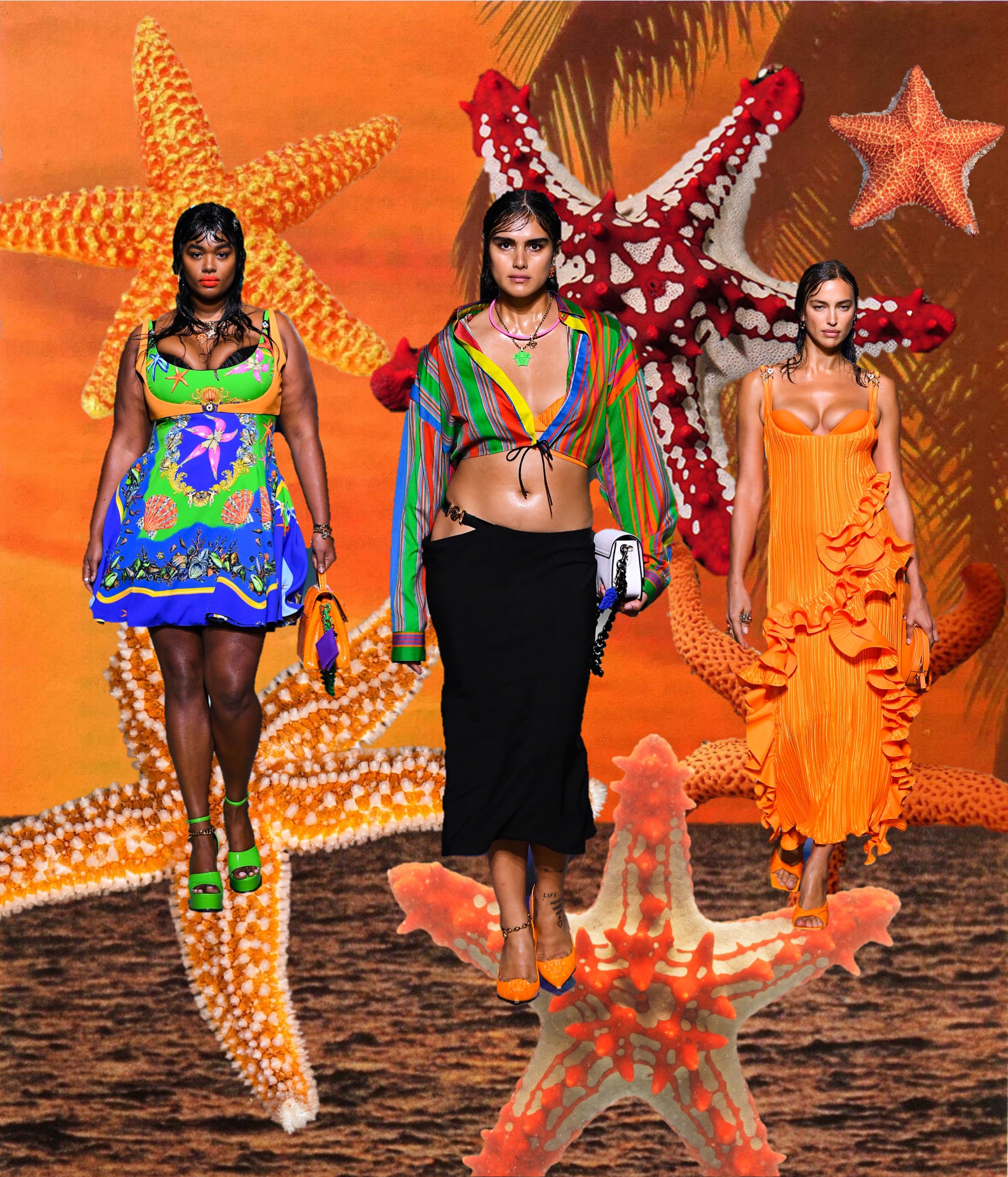
As we are somewhere in the middle of the fashion month, two camps of designers can be noticed: the ones that take the realistic, pragmatic approach, and the ones that prefer escapism in midst of a crisis. Donatella Versace is in the latter group, as she takes us to her aquatic wonderland for spring-summer 2021. The Versace line-up was really good this season (and you know I’m not the biggest fan of the brand), but it was the model casting that truly stole the spotlight. Seeing the gorgeous, body-positive models – Jill Kortleve, Precious Lee and Alva Clair – in the Versace fantasy-land was a inclusivity moment that sadly isn’t a usual sight in Milan (except for Fendi and Marni, which invite different models to their fashion shows for a couple of seasons now). Hopefully, Donatella will keep it up. What about the clothes? In the imagined ruins of Atlantis and water currents streaming down its projected walls. Versace goddesses and gods wore starfish, coral, and seashell motifs from Gianni Versace’s ‘trésors de la mer’ collection for spring-summer 1992. They were ready to take on a new reality like the Rebirth of Venus herself (starring Adut Akech in the title role, of course). Versace, who described the collection as having “an upbeat soul,” said her challenge was to give fashion meaning in a historical moment like this. “I wanted to do something disruptive and to break the rules because I think that, what worked a few months ago, does not make any sense today. Creatively, that meant finding a way to bring the DNA of Versace to a new reality and to people who have undergone a deep change.” Clothes-wise, it’s a fun, high summer venture: it was, on the women’s as well as the men’s side, high-octane sporty cocktail-wear for an optimistic future. In all its sea-centric detailing, it also had its moments of ingenuity: micro-pleated dresses trimmed with twirly ruffles, which bounced like jellyfish in the waves walking down the runway; crazy cascading skirts layered like the lips of shells; and a bag constructed like a big fortune cookie.

Collage by Edward Kanarecki.
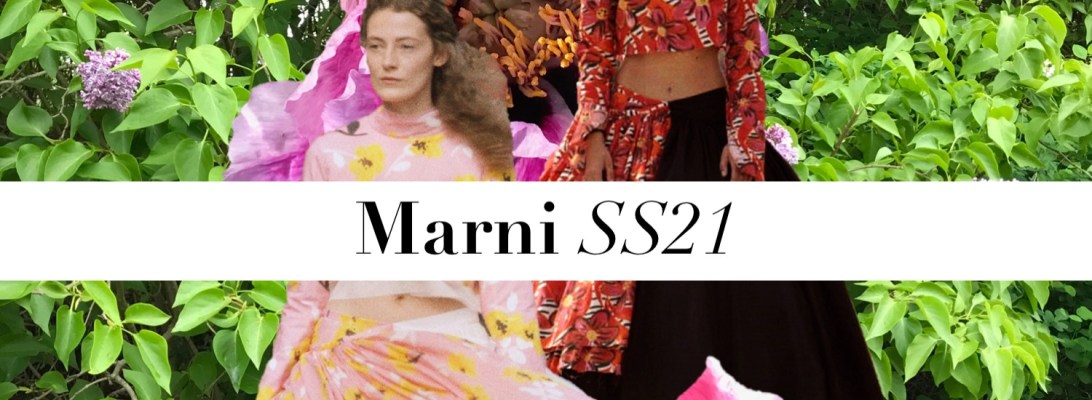
Marnifesto. Marni SS21

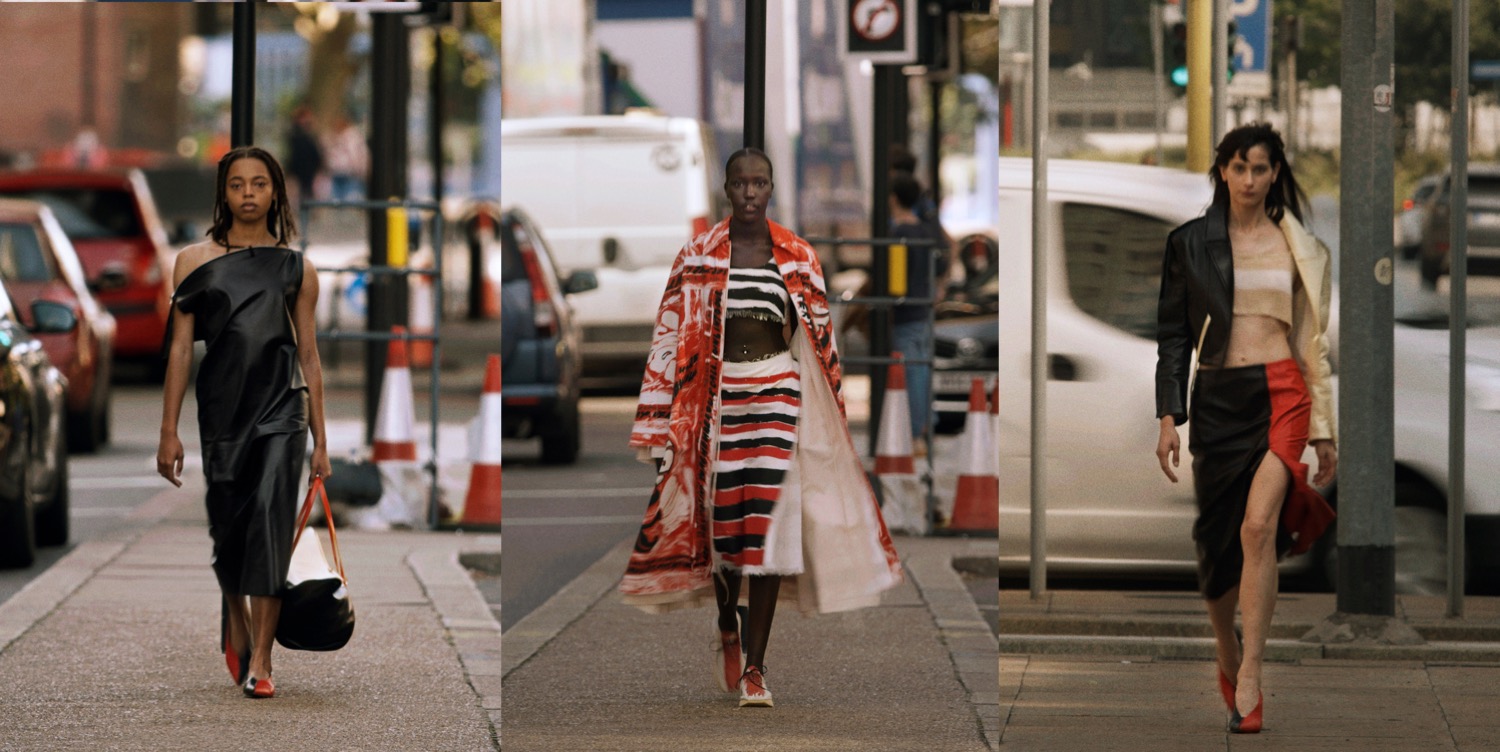
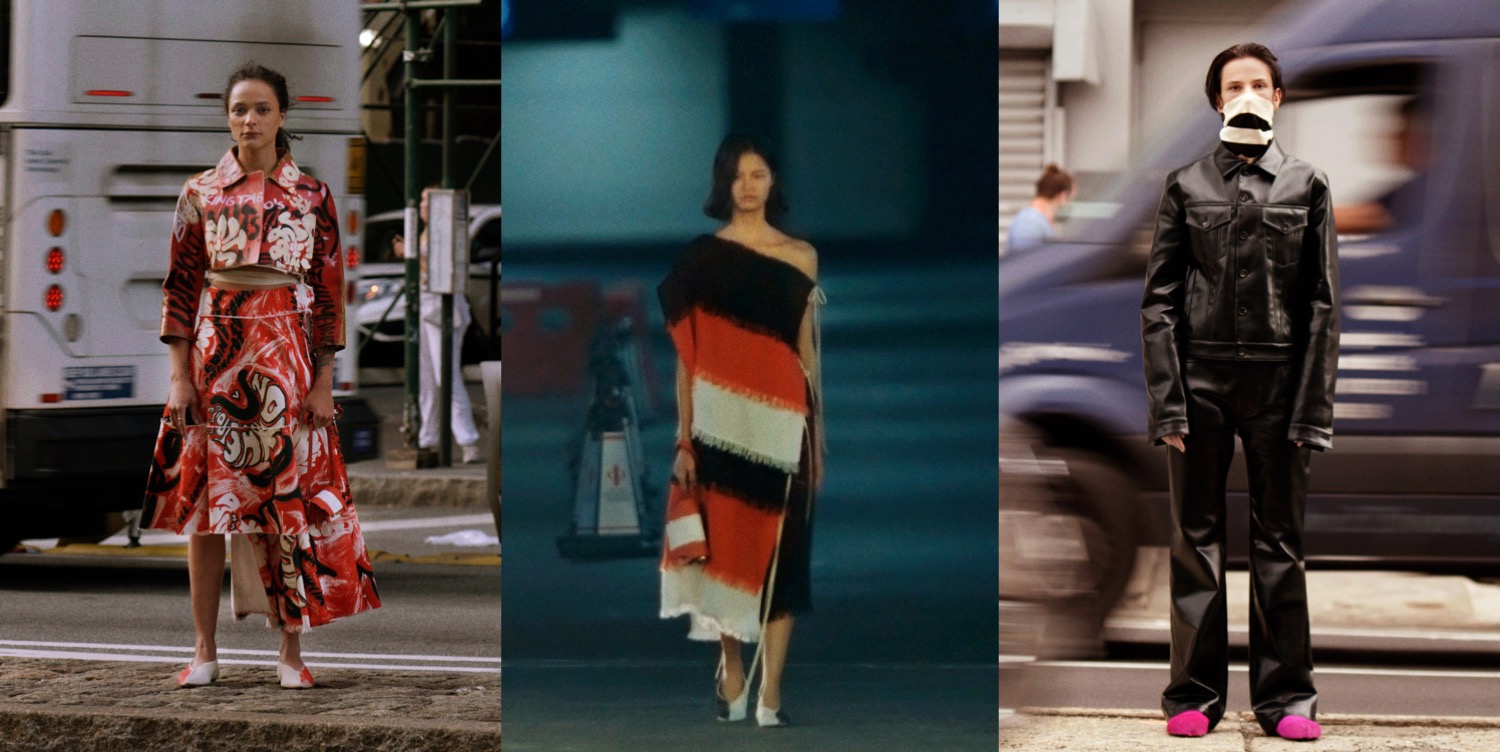
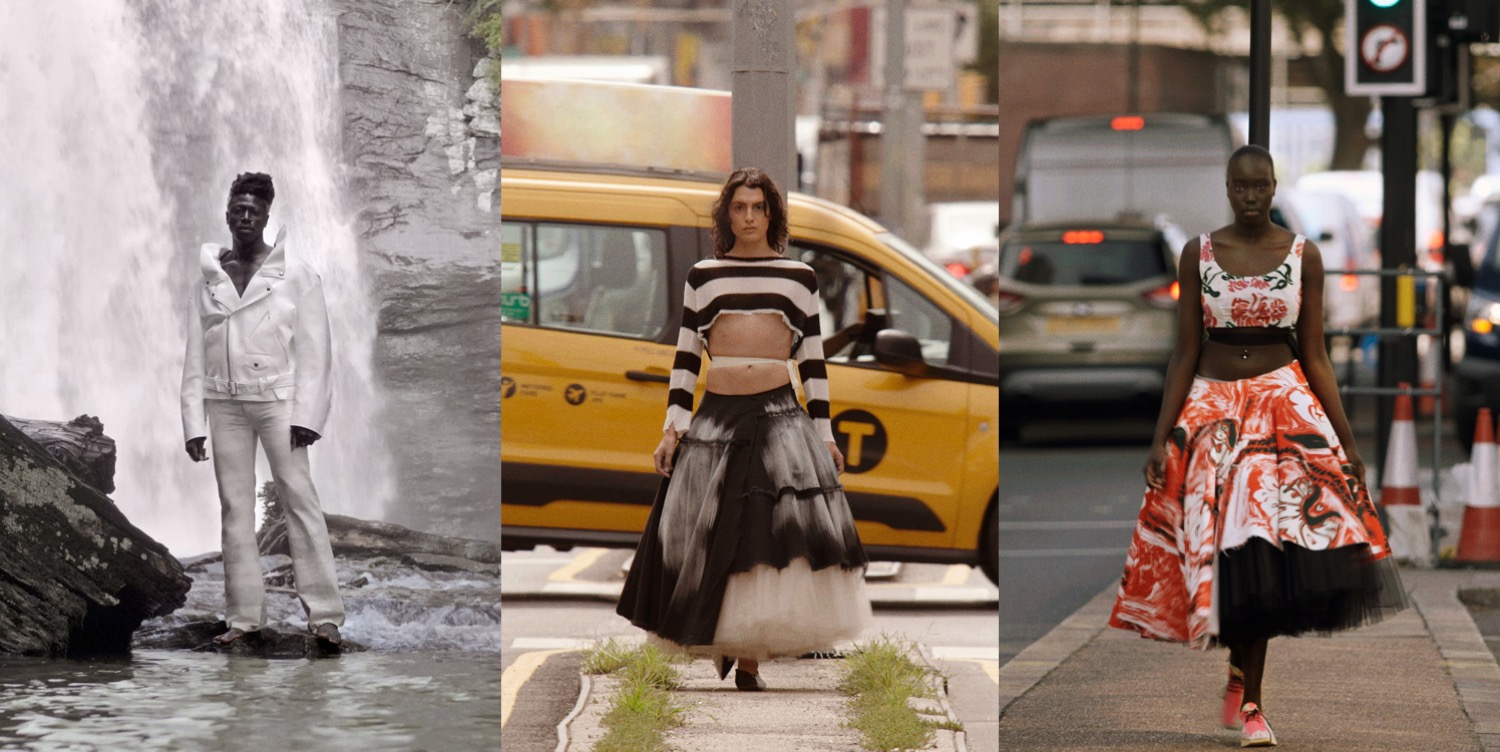
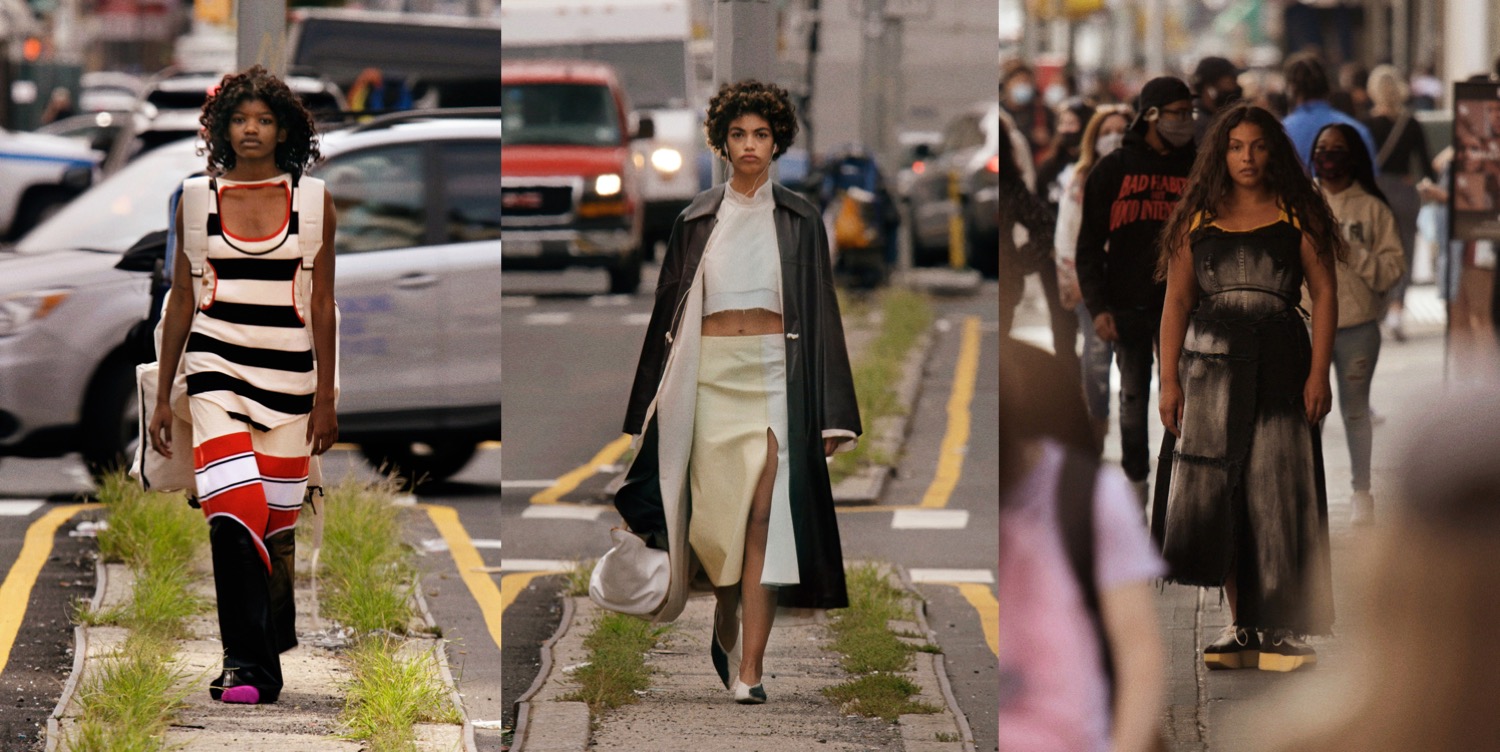
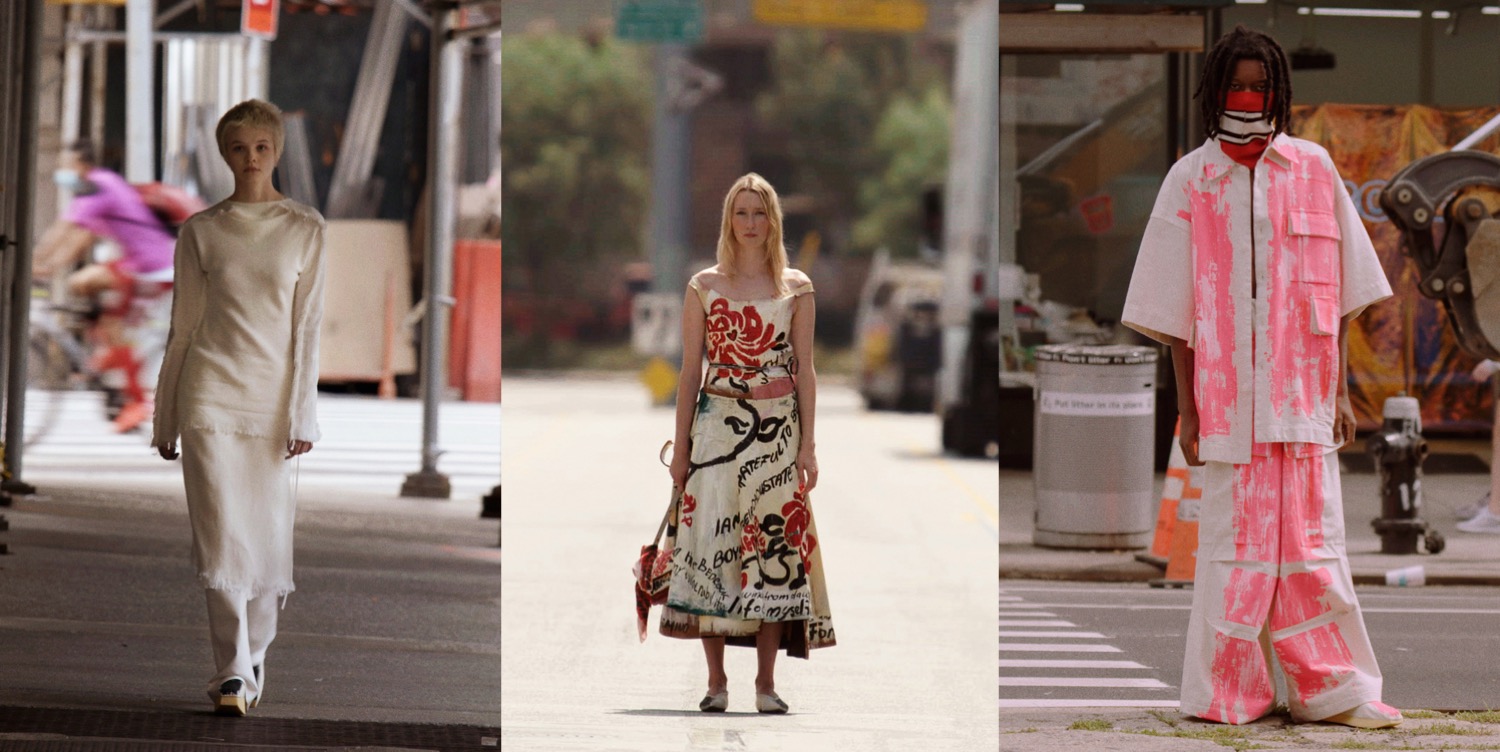
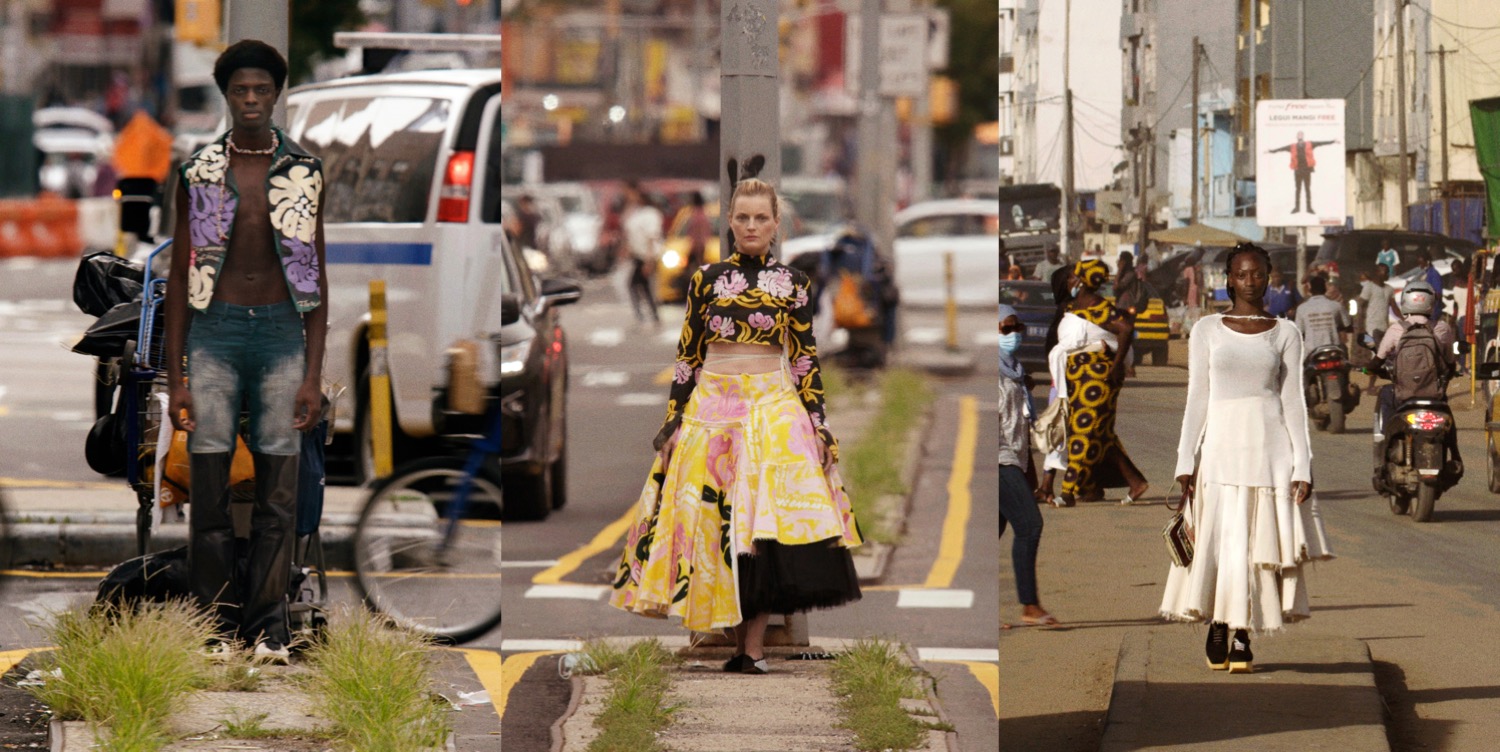
Usually, Marni‘s Franceso Risso takes us to a fairy-tale, where everything has a sort of out-of-this-world meaning. For spring-summer 2021, his collection is strikingly grounded. And literally, out in the world. “I don’t want to make any statements about this show, but this is the idea of it: the people, the individual stories, the lives, the awakenings, my awakening, and the connections,” Risso said in a press preview. “Lockdown felt very oppressive. I have a big dog, and whenever I’d go out, I had police sending me back home. It was strange; bad,” he recalled. While they sounded funny, stories of the Marni studio “making things at home with blankets [and] curtains, [and] dyeing things in their bathtubs” had a more introspective rather than creatively explosive impact on Risso’s approach for his spring proposal. The events of 2020 made him feel caged and powerless. The fragility of freedom was at the heart of this collection. After he finished it, he sent looks to friends and family around the world: Los Angeles, Detroit, Philadelphia, New York City, London, Milan, Paris, Dakar, Shanghai, and Tokyo. In a digital showcase livestreamed from all of those locations, his diverse cast of non-models performed what Risso called his “Marnifesto”: “An experiment of collective neo-humanism, which is so individualist, but actually, this has been collective. It’s celebrating Marni not through the I but through the we,” he explained. It was, quite simply, unity in diversity: Through live-recorded everyday scenarios like walks through traffic, trips to the park, band practice, or grocery shopping, it was an illustration of how we’re less fragile together. Working on the collection, Risso had pulled his most-loved pieces from the Marni archives, re-created them, took them apart, and stapled them back together in new ways. If that was an illustration of fragility versus strength in itself, so were the constructions: unraveling knitwear, de- and reconstructed tank dresses, a rigid, box-fresh leather jumpsuit about to get crinkled. It all felt somewhat “charity shop,” but that inevitably comes with the territory of fragility. Twenty-five coats had been made out of outerwear from old collections, patched together and painted with poetic words sent to Risso by friends through correspondence over the past season. “I can’t talk about hems and drapes and stripes,” Risso said. “I’m more inclined toward thinking of this as a work that’s been more collective than ever. It’s devoted to freedom, self-expression, to celebrating the hand that painted all those objects that create the canvas of Marni.” He didn’t just mean his studio, but the wild and wonderful characters who fill his unconventional mind, and indeed his nonconformist reality. Given the platform of his livestreamed video, they made Risso’s at times outlandish creations feel more real. Emancipated from the staged situation of a runway, you could actually see how the Marni universe manifests IRL.

Collage by Edward Kanarecki.

The Beginning. Prada SS21

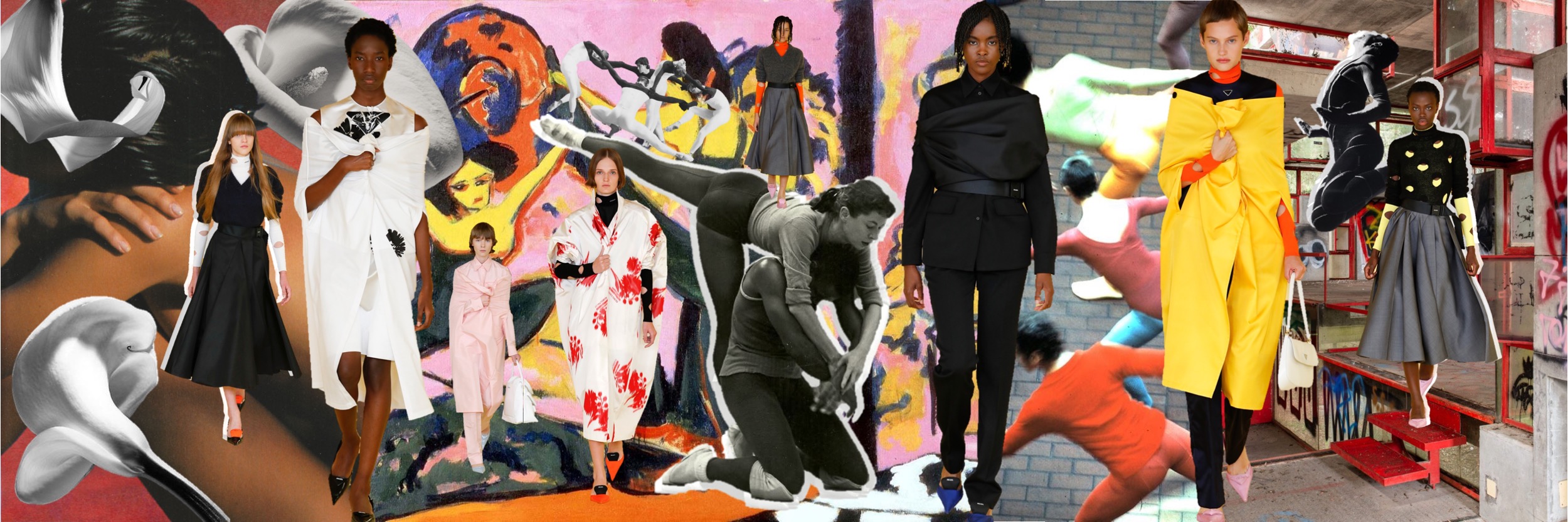
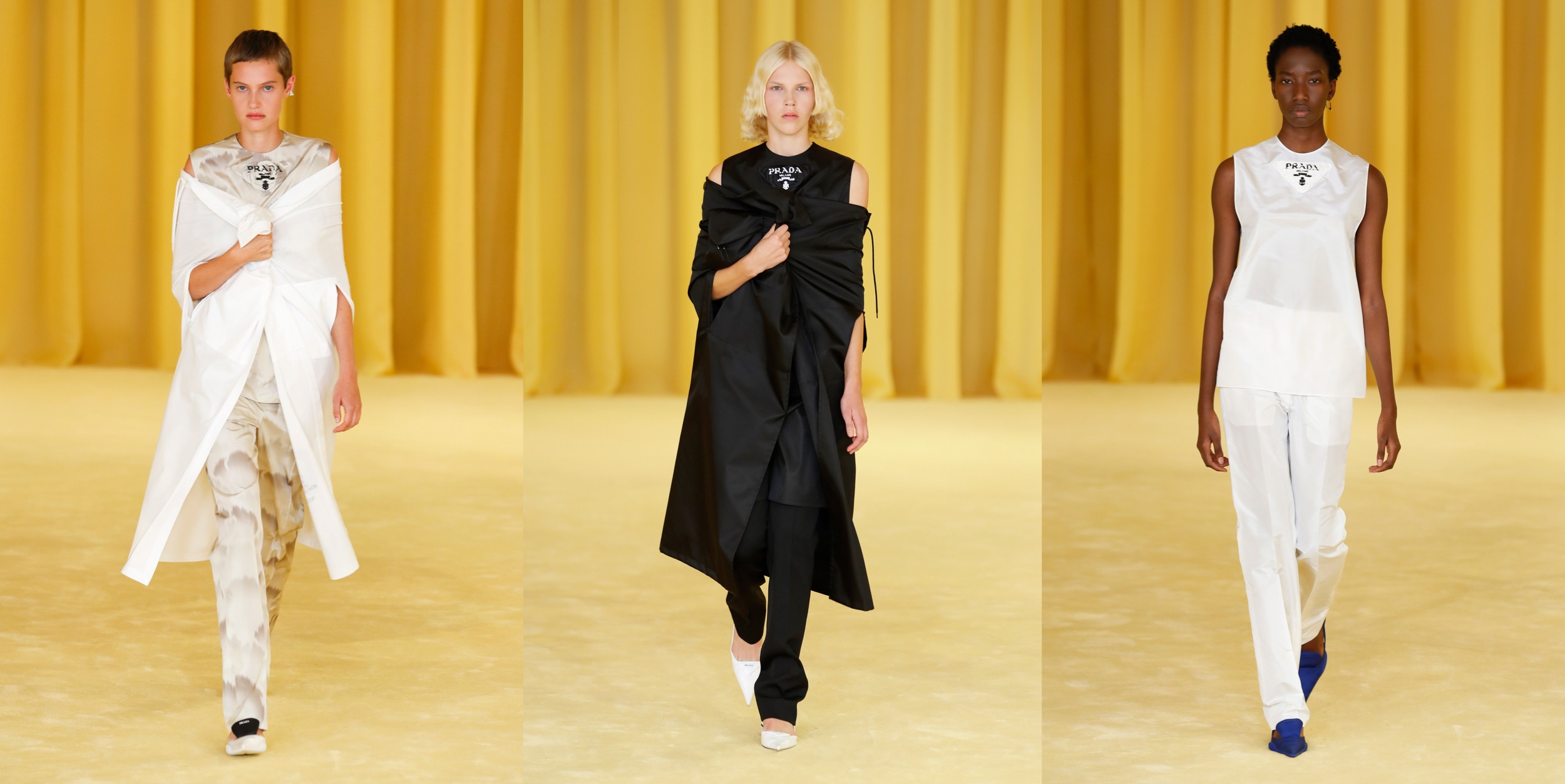
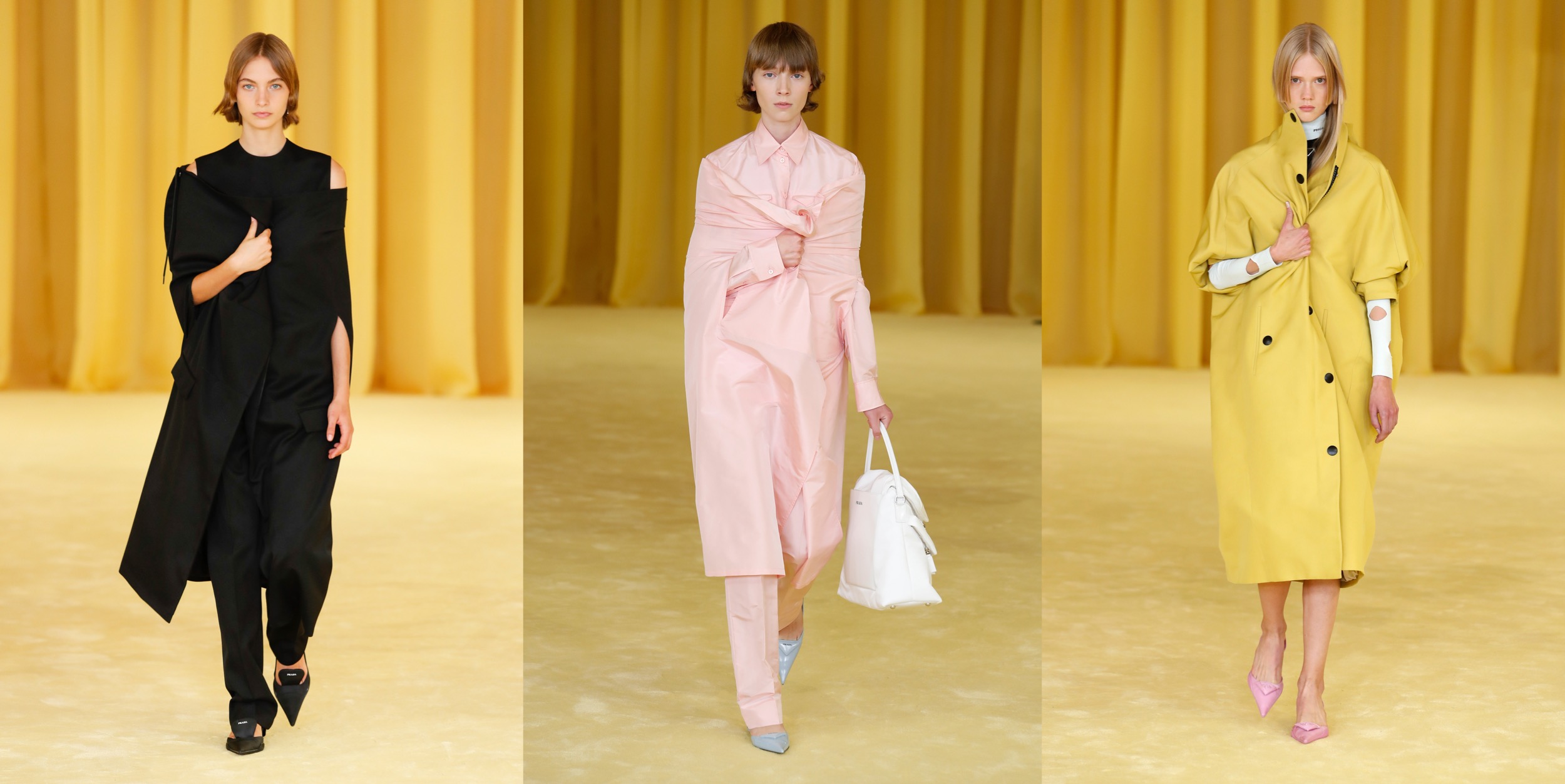
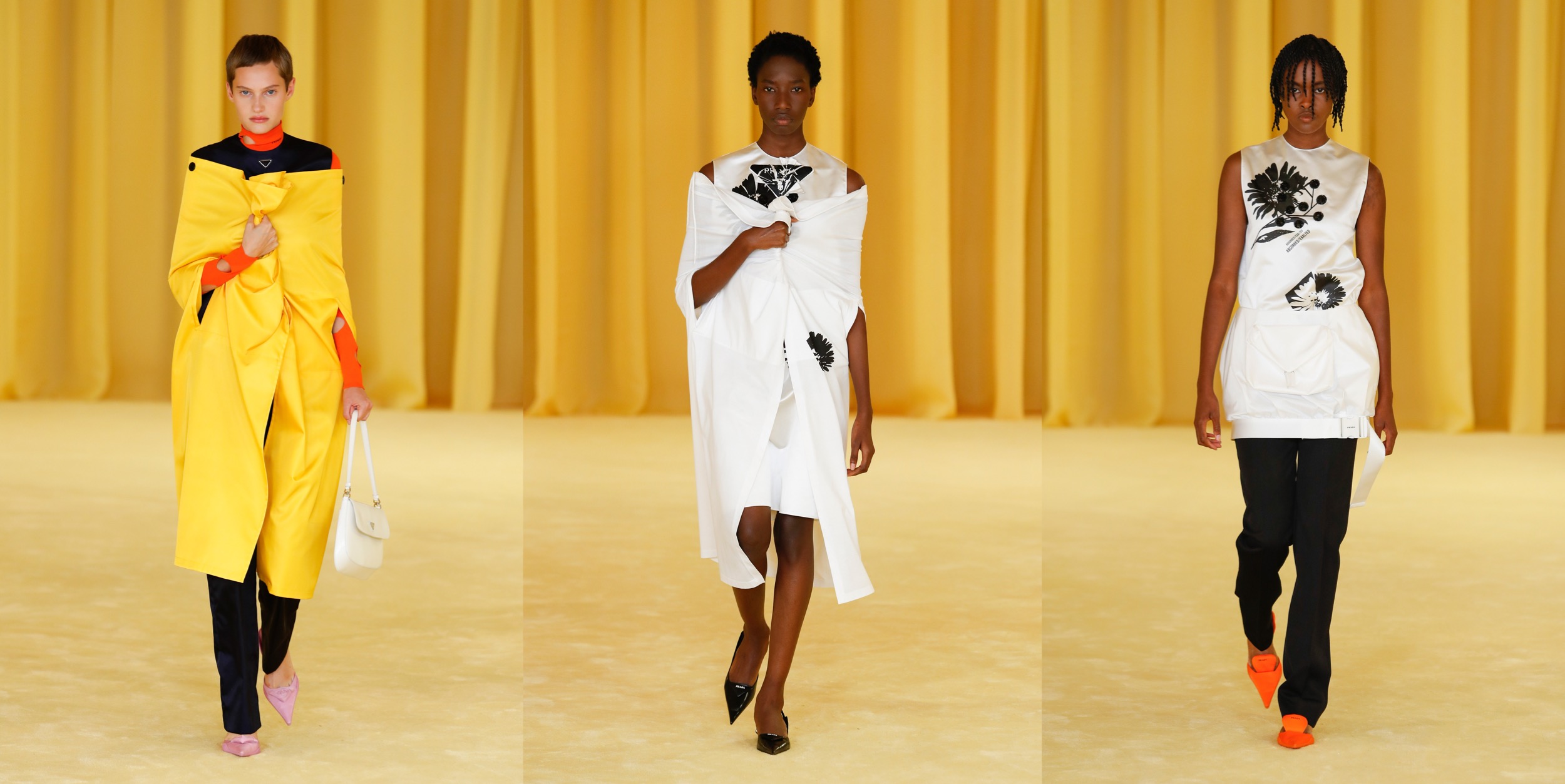
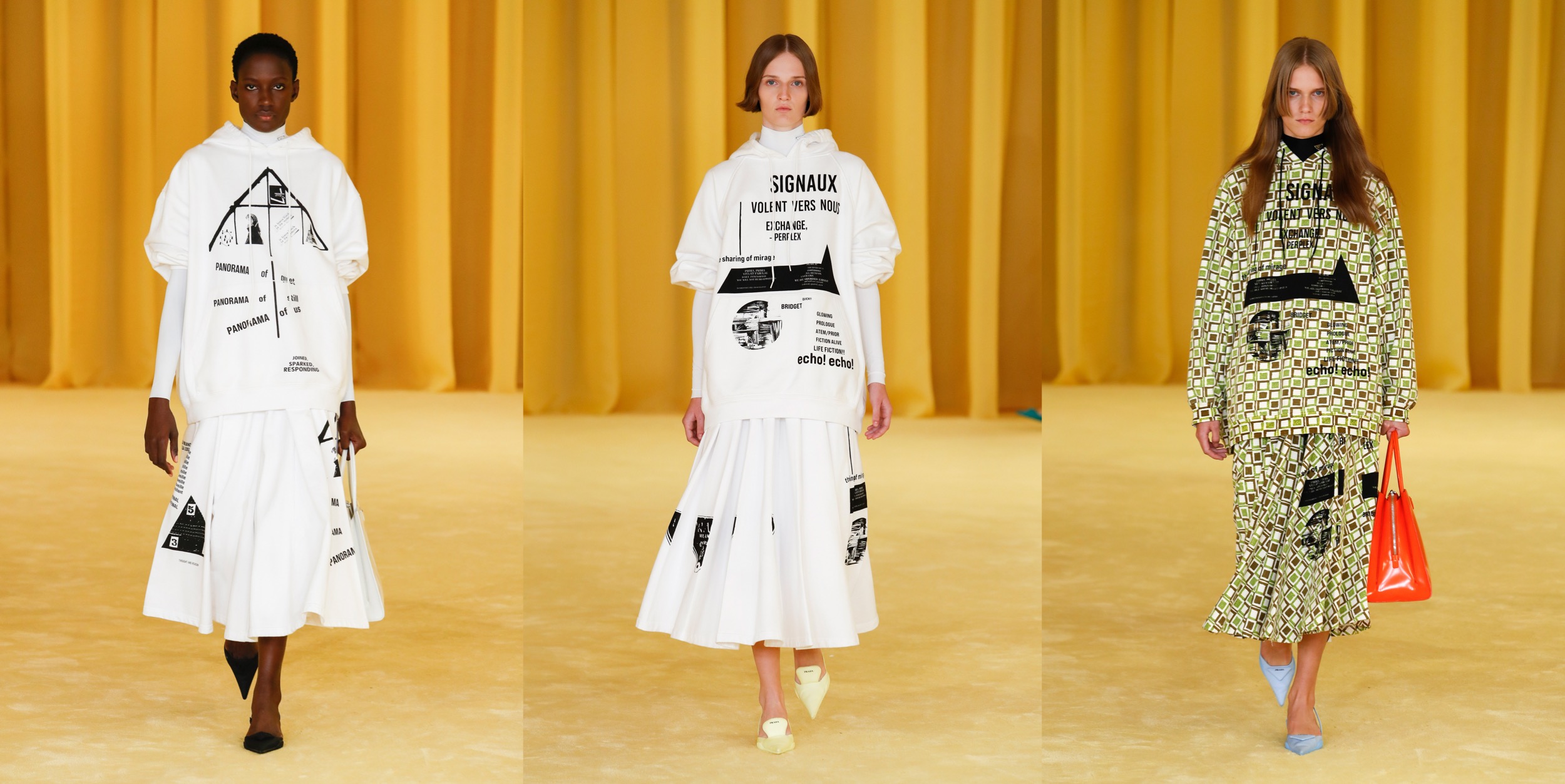
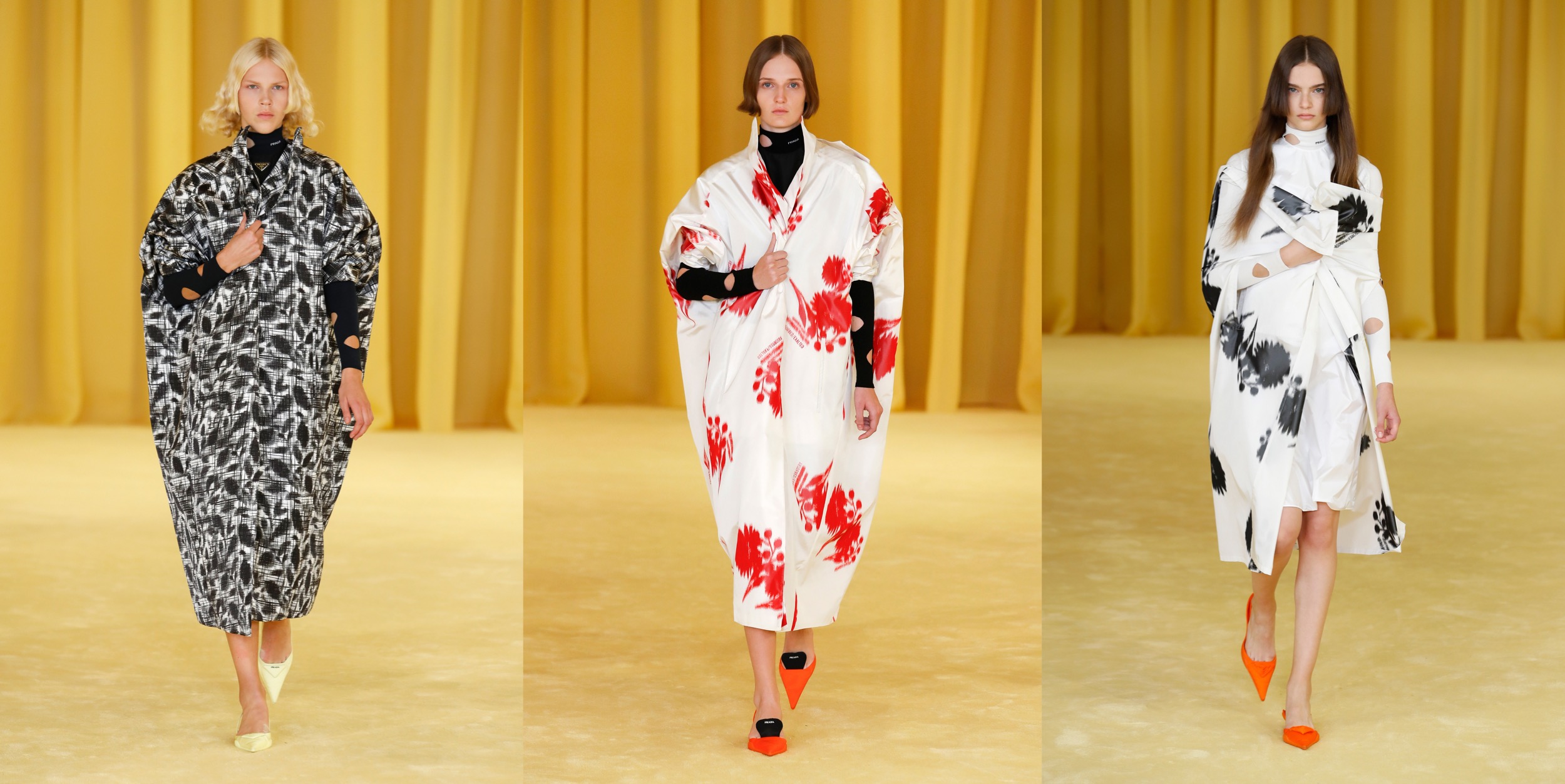
Prada by Miuccia Prada and Raf Simons. Even the way this sentence looks and sounds feels fascinating and so out-of-this-world. The most exciting moment of the season happened yesterday afternoon in form of a livestreamed video and an insightful Q&A afterwards. The fashion industry hasn’t been through such anticipation for years, maybe decades. We all had some other-worldy expectations of what these two innovators would bring to that table. And maybe that was the mistake, for us, the Miuccia & Raf fandom. To be really, really honest: I expected to be wow-ed, utterly surprised, provoked, have some polarised “love it” or “hate it” kind of feelings. But my first impressions of the collections were actually mild. The line-up, presented in one of Fondazione Prada‘s spaces (that shade of yellow, which was chosen for the curtains and the carpet, is the new Pantone colour of 2021, I’m sure), was simple, easy, encylopedic. A sort of Chapter 0, a work-in-progress. In the interview, Miuccia noted that they both had big delays caused by the coronavirus, which is understandable. Maybe they decided to keep the debut quiet and without a fuss. As both designers concluded, it’s the beginning. While at the moment it feels rather like a resort Prada collection styled by Simons (over-sized printed hoodies, slim turtlenecks, all his signature traces are here) my excitement for what’s to come is getting even more intense. But more about the spring-summer 2021 collection. Part of it feels very commerce-wise – say, the exaggerated triangle Prada logos (in a close-up, they are distorted and made out of a sort of satin rosettes), voluminous sweatshirts, youthful prints and conceptual word-plays. Then some of it is all about the lady-like, couture-esque notion – especially the clutch coats, which are a sort of Miuccia trademark that had its big come-back for resort, or the spleated skirts that create an elegant and very refined silhouette. The last “episode” was about the Prada codes: black nylon (I know it sells, but the brand pushes it too much for the last couple of years) and ugly-chic prints (this part was also forced as for me). The show even began with a sort of old-new Prada uniform, the building blocks of which are long, narrow, ’90s-ish trousers; a sleeveless, tunic-length tee with the triangle logo; and pointy-toed slingback kitten heels in a contrasting colour. “How Miuccia dresses is very often a kind of uniform one way or another, and that was direct inspiration for me for the show,” Simons said in the interview. So, as we can see, it’s the start of a dialogue, which will hopefully flourish into something much more powerful. In a quote provided by the house, Miuccia explained their thinking: “In a time of incredible complexity: what matters? what is meaningful? That is a question we asked ourselves. We wanted to create something that makes sense to people, something that is useful. Everything we do should allow people to live better.” In another provided quote, Simons elaborated: “The show is about emphasizing humanity. It is about women, and everything around them supports them, showcases their characters.”  Balance of creativity and pragmatism, something that probably is the best approach under current circumstances.

Collage by Edward Kanarecki.

Values. Fendi SS21

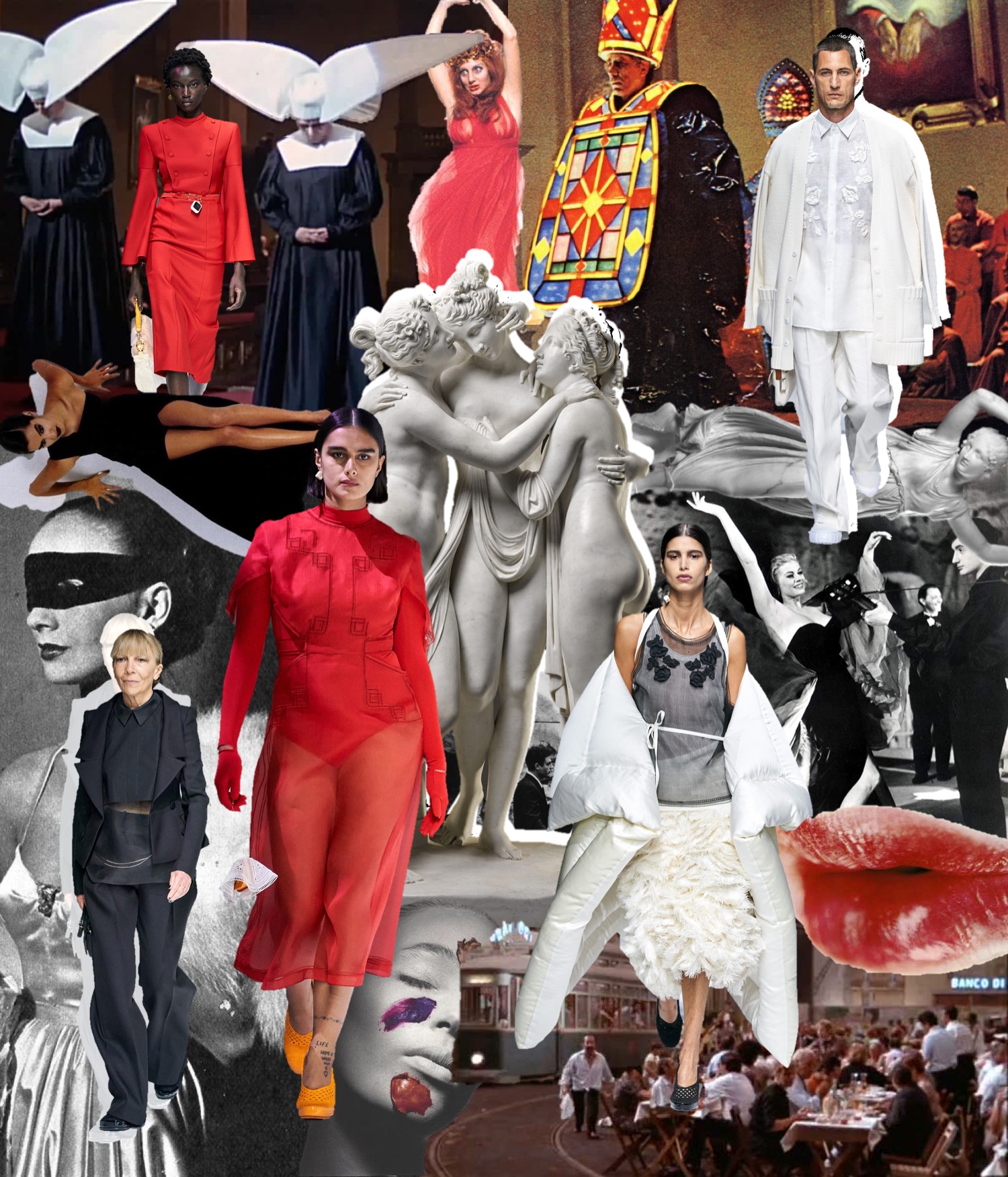
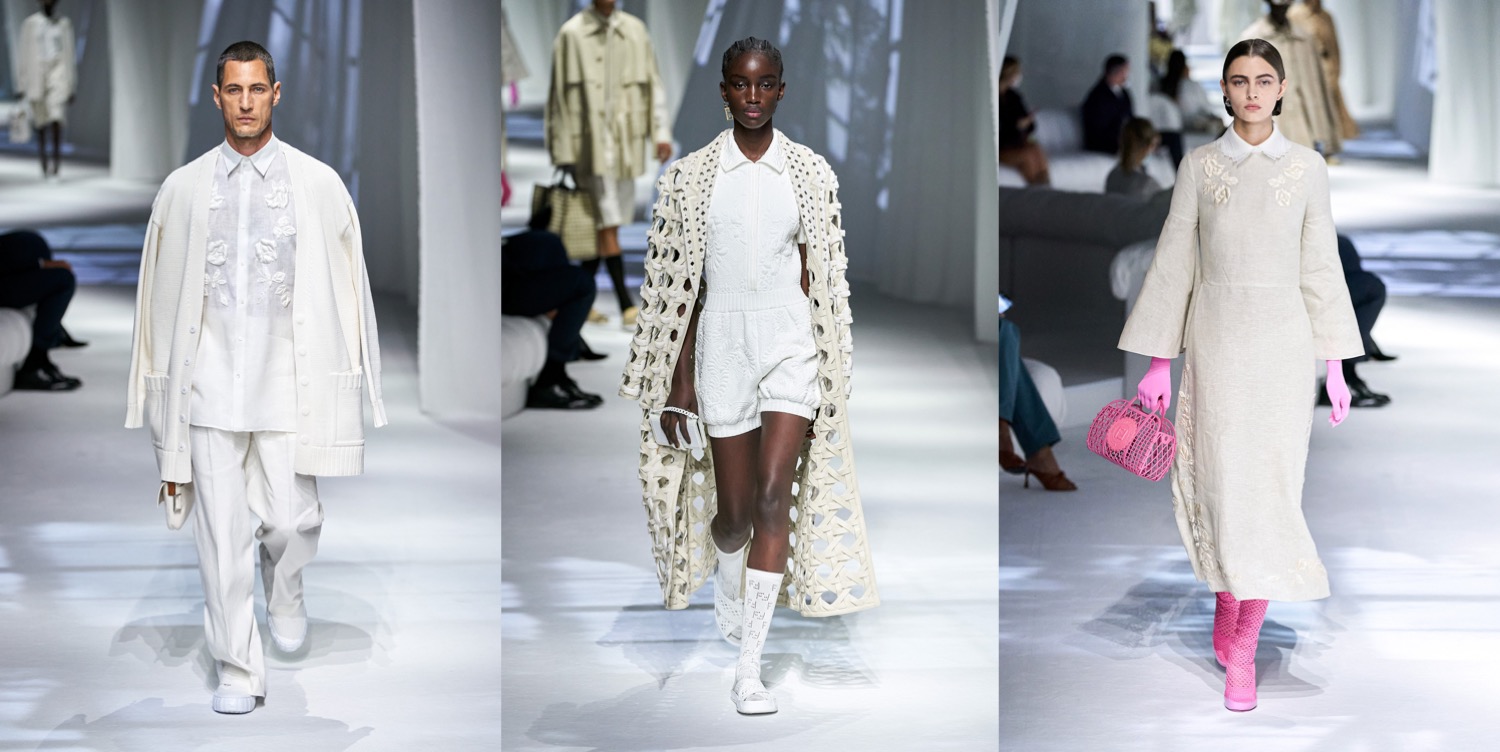
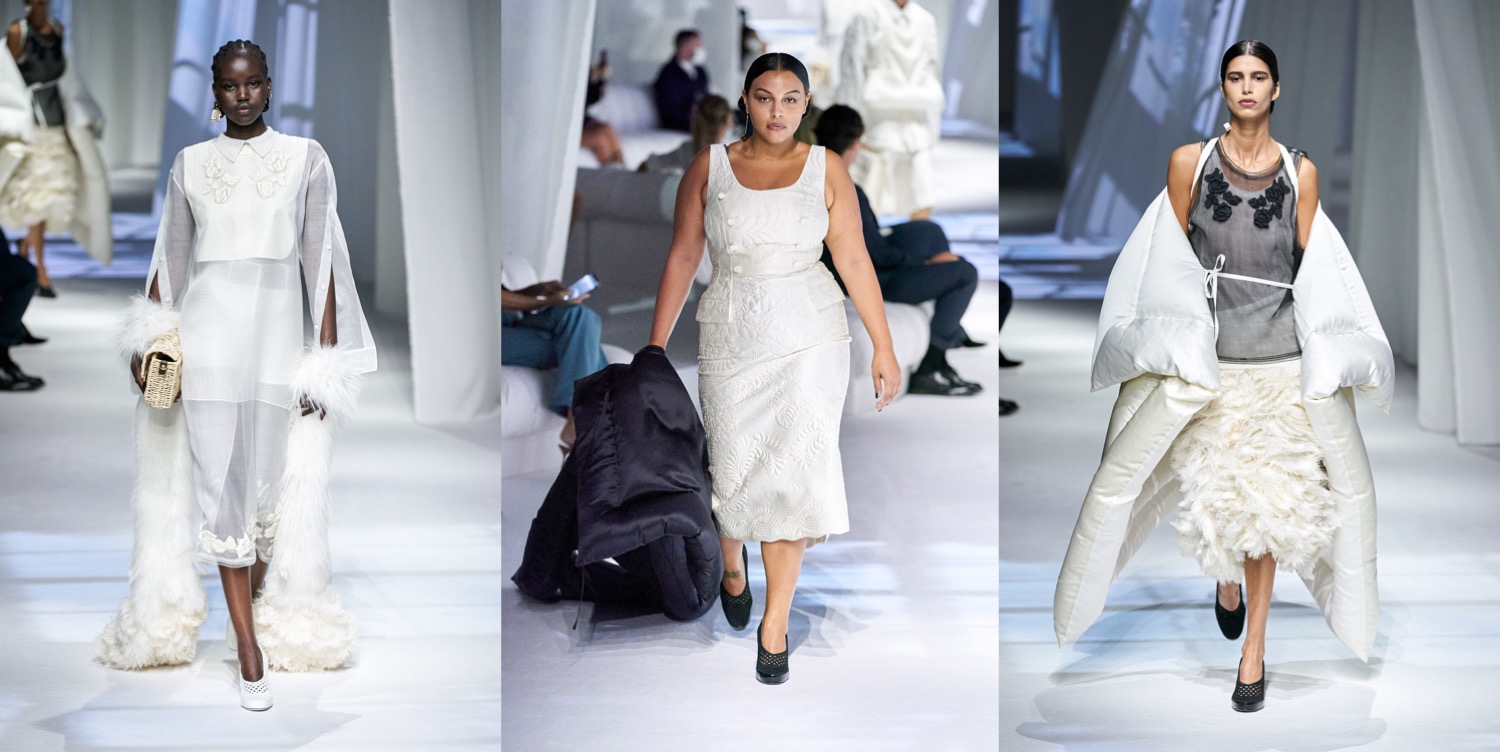
Silvia Venturini Fendi‘s solo vision at Fendi is sublime – so I really wonder why she has appointed Kim Jones as the co-director of the womenswear. Well, I know why – he’s done commercial magic at Dior Men, so why not do the same at Fendi… But back to Silvia’s spring-summer 2021 – again, it’s incredible and it appeared to be a great start of live-slash-digital Milan Fashion Week. It felt so delightfully Italian, as if taken straight out of a Fellini film. The show opened with prints of photographs taken during lockdown by Silvia Venturini Fendi from her bedroom window, which was a nod to the domestic life we’ve all inhabited in the last couple of months. It closed with Leon Dame and Paloma Elsesser amongst those swathed in snuggly satin quilting and pale lace embroidered linens. “This reminded me of Karl,” said Fendi pre-show: “He had a love for bed linen, he had a big collection.” The loungewear and pajamas and floaty wood-printed caftans had a follow-on relationship to last season’s ‘boardroom to boudoir’ collection; “but here,” said Fendi, “she was a little more… sweet.” Much of the collection was cut in barely-dyed but beautifully embroidered linen, a fabric Fendi said she had chosen thanks to its simplicity and sustainability. Runway bags ran from a sweetly naif rattan version of a child’s beach bag to a wicker picnic basket that was a nod to Fendi’s wonderful recent menswear ‘gardening’ collection, co-designed with Luca Guadagnino. And the model casting was amazing, as well: Karen Elson, Maty Fall, Ashley Graham, Eva Herzigova, Yasmin Le Bon, Jill Kortleve and Penelope Tree were all part of a cast as diverse as the swathe of reminiscence Fendi was mustering in this collection. Naturally there were some sections in fur. Maty Fall wore a loosely woven coat of nappa and mink over a floral-pressed romper, while Aliet Sarah a striking skirt of shaved mink ‘lace.’ “I wanted to talk about values,” she explained. “At this time to just talk about fashion seems not enough. I wanted to talk about the values that are behind fashion, and I can tell you that there are a lot. In my family we have always put great meaning into what we do. Here I wanted to achieve clothes that are about the moment, but which also are part of your life, for your life.” By presenting clothes and accessories that whispered of past manifestations of Fendi’s history Silvia was also looking to a future in which garments function as cherished furniture, ever more redolent with memories and meaning in a long and fruitful life.

Collage by Edward Kanarecki.
And Some More Colour. Colville SS21

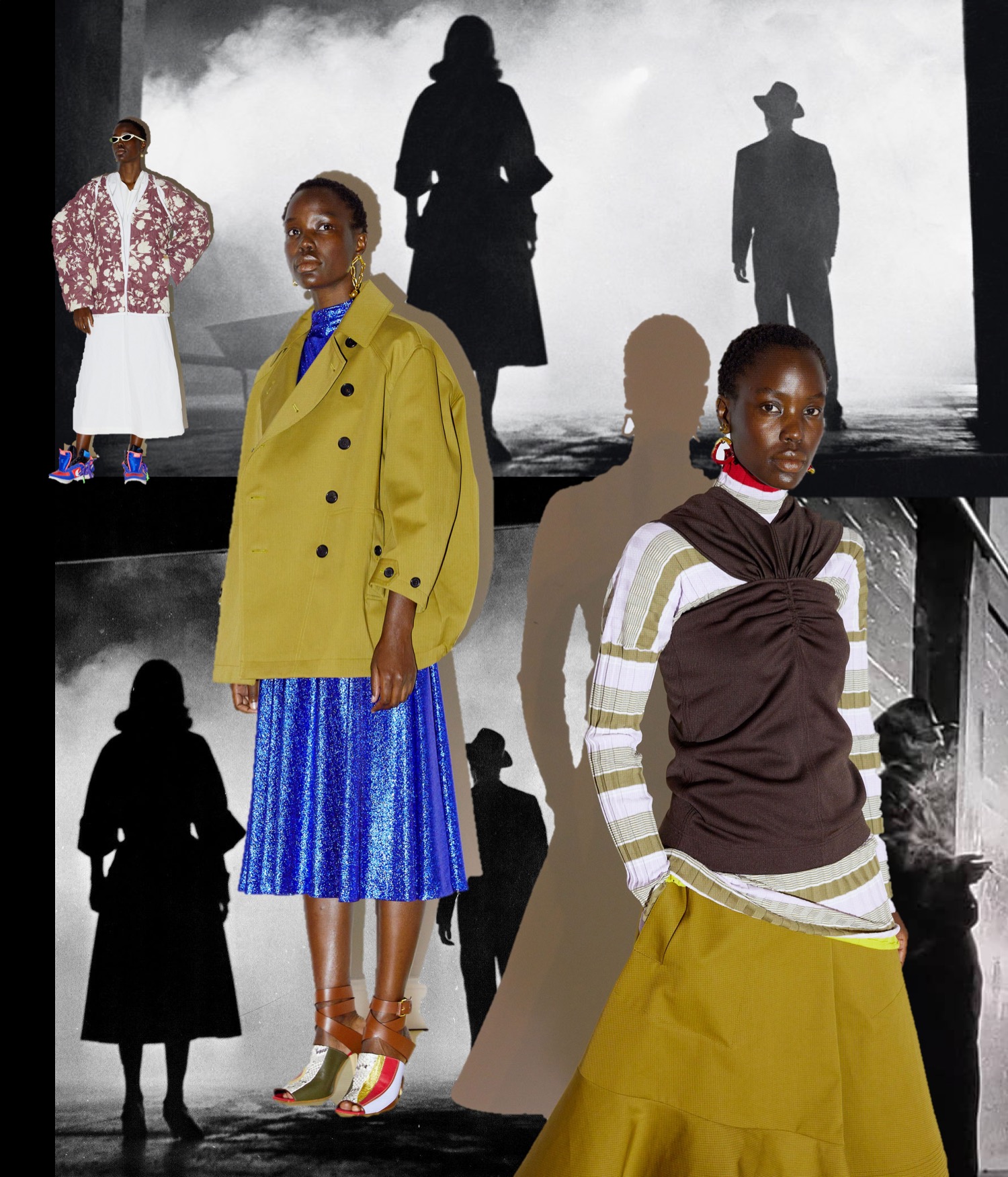
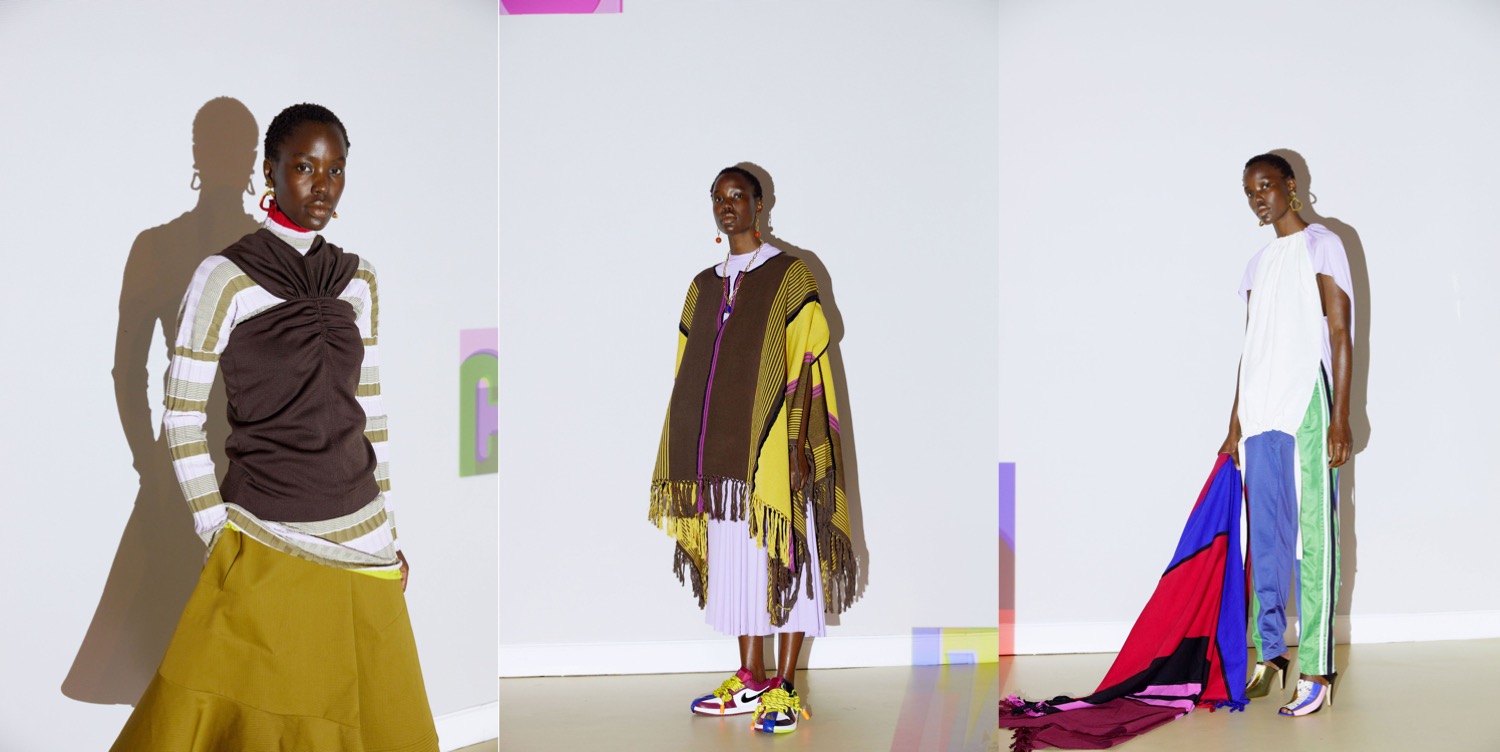
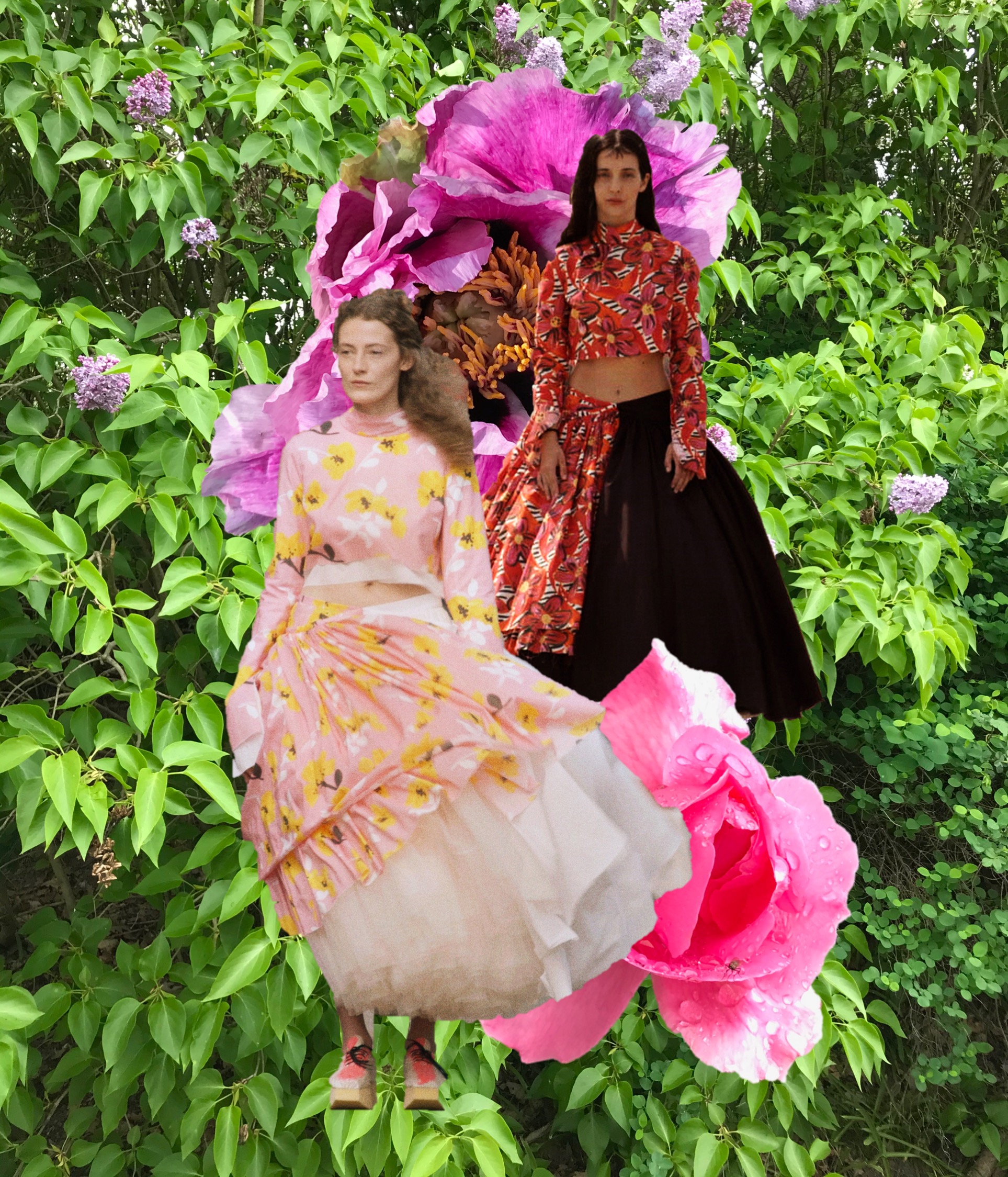
Colville is a quiet, yet steady player. Its founders Molly Molloy and Lucinda Chambers are industry veterans, but they keep their label – consciously or not – under the radar, as a sort of niche place for the insiders. Besides the designers’ obvious flair for color and print, the more vibrant the better, the unifying principles at Colville, it seems to me, are comfort and joy. As women, Molloy and Chambers know those two things are interlinked; you’ll see a preponderance of upcycled trainers and track pants in these look book pictures. But their dresses, too, have a sensuous ease, tied effortlessly with ribbon at the waist or at the nape of the neck above an exposed upper back. Those shawls, locally sourced and dyed by the Tzotzil ethnic group in the Chiapas region of Mexico, are the collection’s hero pieces: they would wake up any outfit, or home. A jacket pieced from a patchwork of traditional Indian bedspreads is similarly colorful, with the feel of a keepsake or heirloom. The pandemic might have made their work more challenging, with Chambers in London and Molloy in Milan, but their spring-summer 2021 line-up shows no signs. Where other brands are shrinking or outright collapsing, Colville is expanding. “There is a kind of level playing field, where if you’ve got a strong story to tell, you get a voice. And that’s a wonderful thing,” Chambers reflected. “It doesn’t matter how much money you have to chuck at it anymore, you can’t buy your way out of this. It has to be about what you’re making and the love you’re putting into it.” That’s the thing you want to hear and read!

Collage by Edward Kanarecki.