

Balenciaga autumn-winter 2020
While the autumn pieces hit the stores, and the SS21 fashion month is about to start (we all know it’s going to be a very different one…), it’s worth reminding some of the best moments of AW20. The best collections of this season addressed our changing reality head-on, even if nobody knew back then that corona would change our lives to such extent. There was fire and brimstone – and poignantly slick, apocalyptic clothing – at Balenciaga, electrifying nostalgia at Marc Jacobs, and a passionate clash of silhouettes, prints, and eras at Prada. A conclusion for this season is this: fashion that does the most. It’s in your face, it’s chaotic, it’s dramatic. It’s dressing as an act of resistance. Here are the top 10 collections, with excerpts from my reviews and accompanying collages!

Marc Jacobs
As far as it’s known, there will be no runway presentation from Marc Jacobs – the main line – this New York fashion week. Which is really sad – what’s NYFW without Marc? It’s rare I’m rewatching fashion show videos. But in case of Marc Jacobs’ autumn-winter 2020, I think I’ve seen it like five times or more. It’s so brilliant. The runway featured a dance performance choreographed by Karole Armitage, New York’s „punk ballerina”, with the catwalk staged like a bistro. At some point it was hard to tell who’s the model and who’s the dancer (everybody was dressed in Jacobs), and that was the intention: beauty in chaos, told through powerful movement. Infinitely inspired by his heroes of the past and present, it is style in which different people dress at the various stages, ages and times in their lives that provokes Marc’s love for fashion and possibilities of what it can be. The designer especially had the fading image of disappearing New York in his mind – forever mythical and chic with its „beauty, promise, sparkle and grit”. As a departure from last season’s lamboyance, free spirit and color, this collection emphasizes restraint, quality of fabrics, make and proportion – valuing simplicity and timelessness above all. Jackie Kennedy’s evening dresses, pearls, refined daywear and headscarf looks were a big inspiration, just as the slinky minimalism of New York’s 90s aesthetic (which, of course, was shaped by people like Marc). Each look has its elegant charm, whether we’re speaking of white-collared dresses with above-the-knee lenght, pieces made from draped roses, classic peacoats or the marvelous gowns, inspired with couture masters. What truly stuns in this line-up is the way Jacobs brought so much relevance and modernity out of nostalgia – literally everything is fit for 2020 here.
See the collection here.

Prada
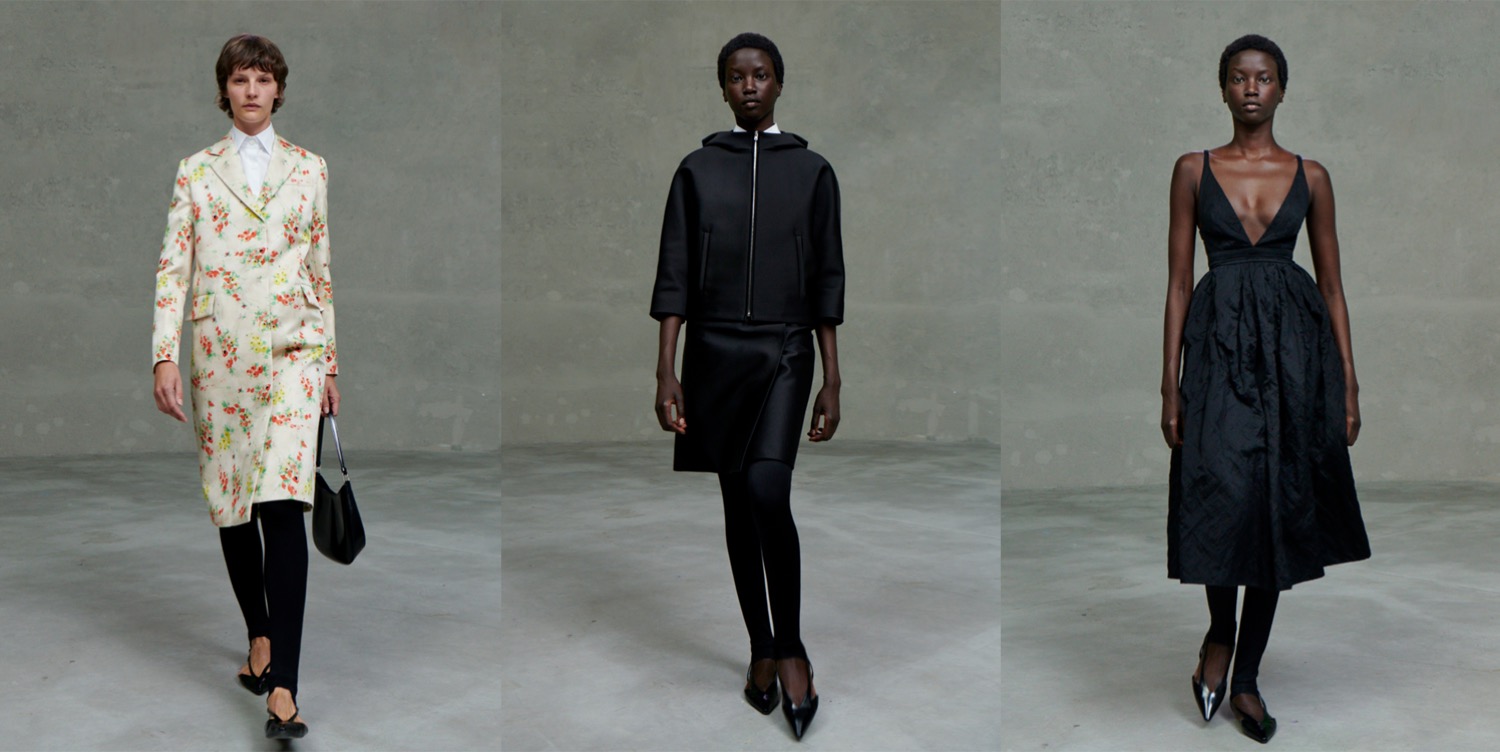
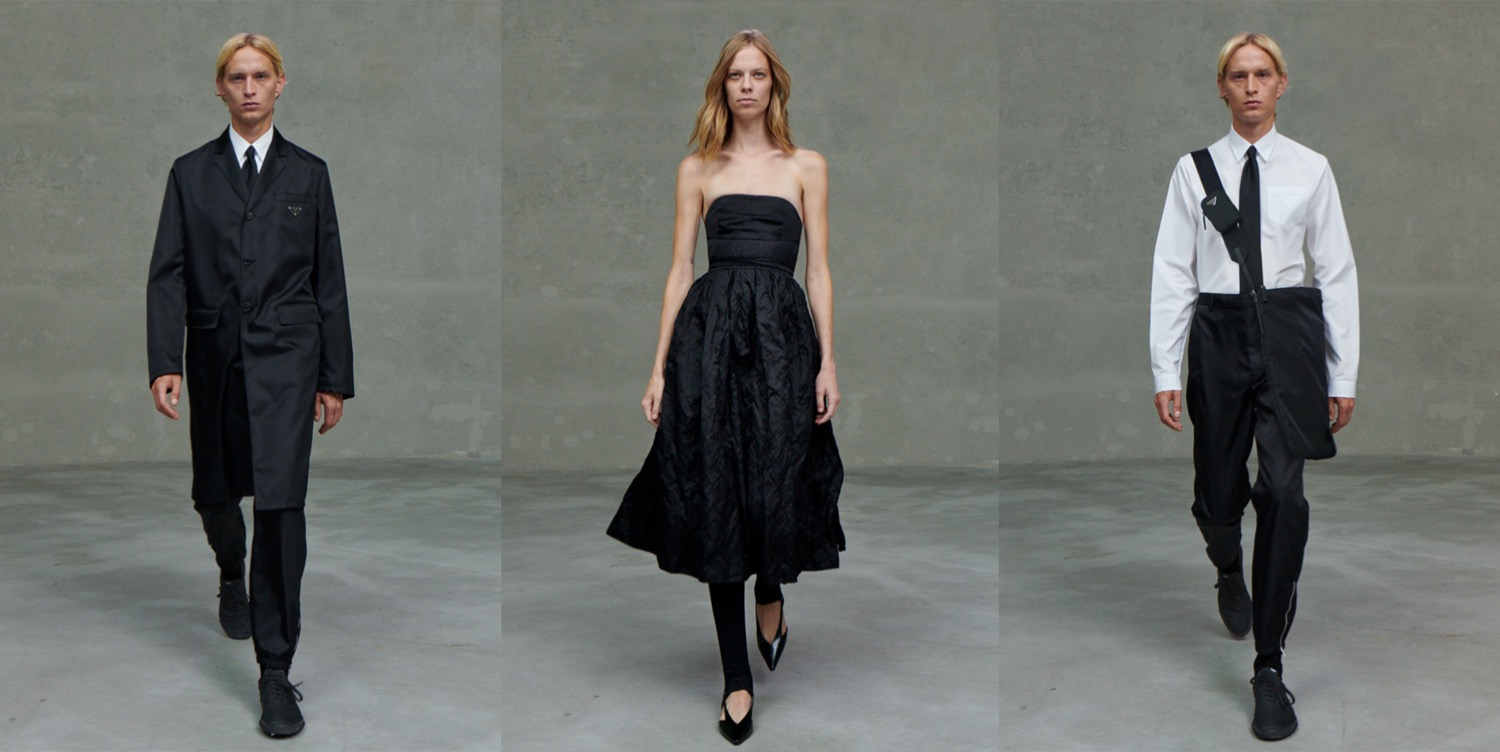
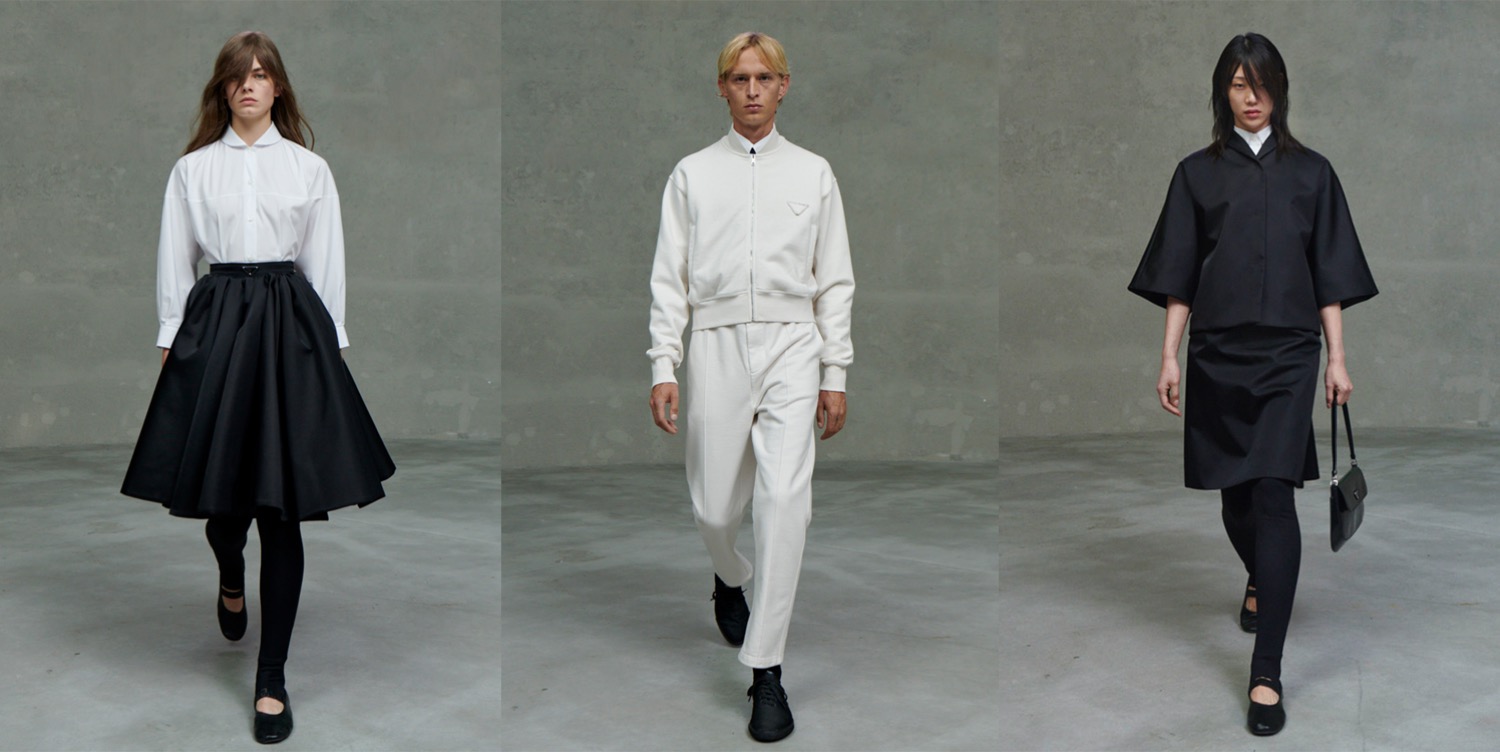
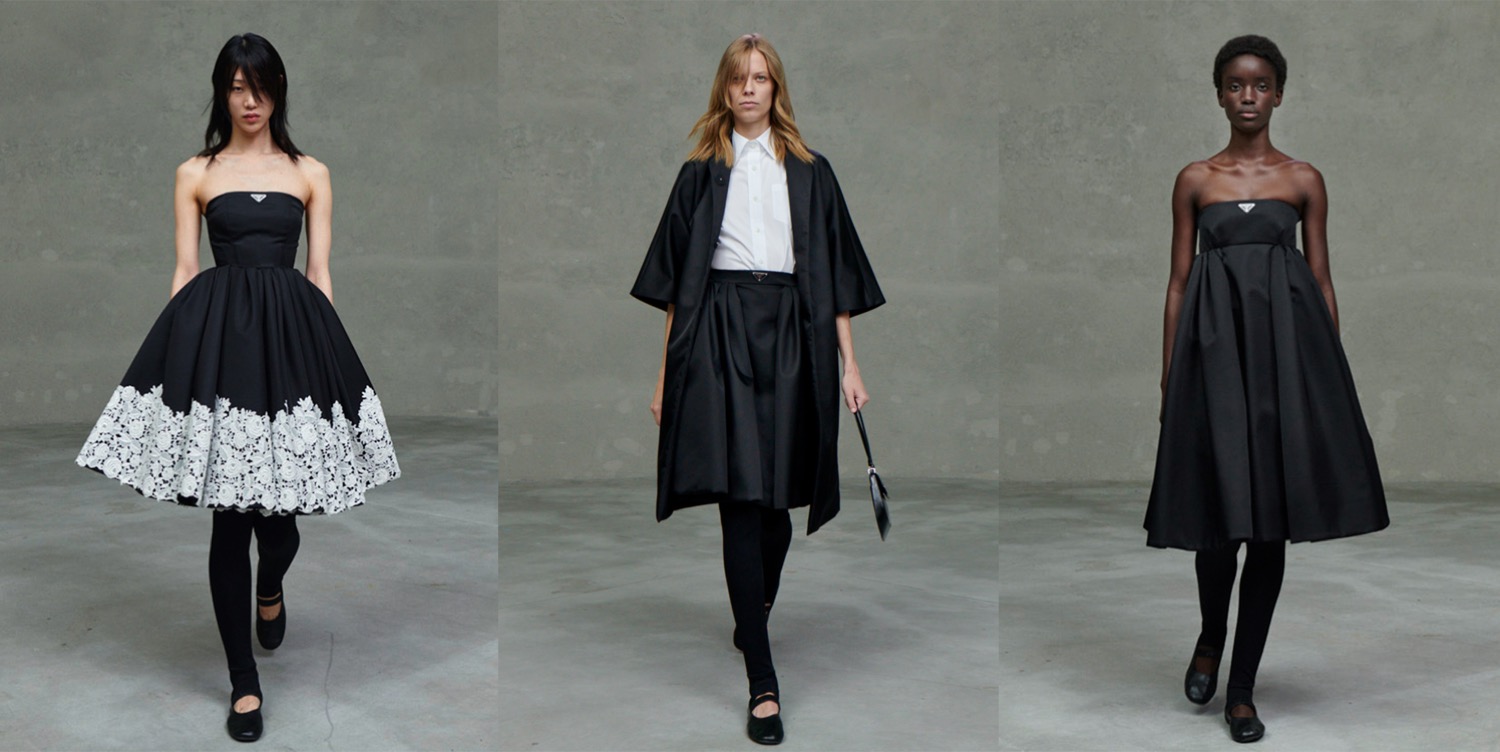
While New York loses a big name, Milan gains Raf Simons. Yes, September is the month when we finally see the first Prada collection designed by Miuccia and Raf. I’ve got no idea what to expect, but I’m sure there will be a lot to discuss. But for now, lets focus on the last solo runway line-up from Miuccia. For autumn-winter 2020, Prada was about contrasts, which actually create an equilibrum. “We can be strong and feminine at the same time… women carry the weight now.” Miuccia Prada was insistent: delicacy and frivolity are not antithetical to power. Finally somebody said that out loud, in the language of fashion. Beads, silks, fringes, the “clichés of femininity,” as she described them, accompanied pieces traditionally considered masculine. A boxy belted jacket was paired with a fringed skirt, while classic bib-front shirts were glammed up with skeins of crystals suspended from the shoulders. Basketball jerseys got a similar treatment, elongated to the knee and then accessorized with ropes of beads and sneaker-boot hybrids. For Prada-ists, this collection is a great retrospective of some of Miuccia’s big hits – especially autumn-winter 2017, autumn-winter 2015, spring-summer 2014 and autumn-winter 2009 – which were patchworked into something new. Prada’s vocabulary is so wide and distinct that there’s no wonder why she brought some ideas back to her work.
See the collection here.
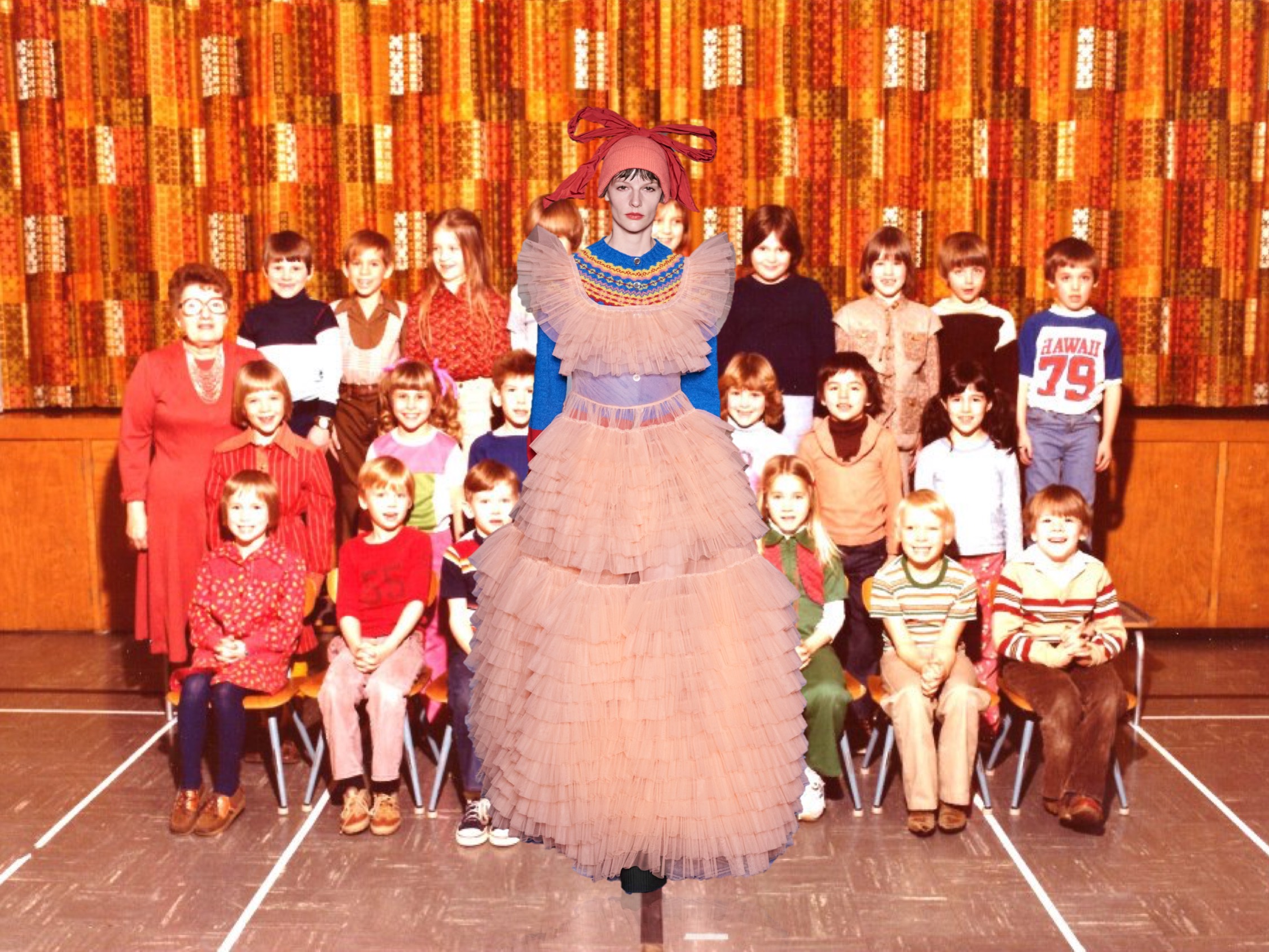
Molly Goddard
Freeing your inner child through fashion began this season at Alessandro Michele’s Gucci menswear, and has also appeared at one of my favourite labels in London – Molly Goddard. In lieu of a press release, Goddard sent out a throwback London street style photo as the explainer for her new collection. First published in Fruits, the cult Japanese magazine, back in 1992, the image features just the kind of cool-looking dad and daughter duo you’d expect find on bohemian Portobello Road: him in distressed denim-on-denim and a baker boy hat, his insanely cute sidekick dressed in a tiny ruffled skirt over jeans and a chunky knit sweater. “The little girl is me!” said Goddard backstage at the autumn-winter 2020 show. “I remember those times growing up in Notting Hill so fondly, and really wanting to get dressed up for the market and all the characters who lived there.” In this joyful line-up, you could trace the influence of her toddler self, starting with an exploding blue taffeta dress that was layered over a salmon pink cardigan and worn with chunky creepers, then topped off with a beanie hat that was topped with a giant bow (the accessory of the season is here!). Then, things got even better: Molly’s signature tulle dresses in crayon kept on growing in size, while her sense of layering made it all look somehow… wearable. Goddard showed menswear for the first time this season, largely inspired by her musician-turned-fashion-PR boyfriend Tom Shickle. “He always moans that there’s nothing for him to wear, so I made a suit,” said Goddard, laughing. The retro-leaning checkered tailoring she created had a nerdy sway about it, something you could imagine Jarvis Cocker might have worn in the 1990s. One of these Fair Isle cardigans, please!
See the collection here.

The Row
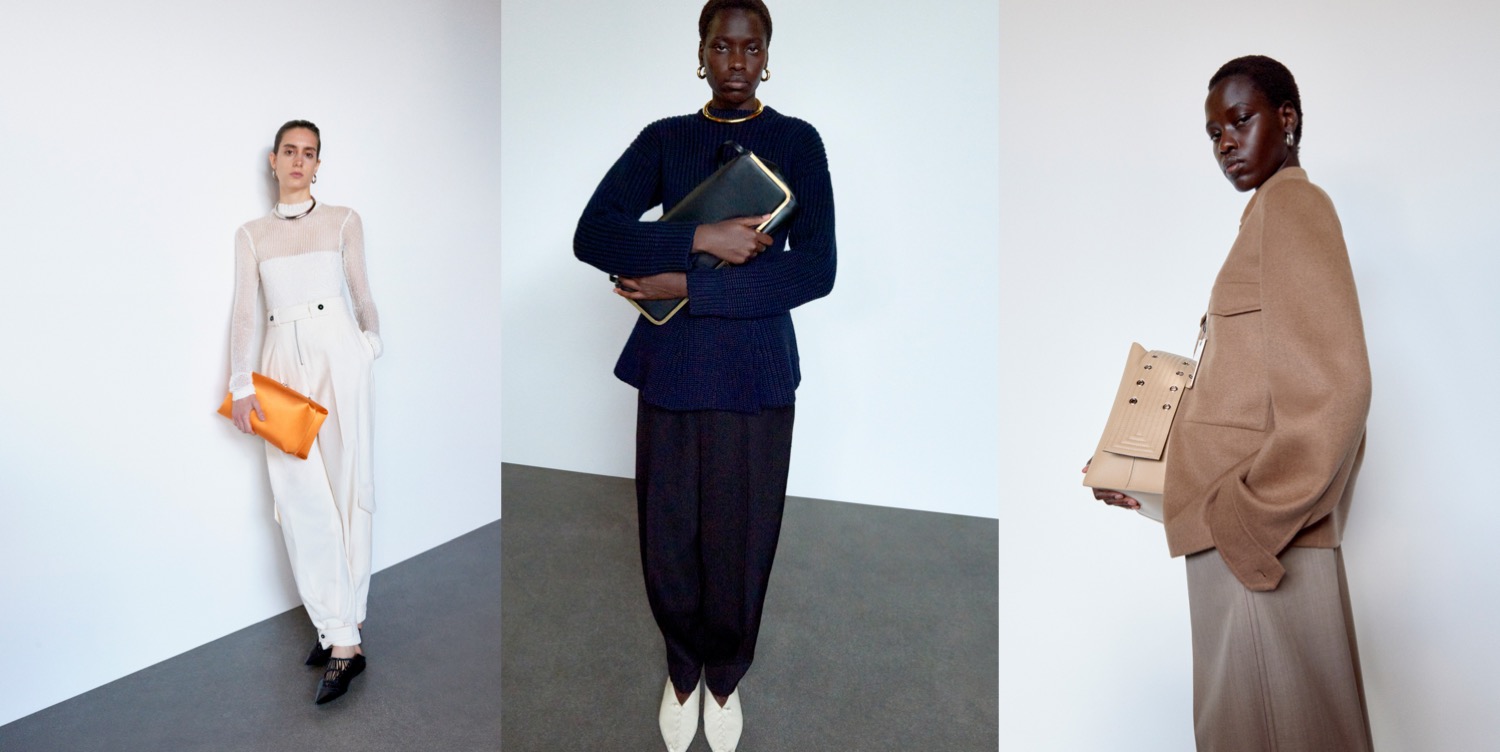
Another bad news for NYFW: as for now, The Row hasn’t confirmed its presence this season. But I’m sure we will get a look-book. In the sea of meaningless or overly sophisticated (which, in the end, means the same as meaningless…) collections, The Row stuns with confidence and actual sense of real desire put upon us, the viewers. As the models skimmed quickly by in flat slippers and boots, the thrill behind Ashley and Mary-Kate Olsen’s line-up was in the finesse of the cuts, precise but relaxed, especially with the addition of turtlenecks layered under silk button-downs or worn solo under jackets. The tailoring is refined and subtle in shilhouette, and the outerwear is a sure winner of the season. It’s quite clear that the designers looked at Martin Margiela’s Hermès for inspiration – especially the layered knits and long, grey gloves that seemed to blur with the clothes. But I’m fine with that. An installation of sculptures by Beverly Pepper, an American artist who worked in stone, corten steel, and iron until she was 97, was the centerpiece at The Row’s show. Pepper died a week before the presentation took place, and the New York Times’s obituary described her as a “sculptor of monumental lightness.” The Olsens’ work definitely identifies with that description.
See the collection here.
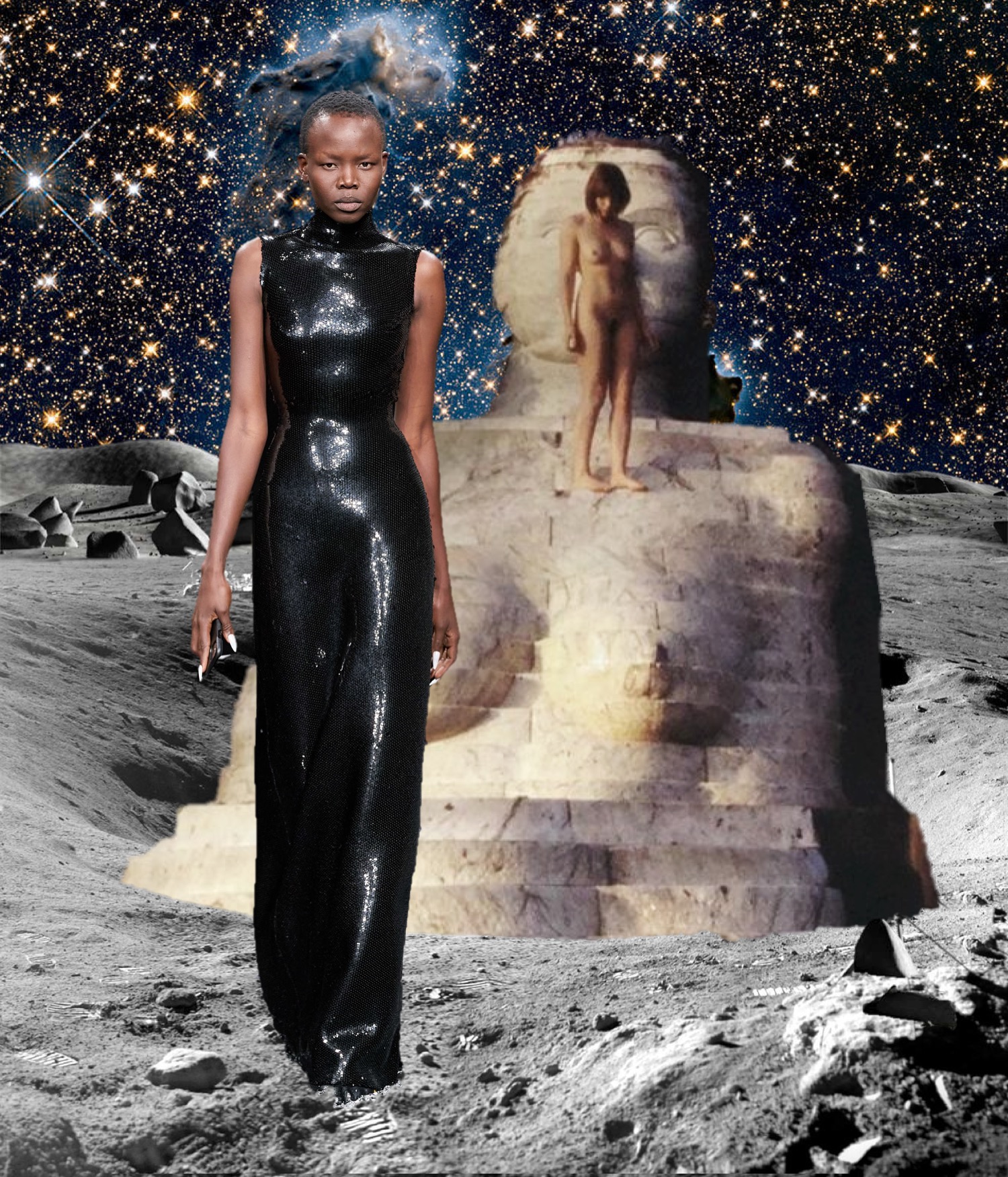
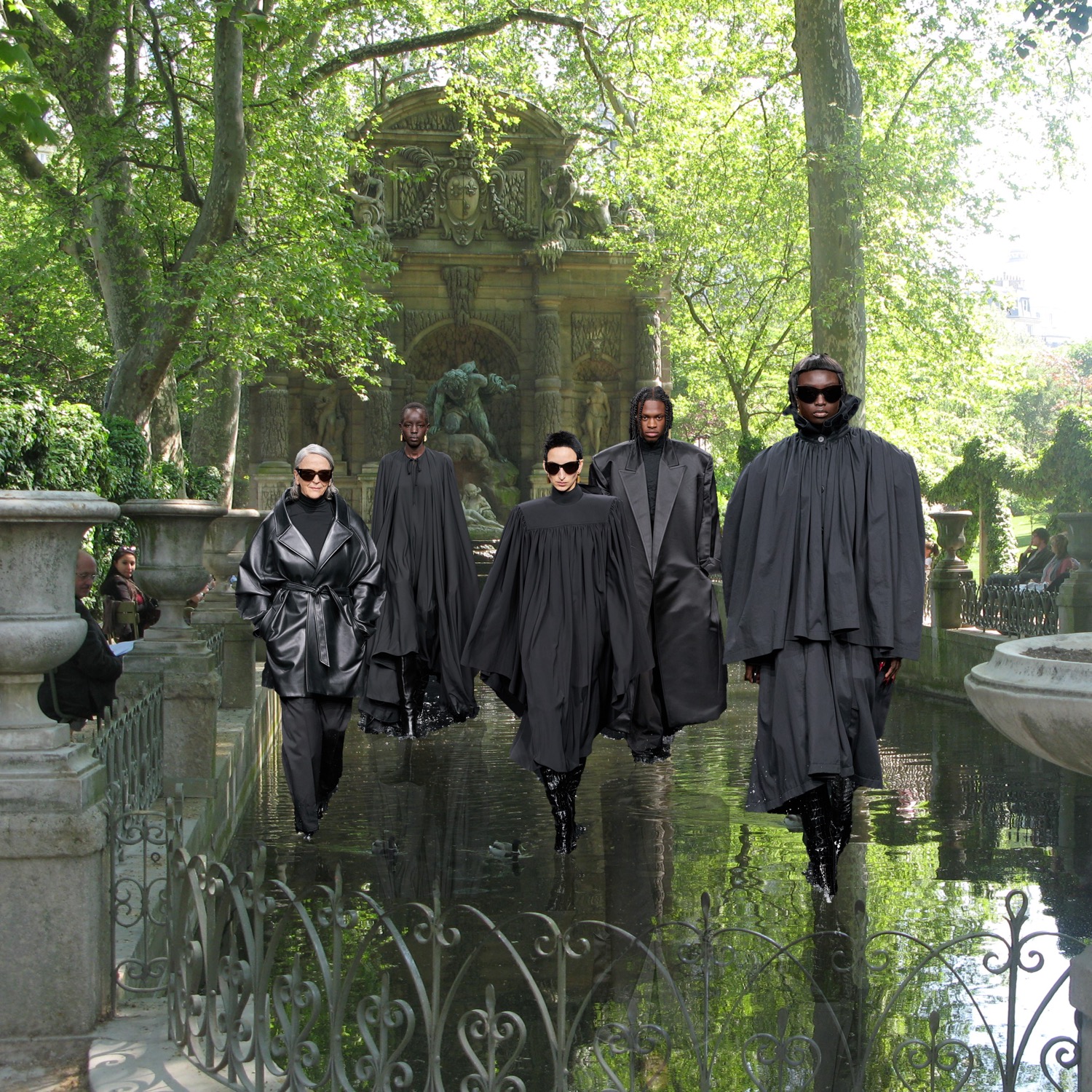
Balenciaga
No other show in Paris left such a vivid expression as Balenciaga. You still keep on thinking about this collection (which already means something…). The audience entered the darkened Balenciaga venue and suddenly realized that the first two rows were inundated with water. It was a chilly setting for Demna Gvasalia‘s procession of sinister characters, walking on a vast stretch of water beneath an apocalyptic, digital sky filled with fire, lightning and Hitchcockian birds. “It’s the blackest show I ever did,” the designer said. Gvasalia’s route is always freighted with social observation on the state of the world, power politics, dress codes, fetishism. His intense parade of priests and priestesses in long black robes, with their “religious purity, minimalism, austerity” arose from memories of the Orthodox church in Georgia, and looking at the Spanish Catholic origins of Cristóbal Balenciaga. “He made his first dresses from black velvet, for a Marquesa to wear to church,” Gvasalia concluded. “I had a lot of clerical wear in my research. I come from a country where the Orthodox religion has been so predominant,” he said. “I went to church to confess every Saturday. Back then, I remember looking at all these young priests and monks, wearing these long robes and thinking, ‘How beautiful.’ You see them around Europe with their beards, hair knotted back and backpacks. I don’t know, I find it quite hot – but that’s my fetish.” On closer inspection, they were wearing demonic red or black contact lenses; their faces brutally augmented with protheses. “Religious dress codes are all about hiding the body, about being ashamed – body and sex is the taboo. Whereas when you look into it, some of these people are the nastiest perverts”. Holding that thought – about constraint, rules and belonging to sects – set him off, designing neoprene suits with tiny compressed waists for women and black leather “Pantaboots” with padlocked “chastity belts” and a whole series of leather biker suits. This collection is in a way painful to look at, but that is its real power. On the other note, I think Demna is the only person in fashion who really pushes the topic of silhouette and form, creating some of the most transformative garments.
See the collection here.

Saint Laurent
Here’s one of the most brilliant collections coming from Anthony Vaccarello for Saint Laurent. There was power, there was vibrance, there was colour – something I missed or didn’t really feel in his last collections. And, it didn’t look like Hedi Slimane’s Celine. The opening look laid bare exactly what he was thinking of for the season: an haute bourgeois red tartan double-breasted blazer, gilt-buttoned, velvet-collared, atop a matching jabot neckline blouse, hair swept back, substantial gold and jet earrings, and… black latex trousers. And there was plenty more of tailoring: exquisite jackets, impeccably cut, double-breasted, many with those same gilded buttons, in ochre cashmere, pearly gray flannel, jaunty navy wool, natty brown houndstooth – and all worn with those same dominatix, all-gloss pants. What was new and completely refreshing was the way Vaccarello chose to riff on the lush sensuality that Monsieur Saint Laurent was such a master of. And what else was new, yet very Yves: the uninhibited sense of color, with Vaccarello working his way through the classic YSL palette – fuchsia to purple to emerald to hot pink – and showcasing it his own way through that extremely non-classic latex. But when styled with YSL’s Le Scandale-inspired fur coats, it all made even more sense. Backstage, Vaccarello acknowledged the #MeToo climate, and spoke of celebrating a woman’s power and her own sense of self. Ever since his arrival at Saint Laurent, Vaccarello has endorsed a woman’s right to express her own physicality, and her sexuality, any way she wants.
See the collection here.
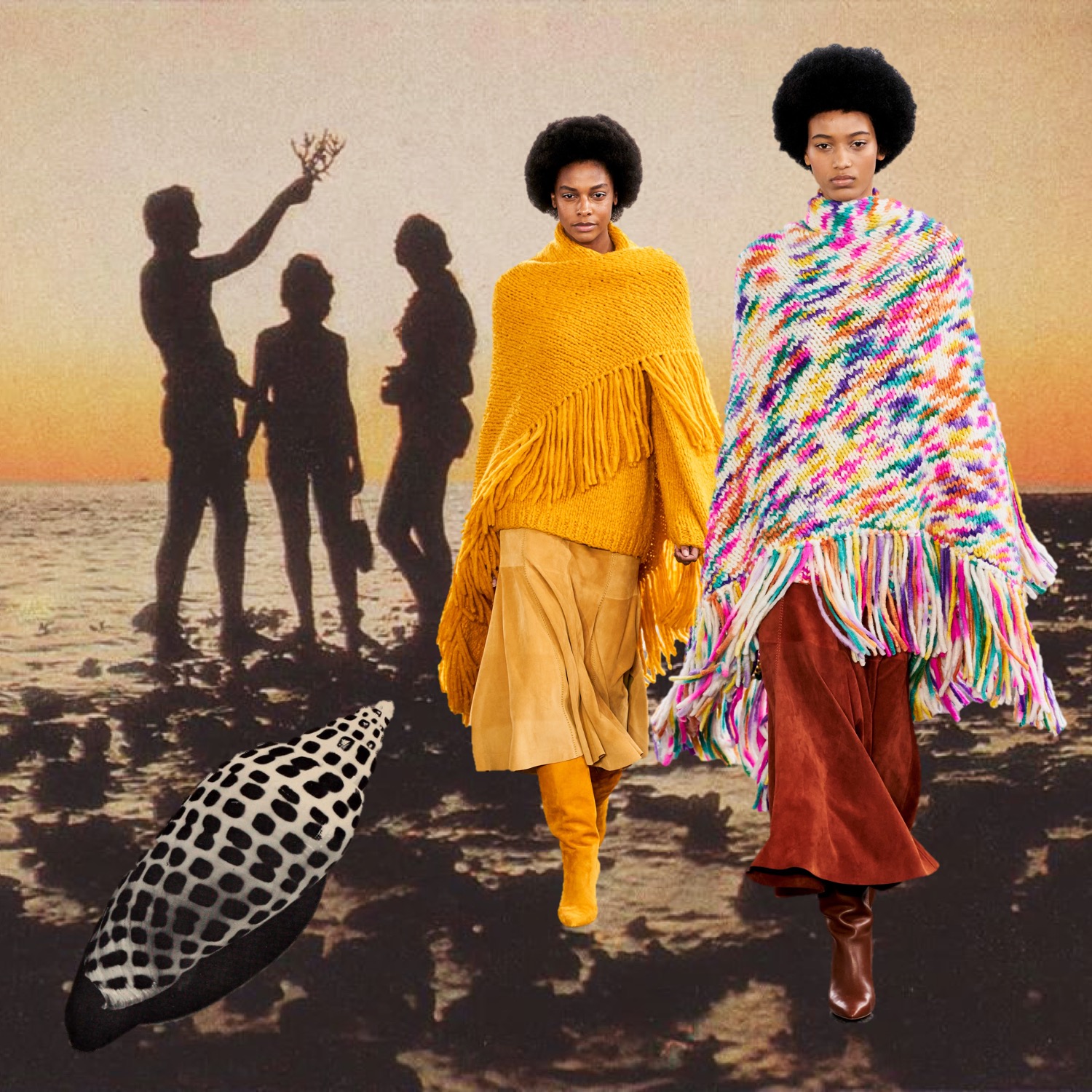
Gabriela Hearst
Well… Hearst is also leaving New York and we will see her collection later this month in Paris. Gabriela Hearst’s autumn-winter 2020 line-up was beautiful. And it managed to be really sustainably made, without making a fuss about it. For Hearst, enviroinment is a priority. And she can translate that passion into luxurious, softly minimal, super high quality clothes. Antique remnants of Turkish rugs were puzzled together in outerwear pieces lined with cashmere. The hand-made knitwear was done by Manos Del Uruguay, the non-profit cooperative female artisans, and Magdalena Koluch, a New York-based knitter – the multi-colored, fringed poncho is one of the many gorgeous results that came from this collaboration. Existing pieces of cashmere outerwear were deconstructed and re-assembled with blanket stitch creating a fantastic colour block pattern. Most of the used wools in this collection were re-printed and reused to create new pieces. Gabriela and her team really pushed the envelope this season in terms of sustainable fashion and creating out of waste products, and simultaneously made it look refined. Just see the biscuity, cashmere corduroy tailoring or the flowing eveningwear. Delightful!
See the collection here.

Bottega Veneta
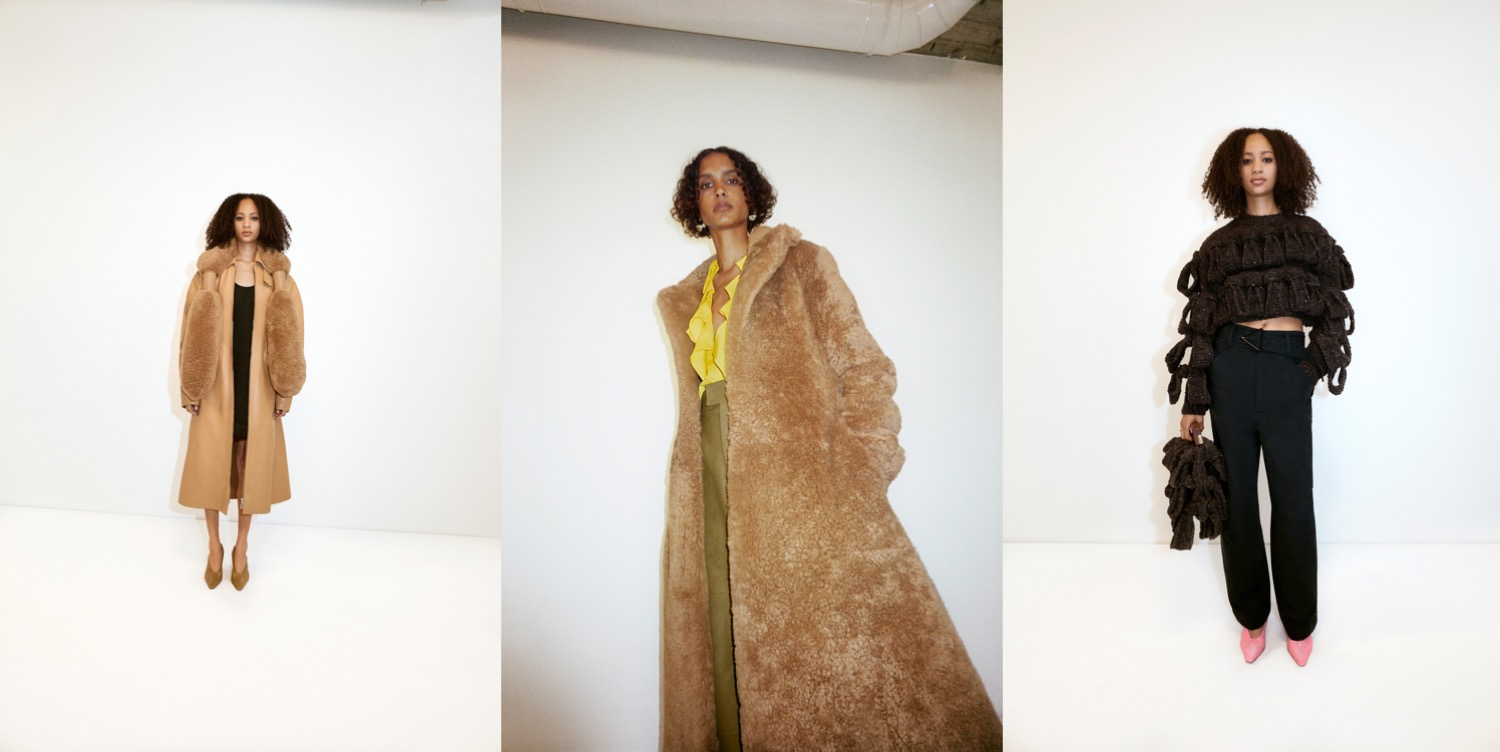
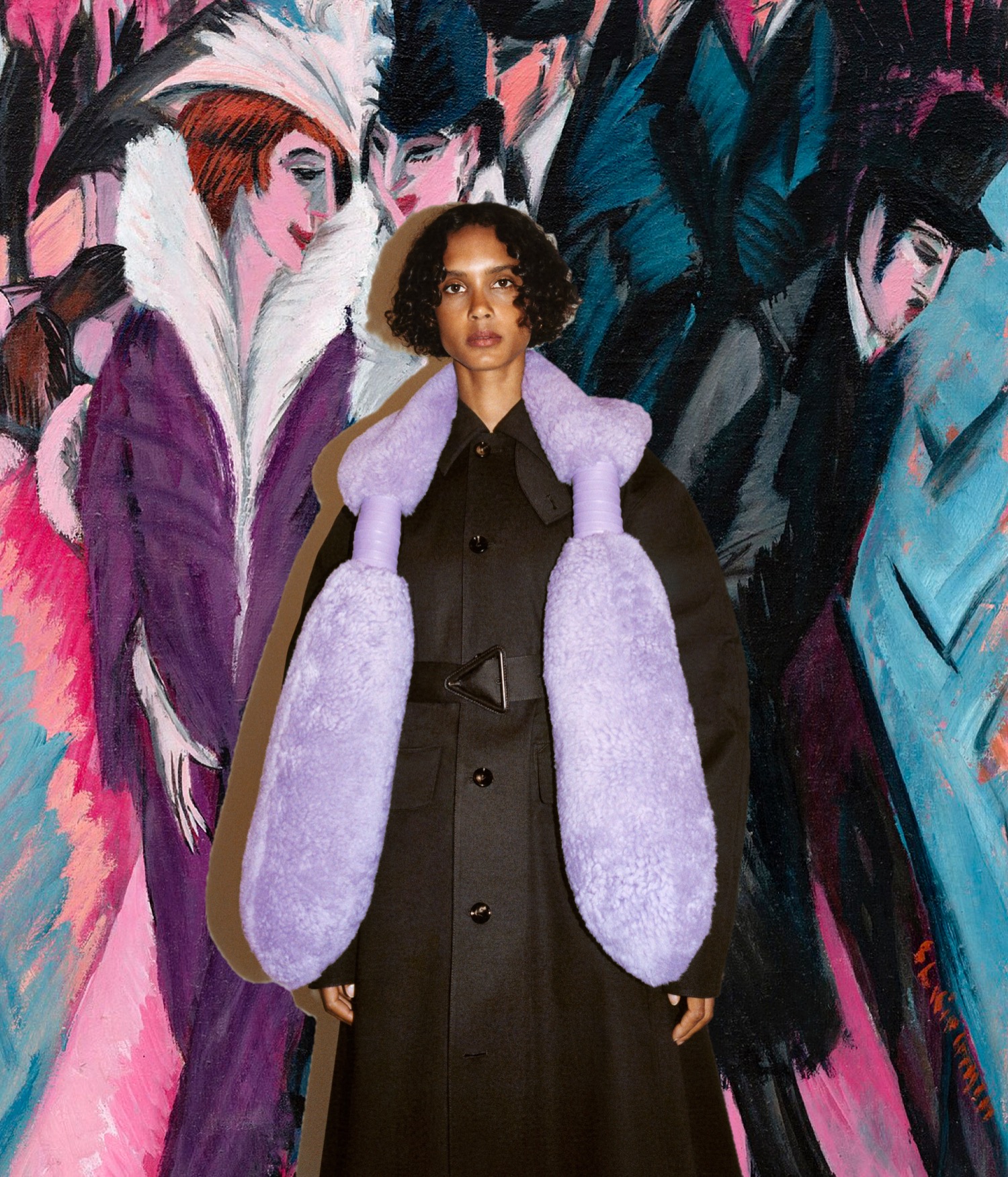
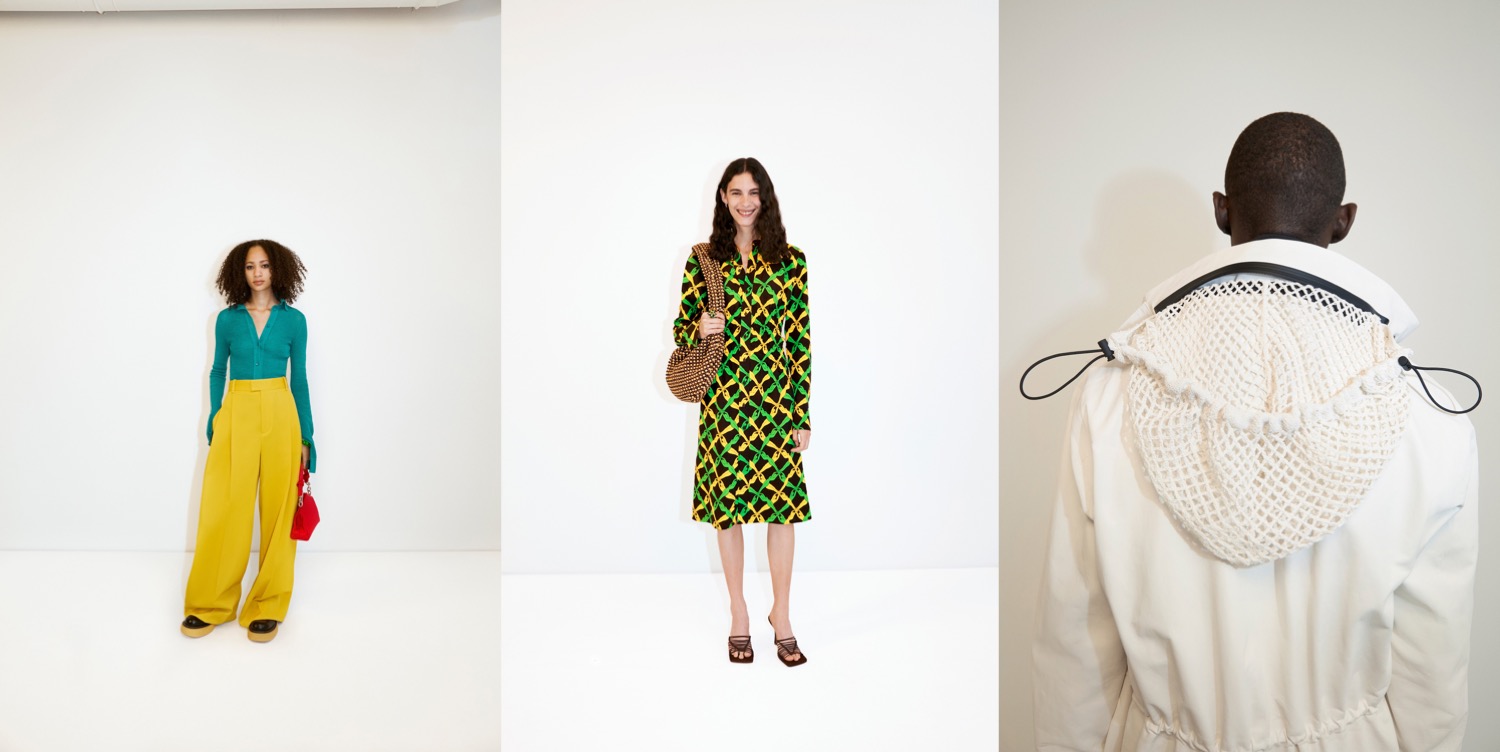
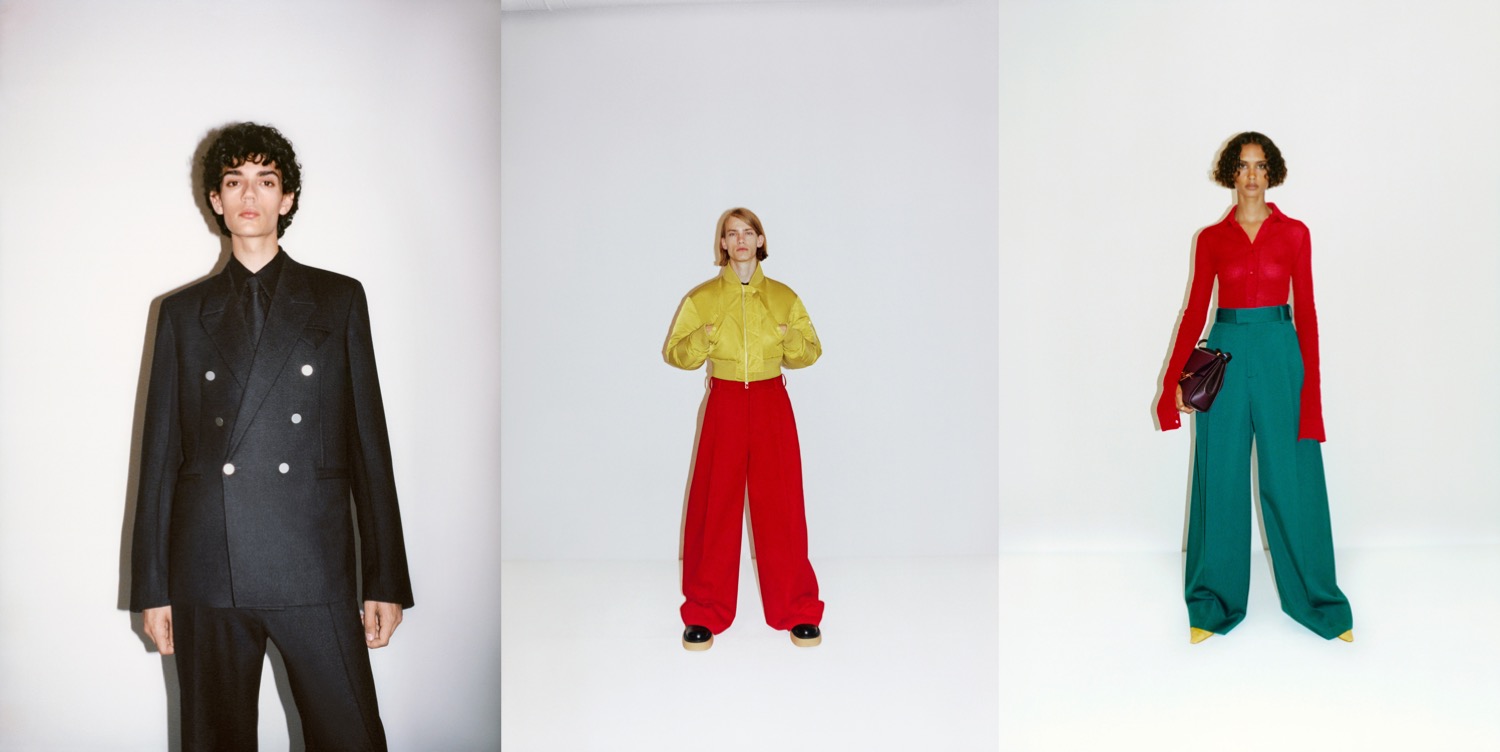
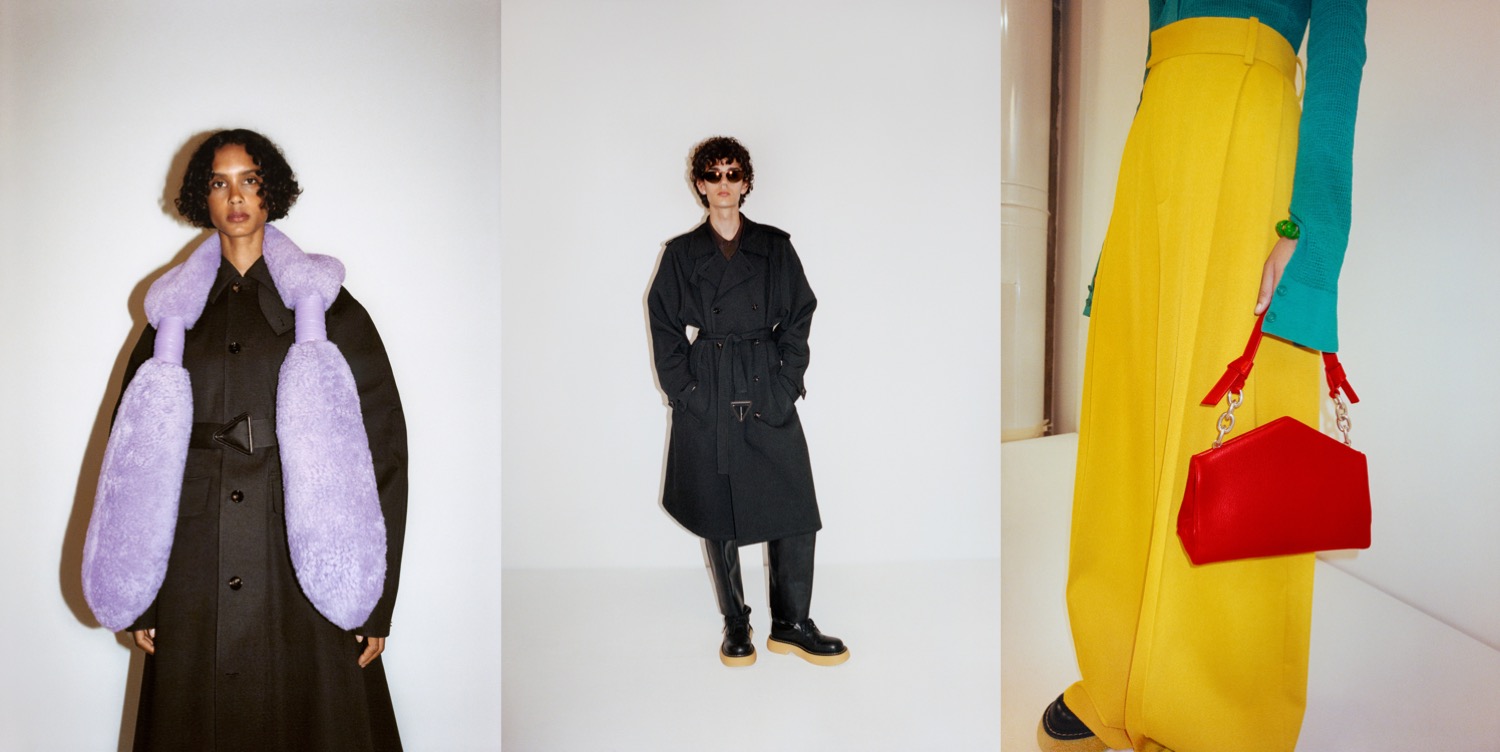
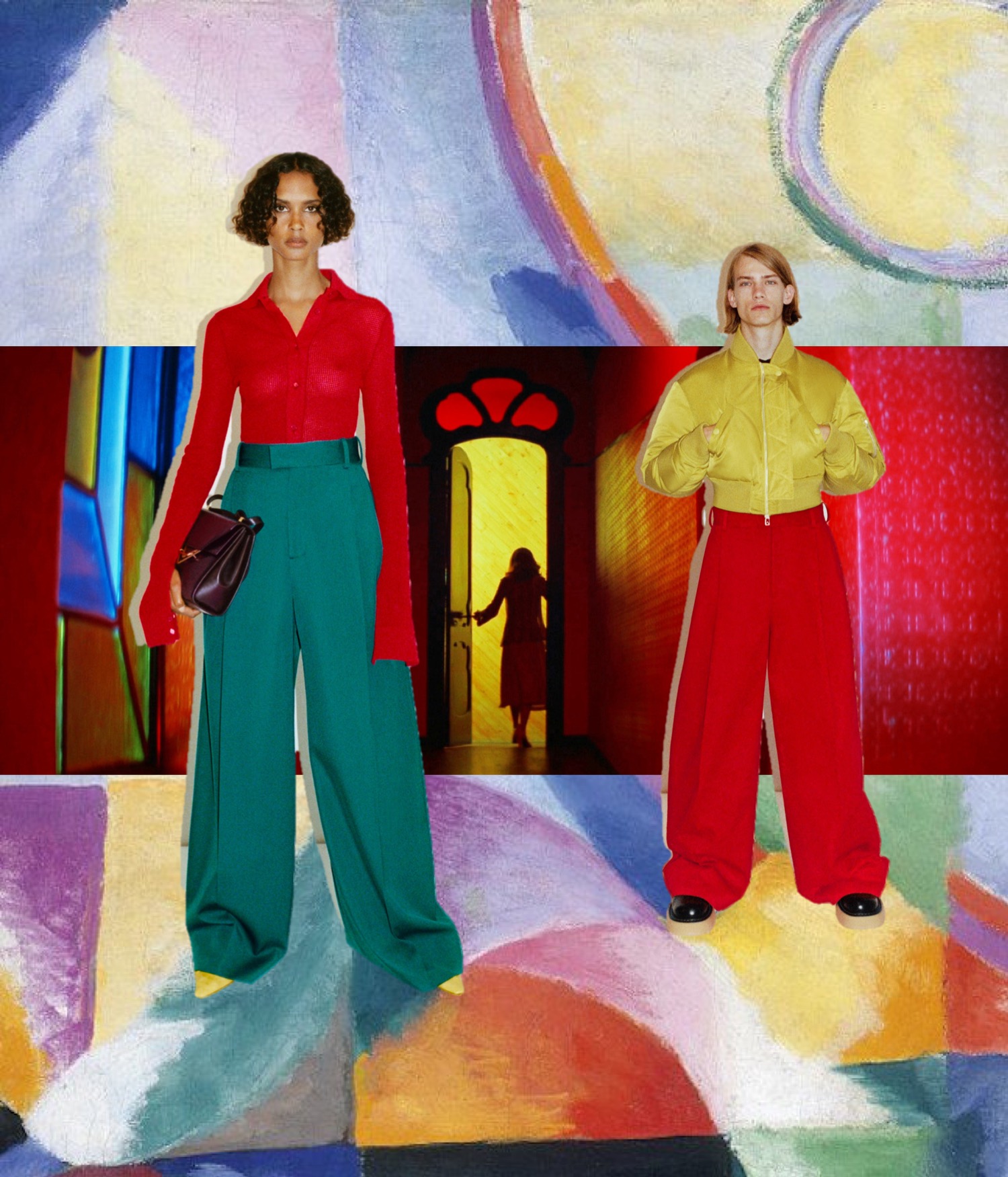
Another hot ticket in Milan. For autumn-winter 2020, Daniel Lee evidently tried to win with the mainstream hype that started to abruptly surround Bottega Veneta he shook up, and took a riskier path. Painful colour combinations that look so bad they’re actually good. Volume plays that aren’t the easiest to pull off. Accessories which are distant to regular “it” bags and “it” shoes (fringed octopus clutches, rubber boots in neons). I’m aware that the audience’s memory span is too small for noticing all the Phoebe Philo and Céline references (really, every single look reminded me of a specific collection – and especially Philo’s now iconic swan song line-up, which was also the last for Daniel), so no surprise the collection’s edginess is this electrifying. For autumn-winter 2020, Lee decided to examine softness – something he has missed in his debut last year. “When you look at the brand’s beginnings, everything it made was so soft. I find that super inspiring.” That thinking informed the ready-to-wear he put on the runway. But equally, so did the fact that at the age of 34, Lee is part of the street wear generation that’s wearing trainers, sweatshirts with prints and any piece of clothing that puts an emphasis on cool and comfort. He asked himself, “How do we put ourselves together in a considered, elegant way but still feel comfortable?”. His answer was simple: stretch. Even the refined men’s tailoring was built with stretch in it, he said, so it moves with the wearer. He also put big emphasis on both knit dressing and jersey, for both day and evening. Movement is his other obsession. He said he’s been spending a lot of time at La Scala watching dance performances; he likes all kinds, from ballet to modern. No wonder why those sequinned maxi-dresses and coats with floor-sweaping XXL-fringes look so amazingly vibrant and energetic once they are worn and presented in motion. As you can observe now, this collection is selling out at a very, very fast pace.
See the collection here.
Loewe
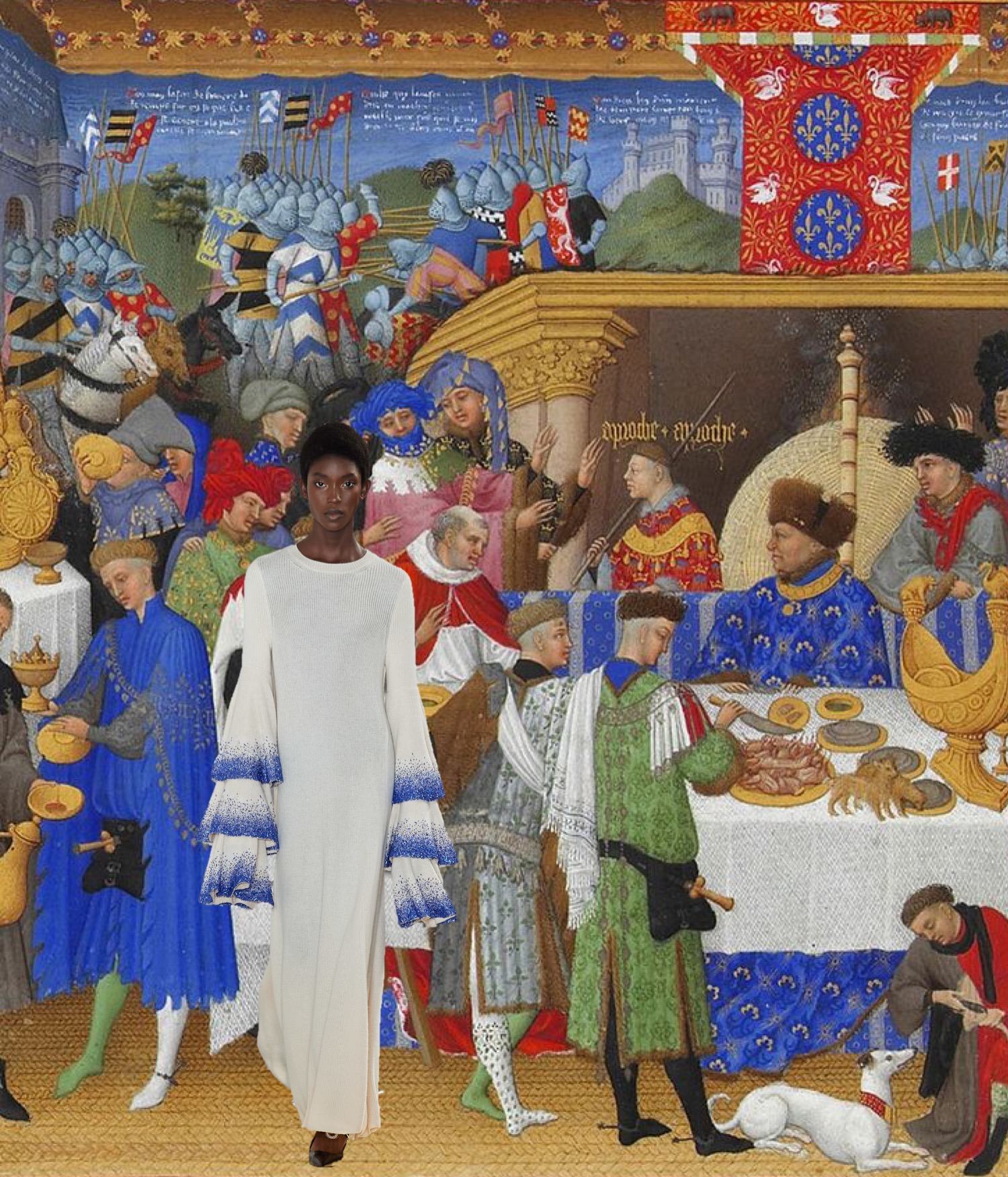
“Dressing to impress—I think that’s an exciting thing,” Jonathan Anderson declared backstage of his latest Loewe show. “Looking at building new types of silhouettes that can work in an abstract way. Trying to take a risk, maybe in my own self.” Taking risks is a trouble for many designers in Paris, so it’s great to see at least someone addressing that. What he began with – the volumized “entrance-making” shapes he showed in his JW Anderson collection in London – was followed through with inspirational conviction at Loewe. The collection at some points looked odd, but in a good, refreshing way. This line-up wasn’t obvious. What were these brocade dresses, gathered by Takuro Kuwata’s ceramic works? How to capture the shoulder-extending device from which caped-back sleeves were suspended? Anderson said he didn’t quite know exactly how he’d arrived at those ideas. “But sometimes it’s nice to feel vulnerable when you’re doing a collection – that you don’t know what the outcome is going to be before you start.” In pushing across the frontiers of the norm, Anderson relies partly on spontaneous curation. “Exaggerating by illusion” is one way he described the process. Yet the thing about Anderson is that his creative push is also part of his incredibly prescient long-term strategy to turn Loewe into what he’s called “a cultural brand” (he’s reconstructed it into a fashion home for the art-owning and gallery-going international clientele). This as well gets reflected in Jonathan’s fashion. Echoes of 17th century Spanish art – especially Zurburan and Velasquez – come in the subtle Spanish semiotics Anderson embeded in the collection. Maybe there was a hint of flamenco in the raw-edge tiers in a gray flannel coat and the triple-fluted sparkle-dusted sleeves of a ribbed-knit dress. But then, some of the dresses had volumes that made you think of medieval-wear we know from miniature illustrations.
See the collection here.

Dries Van Noten
After last season‘s collaboration with Christian Lacroix, it was clear that Dries would somehow continue with this over-the-top energy. The designer was thinking about “nocturnal glamour” and particularly the dressed-to-kill creatures of the glam 1970s and high 1980s, whom he glimpsed from afar as a young man in Antwerp, in the form of the high-gloss photography of the makeup artist Serge Lutens. Maybe she was heading for a night at the most trendy club in Paris (well… corona is out in the wild, but let’s dream!). Or maybe that was her, wending her way home in daylight, with a plaid coat shrugged over her glitter. “It’s about going out, enjoying life – having fun, that’s very important!” he remarked back in March. “I thought of this party girl. Something mysterious. Something dark. But I questioned how far it could go, while staying contemporary.” His solution was to partially casualize the glamour by applying his melee of acid green and fuchsia jungle prints to fluid pajama shapes, and adding ’90s grunge–influenced plaids and hip-tied shirts to the mix. Equally head-turning: a dress in a violent purple, streaked with silver embroidery.
See the collection here.
Simone Rocha
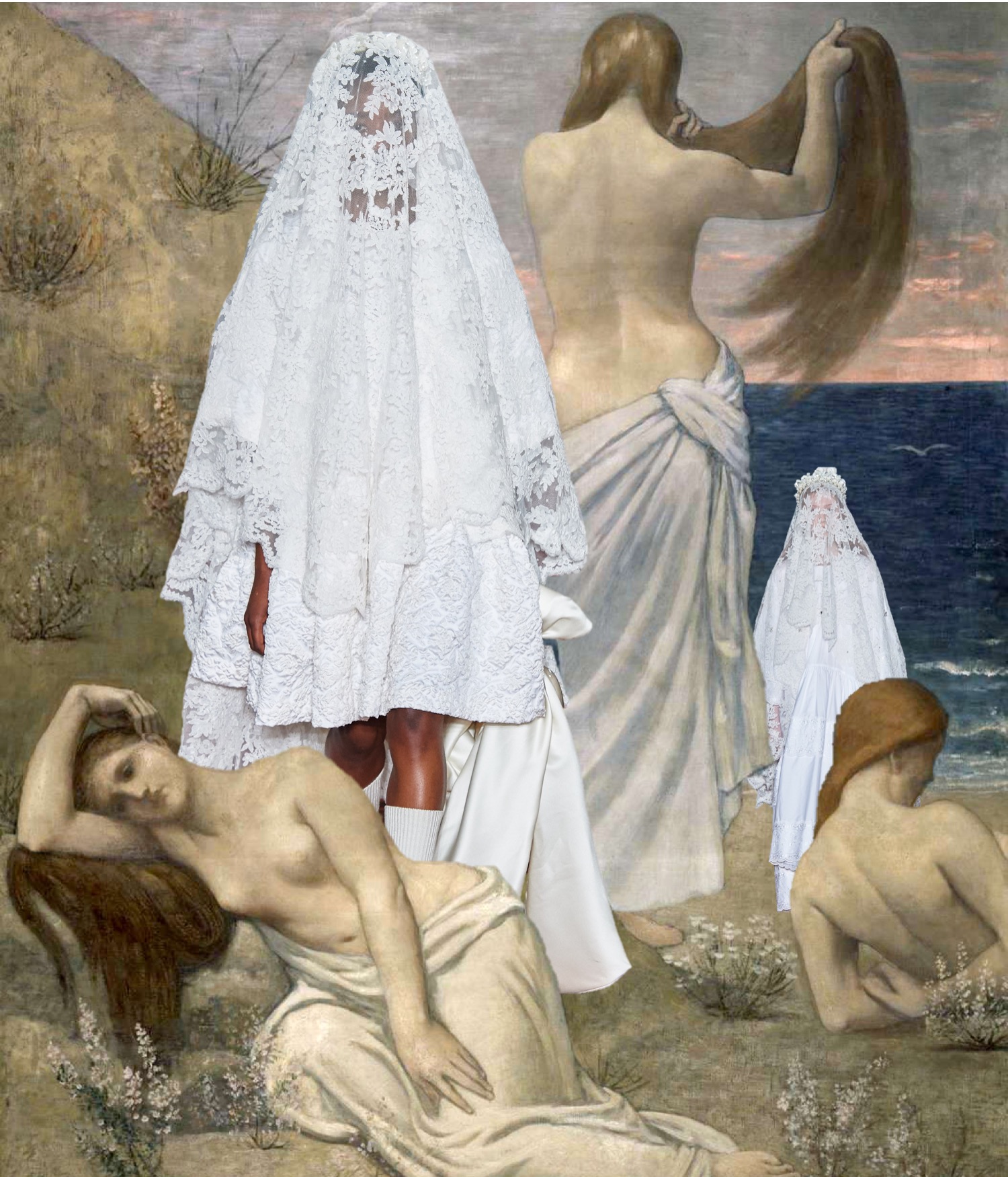
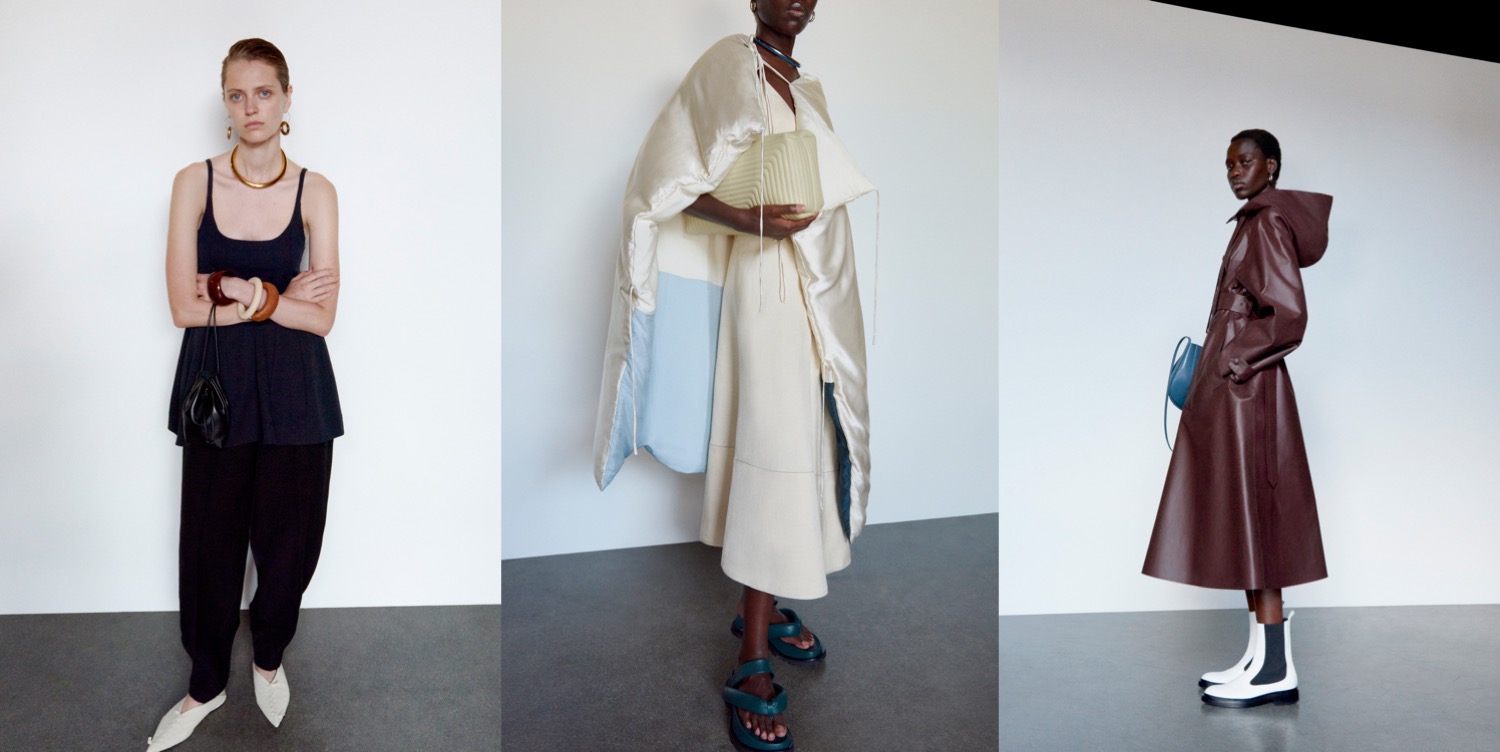
There was something beautifully sacred and mystical about Rocha’s collection. Ribbons and ties, fisherman’s nets, white lace and baptism-like cotton cloths, pearl details from head to toes… and of course the Aran knits. “Procession, baptism; birth, life, and loss,” began the designer. “It’s about the Aran Islands, the life there, and J.M. Synge’s play about it, ‘Riders to the Sea’.” The cream wool Aran pattern is the centerpiece of Rocha’s collection – the Irish stitch is world-famous, even though if originates from a tiny sprinkle of islands off Connemara on the country’s west coast. “It’s the color of the unbleached wool from the sheep there,”Rocha explained. An what about the slightly nautical feeling? In the past, people on the remote islands lived only on sheep and the proceeds of battling with the sea – Synge’s drama is about the tragedy and the resilience of a woman who has lost her husband and sons to drowning. Rocha is never afraid of the less optymistic themes for her shows. But somehow, they never appear heavy or dull. After the virgin-white looks, something darker began to flow in. Women in mourning, church rituals, priests, legends, and the Virgin Mary all became wound into this one. Rocha never had a religious upbringing from her parents at home in Dublin, “so I never made my first Communion, so I never got to dress up in the white frocks, though all the girls around me at school did. Maybe that’s why I’m obsessed, making up for it,” she said with a laugh. “Of course, you can’t look at Ireland and not be influenced a little bit by Catholicism.” As always with Rocha, I’m completely in love.
See the collection here.

Lemaire
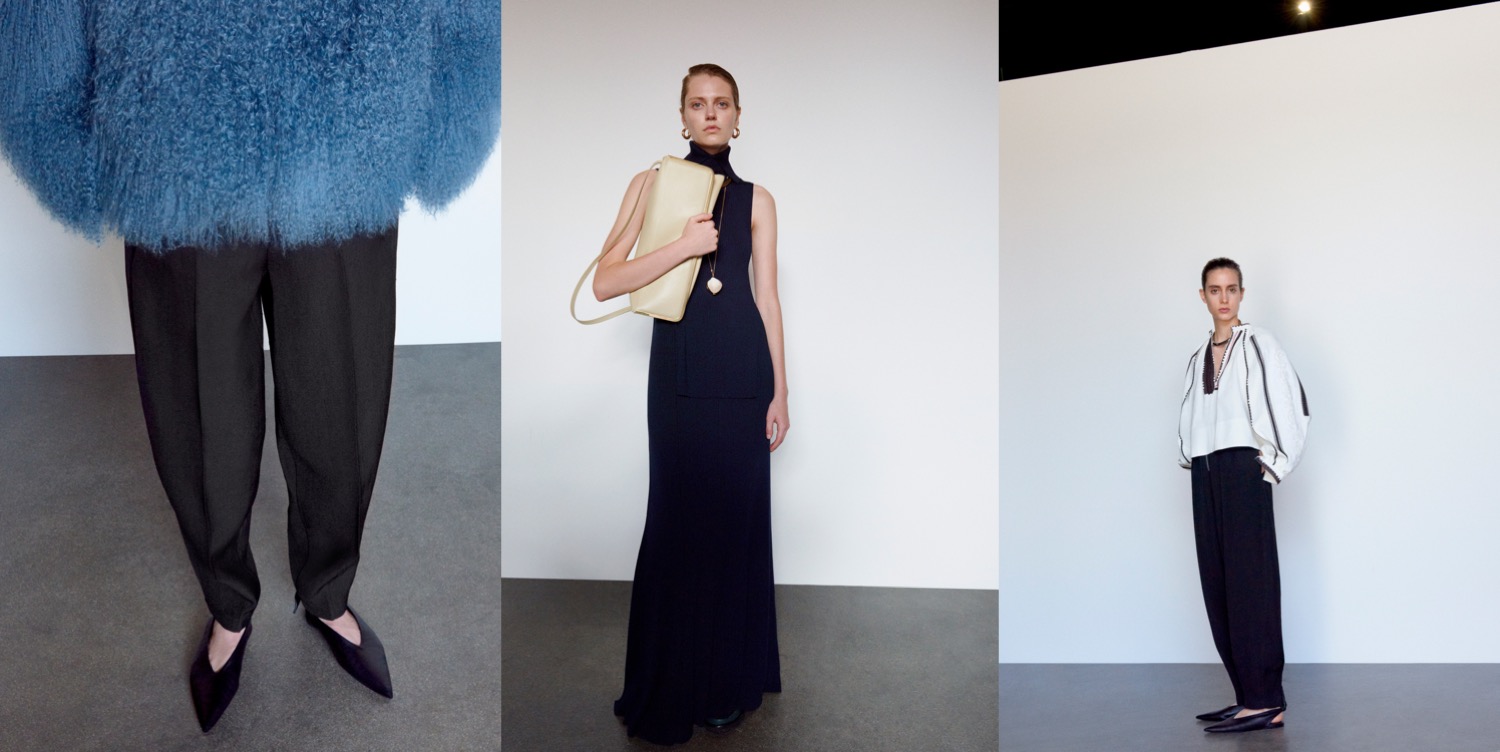
And of course, my heart got completely stolen by Lemaire. Models at Sarah-Linh Tran and Christophe Lemaire’s show emerged in groups of two or three, and the designers encouraged them to wander instead of stride, taking in their surroundings and making sidelong glances. Along with the typical runway models, there was the Japanese actor Ryo Kase playing a middle-aged “commuter” with a rolled-up copy of Le Monde, an older gentleman with white hair and one of the label’s clamshell leather bags in the crook of his arm, and mature women in head-to-toe shades of brown who gave the audience outfit envy. Most of the looks were monochrome in varying shades of neutrals. Backstage, Tran reasoned that “the face stands out more that way.” Layering was one of the key takeaways here, along with the power of a great coat or jacket and a sturdily heeled knee-high boot. The silhouette tended toward the voluminous: blouson jackets were belted at the hips over A-line skirts and trench coats came with assertive storm flaps and hoods. Delightful. The biggest surprise coming this season from Lemaire? Prints. They don’t regularly feature in their collections, but they were a prominent part of this one. With permission from the family of the late Mexican outsider artist Martín Ramírez, they used his earthy drawings on dresses, separates and knee-high boots. They were an enlivening element, beautiful but understated in the quintessentialy Lemaire way. Tran and Lemaire evolve with patience and consideration, so that new-season clothes pair effortlessly and elegantly with ones from seasons past. In case you’ve missed it, the couple released its spring-summer 2021 collection back in summer!
See the collection here.

JW Anderson
“Nouveau chic” was the term Jonathan Anderson coined for his name-sake label’s autumn-winter 2020 collection. The designer mentioned he’d been thinking about what it takes to enter a room – and clothes are the first (and the best) communicators. The ability to take up space with a strong silhouette is part of that – starting with the impression one can make with a fabulous coat. There were three iterations of huge trapeze shapes in tweed, camel hair, and black wool: blown-up classics with generous leather shawl collars that will catch attention wherever you are. This season, not only the couture silhouettes stunned, but as well the innovative, sci-fi direction of the fabrics. It came with a puff of what Anderson called “antique celluloid” around the shoulders. It was part of the experimental theme that played around the sleeves of a series of black dresses. In a strapless version, it fell like an angel-wing cape around the model’s arms. The simpler offering was delightful as well. Take rib-knit dresses with caped shoulders or a shawl-collar black tuxedo suit.
See the collection here.
/
All collages by Edward Kanarecki.
By the way, do you follow me on Instagram? See you there!










 Design & Culture by Ed