Real Sustainable Answers. Chloé Pre-Fall 2022

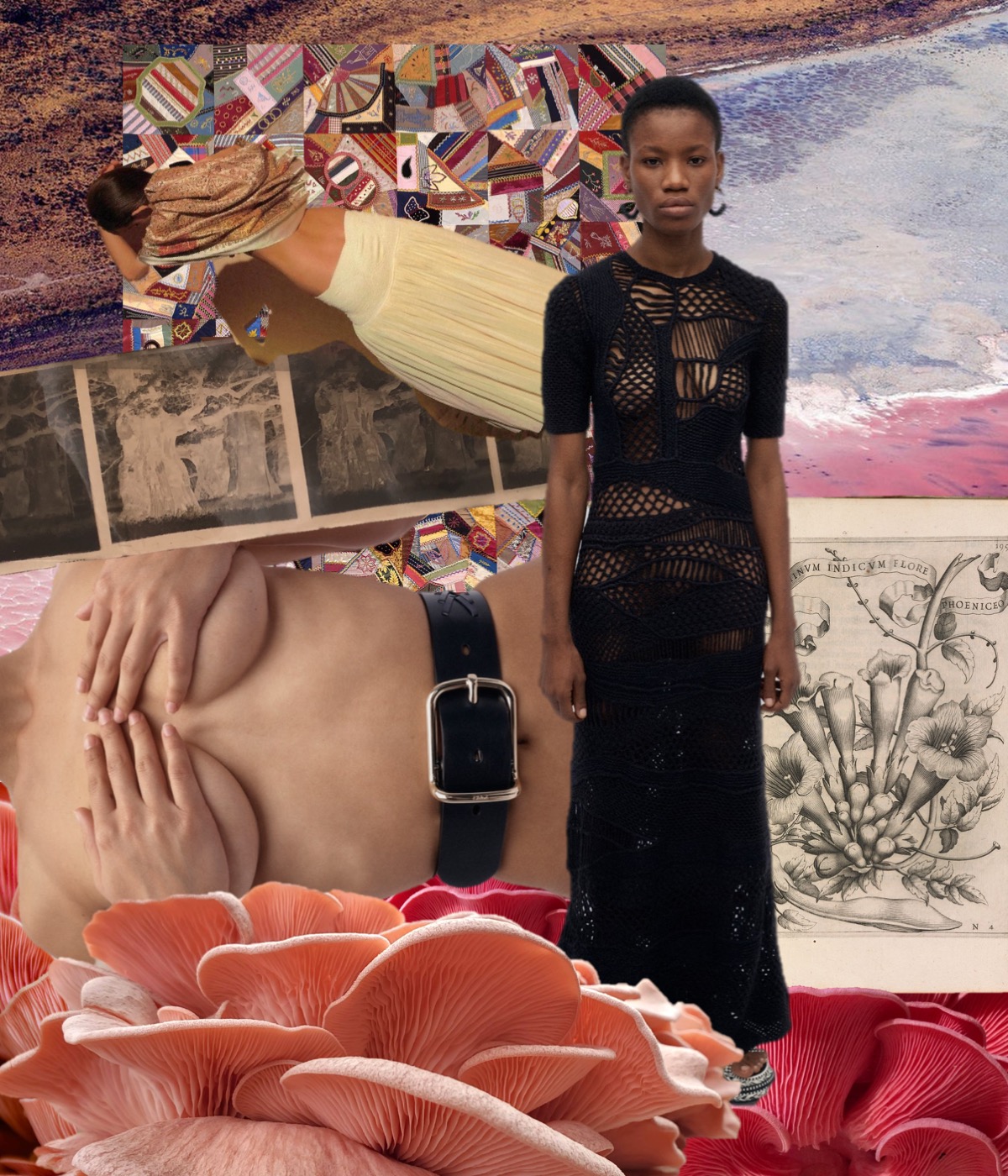
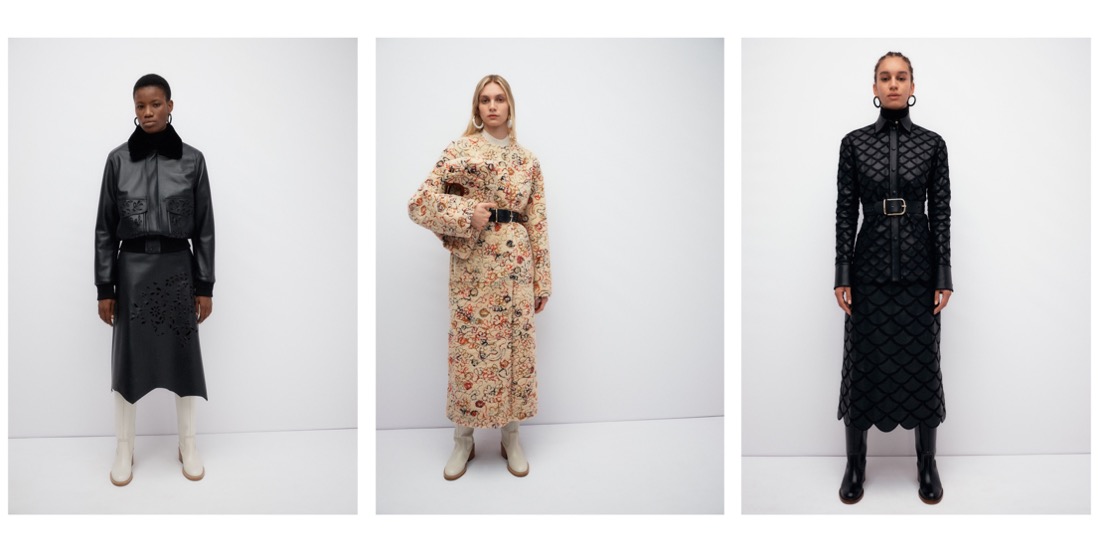
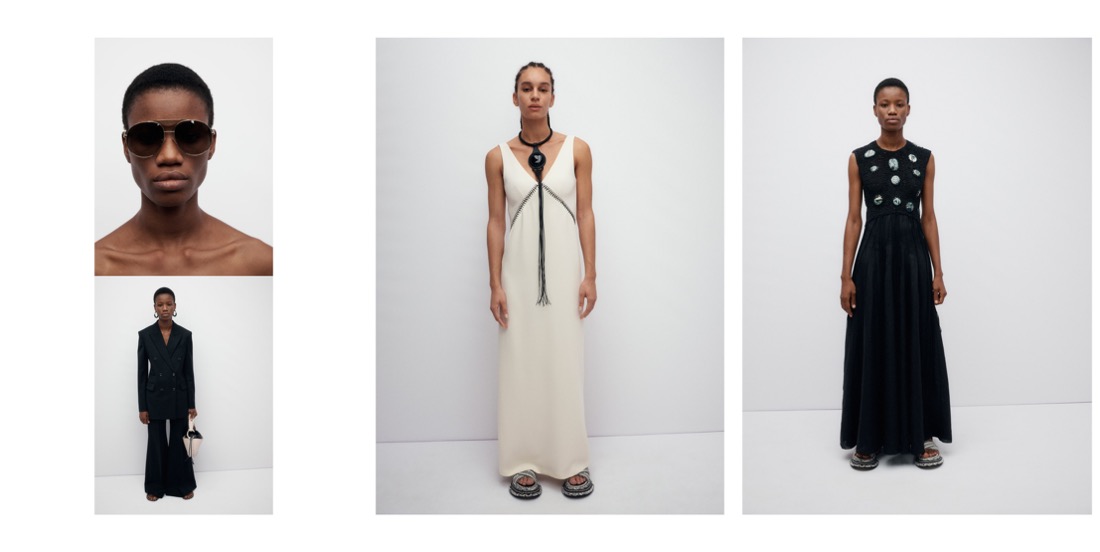
It’s nearly a year since Gabriela Hearst took Chloé under her wings, and it’s quite unbelievable how many sustainability goals the designer has already achieved. And those aren’t just words – numbers and statistics don’t lie. “To give you the exact facts, 70% of the product offer since I came in became lower impact. Compared to my first collection, (what) we did is up 40%”, she summed up. Women who are living under a cloud of post-COP26 anxiety might take some cheer from how openly Hearst is tackling the environmental and social problems inflicted by the workings of the fashion industry. The way she speaks of it, implementing the changes that lie within her power is as much her purpose as the mission to dress women in Chloé clothes. “Empathy, collaboration, lower impact – the right values need to come to the forefront. Collectively we at Chloé are working toward weaving that into the DNA of the company.” The clarity of style she’s brought to the house has become completely visible four seasons in. It’s streamlined and slick, a grown-up boho look infused with classic Chloé-isms and her own handcrafted, macraméd, whipstitched energy. She’s carefully corralled all the legacies that women designers have imprinted on the brand for decades: the reputation for a boot-cut, ’70s-ish pantsuit that Stella McCartney laid down; the balloon-y broderie anglaise sleeves that Phoebe Philo played with; and Chloé founder Gaby Aghion’s scalloped edges and taste for pinkish orange, the color of the Egyptian desert of her childhood. Meanwhile Chloé’s horsey heritage is a natural for Hearst, who brings her own Uruguayan ranch upbringing to her feeling for caped coats, French-style riding boots, and the thick leather girth strap she’s turned into a belt. “I love this buckle that I found in the archive from Hannah MacGibbon’s time,” she said. “We oversized it.” It all looks a lot like Hearst herself: tall, strong silhouettes; a practical modern vigor; a touch of the hippie sophisticate. Yet the main imprint she’s stamping on Chloé is in becoming one of the very few luxury fashion creative directors who are making it impossible to detach the conversation about pretty clothes from talking about what’s in them and how they are made. Moving rapidly along the vectors of transparent reporting, partnerships with women’s employment projects, environmental certifications, Chloé’s freshly acquired B Corp status, and new membership in the Ellen MacArthur Foundation (which champions circularity) – and shining a light onto the multitude of fashion’s hidden processes – is a business that continually brings up more questions.

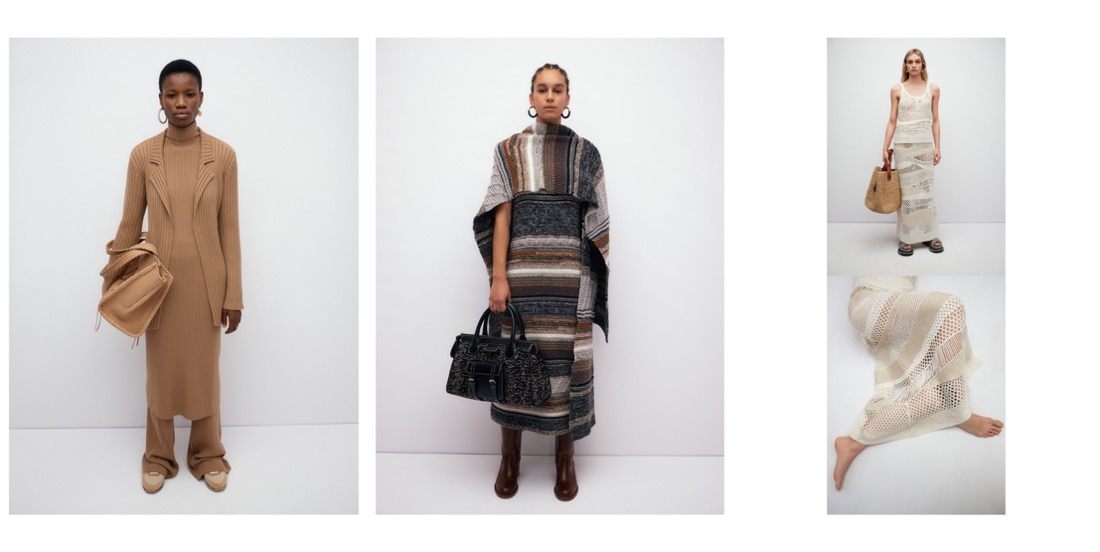
Hearst is happy to point to several achievements in this collection. Botanical dyes are part of it—like the shade of Gaby Aghion pinkish orange in the merino wool skirt-and-sweater set. There’s also biodegradable denim, which Hearst cut into a pair of high-waist flares and a matching jacket. “This is the third season we’ve been working with Adriano Goldschmied [the legendary denim expert] on this project to resolve circular denim, following the Jeans Redesign Guidelines published by the Ellen MacArthur Foundation,” she said. The production of the new Chloé jeans eliminates rivets, which never break down, and the fabric is a mix of 70% recycled cotton and 30% hemp, “which is grown in France. Hemp and linen cultivation emit less greenhouse gases and require less water compared to cotton,” she noted. But to vegan and vegetarian customers – and anyone who’s read recent reports about fashion’s links with cattle farming and deforestation in Brazil – the noticeable amount of leather in the collection will raise eyebrows. “From the point of view of sustainability, I have a very specific position about leather,” argues Hearst. “Leather is biowaste of the meat industry. I am very against industrialization of meat – I’m really against the way livestock is being industrialized. I don’t think we can afford eating a high-meat-protein diet, and definitely don’t recommend it.” But while she accepts that moving toward plant-based diets “is better for the environment,” from her perspective, “the truth is nobody’s killing the animal for the leather. The price of leather is going down and people are wasting it.” That in itself creates an environmental disposal situation. “What are we going to do with the leather, other than just use it?”

The Chloé press release states how the sourcing of the Chloé leathers is certified by the Leather Working Group, which is “an international organization made up of stakeholders across the leather supply chain, working to promote environmental best practice within leather manufacturing and related industries.” The organization looks into the operations of tanneries, “meaning that the leather process is done properly, meaning not wasting water and not using harsh chemicals,” as Hearst puts it. Around 75% of the leather handbag offering is sourced from Leather Working Group–certified tanneries. Nevertheless, there is always further to look into. A report in The Guardian on November 29 spotlighted research by Stand.earth, a supply-chain research company partnered by the Slow Factory and Model Activist, showing that the Leather Working Group’s remit stops at capturing what happens in tanneries and slaughterhouses. Its visibility doesn’t reach back to what happens at the farm level, and therefore “does not ascertain whether hides are linked to deforestation.” Under normal practice, hides come into tanneries from multiple sources and are often mixed up, meaning that fashion brands – across luxury and mass manufacturing alike – are “at risk” of unknowingly buying into the destruction of the Amazon rain forest with the finished product. “As many Amazon leaders have warned,” the Slow Factory writes on its Instagram page, “this is a human rights/climate/biodiversity/public health crisis with consequences for the entire world.” That’s a much vaster issue than Chloé. It spreads across the entire industry and puts question marks over every leather bag, shoe, and coat we buy (it’s also an issue in the auto industry, which is the second-largest user of leather after fashion.) Only diligent and widespread normalization of tracing and labeling, and the development of sounder alternatives, can solve this. Knowing Gabriela Hearst, she’ll be among the first to step up to working on finding those answers.
Collage by Edward Kanarecki.

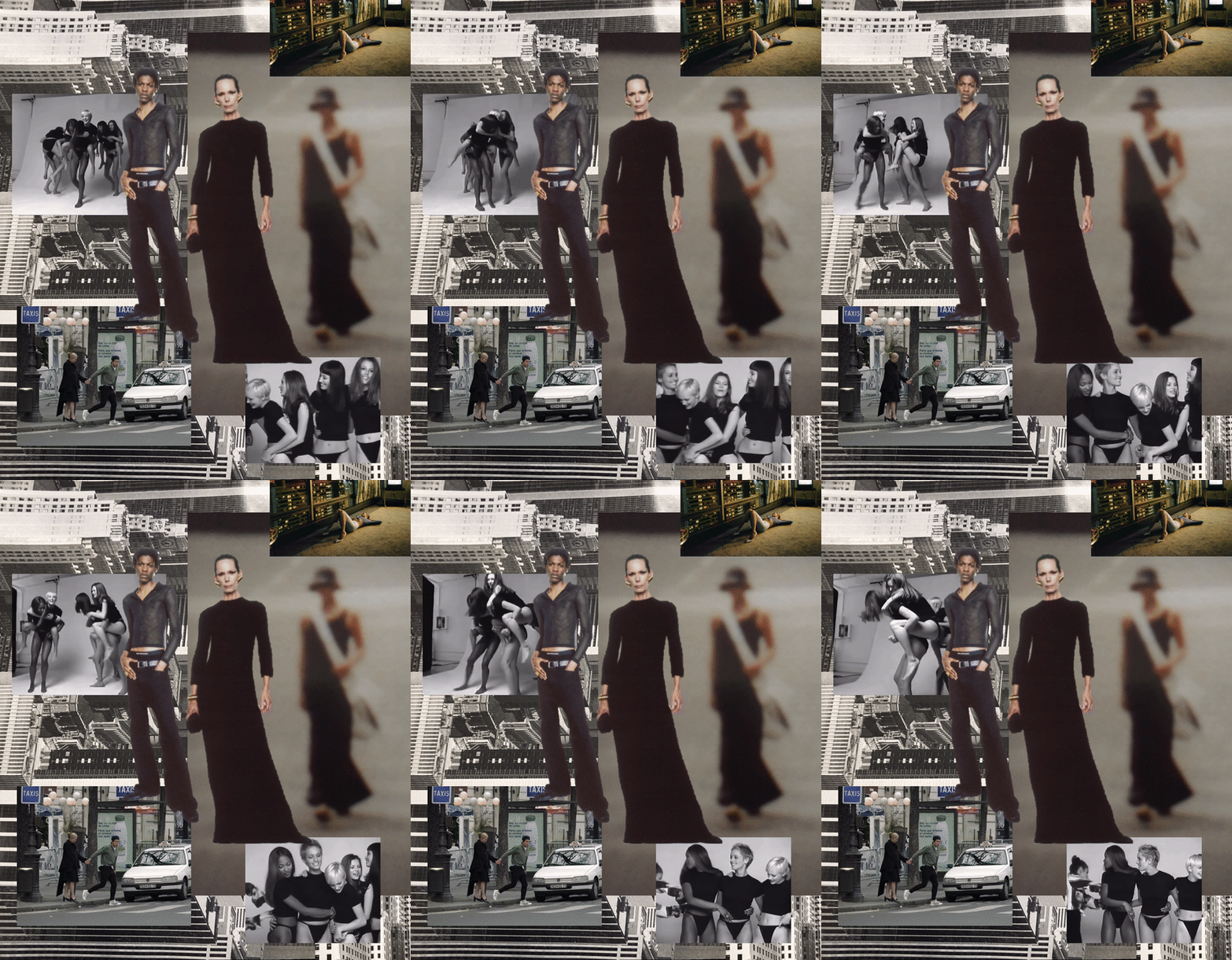
On The Lost Tape. Balenciaga Pre-Fall 2022

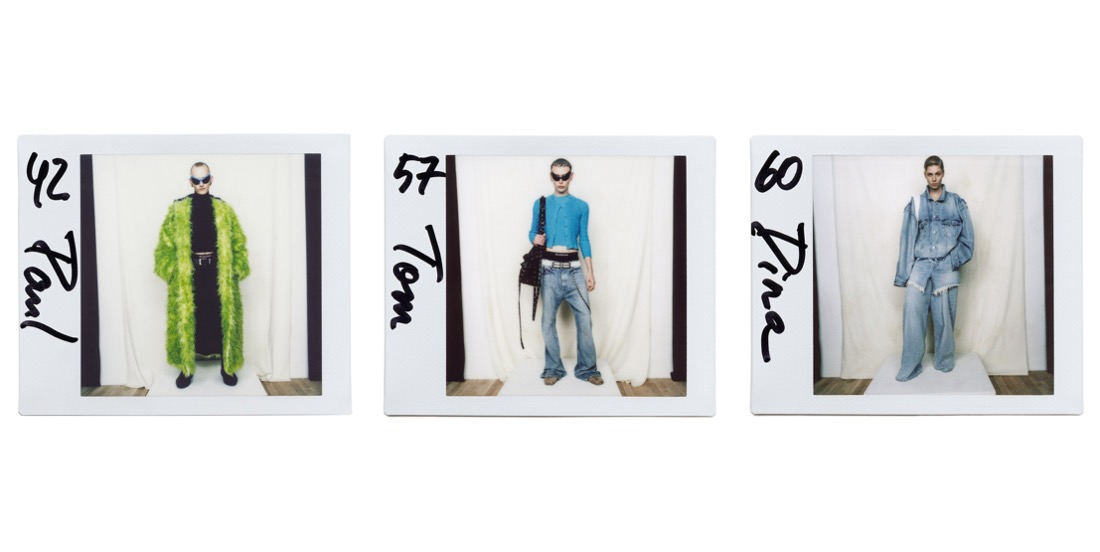
And just like that (no pun intended!), Demna (note: from now on, Demna (Gvasalia) uses only his first name, distinguishing an artist title from a birthname and therefore separating creative work from personal life) does it again. He’s the modern-day fashion genius, we know it by now. Also, good bye to the Y2K trend – the 1990s are back. The Balenciaga pre-fall 2022 presentation comes in the form of a message from the past about what could have been and never was. It recalls a time when clothing that was alive with raw ideas – anti-fashion, deconstruction, and monochromatic minimalism – could be found anywhere from an industry spectacle to the active underground. “On The Lost Tape“, a fashion show is characterized by the people and things that defined this late-90s era, filmed using a VHS camera by the one & only Harmony Korine. The collection symbolically fills a gap from Balenciaga’s forgotten years. Raver and post-grunge silhouettes are pushed to their limits. Proportions are played with, creating new silhouettes and evolving others, including Balenciaga signatures like the Basque waist jacket and the track suit. Front-to-back pieces are studies of classic suiting and tweed dresses that question closure placement, reverse-engineering constructions to become tailored. Ultra-stretchy knits make these and shrunken twin sets easy to put on. Vintage slip dresses are disassembled and pieced back together. Five-pocket jeans are cut up to create a three-piece silhouette that can be worn as a miniskirt, pants, or XL thigh-high boots. Fluid tailoring gives a deconstructed suit an unlined raglan sleeve, in the collection’s Belgian avant-goth tones. A Couture-like bell-shaped puffer’s detachable bow can be used as a scarf. Wrap closures use DIY ways of fastening, like oversized safety pins. And what’s the designer’s dream 90s look? “Me, my favorite looks are the flared raver jeans with the crop tops,” he told Vogue and chuckled wistfully. “Couldn’t wear it now, but reminds me of gay Soviet Georgia underground clubs.” Worth adding: Demna’s commitment to responsible production continues, represented this season with 89.6% certified sustainable plain and printed ready-to-wear fabrics as well as pieces of upcycled leather used in garments and accessories.

Collage by Edward Kanarecki.
Elusive Chic. Chanel Pre-Fall 2022

With a snip of her ribbon-looped scissors, Gabrielle Chanel released women from their corsets and put them in fluid jersey suits and loose chemise dresses. “Nothing is more beautiful than freedom of the body,” she said. With sweeping synergy, this season’s Chanel Métiers d’Art collection by Virginie Viard was equally liberating, with a pinch of denim and CC logo added. Viard invited guests to Le19M, the newly opened building devoted to the workshops of the maison’s artisans, where she presented her most crafts-centric collection within the very same architecture that had informed its cuts and motifs. Named after the arrondissement it inhabits, the triangular Le19M was designed by Rudy Ricciotti whose “concrete thread” façade evokes the intricacy of embroidered haute couture cloth. Viard echoed those lines – as well as elements from the building’s interior – in a collection she called “metropolitan.” The pre-fall 2022 line up is a combination of Chanel’s craftsmanship masters’ work – Lesage, Montex, Lemarié, Lognon, Goosens, Maison Michel, and Massaro – whose painstaking, super time-consuming, beautiful pieces of artisan work are put into the world to contribute to a bigger picture: the full look. Placing these age-old practices in a contemporary context, Viard took that look to the streets – at least those left of the River Seine. Interpreting the Chanel branding through graffiti-like embroidery, she exercised her take on the logomania. A top nestled the double-C among floral appliqué, the same logo was playfully speckled on cardigans and trousers in fluffy silver embroideries, and the Chanel name appeared tagged in multi-colored crystals across the front pockets of a tweed blouson that evoked a sweatshirt. A major Chanel tip: top the tweed outfit with an eternally charming hair bow. It took Viard a while to find her voice at Chanel and make her offerings something more than just riskless sets of the brand’s signatures. Now, the Chanel woman personifies unforced elegance and easy chic fit for contemporary times. And she sure loves gorgeous details!

Collage by Edward Kanarecki.

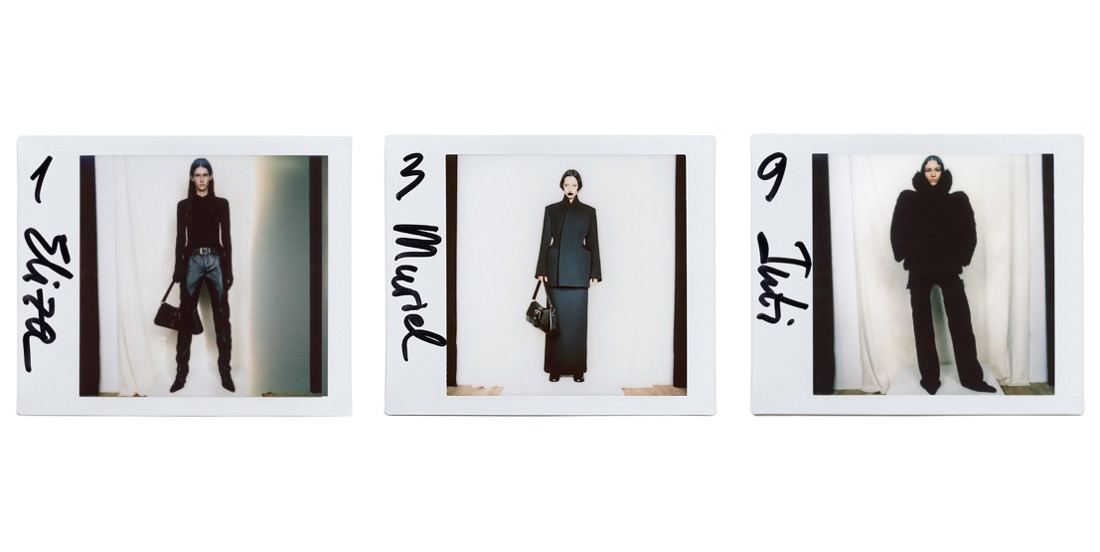
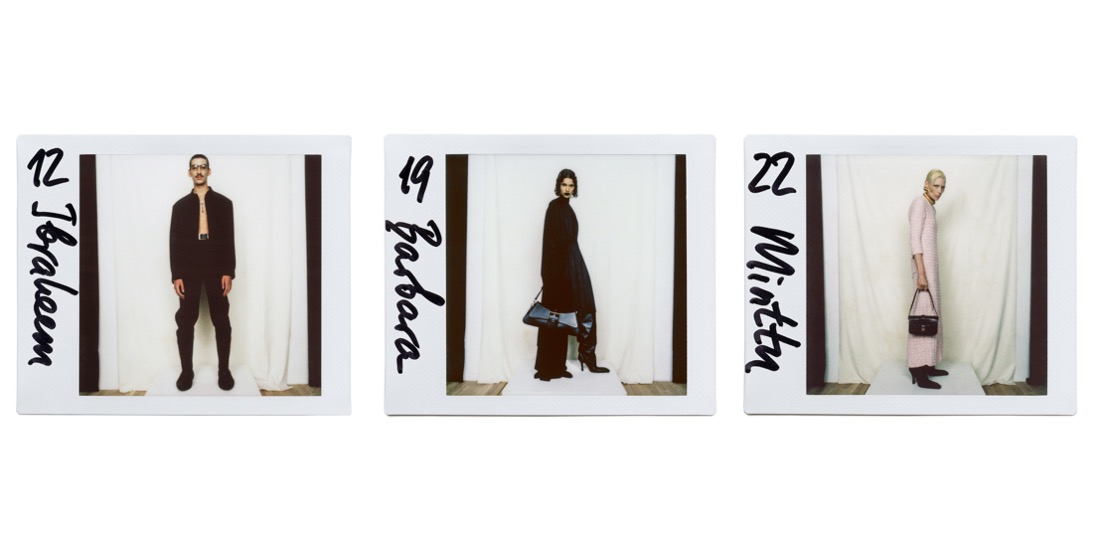
Masked & Suited. Vetements AW22

Vetements has been struggling with keeping its momentum for a few seasons now, and some even say it officially started to “flop”. But the autumn-winter 2022 look-book has some pretty good clothes that make you think of the brand as a place for great tailoring rather than sweatshirts and viral moments. Indeed, the collection focuses on a more luxurious look – even though it kind of contradicts Vetements’ original memo. During a preview with Vogue, Guram Gvasalia was talking about Bitcoin and social media millionaires. “The early 20th century couturiers focused on industry tycoons who made money with oil, real estate, chocolate bars,” he said. “This collection is pushing to redefine the couture and the savoir faire for the new era” – for the new luxury shopper. If you see something cynical in the money prints and lotto card motifs you aren’t in on the joke. “The Gvasalias” is printed in what looks like The Simpsons font on the inside of a t-shirt; that’s a nod to Guram’s brother Demna’s spring 2022 Balenciaga show. Then there’s the fact that all but one of the 72 looks features a mask – a mask not unlike the one worn by Demna at that show and also at the Met Gala, where his famous date was similarly accoutred. “The truth is in today’s world dominated by social media – and a sometimes toxic environment – you don’t need to be Kim Kardashian to need some privacy in your life,” Guram explained. For the record, he added that masks have been part of the Vetements lexicon for years. Sibling dynamics aside, there were some notable developments here, mostly involving Vetements’s signature tailoring. The opening look’s button-down, trousers, jacket, and long coat are all made from the jersey typically used for t-shirts and hoodies, a post-lockdown innovation that addresses conflicting urges to dress up and stay comfortable. “You can throw them in your suitcase and start traveling again,” Gvasalia said. The team also experimented with “digital 3-D pattern modifications” that give straight-cut jackets a couture-ish hourglass shape. And they designed down jackets and jeans with built-in zippers so wearers can modify the silhouettes as they see fit. Other looks layer oversize tees on top of jackets and shirts, a counterintuitive idea that nonetheless looks distinctive. That brings it back around to the new gen, who have an uncanny way of making the counterintuitive suddenly look right.

Collage by Edward Kanarecki.

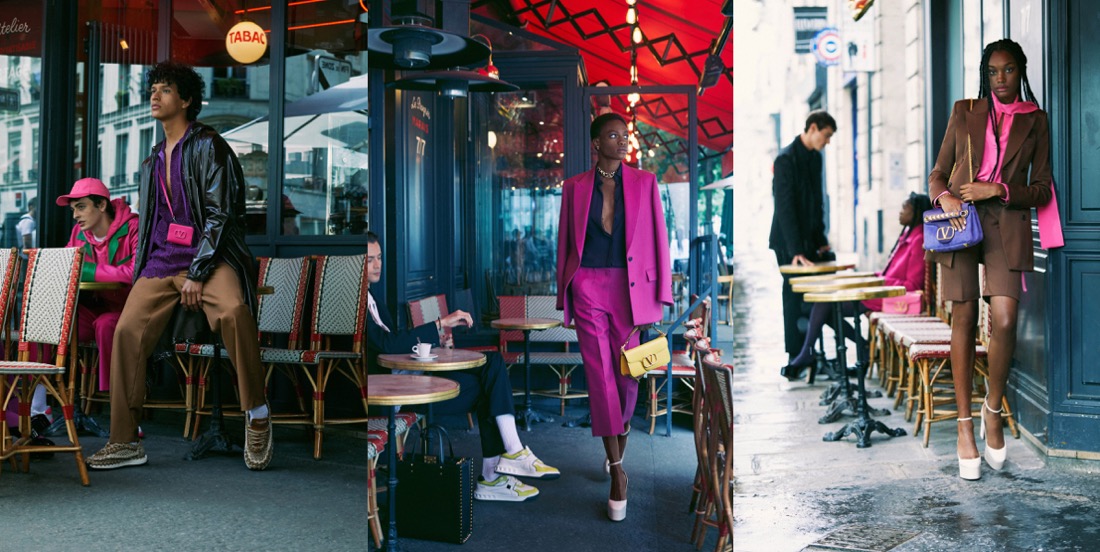
Extraordinary Daywear. Valentino Resort 2022

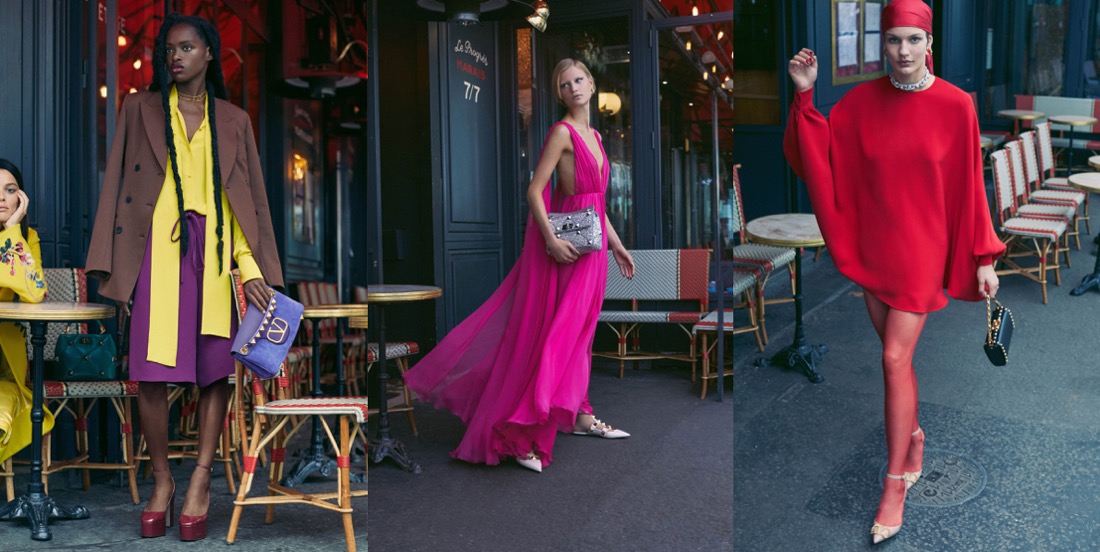
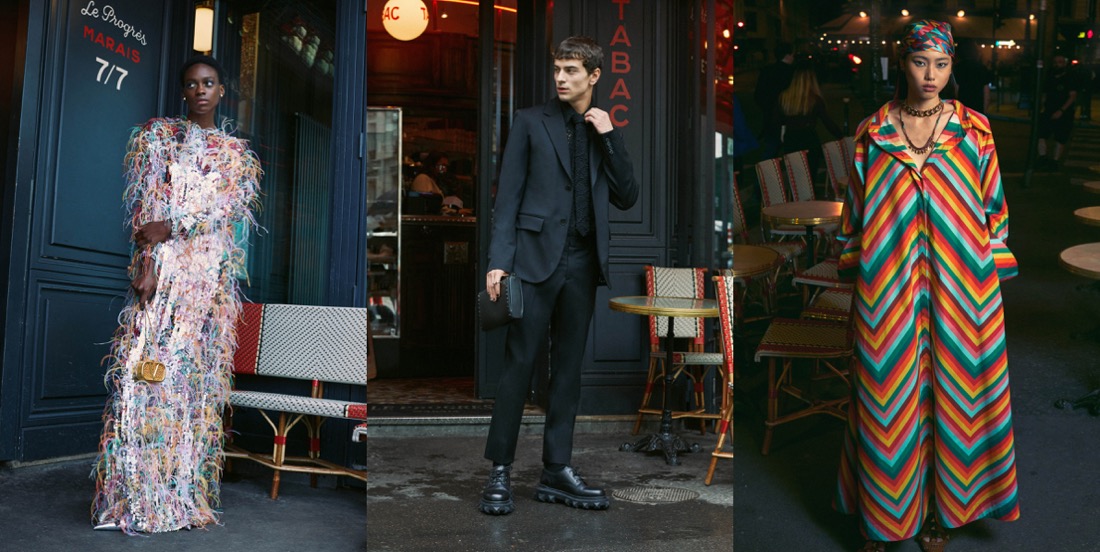
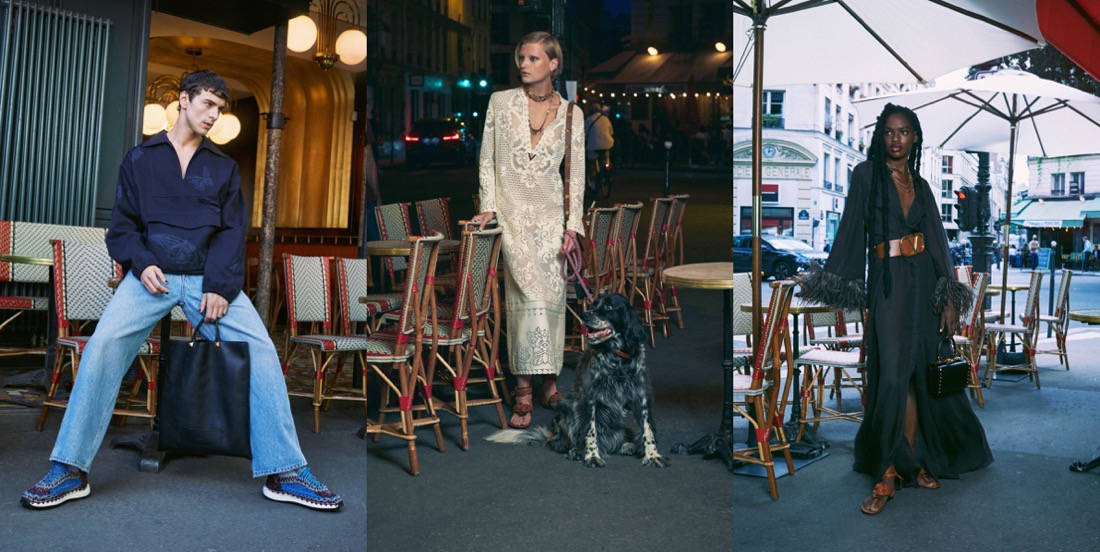
Lately, Pierpaolo Piccioli‘s direction at Valentino is towards creating clothes that celebrate life. Parisian cafés hold a particular charm for the designer these days. The Valentino show he staged last month had models walking out of the Carré du Temple to stroll in the surrounding streets, where people were sitting in cafés enjoying the en plein air experience. For resort 2022, which reads as a sort of prequel to the spring collection, the lookbook was shot in the Marais, a lively arrondissement populated by a hip and diverse crowd, in a café called Le Progrès. Its name resonates with Piccioli’s ongoing practice at the label, which he’s trying to steer forward without detracting from its history. “I want to bring life and a sense of reality into Valentino,” he said over Zoom from his studio in Rome. “Bringing it out of the atelier while retaining the savoir faire of the atelier.” Piccioli has been at the maison long enough to know its codes by heart; he has lived through its glamourous heyday, when Valentino Garavani received guests at his Château de Wideville, whose grounds were as perfectly manicured as the high-maintenance crowd that walked them. It was a world as fabulous as it was secluded and inaccessible. “I don’t want to forget the castle, but you have to be rooted in the present,” he said. “I want to bring the castle to the street, so to speak, and bring the street to the castle.” He calls this process re-signification; he feels that his duty as a fashion designer today is to be the vector of a vision of beauty in tune with the times we’re living in. “Beauty today means diversity and inclusivity; I want to encourage people to embrace it,” he said. Piccioli’s message is calibrated to appeal to younger generations, for which such values are a given; at Le Progrès, the cast included singer and TikTok-er Dixie D’Amelio; model and editor of the online platform the Youth Collective Project Amanda Prugnaud; filmmaker Christian Coppola; and actress Tina Kunakey. Every piece of the collection was treated individually to make it stand out on its own, not only adding to its value, but also allowing for the layered, personal styling which is becoming a sort of signature of Piccioli’s tenure. Shapes were simple and “almost elemental, without any grandeur,” and enhanced by elaborate decorations. A slender, slightly masculine white wool coat was appliquéd with floral ramages cut-out in black velvet, while a simple oversized black tee was intarsia-ed with lace as if a dressy blouse were somehow patchworked onto it. Eccentric flourishes were lavished on everyday pieces – feathers dotted sweats, capes, and svelte minidresses; long braided fringes trimmed ponchos; intricate broderie anglaise techniques appeared on slender, minimal tunics; and romantic blouses were encrusted with precious lace and worn with denim. “I wanted to make what is ordinary more imaginative and fantastical,” Piccioli said. “This is just extra-ordinary daywear.”

Collage by Edward Kanarecki.