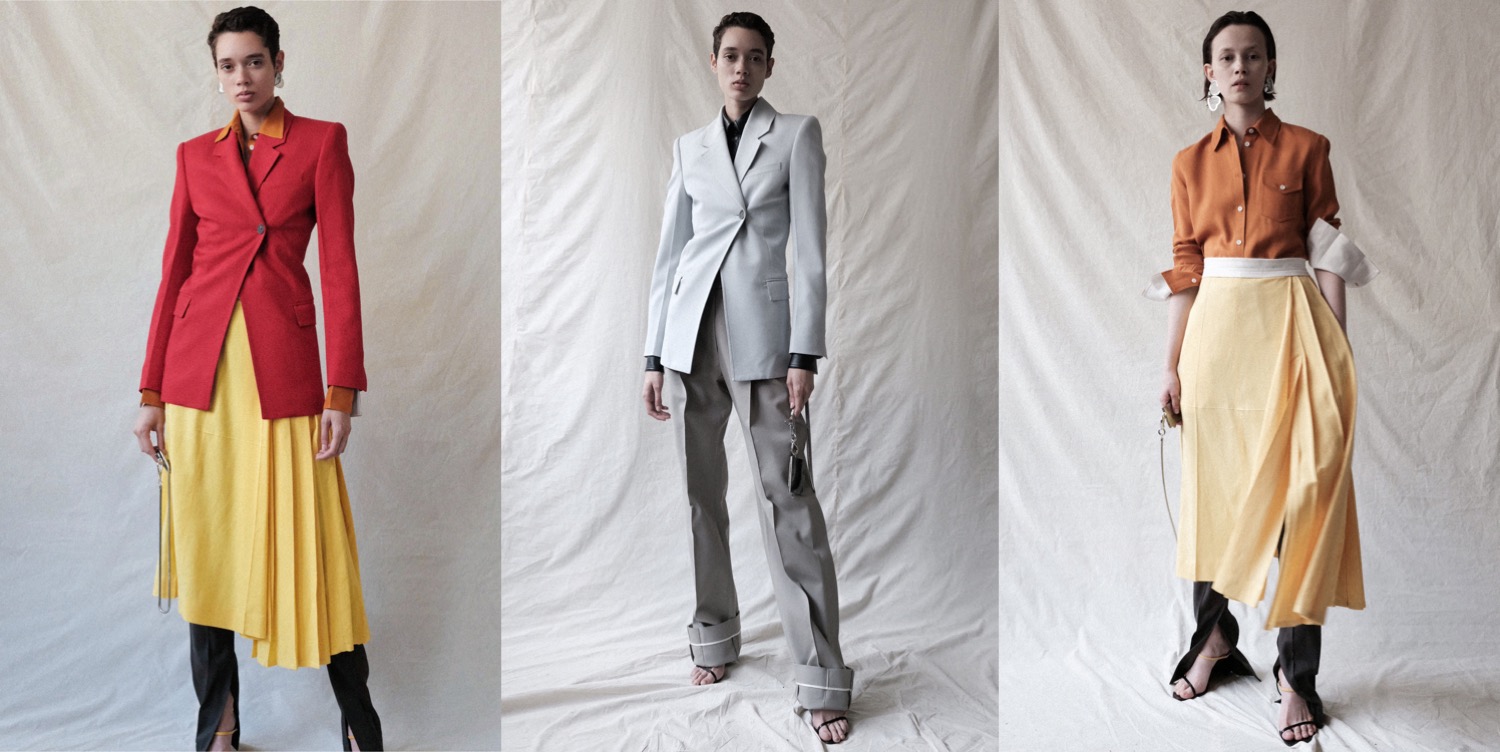
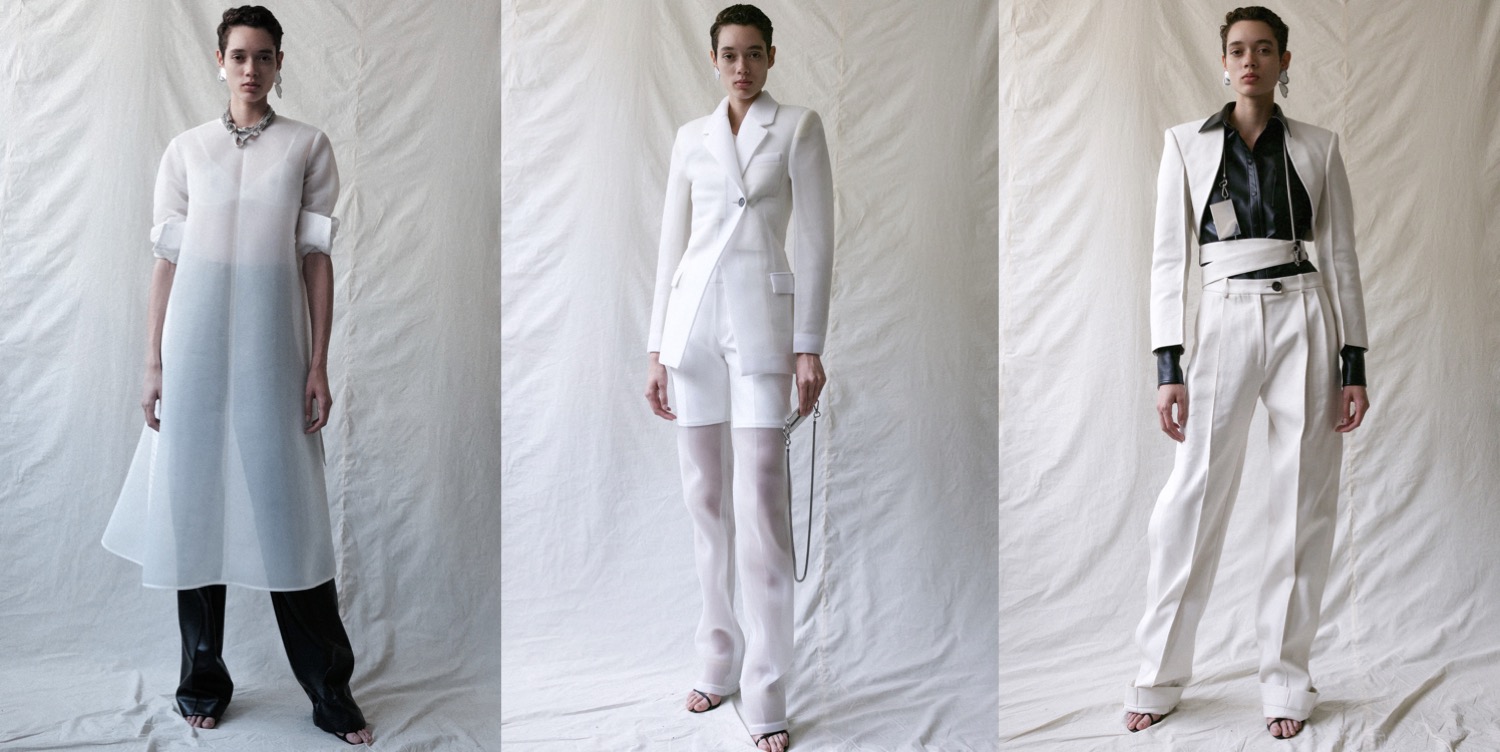
Between Morocco and California. Saint Laurent Resort 2020

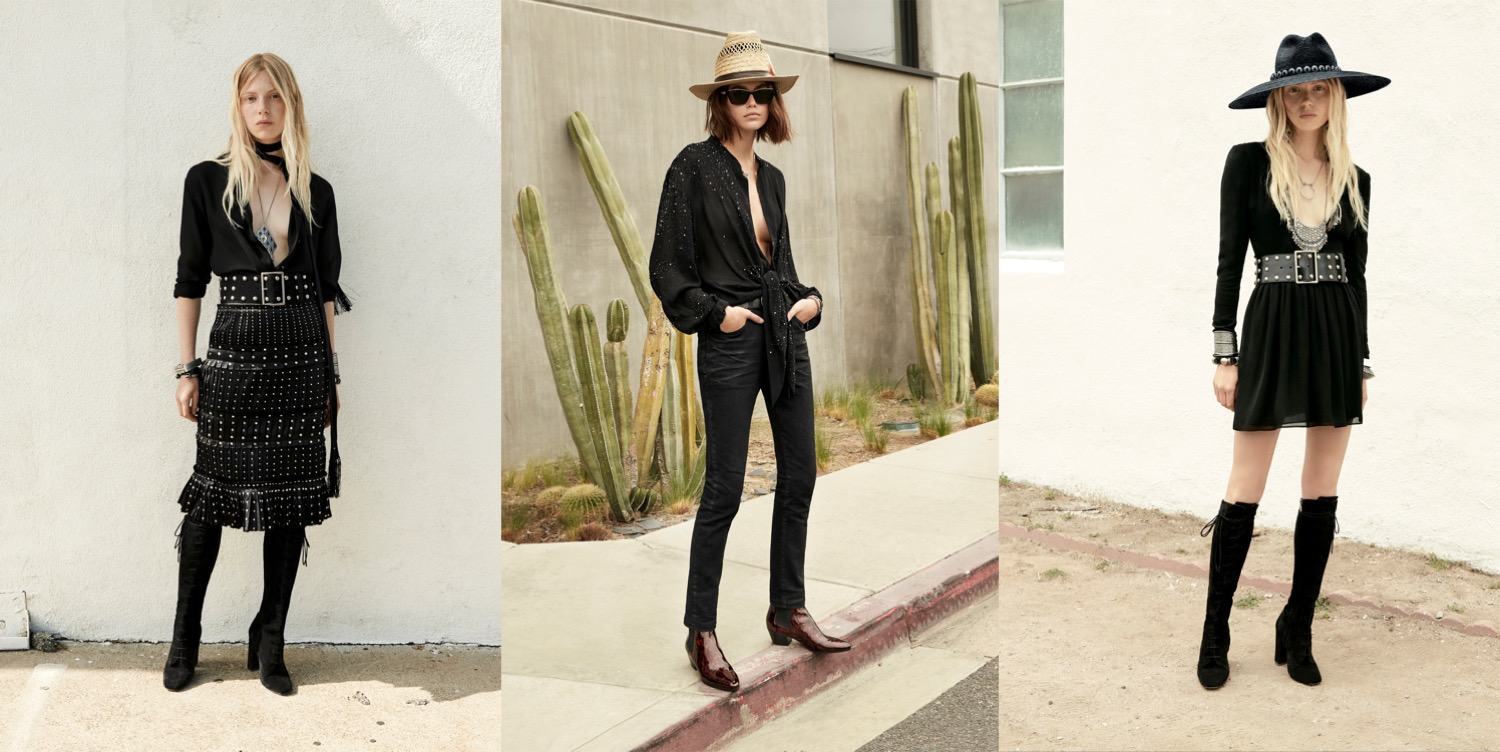
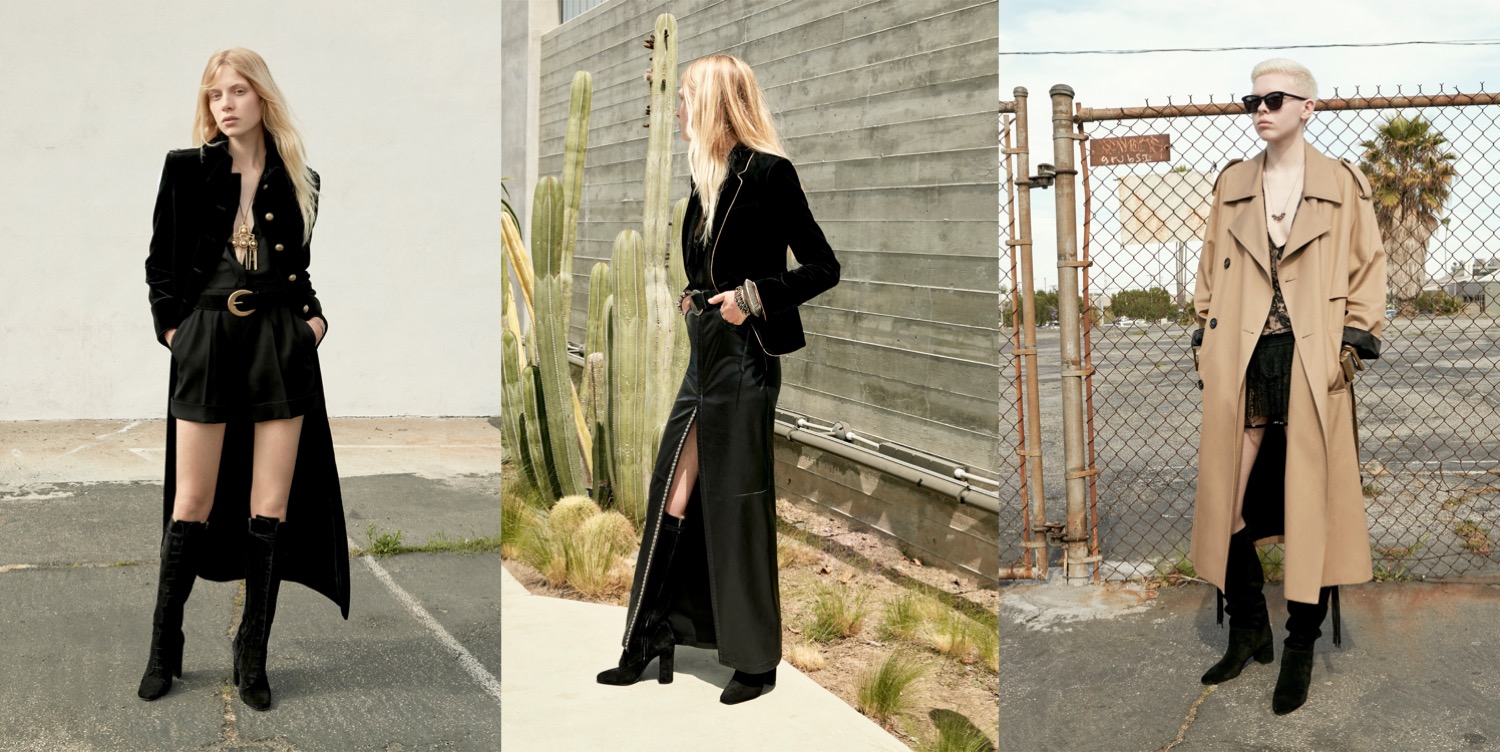
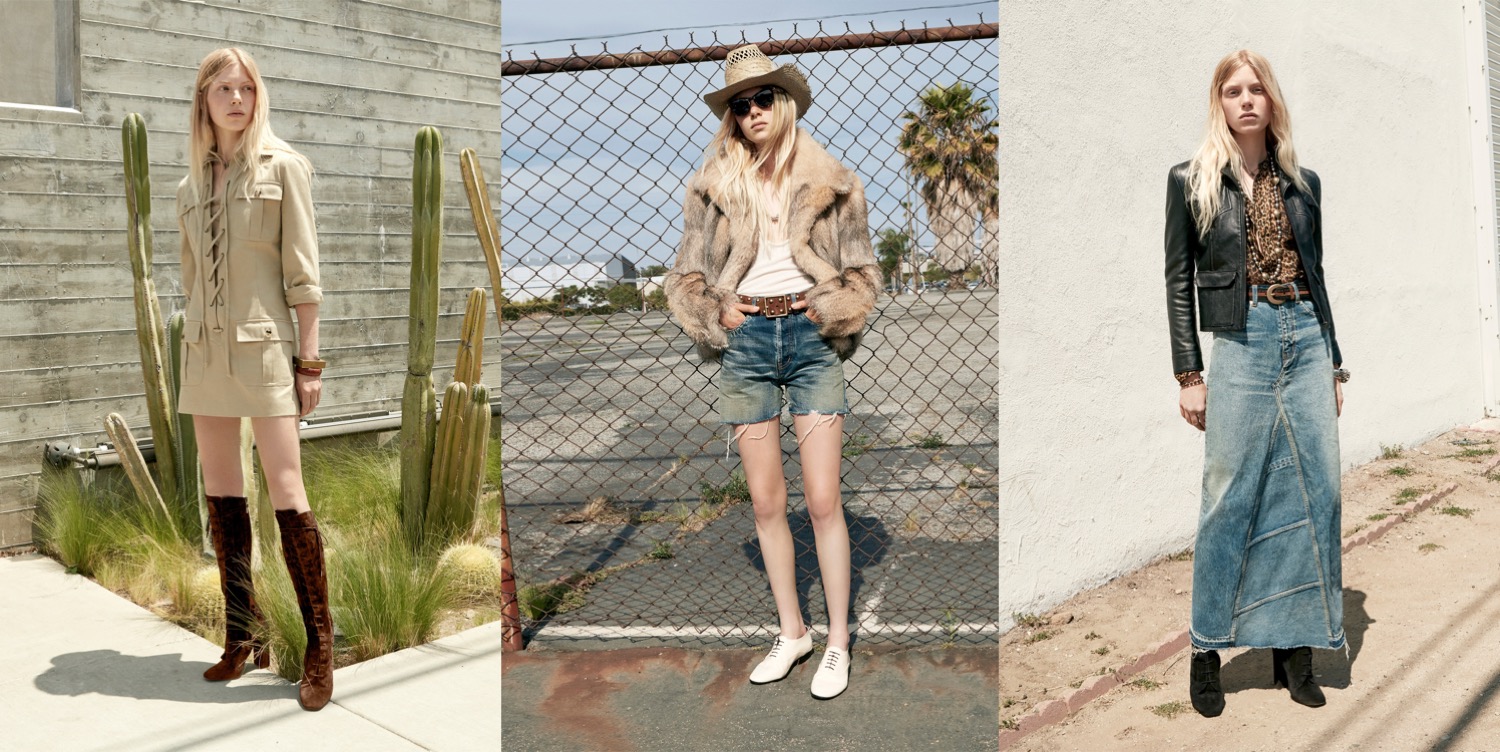
The theme behind Anthony Vaccarello‘s resort 2020 line-up for Saint Laurent is parallel to his spring-summer menswear show staged on one of Malibu’s beaches. For both, Vaccarello had been thinking about how Morocco’s glittering hippie/boho enclaves of the late ’60s and early ’70s (distinctly Yves) are mirrored by the today’s free-spirited California. So, a black velvet smoking jacket, worn with a long black leather skirt with a fastening running down its front; a gold sequin lace camisole with white jeans; a pleated lurex skirt styled with boots, a barely-there tank-top and a big, heavy pendant… in terms of fashion, there’s nothing innovative (or even fresh) in Vaccarello’s “day-to-day” vision of a wardrobe. It nods to Yves’ eternal chic, yes, feels very California, yes, but in the end it still  looks like Hedi Slimane’s work for the house from the (not so distant) past. Really, how do clients choose between a denim, maxi-lenght skirt from Slimane’s Celine offering, and a nearly identical one with a Saint Laurent tag?

Collage by Edward Kanarecki.

Never Nostalgic. Azzedine Alaïa SS20

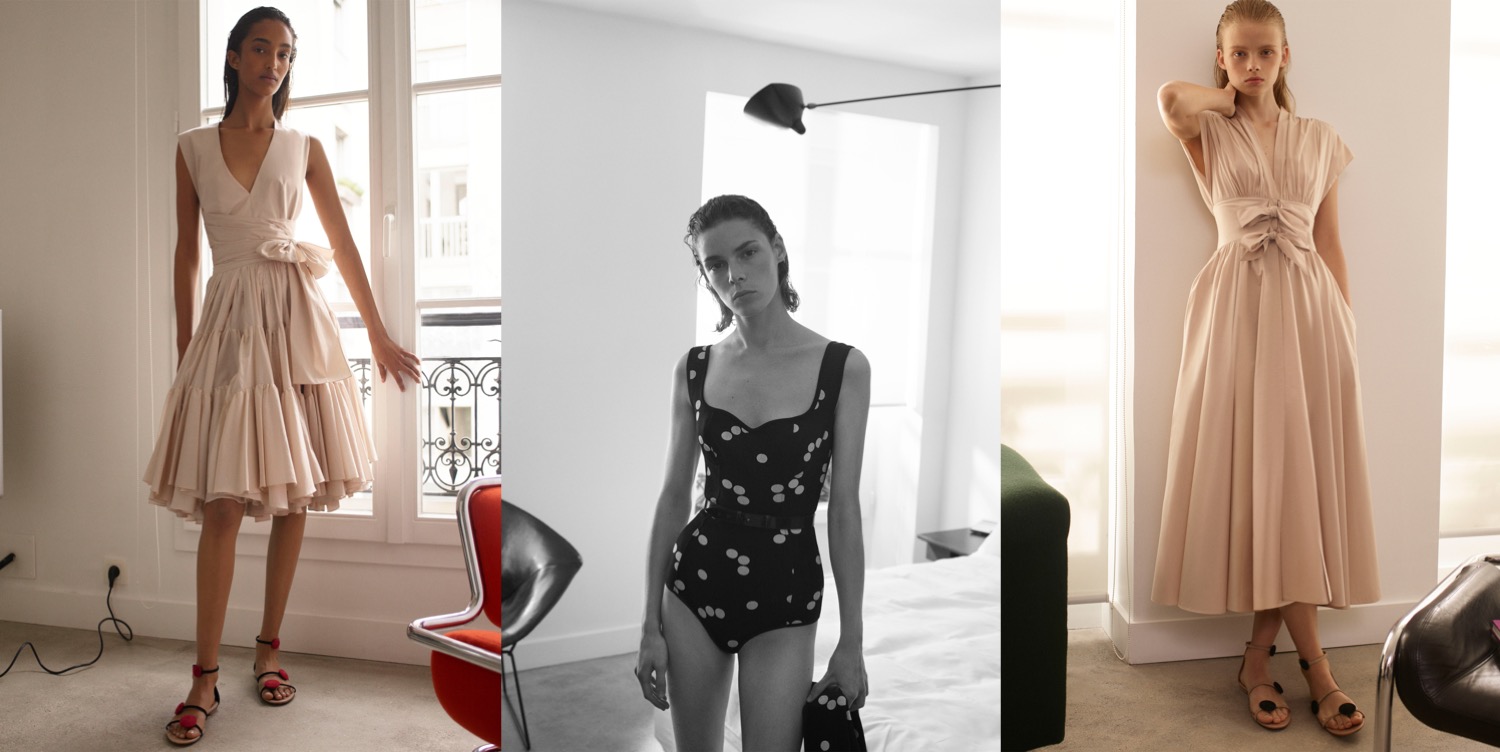
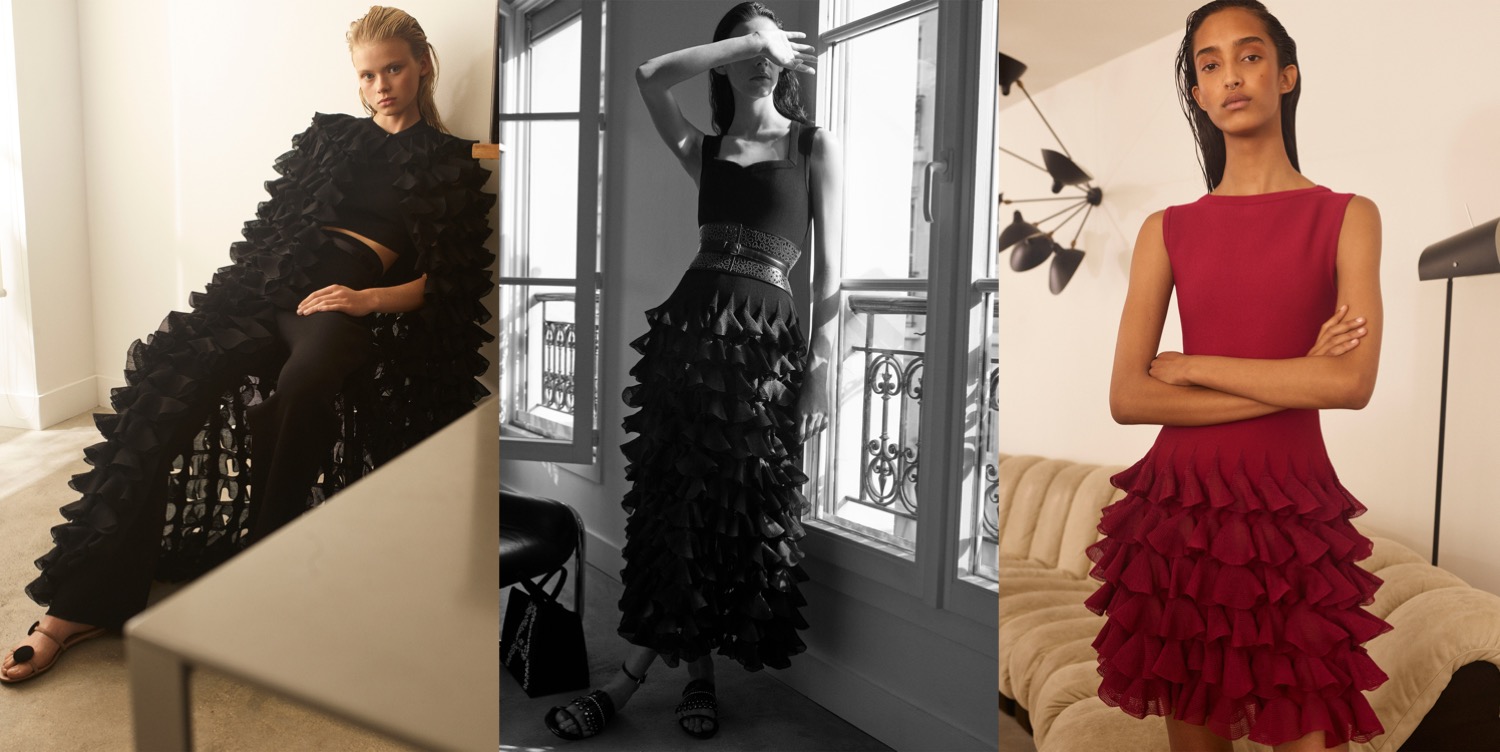
We try always try to have something that relates to our history, without being dated or nostalgic – Mr. Alaïa was never nostalgic,” said Caroline Fabre Bazin, Azzedine’s longtime right arm, during the spring-summer 2020 presentation for the maison. The look-book is a classic homage to the couturier’s outstanding oeuvre. One of the designer’s most iconic pieces, the perfecto, appeared in the collection few times, being the season’s key item. “He would always say ‘yes, okay’ and then he’d change everything, because he hated repeating himself,” said Fabre Bazin. “Practically from the beginning, he made them every season: short, long, with zip, without, in python, leather, denim; every time it was different.” This season, an early, pre-2000 biker jacket returns in Japanese denim or in python. Other throwbacks: a polka dot faille trench or a denim peacoat from summer 1992 (a nod to the Tati exhibition currently on show at the Association Azzedine Alaïa). The bow theme may nod to a collection from 2010, signature studs may return via 3D printing, a technical silk organza may be embroidered with an archival motif and then used on a different silhouette, or a print from 1991 may find fresh relevance on different materials – the studio working under the name of the master reinvents, revisits, reworks. Ultimately, “then” fuses with “now”. The Alaïa atelier has all it needs to keep shining for years to come.

Collage by Edward Kanarecki.

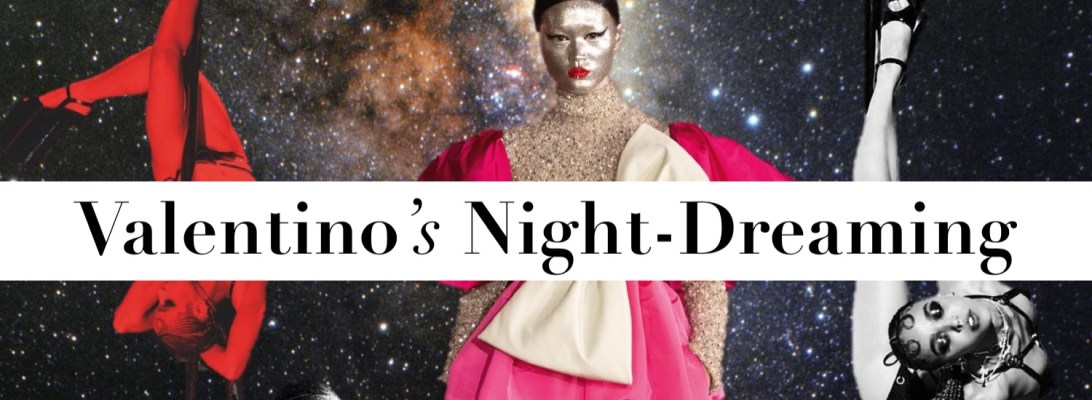
Valentino’s Night-Dreaming in Beijing

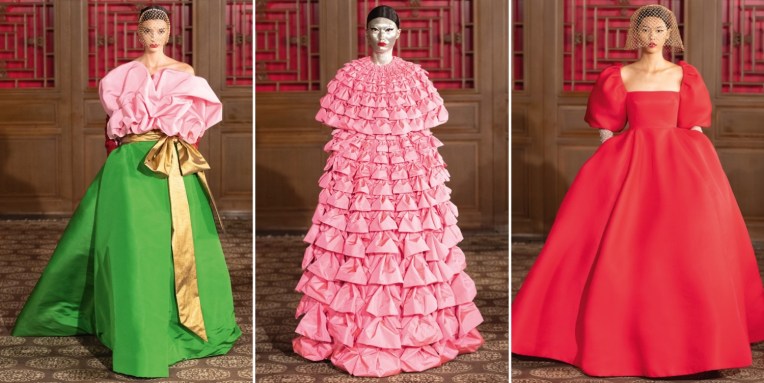
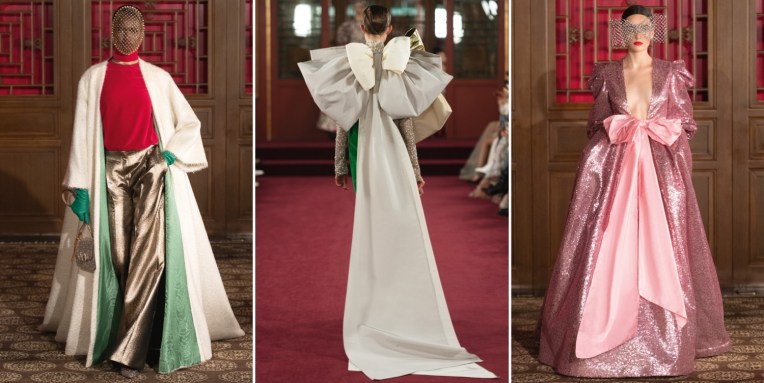
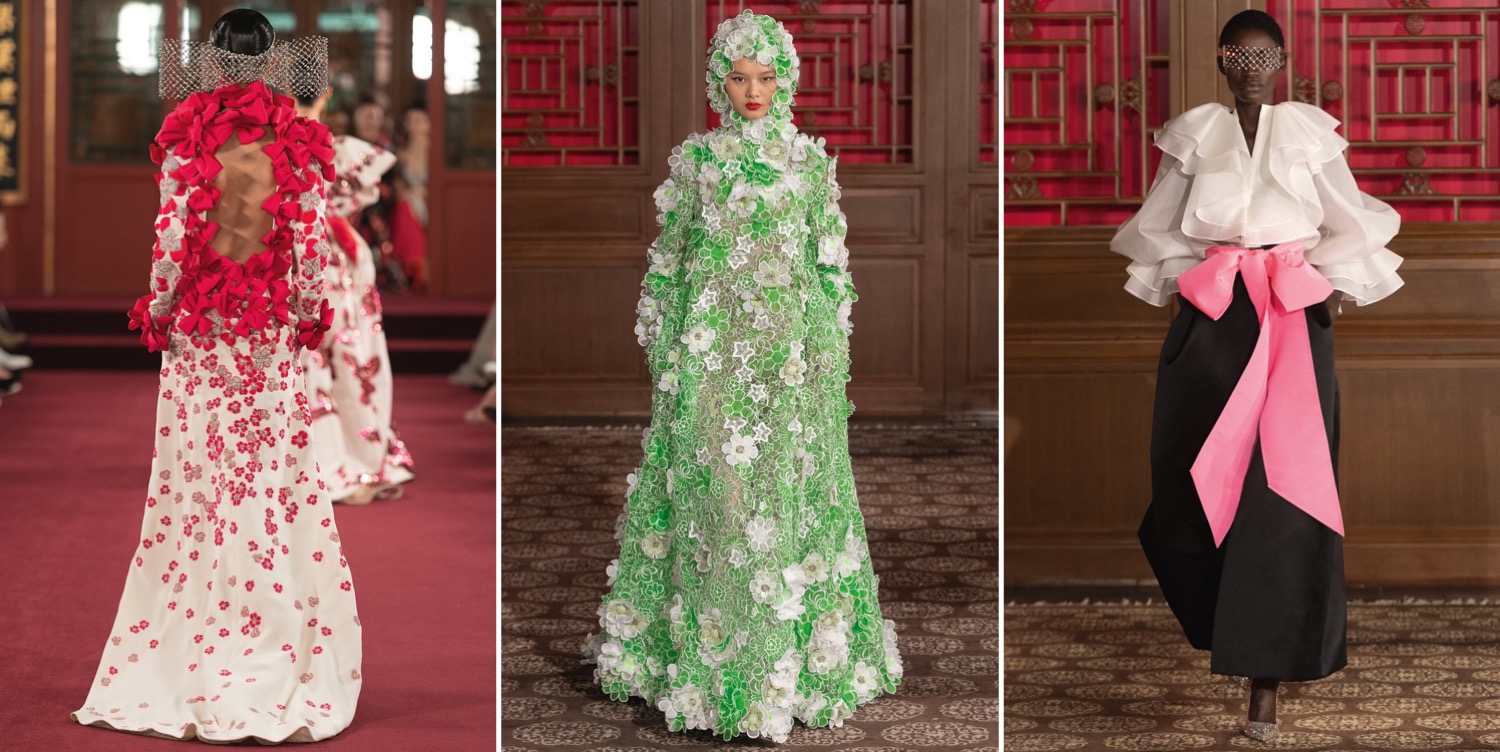
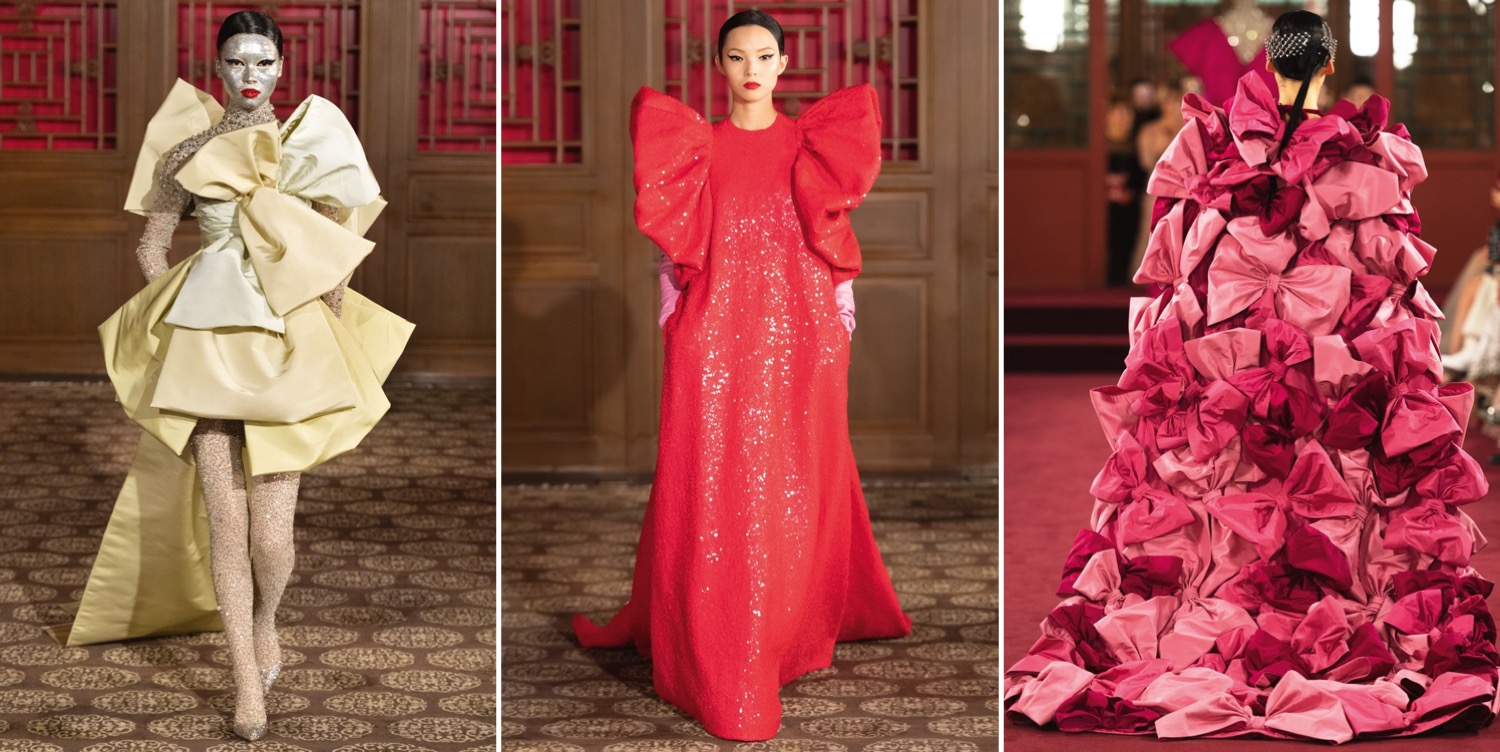
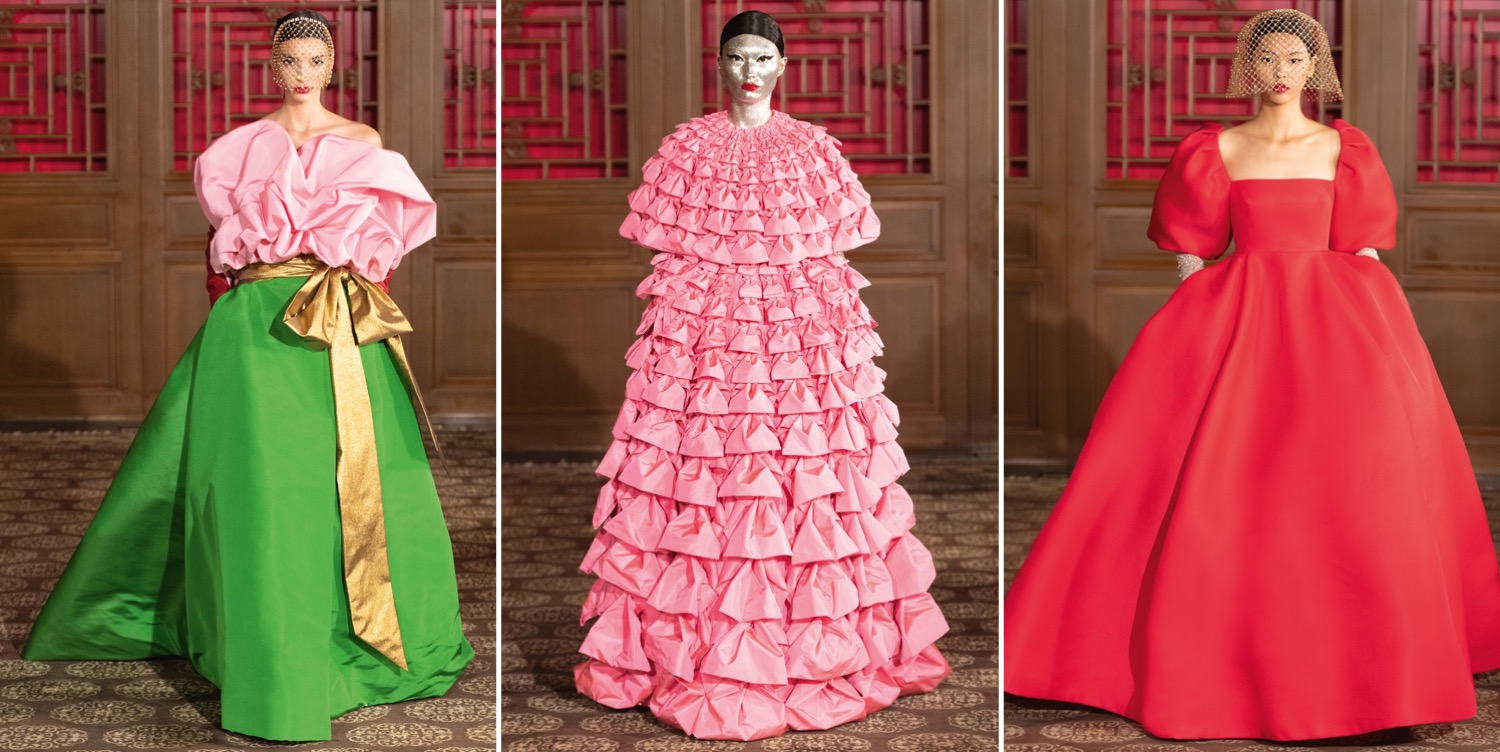
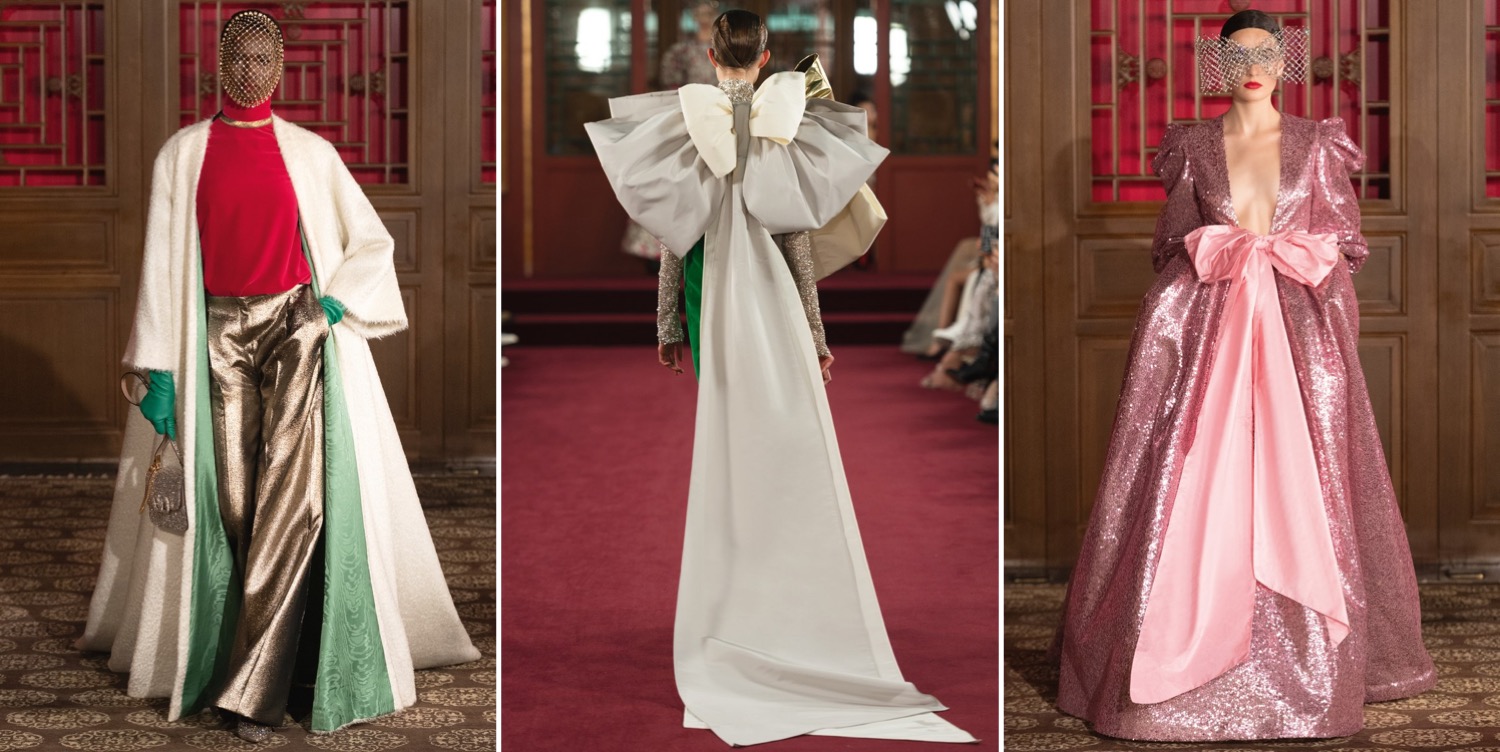
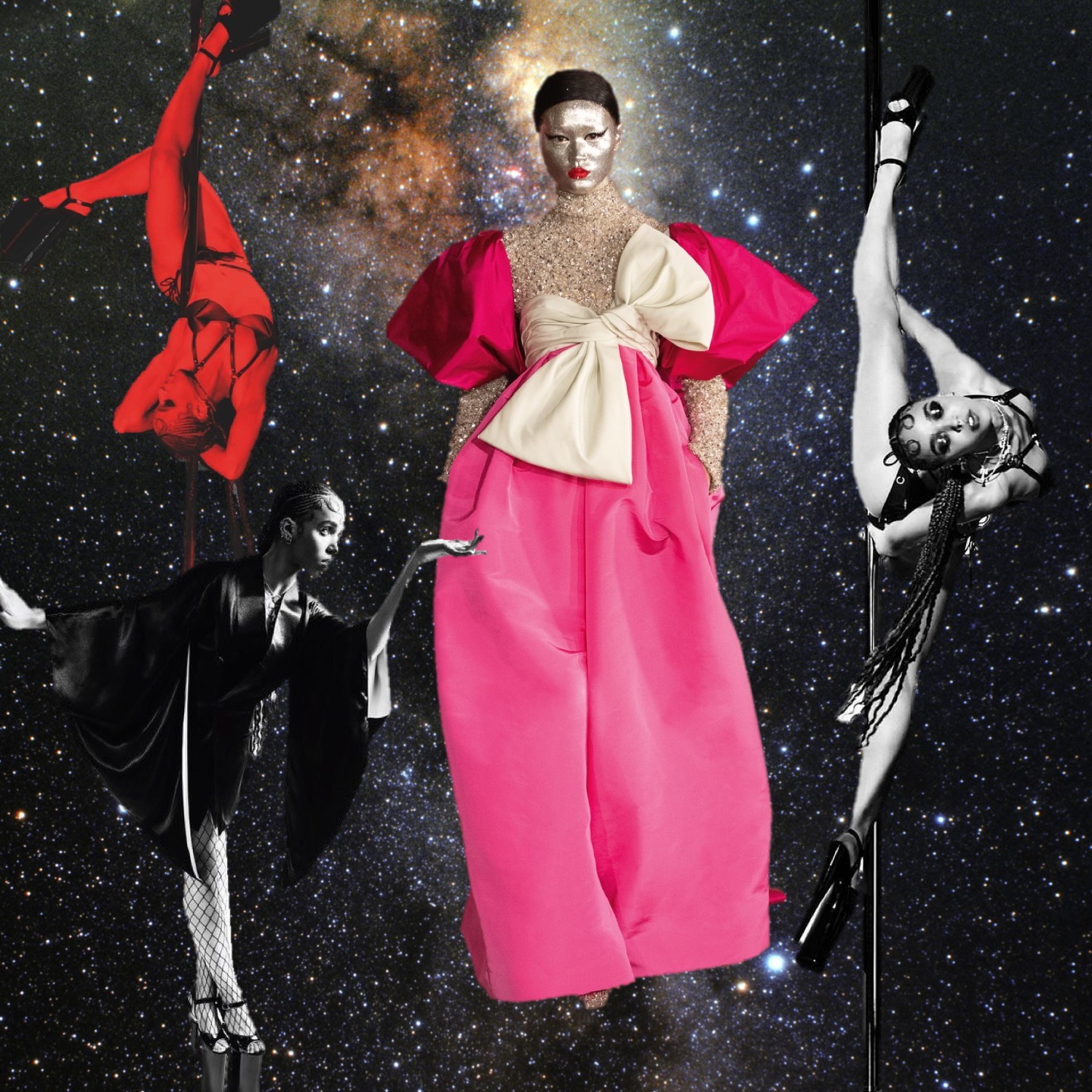
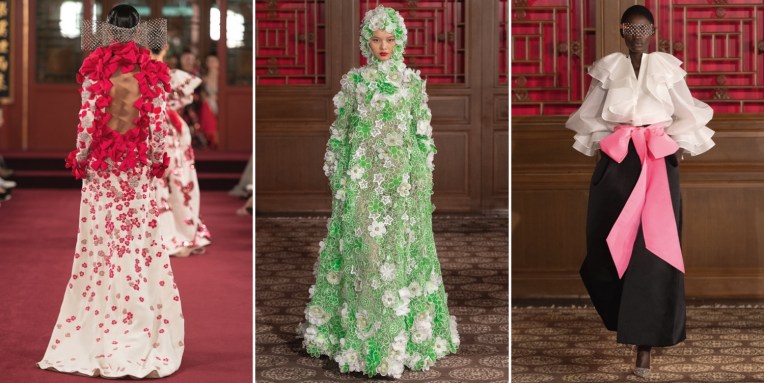
As I mentioned right here not a long time ago, Pierpaolo Piccioli is a gift to fashion. On the eve of the designer’s Valentino haute couture show in Beijing’s storied Summer Palace, Piccioli was walking through the improvised couture atelier where most of the house’s tailors and seamstresses have been transplanted from the brand’s Palazzo Mignanelli HQ at the foot of Rome’s Spanish Steps – pointing out the many wonders created by these “alchemists”. The 45 masterworks designed by Piccioli and executed under the direction of Valentino’s brilliant premieres, or heads of the ateliers (Alessandra, Antonietta, Elide and Irene) and their respective teams have been designed especially for this moment and with an eye to the bevy of glamorous, free-spending clients from the region. Piccioli, however, averred that it is “a real Italian haute couture collection—not anything to do with China. It’s important to keep your identity,” he added, “especially when you bring your culture to another world and use it to evaluate the diversities.” But alongside those diversities, Piccioli found dynamic synergies, too. His moodboard was filled with images of the masters of the early Italian Renaissance that he loves – think Piero della Francesca and Fra Angelico – alongside photographs taken of the Summer Palace itself, and of portraits of the emperors and empresses who once ruled here, revealing unexpected aesthetic dialogues, “two moments of grandness of old cultures,” as Piccioli explained, “of history and heritage.” Some of the grand ball gowns, sheath dresses, and wide-leg pant ensembles were worked with elaborate intarsia and appliqué techniques to suggest the swirling brocades in a Bronzino portrait. Others took the leitmotifs of Valentino’s ultra-romantic work from the 1970s and 1980s: point d’esprit ruffles, overscale rose prints, and a passion for bows, as well as classic haute couture fabrics including gazar, cigaline, silk velvet, and duchess satins and failles. Here, they were amplified into the extravagant volumes and dimensions that characterize Piccioli’s haute couture collections. Now, let’s talk couture numbers. A dress entirely covered in hundreds of shaded pink bows of various sizes required 350 meters of fabric, for instance; a voluminous ball gown composed of ruffles of cherry red point d’esprit – 600 meters of tulle in total! – took 1,300 hours to complete; and a silvery dress and balaclava were entirely embroidered in more than 32,000 silvery sequins (for the show, beauty maestro Pat McGrath silvered the model’s face to match, creating an out-of-this-world effect). Meanwhile, an intarsia opera coat composed of swirling sections of Oz green sequins, ivory wool, and soft pink crepes (eight different types of fabric in all) worn over wide pants and a turtleneck top in a smaller-scale version of the pattern took a cool six and a half months to complete. Delightful.

All collages by Edward Kanarecki.

The Statements Pieces. Balenciaga Resort 2020

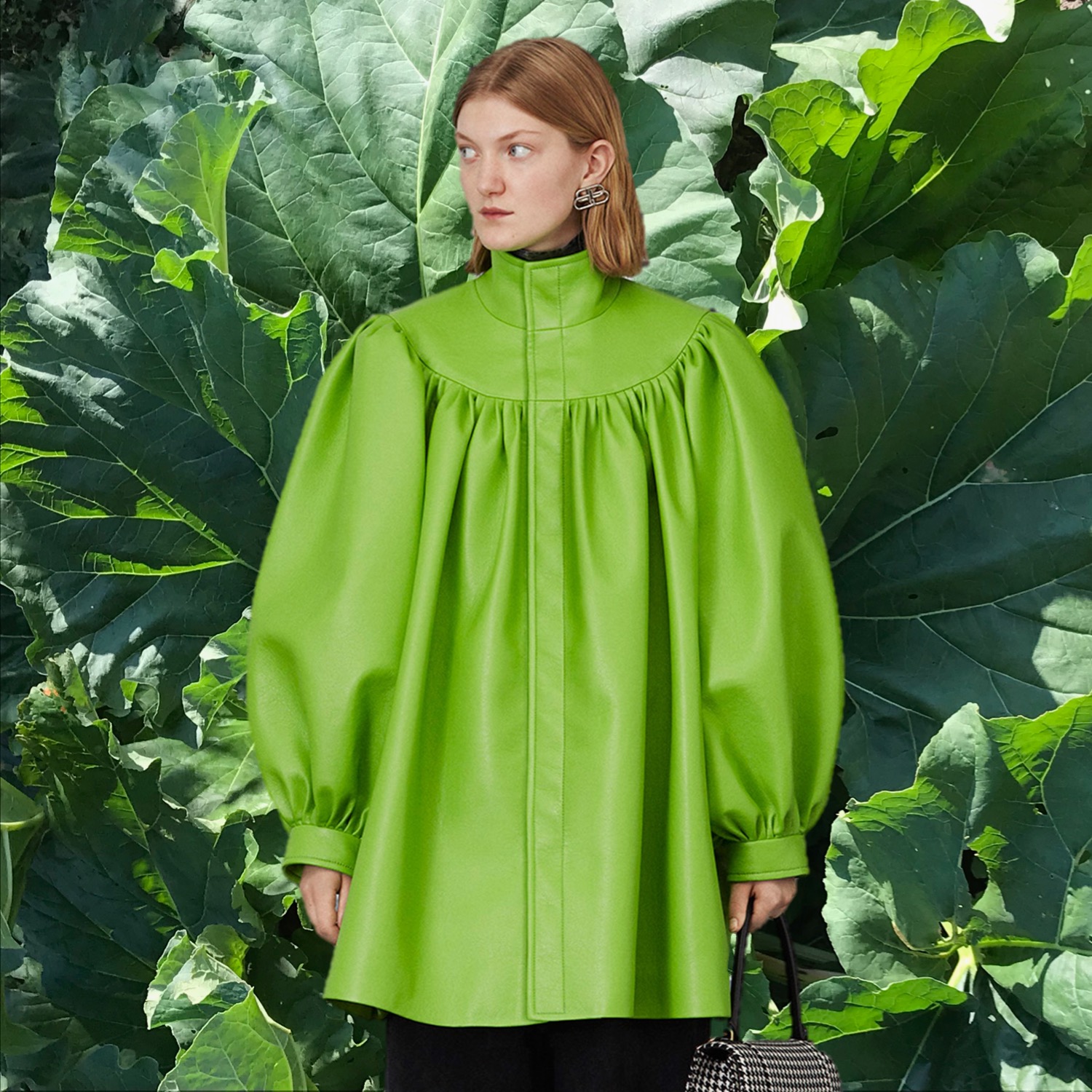
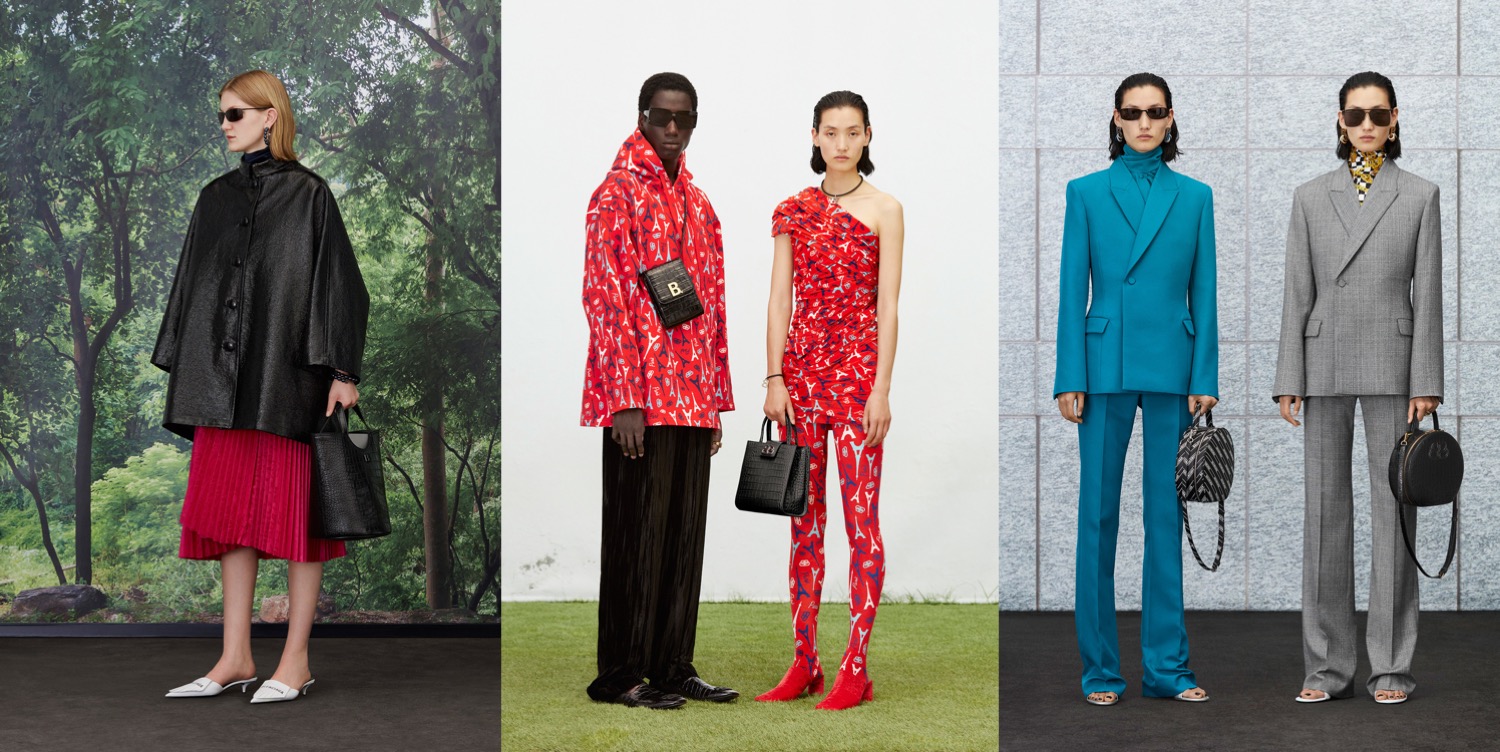
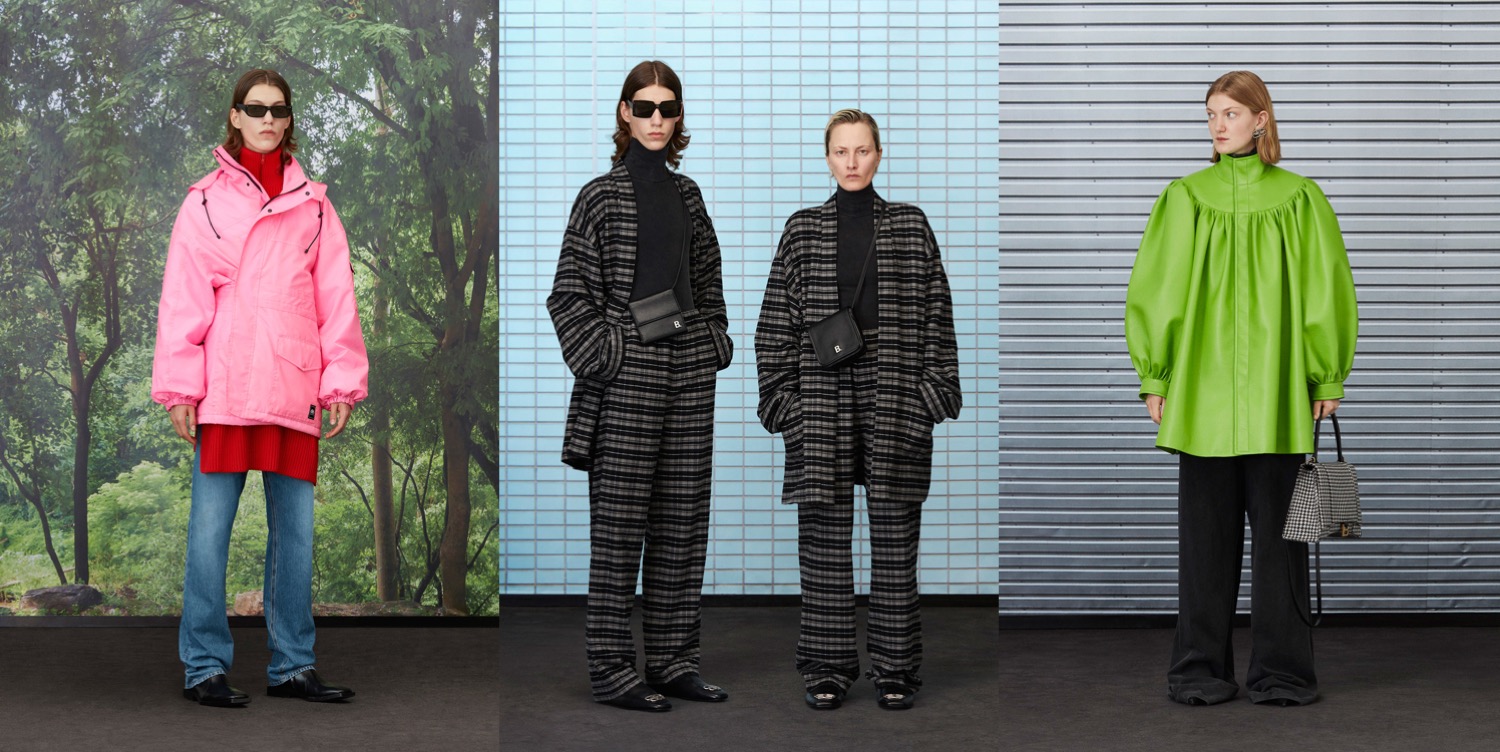
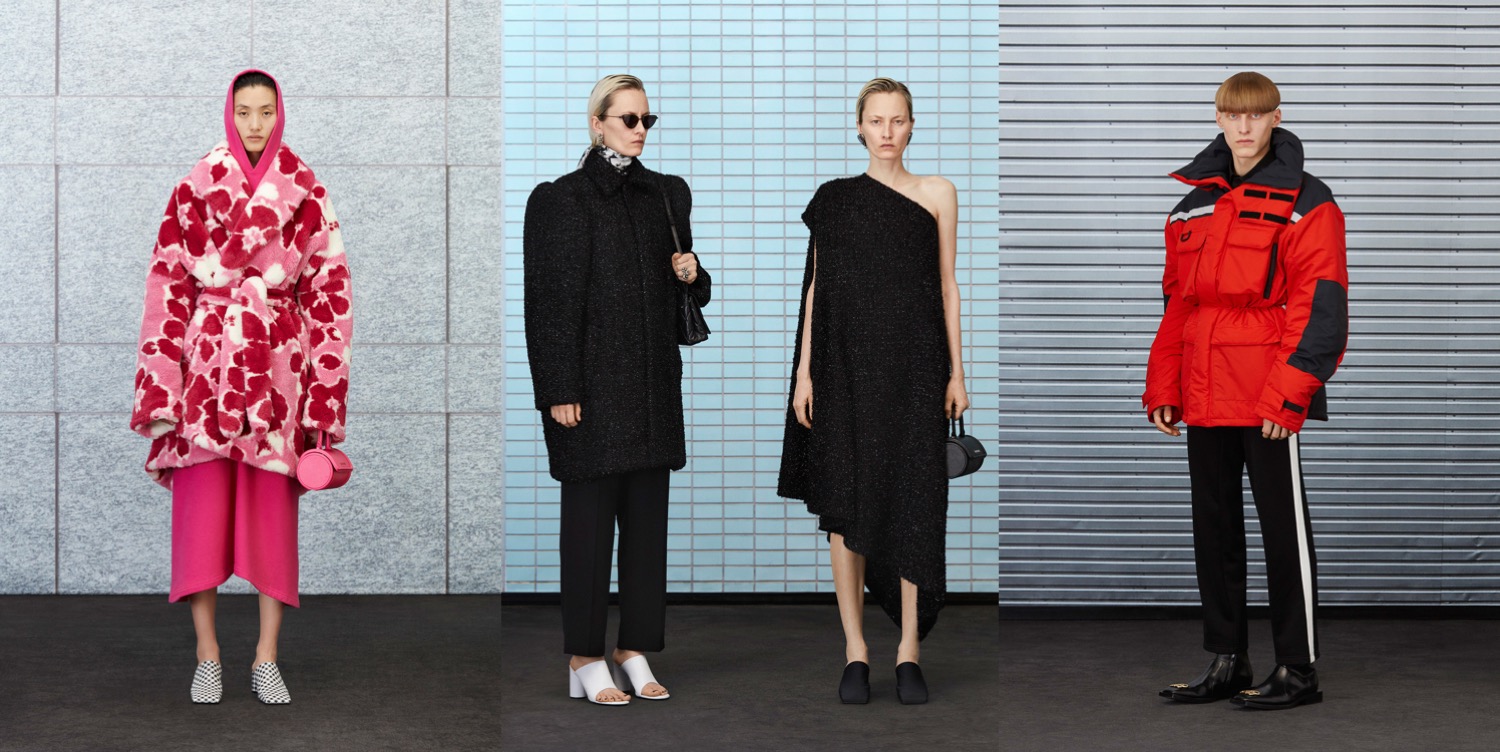
Balenciaga released its resort 2020 look-book just in time when the clothes start to hit the stores. Demna Gvasalia‘s pre-collections for the maison aren’t as spectacular as the main shows (the spring-summer 2020 collection we’ve seen last month was one of his best to date!), but they sum up the label’s statement pieces: Balenciaga wardrobe “basics” (like tailoring with Cristobal Balenciaga’s couture volumes), the best-selling apparel and key bags. What else? Outsize parkas with their cheekbone-grazing collars, easy-wearing printed tea dresses in souvenir prints, XXL pajama sets… all this in the least matching colours you can imagine. But somehow, everything works together more than well. The look-book-opening coat is stamped with the Balenciaga logo in the familiar block print, but even without it one can identify the sloping shoulders, buttoned collar, and boxy, exaggerated fit as signature Gvasalia. And what’s my personal favourite from the line-up? The leather blouson-jacket in bold green, as pictured above.

Collage by Edward Kanarecki.
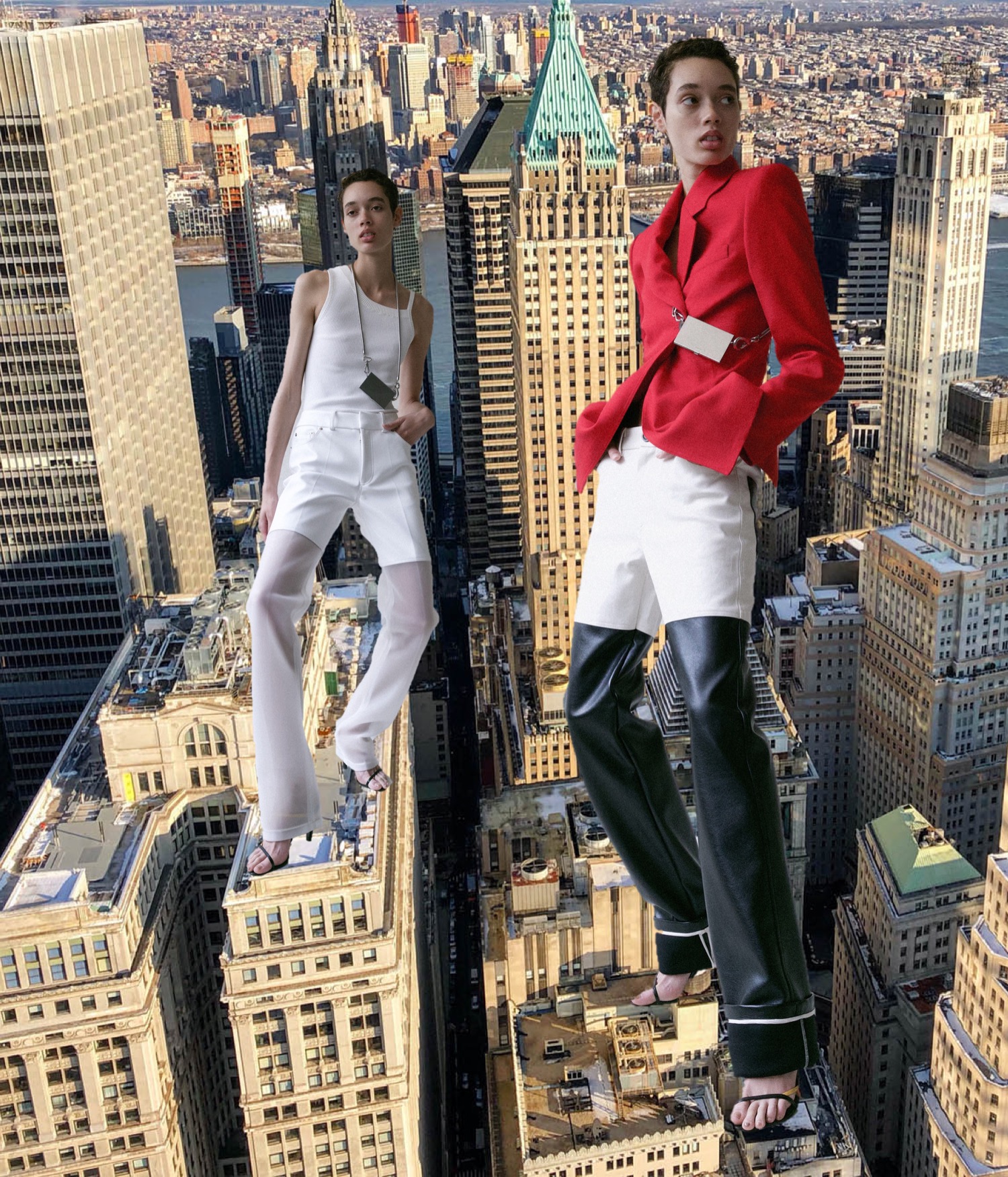
Razor Sharp. Peter Do SS20

Peter Do SS20 collage

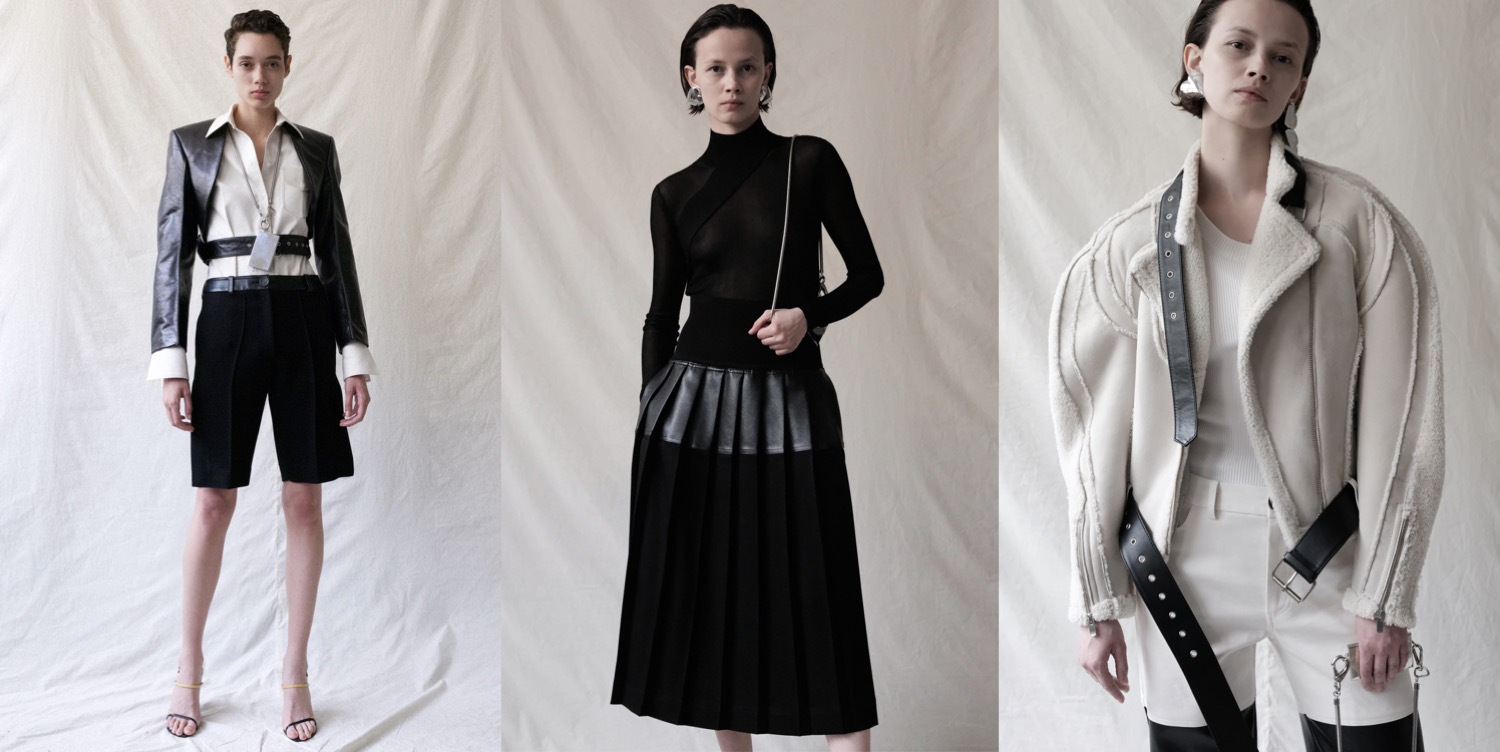
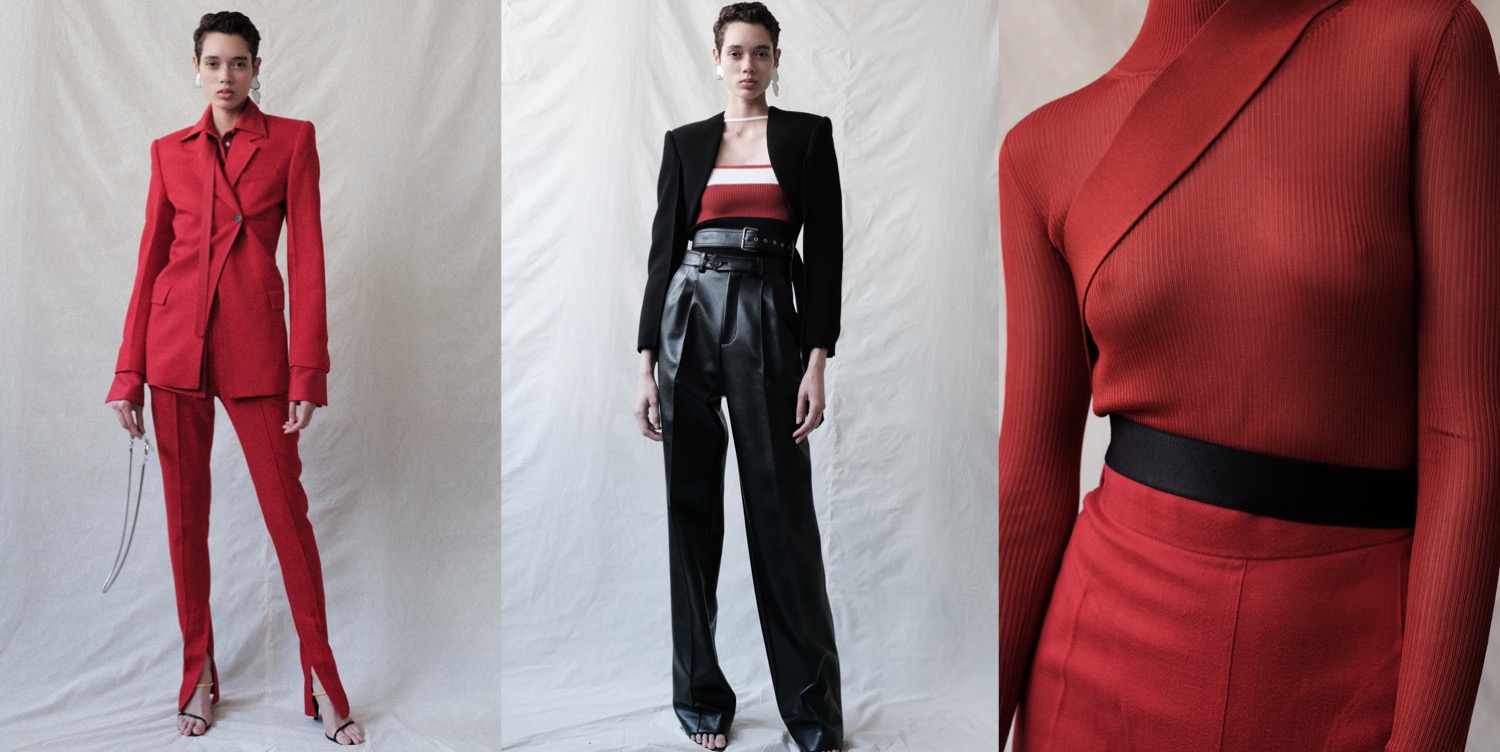
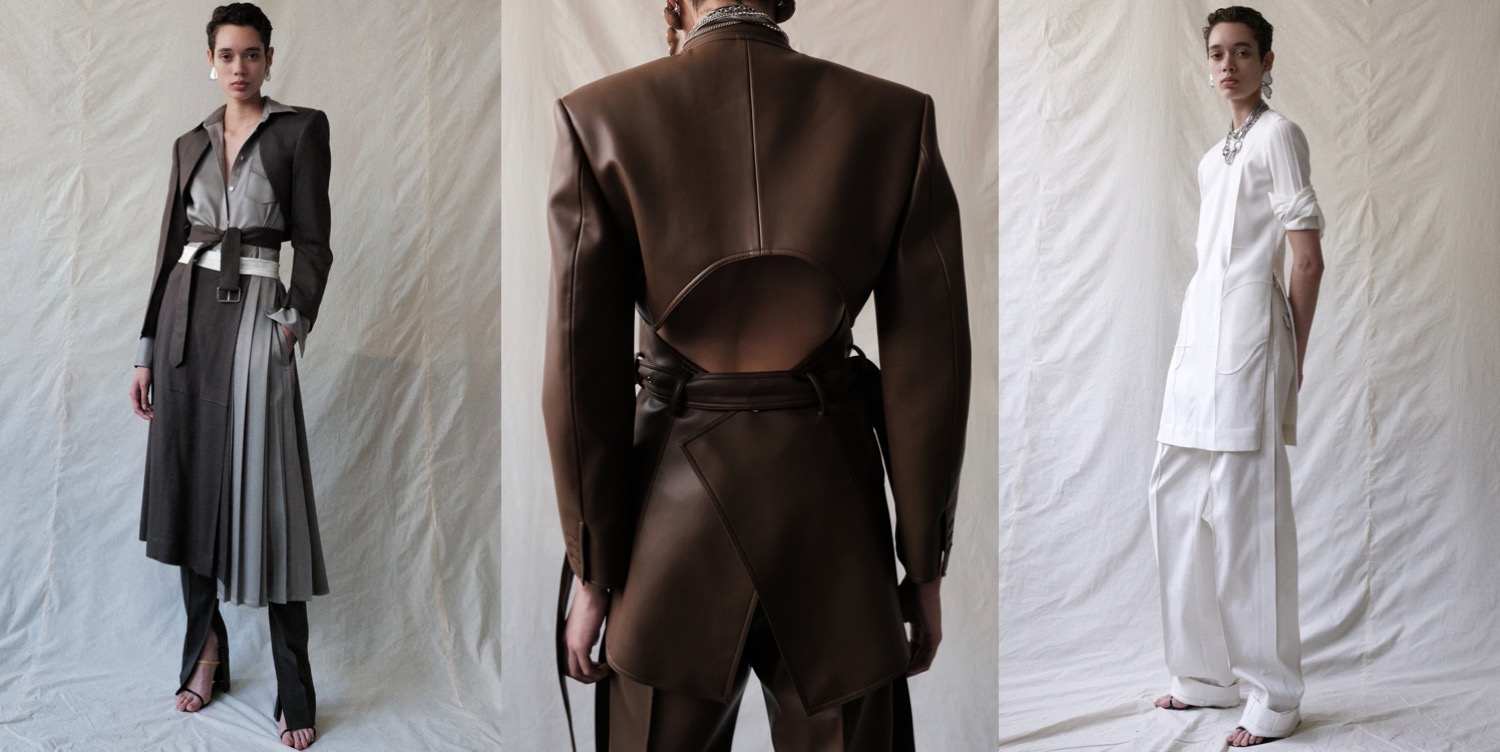
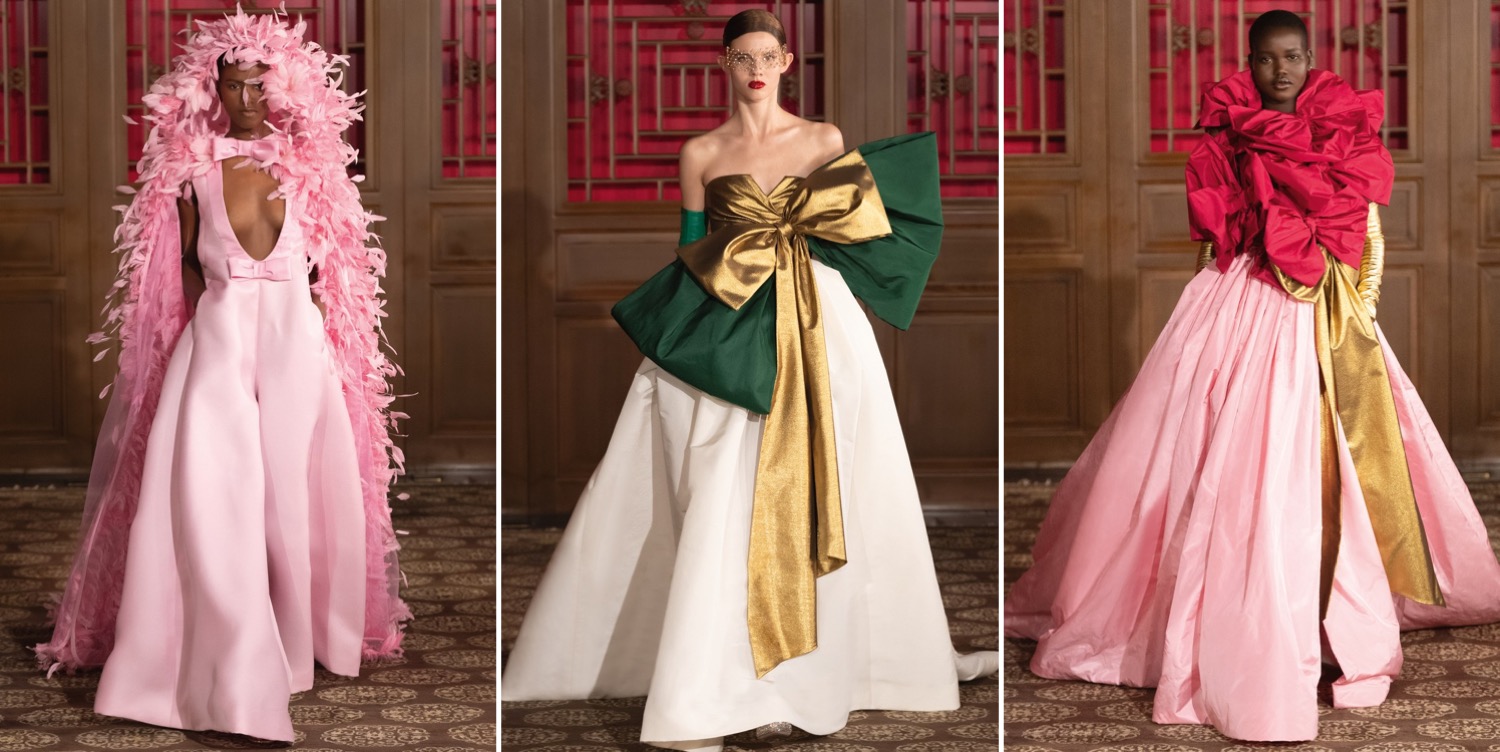
Peter Do‘s name-sake label has been making waves since its very start (which was less than two years ago). The New York-based designer doesn’t do fashion shows and presents his collections off-schedule – those are two factors that could easily make him and his brand an off-the-radar outsider But Peter Do has a consistence in his work that many, much more established brands can envy: very clear, clean and minimal aesthetic that’s as precise as a razor. Do, along with Bottega Veneta’s Daniel Lee and Rokh’s Rok Hwang, shares a very specific alma mater that additionally attracts clients: Phoebe Philo’s Céline. But Philophiles won’t find Céline-like pieces at Peter Do, that’s not the point. Spring-summer 2020’s hero piece is an adjustable jacket that separates into a bolero and a backless waistcoat. Another highlight is the single-button jacket that fastens high and off-center on the torso, producing a nipped-in silhouette. The colour palette, mostly black and white, is beautifully contrasted with shades of ochre and rust. What else is sure about Do? Tailoring is key for the brand. And it definitely stole women’s hearts, if Net-A-Porter is restocking the current collection, and such important retail players as Dover Street Market and Bergdorf Goodman already have the Peter Do classics on their racks.

Collage by Edward Kanarecki.