Contemporary Elegance. Vaquera SS21

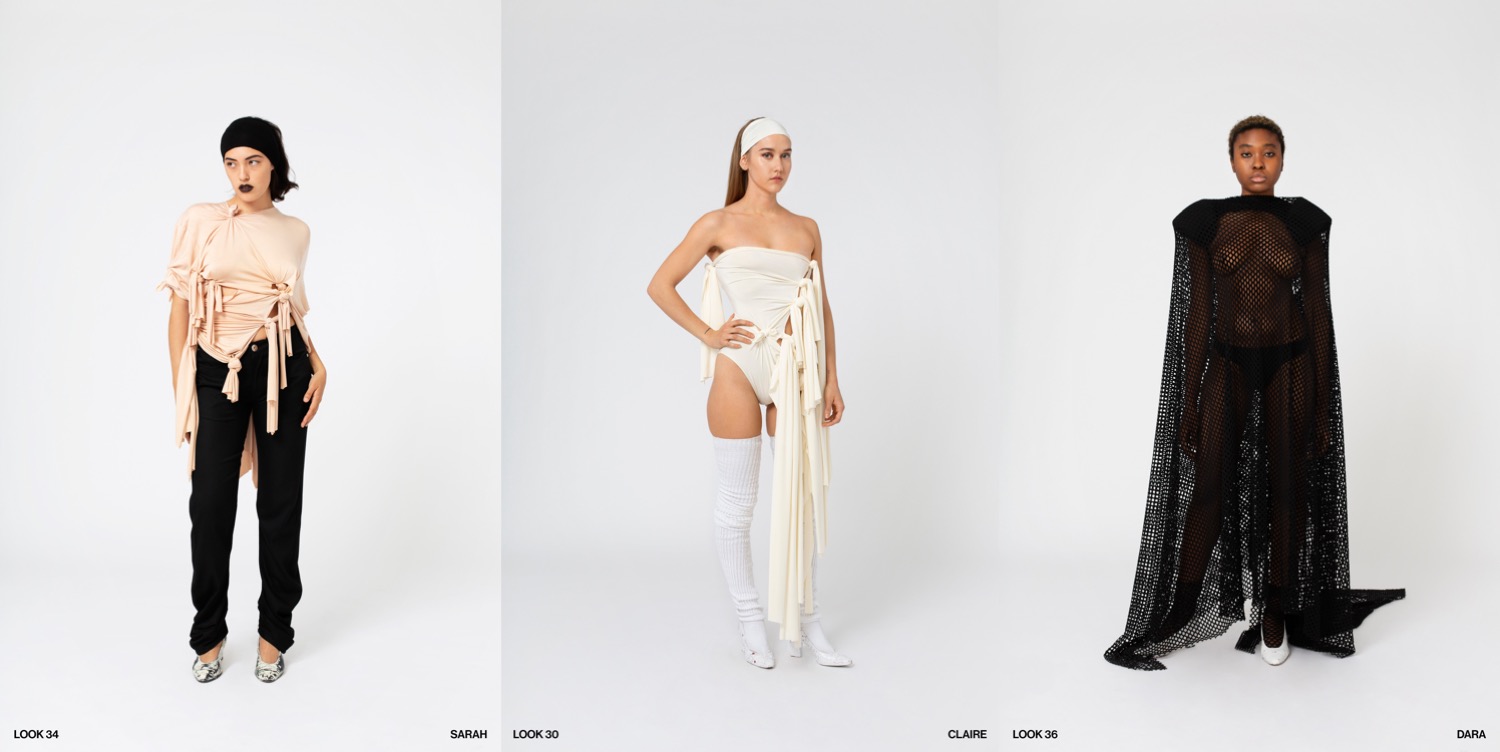
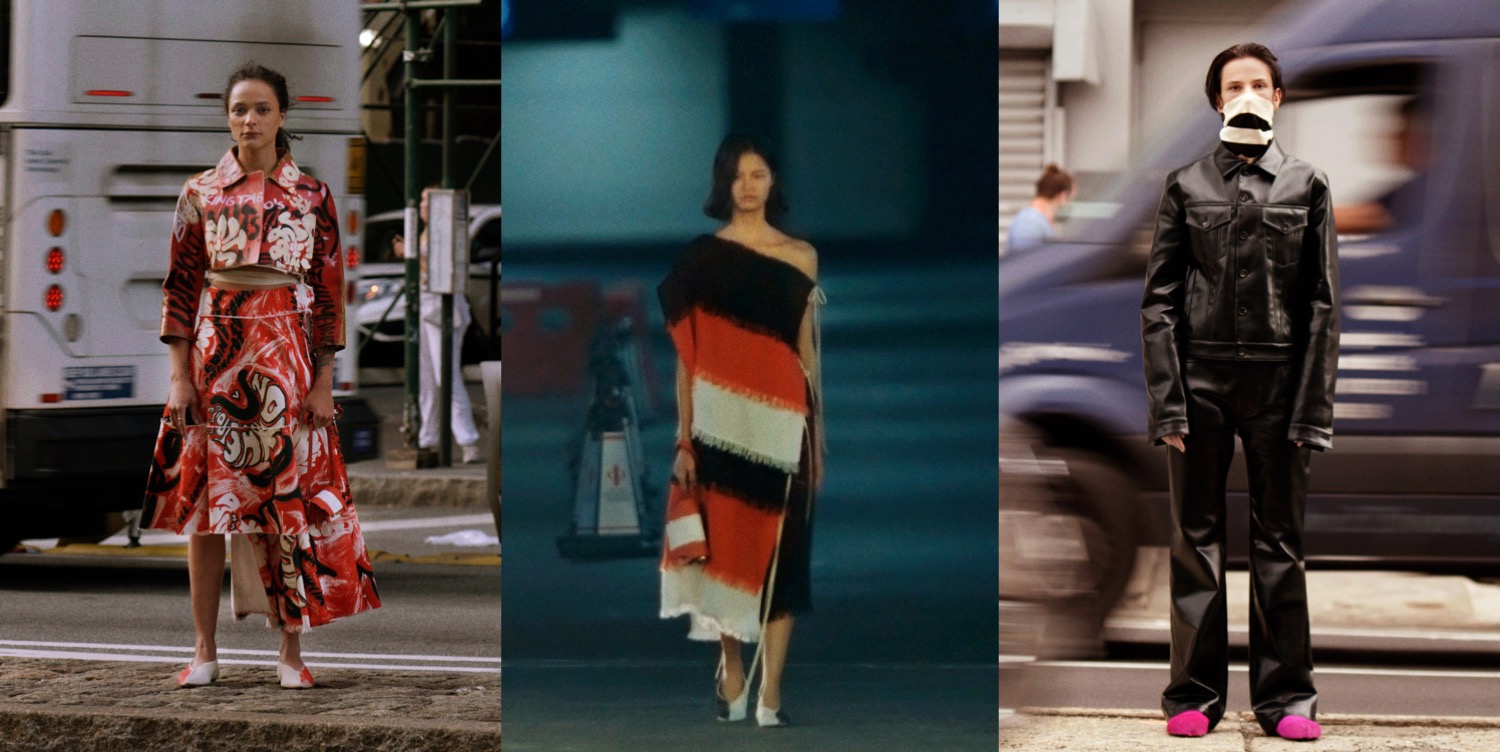
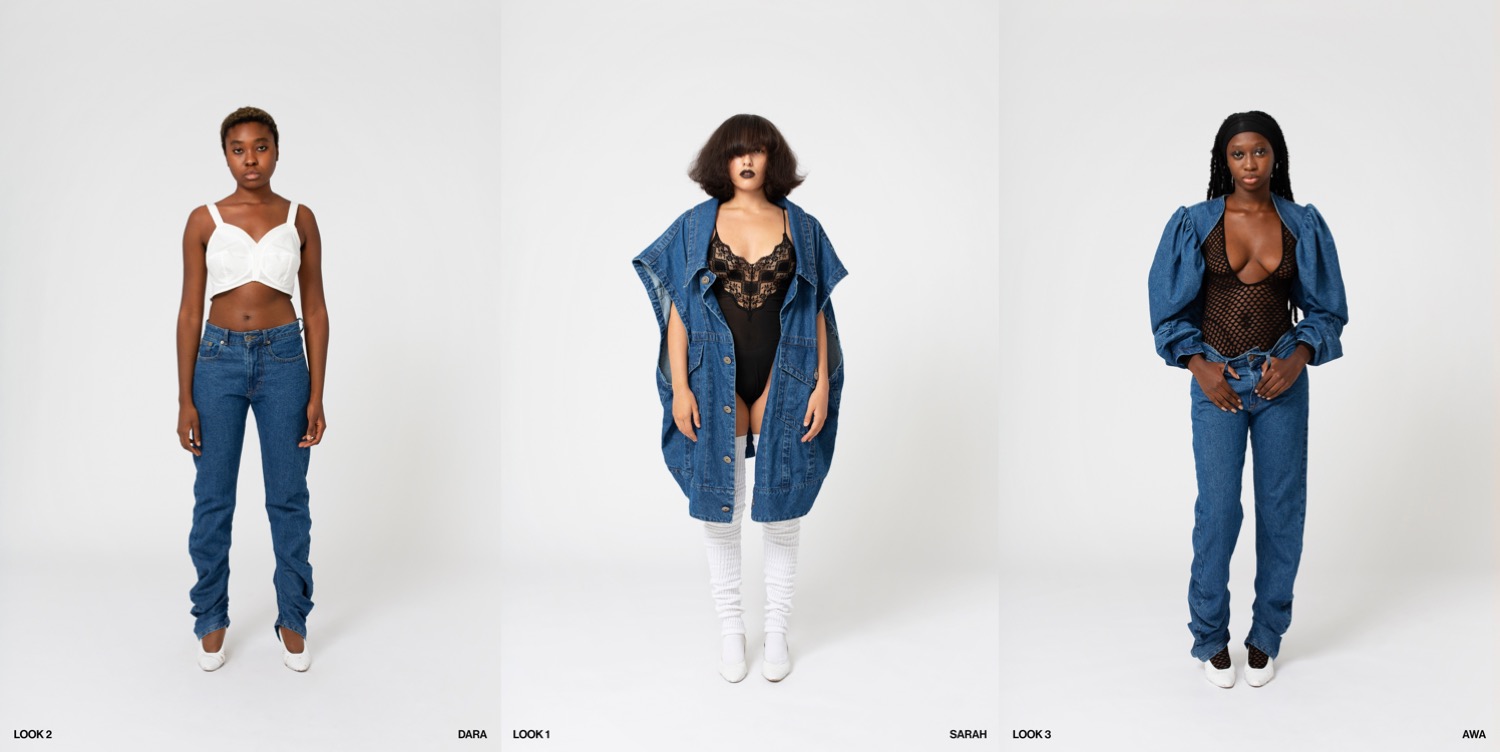
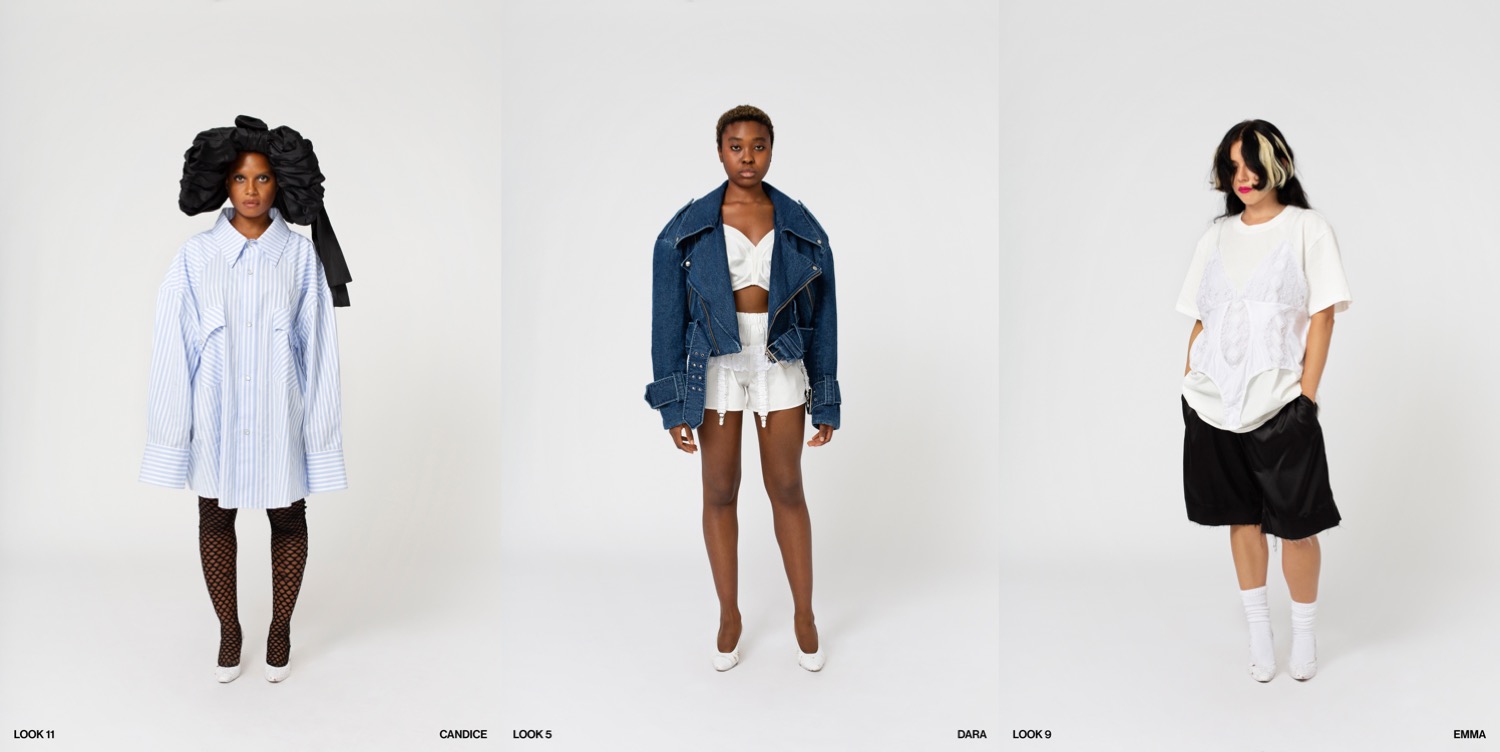
Although digital-live Paris Fashion Week has officially started today, there are still some great collections coming from New York. One of them is Vaquera, a line-up that ironically muses on different kinds of elegance, created by Patric DiCaprio, Claire Sullivan and Bryn Taubensee. Over the summer, one of the most “outsider” brands out there got suddenly certified by the upper echelon of fashion – but not the most common one, though. After hosting their autumn-winyter show back in February, Dover Street Market added Vaquera to the roster of brands it supports through its Paris showroom slash incubator. DSM will help with production and handle all sales and distribution, “the backend stuff that takes us away from being creative,” as DiCaprio put it. The point of the arrangement is that with DSM handling the commercial side of the business, the Vaquera trio can focus on creativity. But the partnership has already impacted how they’re channeling that creativity. “Knowing they’re going to be there on that side helping us with sales was really inspiring, for me at least,” DiCaprio continued. “We were like, ‘Let’s make this skirt perfect and the fit really nice and make these fabrics really good so they look good in their showroom.’” Their new collection is a sort of codifying of the Vaquera ethos and aesthetic. Wearability has been emphasized without forsaking too much of their hold on weird. So side by side there are washed denim jeans cut to fit both guys and girls and a Little Bo Peep cosplay outfit in white canvas and croc-stamped vinyl. Mixing with twisted bankers stripe shirts and oversized suiting is a tutu explosion in an amorphous body-obscuring shape of the kind you might see on a Comme des Garçons runway. “We were inspired by what we want to wear, what our friends are wearing, who we’re with,” Sullivan elaborated. “That’s so much of what Vaquera is: context, reference, culture. What do you wear, what do I wear, how do we make it Vaquera?” In certain neighborhoods of New York this summer it wasn’t unusual to see women wearing their bed clothes on the street, one of the many impacts of months in lockdown. In the look-book, that translates from innerwear to evening-outerwear. What makes it Vaquera is that all genders sample the retro bra tops and the satin and lace teddies affixed to T-shirts. New, never-average, edgy elegance for whoever feels it.
Collage by Edward Kanarecki.
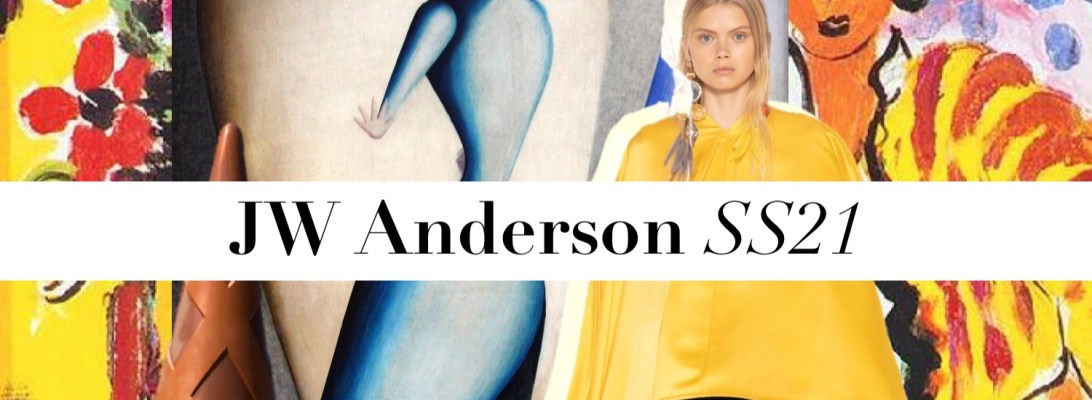
The Secret of Life is in Art. JW Anderson SS21

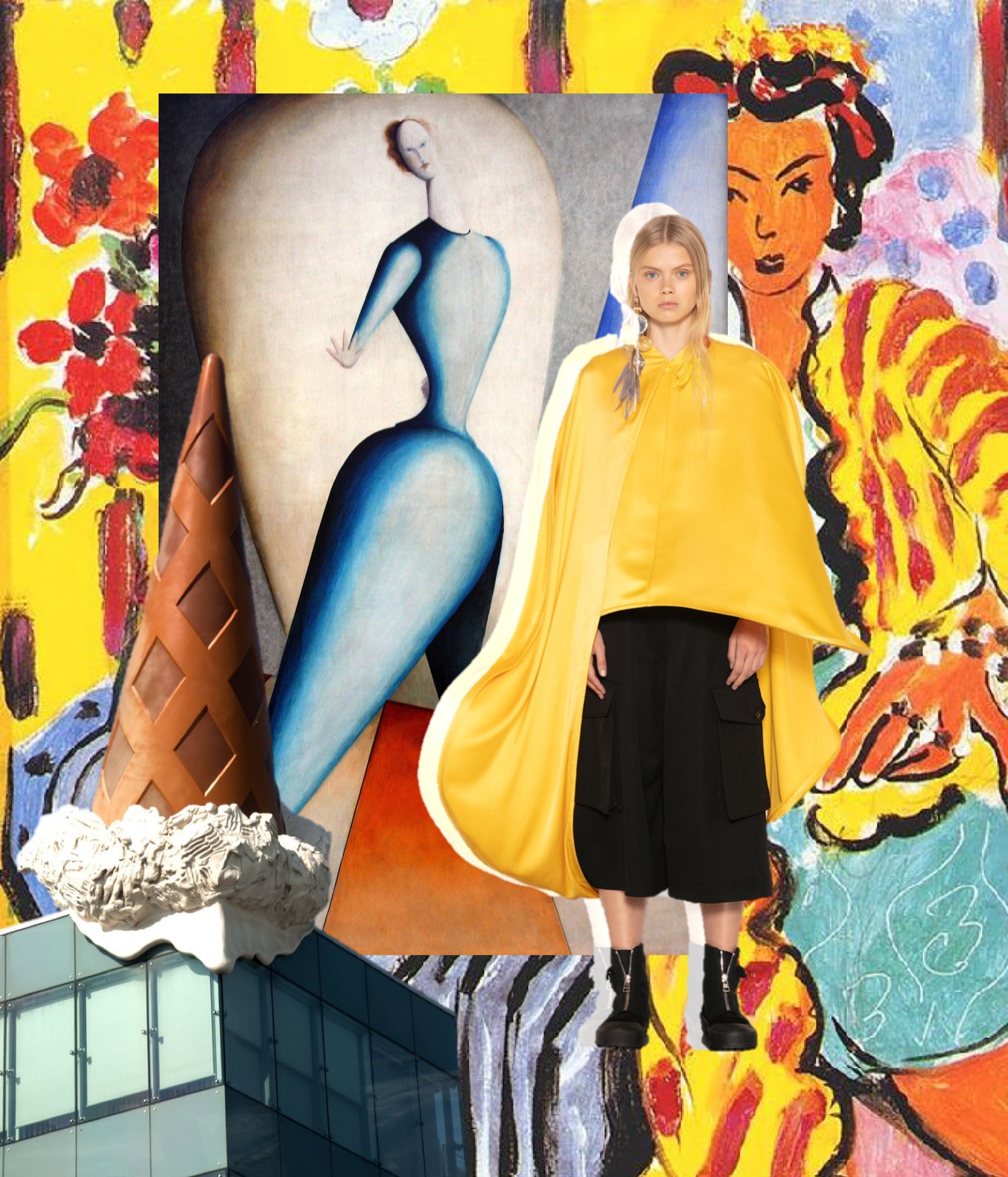
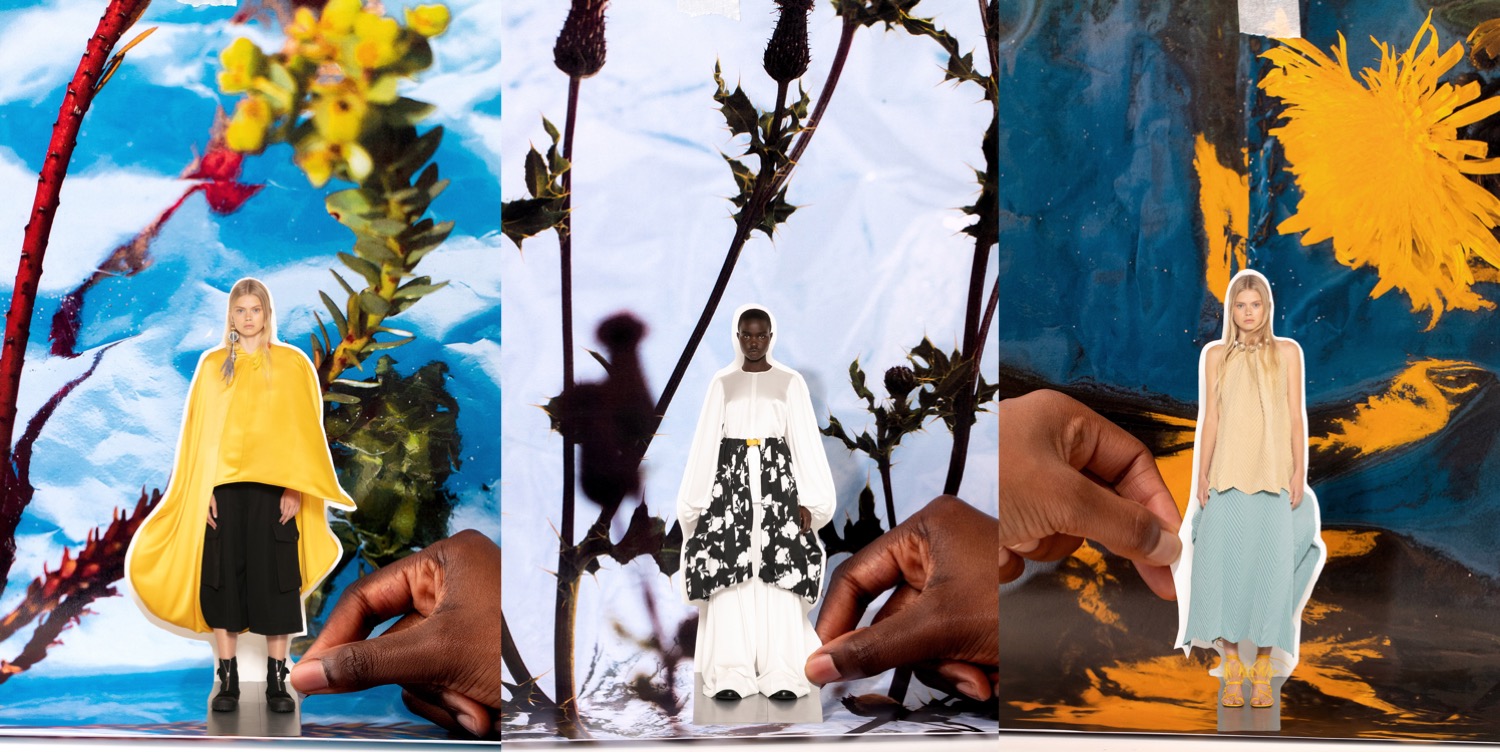
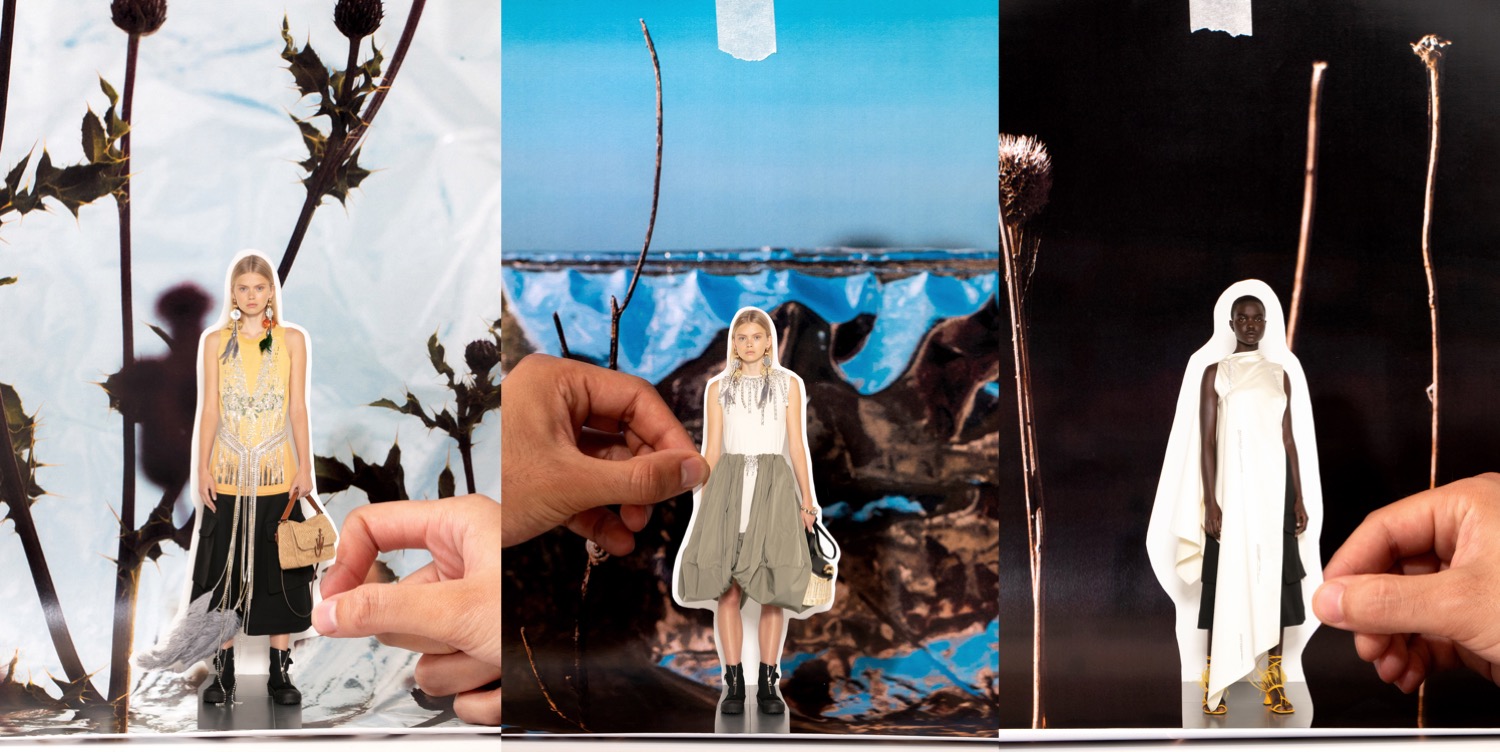
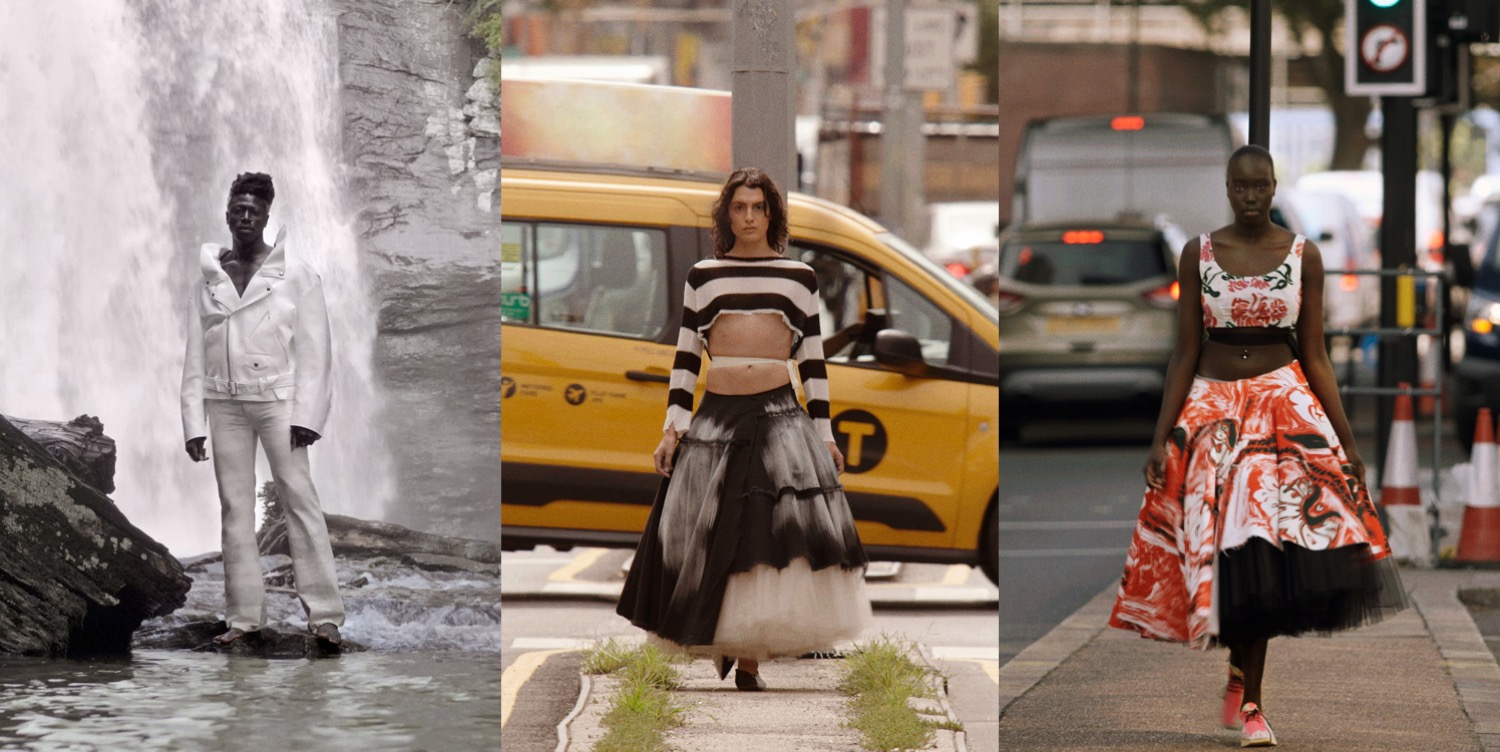
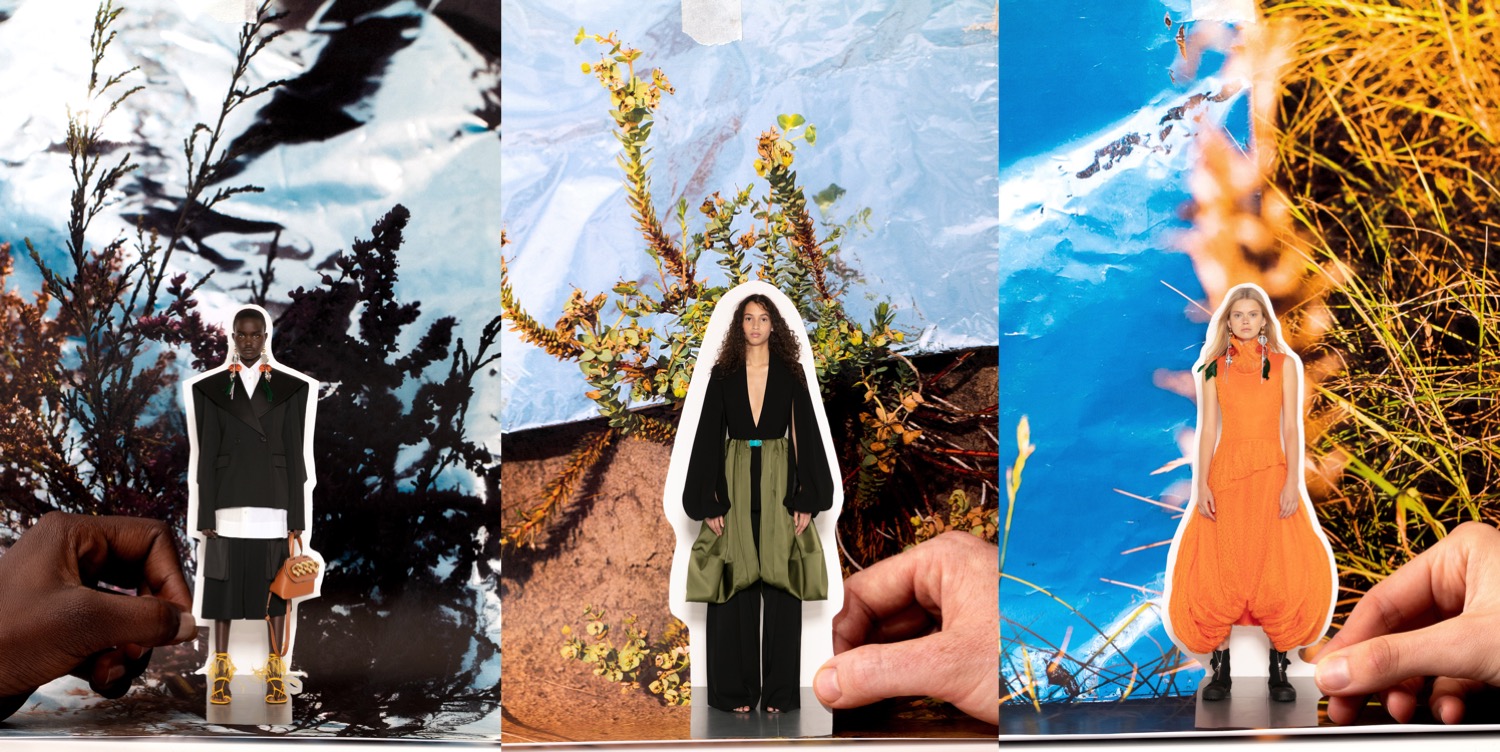
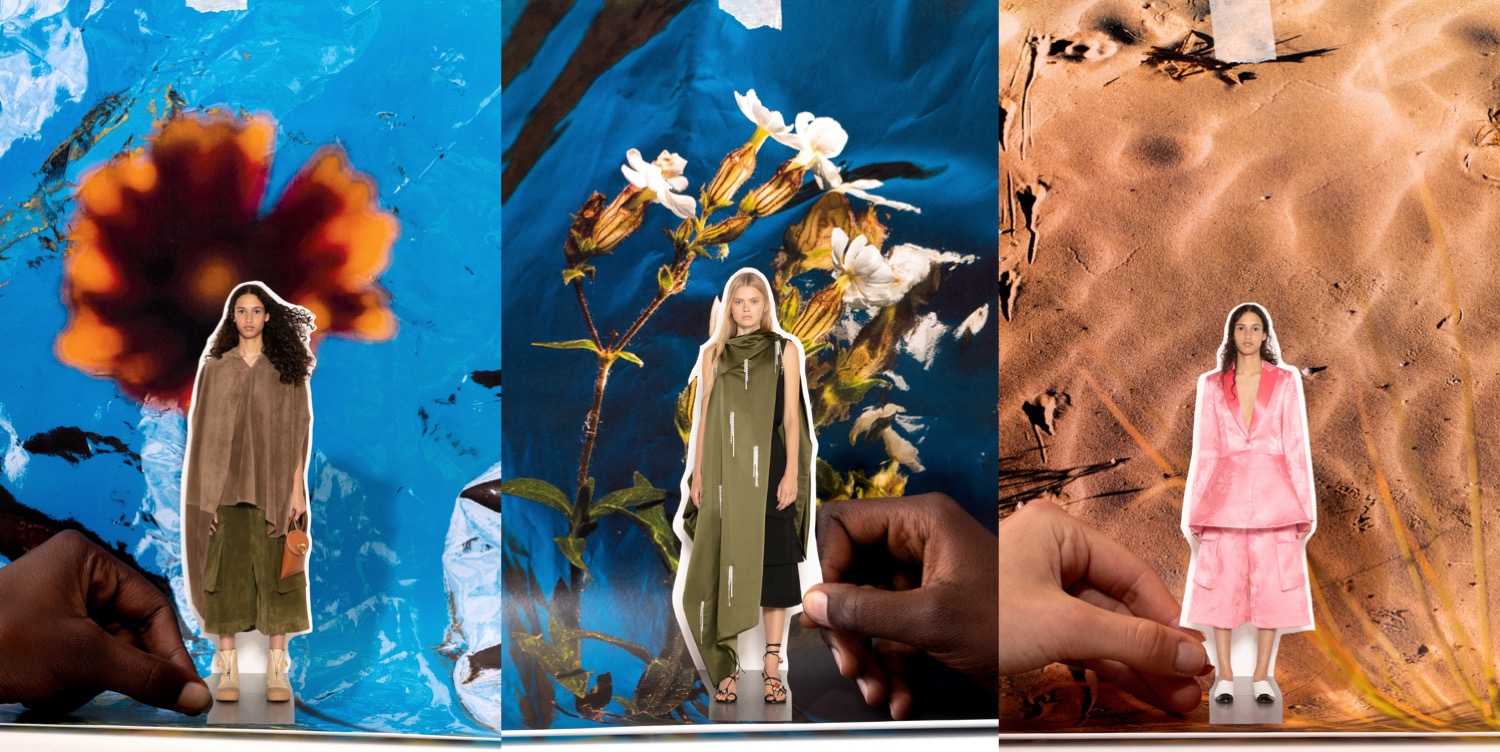
This is one of those JW Anderson collections that need no special explanations or expansive moodboards. It’s just so, so distinct to Jonathan Anderson‘s edgy style codes, that you can’t mistake it with anything else, really. Instead of a livestreamed fashion show, the press received a package wrapped in Oscar Wilde quotes: a book of papers and prints, and artful photographs all screwed together – and an enclosed gold coin, embossed with another Wilde quote (“the secret of life is in art”). Wilde proved both the literal and metaphorical means to unlock this collection, because, according to Anderson, “he was able to criticise the world but embrace the poetic reason within it; to look at the political, artistic, environmental landscape of his time and have a dialogue with it”. Equally, the writer’s affinity for the one-liner, he continued, felt particularly resonant during a period when that mode of communication reigns supreme. “This government has come up with so many – and I thought, how radical Wilde would be now with his ability to summarise a moment. Right now, people’s attention spans are very short, so things need to be very concise. And the clothing had to read like that, too: something easily digestible like a tuxedo, but with a puffball skirt belted onto it.” This collection was, essentially, an array of JW Anderson one-liners – not basic, but signature. “You know the look and you know that this girl belongs in this house,” he said of a loose-fitted pleated suede top layered over a panelled handkerchief skirt, or a white satin peplum blazer paired with matching cargo shorts. There was jewellery – enormous oversized earrings based on birdcage mirrors, or bejewelled brooches – which could transform almost anything into the spirit of the season and a wealth of easy-to-wear sophistication. But, alongside the fluid cuts likely to be required throughout spring-summer 2021, there was some exceptional tailoring, too. “It was important to grab onto that, onto things like the way in which we’ve explored tuxedos over the past five years, and really nurture it”, Anderson continued. Goodie!

Collage by Edward Kanarecki.

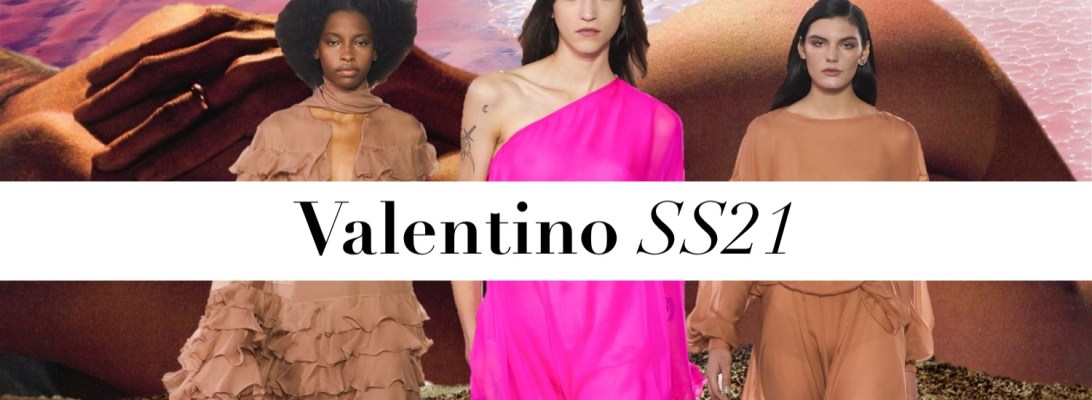
Radical Romantic. Valentino SS21


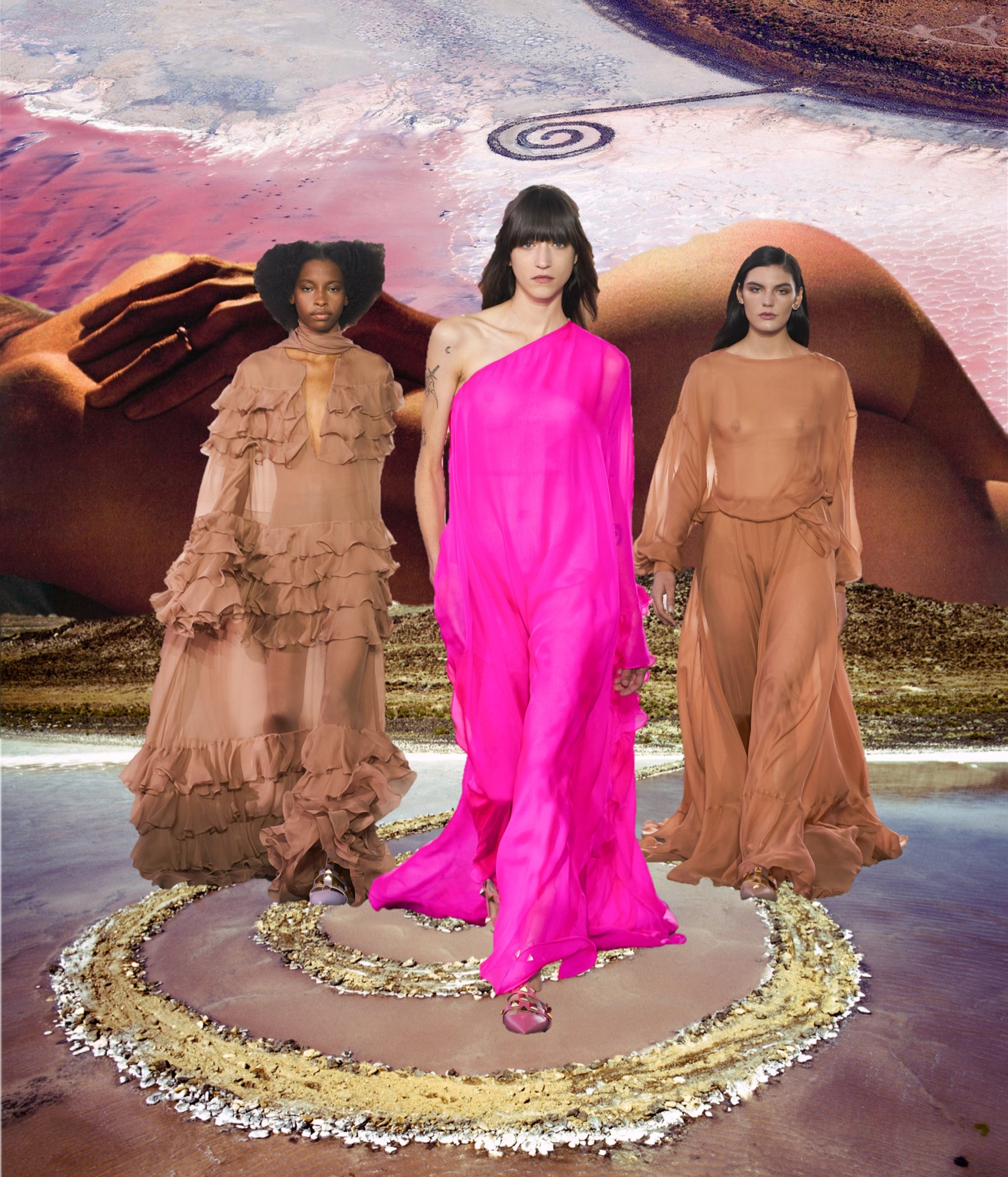
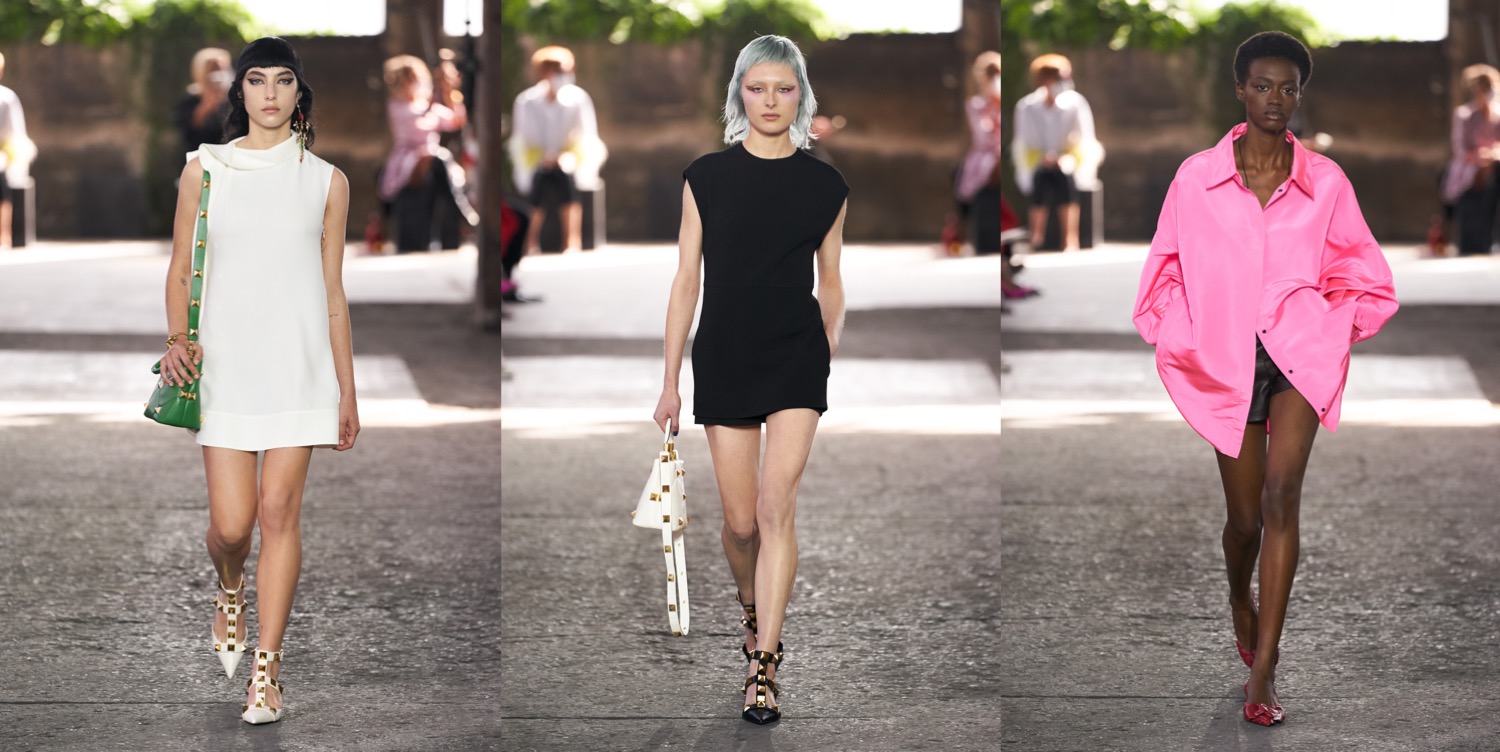
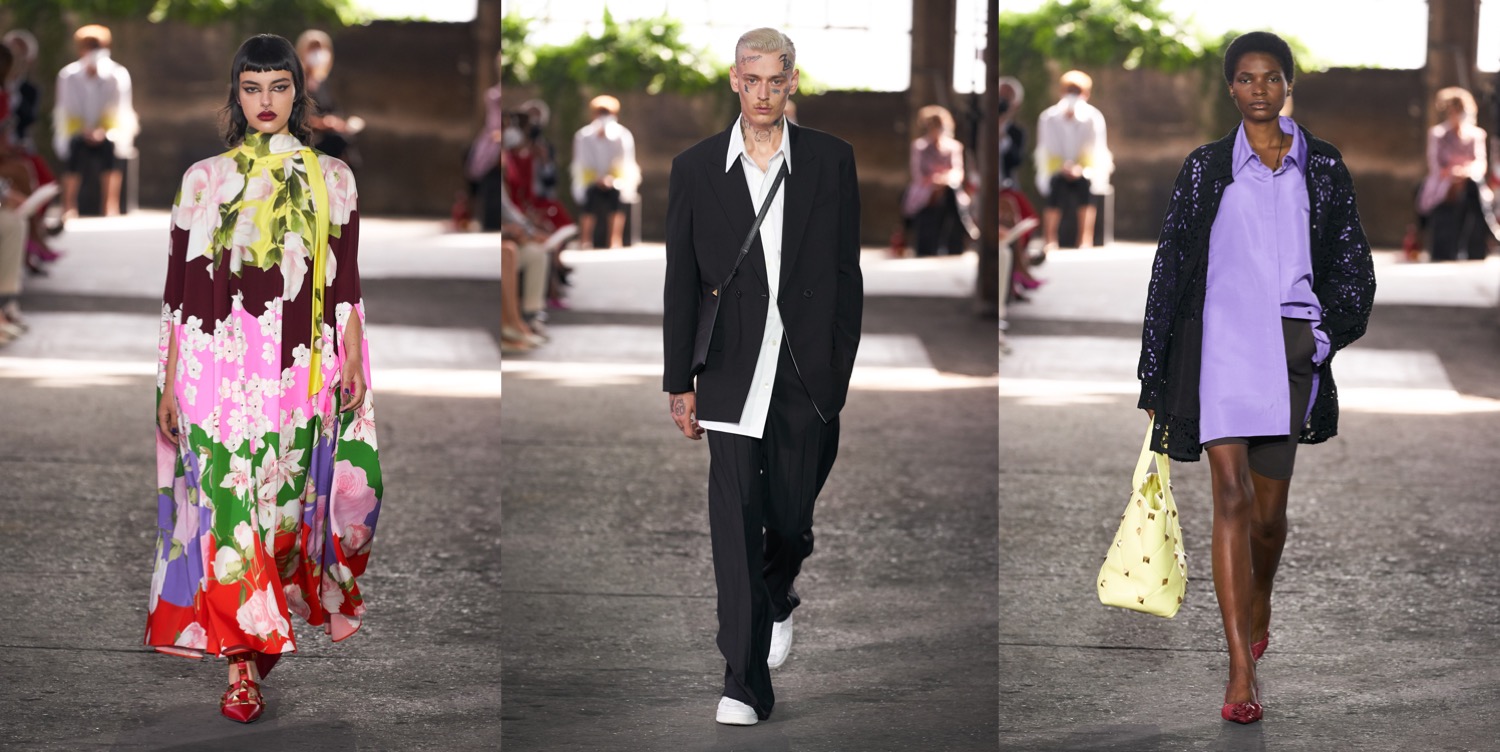
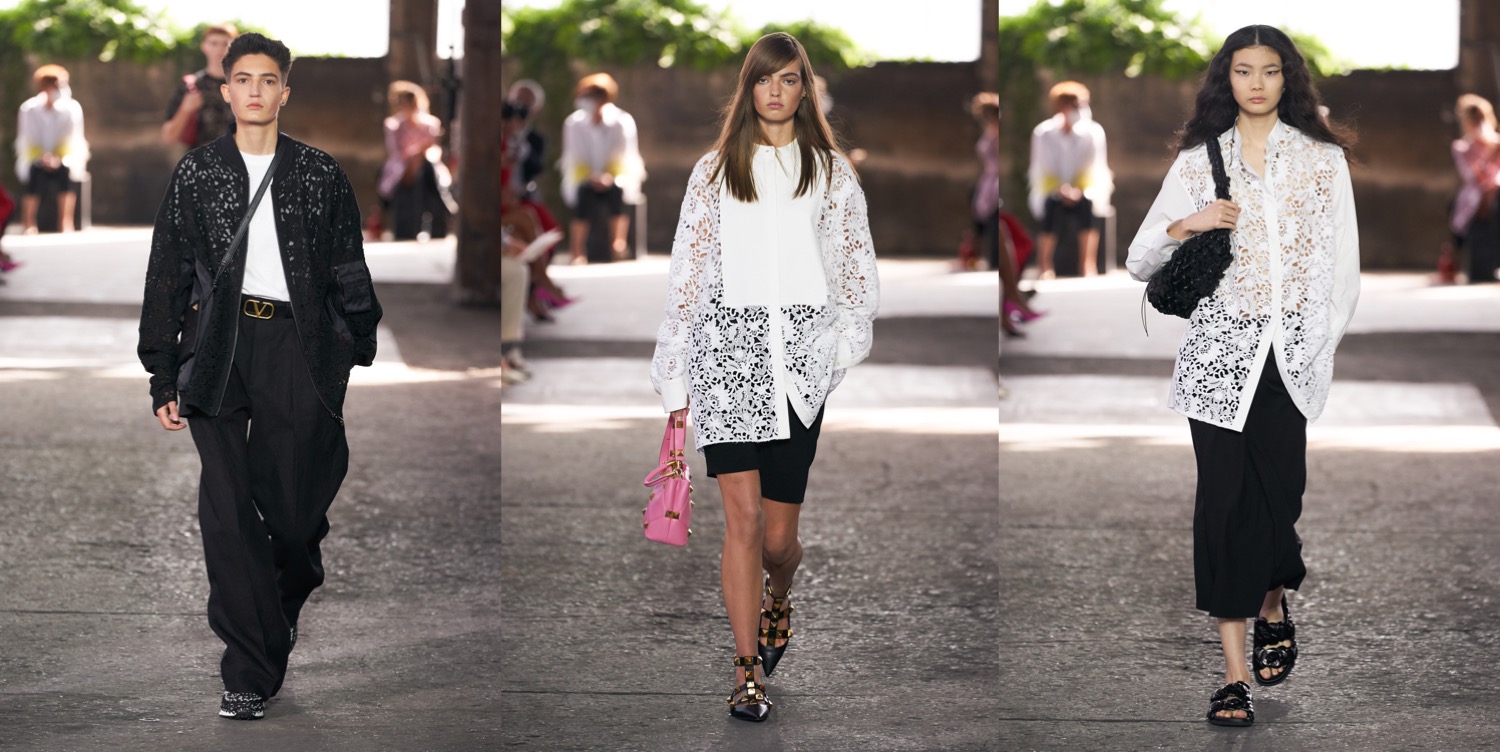
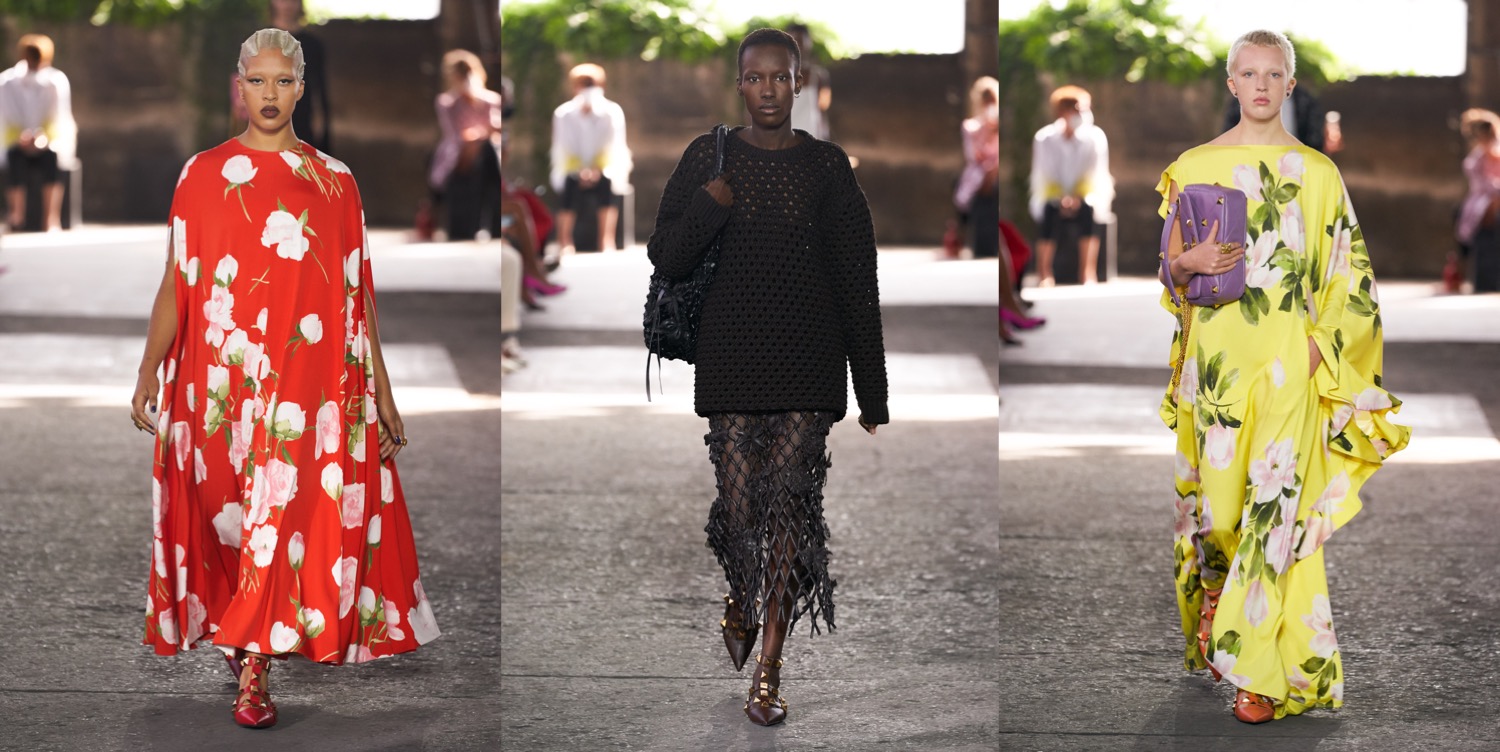
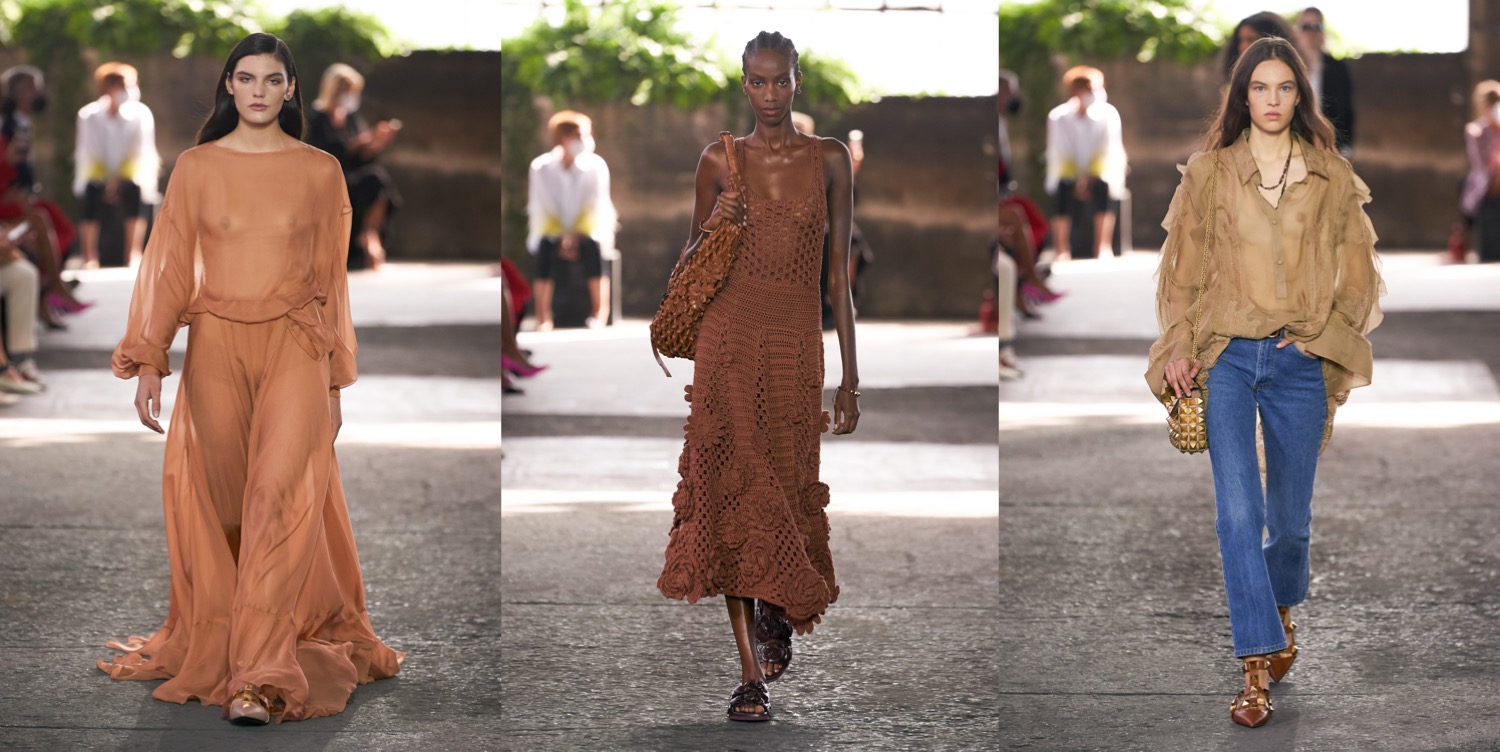
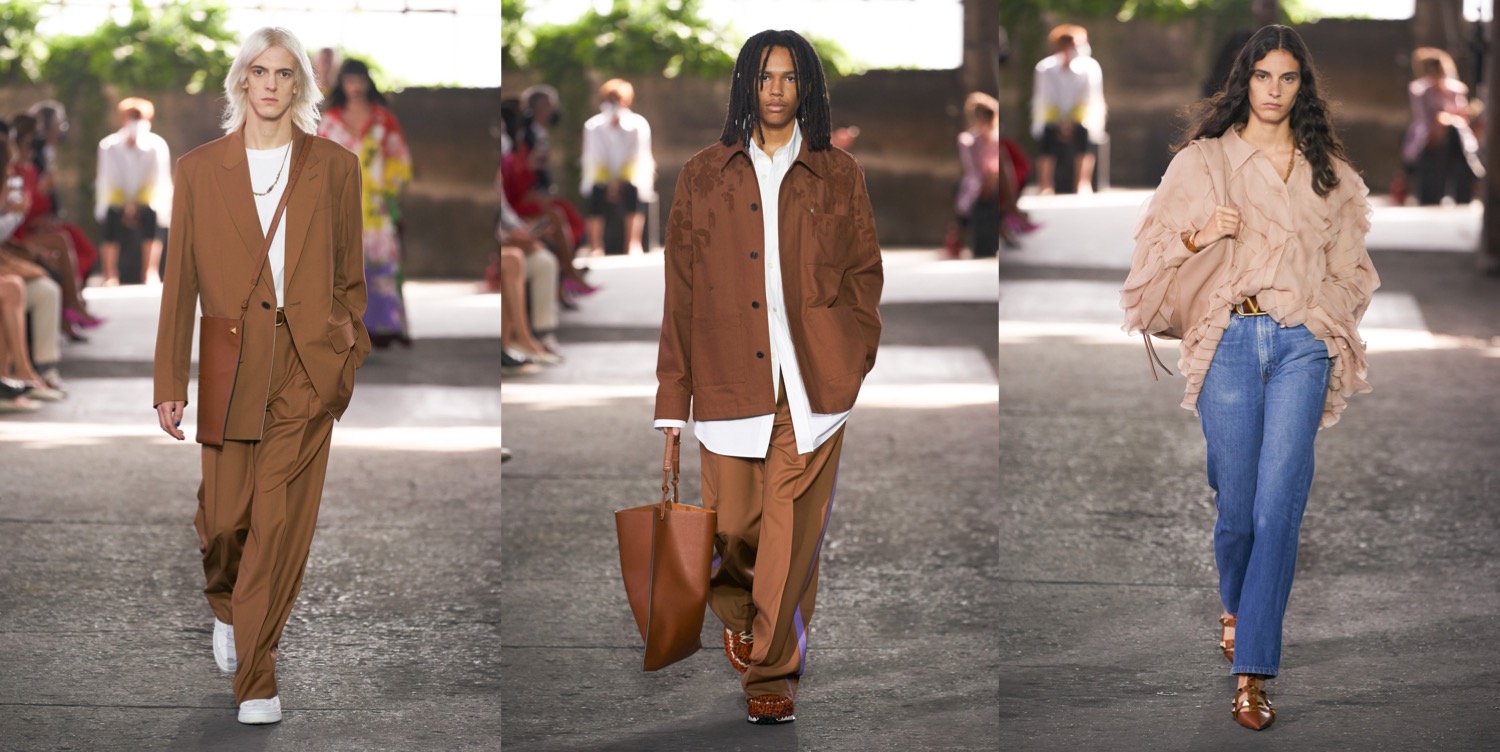
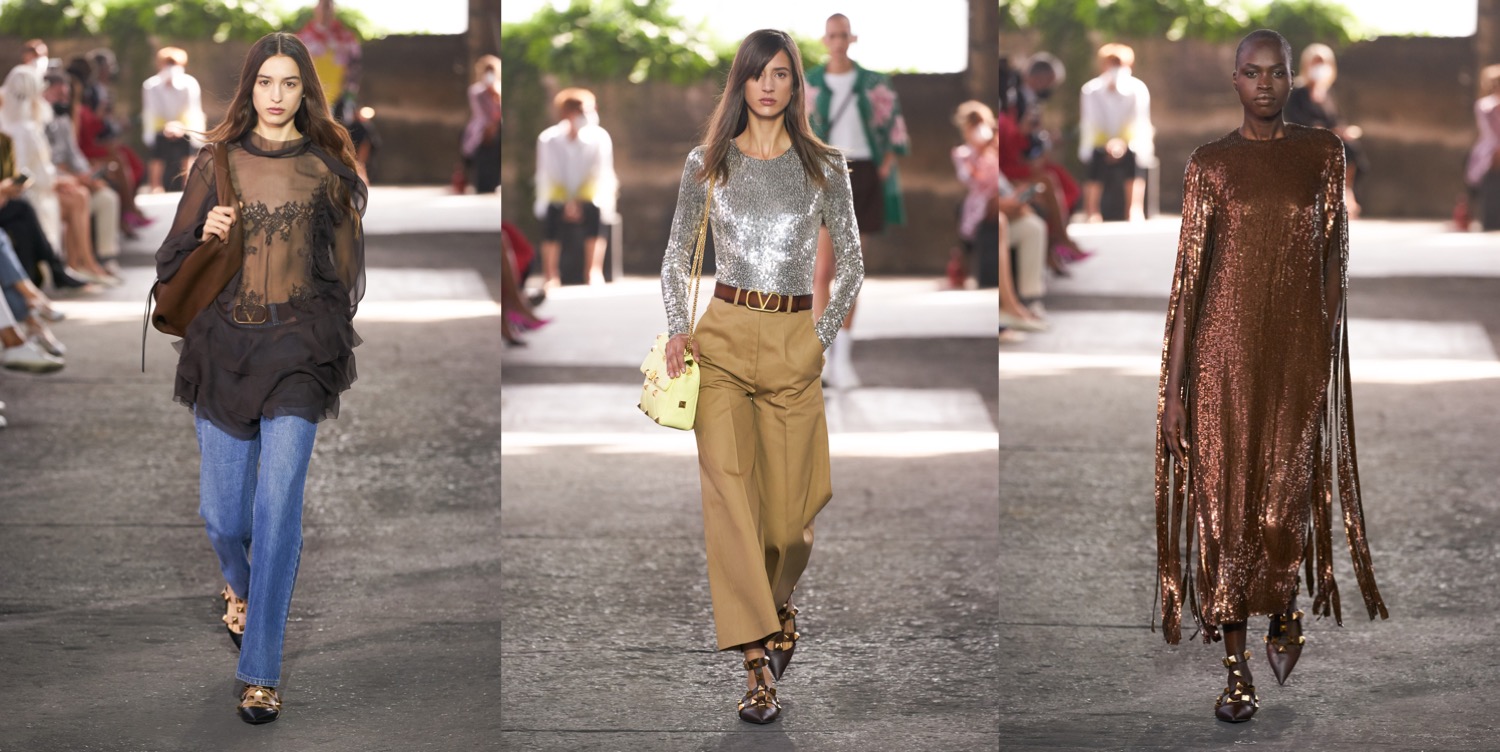
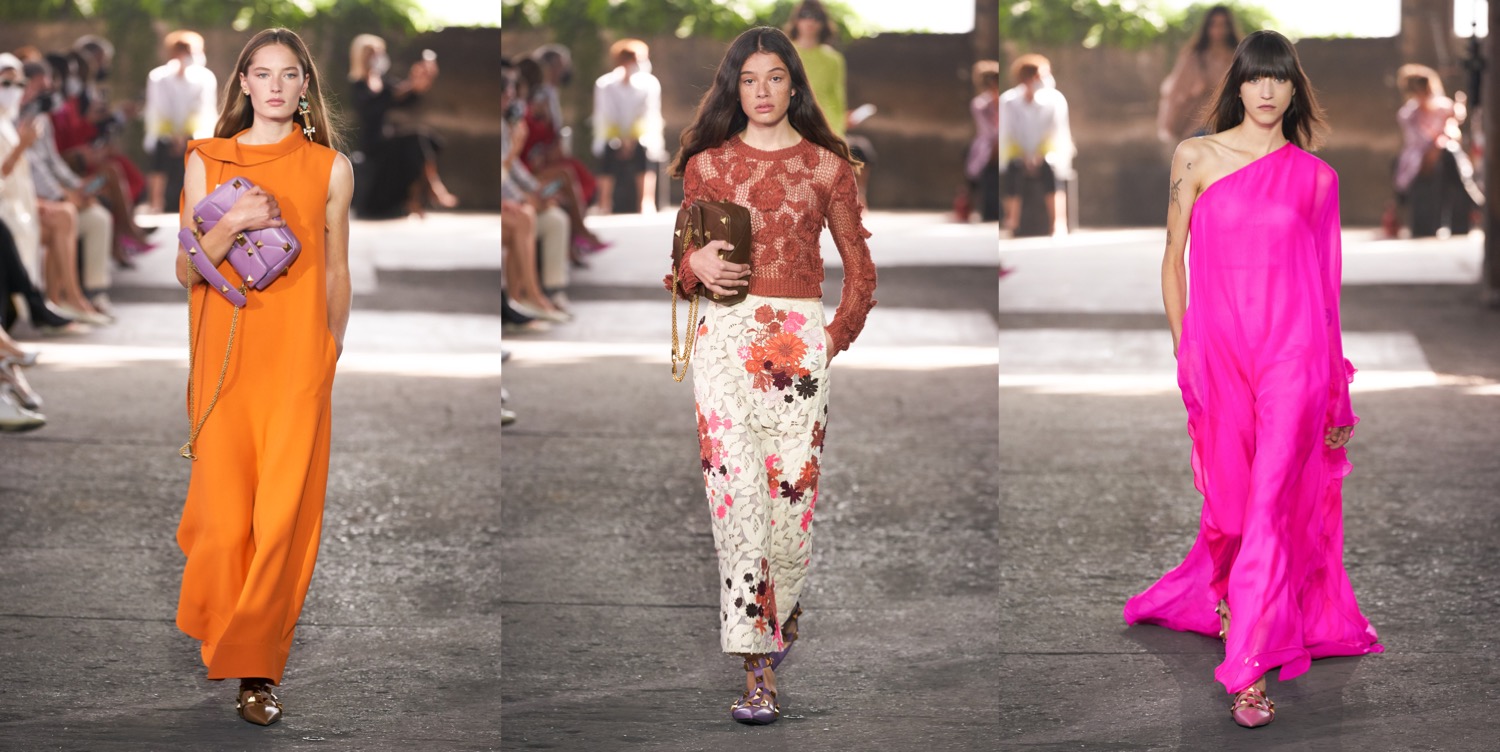
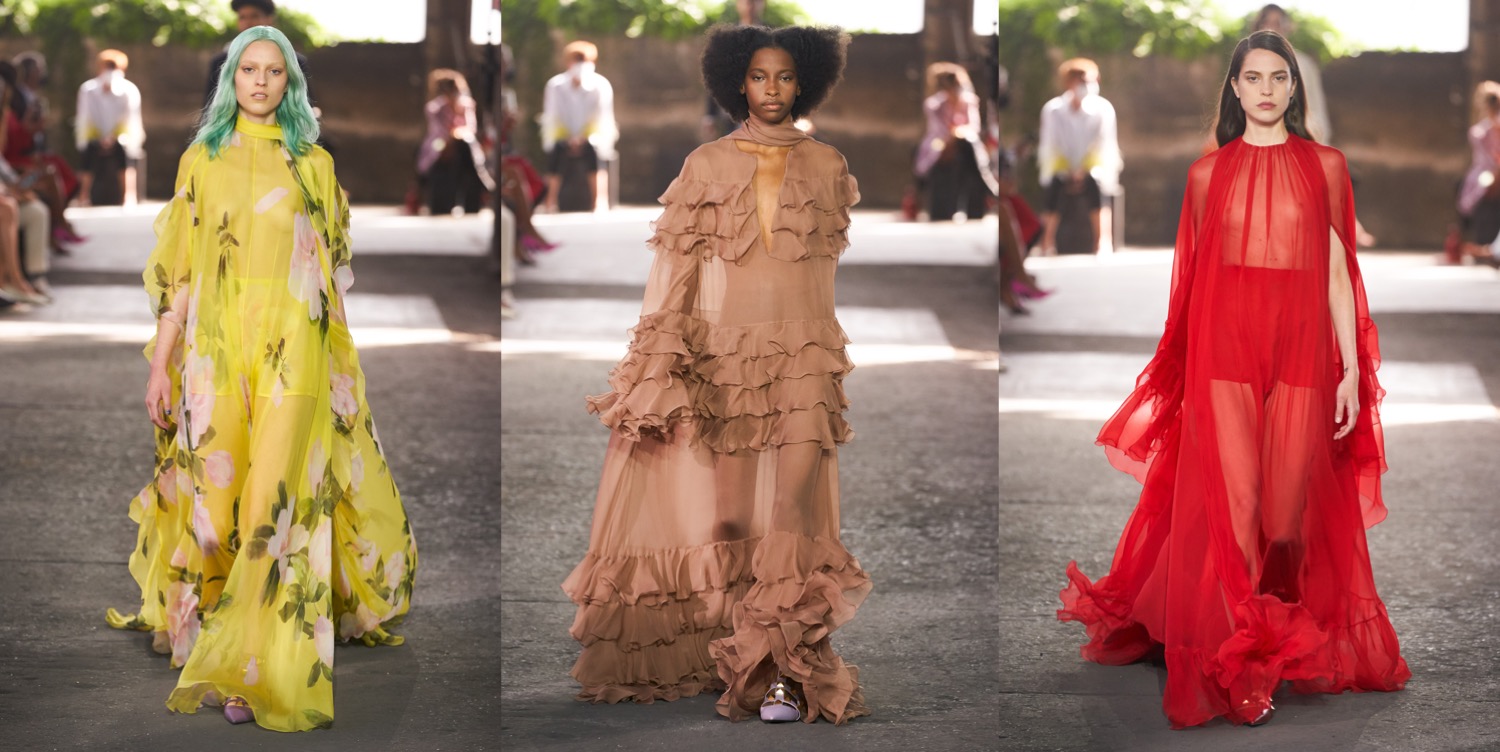
There was something truly powerful about the feeling conveyed by Pierpaolo Piccioli‘s Valentino spring-summer 2021 collection. It was so heartfelt, sincerere, honest. The line-up was presented for the first time in Milan, not in Paris, which in a way also changed the aura. In a declaration of support for the Italian fashion system and making the most out of the difficult circumstances the pandemic has forced upon us, Piccioli opted for an act of bravery – and bravura. He decided to decamp from the ornate Parisian fabulousness of the Salomon de Rothschild salons for the powerful industrial rawness of Fonderie Macchi, a metallurgical foundry active in Milan from 1936. “In this moment, sticking to an old mindset for me just wasn’t an option,” he said at the post-show press conference. Choosing a venue at odds with Valentino’s typical optics, so deep-rooted in couture, signaled the bold stance Piccioli was taking in the re-definition of the house’s stylistic codes – a process he called re-signification. “I focused on working more on Valentino’s identity than on its aesthetics,” he reflected.  As always with Piccioli, his approach was as instinctual as it was sophisticated; he’ll go down as one of fashion’s romantic visionaries, able to orchestrate moments of true creative enjoyment, both emotional and visually elevated. Romanticism was actually much on his mind while working on the collection. He called it radical. But what does it mean being a radical romantic today? “For me, it rhymes with individuality, with the freedom to express our very own identity and diversity,” he answered. Being romantic means also not following the rules, embracing idealism, being rebellious- fighting for a better world. Believing that things can change: “Fashion for me is a way to talk about the values that matter today,” he said. “The true acceptance of diversity. Tolerance and kindness. This is the world I want to tell through my work as a designer.” If aesthetics can actually suggest something about one’s life, then the collection’s street casting was a celebration of the many diverse-looking people Piccioli wants to include in his narration. Each look was individual, thoroughly chosen according to the personality of the character, young men and women coming from different backgrounds and walks of life. Yet from a fashion standpoint, the collection looked more toned down than usual: streamlined and with fewer of the decorative flourishes and certain hyperbolic gestures of couture. Lace, macramé, crochet, and embroideries were among the textural couture accents reworked here with a crafty, more palpable ‘human’ touch. Both the women’s and men’s lines shared shapes, volumes, and fabrics; the same wardrobe staples were often proposed in identical versions for both genders. Progressing from linear, almost minimal looks, the collection flowed into the ethereal evening options that have become synonymous with Valentino style; here the sophisticated shapes of caftans and cape dresses were designed with fluid, efficient precision. Highlighting a somehow reductionist approach, the only print was a vibrantly-hued floral revival of an archival dress: a glamorous yellow number famously worn by Anjelica Huston and lensed by Giampaolo Barbieri in 1972. Arrangements of wildflowers and plants filled the vast industrial set in a powerful installation by Japanese plant artist Satoshi Kawamoto; Piccioli envisioned it as a disruptive element of beauty inspired by guerrilla gardening’s practice of growing delicate plants in gray concrete spaces – another romantic act of urban resistance. The flowers had a story of their own: originated in eight different countries, they were grown in a nursery in Milan, where they’ll be returned after the show. Piccioli is the modern-day master when it comes to turning fashion shows into emotionally charged moments of visual seduction. Music always serves his purpose well. This time, he entrusted the singer, songwriter, and producer Labrinth to perform stirring renditions of some of his hits. It all worked together in a delightful way.

Collage by Edward Kanarecki.
Aquatic Wonderland. Versace SS21

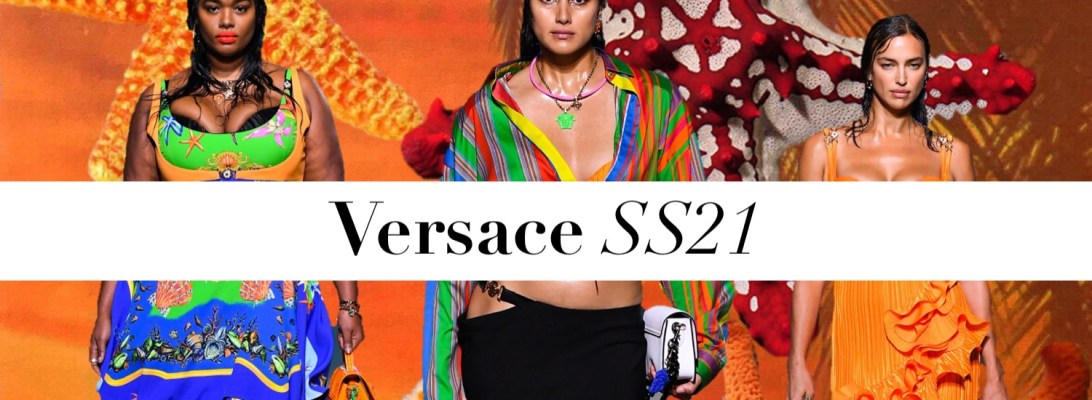
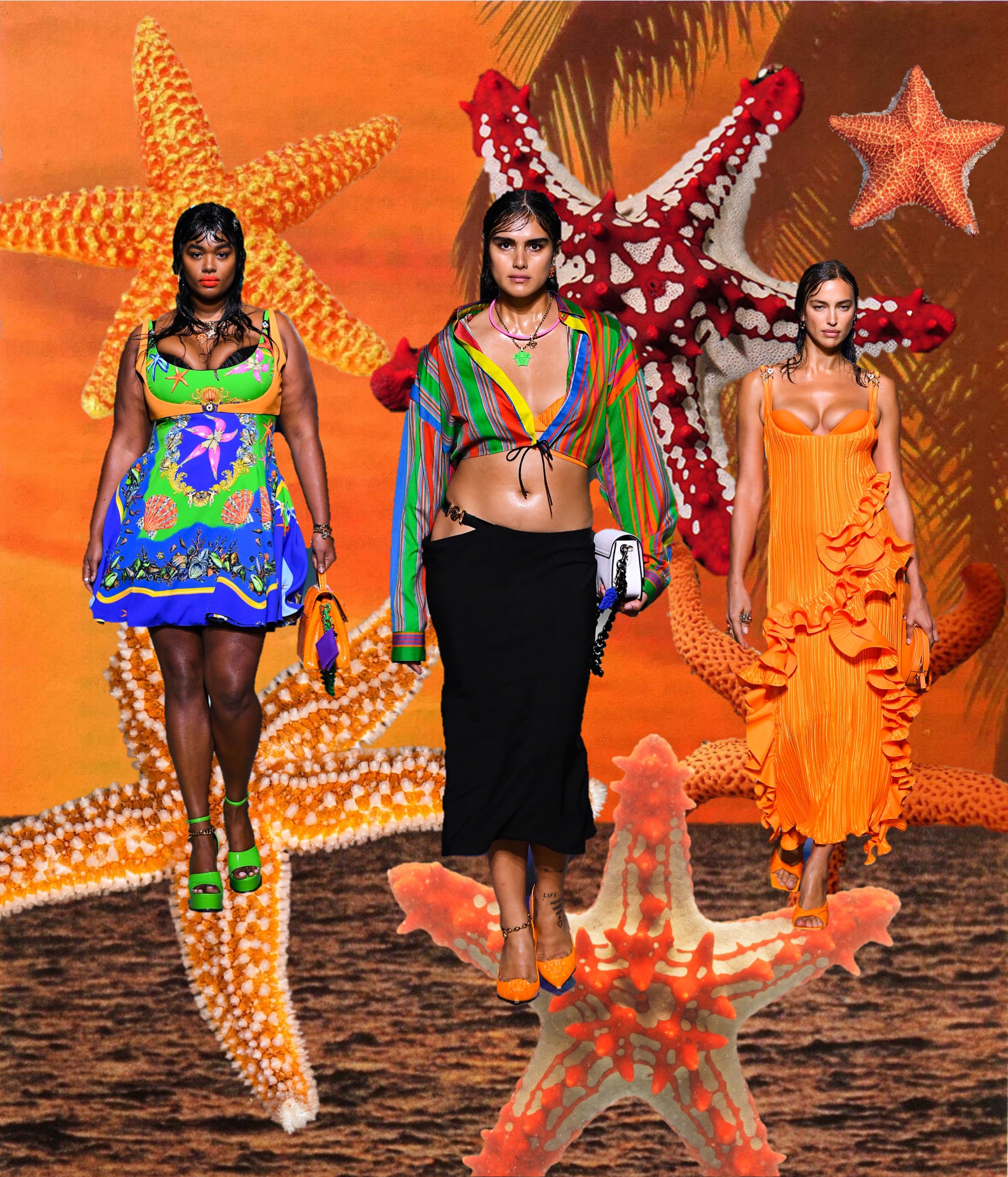
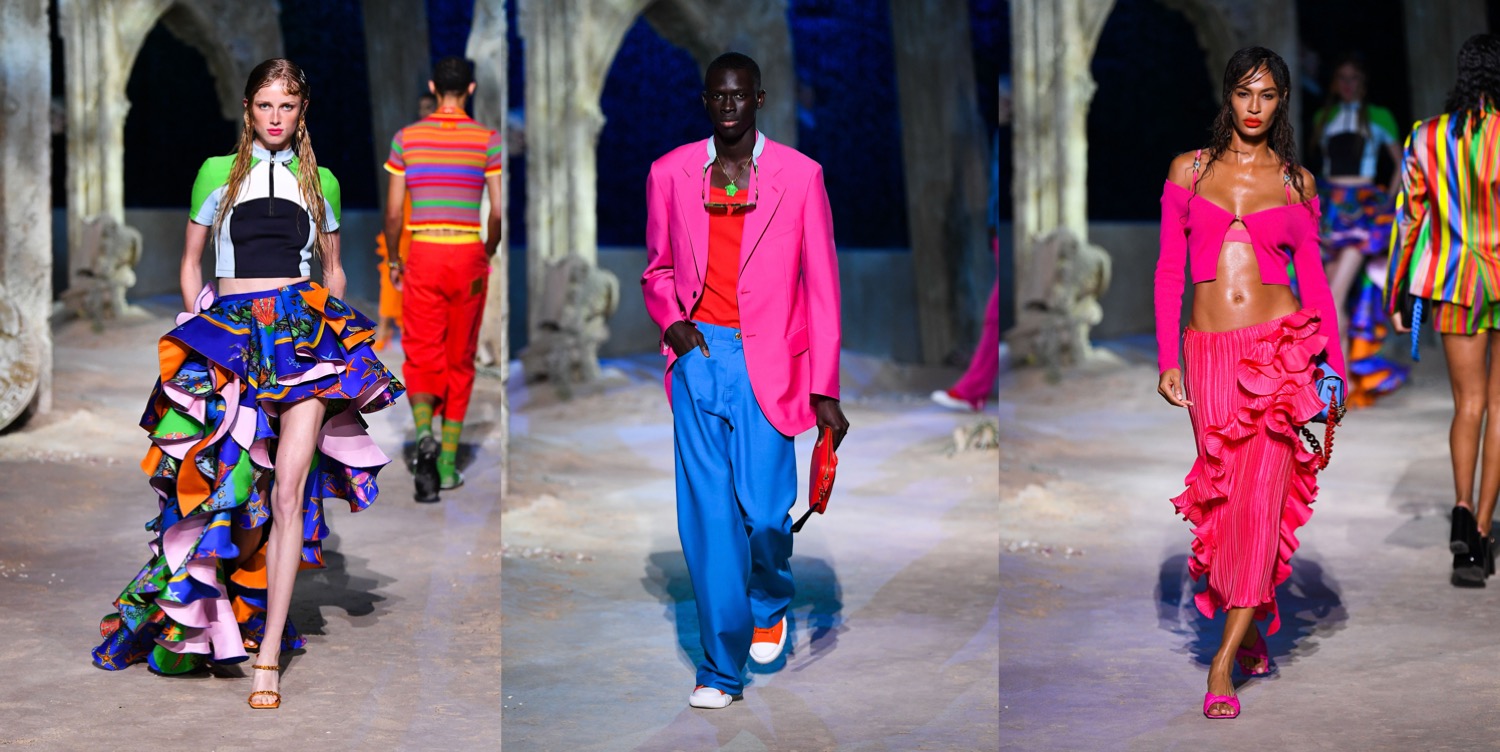
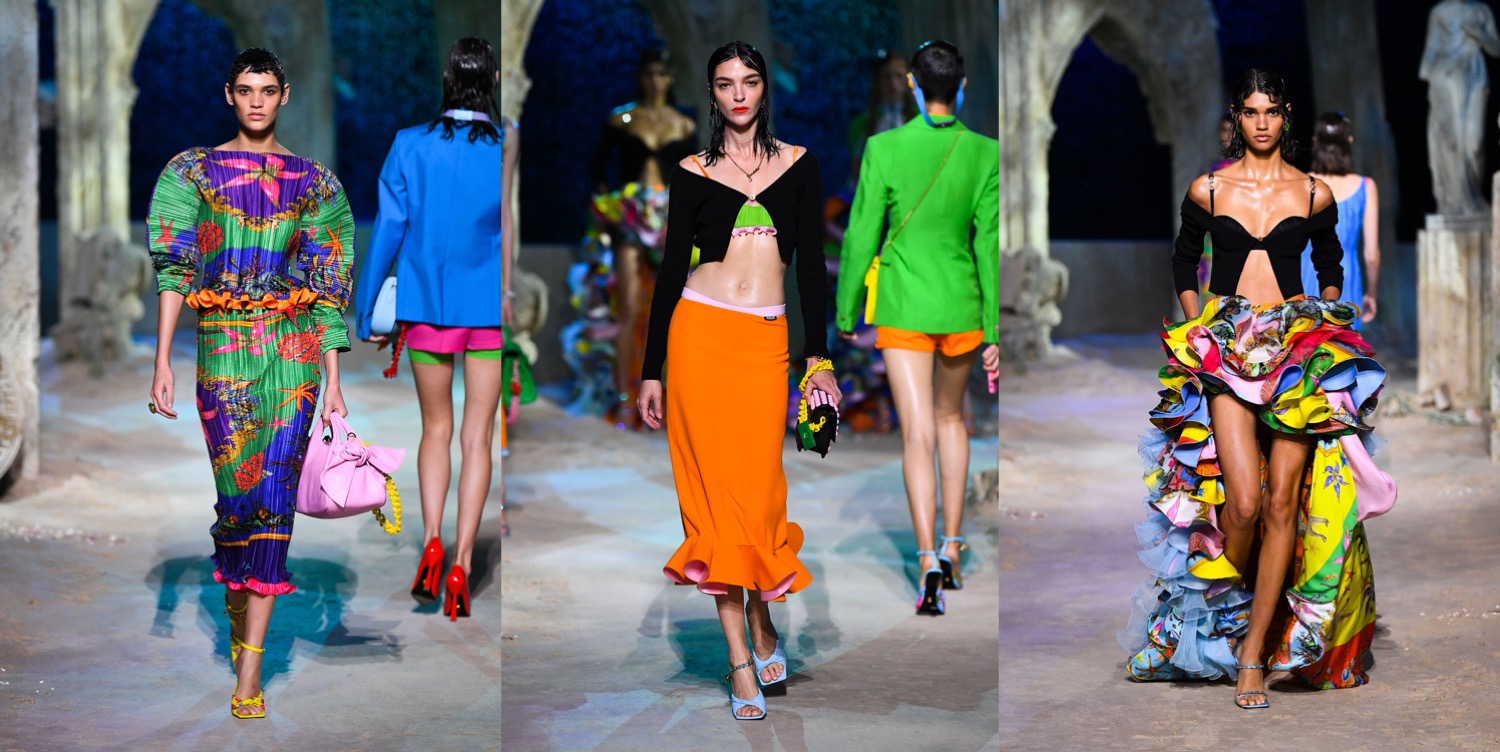
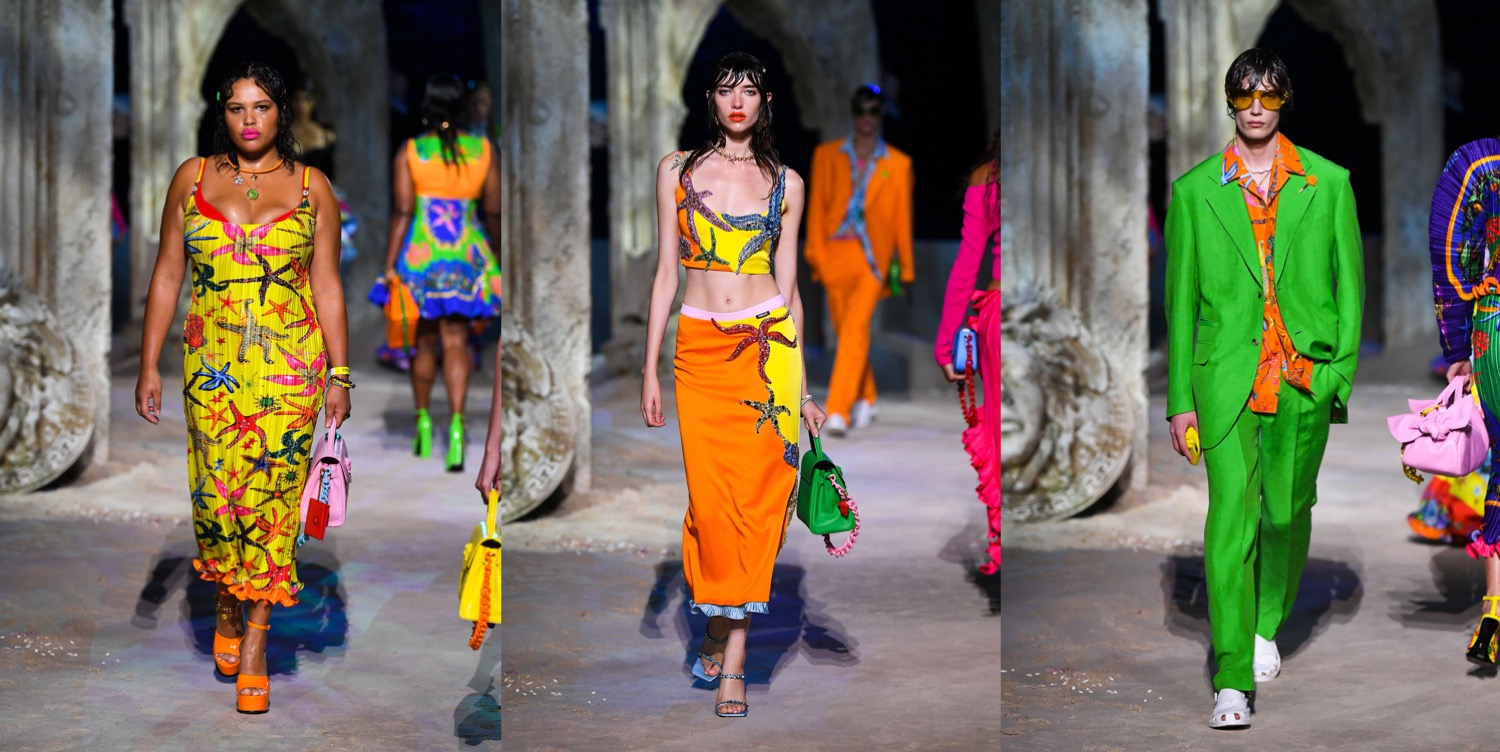
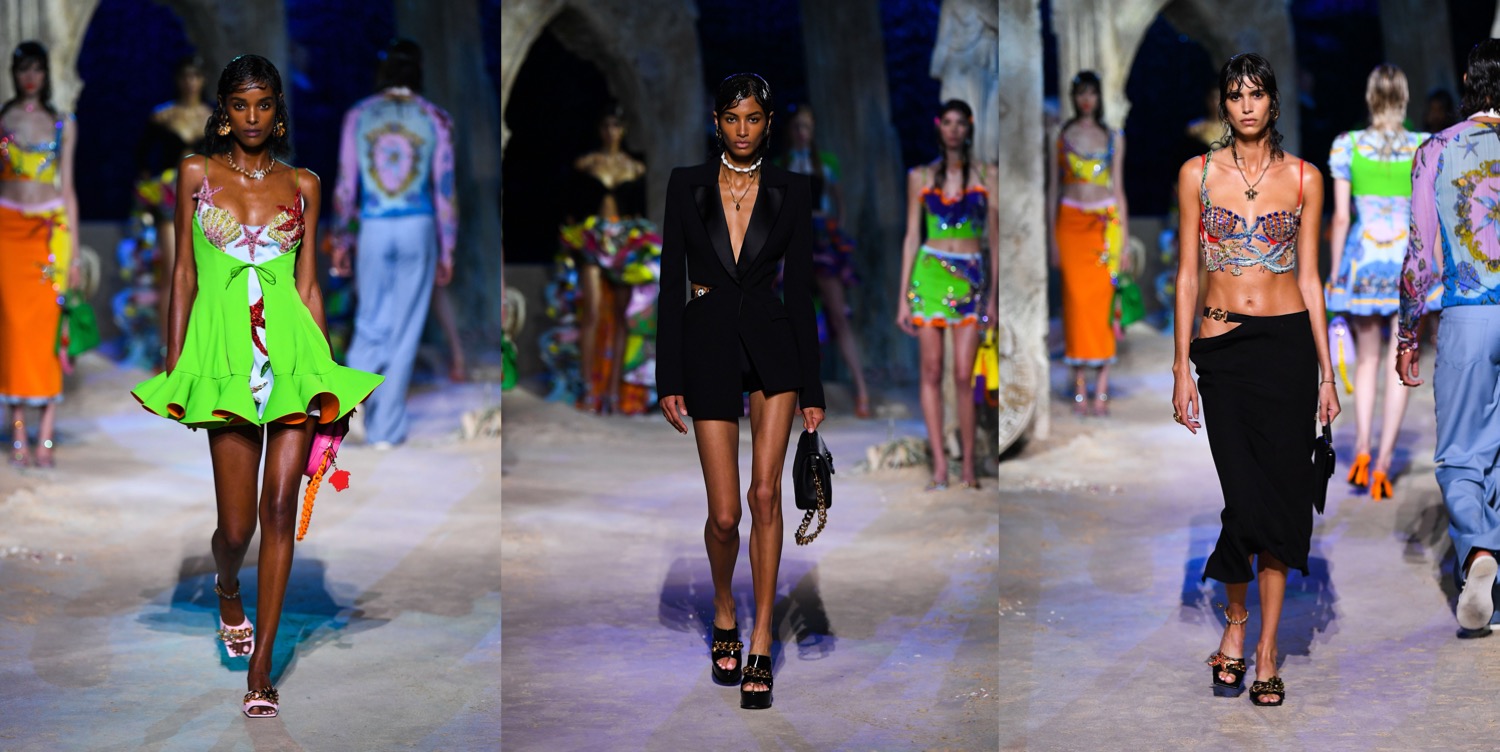
As we are somewhere in the middle of the fashion month, two camps of designers can be noticed: the ones that take the realistic, pragmatic approach, and the ones that prefer escapism in midst of a crisis. Donatella Versace is in the latter group, as she takes us to her aquatic wonderland for spring-summer 2021. The Versace line-up was really good this season (and you know I’m not the biggest fan of the brand), but it was the model casting that truly stole the spotlight. Seeing the gorgeous, body-positive models – Jill Kortleve, Precious Lee and Alva Clair – in the Versace fantasy-land was a inclusivity moment that sadly isn’t a usual sight in Milan (except for Fendi and Marni, which invite different models to their fashion shows for a couple of seasons now). Hopefully, Donatella will keep it up. What about the clothes? In the imagined ruins of Atlantis and water currents streaming down its projected walls. Versace goddesses and gods wore starfish, coral, and seashell motifs from Gianni Versace’s ‘trésors de la mer’ collection for spring-summer 1992. They were ready to take on a new reality like the Rebirth of Venus herself (starring Adut Akech in the title role, of course). Versace, who described the collection as having “an upbeat soul,” said her challenge was to give fashion meaning in a historical moment like this. “I wanted to do something disruptive and to break the rules because I think that, what worked a few months ago, does not make any sense today. Creatively, that meant finding a way to bring the DNA of Versace to a new reality and to people who have undergone a deep change.” Clothes-wise, it’s a fun, high summer venture: it was, on the women’s as well as the men’s side, high-octane sporty cocktail-wear for an optimistic future. In all its sea-centric detailing, it also had its moments of ingenuity: micro-pleated dresses trimmed with twirly ruffles, which bounced like jellyfish in the waves walking down the runway; crazy cascading skirts layered like the lips of shells; and a bag constructed like a big fortune cookie.

Collage by Edward Kanarecki.
Marnifesto. Marni SS21

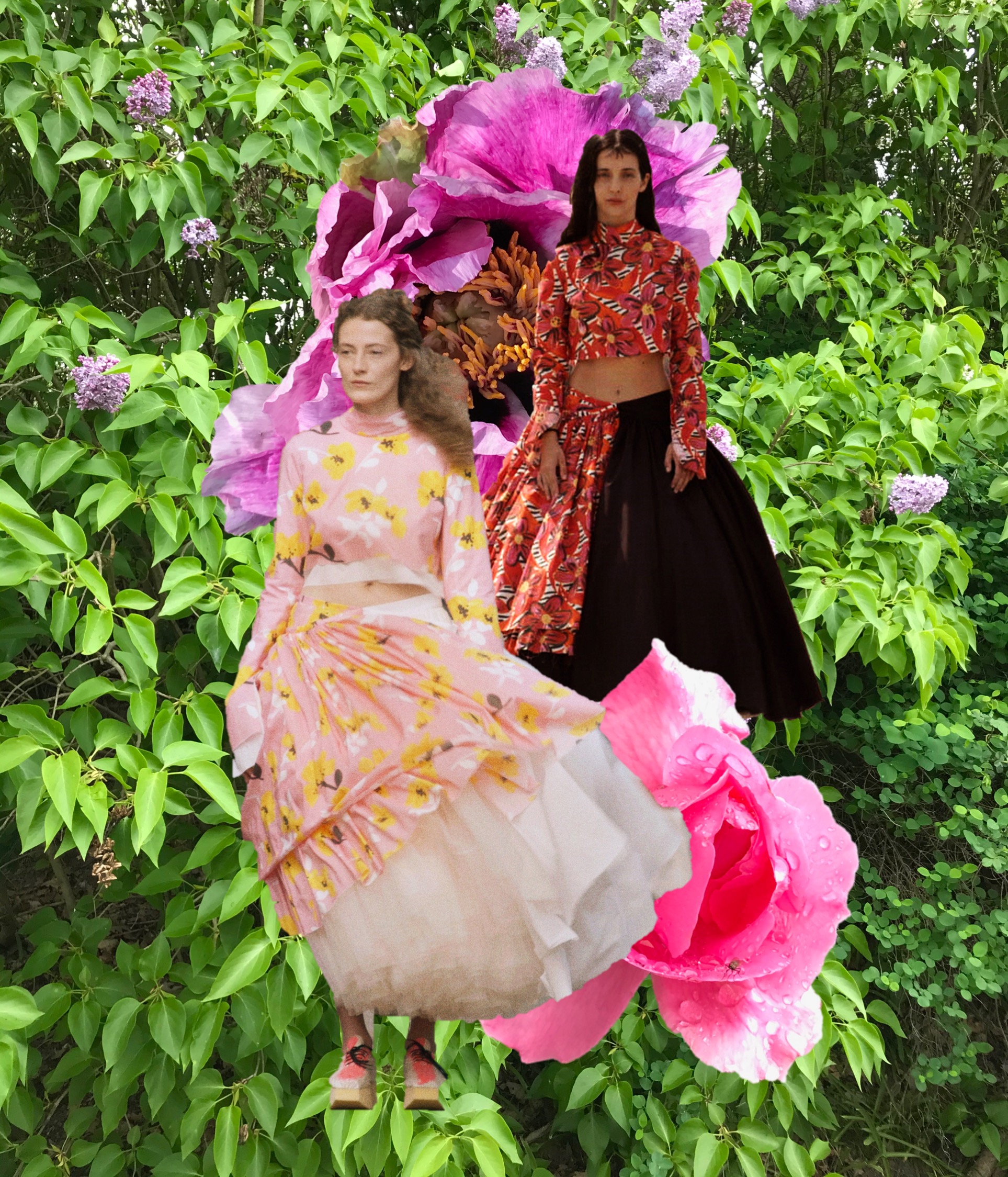
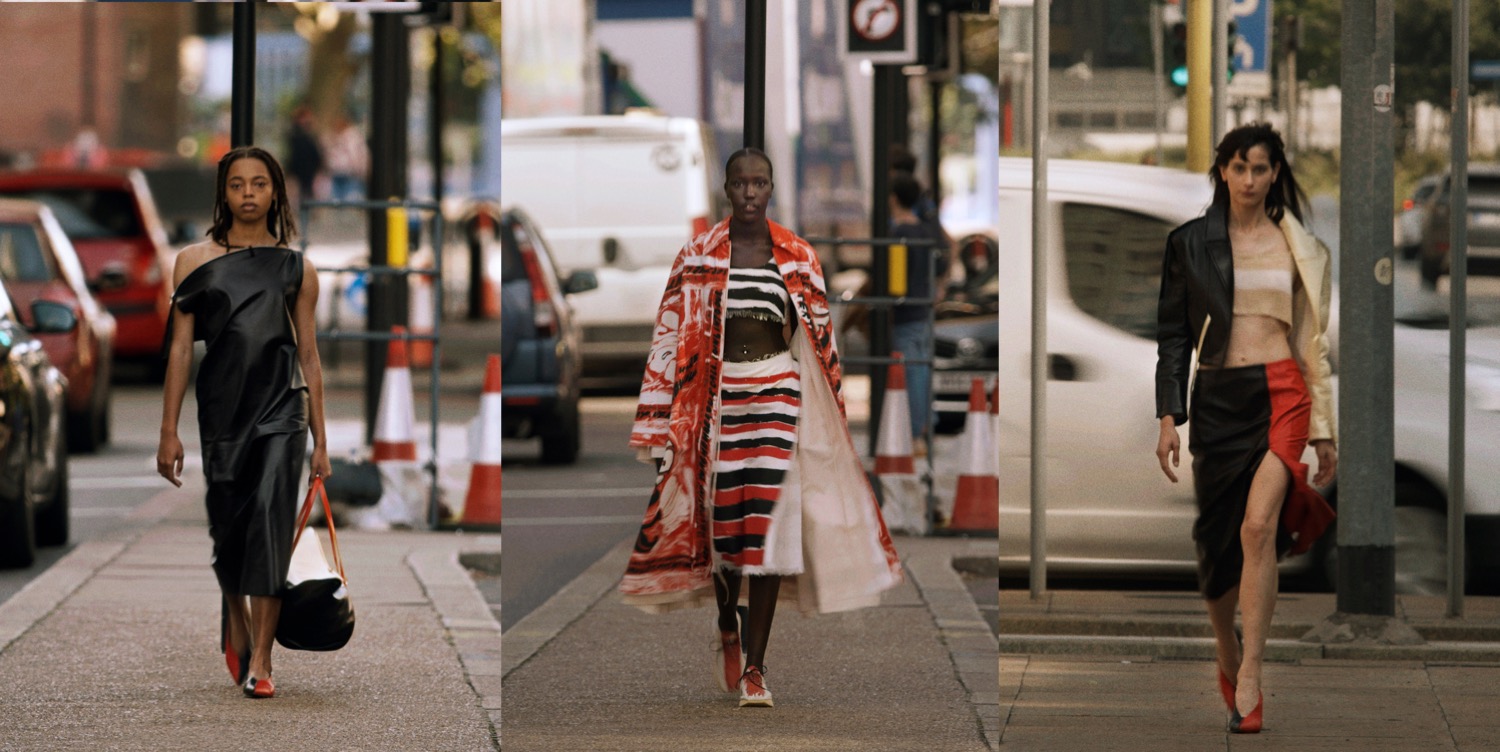
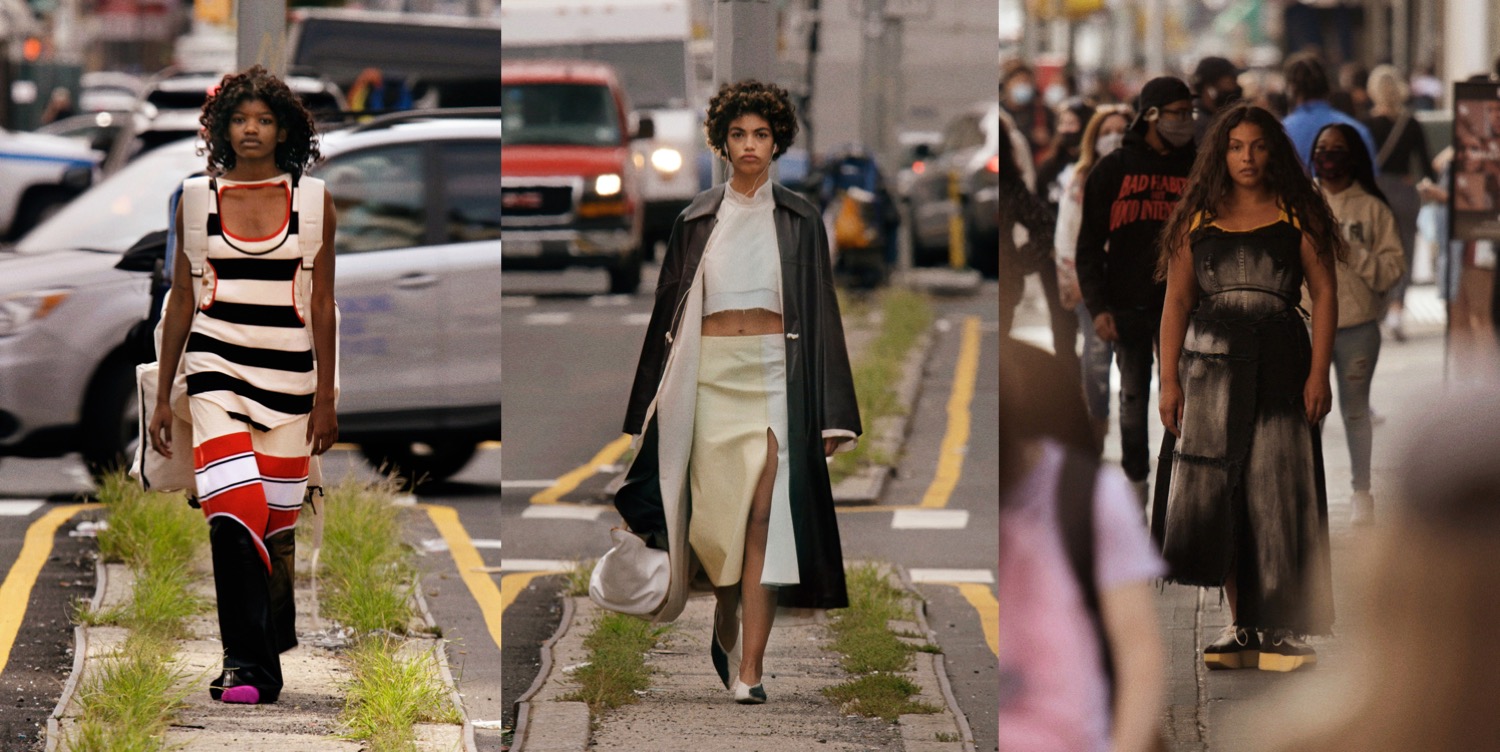
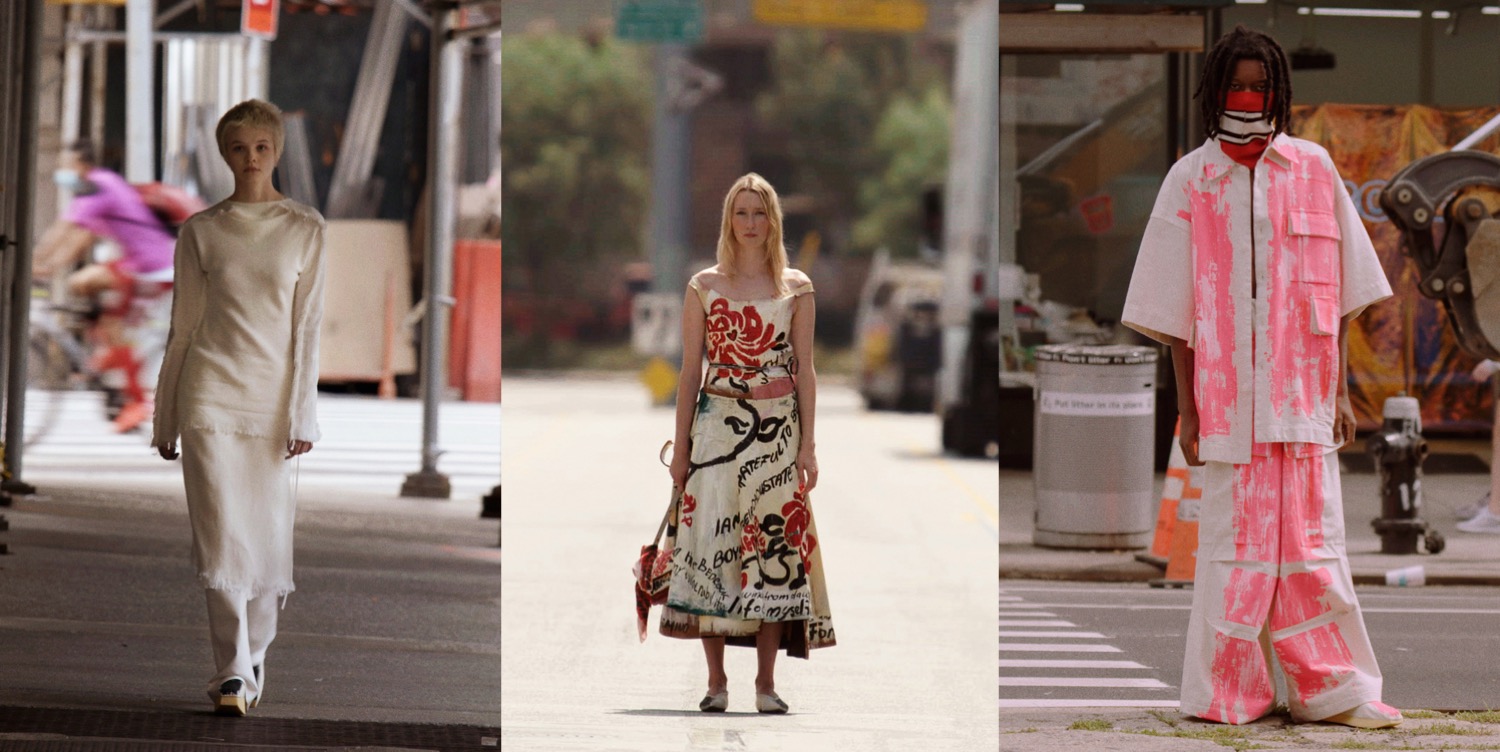
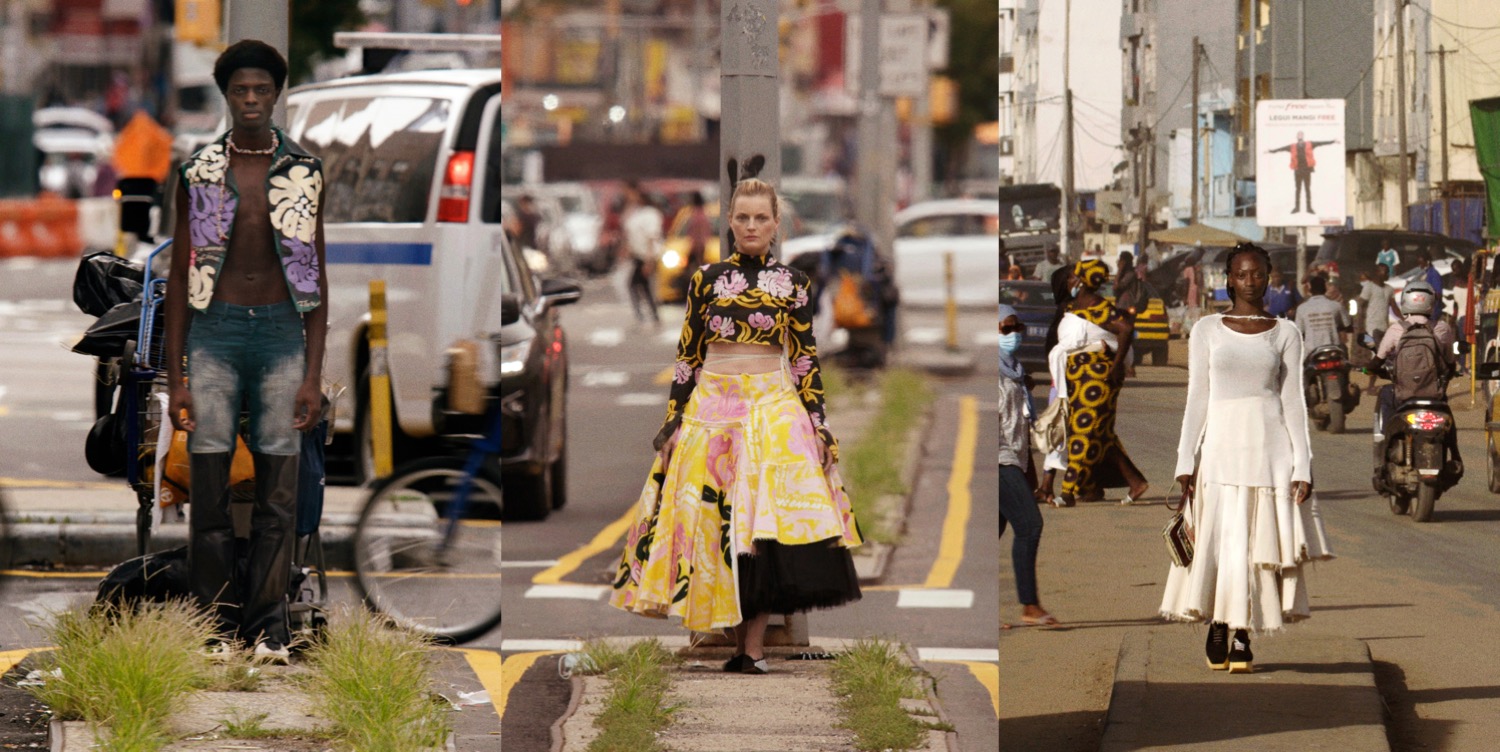
Usually, Marni‘s Franceso Risso takes us to a fairy-tale, where everything has a sort of out-of-this-world meaning. For spring-summer 2021, his collection is strikingly grounded. And literally, out in the world. “I don’t want to make any statements about this show, but this is the idea of it: the people, the individual stories, the lives, the awakenings, my awakening, and the connections,” Risso said in a press preview. “Lockdown felt very oppressive. I have a big dog, and whenever I’d go out, I had police sending me back home. It was strange; bad,” he recalled. While they sounded funny, stories of the Marni studio “making things at home with blankets [and] curtains, [and] dyeing things in their bathtubs” had a more introspective rather than creatively explosive impact on Risso’s approach for his spring proposal. The events of 2020 made him feel caged and powerless. The fragility of freedom was at the heart of this collection. After he finished it, he sent looks to friends and family around the world: Los Angeles, Detroit, Philadelphia, New York City, London, Milan, Paris, Dakar, Shanghai, and Tokyo. In a digital showcase livestreamed from all of those locations, his diverse cast of non-models performed what Risso called his “Marnifesto”: “An experiment of collective neo-humanism, which is so individualist, but actually, this has been collective. It’s celebrating Marni not through the I but through the we,” he explained. It was, quite simply, unity in diversity: Through live-recorded everyday scenarios like walks through traffic, trips to the park, band practice, or grocery shopping, it was an illustration of how we’re less fragile together. Working on the collection, Risso had pulled his most-loved pieces from the Marni archives, re-created them, took them apart, and stapled them back together in new ways. If that was an illustration of fragility versus strength in itself, so were the constructions: unraveling knitwear, de- and reconstructed tank dresses, a rigid, box-fresh leather jumpsuit about to get crinkled. It all felt somewhat “charity shop,” but that inevitably comes with the territory of fragility. Twenty-five coats had been made out of outerwear from old collections, patched together and painted with poetic words sent to Risso by friends through correspondence over the past season. “I can’t talk about hems and drapes and stripes,” Risso said. “I’m more inclined toward thinking of this as a work that’s been more collective than ever. It’s devoted to freedom, self-expression, to celebrating the hand that painted all those objects that create the canvas of Marni.” He didn’t just mean his studio, but the wild and wonderful characters who fill his unconventional mind, and indeed his nonconformist reality. Given the platform of his livestreamed video, they made Risso’s at times outlandish creations feel more real. Emancipated from the staged situation of a runway, you could actually see how the Marni universe manifests IRL.

Collage by Edward Kanarecki.